Idaho Logging Railroads: History, Lines, Overview
Last revised: February 24, 2025
Written by Andy Lawrence and Marina Rose
At the turn of the 20th century, forest resources surpassed mining in economic importance, but Idaho’s timber statute made it difficult for companies to acquire land for logging farms.
The statute had been created to help individuals acquire family-sized farms; the general theory was that a family would have a 640-acre forest to harvest and process.
These 640 acres were supposed to last a generation, with new growth for the next generation. But this didn’t pan out; a stand of trees was harvested long before another stand could mature.
To solve this problem, some creative attorneys figured out a way to consolidate these farms in order to make a commercial forest products industry around Boise.
The attorneys were successful, and large sawmill operations sprang up around Boise and Coeur d’Alene anticipating a demand for high quality white pine in millions of board feet.
Unfortunately, when the Panama Canal opened, lumber on the Pacific Coast had easier transportation to the east, and North Idaho’s lumber potential was not easily realized.
Pacific Coast lumber arrived on the east coast and traveled as far inland as Cleveland, leaving a small market for Idaho lumber.
Another hit for the Idaho logging market came with the establishment of the Boise National Forest (1906), which protected these forested lands from commercial logging. Personal use fuelwood permits can be purchased to cut wood in this area.
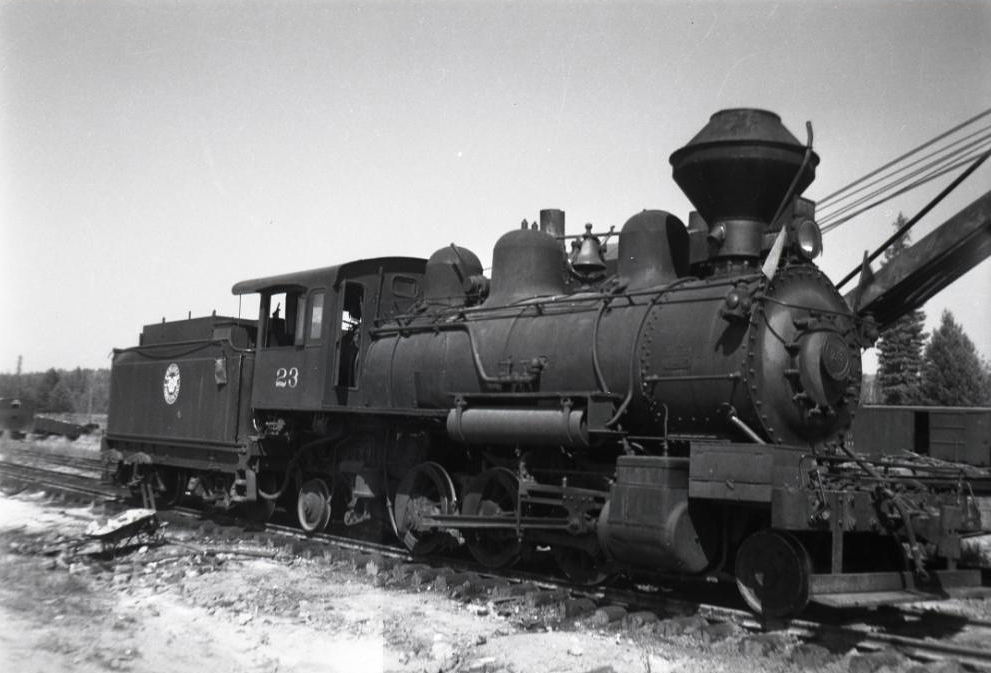
Logging In The Boise Region
The city of Boise was founded in 1863, one and half years later (December 1864) there were two sawmills operating near Boise.
Sawmills were considered an economic asset to the Boise community, even before the end of the mining era (lumber was required for sluice boxes, flumes, and mine support).
One early sawmill was located across from the Old Penitentiary on Warm Springs Ave. It was operated under various owners from the early 1870s to 1924.
The mining towns around Boise supported a large lumber market, particularly in towns like Idaho City, Placerville, Centerville, Atlanta, etc, but the mountainous terrain, and lack of railroads made lumber transportation outside of the mountains difficult.
Lumber companies soon realized that commercial lumbering couldn’t develop in the Boise forests without adequate rail transportation. The Barber Mill, located six miles north of Boise, played a huge role in the development of a lumber railroad.
Intermountain Railway And Barber Mill
Frank Steunenberg, former Idaho governor started a project at the turn of the century to bring Wisconsin and Minnesota lumbermen over to Boise forests. Steunenberg attracted the attention of Barber Lumber Company (Wisconsin) bought 25,000 acres north of Boise, along Grime’s and More’s creeks, in 1902.
Construction on Barber Dam and Sawmill began in 1904 and was completed in 1905. But only a year later, in 1906, Barber realized they would need a railroad to transport logs.
The company had originally intended to transport the logs with log drives down More’s and Grime’s creeks, but they soon realized the creeks would not support log drives.
Silt from earlier upstream mining threatened to fill and clog the log pond during high water, the only practical time to have a log drive.
Another obstacle for the Barber Lumber Company came when the company attempted to buy more forest acreage to supplement the land they already owned.
The State Land Board wouldn’t sell the land for less than $150,000 per 12,000 acres (an outrageous price at the time). A combination of issues contributed to Barber Mill shutting its doors in 1908, but the Barber Lumber Company didn’t give up.
They kept pushing for the construction of the Intermountain Railway and a lower price on the land they wanted to purchase.
Four years later, in 1912, the Barber litigation was solved, and the United States Reclamation Service started construction on a rail line (a third of the way to Centerville from Boise).
Around the same time, the State Land Board offered to sell Barber the timber they wanted for $100,000 (but not the land).
Further arguments took the case to the Idaho Supreme Court, where the sale of timber AND land was upheld, as long as the Barber Company would build a rail line, enhancing the value of the other state lands. Barber Mill reopened in 1912.
In 1914, plans to construct the Intermountain Railway began and the Barber Lumber Company merged with the Payette Lumber and Manufacturing Company becoming the Boise Payette Lumber Co.
The Intermountain Railway was built from just north of Boise to New Centerville, following the Boise River, Grime’s Creek, and More’s Creek.
The total cost of construction was $1,037,499, equal to $24,725,261 today. During construction of the rail line, four logging spurs (dirt roads) were built to assist lumber companies in log transportation.
With the completion of the Intermountain Railway, the Boise Payette Company saw a huge boost in profits and remained profitable throughout the 1920s.
However, early in the 1930s, as the market became depressed, the company started taking huge losses, which led to the closing of Barber Mill in 1934, it was never reopened.
The Intermountain Railway service was suspended in the 30s as well and later was replaced by Highway 21 (Boise to Idaho City).
The Boise Payette company saw many ups and downs in the market and went through a series of mergers, becoming Boise-Cascade in 1957. Boise-Cascade is one of the largest lumber corporations in Idaho today.
Logging Operations In Northern Idaho
The history of logging in Northern Idaho stretches back to 1880, when Robert Weeks opened a general store. He had several other business ventures, one being a sawmill that failed financially.
Around the same time (early 1880s), other small mills sprang up around Rathdrum, just north of Coeur d’Alene. In the next twenty years, the industry grew dramatically in the North, with 20 mills between Harrison and Bonners Ferry by the early 1900s.
Lumber production rose and fell during the early 20th century. At its highest point, in 1926, the ten counties of Northern Idaho produced 950,000,000 board feet of timber, dipping down to 200,000,000 in 1932.
Even today, many of the men working in the woods are following in the footsteps of their fathers and grandfathers. In the first half of the 20th century, logging was one of the few ways to make a decent living in North Idaho.
Humbird Lumber Company
Humbird Lumber Company bought the Sandpoint Lumber Company on December 21, 1900. The North was plagued by enormous fires in the early 20th century, including one in 1907, that forced the Humbird Mill to close down for seven months.
When it reopened, the mill employed 500 men and had a cutting capacity of 180,000 board feet every 24 hours. Kootenai was also developed because of Humbird Lumber Company.
The company bought a sawmill in Kootenai in 1903. This was the first year that the forest became known as “the greatest source of wealth” for the area (History of Bonner County) - the forest is still considered the greatest source of wealth in the area. The Kootenai and Sandpoint Mill were connected by railroad.
The Humbird Lumber Co. possessed 200,000 acres of timberland across Boundary and Kootenai counties. The company constructed railways up several creeks to transport logs into town. Rapid Lightning Road (Sandpoint) was one of the former railroad beds used by Humbird.
By 1925, Humbird employed an average of 1,300 men, providing a big chunk of employment for the area. However, the Sandpoint Mill was forced to close its doors in the early 30s due to the widespread depression.
Laclede and Dover Mills
In Laclede (1909), Albert C. White arrived from Michigan where the forests had been depleted. He bought the Laclede Mill from Andrew Christianson.
The mill burned down in 1922, so White bought the Dover Lumber Co. Mill and moved the standing buildings from Laclede to the Dover Mill. The Dover Mill closed in 1928.
Sandpoint
Sandpoint was known as the largest shipper of cedar poles and pilings in the Northwest, and North Idaho provided much of the central United States with lumber.
Even with the major fires of 1910 and 1919 - which destroyed tons of timber acreage - there was still an abundant supply of timber to harvest and sell. (The 1910 fire was known as the largest conflagration in U.S. history.)
Visitors to Sandpoint could tell immediately that it was a timber town. Lumberjacks were picked out from the crowd by the way they dressed: wearing flannel over long underwear with logging jeans and suspenders.
Logging trucks pulling two-wheel, single axle trailers loaded with logs drove through the town or stopped at the landing site where logs were loaded onto boxcars.
Coeur d’Alene
This region is very steep, so loggers had to cut down trees and transport logs up the hill to a log deck and load them onto some type of transporter: river/road/railway.
By the 1920s, there were more than 20 logging railroad systems in the mountains around Coeur d’Alene, the largest was Burnt Cabin Creek Railroad. Coeur d’Alene was also a major site for flumes. There were 35 flume projects in the area adding up to 150 miles of transport.
Lewiston
The Clearwater Timber Company - now known as Potlatch Corporation - opened a mill in 1927. It was the largest white pine mill in the world.
The Clearwater River Log Drive began a year later and ran from 1928 to 1971. The Log Drive incorporated a 90 mile stretch from North Fork to Lewiston - where the Clearwater River joins the Snake River.
The Lewiston Mill received half of its timber through rail lines and half by river until 1971 when the Dworshak Dam was completed, cutting off access from North Fork to Lewiston.
The Clearwater Log Drives lasted around 21 days from the time the crew went to work chopping trees to the time the logs were unloaded in Lewiston. Drives usually took place in the early spring when melting snows began filling the rivers.
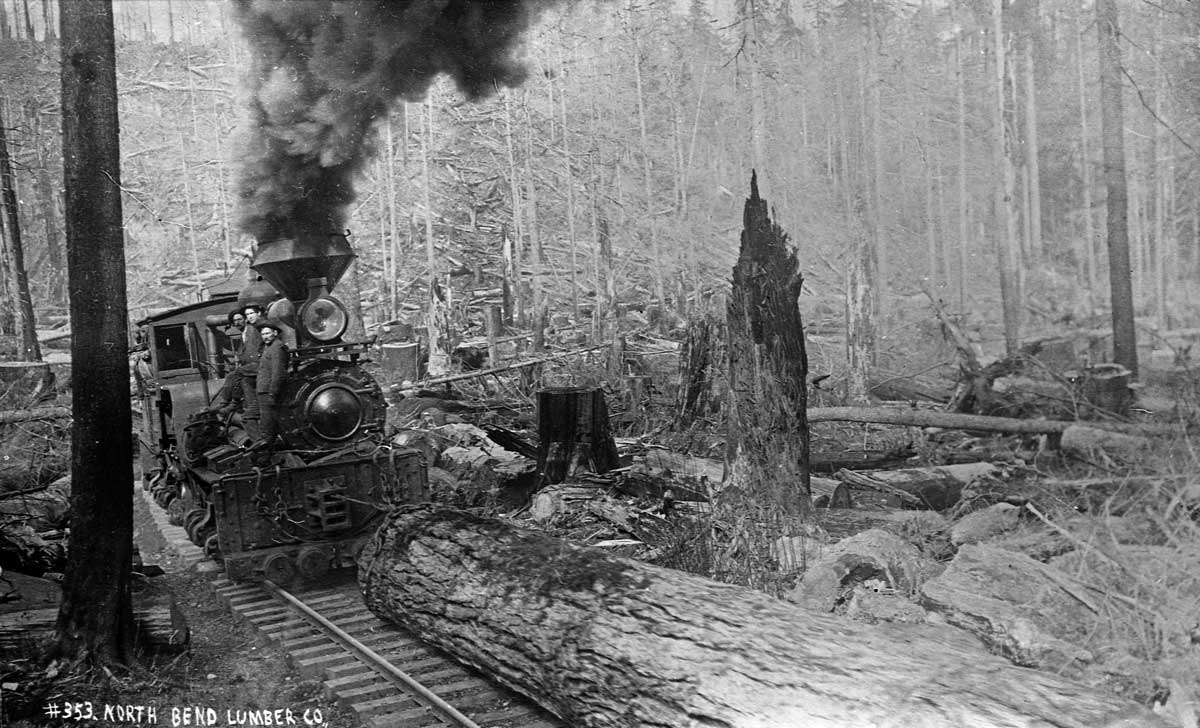
Rivermen followed the logs downstream un-snagging them from river banks and sandbars. The first year, men camped along river edges.
After that year, the rivermen used cedar rafts with a cookhouse and bunkhouse on top to follow the logs down the river. Later still rubber pontoons were used to carry a cookhouse and two bunkhouses.
These floating camps were called wanigans. These workers would have to jump onto log jams to split them up. They used special shoes called caulk (“cork”) boots that had thick rubber soles and spikes called caulks that helped them keep their balance on the logs.
Each log drive had millions of board feet and workers worked 15 hours a day to keep logs flowing down the river.
Twelve foot pike poles were used to prod and pull the logs out of snags and sometimes dynamite was used to break up jams. Bateaus, river boats, were also used to carry men down the river to break up log jams. Motorized metal boats were later used as bateaus. Men on the boats were known as river pigs.
St. Maries
The St. Maries area was an important white pine logging area. Extensive settlement began in the 1880s with homesteading and sawmill building. The lumber industry is still an important part of this area.
Boundary County
Back in 1957, nearly 38 percent of the county workforce worked in the timber industry. Today, 15 to 20 percent of the county workforce is employed by sawmills and other forestry jobs.
In the early days of the logging industry, trees were cut near waterways, so the logs could be transported downstream to the mill (log drives).
For inland harvesting, horses and oxen were used to haul lumber, dragging logs through the woods. Chutes were particularly useful during the time of horse/oxen transportation.
These were made by creating grooves in snow, ice or dirt; logs were placed in the grooves for smoother transportation (especially helpful if at a slight decline).
Another method used to transport logs from the hills to the nearest waterway, were log flumes. These were water filled V-shaped troughs that relied on gravity and the swiftness of water to carry the logs from one place to another.
Destination was often a river or pond but could also empty onto metal rollers that moved the logs to a loading platform for railroad cars.
A flume had three stations: the first required logging crew fed logs onto the flume, the second was at various stages along the flume where jams could occur (runners watched for jams), and the third stations required laborers to unload logs at the end of the flume.
Jams on the flume could be very dangerous and costly to fix, especially if the flumes broke. One way to avoid jams was to open the flume dam (top of flume usually fed from a pond) and let water run through for half an hour at least.
The number one thing that caused problems with flumes was not having enough water or fast enough water running down. Logs that outran the water could cause overflows and severe jams.
Axes and handsaws were used to chop down trees, while wood or iron wedges were used to help guide the tree as it fell.
Two man hand saws were used to cut down thick trees, often taking the loggers all day to saw through, fell, and split into transportable logs.
They also had to look out for pitch seams on the tree; pitch would dull the saw and slow down the felling process dramatically. Diesel or kerosene was used to dissolve the pitch on the saw. Loggers had to be very aware of their surroundings to avoid getting smashed by a falling tree.
Logging technology advanced, giving way to chainsaws and harvesting machines that made the process go much faster. The first motorized saws entered the logging world in the 1940s but these machines were heavy and less efficient than the crosscut.
The first one-man saw arrived in 1948, it weighed 60 pounds, whereas professional-size chainsaws today weigh between 15 and 25 pounds.
The invention of the feller-buncher sped up the process even more. A feller-buncher can reach into a stand, grip a tree and fell it in one motion. A forwarder cuts the tree down and de-limbs it right there.
Fun Flume Fact: There are accounts of fugitives using log flumes to outrun officials. These daredevils would either ride logs down the flume or try to hide beneath the rushing water to escape notice.
~ Many thanks to Andy Lawrence, Marina Rose, and the folks at Wood Splitters Direct for the in-depth history of Idaho's logging industry featured above.
Idaho's Many Logging Railroads
A.C. White Lumber Company: Its mill was located near Sandpoint and the company operated a 15-mile railroad with 2 geared and 1 standard locomotive. Service began in 1909 and lasted until 1930.
Atlas Tie Company: Located in the Coeur d'Alene area, operated about 1 mile of trackage between 1915-1927.
Blackwell Lumber Company: Operated a 32-mile system near Coeur d'Alene between 1909-1936 (owned 5 geared locomotives) including a subsidiary railroad known as the Coeur d'Alene Southern Railway (owned 2 geared and one standard rod locomotive), operating 26 miles between 1909-1913.
Blackwell also later acquired the B.R. Lewis Lumber Company (owned 2 geared locomotives), which owned 15 miles of trackage as well as its subsidiary, the Ida & Northwestern Railroad (30 miles; owned 2 geared and one standard rod locomotive).
Boise Payette Lumber Company: Operated in the Boise area and owned about 32 miles of trackage with its private railroad in service from 1913-1946 with 6 geared locomotives within its roster.
The company also owned a subsidiary, the Intermountain Railway, operating 40 miles between 1914-1935 (although not in continuous operation during these years) with 3 geared and 2 standard rod locomotives.
Boise Valley Railway Company: Operated in the Bonners Ferry area between 1907 and 1915. It owned a single locomotive and operated 15 miles of trackage.
Bonners Ferry Lumber Company: Operated in the Boise area circa 1905.
C.W. Beardmore: Located in the Priest River region with operations beginning circa 1918.
Coeur d'Alene Match Company: Located near the Coeur d'Alene area, operating a 17-mile railroad with 5 geared locomotives from 1927-1928.
Cowger & Sons: Located in the Southwick area, with 14 miles of railroad in service from 1934-1943.
T.H. Kerr Lumber Company: Located near Kellogg with 10 miles of track. Operations began in 1925.
Craig Mountain Lumber Company: This logging operation was located in the Winchester area and operated 30 miles of railroad with 5 locomotives from 1910-1951.
Craig Mountain Railway: This logging railroad was also located near Winchester, owning 8 miles of track and 2 locomotives from 1910 until operations ceased in 1965. It owned a subsidiary, the Winchester & Craig Junction Railroad.
The CMRR also had several different owners including the Craig Mountain Lumber Company (1910-1951), Hallack & Howard Lumber Company (1951-1960), and the Boise-Cascade Corporation (1960-1965).
Diamond Match Company: Located in the Sandpoint region, the company owned 17 miles of trackage and 3 locomotives with a subsidiary known as the Burnt Creek Railroad. The railroad was in service from 1927 to 1943 with operations contracted to E.C. Olson from 1927-1931.
Dollar Logging Company: Based around Wallace the company's railroad was in service from 1913-1915.
Dover Lumber Company: Located in the Sandpoint region, the company owned 7 miles of track and 1 geared locomotive with operations lasting from 1910-1922.
Downer Brothers Company: Located in the Prairie region, operated 1 mile of trackage from 1953-1954.
G.A. Branson Lumber Company: Operated in the Mashburn area with 2 miles of trackage from 1915 to 1916.
G.R. Smith Lumber Company: Located near Kilgore it owned 10 miles of trackage operating from 1951-1953.
Grant Lumber Company: Situated near Harrison this logging operation had 6 miles of track and 1 geared locomotive, running between 1916-1919.
H.E. Brown Timber Company: Located near Naples with 1 mile of trackage. Operations lasted from 1925 to 1926.
Hallack & Howard Lumber Company: Located in the Cascade region it operated 10 miles of track with 2 geared locomotives from 1927-1938. Its subsidiary Eccles Lumber Company owned 6 miles of railroad with 1 geared locomotives.
Hedlund Lumber Company: Located near Worley they owned 2 miles of track and 1 geared locomotive, operating between 1924-1926.
Hopkins Brothers Lumber Company: This company had mills at Enaville and Harrison; the former utilized 3 miles of track and 2 geared locomotives from 1926 to 1930 while the latter owned 5 miles and 1 geared locomotive between 1929-1930.
Humbird Lumber Company: Its mill was near Sandpoint and owned a very large network of 42 miles with 5 geared and two standard rod locomotives. Rail operations lasted from 1907 to 1931.
Hutchins Brothers Lumber Company: This company had a mill near Pierce and operated a 12-mile network. Its last known year of service was 1953.
Ida & Washington Northern Railroad: The I&WN began operations in 1907 and owned 113 miles of track and 14 locomotives connecting with with Coeur d'Alene. It was acquired by the Milwaukee Road in 1916.
Ida White Pine Milling Company: This operation was located in the Nampa area and was only known to have been in operation circa 1912.
Idaho Block Match Company: Located near Sandpoint and is only known to have began operations circa 1917.
Idaho Northern Railroad: This common-carrier railroad, operated under contract by the Idaho & Washington Northern was located near Nampa, with 59 miles of trackage and 2 standard locomotives from 1902 to 1912.
It owned two subsidiaries, the Lake Railway & Lumber Company and Boise, Nampa & Owyhee Railroad. It was acquired by Union Pacific's Oregon Short Line.
Inland Empire Paper Company: Its mill was near Athol and it owned 15 miles of trackage with 1 geared and 2 standard locomotives. It operated from 1916 to 1934.
Kootenai Logging & Railroad Company: Located near Harrison with 5 miles of track and 1 geared locomotive, operating from 1908 to 1916. It was a division of the Lane Lumber Company.
L.J. Root Lumber Company: This logger was situated near Grangeville and operated 2 miles of railroad circa 1910.
Lewiston Lumber Company: Operated a mill near Orofino with 6 miles of track and 1 geared locomotive beginning service in 1908.
MacGillis-Gibbs Lumber Company: Operated a mill in the Clark Fork region with 4 miles of track from 1911 to 1913.
McGoldrick Lumber Company: This company was located in Benewah County with a large network of 35 miles along with 3 geared and 1 standard locomotive. Its railroad operated from 1905 through 1946.
Mecham Lumber Company: Located in the Soda Springs area with 4 miles of track and 1 locomotive. Operated from 1951-1955.
Milwaukee Land Company: A division of the Milwaukee Road, it operated in the St. Joe region with 9 miles of track and 2 geared locomotives between 1913-1920. It also owned a subsidiary, the Shoshone & Clearwater Railway near St. Maries with 3 miles of track in service from 1917-1920.
Milwaukee Lumber Company: Another division of the Milwaukee Road this large operation was located in the St. Maries area with 36 miles of track.
It owned 4 geared and one standard locomotive, operating from 1911-1928. Its subsidiaries included:
- Alder Creek Railroad (8 miles, operating from 1913-1920)
- St. Maries Lumber Company (7 miles and 2 geared locomotives, in service between 1913-1923)
- Marble Creek Valley Railroad (25 miles in service circa 1915), and the Coeur d'Alene Lumber Company (operating 1 mile from 1916-1920).
Mountain Lumber Company: Located in the Wallace area with 11 miles of track and 1 geared locomotive. In service from 1926-1930.
N.C. Jones Timber Company: Its mill was near Cambridge and owned 47 miles of trackage. It is only known to have been in operation circa 1947, likely its last year of service.
N.P. Bogle Lumber Company: Operated in the St. Maries region circa 1913.
Norida Land & Timber Company: Its operations were situated near Sandpoint with 2 locomotives operating from 1935-1938.
Ohio Match Company: Operations were based near Coeur d'Alene with 48 miles of trackage, 2 geared and 2 standard locomotives. It remained in operation from 1921-1945.
Panhandle Lumber Company: Situated near Spirit Lake this large operation had 30 miles in service at its peak with 2 geared and 1 standard locomotive. It operated from 1909 to 1939 although not continuously.
Post Falls Lumber & Manufacturing Company: Operations were based in Coeur d'Alene and operating from roughly 1912 to 1915.
Potlatch Forests, Inc.: Idaho's largest logging railroad operation created in 1931 it was headquartered in Potlatch owning 99 miles of track and 19 locomotives.
It originally began as the Potlatch Lumber Company which began in 1907.
There were several subsidiaries including:
- Rupp-Holland Logging Company (owning 8 miles and 1 geared locomotive, operated from 1917-1929)
- Edward Rutledge Timber Company (operated 15 miles and 6 geared locomotives from 1916 to 1931 including its own subsidiary, the Elk Basin & Marble Creek Railroad)
- Clearwater Timber Company (operating 30 miles and 5 geared locomotives between 1927 and 1931 as well as subsidiaries Western States Lumber Company and Federal Match Corporation).
The Potlatch system remains in service today.
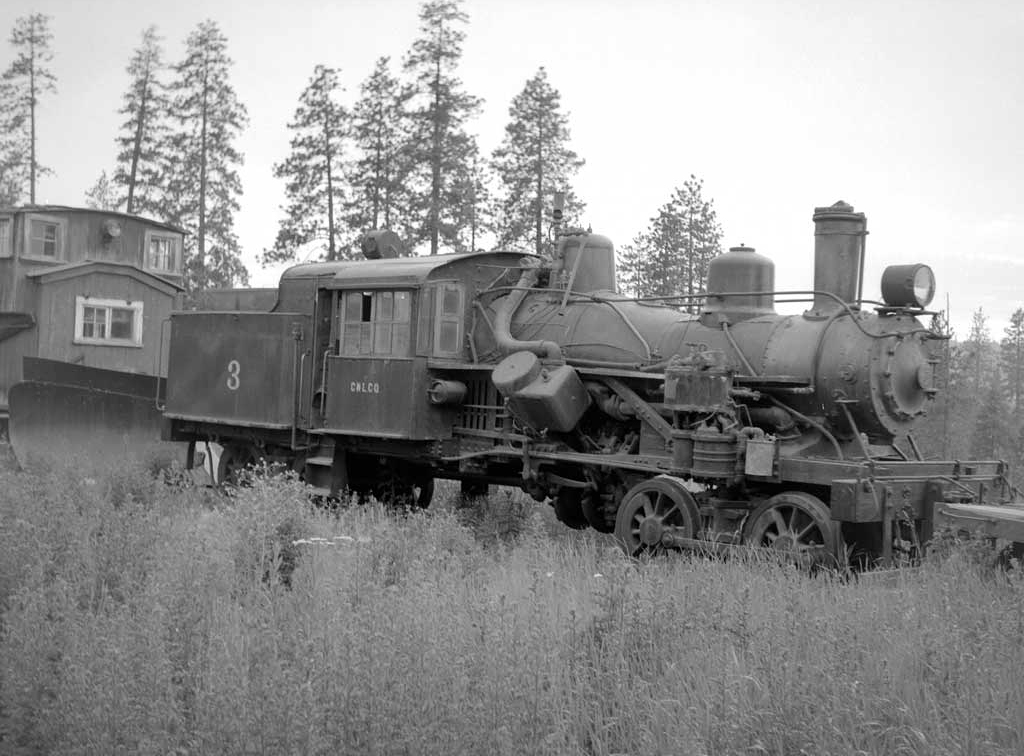
Rawson-Works Lumber Company: Its operations were located near Kamiah and owned 3 miles of track with 1 geared locomotive. Rail service lasted from 1913-1921.
Rogers Lumber Company: This company was located at St. Maries operating 3 miles of track with 3 locomotives. It remained in service from 1931-1942.
Russell & Pugh Lumber Company: This logger was located near Harrison with 6 miles of railroad and 1 geared locomotive. Although not in continuous service it operated from 1904 to 1930 and was originally narrow-gauge before its later conversion to 4 feet, 8 1/2 inches.
Smith Creek Lumber Company: This company was located near Prairie and operated 44 miles of trackage. It is only known to have operated from 1934 to 1947.
Strobel & Grimm Lumber Company: Operated a mill near Lane with 6 miles of track and 1 geared locomotive. The railroad began service circa 1907.
T.H. Kerr Lumber Company: Located near Kellogg with 10 miles of track. Operations began in 1925.
V.C. Potter Lumber Company: This operation was based near Kooskia and owned 7 miles of trackage operating between 1937-1947.
Washington, Idaho & Montana Railway Company: Located near Potlatch it was another division of Potlatch Lumber. With 67 miles of track in service and 3 geared as well as 3 standard locomotives, service began in 1906 and still operates today.
Winton Lumber Company: This logger operated near Coeur d'Alene with 29 miles of railroad and 6 geared locomotives. It remained in service from 1918 to 1940.
Its subsidiaries included the Stacks-Gibbs Lumber Company (1914-1918), Winton-Rosenberry Company (it operated 8 miles of track and 2 geared locomotives from 1920-1923), and Rose Lake Lumber Company (owned 8 miles of track and 1 geared locomotive from 1910-1923).
In addition, Rose Lake owned the Hoo Hoo Lumber Company and its Hoo Hoo Railroad.
Recent Articles


-
Bessemer & Lake Erie Railroad: "The Bessemer Road"
Sep 15, 26 05:20 PM
 Bessemer & Lake Erie—Bear Creek 1865, Carnegie 1897, U.S. Steel 1901. Ore south from Conneaut, coal north. 2-10-4s, Missabe sister road. CN May 10, 2004. Complete corporate history.
 -
Bangor and Aroostook Railroad: "Serving Northern Maine"
Sep 15, 26 05:05 PM
 Bangor & Aroostook—chartered February 13, 1891, first trains January 1, 1894. Potatoes, paper, Searsport, State of Maine reefers. MM&A 2003, Lac-Mégantic 2013, CP 2020, CPKC today. Complete co…
 -
Baltimore & Ohio Chicago Terminal Railroad: Map and History
Sep 15, 26 03:11 PM
 B&OCT—formed January 6, 1910 to buy Chicago Terminal Transfer. Grand Central, Barr Yard, 78 route-miles. Assigned B&O steam. Complete diesel roster. CSX paper subsidiary, mark BOCT.
 -
The "Alphabet Route" (Railroad): Photos and History
Sep 15, 26 02:53 PM
 Alphabet Route—eight railroads, not one company. P&WV to Connellsville February 11, 1931. Alpha Jets Chicago/St. Louis–New York/Boston. NKP, W&LE, P&WV, WM, Reading, CNJ, L&HR, New Hav…
 -
Milwaukee Road Livestock Operations: Cattle, Dakotas & Montana
Sep 15, 26 02:36 PM
 Milwaukee Road livestock traffic—Dakota and Montana cattle, Iowa hogs, Chicago markets, 28-hour law, head-end stock cars. By 1974 mostly Montana. Rick Burn’s Helena speech. Operations history, not the…
 -
Spirit of Jasper Ride & Dine (2026): Season Pause
Sep 15, 26 02:29 PM
 Spirit of Jasper Ride & Dine in Jasper, Indiana—seated meal on board. Operator: not running public trains for 2026. Depot remains open as a rental. Confirm on spiritofjaspertrain.com.
 -
South Carolina Canal & Rail Road Company: Map and History
Sep 15, 26 01:59 PM
 South Carolina Canal & Rail Road—chartered December 19, 1827. Best Friend of Charleston, 136 miles Charleston–Hamburg October 1833, Aiken inclined plane. South Carolina Railroad 1844, Southern 189…
 -
The Practice of Double-Heading: The Steam Era
Sep 15, 26 01:43 PM
 Doubleheading—two locomotives on the point, each with its own steam crew. Not a rear helper, not diesel MU. How it worked, PRR 1877, mountain grades, and what MU ended.
 -
Mohawk and Hudson Railroad: Map, Pictures, Locomotives
Sep 15, 26 01:20 PM
 Mohawk & Hudson Railroad—New York’s first railroad, chartered April 17, 1826. DeWitt Clinton, inclined planes, Albany & Schenectady 1847, first New York Central May 17, 1853. Complete corporat…
 -
Essex Clipper Dinner Train (2026): Dates, Tickets & What to Expect
Sep 15, 26 01:09 PM
 2026 Essex Clipper Dinner Train in Essex, CT—2.5 hours, four-course meal $129.99, 18+. Fall dates through Oct. 25. Confirm on essexsteamtrain.com.
 -
Camden & Amboy Railroad: Map, History, Photos
Sep 15, 26 12:53 PM
 Camden & Amboy Railroad—chartered February 4, 1830. Joint Companies monopoly with the Delaware & Raritan Canal, John Bull, T-rail. United New Jersey 1872, PRR 999-year lease 1871. Complete corpora…
 -
Cafe Lafayette Dinner Train (2026): Dates, Tickets & What to Expect
Sep 15, 26 12:47 PM
2026 Cafe Lafayette Dinner Train in North Woodstock, NH—2 hours, 20 miles, five-course meal from $125. May–October. Confirm on nhdinnertrain.com. -
Christmas Train Ride Locations (2026): A Complete Guide
Sep 15, 26 10:47 AM
 2026 Christmas train rides by state—Santa, North Pole Express, and holiday trains. Not Polar Express. State guides and product pages. Confirm dates on each railroad.
 -
Baltimore & Ohio Railroad: Linking 13 Great States With The Nation
Sep 15, 26 10:22 AM
 Baltimore & Ohio Railroad—first U.S. common carrier, chartered February 28, 1827. Wheeling 1853, Chicago 1874, C&O control 1963, Chessie 1973, into CSX April 30, 1987. Complete corporate history.
 -
Delaware & Hudson Railway: The Bridge Line
Sep 15, 26 09:59 AM
 Delaware & Hudson Railway—Wurts brothers canal 1823, gravity railroad 1829, Stourbridge Lion, Bridge Line to Montreal. Guilford 1984, CP 1991, NS south line 2015, CPKC north.
 -
Delaware & Hudson Diesel Roster (All-Time)
Sep 15, 26 12:17 AM
 All-time Delaware & Hudson diesel roster—Alco S-2s through C-628s and PA-4s, GE U-boats, Baldwin RF-16s, EMD SD45s and GP38-2/GP39-2s. Serials, dates, dispositions.
 -
Granite Railway, Our Country's First Railroad
Sep 14, 26 11:28 PM
 Granite Railway of Quincy, Massachusetts—chartered March 4, 1826, opened October 7, 1826. Gridley Bryant, 5-foot gauge, horses, Bunker Hill Monument stone. First commercial U.S. railroad.
 -
Milwaukee Road Skytop Lounges: History, Specs & Floor Plans
Sep 14, 26 11:09 PM
 Milwaukee Road Skytop observation cars—Brooks Stevens, 1948. Four Rapids parlor-lounges from Milwaukee Shops, six Creek sleeper-lounges from Pullman-Standard. Floor plans, roster, preservation.
 -
West Virginia Christmas Train Rides (2026): A Complete Guide
Sep 14, 26 11:02 PM
2026 West Virginia Christmas trains—Potomac Eagle North Pole Express in Romney and Christmas at Cass. Not Polar Express. Elkins Polar is not listed for 2026. -
Railroads Of Today: Class I Map, PSR & the 2026 Industry
Sep 14, 26 10:30 PM
 U.S. freight rail in 2026—six Class I railroads on a nearly 140,000-mile network. PSR as everyday practice, how the STB works, traffic mix, short lines and regionals.
 -
Railroad History (USA): Timeline, Facts & How the Network Was Built
Sep 14, 26 10:03 PM
 Full U.S. railroad history hub—origins and inventors, Golden Age peak mileage, Civil War and transcontinental, streamliners, ICC regulation, Penn Central and Conrail, Staggers Act, PSR, and today’s Cl…
 -
Railroads In The 2020s: CPKC, East Palestine & the UP–NS Case
Sep 14, 26 09:51 PM
 U.S. railroads 2020–2026—Class I mileage 91,773 in 2020. COVID traffic drop, CPKC April 14 2023, East Palestine Feb. 3 2023, UP–NS $85 billion case still before the STB.
 -
Railroads In The 2010s: PSR, Coal’s Decline & Positive Train Control
Sep 14, 26 03:51 PM
 U.S. railroads 2010–2020—Class I mileage 95,573 to 91,773. Buffett closed BNSF Feb. 12 2010, Harrison at CP June 29 2012 and CSX 2017, PTC deadline Dec. 31 2018.
 -
Virginia Christmas Train Rides (2026): A Complete Guide
Sep 14, 26 03:46 PM
 2026 Virginia Christmas trains—Virginia Scenic Railway Santa Express from Staunton, about 60 minutes. Confirm dates. Not Polar Express.
 -
MARC Train: Maryland Commuter Rail History, Lines & Roster
Sep 14, 26 01:16 PM
 MARC Train history—Maryland Rail Commuter 1984, B&O and PRR corridors, Penn/Camden/Brunswick lines, Silver Spring 1996, all-time locomotive roster.
 -
Railroads In The 2000s: Merger Freeze, Wisconsin Central & Buffett
Sep 13, 26 07:57 AM
 U.S. railroads 2000–2010—Class I mileage 99,250 to 95,573. STB merger freeze March 17 2000, CN–WC Oct. 9 2001, BNSF Railway Jan. 24 2005, Buffett Nov. 3 2009.
 -
Railroads In The 1990s: Mega-Mergers, Conrail’s Split & the STB
Sep 13, 26 12:13 AM
 U.S. railroads 1990–2000—Class I mileage 119,758 to 99,250. BNSF Sept. 22 1995, UP–SP Sept. 11 1996, Conrail split June 1 1999, ICC Termination Dec. 29 1995.
 -
Railroads In The 1980s: Staggers, Mega-Mergers & Conrail’s IPO
Sep 12, 26 11:12 PM
 U.S. railroads 1980–1990—Class I mileage 164,822 to 119,758. Staggers Oct. 14 1980, CSX and Norfolk Southern, UP–Missouri Pacific–Western Pacific, Conrail IPO March 26 1987.
 -
Wabash Class O-1 4-8-4s: History, Roster & Specifications
Sep 12, 26 11:01 PM
 Wabash Class O-1 4-8-4s—Baldwin 1930–31, twenty-five engines 2900–2924. Fast freight, complete roster, specifications. None preserved.
 -
Staggers Rail Act of 1980: Statute, Contract Rates & the ICC
Sep 10, 26 11:23 PM
 Staggers Rail Act, Pub. L. 96-448, signed October 14, 1980. Harley Staggers, S.1946, contract rates, 180% variable-cost test, abandonments, short lines.
 -
Rock Island E8A 652: Bicentennial Independence Paint & History
Sep 10, 26 10:42 PM
 Rock Island E8A 652—EMD March 1952, serial 15199. 20th Century Railroad Club Independence bicentennial scheme, Peoria and Quad Cities Rockets, Midland Railway, Manly Junction Museum.
 -
Vermont Christmas Train Rides (2026): A Complete Guide
Sep 10, 26 10:37 PM
2026 Vermont Christmas trains—Okemo Valley Holiday Express from Chester Depot Dec. 19–20. Polar is Burlington Dec. 5–6 only. -
Railroads In The 1970s: Penn Central, Amtrak & Conrail
Sep 10, 26 10:18 AM
 U.S. railroads 1970–1980—196,479 miles at the decade’s start. Penn Central bankruptcy June 21 1970, Amtrak May 1 1971, 3R/4R Acts, Conrail April 1 1976, Rock Island 1975, Milwaukee 1977.
 -
Railroads In The 1960s: Mergers, Passenger Collapse & Penn Central
Sep 10, 26 10:03 AM
 U.S. railroads 1960–1970—207,334 to 196,479 miles. Erie Lackawanna 1960, C&O–B&O 1963, N&W–Nickel Plate 1964, SCL 1967, Penn Central Feb. 1 1968.
 -
South Carolina Christmas Train Rides (2026): A Complete Guide
Sep 10, 26 08:36 AM
 2026 South Carolina Christmas trains—South Carolina Railroad Museum Santa Train in Winnsboro. Confirm December dates. Not Polar Express. Drop light-festival padding.
 -
Steam Locomotive Feedwater Heaters: Elesco, Coffin & Worthington
Sep 10, 26 08:29 AM
 Steam locomotive feedwater heaters—open Worthington vs closed Elesco and Coffin. How they work, how to identify them on a smokebox, and why not every engine had one.
 -
Oregon Christmas Train Rides (2026): A Complete Guide
Sep 10, 26 08:22 AM
2026 Oregon Christmas trains—Portland Holiday Express, Garibaldi Candy Cane Express, Sumpter Valley Christmas Trains Dec. 11–13. Polar is Mount Hood. -
Lake Shore & Michigan Southern: Map, History, Timetables
Sep 10, 26 08:12 AM
 Lake Shore & Michigan Southern Railway—Erie & Kalamazoo 1833, Michigan Southern to Chicago 1852, LS&MS April 6 1869, Vanderbilt, Ashtabula 1876, NYC merger Dec. 22 1914. 1910 map and Official Guide.
 -
Big Four Route (CCC&StL): Map, History
Sep 10, 26 12:19 AM
Cleveland, Cincinnati, Chicago & St. Louis Railway—Bee Line 1868, Ingalls’s first Big Four 1880, CCC&StL June 30, 1889, NYC lease Feb. 1, 1930. 1910 and 1930 maps, what still runs. -
Railroads In The 1950s: Diesel, the Interstate & Passenger Collapse
Sep 10, 26 12:15 AM
 U.S. railroads 1950–1960—223,779 to 211,459 miles. Interstate June 29, 1956, dieselization, passenger collapse, TOFC, 1957–58 recession, NYO&W 1957, N&W–Virginian 1959.
 -
New Jersey Christmas Train Rides (2026): A Complete Guide
Sep 10, 26 12:06 AM
 2026 New Jersey Christmas trains—Black River & Western Santa Express from Flemington and Pine Creek Christmas trains in Wall Township. Polar is Whippany and Phillipsburg.
 -
New Mexico Christmas Train Rides (2026): A Complete Guide
Sep 09, 26 11:57 PM
 2026 New Mexico Christmas trains—Cumbres & Toltec Santa’s Holiday Express from Chama Dec. 5–6 (and Antonito, Colo., Dec. 12–13). Coach $25/$15. Not Polar Express.
 -
Grand Trunk Railway: Map, History, Timetables
Sep 09, 26 11:47 PM
 Grand Trunk Railway of Canada—charter Nov. 10, 1852, Montreal–Toronto 1856, Portland, Sarnia, Victoria Bridge, St. Clair Tunnel 1891, Great Western 1882, GTPR, CN Jan. 20, 1923. 1893 map and Official…
 -
Troop Trains In World War II: Sleepers, Kitchen Cars & Movements
Sep 09, 26 11:42 PM
 WWII U.S. troop trains—almost 44 million armed-services passengers, Pullman troop sleepers, ACF kitchen cars, hospital trains, monthly movement tables 1942–45. Not the Military Railway Service. ODT an…
 -
Railroads In The 1940s: War Traffic, Last Steam & the Diesel Flood
Sep 09, 26 11:37 PM
 U.S. railroads 1940–1950—233,670 to 223,779 miles. World War II as the decade’s center, last new steam, diesel flood after V-J Day, 1945 car orders, California Zephyr 1949.
 -
Railroads In World War II: ODT, Record Traffic & Private Operation
Sep 09, 26 03:00 PM
 U.S. railroads in World War II—Lend-Lease freight, Pearl Harbor, Office of Defense Transportation, 1944 peak ~740 billion ton-miles, Dec. 1943–Jan. 1944 seizure. Private operation, not a USRA sequel.
 -
Montana Christmas Train Rides (2026): A Complete Guide
Sep 09, 26 02:54 PM
2026 Montana Christmas trains—Charlie Russell Chew Choo North Pole Adventure from Hanover/Lewistown, Nov. 27–Dec. 19, $71, about 1.5 hours. Not Polar Express. -
Railroads In The 1930s: Depression, Streamliners & the FT
Sep 09, 26 09:32 AM
 U.S. railroads 1930–1940—249,052 to 233,670 miles. Section 77, Eastman, Motor Carrier Act, M-10000 and Pioneer Zephyr 1934, EMC FT 1939. Decade frame, not the streamliner encyclopedia.
 -
Sugar Cane Train (Lahaina): LK&P History, Roster & 2026 End
Sep 09, 26 08:19 AM
 Lahaina, Kaanapali & Pacific Sugar Cane Train—3-foot tourist line 1970–2014. Anaka, Myrtle, 2023 and 2025 fires, September 2026 scrapping. Roster, Hahakea trestle, Pioneer Mill corridor.
 -
Massachusetts Christmas Train Rides (2026): A Complete Guide
Sep 09, 26 08:16 AM
 2026 Massachusetts Christmas trains—Shelburne Falls Moonlight Magic Friday Nov. 27; Edaville Festival of Lights in Carver. Polar is Cape Cod Central in Buzzards Bay.