Montana Dinner Train Rides Near Lewistown!
Published: January 8, 2026
By: Adam Burns
In the wide-open heart of Montana, where the Judith Basin rolls out in big-sky layers of prairie, coulees, and distant buttes, the Charlie Russell Chew Choo turns an ordinary rail trip into an evening event: scenery, storytelling, live entertainment, and a hearty dinner served as the train rumbles across trestles and into a tunnel. It’s part sightseeing excursion, part Old West variety show—and for many visitors, it’s the most fun way to spend a summer or early-fall evening near Lewistown.
The train is named for Charles M. Russell, the celebrated “Cowboy Artist” whose paintings helped define how much of the country imagines the American West. That theme carries through the experience: you’re not just riding rails through central Montana—you’re stepping into a curated slice of Russell country, complete with western music, costumed characters, and a sense of playful, family-friendly theater.
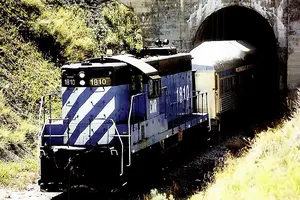
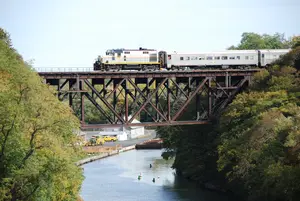
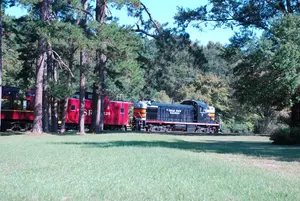
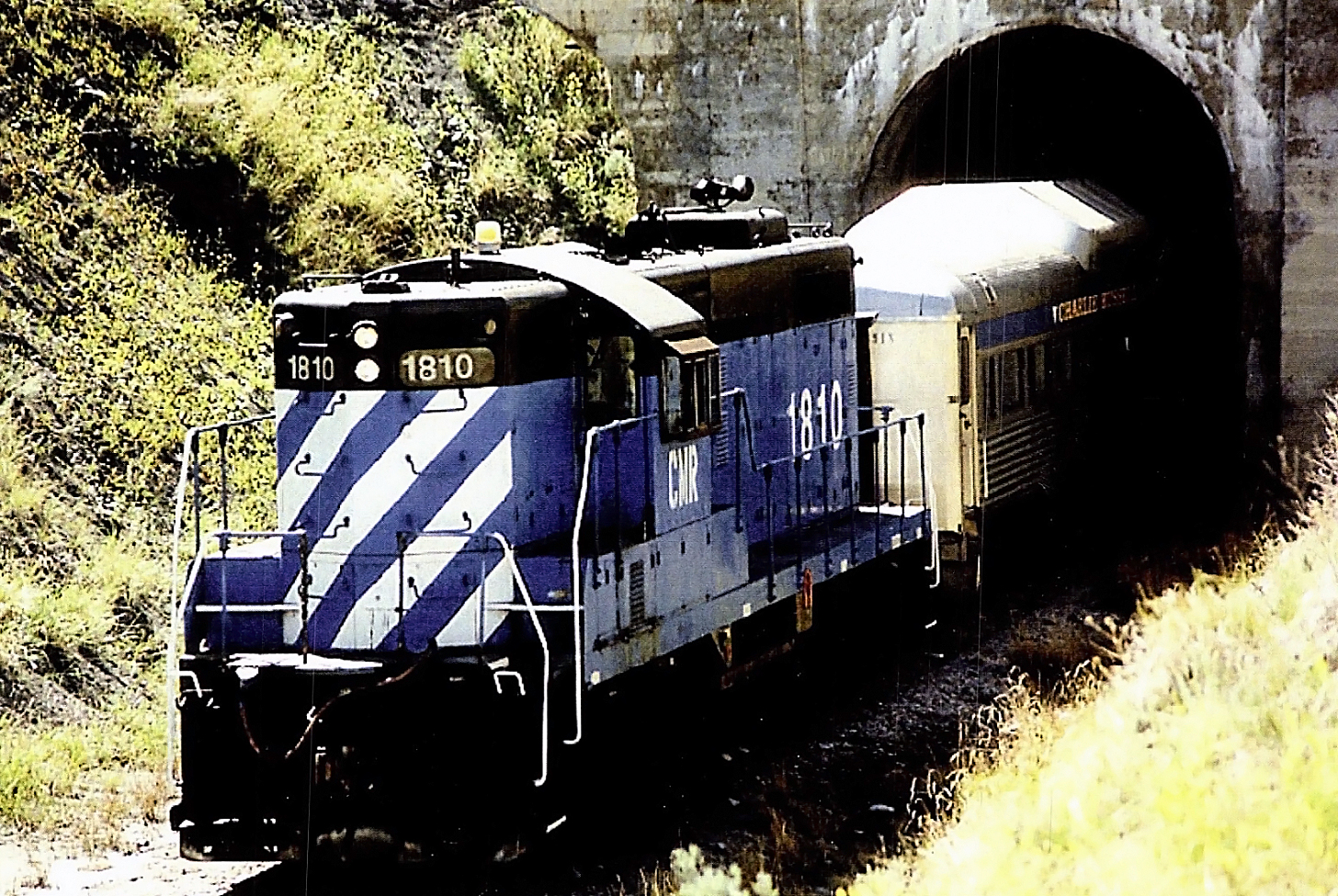 Central Montana Railway GP9 #810, originally built as Great Northern Railway #658 in 1954, leads an excursion out of Hoosac Tunnel near Denton, Montana. The bore is 2,014 feet in length and was completed by the Milwaukee Road between 1912-1913.
What makes the Chew Choo especially appealing for your readers is that it operates over real working railroad trackage with genuine regional history. The line belongs to Central Montana Rail (CM)—a short line that operates roughly 84 miles between Moccasin and Geraldine, connecting with BNSF at Moccasin. Much of that route was originally built by the Chicago, Milwaukee, St. Paul & Pacific (Milwaukee Road) as part of its “Northern Montana” line toward Great Falls, while the southern segment toward Kingston Junction traces back to the Great Northern’s Lewistown branch. Along the way are signature railroad landmarks: high steel trestles and a long tunnel that add “wow” moments you can’t replicate by car.
A Brief History
To understand why this dinner train feels so “big sky,” it helps to know a little about the rails beneath it. Central Montana Rail emerged after the State of Montana acquired portions of the route in the early 1980s, following the discontinuance of service by Burlington Northern; local operation began in the mid-1980s. Today, CM is primarily a freight railroad, but the dinner train has become a signature seasonal passenger operation on this historic corridor—one that still feels like a classic rural branchline in the best way.
Wikipedia
The Chew Choo’s trip is often described as a 56-mile round trip through central Montana’s ranchlands and valleys, with trestles, sweeping views, and that signature tunnel passage that always gets passengers looking up from their plates.
And unlike many tourist railroads that rely on preserved coaches pulled by a locomotive, this train is known for using Budd Rail Diesel Cars (RDCs)—streamlined stainless-steel self-propelled railcars built for mid-century passenger service—giving the trip a distinctive look and feel. The dinner-train equipment has been noted as ex–Boston & Maine RDCs, repurposed for the experience
The Experience
If you have ever said, “I want a scenic train ride, but I also want it to feel like an event,” this is exactly the pitch. The Charlie Russell Chew Choo is commonly promoted as a scenic, narrated ride with wildlife viewing potential—antelope, deer, raptors, and coyotes are all part of the “keep an eye out” checklist—paired with live entertainment that moves through the cars.
On many runs, the cast and musicians provide that classic western atmosphere: musicians and “saloon girls” (as the attraction describes them) keep the mood lively, and the show element can include a playful “train robbery” with masked bandits—a signature gag that’s become part of the Chew Choo’s personality.
Operationally, boarding takes place at the Hanover Boarding Station, about 10 miles (roughly 20–25 minutes) from Lewistown—close enough for visitors staying in town, but far enough that you quickly feel like you’ve slipped out into open country.
Dinner Train Options
The flagship product is the Montana Dinner Train—a longer, “full evening” outing that’s widely described as about four and a half hours overall. It blends the ride itself, the meal service, and the entertainment into one packaged experience.
What’s on the menu? The Chew Choo is especially associated with a full-course prime rib dinner (often highlighted as the headliner), followed by dessert, with beverage service included in the experience description. Vegetarian options are also noted as available, which is worth a quick callout for families and mixed-diet groups.
Drinks and bar service: In addition to what’s included with dinner, the operation notes a no-host cash bar, which can be a nice “upsell” for adult groups—especially on warm-weather departures that time the return leg with sunset.
Timing and boarding: Departure and boarding times vary by date, but one consistent operational note is that passengers typically board well before the train rolls—often about an hour ahead on the published schedule. That buffer gives guests time to settle in, browse souvenirs, and get oriented before the entertainment and meal service begin.
Special-Theme Dinner Trains
One reason the Chew Choo generates repeat riders is that the “standard” dinner train is supported by specialty departures—themed events that blend the same scenic ride with a twist in entertainment, music, or seasonal programming. Current listings describe specialty dates such as Cinco de Mayo, Cowboy Poetry, Chokecherry Festival, and a fall Wandering Wizard event, alongside the core summer schedule.
From a content standpoint, these are perfect for “plan-ahead” language: themed trains tend to sell quickly, and the operation has publicly discussed adding capacity and new rides to meet demand.
A quick origin story: how the Chew Choo got rolling
While the rails are historic, the dinner train itself is a comparatively modern tradition. The Chew Choo is commonly tied to the Lewistown area’s community tourism efforts, and the “About” material for the attraction notes that it made its first run on July 4, 1994, beginning with leased cars before the organization built out the equipment used for today’s operation.
That origin—community-driven, tied to regional heritage—helps explain why it feels less like a generic attraction and more like “a Montana thing”: local performers, local pride, and a route that shows off central Montana at its most photogenic. To learn more about the train please click here to visit their website.
Recent Articles


-
Montana Dinner Train Rides Near Lewistown!
Jan 08, 26 03:03 PM
 The Charlie Russell Chew Choo turns an ordinary rail trip into an evening event: scenery, storytelling, live entertainment, and a hearty dinner served as the train rumbles across trestles and into a t…
 -
Alabama's - Murder Mystery - Dinner Train Rides
Jan 08, 26 02:19 PM
 There is currently one location in the state offering a murder mystery dinner experience, the Wales West Light Railway!
 -
Rhode Island's - Murder Mystery - Dinner Train Rides
Jan 08, 26 01:43 PM
Let's dive into the enigmatic world of murder mystery dinner train rides in Rhode Island, where each journey promises excitement, laughter, and a challenge for your inner detective. -
Florida's - Wine Tasting - Train Rides
Jan 08, 26 01:13 PM
 Wine by train not only showcases the beauty of Florida's lesser-known regions but also celebrate the growing importance of local wineries and vineyards.
 -
Texas's - Wine Tasting - Train Rides
Jan 08, 26 12:30 PM
 This article invites you on a metaphorical journey through some of these unique wine tasting train experiences in Texas.
 -
New York's - Wine Tasting - Train Rides
Jan 08, 26 11:32 AM
 This article will delve into the history, offerings, and appeal of wine tasting trains in New York, guiding you through a unique experience that combines the romance of the rails with the sophisticati…
 -
California Dinner Train Rides In Sacramento!
Jan 08, 26 11:21 AM
Just minutes from downtown Sacramento, the River Fox Train has carved out a niche that’s equal parts scenic railroad, social outing, and “pick-your-own-adventure” evening on the rails. -
New Jersey Dinner Train Rides In Woodstown!
Jan 08, 26 10:31 AM
For visitors who love experiences (not just attractions), Woodstown Central’s dinner-and-dining style trains have become a signature offering—especially for couples’ nights out, small friend groups, a… -
Nevada's - Murder Mystery - Dinner Train Rides
Jan 07, 26 02:12 PM
 Seamlessly blending the romance of train travel with the allure of a theatrical whodunit, these excursions promise suspense, delight, and an unforgettable journey through Nevada’s heart.
 -
West Virginia's - Murder Mystery - Dinner Train Rides
Jan 07, 26 02:08 PM
For those looking to combine the allure of a train ride with an engaging whodunit, the murder mystery dinner trains offer a uniquely thrilling experience. -
Kansas's - Murder Mystery - Dinner Train Rides
Jan 07, 26 01:53 PM
Kansas, known for its sprawling wheat fields and rich history, hides a unique gem that promises both intrigue and culinary delight—murder mystery dinner trains. -
Michigan's - Wine Tasting - Train Rides
Jan 07, 26 12:36 PM
In this article, we’ll delve into the world of Michigan’s wine tasting train experiences that cater to both wine connoisseurs and railway aficionados. -
Indiana's - Wine Tasting - Train Rides
Jan 07, 26 12:33 PM
In this article, we'll delve into the experience of wine tasting trains in Indiana, exploring their routes, services, and the rising popularity of this unique adventure. -
South Dakota's - Wine Tasting - Train Rides
Jan 07, 26 12:30 PM
For wine enthusiasts and adventurers alike, South Dakota introduces a novel way to experience its local viticulture: wine tasting aboard the Black Hills Central Railroad. -
Kentucky Thomas The Train Rides
Jan 07, 26 12:26 PM
If you’ve got a Thomas fan in the house, Day Out With Thomas at the Kentucky Railway Museum is one of those “circle it on the calendar” weekends. -
Michigan's Thomas The Train Rides
Jan 07, 26 12:10 PM
If you’ve got a Thomas fan in the house, few spring outings feel as “storybook-real” as Day Out With Thomas™ at Greenfield Village in Dearborn, Michigan. -
Texas Dinner Train Rides On The TSR!
Jan 07, 26 11:36 AM
Today, TSR markets itself as a round-trip, four-hour, 25-mile journey between Palestine and Rusk—an easy day trip (or date-night centerpiece) with just the right amount of history baked in. -
Iowa Dinner Train Rides In Boone!
Jan 07, 26 11:06 AM
If you’ve ever wished you could pair a leisurely rail journey with a proper sit-down meal—white tablecloths, big windows, and countryside rolling by—the Boone & Scenic Valley Railroad & Museum in Boon… -
Wisconsin Dinner Train Rides In North Freedom!
Jan 06, 26 10:18 PM
Featured here is a practical guide to Mid-Continent’s dining train concept—what the experience is like, the kinds of menus the museum has offered, and what to expect when you book. -
Pennsylvania Dinner Train Rides In Boyertown!
Jan 06, 26 06:48 PM
With beautifully restored vintage equipment, carefully curated menus, and theatrical storytelling woven into each trip, the Colebrookdale Railroad offers far more than a simple meal on rails.