
NYC's 4-8-4 "Niagara" Locomotives: History, Specs, Photos
Last revised: February 27, 2025
By: Adam Burns
New York Central's 4-8-4 class, affectionately nicknamed "Niagara," represent a pinnacle of steam locomotive design and engineering.
These fine locomotives were significant in their contribution to railroading history, marrying power with the finesse essential for handling fast passenger services.
While other modern 4-8-4s may have surpassed the S-1B in terms of weight and tractive effort, few could rival this pinnacle of locomotive engineering in steam generation, horsepower, speed, and capability.
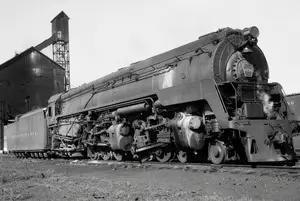
A revolutionary boiler design eliminated the steam dome, maximizing boiler size within the constraints of the New York Central loading gauge.
This enlarged boiler necessitated some unique adaptations: the sandbox was recessed into the boiler top, the smokestack was unusually short, and the air reservoirs were integrated into the massive frame.
Additional innovations included positioning the turbo generator below the colossal firebox and mounting the bell on the pilot beam.
The S-1B's design also deviated from the standard NYC appearance, featuring an unconventional smokebox front and a headlight positioned above the boiler centerline.
These technological marvels were complemented by enormous PT tenders with a 4-10-0 (centipede) wheel arrangement, reinforcing the S-1B's reputation as a masterpiece of locomotive craftsmanship.
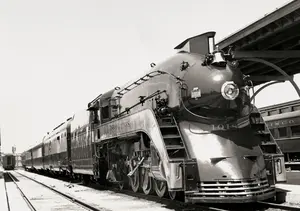
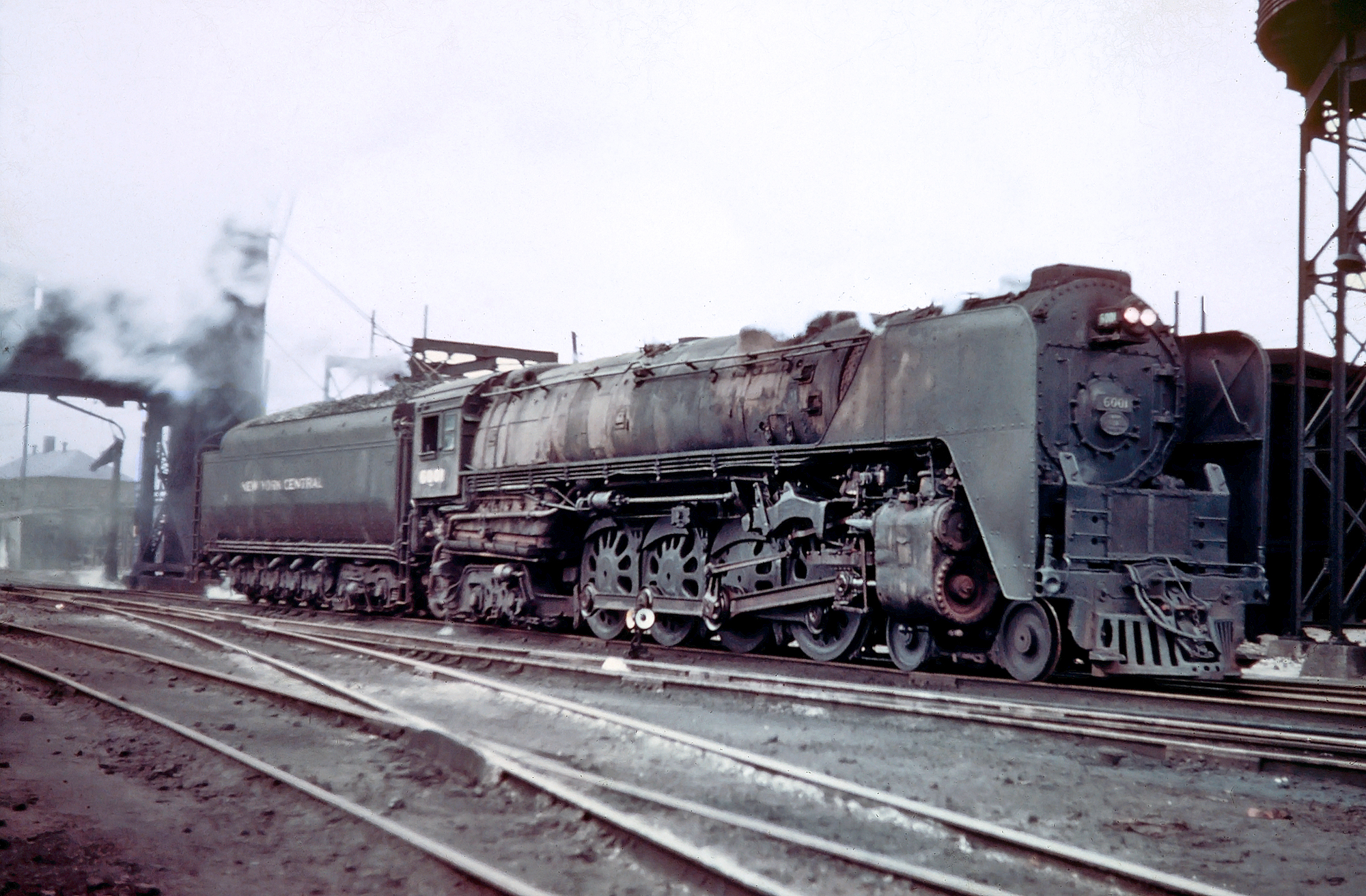 One of the New York Central's magnificent 4-8-4 "Niagaras," #6001, is seen here in Chicago a few years before she was retired, circa 1953. One of the very best examples of this wheel arrangement put into service, sadly none of these fabulous locomotives were preserved. American-Rails.com collection.
Development and Background
Post-World War II, the New York Central Railroad faced a surge in passenger traffic, necessitating a robust solution.
Paul Kiefer, the Chief Mechanical Engineer of Motive Power and Rolling Stock, envisioned a new class of locomotives that surpassed the capabilities of the existing 4-6-4 Hudsons and the recently built L-4 Class 4-8-2s.
The challenge was clear: create a locomotive with a larger boiler capacity, increased adhesive weight, and greater tractive effort. Thus, the development of the "Niagara" class began as a means to upgrade the fleet with locomotives capable of greater power outputs while maintaining or improving efficiency.
The Niagaras would ultimately boast a 30% increase in tractive effort and 25% more grate area, a formidable 6000 horsepower rating, and roller bearings on all axles, coupling rods, and connecting rods.
The American Locomotive Company (Alco) was entrusted with this ambitious project. Such was the confidence of the New York Central in this design that they preemptively placed an additional order for 26 similar locomotives even before the prototype's delivery.
These subsequent locomotives, scheduled for late 1945 and early 1946, featured 79" drivers as opposed to the initial prototype's 75" drivers.
Alco delivered the pioneering Class S-1A 4-8-4 in 1945. Aligning with the design's 6000 horsepower objective, this groundbreaking locomotive was assigned the road number 6000.
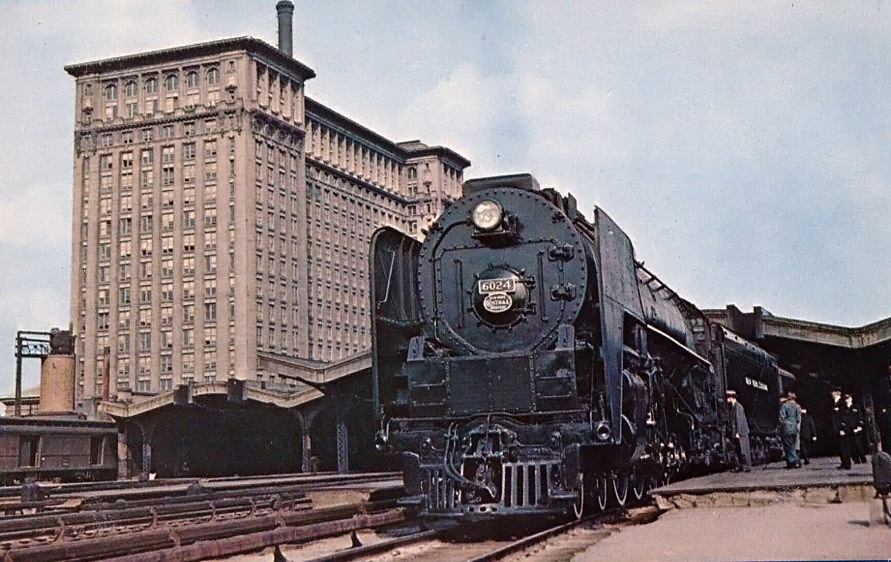 One of New York Central's powerful 4-8-4 "Niagara's," #6024 (S-1b), is seen here at Michigan Central Station in Detroit, circa 1950.
Construction and Classes
The NYC "Niagara" class steam locomotives were constructed by the American Locomotive Company (ALCO) between 1945 and 1946. A total of 27 locomotives were built, including an experimental variant. They were designated under the NYC Class S, specifically the class S-1 to S-2.
Key Construction Information:
- Builder: American Locomotive Company (ALCO)
- Production Years: 1945–1946
- Number Built: 27 (26 production locomotives, 1 experimental)
The Niagara class was designed to embody high-speed capabilities while ensuring optimal fuel and water efficiency—a challenge for traditional steam locomotives. These locomotives featured advanced engineering innovations of their time.
| Class | Road Numbers | Year Built | Builder |
|---|---|---|---|
| S-1a | 6000 | 1945 | Alco |
| S-1b | 6001-6019 | October-December 1945 | Alco |
| S-1b | 6020-6022 | January, 1946 | Alco |
| S-1b | 6023-6025 | April, 1946 | Alco |
| S-2a | 5500 | June, 1946 | Alco |
General Specifications:
- **Configuration:** 4-8-4
- **Driver Diameter:** 75 inches (1,905 mm)
- **Locomotive Weight:** Approximately 471,000 pounds
- **Tender Weight:** 337,000 pounds
- **Combined Weight:** 808,000 pounds
- **Fuel Type:** Coal
- **Boiler Pressure:** 275 psi (1.9 MPa)
- **Cylinder Size:** 25.5 inches × 32 inches (648 mm × 813 mm)
- **Tractive Effort:** 62,333 pounds-force (273.8 kN)
- **Total Heating Surface:** 5,353 square feet (497.3 m²)
- **Superheater Area:** 1,785 square feet (165.8 m²)
- **Firebox Area:** 462 square feet (42.9 m²)
Performance
The Niagaras excelled in high-speed performances, capable of maintaining sustained speeds of 100 mph (160 km/h) while hauling heavy passenger trains. The design emphasized enhanced exhaust steam flow and reduced back pressure to maintain steam efficiency at these high speeds.
Design Features
1. **Boiler Design:** The boiler design incorporated a large firebox and combustion chamber, promoting efficient fuel combustion. This contributed to the significant steam capacity required for fast and heavy services.
2. **Feedwater Heater:** To enhance thermal efficiency, the Niagaras were equipped with feedwater heaters, which pre-heated the water before it entered the boiler, reducing the fuel consumption needed to generate steam.
3. **Berkshire Frame:** The frame design derived principles from the "Berkshire" 2-8-4 designs, known for their strength and durability, ensuring the Niagaras could handle the stresses of high-speed operation.
4. **Roller Bearings:** To reduce friction and maintenance, roller bearings were used extensively in various parts of the locomotive, including driving wheels and axles.
5. **Advanced Valve Gear:** Employing the Baker valve gear allowed precise steam distribution, contributing to the overall efficiency and power of the locomotives.
6. **Cylindrical Tender:** The Niagaras were paired with cylindrical tenders that were devised to streamline and improve the overall profile, reducing air resistance and improving fuel efficiency.
Operational History
The Niagaras were predominantly used for high-speed passenger service, operating famed trains like the 20th Century Limited and the Empire State Express.
Their ability to perform exceptional feats made them the pride of the NYC passenger services. They were capable of hauling heavy passenger trains across long distances, requiring fewer stops, which was a significant improvement over older steam locomotives.
Nevertheless, despite their impressive specifications and capabilities, the Niagaras faced an operational environment that was rapidly shifting towards diesel locomotives.
The diesel engines gradually demonstrated advantages in terms of lower operational costs, reduced maintenance, and the ability to run without the extensive support facilities required by steam locomotives.
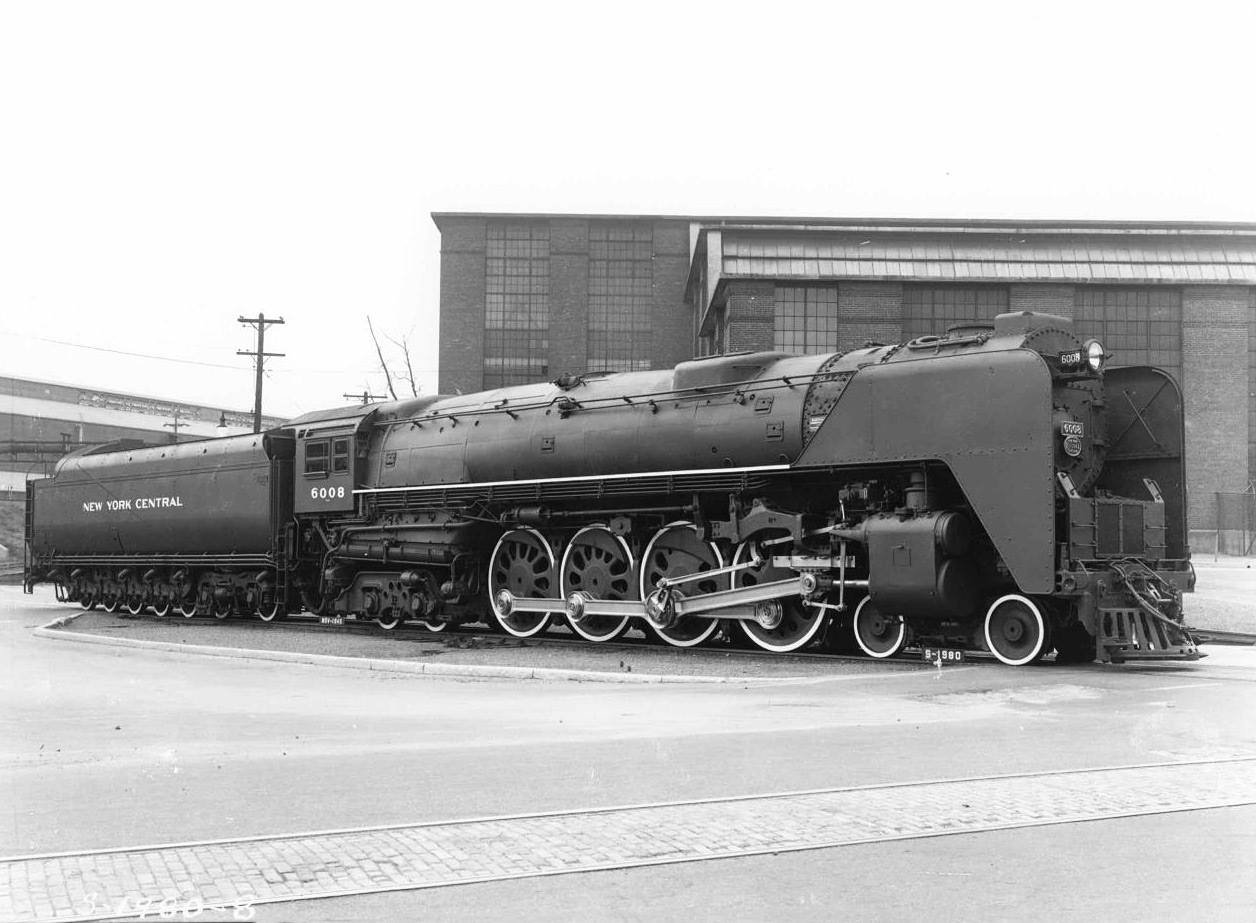 An American Locomotive builder's photo featuring New York Central 4-8-4 #6008 (S-1b), circa 1945. These powerful 'Niagara's' were wonderful machines but alas, witnessed barely a decade of service before their retirement. None were preserved.
Downfall and Legacy
The late 1940s and early 1950s marked the decline of steam locomotives across the United States, and the Niagara class was not immune to this trend.
In addition, the Niagaras' arrival coincided with new E7 passenger diesels, and then F3s and F7s shortly thereafter. These locomotives offered easier servicing and quicker turnaround times, making them more economical and efficient than their steam counterparts.
As the New York Central continued to invest in diesels, the 4-8-4s were reassigned from their premier duties. By 1950, these impressive steam engines were relegated to less critical tasks.
Diesel-electrics increasingly replaced steam as they became more efficient and economically viable. This led to the early retirement of the Niagaras.
The NYC prioritized dieselizing its easternmost divisions, and by 1953, the remaining 4-8-4s found themselves relocated to Ohio and Indiana. Here, they participated in some passenger service but were predominantly utilized for freight duties.
Their substantial weight confined them to a limited number of routes on the former Big Four lines. These locomotives, designed for high-speed performance, were not ideally suited for the low-speed tasks they were now assigned.
Nevertheless, they continued to operate until 1955-1956, when their equipment trusts expired, and the railroad fully transitioned to diesel power.
By 1956, most were scrapped, despite their relatively recent introduction and groundbreaking design. Only in railroad memory and records do these engines continue to exist as symbols of the final and most powerful steam locomotives produced for the New York Central.
Importance and Technological Legacy
Although the operational lifespan of the Niagara was short-lived, their design innovations and performance left an indelible mark on steam locomotive development. They represented the zenith of steam locomotive technology and served as a bridge between the classic era of steam and the budding era of diesel-electrics.
The emphasis on high-efficiency steam production, advanced bearing technologies, and streamlined design influenced subsequent locomotive engineering and even preserved the esteem steam power held during the transition phase.
Conclusion
The Niagaras were unmistakably ahead of their time, combining power with innovative design features tailored for high-speed passenger service. Despite facing competition from the emerging diesel-electric technologies, their brief operational history was marked by exceptional performances and records.
Their legacy remains in railroad history as the final and perhaps the finest expression of American steam engineering, standing as a tribute to human ingenuity during a transformative period in railroading. The Niagaras symbolize the apex of steam power, occupying a permanent place in the pantheon of legendary locomotives.
Recent Articles


-
Ohio Railroad Museums (2026): A Complete Guide
Oct 05, 26 05:51 PM
 Ohio railroad museums—the Age of Steam Roundhouse, Bellevue, Worthington, Conneaut’s Nickel Plate 755, and the Dennison depot. Confirm hours on each site.
 -
Delaware Railroad Museums (2026): A Complete Guide
Oct 05, 26 02:43 PM
 Delaware railroad museums—Wilmington & Western at Greenbank, the Harrington tower and N5 caboose, Felton's 1868 depot, and the Selbyville station museum.
 -
C&O's M-1 Steam Turbine Locomotives: Specs, Roster, History
Oct 05, 26 12:13 PM
 Chesapeake & Ohio Class M-1 steam-turbine-electrics. Three Baldwin-Westinghouse locomotives, 500–502, built 1947–48 for The Chessie. Specs, the 2-C1+2-C1-B arrangement, and a roster. All scrapped…
 -
N&W 2-6-6-2 Locomotives (Class Z): Specs, Roster, History
Oct 05, 26 11:44 AM
 Norfolk & Western Class Z 2-6-6-2s. One hundred ninety compound Mallets, 1300–1489, from Richmond, Baldwin, and Schenectady, 1912–1918. Diagram specs, the Z-1b rebuilds, Z-2 1399, and a roster. No…
 -
Scenic Train Rides (USA 2026): State Guide to Tourist Railroads
Oct 04, 26 12:17 AM
 Scenic and tourist train rides in all 50 states for 2026. Colorado narrow gauge, Pennsylvania steam, Alaska’s White Pass, and the states with no full-size ride this month. Confirm on the railroad.
 -
Wyoming Scenic Train Rides (2026): A Complete Guide
Oct 03, 26 12:07 AM
 Wyoming has no full-size tourist railroad on the calendar in October 2026. Cheyenne Depot Museum and Douglas Railroad Museum are static. Union Pacific 4014’s posted public trip is a November run to De…
 -
Washington Scenic Train Rides (2026): A Complete Guide
Oct 02, 26 11:53 PM
 Washington tourist trains in 2026—Mount Rainier Scenic at Elbe, the Northwest Railway Museum, and Chehalis-Centralia. Lake Whatcom has no 2026 date on its ticket page.
 -
Wisconsin Scenic Train Rides (2026): A Complete Guide
Oct 02, 26 11:48 PM
 Wisconsin tourist trains in 2026—Wisconsin Great Northern, Osceola & St. Croix Valley, Mid-Continent, East Troy, and the National Railroad Museum.
 -
Pennsylvania Railroad Class Q2 4-4-6-4: Specs, Roster, History
Oct 02, 26 11:28 PM
 Pennsylvania Railroad Class Q2 4-4-6-4 duplexes. Twenty-six engines, 6131 and 6175–6199, Altoona 1944–45. Form 109-J specs, the 7,987 hp test of 6175, and a roster. All scrapped.
 -
Utah Scenic Train Rides (2026): A Complete Guide
Oct 02, 26 11:18 PM
 Utah tourist trains in 2026—Heber Valley Railroad from Heber City. Golden Spike at Promontory is a locomotive demonstration, not a line-haul ride.
 -
South Dakota Scenic Train Rides (2026): A Complete Guide
Oct 02, 26 11:06 PM
 South Dakota’s 2026 scenic train is the Black Hills Central 1880 Train, Hill City to Keystone. Steam is the summer assignment. Confirm the engine.
 -
Oregon Scenic Train Rides (2026): A Complete Guide
Oct 02, 26 11:04 PM
 Oregon tourist trains in 2026—Oregon Coast Scenic from Rockaway Beach, Mount Hood at Hood River, Eagle Cap from Elgin, and the Oregon Rail Heritage Center in Portland.
 -
Oklahoma Scenic Train Rides (2026): A Complete Guide
Oct 02, 26 10:36 PM
 Oklahoma has no full-size scenic railroad on an October 2026 calendar. Oklahoma Railway Museum Halloween and Polar trains, the El Reno trolley, and the Heartland Flyer.
 -
North Dakota Scenic Train Rides (2026): A Complete Guide
Oct 02, 26 01:14 PM
North Dakota has no tourist railroad on a 2026 calendar. Ride Amtrak’s daily Empire Builder. The Fort Lincoln Trolley in Mandan is not a current ticket. -
Nebraska Scenic Train Rides (2026): A Complete Guide
Oct 02, 26 10:11 AM
 Nebraska has no full-size scenic railroad in 2026. The Omaha Zoo Railroad runs weekends through October 4. Ride Amtrak’s California Zephyr across the state.
 -
Missouri Scenic Train Rides (2026): A Complete Guide
Oct 02, 26 09:56 AM
 Missouri tourist trains in 2026—Branson Scenic Railway and the St. Louis, Iron Mountain & Southern at Jackson. Belton has no 2026 schedule posted.
 -
Minnesota Scenic Train Rides (2026): A Complete Guide
Oct 02, 26 09:52 AM
 Minnesota tourist trains in 2026—North Shore Scenic Railroad in Duluth, the Duluth River Train, and the Como-Harriet streetcar.
 -
Kansas Scenic Train Rides (2026): A Complete Guide
Oct 02, 26 09:32 AM
 Kansas tourist trains in 2026—the Abilene & Smoky Valley Railroad. Santa Fe 3415 is in overhaul. Midland Railway at Baldwin City is closed.
 -
Iowa Scenic Train Rides (2026): A Complete Guide
Oct 02, 26 08:41 AM
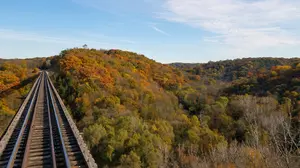
 Iowa tourist trains in 2026—Boone & Scenic Valley across the Bass Point Creek High Bridge, and Midwest Central’s December North Pole trains
 -
Indiana Scenic Train Rides (2026): A Complete Guide
Oct 02, 26 08:35 AM
 Indiana tourist trains in 2026—French Lick Scenic Railway, Nickel Plate Express, Hoosier Valley, and Hesston. Whitewater Valley is suspended.
 -
Illinois Scenic Train Rides (2026): A Complete Guide
Oct 02, 26 12:28 AM
 Illinois tourist trains in 2026—Illinois Railway Museum, Monticello Railway Museum, Fox River Trolley, and Silver Creek & Stephenson.
 -
Texas Scenic Train Rides (2026): A Complete Guide
Oct 02, 26 12:14 AM
 Texas tourist trains in 2026—Texas State Railroad, Grapevine Vintage Railroad, Austin Steam Train's Hill Country Flyer, and the Galveston Railroad Museum.
 -
Tennessee Scenic Train Rides (2026): A Complete Guide
Oct 02, 26 12:03 AM
Tennessee tourist trains in 2026—Tennessee Valley Railroad Museum, Dollywood Express, Three Rivers Rambler Christmas trains, and the Tennessee Central Railway Museum. -
South Carolina Scenic Train Rides (2026): A Complete Guide
Oct 01, 26 11:52 PM
 South Carolina's tourist train is the South Carolina Railroad Museum in Winnsboro—Blue Granite Express, pumpkin trains, and Santa trains on the old Rockton & Rion.
 -
Mississippi Scenic Train Rides (2026): A Complete Guide
Oct 01, 26 11:38 PM
 Mississippi has no regular tourist railroad in 2026. Ride Amtrak through the state, or book the excursion lines in Alabama, Tennessee, Louisiana, or Arkansas.
 -
Louisiana Scenic Train Rides (2026): A Complete Guide
Oct 01, 26 02:52 PM
 Louisiana has no regular full-size tourist railroad in 2026. New Orleans Polar Express returns December 11–31. Museums at Long Leaf, DeQuincy, and Jackson.
 -
Kentucky Scenic Train Rides (2026): A Complete Guide
Oct 01, 26 02:45 PM
 Kentucky tourist trains in 2026—Big South Fork Scenic Railway, Bluegrass Scenic Railroad, Kentucky Railway Museum, and My Old Kentucky Dinner Train.
 -
Georgia Scenic Train Rides (2026): A Complete Guide
Oct 01, 26 02:27 PM
 Georgia tourist trains in 2026—Blue Ridge Scenic Railway, SAM Shortline, Azalea Sprinter, Savannah shop rides, and what to confirm at Stone Mountain.
 -
Arkansas Scenic Train Rides (2026): A Complete Guide
Oct 01, 26 01:02 PM
 Arkansas tourist trains in 2026—Arkansas & Missouri through the Boston Mountains, and the Eureka Springs & North Arkansas dinner and excursion trains.
 -
Alabama Scenic Train Rides (2026): A Complete Guide
Oct 01, 26 12:59 PM
Alabama tourist trains in 2026—Heart of Dixie Railroad Museum at Calera, North Alabama Railroad Museum at Chase, and the Wales West Light Railway at Silverhill. -
The Circus Train: How Such Attractions Reached Distant Cities
Oct 01, 26 12:22 PM
 How circuses moved by rail: Coup's 1872 flats, the Ringling train's sections and car counts, the 1918 Hammond wreck, and the last show on May 21, 2017.
 -
West Virginia Halloween Train Rides (2026)
Oct 01, 26 12:19 PM
 2026 West Virginia Halloween train. Cass Scenic Halloween Train, October 30 and 31, steam, 5:00 p.m. from Cass Depot. Adult $75. About two hours to Whittaker. Family ride.
 -
Wisconsin Halloween Train Rides (2026)
Oct 01, 26 12:11 PM
2026 Wisconsin Halloween trains. Mid-Continent Pumpkin Special October 24–25, adult $24, pumpkins extra. Halloween Flyer October 24 at 4:30 p.m., adult $30. Osceola Pumpkin Express boards in Osceola… -
Utah Halloween Train Rides (2026)
Oct 01, 26 12:00 PM
 2026 Utah Halloween trains at Heber Valley Railroad. Pumpkin Train, about 40 minutes, with a cookie and a pumpkin. Halloween Express, about 90 minutes to Grim Hollow, Monday, Thursday, and Friday even…
 -
Texas Halloween Train Rides (2026)
Oct 01, 26 11:28 AM
 2026 Texas Halloween train. Texas State Railroad Spooky Special, adult-only, October 24. Boards Palestine at 5:00 p.m. About five hours to Rusk and back. Dinner on the grounds. Not steam. No fare on t…
 -
Tennessee Halloween Train Rides (2026)
Oct 01, 26 12:15 AM
 2026 Tennessee Halloween trains. Tennessee Valley Railroad Museum Rails, Wizards & Spells, selected days September 18 through October 25, from $35, about 2.5 hours. Spells & Potions tea from $60. The…
 -
Frisco's "Firefly" (Train): Consist, Route, Timetable
Sep 30, 26 11:37 PM
 Frisco Firefly—daylight streamliner, Kansas City to Tulsa and Oklahoma City. Trains 117 and 118. Pacifics 1018, 1026, and 1031. Last run May 22, 1960.
 -
South Carolina Halloween Train Rides (2026)
Sep 30, 26 11:29 PM
 2026 South Carolina Halloween train. South Carolina Railroad Museum Pumpkin Patch Express, the two Saturdays before Halloween. About three miles to the Greenbriar pavilion. Pumpkin for children 12 and…
 -
Oregon Halloween Train Rides (2026)
Sep 30, 26 08:10 PM
2026 Oregon Halloween train. Sumpter Valley Railroad Halloween Express at the Sumpter Depot, calendar window October 31 at 11:00 a.m. through November 1 at 12:30 p.m. Fare and the individual clocks ar… -
Oklahoma Halloween Train Rides (2026)
Sep 30, 26 03:45 PM
2026 Oklahoma Halloween train. Oklahoma Railway Museum, October 30 and 31, from Oakwood Station in Oklahoma City. Adults $15, children 3–12 $8. A candy bag with the ride. -
McCloud River Railroad: Serving The Timber Industry (1897-2009)
Sep 30, 26 03:37 PM
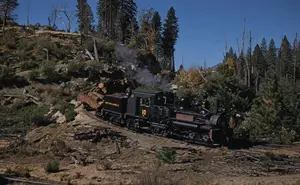
 McCloud River Railroad—Mount Shasta City to McCloud, Hambone, and Burney. Opened August 1, 1897. Alco No. 25 and EMD SD38s. Dinner train through January 2010. Railbikes in 2026; a dinner train is stil…
 -
Nevada Halloween Train Rides (2026)
Sep 30, 26 03:30 PM
2026 Nevada Halloween trains in Ely. Nevada Northern Pumpkin Patch Caper and Haunted Ghost Train. Adult tickets start at $45. Dates are on the railroad’s ticket calendar. Boulder City stays off until… -
Missouri Halloween Train Rides (2026)
Sep 30, 26 11:12 AM
 2026 Missouri Halloween trains. St. Louis Iron Mountain & Southern Pumpkin Patch Train on October 3, 4, 10, and 11, and Halloween Express on October 31 at 1:00 p.m. Jackson depot. No fare on the sched…
 -
Minnesota Halloween Train Rides (2026)
Sep 30, 26 11:06 AM
 2026 Minnesota Halloween trains. North Shore Scenic Great Pumpkin Train in Duluth, October 15–18. Everyone gets a pumpkin. Terror Train is October 30, an adult costume party, about three hours. Fares…
 -
Maryland Halloween Train Rides (2026)
Sep 30, 26 10:42 AM
 2026 Maryland Halloween trains. Western Maryland Scenic Pumpkin Patch Limited, October 17, 18, 24, and 25, $14. Colesville Trolleyween October 24, 25, and 31.
 -
West Side Lumber Company Railroad: Roster, History, Lines
Sep 30, 26 09:45 AM
 West Side Lumber at Tuolumne, California. Three-foot Shay and Heisler logging railroad. Lima shop numbers, builder specs, and where the engines are in 2026.
 -
Kansas Halloween Train Rides (2026)
Sep 30, 26 09:41 AM
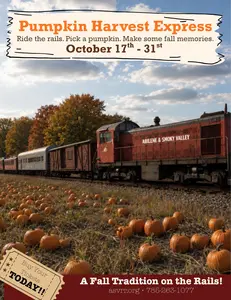
 2026 Kansas Halloween train. Abilene & Smoky Valley Pumpkin Harvest Express, October 17 through 31. About one hour. Shop prices $35.56 to $41.02. Everyone picks a pumpkin.
 -
Iowa Halloween Train Rides (2026)
Sep 29, 26 11:58 PM
2026 Iowa Halloween train. Boone & Scenic Valley Pumpkin Express, October 10, 10:00 a.m. from 225 10th Street. About 1 hour 15 minutes. Children pick a pumpkin. -
Arizona Halloween Train Rides (2026)
Sep 29, 26 11:43 PM
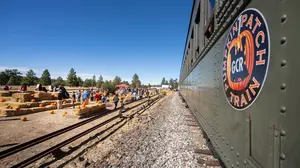
 2026 Arizona Halloween train. Grand Canyon Railway Pumpkin Patch Train from Williams, $39 with a pumpkin included. Select October dates on the ticket calendar. Haunted train cars are optional.
 -
Nevada Northern Halloween Trains (2026)
Sep 29, 26 06:18 PM
Nevada Northern 2026 Halloween trains in Ely. Pumpkin Patch Caper to Keystone Gulch and the Haunted Ghost Train. Adult tickets start at $45. Dates are on the railroad’s calendar. Confirm on nnry.com.





%2C%20is%20seen%20here%20at%20Michigan%20Central%20Station%20in%20Detroit%2C%20circa%201950.)