Railroad Property, A Glossary Of Various Types
Last revised: September 9, 2024
By: Adam Burns
Below are several railroad infrastructure and property terms that broadly cover both areas such as various track terms, how a turntable functions, and what is the purpose of a shoofly.
The terms are listed in alphabetical order and provide thorough but brief descriptions of each topic covered.
Lastly, I do hope that the terms and meanings included here are of help and beneficial use to you, as that is the primary reason for providing the information presented.
Please note that you can also find additional meanings at the website of Trains magazine, the leading periodical covering the railroad industry.
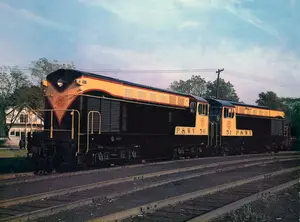
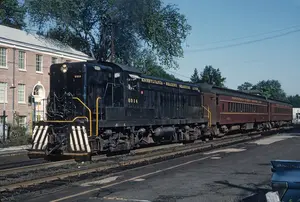
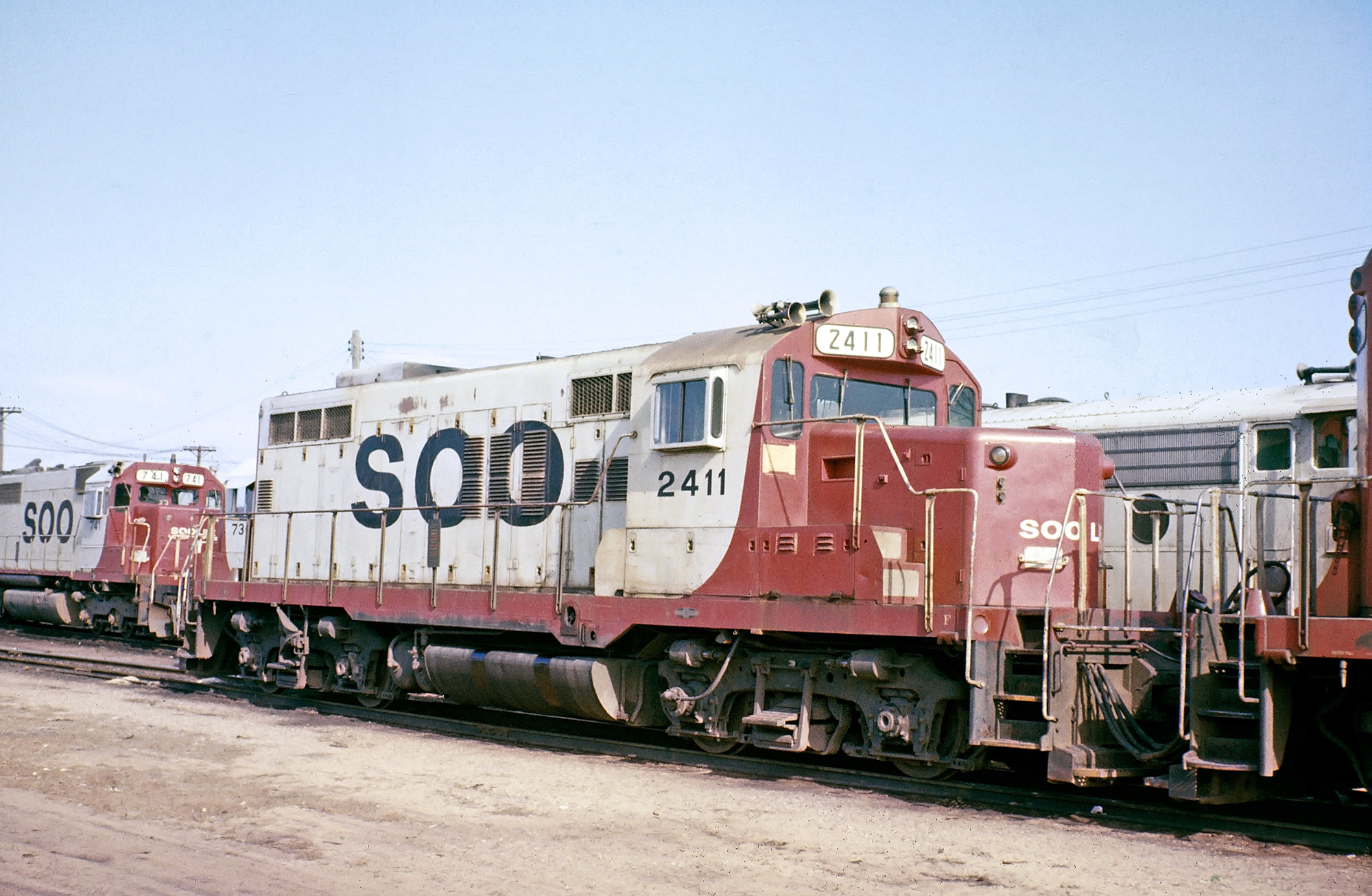 Soo Line GP9 #2411, a chop-nose design converted in 1963, lays over in Stevens Point, Wisconsin on April 21, 1974. This unit later became Canadian Pacific #8270. American-Rails.com collection.
Railroad Infrastructure and Property Terms (A)
Abandon: To cease operating all or part of a route or service, especially with the intent of never resuming it again.
Angle bar: Short pieces of steel used to join together standard sections of rail (usually 39 feet in length). Four bolts, fastened through a pair of holes at each end of the angle bar, are used to join the rails together.
Armstrong turntable: Any old-style equipment that relies only on manpower to operate (in this case, a turntable). A steam engine that lacks an automatic stoker is sometimes called an "Armstrong."
Railroad Infrastructure and Property Terms (B)
Backshop: Facility where heavy repair and rebuilding of locomotives takes place.
Ballast: A layer of material, which usually consists of either crushed rock, cinders, or gravel that is placed upon a railroad right-of-way, which holds railroad ties in place and allows for drainage and runoff.
The term is also sometimes used to describe extra weight added to locomotives. (An SD40-2, for example, can weight anywhere from 150 to 200 tons, depending on the amount of ballast added at the buyer's specifications.
The usual method of ballasting is to use thicker sheets of steel to fabricate the frame. Occasionally smaller amounts of weight, usually concrete casting, are added to equalize weight distribution.)
Beanery: A railroad eating house.
Block: Usually refers to a particular section of track that is computer-controlled so that trains can be properly, efficiently, and safely operated.
Bowl: The primary means of building trains in a yard with hump capability, these tracks are located following it.
Boxed joints: Rail joints that are located directly across from joints on the other side of the tracks. These are also known as "opposed" or "square" joints.
Branch line: A secondary railroad line that is not a main line, it also usually receives less maintenance than main lines.
Broad gauge: Any track gauge that is greater than 4 feet 8 1/2 inches.
Railroad Infrastructure and Property Terms (C)
Catenary: A system of overhead trolley wires that carry electrical current. It is suspended directly above the railroad tracks with aid from wires that are strung along line-side poles.
Continuous welded rail (CWR): Rail laid in lengths of 1,500 feet or so (roughly a 1/4-mile), rather than 39-foot pieces bolted together.
Aside from saving railroads millions in maintenance costs and derailments CWR does not buckle, because it resists thermal expansion and contraction. It is also referred to as ribbon rail.
Controlled siding: A siding where switches and signals are remotely controlled by a dispatcher.
Crossing: Commonly known as a diamond, they allow for railroad tracks to intersect each other at any type of angle that does not allow for actually switching on to the other track. It is also the term often referred to the place where highways and railroad tracks meet commonly known as grade crossings.
Crossover: Facilitates the movement of rail equipment onto parallel tracks via back-to-back switches.
Railroad Infrastructure and Property Terms (D)
Diamond: Similar to a crossing, a situation when two railroad lines cross one another without the means of switching onto the other track.
Dual control switch: A track switch that can either be operated manually or remotely (by a dispatcher).
Railroad Infrastructure and Property Terms (E)
Exempt railroad crossing: This notice allows for all vehicles to operate over the grade crossing without the need to stop or watch for oncoming trains.
Railroad Infrastructure and Property Terms (F)
Fill: A railroad right-of-way formed by leveling a low area to keep the ruling grade manageable.
Flying junction: Similar to a flyover (below) except that two or more railroad tracks, on at least one line, operate through the junction.
Flyover: Also known as an overpass/underpass it allows for two intersecting railroad lines to cross one another without the means of a diamond, which would require dispatching and increase transit times.
Frog: The area of the track through a switching point that allows for the wheel flange to pass through it (otherwise the wheel would snag the track and derail).
Switches are numbered according to the angle of their frogs (so the sharper the curve the less speed it can be taken at). For instance, a Number 20 switch separates the rails one foot for every twenty feet traveled.
Railroad Infrastructure and Property Terms (G)
Gauge: The inside width of a railroad track. Here in the U.S. the Standard Gauge is 4 feet 8 1/2 inches.
Grade: The slope or angle of the railroad right-of-way. It is based on percentages so if the ruling grade for a rail line or section of railroad track is 2% than this means that the right-of-way rises roughly two feet per every one-hundred feet traveled.
As an example 2% is a somewhat steep climb and railroads try to keep their ruling grades no great than this (although it does happen with railroads operating lines that reach up to 3% to 4%).
Ground throw: A manual device to operate switches that is roughly the same height as the rail-head.
Guard rail: Usually placed on bridges one or two rails are placed inside the running rails to prevent railroad equipment from tumbling completely off of the right of way when it derails.
Railroad Infrastructure and Property Terms (H)
Helper district: A segment of railroad line with steep grades that must use extra locomotives to negotiate the train over it.
High iron: Slang term for a main line or main track as iron was once the main material used in the construction of rails.
Hot box: An overheated wheel bearing, which if left undetected, can burn off and cause a derailment.
Hot box detector (HBD): A heat sensor that warns of hot boxes and are found along a railroad line.
House track: A siding track running near a station that allows for either passengers or freight to be unloaded (very common in the older days of railroading).
Hump yard: Classification yards where strings of freight cars are slowly pushed over a hump, or small hill, and properly organized according to whatever precedent the railroad has them planned for.
Once the single car reaches the top of the hill, or hump, it coasts under its power into the bowl until it reaches the proper yard track, via a computer-controlled switch, it is designated for.
Railroad Infrastructure and Property Terms (I)
Interchange track: A simple length of track, usually a siding, where two railroads interchange cars.
Railroad Infrastructure and Property Terms (J)
Jointed rail: Rail in standard sections (usually 39 feet) that was bolted together, as opposed to continuously welded rail.
Junction: The area where two or more rail lines meet or intersect.
Railroad Infrastructure and Property Terms (L)
Lead (pronounced "leed"): A track which connects a group of tracks to a main line.
Light rail: A term referring to rail transit, it usually consists of a single powered car or small consist with a single operator that uses overhead catenary (electricity) for power. Normally this type of transit system if sound in cities and towns (usually operating directly on the streets) and is very similar to the trolley systems of old.
Railroad Infrastructure and Property Terms (M)
Main line, or Main track: The principle railroad track that connects two points it usually also includes sidings, spurs, and yards at a number of different locations to serve train meets, customers, and/or hold freight cars.
Maintenance of way: The repair and maintenance of a railroad right-of-way.
Movable-point frog: The "new" frog it allows for the wheel flange to be constantly supported through a switch rather than the opening that occurs in standard frogs to allow flanges to pass through freely (i.e., the gap is eliminated). It also allows for higher speeds through a crossing of at least 70 mph.
MOW: Maintenance-of-Way.
Railroad Infrastructure and Property Terms (N)
Narrow gauge: Any track gauge that is less than the Standard Gauge of 4 feet 8 1/2 inches.
Railroad Infrastructure and Property Terms (O)
Operating rod: The manually or mechanically operated bar at a switch which allows the switching points to be moved into either the main route position or diverging route position.
Railroad Infrastructure and Property Terms (P)
Plant: A shortened version of the "interlocking plant" term, which efficiently controls the movements and operations of all of the switches, signals, and controlling mechanisms at a particular junction of railroad tracks.
Pound (rail): The unit of measure of rail size is weight per yard. For instance, 120-lb rail gets its weight designation because every three feet of rail weighs roughly 120 lbs.
Railroad Infrastructure and Property Terms (R)
Rail: The standard steel-fabricated structure that railroads use to operate over. Today the structure is known as "T"-rail as it is formed in roughly an upside-down "T" shape to provide for maximum support.
Once made from standard 39-foot sections today rails are fabricated in 1/4-mile sections (up to 1,500 feet) and then welded together to form continuous welded rail (CWR) that is much stronger, reliable, and cheaper to maintain than jointed rail.
Rail lubricator: Devices mounted along the rails in areas of high curvature that apply lubricant to the flanges of locomotives and cars of passing trains to reduce both flange- and rail-wear.
Receiving yard: The destination for arriving trains carrying cars to be sorted or classified.
Ribbon rail: Also known as continuous welded rail (CWR), rail laid in lengths of 1,500 feet or so (roughly a 1/4-mile), rather than 39-foot pieces bolted together.
Aside from saving railroads millions in maintenance costs and derailments CWR does not buckle, because it resists thermal expansion and contraction. It is also referred to as ribbon rail.
Railroad Infrastructure and Property Terms (S)
Shoofly: Temporary track constructed to allow trains to pass around an obstacle that blocks movement on the main track, usually as a result of maintenance or an accident/derailment.
Siding: An additional track found to the right or left of the main line that allows for trains to operate more efficiently over a line whereby they can "pull over" to allow another train to pass.
Slip switch: The combination of a diamond crossing of two tracks including a connecting track that allows for the movement between the two through tracks.
Split the switch: The result of a freight car's trucks following opposite rails (i.e., one follows the main line the other the diverging track), the car is said to have split, or "picked" the switch.
Spring switch: A spring-mounted track switch that automatically returns to the normal position when the final car passes over it. This type of switch saves time by not needing to be operated manually.
Spur: A short stretch of track splitting from the main line which is normally used to serve either customers or store equipment.
Standard gauge: The track gauge used throughout North America and most of Europe of 4 feet 8 1/2 inches, which is the measurement between the inside of the two rails.
Stock rail: The rail against which the point of a switch rests.
Stub switch: A track switch in which the rails of the single-track end of track move sideways to meet the two (sometimes three) pairs of rails from the other end. Stub switches are long since obsolete, replaced by the conventional switch with movable tapered rails called points.
Switch: As a noun the term that refers to track equipment that allows for cars to move, or crossover, from one track to another. The verb meaning of this term refers to shuffling or moving rail cars, usually within a yard (also called marshaling).
Switchback: A track setup whereby a reserve move is made to negotiate very steep grades that is usually performed by using back-to-back switches.
Railroad Infrastructure and Property Terms (T)
Tangent: The term for straight track.
Team track: A historical term that carries on today as a rail siding for general use by freight shippers. It was originally named for the teams of horses that once pulled the wagons to pick up and deliver the freight.
Tell-tale: A device that was once placed along the track to warn crew members operating a top freight cars of a moving train that a low structure was eminent down the line. Once crew members no longer operated on top of moving freight trains these were abolished.
Third rail: A rail that runs parallel to the main running tracks whereby locomotives or powered rail cars pick up, via "shoes," electricity for power. Third rails are essentially the same as overhead catenary in that it is a device for locomotives or powered rail cars to pick up needed electricity.
Throwbar: A bar underneath the ties of a turnout to which the points are attached and which moves the points.
Tie: The component of railroad infrastructure that holds the rails in place and supported by the surrounding ballast. Ties are usually made of either wood, concrete, or newer composite materials.
Torpedo: A small explosive charge that can be clamped to the top of the rail, which is used as a warning device to crews as it detonates upon impact with the locomotive wheels.
Track gauge: The distance between the two rails. Here in the U.S. and North America the gauge, known as Standard Gauge, is 4 feet 8 1/2 inches.
Trestle: A structure that spans a short distance (usually a stream or overpass that uses timbers or steel for supports.
Turnout: Another term for a railroad track switch.
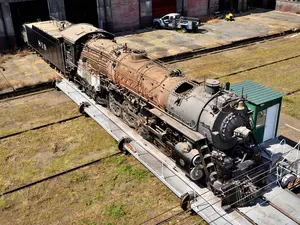
Turntable: A rotating structure that swivels in a 360 degree radius that either turns locomotives in the opposite direction or diverts them onto a different track.
Railroad Infrastructure and Property Terms (U)
Union station: A railroad station that was used by multiple railroads which was typically also funded jointly by the railroads which used it.
Railroad Infrastructure and Property Terms (V)
Viaduct: Long bridge structures that span land areas, usually constructed of arches and heavy, reinforced concrete.
Railroad Infrastructure and Property Terms (W)
Wye: A triangular arrangement of tracks forming the letter "Y", typically used for turning railroad cars and locomotives.
Railroad Infrastructure and Property Terms (Y)
Yard: Usually a large series or groupings of tracks that allows for either the storage of railroad cars or to be held for a short time to build future trains.
Yard-limit board: A trackside sign which marks the boundary of yard territory and rules.
Yard ladder: An angled track which connects a grouping of tracks that make up the yard tracks.
Recent Articles


-
Greenbrier, Cheat & Elk Railroad: Western Maryland's Logging Line
Sep 26, 26 11:59 PM
 Greenbrier, Cheat and Elk—the logging railroad the Western Maryland bought in 1927. Cass to Spruce, Summit Cut at 4,066.6 feet, Elk River Branch, Laurel Bank.
 -
Elkins (Western Maryland): Yard, History, Operations
Sep 26, 26 11:56 PM
 Western Maryland at Elkins—the Elkins Division yard, roundhouse, and wash rack. Belington, Durbin, Black Fork, and the Elk River branches met here.
 -
B&O's "Cincinnatian" (Train): Route, Consist, Timetable
Sep 26, 26 11:51 PM
 B&O Cincinnatian—Mount Clare five-car streamliner, January 19, 1947, trains 75 and 76. P-7d Pacifics 5301–5304. Detroit–Cincinnati from June 25, 1950, trains 53 and 54. Last run April 30, 1971.
 -
The Semaphore: Railroading's Classic Signal
Sep 26, 26 11:51 AM
 Railroad semaphore signals: blade and spectacle, lower quadrant and upper quadrant, US&S Style B and GRS Model 2A, Robinson’s track circuit, and the last blades on the Raton Subdivision.
 -
Black Fork Grade (Western Maryland): History and Operations
Sep 26, 26 11:47 AM
 Black Fork Grade—the Western Maryland climb through Blackwater Canyon. Thomas to Hendricks, past 3 percent, an H-9 and ten loads, helpers off at Fairfax.
 -
Western Maryland Steam Locomotives: History & Roster
Sep 26, 26 11:39 AM
 Western Maryland steam—H-9 Consolidations, I-2 Decapods, Lima 2-8-8-2s, Baldwin Challengers, and twelve Baldwin Potomac 4-8-4s. Post-1900 roster.
 -
Western Maryland Diesel Roster: All-Time
Sep 26, 26 11:32 AM
 Western Maryland diesels—S1 102 in 1941, fourteen F7 boosters, BL2s, hammerhead RS3s, Circus SD40s, and Chessie GP40-2s. Serials and order numbers.
 -
The Dutch Line (Western Maryland): History, Map, Operations
Sep 25, 26 09:38 PM
 Western Maryland Dutch Line—the Hanover Subdivision. Emory Grove to Highfield via Hanover and Gettysburg, York branch 1893, stone trains, and the route CSX still runs.
 -
The Durbin Branch (Western Maryland): History, Map, Operations
Sep 25, 26 09:13 PM
 Western Maryland Durbin Branch—the Coal & Iron Railway, 46.9 miles Elkins to Durbin, opened July 27, 1903. Mixed train until April 10, 1959. H-7B Consolidations.
 -
Western Maryland Railway: Map, Rosters, Logo, History
Sep 25, 26 10:24 AM
 Western Maryland Railway—the Fast Freight Line. Baltimore, Carroll & Frederick, May 27, 1852. Connellsville Extension 1912. Chessie, then into the B&O May 1, 1983.
 -
Illinois Dinner Train Rides (2026): A Complete Guide
Sep 25, 26 09:52 AM
 2026 Monticello Railway Museum Murder Mystery Dinner Train—June 13, July 11, August 1, and September 5 have run. Three courses, about 2 hours, $112. Confirm on mrym.org.
 -
Georgia Dinner Train Rides (2026): A Complete Guide
Sep 25, 26 12:29 AM
 2026 Azalea Sprinter dinner train from Nashville and Willacoochee, Georgia—2½ hours. Club Car adult $147, Executive adult $177. Confirm on azaleasprinter.com.
 -
Baldwin "Centipede" Locomotives: Specs, Roster, Photos
Sep 25, 26 12:02 AM
 Baldwin DR-12-8-1500/2 Centipede—2-D+D-2, two 608SC engines, 3,000 hp. SAL 4500 from the 1943 test bed. 54 on the serial list, 52 sold. PRR BP60 then BH50. None preserved.
 -
Florida Dinner Train Rides (2026): A Complete Guide
Sep 24, 26 11:56 PM
 2026 Seminole Gulf Murder Mystery Dinner Train in Fort Myers—five courses cooked onboard, 3½ hours, $129 or $135 Saturday, plus tax and gratuity. Confirm on semgulf.com.
 -
West Virginia Northern Railroad: Map, Photos, History
Sep 24, 26 11:27 PM
 West Virginia Northern—Kingwood to Tunnelton, 11 miles of Preston County coal. Narrow gauge 1888, standard gauge 1895. Last freight February 19, 1991. Consolidations 8 and 9 survive.
 -
Rutland Railroad: Map, Rosters, History, Logo
Sep 24, 26 01:18 PM
 Rutland Railroad—Follett’s Champlain & Connecticut River, November 1, 1843. Bellows Falls–Burlington December 18, 1849. Green Mountain Gateway. Last train September 25, 1961. Vermont Railway Janua…
 -
Arkansas Dinner Train Rides (2026): A Complete Guide
Sep 24, 26 01:12 PM
 2026 Eureka Springs & North Arkansas Dinner Train—Eurekan dining car, about 2 hours, $53.62 tax included, opens May 9, Tuesday, Wednesday, Friday, and Saturday. Confirm on esnarailway.com.
 -
Arizona Dinner Train Rides (2026): A Complete Guide
Sep 24, 26 01:01 PM
 2026 Arizona has no plated dinner train. Grand Canyon Railway sells snacks in the cars and meals in Williams or at the rim. Verde Canyon includes a charcuterie tray.
 -
Rail News, The Latest
Sep 24, 26 12:36 PM
This page provides a portal to the latest in rail news, from preservation and restortation subjects to other notable topics. -
Cotton Belt 819 Moved Outside at Pine Bluff for Evaluation
Sep 24, 26 12:35 PM
 Cotton Belt 819 left the Pine Bluff shop on September 22, 2026, first time outside in about 30 years. RDG Steam Services is evaluating the engine. No donation link posted.
 -
Reading Steam Locomotives: History, Roster & Photos
Sep 24, 26 12:14 PM
 Reading steam—Wootten fireboxes, Camelback Consolidations, Mallets, K-1 Santa Fes, G-3 Pacifics, T-1 4-8-4s. Post-1900 roster after Drury. Rambles ended October 17, 1964.
 -
Reading Diesel Roster: All-Time
Sep 24, 26 12:10 PM
 Reading diesel roster—AGEIR boxcabs, FTs, FA-1s, RS-3s, Train Masters, GP30s through GP39-2s. Serials and order numbers. Conrail April 1, 1976.
 -
Reading Railroad: Map, Logo, History, Rosters
Sep 24, 26 12:08 PM
 Reading Company—Philadelphia & Reading, 1833. Anthracite, Port Richmond, Reading Terminal. Operating company January 1, 1924. Conrail April 1, 1976.
 -
Nevada Dinner Train Rides (2026): A Complete Guide
Sep 24, 26 12:02 PM
 2026 Nevada Northern Taste of Italy—adults-only gala from East Ely. The September 19 date has run. Confirm any later night on nnry.com.
 -
North Carolina Dinner Train Rides (2026): A Complete Guide
Sep 24, 26 11:24 AM
 2026 North Carolina dinner trains—NCTM Wine & Dine in Spencer sold out February 13–15. GSMR First Class is the plated meal on the Nantahala Gorge excursion. Confirm on the railroad.
 -
Railway Express Agency (REA): Signs, Trucks, Logo & History
Sep 24, 26 09:40 AM
 Railway Express Agency—railroad-owned express company. Incorporated December 7, 1928. Operations March 1, 1929. Red diamond, green trucks. Last regular express November 7, 1975.
 -
Michigan Dinner Train Rides (2026): A Complete Guide
Sep 24, 26 09:28 AM
 2026 Steam Railroading Institute dining in Owosso—select evenings, no public dinner dates posted. Confirm on michigansteamtrain.com.
 -
Pittsburgh and West Virginia Railway: Map, Rosters, History
Sep 24, 26 12:24 AM
 Pittsburgh & West Virginia—the Hi-Line. Wabash-Pittsburgh Terminal 1904. Railway January 29, 1917. Connellsville February 11, 1931. N&W lease October 16, 1964. Wheeling & Lake Erie from May 17, 1990.
 -
Indiana Dinner Train Rides (2026): A Complete Guide
Sep 24, 26 12:13 AM
2026 Spirit of Jasper Ride & Dine is paused. No public trains. Depot at 201 Mill Street stays open as a rental. Confirm on spiritofjaspertrain.com. -
New Jersey Dinner Train Rides (2026): A Complete Guide
Sep 24, 26 12:01 AM
2026 Woodstown Central Dining in Motion—private table of four from $190, about an hour, Salem County. Confirm on woodstowncentral.com. -
Maryland Dinner Train Rides (2026): A Complete Guide
Sep 23, 26 05:19 PM
 2026 Western Maryland Scenic Allegheny Mountain Dinner Train—Cumberland, 3 hours, 21+, Saturday 7 p.m. Confirm on wmsr.com.
 -
Pittsburgh and Lake Erie Railroad: Map, Rosters, Photos
Sep 23, 26 03:28 PM
 Pittsburgh & Lake Erie—the Little Giant. Chartered 1875, Pittsburgh to Youngstown February 10, 1879. New York Central from 1883. Independent May 15, 1979. Last day September 11, 1992.
 -
Kansas Dinner Train Rides (2026): A Complete Guide
Sep 23, 26 01:11 PM
 2026 Abilene & Smoky Valley Smoky Valley Limited—two hours from the Rock Island Depot, about $72–$110, dates into December 31. Confirm on asvrr.org.
 -
The Belpaire Firebox: Simplicity and Greater Power
Sep 23, 26 01:03 PM
 Belpaire firebox—Alfred Belpaire, 1864. Square crown, straight staybolts at right angles. Pennsylvania standard after the 1880s. Great Northern was the other big user.
 -
Pennsylvania Railroad (PRR) Electric Roster: All Classes
Sep 23, 26 12:57 PM
Pennsylvania Railroad electrics—DD1s into Penn Station, P5s, 139 GG1s, B1 switchers, and 66 E44s. Class roster, 1905–1963. No unit-by-unit GG1 list. -
Penn Central Diesel Roster: All-Time
Sep 23, 26 12:46 PM
 Penn Central diesel roster—PRR classes on NYC, PRR, and New Haven power. New orders carry serials. GP38-2s are 7940-8162. Conrail April 1, 1976.
 -
Penn Central Railroad: Map, History, Logo
Sep 23, 26 12:32 PM
 Penn Central—Pennsylvania and New York Central merged February 1, 1968. New Haven January 1, 1969. Section 77 bankruptcy June 21, 1970. Conrail April 1, 1976.
 -
Iowa Dinner Train Rides (2026): A Complete Guide
Sep 23, 26 11:42 AM
 2026 Boone & Scenic Valley Wolf Dinner Train—Saturdays May–October, Union Pacific dining cars, Bass Point Creek High Bridge. Confirm on bsvrr.com.
 -
Pennsylvania-Reading Seashore Lines: Map, Roster, History
Sep 23, 26 12:32 AM
 Pennsylvania-Reading Seashore Lines—Atlantic City Railroad renamed July 15, 1933. Pennsylvania two-thirds, Reading one-third. Camden to Atlantic City, Cape May, and Millville. Conrail April 1, 1976.
 -
Wisconsin Dinner Train Rides (2026): A Complete Guide
Sep 23, 26 12:28 AM
2026 Wisconsin Great Northern dinner train in Trego—$105, Namekagon River, January 8–31 and May 5–December 17. Mid-Continent’s remaining 2026 calendar is snack and scenic. Confirm on the railroad. -
New Hampshire Dinner Train Rides (2026): A Complete Guide
Sep 23, 26 12:21 AM
2026 Cafe Lafayette Dinner Train in North Woodstock—five courses, 2 hours, from $125. Children under 6 not allowed. Confirm on nhdinnertrain.com. -
PRR "GG-1" Locomotives: Roster, Photos, Specs
Sep 23, 26 12:13 AM
 PRR GG1 electric: 139 locomotives, 4800–4938, built 1934–1943. Specs, Loewy shell, Amtrak numbers, and the last revenue trip on October 28, 1983.
 -
Montana Dinner Train Rides (2026): A Complete Guide
Sep 23, 26 12:04 AM
2026 Charlie Russell Chew Choo from Hanover, near Lewistown—4.5 hours, prime rib, adult $151. Remaining listed dates sold out. Confirm on montanadinnertrain.com. -
Kentucky Dinner Train Rides (2026): A Complete Guide
Sep 22, 26 11:52 PM
2026 My Old Kentucky Dinner Train in Bardstown—four courses, 2.5 hours, adult $116. Confirm on kydinnertrain.com. -
Tennessee Dinner Train Rides (2026): A Complete Guide
Sep 22, 26 11:45 PM
2026 TVRM Chattanooga Dinner Train—Grand Junction, select Fri/Sat March 6–October 24, 6 p.m., from $110. Confirm on tvrail.com. -
The Trainphone: PRR's Wireless Radio System
Sep 22, 26 11:17 PM
 Pennsylvania Trainphone—Union Switch & Signal inductive telephone. Bel-Del trial 1941, Frenchtown November 29, 1943. Carriers at 88 kHz and 144 kHz. Out of service April 30, 1967.
 -
Pennsylvania (PRR) Steam Roster: Post 1906
Sep 22, 26 11:13 PM
 ennsylvania steam after 1906—H8, H9, and H10 Consolidations, 574 L1s Mikados, 598 I1s Decapods, 425 K4s Pacifics, 301 M1 Mountains. Drury’s grid. Last steam November 30, 1957.
 -
Pennsylvania Railroad (PRR) Diesel Roster: All-Time List
Sep 22, 26 10:59 PM
 Pennsylvania diesel roster—SW 3908 in June 1937, then Alco, Baldwin, EMD, Fairbanks-Morse, GE, and Lima. Serials and Alco order numbers. Penn Central February 1, 1968.
 -
Pennsylvania Railroad: Map, Logo, History, Rosters
Sep 22, 26 10:02 PM
 Pennsylvania Railroad—chartered April 13, 1846, Harrisburg–Pittsburgh, Horseshoe Curve 1854, Penn Station 1910. Standard Railroad of the World. Penn Central February 1, 1968.
 -
Pennsylvania Dinner Train Rides (2026): A Complete Guide
Sep 22, 26 04:48 PM
 2026 Pennsylvania dinner trains—Colebrookdale Dining Class in Boyertown and Strasburg Dinner on the Rails. Confirm on each railroad.