
Virginia & Truckee Railroad: Queen Of The Short Lines
Published: July 28, 2026
By: Adam Burns
The Virginia & Truckee Railroad stands as one of the most celebrated short lines in American railroad history. Built to serve the legendary Comstock Lode silver mines around Virginia City, Nevada, the V&T combined remarkable engineering with extraordinary profitability during the 1870s mining boom. It earned the nickname “Queen of the Short Lines” for its ornate locomotives, luxurious passenger cars, and outsized economic influence on Nevada and the West.
Although commercial operations ended in 1950, the V&T’s story continues through preserved equipment in museums, Hollywood films, and a vibrant heritage railroad that still operates over portions of the original right-of-way. This is the story of a railroad that helped build a state and whose legacy endures more than 150 years later.
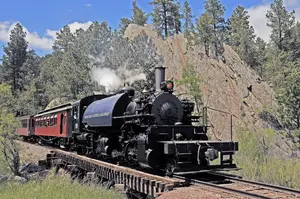
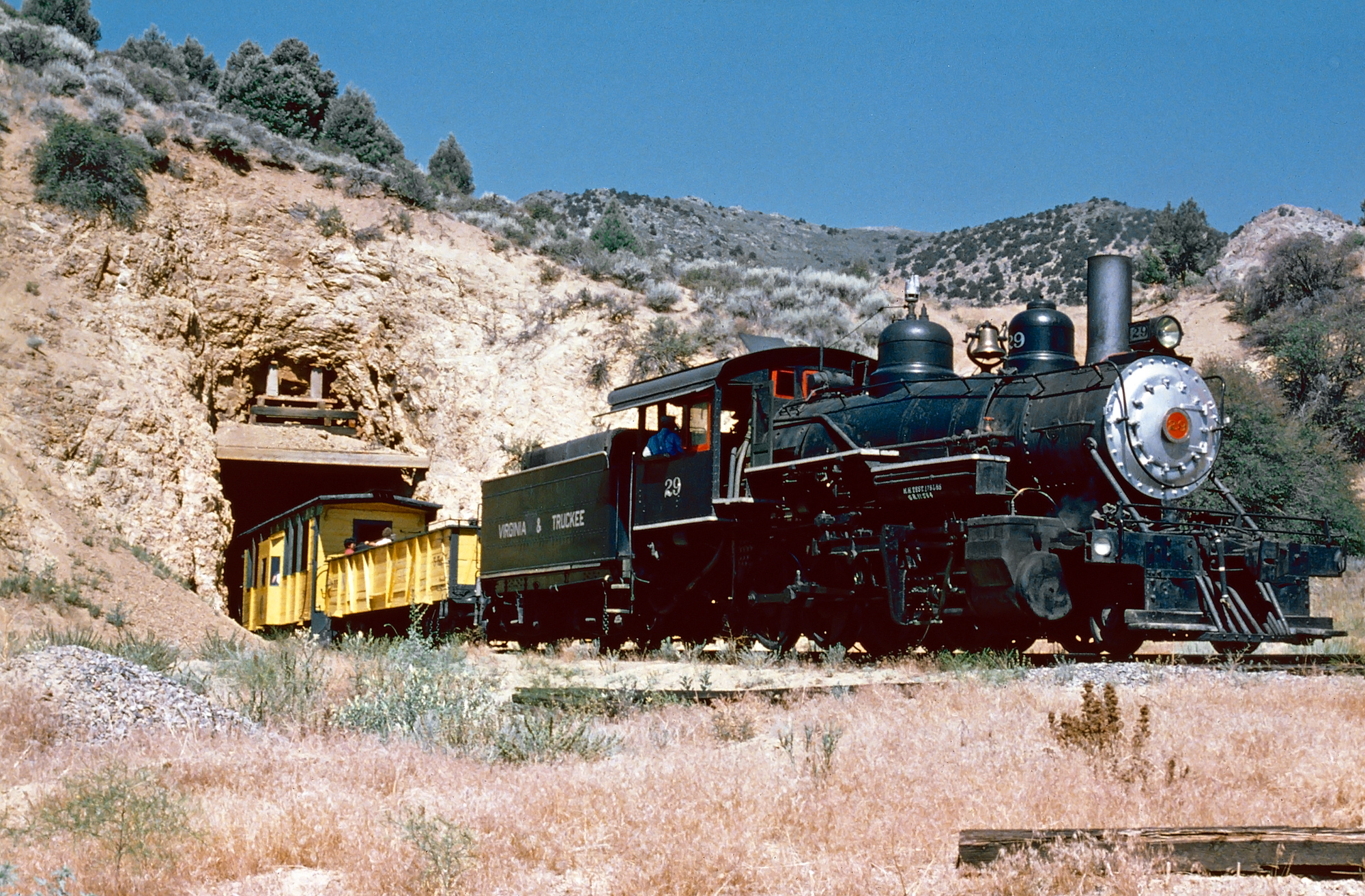 Virginia & Truckee 2-8-0 #29 exits from the east portal of Tunnel #4 (the "Yellow Jacket" Tunnel) at Gold Hill, Nevada as it climbs the grade towards Virginia City, circa 1983. The locomotive was built as Longview, Portland & Northern #680 in 1916. Mike Bledsoe photo. American-Rails.com collection.
The Comstock Lode and the Need for a Railroad
The discovery of rich gold and silver deposits on the Comstock Lode in 1859 transformed the rugged hills east of the Sierra Nevada into one of the richest mining districts in the world. Virginia City and neighboring Gold Hill exploded into boomtowns with populations eventually exceeding 25,000. The mines produced enormous wealth—hundreds of millions of dollars in silver and gold—but faced a critical problem: getting ore to the quartz reduction mills along the Carson River and hauling in the massive quantities of cordwood, mine timbers, and supplies needed to keep operations running.
Before the railroad, everything moved by wagon over rough roads. Freight rates were punishing—around $3.50 per ton for ore. Lower-grade ore was often dumped as waste because it could not be hauled profitably. William Sharon, the Virginia City agent for the powerful Bank of California, recognized that a railroad could slash costs, unlock lower-grade ores, and secure the Bank Crowd’s control over Comstock milling through their Union Mill & Mining Company. Sharon, along with Bank of California president Darius Ogden Mills and financier William Chapman Ralston, became the driving forces behind the project. General Superintendent Henry Marvin Yerington would turn their vision into reality on the ground.
Locomotive Roster
The V&T’s locomotive fleet evolved from small construction engines to more powerful machines suited to heavy ore trains and passenger service. Early power consisted primarily of 2-6-0 Moguls:
- Nos. 1 Lyon, 2 Ormsby, and 3 Storey (H.J. Booth, 1869) — The railroad’s first engines. Lyon pulled the first train into the Comstock.
- Nos. 4 Virginia and 5 Carson (Baldwin, 1869) — Slightly larger and more capable.
Later additions included handsome 4-4-0 Americans and additional Moguls, many built by Baldwin:
- No. 11 Reno (Baldwin 4-4-0, 1872) — Preserved; currently associated with the heritage V&T.
- No. 12 Genoa (Baldwin 4-4-0, 1873) — Beautifully restored and preserved at the Nevada State Railroad Museum / California State Railroad Museum orbit.
- No. 13 Empire (Baldwin 2-6-0, 1873) — Preserved at the California State Railroad Museum.
- No. 18 Dayton (Central Pacific Shops 4-4-0, 1873) — One of the most famous; long preserved and displayed.
- No. 20 Tahoe (Baldwin 2-6-0, 1875) — Preserved at the Railroad Museum of Pennsylvania.
- No. 21 J.W. Bowker (Baldwin 2-4-0, 1875) — Unique wheel arrangement; preserved at the Nevada State Railroad Museum.
- No. 22 Inyo (Baldwin 4-4-0, 1875) — Perhaps the most famous V&T locomotive; appeared in numerous Hollywood films and is frequently operated at the Nevada State Railroad Museum.
Later power included 4-6-0 Ten-Wheelers Nos. 25 (Baldwin, 1905) and 27 (Baldwin, 1913), both preserved (No. 27 at the Comstock History Center in Virginia City). In the final years of operation, the railroad acquired a second No. 5, a heavy 2-8-0 Consolidation (ex-Nevada Copper Belt, built 1925 by ALCo), which handled the last revenue trains.
Many of these locomotives and cars were sold to Hollywood studios in the 1930s and 1940s when the railroad was liquidating assets. Their use in Western films helped ensure their survival and contributed to the V&T’s lasting cultural fame. Today, nine original V&T steam locomotives survive in museums or heritage service, along with numerous passenger cars, cabooses, and freight equipment.
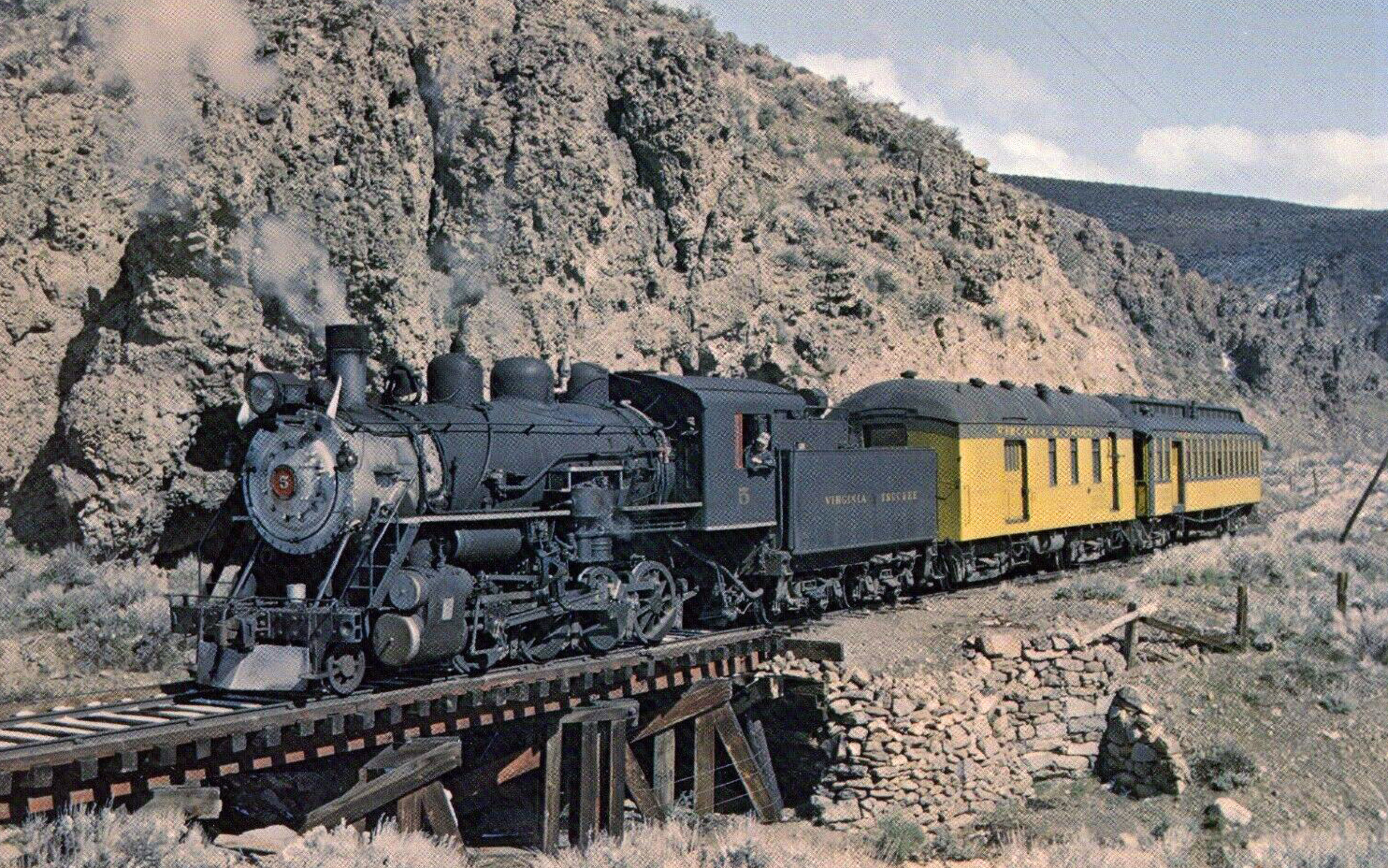 Virginia & Truckee 2-8-0 #5, originally built for the Nevada Copper Belt Railroad in May, 1925 by American Locomotive and acquired by the V&T on February 15, 1947, is seen here leading a two-car passenger train (including a 40-foot mail/baggage car #23, built in 1923 by Pullman for Southern Pacific subsidiary Texas & New Orleans as well as combination car #18, built in 1890 by Barney & Smith) through Washoe Canyon near Washoe City, Nevada as it crosses Steamboat Creek on May 7, 1950. At 15 tons, it was the heaviest steamer on V&T's roster. Al Rose photo.
Incorporation and Construction
The Virginia & Truckee Railroad Company was formally organized in Nevada on March 5, 1868. Financing came from county bonds (Ormsby and Storey Counties issued bonds with a combined par value of $500,000) and advances from mining companies. Surveyor Isaac E. James laid out a challenging but remarkably well-engineered route.
Construction began in earnest on February 18, 1869. The initial 21-mile standard-gauge line from Virginia City to Carson City descended 1,575 feet in just 13.5 miles, requiring grades that were steep for the era and a route so sinuous it contained the equivalent of 17 full circles of curves. Seven tunnels had to be bored through unstable rock (each taking two to five months), and an impressive 85-foot-tall, 500-foot-long wooden trestle—the Crown Point Trestle—spanned a deep ravine. Much of the grading work was performed by Chinese laborers.
The first rail was laid and the ceremonial first spike driven on September 28, 1869, by Superintendent Yerington. Revenue service on the Virginia City–Carson City segment began in late 1869, with the line formally completed on January 29, 1870. The Reno extension, adding another 31 miles north through Franktown, Washoe City, and Steamboat Springs to connect with the Central Pacific Railroad, was finished with the final spike driven on August 24, 1872. The completed main line ran approximately 52 miles from Reno to Virginia City, with a later branch south from Carson City to Minden.
The first locomotives—small 2-6-0 Moguls—were shipped in pieces. Nos. 1 Lyon and 2 Ormsby (built by H.J. Booth of San Francisco in 1869) and No. 3 Storey were hauled to Carson City and reassembled. Nos. 4 Virginia and 5 Carson (Baldwin, also 1869) were taken up Geiger Grade to Virginia City. Ox teams and wagons performed heroic work moving the heavy machinery. The railroad’s own shops in Virginia City (later consolidated at Carson City) handled assembly, repairs, and eventually much of the mechanical work for mines and other railroads across the region.
Boom Years: The Richest Short Line in the World
The V&T’s impact was immediate and profound. Ore freight rates dropped to about $2.00 per ton, making it profitable to mill lower-grade material that had previously been discarded. Lumber and cordwood rates were also dramatically reduced. The railroad enabled the full development of the Comstock, including the legendary “Big Bonanza” discoveries of the mid-1870s. At its peak in 1876–1877, the V&T operated 30 to 45 trains per day on a single track, employed nearly 400 men in a typical month, and generated enormous profits. Stockholders received dividends that sometimes exceeded $90,000–$100,000 per month.
The railroad’s passenger service was surprisingly elegant for a mining short line, with well-appointed cars connecting Virginia City and Carson City to the transcontinental railroad at Reno. The massive shops complex at Carson City became an industrial hub, building and repairing equipment not only for the V&T but for mines, mills, and other railroads throughout Nevada, California, and even parts of Mexico. In 1880 the V&T principals organized and built the 300-mile narrow-gauge Carson & Colorado Railroad southward from Mound House, further extending their influence (it was later sold to the Southern Pacific).
Contemporary observers called the V&T the wealthiest and most glamorous short line in the world. It was, in every sense, the railroad that helped build modern Nevada.
 This late-era scene of the Virginia & Truckee features 4-6-0 #26 taking on fuel oil at the railroad's sole fuel oil tank in Carson City, Nevada before continuing south to Minden in early September of 1949. Al Rose photo.
Decline, Receivership, and the Final Run
The end of the Big Bonanza in the late 1870s began a long, gradual decline, although mining continued on a smaller scale for decades and a brief resurgence tied to the Tonopah boom helped revenues temporarily. In 1905–1906 the railroad built a 15-mile branch south from Carson City to Minden to tap agricultural traffic in the Carson Valley.
Competition from trucks and automobiles along the parallel U.S. 395 corridor proved fatal. The Virginia City branch was abandoned in 1938 (tracks removed around 1941). The railroad entered receivership that same year. Ogden Livingston Mills (grandson of Darius Ogden Mills) had personally subsidized operations for years; after his death the situation became untenable. The last official revenue train ran on May 31, 1950, between Reno, Carson City, and Minden, with locomotive No. 27 at the head end.
Preservation and the Modern Heritage Railroad
The V&T’s equipment might have been lost to the scrapyard had it not been for its desirability to Hollywood. Many locomotives and cars found new lives on movie sets, which inadvertently preserved them for future generations. In the 1970s, railfan and preservationist Robert C. Gray began serious efforts to restore operations, trading property and laboring for decades to relay track between Virginia City and Gold Hill.
Public and private partnerships later extended the line to Mound House (Eastgate). A silver spike ceremony in 2006 and the first train over the rebuilt segment in 2009 marked major milestones. Today, the Virginia & Truckee Railroad operates as a privately owned heritage railroad running approximately 14 miles from Virginia City through Gold Hill to Mound House. It offers regular excursion trains, special events (including Ghost Trains and holiday trains), and uses both restored historic equipment and acquired locomotives and cars. Efforts continue to extend the line closer to Carson City proper.
Several of the most historic locomotives and cars reside at the Nevada State Railroad Museum in Carson City, the California State Railroad Museum, and other institutions, where they are maintained and occasionally operated.
Enduring Legacy
The Virginia & Truckee Railroad was far more than a mining hauler. It was an engineering achievement carved through difficult terrain, a financial powerhouse that helped finance dozens of other enterprises, and a cultural icon whose image remains synonymous with the romance of the Comstock and the Old West. Its preservation—through museums, films, and the living heritage railroad—ensures that future generations can experience a piece of Nevada’s extraordinary railroad heritage.
For railfans, historians, and anyone interested in the American West, the V&T remains the Queen of the Short Lines.
Recent Articles


-
Scenic Train Rides (USA 2026): State Guide to Tourist Railroads
Oct 04, 26 12:17 AM
 Scenic and tourist train rides in all 50 states for 2026. Colorado narrow gauge, Pennsylvania steam, Alaska’s White Pass, and the states with no full-size ride this month. Confirm on the railroad.
 -
Wyoming Scenic Train Rides (2026): A Complete Guide
Oct 03, 26 12:07 AM
 Wyoming has no full-size tourist railroad on the calendar in October 2026. Cheyenne Depot Museum and Douglas Railroad Museum are static. Union Pacific 4014’s posted public trip is a November run to De…
 -
Washington Scenic Train Rides (2026): A Complete Guide
Oct 02, 26 11:53 PM
 Washington tourist trains in 2026—Mount Rainier Scenic at Elbe, the Northwest Railway Museum, and Chehalis-Centralia. Lake Whatcom has no 2026 date on its ticket page.
 -
Wisconsin Scenic Train Rides (2026): A Complete Guide
Oct 02, 26 11:48 PM
 Wisconsin tourist trains in 2026—Wisconsin Great Northern, Osceola & St. Croix Valley, Mid-Continent, East Troy, and the National Railroad Museum.
 -
Pennsylvania Railroad Class Q2 4-4-6-4: Specs, Roster, History
Oct 02, 26 11:28 PM
 Pennsylvania Railroad Class Q2 4-4-6-4 duplexes. Twenty-six engines, 6131 and 6175–6199, Altoona 1944–45. Form 109-J specs, the 7,987 hp test of 6175, and a roster. All scrapped.
 -
Utah Scenic Train Rides (2026): A Complete Guide
Oct 02, 26 11:18 PM
 Utah tourist trains in 2026—Heber Valley Railroad from Heber City. Golden Spike at Promontory is a locomotive demonstration, not a line-haul ride.
 -
South Dakota Scenic Train Rides (2026): A Complete Guide
Oct 02, 26 11:06 PM
 South Dakota’s 2026 scenic train is the Black Hills Central 1880 Train, Hill City to Keystone. Steam is the summer assignment. Confirm the engine.
 -
Oregon Scenic Train Rides (2026): A Complete Guide
Oct 02, 26 11:04 PM
 Oregon tourist trains in 2026—Oregon Coast Scenic from Rockaway Beach, Mount Hood at Hood River, Eagle Cap from Elgin, and the Oregon Rail Heritage Center in Portland.
 -
Oklahoma Scenic Train Rides (2026): A Complete Guide
Oct 02, 26 10:36 PM
 Oklahoma has no full-size scenic railroad on an October 2026 calendar. Oklahoma Railway Museum Halloween and Polar trains, the El Reno trolley, and the Heartland Flyer.
 -
North Dakota Scenic Train Rides (2026): A Complete Guide
Oct 02, 26 01:14 PM
North Dakota has no tourist railroad on a 2026 calendar. Ride Amtrak’s daily Empire Builder. The Fort Lincoln Trolley in Mandan is not a current ticket. -
Nebraska Scenic Train Rides (2026): A Complete Guide
Oct 02, 26 10:11 AM
 Nebraska has no full-size scenic railroad in 2026. The Omaha Zoo Railroad runs weekends through October 4. Ride Amtrak’s California Zephyr across the state.
 -
Missouri Scenic Train Rides (2026): A Complete Guide
Oct 02, 26 09:56 AM
 Missouri tourist trains in 2026—Branson Scenic Railway and the St. Louis, Iron Mountain & Southern at Jackson. Belton has no 2026 schedule posted.
 -
Minnesota Scenic Train Rides (2026): A Complete Guide
Oct 02, 26 09:52 AM
 Minnesota tourist trains in 2026—North Shore Scenic Railroad in Duluth, the Duluth River Train, and the Como-Harriet streetcar.
 -
Kansas Scenic Train Rides (2026): A Complete Guide
Oct 02, 26 09:32 AM
 Kansas tourist trains in 2026—the Abilene & Smoky Valley Railroad. Santa Fe 3415 is in overhaul. Midland Railway at Baldwin City is closed.
 -
Iowa Scenic Train Rides (2026): A Complete Guide
Oct 02, 26 08:41 AM
 Iowa tourist trains in 2026—Boone & Scenic Valley across the Bass Point Creek High Bridge, and Midwest Central’s December North Pole trains
 -
Indiana Scenic Train Rides (2026): A Complete Guide
Oct 02, 26 08:35 AM
 Indiana tourist trains in 2026—French Lick Scenic Railway, Nickel Plate Express, Hoosier Valley, and Hesston. Whitewater Valley is suspended.
 -
Illinois Scenic Train Rides (2026): A Complete Guide
Oct 02, 26 12:28 AM
 Illinois tourist trains in 2026—Illinois Railway Museum, Monticello Railway Museum, Fox River Trolley, and Silver Creek & Stephenson.
 -
Texas Scenic Train Rides (2026): A Complete Guide
Oct 02, 26 12:14 AM
 Texas tourist trains in 2026—Texas State Railroad, Grapevine Vintage Railroad, Austin Steam Train's Hill Country Flyer, and the Galveston Railroad Museum.
 -
Tennessee Scenic Train Rides (2026): A Complete Guide
Oct 02, 26 12:03 AM
Tennessee tourist trains in 2026—Tennessee Valley Railroad Museum, Dollywood Express, Three Rivers Rambler Christmas trains, and the Tennessee Central Railway Museum. -
South Carolina Scenic Train Rides (2026): A Complete Guide
Oct 01, 26 11:52 PM
 South Carolina's tourist train is the South Carolina Railroad Museum in Winnsboro—Blue Granite Express, pumpkin trains, and Santa trains on the old Rockton & Rion.
 -
Mississippi Scenic Train Rides (2026): A Complete Guide
Oct 01, 26 11:38 PM
 Mississippi has no regular tourist railroad in 2026. Ride Amtrak through the state, or book the excursion lines in Alabama, Tennessee, Louisiana, or Arkansas.
 -
Louisiana Scenic Train Rides (2026): A Complete Guide
Oct 01, 26 02:52 PM
 Louisiana has no regular full-size tourist railroad in 2026. New Orleans Polar Express returns December 11–31. Museums at Long Leaf, DeQuincy, and Jackson.
 -
Kentucky Scenic Train Rides (2026): A Complete Guide
Oct 01, 26 02:45 PM
 Kentucky tourist trains in 2026—Big South Fork Scenic Railway, Bluegrass Scenic Railroad, Kentucky Railway Museum, and My Old Kentucky Dinner Train.
 -
Georgia Scenic Train Rides (2026): A Complete Guide
Oct 01, 26 02:27 PM
 Georgia tourist trains in 2026—Blue Ridge Scenic Railway, SAM Shortline, Azalea Sprinter, Savannah shop rides, and what to confirm at Stone Mountain.
 -
Arkansas Scenic Train Rides (2026): A Complete Guide
Oct 01, 26 01:02 PM
 Arkansas tourist trains in 2026—Arkansas & Missouri through the Boston Mountains, and the Eureka Springs & North Arkansas dinner and excursion trains.
 -
Alabama Scenic Train Rides (2026): A Complete Guide
Oct 01, 26 12:59 PM
Alabama tourist trains in 2026—Heart of Dixie Railroad Museum at Calera, North Alabama Railroad Museum at Chase, and the Wales West Light Railway at Silverhill. -
The Circus Train: How Such Attractions Reached Distant Cities
Oct 01, 26 12:22 PM
 How circuses moved by rail: Coup's 1872 flats, the Ringling train's sections and car counts, the 1918 Hammond wreck, and the last show on May 21, 2017.
 -
West Virginia Halloween Train Rides (2026)
Oct 01, 26 12:19 PM
 2026 West Virginia Halloween train. Cass Scenic Halloween Train, October 30 and 31, steam, 5:00 p.m. from Cass Depot. Adult $75. About two hours to Whittaker. Family ride.
 -
Wisconsin Halloween Train Rides (2026)
Oct 01, 26 12:11 PM
2026 Wisconsin Halloween trains. Mid-Continent Pumpkin Special October 24–25, adult $24, pumpkins extra. Halloween Flyer October 24 at 4:30 p.m., adult $30. Osceola Pumpkin Express boards in Osceola… -
Utah Halloween Train Rides (2026)
Oct 01, 26 12:00 PM
 2026 Utah Halloween trains at Heber Valley Railroad. Pumpkin Train, about 40 minutes, with a cookie and a pumpkin. Halloween Express, about 90 minutes to Grim Hollow, Monday, Thursday, and Friday even…
 -
Texas Halloween Train Rides (2026)
Oct 01, 26 11:28 AM
 2026 Texas Halloween train. Texas State Railroad Spooky Special, adult-only, October 24. Boards Palestine at 5:00 p.m. About five hours to Rusk and back. Dinner on the grounds. Not steam. No fare on t…
 -
Tennessee Halloween Train Rides (2026)
Oct 01, 26 12:15 AM
 2026 Tennessee Halloween trains. Tennessee Valley Railroad Museum Rails, Wizards & Spells, selected days September 18 through October 25, from $35, about 2.5 hours. Spells & Potions tea from $60. The…
 -
Frisco's "Firefly" (Train): Consist, Route, Timetable
Sep 30, 26 11:37 PM
 Frisco Firefly—daylight streamliner, Kansas City to Tulsa and Oklahoma City. Trains 117 and 118. Pacifics 1018, 1026, and 1031. Last run May 22, 1960.
 -
South Carolina Halloween Train Rides (2026)
Sep 30, 26 11:29 PM
 2026 South Carolina Halloween train. South Carolina Railroad Museum Pumpkin Patch Express, the two Saturdays before Halloween. About three miles to the Greenbriar pavilion. Pumpkin for children 12 and…
 -
Oregon Halloween Train Rides (2026)
Sep 30, 26 08:10 PM
2026 Oregon Halloween train. Sumpter Valley Railroad Halloween Express at the Sumpter Depot, calendar window October 31 at 11:00 a.m. through November 1 at 12:30 p.m. Fare and the individual clocks ar… -
Oklahoma Halloween Train Rides (2026)
Sep 30, 26 03:45 PM
2026 Oklahoma Halloween train. Oklahoma Railway Museum, October 30 and 31, from Oakwood Station in Oklahoma City. Adults $15, children 3–12 $8. A candy bag with the ride. -
McCloud River Railroad: Serving The Timber Industry (1897-2009)
Sep 30, 26 03:37 PM
 McCloud River Railroad—Mount Shasta City to McCloud, Hambone, and Burney. Opened August 1, 1897. Alco No. 25 and EMD SD38s. Dinner train through January 2010. Railbikes in 2026; a dinner train is stil…
 -
Nevada Halloween Train Rides (2026)
Sep 30, 26 03:30 PM
2026 Nevada Halloween trains in Ely. Nevada Northern Pumpkin Patch Caper and Haunted Ghost Train. Adult tickets start at $45. Dates are on the railroad’s ticket calendar. Boulder City stays off until… -
Missouri Halloween Train Rides (2026)
Sep 30, 26 11:12 AM
 2026 Missouri Halloween trains. St. Louis Iron Mountain & Southern Pumpkin Patch Train on October 3, 4, 10, and 11, and Halloween Express on October 31 at 1:00 p.m. Jackson depot. No fare on the sched…
 -
Minnesota Halloween Train Rides (2026)
Sep 30, 26 11:06 AM
 2026 Minnesota Halloween trains. North Shore Scenic Great Pumpkin Train in Duluth, October 15–18. Everyone gets a pumpkin. Terror Train is October 30, an adult costume party, about three hours. Fares…
 -
Maryland Halloween Train Rides (2026)
Sep 30, 26 10:42 AM
 2026 Maryland Halloween trains. Western Maryland Scenic Pumpkin Patch Limited, October 17, 18, 24, and 25, $14. Colesville Trolleyween October 24, 25, and 31.
 -
West Side Lumber Company Railroad: Roster, History, Lines
Sep 30, 26 09:45 AM
 West Side Lumber at Tuolumne, California. Three-foot Shay and Heisler logging railroad. Lima shop numbers, builder specs, and where the engines are in 2026.
 -
Kansas Halloween Train Rides (2026)
Sep 30, 26 09:41 AM
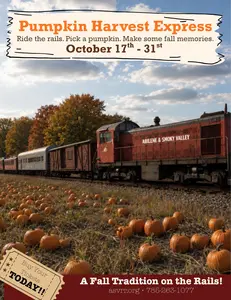
 2026 Kansas Halloween train. Abilene & Smoky Valley Pumpkin Harvest Express, October 17 through 31. About one hour. Shop prices $35.56 to $41.02. Everyone picks a pumpkin.
 -
Iowa Halloween Train Rides (2026)
Sep 29, 26 11:58 PM
2026 Iowa Halloween train. Boone & Scenic Valley Pumpkin Express, October 10, 10:00 a.m. from 225 10th Street. About 1 hour 15 minutes. Children pick a pumpkin. -
Arizona Halloween Train Rides (2026)
Sep 29, 26 11:43 PM
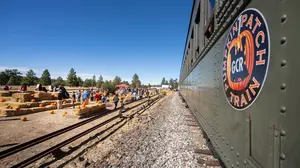
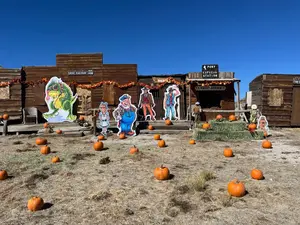
 2026 Arizona Halloween train. Grand Canyon Railway Pumpkin Patch Train from Williams, $39 with a pumpkin included. Select October dates on the ticket calendar. Haunted train cars are optional.
 -
Nevada Northern Halloween Trains (2026)
Sep 29, 26 06:18 PM
Nevada Northern 2026 Halloween trains in Ely. Pumpkin Patch Caper to Keystone Gulch and the Haunted Ghost Train. Adult tickets start at $45. Dates are on the railroad’s calendar. Confirm on nnry.com. -
Grand Canyon Railway Pumpkin Patch Train (2026)
Sep 29, 26 02:42 PM
Grand Canyon Railway Pumpkin Patch Train—select October 2026 dates from Williams, $39 with a pumpkin included. Haunted train cars are optional. Days are on the ticket calendar. Confirm on thetrain.com… -
Cass Scenic Railroad Halloween Trains (2026)
Sep 29, 26 02:37 PM
 Cass Scenic Halloween Trains—October 30 and 31, 2026, steam, 5:00 p.m. from Cass Depot. About two hours to Whittaker. Adult $75. Candy for every child. Confirm on mountainrailwv.com.
 -
Halloween Train Rides (2026): Pumpkin Patch, Haunted & Spooky Trips
Sep 29, 26 11:26 AM
 2026 Halloween train rides in nine checked states. Conway Scenic Halloween Express October 24–25. Strasburg’s three fall tickets. Great Smoky Mountains Railroad’s October trains are the gorge and rive…
 -
Maine Halloween Train Rides (2026)
Sep 29, 26 11:08 AM
 2026 Maine Halloween trains. Seashore Pumpkin Patch Trolley through October 18, adult $17. Happy Trolleyween October 23–25 at $15. WW&F Pumpkin Pickin’ October 3, 12, 17, and 24. Downeast’s booking it…

%20at%20Gold%20Hill%2C%20Nevada%2C%20circa%201983.%20%20The%20locomotive%20was%20built%20as%20Longview%2C%20Portland%20%26%20Northern%20%23680%20in%201916.%20Mike%20Bledsoe%20photo.%20%20American-Rails.com%20collection.)
