"The Polar Express" Train Ride In North Carolina!
Published: November 4, 2025
By: Adam Burns
Tucked into the heart of Bryson City, North Carolina, the Great Smoky Mountains Railroad is a beloved heritage railway that pairs vintage rail travel with the natural beauty of the Blue Ridge and Smokies.
Throughout the year, its scenic excursions carry passengers along river valleys, through quiet mountain towns, and into rugged gorges on restored railcars pulled by historic locomotives.
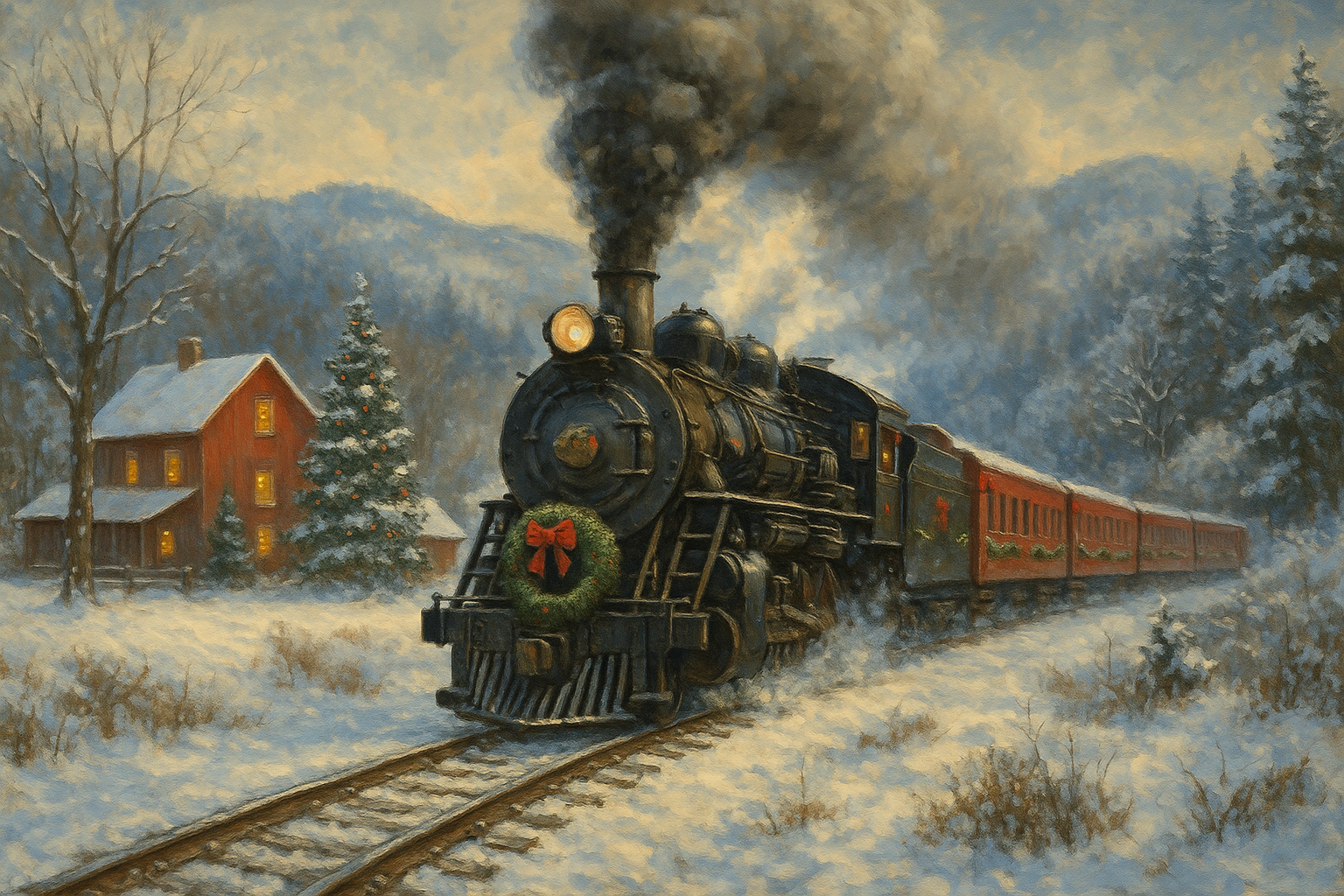
Each fall brings color-soaked vistas and holiday cheer, but the star of the season is The Polar Express—an immersive, family-friendly ride that transforms the railroad into a rolling stage for one of the most cherished holiday stories in America.
About the Great Smoky Mountains Railroad
The railroad operates on a portion of the former Southern Railway’s Murphy Branch, a line that once linked remote Appalachian communities to the broader Southeast.
Today, the GSMR preserves that legacy with a blend of nostalgia and comfort. Passengers depart from the depot in Bryson City, a walkable, welcoming town that doubles as a gateway to Great Smoky Mountains National Park and the Nantahala National Forest.
The depot complex also houses the Smoky Mountain Trains Museum, a delight for all ages featuring model layouts and rail memorabilia, typically included with train tickets.
GSMR's General Themed Excursions
Nantahala Gorge Excursion: A longer route that follows the Little Tennessee and Nantahala Rivers to the renowned whitewater hub at the Nantahala Gorge. Expect sweeping water views, forested slopes, and a relaxed pace that invites lingering over the scenery.
Tuckasegee River Excursion: A gentler ride through pastoral valleys to the quaint town of Dillsboro. This trip pairs well with browsing local shops and cafés during a layover.
Depending on the season, the railroad may operate both diesel-electric and steam power. When on the schedule, its restored World War II-era steam locomotive adds an extra dose of romance, with the rhythmic clatter and drifting plume that make railfans swoon.
Year-round, you’ll find comfortable, climate-controlled coaches, upgraded seating options, and, in warmer months, open-air gondolas that let you smell the pines and feel the breeze.
Introducing The Polar Express
From mid-November through December (and sometimes into early January), the GSMR becomes The Polar Express. Inspired by Chris Van Allsburg’s classic book and the beloved film, this licensed, immersive experience brings the story to life with music, characters, and a glow of holiday wonder that turns even seasoned travelers into wide-eyed kids again.
Families arrive at the Bryson City depot to twinkling lights and festive decor. Pajamas are encouraged—yes, for adults too—adding to the playful, just-before-bedtime excitement.
Conductors welcome passengers aboard with friendly banter and a celebratory punch to golden tickets. As the train glides into the night, a cast of dancing chefs and servers arrives with steaming hot chocolate and cookies while the story of The Polar Express unfolds through narration and soundtrack.
The Journey to the North Pole
The Polar Express ride is a round-trip of about 75 minutes. The route travels through the quiet winter countryside to an illuminated North Pole scene along the line. As the train slows, kids press their noses to the windows to spot Santa, elves, and a miniature village sparkling with lights.
Santa then boards the train to visit with each car, greeting children and presenting the signature “first gift of Christmas”—a silver sleigh bell—to the delight of little hands and camera-holding grown-ups. On the return ride, carols and holiday sing-alongs bring the car alive, and the crew keeps energy high with warm humor and gentle guidance.
What Makes It Special
Multi-sensory storytelling: The combination of motion, music, costumes, and treats turns a simple train ride into a live theater experience.
Family-first design: The pacing, length, and activities are tailored for children, but parents and grandparents find plenty to love in the nostalgia factor.
A North Carolina setting: There’s something magical about rolling through the Smokies at night, with distant hills, river reflections, and a mountain-town glow at the depot.
Seating, Classes, and Accessibility
GSMR typically offers multiple seating classes on The Polar Express, ranging from standard coach to upgraded and premium options with roomier seating and added touches.
All cars are heated, and restrooms are generally available on board. The railroad works to accommodate guests with mobility considerations; when booking, note any accessibility needs so staff can assign suitable cars and boarding assistance. Exact classes, layouts, and amenities can vary by season and date, so check the official site for current details.
When to Go and How to Book
Tickets are among the most sought-after in the region, with peak evening and weekend departures selling out early. If your schedule is flexible, consider weekday rides for more availability and potentially better pricing.
Early- to mid-December dates strike a balance between holiday anticipation and crowd levels, though the entire season carries a festive vibe.
To secure your preferred date, time, and class, book as far in advance as possible through the Great Smoky Mountains Railroad’s official website. Pricing varies by date and class; dynamic demand means holidays and prime evenings typically cost more.
Practical Tips
Arrive early: Plan to be at the depot at least an hour before departure to allow time for parking, ticket pickup (if needed), photos, and a relaxed boarding experience.
Dress in layers: Even with heated cars, the platform and North Pole viewing can be brisk. Pajamas plus jackets and hats work well; comfortable shoes are a must.
Explore Bryson City: Before or after your ride, enjoy downtown’s holiday lights, bakeries, and local shops. Many families make a day of it with lunch, a stroll, and the Smoky Mountain Trains Museum.
Beyond The Polar Express: Year-Round Appeal
While the holiday experience gets the headlines, the GSMR shines in every season. Spring brings wildflowers and rushing rivers; summer offers leafy canopies and open-air cars; fall is a kaleidoscope of color with special leaf-peeper departures.
Some excursions include onboard dining or layovers for rafting, zip-lining, or browsing mountain-town boutiques. If The Polar Express is your introduction to GSMR, consider a return visit for a longer day trip in warmer weather—the routes feel entirely different with each season’s light and color.
Why It Works for Families and Memory-Makers
At its best, a heritage railroad ride is about slowing down to savor time together—watching scenes pass outside the window while stories and snacks circulate inside the car. The Polar Express adds a layer of ritual and myth, turning a train trip into an annual tradition. Kids beam at golden tickets and sleigh bells; grandparents get wistful about the romance of trains; parents appreciate an activity that feels special without being complicated. In an age of screens, the tactile charm of an old-fashioned journey makes this experience feel genuinely restorative.
Final Thoughts
The Great Smoky Mountains Railroad delivers on two fronts: it’s a scenic, historically rooted way to experience the Carolina mountains, and it’s an imaginative stage for holiday magic.
Whether you’re a rail buff, a parent creating new traditions, or a traveler collecting memorable experiences, a ride on GSMR—and especially The Polar Express—proves that some of the best journeys run on nostalgia, cocoa, and the simple thrill of a whistle in the night.
For current schedules, classes, pricing, and accessibility information, visit the railroad’s official website and book early. Then pack your pajamas, charge your camera, and let the season’s most enchanting train carry you to the North Pole and back.
Recent Articles


-
California High-Speed Rail Chief Resigns
Oct 30, 26 08:36 PM
 Ian Choudri resigned October 28, 2026 as chief executive of the California High-Speed Rail Authority. The board named Joe Stephenshaw interim chief executive.
-
The 1910 Portal Bridge Is Handed Over for Demolition
Oct 30, 26 04:03 PM
 Amtrak handed the 1910 Portal Bridge over for demolition on October 29, 2026, during the final cutover to Portal North. Regular NJ Transit and Amtrak schedules are expected November 15.
-
Union Pacific-Norfolk Southern Merger Review Runs to 2027
Oct 30, 26 03:59 PM
 Union Pacific says the Surface Transportation Board's review of the Norfolk Southern merger gathers information through May 28, 2027. A closing still depends on board approval.
-
Amtrak Board Will Hear Restructuring Comments on November 10
Oct 30, 26 03:41 PM
 Amtrak's board will hear public comments on its restructuring on November 10, 2026, from 2 to 3 p.m. Eastern. Written comments were due October 30. A proposal goes to the board in December.
-
Canadian Pacific Selkirk 5931 Restored in Calgary
Oct 30, 26 01:36 PM
 Heritage Park in Calgary unveiled a cosmetic restoration of Canadian Pacific 2-10-4 No. 5931 on October 27, 2026. One of two surviving Selkirks. It stays on display.
-
Gettysburg Railway to Host Steam for Lincoln
Oct 30, 26 01:18 PM
 Northern Central Railway of York No. 17 will recreate Lincoln's arrival at Gettysburg on November 18, 2026, with public steam trips November 19-21.
-
NC&StL No. 576 to Steam for the Public in Nashville
Oct 30, 26 01:00 PM
 Nashville Steam will fire NC&StL 4-8-4 No. 576 for the public on November 7, 2026, 9 a.m. to 3 p.m., at 220 Willow Street. Admission is free.
-
Pennsylvania Railroad E8s Join the T1 Trust
Oct 30, 26 12:38 PM
 The T1 Trust has acquired former Pennsylvania Railroad E8A diesels 5702A and 5761A from the Fort Wayne Railroad Historical Society. They are bound for Cumberland.
-
Ligonier Valley Railroad: History, Roster, Timetable
Oct 30, 26 12:03 PM
 The Ligonier Valley Railroad ran 10.5 miles from Latrobe to Ligonier, Pennsylvania. Opened December 1, 1877. Last day August 31, 1952.
-
Toledo, Peoria & Western Diesel Roster (All-Time)
Oct 30, 26 10:25 AM
 Toledo, Peoria & Western diesel locomotives, each frame once. Thirteen Alcos, three Lima-Hamilton switchers, and 26 Electro-Motive units.
-
Toledo, Peoria & Western Steam Roster
Oct 30, 26 09:14 AM
 Toledo, Peoria & Western steam locomotives from the Rogers Consolidations of 1895 through the 4-8-4s of 1937
-
Toledo, Peoria & Western Railway: Map, Roster, History
Oct 29, 26 11:12 PM
 History of the Toledo, Peoria & Western. The Peoria & Oquawka, George P. McNear, the Santa Fe and Pennsylvania years, and the railroad that came back in 1989.
-
Cotton Belt Diesel Roster (All-Time)
Oct 29, 26 07:58 PM
 St. Louis Southwestern diesel locomotives, each frame once. Baldwin switchers, F units, and new Cotton Belt-lettered power through the GP60s of May 1990.
-
Cotton Belt Steam Roster (Built Since 1900)
Oct 29, 26 06:52 PM
 St. Louis Southwestern steam locomotives built since 1900. Consolidations, Ten-Wheelers, and twenty class L-1 4-8-4s. The quantity column is 297.
-
Cotton Belt Railroad: Map, Logo, History, Rosters
Oct 29, 26 10:56 AM
 History of the St. Louis Southwestern, the Cotton Belt Route. The Tyler Tap, Paramore's silver spike, the Thebes Bridge, the Blue Streak, and Southern Pacific control. Steam and diesel rosters are sep…
-
Pere Marquette Steam Roster (Built Since 1900)
Oct 28, 26 11:54 PM
 Pere Marquette steam locomotives built since 1900. Consolidations, Mikados, Pacifics, and 39 Berkshires. The quantity column is 503.
-
Pere Marquette Diesel Roster (All-Time)
Oct 28, 26 11:48 PM
 Pere Marquette diesel locomotives, each frame once. Two SW1s, 14 NW2s, three GE 70-tonners, eight E7As, and six BL2s delivered lettered Chesapeake and Ohio. The quantity column is 33.
-
Pere Marquette Railway: Map, Logo, Rosters, History
Oct 28, 26 11:44 PM
 History of the Pere Marquette Railway. Timber roads, the Prince years, the Van Sweringens, the Ludington car ferries, and the Chesapeake and Ohio merger of June 6, 1947.
-
Nickel Plate Road (Railroad): Map, History, Rosters
Oct 28, 26 10:51 PM
 History of the Nickel Plate Road, the New York, Chicago and St. Louis. The Seney syndicate, the Van Sweringens, the Berkshires, and the Norfolk and Western absorption at 12:01 a.m. on October 16, 1964…
-
Nickel Plate Diesel Roster (All-Time)
Oct 28, 26 10:48 PM
 Nickel Plate diesel locomotives, each frame once. Alco switchers and PAs, GP7s and GP9s, and the GP30s. The quantity column is 440. The 1950 fleet was 117.
-
Nickel Plate Steam Roster (Built Since 1900)
Oct 28, 26 10:43 PM
 Nickel Plate steam locomotives built since 1900, including the Lake Erie and Western, the Clover Leaf, and the Wheeling engines that took Nickel Plate numbers. The quantity column is 786.
-
EMD "E9" Locomotives: Specs, Roster, History
Oct 28, 26 10:37 PM
 EMD E9 cab units and boosters, 2,400 horsepower, built April 1954 through January 1964. Gear ratios, specifications, and the production roster by owner, serial, and order.
-
NYC 4-6-4 #5344, "Commodore Vanderbilt"
Oct 28, 26 04:31 PM
 NYC J-1e Hudson 5344, the Commodore Vanderbilt. Alco, November 1931. Carl Kantola’s shroud, December 1934, then a Dreyfuss bullet nose in 1939. Scrapped at Collinwood in 1954.
-
New Jersey, Indiana & Illinois Railroad: A South Bend Shortline
Oct 28, 26 11:05 AM
 The New Jersey, Indiana & Illinois, the Jersey Line, ran from South Bend to Pine. Singer built it in 1905. Wabash stock control came in 1926. Two diesels, and the steam the record names.
-
Monon Diesel Roster (All-Time)
Oct 28, 26 10:13 AM
 Monon diesel locomotives, each frame once. F3s, nine BL2s, the C420s, and eight U23Bs. The quantity column is 96. The 1951 fleet was 57.
-
Monon Steam Roster (Built Since 1900)
Oct 28, 26 10:09 AM
 Monon steam locomotives built since 1900. Twelve-Wheelers, Mikados, light Pacifics, and thirteen six-wheel switchers. The quantity column is 148.
-
Monon Railroad: Map, Photos, History, Logo
Oct 28, 26 09:55 AM
 History of the Monon, the Hoosier Line. The New Albany & Salem, the X at Monon, Barriger's streamliners, and the Louisville & Nashville merger of July 31, 1971.
-
Missouri-Kansas-Texas Diesel Roster (All-Time)
Oct 28, 26 09:48 AM
 All-time diesel roster of the Missouri-Kansas-Texas. 406 locomotives, each frame once. Baldwin switchers, Alco cab units, F units, Geeps, and the SD40-2s.
-
Missouri-Kansas-Texas Steam Roster (Built Since 1900)
Oct 28, 26 09:43 AM
 Missouri-Kansas-Texas steam locomotives built since 1900. Moguls, Mikados, Pacifics, and the narrow-gauge shop tanks. The quantity column is 715.
-
Missouri-Kansas-Texas Railroad (Katy): Map, History, Rosters
Oct 27, 26 11:02 PM
 History of the Missouri-Kansas-Texas, the Katy. The race into Indian Territory, Gould, the 1923 railroad, the Texas Special, and the 1988 sale. Steam and diesel rosters are linked.
-
Soo Line Diesel Roster (All-Time)
Oct 27, 26 10:55 PM
 All-time diesel roster of the Soo Line and the Wisconsin Central. 786 locomotives, each frame once. Cab units, Geeps, the Milwaukee Road engines, and the SD60s. The South Shore's 24 stay on that page.
-
Soo Line Steam Roster (Built Since 1900)
Oct 27, 26 10:49 PM
 Soo Line and Wisconsin Central steam locomotives built since 1900. Consolidations, Mikados, Pacifics, 21 Mountains, and four Lima 4-8-4s.
-
Soo Line Railroad: Map, Logo, History, Rosters
Oct 27, 26 10:24 PM
 The Soo Line, from the flour millers' railroad around Chicago to the Sault, the Wisconsin Central, and the Milwaukee Road. Steam quantity 422. Diesels 786. Canadian Pacific took full control in 1990.
-
Minneapolis, Northfield and Southern Railway: Map, History, Rosters
Oct 27, 26 10:32 AM
 The Minneapolis, Northfield & Southern, the Dan Patch Line that became a Twin Cities belt. Steam, gas-electric mules, motor cars, and the 22 diesels, through the Soo Line.
-
Minneapolis & St. Louis Diesel Roster (All-Time)
Oct 27, 26 10:27 AM
 All-time diesel roster of the Minneapolis & St. Louis. 97 locomotives, each frame once. Switchers from 1938, 35 RS-1s, the FT and F-unit cabs, two SD7s, and 23 GP9s. Builder numbers included.
-
Minneapolis & St. Louis Steam Roster (Post 1900)
Oct 27, 26 10:25 AM
Minneapolis & St. Louis steam locomotives built since 1900. Moguls, Consolidations, 35 Mikados, and five Pacifics. -
Minneapolis and St Louis Railway: "The Peoria Gateway"
Oct 27, 26 09:52 AM
 The Minneapolis & St. Louis, the Tootin' Louie, from the 1870 charter to the Peoria Gateway and the Chicago & North Western sale on November 1, 1960.
-
Alco "PA" Locomotives: Restoration, Specs, Engine, Rosters
Oct 27, 26 12:12 AM
 Alco's PA passenger cab, 297 locomotives built from 1946 to 1953. The 244 engine, the production roster, the Delaware & Hudson PA-4s, and Nickel Plate Road 190.
-
Milwaukee Road Diesel Roster: (All Time)
Oct 26, 26 01:44 PM
 All-time diesel roster of the Milwaukee Road. 1,208 locomotives, each frame once. Alco, Baldwin, Davenport, EMD, Fairbanks-Morse, General Electric, and Whitcomb, with builder numbers.
-
Milwaukee Road Steam Roster (All-Time): Post-1900
Oct 26, 26 01:38 PM
 Milwaukee Road steam locomotives built since 1900. Prairies, Mikados, the N-class articulateds, the S-class 4-8-4s, and the Hiawatha Atlantics and Hudsons. Quantity column 1,974. Unique frames 1,951.
-
Milwaukee Road: Map, Electrification, Logo, History
Oct 26, 26 01:20 PM
 The Milwaukee Road, from the Milwaukee & Mississippi of 1850 to the Pacific Coast Extension, the Hiawathas, and the Soo Line sale. Why Lines West should have stayed.
-
Lake Superior & Ishpeming Railroad: Map, Roster, History
Oct 25, 26 11:38 PM
 Lake Superior & Ishpeming Railroad, reporting mark LSI, from the Marquette Range to the Presque Isle ore dock. The 1954 steam list and the diesels the railroad owned.
-
Kansas City Southern Steam Roster (Built Since 1900)
Oct 25, 26 09:09 PM
 Steam locomotives of the Kansas City Southern built since 1900, with the Louisiana & Arkansas and the Texas company.
-
Kansas City Southern Diesel Roster (Built New)
Oct 25, 26 11:46 AM
All-time diesel roster of the Kansas City Southern. E units, F units, Geeps, SD40s through SD70ACes, Fairbanks-Morse, Baldwin, Alco, and General Electric, with serials and order numbers. -
Kansas City Southern Railway: Map, Photos, History
Oct 25, 26 12:24 AM
The Kansas City Southern, from Arthur Stilwell's Gulf line to Canadian Pacific Kansas City on April 14, 2023. Steam and diesel rosters, the Southern Belle, and the Louisiana & Arkansas. -
Indiana Harbor Belt Diesel Roster (All-Time)
Oct 25, 26 12:17 AM
 All-time diesel roster of the Indiana Harbor Belt. 202 locomotive frames, each counted once. NW2s, SW7s, SW1500s, road switchers, and gensets. Slugs and boosters are outside the count.
-
Indiana Harbor Belt Steam Roster (Built Since 1900)
Oct 25, 26 12:13 AM
 Steam locomotives of the Indiana Harbor Belt built since 1900. 182 engines, each counted once. 0-6-0s, 2-6-0s, 0-8-0s, and 2-8-2s. The three U-4a switchers are three-cylinder Brooks engines of 1927.
-
Indiana Harbor Belt Railroad: Map, Rosters, History
Oct 25, 26 12:00 AM
 Indiana Harbor Belt, the inner belt across the Calumet, from the East Chicago Belt of May 16, 1896. Renamed June 29, 1907. Still operating, headquarters Hammond. Steam roster is the companion, 182 loc…
-
NYC's "P Motor" Electric Locomotives
Oct 24, 26 11:43 PM
 New York Central P motors: 22 Alco-GE 2-C+C-2 electrics, Cleveland Union Terminal 1050–1071, class P-1a. 3,030 hp one-hour on 3,000-volt DC catenary, then 660-volt third rail as P-2a and P-2b.
-
Illinois Terminal Car Roster
Oct 24, 26 11:40 PM
 Illinois Terminal cars. Mainline motors, the 1948 streamliners, sleepers, Alton and Valley Division cars, express motors, and the line cars rebuilt from pull cars.