Nashville, Chattanooga and St. Louis Railway: Map, History, Logo
Last revised: October 12, 2026
By: Adam Burns
The Nashville, Chattanooga & St. Louis was chartered on December 11, 1845, as the Nashville & Chattanooga, and it was the first railroad completed in Tennessee. The line opened in February 1854, 152 miles from Nashville to Chattanooga, built to a gauge of 5 feet. In 1873 the company took the name that pointed it at St. Louis. Its own rails reached the Mississippi at Hickman and, later, the Ohio at Paducah, and a lease of Georgia’s Western & Atlantic carried it to Atlanta. The public came to know it as the Dixie Line.
On January 18, 1880, the Louisville & Nashville bought control, 134,000 shares, through Vernon K. Stevenson. The Nashville, Chattanooga & St. Louis kept its own locomotives, its own mark, NCSTL, and its own operation for 77 years. The merger was consummated on August 30, 1957. The locomotives are on their own pages: steam built since 1900, and the all-time diesel roster.
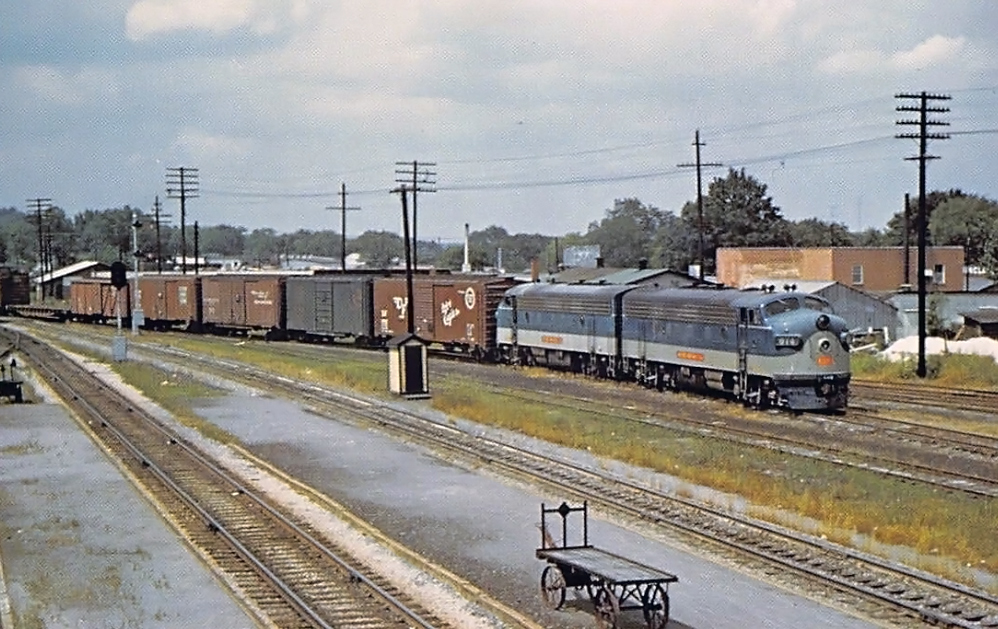
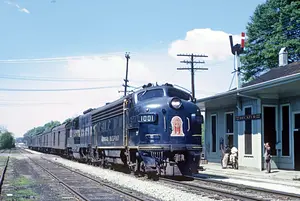
A pair of Nashville, Chattanooga & St. Louis F7As have a mixed freight at Dalton, Georgia, circa 1957. Clarence Cade photo.
On this page: At a glance · Nashville & Chattanooga · The Western & Atlantic · Hickman, and the name of 1873 · Branches, Memphis, and Paducah · The Dixie Route · Diesels and August 30, 1957 · What is left
At a glance
| Item | Detail |
|---|---|
| Railroad | Nashville, Chattanooga & St. Louis Railway. Mark NCSTL. The Dixie Line |
| Headquarters | Nashville, Tennessee |
| Charter | December 11, 1845, Tennessee General Assembly, as the Nashville & Chattanooga |
| Opened | February 1854. Nashville to Chattanooga, 152 miles |
| Name | Nashville, Chattanooga & St. Louis, 1873, after the Nashville & Northwestern came into the company |
| Dates | February 1854 – August 30, 1957 |
| Gauge | 5 feet, then 4 feet 8½ inches. The main line was narrowed in 1886 |
| States | Alabama, Georgia, Kentucky, Tennessee |
| Route miles | About 1,259 in the 1920s |
| Principal lines | Nashville–Chattanooga–Atlanta, the last leg on the leased Western & Atlantic. Nashville–Memphis. Hickman and Paducah |
| Control | Louisville & Nashville, January 18, 1880. The NC&StL kept its own operation |
| Successor | Louisville & Nashville, August 30, 1957. The property later passed to CSX |
| Steam | Post-1900 roster, 229 engines. Last steam January 4, 1953, H7 No. 406 |
| Diesels | 132 locomotives, 1941–1952 |
| Preserved | J3 No. 576, given to Nashville in 1953. Nashville Steam is restoring it |
| Rosters | Steam, built since 1900 · Diesel roster, all-time |

The Nashville, Chattanooga & St. Louis Railway logo. Author’s work.
A charter, a survey, and a tunnel under Cumberland Mountain
The Tennessee General Assembly chartered the Nashville & Chattanooga Railroad Company on December 11, 1845, to build from Nashville, on the Cumberland, to Chattanooga, on the Tennessee, and to meet the Western & Atlantic there. The promoters included Vernon K. Stevenson, Alfred Nicholson, Dr. James Overton, James Whiteside, and James Jones. Stevenson sold stock from door to door. The company was organized in January 1848, with Stevenson as its first president.
John Edgar Thomson, then chief engineer of the Georgia Railroad and later president of the Pennsylvania Railroad, surveyed the route in the summer and fall of 1846, including the place where the line would have to pass Cumberland Mountain. The located line ran about 152 miles, through Wartrace and Bell Buckle. A branch from Wartrace served Shelbyville. Stevenson appointed James H. Grant chief engineer. E. D. Sanford and Minor Merriweather assisted him. Thomas C. Bates contracted the tunnel.
Construction began at Chattanooga in 1848. The railroad followed the south bank of the Tennessee west from the city, up Lookout Creek, through Bridgeport and Stevenson, Alabama, and back into Tennessee to the mountain. Work on the Cumberland Mountain tunnel, near Cowan, started early in 1849, before a mile of track had been laid on the route. Crews of enslaved workers, Irish and English immigrants, and local residents sank three vertical shafts and opened eight working faces. They broke through in February 1852. On February 22 the people of Cowan and Winchester marked the breakthrough with a ball and a candlelight procession through the bore. The tunnel is about 2,200 feet long. Track was laid through it in 1853.
Rails reached Murfreesboro on July 4, 1851. With the right of way nearly finished, Stevenson went to England for iron cheaper than the American market offered, and the rail he bought saved the company $50,000. In February 1854 the 152-mile line opened, 5-foot gauge, and through cars could run to Atlanta over the Western & Atlantic.
Georgia’s railroad, and the General
The Western & Atlantic was a state railroad. Georgia founded it on December 21, 1836, and built it north from the Atlanta area. Decatur declined a railroad inside the town, so the southern terminus was set a few miles southwest, at Marthasville, which was renamed Atlanta in 1847. Construction began in 1840. A tunnel of 1,447 feet under Chetoogeta Mountain, near Dalton, was finished in the spring of 1850. The line was 137 miles. The first train reached Chattanooga on May 9, 1850.
In the spring of 1862 James Andrews and a party of Union soldiers seized the Western & Atlantic 4-4-0 General at Big Shanty and ran north. The pursuit that caught them was made aboard the 4-4-0 Texas. The General is preserved at the Southern Museum of Civil War and Locomotive History in Kennesaw.
During the war the United States Military Railroad operated the Nashville & Chattanooga. The line was returned to its owners in September 1865. The Nashville, Chattanooga & St. Louis leased the Western & Atlantic on December 27, 1890, for 29 years, and that lease is how the railroad entered Atlanta. A new lease, executed on May 11, 1917, ran for 50 years from December 27, 1919, to December 27, 1969, at $540,000 a year. A larger tunnel at Tunnel Hill opened in 1928. After the 1957 merger the Louisville & Nashville held the lease through its remaining term.
The road to Hickman, and a name aimed at St. Louis
The Nashville & Northwestern was chartered on January 22, 1852, to build toward Hickman, Kentucky, about 168 miles, with the Hickman & Obion aiding the line on toward Union City. After the war that railroad was taken into the Nashville & Chattanooga. In 1873 the company was renamed the Nashville, Chattanooga & St. Louis. For the next generation the public knew it first as the Tennessee Line and then as the Lookout Mountain Route. The Dixie Line is the name that lasted.
The St. Louis ambition met the Louisville & Nashville. On January 18, 1880, the L&N bought control. The Nashville company remained a separate railroad, with its own officers and its own locomotives. By the turn of the century the map ran southeast to Atlanta on the leased Western & Atlantic, southwest to Memphis, and northwest to Paducah. New shops went up in Nashville, and a union station built jointly with the L&N opened in 1900.
Coal branches, two rivers, and a bridge
The branches filled in around that trunk. The Lebanon Branch, the old Tennessee & Pacific, ran from Nashville to Lebanon and was taken in 1877. At Lebanon the Nashville & Knoxville, later the Tennessee Central, interchanged. The McMinnville & Manchester left Tullahoma and ran 35 miles to McMinnville, reached Sparta in 1884, and then the Bon Air coal field over the Bon Air Railroad. The Winchester & Alabama ran from Decherd to Fayetteville and on to Huntsville, and in 1893 to Hobbs Island. The Tennessee & Coosa, in 1891, connected Guntersville with Gadsden.
Two of the branches had been narrow gauge. The Duck River line was standard-gauged in 1889. The Centreville branch, the Nashville & Tuscaloosa, was standard-gauged in July 1894. The main line itself had been narrowed from 5 feet to 4 feet 8½ inches in 1886. Coal also moved off the Tracy City branch, which left the main line at Cowan and was extended to Palmer in 1918 for the Tennessee Coal, Iron & Railroad, and off the Sequatchie Valley branch to Pikeville.
Memphis and Paducah both came in 1896, by lease of the Paducah & Memphis and of the Louisville & Nashville lines that had been the Paducah, Tennessee & Alabama and the Tennessee Midland. The last new reach was a bridge across the Ohio at Paducah, built in 1917 jointly with the Chicago, Burlington & Quincy. Richard E. Prince’s history puts the railroad at its greatest extent in the 1920s, about 1,259 route miles, from the Mississippi and the Ohio through Kentucky, Tennessee, and Alabama to Atlanta.

An official system map of the Nashville, Chattanooga & St. Louis, 1919. Poole Bros., Chicago. Connecting railroads are drawn on toward St. Louis. The company’s own track met the Mississippi at Hickman and the Ohio at Paducah.
Cumberland Mountain, and the trains to Florida
The Nashville–Atlanta main line meets the Cumberland range just north of Chattanooga, on grades as steep as 2.5 percent, and the pushers were based at Cowan. The Western & Atlantic Division through north Georgia, and the Nashville Division west to Bruceton, were a series of shorter rises and falls. West Tennessee and Kentucky lay flatter. About half the freight was received from, or delivered to, other railroads: at Paducah, Memphis, Martin, and Nashville on the north, and at Atlanta on the south. Manufactured goods moved south, perishables moved north, and coal came off the branches in southeastern Tennessee.
The passenger main line was the Nashville–Atlanta piece of the Chicago–Florida Dixie Route. North of Nashville the partners were the Chicago & Eastern Illinois and the Louisville & Nashville. South of Atlanta they were the Central of Georgia, the Atlantic Coast Line, and the Florida East Coast. Prince’s list of those Chicago–Florida trains is the Dixie Flyer, the Dixie Limited, the Dixie Express, the Dixie Mail, the Dixieland, the Dixie Flagler, and the Dixiana.
Two of the railroad’s own postwar trains have pages of their own. The Georgian, inaugurated on Sunday, November 17, 1946, ran between St. Louis and Atlanta with the Louisville & Nashville. The City of Memphis, inaugurated on May 17, 1947, was a heavyweight train between Nashville and Memphis, 236.9 miles, trains 5 and 6.
From the yards in 1941 to a merger in 1957
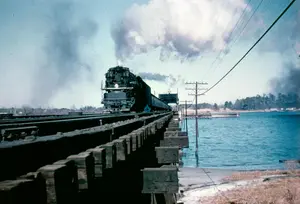
By 1947 well over half the locomotives were more than 30 years old. The post-1900 steam roster runs to 229 engines: the Consolidations that had been the freight power, 51 Mikados, three compound 2-8-8-2s, the Pacifics and Mountains, and 25 4-8-4s, the only modern steam the railroad bought. The class grid, and the last steam run, are on the steam roster. That run was January 4, 1953, when class H7 Consolidation No. 406 brought the Union City, Tennessee, branch freight into Bruceton.
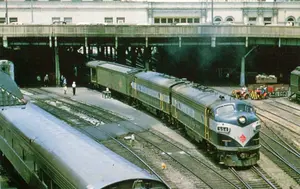
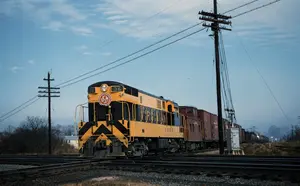
Diesels began in the yards in 1941 and reached the Nashville–Atlanta freight with F3s in 1948 and 1949. GP7s and F7s finished the main line. On those Nashville–Atlanta runs the new power nearly doubled the tonnage a steam crew had been allowed, and by 1951 most mainline trains were diesel. The railroad was fully dieselized in 1953. The all-time fleet is 132 locomotives, on the diesel roster. J3 No. 576 was given to the city of Nashville in 1953 and placed on display in Centennial Park. Nashville Steam moved the engine out of the park in 2019 and is restoring it at the Tennessee Central Railway Museum. A stationary steam test was completed on July 16, 2026. That story is NC&StL No. 576.
The Louisville & Nashville and the Nashville, Chattanooga & St. Louis applied to merge in 1955. The Interstate Commerce Commission released its report and order on March 13, 1957. Both were dated March 1. The order approved the merger into the Louisville & Nashville. The City of Nashville sued in federal court to set the order aside, and a restraining order issued on April 8. The railroads were combined on August 30, 1957, seventy-seven years after the stock purchase of 1880. The Nashville, Chattanooga & St. Louis became part of the L&N’s Nashville and Western & Atlantic divisions.
What is left
The Memphis–Nashville–Chattanooga–Atlanta trunk is still a main line of CSX, and part of the railroad west of Nashville is former Louisville & Nashville track. The Cumberland Mountain tunnel at Cowan is still in service. The corporate name ended on August 30, 1957. The locomotives that carried it, and the numbers the Louisville & Nashville gave them, are on the two roster pages.
Related reading on American-Rails.com
- NC&StL steam roster · NC&StL diesel roster
- Louisville & Nashville · CSX Transportation
- City of Memphis · Georgian · Dixie Flagler
- General · Western & Atlantic · NC&StL No. 576
Sources
- Charter of the Nashville & Chattanooga Railroad, Tennessee, December 11, 1845, as cited by later Tennessee acts and by the History of Davidson County, Tennessee. American Railroad Journal, for the organization in January 1848, with V. K. Stevenson as the first president
- National Register of Historic Places nomination, Cowan Tunnel, reference 77001270. Work begun early in 1849. James H. Grant, chief engineer, appointed by V. K. Stevenson, assisted by E. D. Sanford and Minor Merriweather. Thomas C. Bates, contractor. Three shafts, eight faces, breakthrough in February 1852, and the February 22 celebration at Cowan and Winchester
- Tennessee Magazine, January 2024, “Tracking Change.” Thomson’s survey in the summer and fall of 1846, the line through Wartrace and Bell Buckle, and a tunnel of about 2,200 feet on a route of about 152 miles
- Stuart Covington, “NC&StL: Dixie Success Story,” Trains, January 1948. Stevenson’s purchase of English rail, a saving of $50,000, and the opening in February 1854 of the 152-mile line at 5-foot gauge
- Richard E. Prince, Nashville, Chattanooga & St. Louis Railway: History and Steam Locomotives (1967; Indiana University Press, 2001). Return from the U.S. Military Railroad in September 1865. The 1873 name, after the Nashville & Northwestern. The Tennessee Line and the Lookout Mountain Route. Western & Atlantic lease, 1890. Memphis and Paducah, 1896. About 1,259 miles in the 1920s. Louisville & Nashville control in 1880 and 77 years of separate operation. The Chicago–Florida trains named in the Dixie Route section
- Journal of the House of Representatives of the State of Georgia, June 1917, and the Western & Atlantic lease executed May 11, 1917. The NC&StL lease of December 27, 1890, for 29 years. The succeeding lease, December 27, 1919, to December 27, 1969, at $540,000 a year. City of Chattanooga v. Louisville & Nashville Railroad Co., for the same lease dates and for the Louisville & Nashville succeeding as lessee in 1957 under the lease then in force
- Dain L. Schult, Nashville, Chattanooga & St. Louis: A History of “The Dixie Line” (Lynchburg: TLC Publishing, 2002). Rails into Murfreesboro on July 4, 1851. The branch outline: Lebanon in 1877, McMinnville and Sparta, Huntsville and Hobbs Island, the Tennessee & Coosa, Tracy City and Palmer, and the Sequatchie Valley
- George W. Hilton, American Narrow Gauge Railroads. Duck River line standard-gauged in 1889. Centreville branch, the Nashville & Tuscaloosa, standard-gauged in July 1894
- George H. Drury, Guide to North American Steam Locomotives, revised edition, pages 226–227. Chapter by Charles B. Castner. Grades and the Cowan pushers, the interchange freight, the Nashville shops and the union station of 1900, the Paducah bridge of 1917, the age of the fleet in 1947, dieselization, and the last steam run on January 4, 1953. No. 576 given to Nashville in 1953
- City of Nashville v. United States, 155 F. Supp. 98 (M.D. Tenn. 1957). Interstate Commerce Commission report and order dated March 1, 1957, released March 13, 1957. The city’s suit and the restraining order of April 8, 1957. Consummation of the merger on August 30, 1957, as printed on the Louisville & Nashville page
- The City of Memphis page, for May 17, 1947, trains 5 and 6, and 236.9 miles. The Georgian page, for the inauguration on Sunday, November 17, 1946
- Nashville Steam Preservation Society, for the 2019 move of No. 576 from Centennial Park and the restoration at the Tennessee Central Railway Museum. Trains, for the stationary steam test completed on July 16, 2026
- Poole Bros., Chicago, the 1919 system map reproduced above
Recent Articles


-
Rapid City, Pierre & Eastern Railroad: Route, Roster, Overview
Oct 21, 26 10:16 AM
 Rapid City, Pierre & Eastern Railroad, reporting mark RCPE. Genesee & Wyoming Class II. Agreement of January 2, 2014, Finance Docket 35799. Freight service from June 1, 2014, on the Dakota, Mi…
-
Dakota, Minnesota & Eastern Railroad: Roster, Map, History
Oct 21, 26 12:26 AM
 Dakota, Minnesota & Eastern Railroad, reporting mark DME. The July 2, 1986 Chicago & North Western sale, 826 miles and 139 miles of trackage rights. Canadian Pacific control October 30, 2008…
-
Detroit and Mackinac Railway: Map, Roster, History
Oct 20, 26 11:58 PM
 Detroit & Mackinac Railway, the Turtle Line. Bay City to Cheboygan along Lake Huron. Incorporated December 29, 1894. Lake State Railway leased the operation in 1992 and bought the lines in 1997. E…
-
Davenport, Rock Island and Northwestern Railroad
Oct 20, 26 11:22 PM
 Davenport, Rock Island and North Western Railway, the DRI Line. Clinton to East Moline across the Crescent Bridge. Burlington and Milwaukee. Merged into the Soo Line on June 29, 1995. Eighteen diesels…
-
Chicago Great Western Steam Roster (Post 1900)
Oct 20, 26 11:17 PM
 Chicago Great Western steam locomotives built or rebuilt since 1900. Drury's class grid. 320 frames, each once. The quantity column prints 376 because a rebuild is listed again. Last steam in the reti…
-
Chicago Great Western Diesel Roster (All-Time)
Oct 20, 26 10:47 PM
 All-time diesel roster of the Chicago Great Western. 157 frames, each counted once. Serials and builder order numbers included. Steam was gone by 1950. The 1963 glance figure of 141 is one year's flee…
-
Chicago Great Western Railway: Map, Photos, History, Rosters
Oct 20, 26 10:43 PM
 The Chicago Great Western, the Corn Belt Route, linked Chicago, the Twin Cities, Omaha, and Kansas City from September 27, 1885, until the Chicago & North Western merger at 12:01 a.m. on July 1, 1968…
-
Chicago, South Shore & South Bend Railroad: "The South Shore Line"
Oct 20, 26 05:48 PM
 Chicago South Shore & South Bend, the South Shore Line, from the 1901 Air Line through Samuel Insull's 1925 rebuild, the orange cars, the 800s, and the railroad NICTD and Anacostia still run.
-
Northwestern Virginia Railroad: Map, History, Timetable
Oct 20, 26 04:18 PM
 Northwestern Virginia Railroad, chartered February 14, 1851, Grafton to Parkersburg, 104 miles. Opened May 1, 1857. Foreclosure sale February 15, 1865, as the Parkersburg Branch. Twenty-three tunnels…
-
"Exposition Flyer" (Train): Consist, Timetable, History
Oct 20, 26 03:29 PM
 Exposition Flyer, Chicago to Oakland, June 10, 1939 to March 20, 1949. Burlington, Rio Grande, and Western Pacific. Heavyweight cars, then diesels and a vista-dome. Replaced by the California Zephyr.
-
Chicago, St. Paul, Minneapolis & Omaha Railway, "The Omaha Road"
Oct 20, 26 02:13 PM
 The Omaha Road, reporting mark CMO. Formed May 26, 1880. North Western management on December 16, 1882. Leased January 1, 1957. Class K-1 No. 183 and the sublettered diesels.
-
Chicago and Western Indiana Railroad: Map, Rosters, History
Oct 20, 26 01:17 PM
 Chicago and Western Indiana, chartered June 5, 1879. Five equal owners, Dearborn Station, and two main lines. Dolton suburban mile 16.6. Fifteen diesels. Railroad service ended in 1994. The Illinois c…
-
Railroad Tell-Tales: Protecting The Brakeman
Oct 20, 26 12:58 PM
 Railroad tell-tales: hanging ropes that warned a man on a freight-car roof of a low bridge or tunnel. The 1897 bridge-warning report, the 1905 Wisconsin statute, retainers, and why the roof walk outla…
-
Chicago & North Western Steam Roster (Post 1900)
Oct 20, 26 12:54 PM
 Chicago & North Western steam locomotives built since 1900, and the Omaha Road list beside it. Drury's parent quantity column sums to 1,445, with four rows left blank. The Omaha Road column sums to 24…
-
Chicago & North Western Diesel Roster (All-Time)
Oct 20, 26 12:49 PM
 All-time diesel roster of the Chicago & North Western. 2,494 frames, each counted once, including Chicago Great Western, Minneapolis & St. Louis, and Omaha Road units that received North Western numbe…
-
Chicago and North Western Railroad: Map, History, Logo
Oct 20, 26 12:37 PM
 The Chicago & North Western, chartered as the Galena & Chicago Union in 1836 and formed in June 1859. Granger railroad of the 400s, the Cowboy Line, and Powder River coal. Union Pacific common control…
-
Chicago & Illinois Midland Steam Roster (Post 1900)
Oct 20, 26 12:30 AM
 Chicago & Illinois Midland steam locomotives built since 1900. Drury's class grid, 57 engines. Twenty-six 2-10-2s, including nine from the Wabash and nine from the Atlantic Coast Line. Last road steam…
-
Chicago & Illinois Midland Diesel Roster (All-Time)
Oct 20, 26 12:20 AM
 All-time diesel roster of the Chicago & Illinois Midland. 28 frames, each counted once. Six SW1200s, five SD9s, the only two RS1325s, two SD18s, six SD38-2s, and four SD20s. Serials included.
-
Chicago and Illinois Midland Railroad: Map, Rosters, History
Oct 20, 26 12:17 AM
 The Chicago & Illinois Midland moved Illinois coal for Commonwealth Edison, Taylorville and Springfield to Pekin, with Peoria over the Peoria & Pekin Union. The 1906 railway began operating February 1…
-
Chicago & Eastern Illinois Diesel Roster (All-Time)
Oct 19, 26 04:23 PM
 All-time diesel roster of the Chicago & Eastern Illinois. 143 frames, each counted once. Switchers, F3s, FP7s, E7s, the BL1, and the GP7s through GP35s. Serials included.
-
Chicago & Eastern Illinois Steam Roster (Post 1900)
Oct 19, 26 04:19 PM
Chicago & Eastern Illinois steam locomotives built or rebuilt since 1900. 146 Consolidations, 60 Mikados, and 24 Pacifics. Drury's class grid. Last steam was Mikado 1944 at Vincennes on May 5, 1950. -
Chicago and Eastern Illinois Railroad: Map, Rosters, History
Oct 19, 26 03:57 PM
 The Chicago & Eastern Illinois ran from Chicago to Evansville, St. Louis, and Thebes. First company of the name, August 28, 1877. The remainder merged into the Missouri Pacific on October 15, 1976. St…
-
Rock Island Diesel Roser: All-Time
Oct 19, 26 11:05 AM
 Chicago, Rock Island and Pacific diesel locomotives, 1,029 frames counted once. Switchers, cab units, road-switchers, two acquired slugs, five RDCs, and bi-power 10000. Serial and order are separate c…
-
Rock Island Steam Roster: Post 1900
Oct 19, 26 11:01 AM
Chicago, Rock Island and Pacific steam locomotives built or rebuilt since 1900. Drury's class grid, 1,482 frames counted once, including 85 4-8-4s. Last revenue steam was July 1953. -
Rock Island Railroad: Map, Pictures, Logo, History
Oct 19, 26 10:51 AM
 The Chicago, Rock Island and Pacific ran from Chicago to the Twin Cities, Denver, Tucumcari, and the Gulf. First train October 10, 1852. Directed service ended March 23, 1980. Steam and diesel rosters…
-
EMD "F7" Locomotives: Cab, Top Speed, Specs, Rosters
Oct 19, 26 12:27 AM
 EMD F7 cab units and boosters, 1,500 horsepower, built February 1949 through December 1953. Gear ratios, specifications, and the production roster by owner, serial, and order.
-
Harlem Transfer Company: An NYC Terminal System
Oct 19, 26 12:01 AM
 Harlem Transfer Company, the Lackawanna's offline freight terminal on the Bronx side of the Harlem River at East 135th Street. Carfloats to Hoboken, boxcab No. 2, and GE 44-tonner 53.
-
Belpre Industrial Parkersburg Railroad: Roster, History, Photos
Oct 18, 26 11:44 PM
 Belpre Industrial Parkersburg Railroad, a Class III short line leasing about 46.9 miles of CSX track at Parkersburg since 2020. The Ohio River bridge, the Marietta Subdivision, and five GP38-3s.
-
Chicago, Peoria & St. Louis Railroad: Map, Timetables, History
Oct 18, 26 10:57 PM
 Chicago, Peoria & St. Louis Railroad, an Illinois line from Pekin and Peoria through Springfield to Madison. Chartered in 1853. Sold in parcels on November 20, 1924. The Pekin line is today the Illino…
-
Chicago, Burlington & Quincy Diesel Roster (All-Time)
Oct 18, 26 10:54 PM
 All-time diesel roster of the Chicago, Burlington & Quincy. 951 parent frames, 72 Colorado & Southern, and 36 Fort Worth & Denver, each counted once. Serials included.
-
Burlington Railroad (CB&Q): Map, History, Rosters, Photos
Oct 18, 26 10:49 PM
 The Chicago, Burlington & Quincy, the Burlington Route, ran from Chicago to Denver, the Twin Cities, and the Gulf. Steam built since 1900 and the diesel fleets are companion rosters. Burlington Northe…
-
Chicago, Burlington & Quincy Steam Roster (Post 1900)
Oct 18, 26 10:33 PM
 Chicago, Burlington & Quincy steam locomotives built or rebuilt since 1900. 429 Prairies, 383 Mikados, the Hudsons, and the O-5 4-8-4s. Drury's class grid.
-
Virginian Railway's 2-6-6-6 Locomotives (Class AG)
Oct 18, 26 01:38 PM
 Virginian Railway class AG. Eight Lima 2-6-6-6s, Nos. 900-907, built in 1945 for the east end. Billed at 753,000 pounds. Scrapped in 1960.
-
Pennsylvania (PRR) Steam Roster: Post 1906
Oct 18, 26 01:05 PM
ennsylvania steam after 1906—H8, H9, and H10 Consolidations, 574 L1s Mikados, 598 I1s Decapods, 425 K4s Pacifics, 301 M1 Mountains. Drury’s grid. Last steam November 30, 1957. -
Chicago, Aurora and Elgin Railroad: The "Roarin' Elgin"
Oct 18, 26 10:54 AM
The Chicago, Aurora & Elgin, the Roarin' Elgin, ran 600-volt third-rail trains from Chicago to Aurora, Batavia, and Elgin. Passenger service ended at noon on July 3, 1957. Freight ended June 11, 1959. -
Algoma Central Railway: Map, Logo, Rosters
Oct 17, 26 10:49 PM
 Algoma Central Railway, Sault Ste. Marie to Hearst. Wisconsin Central on February 1, 1995. Fifty-nine steam locomotives and forty-two diesels.
-
Akron, Canton and Youngstown Railroad: Map, History, Rosters
Oct 17, 26 05:49 PM
 Akron, Canton and Youngstown Railroad, Mogadore to Delphos. The rails never reached Canton or Youngstown. Norfolk & Western control on October 16, 1964. Twenty-six diesels and the historical society's…
-
Georgia Railroad: Map, History, Logo, Rosters
Oct 17, 26 12:59 PM
 Georgia Railroad, the Georgia Railroad and Banking Company, Augusta to Atlanta, with the Athens branch and the Macon Road. Mark GA. The railroad properties were sold on November 4, 1982.
-
West Point Route (Railroad): Map, History, Logo
Oct 16, 26 11:26 PM
 The West Point Route was a trademarked name comprising the Atlanta & West Point and Western Railway of Alabama, which were controlled by the Georgia Railroad.
-
Virginian Railway Diesel Roster (All-Time)
Oct 16, 26 11:11 PM
 All-time diesel roster of the Virginian Railway. 40 Fairbanks-Morse H16-44s, 25 H24-66 Train Masters, and one GE 44-tonner. Serials included.
-
Virginian Railway Steam Roster (Post 1900)
Oct 16, 26 10:55 PM
 Virginian Railway steam locomotives built since 1900. Mikados, 2-8-8-2s, the Triplex, class AE 2-10-10-2s, and the 1945 2-6-6-6s.
-
Virginian Railway: Map, Rosters, History, Electrification
Oct 16, 26 10:51 PM
 Virginian Railway, Deepwater to Norfolk. Combined in 1907 and completed in 1909. Electrified from Roanoke to Elmore. Absorbed by the Norfolk & Western on December 1, 1959.
-
Baldwin "Centipede" Locomotives: Specs, Roster, Photos
Oct 16, 26 03:58 PM
 Baldwin DR-12-8-1500/2 Centipede—2-D+D-2, two 608SC engines, 3,000 hp. SAL 4500 from the 1943 test bed. 54 on the serial list, 52 sold. PRR BP60 then BH50. None preserved.
-
Louisville & Nashville Class M-1 2-8-4s: The Big Emmas
Oct 16, 26 03:52 PM
Louisville & Nashville class M-1, 42 Big Emma 2-8-4s. Baldwin in 1942 and 1944, Lima in 1949. Coal trains from Neon to DeCoursey. No locomotive survives. -
Tennessee, Alabama and Georgia Railway: Map, History, Rosters
Oct 16, 26 03:21 PM
 Tennessee, Alabama and Georgia Railway, Chattanooga to Gadsden. The May 1929 card is 91.7 miles. Southern stock control closed on a January 1, 1971 schedule. Five diesels and Prince's steam list.
-
Railroad Museums In The USA (2026): State Guides & Collections
Oct 16, 26 02:29 PM
 U.S. railroad museums—what they are vs tourist railroads, preservation history (R&LHS, NRHS, IRM, Steamtown), state guides, and destination collections. Confirm hours on each museum’s site.
-
Wyoming Railroad Museums (2026): A Complete Guide
Oct 16, 26 02:26 PM
 Wyoming railroad museums—the Cheyenne Depot, Burlington 5633 at Douglas, Big Boy 4004, and the Laramie depot. Confirm hours and which locomotive is on the property.
-
West Virginia Railroad Museums (2026): A Complete Guide
Oct 16, 26 12:52 PM
 West Virginia railroad museums—Cass Scenic’s geared steam, the Hinton C&O collection, and the Martinsburg B&O roundhouse. Confirm hours and which locomotive is assigned.
-
Washington Railroad Museums (2026): A Complete Guide
Oct 16, 26 12:46 PM
 Washington railroad museums—Snoqualmie, Elbe, Chehalis, Reardan, and the Northern Pacific depot at Toppenish. Confirm hours and which locomotive is assigned.
-
Vermont Railroad Museums (2026): A Complete Guide
Oct 16, 26 12:42 PM
 Vermont railroad museums—the Shelburne Museum’s 1890 station, Central Vermont No. 220, and the private car Grand Isle. Confirm hours on the site.