Arkansas Railroad Museums (2026): A Complete Guide
Last revised: October 6, 2026
By: Adam Burns
Arkansas kept its railroad history in the buildings where the work was done. The Cotton Belt finished its last steam locomotive in the Pine Bluff shops, and that engine, 4-8-4 No. 819, is still in the building, which is now the Arkansas Railroad Museum. Fort Smith kept a streetcar and a Frisco Mikado. Mammoth Spring kept an 1886 depot on its original foundation, with a Frisco caboose beside it. Eureka Springs kept a piece of the Missouri & North Arkansas, a 1913 depot, and steam locomotives on display while a diesel pulls the train.
Hours at the depots and the Pine Bluff shops move with the season and, at the shops, with the weather inside an unheated building. Confirm the day before you drive.
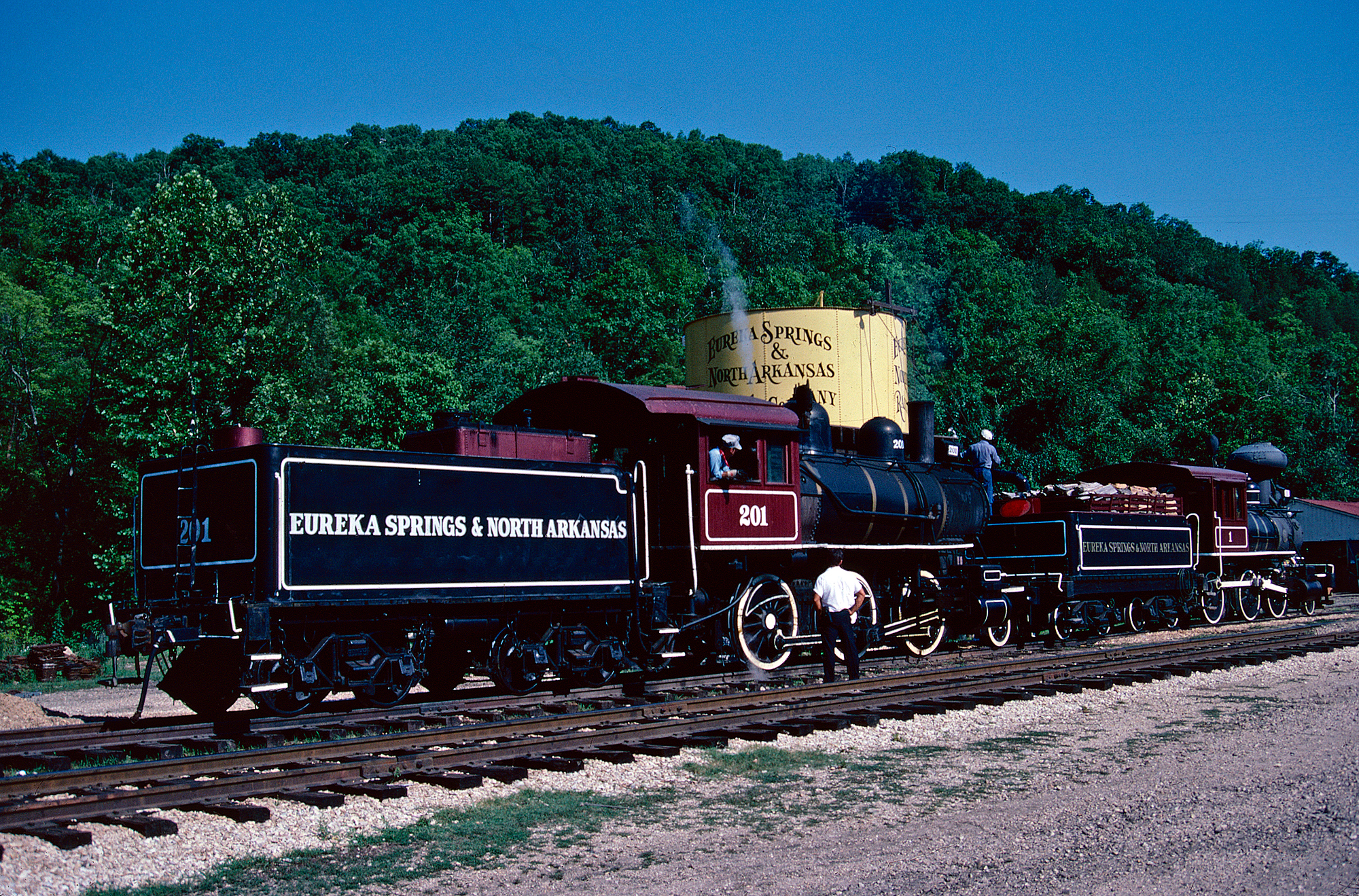
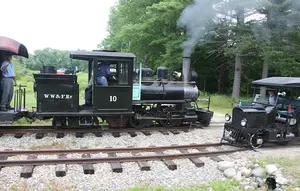
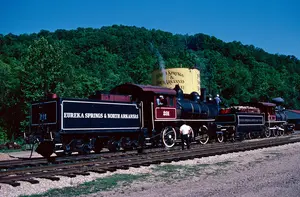
Eureka Springs & North Arkansas 2-6-0 #1 and 2-6-0 #201 at Eureka Springs, July 1984. Baldwin built #1 in 1906. Alco’s Cooke Works built #201 in 1906 for the Panama Canal. Mike Bledsoe photo, American-Rails.com collection.
On this page: At a glance · Arkansas railroads · Pine Bluff shops · Fort Smith trolley · Eureka Springs · Mammoth Spring and Arkadelphia · Related reading
At a glance
| Place | Town | What it is known for | Site |
|---|---|---|---|
| Arkansas Railroad Museum | Pine Bluff | Cotton Belt 4-8-4 #819, the official state locomotive, in the shops that built it. Baldwin 2-6-0 #336. Evaluation of #819 began September 22, 2026, with no firing date | arkansasrailroadmuseum.org · 819 note |
| Fort Smith Trolley Museum | Fort Smith | Operating Birney streetcar on about three-quarters of a mile. Frisco 2-8-2 #4003, a USRA light Mikado of 1919 | fstrolley.org |
| Eureka Springs & North Arkansas Railway | Eureka Springs | 1913 depot and about 2.5 miles of the old Missouri & North Arkansas. Excursions behind a 1940s diesel. Steam on display, including Panama Mogul #201 | esnarailway.com · rides |
| Mammoth Spring Frisco Depot | Mammoth Spring | Kansas City, Fort Scott & Memphis depot, built in 1885 and opened in 1886, on its original foundation. Frisco caboose #1176. Inside the state park | state park |
| Clark County Museum | Arkadelphia | Missouri Pacific depot on South Fifth Street, Mediterranean brick, National Register June 11, 1992. Museum since October 2002. Amtrak’s Texas Eagle still stops | depot on South Fifth Street |
American-Rails.com does not operate these places and does not sell tickets. Confirm hours before you travel.
Arkansas railroads
The Cairo & Fulton, later the St. Louis, Iron Mountain & Southern and then the Missouri Pacific, was the spine from Missouri to Texas. It reached Arkadelphia in 1873, and the Mediterranean depot still in use there is that railroad’s twentieth-century station. The St. Louis Southwestern, the Cotton Belt, crossed the state on its own line and put its heavy shops at Pine Bluff. Those shops built locomotives as well as repaired them. The Frisco came through the northeast by way of the Kansas City, Fort Scott & Memphis, and the Mammoth Spring depot is that railroad’s surviving station. The Missouri & North Arkansas reached the Ozark resorts at Eureka Springs and, at its longest, ran from Joplin, Missouri, toward Helena.
Union Pacific and BNSF hold most of those main lines now. Union Pacific still owns the Pine Bluff shop building, which the city leases. BNSF freights still pass Mammoth Spring. The Arkansas & Missouri Railroad is the operating freight and passenger railroad through the Boston Mountains. Its trains are on the scenic-train page. The places below are the collections, the depots, and the short railroad at Eureka Springs that keeps equipment on display beside the ride.
Arkansas Railroad Museum
The Cotton Belt Rail Historical Society was organized on October 18, 1983, to save St. Louis Southwestern No. 819. The museum it grew into occupies the former Cotton Belt erecting shops at 1700 Port Road in Pine Bluff, a building put up between 1882 and 1894. Union Pacific owns the building and grounds. The city leases them, and the society runs the museum. The shop floor is where Pine Bluff forces finished No. 819. The museum has posted free admission. Hours are a short daytime window, and extreme heat or cold closes the old shop floor, so the society asks visitors to check the day.
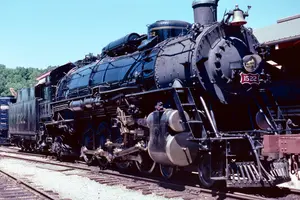
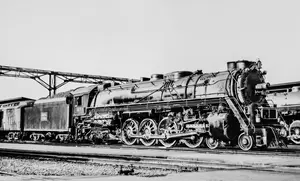
No. 819 is a class L-1 4-8-4, the last of twenty, the last locomotive the Cotton Belt built, and the last locomotive built in Arkansas. The Pine Bluff shops completed it in December 1942, with a Baldwin boiler. It entered service on February 8, 1943. It burned oil, carried 250 pounds of boiler pressure, and had 70-inch drivers and cylinders 26 by 30 inches. It ran more than 804,000 miles and left revenue service in 1953. On July 19, 1955, Cotton Belt president H. J. McKenzie gave it to the City of Pine Bluff for one dollar. The city still owns the locomotive. It stood in a park until volunteers brought it back to the shops, returned it to excursion service in 1986, and ran it into the early 1990s. It went on the National Register of Historic Places on May 18, 2003. In 2021 the legislature named it the official steam locomotive of Arkansas.
On September 22, 2026, the society moved No. 819 out of the shop building, the first time the engine had been outside that building in about thirty years. RDG Steam Services was there to judge the boiler and the machinery and to help the museum decide what comes next. The announcement set no firing date and named no cost. The September 24, 2026 note has that day in more detail. Until the society says otherwise, No. 819 is a display locomotive under evaluation, in the building where it was finished.
The other steam locomotive in the shops is Cotton Belt 2-6-0 No. 336, built by Baldwin in 1909 and listed on the National Register on January 24, 2007. The collection around the two engines is Cotton Belt and neighboring-road equipment: diesels, a wrecker, cabooses, and passenger cars. A Union Pacific C-630, No. 2907, has been at the museum on loan. The society’s own roster is the list to check before a visit.
Fort Smith Trolley Museum
The Fort Smith Trolley Museum opened in 1985 and began running a streetcar in 1991. The line is about three-quarters of a mile through downtown, past the Fort Smith National Historic Site and out toward the national cemetery. The car people ride is Fort Smith Light & Traction Birney safety car No. 224, restored and listed on the National Register in 1994. A Hot Springs Street Railway car, No. 50, built by the St. Louis Car Company in 1904, is in the collection with other Fort Smith streetcars. The museum posts seasonal hours and weekday visits by appointment. Confirm the day. The ride is a separate matter from walking the carbarn, and the museum’s site has both.
The steam locomotive on the property is St. Louis–San Francisco No. 4003, a USRA light 2-8-2 built in 1919. It stood at the old Electric Park fairgrounds from 1954 until the fair board gave it to the museum. It went on the National Register in 2004. Cabooses, a military power car, and smaller industrial locomotives fill out the yard, including pieces from the Maumelle Ordnance Works and the Air Force. The Frisco Mikado is the engine the museum is known for. The Frisco company page has the railroad. This page only needs the locomotive’s second life in Fort Smith.
Eureka Springs & North Arkansas
The Eureka Springs Railway opened in 1882, from Seligman, Missouri, into the resort. It became the St. Louis & North Arkansas and then the Missouri & North Arkansas, and the depot visitors use was built in 1912–13. The tourist railroad on what remained of that line was established in 1981. It runs about two and a half miles north to a place it calls Junction, where a wye and a turntable can turn the engine. The railroad’s own description of the present operation is an excursion behind a 1940s diesel, with steam locomotives on stationary display in the yard. Dining-car trips run on the same railroad. The year’s opening day, the days of the week, and the fares are on esnarailway.com and on the scenic-train page. The depot is at 299 North Main Street.
The July 1984 photograph shows the two Moguls that defined the early years of that yard. No. 1 is a Baldwin of November 1906, construction number 29588, built as a wood-burner for the Lufkin Land & Lumber Company in Texas. No. 201 is an Alco-Cooke of 1906, construction number 39094, built as Isthmian Canal Commission No. 203 on five-foot gauge for work on the Panama Canal, later standard-gauged, and one of the few locomotives from that work still in existence. A Trains profile in April 2026 still named No. 201 among the pieces on display at Eureka Springs. The railroad’s site is the place to confirm what is coupled up, and what is only on exhibit, the week you go.
Mammoth Spring and Arkadelphia
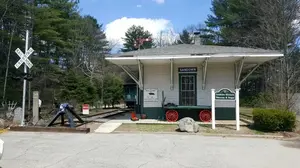
The Frisco depot at Mammoth Spring stands inside Mammoth Spring State Park, on the old Kansas City, Fort Scott & Memphis line. The state’s own description says the depot was built in 1885 and opened in 1886, and that it is one of the oldest railroad depots in Arkansas still on its original foundation. It is on the National Register. The Frisco acquired the Kansas City, Fort Scott & Memphis in 1901, which is why the restored building wears that name. A wooden Frisco caboose, No. 1176, sits beside the depot, with a marker that treats the caboose as a workplace: cupola, stove, tools, and a bunk. BNSF freights still pass on the old Frisco main. The park posts the depot’s days. This is the Mammoth Spring, Arkansas, depot. A museum of a similar name in Oklahoma is a different building.
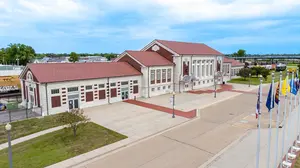
The Clark County Museum occupies the Missouri Pacific depot on South Fifth Street in Arkadelphia. The National Register dates the Mediterranean brick station, with its tile roof and telegrapher’s bay, to about 1917, and listed it on June 11, 1992. The line itself is older. The Cairo & Fulton reached Arkadelphia in 1873, and the Missouri Pacific took over the Iron Mountain in 1917. The Clark County Historical Association opened the museum in the depot in October 2002. In 2023 the museum board became its own nonprofit. The entry room is the county’s railroad history. A caboose sits across the street. Amtrak’s Texas Eagle still stops at the building, and Union Pacific freights still use the track. The museum posts a short set of days. Confirm them, and expect the waiting room and the museum to keep different hours.
Related reading
- Railroad museums in the United States
- Cotton Belt · Cotton Belt No. 819 · Frisco
- Arkansas scenic train rides
- Tourist trains · U.S. railroad history
- Neighbors: Missouri museums
Sources
- Arkansas Railroad Museum and the Cotton Belt Rail Historical Society: society organized October 18, 1983; shops at 1700 Port Road, built between 1882 and 1894; Union Pacific owns the building, the city leases it. St. Louis Southwestern No. 819, class L-1, completed December 1942, in service February 8, 1943, oil fuel, 70-inch drivers, 250 pounds pressure, 26-by-30-inch cylinders, more than 804,000 miles, revenue service ended 1953, given to Pine Bluff on July 19, 1955. National Register, May 18, 2003. Official state locomotive, 2021. Moved outside for evaluation, September 22, 2026. American-Rails.com note, September 24, 2026. Baldwin 2-6-0 No. 336, 1909, National Register January 24, 2007
- Fort Smith Trolley Museum, fstrolley.org: museum opened 1985; streetcars from 1991; Birney No. 224, National Register 1994; Hot Springs car No. 50, St. Louis Car Company, 1904. Frisco No. 4003, USRA light 2-8-2, 1919, at the fairgrounds from 1954; the museum’s about page dates the gift to 2004; National Register 2004. Line of about three-quarters of a mile
- Eureka Springs & North Arkansas Railway, esnarailway.com: excursion railroad established 1981; 1913 depot at 299 North Main Street; about 2.5 miles of the former Missouri & North Arkansas; 1940s diesel on the train and steam on display. Trains, April 8, 2026: No. 201, built for the Panama Canal, still named among the yard exhibits. Photograph: Mike Bledsoe, Nos. 1 and 201, July 1984. No. 1, Baldwin, November 1906, construction number 29588, Lufkin Land & Lumber. No. 201, Alco-Cooke, 1906, construction number 39094, built as Isthmian Canal Commission No. 203
- Mammoth Spring State Park, via Arkansas.com: depot built in 1885, opened in 1886, on its original foundation, National Register; Kansas City, Fort Scott & Memphis, then the Frisco from 1901. Historical marker for Frisco caboose No. 1176
- National Register nomination, Missouri-Pacific Railroad Depot, Arkadelphia (92000599): Mediterranean brick depot of about 1917, listed June 11, 1992. Encyclopedia of Arkansas: Cairo & Fulton reached Arkadelphia in 1873; Clark County Museum opened October 2002; board reorganized as its own nonprofit in 2023; Amtrak Texas Eagle; caboose across the street
Confirm hours, admission, and which locomotive is on display before you travel.
Recent Articles


-
Alton Railroad: Map, History, Timetables
Oct 09, 26 10:31 PM
 Alton Railroad, chartered February 27, 1847 as the Alton & Sangamon. Chicago, St. Louis, and Kansas City, the 1937 Official Guide, and the May 31, 1947 merger into the Gulf, Mobile & Ohio.
 -
Mobile & Ohio Steam Roster (Post 1900)
Oct 09, 26 12:26 PM
 Mobile & Ohio steam since 1900. Drury's class grid: 48 six-wheel switchers, 107 Ten-Wheelers, 15 Consolidations, 58 Mikados, and 14 Pacifics. Last revenue steam October 7, 1949.
 -
Mobile & Ohio Railroad: History, Map, Timetable
Oct 09, 26 11:31 AM
 Mobile & Ohio Railroad, chartered in 1848. Columbus on April 22, 1861, the Cairo & St. Louis, the March 1940 Official Guide, and the September 13, 1940 merger into the Gulf, Mobile & Ohio.
 -
Gulf, Mobile & Northern Steam Roster (Post 1900)
Oct 09, 26 10:42 AM
 Gulf, Mobile & Northern steam since 1900. Drury's class grid: Ten-Wheelers, Mikados, Russian Decapods, Pacifics 425 and 426, and three light 4-8-2s. Last revenue steam October 7, 1949.
 -
Gulf, Mobile & Ohio Diesel Roster (All-Time)
Oct 09, 26 10:41 AM
 Gulf, Mobile & Ohio diesel roster, all-time. The 1935 boxcab, DL-107s, 55 FA-1s, F3s and F7s, the Ingalls 4-S, GP30s through GP38-2s, and 21 SD40s. Serials and order numbers.
 -
Gulf, Mobile & Northern Railroad: History, Rebel Route
Oct 09, 26 10:36 AM
 Gulf, Mobile & Northern, from the 1890 Mobile, Jackson & Kansas City to the Rebel and the September 13, 1940 merger into the Gulf, Mobile & Ohio. Steam roster is the companion page.
 -
Gulf, Mobile & Ohio Railroad: Map, Photos, Trains, History
Oct 08, 26 11:48 PM
 Gulf, Mobile & Ohio, chartered in 1938 and merged September 13, 1940. The Mobile & Ohio, the Alton on May 31, 1947, the Rebel Route, and Illinois Central Gulf on August 10, 1972.
 -
New Jersey Railroad Museums (2026): A Complete Guide
Oct 08, 26 11:37 PM
 New Jersey railroad museums—Whippany, Maywood, Pine Creek, Mahwah’s Erie depot, Phillipsburg, and Boonton. Confirm hours on each site.
 -
New Hampshire Railroad Museums (2026): A Complete Guide
Oct 08, 26 11:34 PM
 New Hampshire railroad museums—North Conway, the Flying Yankee, Ashland, Gorham, Raymond, and Sandown. Confirm hours on each site.
 -
Missouri Railroad Museums (2026): A Complete Guide
Oct 08, 26 11:00 PM
 Missouri railroad museums—the National Museum of Transportation, Patee House, Frisco 4524, the Chicago & Alton depot, and Marceline. Confirm hours on each site.
 -
Milwaukee Road X3800: Deer Lodge’s Shop Goat
Oct 08, 26 04:28 PM
 Milwaukee Road X3800, the a home-built shop goat that served the Deer Lodge, MT yard. It was a 220-volt DC switcher, powered through an extension cord that moved electrics into a roundhouse where the…
 -
Key West Extension (Overseas Railroad): History, Construction, Decline
Oct 08, 26 03:59 PM
 Henry Flagler's Overseas Railroad, Miami to Key West, 1905–1935. The Seven Mile Bridge, the 1935 Labor Day Hurricane, and the road that became U.S. 1.
 -
Florida East Coast Steam Roster (Post 1900)
Oct 08, 26 02:34 PM
 Florida East Coast steam since 1897. Seventeen Ten-Wheelers, twenty Atlantics, eighty-seven Pacifics, ninety Mountains, fifteen Mikados, and the switchers.
 -
Florida East Coast Diesel Roster (All-Time)
Oct 08, 26 02:12 PM
 Florida East Coast diesel roster, all-time. E units from 1939, F3s, BL2s, GP7s and GP9s, the GP40-2 orders, 22 SD40-2s, and 24 ES44C4s. Serials and EMD order numbers.
 -
Florida East Coast Railway: Map, History, Rosters
Oct 08, 26 01:46 PM
 Florida East Coast Railway, Henry Flagler's line from Jacksonville to Miami and Key West. Receivership in 1931, the 1963 strike, Grupo México in 2017, and Brightline on the same track.
 -
Minnesota Railroad Museums (2026): A Complete Guide
Oct 08, 26 10:32 AM
Minnesota railroad museums—the Lake Superior Railroad Museum, Two Harbors, Jackson Street, Willmar’s Great Northern 2523, and Currie. Confirm hours on each site. -
Maine Railroad Museums (2026): A Complete Guide
Oct 08, 26 09:24 AM
 Maine railroad museums—Seashore Trolley, the two-foot lines at Portland, Alna, and Phillips, Boothbay, and the Bangor & Aroostook depots. Confirm hours on each site.
 -
Massachusetts Railroad Museums (2026): A Complete Guide
Oct 08, 26 12:08 AM
 Massachusetts railroad museums—Berkshire Scenic at Lenox, Shelburne Falls trolley No. 10, Edaville, Chatham’s 1887 depot, and Lowell. Confirm hours on each site.
 -
Clinchfield Steam Roster (Post 1900)
Oct 07, 26 12:09 PM
 Clinchfield steam since 1900. Fifteen H-4 Consolidations, K-1 Mikados, M-2 and M-3 Mallets, L-class 2-8-8-2s, eighteen Challengers. Class grid after Drury. Last steam April 16, 1954.
 -
Clinchfield Diesel Roster (All-Time)
Oct 07, 26 12:05 PM
 Clinchfield diesel roster, all-time. F3A 800, FP7 200, the F7s, GP7s, 25 SD40s, 18 SD45-2s, seven U36Cs, and the Family Lines hoods. Serials and EMD order numbers.
 -
Clinchfield Railroad: Map, Steam Locomotives, Roster, Logo
Oct 07, 26 12:02 PM
 Clinchfield Railroad, Elkhorn City to Spartanburg. George L. Carter, the Carolina, Clinchfield & Ohio, the 1924 lease, coal, the loops, and CSX. Steam and diesel rosters are companion pages.
 -
Kentucky Railroad Museums (2026): A Complete Guide
Oct 07, 26 11:39 AM
 Kentucky railroad museums—the Kentucky Railway Museum, Bowling Green’s L&N depot, Paducah, Versailles, and Covington. Confirm hours on each site.
 -
Kansas Railroad Museums (2026): A Complete Guide
Oct 07, 26 11:26 AM
 Kansas railroad museums—Santa Fe 3768 at Wichita, Santa Fe 132 in Topeka, the Great Overland Station, and Abilene. Confirm hours on each site.
 -
Cincinnati, New Orleans and Texas Pacific Diesel Roster (All-Time)
Oct 07, 26 10:38 AM
 All-time diesel roster of Southern locomotives lettered for the Cincinnati, New Orleans and Texas Pacific. Serials, order numbers, and builder dates.
 -
Cincinnati, New Orleans and Texas Pacific Railway
Oct 07, 26 10:31 AM
 Cincinnati, New Orleans and Texas Pacific Railway, incorporated September 8, 1881, to lease Cincinnati’s railroad to Chattanooga. Queen and Crescent route, Rathole, and the 2024 sale to Norfolk Southe…
 -
Indiana Railroad Museums (2026): A Complete Guide
Oct 07, 26 12:26 AM
 Indiana railroad museums—Nickel Plate 765, Elkhart’s New York Central collection, French Lick, Linden’s junction depot, and Haley Tower. Confirm hours on each site.
 -
"Triplex" Steam Locomotive: Specs, History, Photos
Oct 06, 26 11:52 PM
 Erie class P-1 Triplex 2-8-8-8-2s. Three Baldwin compounds, 2603–2605, later 5014–5016, built 1914 and 1916. Matt H. Shay, the 1930 class card, and Virginian XA 700.
 -
Illinois Railroad Museums (2026): A Complete Guide
Oct 06, 26 11:47 PM
 Illinois railroad museums—the Illinois Railway Museum, Monticello, the Pioneer Zephyr, Galesburg’s Burlington 3006, and the depots. Confirm hours on each site.
 -
Iowa Railroad Museums (2026): A Complete Guide
Oct 06, 26 11:41 PM
 Iowa railroad museums—the Union Pacific Railroad Museum, RailsWest, Sioux City, Boone, and the National Hobo Museum in Britt. Confirm hours on each site.
 -
Charleston and Western Carolina Diesel Roster (All-Time)
Oct 06, 26 11:29 PM
Charleston and Western Carolina diesel roster. Twenty-one GP7s, two SW7s, two SW9s, and six F7As, all built 1950–1952. Serials, order numbers, and ACL and SCL numbers. -
Charleston and Western Carolina Railway: Map, History, Timetables
Oct 06, 26 11:18 PM
 Charleston and Western Carolina Railway, incorporated September 16, 1896. Port Royal to Spartanburg, with branches to Anderson and Greenville. Merged into the Atlantic Coast Line on December 31, 1959.
 -
Central of Georgia Steam Roster (Post 1900)
Oct 06, 26 04:00 PM
 Central of Georgia steam since 1900. Cooke Consolidations, Harriman Mikados, 32 Mountains, and eight Lima 4-8-4s. Class grid after Drury. Last steam May 1953.
 -
Central of Georgia Diesel Roster (All-Time)
Oct 06, 26 03:44 PM
 Central of Georgia diesel roster. SW1 No. 1 in 1939, E7s and E8s, nine F3As, 39 RS3s, GP7s through SD35s. Serials and order numbers.
 -
Central of Georgia Railway: Map, Logo, History, Rosters
Oct 06, 26 03:42 PM
 Central of Georgia Railway, from the 1833 Savannah charter to Southern control on June 17, 1963. Map, logos, Nancy Hanks II, and links to the steam and diesel rosters.
 -
Georgia Railroad Museums (2026): A Complete Guide
Oct 06, 26 03:33 PM
Georgia railroad museums—Savannah’s Central shops, Duluth, the General at Kennesaw, the Texas in Atlanta, Tifton, Waycross, and Albany. Confirm hours on each site. -
Florida Railroad Museums (2026): A Complete Guide
Oct 06, 26 03:18 PM
 Florida railroad museums—Boca Raton, Winter Garden, Whitehall, the Gold Coast, Parrish, Fort Myers, Milton, and Plant City. Confirm hours on each site.
 -
Connecticut Railroad Museums (2026): A Complete Guide
Oct 06, 26 01:05 PM
 Connecticut railroad museums—the Shore Line Trolley, East Windsor, the Naugatuck Railroad, Danbury Union Station, Willimantic, and the SoNo tower. Confirm hours on each site.
 -
Colorado Railroad Museums (2026): A Complete Guide
Oct 06, 26 12:47 PM
 Colorado railroad museums—Golden, the Forney’s Big Boy 4005, Pueblo’s Santa Fe 2912, and the depots at Castle Rock, Limon, and Ridgway. Confirm hours on each site.
 -
Atlantic Coast Line Steam Roster (Post 1900)
Oct 06, 26 12:44 PM
 Atlantic Coast Line steam since 1900. Copper Head Ten-Wheelers, 235 P-5 Pacifics, Q-1 Santa Fes, twelve R-1 4-8-4s. Class grid after Drury. Last steam June 30, 1955.
 -
Atlantic Coast Line Diesel Roster (All-Time)
Oct 06, 26 11:57 AM
 Atlantic Coast Line diesel roster. HH660 1900 in 1939, E3s for the Champion, FTs and F2s, GP7s 100–279, GP30s, U25Cs, and the 1967 SCL numbers. Serials and orders.
 -
Atlantic Coast Line Railroad: "Standard Railroad of the South"
Oct 06, 26 11:53 AM
 Atlantic Coast Line, the Standard Railroad of the South. April 21, 1900 to July 1, 1967. Plant System, L&N, Clinchfield, the Champion, and the Seaboard Coast Line merger.
 -
California Railroad Museums (2026): A Complete Guide
Oct 06, 26 09:50 AM
California railroad museums—the California State Railroad Museum, Perris, Portola, Railtown 1897, and the depots that still stand. Confirm hours on each site. -
Arizona Railroad Museums (2026): A Complete Guide
Oct 06, 26 09:46 AM
Arizona railroad museums—the Arizona Railway Museum in Chandler, Southern Pacific 1673 at Tucson, and the McCormick-Stillman park in Scottsdale. -
Arkansas Railroad Museums (2026): A Complete Guide
Oct 06, 26 09:07 AM
 Arkansas railroad museums—Cotton Belt 819 at Pine Bluff, the Fort Smith trolley, the Mammoth Spring depot, and the Eureka Springs railway.
 -
Alabama Railroad Museums (2026): A Complete Guide
Oct 06, 26 09:03 AM
Alabama railroad museums—Heart of Dixie at Calera, the North Alabama museum at Chase, Huntsville’s 1860 depot, and Fort Payne. Confirm hours on each site. -
Pennsylvania Railroad Museums (2026): A Complete Guide
Oct 06, 26 12:09 AM
 Pennsylvania railroad museums—Strasburg, Steamtown, the Horseshoe Curve, the East Broad Top, and the depots and towers in between. Confirm hours on each site.
 -
Maryland Railroad Museums (2026): A Complete Guide
Oct 05, 26 11:53 PM
 Maryland railroad museums—the Baltimore roundhouse, Ellicott City station, Bowie, Gaithersburg’s Buffalo Creek & Gauley 14, and the Western Maryland collections.
 -
Ohio Railroad Museums (2026): A Complete Guide
Oct 05, 26 05:51 PM
 Ohio railroad museums—the Age of Steam Roundhouse, Bellevue, Worthington, Conneaut’s Nickel Plate 755, and the Dennison depot. Confirm hours on each site.
 -
Delaware Railroad Museums (2026): A Complete Guide
Oct 05, 26 02:43 PM
 Delaware railroad museums—Wilmington & Western at Greenbank, the Harrington tower and N5 caboose, Felton's 1868 depot, and the Selbyville station museum.
 -
C&O's M-1 Steam Turbine Locomotives: Specs, Roster, History
Oct 05, 26 12:13 PM
 Chesapeake & Ohio Class M-1 steam-turbine-electrics. Three Baldwin-Westinghouse locomotives, 500–502, built 1947–48 for The Chessie. Specs, the 2-C1+2-C1-B arrangement, and a roster. All scrapped…