North Carolina Dinner Train Rides At NCTM!
Published: January 9, 2026
By: Adam Burns
Tucked into the Piedmont town of Spencer, the North Carolina Transportation Museum is the kind of place that feels less like a typical museum and more like a living rail yard that never quite stopped working. That’s because it did work—hard—for decades. The museum occupies the former Southern Railway Spencer Shops, once the railroad’s major steam-locomotive servicing and repair complex in the Southeast. Long before it became a family-friendly destination with train rides and special events, this site was a critical industrial backbone for Southern Railway operations, keeping locomotives rolling between major endpoints and across the Carolinas.
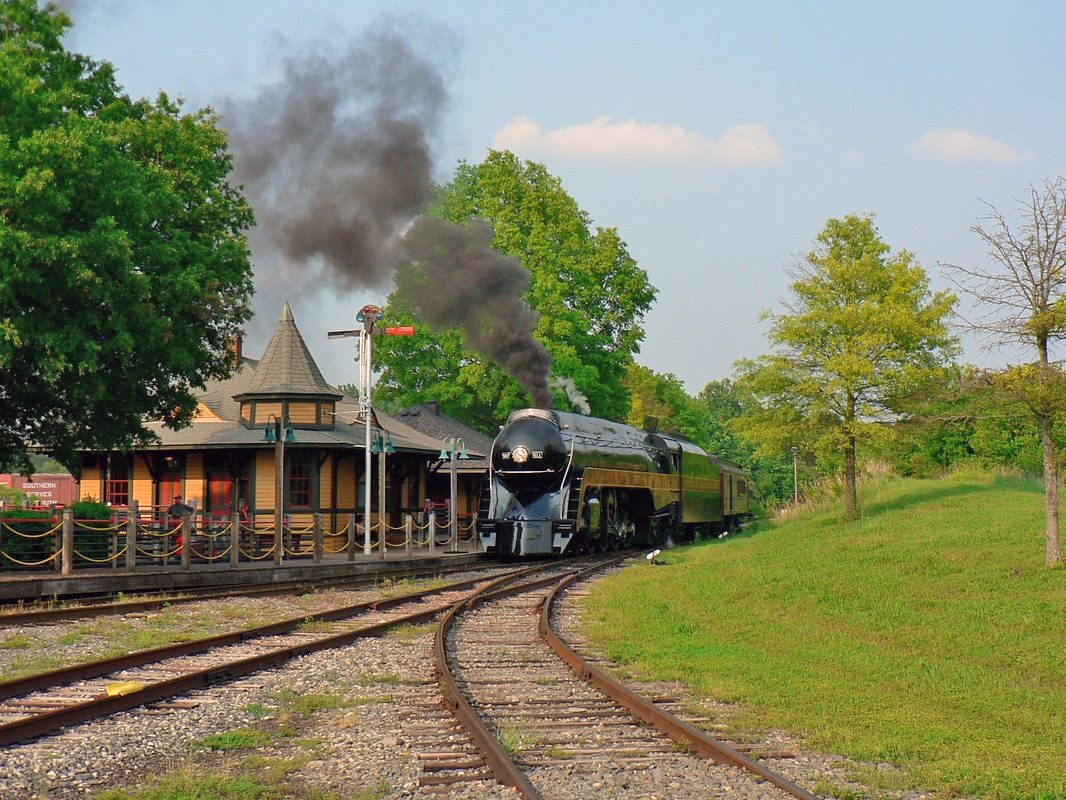 Norfolk & Western 4-8-4 #611 during her visit to the North Carolina Transportation Museum in the summer of 2017. Dan Robie photo.
From steam-era powerhouse to historic site
Construction at Spencer Shops began in 1896, and the complex grew into Southern Railway’s largest steam-locomotive repair facility in the Southeast. At its peak—especially in the late 1940s—employment reached into the thousands, with the town of Spencer itself developing around the shops and their payroll.
As the railroad industry transitioned away from steam and into the diesel era, the role of the shops changed. Steam work ended in the early 1950s, and over time the sprawling complex saw operations reduced, buildings removed, and work consolidated elsewhere. By the late 1970s, Southern Railway had shifted to newer, diesel-oriented facilities and Spencer’s golden age as a repair hub faded.
But crucially, the site wasn’t lost. The property and key buildings were preserved and ultimately became the foundation for a transportation museum. The Spencer Shops were donated to the state, and the museum opened to the public in the early 1980s—protecting one of the South’s most important railroad industrial landscapes and turning it into a place where visitors can walk through the same spaces that once echoed with hammers, air tools, and the steady cadence of a working railroad.
The Museum Today
The museum’s present-day appeal comes from a rare combination: authentic infrastructure (roundhouse, shop buildings, yard tracks) and the approachable fun of a day trip—complete with exhibits, a gift shop, and regularly scheduled train rides. The grounds encompass a large historic campus where you can move between indoor exhibit areas and outdoor equipment displays. The site’s sheer scale helps you grasp how a railroad maintained an empire of steam—and how that legacy still shapes the place’s atmosphere.
A major centerpiece is the museum’s roundhouse-and-turntable setting—an iconic scene that instantly communicates “railroad town,” even to first-time visitors. And beyond railroading, the museum presents transportation history broadly, tying together the stories of mobility, industry, and North Carolina’s role in moving people and goods.
Another big draw: train rides are a core part of the experience, not an occasional add-on. The museum publishes a recurring ride schedule and offers both admission-only and admission + train-ride ticket options, making it easy to tailor the visit to your group’s interest level.
Even if you’re not a hardcore railfan, riding the rails around a preserved historic site adds a “you are there” layer that static exhibits can’t replicate.
Dinner Trains At Spencer
Wine & Dine on the Rails
The museum’s marquee dining experience is Wine & Dine on the Rails, scheduled for February 13–15, 2026. t’s positioned as an elegant, romantic event—perfect for couples, but just as enjoyable for friends who want a unique winter-weekend outing.
How it works: the evening begins with a cocktail hour before guests board the train, followed by a leisurely ride around the museum’s historic site while a three-course meal is served at your table. The museum notes that guests choose seats at 2-top or 4-top tables when purchasing tickets, and if your party doesn’t fill all seats at a table, other guests may join—classic dining-car social style.
Important details that matter when planning:
- This event is 21+ only, and a valid photo ID is required to receive boarding passes.
- Each passenger receives drink tickets redeemable for wine/beer (with additional beverages available for purchase).
- The museum notes that the historic cars used for this event are not wheelchair accessible due to the nature of the equipment.
- Seating is limited, reservations are required, and it runs rain or shine with no refunds/exchanges noted.
A premium “bucket-list” upgrade: Wine & Dine also offers (when available) a private dining option aboard the Doris, a 1917 Pullman private railcar associated with James B. Duke, sold as a full-table purchase for one party. Even if you don’t go for the upgrade, knowing it exists gives you a sense of how special this event is meant to feel.
From a visitor’s perspective, Wine & Dine hits a sweet spot: it’s polished enough to feel like an occasion, but still grounded in real railroad history—dining on vintage equipment while rolling through an authentic shop complex rather than a staged theme setting.
St. Patrick’s Day Dinner Train
For a springtime twist on the dinner-train concept, the museum runs a St. Patrick’s Day Train Ride on March 13 & 14, 2026. Like Wine & Dine, it’s a timed evening program built around a pre-boarding social period and dinner served on board.
The museum describes it as an Irish-themed night with a happy hour (including live music, appetizers, and beverages) followed by dinner while riding the rails. The published schedule shows two seatings each night—useful if you’re coordinating with work schedules or trying to make it a group outing. And, like Wine & Dine, the museum specifies the event is 21+ with ID required, and notes accessibility limitations tied to historic equipment.
What to expect from dinner trains here
What makes these events work so well at Spencer is the setting: you’re not just eating on a train—you’re doing it at a historic rail complex built for the Southern Railway, where the buildings, tracks, and yard geometry create a real sense of place.
The ride itself is typically a tour of the museum’s rail campus (rather than a long out-and-back journey), which keeps the experience intimate and structured around dining and ambiance rather than mileage.
A practical tip: if you’re going primarily for the dinner trains, arrive early enough to settle in, find parking, and—if time allows—take in at least a portion of the grounds before the evening program begins. Even a quick walk near the roundhouse helps frame the night in the site’s bigger story.
Final Thoughts
Some museums impress with artifact lists; this one impresses with infrastructure—the preserved bones of an industrial railroad city, repurposed for public memory and enjoyment. From its origin as Spencer Shops (begun in 1896) to its modern role as a museum with regular train rides and signature dining events, the North Carolina Transportation Museum offers a blend that’s hard to match: deep history, hands-on atmosphere, and genuinely fun programming.
Recent Articles


-
Kentucky Scenic Train Rides At KRM!
Jan 09, 26 11:13 PM
 Located in the small town of New Haven the Kentucky Railway Museum offers a combination of historic equipment and popular excursions.
 -
Washington "Wine Tasting" Train Rides
Jan 09, 26 08:53 PM
 Here’s a detailed look at where and how to ride, what to expect, and practical tips to make the most of wine tasting by rail in Washington.
 -
Kentucky's - Wine Tasting - Train Rides
Jan 09, 26 08:21 PM
 Kentucky, often celebrated for its rolling pastures, thoroughbred horses, and bourbon legacy, has been cultivating another gem in its storied landscapes; enjoying wine by rail.
 -
Kentucky's - Murder Mystery - Dinner Train Rides
Jan 09, 26 01:12 PM
 In the realm of unique travel experiences, Kentucky offers an enchanting twist that entices both locals and tourists alike: murder mystery dinner train rides.
 -
Utah's - Murder Mystery - Dinner Train Rides
Jan 09, 26 01:05 PM
 This article highlights the murder mystery dinner trains currently avaliable in the state of Utah!
 -
North Carolina Dinner Train Rides At NCTM!
Jan 09, 26 12:51 PM
 Tucked into the Piedmont town of Spencer, the North Carolina Transportation Museum is the kind of place that feels less like a typical museum and more like a living rail yard that never quite stopped…
 -
Tennessee Dinner Train Rides At The TVRM!
Jan 09, 26 12:39 PM
 Tucked into East Chattanooga, the Tennessee Valley Railroad Museum (TVRM) is less a “museum you walk through” and more a railroad you step aboard.
 -
New York Scenic Train Rides On The A&A!
Jan 09, 26 11:20 AM
 The A&A is both a common-carrier short line moving freight and a heritage railroad hosting popular excursion trains, all on the same storied right-of-way.
 -
Pennsylvania Scenic Train Rides In Hollidaysburg!
Jan 09, 26 11:14 AM
 Tucked into the Juniata River valley just south of Altoona, the Everett Railroad offers one of the most approachable—and photogenic—heritage-rail experiences in Pennsylvania
 -
Montana Dinner Train Rides Near Lewistown!
Jan 08, 26 03:03 PM
 The Charlie Russell Chew Choo turns an ordinary rail trip into an evening event: scenery, storytelling, live entertainment, and a hearty dinner served as the train rumbles across trestles and into a t…
 -
Alabama's - Murder Mystery - Dinner Train Rides
Jan 08, 26 02:19 PM
 There is currently one location in the state offering a murder mystery dinner experience, the Wales West Light Railway!
 -
Rhode Island's - Murder Mystery - Dinner Train Rides
Jan 08, 26 01:43 PM
Let's dive into the enigmatic world of murder mystery dinner train rides in Rhode Island, where each journey promises excitement, laughter, and a challenge for your inner detective. -
Florida's - Wine Tasting - Train Rides
Jan 08, 26 01:13 PM
 Wine by train not only showcases the beauty of Florida's lesser-known regions but also celebrate the growing importance of local wineries and vineyards.
 -
Texas's - Wine Tasting - Train Rides
Jan 08, 26 12:30 PM
 This article invites you on a metaphorical journey through some of these unique wine tasting train experiences in Texas.
 -
New York's - Wine Tasting - Train Rides
Jan 08, 26 11:32 AM
 This article will delve into the history, offerings, and appeal of wine tasting trains in New York, guiding you through a unique experience that combines the romance of the rails with the sophisticati…
 -
California Dinner Train Rides In Sacramento!
Jan 08, 26 11:21 AM
Just minutes from downtown Sacramento, the River Fox Train has carved out a niche that’s equal parts scenic railroad, social outing, and “pick-your-own-adventure” evening on the rails. -
New Jersey Dinner Train Rides In Woodstown!
Jan 08, 26 10:31 AM
For visitors who love experiences (not just attractions), Woodstown Central’s dinner-and-dining style trains have become a signature offering—especially for couples’ nights out, small friend groups, a… -
Nevada's - Murder Mystery - Dinner Train Rides
Jan 07, 26 02:12 PM
 Seamlessly blending the romance of train travel with the allure of a theatrical whodunit, these excursions promise suspense, delight, and an unforgettable journey through Nevada’s heart.
 -
West Virginia's - Murder Mystery - Dinner Train Rides
Jan 07, 26 02:08 PM
For those looking to combine the allure of a train ride with an engaging whodunit, the murder mystery dinner trains offer a uniquely thrilling experience. -
Kansas's - Murder Mystery - Dinner Train Rides
Jan 07, 26 01:53 PM
Kansas, known for its sprawling wheat fields and rich history, hides a unique gem that promises both intrigue and culinary delight—murder mystery dinner trains.