Kentucky Scenic Train Rides At KRM!
Published: January 9, 2026
By: Adam Burns
Tucked into the small town of New Haven, Kentucky, the Kentucky Railway Museum (KRM) offers something increasingly rare in the preservation world: not only a collection of historic railroad artifacts, but an operating heritage railroad where visitors can step aboard and experience the sights, sounds, and rhythms of traditional rail travel. The museum’s story is one of persistence—built by volunteers, moved more than once in search of a stable home, and ultimately anchored along a surviving segment of the old Louisville & Nashville (L&N) route that once helped knit the state together.
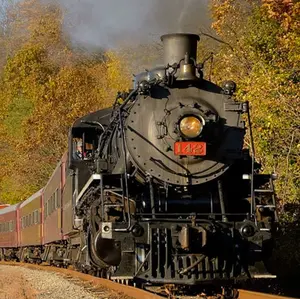
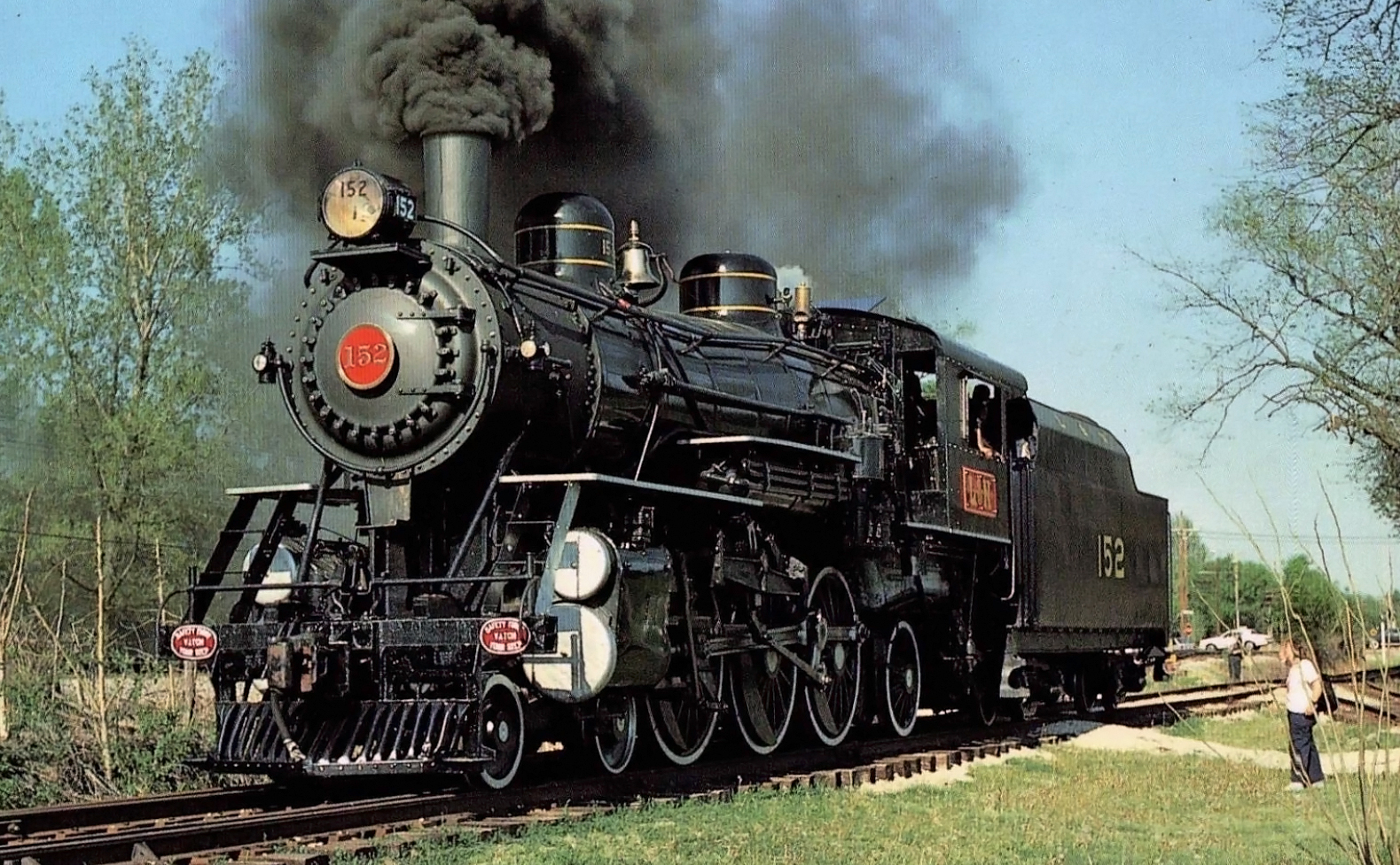 The KRM's longtime start was Louisville & Nashville 4-6-2 #152. It is seen here departing the museum to head into Louisville to celebrate "The Great Steamboat Race" during Derby Week in April, 1987. George Swearingen photo.
From railfan dream to a permanent home
KRM traces its roots to 1954, when railroad enthusiasts in Louisville organized to preserve Kentucky’s railroad history and the equipment that represented it. Early displays centered on a handful of cornerstone pieces—most famously Louisville & Nashville steam locomotive No. 152—plus supporting rolling stock that could help interpret what rail travel looked and felt like in earlier decades.
Like many young museums, KRM’s first decades involved adaptation and relocation as space, flooding concerns, and long-term leases shaped what was possible. A major milestone arrived in the 1980s, when volunteers undertook an ambitious restoration of L&N 152—work that culminated in the locomotive returning to operation in September 1985 after decades out of service, a powerful demonstration of what volunteer preservation can accomplish.
The defining turning point came when the museum secured the ingredients needed for long-term stability: its own railroad and a permanent base. With support from philanthropic and state sources, KRM acquired about 17 miles of the former L&N Lebanon Branch (a portion of the “old L&N” line) and received donated land and a building in New Haven, opening its permanent facilities on July 4, 1990. In the mid-1990s, a replica brick depot—modeled after the historic New Haven station—helped create the classic “small-town depot” setting that complements the museum’s interpretive mission.
The museum today: more than static displays
In the present day, KRM functions as a hybrid experience: part museum gallery, part working railroad. The site includes indoor exhibits and interpretive displays, a gift shop, and a setting that feels purpose-built for photos—trains alongside a depot, trackwork stretching away toward the countryside, and historic equipment arranged for visitors to explore. KRM notes it owns 100+ pieces of rolling stock (with many types represented), and while not every car is on public display at once, the breadth of the collection speaks to the museum’s long-running efforts to preserve not just locomotives, but the everyday equipment that made railroading work.
What makes KRM especially compelling is that the museum doesn’t treat railroading as a distant, silent artifact. Instead, it interprets rail history through movement: wheels turning, horns sounding, and coaches rolling along track that once hosted L&N trains as part of Kentucky’s transportation backbone. To learn more please click here to visit the KRM's website.
Prominent preserved locomotives you’ll want to look for
While KRM has a wide-ranging collection, several locomotives stand out as visitor favorites and historically significant pieces.
Louisville & Nashville 4-6-2 No. 152
The museum’s signature locomotive is No. 152, a Rogers Locomotive Works product built in 1905. It’s widely known as the iconic surviving L&N steam engine associated with the museum, and it carries multiple layers of significance: it’s listed on the National Register of Historic Places, and KRM’s own materials describe it as the official state steam locomotive of Kentucky. Today, No. 152 is out of service while undergoing a major inspection/overhaul cycle, but it remains the heart of the museum’s identity and a focal point for preservation efforts.
Chesapeake & Ohio 2-8-4 No. 2716 (associated)
Another steam name that often appears in the KRM story is C&O No. 2716, a Berkshire-type locomotive built in 1943. The museum has been associated with the engine historically, though it has been noted as being on long-term lease connected to Kentucky steam preservation efforts. (If you’re writing interpretive copy, it’s a good “context locomotive” to mention carefully—important to the broader Kentucky preservation scene, even when not physically present.)
Louisville & Nashville/Republic Steel 0-8-0 No. 2152 (display)
KRM also preserves L&N 0-8-0 2152, a USRA-type engine on display/cosmetic restoration in preservation references, giving visitors another tangible link to the L&N’s steam-era freight power.
Louisville & Nashville GP7 No. 411 (operational diesel)
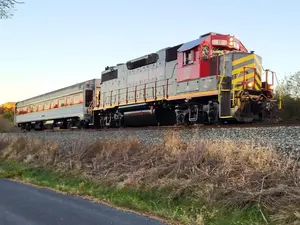
On many operating days, KRM’s excursions are powered by preserved diesel locomotives, and a headline engine in that category is L&N No. 411, an EMD GP7 identified as operational in preservation listings. Diesels like 411 are often the “workhorses” of modern tourist operations—reliable, economical to run, and historically appropriate for the later decades of Kentucky railroading.
Excursion Options
KRM’s excursion lineup is one of its biggest draws—and it’s varied enough that many visitors return season after season. The museum’s Train Rides & Tours page serves as the hub, with offerings that range from general rides to themed experiences and hands-on programs.
Here are the major options worth highlighting in an overview article:
Weekend Train Ride (signature excursion)
KRM’s core experience is the Weekend Train Ride, marketed as a family-friendly, nostalgic trip along the historic Lebanon Branch. The museum describes this ride as about 1.5 hours in duration, capturing the essential “ride behind vintage power through Kentucky countryside” experience that most visitors are looking for.
Seasonal and break-time excursions
KRM also runs rides timed to school breaks and seasonal travel—such as the Spring Break Express (noted as a 90-minute excursion) and fall-oriented offerings like Fall Break Express and Autumn Express. These are ideal for families looking for a structured outing where the train ride and museum visit pair naturally as a half-day activity.
Holiday and themed trains
The museum leans into themed programming—examples listed include the Easter Eggspress (described as a 1.5-hour excursion) and interactive events like Mystery on the Rails and Trivia on the Rails, which add a “show” or participatory element to the ride.
Day Out With Thomas™
KRM also lists Day Out With Thomas™, one of the most recognizable family rail events in North America, where a full-sized Thomas visits and kids get a festival-style experience in addition to the train ride.
Cab Ride: railroading from the inside
For enthusiasts (and older kids/teens), the Locomotive Cab Ride option lets you ride in the cab with the crew during the trip. KRM notes age and mobility requirements (including that cab riders must be 13+ and that the cab is not wheelchair accessible), so it’s a “read the fine print” add-on—but it’s one of the most memorable ways to experience the railroad.
Hands-on programs: Throttle Time and Great Freight Experience
Beyond riding, KRM offers programs where participants can learn what it’s like to be an engineer. Throttle Time and The Great Freight Experience are described as reservation-based sessions (noted as offered on select Sundays, April–October) that combine instruction with time operating a vintage diesel under supervision. These experiences are a perfect highlight for your article because they differentiate KRM from museums that only offer passive rides.
Why KRM belongs on a Kentucky rail trip
Kentucky has no shortage of scenic drives and historic towns, but the Kentucky Railway Museum offers something you can’t get from a roadside marker or a photo: the chance to experience living rail history in motion, on track with deep regional roots. Its origin story—railfans organizing in 1954, volunteers restoring a landmark locomotive, and the museum ultimately securing a permanent home and its own stretch of railroad—mirrors the broader preservation movement across the country, while still feeling distinctly Kentucky.
For families, it’s an easy win: a manageable ride length, kid-friendly themes, and the bonus of a museum visit. For railfans, it’s even better: historic L&N identity, preserved power you can photograph up close, and special options like cab rides and hands-on engineer programs. And for anyone interested in the “how” behind preservation, KRM’s ongoing work—especially around legendary L&N 152—is a reminder that railway history survives because people choose to keep it alive.
Recent Articles


-
NC By Train Posts Busiest Month In 35-year History
Feb 24, 26 06:17 PM
 North Carolina’s state-supported passenger rail service, marketed under the NC By Train brand, reached a milestone last fall.
 -
Northern Pacific 4-6-0 No. 1364 Returns To Life
Feb 24, 26 11:12 AM
The whistle of Northern Pacific steam returned to the Yakima Valley in a big way this month as Northern Pacific 4-6-0 No. 1364 moved under its own power for the first time in 73 years. -
CSX’s 2025 Santa Train: 83 Years of Holiday Cheer
Feb 24, 26 10:38 AM
 On Saturday, November 22, 2025, CSX’s iconic Santa Train completed its 83rd annual run, again turning a working freight railroad into a rolling holiday tradition for communities across central Appalac…
 -
Alabama Murder Mystery Dinner Train Rides
Feb 24, 26 09:25 AM
 There is currently one location in the state offering a murder mystery dinner experience, the Wales West Light Railway!
 -
Rhode Island Murder Mystery Dinner Train Rides
Feb 24, 26 09:21 AM
 Let's dive into the enigmatic world of murder mystery dinner train rides in Rhode Island, where each journey promises excitement, laughter, and a challenge for your inner detective.
 -
Virginia Wine Tasting Train Rides
Feb 24, 26 09:20 AM
 Wine tasting trains in Virginia provide just that—a unique experience that marries the romance of rail travel with the sensory delights of wine exploration.
 -
Tennessee Wine Tasting Train Rides
Feb 24, 26 09:17 AM
 One of the most unique and enjoyable ways to savor the flavors of Tennessee’s vineyards is by train aboard the Tennessee Central Railway Museum.
 -
Southeast Wisconsin Eyes New Lakeshore Passenger Rail Link
Feb 23, 26 11:26 PM
 Leaders in southeastern Wisconsin took a formal first step in December 2025 toward studying a new passenger-rail service that could connect Milwaukee, Racine, Kenosha, and Chicago.
 -
MBTA Sees Over 29 Million Trips in 2025
Feb 23, 26 11:14 PM
 In a milestone year for regional public transit, the Massachusetts Bay Transportation Authority (MBTA) reported that its Commuter Rail network handled more than 29 million individual trips during 2025…
 -
Historic Blizzard Paralyzes the U.S. Northeast, Halts Rail Traffic
Feb 23, 26 05:10 PM
A powerful winter blizzard sweeping the northeastern United States on Monday, February 23, 2026, has brought transportation networks to a near standstill. -
Mt. Rainier Railroad Moves to Buy Tacoma’s Mountain Division
Feb 23, 26 02:27 PM
 A long-idled rail corridor that threads through the foothills of Mount Rainier could soon have a new owner and operator.
 -
BNSF Activates PTC on Former Montana Rail Link Territory
Feb 23, 26 01:15 PM
 BNSF Railway has fully implemented Positive Train Control (PTC) on what it now calls the Montana Rail Link (MRL) Subdivision.
 -
Cincinnati Scenic Railway To Acquire B&O GP30
Feb 23, 26 12:17 PM
 The Cincinnati Scenic Railway, through an agreement with the Raritan Central Railway, to acquire former B&O GP30 #6923, currently lettered as RCRY #5.
 -
Texas Dinner Train Rides On The TSR
Feb 23, 26 11:54 AM
 Today, TSR markets itself as a round-trip, four-hour, 25-mile journey between Palestine and Rusk—an easy day trip (or date-night centerpiece) with just the right amount of history baked in.
 -
Iowa Dinner Train Rides On The B&SV
Feb 23, 26 11:53 AM
 If you’ve ever wished you could pair a leisurely rail journey with a proper sit-down meal—white tablecloths, big windows, and countryside rolling by—the Boone & Scenic Valley Railroad & Museum in Boon…
 -
North Carolina Wine Tasting Train Rides
Feb 23, 26 11:48 AM
 A noteworthy way to explore North Carolina's beauty is by hopping aboard the Great Smoky Mountains Railroad and sipping fine wine!
 -
Nevada Wine Tasting Train Rides
Feb 23, 26 11:43 AM
 While it may not be the first place that comes to mind when you think of wine, you can sip this delight by train in Nevada at the Nevada Northern Railway.
 -
Reading & Northern Surpasses 1M Tons Of Coal For 3rd Year
Feb 22, 26 11:57 PM
 Reading & Northern Railroad (R&N), the largest privately owned railroad in Pennsylvania, has shipped more than one million tons of Anthracite coal for the third straight year. This was an impressive f…
 -
Minnesota's Northstar Commuter Rail Ends Service
Feb 22, 26 11:43 PM
 Metro Transit has confirmed that Northstar service between downtown Minneapolis (Target Field Station) and Big Lake has ceased, with expanded bus service along the corridor beginning Jan. 5, 2026.
 -
Tri-Rail Sets New Ridership Record in 2025
Feb 22, 26 11:24 PM
 South Florida’s commuter rail service Tri-Rail has achieved a new annual ridership milestone, carrying more than 4.5 million passengers in calendar year 2025.
 -
CSX Completes Major Upgrades at Willard Yard
Feb 22, 26 11:14 PM
 In a significant boost to freight rail operations in the Midwest, CSX Transportation announced in January that it has finished a comprehensive series of infrastructure improvements at its Willard Yard…
 -
New Hampshire Wine Tasting Train Rides
Feb 22, 26 09:39 AM
 This article details New Hampshire's most enchanting wine tasting trains, where every sip is paired with breathtaking views and a touch of adventure.
 -
New Jersey Wine Tasting Train Rides
Feb 22, 26 09:37 AM
 If you're seeking a unique outing or a memorable way to celebrate a special occasion, wine tasting train rides in New Jersey offer an experience unlike any other.
 -
Nevada Murder Mystery Dinner Train Rides
Feb 22, 26 09:36 AM
Seamlessly blending the romance of train travel with the allure of a theatrical whodunit, these excursions promise suspense, delight, and an unforgettable journey through Nevada’s heart. -
West Virginia Murder Mystery Dinner Train Rides
Feb 22, 26 09:34 AM
 For those looking to combine the allure of a train ride with an engaging whodunit, the murder mystery dinner trains offer a uniquely thrilling experience.
 -
New York Central 4-8-2 #3001 To Be Restored
Feb 22, 26 12:29 AM
New York Central 4-8-2 No. 3001—an L-3a “Mohawk”—is the centerpiece of a major operational restoration effort being led by the Fort Wayne Railroad Historical Society (FWRHS) and its American Locomotiv… -
Norfolk Southern To Buy 40 New Wabtec ES44ACs
Feb 21, 26 11:52 PM
 Norfolk Southern has announced it will acquire 40 brand-new Wabtec ES44AC locomotives, marking the Class I railroad’s first purchase of new locomotives since 2022.
 -
CPKC To Buy 65 New Progress Rail SD70ACe-T4s
Feb 21, 26 11:28 PM
 Canadian Pacific Kansas City (CPKC) is moving to refresh and expand its road fleet with a new-build order from Progress Rail, announcing an agreement for 65 EMD SD70ACe-T4 Tier 4 diesel-electric freig…
 -
Ohio Rail Commission Approves Two Projects
Feb 21, 26 11:09 PM
 At its January 22 bi-monthly meeting, the Ohio Rail Development Commission approved grant funding for two rail infrastructure projects that together will yield nearly $400,000 in investment to improve…
 -
CSX Completes Avon Yard Hump Lead Extension
Feb 21, 26 03:38 PM
 CSX says it has finished a key infrastructure upgrade at its Avon Yard in Indianapolis, completing the “cutover” of a newly extended hump lead that the railroad expects will improve yard fluidity.
 -
Pinsly Restores Freight Service On Alabama Short Line
Feb 21, 26 12:55 PM
 After more than a year without trains, freight rail service has returned to a key industrial corridor in southern Alabama.
 -
Phoenix City Council Pulls the Plug on Capitol Light Rail Extension
Feb 21, 26 12:19 PM
In a pivotal decision that marks a dramatic shift in local transportation planning, the Phoenix City Council voted to end the long-planned Capitol light rail extension project. -
Norfolk Southern Unveils Advanced Wheel Integrity System
Feb 21, 26 11:06 AM
 In a bid to further strengthen rail safety and defect detection, Norfolk Southern Railway has introduced a cutting-edge Wheel Integrity System, marking what the Class I carrier calls a significant bre…
 -
CPKC Sets New January Grain-Haul Record
Feb 21, 26 10:31 AM
 Canadian Pacific Kansas City (CPKC) says it has opened 2026 with a new benchmark in Canadian grain transportation, announcing that the railway moved a record volume of grain and grain products in Janu…
 -
New Documentary Charts Iowa Interstate's History
Feb 21, 26 12:40 AM
A newly released documentary is shining a spotlight on one of the Midwest’s most distinctive regional railroads: the Iowa Interstate Railroad (IAIS). -
LA Metro’s A Line Extension Study Forecasts $1.1B in Economic Output
Feb 21, 26 12:38 AM
The next eastern push of LA Metro’s A Line—extending light-rail service beyond Pomona to Claremont—has gained fresh momentum amid new economic analysis projecting more than $1.1 billion in economic ou… -
Age of Steam Acquires B&LE 2-10-4 No. 643 (2025)
Feb 21, 26 12:33 AM
 When the Age of Steam Roundhouse Museum rolled out B&LE 2-10-4 No. 643 for public viewing in 2025, it wasn’t simply a new exhibit debuting under roof—it was the culmination of one of preservation’s lo…
 -
NCDOT Study: Restoring Asheville Passenger Rail Offers Economic Lift
Feb 21, 26 12:26 AM
 A revived passenger rail connection between Salisbury and Asheville could do far more than bring trains back to the mountains for the first time in decades could offer considerable economic benefits.
 -
Brightline Unveils ‘Freedom Express’ To Commemorate America’s 250th
Feb 20, 26 11:36 AM
 Brightline, the privately operated passenger railroad based in Florida, this week unveiled its new Freedom Express train to honor the nation's 250th anniversary.
 -
Age of Steam Roundhouse Adds C&O No. 1308
Feb 20, 26 10:53 AM
 In late September 2025, the Age of Steam Roundhouse Museum in Sugarcreek, Ohio, announced it had acquired Chesapeake & Ohio 2-6-6-2 No. 1308.
 -
Reading & Northern Announces 2026 Excursions
Feb 20, 26 10:08 AM
Immediately upon the conclusion of another record-breaking year of ridership in 2025, the Reading & Northern Passenger Department has already begun its 2026 schedule of all-day rail excursion. -
Siemens Mobility Tapped To Modernize Tri-Rail Fleet
Feb 20, 26 09:47 AM
 South Florida’s Tri-Rail commuter service is preparing for a significant motive-power upgrade after the South Florida Regional Transportation Authority (SFRTA) announced it has selected Siemens Mobili…
 -
Reading T-1 No. 2100 Restoration Progress
Feb 20, 26 09:36 AM
 One of the most famous survivors of Reading Company’s big, fast freight-era steam—4-8-4 T-1 No. 2100—is inching closer to an operating debut after a restoration that has stretched across a decade and…
 -
C&O Kanawha No. 2716: A Third Chance at Steam
Feb 20, 26 09:32 AM
 In the world of large, mainline-capable steam locomotives, it’s rare for any one engine to earn a third operational career. Yet that is exactly the goal for Chesapeake & Ohio 2-8-4 No. 2716.
 -
Missouri Wine Tasting Train Rides
Feb 20, 26 09:29 AM
 The fusion of scenic vistas, historical charm, and exquisite wines is beautifully encapsulated in Missouri's wine tasting train experiences.
 -
Minnesota Wine Tasting Train Rides
Feb 20, 26 09:26 AM
 This article takes you on a journey through Minnesota's wine tasting trains, offering a unique perspective on this novel adventure.
 -
Kansas Murder Mystery Dinner Train Rides
Feb 20, 26 09:23 AM
 Kansas, known for its sprawling wheat fields and rich history, hides a unique gem that promises both intrigue and culinary delight—murder mystery dinner trains.
 -
Florida Murder Mystery Dinner Train Rides
Feb 20, 26 09:20 AM
 Florida, known for its vibrant culture, dazzling beaches, and thrilling theme parks, also offers a unique blend of mystery and fine dining aboard its murder mystery dinner trains.
 -
NC&StL “Dixie” No. 576 Nears Steam Again
Feb 20, 26 09:15 AM
 One of the South’s most famous surviving mainline steam locomotives is edging closer to doing what it hasn’t done since the early 1950s, operate under its own power.
 -
Frisco 2-10-0 No. 1630 Continues Overhaul
Feb 19, 26 03:58 PM
In late April 2025, the Illinois Railway Museum (IRM) made a difficult but safety-minded call: sideline its famed St. Louis–San Francisco Railway (Frisco) 2-10-0 No. 1630.