Nevada Fall Foliage Train Rides
Published: September 6, 2025
By: Adam Burns
Nevada isn’t the first place most travelers think of for fall foliage, but that’s exactly why its autumn rail journeys feel like a secret. Rather than the riot of reds common back east, the Silver State’s color show is a quieter, golden spectacle: cottonwoods and willows along cool river canyons turn lemon-yellow, rabbitbrush blooms glow against silver sage, and high-country aspens shimmer like coins in the wind.
While there are no dedicated fall foliage excursions in the state there are a handful of classic train rides that offer a glimpse of Nevada's vibrant colors.

Locations
Virginia & Truckee
The Virginia & Truckee is Nevada’s marquee heritage railroad, and autumn is its finest season. Two different V&T experiences operate today. From Virginia City, short excursions run to Gold Hill on a historic alignment with tight curves, timber trestles, and rugged mine country scenery.
Separately, longer seasonal trains depart from the Carson City (Eastgate) depot and dive into the Carson River Canyon on the way to Virginia City. For fall foliage, the Carson River Canyon is the headliner.
Its cottonwoods and willows ignite in shades of yellow through October, and the low-angle light makes the rock walls pop. The contrast between foliage, river, rust-toned volcanic rock, and vintage rolling stock makes for memorable photos.
Expect the Virginia City–Gold Hill ride to last under an hour, making it an easy add-on to a day in Virginia City. The Carson City–Virginia City run is a half-day outing with a layover on the Comstock, giving you time for a boardwalk stroll and a bowl of chili before the return.
In both cases, fall weekends are popular thanks to themed events in Virginia City and the railroad’s own seasonal offerings. Trains can be steam- or diesel-hauled depending on the schedule; steam adds a layer of sensory nostalgia to the canyon’s crisp air.
Timing: Peak color in the Carson River Canyon typically runs late September through the third week of October, with lower elevation cottonwoods holding some color into late October if nights are mild. Sit on the river side for the canyon segment if seating is assigned; if not, arrive early to choose your spot. Open-air cars are wonderful for photography, but bring layers—mornings can be cold, and canyon shade lingers.
Nevada Northern Railway
In far eastern Nevada, the Nevada Northern Railway in Ely is a living museum operating on original 1905 rails. Its excursions leave from the brick depot in East Ely and head into Steptoe Valley, past historic yards and smelter sites toward mine country and high desert foothills.
While the line itself doesn’t climb into the aspen belts of the Schell Creek Range, it crosses riparian corridors where Fremont cottonwoods blaze yellow, skirts sagebrush seas accented by golden rabbitbrush, and frames the broad valley against snow-dusted peaks by late October.
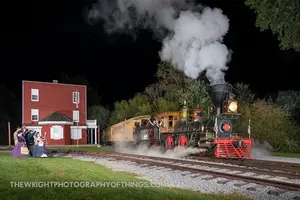
The Nevada Northern’s fall calendar often includes a mix of daytime excursions, special photography trains, and popular seasonal events. October brings the Haunted Ghost Train of Old Ely on select evenings—more spooky fun than foliage, but the chill in the air and historic steam engine atmospherics make it a uniquely Nevadan autumn experience.
The railroad also runs night “star” themed departures on some dates when skies are clear; Great Basin Country’s dark-sky reputation makes these runs particularly striking as summer shifts into fall.
Expect most regular excursions to last 60–90 minutes. Trains use open-air and enclosed coaches; steam power operates on selected dates. Ely sits at about 6,400 feet, so color tends to come earlier here than in western Nevada—often early to mid-October for peak cottonwoods, with aspens in nearby canyons turning even earlier. A smart weekend pairs a day ride in Ely with a scenic drive to a high-elevation grove (warding off the “no-train-to-the-aspens” reality while still soaking in the gold).
Nevada Southern Railway
Down south, the Nevada State Railroad Museum’s Nevada Southern Railway in Boulder City offers a family-friendly, roughly 45-minute excursion through the desert toward Railroad Pass.
This route is more about Mojave textures and warm autumn light than big-leaf fireworks, but don’t discount it: cooler temperatures make open-air cars comfortable again, desert willows and cottonwoods near washes pick up soft yellow, and the surrounding mountains glow bronze at day’s end. Seasonal weekend events and themed rides pop up on the schedule in October and November, making it a good pick for travelers based in Las Vegas who want an easy, low-commitment rail outing with a hint of fall.
Amtrak
California Zephyr
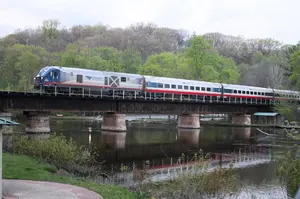
If you prefer long-haul steel wheels, the California Zephyr provides Nevada’s most expansive fall color window. Eastbound from Reno, the train follows the Truckee River into canyon country before swinging east across the Black Rock–Humboldt corridor and tracking the Humboldt River for hours. Cottonwoods and willows thread both riverbanks with ribbons of yellow in October, punctuated by red-stemmed shrubs and amber grasses. The Sightseer Lounge car’s panoramic windows make leaf-peeping effortless.
For a Nevada-only fall sampler, consider Reno to Winnemucca (about three hours) if you want a shorter dose of the Humboldt’s color, or Reno to Elko (closer to six hours) to push deeper into basin-and-range scenery with glimpses of the Ruby Mountains on clear days.
Note that schedules can place some of the Truckee River canyon west of Reno outside Nevada bounds; if you want that specific stretch, westbound travel and timing matter. Amtrak times shift by season and operations, so check current timetables and plan padding for delays—a common part of long-distance rail.
What to expect from Nevada’s fall palette
A Nevada foliage day is about nuance. Expect golds: cottonwoods, willows, and aspens dominate, while rabbitbrush provides a mustard hue in the open country.
You’ll see deep greens from pinyon-juniper woodlands on slopes, silvery-blue sage in the foreground, and occasional red tones from sumac or creekside shrubs, but crimson maples are rare on these routes. The drama comes from contrast—gold leaves against lava rock, turquoise rivers beneath ochre cliffs, and big skies that shift from cobalt to sunset fire.
Planning Tips
When to go: Higher elevations (Ely, aspen country) tend to turn in late September to early October. River corridors around Carson City and Virginia City usually peak mid- to late October. Southern Nevada color is subtler and later; aim for late October into early November for the softest light and comfortable temps.
Book ahead, especially weekends: Heritage lines often sell out fall Saturdays. If you want steam, choose dates labeled accordingly on the railroad’s official calendar.
Pick your seat with light in mind: For canyon rides, the sun sits lower in autumn. Morning departures give softer light in east-facing canyons; afternoons can backlight leaves. If the car is open seating, arrive early and be ready to switch sides after a curve or turnback.
Dress in layers: Desert mornings start cold and afternoons warm up quickly. Gloves, a beanie, and a wind layer make open-air riding pleasant.
Why Fall By Rail In Nevada
Beyond foliage, these rides stitch together the state’s identity: Comstock-era ambition, copper boom grit, and the persistence of small communities in big spaces.
Steam whistles echo differently in crisp air, canyon walls frame the season’s light, and the gold you’ll take home lives mostly in memory cards and moments.
If you time it right, you’ll step off the platform dusted with a little coal smoke, a jacket pocket full of piney scent, and a new picture of Nevada in your mind—quieter, warmer, and richer than you expected.
Recent Articles


-
Baldwin "Baby Face" Locomotives: Specs, Photos, Roster
Oct 30, 26 11:01 PM
 Baldwin's Babyface cab on the early road diesels: 50 short-cab units, 1946-1948, plus the related Centipede. Construction numbers, specs, and the sharknose that followed.
-
California High-Speed Rail Chief Resigns
Oct 30, 26 08:36 PM
 Ian Choudri resigned October 28, 2026 as chief executive of the California High-Speed Rail Authority. The board named Joe Stephenshaw interim chief executive.
-
The 1910 Portal Bridge Is Handed Over for Demolition
Oct 30, 26 04:03 PM
 Amtrak handed the 1910 Portal Bridge over for demolition on October 29, 2026, during the final cutover to Portal North. Regular NJ Transit and Amtrak schedules are expected November 15.
-
Union Pacific-Norfolk Southern Merger Review Runs to 2027
Oct 30, 26 03:59 PM
 Union Pacific says the Surface Transportation Board's review of the Norfolk Southern merger gathers information through May 28, 2027. A closing still depends on board approval.
-
Amtrak Board Will Hear Restructuring Comments on November 10
Oct 30, 26 03:41 PM
 Amtrak's board will hear public comments on its restructuring on November 10, 2026, from 2 to 3 p.m. Eastern. Written comments were due October 30. A proposal goes to the board in December.
-
Canadian Pacific Selkirk 5931 Restored in Calgary
Oct 30, 26 01:36 PM
 Heritage Park in Calgary unveiled a cosmetic restoration of Canadian Pacific 2-10-4 No. 5931 on October 27, 2026. One of two surviving Selkirks. It stays on display.
-
Gettysburg Railway to Host Steam for Lincoln
Oct 30, 26 01:18 PM
 Northern Central Railway of York No. 17 will recreate Lincoln's arrival at Gettysburg on November 18, 2026, with public steam trips November 19-21.
-
NC&StL No. 576 to Steam for the Public in Nashville
Oct 30, 26 01:00 PM
 Nashville Steam will fire NC&StL 4-8-4 No. 576 for the public on November 7, 2026, 9 a.m. to 3 p.m., at 220 Willow Street. Admission is free.
-
Pennsylvania Railroad E8s Join the T1 Trust
Oct 30, 26 12:38 PM
 The T1 Trust has acquired former Pennsylvania Railroad E8A diesels 5702A and 5761A from the Fort Wayne Railroad Historical Society. They are bound for Cumberland.
-
Ligonier Valley Railroad: History, Roster, Timetable
Oct 30, 26 12:03 PM
 The Ligonier Valley Railroad ran 10.5 miles from Latrobe to Ligonier, Pennsylvania. Opened December 1, 1877. Last day August 31, 1952.
-
Toledo, Peoria & Western Diesel Roster (All-Time)
Oct 30, 26 10:25 AM
 Toledo, Peoria & Western diesel locomotives, each frame once. Thirteen Alcos, three Lima-Hamilton switchers, and 26 Electro-Motive units.
-
Toledo, Peoria & Western Steam Roster
Oct 30, 26 09:14 AM
 Toledo, Peoria & Western steam locomotives from the Rogers Consolidations of 1895 through the 4-8-4s of 1937
-
Toledo, Peoria & Western Railway: Map, Roster, History
Oct 29, 26 11:12 PM
 History of the Toledo, Peoria & Western. The Peoria & Oquawka, George P. McNear, the Santa Fe and Pennsylvania years, and the railroad that came back in 1989.
-
Cotton Belt Diesel Roster (All-Time)
Oct 29, 26 07:58 PM
 St. Louis Southwestern diesel locomotives, each frame once. Baldwin switchers, F units, and new Cotton Belt-lettered power through the GP60s of May 1990.
-
Cotton Belt Steam Roster (Built Since 1900)
Oct 29, 26 06:52 PM
 St. Louis Southwestern steam locomotives built since 1900. Consolidations, Ten-Wheelers, and twenty class L-1 4-8-4s. The quantity column is 297.
-
Cotton Belt Railroad: Map, Logo, History, Rosters
Oct 29, 26 10:56 AM
 History of the St. Louis Southwestern, the Cotton Belt Route. The Tyler Tap, Paramore's silver spike, the Thebes Bridge, the Blue Streak, and Southern Pacific control. Steam and diesel rosters are sep…
-
Pere Marquette Steam Roster (Built Since 1900)
Oct 28, 26 11:54 PM
 Pere Marquette steam locomotives built since 1900. Consolidations, Mikados, Pacifics, and 39 Berkshires. The quantity column is 503.
-
Pere Marquette Diesel Roster (All-Time)
Oct 28, 26 11:48 PM
 Pere Marquette diesel locomotives, each frame once. Two SW1s, 14 NW2s, three GE 70-tonners, eight E7As, and six BL2s delivered lettered Chesapeake and Ohio. The quantity column is 33.
-
Pere Marquette Railway: Map, Logo, Rosters, History
Oct 28, 26 11:44 PM
 History of the Pere Marquette Railway. Timber roads, the Prince years, the Van Sweringens, the Ludington car ferries, and the Chesapeake and Ohio merger of June 6, 1947.
-
Nickel Plate Road (Railroad): Map, History, Rosters
Oct 28, 26 10:51 PM
 History of the Nickel Plate Road, the New York, Chicago and St. Louis. The Seney syndicate, the Van Sweringens, the Berkshires, and the Norfolk and Western absorption at 12:01 a.m. on October 16, 1964…
-
Nickel Plate Diesel Roster (All-Time)
Oct 28, 26 10:48 PM
 Nickel Plate diesel locomotives, each frame once. Alco switchers and PAs, GP7s and GP9s, and the GP30s. The quantity column is 440. The 1950 fleet was 117.
-
Nickel Plate Steam Roster (Built Since 1900)
Oct 28, 26 10:43 PM
 Nickel Plate steam locomotives built since 1900, including the Lake Erie and Western, the Clover Leaf, and the Wheeling engines that took Nickel Plate numbers. The quantity column is 786.
-
EMD "E9" Locomotives: Specs, Roster, History
Oct 28, 26 10:37 PM
 EMD E9 cab units and boosters, 2,400 horsepower, built April 1954 through January 1964. Gear ratios, specifications, and the production roster by owner, serial, and order.
-
NYC 4-6-4 #5344, "Commodore Vanderbilt"
Oct 28, 26 04:31 PM
 NYC J-1e Hudson 5344, the Commodore Vanderbilt. Alco, November 1931. Carl Kantola’s shroud, December 1934, then a Dreyfuss bullet nose in 1939. Scrapped at Collinwood in 1954.
-
New Jersey, Indiana & Illinois Railroad: A South Bend Shortline
Oct 28, 26 11:05 AM
 The New Jersey, Indiana & Illinois, the Jersey Line, ran from South Bend to Pine. Singer built it in 1905. Wabash stock control came in 1926. Two diesels, and the steam the record names.
-
Monon Diesel Roster (All-Time)
Oct 28, 26 10:13 AM
 Monon diesel locomotives, each frame once. F3s, nine BL2s, the C420s, and eight U23Bs. The quantity column is 96. The 1951 fleet was 57.
-
Monon Steam Roster (Built Since 1900)
Oct 28, 26 10:09 AM
 Monon steam locomotives built since 1900. Twelve-Wheelers, Mikados, light Pacifics, and thirteen six-wheel switchers. The quantity column is 148.
-
Monon Railroad: Map, Photos, History, Logo
Oct 28, 26 09:55 AM
 History of the Monon, the Hoosier Line. The New Albany & Salem, the X at Monon, Barriger's streamliners, and the Louisville & Nashville merger of July 31, 1971.
-
Missouri-Kansas-Texas Diesel Roster (All-Time)
Oct 28, 26 09:48 AM
 All-time diesel roster of the Missouri-Kansas-Texas. 406 locomotives, each frame once. Baldwin switchers, Alco cab units, F units, Geeps, and the SD40-2s.
-
Missouri-Kansas-Texas Steam Roster (Built Since 1900)
Oct 28, 26 09:43 AM
 Missouri-Kansas-Texas steam locomotives built since 1900. Moguls, Mikados, Pacifics, and the narrow-gauge shop tanks. The quantity column is 715.
-
Missouri-Kansas-Texas Railroad (Katy): Map, History, Rosters
Oct 27, 26 11:02 PM
 History of the Missouri-Kansas-Texas, the Katy. The race into Indian Territory, Gould, the 1923 railroad, the Texas Special, and the 1988 sale. Steam and diesel rosters are linked.
-
Soo Line Diesel Roster (All-Time)
Oct 27, 26 10:55 PM
 All-time diesel roster of the Soo Line and the Wisconsin Central. 786 locomotives, each frame once. Cab units, Geeps, the Milwaukee Road engines, and the SD60s. The South Shore's 24 stay on that page.
-
Soo Line Steam Roster (Built Since 1900)
Oct 27, 26 10:49 PM
 Soo Line and Wisconsin Central steam locomotives built since 1900. Consolidations, Mikados, Pacifics, 21 Mountains, and four Lima 4-8-4s.
-
Soo Line Railroad: Map, Logo, History, Rosters
Oct 27, 26 10:24 PM
 The Soo Line, from the flour millers' railroad around Chicago to the Sault, the Wisconsin Central, and the Milwaukee Road. Steam quantity 422. Diesels 786. Canadian Pacific took full control in 1990.
-
Minneapolis, Northfield and Southern Railway: Map, History, Rosters
Oct 27, 26 10:32 AM
 The Minneapolis, Northfield & Southern, the Dan Patch Line that became a Twin Cities belt. Steam, gas-electric mules, motor cars, and the 22 diesels, through the Soo Line.
-
Minneapolis & St. Louis Diesel Roster (All-Time)
Oct 27, 26 10:27 AM
 All-time diesel roster of the Minneapolis & St. Louis. 97 locomotives, each frame once. Switchers from 1938, 35 RS-1s, the FT and F-unit cabs, two SD7s, and 23 GP9s. Builder numbers included.
-
Minneapolis & St. Louis Steam Roster (Post 1900)
Oct 27, 26 10:25 AM
Minneapolis & St. Louis steam locomotives built since 1900. Moguls, Consolidations, 35 Mikados, and five Pacifics. -
Minneapolis and St Louis Railway: "The Peoria Gateway"
Oct 27, 26 09:52 AM
 The Minneapolis & St. Louis, the Tootin' Louie, from the 1870 charter to the Peoria Gateway and the Chicago & North Western sale on November 1, 1960.
-
Alco "PA" Locomotives: Restoration, Specs, Engine, Rosters
Oct 27, 26 12:12 AM
 Alco's PA passenger cab, 297 locomotives built from 1946 to 1953. The 244 engine, the production roster, the Delaware & Hudson PA-4s, and Nickel Plate Road 190.
-
Milwaukee Road Diesel Roster: (All Time)
Oct 26, 26 01:44 PM
 All-time diesel roster of the Milwaukee Road. 1,208 locomotives, each frame once. Alco, Baldwin, Davenport, EMD, Fairbanks-Morse, General Electric, and Whitcomb, with builder numbers.
-
Milwaukee Road Steam Roster (All-Time): Post-1900
Oct 26, 26 01:38 PM
 Milwaukee Road steam locomotives built since 1900. Prairies, Mikados, the N-class articulateds, the S-class 4-8-4s, and the Hiawatha Atlantics and Hudsons. Quantity column 1,974. Unique frames 1,951.
-
Milwaukee Road: Map, Electrification, Logo, History
Oct 26, 26 01:20 PM
 The Milwaukee Road, from the Milwaukee & Mississippi of 1850 to the Pacific Coast Extension, the Hiawathas, and the Soo Line sale. Why Lines West should have stayed.
-
Lake Superior & Ishpeming Railroad: Map, Roster, History
Oct 25, 26 11:38 PM
 Lake Superior & Ishpeming Railroad, reporting mark LSI, from the Marquette Range to the Presque Isle ore dock. The 1954 steam list and the diesels the railroad owned.
-
Kansas City Southern Steam Roster (Built Since 1900)
Oct 25, 26 09:09 PM
 Steam locomotives of the Kansas City Southern built since 1900, with the Louisiana & Arkansas and the Texas company.
-
Kansas City Southern Diesel Roster (Built New)
Oct 25, 26 11:46 AM
All-time diesel roster of the Kansas City Southern. E units, F units, Geeps, SD40s through SD70ACes, Fairbanks-Morse, Baldwin, Alco, and General Electric, with serials and order numbers. -
Kansas City Southern Railway: Map, Photos, History
Oct 25, 26 12:24 AM
The Kansas City Southern, from Arthur Stilwell's Gulf line to Canadian Pacific Kansas City on April 14, 2023. Steam and diesel rosters, the Southern Belle, and the Louisiana & Arkansas. -
Indiana Harbor Belt Diesel Roster (All-Time)
Oct 25, 26 12:17 AM
 All-time diesel roster of the Indiana Harbor Belt. 202 locomotive frames, each counted once. NW2s, SW7s, SW1500s, road switchers, and gensets. Slugs and boosters are outside the count.
-
Indiana Harbor Belt Steam Roster (Built Since 1900)
Oct 25, 26 12:13 AM
 Steam locomotives of the Indiana Harbor Belt built since 1900. 182 engines, each counted once. 0-6-0s, 2-6-0s, 0-8-0s, and 2-8-2s. The three U-4a switchers are three-cylinder Brooks engines of 1927.
-
Indiana Harbor Belt Railroad: Map, Rosters, History
Oct 25, 26 12:00 AM
 Indiana Harbor Belt, the inner belt across the Calumet, from the East Chicago Belt of May 16, 1896. Renamed June 29, 1907. Still operating, headquarters Hammond. Steam roster is the companion, 182 loc…
-
NYC's "P Motor" Electric Locomotives
Oct 24, 26 11:43 PM
 New York Central P motors: 22 Alco-GE 2-C+C-2 electrics, Cleveland Union Terminal 1050–1071, class P-1a. 3,030 hp one-hour on 3,000-volt DC catenary, then 660-volt third rail as P-2a and P-2b.