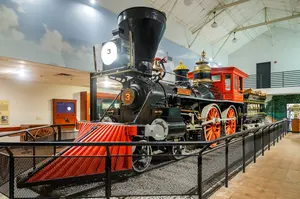
Oregon Christmas Train Rides In Sumpter!
Published: December 7, 2025
By: Adam Burns
Tucked into the rugged forests and gold-bearing hills of eastern Oregon, the Sumpter Valley Railroad (SVRy) is one of the West’s most authentic and best-preserved narrow-gauge heritage railroads.
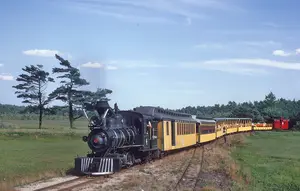
Operating between the tiny town of McEwen and the historic mining community of Sumpter, the line offers visitors a unique chance to step back into the early 20th century—a period when narrow-gauge railroads stitched remote logging camps, mines, and frontier settlements together across the Pacific Northwest.
Today, the Sumpter Valley Railroad Restoration, Inc. keeps this legacy alive through meticulously restored steam locomotives, period equipment, and scenic excursions. Among its most popular offerings each year are the Christmas Trains, beloved family outings that blend history, holiday cheer, and vintage railroading in an unforgettable way.
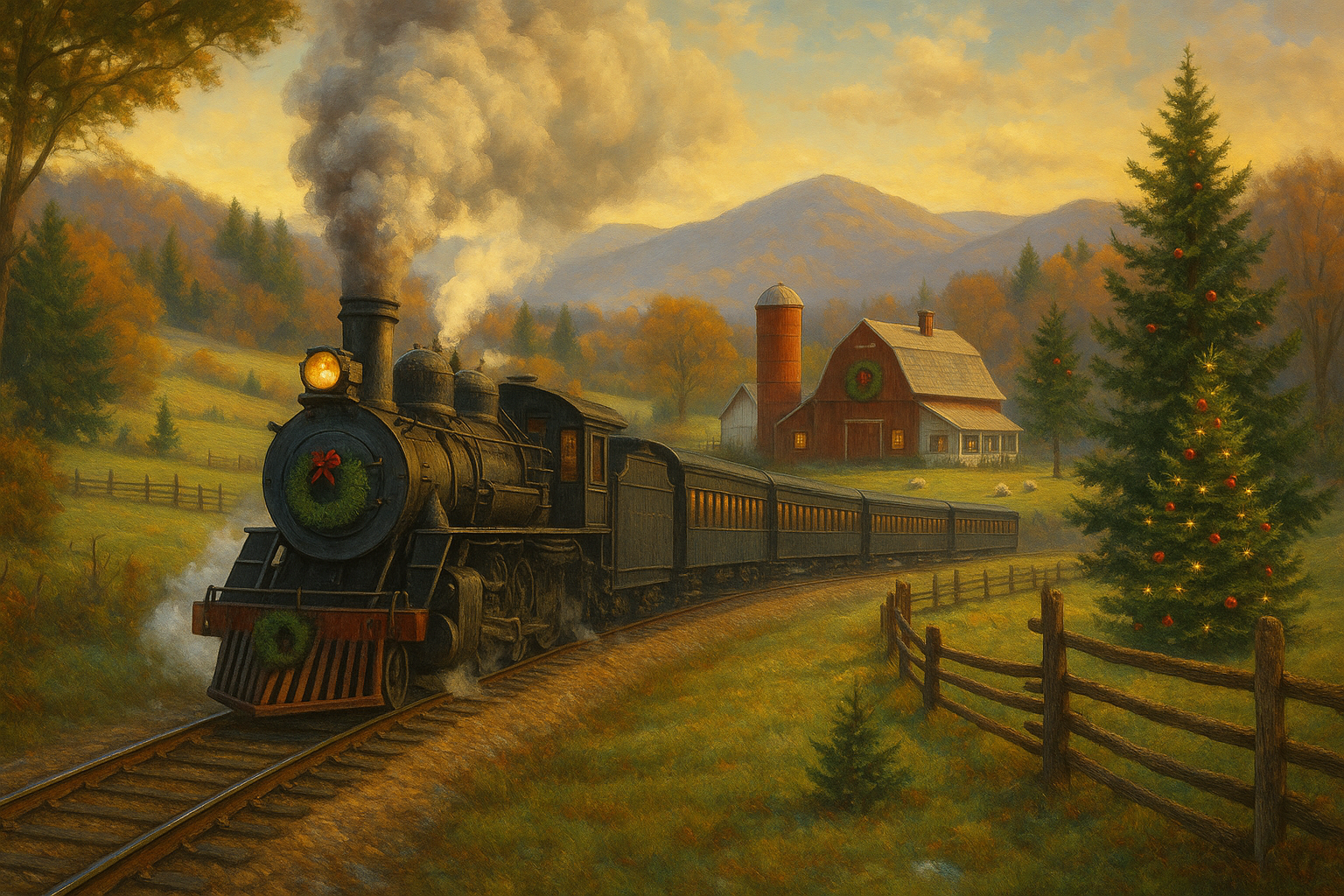
Origins of a Frontier Narrow-Gauge Line
The Sumpter Valley Railway was chartered in 1890 by the Oregon Lumber Company (OLC), which needed a transportation lifeline to the rich pine forests along the upper John Day River. Rather than build a standard-gauge railroad, the company elected for the more economical three-foot narrow-gauge standard. Narrow-gauge lines were faster and cheaper to build, could handle tighter curvature through rugged terrain, and were ideal for the lumber industry’s mobile needs.
Construction began at Baker City, an important regional hub on the Oregon Short Line. The tracks snaked westward toward the booming mining town of Sumpter, reaching it in 1897. Additional mileage continued into the forests southwest of town, eventually extending all the way to Prairie City by 1910. This gave the little railroad, affectionately known as the “Stump Dodger,” a respectable length of nearly 80 miles.
For decades, the Sumpter Valley served as the region’s primary artery for moving timber, gold-mining supplies, livestock, and general merchandise. Its train crews became fixtures of the eastern Oregon frontier, navigating steep grades, deep snow, and isolated mountain camps where the railroad often provided the only reliable link to the outside world.
Peak Years and the Logging Era
Although some mining activity persisted, timber quickly became the railroad’s economic mainstay. The OLC built a vast network of logging spurs, portable trackage, and seasonal lines feeding freshly cut logs to the company’s mills and then to the Sumpter Valley main line for shipment east.
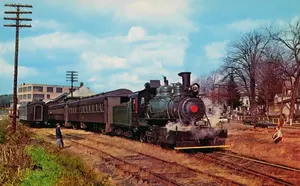
During its peak years in the first decades of the 20th century, the SVRy roster included numerous freight cars, passenger coaches, home-built cabooses, and several impressive wood-burning steam locomotives. Among these were the famous 2-8-2 “Mikado” locomotives, Nos. 19 and 20, built by Alco in the 1920s. These engines were unusually large for American narrow-gauge operations and embodied the railroad’s growing traffic demands.
The line also handled small-town passenger service and mail routes, carrying miners, farmers, families, and travelers across the isolated interior. The depot at Sumpter, once a hive of activity, welcomed riders heading to local hotels, mercantile shops, and mines.
Decline and Abandonment
By the 1930s, competition from trucks, improved roads, and the shrinking economic base of the timber industry began to erode the railroad’s profitability. Passenger trains were discontinued, and freight segments were gradually abandoned. During World War II, the U.S. Army purchased locomotives Nos. 19 and 20 and shipped them to Alaska for service on the White Pass & Yukon Route.
The final blow came in 1947 when the last remaining main-line operations ceased. Track removal began almost immediately, and within a few years, nearly the entire railroad had vanished—along with the depots, yards, and many of the structures that had once lined its right-of-way. For decades, the Sumpter Valley existed only in fading photographs and the memories of those who had worked or traveled on the line.
Preservation Efforts and the Rebirth of the Railroad
Interest in reviving the railroad began to grow during the 1960s and 1970s as rail historians and local residents discovered surviving equipment, historical maps, and fragments of the original grade. A group of volunteers formed Sumpter Valley Railroad Restoration, Inc. (SVRy), with the ambitious goal of rebuilding a representative segment of the line and restoring surviving locomotives.
Their efforts were nothing short of extraordinary. Volunteers cleared brush, relaid track, rehabilitated structures, and began collecting historic narrow-gauge equipment. In the 1970s, the group acquired steam locomotive No. 3, a restored 1915 Heisler geared engine that became the railroad’s primary power for many years.
The most impressive achievement came with the return of former Sumpter Valley Mikado Locomotive No. 19 from Alaska, where it had served for decades. After extensive restoration, the engine returned to service in the early 2000s, becoming one of only a handful of operating narrow-gauge 2-8-2s in North America.
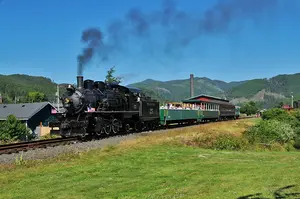
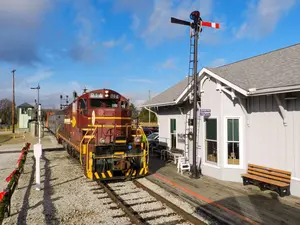
Today, SVRy operates approximately five miles of track between McEwen and Sumpter, offering breathtaking mountain views, dense pine forests, and glimpses of the region’s mining heritage.
A Ride Aboard the Sumpter Valley Railroad Today
A visit to the Sumpter Valley Railroad is a deeply immersive experience. Steam trains run on select weekends from late spring through early autumn, with additional themed trains throughout the year. The journey takes passengers along the scenic Powder River valley, through stands of Ponderosa pine, and past remnants of the mining operations that once defined the region.
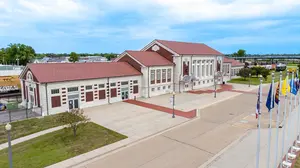
At Sumpter, guests can explore the restored depot, take photographs, visit local museums, and walk to the impressive Sumpter Valley Dredge, a massive floating gold-mining machine that stands as one of Oregon’s most unusual historic artifacts.
The railroad’s commitment to authenticity is evident in every detail—from wooden coaches and restored handcars to historically accurate operating practices. Crews dress in period attire, locomotives are meticulously maintained, and interpretive commentary helps riders understand the heritage they are experiencing.
The Christmas Trains
Among the railroad’s most beloved seasonal offerings are the Christmas Trains, which typically run on select December weekends. These festive excursions have become a highlight of the winter calendar in eastern Oregon, attracting families, communities, and holiday travelers alike.
Because the railroad’s normal operating season ends in early autumn, the Christmas Trains hold special significance—they bring steam or diesel-powered holiday trains back to life when snow often blankets the valley, giving the entire trip the feel of a turn-of-the-century Christmas postcard.
A Holiday Experience for All Ages
The Christmas Trains are designed as family-friendly outings where guests of all ages can enjoy the magic of the season. While each year’s program may vary, typical features include:
- Decorated vintage coaches, warmly lit with garlands, ornaments, and old-fashioned touches.
- Visits with Santa Claus, who greets children, poses for photos, and hands out small gifts or treats.
- Onboard holiday music, often featuring traditional carols, Christmas favorites, or recorded period tunes.
- Seasonal beverages, such as hot chocolate, cider, or coffee, available at depots or sometimes onboard.
- Charming winter scenery, with the train rolling through pine forests, open meadows, and snow-covered landscapes.
Though the distance covered is modest, the experience emphasizes nostalgia, warmth, and the distinct atmosphere that only a historic narrow-gauge train can provide
.A Community Tradition
The Christmas Trains have evolved into a cherished regional tradition. Volunteers work for weeks to decorate the equipment, prepare depots, and create a welcoming environment. Many families return year after year, often making the train ride part of their annual holiday celebrations.
The event also supports the ongoing preservation of the railroad. Proceeds help maintain the locomotives, coaches, track, and infrastructure necessary to keep the Sumpter Valley Railroad operating into the future. Each ticket purchased plays a part in ensuring that this unique narrow-gauge line continues to steam through Oregon’s mountains for generations to come.
Conclusion
The railroad is a treasure of Oregon’s eastern frontier—part living museum, part historic railway, and part community celebration. Its Christmas Trains encapsulate everything that makes heritage railroading special: nostalgia, craftsmanship, storytelling, and the shared joy of riding behind a historic locomotive through a winter landscape.
For families looking to create holiday memories, railfans seeking authentic narrow-gauge history, or travelers exploring the region’s frontier heritage, the Sumpter Valley Railroad offers an experience unlike any other. Each December, the lights, music, and festive atmosphere bring the railroad to life again, proving that even long after its revenue days ended, the “Stump Dodger” still has magic to share. To learn more about the Christmas Trains and planning your visit please click here to visit the railroad's website.
Recent Articles


-
Louisville & Nashville Diesel Roster (All-Time)
Oct 12, 26 12:15 AM
 Louisville & Nashville diesel roster, all-time. Switchers from 1939, the cab units, and EMD, Alco, and GE hoods through the SD50s. The quantity column totals 1948 locomotives, plus 29 yard slugs.
 -
Louisville & Nashville Steam Roster (Post 1900)
Oct 11, 26 05:44 PM
 Louisville & Nashville steam since 1900. Drury's class grid: Consolidations, 165 heavy Mikados, 42 Big Emma 2-8-4s, Pacifics, and 22 Mountains. Last steam January 1957.
 -
Louisville and Nashville Railroad: Map, Rosters, History
Oct 11, 26 05:39 PM
 Louisville & Nashville, the Old Reliable. Charter of March 5, 1850, Milton H. Smith, the 921-mile main line, Big Emma, and the December 29, 1982 merger. Steam and diesel rosters are companion pages.
 -
Oregon Railroad Museums (2026): A Complete Guide
Oct 11, 26 05:19 PM
 Oregon railroad museums—the Oregon Rail Heritage Center, Brooks trolleys, Canby’s 1891 depot, Medford’s Willamette, and Train Mountain. Confirm hours on each site.
 -
Texas Railroad Museums (2026): A Complete Guide
Oct 11, 26 05:15 PM
 Texas railroad museums—Frisco’s Big Boy 4018, Galveston’s Santa Fe depot, Temple’s 1911 station, Plano’s interurban, and Fort Worth & Denver 304. Confirm hours on each site.
 -
Wisconsin Railroad Museums (2026): A Complete Guide
Oct 10, 26 11:51 PM
Wisconsin railroad museums—Green Bay’s Big Boy 4017 and Eisenhower’s A4, Mid-Continent at North Freedom, East Troy’s interurban, and the Riverside & Great Northern. Confirm hours on each site. -
Interstate Railroad (Virginia): Map, Roster, Logo, History
Oct 10, 26 11:22 PM
 Interstate Railroad, a Virginia coal road chartered February 18, 1896. Andover shops. Ten Alco RS3s, 30–39. Southern control in 1961. The company ended October 31, 1985.
 -
North Carolina Railroad Museums (2026): A Complete Guide
Oct 10, 26 11:16 PM
 North Carolina railroad museums—Spencer Shops, Wilmington’s Atlantic Coast Line 250, Hamlet’s Seaboard depot, and the New Hope Valley Railway. Confirm hours on each site.
 -
New Mexico Railroad Museums (2026): A Complete Guide
Oct 10, 26 10:54 PM
 New Mexico railroad museums—Santa Fe 2926 in Albuquerque, the Clovis depot, Alamogordo’s Toy Train Depot, and Belen. Confirm hours on each site.
 -
New York Railroad Museums (2026): A Complete Guide
Oct 10, 26 09:33 PM
 New York railroad museums—Phoenicia, Medina’s New York Central freight house, the Transit Museum, Long Island 35 and 39, and GG1 4933. Confirm hours on each site.
 -
Columbia, Newberry & Laurens Railroad: History, Timetable, Roster
Oct 10, 26 09:08 PM
 Columbia, Newberry & Laurens Railroad, Columbia to Laurens, 75 miles. Chartered in 1885. Five Atlantic Coast Line GP7s, 100–104. Merged into the Seaboard System on April 30, 1984.
 -
New Haven Diesel Roster (All-Time)
Oct 10, 26 06:35 PM
 New Haven diesel roster, all-time. 558 road numbers: 60 DL-109s, 30 FA-1s, 27 PA-1s, 60 FL9s, and the switchers from HH600 0900. Serials and order numbers.
 -
New Haven Steam Roster (Post 1900)
Oct 10, 26 06:31 PM
 New Haven steam since 1900. Drury's class grid: 226 Moguls, 33 Mikados, 50 Santa Fes, 70 Mountains, 141 Pacifics, and 10 Hudsons. Last fan trip July 19, 1953.
 -
New Haven Railroad: Rosters, Map, Logo, History, Trains
Oct 10, 26 06:26 PM
 New York, New Haven and Hartford. The Shore Line, Hell Gate, the 1952 map at 1,838.89 miles, and the railroad Penn Central took at 11:59:59 p.m. on December 31, 1968.
 -
C&O's 4-6-4 "Hudson" Locomotives (Class L): Specs, Roster, History
Oct 10, 26 05:36 PM
 Chesapeake & Ohio Class L 4-6-4 Hudsons. Eight L-2s, five L-1 rebuilds, five L-2-As. Specs, Baldwin works numbers, and the roster. No. 490 survives.
 -
Alton Railroad: Map, History, Timetables
Oct 09, 26 10:31 PM
 Alton Railroad, chartered February 27, 1847 as the Alton & Sangamon. Chicago, St. Louis, and Kansas City, the 1937 Official Guide, and the May 31, 1947 merger into the Gulf, Mobile & Ohio.
 -
Mobile & Ohio Steam Roster (Post 1900)
Oct 09, 26 12:26 PM
 Mobile & Ohio steam since 1900. Drury's class grid: 48 six-wheel switchers, 107 Ten-Wheelers, 15 Consolidations, 58 Mikados, and 14 Pacifics. Last revenue steam October 7, 1949.
 -
Mobile & Ohio Railroad: History, Map, Timetable
Oct 09, 26 11:31 AM
 Mobile & Ohio Railroad, chartered in 1848. Columbus on April 22, 1861, the Cairo & St. Louis, the March 1940 Official Guide, and the September 13, 1940 merger into the Gulf, Mobile & Ohio.
 -
Gulf, Mobile & Northern Steam Roster (Post 1900)
Oct 09, 26 10:42 AM
 Gulf, Mobile & Northern steam since 1900. Drury's class grid: Ten-Wheelers, Mikados, Russian Decapods, Pacifics 425 and 426, and three light 4-8-2s. Last revenue steam October 7, 1949.
 -
Gulf, Mobile & Ohio Diesel Roster (All-Time)
Oct 09, 26 10:41 AM
 Gulf, Mobile & Ohio diesel roster, all-time. The 1935 boxcab, DL-107s, 55 FA-1s, F3s and F7s, the Ingalls 4-S, GP30s through GP38-2s, and 21 SD40s. Serials and order numbers.
 -
Gulf, Mobile & Northern Railroad: History, Rebel Route
Oct 09, 26 10:36 AM
 Gulf, Mobile & Northern, from the 1890 Mobile, Jackson & Kansas City to the Rebel and the September 13, 1940 merger into the Gulf, Mobile & Ohio. Steam roster is the companion page.
 -
Gulf, Mobile & Ohio Railroad: Map, Photos, Trains, History
Oct 08, 26 11:48 PM
 Gulf, Mobile & Ohio, chartered in 1938 and merged September 13, 1940. The Mobile & Ohio, the Alton on May 31, 1947, the Rebel Route, and Illinois Central Gulf on August 10, 1972.
 -
New Jersey Railroad Museums (2026): A Complete Guide
Oct 08, 26 11:37 PM
 New Jersey railroad museums—Whippany, Maywood, Pine Creek, Mahwah’s Erie depot, Phillipsburg, and Boonton. Confirm hours on each site.
 -
New Hampshire Railroad Museums (2026): A Complete Guide
Oct 08, 26 11:34 PM
 New Hampshire railroad museums—North Conway, the Flying Yankee, Ashland, Gorham, Raymond, and Sandown. Confirm hours on each site.
 -
Missouri Railroad Museums (2026): A Complete Guide
Oct 08, 26 11:00 PM
 Missouri railroad museums—the National Museum of Transportation, Patee House, Frisco 4524, the Chicago & Alton depot, and Marceline. Confirm hours on each site.
 -
Milwaukee Road X3800: Deer Lodge’s Shop Goat
Oct 08, 26 04:28 PM
 Milwaukee Road X3800, the a home-built shop goat that served the Deer Lodge, MT yard. It was a 220-volt DC switcher, powered through an extension cord that moved electrics into a roundhouse where the…
 -
Key West Extension (Overseas Railroad): History, Construction, Decline
Oct 08, 26 03:59 PM
 Henry Flagler's Overseas Railroad, Miami to Key West, 1905–1935. The Seven Mile Bridge, the 1935 Labor Day Hurricane, and the road that became U.S. 1.
 -
Florida East Coast Steam Roster (Post 1900)
Oct 08, 26 02:34 PM
 Florida East Coast steam since 1897. Seventeen Ten-Wheelers, twenty Atlantics, eighty-seven Pacifics, ninety Mountains, fifteen Mikados, and the switchers.
 -
Florida East Coast Diesel Roster (All-Time)
Oct 08, 26 02:12 PM
 Florida East Coast diesel roster, all-time. E units from 1939, F3s, BL2s, GP7s and GP9s, the GP40-2 orders, 22 SD40-2s, and 24 ES44C4s. Serials and EMD order numbers.
 -
Florida East Coast Railway: Map, History, Rosters
Oct 08, 26 01:46 PM
 Florida East Coast Railway, Henry Flagler's line from Jacksonville to Miami and Key West. Receivership in 1931, the 1963 strike, Grupo México in 2017, and Brightline on the same track.
 -
Minnesota Railroad Museums (2026): A Complete Guide
Oct 08, 26 10:32 AM
Minnesota railroad museums—the Lake Superior Railroad Museum, Two Harbors, Jackson Street, Willmar’s Great Northern 2523, and Currie. Confirm hours on each site. -
Maine Railroad Museums (2026): A Complete Guide
Oct 08, 26 09:24 AM
 Maine railroad museums—Seashore Trolley, the two-foot lines at Portland, Alna, and Phillips, Boothbay, and the Bangor & Aroostook depots. Confirm hours on each site.
 -
Massachusetts Railroad Museums (2026): A Complete Guide
Oct 08, 26 12:08 AM
 Massachusetts railroad museums—Berkshire Scenic at Lenox, Shelburne Falls trolley No. 10, Edaville, Chatham’s 1887 depot, and Lowell. Confirm hours on each site.
 -
Clinchfield Steam Roster (Post 1900)
Oct 07, 26 12:09 PM
 Clinchfield steam since 1900. Fifteen H-4 Consolidations, K-1 Mikados, M-2 and M-3 Mallets, L-class 2-8-8-2s, eighteen Challengers. Class grid after Drury. Last steam April 16, 1954.
 -
Clinchfield Diesel Roster (All-Time)
Oct 07, 26 12:05 PM
 Clinchfield diesel roster, all-time. F3A 800, FP7 200, the F7s, GP7s, 25 SD40s, 18 SD45-2s, seven U36Cs, and the Family Lines hoods. Serials and EMD order numbers.
 -
Clinchfield Railroad: Map, Steam Locomotives, Roster, Logo
Oct 07, 26 12:02 PM
 Clinchfield Railroad, Elkhorn City to Spartanburg. George L. Carter, the Carolina, Clinchfield & Ohio, the 1924 lease, coal, the loops, and CSX. Steam and diesel rosters are companion pages.
 -
Kentucky Railroad Museums (2026): A Complete Guide
Oct 07, 26 11:39 AM
 Kentucky railroad museums—the Kentucky Railway Museum, Bowling Green’s L&N depot, Paducah, Versailles, and Covington. Confirm hours on each site.
 -
Kansas Railroad Museums (2026): A Complete Guide
Oct 07, 26 11:26 AM
 Kansas railroad museums—Santa Fe 3768 at Wichita, Santa Fe 132 in Topeka, the Great Overland Station, and Abilene. Confirm hours on each site.
 -
Cincinnati, New Orleans and Texas Pacific Diesel Roster (All-Time)
Oct 07, 26 10:38 AM
 All-time diesel roster of Southern locomotives lettered for the Cincinnati, New Orleans and Texas Pacific. Serials, order numbers, and builder dates.
 -
Cincinnati, New Orleans and Texas Pacific Railway
Oct 07, 26 10:31 AM
 Cincinnati, New Orleans and Texas Pacific Railway, incorporated September 8, 1881, to lease Cincinnati’s railroad to Chattanooga. Queen and Crescent route, Rathole, and the 2024 sale to Norfolk Southe…
 -
Indiana Railroad Museums (2026): A Complete Guide
Oct 07, 26 12:26 AM
Indiana railroad museums—Nickel Plate 765, Elkhart’s New York Central collection, French Lick, Linden’s junction depot, and Haley Tower. Confirm hours on each site. -
"Triplex" Steam Locomotive: Specs, History, Photos
Oct 06, 26 11:52 PM
 Erie class P-1 Triplex 2-8-8-8-2s. Three Baldwin compounds, 2603–2605, later 5014–5016, built 1914 and 1916. Matt H. Shay, the 1930 class card, and Virginian XA 700.
 -
Illinois Railroad Museums (2026): A Complete Guide
Oct 06, 26 11:47 PM
 Illinois railroad museums—the Illinois Railway Museum, Monticello, the Pioneer Zephyr, Galesburg’s Burlington 3006, and the depots. Confirm hours on each site.
 -
Iowa Railroad Museums (2026): A Complete Guide
Oct 06, 26 11:41 PM
 Iowa railroad museums—the Union Pacific Railroad Museum, RailsWest, Sioux City, Boone, and the National Hobo Museum in Britt. Confirm hours on each site.
 -
Charleston and Western Carolina Diesel Roster (All-Time)
Oct 06, 26 11:29 PM
Charleston and Western Carolina diesel roster. Twenty-one GP7s, two SW7s, two SW9s, and six F7As, all built 1950–1952. Serials, order numbers, and ACL and SCL numbers. -
Charleston and Western Carolina Railway: Map, History, Timetables
Oct 06, 26 11:18 PM
 Charleston and Western Carolina Railway, incorporated September 16, 1896. Port Royal to Spartanburg, with branches to Anderson and Greenville. Merged into the Atlantic Coast Line on December 31, 1959.
 -
Central of Georgia Steam Roster (Post 1900)
Oct 06, 26 04:00 PM
 Central of Georgia steam since 1900. Cooke Consolidations, Harriman Mikados, 32 Mountains, and eight Lima 4-8-4s. Class grid after Drury. Last steam May 1953.
 -
Central of Georgia Diesel Roster (All-Time)
Oct 06, 26 03:44 PM
 Central of Georgia diesel roster. SW1 No. 1 in 1939, E7s and E8s, nine F3As, 39 RS3s, GP7s through SD35s. Serials and order numbers.
 -
Central of Georgia Railway: Map, Logo, History, Rosters
Oct 06, 26 03:42 PM
 Central of Georgia Railway, from the 1833 Savannah charter to Southern control on June 17, 1963. Map, logos, Nancy Hanks II, and links to the steam and diesel rosters.
 -
Georgia Railroad Museums (2026): A Complete Guide
Oct 06, 26 03:33 PM
Georgia railroad museums—Savannah’s Central shops, Duluth, the General at Kennesaw, the Texas in Atlanta, Tifton, Waycross, and Albany. Confirm hours on each site.