- Home ›
- Commuter Rail ›
- TEXRail
TEXRail: Routes, Overview, Operations
Published: January 25, 2024
By: Adam Burns
TEXRail, officially known as the Trinity Metro TEXRail, represents a significant advancement in commuter rail services within the Dallas-Fort Worth area.
The hybrid service operates within Tarrant County, Texas, connecting downtown Fort Worth with Dallas/Fort Worth International Airport.
It makes stops in North Richland Hills and Grapevine and is managed by Trinity Metro, previously known as the Fort Worth Transportation Authority.
It began testing on December 31, 2018, and officially launched on January 10, 2019. By 2023, the system was averaging 714,800 riders annually, translating to roughly 2,200 passengers on an average weekday.
The $1 billion corridor is part of the larger Cotton Belt Rail Line project, along with DART's Silver Line, still under construction towards the east. Trinity Metro is hopeful that the convenience of the new line will motivate adjacent non-member cities to align with the agency's vision of evolving into a comprehensive regional transit provider.
Agreements were made with Grapevine and North Richland Hills, in 2006 and 2016 respectively, allowing for station development within their bounds.
However, since cities like Haltom City, Hurst, and Colleyville have not entered into similar agreements or joined, station construction in these areas is still on hold.
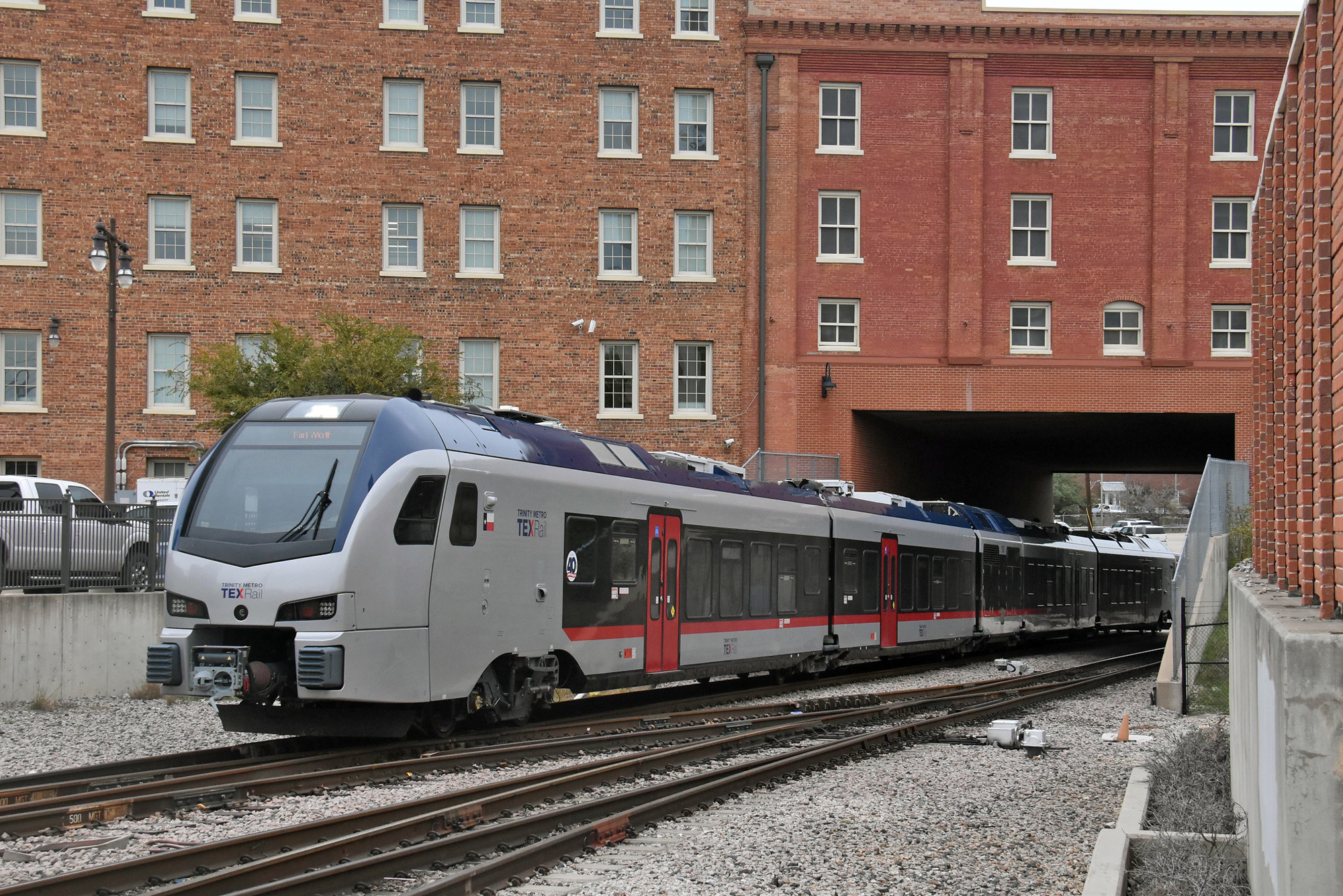 An eastbound TEXRail train has just departed Central Station and passes beneath the Trinity Metro office building in Ft. Worth, Texas on November 16, 2023. Doug Kroll photo.
Origins and Development
TEXRail is the product of a long-standing vision to enhance connectivity in one of the fastest-growing urban regions in the United States. Located in the DFW Metroplex, the initiative to create a new commuter rail line was birthed out of a necessity to relieve traffic congestion, promote economic development, and improve connectivity between major urban centers and the Dallas/Fort Worth International Airport (DFW Airport).
The project began gaining momentum in the early 2000s as regional transportation planners identified the need for improved transit solutions. Several studies and proposals highlighted the potential benefits of a commuter rail service linking downtown Fort Worth to key regional hubs.
In 2011, the Fort Worth Transportation Authority (known as Trinity Metro) formally approved the project, and in subsequent years, construction began with financial backing from federal and local sources. The official groundbreaking took place in August 2016, signaling the start of what would become a landmark public infrastructure project.
Infrastructure and Routes
TEXRail officially launched on January 10, 2019, covering a 27-mile corridor. The line facilitates travel between downtown Fort Worth and Terminal B at DFW Airport, providing a reliable and efficient connection between urban transit systems and one of the busiest airports in the world. The train makes nine station stops along the way, including key locations such as T&P Station in Fort Worth, North Richland Hills, and Grapevine Main Street.
Operations are coordinated by Trinity Metro and service typically runs every half hour during peak times - and hourly at off-peak times - offering consistent and reliable transit service to passengers.
Train Set and Operations
The fleet servicing the TEXRail line consists of Stadler FLIRT (Fast Light Intercity and Regional Train) DMUs (diesel multiple unit). These units have been selected for their efficiency, comfort, and quiet operation, contributing to both an enjoyable passenger experience and reduced environmental impact compared to traditional diesel trains.
The DMUs are numbered TEXRail 101-108 while the trainsets offer seating for 229 passengers - and can accommodate up to 488 travelers. Each unit houses a diesel power module with two Deutz AG TCD 16.0 V8 engines, collectively delivering 1,400 horsepower and meeting US EPA Tier 4 emission standards.
While these trains can reach speeds of up to 81 mph, operational speeds are capped at 70 mph on mainline tracks. Measuring 266 feet in length, the units weigh 352,000 pounds when empty and 443,000 pounds at full capacity.
Stadler was awarded a $100 million contract for these eight trainsets in June 2015. The first trainset arrived in October 2017, and by November 2018, five sets were delivered. Testing and crew training kicked off in March 2018.
Designed for efficiency, each train has operator cabs at both ends for easy bidirectional travel. The train's power pack is centrally situated and fitted with passageways to other areas, reducing noise compared to conventional commuter rail lines.
The FLIRT trains offer amenities such as USB charging ports, free Wi-Fi, and spacious seating, accommodating modern commuter needs.
Impact on Communities and the Economy
The introduction of TEXRail has had profound effects on the cities and communities along its route. Primarily, it offers a viable alternative to driving, easing congestion on some of the region's busiest highways. This, in turn, contributes to decreased emissions and an enhanced urban environment.
The economic impact extends beyond transportation efficiency. Real estate development, business investments, and urban renewal projects have been catalyzed by proximity to the TEXRail line.
The connectivity to DFW Airport is particularly significant for regional businesses, as it expedites travel for business professionals and enhances the attractiveness of the region as a logistics and commercial hub.
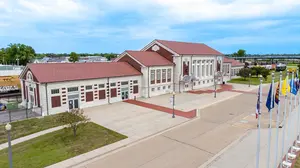
Furthermore, the inclusion of Grapevine Main Station—notably adjacent to historic downtown Grapevine—illustrates how commuter rail can intertwine with cultural tourism. The station itself, a beautifully designed facility inspired by early 20th-century architecture, stands as a unique destination with dining and retail opportunities, bolstering local tourism.
Challenges and Innovations
The development and ongoing operation of TEXRail is not without its challenges. Soaring costs, logistical hurdles, and evolving ridership patterns remind stakeholders of the need for adaptive strategies. Factors such as fluctuating fuel prices, economic shifts, and changing work habits post-pandemic require a reassessment of service models and potential expansions.
Nonetheless, innovation in rail technology and infrastructure adaptation remain priorities. TEXRail has actively explored options for integrating eco-friendly technologies and enhancing operational efficacy through advanced signaling systems and digital commuter engagement, ensuring that it remains a cutting-edge transportation solution.
Future Expansion and Vision
Looking forward, TEXRail's trajectory involves both incremental enhancements and strategic expansions. Plans to extend the line westward towards other growing suburbs and northeast to connect with additional DART services are under consideration. Such expansions would offer broader accessibility and further integrate the extensive transit network serving the greater Fort Worth-Dallas area.
In alignment with Texas's overarching transit vision, continued dialogue among regional stakeholders is vital. A collaborative approach to funding, resource allocation, and technological advancements will secure the future success of TEXRail as a transformative regional transit venture.
Overview
TEXRail stands as a solution to the multifaceted transportation needs of the Dallas-Fort Worth Metroplex. By blending state-of-the-art technology with practical urban infrastructure, it provides an invaluable service to the region, significantly impacting commuters, economies, and communities alike.
As a symbol of progress, TEXRail embodies the spirit of innovation and collaboration, paving the way for the future of public transit in North Texas. In understanding and supporting projects like TEXRail, residents and stakeholders can foster a more connected, sustainable, and vibrant region. Whether as a daily conveyance for local residents or as a critical link to international travel, TEXRail is poised to remain a cornerstone of urban mobility in the 21st century.
Recent Articles


-
Alton Railroad: Map, History, Timetables
Oct 09, 26 10:31 PM
 Alton Railroad, chartered February 27, 1847 as the Alton & Sangamon. Chicago, St. Louis, and Kansas City, the 1937 Official Guide, and the May 31, 1947 merger into the Gulf, Mobile & Ohio.
 -
Mobile & Ohio Steam Roster (Post 1900)
Oct 09, 26 12:26 PM
 Mobile & Ohio steam since 1900. Drury's class grid: 48 six-wheel switchers, 107 Ten-Wheelers, 15 Consolidations, 58 Mikados, and 14 Pacifics. Last revenue steam October 7, 1949.
 -
Mobile & Ohio Railroad: History, Map, Timetable
Oct 09, 26 11:31 AM
 Mobile & Ohio Railroad, chartered in 1848. Columbus on April 22, 1861, the Cairo & St. Louis, the March 1940 Official Guide, and the September 13, 1940 merger into the Gulf, Mobile & Ohio.
 -
Gulf, Mobile & Northern Steam Roster (Post 1900)
Oct 09, 26 10:42 AM
 Gulf, Mobile & Northern steam since 1900. Drury's class grid: Ten-Wheelers, Mikados, Russian Decapods, Pacifics 425 and 426, and three light 4-8-2s. Last revenue steam October 7, 1949.
 -
Gulf, Mobile & Ohio Diesel Roster (All-Time)
Oct 09, 26 10:41 AM
 Gulf, Mobile & Ohio diesel roster, all-time. The 1935 boxcab, DL-107s, 55 FA-1s, F3s and F7s, the Ingalls 4-S, GP30s through GP38-2s, and 21 SD40s. Serials and order numbers.
 -
Gulf, Mobile & Northern Railroad: History, Rebel Route
Oct 09, 26 10:36 AM
 Gulf, Mobile & Northern, from the 1890 Mobile, Jackson & Kansas City to the Rebel and the September 13, 1940 merger into the Gulf, Mobile & Ohio. Steam roster is the companion page.
 -
Gulf, Mobile & Ohio Railroad: Map, Photos, Trains, History
Oct 08, 26 11:48 PM
 Gulf, Mobile & Ohio, chartered in 1938 and merged September 13, 1940. The Mobile & Ohio, the Alton on May 31, 1947, the Rebel Route, and Illinois Central Gulf on August 10, 1972.
 -
New Jersey Railroad Museums (2026): A Complete Guide
Oct 08, 26 11:37 PM
 New Jersey railroad museums—Whippany, Maywood, Pine Creek, Mahwah’s Erie depot, Phillipsburg, and Boonton. Confirm hours on each site.
 -
New Hampshire Railroad Museums (2026): A Complete Guide
Oct 08, 26 11:34 PM
 New Hampshire railroad museums—North Conway, the Flying Yankee, Ashland, Gorham, Raymond, and Sandown. Confirm hours on each site.
 -
Missouri Railroad Museums (2026): A Complete Guide
Oct 08, 26 11:00 PM
 Missouri railroad museums—the National Museum of Transportation, Patee House, Frisco 4524, the Chicago & Alton depot, and Marceline. Confirm hours on each site.
 -
Milwaukee Road X3800: Deer Lodge’s Shop Goat
Oct 08, 26 04:28 PM
 Milwaukee Road X3800, the a home-built shop goat that served the Deer Lodge, MT yard. It was a 220-volt DC switcher, powered through an extension cord that moved electrics into a roundhouse where the…
 -
Key West Extension (Overseas Railroad): History, Construction, Decline
Oct 08, 26 03:59 PM
 Henry Flagler's Overseas Railroad, Miami to Key West, 1905–1935. The Seven Mile Bridge, the 1935 Labor Day Hurricane, and the road that became U.S. 1.
 -
Florida East Coast Steam Roster (Post 1900)
Oct 08, 26 02:34 PM
 Florida East Coast steam since 1897. Seventeen Ten-Wheelers, twenty Atlantics, eighty-seven Pacifics, ninety Mountains, fifteen Mikados, and the switchers.
 -
Florida East Coast Diesel Roster (All-Time)
Oct 08, 26 02:12 PM
 Florida East Coast diesel roster, all-time. E units from 1939, F3s, BL2s, GP7s and GP9s, the GP40-2 orders, 22 SD40-2s, and 24 ES44C4s. Serials and EMD order numbers.
 -
Florida East Coast Railway: Map, History, Rosters
Oct 08, 26 01:46 PM
 Florida East Coast Railway, Henry Flagler's line from Jacksonville to Miami and Key West. Receivership in 1931, the 1963 strike, Grupo México in 2017, and Brightline on the same track.
 -
Minnesota Railroad Museums (2026): A Complete Guide
Oct 08, 26 10:32 AM
Minnesota railroad museums—the Lake Superior Railroad Museum, Two Harbors, Jackson Street, Willmar’s Great Northern 2523, and Currie. Confirm hours on each site. -
Maine Railroad Museums (2026): A Complete Guide
Oct 08, 26 09:24 AM
 Maine railroad museums—Seashore Trolley, the two-foot lines at Portland, Alna, and Phillips, Boothbay, and the Bangor & Aroostook depots. Confirm hours on each site.
 -
Massachusetts Railroad Museums (2026): A Complete Guide
Oct 08, 26 12:08 AM
 Massachusetts railroad museums—Berkshire Scenic at Lenox, Shelburne Falls trolley No. 10, Edaville, Chatham’s 1887 depot, and Lowell. Confirm hours on each site.
 -
Clinchfield Steam Roster (Post 1900)
Oct 07, 26 12:09 PM
 Clinchfield steam since 1900. Fifteen H-4 Consolidations, K-1 Mikados, M-2 and M-3 Mallets, L-class 2-8-8-2s, eighteen Challengers. Class grid after Drury. Last steam April 16, 1954.
 -
Clinchfield Diesel Roster (All-Time)
Oct 07, 26 12:05 PM
 Clinchfield diesel roster, all-time. F3A 800, FP7 200, the F7s, GP7s, 25 SD40s, 18 SD45-2s, seven U36Cs, and the Family Lines hoods. Serials and EMD order numbers.
 -
Clinchfield Railroad: Map, Steam Locomotives, Roster, Logo
Oct 07, 26 12:02 PM
 Clinchfield Railroad, Elkhorn City to Spartanburg. George L. Carter, the Carolina, Clinchfield & Ohio, the 1924 lease, coal, the loops, and CSX. Steam and diesel rosters are companion pages.
 -
Kentucky Railroad Museums (2026): A Complete Guide
Oct 07, 26 11:39 AM
 Kentucky railroad museums—the Kentucky Railway Museum, Bowling Green’s L&N depot, Paducah, Versailles, and Covington. Confirm hours on each site.
 -
Kansas Railroad Museums (2026): A Complete Guide
Oct 07, 26 11:26 AM
 Kansas railroad museums—Santa Fe 3768 at Wichita, Santa Fe 132 in Topeka, the Great Overland Station, and Abilene. Confirm hours on each site.
 -
Cincinnati, New Orleans and Texas Pacific Diesel Roster (All-Time)
Oct 07, 26 10:38 AM
 All-time diesel roster of Southern locomotives lettered for the Cincinnati, New Orleans and Texas Pacific. Serials, order numbers, and builder dates.
 -
Cincinnati, New Orleans and Texas Pacific Railway
Oct 07, 26 10:31 AM
 Cincinnati, New Orleans and Texas Pacific Railway, incorporated September 8, 1881, to lease Cincinnati’s railroad to Chattanooga. Queen and Crescent route, Rathole, and the 2024 sale to Norfolk Southe…
 -
Indiana Railroad Museums (2026): A Complete Guide
Oct 07, 26 12:26 AM
 Indiana railroad museums—Nickel Plate 765, Elkhart’s New York Central collection, French Lick, Linden’s junction depot, and Haley Tower. Confirm hours on each site.
 -
"Triplex" Steam Locomotive: Specs, History, Photos
Oct 06, 26 11:52 PM
 Erie class P-1 Triplex 2-8-8-8-2s. Three Baldwin compounds, 2603–2605, later 5014–5016, built 1914 and 1916. Matt H. Shay, the 1930 class card, and Virginian XA 700.
 -
Illinois Railroad Museums (2026): A Complete Guide
Oct 06, 26 11:47 PM
 Illinois railroad museums—the Illinois Railway Museum, Monticello, the Pioneer Zephyr, Galesburg’s Burlington 3006, and the depots. Confirm hours on each site.
 -
Iowa Railroad Museums (2026): A Complete Guide
Oct 06, 26 11:41 PM
 Iowa railroad museums—the Union Pacific Railroad Museum, RailsWest, Sioux City, Boone, and the National Hobo Museum in Britt. Confirm hours on each site.
 -
Charleston and Western Carolina Diesel Roster (All-Time)
Oct 06, 26 11:29 PM
Charleston and Western Carolina diesel roster. Twenty-one GP7s, two SW7s, two SW9s, and six F7As, all built 1950–1952. Serials, order numbers, and ACL and SCL numbers. -
Charleston and Western Carolina Railway: Map, History, Timetables
Oct 06, 26 11:18 PM
 Charleston and Western Carolina Railway, incorporated September 16, 1896. Port Royal to Spartanburg, with branches to Anderson and Greenville. Merged into the Atlantic Coast Line on December 31, 1959.
 -
Central of Georgia Steam Roster (Post 1900)
Oct 06, 26 04:00 PM
 Central of Georgia steam since 1900. Cooke Consolidations, Harriman Mikados, 32 Mountains, and eight Lima 4-8-4s. Class grid after Drury. Last steam May 1953.
 -
Central of Georgia Diesel Roster (All-Time)
Oct 06, 26 03:44 PM
 Central of Georgia diesel roster. SW1 No. 1 in 1939, E7s and E8s, nine F3As, 39 RS3s, GP7s through SD35s. Serials and order numbers.
 -
Central of Georgia Railway: Map, Logo, History, Rosters
Oct 06, 26 03:42 PM
 Central of Georgia Railway, from the 1833 Savannah charter to Southern control on June 17, 1963. Map, logos, Nancy Hanks II, and links to the steam and diesel rosters.
 -
Georgia Railroad Museums (2026): A Complete Guide
Oct 06, 26 03:33 PM
Georgia railroad museums—Savannah’s Central shops, Duluth, the General at Kennesaw, the Texas in Atlanta, Tifton, Waycross, and Albany. Confirm hours on each site. -
Florida Railroad Museums (2026): A Complete Guide
Oct 06, 26 03:18 PM
 Florida railroad museums—Boca Raton, Winter Garden, Whitehall, the Gold Coast, Parrish, Fort Myers, Milton, and Plant City. Confirm hours on each site.
 -
Connecticut Railroad Museums (2026): A Complete Guide
Oct 06, 26 01:05 PM
 Connecticut railroad museums—the Shore Line Trolley, East Windsor, the Naugatuck Railroad, Danbury Union Station, Willimantic, and the SoNo tower. Confirm hours on each site.
 -
Colorado Railroad Museums (2026): A Complete Guide
Oct 06, 26 12:47 PM
 Colorado railroad museums—Golden, the Forney’s Big Boy 4005, Pueblo’s Santa Fe 2912, and the depots at Castle Rock, Limon, and Ridgway. Confirm hours on each site.
 -
Atlantic Coast Line Steam Roster (Post 1900)
Oct 06, 26 12:44 PM
 Atlantic Coast Line steam since 1900. Copper Head Ten-Wheelers, 235 P-5 Pacifics, Q-1 Santa Fes, twelve R-1 4-8-4s. Class grid after Drury. Last steam June 30, 1955.
 -
Atlantic Coast Line Diesel Roster (All-Time)
Oct 06, 26 11:57 AM
 Atlantic Coast Line diesel roster. HH660 1900 in 1939, E3s for the Champion, FTs and F2s, GP7s 100–279, GP30s, U25Cs, and the 1967 SCL numbers. Serials and orders.
 -
Atlantic Coast Line Railroad: "Standard Railroad of the South"
Oct 06, 26 11:53 AM
 Atlantic Coast Line, the Standard Railroad of the South. April 21, 1900 to July 1, 1967. Plant System, L&N, Clinchfield, the Champion, and the Seaboard Coast Line merger.
 -
California Railroad Museums (2026): A Complete Guide
Oct 06, 26 09:50 AM
California railroad museums—the California State Railroad Museum, Perris, Portola, Railtown 1897, and the depots that still stand. Confirm hours on each site. -
Arizona Railroad Museums (2026): A Complete Guide
Oct 06, 26 09:46 AM
Arizona railroad museums—the Arizona Railway Museum in Chandler, Southern Pacific 1673 at Tucson, and the McCormick-Stillman park in Scottsdale. -
Arkansas Railroad Museums (2026): A Complete Guide
Oct 06, 26 09:07 AM
 Arkansas railroad museums—Cotton Belt 819 at Pine Bluff, the Fort Smith trolley, the Mammoth Spring depot, and the Eureka Springs railway.
 -
Alabama Railroad Museums (2026): A Complete Guide
Oct 06, 26 09:03 AM
Alabama railroad museums—Heart of Dixie at Calera, the North Alabama museum at Chase, Huntsville’s 1860 depot, and Fort Payne. Confirm hours on each site. -
Pennsylvania Railroad Museums (2026): A Complete Guide
Oct 06, 26 12:09 AM
 Pennsylvania railroad museums—Strasburg, Steamtown, the Horseshoe Curve, the East Broad Top, and the depots and towers in between. Confirm hours on each site.
 -
Maryland Railroad Museums (2026): A Complete Guide
Oct 05, 26 11:53 PM
 Maryland railroad museums—the Baltimore roundhouse, Ellicott City station, Bowie, Gaithersburg’s Buffalo Creek & Gauley 14, and the Western Maryland collections.
 -
Ohio Railroad Museums (2026): A Complete Guide
Oct 05, 26 05:51 PM
 Ohio railroad museums—the Age of Steam Roundhouse, Bellevue, Worthington, Conneaut’s Nickel Plate 755, and the Dennison depot. Confirm hours on each site.
 -
Delaware Railroad Museums (2026): A Complete Guide
Oct 05, 26 02:43 PM
 Delaware railroad museums—Wilmington & Western at Greenbank, the Harrington tower and N5 caboose, Felton's 1868 depot, and the Selbyville station museum.
 -
C&O's M-1 Steam Turbine Locomotives: Specs, Roster, History
Oct 05, 26 12:13 PM
 Chesapeake & Ohio Class M-1 steam-turbine-electrics. Three Baldwin-Westinghouse locomotives, 500–502, built 1947–48 for The Chessie. Specs, the 2-C1+2-C1-B arrangement, and a roster. All scrapped…