Railroad Cowcatcher (Pilot): History, Design, Purpose & Evolution
Last revised: August 13, 2026
By: Adam Burns
Few pieces of railroad hardware are as instantly recognizable as the cowcatcher—the pointed or barred assembly fixed to the front of a steam locomotive. In railroad language the same device is more correctly called a pilot. Its job was bluntly practical: shove livestock, fallen timber, snow clumps, loose ties, and other track-level debris off the rails before they could climb under the drivers, smash the cylinders, or lift a wheelset into a derailment.
The classic American image—a bright-painted V of iron bars riding ahead of a 4-4-0 American Standard—belongs to an era of open range, unfenced rights-of-way, and lightly built track. The idea is older than the term. Charles Babbage sketched a related safety concept for the Liverpool & Manchester Railway about 1830; the first widely credited working pilot went onto the Camden & Amboy’s John Bull under master mechanic Isaac Dripps around 1833. For more than a century after that, almost every American road engine wore some form of pilot. Dieselization, fencing, better track standards, and highway grade-crossing culture reduced the need for the old wedge—but front-end “pilot” structures never entirely disappeared.
This page is a full overview: terminology (so pilot, pilot truck, and pilot beam do not get confused), origins, how the device works, design evolution, common variants, operational and legal context, cultural image, and what you see on locomotives today.
On this page: At a glance · Names & terms · Why it was needed · Origins · How it works · Design evolution · Variants · Operations & fencing · Culture & image · Modern era · Related reading
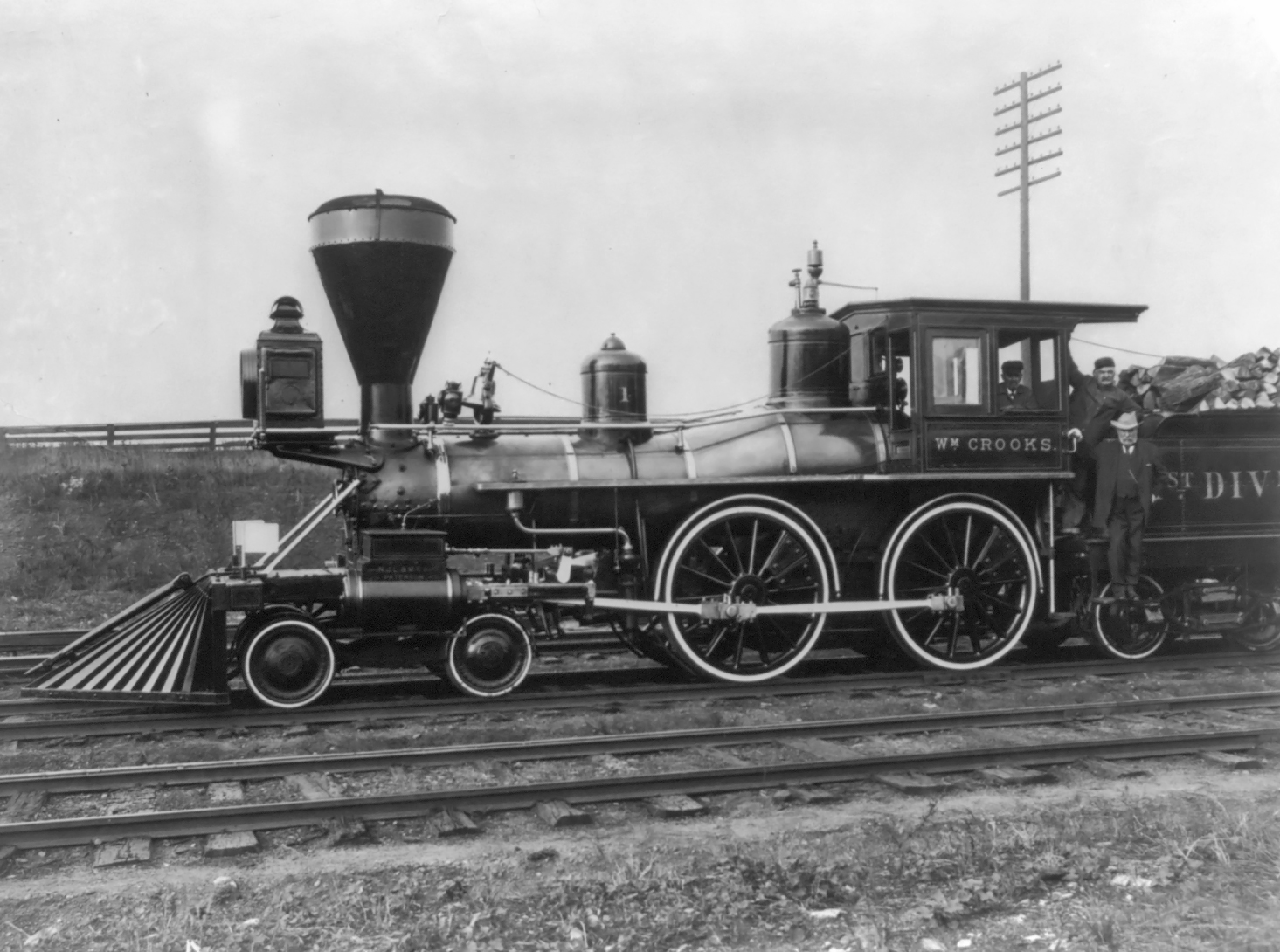
James J. Hill’s first engine, the 4-4-0 William Crooks, circa 1908, with Hill himself on the cab steps. Note the full classic cowcatcher pilot. American-Rails.com collection.
At a Glance
| Topic | Notes |
|---|---|
| Common names | Cowcatcher (U.S. popular term); pilot (preferred railroad/mechanical term); also fender, buffer (regional / period usage) |
| Primary function | Deflect animals and track-level debris away from the wheels and underframe; reduce derailment and cylinder/underframe damage |
| Early concept (unbuilt) | Charles Babbage proposal associated with Liverpool & Manchester work, ~1830 |
| First practical U.S. credit | Isaac Dripps / Camden & Amboy John Bull, ~1833 (cowcatcher/pilot on leading truck arrangement) |
| Early published description | David Stevenson, Sketch of the Civil Engineering of North America (1838)—illustration/description of Dripps-type design often cited |
| Classic form | Shallow V or wedge of bars or plate, hung from the pilot beam ahead of the leading truck or cylinders |
| Related but different | Pilot truck (leading wheelset/frame for guiding)—not the same thing as the cowcatcher; snowplow / wedge plow (winter or rotary service)—related idea, different duty |
| Switcher variant | Footboard pilots—steps for yard crews rather than a full rural wedge |
| Late steam refinement | Drop-coupler pilots, boiler-tube / bar pilots, plate pilots; streamliner noses sometimes integrate the pilot into the carbody |
| Today | Full bar cowcatchers rare on revenue freights; diesel “pilots,” snowplows, and anti-climbers remain; heritage steam still wears classic pilots |
Terminology and early history summaries draw on standard locomotive references and contemporary engineering accounts (including Stevenson 1838); see Sources. Individual builders and roads used many shop-specific pilot patterns.
Names & Terms: Pilot vs. Cowcatcher vs. Pilot Truck
Precision helps, because popular writing often blurs three different things:
- Cowcatcher / pilot (the device). The frame or plate assembly at the extreme front of the locomotive, intended to clear obstacles. “Cowcatcher” is the colorful American nickname from the 1830s expansion years, when free-ranging cattle were a real operating hazard. Mechanical and railroad documents prefer pilot.
- Pilot beam. The heavy timber or steel cross-member at the front of the locomotive frame to which the pilot, coupler gear, and often the leading-truck attachments relate. Damage reports from collisions frequently mention the pilot beam even when the barwork is secondary.
- Pilot truck (leading truck). A separate mechanical assembly: the unpowered guiding wheels under the front of many road engines (2-8-0 Consolidations have a two-wheel pilot truck; 4-6-2 Pacifics and 4-8-4s have a four-wheel leading truck, and so on). The truck steers the rigid wheelbase through curves. The cowcatcher may be mounted on or ahead of that truck assembly, but the truck is not “the cowcatcher.”
Other period words appear in newspapers and patents—fender, buffer, cattle catcher, cow plow—but in North American railfan and mechanical usage, pilot is the safe default when you mean the obstacle-deflecting structure, and cowcatcher remains the public name for the classic barred wedge of the steam era.
British practice historically leaned more on fenced rights-of-way and different front-end arrangements (including later “lifeguard” devices on some stock). The big American wedge pilot is very much a product of North American geography and open-country operation, even though the earliest conceptual sketch associated with Babbage is British.
Why Early Railroads Needed a Front-End Deflector
Early American railroads ran through farm country, timberland, and open range long before continuous fencing, grade-crossing signals, or hardened roadbeds were normal. Livestock wandered. Tree limbs and washouts left debris on the rails. Night running with oil headlamps (and later electric lights still limited by modern standards) meant an engineer might not see a cow or a fallen branch until the last seconds.
A solid obstacle under a driving wheel is dangerous. Even a soft animal carcass can lift a wheel flange over the rail head if it piles under the engine. Cylinders, valve gear, and air pumps hang low enough to be wrecked by debris that a pilot might have shoved aside. A derailment at speed risked passengers, crew, mail, and freight—and in the 19th century, liability and wreck costs were already serious business for managers who lived by schedule reliability.
So the pilot was not decoration. It was a cheap insurance policy bolted to the cheapest place to put it: the front of the machine that hit the obstruction first. As mileage exploded after the Civil War and the western boom, the cowcatcher became part of the standard visual vocabulary of the American locomotive—as expected on a road engine as the smokestack or the tender.
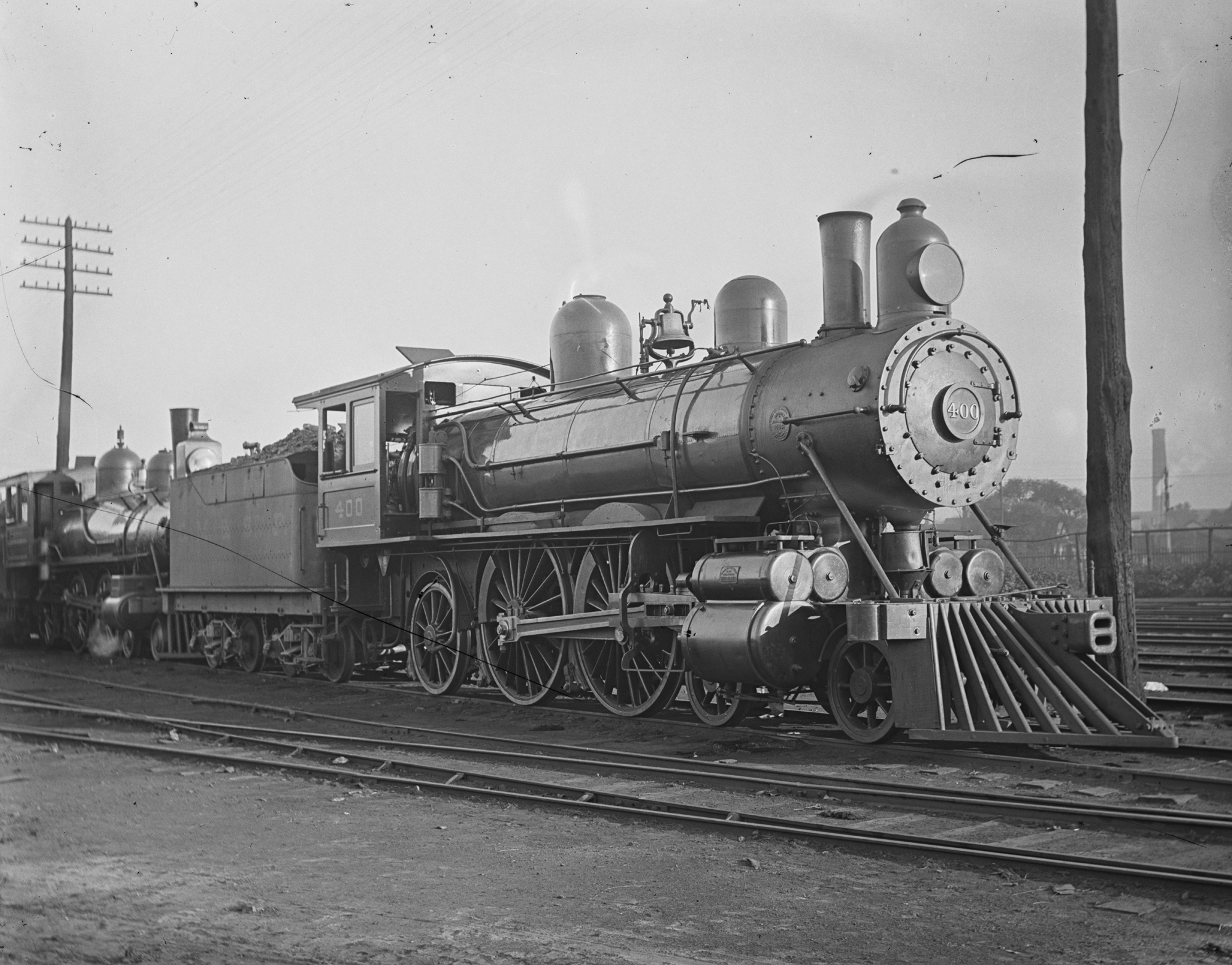
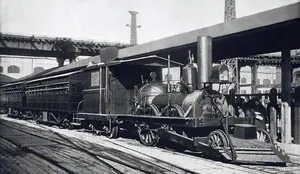
Chicago, Milwaukee & St. Paul 4-4-2 #400, circa 1900, with a classic barred pilot. American-Rails.com collection.
Origins: Babbage, Dripps, and the American Pilot
Charles Babbage—better known today for analytical-engine computing concepts—was involved with early British railway thinking around the opening of the Liverpool & Manchester Railway. About 1830 he proposed a plow- or deflector-type idea for clearing the rails of obstacles. His concept was not put into regular service on L&MR power in a way that established a continuous British design lineage, and it is uncertain how widely later builders knew of his proposal. It remains an important historical footnote: the problem of track-level obstruction was recognized almost as soon as intercity steam railways opened.
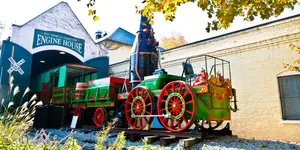
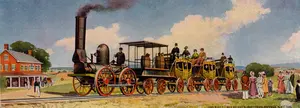
On this side of the Atlantic, credit for a practical installation usually goes to Isaac Dripps of the Camden & Amboy Railroad. The English-built locomotive that became famous as the John Bull arrived in New Jersey in parts; Dripps assembled and adapted it for American conditions beginning in 1831. In the following years the engine received Americanizing features that became iconic: a leading-truck arrangement that effectively made the machine a 4-2-0-type layout for guidance, and a cowcatcher / pilot on the front to handle debris and animals. Standard summaries date the practical pilot installation to about 1833.
British engineer David Stevenson described and illustrated North American practice in his Sketch of the Civil Engineering of North America (1838), helping fix the Dripps-type design in the engineering record for readers on both sides of the ocean. From that point the pilot spread with the American locomotive type itself. Builders in Philadelphia, Paterson, Schenectady, and later the great midwestern shops treated a front pilot as normal equipment on road power.
The word cowcatcher enters American usage in the same decades. It is folk language for an industrial problem: when your railroad runs through cattle country, the front of the engine becomes a farm implement whether you like it or not.
Related context: early U.S. roads and steam power on the railroad history hub and steam locomotives overview; the John Bull story also sits in the broader Camden & Amboy / New Jersey pioneer railroad narrative.
How a Cowcatcher Works
The principle is simple geometry and momentum. A wedge or shallow V meets an obstruction ahead of the first wheel. Instead of letting the object tuck under the axle, the sloping face tries to lift and shove it sideways off the rail head. Bars spaced with gaps can shed mud and snow better than a solid plate in some conditions; solid plate can be stronger against large, solid debris. Either way, the goal is deflection, not scooping the obstacle up onto the boiler like a shovel.
Effective pilots sit low enough to engage track-level objects early, yet high enough and strong enough not to dig into soft ballast, road crossings, or snow packed between the rails. That compromise produced endless shop variations: angle of the bars, height above rail, width relative to the gauge, reinforcement at the point, and how the assembly attaches to the pilot beam and leading truck.
A pilot is not magic. A heavy animal, a dense snowdrift, a washout-filled cut, or a vehicle on a grade crossing can still wreck an engine. Rotary snowplows, flangers, wedge plows on dedicated service, and eventually better fencing and crossing protection all address problems a simple bar pilot cannot. But for ordinary mainline and branch running in the steam era, the pilot was the first line of defense against the small and medium hazards that would otherwise accumulate under the drivers mile after mile.
Design Evolution Through the Steam Era
Early form. The first pilots were relatively simple frames—wood reinforced with iron, then increasingly iron and steel as shop practice hardened. The shallow V in plan view became the visual standard: pointed enough to part obstacles, wide enough to protect the full width of the locomotive’s path over the rails and the inner edges of the ties.
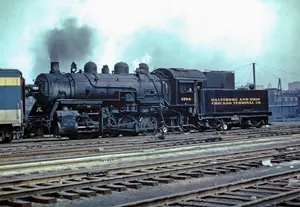
Bar (slat) pilots. Parallel bars meeting at a point—or radiating from a point—defined the classic “cowcatcher look” of 19th-century and early 20th-century road engines. Gaps between bars reduced snow packing and let smaller debris fall through rather than build a solid wall. Painted bars (often matching the locomotive’s trim colors) also became part of railroad identity; a polished passenger engine’s pilot was as much showpiece as tool.
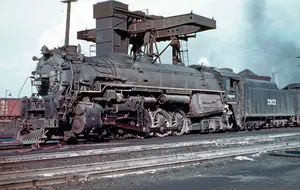
Plate and sheet pilots. Later practice, especially into the 20th century and under wartime material and simplification pressures, often favored plate or more enclosed sheet construction. Some popular accounts note a shift toward shorter, more plate-like fronts around World War I-era rebuilds and shop programs, though road-by-road practice varied widely. Plate can present a cleaner face for snow and reduce snagging on certain debris, at the cost of the open classic appearance.
Drop-coupler pilots. Road engines needed a front coupler for double-heading, helpers, and switching moves, but a coupler hanging in the path of the pilot could snag debris or animals. Late-steam designs commonly used a drop coupler (or swing-out arrangement) so the coupler could be stored up or aside when not in use, leaving the pilot face clean for running. That refinement is a good reminder that the pilot assembly was integrated with draft gear, not a separate toy bolted on as an afterthought.
Boiler-tube and ornamental barwork. Some passenger and showcase locomotives carried elaborately finished pilots—polished bars, decorative patterns, or builders’ preferred house styles. Aesthetic pilots still had to work, but railroads understood that the public saw the front of the engine first. Streamlined steam of the 1930s often folded the pilot into a full-width nose or skirt, sometimes with a less dramatic wedge but still providing a deflecting understructure.
Materials and strength. As locomotive weights and speeds rose, pilot structures had to survive not only cattle but also high-speed encounters with highway vehicles, temporary track material, and winter ice. Welds, heavier sections, and better attachment to steel frames replaced earlier timber-heavy assemblies. Shop standards and mechanical-officer circulars governed repairs after impacts; a bent pilot was a visible badge of a hard trip.
Variants: Road, Switcher, Snow, and Streamliner
Not every “pilot” looks like a Wild West cowcatcher.
Road pilots. Full wedge or bar pilots on mainline and branch freight and passenger engines are the type most people mean by cowcatcher. Height, angle, and bar spacing were tailored to the railroad’s climate and traffic. Western roads with open stock country and mountain debris often favored robust, deep pilots; eastern passenger power might wear neater, more refined fronts.
Footboard pilots (switchers). Yard engines spent their lives coupling cars at low speed among men on the ground. Many early and mid-era switchers carried footboard pilots—step-like fronts (and often rears) that switchmen rode while riding the engine between cuts of cars. That practice was later restricted or banned for safety on many roads and under evolving labor and safety rules, but the footboard form remains part of the pilot family tree: still a front-end structure, different duty cycle. Modern industrial and some short-line switchers may still show step-like fronts without encouraging the old riding practices.
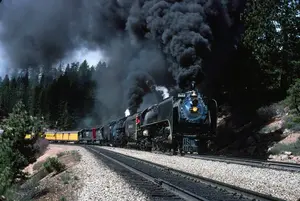
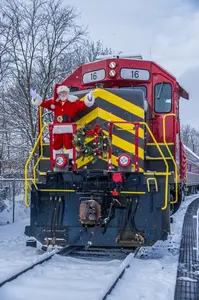
Snowplow pilots and dedicated plows. In snow country the line between pilot and plow blurs. Some locomotives wore heavy wedge fronts for winter; others coupled to dedicated wedge plows or worked behind rotary plows. A true rotary is a separate machine; a locomotive pilot is not a substitute for a rotary in deep drifts. For ordinary packed snow and ice between rails, flangers and smaller wedges do specialized work a standard cowcatcher only approximates.
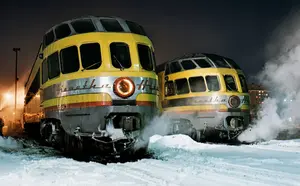
Streamlined and shrouded fronts. 1930s streamliners often hid the mechanical pilot behind skirting or integrated it into a bullet nose. Function remained: keep objects out from under the first truck. Appearance shifted from “frontier wedge” to “modern industrial design.” After streamlining fell from fashion, many engines regained more conventional pilots during later shopping.
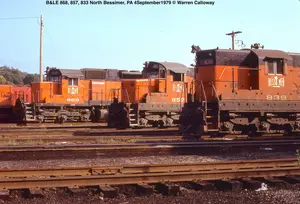
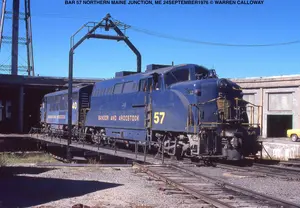
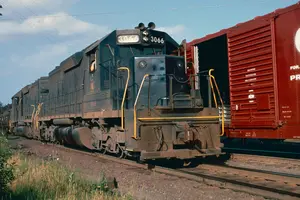
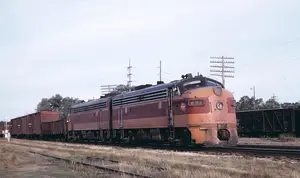
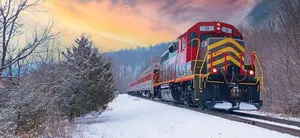
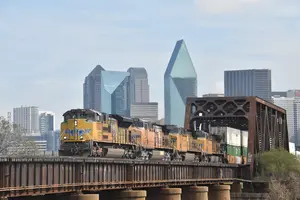
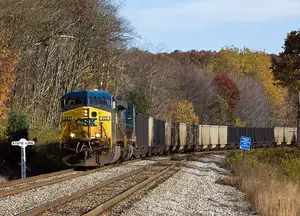
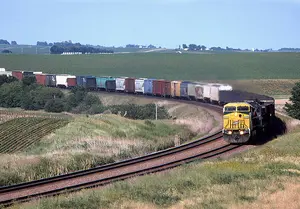
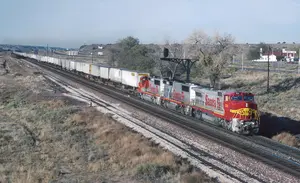
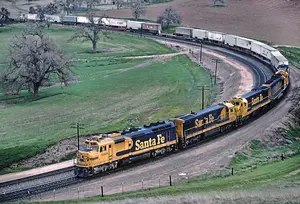
Diesel and electric pilots. First-generation cab units and road-switchers inherited the idea of a front pilot plate or plow-like structure. Geeps, SDs, U-boats, and later six-axle freights commonly wear snowplow pilots or anti-climber-equipped fronts designed more for grade-crossing survival and multi-unit coupling geometry than for scattering free-range cattle. The vocabulary stuck: railroaders still say pilot for the front structure even when no one calls it a cowcatcher.
| Variant | Typical service | What you notice |
|---|---|---|
| Bar / slat cowcatcher | 19th–early 20th c. road steam | Open V of bars; classic “American locomotive” look |
| Plate pilot | Later steam; many diesels | Solid or near-solid face; cleaner snow shedding |
| Drop-coupler pilot | Late steam road power | Coupler stores up/aside so pilot face stays clear |
| Footboard pilot | Switchers / yard power | Steps for crew access (historic riding practice later restricted) |
| Snowplow pilot | Winter road service; many modern freights | Heavy wedge; not a rotary plow |
| Streamlined nose | 1930s–40s passenger steam (and some diesels) | Pilot integrated into shroud or bullet front |
Operations, Livestock, Fencing & Liability
The cowcatcher existed because the railroad and the countryside shared space. In open-range regions, cattle on the track were a chronic operating fact. Railroads employed section gangs and track walkers; train crews filed livestock-kill reports; claim agents settled with ranchers. State fencing laws and stock laws varied—sometimes the railroad had a duty to fence, sometimes stock owners bore more responsibility, and disputes filled court dockets for generations.
As rights-of-way were fenced, as grade crossings gained better sight lines and signals, and as highways and farms modernized, the frequency of animal strikes on many corridors fell. It never reached zero. Even today, freight crews report animal strikes; the difference is that a modern high-horsepower diesel with a snowplow pilot and heavy anti-climber structure is engineered for a different mix of hazards (highway vehicles and debris) than a 19th-century 4-4-0 rolling through unfenced prairie.
Maintenance mattered. A pilot bent upward by a crossing mishap could foul switches or crossings. A pilot hanging too low could dig into snow or road crossings. Mechanical forces and enginehouse crews kept pilots within clearance diagrams just as carefully as they watched brake rigging and coupler heights. For modelers and photographers, pilot condition is a useful dating and shop-practice clue: fresh barwork and paint often signal a recent shopping; battered pilots tell stories of hard winters and busy branches.
Cultural Impact: Symbol of the Steam Age
If the air brake and automatic coupler were the quiet safety revolutions of railroading, the cowcatcher was the loud visual one. It reads instantly in photographs, posters, toys, and films. A locomotive without a pilot looks incomplete to anyone raised on American steam imagery; a locomotive with a huge barred pilot looks ready to conquer distance.
Western expansion narratives leaned on that image: iron horse clearing the path, progress physically pushing obstacles aside. Advertising departments and locomotive builders knew it. Passenger engines posed for builder photos with polished pilots; excursion lines today still paint and line the bars because visitors expect the silhouette. The cowcatcher became shorthand for “railroad” in the same way the caboose once stood for the end of the train.
Popular culture sometimes oversells the device—as if a pilot made wrecks impossible—but the symbolism is earned. For roughly a century, the front of nearly every American steam locomotive announced both a technical solution and a social fact: the railroad ran through a living landscape full of animals, people, and weather, and the machine had to be built accordingly.
Decline, Dieselization & What Remains
Several trends reduced the everyday importance of the classic cowcatcher:
- Infrastructure. More fencing, better track standards, more ballast and drainage, and improved grade-crossing protection cut certain classes of obstruction.
- Motive power change. Diesel and electric locomotives brought different underframe heights, multiple-unit noses, anti-climbers, and plow pilots designed around modern wreck and snow scenarios rather than free-range cattle as the primary design story.
- Operating environment. Industrialized corridors and fenced rights-of-way are less like 1870s open range; remaining animal-strike problems are managed with reporting, local fencing programs, and operating rules rather than by making the pilot larger.
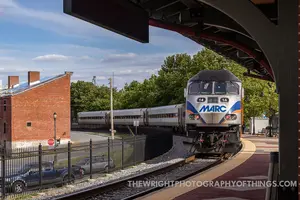
That said, front-end structures never vanished. Walk any modern Class I freight: you will see snowplow pilots, heavy pilot plates, and anti-climber assemblies. Commuter and passenger power often carries distinctive front fairings that still act as obstacle and debris managers. On heritage railroads and museum locomotives, full bar cowcatchers remain standard costume—and still do real work when a branch-line steamer meets a fallen limb or a wandering animal at ten or twenty miles per hour.
So the cowcatcher’s story is not a clean extinction. It is a transformation: from the defining face of 19th-century American steam, to a family of front-end devices whose nickname outlived the open-range conditions that coined it.
Related Reading on American-Rails.com
- Steam locomotives · Locomotive history · Diesel locomotives
- Railroad history · Fallen flags · Streamliners
- Railroad tycoons (including Hill-era context for engines such as William Crooks)
- Glossary and terms · Railroad museums · Tourist trains
- Home
Sources
- Stevenson, David. Sketch of the Civil Engineering of North America (1838)—early published description/illustration of Dripps-type pilot practice
- Camden & Amboy / John Bull mechanical histories (Smithsonian and related museum summaries of Isaac Dripps’s assembly and American modifications, including pilot/leading-truck arrangements)
- Standard locomotive terminology: pilot vs. pilot truck vs. pilot beam; drop-coupler pilots; footboard pilots on switchers
- Period and secondary discussions of livestock claims, right-of-way fencing, and grade-crossing hazards as operating context for front-end deflectors
- Builder and railroad practice notes on bar, plate, snowplow, and streamlined pilot forms through the steam-to-diesel transition
- American-Rails.com steam, history, and locomotive profile pages for period photography and related context
Originally published February 21, 2025; substantially rewritten and expanded August 2026 for research depth while retaining core historical points on Babbage, Dripps/John Bull, Stevenson, and the pilot’s operating purpose.
Recent Articles


-
Bessemer & Lake Erie Railroad: "The Bessemer Road"
Sep 15, 26 05:20 PM
 Bessemer & Lake Erie—Bear Creek 1865, Carnegie 1897, U.S. Steel 1901. Ore south from Conneaut, coal north. 2-10-4s, Missabe sister road. CN May 10, 2004. Complete corporate history.
 -
Bangor and Aroostook Railroad: "Serving Northern Maine"
Sep 15, 26 05:05 PM
 Bangor & Aroostook—chartered February 13, 1891, first trains January 1, 1894. Potatoes, paper, Searsport, State of Maine reefers. MM&A 2003, Lac-Mégantic 2013, CP 2020, CPKC today. Complete co…
 -
Baltimore & Ohio Chicago Terminal Railroad: Map and History
Sep 15, 26 03:11 PM
 B&OCT—formed January 6, 1910 to buy Chicago Terminal Transfer. Grand Central, Barr Yard, 78 route-miles. Assigned B&O steam. Complete diesel roster. CSX paper subsidiary, mark BOCT.
 -
The "Alphabet Route" (Railroad): Photos and History
Sep 15, 26 02:53 PM
 Alphabet Route—eight railroads, not one company. P&WV to Connellsville February 11, 1931. Alpha Jets Chicago/St. Louis–New York/Boston. NKP, W&LE, P&WV, WM, Reading, CNJ, L&HR, New Hav…
 -
Milwaukee Road Livestock Operations: Cattle, Dakotas & Montana
Sep 15, 26 02:36 PM
 Milwaukee Road livestock traffic—Dakota and Montana cattle, Iowa hogs, Chicago markets, 28-hour law, head-end stock cars. By 1974 mostly Montana. Rick Burn’s Helena speech. Operations history, not the…
 -
Spirit of Jasper Ride & Dine (2026): Season Pause
Sep 15, 26 02:29 PM
 Spirit of Jasper Ride & Dine in Jasper, Indiana—seated meal on board. Operator: not running public trains for 2026. Depot remains open as a rental. Confirm on spiritofjaspertrain.com.
 -
South Carolina Canal & Rail Road Company: Map and History
Sep 15, 26 01:59 PM
 South Carolina Canal & Rail Road—chartered December 19, 1827. Best Friend of Charleston, 136 miles Charleston–Hamburg October 1833, Aiken inclined plane. South Carolina Railroad 1844, Southern 189…
 -
The Practice of Double-Heading: The Steam Era
Sep 15, 26 01:43 PM
 Doubleheading—two locomotives on the point, each with its own steam crew. Not a rear helper, not diesel MU. How it worked, PRR 1877, mountain grades, and what MU ended.
 -
Mohawk and Hudson Railroad: Map, Pictures, Locomotives
Sep 15, 26 01:20 PM
 Mohawk & Hudson Railroad—New York’s first railroad, chartered April 17, 1826. DeWitt Clinton, inclined planes, Albany & Schenectady 1847, first New York Central May 17, 1853. Complete corporat…
 -
Essex Clipper Dinner Train (2026): Dates, Tickets & What to Expect
Sep 15, 26 01:09 PM
 2026 Essex Clipper Dinner Train in Essex, CT—2.5 hours, four-course meal $129.99, 18+. Fall dates through Oct. 25. Confirm on essexsteamtrain.com.
 -
Camden & Amboy Railroad: Map, History, Photos
Sep 15, 26 12:53 PM
 Camden & Amboy Railroad—chartered February 4, 1830. Joint Companies monopoly with the Delaware & Raritan Canal, John Bull, T-rail. United New Jersey 1872, PRR 999-year lease 1871. Complete corpora…
 -
Cafe Lafayette Dinner Train (2026): Dates, Tickets & What to Expect
Sep 15, 26 12:47 PM
2026 Cafe Lafayette Dinner Train in North Woodstock, NH—2 hours, 20 miles, five-course meal from $125. May–October. Confirm on nhdinnertrain.com. -
Christmas Train Ride Locations (2026): A Complete Guide
Sep 15, 26 10:47 AM
 2026 Christmas train rides by state—Santa, North Pole Express, and holiday trains. Not Polar Express. State guides and product pages. Confirm dates on each railroad.
 -
Baltimore & Ohio Railroad: Linking 13 Great States With The Nation
Sep 15, 26 10:22 AM
 Baltimore & Ohio Railroad—first U.S. common carrier, chartered February 28, 1827. Wheeling 1853, Chicago 1874, C&O control 1963, Chessie 1973, into CSX April 30, 1987. Complete corporate history.
 -
Delaware & Hudson Railway: The Bridge Line
Sep 15, 26 09:59 AM
 Delaware & Hudson Railway—Wurts brothers canal 1823, gravity railroad 1829, Stourbridge Lion, Bridge Line to Montreal. Guilford 1984, CP 1991, NS south line 2015, CPKC north.
 -
Delaware & Hudson Diesel Roster (All-Time)
Sep 15, 26 12:17 AM
 All-time Delaware & Hudson diesel roster—Alco S-2s through C-628s and PA-4s, GE U-boats, Baldwin RF-16s, EMD SD45s and GP38-2/GP39-2s. Serials, dates, dispositions.
 -
Granite Railway, Our Country's First Railroad
Sep 14, 26 11:28 PM
 Granite Railway of Quincy, Massachusetts—chartered March 4, 1826, opened October 7, 1826. Gridley Bryant, 5-foot gauge, horses, Bunker Hill Monument stone. First commercial U.S. railroad.
 -
Milwaukee Road Skytop Lounges: History, Specs & Floor Plans
Sep 14, 26 11:09 PM
 Milwaukee Road Skytop observation cars—Brooks Stevens, 1948. Four Rapids parlor-lounges from Milwaukee Shops, six Creek sleeper-lounges from Pullman-Standard. Floor plans, roster, preservation.
 -
West Virginia Christmas Train Rides (2026): A Complete Guide
Sep 14, 26 11:02 PM
2026 West Virginia Christmas trains—Potomac Eagle North Pole Express in Romney and Christmas at Cass. Not Polar Express. Elkins Polar is not listed for 2026. -
Railroads Of Today: Class I Map, PSR & the 2026 Industry
Sep 14, 26 10:30 PM
 U.S. freight rail in 2026—six Class I railroads on a nearly 140,000-mile network. PSR as everyday practice, how the STB works, traffic mix, short lines and regionals.
 -
Railroad History (USA): Timeline, Facts & How the Network Was Built
Sep 14, 26 10:03 PM
 Full U.S. railroad history hub—origins and inventors, Golden Age peak mileage, Civil War and transcontinental, streamliners, ICC regulation, Penn Central and Conrail, Staggers Act, PSR, and today’s Cl…
 -
Railroads In The 2020s: CPKC, East Palestine & the UP–NS Case
Sep 14, 26 09:51 PM
 U.S. railroads 2020–2026—Class I mileage 91,773 in 2020. COVID traffic drop, CPKC April 14 2023, East Palestine Feb. 3 2023, UP–NS $85 billion case still before the STB.
 -
Railroads In The 2010s: PSR, Coal’s Decline & Positive Train Control
Sep 14, 26 03:51 PM
 U.S. railroads 2010–2020—Class I mileage 95,573 to 91,773. Buffett closed BNSF Feb. 12 2010, Harrison at CP June 29 2012 and CSX 2017, PTC deadline Dec. 31 2018.
 -
Virginia Christmas Train Rides (2026): A Complete Guide
Sep 14, 26 03:46 PM
 2026 Virginia Christmas trains—Virginia Scenic Railway Santa Express from Staunton, about 60 minutes. Confirm dates. Not Polar Express.
 -
MARC Train: Maryland Commuter Rail History, Lines & Roster
Sep 14, 26 01:16 PM
 MARC Train history—Maryland Rail Commuter 1984, B&O and PRR corridors, Penn/Camden/Brunswick lines, Silver Spring 1996, all-time locomotive roster.
 -
Railroads In The 2000s: Merger Freeze, Wisconsin Central & Buffett
Sep 13, 26 07:57 AM
 U.S. railroads 2000–2010—Class I mileage 99,250 to 95,573. STB merger freeze March 17 2000, CN–WC Oct. 9 2001, BNSF Railway Jan. 24 2005, Buffett Nov. 3 2009.
 -
Railroads In The 1990s: Mega-Mergers, Conrail’s Split & the STB
Sep 13, 26 12:13 AM
 U.S. railroads 1990–2000—Class I mileage 119,758 to 99,250. BNSF Sept. 22 1995, UP–SP Sept. 11 1996, Conrail split June 1 1999, ICC Termination Dec. 29 1995.
 -
Railroads In The 1980s: Staggers, Mega-Mergers & Conrail’s IPO
Sep 12, 26 11:12 PM
 U.S. railroads 1980–1990—Class I mileage 164,822 to 119,758. Staggers Oct. 14 1980, CSX and Norfolk Southern, UP–Missouri Pacific–Western Pacific, Conrail IPO March 26 1987.
 -
Wabash Class O-1 4-8-4s: History, Roster & Specifications
Sep 12, 26 11:01 PM
 Wabash Class O-1 4-8-4s—Baldwin 1930–31, twenty-five engines 2900–2924. Fast freight, complete roster, specifications. None preserved.
 -
Staggers Rail Act of 1980: Statute, Contract Rates & the ICC
Sep 10, 26 11:23 PM
 Staggers Rail Act, Pub. L. 96-448, signed October 14, 1980. Harley Staggers, S.1946, contract rates, 180% variable-cost test, abandonments, short lines.
 -
Rock Island E8A 652: Bicentennial Independence Paint & History
Sep 10, 26 10:42 PM
 Rock Island E8A 652—EMD March 1952, serial 15199. 20th Century Railroad Club Independence bicentennial scheme, Peoria and Quad Cities Rockets, Midland Railway, Manly Junction Museum.
 -
Vermont Christmas Train Rides (2026): A Complete Guide
Sep 10, 26 10:37 PM
2026 Vermont Christmas trains—Okemo Valley Holiday Express from Chester Depot Dec. 19–20. Polar is Burlington Dec. 5–6 only. -
Railroads In The 1970s: Penn Central, Amtrak & Conrail
Sep 10, 26 10:18 AM
 U.S. railroads 1970–1980—196,479 miles at the decade’s start. Penn Central bankruptcy June 21 1970, Amtrak May 1 1971, 3R/4R Acts, Conrail April 1 1976, Rock Island 1975, Milwaukee 1977.
 -
Railroads In The 1960s: Mergers, Passenger Collapse & Penn Central
Sep 10, 26 10:03 AM
 U.S. railroads 1960–1970—207,334 to 196,479 miles. Erie Lackawanna 1960, C&O–B&O 1963, N&W–Nickel Plate 1964, SCL 1967, Penn Central Feb. 1 1968.
 -
South Carolina Christmas Train Rides (2026): A Complete Guide
Sep 10, 26 08:36 AM
 2026 South Carolina Christmas trains—South Carolina Railroad Museum Santa Train in Winnsboro. Confirm December dates. Not Polar Express. Drop light-festival padding.
 -
Steam Locomotive Feedwater Heaters: Elesco, Coffin & Worthington
Sep 10, 26 08:29 AM
 Steam locomotive feedwater heaters—open Worthington vs closed Elesco and Coffin. How they work, how to identify them on a smokebox, and why not every engine had one.
 -
Oregon Christmas Train Rides (2026): A Complete Guide
Sep 10, 26 08:22 AM
2026 Oregon Christmas trains—Portland Holiday Express, Garibaldi Candy Cane Express, Sumpter Valley Christmas Trains Dec. 11–13. Polar is Mount Hood. -
Lake Shore & Michigan Southern: Map, History, Timetables
Sep 10, 26 08:12 AM
 Lake Shore & Michigan Southern Railway—Erie & Kalamazoo 1833, Michigan Southern to Chicago 1852, LS&MS April 6 1869, Vanderbilt, Ashtabula 1876, NYC merger Dec. 22 1914. 1910 map and Official Guide.
 -
Big Four Route (CCC&StL): Map, History
Sep 10, 26 12:19 AM
Cleveland, Cincinnati, Chicago & St. Louis Railway—Bee Line 1868, Ingalls’s first Big Four 1880, CCC&StL June 30, 1889, NYC lease Feb. 1, 1930. 1910 and 1930 maps, what still runs. -
Railroads In The 1950s: Diesel, the Interstate & Passenger Collapse
Sep 10, 26 12:15 AM
 U.S. railroads 1950–1960—223,779 to 211,459 miles. Interstate June 29, 1956, dieselization, passenger collapse, TOFC, 1957–58 recession, NYO&W 1957, N&W–Virginian 1959.
 -
New Jersey Christmas Train Rides (2026): A Complete Guide
Sep 10, 26 12:06 AM
 2026 New Jersey Christmas trains—Black River & Western Santa Express from Flemington and Pine Creek Christmas trains in Wall Township. Polar is Whippany and Phillipsburg.
 -
New Mexico Christmas Train Rides (2026): A Complete Guide
Sep 09, 26 11:57 PM
 2026 New Mexico Christmas trains—Cumbres & Toltec Santa’s Holiday Express from Chama Dec. 5–6 (and Antonito, Colo., Dec. 12–13). Coach $25/$15. Not Polar Express.
 -
Grand Trunk Railway: Map, History, Timetables
Sep 09, 26 11:47 PM
 Grand Trunk Railway of Canada—charter Nov. 10, 1852, Montreal–Toronto 1856, Portland, Sarnia, Victoria Bridge, St. Clair Tunnel 1891, Great Western 1882, GTPR, CN Jan. 20, 1923. 1893 map and Official…
 -
Troop Trains In World War II: Sleepers, Kitchen Cars & Movements
Sep 09, 26 11:42 PM
 WWII U.S. troop trains—almost 44 million armed-services passengers, Pullman troop sleepers, ACF kitchen cars, hospital trains, monthly movement tables 1942–45. Not the Military Railway Service. ODT an…
 -
Railroads In The 1940s: War Traffic, Last Steam & the Diesel Flood
Sep 09, 26 11:37 PM
 U.S. railroads 1940–1950—233,670 to 223,779 miles. World War II as the decade’s center, last new steam, diesel flood after V-J Day, 1945 car orders, California Zephyr 1949.
 -
Railroads In World War II: ODT, Record Traffic & Private Operation
Sep 09, 26 03:00 PM
 U.S. railroads in World War II—Lend-Lease freight, Pearl Harbor, Office of Defense Transportation, 1944 peak ~740 billion ton-miles, Dec. 1943–Jan. 1944 seizure. Private operation, not a USRA sequel.
 -
Montana Christmas Train Rides (2026): A Complete Guide
Sep 09, 26 02:54 PM
2026 Montana Christmas trains—Charlie Russell Chew Choo North Pole Adventure from Hanover/Lewistown, Nov. 27–Dec. 19, $71, about 1.5 hours. Not Polar Express. -
Railroads In The 1930s: Depression, Streamliners & the FT
Sep 09, 26 09:32 AM
 U.S. railroads 1930–1940—249,052 to 233,670 miles. Section 77, Eastman, Motor Carrier Act, M-10000 and Pioneer Zephyr 1934, EMC FT 1939. Decade frame, not the streamliner encyclopedia.
 -
Sugar Cane Train (Lahaina): LK&P History, Roster & 2026 End
Sep 09, 26 08:19 AM
 Lahaina, Kaanapali & Pacific Sugar Cane Train—3-foot tourist line 1970–2014. Anaka, Myrtle, 2023 and 2025 fires, September 2026 scrapping. Roster, Hahakea trestle, Pioneer Mill corridor.
 -
Massachusetts Christmas Train Rides (2026): A Complete Guide
Sep 09, 26 08:16 AM
 2026 Massachusetts Christmas trains—Shelburne Falls Moonlight Magic Friday Nov. 27; Edaville Festival of Lights in Carver. Polar is Cape Cod Central in Buzzards Bay.