Front Range Passenger Rail [Fort Collins-Pueblo, CO]
Published: January 25, 2026
By: Adam Burns
For decades, Coloradans have debated an idea that seems both obvious and daunting: a passenger train that runs along the Front Range, linking the state’s biggest population centers along Interstate 25—Fort Collins, Denver, Colorado Springs, and Pueblo—while also stitching in smaller communities in between. Today, that concept has a formal name, a governing agency, and a planning pipeline: the Front Range Passenger Rail (FRPR) project.
If you’ve ever crawled through weekend I-25 traffic, watched weather snarl the Monument Hill corridor, or tried to time a flight connection out of Denver without padding your schedule by an hour “just in case,” you already understand the appeal. FRPR is being positioned as a new, reliable intercity travel option—one that uses existing rail corridors, connects to local transit, and (ideally) scales up over time into a truly regional rail backbone.
The big story, though, is that FRPR has moved beyond a fuzzy vision statement. Colorado created a dedicated rail district to plan, finance, build, and eventually operate the service, and it’s now deep in the long process that turns a “wouldn’t this be nice?” into trains on the timetable.
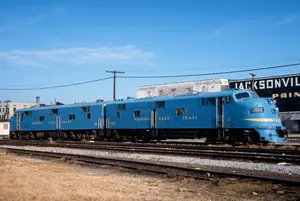
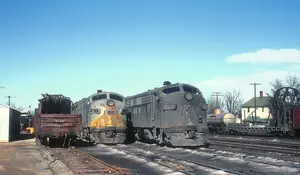
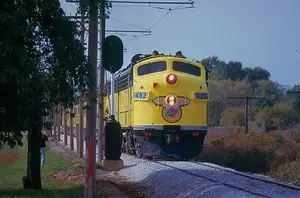
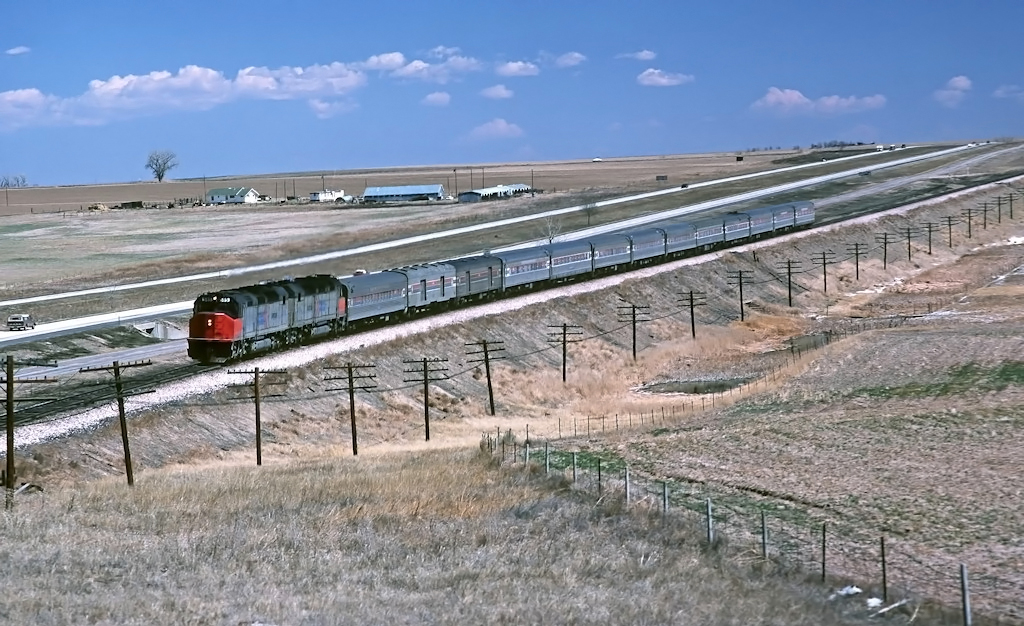 A pair of Amtrak SDP40Fs have the westbound "San Francisco Zephy" near Denver on March 10, 1977. Gary Morris photo.
The Big Picture: What FRPR Is Trying to Do
At its core, Front Range Passenger Rail is envisioned as the transportation “spine” along the Front Range, integrating with other east-west and local multimodal systems. Colorado’s transportation leadership has framed the corridor as a logical response to growth and congestion, particularly in the roughly 173-mile stretch from Pueblo to Fort Collins via Denver that contains a large share of the state’s population.
The FRPR District’s public-facing description is straightforward:
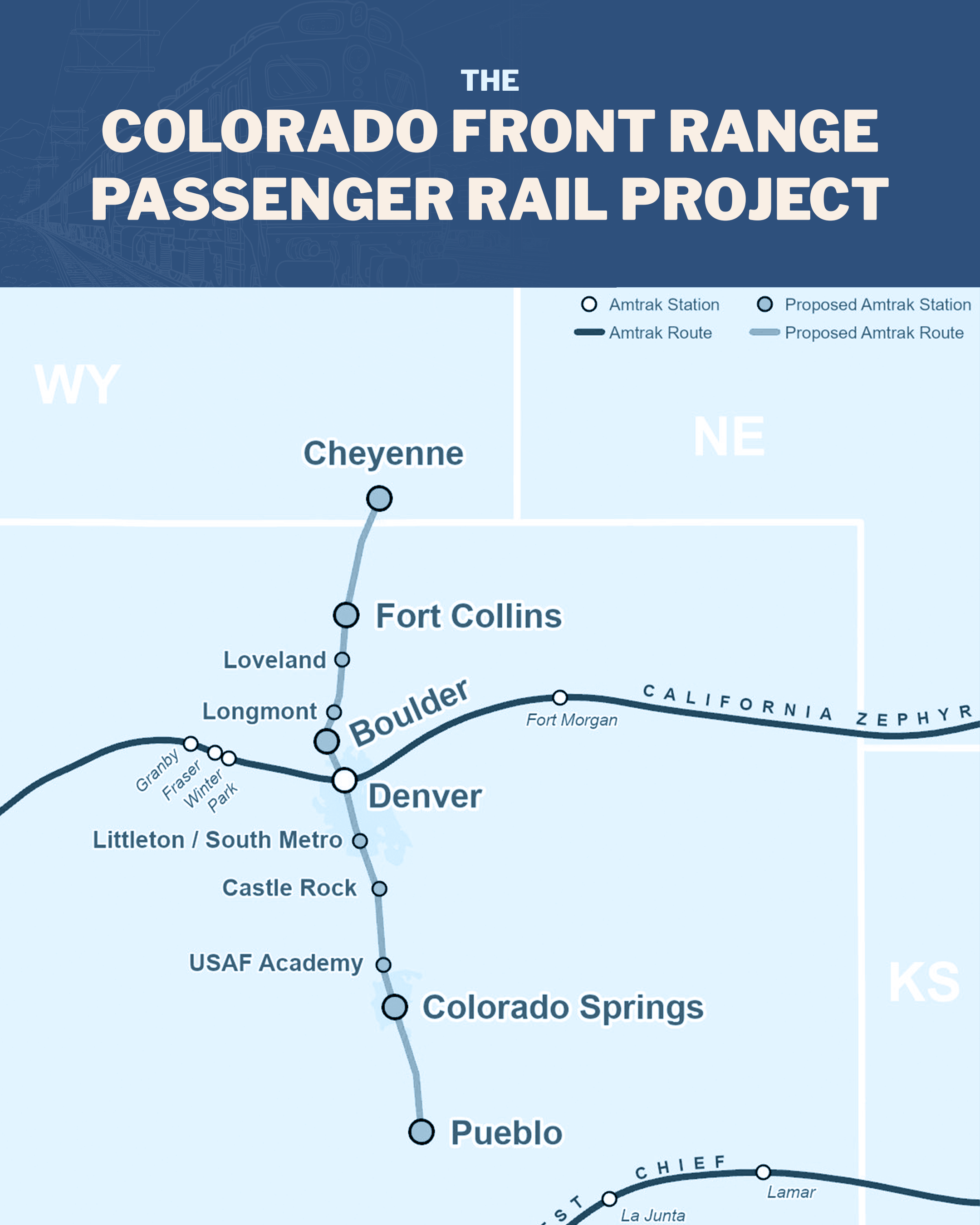
- Where: Initially, service is envisioned from Fort Collins through Denver and south to Pueblo, with a long-term vision that could eventually connect north and south beyond Colorado’s borders.
- How: The plan is to use existing tracks shared with freight railroads and leverage new federal passenger-rail programs created under recent federal infrastructure legislation.
- When: The District says it is evaluating routes, stations, infrastructure, operations, costs, and financing, with the first train potentially operating “within the decade,” depending on funding, agreements, and project development.
That “within the decade” line is the optimistic headline—but the more meaningful detail is the machinery now in motion: governance, corridor planning, station planning, service modeling, environmental review, and ultimately a decision about how to pay for it.
From Study to Structure: How the Project Evolved
Colorado’s Front Range rail push didn’t begin with the District. In 2017, an existing state commission focused on the Southwest Chief was repurposed into the Southwest Chief & Front Range Passenger Rail Commission, which then became a key state-level forum for advancing the Front Range corridor vision. By 2018, the Colorado General Assembly directed funding toward development of a rail passenger service plan for the corridor.
The biggest modern milestone came in 2021, when Colorado passed legislation creating the Front Range Passenger Rail District—a government agency specifically empowered to plan, finance, construct, operate, and maintain an interconnected passenger rail system along the Front Range. The enabling bill also required coordination with RTD for system connectivity and with Amtrak for connections to services like the Southwest Chief, California Zephyr, and Winter Park Express.
In other words: FRPR isn’t just a study anymore. It’s a public entity with a mission and a mandate.
The Corridor: Likely Endpoints and “In-Between” Communities
The most commonly discussed backbone route is Fort Collins → Denver → Colorado Springs → Pueblo, roughly paralleling I-25. The District describes this as the initial service concept.
While final station locations are part of ongoing planning, it’s helpful to think of FRPR in two layers:
1) Primary city anchors
These are the big trip generators that make the corridor pencil out:
2) Intermediate Front Range markets
- Fort Collins area
- Denver metro (with a natural focal point at Denver Union Station and its transit connections)
- Colorado Springs area
- Pueblo area
Most versions of the concept include a set of intermediate stops—communities that are large enough to matter, close enough to generate short trips, and positioned to connect with local transit or park-and-ride access.
A 2024 regional planning update noted that the District was working toward pinning down nine primary stations by Spring 2026 and had finalized station location criteria while coordinating with local jurisdictions.
That sort of language matters, because it hints at what FRPR is really becoming: not just a “train between four cities,” but a corridor service with multiple stations designed to build ridership and provide useful trip options for commuters, students, events, and airport connections.
What the Service Might Look Like
Unlike true high-speed rail proposals, FRPR is being framed as intercity passenger rail on existing corridors, meaning the service is likely to resemble higher-quality regional rail: multiple round trips per day, useful schedules, comfortable equipment, and reliable end-to-end travel times—so long as the host-railroad agreements and infrastructure improvements support it.
A 2025 FRPR District overview presentation points to typical intercity passenger rail speeds, including 79 mph operation and a Fort Collins–to–Pueblo travel time estimate of just over three hours (as a planning-level figure).
That is significant. A three-hour rail trip across the whole Front Range could compete well with driving when highway conditions are bad—and it becomes especially attractive when you factor in avoiding parking, weather stress, and the “I-25 roulette” that locals know too well.
But shared-track service also comes with unavoidable complexity:
- Freight railroads own or control much of the infrastructure.
- Passenger service often requires capacity projects (sidings, signals, track upgrades), dispatching agreements, and performance standards.
- Service reliability depends on how those agreements are structured and enforced.
In the District’s own planning updates, “operations and service modeling with host railroads” is a major workstream, with broader service development planning targeted for completion in the mid-2020s timeframe.
Governance
One reason FRPR has more momentum than many past proposals is that Colorado created a district whose sole job is to push the project forward. The District describes itself as a government agency tasked with designing, financing, constructing, operating, and maintaining the system.
A 2024 regional update presentation also summarized the organization’s structure and partnerships—highlighting collaboration with agencies like CDOT, RTD, and the FRA, as well as the District’s internal staffing and budgeting needs as it matures.
For rail projects, this is more than bureaucratic trivia. Governance determines:
- who negotiates with the freight railroads,
- who applies for federal grants,
- who sets service priorities,
- and who is accountable when hard tradeoffs appear (cost, stations, frequency, fares, and timing).
Planning Pipeline
A major accelerant for passenger rail nationally has been the Federal Railroad Administration’s Corridor Identification and Development (Corridor ID) Program—a structured pipeline intended to help move corridors from early feasibility to readiness for implementation funding. In its FY2024 report to Congress, the FRA described Corridor ID as a long-term development pathway designed to guide intercity passenger rail projects and prepare them for future capital programs.
In Colorado’s case, a regional planning update noted the FRPR effort was accepted into the Corridor ID Program in December 2023, which positioned it to pursue federal support for service planning and environmental clearance (with typical federal/local match structures discussed in planning materials).
This matters because Corridor ID participation can help:
- formalize scope and phasing,
- provide technical assistance,
- strengthen grant competitiveness,
- and impose a stepwise structure that keeps a project moving.
The same update presentation laid out key work items: route and station market analyses, service and operations modeling, defining capital and operating costs, and assembling a financial and implementation plan.
Funding
Every passenger rail proposal eventually arrives at the same fork in the track: how do you pay for it—not just to build it, but to operate it year after year?
Colorado has explored multiple funding angles, and the conversation has included both state-level revenue tools and a future voter-approved tax within the District’s territory.State funding tools and “match money”
A widely discussed strategy is using state-generated revenue as “match” to unlock larger federal grants. One 2024 report in The Colorado Sun described how a rental-car fee increase was expected to generate tens of millions annually, specifically to help Colorado compete for federal passenger-rail grants.
A CTIO/fee forecast document projected substantial revenue from a congestion impact fee on short-term vehicle rentals (with projections rising into the tens of millions annually in the mid-2020s). The ballot measure timeline
Public reporting in 2024 indicated that rail leaders were leaning toward waiting until 2026 to ask voters for a sales tax, citing the need for more planning and outreach before putting a major tax question on the ballot. Colorado Public Radio reported that the District’s executive committee argued for more time despite political pressure to move faster.
In short: the project can’t live on planning money forever. If Colorado wants frequent, reliable Front Range trains, it will likely require a durable funding source—one that voters are willing to support once the plan is concrete enough to defend.
Benefits
FRPR’s advocates and official materials generally emphasize four themes:
- Reliable travel in a corridor where growth and congestion are expected to worsen, and where highway trips can be unpredictable.
- Connected communities, linking major job centers, education hubs, events, and local transit systems.
- Economic development, including station-area investment and easier access to regional labor markets.
- Sustainability and air quality, especially relevant along the Front Range where vehicle emissions and congestion are perennial concerns.
Even the planning-level “just over three hours” corridor runtime estimate hints at the real prize: a service that is useful, not symbolic—one that makes day trips, meetings, and connections feasible without the stress of driving.
Challenges
If you want to understand whether FRPR will succeed, watch these pressure points:
Freight railroad agreements
Shared-track passenger service rises or falls on negotiated performance and capacity. Typically, freight railroads are notoriously against allowing any type of passenger or commuter rail operations share their corridors as it provides no direct benefits to these private companies and only slows freight operations. This is where timelines often slip and costs often climb.
Station choices and local politics
Stations create winners and losers—downtown vs. edge-of-town, park-and-ride vs. walk-up urban access, which communities get “primary” status, and which get phased later.
The operating subsidy question
Even with strong ridership, most U.S. intercity corridors require some form of public operating support. That reality has to be explained clearly if the project goes to voters.
Delivering early wins
Projects often need “independent utility” segments—something that can open earlier (even a limited starter line) to build public confidence. Regional planning discussions have referenced prioritizing near-term rail service segments as part of broader coordination.
What Comes Next
As of the most recent planning materials available publicly, the District is working through the heavy-lift phase: service development planning, station planning coordination, host railroad negotiations, environmental processes, and a financial plan—while also building the coalition that would be needed for a successful ballot measure.
If FRPR reaches the point where voters are asked to fund it, the debate will likely hinge on a simple question: Is this a real, phased, buildable plan—or just another study? The good news for supporters is that Colorado now has the institutional structure and federal planning pathways to turn the concept into something tangible. The hard part is still ahead: locking in agreements, assembling capital funding, and convincing a fast-growing region that the long game is worth it.
Recent Articles


-
Gulf, Mobile & Northern Steam Roster (Post 1900)
Oct 09, 26 12:14 AM
 Gulf, Mobile & Northern steam since 1900. Drury's class grid: Ten-Wheelers, Mikados, Russian Decapods, Pacifics 425 and 426, and three light 4-8-2s. Last revenue steam October 7, 1949.
 -
Gulf, Mobile & Ohio Diesel Roster (All-Time)
Oct 08, 26 11:55 PM
 Gulf, Mobile & Ohio diesel roster, all-time. The 1935 boxcab, DL-107s, 55 FA-1s, F3s and F7s, the Ingalls 4-S, GP30s through GP38-2s, and 21 SD40s. Serials and order numbers.
 -
Gulf, Mobile & Ohio Railroad: Map, Photos, Trains, History
Oct 08, 26 11:48 PM
 Gulf, Mobile & Ohio, chartered in 1938 and merged September 13, 1940. The Mobile & Ohio, the Alton on May 31, 1947, the Rebel Route, and Illinois Central Gulf on August 10, 1972.
 -
New Jersey Railroad Museums (2026): A Complete Guide
Oct 08, 26 11:37 PM
 New Jersey railroad museums—Whippany, Maywood, Pine Creek, Mahwah’s Erie depot, Phillipsburg, and Boonton. Confirm hours on each site.
 -
New Hampshire Railroad Museums (2026): A Complete Guide
Oct 08, 26 11:34 PM
 New Hampshire railroad museums—North Conway, the Flying Yankee, Ashland, Gorham, Raymond, and Sandown. Confirm hours on each site.
 -
Missouri Railroad Museums (2026): A Complete Guide
Oct 08, 26 11:00 PM
 Missouri railroad museums—the National Museum of Transportation, Patee House, Frisco 4524, the Chicago & Alton depot, and Marceline. Confirm hours on each site.
 -
Milwaukee Road X3800: Deer Lodge’s Shop Goat
Oct 08, 26 04:28 PM
 Milwaukee Road X3800, the a home-built shop goat that served the Deer Lodge, MT yard. It was a 220-volt DC switcher, powered through an extension cord that moved electrics into a roundhouse where the…
 -
Key West Extension (Overseas Railroad): History, Construction, Decline
Oct 08, 26 03:59 PM
 Henry Flagler's Overseas Railroad, Miami to Key West, 1905–1935. The Seven Mile Bridge, the 1935 Labor Day Hurricane, and the road that became U.S. 1.
 -
Florida East Coast Steam Roster (Post 1900)
Oct 08, 26 02:34 PM
 Florida East Coast steam since 1897. Seventeen Ten-Wheelers, twenty Atlantics, eighty-seven Pacifics, ninety Mountains, fifteen Mikados, and the switchers.
 -
Florida East Coast Diesel Roster (All-Time)
Oct 08, 26 02:12 PM
 Florida East Coast diesel roster, all-time. E units from 1939, F3s, BL2s, GP7s and GP9s, the GP40-2 orders, 22 SD40-2s, and 24 ES44C4s. Serials and EMD order numbers.
 -
Florida East Coast Railway: Map, History, Rosters
Oct 08, 26 01:46 PM
 Florida East Coast Railway, Henry Flagler's line from Jacksonville to Miami and Key West. Receivership in 1931, the 1963 strike, Grupo México in 2017, and Brightline on the same track.
 -
Minnesota Railroad Museums (2026): A Complete Guide
Oct 08, 26 10:32 AM
Minnesota railroad museums—the Lake Superior Railroad Museum, Two Harbors, Jackson Street, Willmar’s Great Northern 2523, and Currie. Confirm hours on each site. -
Maine Railroad Museums (2026): A Complete Guide
Oct 08, 26 09:24 AM
 Maine railroad museums—Seashore Trolley, the two-foot lines at Portland, Alna, and Phillips, Boothbay, and the Bangor & Aroostook depots. Confirm hours on each site.
 -
Massachusetts Railroad Museums (2026): A Complete Guide
Oct 08, 26 12:08 AM
 Massachusetts railroad museums—Berkshire Scenic at Lenox, Shelburne Falls trolley No. 10, Edaville, Chatham’s 1887 depot, and Lowell. Confirm hours on each site.
 -
Clinchfield Steam Roster (Post 1900)
Oct 07, 26 12:09 PM
 Clinchfield steam since 1900. Fifteen H-4 Consolidations, K-1 Mikados, M-2 and M-3 Mallets, L-class 2-8-8-2s, eighteen Challengers. Class grid after Drury. Last steam April 16, 1954.
 -
Clinchfield Diesel Roster (All-Time)
Oct 07, 26 12:05 PM
 Clinchfield diesel roster, all-time. F3A 800, FP7 200, the F7s, GP7s, 25 SD40s, 18 SD45-2s, seven U36Cs, and the Family Lines hoods. Serials and EMD order numbers.
 -
Clinchfield Railroad: Map, Steam Locomotives, Roster, Logo
Oct 07, 26 12:02 PM
 Clinchfield Railroad, Elkhorn City to Spartanburg. George L. Carter, the Carolina, Clinchfield & Ohio, the 1924 lease, coal, the loops, and CSX. Steam and diesel rosters are companion pages.
 -
Kentucky Railroad Museums (2026): A Complete Guide
Oct 07, 26 11:39 AM
 Kentucky railroad museums—the Kentucky Railway Museum, Bowling Green’s L&N depot, Paducah, Versailles, and Covington. Confirm hours on each site.
 -
Kansas Railroad Museums (2026): A Complete Guide
Oct 07, 26 11:26 AM
 Kansas railroad museums—Santa Fe 3768 at Wichita, Santa Fe 132 in Topeka, the Great Overland Station, and Abilene. Confirm hours on each site.
 -
Cincinnati, New Orleans and Texas Pacific Diesel Roster (All-Time)
Oct 07, 26 10:38 AM
 All-time diesel roster of Southern locomotives lettered for the Cincinnati, New Orleans and Texas Pacific. Serials, order numbers, and builder dates.
 -
Cincinnati, New Orleans and Texas Pacific Railway
Oct 07, 26 10:31 AM
 Cincinnati, New Orleans and Texas Pacific Railway, incorporated September 8, 1881, to lease Cincinnati’s railroad to Chattanooga. Queen and Crescent route, Rathole, and the 2024 sale to Norfolk Southe…
 -
Indiana Railroad Museums (2026): A Complete Guide
Oct 07, 26 12:26 AM
 Indiana railroad museums—Nickel Plate 765, Elkhart’s New York Central collection, French Lick, Linden’s junction depot, and Haley Tower. Confirm hours on each site.
 -
"Triplex" Steam Locomotive: Specs, History, Photos
Oct 06, 26 11:52 PM
 Erie class P-1 Triplex 2-8-8-8-2s. Three Baldwin compounds, 2603–2605, later 5014–5016, built 1914 and 1916. Matt H. Shay, the 1930 class card, and Virginian XA 700.
 -
Illinois Railroad Museums (2026): A Complete Guide
Oct 06, 26 11:47 PM
 Illinois railroad museums—the Illinois Railway Museum, Monticello, the Pioneer Zephyr, Galesburg’s Burlington 3006, and the depots. Confirm hours on each site.
 -
Iowa Railroad Museums (2026): A Complete Guide
Oct 06, 26 11:41 PM
 Iowa railroad museums—the Union Pacific Railroad Museum, RailsWest, Sioux City, Boone, and the National Hobo Museum in Britt. Confirm hours on each site.
 -
Charleston and Western Carolina Diesel Roster (All-Time)
Oct 06, 26 11:29 PM
Charleston and Western Carolina diesel roster. Twenty-one GP7s, two SW7s, two SW9s, and six F7As, all built 1950–1952. Serials, order numbers, and ACL and SCL numbers. -
Charleston and Western Carolina Railway: Map, History, Timetables
Oct 06, 26 11:18 PM
 Charleston and Western Carolina Railway, incorporated September 16, 1896. Port Royal to Spartanburg, with branches to Anderson and Greenville. Merged into the Atlantic Coast Line on December 31, 1959.
 -
Central of Georgia Steam Roster (Post 1900)
Oct 06, 26 04:00 PM
 Central of Georgia steam since 1900. Cooke Consolidations, Harriman Mikados, 32 Mountains, and eight Lima 4-8-4s. Class grid after Drury. Last steam May 1953.
 -
Central of Georgia Diesel Roster (All-Time)
Oct 06, 26 03:44 PM
 Central of Georgia diesel roster. SW1 No. 1 in 1939, E7s and E8s, nine F3As, 39 RS3s, GP7s through SD35s. Serials and order numbers.
 -
Central of Georgia Railway: Map, Logo, History, Rosters
Oct 06, 26 03:42 PM
 Central of Georgia Railway, from the 1833 Savannah charter to Southern control on June 17, 1963. Map, logos, Nancy Hanks II, and links to the steam and diesel rosters.
 -
Georgia Railroad Museums (2026): A Complete Guide
Oct 06, 26 03:33 PM
Georgia railroad museums—Savannah’s Central shops, Duluth, the General at Kennesaw, the Texas in Atlanta, Tifton, Waycross, and Albany. Confirm hours on each site. -
Florida Railroad Museums (2026): A Complete Guide
Oct 06, 26 03:18 PM
 Florida railroad museums—Boca Raton, Winter Garden, Whitehall, the Gold Coast, Parrish, Fort Myers, Milton, and Plant City. Confirm hours on each site.
 -
Connecticut Railroad Museums (2026): A Complete Guide
Oct 06, 26 01:05 PM
 Connecticut railroad museums—the Shore Line Trolley, East Windsor, the Naugatuck Railroad, Danbury Union Station, Willimantic, and the SoNo tower. Confirm hours on each site.
 -
Colorado Railroad Museums (2026): A Complete Guide
Oct 06, 26 12:47 PM
 Colorado railroad museums—Golden, the Forney’s Big Boy 4005, Pueblo’s Santa Fe 2912, and the depots at Castle Rock, Limon, and Ridgway. Confirm hours on each site.
 -
Atlantic Coast Line Steam Roster (Post 1900)
Oct 06, 26 12:44 PM
 Atlantic Coast Line steam since 1900. Copper Head Ten-Wheelers, 235 P-5 Pacifics, Q-1 Santa Fes, twelve R-1 4-8-4s. Class grid after Drury. Last steam June 30, 1955.
 -
Atlantic Coast Line Diesel Roster (All-Time)
Oct 06, 26 11:57 AM
 Atlantic Coast Line diesel roster. HH660 1900 in 1939, E3s for the Champion, FTs and F2s, GP7s 100–279, GP30s, U25Cs, and the 1967 SCL numbers. Serials and orders.
 -
Atlantic Coast Line Railroad: "Standard Railroad of the South"
Oct 06, 26 11:53 AM
 Atlantic Coast Line, the Standard Railroad of the South. April 21, 1900 to July 1, 1967. Plant System, L&N, Clinchfield, the Champion, and the Seaboard Coast Line merger.
 -
California Railroad Museums (2026): A Complete Guide
Oct 06, 26 09:50 AM
California railroad museums—the California State Railroad Museum, Perris, Portola, Railtown 1897, and the depots that still stand. Confirm hours on each site. -
Arizona Railroad Museums (2026): A Complete Guide
Oct 06, 26 09:46 AM
Arizona railroad museums—the Arizona Railway Museum in Chandler, Southern Pacific 1673 at Tucson, and the McCormick-Stillman park in Scottsdale. -
Arkansas Railroad Museums (2026): A Complete Guide
Oct 06, 26 09:07 AM
 Arkansas railroad museums—Cotton Belt 819 at Pine Bluff, the Fort Smith trolley, the Mammoth Spring depot, and the Eureka Springs railway.
 -
Alabama Railroad Museums (2026): A Complete Guide
Oct 06, 26 09:03 AM
Alabama railroad museums—Heart of Dixie at Calera, the North Alabama museum at Chase, Huntsville’s 1860 depot, and Fort Payne. Confirm hours on each site. -
Pennsylvania Railroad Museums (2026): A Complete Guide
Oct 06, 26 12:09 AM
 Pennsylvania railroad museums—Strasburg, Steamtown, the Horseshoe Curve, the East Broad Top, and the depots and towers in between. Confirm hours on each site.
 -
Maryland Railroad Museums (2026): A Complete Guide
Oct 05, 26 11:53 PM
 Maryland railroad museums—the Baltimore roundhouse, Ellicott City station, Bowie, Gaithersburg’s Buffalo Creek & Gauley 14, and the Western Maryland collections.
 -
Ohio Railroad Museums (2026): A Complete Guide
Oct 05, 26 05:51 PM
 Ohio railroad museums—the Age of Steam Roundhouse, Bellevue, Worthington, Conneaut’s Nickel Plate 755, and the Dennison depot. Confirm hours on each site.
 -
Delaware Railroad Museums (2026): A Complete Guide
Oct 05, 26 02:43 PM
 Delaware railroad museums—Wilmington & Western at Greenbank, the Harrington tower and N5 caboose, Felton's 1868 depot, and the Selbyville station museum.
 -
C&O's M-1 Steam Turbine Locomotives: Specs, Roster, History
Oct 05, 26 12:13 PM
 Chesapeake & Ohio Class M-1 steam-turbine-electrics. Three Baldwin-Westinghouse locomotives, 500–502, built 1947–48 for The Chessie. Specs, the 2-C1+2-C1-B arrangement, and a roster. All scrapped…
 -
N&W 2-6-6-2 Locomotives (Class Z): Specs, Roster, History
Oct 05, 26 11:44 AM
 Norfolk & Western Class Z 2-6-6-2s. One hundred ninety compound Mallets, 1300–1489, from Richmond, Baldwin, and Schenectady, 1912–1918. Diagram specs, the Z-1b rebuilds, Z-2 1399, and a roster. No…
 -
Scenic Train Rides (USA 2026): State Guide to Tourist Railroads
Oct 04, 26 12:17 AM
 Scenic and tourist train rides in all 50 states for 2026. Colorado narrow gauge, Pennsylvania steam, Alaska’s White Pass, and the states with no full-size ride this month. Confirm on the railroad.
 -
Wyoming Scenic Train Rides (2026): A Complete Guide
Oct 03, 26 12:07 AM
Wyoming has no full-size tourist railroad on the calendar in October 2026. Cheyenne Depot Museum and Douglas Railroad Museum are static. Union Pacific 4014’s posted public trip is a November run to De… -
Washington Scenic Train Rides (2026): A Complete Guide
Oct 02, 26 11:53 PM
 Washington tourist trains in 2026—Mount Rainier Scenic at Elbe, the Northwest Railway Museum, and Chehalis-Centralia. Lake Whatcom has no 2026 date on its ticket page.