"Quad Cities Rocket" (Train): Schedule, Route, Consist
Last revised: March 3, 2025
By: Adam Burns
The Quad Cities Rocket was a late-era service operated by the Chicago, Rock Island and Pacific, charting its course between Chicago and Rock Island, Illinois.
This train was a legacy from one of Rock Island's flagship services, the Rocky Mountain Rocket. Following the curtailment of the Rocky Mountain Rocket's route to Omaha in 1966 and a brief period without a designated name, it emerged as The Cornhusker.
In 1970, the train saw its final transformation, with its western terminus scaled back to Rock Island. Train enthusiats colloquially referred to this service as the Quad Cities Rocket.
The train persisted as one of the two remaining services for the Rock Island Railroad after the advent of Amtrak on May 1, 1971—the Peoria Rocket being the other. In that same year, the route expanded to include a stop at Sheffield.
After battling with the state of Illinois to discontinue the train, the Interstate Commerce Commission ruled in May, 1978 the Rock Island could discontinue the service and the train made its final run on December 31, 1978.
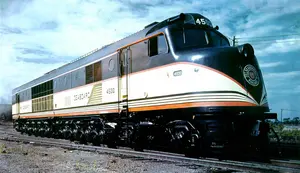
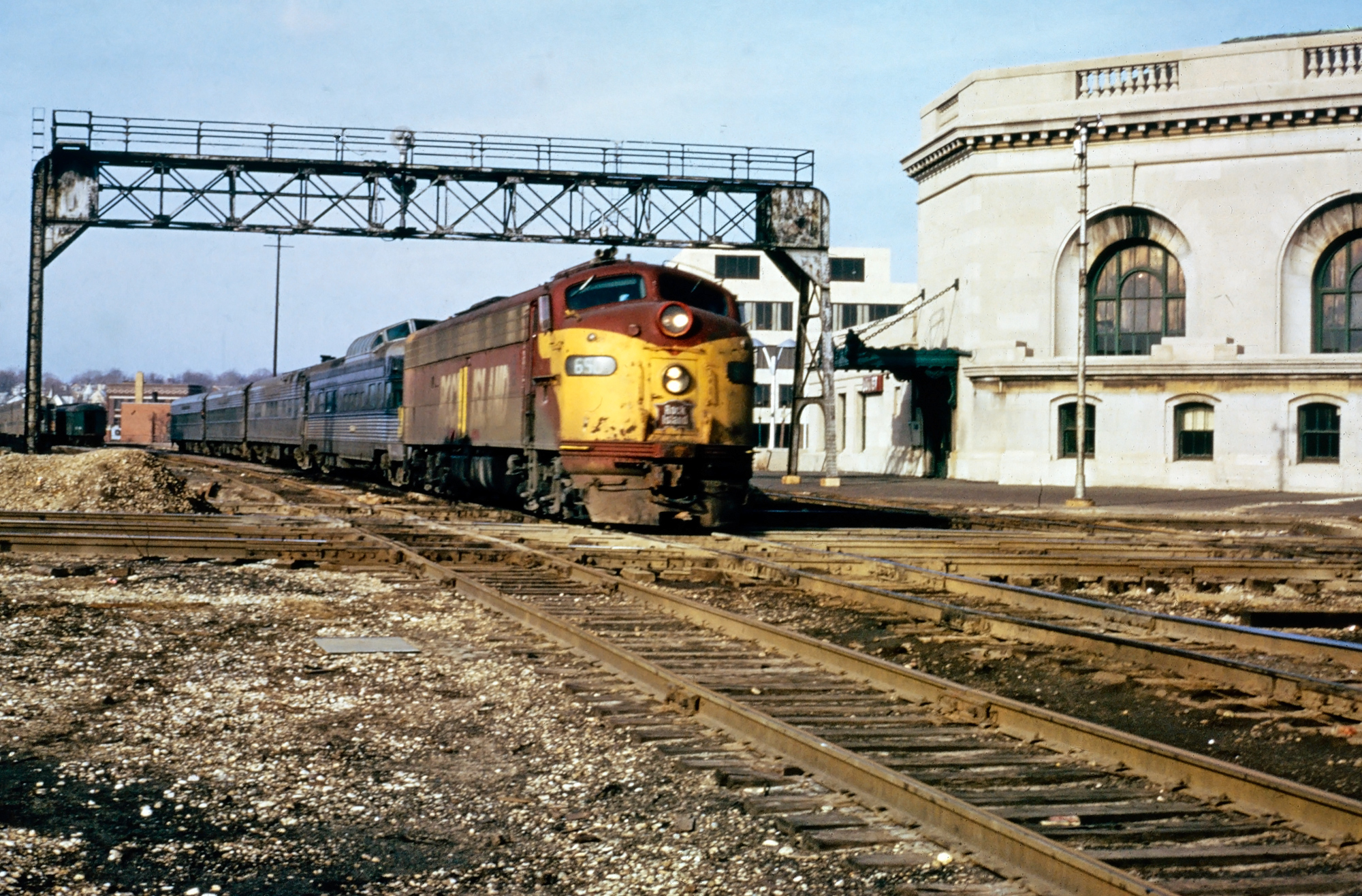 A very tired Rock Island E8A, #650, has the eastbound "Quad Cities Rocket" at Joliet, Illinois in March, 1974. American-Rails.com collection.
Historical Context and Inception
In the Golden Age of rail travel, the 1930s through the 1950s, American railroads competed fiercely to attract passengers with faster, more luxurious, and more reliable services.
The Quad Cities Rocket harkens back to the Rock Island's original Rocket streamliner fleet which entered service in 1937.
The Rock Island, officially known as the Chicago, Rock Island, and Pacific Railroad, had a storied history dating back to the mid-19th century and was known for its innovative services and supportive infrastructure in the Midwest.
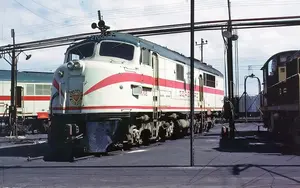
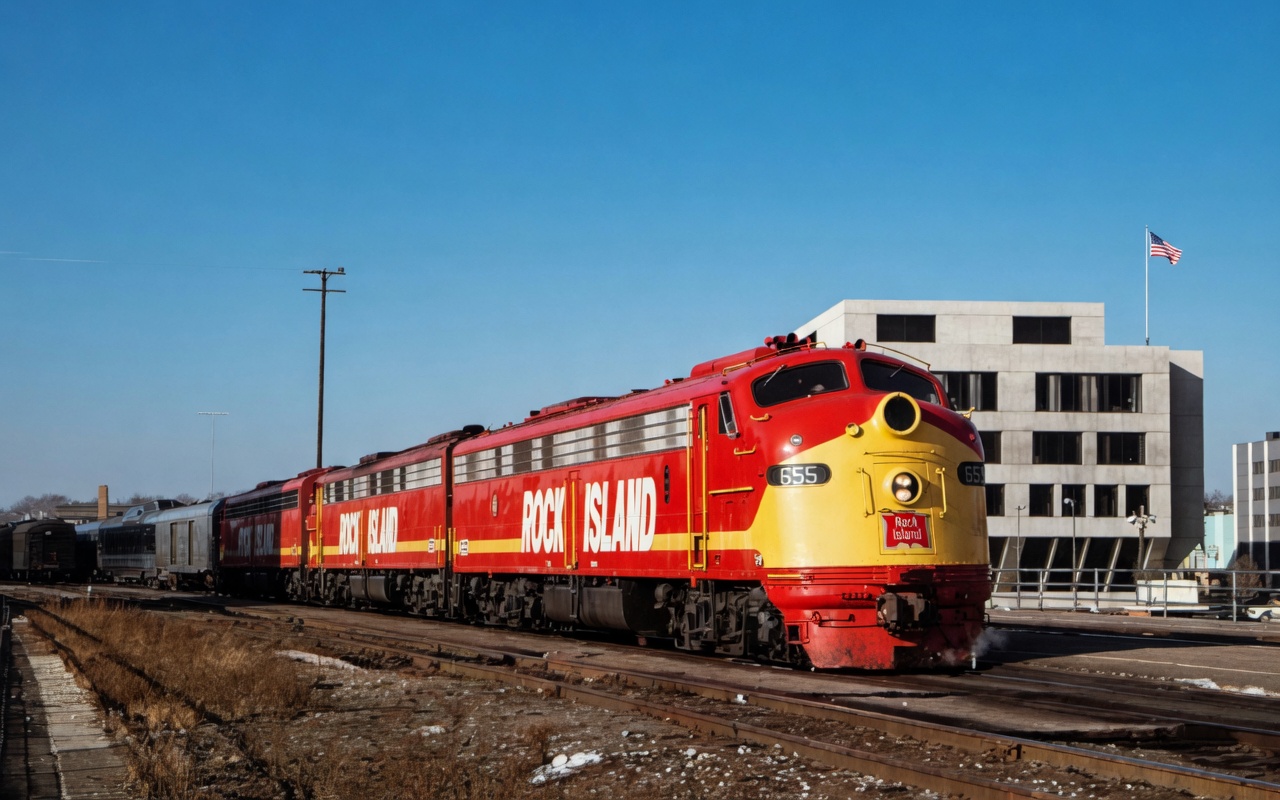 A trio of beautifully repainted Rock Island E8As, led by #655, have the eastbound "Quad Cities Rocket" at Joliet, Illinois, circa 1972. Russ Porter photo.
Design and Features
Heralding an era of streamlined Art Deco design, the original Rockets featured luxurious coaches, dining cars, and observation lounges, exuding an air of sophistication.
The train's streamlined locomotive, often early EMD models, epitomized the cutting-edge technology of the time, favoring both speed and efficiency.
The train's interior aesthetics married functionality with comfort. Plush seating, well-appointed dining services, and panoramic windows enriched the travel experience, allowing passengers to witness the evolving landscapes of the Midwest in style.
The Rocket's coaches were equipped with air conditioning— a hallmark of luxury at the time— making journeys comfortable even during the sweltering summer months.
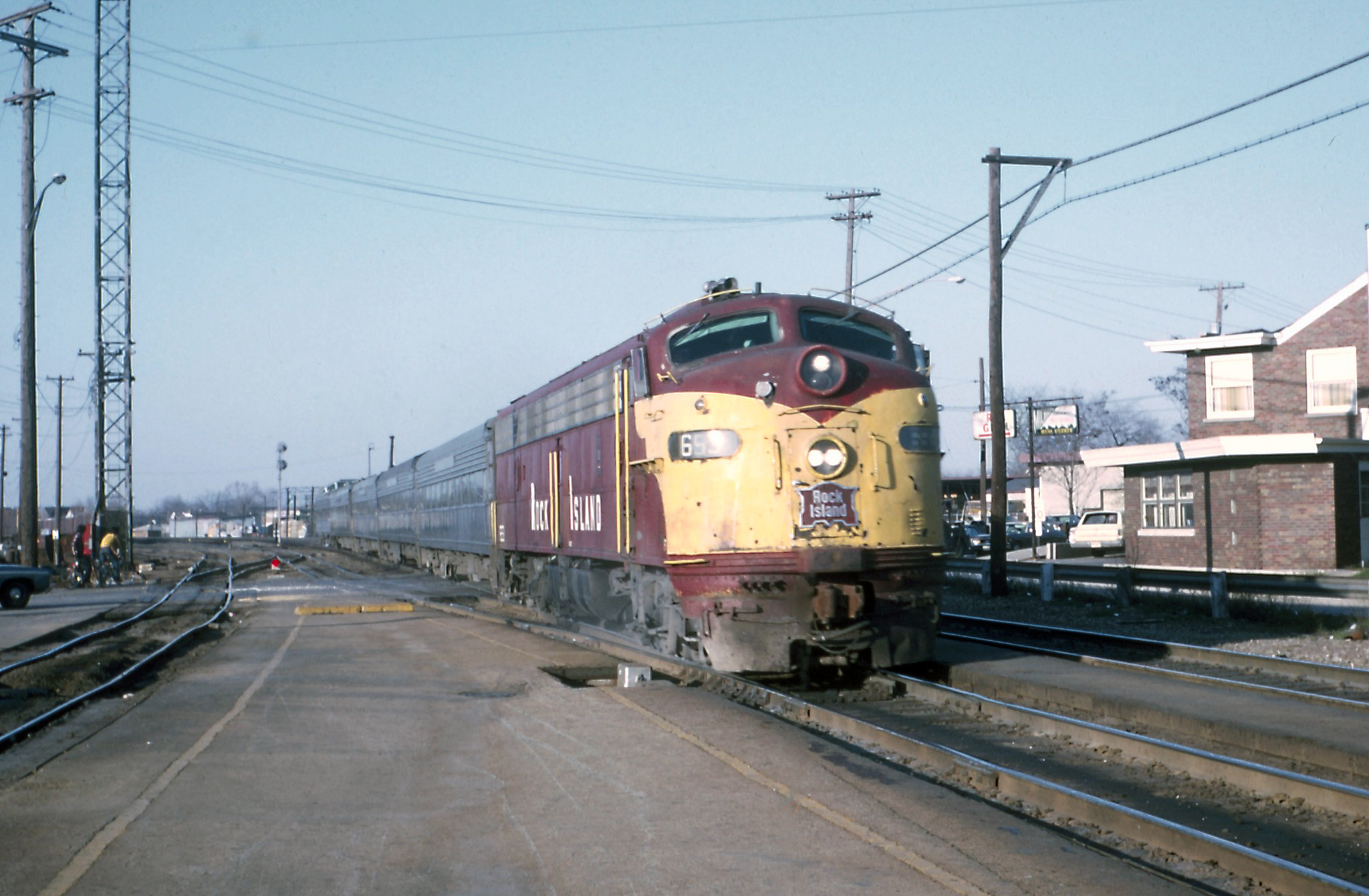 Rock Island E8A #653 with train 5, the "Quad Cities Rocket," at Blue Island, Illinois in May, 1974. Rick Burn photo.
Schedule and Operations
Serving a distance of approximately 180 miles between Chicago and the Quad Cities, the Quad Cities Rocket was designed for speed and frequency.
From its inception, the train made daily trips, with schedules crafted to accommodate both business and leisure travelers.
Two daily round trips were typically scheduled, ensuring that passengers could make timely returns the same day if needed.
The typical schedule saw departures from Chicago's LaSalle Street Station, a hub bustling with activity, emphasizing the connection between one of the nation's largest cities and the economically vibrant Quad Cities region.
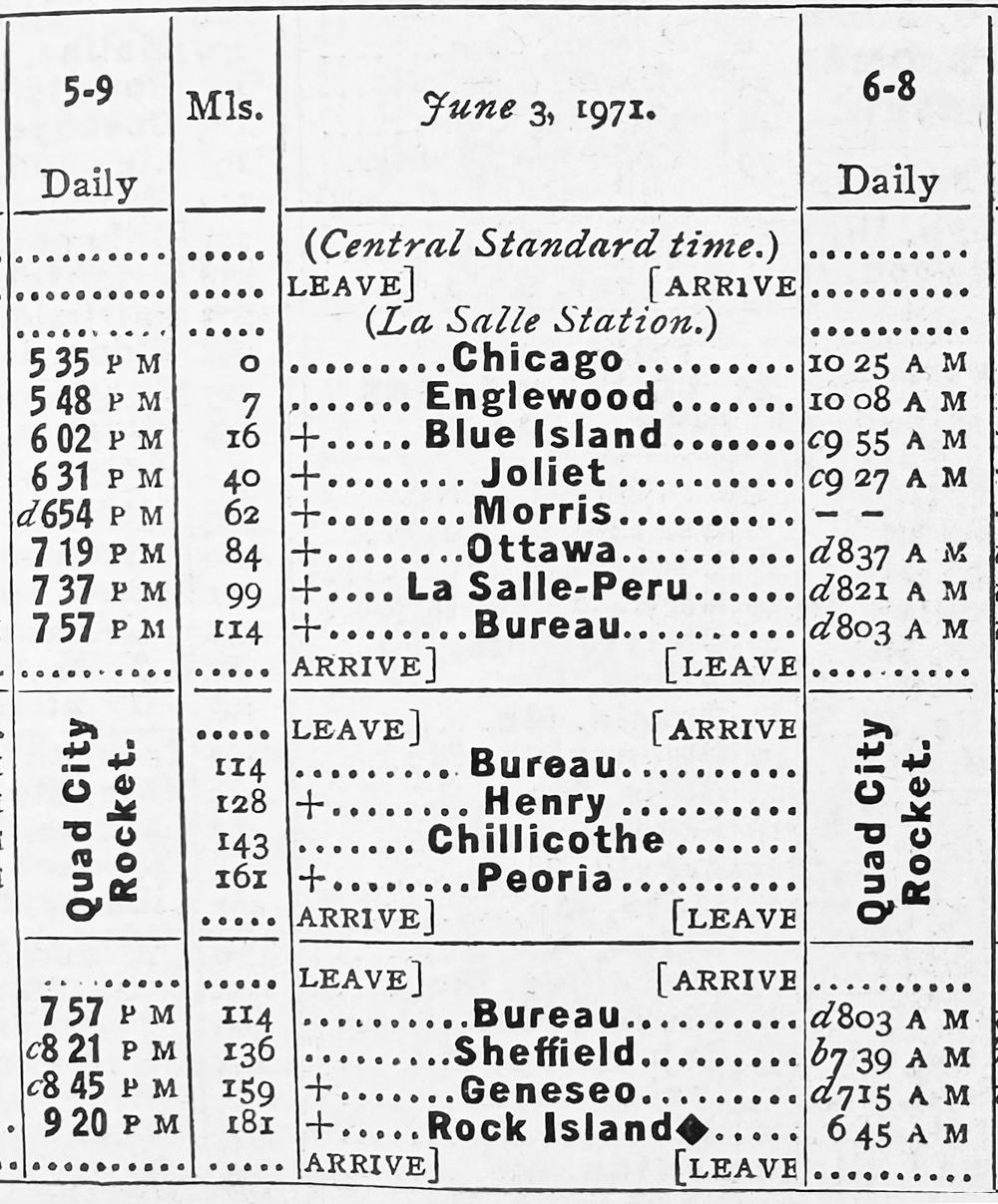
With stops at Joliet, Morris, Ottawa, LaSalle, and Bureau, among others, the Rocket seamlessly connected urban centers and smaller towns, fostering economic and social interplay.
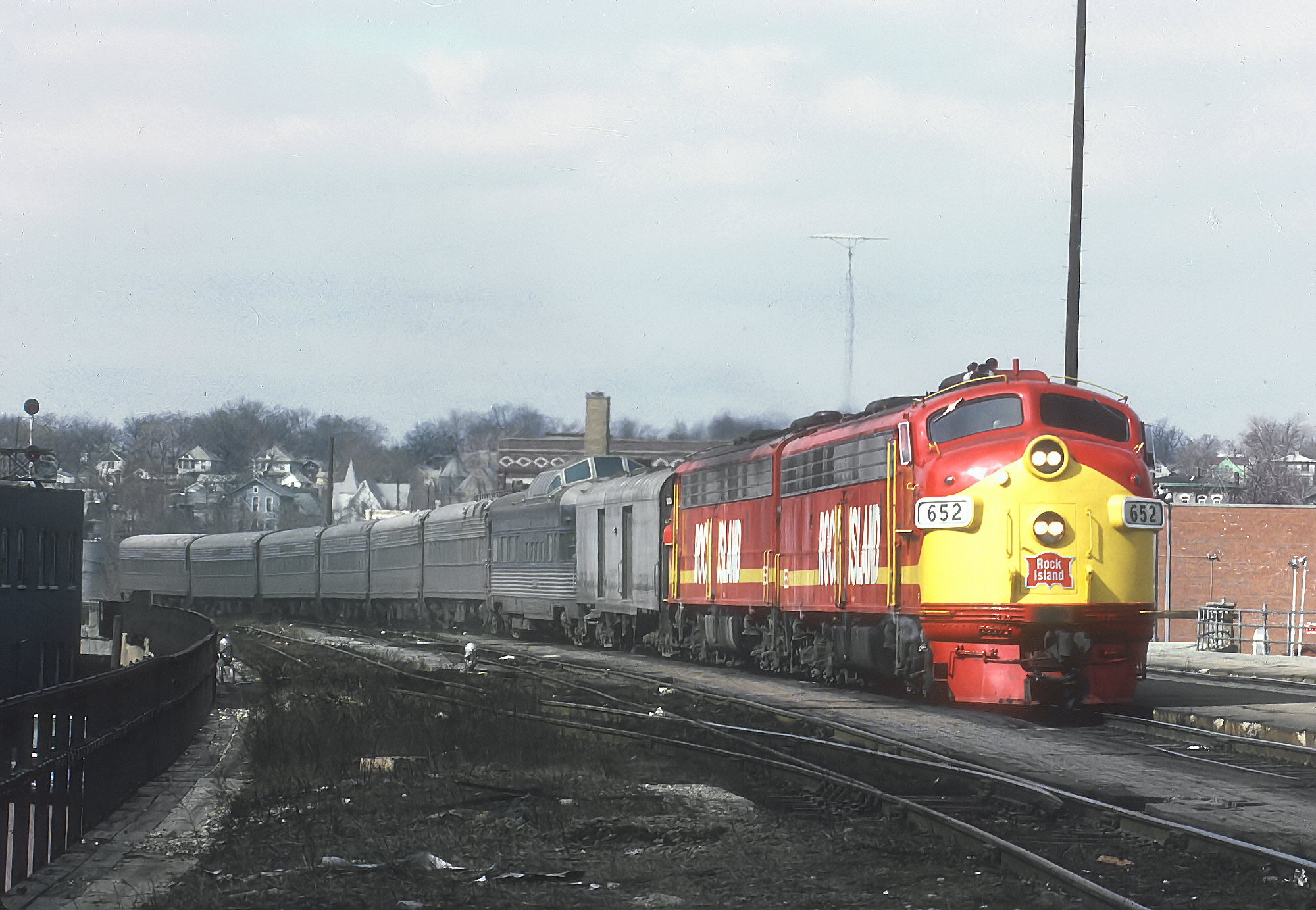 A pair of sharp Rock Island E8As, led by #652, have train #6, the "Quad Cities Rocket," making its station stop at Joliet, Illinois on March 29, 1971. Marty Bernard photo.
Economic and Social Impact
The Rocket's influence stretched beyond mere transportation. It became a vital economic artery, facilitating commerce and trade. Businesses in the Quad Cities region found easier access to Chicago's vast market, while Chicagoans could travel conveniently for business or pleasure to the region. The Rocket also played a significant role during World War II, moving troops and equipment efficiently between key locations.
Passenger trains like the Quad Cities Rocket were more than transportation modes; they were social spaces where different strata of society mingled. They fostered camaraderie among frequent travelers and became integral in the lives of those who relied on the rail network for daily commutes or business travels.
Timetable (1971)
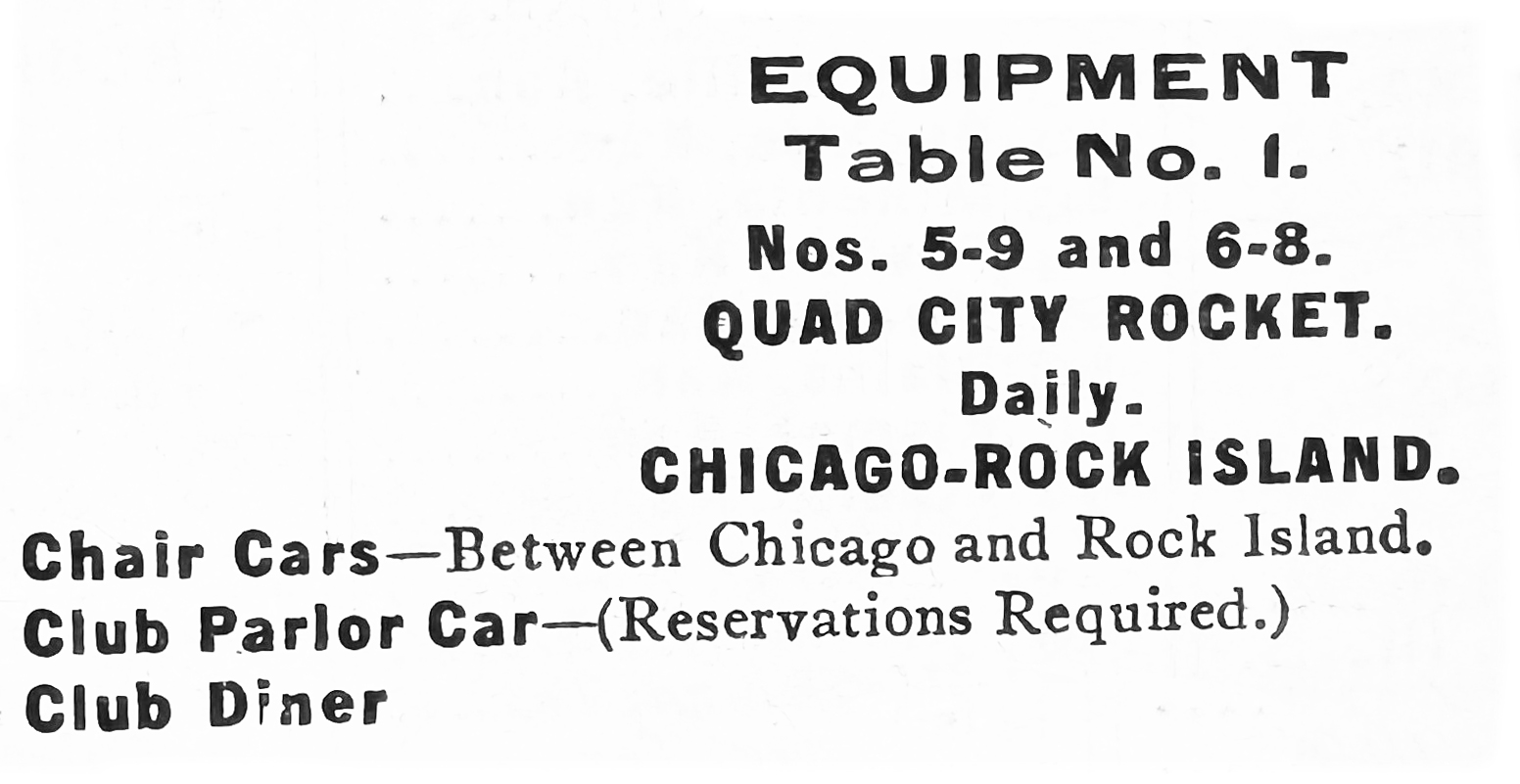
Consist (1971)
Final Years
By the 1960s and 1970s, the Rock Island was in financial decline, grappling with reduced passenger numbers and increasing operational costs. Despite the Railroad Reorganization Act of 1973, which aimed to restructure struggling railroads, the Rock Island line continued to falter.
The advent of the Amtrak system in 1971 also signaled the end of many historic passenger trains as Amtrak consolidated services under a federal mandate.
On April 1, 1971, the Rock Island made the decisive choice to opt-out of joining Amtrak, becoming the first railroad to do so. Financial constraints played a key role in this decision, as the railroad could not afford the Amtrak entry fee.
Under the prevailing legislation, railroads not participating in Amtrak were obliged to continue operating their passenger services for two more years.
By this time, the Rock was down to just two intercity services: the Chicago-Peoria and Chicago-Rock Island routes. According to the legal formula, joining Amtrak would have cost Rock Island $4.5 million.
Reflecting on this, Rock Island CEO Ted Desch remarked, "While the annual loss experienced by the two pairs of trains is great, the cost to Rock Island of joining Railpax, payable over the next three years, is very high."
Rail enthusiasts dubbed the remaining services the Peoria Rocket and Quad Cities Rocket. However, these trains were far from their rocket namesakes, suffering from slow orders that extended the 150-mile journey to over five hours.
In contrast, the same trip took just two-and-a-half hours in the 1960s. This decline marked the end of an era for the Rock Island's passenger services.
Ultimately, the decision to continue the trains proved financially draining. To help offset these losses, the State of Illinois provided a $1 million subsidy. Despite these efforts, the passenger numbers continued to dwindle, exacerbated by deteriorating track conditions.
Continuing to run the trains also siphoned significant revenue from the company, leading to annual losses exceeding $1 million.
After the Illinois Commerce Commission continually denied the railroad's attempts to cancel its remaining trains the CRI&P petitioned the Interstate Commerce Commission to intervene.
Following a protraced legal battle lasting more than two years the ICC granted the railroad's request in May, 1978 and the final trains ran on December 31, 1978. Alas, by this point it was too little, too late for the fabled Rock Island as the company was liquidated just two years later in 1980.
Photos
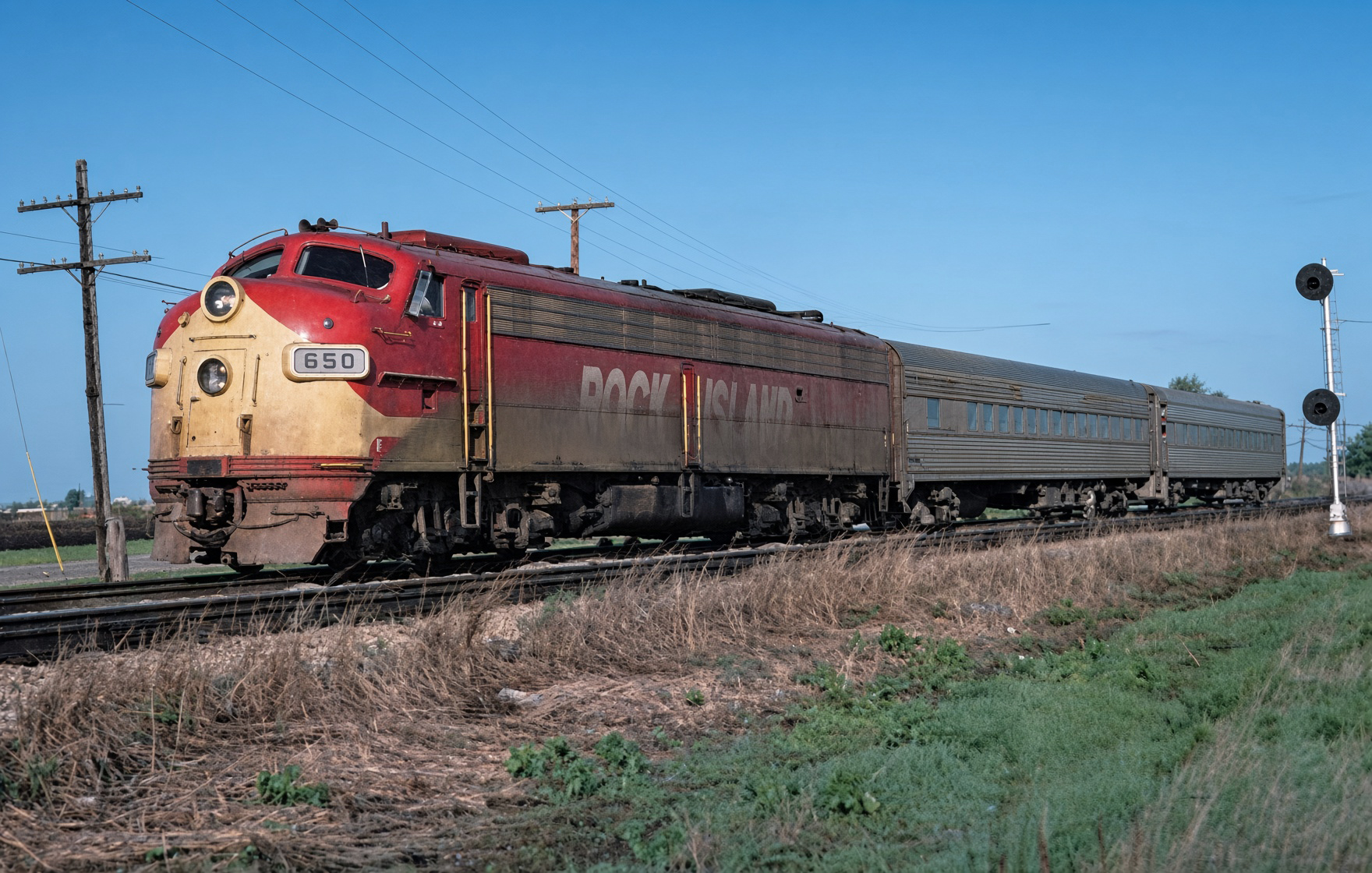 A dusty and grimy Rock Island E8A, #650, has what remains of the railroad's long-distance passenger services, the "Quad Cities Rocket," heading eastbound through Geneseo, Illinois on May 5, 1977. Photographer unknown.
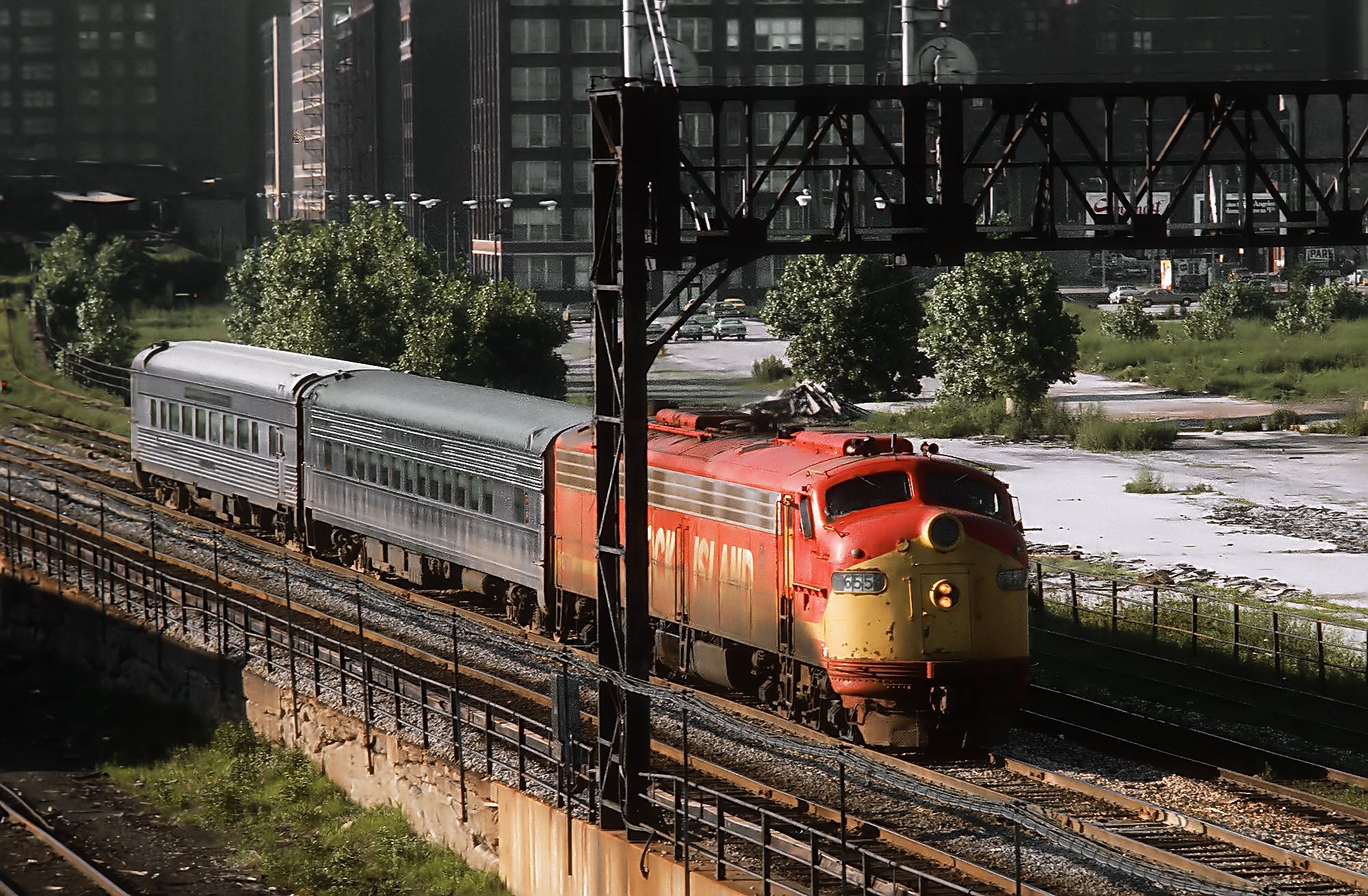 Rock Island E8A #655 departs LaSalle Street Station with train 5, the "Quad Cities Rocket," on July 7, 1978. Marty Bernard photo.
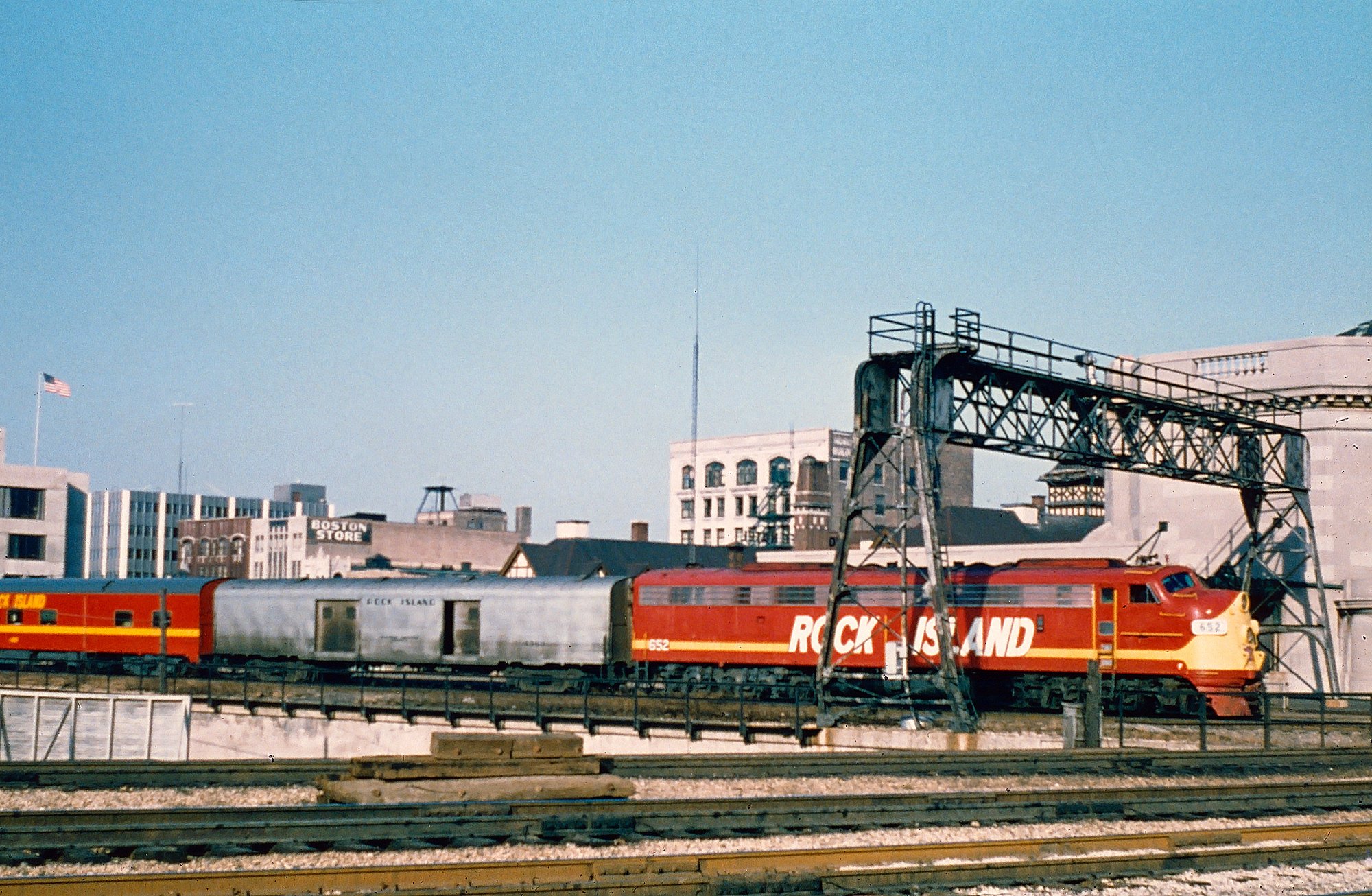 Rock Island E8A #652 at Joliet, Illinois with the eastbound "Quad Cities Rocket," circa 1974. American-Rails.com collection.
Recent Articles


-
West Point Route (Railroad): Map, History, Logo
Oct 16, 26 11:26 PM
 The West Point Route was a trademarked name comprising the Atlanta & West Point and Western Railway of Alabama, which were controlled by the Georgia Railroad.
 -
Virginian Railway Diesel Roster (All-Time)
Oct 16, 26 11:11 PM
 All-time diesel roster of the Virginian Railway. 40 Fairbanks-Morse H16-44s, 25 H24-66 Train Masters, and one GE 44-tonner. Serials included.
 -
Virginian Railway Steam Roster (Post 1900)
Oct 16, 26 10:55 PM
 Virginian Railway steam locomotives built since 1900. Mikados, 2-8-8-2s, the Triplex, class AE 2-10-10-2s, and the 1945 2-6-6-6s.
 -
Virginian Railway: Map, Rosters, History, Electrification
Oct 16, 26 10:51 PM
 Virginian Railway, Deepwater to Norfolk. Combined in 1907 and completed in 1909. Electrified from Roanoke to Elmore. Absorbed by the Norfolk & Western on December 1, 1959.
 -
Baldwin "Centipede" Locomotives: Specs, Roster, Photos
Oct 16, 26 03:58 PM
 Baldwin DR-12-8-1500/2 Centipede—2-D+D-2, two 608SC engines, 3,000 hp. SAL 4500 from the 1943 test bed. 54 on the serial list, 52 sold. PRR BP60 then BH50. None preserved.
 -
Louisville & Nashville Class M-1 2-8-4s: The Big Emmas
Oct 16, 26 03:52 PM
 Louisville & Nashville class M-1, 42 Big Emma 2-8-4s. Baldwin in 1942 and 1944, Lima in 1949. Coal trains from Neon to DeCoursey. No locomotive survives.
 -
Tennessee, Alabama and Georgia Railway: Map, History, Rosters
Oct 16, 26 03:21 PM
 Tennessee, Alabama and Georgia Railway, Chattanooga to Gadsden. The May 1929 card is 91.7 miles. Southern stock control closed on a January 1, 1971 schedule. Five diesels and Prince's steam list.
 -
Railroad Museums In The USA (2026): State Guides & Collections
Oct 16, 26 02:29 PM
 U.S. railroad museums—what they are vs tourist railroads, preservation history (R&LHS, NRHS, IRM, Steamtown), state guides, and destination collections. Confirm hours on each museum’s site.
 -
Wyoming Railroad Museums (2026): A Complete Guide
Oct 16, 26 02:26 PM
 Wyoming railroad museums—the Cheyenne Depot, Burlington 5633 at Douglas, Big Boy 4004, and the Laramie depot. Confirm hours and which locomotive is on the property.
 -
West Virginia Railroad Museums (2026): A Complete Guide
Oct 16, 26 12:52 PM
 West Virginia railroad museums—Cass Scenic’s geared steam, the Hinton C&O collection, and the Martinsburg B&O roundhouse. Confirm hours and which locomotive is assigned.
 -
Washington Railroad Museums (2026): A Complete Guide
Oct 16, 26 12:46 PM
 Washington railroad museums—Snoqualmie, Elbe, Chehalis, Reardan, and the Northern Pacific depot at Toppenish. Confirm hours and which locomotive is assigned.
 -
Vermont Railroad Museums (2026): A Complete Guide
Oct 16, 26 12:42 PM
 Vermont railroad museums—the Shelburne Museum’s 1890 station, Central Vermont No. 220, and the private car Grand Isle. Confirm hours on the site.
 -
Tennessee Central Railway: Map, Logo, Rosters, History
Oct 16, 26 11:32 AM
 Tennessee Central Railway, Harriman to Hopkinsville. Reorganized January 26, 1922. Last day August 31, 1968. Thirty-one diesels and the railroad's steam roster.
 -
Southern Railway Steam Roster (Post 1900)
Oct 16, 26 09:40 AM
Southern Railway steam locomotives built since 1900. Ps-4 Pacifics, Ts Mountains, USRA Santa Fes, and the subsidiary grids for the CNO&TP, Alabama Great Southern, and New Orleans and Northeastern. -
Southern Railway (USA): Map, Locomotives, Logo, History
Oct 16, 26 09:28 AM
 The Southern Railway, formed July 1, 1894 from the Richmond and Danville and the East Tennessee, Virginia and Georgia. Washington. Norfolk Southern Railway on December 31, 1990.
 -
Seaboard Coast Line Diesel Roster (All-Time)
Oct 15, 26 04:21 PM
 All-time diesel roster of the Seaboard Coast Line. Inherited Coast Line and Seaboard locomotives, then 623 new locomotives in the printed orders, plus 28 acquired from other railroads.
 -
Seaboard Coast Line Railroad: Map, History, Photos
Oct 15, 26 04:17 PM
 The Seaboard Coast Line, formed July 1, 1967 from the Atlantic Coast Line and the Seaboard Air Line. Jacksonville. Family Lines, then the Seaboard System on December 29, 1982.
 -
South Carolina Railroad Museums (2026): A Complete Guide
Oct 15, 26 02:54 PM
 South Carolina railroad museums—Winnsboro’s Rockton & Rion line, Spartanburg’s Hub City depot, Greenwood’s Baldwin No. 19, and the Best Friend replica. Confirm hours on each site.
 -
South Dakota Railroad Museums (2026): A Complete Guide
Oct 15, 26 10:55 AM
 South Dakota railroad museums—the Hill City museum beside the 1880 Train, and Prairie Village at Madison. Confirm hours, and confirm whether Hill City is still open.
 -
Seaboard Air Line Diesel Roster (All-Time)
Oct 15, 26 10:46 AM
 All-time diesel roster of the Seaboard Air Line. 734 locomotives: E4s in 1938, Centipedes, Alco road switchers, and GP40s through February 1967. Serials included.
 -
Seaboard Air Line Steam Roster (Post 1900)
Oct 15, 26 10:39 AM
 Seaboard Air Line steam locomotives built since 1900. Mikados, Russian Decapods, 2-10-2s, and the 2-6-6-4s sold to the Baltimore and Ohio in 1947. Drury's class grid.
 -
Seaboard Air Line Railroad: Map, Rosters, History
Oct 15, 26 10:34 AM
 The Seaboard Air Line, chartered in the Portsmouth and Roanoke of 1832 and formed July 1, 1900. Inland route to Florida. Merged into the Seaboard Coast Line on July 1, 1967.
 -
Utah Railroad Museums (2026): A Complete Guide
Oct 15, 26 12:04 AM
 Utah railroad museums—Ogden Union Station, Golden Spike at Promontory, the Helper mining museum, and the Heber Valley Railroad. Confirm hours on each site.
 -
Escanaba & Lake Superior Diesel Roster (All-Time)
Oct 14, 26 10:44 PM
All-time diesel roster of the Escanaba & Lake Superior. 30 locomotives: Baldwin switchers and RS-12s, two RF16s, three GP38s, three SD40-2s, and the Reserve Mining units. Serials and order numbers. -
Escanaba & Lake Superior Railroad: In Service Since 1898
Oct 14, 26 09:04 PM
 Escanaba & Lake Superior Railroad, chartered November 17, 1898, and still operating from Wells, Michigan. Logging line to Channing, the Milwaukee Road lines, and the diesel roster.
 -
Richmond, Fredericksburg & Potomac Diesel Roster (All-Time)
Oct 14, 26 08:49 PM
 All-time diesel roster of the Richmond, Fredericksburg and Potomac. 107 locomotives: 22 Alco S2s, one SW1, and an Electro-Motive road fleet from E8s to GP40-2s. Serials and order numbers.
 -
Richmond, Fredericksburg & Potomac Steam Roster (Since 1900)
Oct 14, 26 08:46 PM
 Richmond, Fredericksburg and Potomac steam locomotives built since 1900. Pacifics, Mountains, Berkshire-type 2-8-4s, and the named 4-8-4s. Last revenue run December 17, 1954.
 -
Richmond, Fredericksburg and Potomac Railroad: Map, Rosters, Logo
Oct 14, 26 08:36 PM
 The Richmond, Fredericksburg and Potomac, chartered February 25, 1834. A 113-mile Richmond–Washington bridge line. Named 4-8-4s, Potomac Yard, and the CSX sale of October 10, 1991.
 -
North Dakota Railroad Museums (2026): A Complete Guide
Oct 14, 26 08:29 PM
North Dakota railroad museums—Mandan’s state museum, the Railroad Museum of Minot, and Bonanzaville’s Northern Pacific 684. Confirm hours on each site. -
Oklahoma Railroad Museums (2026): A Complete Guide
Oct 14, 26 08:02 PM
Oklahoma railroad museums—the Oklahoma Railway Museum, Enid’s Frisco 1519, Waynoka’s Harvey House, and El Reno’s Rock Island depot. Confirm hours on each site. -
Oneida & Western Railroad: Map, History, Timetable
Oct 14, 26 06:47 PM
Oneida & Western Railroad, a Tennessee short line from Oneida to Jamestown. Chartered in 1912, opened to East Jamestown in 1921, and to Jamestown on December 10, 1930. Last revenue train March 4, 1954… -
Oneida and Western Railroad (Shamrock Coal Company)
Oct 14, 26 03:20 PM
 Shamrock Coal's mint-green coal trains, 1979–1987. Eight EMD SD40-2s, OWTX 9950–9957, order 786246. Two 72-car gondola sets. Louisville & Nashville, then CSX. Sold to BC Rail.
 -
Rhode Island Railroad Museums (2026): A Complete Guide
Oct 14, 26 03:03 PM
 Rhode Island railroad museums—the Friends’ museum in the 1875 Kingston depot, on the old New York, Providence and Boston. Confirm what is on view.
 -
Original Norfolk Southern Diesel Roster (All-Time)
Oct 14, 26 12:40 PM
 All-time diesel roster of the original Norfolk Southern Railway. 59 locomotives: Baldwin switchers and AS-416s, three GE 70-tonners, 17 GP18s, and seven GP38s. Serials and order numbers.
 -
Original Norfolk Southern Railway: Map, Rosters, History
Oct 14, 26 10:09 AM
 The original Norfolk Southern Railway, chartered in 1870 as the Elizabeth City & Norfolk. Norfolk to Charlotte. Merged into the Southern Railway on January 1, 1974. Baldwin diesels and the GP18s and G…
 -
Nebraska Railroad Museums (2026): A Complete Guide
Oct 14, 26 10:00 AM
 Nebraska railroad museums—the Durham Museum, Kenefick Park, Cody Park, and the Golden Spike Tower over Bailey Yard. Confirm hours on each site.
 -
Nevada Railroad Museums (2026): A Complete Guide
Oct 14, 26 09:51 AM
 Nevada railroad museums—Carson City, Boulder City, the Nevada Northern at East Ely, and the Virginia City depot. Confirm hours on each site.
 -
Montana Railroad Museums (2026): A Complete Guide
Oct 14, 26 12:17 AM
 Montana railroad museums—the Livingston depot, Fort Missoula’s Willamette, the Harlowton Milwaukee depot, and the Whitefish station. Confirm hours on each site.
 -
"Jawn Henry" Locomotive: Specs, Diagram, Photos
Oct 14, 26 12:03 AM
 Norfolk & Western No. 2300, class TE-1, the steam turbine-electric Jawn Henry. Baldwin-Lima-Hamilton, Westinghouse, and Babcock & Wilcox, May 1954. Specifications, the road tests, and the Dece…
 -
Atlantic and Danville Railway: Serving Southern VA
Oct 13, 26 04:32 PM
 Atlantic and Danville Railway, chartered in 1882, incorporated September 1883. Three-foot line to Claremont, then Norfolk to Danville. Southern lease from September 1, 1899, to July 1, 1949. Alco RS2s…
 -
Norfolk, Franklin and Danville Railroad: Map, Roster, History
Oct 13, 26 04:26 PM
 Norfolk, Franklin and Danville Railway, chartered October 2, 1962, and operating from November 1, 1962. Norfolk to Danville, 210.8 miles. Two Alco RS36s and four RS11s. Merged into the N&W on December…
 -
Norfolk & Western Diesel Roster (All-Time)
Oct 12, 26 11:59 PM
 Norfolk & Western diesel roster, all-time. 1,464 locomotives built new for the railroad, from the 1955 GP9s and RS-3s through the C36-7s, plus the merger fleets.
 -
Norfolk & Western Steam Roster (Post 1900)
Oct 12, 26 11:52 PM
 Norfolk & Western steam since 1898. The Roanoke grid: 1,266 locomotives, the J, the A, and the Y, and the last road steam on May 7, 1960.
 -
Norfolk & Western Railway: Map, Logo, Rosters, History
Oct 12, 26 11:45 PM
 The Norfolk & Western, from the City Point Railroad of 1838 to Norfolk Southern. Pocahontas coal, Roanoke steam, and the 1964 expansion.
 -
Louisiana Railroad Museums (2026): A Complete Guide
Oct 12, 26 11:24 PM
 Louisiana railroad museums—the DeQuincy depot, the Long Leaf sawmill, Jackson’s model railroad, and Southern Pacific 745. Confirm hours on each site.
 -
Michigan Railroad Museums (2026): A Complete Guide
Oct 12, 26 11:14 PM
 Michigan railroad museums—Pere Marquette 1225 at Owosso, Durand Union Station, The Henry Ford, and the Mount Clemens depot. Confirm hours on each site.
 -
Mississippi Railroad Museums (2026): A Complete Guide
Oct 12, 26 10:52 PM
Mississippi railroad museums—McComb’s rebuilt Illinois Central depot and Illinois Central 2542, and the Casey Jones museum at Water Valley. Confirm hours on each site. -
The "E2b": PRR's Experimental Freight Electrics
Oct 12, 26 10:33 PM
 PRR class E2b: six GE B-B freight electrics, 4939–4944, 2,500 hp, 11 kV AC. Specifications, roster, and the 1964 scrap.
 -
Alaska Railroad Museums (2026): A Complete Guide
Oct 12, 26 10:10 PM
 Alaska railroad museums—the Museum of Alaska in Wasilla, Tanana Valley No. 1 at Pioneer Park, and the Engine 557 shop. Confirm hours on each site.
 -
Western and Atlantic Railroad: Map, History, Timetables
Oct 12, 26 09:55 PM
 The Western & Atlantic Railroad of the State of Georgia, authorized December 21, 1836, from Atlanta to Chattanooga. The state still owns the 137.33-mile line. CSX leases it. The through railroad opene…