Railroad Jobs (2026): Careers, Pay, Hiring & What to Expect
Last revised: August 12, 2026
By: Adam Burns
Railroad employment remains one of the most searched topics on American-Rails.com—and one of the easiest to get wrong if you rely on outdated salary folklore or assume every carrier hires the same way. This page is a 2026-oriented overview of how U.S. rail careers actually work: who employs people, how hiring usually starts, what pay figures mean, and what life on the property is like before seniority softens the schedule.
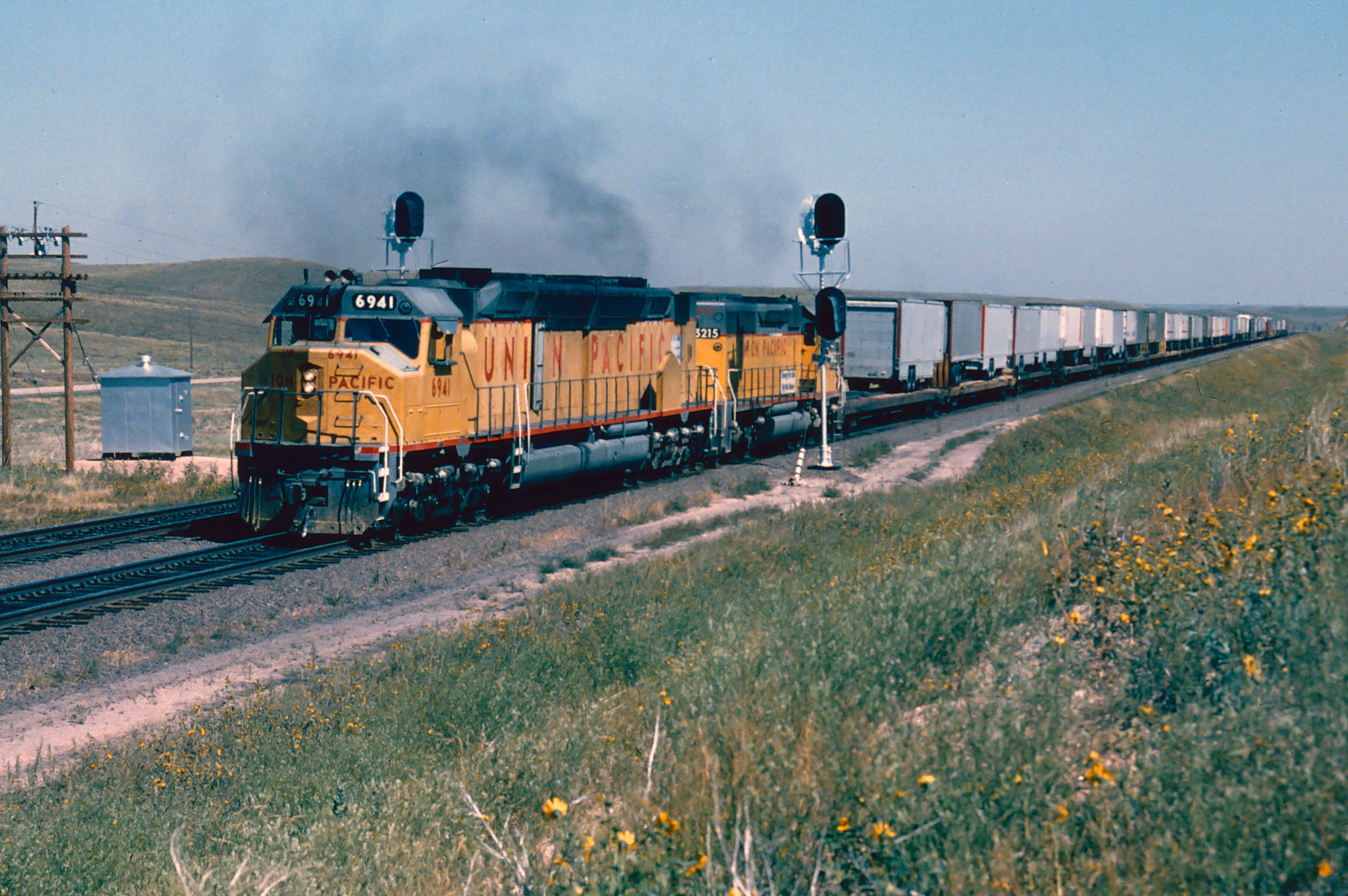
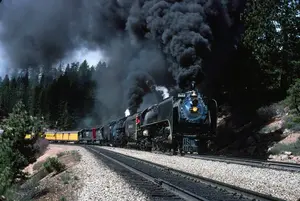
Union Pacific DDA40X “Centennial” #6941 and SD40-2 #3215 hustle trailers westbound up Sherman Hill just west of Borie, Wyoming at Milepost 521.4 signals during the summer of 1984. Mike Bledsoe photo. American-Rails.com collection.
Important disclaimer: American-Rails.com is a history and information site. It is not a railroad, not affiliated with any railroad or rail contractor, and has no job openings of its own. For applications, schedules, and requirements, use each employer’s official careers page or a major job board. The author has never worked for a railroad; this guide synthesizes public industry, government, and historical sources for job seekers and curious readers.
At a Glance (2025–2026)
| Topic | Current picture |
|---|---|
| Direct freight-rail employment (AAR) | About 153,000 workers industry-wide; total economic impact far larger (AAR cites on the order of 749,000 supported jobs) |
| Class I share of employees (AAR) | Roughly 87% of freight-rail employees work for the six Class I systems |
| Class I pay + benefits package (AAR) | Average annual package often cited from about $135,000 to almost $190,000 (wages plus benefits; not base wage alone) |
| BLS median wage, “railroad workers” (May 2024) | About $75,680 per year overall; locomotive engineers ~$77,400; conductors/yardmasters ~$74,080 |
| BLS outlook (2024–34) | About 1% employment growth (slower than average), but roughly 6,600 openings per year largely from retirements and turnover |
| Typical crew today (freight) | Usually engineer + conductor on the head end; caboose / flagman / fireman roles largely historic on Class I freights |
| Common entry points | Conductor / train-service trainee, track laborer / MOW, mechanical, signals & communications, clerical, management trainee |
| Where to apply | Railroad careers sites, Indeed/LinkedIn, short-line company pages, Amtrak and commuter agencies, rail contractors |
AAR and BLS measure different things (industry headcount and total compensation messaging vs. occupational wage medians). Treat both as useful; do not mix them into one invented “starting salary.” Figures compiled August 12, 2026 from public AAR and BLS materials—always re-check primary sources before a formal application or wage claim.
How to Find a Railroad Job in 2026
There is no single national “railroad employment office.” Hiring is employer-by-employer, and openings rise and fall with traffic, attrition, and capital projects. Practical paths:
- Class I freight careers portals — BNSF, Union Pacific, CSX, Norfolk Southern, Canadian National (U.S. operations), and CPKC post craft, mechanical, engineering, IT, and management roles when they are recruiting.
- Regionals and short lines — Hundreds of Class II/III freights (AAR order-of-magnitude: ~615) hire locally; schedules can be more predictable, pay often lower than big Class I packages. Start with the company website or state short-line association listings.
- Passenger & commuter — Amtrak careers, plus metropolitan transit and commuter railroads (Metra, NJ Transit, Metro-North, Caltrain, etc.) hire engineers, conductors, mechanical, stations, and police under their own rules.
- Contractors & suppliers — Track construction firms, signal contractors, car/locomotive shops, and industrial switching companies employ many people who never wear a Class I hard hat.
- General job boards — Indeed, LinkedIn, and government USAJOBS (for some public-sector rail roles) still surface postings; always finish the process on the employer’s official site.
Expect background checks, drug and alcohol testing (including random testing after hire), medical/vision/hearing standards for many craft jobs, and—for locomotive engineers and many conductors—Federal Railroad Administration (FRA) certification administered through the employing railroad.
Major freight & Amtrak career starting points
- BNSF Railway careers
- Union Pacific careers
- CSX Transportation (careers section on company site)
- Norfolk Southern — Work at NS
- Canadian National careers
- CPKC careers
- Amtrak careers
Industry context: Class I railroads · Regionals · Short lines.
Pay: What the Numbers Actually Mean
Older versions of this page quoted field starting pay in the high $30,000s (track) and $50,000s (train crew). Those figures were always rough and are no longer a reliable map of Class I economics in the mid-2020s. Two public frames matter more today:
- AAR total compensation messaging — The average Class I employee’s annual pay and benefit package is commonly described in the $135,000–$190,000 range (average often near the mid–high $100,000s depending on year and publication). That total includes health care, paid time off, and retirement-related value—not take-home base alone.
- BLS occupational wage medians (May 2024) — Across BLS “railroad workers” occupations, median pay was about $75,680. Locomotive engineers ~$77,400; conductors and yardmasters ~$74,080; brake/signal/switch and related ~$65,480; rail yard engineers/hostlers ~$58,030. The top tenth of railroad workers earned more than about $100,130.
Overtime, craft, location, passenger vs. freight, and seniority swing real earnings widely. A conductor on a busy Class I extra board can out-earn a short-line engineer in a quiet terminal; a signal maintainer with overtime can out-earn a junior trainmaster. For planning, use posted job ranges on the employer site plus BLS area.
Reading for perspective (historical as much as vocational): Brian Solomon’s Working on the Railroad remains a solid illustrated introduction to craft life and industry culture.
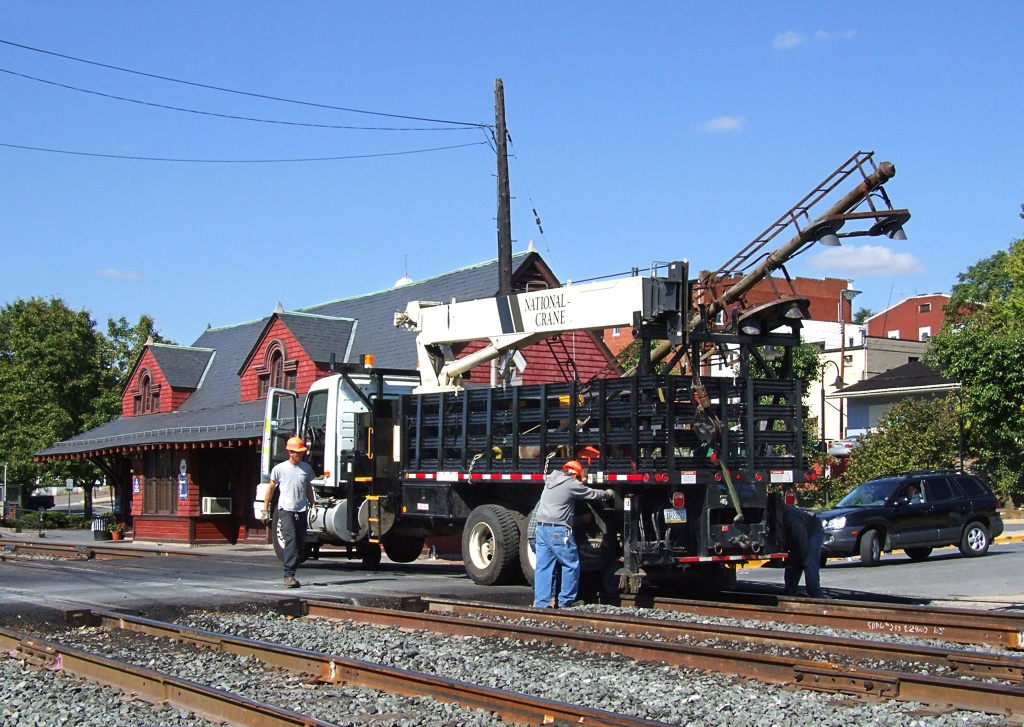
Three CSX signal maintainers are about to clear their hi-rail from the main line at Brunswick, Maryland after taking down a venerable B&O CPL on October 13, 2007. Rob Kitchen photo.
What the Work Is Like
Modern locomotives often have climate control and electronic displays, and heavy track work is highly mechanized. The job is still not a conventional 9-to-5 for most new craft hires:
- 24/7 railroad — Freight and many passenger services run nights, weekends, and holidays. Federal hours-of-service rules set rest floors; they do not create a bank-teller schedule.
- Extra board & call windows — Junior train-service employees often work from a call list with limited ability to refuse trips. Predictable yard or local jobs usually come with seniority.
- Time away from home — Over-the-road freights can mean lodging at away terminals. Short passenger turns and some locals are more home-based.
- Seniority is everything — Days off, preferred jobs, and vacation bids are governed by union agreements and roster standing. Waiting years (sometimes more than a decade) for a “good” job is common on large properties.
- Safety culture & rules — Operating and safety rules are thick; violations can end a career. Random drug/alcohol testing is part of regulated service.
Many railroaders describe multi-generation pride in the craft—grandfathers on the PRR, Santa Fe, or B&O; grandchildren on BNSF or CSX. The romance is real for some; the lifestyle costs are real for everyone who has not yet bid a daylight yard job.
Shorter Class II/III freights sometimes trade lower pay for fewer nights away and a tighter geographic footprint. That trade-off is personal; read the job posting carefully.
Career Paths & Related American-Rails Pages
Field and operations roles get the most public attention, but railroads also hire mechanical, engineering, IT, finance, sales, police, and corporate staff. Craft-focused overviews on this site:
| Role | Notes | AR page |
|---|---|---|
| Locomotive engineer | Operates trains; FRA certification; often promoted from conductor service | Engineer |
| Conductor | Crew boss for train movements, paperwork, switching, passengers on passenger service | Conductor |
| Brakeman / trainman | Historic title; duties largely folded into conductor/utility roles on modern freights | Brakeman |
| Fireman | Steam-era head-end helper; largely obsolete as a freight craft | Fireman |
| Flagman | Historic rear-end protection role; largely obsolete after end-of-train devices | Flagman |
| Signal maintainer | Signals, crossings, PTC-related field work; skilled craft | Signal maintainer |
| Roadmaster | Supervises track territory / MOW forces | Roadmaster |
| Track laborer / MOW | Entry field work on production gangs and section forces | Tie gang / laborer |
| Dispatcher | Authorizes train movements from centralized offices | Dispatcher |
| Trainmaster | Field / terminal supervision of train operations | Trainmaster |
| Yardmaster | Directs yard switching and car classification | Yardmaster |
Also see: Gandy dancer (historic track labor slang) · Rail maintenance · Rail infrastructure.
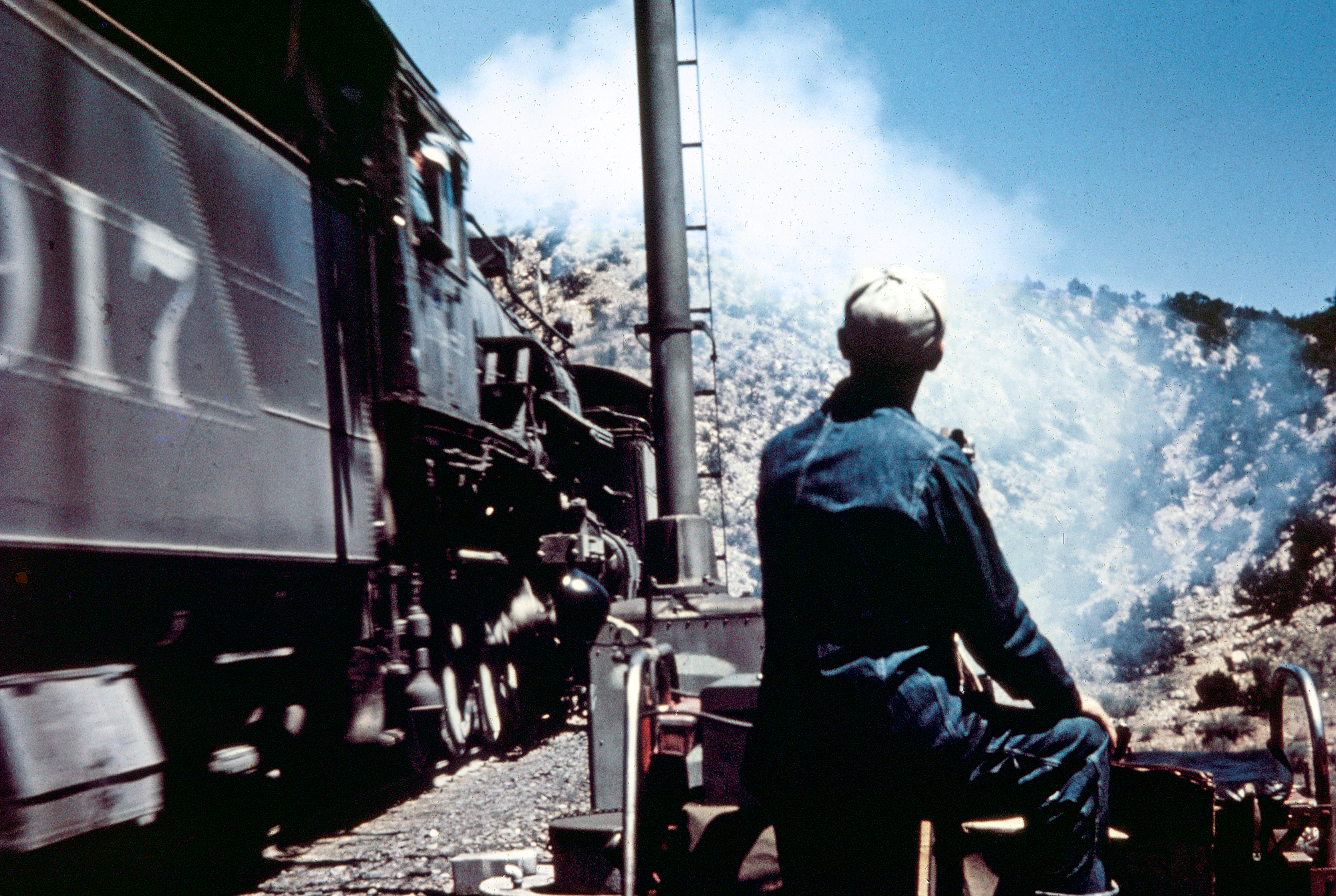
A Santa Fe track inspector watches as a pair of steam locomotives work a passenger train over New Mexico’s Glorieta Pass, circa 1950. Ed Olsen photo. American-Rails.com collection.
How the Railroad Workforce Changed
U.S. railroading once employed armies. John F. Stover’s atlas work and other standard histories place national employment near 1.7 million around World War I’s mileage peak (~254,000 route miles in 1916). Brian Solomon and others note employment still near 2 million into the early 1920s. Today’s freight industry headcount is roughly an order of magnitude smaller—not because freight vanished, but because technology and consolidation removed thousands of intermediate jobs.
Key structural shifts:
- Dieselization — Ended coaling towers, water tanks, and most steam roundhouse forces; reduced mechanical headcount per horsepower.
- Crew consist reductions — From five-person freights (engineer, fireman, head brakeman, conductor, rear flagman) toward today’s typical two-person head-end crew after FRED/EOT devices and the caboose’s exit.
- Centralized dispatching & CTC — Closed towers, many depots, and the classic paper train-order culture (still practiced in pockets into the 1980s).
- Mechanized maintenance-of-way — Tampers, undercutters, spike drivers, and production gangs replaced gandy-dancer armies for most planned work.
- Computers & remote diagnostics — Fewer clerks, agents, and local supervisory layers; more concentration in network operations centers.
The interurban boom before World War I briefly added thousands of motorman, shop, and line jobs; highway competition erased most of that network by mid-century. Passenger employment migrated to Amtrak (1971) and public commuter authorities rather than private freight companies.
For deeper history: Railroad history · Fallen flags · Interurbans & streetcars.
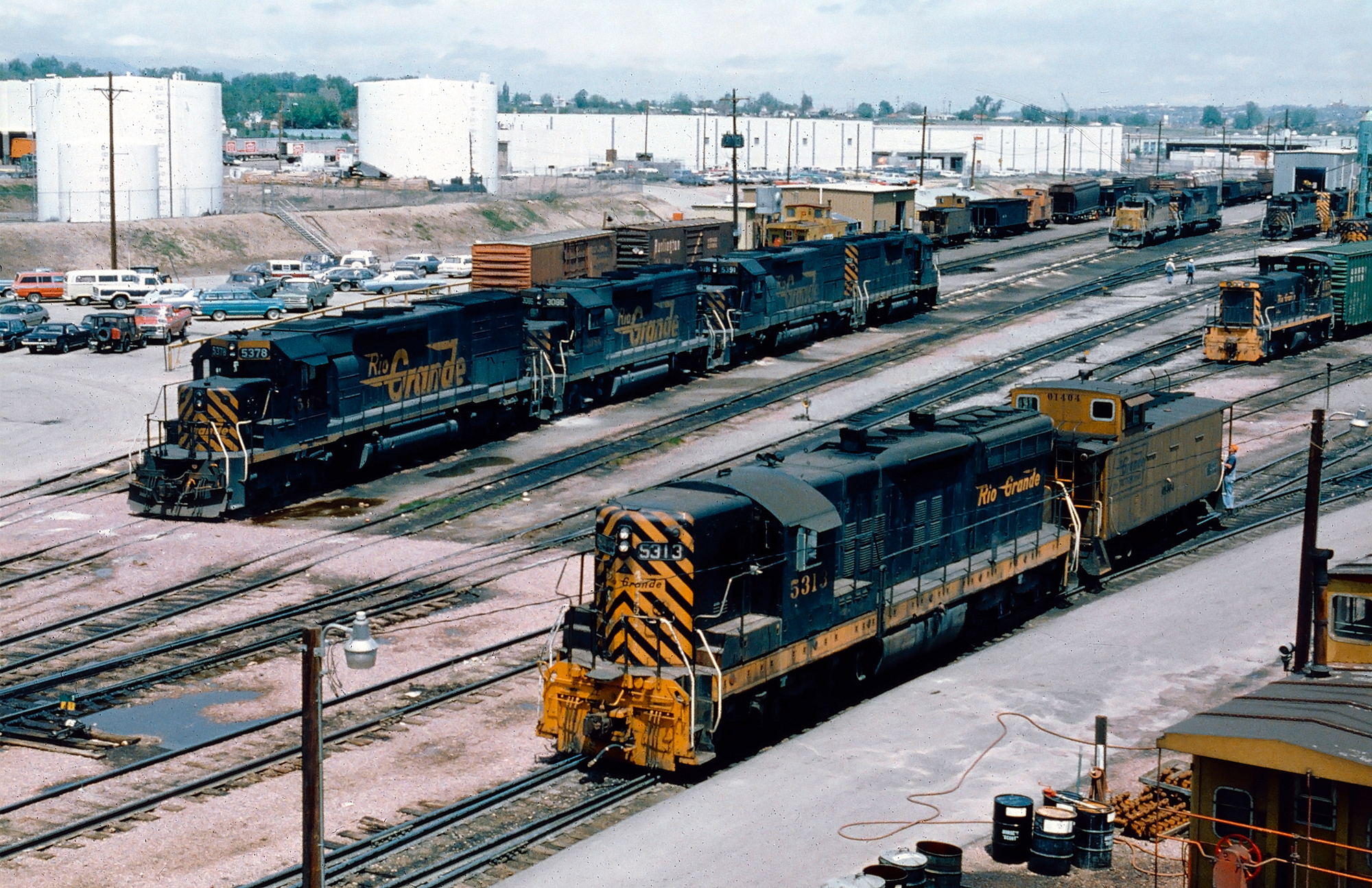
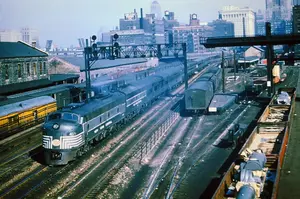
Rio Grande’s North Yard in Denver, Colorado, in 1983—a classic terminal landscape of the late private-passenger / early mega-merger era. Mike Bledsoe photo. American-Rails.com collection.
Safety: From Deadly Craft to Regulated Industry
Nineteenth-century railroading was extraordinarily dangerous. Automatic air brakes (Westinghouse) and knuckle couplers (Janney) existed decades before federal law forced universal use; the Railway Safety Appliance Act of 1893 was a watershed. Link-and-pin coupling and hand-braked freights killed and maimed thousands annually. Labor uprisings such as the Great Railroad Strike of 1877 and the Pullman Strike of 1894 reflected brutal wage cuts and weak worker power as much as ideology.
Modern freight rail posts some of the better industrial safety trends in heavy transportation (AAR regularly highlights multi-decade declines in accident and employee casualty rates, including strong 2025 Class I results). That does not make the property risk-free: moving equipment, electrical hazards, and highway-rail grade crossings remain unforgiving. New hires learn rules first because the margin for improvisation is small.
Railroad Retirement
Most U.S. railroad employees are covered by the Railroad Retirement system (administered by the U.S. Railroad Retirement Board), a federal program separate from Social Security that rail workers and employers fund. Career railroaders with long service often receive substantially higher retirement income than average Social Security benefits—one reason multi-decade careers remain attractive even when schedules are hard. Confirm eligibility and benefit rules with the Railroad Retirement Board and your employer; do not rely on informal estimates.
Practical Tips Before You Apply
- Be honest about lifestyle — If nights and call windows are non-starters, target passenger locals, clerical, shop day shifts, or non-operating crafts—not over-the-road freight.
- Read the posting — CDL, welding tickets, electrical licenses, or prior craft experience can be required or preferred.
- Geography matters — Hiring hubs follow terminals, shops, and corridors. Willingness to relocate multiplies options.
- Unions — Most Class I craft jobs are represented (SMART-TD, BLET, BMWED, BRS, and others depending on craft). Agreements govern bids, discipline, and pay tables.
- Scams — Legitimate railroads do not ask you to pay for a job or wire money for “training slots.” Apply through official domains.
- Military veterans — AAR notes roughly one in six rail employees are veterans; many carriers run veteran hiring initiatives.
Related Reading on American-Rails.com
- Class I railroads · Regionals · Short lines
- Railroad history · Fallen flags
- Diesel locomotives · Steam locomotives
- Amtrak · Commuter rail
- Glossary
Sources
- Association of American Railroads, Freight Rail Facts & Figures and railroad jobs issue pages (employment ~153,000; Class I pay/benefit package ranges; tenure and veterans statistics)
- U.S. Bureau of Labor Statistics, Occupational Outlook Handbook, “Railroad Workers” (May 2024 wages; 2024–34 outlook)
- Federal Railroad Administration — engineer and conductor certification framework
- U.S. Railroad Retirement Board — Railroad Retirement system overview
- Stover, John F. The Routledge Historical Atlas of the American Railroads
- Solomon, Brian. Working on the Railroad (and related craft/history titles)
- Hilton, George W., and John F. Due. The Electric Interurban Railways in America (interurban employment context)
- Class I and Amtrak official careers pages (hiring process and current openings)
Guide rewritten August 2026 to replace outdated salary ranges and generic advice with current public AAR/BLS framing, practical hiring paths, and clearer separation between American-Rails.com content and actual railroad employers.
Recent Articles


-
Boston and Maine Railroad: "Route Of The Minute Man"
Sep 16, 26 11:30 AM
 Boston & Maine—Andover & Wilmington 1833, NH charter June 27 1835. Eastern, Boston & Lowell, Fitchburg/Hoosac, Concord & Montreal. Section 77 March 12 1970. Guilford June 30 1983. CSX June 1 2…
 -
Smoky Valley Limited Dinner Train (2026)
Sep 16, 26 11:24 AM
 2026 Abilene & Smoky Valley Smoky Valley Limited—two-hour dinner from the 1887 Rock Island Depot. Kansas catering, ~$72–$110. Confirm on asvrr.org.
 -
Canadian National Diesel Locomotives: History, Roster & Photos
Sep 16, 26 11:14 AM
 Canadian National diesel—CLC boxcabs 1929, GMD FP9 and GP9, MLW FPA-4 and RS-18, GMD1, wide-cab SD40-2W, Dash-9s, ES44AC and ET44AC. All-time roster.
 -
Canadian National Steam Locomotives: History, Roster & Photos
Sep 16, 26 10:07 AM
 Canadian National steam—CGR, Canadian Northern, Grand Trunk, GTP. 4-8-4 Confederations, U-1 Mountains, J and K Pacifics. Post-1900 class roster. Last scheduled steam April 25, 1960.
 -
Canadian National Railway: Map, Logo, History, Photos
Sep 16, 26 08:55 AM
 Canadian National—name Dec 20 1918, incorporated June 6 1919, Grand Trunk Jan 20 1923. Crown corporation, IPO Nov 17 1995. IC, Wisconsin Central, BC Rail, EJ&E. Class I, mark CN.
 -
Buffalo, Rochester and Pittsburgh Railway: "Safety and Service"
Sep 16, 26 12:12 AM
 Buffalo, Rochester & Pittsburgh—Rochester & State Line 1869, BR&P March 12 1887. Pennsylvania coal to Buffalo and Rochester. B&O January 1 1932. All-time steam roster, LL 2-6-6-2s, XX…
 -
Buffalo Creek & Gauley Railroad: Map, Roster, Logo, Photos
Sep 15, 26 11:55 PM
 Buffalo Creek & Gauley—Elk River Coal & Lumber, April 1 1904, Dundon–Widen. Last all-steam WV coal road, February 27 1965. All-time steam roster, #4 Baldwin 59472, Majestic and Elk River diesels…
 -
Buffalo and Susquehanna Railroad: Map & History
Sep 15, 26 11:42 PM
 Buffalo & Susquehanna—Goodyear hemlock railroad, Sinnemahoning Valley December 14 1885, 1893 merger, coal to Sagamore, Buffalo extension, bankruptcy May 6 1910, B&O 1932, WAG 1956.
 -
WMSR Allegheny Mountain Dinner Train (2026): Dates & Tickets
Sep 15, 26 11:36 PM
 2026 Western Maryland Scenic Allegheny Mountain Dinner Train—Cumberland, 3 hours, 21+, Saturday 7 p.m. Confirm on wmsr.com.
 -
Boston and Albany Railroad: Map & History
Sep 15, 26 11:28 PM
 Boston & Albany Railroad—Boston & Worcester June 23 1831, Western Railroad across the Berkshires, merger 1867–70. NYC 99-year lease July 1 1900. Berkshires, New England States, CSX and MBTA today.
 -
Grand Bellevue Dinner Train (2026): Portsmouth, Rhode Island
Sep 15, 26 11:14 PM
 2026 Grand Bellevue Rail Dining in Portsmouth, RI—2.5-hour seated dinner on Narragansett Bay. Fall/winter TBA after Aug. 29. Confirm on thegrandbell.com.
 -
The "John Bull": The C&A's First Locomotive (1831)
Sep 15, 26 11:01 PM
 John Bull locomotive—Stephenson Planet-type 0-4-0, 1831. Dripps assembly, 4-2-0 rebuild, cowcatcher. Specs, Camden & Amboy career, Smithsonian 1884, 1981 steam-up, 1939 replica.
 -
Napa Valley Wine Train Dining (2026): Lunch, Dinner & Vista Dome
Sep 15, 26 10:56 PM
 2026 Napa Valley Wine Train dining—downtown Napa, 36-mile round trip, gourmet lunch and dinner, Vista Dome. Confirm packages on winetrain.com.
 -
My Old Kentucky Dinner Train (2026): Dates, Tickets & What to Expect
Sep 15, 26 10:50 PM
 2026 My Old Kentucky Dinner Train in Bardstown—2.5 hours, 35-mile round trip, four-course dinner from $116. Confirm on kydinnertrain.com.
 -
LaSalle Street Station: One Of Chicago's Great Terminals
Sep 15, 26 10:42 PM
 LaSalle Street Station—Rock Island October 10, 1852. Frost & Granger July 1, 1903. 20th Century Limited, Rockets, Golden State. Headhouse razed 1981. Metra Rock Island District today.
 -
Charlie Russell Chew Choo (2026): Montana Dinner Train from Lewistown
Sep 15, 26 10:39 PM
 2026 Charlie Russell Chew Choo dinner train—Hanover/Lewistown, 4.5 hours, 56-mile round trip, prime rib. Adult $151. Remaining listed dates sold out. Confirm on montanadinnertrain.com.
 -
Central Pacific Railroad: Map, History, Facts, Logo
Sep 15, 26 10:30 PM
 Central Pacific—Judah, Big Four, June 28 1861. Sierra, Chinese labor, Donner Summit Tunnel. Ten-mile day April 28 1869. Promontory May 10. Southern Pacific lease April 1 1885. Dissolved June 30 1959…
 -
Bessemer & Lake Erie Railroad: "The Bessemer Road"
Sep 15, 26 05:20 PM
 Bessemer & Lake Erie—Bear Creek 1865, Carnegie 1897, U.S. Steel 1901. Ore south from Conneaut, coal north. 2-10-4s, Missabe sister road. CN May 10, 2004. Complete corporate history.
 -
Bangor and Aroostook Railroad: "Serving Northern Maine"
Sep 15, 26 05:05 PM
 Bangor & Aroostook—chartered February 13, 1891, first trains January 1, 1894. Potatoes, paper, Searsport, State of Maine reefers. MM&A 2003, Lac-Mégantic 2013, CP 2020, CPKC today. Complete co…
 -
Baltimore & Ohio Chicago Terminal Railroad: Map and History
Sep 15, 26 03:11 PM
 B&OCT—formed January 6, 1910 to buy Chicago Terminal Transfer. Grand Central, Barr Yard, 78 route-miles. Assigned B&O steam. Complete diesel roster. CSX paper subsidiary, mark BOCT.
 -
The "Alphabet Route" (Railroad): Photos and History
Sep 15, 26 02:53 PM
 Alphabet Route—eight railroads, not one company. P&WV to Connellsville February 11, 1931. Alpha Jets Chicago/St. Louis–New York/Boston. NKP, W&LE, P&WV, WM, Reading, CNJ, L&HR, New Hav…
 -
Milwaukee Road Livestock Operations: Cattle, Dakotas & Montana
Sep 15, 26 02:36 PM
 Milwaukee Road livestock traffic—Dakota and Montana cattle, Iowa hogs, Chicago markets, 28-hour law, head-end stock cars. By 1974 mostly Montana. Rick Burn’s Helena speech. Operations history, not the…
 -
Spirit of Jasper Ride & Dine (2026): Season Pause
Sep 15, 26 02:29 PM
 Spirit of Jasper Ride & Dine in Jasper, Indiana—seated meal on board. Operator: not running public trains for 2026. Depot remains open as a rental. Confirm on spiritofjaspertrain.com.
 -
South Carolina Canal & Rail Road Company: Map and History
Sep 15, 26 01:59 PM
 South Carolina Canal & Rail Road—chartered December 19, 1827. Best Friend of Charleston, 136 miles Charleston–Hamburg October 1833, Aiken inclined plane. South Carolina Railroad 1844, Southern 189…
 -
The Practice of Double-Heading: The Steam Era
Sep 15, 26 01:43 PM
 Doubleheading—two locomotives on the point, each with its own steam crew. Not a rear helper, not diesel MU. How it worked, PRR 1877, mountain grades, and what MU ended.
 -
Mohawk and Hudson Railroad: Map, Pictures, Locomotives
Sep 15, 26 01:20 PM
 Mohawk & Hudson Railroad—New York’s first railroad, chartered April 17, 1826. DeWitt Clinton, inclined planes, Albany & Schenectady 1847, first New York Central May 17, 1853. Complete corporat…
 -
Essex Clipper Dinner Train (2026): Dates, Tickets & What to Expect
Sep 15, 26 01:09 PM
 2026 Essex Clipper Dinner Train in Essex, CT—2.5 hours, four-course meal $129.99, 18+. Fall dates through Oct. 25. Confirm on essexsteamtrain.com.
 -
Camden & Amboy Railroad: Map, History, Photos
Sep 15, 26 12:53 PM
 Camden & Amboy Railroad—chartered February 4, 1830. Joint Companies monopoly with the Delaware & Raritan Canal, John Bull, T-rail. United New Jersey 1872, PRR 999-year lease 1871. Complete corpora…
 -
Cafe Lafayette Dinner Train (2026): Dates, Tickets & What to Expect
Sep 15, 26 12:47 PM
2026 Cafe Lafayette Dinner Train in North Woodstock, NH—2 hours, 20 miles, five-course meal from $125. May–October. Confirm on nhdinnertrain.com. -
Christmas Train Ride Locations (2026): A Complete Guide
Sep 15, 26 10:47 AM
 2026 Christmas train rides by state—Santa, North Pole Express, and holiday trains. Not Polar Express. State guides and product pages. Confirm dates on each railroad.
 -
Baltimore & Ohio Railroad: Linking 13 Great States With The Nation
Sep 15, 26 10:22 AM
 Baltimore & Ohio Railroad—first U.S. common carrier, chartered February 28, 1827. Wheeling 1853, Chicago 1874, C&O control 1963, Chessie 1973, into CSX April 30, 1987. Complete corporate history.
 -
Delaware & Hudson Railway: The Bridge Line
Sep 15, 26 09:59 AM
 Delaware & Hudson Railway—Wurts brothers canal 1823, gravity railroad 1829, Stourbridge Lion, Bridge Line to Montreal. Guilford 1984, CP 1991, NS south line 2015, CPKC north.
 -
Delaware & Hudson Diesel Roster (All-Time)
Sep 15, 26 12:17 AM
 All-time Delaware & Hudson diesel roster—Alco S-2s through C-628s and PA-4s, GE U-boats, Baldwin RF-16s, EMD SD45s and GP38-2/GP39-2s. Serials, dates, dispositions.
 -
Granite Railway, Our Country's First Railroad
Sep 14, 26 11:28 PM
 Granite Railway of Quincy, Massachusetts—chartered March 4, 1826, opened October 7, 1826. Gridley Bryant, 5-foot gauge, horses, Bunker Hill Monument stone. First commercial U.S. railroad.
 -
Milwaukee Road Skytop Lounges: History, Specs & Floor Plans
Sep 14, 26 11:09 PM
 Milwaukee Road Skytop observation cars—Brooks Stevens, 1948. Four Rapids parlor-lounges from Milwaukee Shops, six Creek sleeper-lounges from Pullman-Standard. Floor plans, roster, preservation.
 -
West Virginia Christmas Train Rides (2026): A Complete Guide
Sep 14, 26 11:02 PM
2026 West Virginia Christmas trains—Potomac Eagle North Pole Express in Romney and Christmas at Cass. Not Polar Express. Elkins Polar is not listed for 2026. -
Railroads Of Today: Class I Map, PSR & the 2026 Industry
Sep 14, 26 10:30 PM
U.S. freight rail in 2026—six Class I railroads on a nearly 140,000-mile network. PSR as everyday practice, how the STB works, traffic mix, short lines and regionals. -
Railroad History (USA): Timeline, Facts & How the Network Was Built
Sep 14, 26 10:03 PM
 Full U.S. railroad history hub—origins and inventors, Golden Age peak mileage, Civil War and transcontinental, streamliners, ICC regulation, Penn Central and Conrail, Staggers Act, PSR, and today’s Cl…
 -
Railroads In The 2020s: CPKC, East Palestine & the UP–NS Case
Sep 14, 26 09:51 PM
 U.S. railroads 2020–2026—Class I mileage 91,773 in 2020. COVID traffic drop, CPKC April 14 2023, East Palestine Feb. 3 2023, UP–NS $85 billion case still before the STB.
 -
Railroads In The 2010s: PSR, Coal’s Decline & Positive Train Control
Sep 14, 26 03:51 PM
 U.S. railroads 2010–2020—Class I mileage 95,573 to 91,773. Buffett closed BNSF Feb. 12 2010, Harrison at CP June 29 2012 and CSX 2017, PTC deadline Dec. 31 2018.
 -
Virginia Christmas Train Rides (2026): A Complete Guide
Sep 14, 26 03:46 PM
 2026 Virginia Christmas trains—Virginia Scenic Railway Santa Express from Staunton, about 60 minutes. Confirm dates. Not Polar Express.
 -
MARC Train: Maryland Commuter Rail History, Lines & Roster
Sep 14, 26 01:16 PM
 MARC Train history—Maryland Rail Commuter 1984, B&O and PRR corridors, Penn/Camden/Brunswick lines, Silver Spring 1996, all-time locomotive roster.
 -
Railroads In The 2000s: Merger Freeze, Wisconsin Central & Buffett
Sep 13, 26 07:57 AM
 U.S. railroads 2000–2010—Class I mileage 99,250 to 95,573. STB merger freeze March 17 2000, CN–WC Oct. 9 2001, BNSF Railway Jan. 24 2005, Buffett Nov. 3 2009.
 -
Railroads In The 1990s: Mega-Mergers, Conrail’s Split & the STB
Sep 13, 26 12:13 AM
 U.S. railroads 1990–2000—Class I mileage 119,758 to 99,250. BNSF Sept. 22 1995, UP–SP Sept. 11 1996, Conrail split June 1 1999, ICC Termination Dec. 29 1995.
 -
Railroads In The 1980s: Staggers, Mega-Mergers & Conrail’s IPO
Sep 12, 26 11:12 PM
 U.S. railroads 1980–1990—Class I mileage 164,822 to 119,758. Staggers Oct. 14 1980, CSX and Norfolk Southern, UP–Missouri Pacific–Western Pacific, Conrail IPO March 26 1987.
 -
Wabash Class O-1 4-8-4s: History, Roster & Specifications
Sep 12, 26 11:01 PM
 Wabash Class O-1 4-8-4s—Baldwin 1930–31, twenty-five engines 2900–2924. Fast freight, complete roster, specifications. None preserved.
 -
Staggers Rail Act of 1980: Statute, Contract Rates & the ICC
Sep 10, 26 11:23 PM
 Staggers Rail Act, Pub. L. 96-448, signed October 14, 1980. Harley Staggers, S.1946, contract rates, 180% variable-cost test, abandonments, short lines.
 -
Rock Island E8A 652: Bicentennial Independence Paint & History
Sep 10, 26 10:42 PM
 Rock Island E8A 652—EMD March 1952, serial 15199. 20th Century Railroad Club Independence bicentennial scheme, Peoria and Quad Cities Rockets, Midland Railway, Manly Junction Museum.
 -
Vermont Christmas Train Rides (2026): A Complete Guide
Sep 10, 26 10:37 PM
2026 Vermont Christmas trains—Okemo Valley Holiday Express from Chester Depot Dec. 19–20. Polar is Burlington Dec. 5–6 only. -
Railroads In The 1970s: Penn Central, Amtrak & Conrail
Sep 10, 26 10:18 AM
 U.S. railroads 1970–1980—196,479 miles at the decade’s start. Penn Central bankruptcy June 21 1970, Amtrak May 1 1971, 3R/4R Acts, Conrail April 1 1976, Rock Island 1975, Milwaukee 1977.