Brooks Locomotive Works: 1869-1901
Published: February 19, 2025
By: Adam Burns
The history of the Brooks Locomotive Works is a fascinating chronicle that spans several decades of industrial innovation during the golden age of rail transport in the United States.
Brooks, based in Dunkirk, New York, was one of the pioneering locomotive manufacturers in the country, playing a crucial role in the development and expansion of the railways in the late 19th and early 20th centuries.
It was founded just after the Civil War and produced hundreds of locomotives during a production run that lasted over 30 years as an independent company. It eventually joined several small manufacturers to form the American Locomotive Company in 1901 to more effectively compete against Baldwin and Lima in the hotly contested locomotive market.
Origins and Founding (1869)
The story begins in 1869, a time when America was undergoing rapid industrialization and the expansion of rail networks was crucial for economic growth and development.
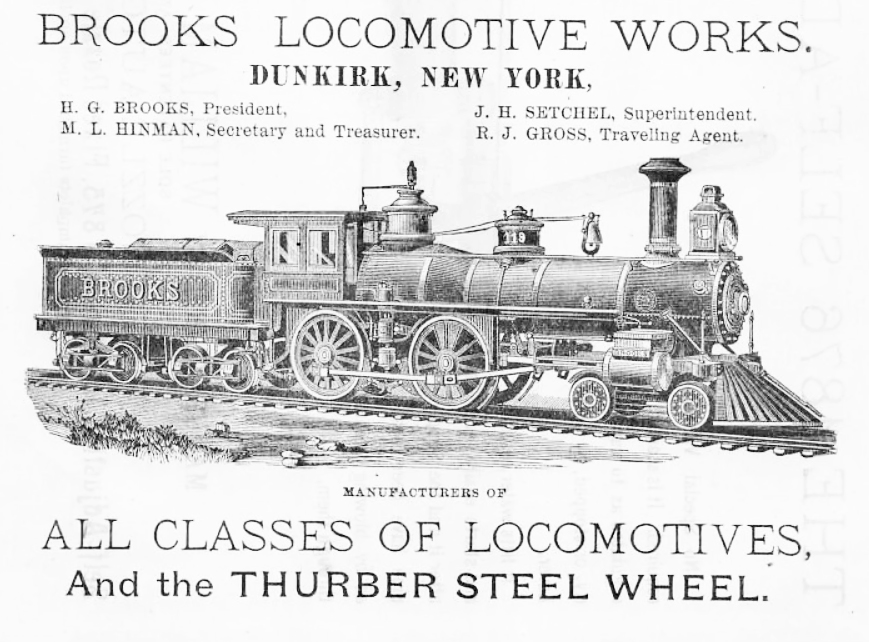
The company was founded by Horatio Brook, an experienced engineer and former master mechanic of the New York & Erie Railroad (Erie). Brooks recognized the burgeoning need for reliable, efficient locomotives and took the bold step of establishing his manufacturing company in Dunkirk, capitalizing on its strategic position with access to both raw materials and transportation routes.
Early Years and Growth (1869-1880s)
In 1869 Brooks leased the facilities in Dunkirk from NY&E and established the Brooks Locomotive Works, officially launching the company on November 13, 1869. The following month, Brooks Locomotive Works completed its first steam locomotive for its original client, none other than the New York & Erie.
In a matter of years, Brooks significantly increased production from the NY&E's previous rate of one locomotive per month to as many as seven. The company supplied locomotives to nearly every significant railroad during that era, achieving an output of 37 locomotives in its inaugural year and 43 in the second.
Despite facing diminished demand following the financial panic of 1873, Brooks successfully navigated the economic downturn, avoiding bankruptcy by recovering sufficient business. Brooks locomotives were subsequently exhibited at the National Railway Appliance Exhibition in Chicago, earning distinctions as "Best in Show," and they also received acclamations and awards at the 1893 World's Columbian Exposition.
In its early years, Brooks focused on producing steam locomotives, which were the backbone of rail transportation at the time. The company's initial production facilities were modest, yet the quality and durability of its locomotives quickly gained a reputation for excellence. This reputation was enhanced by Brooks' hands-on experience and engineering acumen, which helped in designing locomotives that met the specific needs of various railroad companies.
During the 1870s and 1880s, the United States witnessed a rail boom, with tracks being laid across vast distances to connect cities, towns, and rural areas. Brooks Locomotive Works seized this opportunity, expanding its operations and increasing production capacity. The company introduced several innovative designs and improvements that enhanced locomotive performance, including more efficient steam engines and better weight distribution.
Innovation and Expansion (1890s)
By the 1890s, Brooks had established itself as one of the key players in the locomotive industry, competing with other giants such as Baldwin Locomotive Works and the American Locomotive Company (ALCO).
In this period, the company introduced several technological advancements, including compound locomotives that utilized steam more efficiently and larger, more powerful locomotives designed to handle heavier loads on steeper grades.
The company was particularly renowned for its custom-built locomotives, tailor-made to meet the unique requirements of its clients. This flexible approach not only set Brooks apart from its competitors but also allowed it to maintain a steady stream of orders.
In 1891, it manufactured 226 new locomotives, but by 1894, output had plummeted to just 90. In 1895, the company's reputation received a boost when one of its locomotives set a land speed record for rail vehicles, reaching 92.3 mph on the Lake Shore & Michigan Southern Railway (LS&MS) on October 24, 1895.
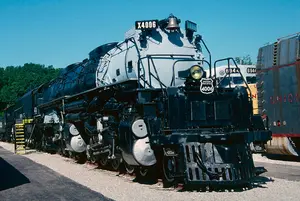
Furthermore, Brooks garnered acclaim for producing exceptionally large locomotives towards the close of the 19th century, supplying record-setting models for the Great Northern and Illinois Central. Despite such achievements, the company struggled to rebound from economic hardship as it had done previously.
Following the death of Horatio Brooks in April 1887, leadership passed to his son-in-law, Edward Nichols. Nichols' tenure ended with his death on January 7, 1892, after which Vice President Marshall L. Hinman assumed the presidency. Hinman stepped down in December 1896, and the role was taken over by another son-in-law, Frederick H. Stevens, who guided the company until the 1901 merger with Alco.
After briefly participating in a widespread machinists' strike in May, the firm was ultimately consolidated with several other manufacturers in 1901 to establish the American Locomotive Company (Alco). The final Brooks-manufactured locomotive, bearing serial number 3883 and built for the LS&MS, was completed on June 22, 1901.
Merger and Formation of ALCO (1901)
While the Alco merger marked the end of Brooks as an independent entity, it was a strategic move that positioned the new conglomerate as a formidable force in the industry, second only to Baldwin in terms of production capacity and market reach.
Under the Alco banner, Brooks' legacy endured as the Dunkirk plant continued to produce locomotives consistent with its tradition of quality and customization. The merger bolstered the company's resources and technological prowess, facilitating the development of more advanced steam locomotives and later transitioning into the era of diesel-electric locomotives.
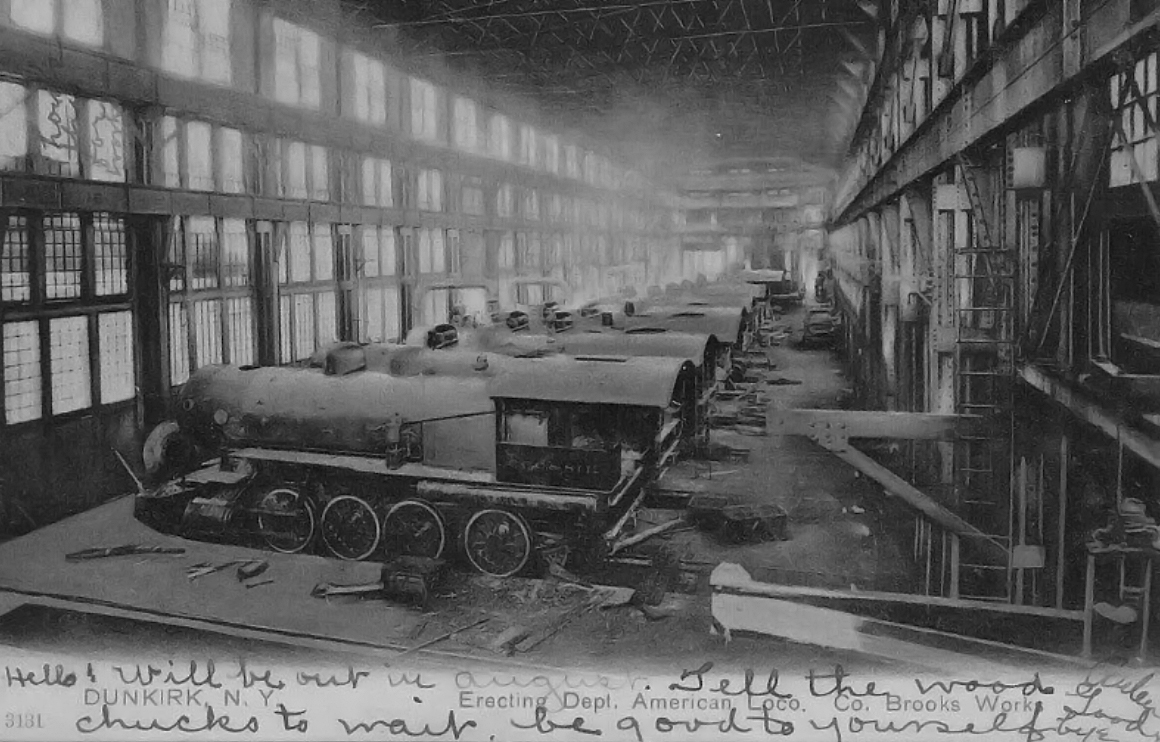
Post-merger, the Brooks plant was responsible for fulfilling one of the earliest contracts secured by Aloco, producing fifteen 2-8-0 locomotives for the Mexican Central Railroad. The facility continued to manufacture locomotives until 1934, when it was rebranded as Alco's Thermal Products Division. Subsequent locomotives from the former Brooks facility were identified as Alco-Brooks designs.
While the production of new locomotives ceased at the Dunkirk facility, the workforce remained engaged in producing spare parts for existing Alco locomotives. The plant eventually shifted focus from locomotive manufacturing to producing heat exchangers, high-pressure vessels, and various piping systems. Post-World War II, the Dunkirk plant's output never returned to prewar levels, ultimately leading to its closure by Alco altogether in 1962.
Alco's Postwar Era and Decline (1950s-1960s)
In the post-war era, the dominance of diesel-electric technology solidified. Alco, along with other industry players, shifted its focus entirely to diesel-electric locomotive production, a transition that proved challenging as competitors like EMD rapidly advanced in this domain.
Despite a handful of successful models and technological breakthroughs, Alco struggled against the dominant market position of competitors, leading to a gradual decline throughout the 1950s and 1960s until the company ceased producing locomotives entirely in late 1968.
Legacy
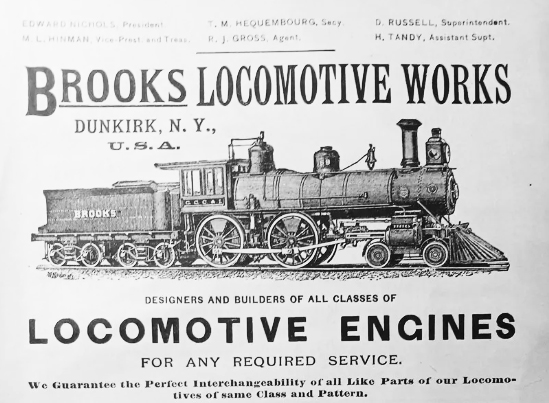
The Brooks Locomotive Works left an indelible mark on the locomotive manufacturing industry. Despite the eventual decline and cessation of operations, the legacy of innovation and quality production resonated throughout the industry.
The emphasis on custom-built locomotives and the pioneering spirit that started with Brooks himself continued to influence locomotive design and production methodologies long after the company ceased operations.
Furthermore, artifacts and locomotives from Brooks' productive years have been preserved in museums and collections across the United States, standing as testament to the technical prowess and engineering excellence of the era.
The company's contributions helped shape the development of the American rail network, supporting economic growth and facilitating travel and commerce across the burgeoning nation.
Recent Articles


-
Detroit, Toledo and Ironton Diesel Roster (All-Time)
Oct 21, 26 02:55 PM
 All-time diesel roster of the Detroit, Toledo and Ironton. 119 frames, each counted once. Serials and builder order numbers included. Last steam was December 24, 1955.
 -
Detroit, Toledo and Ironton Steam Roster (Post 1900)
Oct 21, 26 02:49 PM
 Detroit, Toledo and Ironton steam locomotives built after 1900. Drury's class grid. The quantity column prints 141. Counted once, the frames are 137. Last steam was Mikado 805 on December 24, 1955.
 -
Detroit, Toledo and Ironton Railroad: Map, Roster, History
Oct 21, 26 02:40 PM
 Detroit, Toledo & Ironton, reporting mark DTI, from Detroit to Ironton, Ohio. Railway organized May 2, 1905. Railroad articles filed February 21, 1914. Henry Ford, 1920 to 1929. Steam and diesel r…
 -
Iowa, Chicago and Eastern Railroad: Roster, Map, History
Oct 21, 26 01:04 PM
 Iowa, Chicago & Eastern Railroad Corporation, reporting mark ICE. About 1,125 miles and about 275 miles of trackage rights from the I&M Rail Link. Operations at 12:01 a.m. July 30, 2002. Canad…
 -
Rapid City, Pierre & Eastern Railroad: Route, Roster, Overview
Oct 21, 26 10:16 AM
 Rapid City, Pierre & Eastern Railroad, reporting mark RCPE. Genesee & Wyoming Class II. Agreement of January 2, 2014, Finance Docket 35799. Freight service from June 1, 2014, on the Dakota, Mi…
 -
Dakota, Minnesota & Eastern Railroad: Roster, Map, History
Oct 21, 26 12:26 AM
 Dakota, Minnesota & Eastern Railroad, reporting mark DME. The July 2, 1986 Chicago & North Western sale, 826 miles and 139 miles of trackage rights. Canadian Pacific control October 30, 2008…
 -
Detroit and Mackinac Railway: Map, Roster, History
Oct 20, 26 11:58 PM
 Detroit & Mackinac Railway, the Turtle Line. Bay City to Cheboygan along Lake Huron. Incorporated December 29, 1894. Lake State Railway leased the operation in 1992 and bought the lines in 1997. E…
 -
Davenport, Rock Island and Northwestern Railroad
Oct 20, 26 11:22 PM
 Davenport, Rock Island and North Western Railway, the DRI Line. Clinton to East Moline across the Crescent Bridge. Burlington and Milwaukee. Merged into the Soo Line on June 29, 1995. Eighteen diesels…
 -
Chicago Great Western Steam Roster (Post 1900)
Oct 20, 26 11:17 PM
 Chicago Great Western steam locomotives built or rebuilt since 1900. Drury's class grid. 320 frames, each once. The quantity column prints 376 because a rebuild is listed again. Last steam in the reti…
 -
Chicago Great Western Diesel Roster (All-Time)
Oct 20, 26 10:47 PM
 All-time diesel roster of the Chicago Great Western. 157 frames, each counted once. Serials and builder order numbers included. Steam was gone by 1950. The 1963 glance figure of 141 is one year's flee…
 -
Chicago Great Western Railway: Map, Photos, History, Rosters
Oct 20, 26 10:43 PM
 The Chicago Great Western, the Corn Belt Route, linked Chicago, the Twin Cities, Omaha, and Kansas City from September 27, 1885, until the Chicago & North Western merger at 12:01 a.m. on July 1, 1968…
 -
Chicago, South Shore & South Bend Railroad: "The South Shore Line"
Oct 20, 26 05:48 PM
 Chicago South Shore & South Bend, the South Shore Line, from the 1901 Air Line through Samuel Insull's 1925 rebuild, the orange cars, the 800s, and the railroad NICTD and Anacostia still run.
 -
Northwestern Virginia Railroad: Map, History, Timetable
Oct 20, 26 04:18 PM
 Northwestern Virginia Railroad, chartered February 14, 1851, Grafton to Parkersburg, 104 miles. Opened May 1, 1857. Foreclosure sale February 15, 1865, as the Parkersburg Branch. Twenty-three tunnels…
 -
"Exposition Flyer" (Train): Consist, Timetable, History
Oct 20, 26 03:29 PM
 Exposition Flyer, Chicago to Oakland, June 10, 1939 to March 20, 1949. Burlington, Rio Grande, and Western Pacific. Heavyweight cars, then diesels and a vista-dome. Replaced by the California Zephyr.
 -
Chicago, St. Paul, Minneapolis & Omaha Railway, "The Omaha Road"
Oct 20, 26 02:13 PM
 The Omaha Road, reporting mark CMO. Formed May 26, 1880. North Western management on December 16, 1882. Leased January 1, 1957. Class K-1 No. 183 and the sublettered diesels.
 -
Chicago and Western Indiana Railroad: Map, Rosters, History
Oct 20, 26 01:17 PM
 Chicago and Western Indiana, chartered June 5, 1879. Five equal owners, Dearborn Station, and two main lines. Dolton suburban mile 16.6. Fifteen diesels. Railroad service ended in 1994. The Illinois c…
 -
Railroad Tell-Tales: Protecting The Brakeman
Oct 20, 26 12:58 PM
 Railroad tell-tales: hanging ropes that warned a man on a freight-car roof of a low bridge or tunnel. The 1897 bridge-warning report, the 1905 Wisconsin statute, retainers, and why the roof walk outla…
 -
Chicago & North Western Steam Roster (Post 1900)
Oct 20, 26 12:54 PM
 Chicago & North Western steam locomotives built since 1900, and the Omaha Road list beside it. Drury's parent quantity column sums to 1,445, with four rows left blank. The Omaha Road column sums to 24…
 -
Chicago & North Western Diesel Roster (All-Time)
Oct 20, 26 12:49 PM
 All-time diesel roster of the Chicago & North Western. 2,494 frames, each counted once, including Chicago Great Western, Minneapolis & St. Louis, and Omaha Road units that received North Western numbe…
 -
Chicago and North Western Railroad: Map, History, Logo
Oct 20, 26 12:37 PM
 The Chicago & North Western, chartered as the Galena & Chicago Union in 1836 and formed in June 1859. Granger railroad of the 400s, the Cowboy Line, and Powder River coal. Union Pacific common control…
 -
Chicago & Illinois Midland Steam Roster (Post 1900)
Oct 20, 26 12:30 AM
 Chicago & Illinois Midland steam locomotives built since 1900. Drury's class grid, 57 engines. Twenty-six 2-10-2s, including nine from the Wabash and nine from the Atlantic Coast Line. Last road steam…
 -
Chicago & Illinois Midland Diesel Roster (All-Time)
Oct 20, 26 12:20 AM
 All-time diesel roster of the Chicago & Illinois Midland. 28 frames, each counted once. Six SW1200s, five SD9s, the only two RS1325s, two SD18s, six SD38-2s, and four SD20s. Serials included.
 -
Chicago and Illinois Midland Railroad: Map, Rosters, History
Oct 20, 26 12:17 AM
 The Chicago & Illinois Midland moved Illinois coal for Commonwealth Edison, Taylorville and Springfield to Pekin, with Peoria over the Peoria & Pekin Union. The 1906 railway began operating February 1…
 -
Chicago & Eastern Illinois Diesel Roster (All-Time)
Oct 19, 26 04:23 PM
 All-time diesel roster of the Chicago & Eastern Illinois. 143 frames, each counted once. Switchers, F3s, FP7s, E7s, the BL1, and the GP7s through GP35s. Serials included.
 -
Chicago & Eastern Illinois Steam Roster (Post 1900)
Oct 19, 26 04:19 PM
Chicago & Eastern Illinois steam locomotives built or rebuilt since 1900. 146 Consolidations, 60 Mikados, and 24 Pacifics. Drury's class grid. Last steam was Mikado 1944 at Vincennes on May 5, 1950. -
Chicago and Eastern Illinois Railroad: Map, Rosters, History
Oct 19, 26 03:57 PM
 The Chicago & Eastern Illinois ran from Chicago to Evansville, St. Louis, and Thebes. First company of the name, August 28, 1877. The remainder merged into the Missouri Pacific on October 15, 1976. St…
 -
Rock Island Diesel Roser: All-Time
Oct 19, 26 11:05 AM
 Chicago, Rock Island and Pacific diesel locomotives, 1,029 frames counted once. Switchers, cab units, road-switchers, two acquired slugs, five RDCs, and bi-power 10000. Serial and order are separate c…
 -
Rock Island Steam Roster: Post 1900
Oct 19, 26 11:01 AM
Chicago, Rock Island and Pacific steam locomotives built or rebuilt since 1900. Drury's class grid, 1,482 frames counted once, including 85 4-8-4s. Last revenue steam was July 1953. -
Rock Island Railroad: Map, Pictures, Logo, History
Oct 19, 26 10:51 AM
 The Chicago, Rock Island and Pacific ran from Chicago to the Twin Cities, Denver, Tucumcari, and the Gulf. First train October 10, 1852. Directed service ended March 23, 1980. Steam and diesel rosters…
 -
EMD "F7" Locomotives: Cab, Top Speed, Specs, Rosters
Oct 19, 26 12:27 AM
 EMD F7 cab units and boosters, 1,500 horsepower, built February 1949 through December 1953. Gear ratios, specifications, and the production roster by owner, serial, and order.
 -
Harlem Transfer Company: An NYC Terminal System
Oct 19, 26 12:01 AM
 Harlem Transfer Company, the Lackawanna's offline freight terminal on the Bronx side of the Harlem River at East 135th Street. Carfloats to Hoboken, boxcab No. 2, and GE 44-tonner 53.
 -
Belpre Industrial Parkersburg Railroad: Roster, History, Photos
Oct 18, 26 11:44 PM
 Belpre Industrial Parkersburg Railroad, a Class III short line leasing about 46.9 miles of CSX track at Parkersburg since 2020. The Ohio River bridge, the Marietta Subdivision, and five GP38-3s.
 -
Chicago, Peoria & St. Louis Railroad: Map, Timetables, History
Oct 18, 26 10:57 PM
 Chicago, Peoria & St. Louis Railroad, an Illinois line from Pekin and Peoria through Springfield to Madison. Chartered in 1853. Sold in parcels on November 20, 1924. The Pekin line is today the Illino…
 -
Chicago, Burlington & Quincy Diesel Roster (All-Time)
Oct 18, 26 10:54 PM
 All-time diesel roster of the Chicago, Burlington & Quincy. 951 parent frames, 72 Colorado & Southern, and 36 Fort Worth & Denver, each counted once. Serials included.
 -
Burlington Railroad (CB&Q): Map, History, Rosters, Photos
Oct 18, 26 10:49 PM
 The Chicago, Burlington & Quincy, the Burlington Route, ran from Chicago to Denver, the Twin Cities, and the Gulf. Steam built since 1900 and the diesel fleets are companion rosters. Burlington Northe…
 -
Chicago, Burlington & Quincy Steam Roster (Post 1900)
Oct 18, 26 10:33 PM
 Chicago, Burlington & Quincy steam locomotives built or rebuilt since 1900. 429 Prairies, 383 Mikados, the Hudsons, and the O-5 4-8-4s. Drury's class grid.
 -
Virginian Railway's 2-6-6-6 Locomotives (Class AG)
Oct 18, 26 01:38 PM
 Virginian Railway class AG. Eight Lima 2-6-6-6s, Nos. 900-907, built in 1945 for the east end. Billed at 753,000 pounds. Scrapped in 1960.
 -
Pennsylvania (PRR) Steam Roster: Post 1906
Oct 18, 26 01:05 PM
ennsylvania steam after 1906—H8, H9, and H10 Consolidations, 574 L1s Mikados, 598 I1s Decapods, 425 K4s Pacifics, 301 M1 Mountains. Drury’s grid. Last steam November 30, 1957. -
Chicago, Aurora and Elgin Railroad: The "Roarin' Elgin"
Oct 18, 26 10:54 AM
The Chicago, Aurora & Elgin, the Roarin' Elgin, ran 600-volt third-rail trains from Chicago to Aurora, Batavia, and Elgin. Passenger service ended at noon on July 3, 1957. Freight ended June 11, 1959. -
Algoma Central Railway: Map, Logo, Rosters
Oct 17, 26 10:49 PM
 Algoma Central Railway, Sault Ste. Marie to Hearst. Wisconsin Central on February 1, 1995. Fifty-nine steam locomotives and forty-two diesels.
 -
Akron, Canton and Youngstown Railroad: Map, History, Rosters
Oct 17, 26 05:49 PM
 Akron, Canton and Youngstown Railroad, Mogadore to Delphos. The rails never reached Canton or Youngstown. Norfolk & Western control on October 16, 1964. Twenty-six diesels and the historical society's…
 -
Georgia Railroad: Map, History, Logo, Rosters
Oct 17, 26 12:59 PM
 Georgia Railroad, the Georgia Railroad and Banking Company, Augusta to Atlanta, with the Athens branch and the Macon Road. Mark GA. The railroad properties were sold on November 4, 1982.
 -
West Point Route (Railroad): Map, History, Logo
Oct 16, 26 11:26 PM
 The West Point Route was a trademarked name comprising the Atlanta & West Point and Western Railway of Alabama, which were controlled by the Georgia Railroad.
 -
Virginian Railway Diesel Roster (All-Time)
Oct 16, 26 11:11 PM
 All-time diesel roster of the Virginian Railway. 40 Fairbanks-Morse H16-44s, 25 H24-66 Train Masters, and one GE 44-tonner. Serials included.
 -
Virginian Railway Steam Roster (Post 1900)
Oct 16, 26 10:55 PM
 Virginian Railway steam locomotives built since 1900. Mikados, 2-8-8-2s, the Triplex, class AE 2-10-10-2s, and the 1945 2-6-6-6s.
 -
Virginian Railway: Map, Rosters, History, Electrification
Oct 16, 26 10:51 PM
 Virginian Railway, Deepwater to Norfolk. Combined in 1907 and completed in 1909. Electrified from Roanoke to Elmore. Absorbed by the Norfolk & Western on December 1, 1959.
 -
Baldwin "Centipede" Locomotives: Specs, Roster, Photos
Oct 16, 26 03:58 PM
 Baldwin DR-12-8-1500/2 Centipede—2-D+D-2, two 608SC engines, 3,000 hp. SAL 4500 from the 1943 test bed. 54 on the serial list, 52 sold. PRR BP60 then BH50. None preserved.
 -
Louisville & Nashville Class M-1 2-8-4s: The Big Emmas
Oct 16, 26 03:52 PM
Louisville & Nashville class M-1, 42 Big Emma 2-8-4s. Baldwin in 1942 and 1944, Lima in 1949. Coal trains from Neon to DeCoursey. No locomotive survives. -
Tennessee, Alabama and Georgia Railway: Map, History, Rosters
Oct 16, 26 03:21 PM
 Tennessee, Alabama and Georgia Railway, Chattanooga to Gadsden. The May 1929 card is 91.7 miles. Southern stock control closed on a January 1, 1971 schedule. Five diesels and Prince's steam list.
 -
Railroad Museums In The USA (2026): State Guides & Collections
Oct 16, 26 02:29 PM
 U.S. railroad museums—what they are vs tourist railroads, preservation history (R&LHS, NRHS, IRM, Steamtown), state guides, and destination collections. Confirm hours on each museum’s site.