Grand Trunk Western 4-6-2 No. 5629
Published: February 13, 2026
By: Adam Burns
Grand Trunk Western No. 5629 has become one of the more haunting “what-if” stories in Midwestern steam preservation. Built as a practical, passenger-minded 4-6-2 during the last great wave of new steam construction, it outlived its intended role by decades—working commuter trains, powering sold-out fan trips, hauling high-profile special trains, and then sitting in limbo while the clock ran out. In the end, 5629’s story wasn’t decided by worn-out machinery so much as circumstance, property rights, and a bitter legal standoff that culminated in scrapping on-site in July 1987.
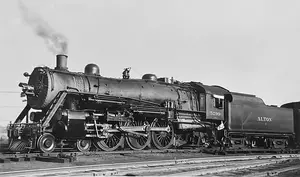
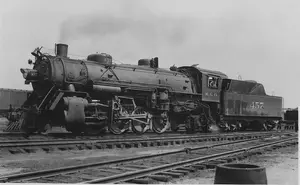
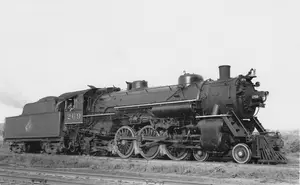
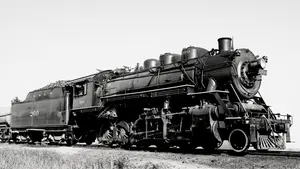
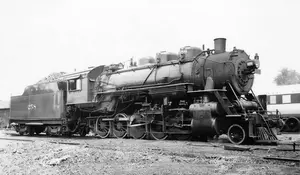
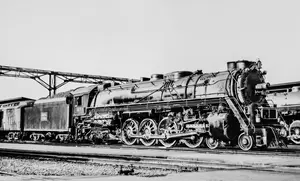
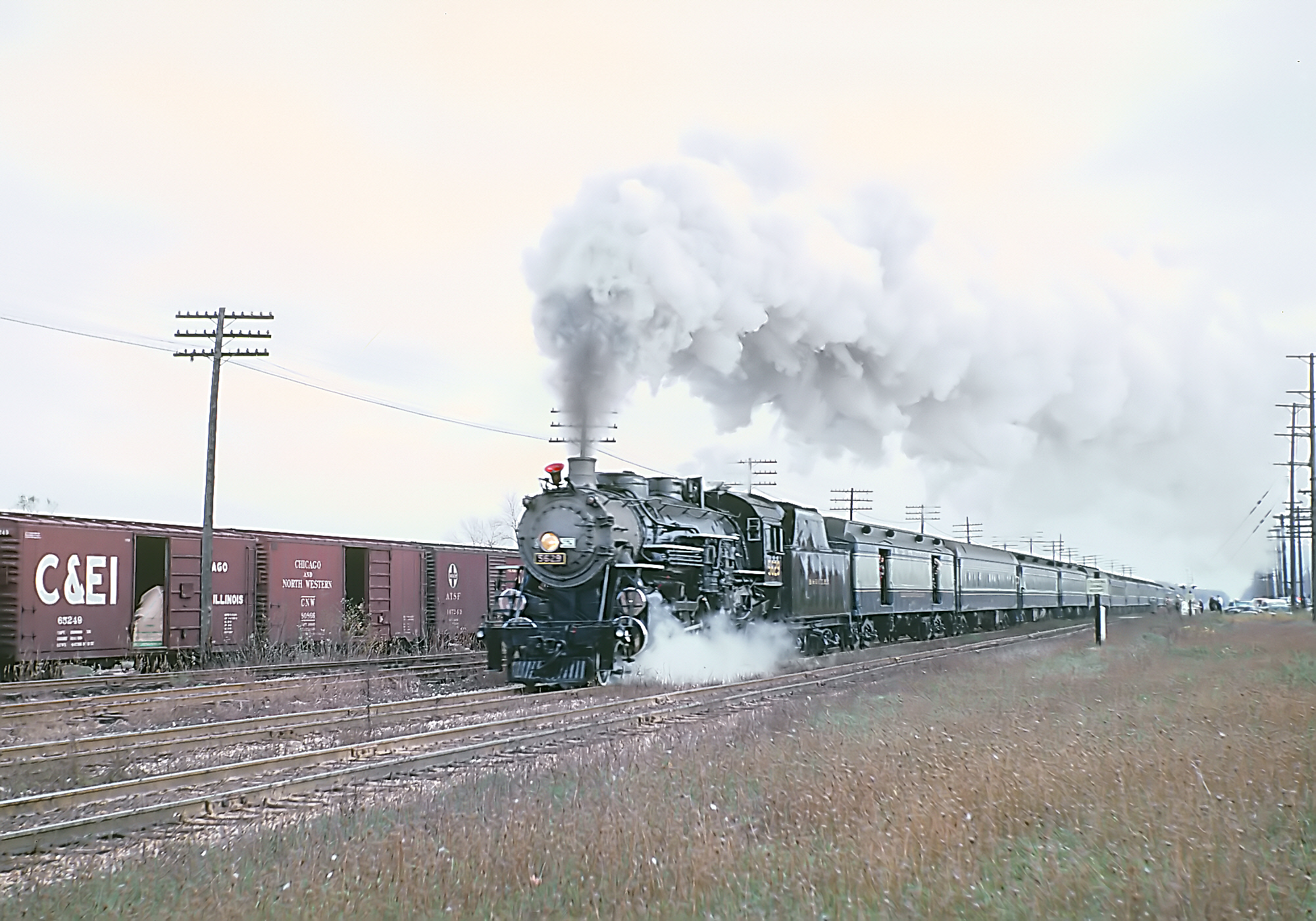 Grand Trunk Western 4-6-2 #5629, lettered as B&OCT #5629 and then-owned by Richard Jensen, leads a fan trip at 26th Avenue in Bellwood, Illinois in December, 1961. Rick Burn photo.
Built for the Grand Trunk Western: A USRA Light Pacific
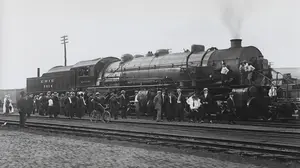
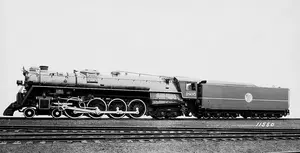
No. 5629 was one of five Grand Trunk Western Class K-4-a “Pacific” locomotives (Nos. 5627–5631). The group was built by the American Locomotive Company (ALCO) at Schenectady, New York. 5629’s builder’s serial number was 65290, and its build date is recorded as February 1924, with delivery the following month.
The GTW’s K-4-a class is often described as a close relative—or copy—of the USRA Light Pacific concept, optimized for fast passenger schedules and frequent stops. In typical railroad fashion, “copy” didn’t mean “identical.” The GTW specified details it preferred, including Walschaerts valve gear, a Worthington feedwater heater, and a Delta trailing truck arrangement rather than components used on some baseline USRA designs.
The K-4-a engines represented a mature, standardized approach to passenger steam—efficient enough to justify new construction, conservative enough to be maintainable systemwide, and capable of handling commuter work one day and longer passenger runs the next.
Key Specifications
Configuration and class
- Wheel arrangement: 4-6-2 (Pacific)
- GTW class: K-4-a
- Cylinders: Two, outside
- Cylinder size: 25 in × 28 in
- Valve gear: Walschaerts
Boiler and steaming
- Boiler pressure: 200 psi
- Grate area: 66.70 sq ft
- Superheater: Schmidt, 794 sq ft
- Feedwater heater: Worthington
Drivers, weight, and performance
- Driver diameter: 73 in
- Locomotive weight: 285,500 lb
- Weight on drivers: 170,000 lb
- Tractive effort: 40,753 lbf
- Maximum speed (listed): 80 mph
Tender Capacity
One of the more important “preservation-era” changes was 5629’s tender situation. In excursion service, it ultimately carried a much larger tender than it had in GTW revenue days—boosting the practical range between water/coal stops and making longer trips more feasible in the 1960s excursion market. The modified tender capacities commonly cited are 22 tons of coal and 18,000 gallons of water.
Revenue Service
In GTW ownership, 5629’s core work centered on passenger service—especially the kind of demanding, start-and-stop operation commuter railroading requires. The locomotive’s assignments shifted over time as newer power arrived and steam was pushed toward secondary service.
A pivotal moment came in 1942, when the GTW received its U-3-b 4-8-4s (larger “Northern” types). With those engines taking the heavier or more prominent passenger jobs, locomotives like 5629 were reassigned. 5629’s later GTW work included commuter and other service in Michigan, reflecting steam’s gradual repositioning as the diesel era approached.
One of 5629’s most notable late-career GTW moments was a fan trip on September 27, 1959, when it pulled an excursion for the Michigan Railroad Club between Detroit and Bay City—essentially a farewell-era run, as the locomotive was slated to come off the active roster amid systemwide steam retirement.
By March 1960, 5629’s GTW revenue career was effectively over, and the locomotive stood at the edge of the same fate that met thousands of other steam locomotives: the torch.
Richard Jensen
Here’s where 5629’s story takes a dramatic turn.
Chicago-area railfan Richard (“Dick”) Jensen decided he wanted a mainline steam locomotive for excursions. Learning that 5629 was headed for retirement and scrapping, he moved quickly—and bought the locomotive from the GTW for its scrap value. The purchase date frequently cited is April 4, 1960, and the price is given with memorable precision: $9,540.40.
Jensen stored the engine on a siding rented from the Baltimore & Ohio in Hammond, Indiana, and began the slow, difficult work of returning a big road steam engine to operable condition—without the institutional resources that a railroad shop once provided. Contemporary accounts emphasize the intensity of the effort: long hours after work, volunteer help, and the need for regulatory inspection before mainline operation.
First Excursion Era: B&O Operations and Early Limitations (1961–1962)
By late 1961, 5629 had returned to steam. Test runs were followed by early excursions on B&O-connected trackage near Chicago. One widely cited early trip occurred in November 1961, with additional operation including a Father’s Day excursion on June 17, 1962, running between Chicago and Walkerton, Indiana.
But steam excursions are a balancing act: mechanical readiness, inspection requirements, and market demand all have to align. After limited early running, 5629 was sidelined again—needing work such as flues, and facing competition in a Midwest excursion scene that, at the time, included other steam programs and company-sponsored trips.
Even so, 5629’s return to operation in this period mattered. It proved the locomotive was viable beyond static display, and it established the engine’s identity as an excursion machine—something that would intensify later in the decade.
The Midwestern Excursion Market and 5629’s “Second Wind” (1966–1969)
By the mid-1960s, Jensen sought to expand 5629’s excursion usefulness, including longer trips. A major step was fitting the locomotive with a larger tender from a Soo Line 4-8-2, significantly increasing coal and water capacity—exactly the kind of modification that turns an “it can run” engine into an “it can run far” engine.
Indiana Sesquicentennial (1966)
In 1966, 5629 was leased for Indiana sesquicentennial excursions, operating over ex–Nickel Plate Road trackage associated with the Norfolk & Western. Reports note that over 14,000 passengers rode these trains, though the locomotive did experience mechanical issues on some trips that required repairs with diesels stepping in.
This period demonstrates a key truth about mainline steam: success isn’t “no problems,” it’s whether the organization can solve problems fast enough to keep the show on the road. 5629 did both—ran impressively when healthy, and still needed real railroad-level support when something went wrong.
Return to GTW Excursions Out of Chicago and Detroit
5629 also returned to GTW rails for excursions in the late 1960s. SteamLocomotive.com summarizes that Jensen ran a number of successful trips during 1967–1969, including Chicago- and Detroit-area operations.
The Schlitz Circus Train (1967–1968)
One of 5629’s most famous assignments was hauling the Circus World Museum / Schlitz Circus Train in 1967 and 1968. In 1968, the locomotive suffered an overheated bearing en route, requiring emergency work and contributing to delays and cancellation impacts tied to the event.
For a historian, this is gold: a preserved steam engine on a high-visibility, culturally resonant train—exactly the kind of “steam in the modern world” moment that turns a locomotive into a legend.
A Near-Miss With the Southern Railway Steam Program
A fascinating sidebar: in 1968, Southern Railway president W. Graham Claytor Jr. explored obtaining 5629 for use in Southern’s steam program (with cosmetic changes to resemble a Southern Ps-4). Negotiations went nowhere, and 5629 remained with Jensen.
It’s tempting to speculate how different 5629’s end might have been if it had entered a stable, well-funded corporate steam program. But history chose the harder path.
Second Retirement
By the early 1970s, cracks were showing. A planned April 25, 1971 excursion over Penn Central rails was cancelled at the last minute after tickets were sold, amid issues arranging passenger equipment; some ticket-holders reportedly did not receive refunds.
Operational setbacks, the difficulty of storing equipment, shifting railroad attitudes toward excursions, and Jensen’s own financial and personal challenges all tightened the vise. Over time, 5629 ended up stored in the Rock Island’s Blue Island yard area south of Chicago, a location that later became central to its fate.
SteamLocomotive.com’s Jensen overview also portrays the precariousness of the whole endeavor—early promise followed by a grind of logistical and financial challenges that eventually overwhelmed the operation.
Ultimate Fate
The end of 5629 is one of the most controversial chapters in modern U.S. steam preservation—and a cautionary tale about what happens when ownership, storage, and cooperation fall apart.
By the mid-1980s, the locomotive’s storage situation had become untenable. Metra wanted the engine removed from property it controlled, while Jensen remained the owner. Court actions and escalating conflict produced a grim outcome: if the locomotive could not be removed intact through cooperation, the legal system allowed dismantling as the practical alternative.
Multiple preservation groups reportedly attempted to buy the locomotive (offers often cited around $15,000), and Metra was described as supportive of solutions that would remove the engine without scrapping—but ownership and legal realities prevented an easy transfer.
A judge’s order in June 1987 set the final course, and in July 1987 the engine was cut up. Wikipedia’s sourced timeline places the start of scrapping on July 14, with the process stopping around July 17, and removal of the remains completed by July 20.
Metra sought removal, refusal and legal deadlock led to an eviction/scrap remedy, and even efforts by the Illinois Railway Museum failed to save the engine. For many railfans, 5629’s destruction felt especially painful because it had been a mainline excursion locomotive—proven, charismatic, and historically significant. It wasn’t a rusted-out hulk from a park display; it was a Pacific that had run hard in the 1960s, the kind of engine that—under different conditions—might have survived into today’s preservation landscape.
Recent Articles


-
Alton Railroad: Map, History, Timetables
Oct 09, 26 10:31 PM
 Alton Railroad, chartered February 27, 1847 as the Alton & Sangamon. Chicago, St. Louis, and Kansas City, the 1937 Official Guide, and the May 31, 1947 merger into the Gulf, Mobile & Ohio.
 -
Mobile & Ohio Steam Roster (Post 1900)
Oct 09, 26 12:26 PM
 Mobile & Ohio steam since 1900. Drury's class grid: 48 six-wheel switchers, 107 Ten-Wheelers, 15 Consolidations, 58 Mikados, and 14 Pacifics. Last revenue steam October 7, 1949.
 -
Mobile & Ohio Railroad: History, Map, Timetable
Oct 09, 26 11:31 AM
 Mobile & Ohio Railroad, chartered in 1848. Columbus on April 22, 1861, the Cairo & St. Louis, the March 1940 Official Guide, and the September 13, 1940 merger into the Gulf, Mobile & Ohio.
 -
Gulf, Mobile & Northern Steam Roster (Post 1900)
Oct 09, 26 10:42 AM
 Gulf, Mobile & Northern steam since 1900. Drury's class grid: Ten-Wheelers, Mikados, Russian Decapods, Pacifics 425 and 426, and three light 4-8-2s. Last revenue steam October 7, 1949.
 -
Gulf, Mobile & Ohio Diesel Roster (All-Time)
Oct 09, 26 10:41 AM
 Gulf, Mobile & Ohio diesel roster, all-time. The 1935 boxcab, DL-107s, 55 FA-1s, F3s and F7s, the Ingalls 4-S, GP30s through GP38-2s, and 21 SD40s. Serials and order numbers.
 -
Gulf, Mobile & Northern Railroad: History, Rebel Route
Oct 09, 26 10:36 AM
 Gulf, Mobile & Northern, from the 1890 Mobile, Jackson & Kansas City to the Rebel and the September 13, 1940 merger into the Gulf, Mobile & Ohio. Steam roster is the companion page.
 -
Gulf, Mobile & Ohio Railroad: Map, Photos, Trains, History
Oct 08, 26 11:48 PM
 Gulf, Mobile & Ohio, chartered in 1938 and merged September 13, 1940. The Mobile & Ohio, the Alton on May 31, 1947, the Rebel Route, and Illinois Central Gulf on August 10, 1972.
 -
New Jersey Railroad Museums (2026): A Complete Guide
Oct 08, 26 11:37 PM
 New Jersey railroad museums—Whippany, Maywood, Pine Creek, Mahwah’s Erie depot, Phillipsburg, and Boonton. Confirm hours on each site.
 -
New Hampshire Railroad Museums (2026): A Complete Guide
Oct 08, 26 11:34 PM
 New Hampshire railroad museums—North Conway, the Flying Yankee, Ashland, Gorham, Raymond, and Sandown. Confirm hours on each site.
 -
Missouri Railroad Museums (2026): A Complete Guide
Oct 08, 26 11:00 PM
 Missouri railroad museums—the National Museum of Transportation, Patee House, Frisco 4524, the Chicago & Alton depot, and Marceline. Confirm hours on each site.
 -
Milwaukee Road X3800: Deer Lodge’s Shop Goat
Oct 08, 26 04:28 PM
 Milwaukee Road X3800, the a home-built shop goat that served the Deer Lodge, MT yard. It was a 220-volt DC switcher, powered through an extension cord that moved electrics into a roundhouse where the…
 -
Key West Extension (Overseas Railroad): History, Construction, Decline
Oct 08, 26 03:59 PM
 Henry Flagler's Overseas Railroad, Miami to Key West, 1905–1935. The Seven Mile Bridge, the 1935 Labor Day Hurricane, and the road that became U.S. 1.
 -
Florida East Coast Steam Roster (Post 1900)
Oct 08, 26 02:34 PM
 Florida East Coast steam since 1897. Seventeen Ten-Wheelers, twenty Atlantics, eighty-seven Pacifics, ninety Mountains, fifteen Mikados, and the switchers.
 -
Florida East Coast Diesel Roster (All-Time)
Oct 08, 26 02:12 PM
 Florida East Coast diesel roster, all-time. E units from 1939, F3s, BL2s, GP7s and GP9s, the GP40-2 orders, 22 SD40-2s, and 24 ES44C4s. Serials and EMD order numbers.
 -
Florida East Coast Railway: Map, History, Rosters
Oct 08, 26 01:46 PM
 Florida East Coast Railway, Henry Flagler's line from Jacksonville to Miami and Key West. Receivership in 1931, the 1963 strike, Grupo México in 2017, and Brightline on the same track.
 -
Minnesota Railroad Museums (2026): A Complete Guide
Oct 08, 26 10:32 AM
Minnesota railroad museums—the Lake Superior Railroad Museum, Two Harbors, Jackson Street, Willmar’s Great Northern 2523, and Currie. Confirm hours on each site. -
Maine Railroad Museums (2026): A Complete Guide
Oct 08, 26 09:24 AM
 Maine railroad museums—Seashore Trolley, the two-foot lines at Portland, Alna, and Phillips, Boothbay, and the Bangor & Aroostook depots. Confirm hours on each site.
 -
Massachusetts Railroad Museums (2026): A Complete Guide
Oct 08, 26 12:08 AM
 Massachusetts railroad museums—Berkshire Scenic at Lenox, Shelburne Falls trolley No. 10, Edaville, Chatham’s 1887 depot, and Lowell. Confirm hours on each site.
 -
Clinchfield Steam Roster (Post 1900)
Oct 07, 26 12:09 PM
 Clinchfield steam since 1900. Fifteen H-4 Consolidations, K-1 Mikados, M-2 and M-3 Mallets, L-class 2-8-8-2s, eighteen Challengers. Class grid after Drury. Last steam April 16, 1954.
 -
Clinchfield Diesel Roster (All-Time)
Oct 07, 26 12:05 PM
 Clinchfield diesel roster, all-time. F3A 800, FP7 200, the F7s, GP7s, 25 SD40s, 18 SD45-2s, seven U36Cs, and the Family Lines hoods. Serials and EMD order numbers.
 -
Clinchfield Railroad: Map, Steam Locomotives, Roster, Logo
Oct 07, 26 12:02 PM
 Clinchfield Railroad, Elkhorn City to Spartanburg. George L. Carter, the Carolina, Clinchfield & Ohio, the 1924 lease, coal, the loops, and CSX. Steam and diesel rosters are companion pages.
 -
Kentucky Railroad Museums (2026): A Complete Guide
Oct 07, 26 11:39 AM
 Kentucky railroad museums—the Kentucky Railway Museum, Bowling Green’s L&N depot, Paducah, Versailles, and Covington. Confirm hours on each site.
 -
Kansas Railroad Museums (2026): A Complete Guide
Oct 07, 26 11:26 AM
 Kansas railroad museums—Santa Fe 3768 at Wichita, Santa Fe 132 in Topeka, the Great Overland Station, and Abilene. Confirm hours on each site.
 -
Cincinnati, New Orleans and Texas Pacific Diesel Roster (All-Time)
Oct 07, 26 10:38 AM
 All-time diesel roster of Southern locomotives lettered for the Cincinnati, New Orleans and Texas Pacific. Serials, order numbers, and builder dates.
 -
Cincinnati, New Orleans and Texas Pacific Railway
Oct 07, 26 10:31 AM
 Cincinnati, New Orleans and Texas Pacific Railway, incorporated September 8, 1881, to lease Cincinnati’s railroad to Chattanooga. Queen and Crescent route, Rathole, and the 2024 sale to Norfolk Southe…
 -
Indiana Railroad Museums (2026): A Complete Guide
Oct 07, 26 12:26 AM
 Indiana railroad museums—Nickel Plate 765, Elkhart’s New York Central collection, French Lick, Linden’s junction depot, and Haley Tower. Confirm hours on each site.
 -
"Triplex" Steam Locomotive: Specs, History, Photos
Oct 06, 26 11:52 PM
 Erie class P-1 Triplex 2-8-8-8-2s. Three Baldwin compounds, 2603–2605, later 5014–5016, built 1914 and 1916. Matt H. Shay, the 1930 class card, and Virginian XA 700.
 -
Illinois Railroad Museums (2026): A Complete Guide
Oct 06, 26 11:47 PM
 Illinois railroad museums—the Illinois Railway Museum, Monticello, the Pioneer Zephyr, Galesburg’s Burlington 3006, and the depots. Confirm hours on each site.
 -
Iowa Railroad Museums (2026): A Complete Guide
Oct 06, 26 11:41 PM
 Iowa railroad museums—the Union Pacific Railroad Museum, RailsWest, Sioux City, Boone, and the National Hobo Museum in Britt. Confirm hours on each site.
 -
Charleston and Western Carolina Diesel Roster (All-Time)
Oct 06, 26 11:29 PM
Charleston and Western Carolina diesel roster. Twenty-one GP7s, two SW7s, two SW9s, and six F7As, all built 1950–1952. Serials, order numbers, and ACL and SCL numbers. -
Charleston and Western Carolina Railway: Map, History, Timetables
Oct 06, 26 11:18 PM
 Charleston and Western Carolina Railway, incorporated September 16, 1896. Port Royal to Spartanburg, with branches to Anderson and Greenville. Merged into the Atlantic Coast Line on December 31, 1959.
 -
Central of Georgia Steam Roster (Post 1900)
Oct 06, 26 04:00 PM
 Central of Georgia steam since 1900. Cooke Consolidations, Harriman Mikados, 32 Mountains, and eight Lima 4-8-4s. Class grid after Drury. Last steam May 1953.
 -
Central of Georgia Diesel Roster (All-Time)
Oct 06, 26 03:44 PM
 Central of Georgia diesel roster. SW1 No. 1 in 1939, E7s and E8s, nine F3As, 39 RS3s, GP7s through SD35s. Serials and order numbers.
 -
Central of Georgia Railway: Map, Logo, History, Rosters
Oct 06, 26 03:42 PM
 Central of Georgia Railway, from the 1833 Savannah charter to Southern control on June 17, 1963. Map, logos, Nancy Hanks II, and links to the steam and diesel rosters.
 -
Georgia Railroad Museums (2026): A Complete Guide
Oct 06, 26 03:33 PM
Georgia railroad museums—Savannah’s Central shops, Duluth, the General at Kennesaw, the Texas in Atlanta, Tifton, Waycross, and Albany. Confirm hours on each site. -
Florida Railroad Museums (2026): A Complete Guide
Oct 06, 26 03:18 PM
 Florida railroad museums—Boca Raton, Winter Garden, Whitehall, the Gold Coast, Parrish, Fort Myers, Milton, and Plant City. Confirm hours on each site.
 -
Connecticut Railroad Museums (2026): A Complete Guide
Oct 06, 26 01:05 PM
 Connecticut railroad museums—the Shore Line Trolley, East Windsor, the Naugatuck Railroad, Danbury Union Station, Willimantic, and the SoNo tower. Confirm hours on each site.
 -
Colorado Railroad Museums (2026): A Complete Guide
Oct 06, 26 12:47 PM
 Colorado railroad museums—Golden, the Forney’s Big Boy 4005, Pueblo’s Santa Fe 2912, and the depots at Castle Rock, Limon, and Ridgway. Confirm hours on each site.
 -
Atlantic Coast Line Steam Roster (Post 1900)
Oct 06, 26 12:44 PM
 Atlantic Coast Line steam since 1900. Copper Head Ten-Wheelers, 235 P-5 Pacifics, Q-1 Santa Fes, twelve R-1 4-8-4s. Class grid after Drury. Last steam June 30, 1955.
 -
Atlantic Coast Line Diesel Roster (All-Time)
Oct 06, 26 11:57 AM
 Atlantic Coast Line diesel roster. HH660 1900 in 1939, E3s for the Champion, FTs and F2s, GP7s 100–279, GP30s, U25Cs, and the 1967 SCL numbers. Serials and orders.
 -
Atlantic Coast Line Railroad: "Standard Railroad of the South"
Oct 06, 26 11:53 AM
 Atlantic Coast Line, the Standard Railroad of the South. April 21, 1900 to July 1, 1967. Plant System, L&N, Clinchfield, the Champion, and the Seaboard Coast Line merger.
 -
California Railroad Museums (2026): A Complete Guide
Oct 06, 26 09:50 AM
California railroad museums—the California State Railroad Museum, Perris, Portola, Railtown 1897, and the depots that still stand. Confirm hours on each site. -
Arizona Railroad Museums (2026): A Complete Guide
Oct 06, 26 09:46 AM
Arizona railroad museums—the Arizona Railway Museum in Chandler, Southern Pacific 1673 at Tucson, and the McCormick-Stillman park in Scottsdale. -
Arkansas Railroad Museums (2026): A Complete Guide
Oct 06, 26 09:07 AM
 Arkansas railroad museums—Cotton Belt 819 at Pine Bluff, the Fort Smith trolley, the Mammoth Spring depot, and the Eureka Springs railway.
 -
Alabama Railroad Museums (2026): A Complete Guide
Oct 06, 26 09:03 AM
Alabama railroad museums—Heart of Dixie at Calera, the North Alabama museum at Chase, Huntsville’s 1860 depot, and Fort Payne. Confirm hours on each site. -
Pennsylvania Railroad Museums (2026): A Complete Guide
Oct 06, 26 12:09 AM
 Pennsylvania railroad museums—Strasburg, Steamtown, the Horseshoe Curve, the East Broad Top, and the depots and towers in between. Confirm hours on each site.
 -
Maryland Railroad Museums (2026): A Complete Guide
Oct 05, 26 11:53 PM
 Maryland railroad museums—the Baltimore roundhouse, Ellicott City station, Bowie, Gaithersburg’s Buffalo Creek & Gauley 14, and the Western Maryland collections.
 -
Ohio Railroad Museums (2026): A Complete Guide
Oct 05, 26 05:51 PM
 Ohio railroad museums—the Age of Steam Roundhouse, Bellevue, Worthington, Conneaut’s Nickel Plate 755, and the Dennison depot. Confirm hours on each site.
 -
Delaware Railroad Museums (2026): A Complete Guide
Oct 05, 26 02:43 PM
 Delaware railroad museums—Wilmington & Western at Greenbank, the Harrington tower and N5 caboose, Felton's 1868 depot, and the Selbyville station museum.
 -
C&O's M-1 Steam Turbine Locomotives: Specs, Roster, History
Oct 05, 26 12:13 PM
 Chesapeake & Ohio Class M-1 steam-turbine-electrics. Three Baldwin-Westinghouse locomotives, 500–502, built 1947–48 for The Chessie. Specs, the 2-C1+2-C1-B arrangement, and a roster. All scrapped…