Ferrocarriles Nacionales de México (N de M)
Published: January 4, 2026
By: Adam Burns
For much of the twentieth century, Ferrocarriles Nacionales de México—better known by its classic initials N de M, and later as FNM/Ferronales—was more than a transportation company. It was a physical expression of Mexican statecraft: a sprawling network meant to bind distant regions to the capital, channel exports to ports and border crossings, and project federal authority across mountains, deserts, and tropical lowlands. Its story runs through nearly every major political and economic shift Mexico experienced from the late Porfirian era to the neoliberal reforms of the 1990s.
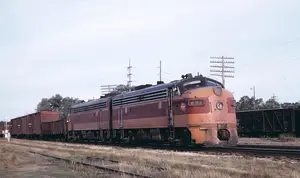
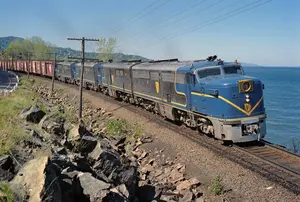
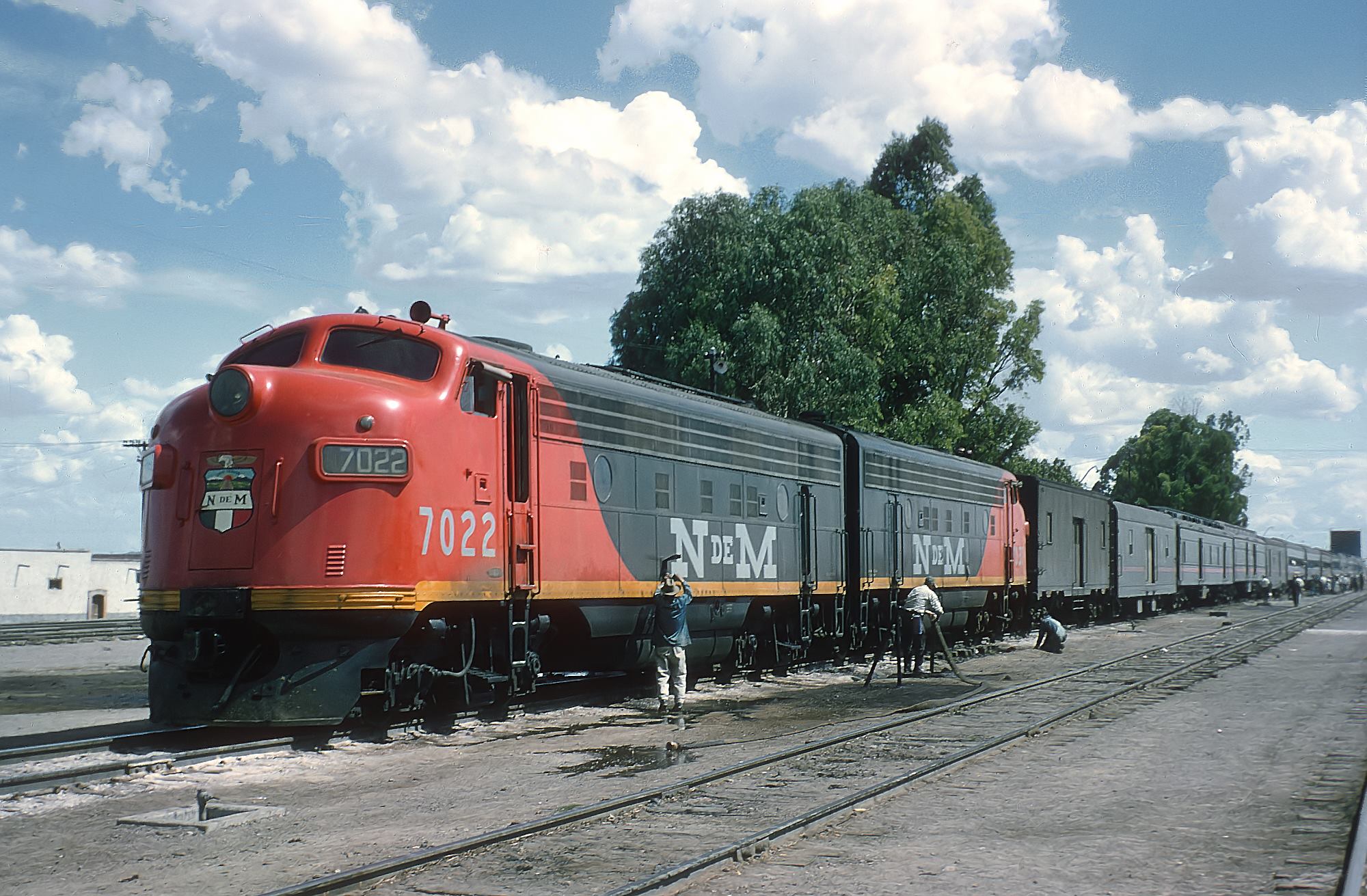 A pair of handsome NdeM FP9s, led by #7022, have train #7 at Felipe Pescador, Mexico in June, 1964. Rick Burn photo.
Origins: Railroads before “Nacionales”
Railroading arrived in Mexico during the nineteenth century through a long series of concessions and financing schemes—many driven by foreign capital, foreign engineering expertise, and the commercial priorities of export-oriented development. Mexican governments saw railroads as strategic infrastructure: lines were expected to connect the interior to ports, improve internal trade, and accelerate modernization. Early efforts were intermittent and vulnerable to political instability, but by the last decades of the century, rail construction became a centerpiece of national development policy.
That transformation is strongly associated with the long administration of Porfirio Díaz (the Porfiriato), which promoted industrial growth, mining expansion, and deeper integration with U.S. and global markets. Railroads—often built and operated by large companies with substantial foreign ownership—expanded rapidly, linking Mexico City with regional centers and opening direct corridors to the United States and the Gulf Coast.
Consolidation and the Birth of Ferrocarriles Nacionales de México
By the early 1900s, the rail map of Mexico included major systems that sometimes competed, sometimes overlapped, and often depended on complex financial arrangements. Mexican policymakers increasingly favored consolidation: a unified or coordinated network was seen as more efficient, easier to regulate, and better aligned with national priorities.
A key milestone came with the creation of Ferrocarriles Nacionales de México in the early twentieth century, tied to a broader strategy to group and consolidate major lines. Mexican government sources commonly date the company’s creation to March 28, 1908, emphasizing the fusion of major rail enterprises and the effort to stabilize and rationalize the system.
In practice, the firm and its predecessor arrangements absorbed or coordinated important components of Mexico’s rail network, including lines reaching major border gateways and commercial hubs. One especially significant development was the strengthening of the trunk link between Mexico City and the U.S. frontier—vital both for trade and for passenger movement—helping establish the “national” character that the company’s name implied.
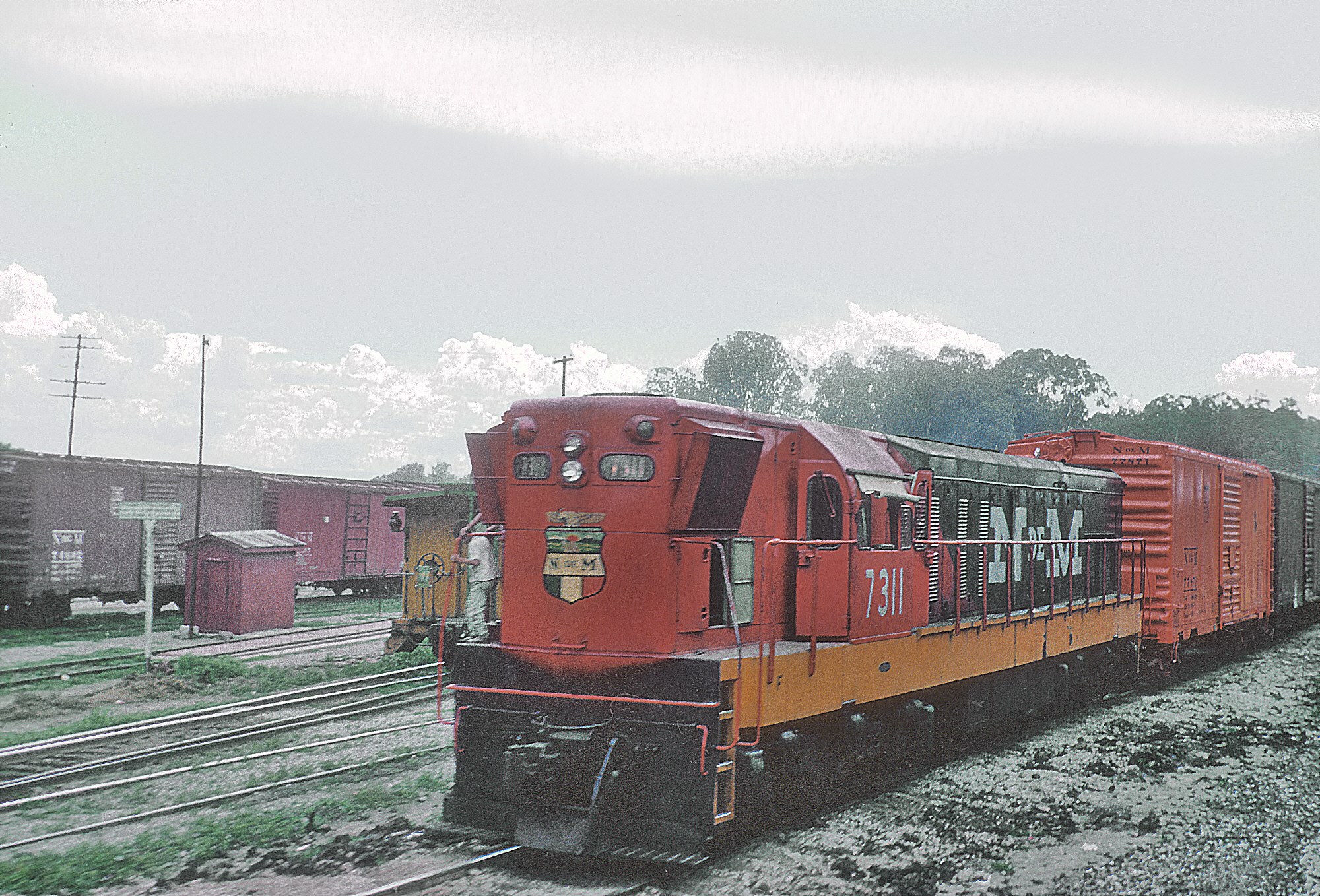 NdeM G16 #7311 at Escubedo, Mexico in September, 1965. Rick Burn photo.
A Railroad in Revolution
If the Porfirian age celebrated the railroad as a symbol of modernity, the Mexican Revolution demonstrated how quickly the same infrastructure could become contested terrain. Railways became strategic assets: armies needed rolling stock and rails for mobility, supply, and control of territory. Lines were sabotaged, bridges destroyed, and equipment commandeered. Beyond the immediate damage, the revolutionary decade strained finances and complicated ownership and management.
Even so, the central reality remained: Mexico’s long distances and challenging geography made rail indispensable. The postrevolutionary state, eager to consolidate authority and stimulate growth, treated the rail network as a tool for national integration—not just commerce.
Nationalization: From Mixed Control to a State Railroad
The decisive shift toward a fully state-centered railroad came in the late 1930s under President Lázaro Cárdenas. Here the historical record often distinguishes between expropriation actions and the subsequent reorganization of operations and ownership.
Contemporary accounts note the expropriation of Mexican rail properties in June 1937, describing the transfer of rail assets into state hands.
Other sources frame the “National Railways of Mexico” as Mexico’s state-owned railroad company from 1938 to 1998, reflecting how the reorganized, consolidated state railroad functioned institutionally from the following year.
Regardless of which date one emphasizes, the meaning is clear: by the late 1930s, Mexico had chosen a model in which the national rail system would be guided as public infrastructure—expected to serve broad economic and social goals, even when that conflicted with narrow profitability.
System Map (1952)
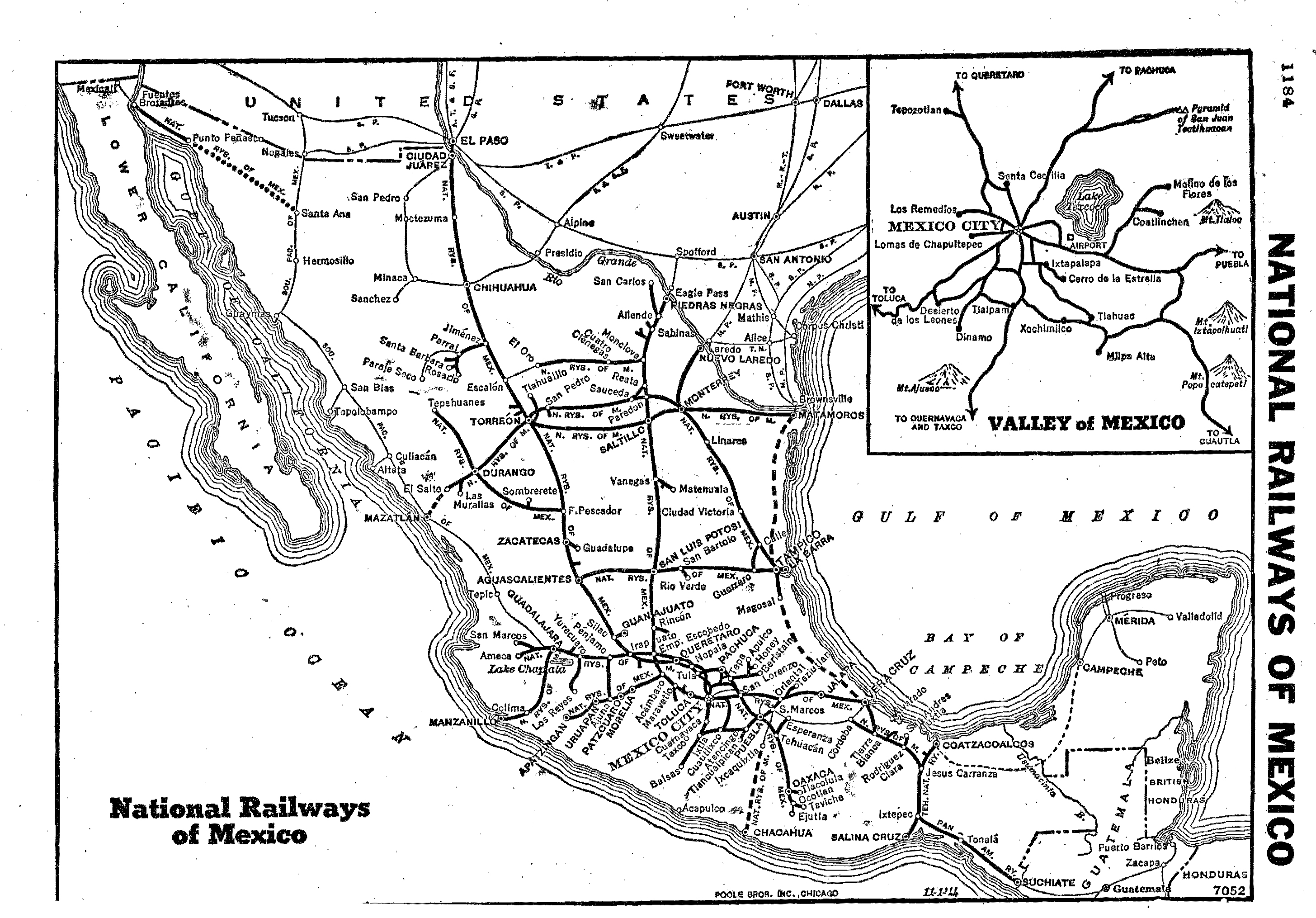
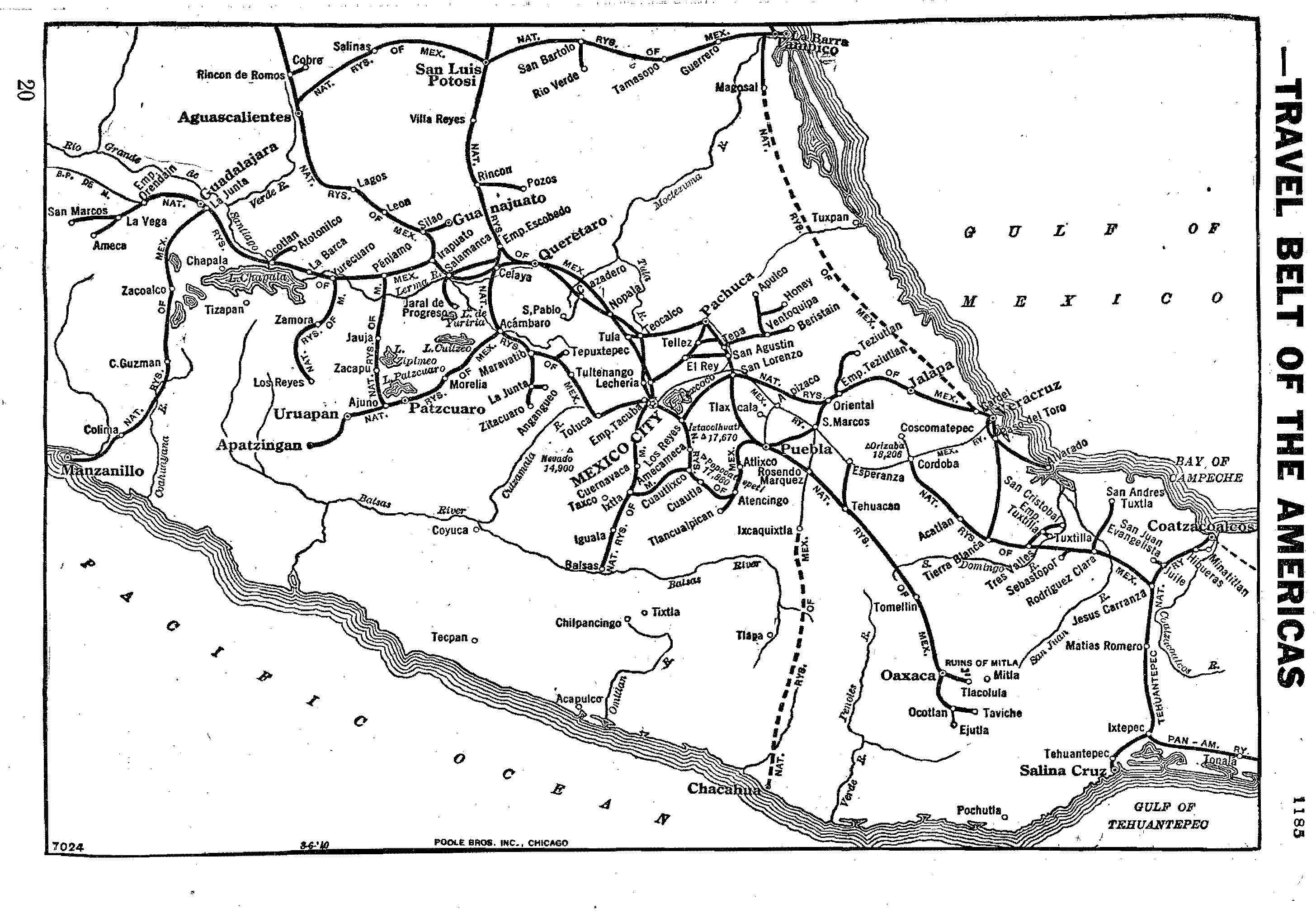
Mid-Century Operations: Freight, Passengers, and Nation-Building
In the decades after nationalization, N de M became the backbone of long-distance inland transport. Mexico’s rail corridors served multiple purposes:
- Freight movement of minerals, agricultural goods, and industrial output.
- Passenger services, including long-distance trains that connected Mexico City with regional capitals and border cities.
- Strategic connectivity, ensuring that remote regions were not isolated from national markets and administrative reach.
Passenger rail, in particular, played a major social role during the mid-twentieth century, when highways and aviation were less dominant than they would later become. At its peak, the N de M system was not only a utility but a cultural reference point—stations, named trains, and rail corridors woven into daily life.
The system also had to respond to global technological change. Across North America, railroads shifted from steam to diesel-electric power; Mexico followed that general trend, modernizing motive power and infrastructure where budgets allowed. But modernization competed with other demands: maintaining vast track mileage, serving routes with uneven traffic, and operating within public-sector constraints.
From a railfan perspective, the railroad operated numerous classic diesel models that could be found throughout the U.S. including Alco C420s, C628s, and even former Santa Fe PAs; Baldwin's unique "Centipede"; and numerous EMD models ranging from F2s to FP9s and SD45s. There were also unique builds for the railroad like th EMD G12 and G16.
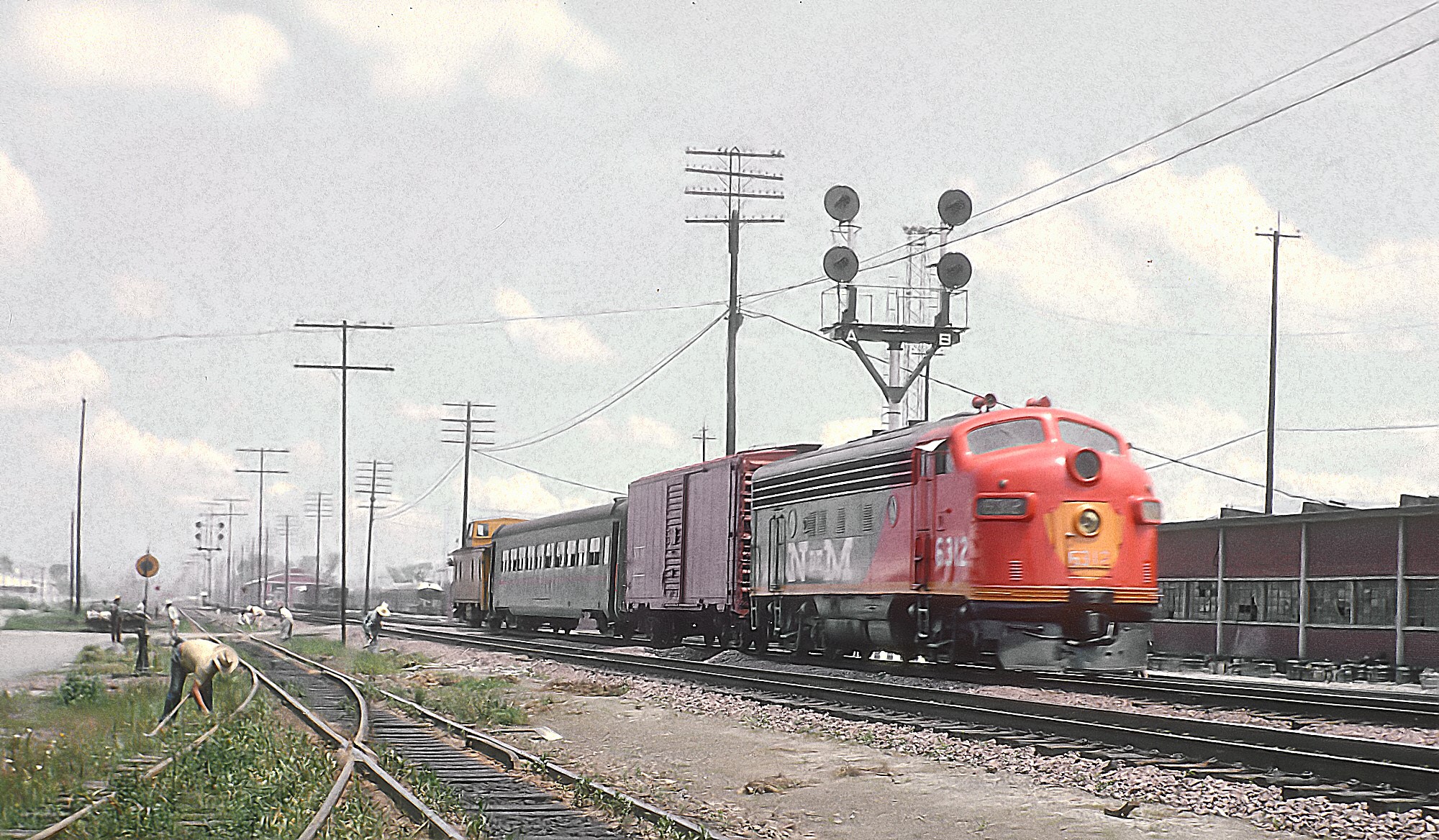 NdeM F7A #6312 is ahead of a short train #64 near the coach yards in Mexico City in September, 1965. Rick Burn photo.
The Late 20th Century Challenge: Competition, Costs, and the Search for Reform
By the 1970s and 1980s, many national rail systems around the world faced similar problems: rising costs, intense competition from highways and trucking, and capital backlogs. Mexico’s railways were no exception. Financial pressures and operational inefficiencies—made harder by the sheer scale of the network—pushed policymakers toward restructuring.
A major turning point came in 1987, when the Mexican government merged N de M with other regional rail operators into a broader parastatal framework widely associated with the name Ferronales (often abbreviated FNM). The goal was to streamline management and coordinate operations across the country’s rail regions.
This consolidation, however, did not eliminate fundamental challenges. Freight rail still mattered enormously, but the business required investment and commercial flexibility. Passenger services, often politically popular, were increasingly difficult to sustain at scale.
Privatization: The Concession Era of the 1990s
Mexico’s broader economic reforms in the 1990s—market liberalization, privatization of state enterprises, and new investment strategies—reached the railways in a dramatic way. In 1995, Mexico pursued a legal and structural path enabling the privatization of the national railroad system via long-term concessions. Under this approach, the infrastructure and operating rights were reorganized and auctioned or granted as concessions, typically around 50 years, to private operators responsible for running and maintaining the network segments they controlled.
In simplified form, the state moved from being the direct operator to being the grantor and regulator of concessions. Major freight corridors were grouped into principal systems, and investors could compete for them. The shift aligned Mexico with broader global trends in rail reform—especially where governments sought investment, productivity gains, and relief from operational subsidies.
One of the most consequential social outcomes of this era was the end of most traditional intercity passenger rail. As restructuring accelerated, FNM suspended passenger rail service in 1997, marking the close of an era for long-distance passenger travel under the national railroad brand.
Over the following years, the principal freight corridors were operated by new or restructured companies, including major systems such as Ferromex, Ferrosur, and others, along with important terminal arrangements in the Mexico City region.
Dissolution and Liquidation: The End of FNM as an Operator
Even after concessions shifted operations away from the old parastatal, the legal and administrative end of Ferrocarriles Nacionales de México took time. Mexican government documentation and oversight reports describe the formal liquidation framework and the publication of “Bases” to carry it out in 2001.
Summaries of the company’s timeline note that FNM was officially extinguished in 2001, while continuing to exist legally as a state entity under liquidation (Ferrocarriles Nacionales de México en Liquidación) for purposes that included asset disposition, legal matters, and related obligations.
This distinction matters: railroads leave behind more than locomotives and track. They leave rights-of-way, environmental responsibilities, pension obligations, real estate holdings, and complex legal histories. Liquidation can be a long administrative afterlife—especially for a system that once spanned a nation.
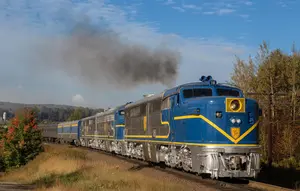
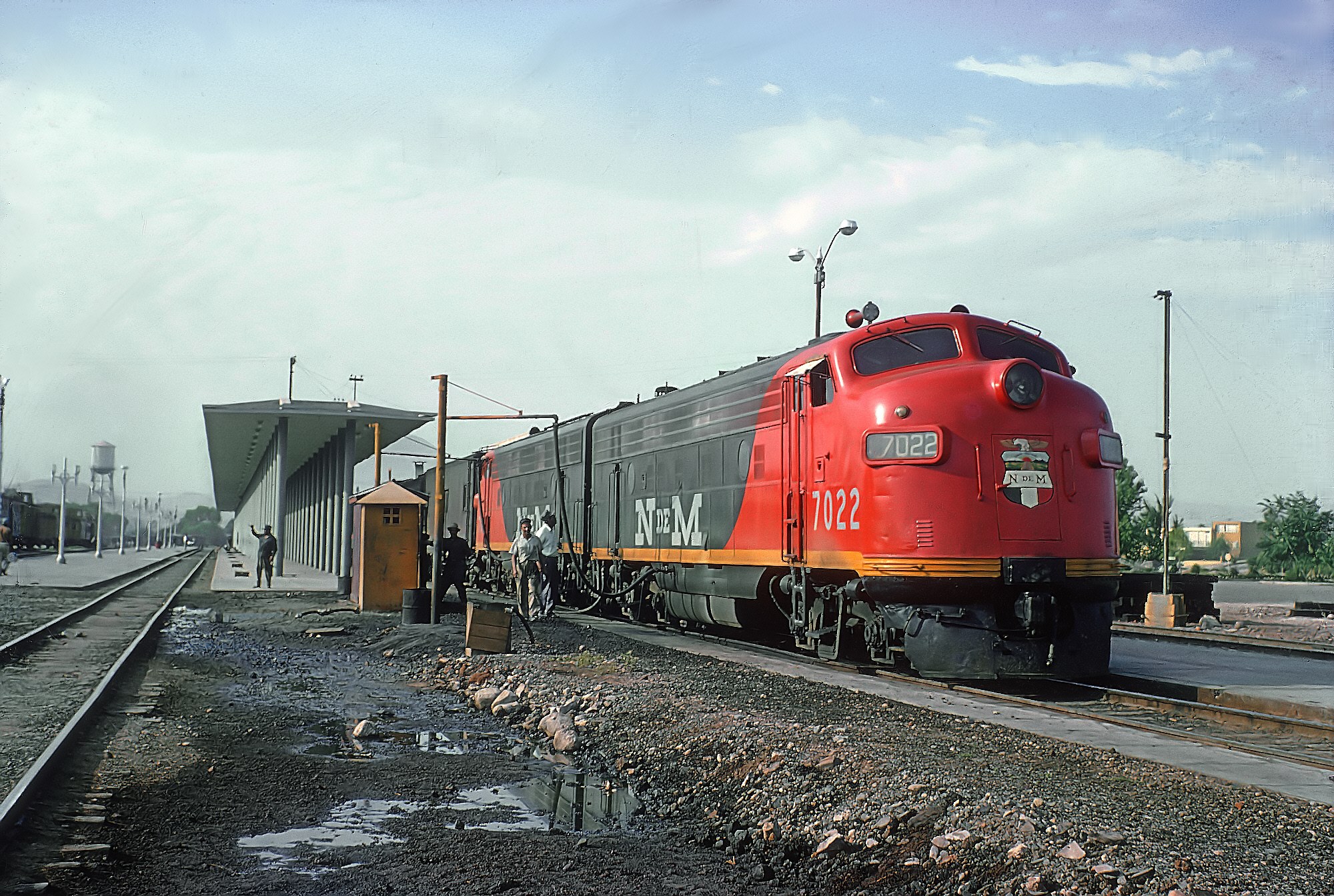 A pair of striking NdeM FP9s, led by #7022, have train #8 at Chihuahua, Mexico in June, 1964. Rick Burn photo.
Legacy: What NdeM Still Means
Today, the railroad lives on in several ways.
First, in geography. Many of the principal freight corridors shaped by N de M remain the same strategic pathways used by modern concessionaires—routes linking industrial regions to ports, and connecting Mexico to the U.S. border for intermodal and bulk freight traffic.
Second, in preservation and memory. Surviving locomotives, passenger cars, and station architecture serve as touchstones for a period when rail travel helped define national mobility. Preserved equipment and museums—such as collections that include former N de M locomotives—keep the material culture of the system visible to the public.
Third, in the continuing debate over public infrastructure. N de M’s life cycle—rapid expansion under modernization policy, consolidation and nationalization under a state-building agenda, then privatization under market reform—mirrors a broader argument about what essential infrastructure should be and who should run it. Freight rail in Mexico remains economically vital. But the disappearance of most traditional passenger rail after 1997 still stands as a major watershed in how Mexicans move across their country.
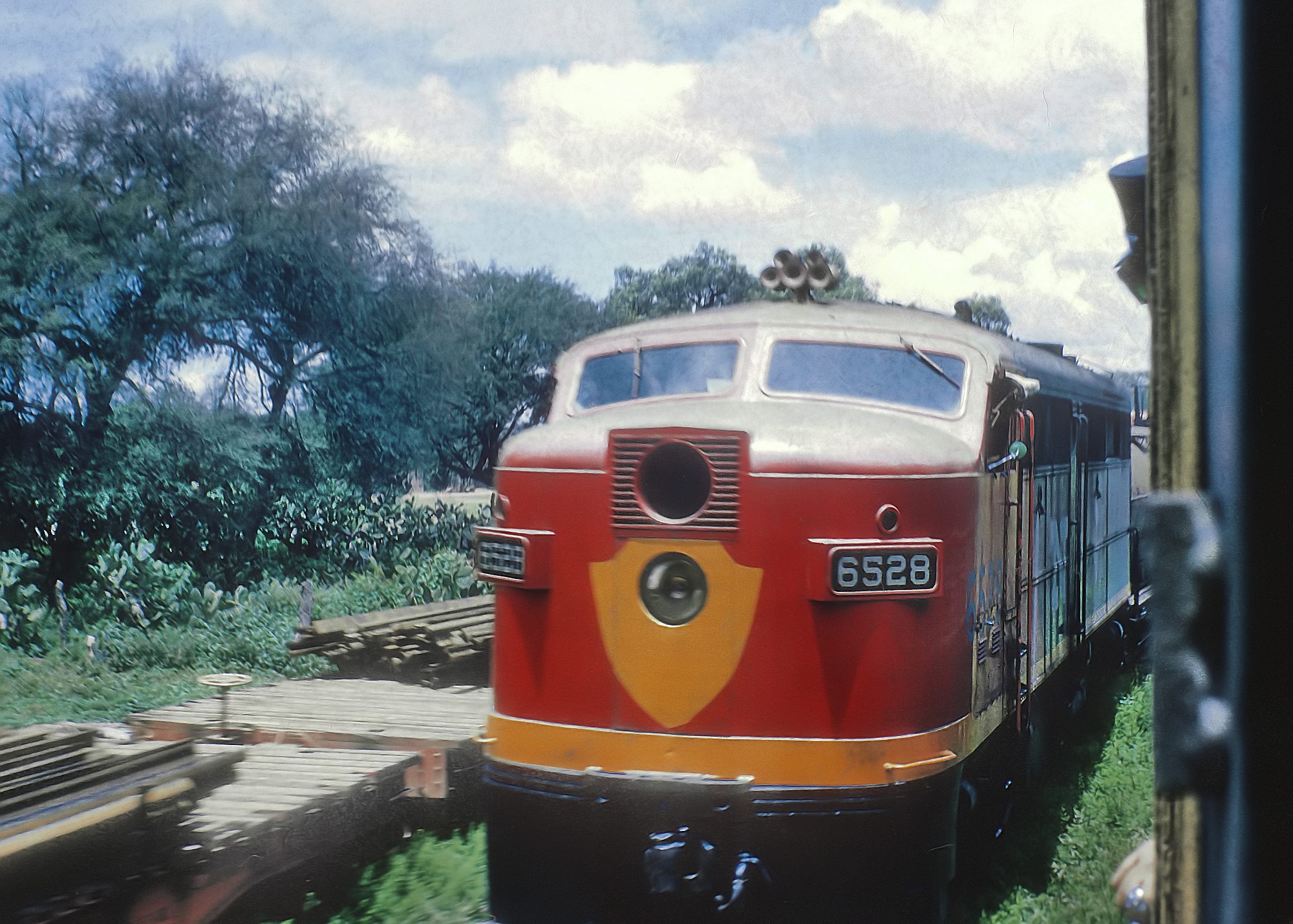 Rick Burn photographed NdeM FPA-2 #6528 north of Escobedo, Mexico in September 1965 while aboard train #7.
Conclusion: A Railroad as a Mirror of Modern Mexico
The history of Ferrocarriles Nacionales de México is, in many respects, the history of modern Mexico told through steel rails. It begins with nineteenth-century ambitions to connect a vast and varied country. It accelerates under Porfirian industrial modernization and foreign investment. It is tested and battered during revolution.
It becomes an arm of the postrevolutionary state through expropriation and nationalization in the late 1930s. It struggles with the late twentieth century’s economic and technological pressures. And it ends—at least as an operator—through the concession-based privatizations of the 1990s, followed by formal dissolution and liquidation in 2001.
Yet N de M is not simply a defunct company name. It remains a framework for understanding how Mexico tried—again and again—to solve a central problem of nationhood: how to bind together distant regions, expand opportunity, and move people and goods efficiently across a difficult landscape. For most of the twentieth century, the answer ran on rails stamped N de M.
Diesel Roster (Pre-1987)
Alco
| Model Type | NdeM Number | FNM Number | Serial Number | Completion Date | Notes |
|---|---|---|---|---|---|
| PA4 | 16 & 17 | 16 & 17 | 76535, 76537 | 10/1948–11/1948 |
Ex-D&H 16 & 17 < nee ATSF PA1 59L & 60L.
Disposition: #16 to Smithsonian Institute (Portland, Oregon) to Museum of American Railroad for restoration; #17 to Nat'l Railroad Museum of Mexico as FNM DH17. |
| PA4 | 18 | 18 | 76541 | 12/1948 |
Ex-D&H 18 < nee ATSF PA1 62L.
Disposition: #18 to Smithsonian Institute / Doyle McCormack; restored as “Nickel Plate 190”; to Delaware-Lackawanna. |
| PA4 | 19 | 19 | 75318 | 5/1947 |
Ex-D&H 19 < ATSF 66L < nee ATSF PA1 54B.
Disposition: #19 to Nat'l Railroad Museum of Mexico as FNM DH19. |
| C420 | 201 & 204 | 201 & 204 | 84723, 84726 | 12/1963–1/1964 | Scrapped; hi-nose; ex-Vermont Northern 201 & 204 < D&H 201 & 204 < nee LIRR 201 & 204. |
| C420 | 217 | 217 | 84788 | 5/1964 | Scrapped; hi-nose; ex-D&H 217 < nee LIRR 217. |
| C420 | 220 | 220 | 84791 | 5/1964 | Hi-nose; ex-D&H 220 < nee LIRR 220; to museum in Mérida, Mexico. |
| C628 | 601–609 | 601–609 | 3373-01–3373-09 | 3/1964–5/1964 | Ex-D&H 601–609. |
| C628 | 610–618 | 610–618 | 3407-01–3407-09 | 5/1965 | Ex-D&H 609–618. |
| S1 | 5000–5004 | -- | 71664–71668 | 9/1944 | -- |
| S6 | 5300 | -- | 81716 | 1/1956 | -- |
| S2 | 5500–5509 | -- | 72739–72748 | 8/1944 | -- |
| S2 | 5510–5519 | -- | 77450–77459 | 4/1950 | -- |
| S2 | 5520–5522 | 5522 | 78017–78019 | 6/1950 | -- |
| S4 | 5523–5530 | -- | 78616–78623 | 7/1951–8/1951 | -- |
| RS1 | 5600 (2nd) | -- | 78042 | 5/1950 | -- |
| RS1 | 5601 (2nd) & 5602 (2nd) | 5602 (2nd) | 78088, 78089 | 5/1950 | -- |
| RS1 | 5603 (2nd)–5605 (2nd) | -- | 78092–78094 | 5/1950 | -- |
| RS1 | 5606 & 5607 | -- | 77847, 77073 | 2/1950–3/1950 | Bought by ASARCo, but lettered NdeM. |
| RS1 | 5608 & 5609 | -- | 77989, 77990 | 4/1950 | -- |
| RS1 | 5610–5618 | -- | 78033–78041 | 4/1950–5/1950 | -- |
| RS1 | 5619 (2nd)–5621 (2nd) | -- | 76430–76432 | 4/1954 (uncertain) | -- |
| RS1 | (5620 & 5621) | -- | 78088, 78089 | 5/1950 | Re-#’d 5601 (2nd) & 5602 (2nd). |
| RS1 | 5622–5624 | -- | 78092–78094 | 5/1950 | -- |
| RS1 | 5622 (2nd)–5624 (2nd) | 5623 (2nd) | 81347–81349 | 10/1956 | -- |
| RS1 | 5625–5631 | 5628–5630 | 82011–82017 | 10/1956–11/1956 | -- |
| RS1 | 5632–5638 | 5634 & 5638 | 82019–82025 | 12/1956–1/1957 | -- |
| RS1 | 5639–5643 | 5639, 5640, 5642 | 82343–82347 | 1/1957–2/1957 | -- |
| RS1 | 5644–5650 | 5647 | 82348–82354 | 7/1957–8/1957 | -- |
| RS1 | 5651 | -- | 82357 | 3/1958 | -- |
| RS1 | 5652–5656 | 5654 & 5656 | 82923–82927 | 12/1958 | -- |
| RS1 | 5657–5662 | 5661 | 83619–83624 | 12/1959–1/1960 | -- |
| RS1 | 5663 | 5663 | 83680 | 3/1960 | -- |
| RSD1 | 5700–5705 | -- | 74671–74676 | 1/1946; 4/1946–5/1946 | Ex-NdeM 5600 (1st)–5605 (1st). |
| RSD35 | 5900–5904 | 5902 | 84489–84493 | 5/1963–6/1963 | A DL535. |
| RSD5 | 6900 | -- | 80884 | 11/1955 | -- |
| RSD5 | 6901 | -- | 80885 | 11/1955 | -- |
| RSD12 | 7400 & 7401 | 7401 | 82919, 82920 | 8/1958 | Hi-nose; w/ steam generator. |
| RSD12 | 7402–7408 | 7402–7407 | 83548–83554 | 12/1959–3/1960 | -- |
| RSD12 | 7409–7418 | 7410–7412, 7414, 7416–7418 | 83626–83635 | 3/1960–6/1960 | -- |
| RSD12 | 7419–7423 | 7420–7423 | 83851–83855 | 3/1961 | -- |
| RSD12 | 7424–7428 | 7424, 7425, 7427 | 83806–83810 | 4/1961 | -- |
| RSD12 | 7429–7440 | 7429, 7430, 7432, 7433, 7435–7440 | 83956–83967 | 4/1961 | -- |
| RSD12 | 7441–7457 | 7441–7455, 7457 | 84083–84099 | 8/1962 | -- |
| RSD12 | 7458–7472 | 7459, 7460, 7462–7472 | 84278–84292 | 8/1962–9/1962 | -- |
| RS3 | 6700–6703 | -- | 80124–80127 | 7/1952 | -- |
| RS3 | 6704–6706 | -- | 81894–81896 | 4/1956 | -- |
| C424 | 8100–8106 | -- | 3372-01–3372-07 | 3/1964 | Diverted to Wabash (as B901–B907) instead of delivery to NdeM. |
| C424 | 8100 (2nd)–8106 (2nd) | 8100, 8104, 8106 | 3380-01–3380-07 | 6/1964 | -- |
| C424 | 8107–8129 | 8107–8111, 8113, 8114, 8116–8122, 8126–8128 | 3372-08–3372-30 | 6/1964 | -- |
| C424 | 8130–8133 | 8130–8132 | 3382-09–3382-12 | 10/1965 | -- |
| C424 | 8134–8144 | 8135–8140, 8143, 8144 | 3428-01–3428-11 | 10/1965–11/1965 | -- |
| FPA2 | 6500 & 6501 | -- | 78724, 78275 | 11/1950 | -- |
| FPA2 | 6502A–6506A | -- | 78996–79000 | 8/1951 | #6503A rebuilt with a French engine (not successful). |
| FA2 | 6507A–6516A | -- | 78986–78995 | 7/1951–8/1951 | -- |
| FA2 | 6517A–6520A | -- | 79283–79286 | 9/1951 | -- |
| FA2 | 6519A (2nd) | -- | 80824 | 12/1953 | -- |
| FA2 | 6521A & 6522A | -- | 79742, 79743 | 3/1952 | -- |
| FPA2 | 6523A–6527A | -- | 80009, 80020–80023 | 9/1953–10/1953 | -- |
| FPA2 | 6528A–6532A | -- | 79175–79179 | 12/1953–2/1954 | -- |
| FPA2 | 6533A | -- | 79196 | 2/1954 | -- |
| FA2 | 6534A | -- | 80897 | 4/1954 | -- |
| FB2 | 6507B–6516B | -- | 79023–79032 | 7/1951–8/1951 | -- |
| FB2 | 6517B–6520B | -- | 79327–79330 | 9/1951 | -- |
| FB2 | 6519B (2nd) | -- | 80910 | 12/1953 | -- |
| FB2 | 6521B & 6522B | -- | 79766, 80009 | 3/1952 | -- |
| FB2 | 6523B–6527B | -- | 80905–80909 | 9/1953–12/1953 | -- |
| FB2 | 6528B–6533B | -- | 79206–79211 | 12/1953–2/1954 | -- |
| FB2 | 6534B | -- | 81166 | 4/1953 | -- |
MLW/Alco
| Model Type | NdeM Number | FNM Number | Serial Number | Completion Date | Notes |
|---|---|---|---|---|---|
| C424 | -- | 3200 | 84837 | 12/1964 | Built by Alco; ex-CN 3200. |
| C424 | -- | 3203–3205 | M3443-02–M3443-04 | 3/1966 | Ex-CN 3203–3205. |
| C424 | -- | 3207, 3215 & 3219 | M3444-02, M3444-10, M3444-14 | 5/1966–8/1966 | Ex-CN 3207, 3215 & 3219. |
| C424 | -- | 3222 & 3226 | M3477-01, M3477-05 | 1/1967–2/1967 | Ex-CN 3222 & 3226. |
| C424 | -- | 3234 | M3478-06 | 5/1967 | Ex-CN 3234. |
General Electric
| Model Type | NdeM Number | FNM Number | Serial Number | Completion Date | Notes |
|---|---|---|---|---|---|
| U30C | 701–706 | -- | 36232–36237 | 2/1967–3/1967 | Ex-D&H 701–706. |
| U30C | 707–712 | -- | 36493–36498 | 12/1967 | Ex-D&H 707–712. |
| U30C | 930–933 & 935 | -- | 36650–36653, 36655 | 1/1968–2/1968 | Ex-C&NW 930–933 & 935. |
| GE-7on | 5100–5102 | -- | 30010–30012 | 5/1948 | #5102 ex-Compania Terminal de Vera Cruz 52; repowered w/ Alco 251. |
| UD18B | 8000 & 8001 | -- | 32474, 32475 | 6/1956 | Hi-nose; ex-GE Demonstrators 1800 & 1801. |
| UD18B | 8002–8009 | -- | 32477, 32485 | 11/1956 | Hi-nose. |
| U36C | 9300–9318 | 9300–9318 | 40240–40256 | 1/1975–2/1975 | -- |
| C36-7 | 9317–9326 | 9317–9326 | 42269–42278 | 3/1979 | -- |
| C36-7 | 9327–9341 | 9327–9341 | 42636–42650 | 3/1980–5/1980 | -- |
| C30-7 | 6700 (2nd) | 6700 (2nd) | 42208 | 12/1978 | -- |
| C30-7 | 6701–6706 (2nd) | 6701 (2nd)–6706 (2nd) | 42651–42656 | 11/1979 | -- |
| C30-7 | 6707–6729 | 6707–6729 | 42657–42679 | 11/1979 | -- |
| C30-7 | 6730–6759 | 6730–6736, 6738–6759 | 42740–42769 | 12/1979 | -- |
| C30-7 | 6760–6784 | 6760–6762, 6764–6778, 6780–6784 | 42814–42838 | 1/1980 | -- |
| C30-7 | 6785–6799 | 6785–6799 | 43038–43052 | 7/1980 | -- |
| U36C / U36CG | 8900–8937 | 8900–8905, 8907–8917, 8919, 8920, 8922–8929, 8931–8934, 8937 | 39350–39387 | 7/1973–11/1973 | U36Cs. |
| U36C / U36CG | 8938–8957 | 8938–8943, 8945, 8946, 8948, 8951, 8952, 8954–8957 | 39797–39416 | 4/1974–5/1974 | U36CGs. |
| U36C / U36CG | 8958–8996 | 8958–8970, 8972–8978, 8980–8992, 8995, 8997 | 39768–39796 | 1/1974–3/1974 | U36Cs. |
| U18B | 9000–9019 | 9000–9005, 9007–9012, 9014–9017, 9019 | 39641–39660 | 7/1974–10/1974 | -- |
| U18B | 9020–9044 | 9020–9025, 59044 | 39661–39685 | 7/1974–10/1974 | -- |
| U23B | 9100–9121 | 9100–9102, 9114–9117, 9119–9121 | 40326–40347 | 3/1975–5/1975 | -- |
| U23B | 9122–9129 | 9122–9129 | 40348–40355 | 5/1975–6/1975 | -- |
| B23-7 | 9130–9139 | 9130–9133, 9135–9139 | 42626–42635 | 12/1979–1/1980 | -- |
| B23-7 | 9140–9145 | 9140–9145 | 43328–43359 | 8/1980–9/1980 | -- |
| B23-7 | 9146–9177 | 9146–9160, 9161, 9162, 9164, 9167–9169 | 43328–43359 | 11/1980–1/1981 | -- |
| B23-7 | 9178–9180 | 9178–9180 | 43291–43293 | 6/1981 | -- |
| B23-7 | 10001–10013 | 10001–10013 | 43382–43394 | 10/1980–2/1981 | -- |
| B23-7 | 10014–10046 | 10014–10032, 10034–10044, 10046 | 43500–43532 | 2/1981–12/1981 | -- |
| B23-7 | 10047–10052 | 10047–10052 | 43580–43585 | 12/1981–1/1982 | -- |
| B23-7 | 12000–12006 | 12000–12003, 12005, 12006 | 43294–43299 | 2/1982–3/1982 | -- |
| B23-7 | 12007–12011 | 12007–12011 | 43395–43399 | 4/1982–5/1982 | -- |
EMD
| Model Type | NdeM Number | FNM Number | Serial Number | Completion Date | Notes |
|---|---|---|---|---|---|
| SD45 | 801 | 801 | 32642 | 6/1966 | D&H 801 < nee EMD Demos 4354. |
| SD45 | 802 & 803 | 802 & 803 | 31694, 31695 | 1/1966 | D&H 802 & 803 < nee EMD Demos 4352 & 4353. |
| GA8 | 5400–5409 | 5401, 5403, 5405, 5409 | 29080–29089 | 9/1964–11/1964 | Narrow gauge (3-ft). |
| GA8 | 5410–5416 | 5410, 5412, 5416 | 32278–32284 | 6/1967 | Narrow gauge (3-ft). |
| GA8 | 5417 & 5418 | 5417 & 5418 | 32298, 32570 | 6/1955; 5/1956 | Narrow gauge (3-ft); ex-Coahuila & Zacatecas 801 & 802. |
| G12 | 5801–5805 | 5800, 5802–5805 | 21159–21164 | 12/1955–1/1956 | -- |
| G12 | 5806–5825 | 5806, 5808–5814, 5816–5818, 5821, 5823 | 22605–22624 | 10/1956–11/1956 | -- |
| G12 | 5826–5832 | 5826–5828, 5830, 5832 | 22884–22890 | 10/1956–12/1956 | -- |
| G12 | 5833–5840 | 5833, 5834, 5837 | 24722–24729 | 8/1958 | -- |
| G12 | 5841–5854 | 5842–5844, 5846–5848, 5851–5854 | 25918–25931 | 6/1960 | -- |
| G12 | 5855–5864 | 5855–5858, 5861, 5863, 5864 | 26716–26725 | 9/1961 | -- |
| G12 | 5865–5878 | 5866–5878 | 27842–27855 | 9/1961 | -- |
| G12 | 5879 | 5879 | 28343 | 3/1963 | -- |
| G12 | 5880–5889 | 5880–5889 | 29070–29079 | 6/1964–9/1964 | The 5800s were originally A-1-A trucked; center axle later removed. |
| GP7 | 6600 | 6600 | 16114 | 3/1952 | -- |
| GP7 | 6601 | 6601 | 16115 | 3/1952 | -- |
| F2A | 6200A–6206A | -- | 3528–3534 | 6/1960 | -- |
| F2A | 6207A–6213A | 6208A | 3690–3696 | 8/1946–10/1946 | All F2As & Bs rebuilt by EMD as 1350-hp F7A & F7B. |
| F2B | 6200B–6206B | -- | 3535–3541 | 8/1946–10/1946 | All F2As & Bs rebuilt by EMD as 1350-hp F7A & F7B. |
| F2B | 6207B–6213B | -- | 3697–3703 | 10/1946 | All F2As & Bs rebuilt by EMD as 1350-hp F7A & F7B. |
| FP7 | 6300–6308 | -- | 10888–10896 | 12/1949 | -- |
| FP7 | 6309 | -- | 11011 | 1/1950 | Built as NdeM 6319; re-#’d to 6309. |
| FP9 | 7010–7019 | 7010–7019 | 22530–22539 | 8/1956–10/1956 | -- |
| FP9 | 7020–7034 | 7020–7034 | 22651–22665 | 10/1956–11/1956 | Source had “2651-22665”; normalized as 22651–22665. |
| GP9 | 7100 | 7100 | 22906 | 10/1956 | Delivered as 6602; then re-#’d to 7100. |
| GP9 | 7101 (2nd) & 7102 (2nd) | 7101 (2nd) & 7102 (2nd) | 25444, 25445 | 6/1959 | -- |
| GP9 | 7103–7107 | 7103–7107 | 24702–24708 | 8/1958 | #7101 & #7102 wrecked; rebuilt as 7101 (2nd) & 7102 (2nd). |
| G16 | 7300–7312 | 7300, 7303, 7304, 7306, 7308–7312 | 24709–24721 | 8/1958–9/1958 | -- |
| G16 | 7313–7322 | 7313–7318, 7320–7322 | 25932–25941 | 7/1960 | -- |
| G16 | 7323 | -- | 26017 | 8/1960 | -- |
| GP18 | 7501–7517 | 7504, 7507, 7511, 7517 | 26726–26743 | 6/1961–8/1961 | -- |
| GP18 | 7518 & 7519 | 7518 | 26670, 26671 | 8/1961 | -- |
| GP35 | 8200–8214 | 8200–8204, 8206–8213 | 29040–29054 | 8/1964–12/1964 | -- |
| GP35 | 8215–8229 | 8215–8229 | 29055–29069 | 8/1964–12/1964 | Hi-nose; w/ steam generator. |
| GP35 | 8230–8254 | 8230–8244, 8246, 8248, 8250–8254 | 30713–30737 | 10/1965 | Some GP35s converted by FNM to GP38Ms. |
| GP40 | 8400–8409 | 8400–8405, 8407–8409 | 32253–32262 | 6/1967 | -- |
| SD40 | 8500–8502 | 8500–8502 | 33895–33897 | 6/1968 | -- |
| SD40 | 8503, 8505, 8508–8511, 8513–8521 | 8503–8521 | 33385–33403 | 5/1968–6/1968 | -- |
| SDP40 | 8522–8531 | 8522–8531 | 33371–33380 | 5/1968 | -- |
| SDP40 | 8532–8535 | 8532–8535 | 36156–36159 | 5/1970 | -- |
| SD40 | 8536–8575 | 8536–8544, 8546–8575 | 38893–38932 | 11/1971–12/1971 | -- |
| SD40 | 8576–8585 | 8576–8585 | A2603–A2612 | 2/1972 | Built in Canada by GMDD. |
| SD40-2 | 8700–8703 | 8700–8703 | 712426–712429 | 9/1972 | -- |
| SD40-2 | 8704–8709 | 8704–8709 | 712430–712435 | 9/1972 | -- |
| SD40-2 | 8710–8715 | 8710–8715 | 712607–712612 | 12/1972 | -- |
| SD40-2 | 8716–8755 | 8716–8722, 8724–8742, 8744–8755 | 712852–712891 | 11/1973–12/1973 | -- |
| SD40-2 | 8756–8767 | 8756–8761, 8763–8767 | 756108-1–756108-12 | 12/1975 | -- |
| SD40-2 | 8768–8777 | 8768–8777 | 798047-1–798047-10 | 2/1980 | -- |
| SD40-2 | 8778–8796, 8798 | 8778–8798 | 798077-1–798077-21 | 8/1980–9/1980 | Built in Canada. |
| SW1504 | 8800–8829 | 8800–8829 | 712667-71296 | 5/1973 | Serial appears truncated in source (“712667-71296”). Preserved as-is. |
| SW1504 | 8830–8859 | 8830–8859 | 712697–712726 | 5/1973 | -- |
| GP38-2 | 9200–9219 | 9200, 9202–9219 | 75633-1–75633-20 | 6/1975 | -- |
| GP38-2 | 9220–9299 | 9220–9225, 9227–9241, 9243–9282, 9284–9299 | 756076-1–756076-80 | 10/1975–12/1975 | -- |
| GP38-2 | 9400 | 9400 | 756076-81 | 12/1975 | -- |
| GP38-2 | 9401–9404 | 9401–9405 | 756056-1–756056-4 | 10/1975 | -- |
| GP38-2 | 9405–9414 | 9405–9410, 9412–9414 | 788030-1–788030-10 | 3/1979 | -- |
| MP15AC | 9801–9825 | 9801–9825 | 818040-1818040-25 | 6/1983 - 7/1983 | -- |
| GP38-2 | 9901–9909 | 9901–9909 | 818041-1–818041-10 | 6/1983–7/1983 | -- |
Baldwin Locomotive Works
| Model Type | NdeM Number | FNM Number | Serial Number | Completion Date | Notes |
|---|---|---|---|---|---|
| DR64-2000 | 6000 & 6001 | -- | 70320, 70321 | 12/1944; 3/1945 | Scrapped; ex-Baldwin Demonstrators 2000 & 2001; both had two VO-1000 engines. |
| DR64-2000 | 6100 | -- | 72671 | 8/1946 | B-unit. |
| DR 12-8-1500/2 | 6400 | -- | 72672 | 4/1947 | Originally delivered w/ steam generator; later converted to freight; all scrapped. |
| DR 12-8-1500/2 | 6401–6407 | -- | 72673–72679 | 1/1948–5/1948 | Originally delivered w/ steam generator; later converted to freight; all scrapped. |
| DR 12-8-1500/2 | 6408–6413 | -- | 72680–72685 | 6/1948–7/1948 | Originally delivered w/ steam generator; later converted to freight; all scrapped. |
| AS616 | 6800–6809 | 6809 | 75981–75990 | 3/1954–4/1954 | 6809 re-powered w/ EMD engine. |
| AS616 | 6810–6819 | 6814 | 75991–76000 | 4/1954–5/1954 | 6814 re-powered w/ EMD engine. |
NdeM Shop Builds
| Model Type | NdeM Number | FNM Number | Serial Number | Completion Date | Notes |
|---|---|---|---|---|---|
| SLP-6 | 7108 | 7108 | -- | (unknown)/1965 | Built by NdeM with parts from F-units and a GP7. |
Montreal Locomotive Works (MLW)
| Model Type | NdeM Number | FNM Number | Serial Number | Completion Date | Notes |
|---|---|---|---|---|---|
| M630 | 8600–8809 | 8600, 8601, 8605–8609 | M6064-01–M6064-10 | 6/1972–8/1972 | -- |
| M630 | 8610–8619 | 8610–8612, 8613, 8617–8619 | M6064-11–M6064-20 | 6/1972–8/1972 | -- |
| M424W | 9501–9555 | 9501–9555 | 6114-10–6114-65 | 7/1980–5/1981 | Built with North American cab. |
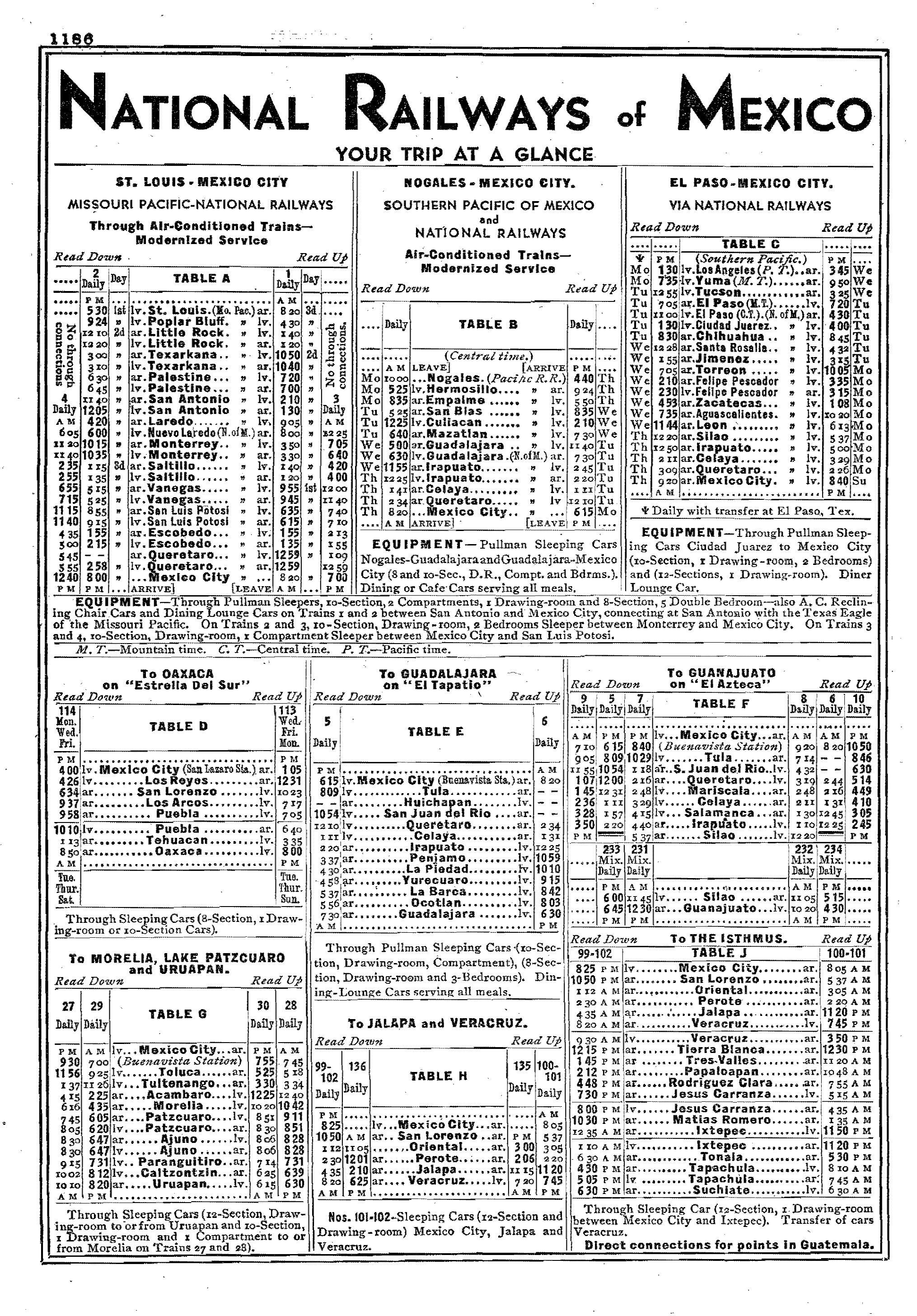
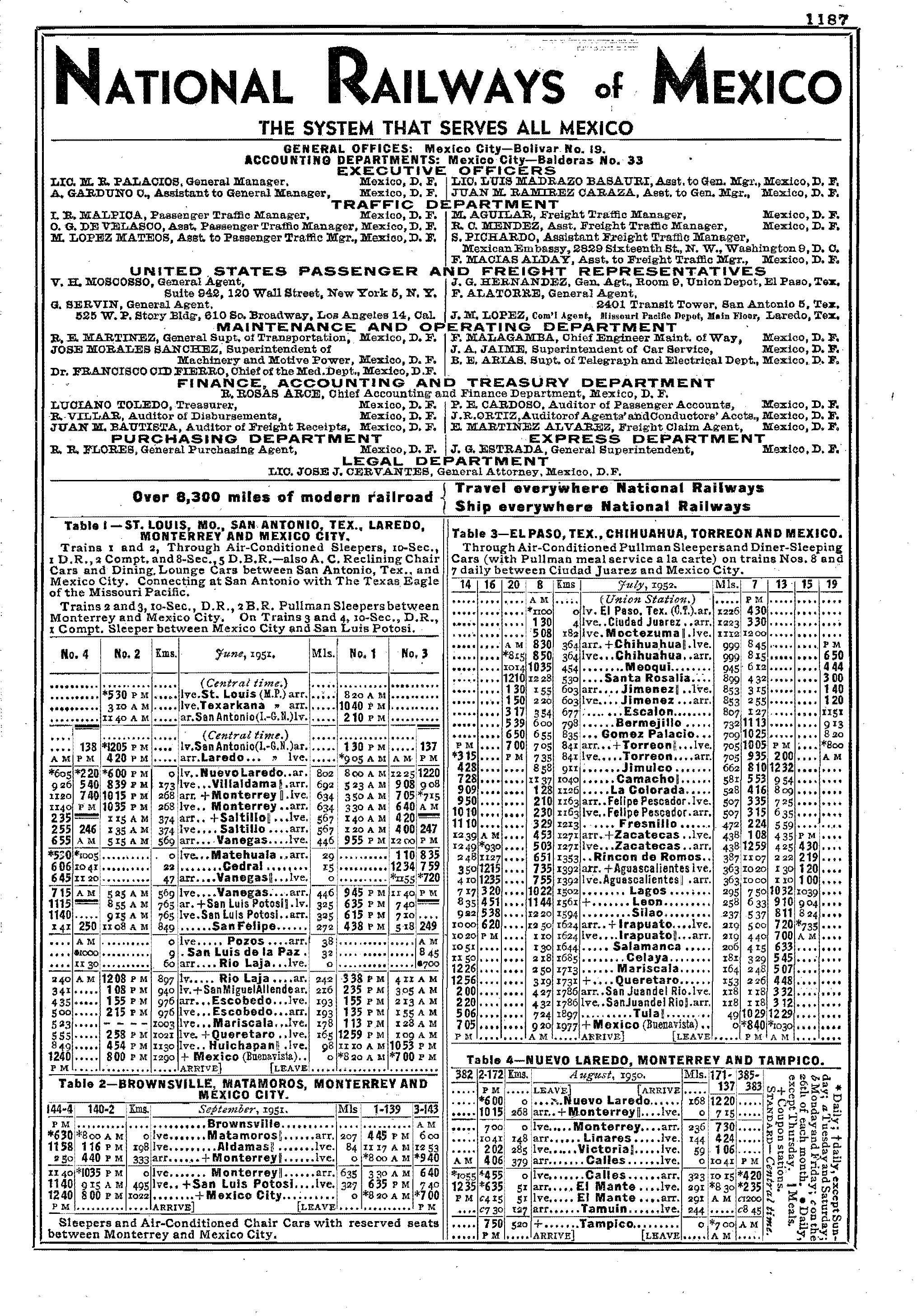
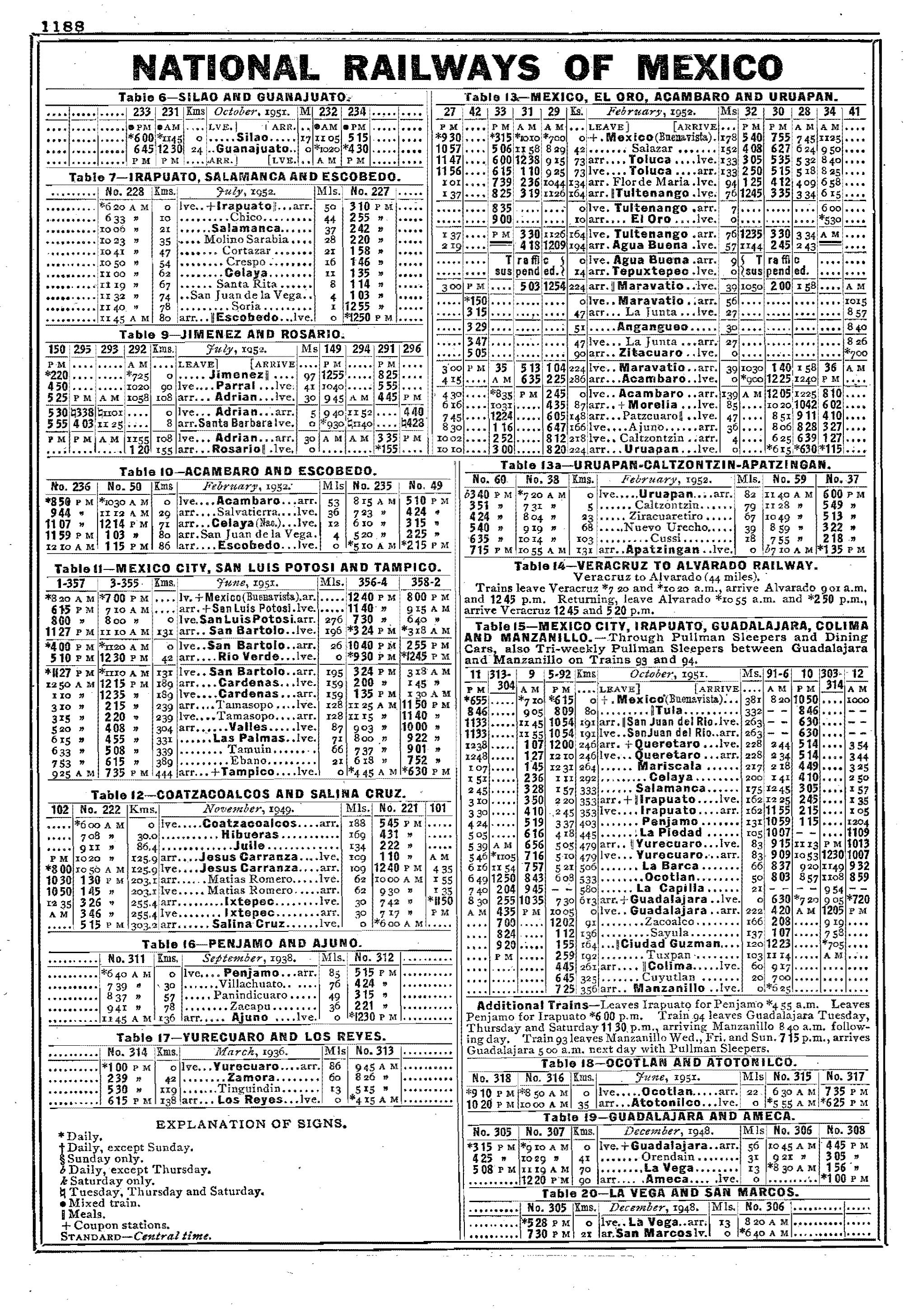
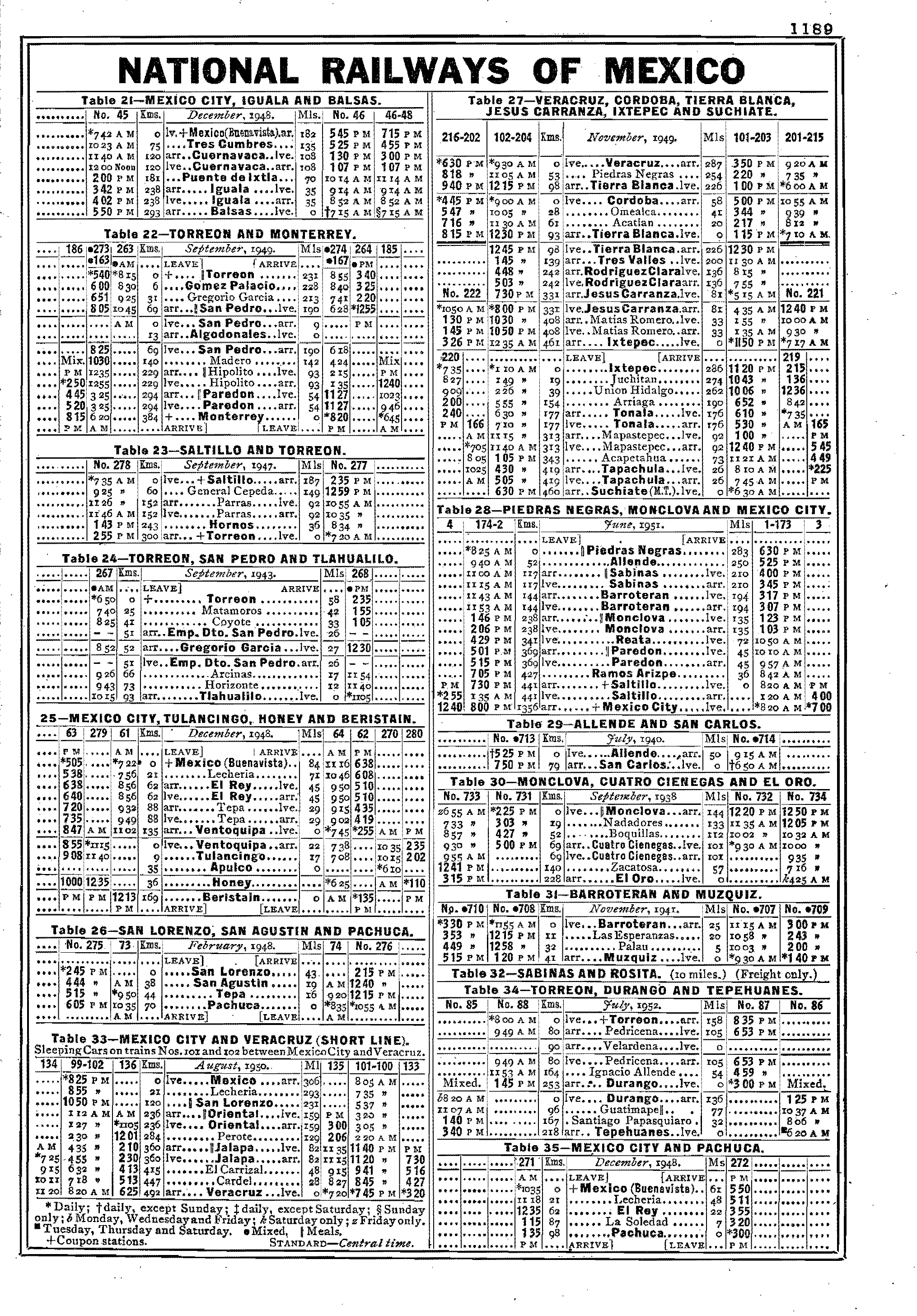
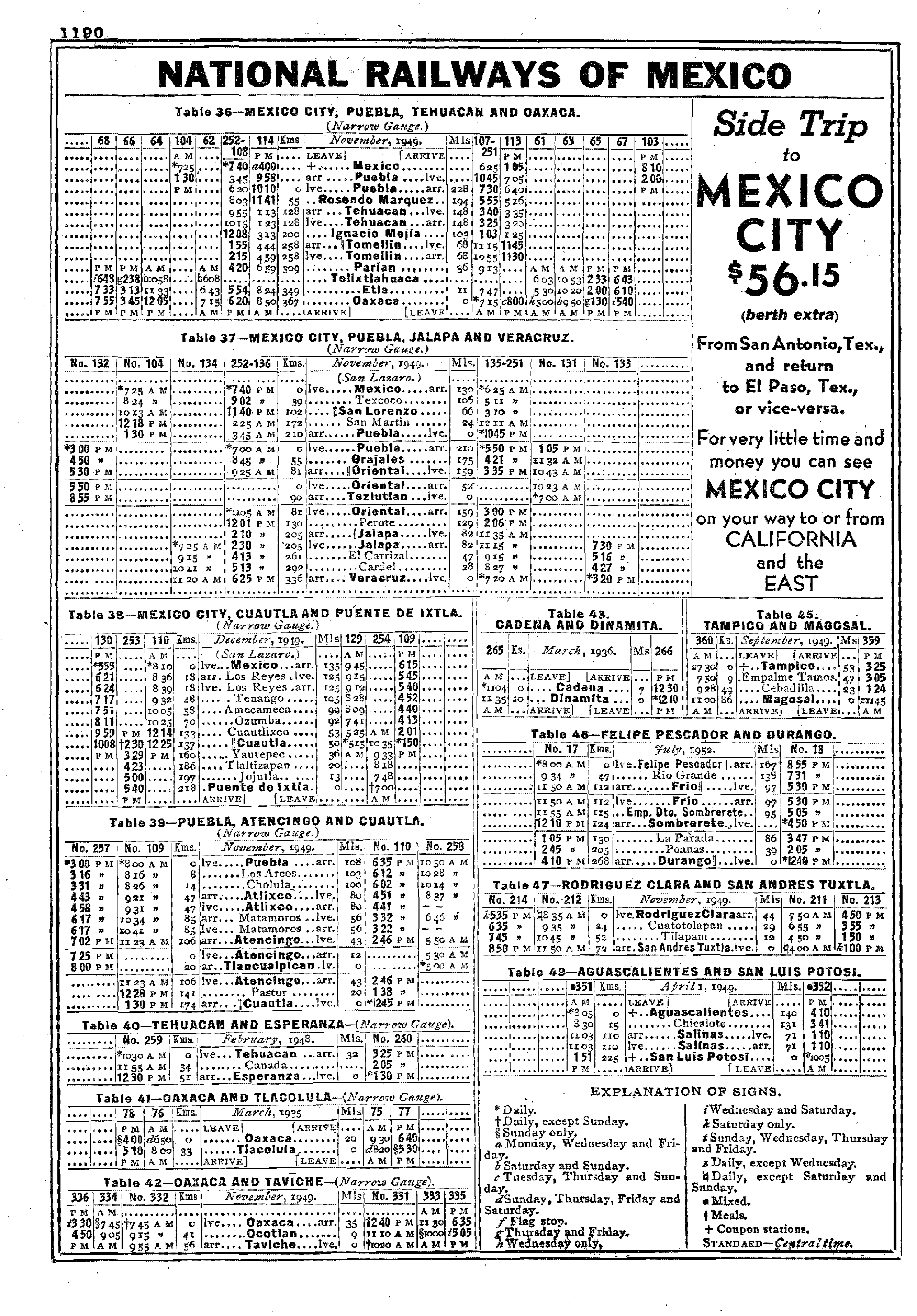
Timetables (August, 1952)
Recent Articles


-
Bessemer & Lake Erie Railroad: "The Bessemer Road"
Sep 15, 26 05:20 PM
 Bessemer & Lake Erie—Bear Creek 1865, Carnegie 1897, U.S. Steel 1901. Ore south from Conneaut, coal north. 2-10-4s, Missabe sister road. CN May 10, 2004. Complete corporate history.
 -
Bangor and Aroostook Railroad: "Serving Northern Maine"
Sep 15, 26 05:05 PM
 Bangor & Aroostook—chartered February 13, 1891, first trains January 1, 1894. Potatoes, paper, Searsport, State of Maine reefers. MM&A 2003, Lac-Mégantic 2013, CP 2020, CPKC today. Complete co…
 -
Baltimore & Ohio Chicago Terminal Railroad: Map and History
Sep 15, 26 03:11 PM
 B&OCT—formed January 6, 1910 to buy Chicago Terminal Transfer. Grand Central, Barr Yard, 78 route-miles. Assigned B&O steam. Complete diesel roster. CSX paper subsidiary, mark BOCT.
 -
The "Alphabet Route" (Railroad): Photos and History
Sep 15, 26 02:53 PM
 Alphabet Route—eight railroads, not one company. P&WV to Connellsville February 11, 1931. Alpha Jets Chicago/St. Louis–New York/Boston. NKP, W&LE, P&WV, WM, Reading, CNJ, L&HR, New Hav…
 -
Milwaukee Road Livestock Operations: Cattle, Dakotas & Montana
Sep 15, 26 02:36 PM
 Milwaukee Road livestock traffic—Dakota and Montana cattle, Iowa hogs, Chicago markets, 28-hour law, head-end stock cars. By 1974 mostly Montana. Rick Burn’s Helena speech. Operations history, not the…
 -
Spirit of Jasper Ride & Dine (2026): Season Pause
Sep 15, 26 02:29 PM
 Spirit of Jasper Ride & Dine in Jasper, Indiana—seated meal on board. Operator: not running public trains for 2026. Depot remains open as a rental. Confirm on spiritofjaspertrain.com.
 -
South Carolina Canal & Rail Road Company: Map and History
Sep 15, 26 01:59 PM
 South Carolina Canal & Rail Road—chartered December 19, 1827. Best Friend of Charleston, 136 miles Charleston–Hamburg October 1833, Aiken inclined plane. South Carolina Railroad 1844, Southern 189…
 -
The Practice of Double-Heading: The Steam Era
Sep 15, 26 01:43 PM
 Doubleheading—two locomotives on the point, each with its own steam crew. Not a rear helper, not diesel MU. How it worked, PRR 1877, mountain grades, and what MU ended.
 -
Mohawk and Hudson Railroad: Map, Pictures, Locomotives
Sep 15, 26 01:20 PM
 Mohawk & Hudson Railroad—New York’s first railroad, chartered April 17, 1826. DeWitt Clinton, inclined planes, Albany & Schenectady 1847, first New York Central May 17, 1853. Complete corporat…
 -
Essex Clipper Dinner Train (2026): Dates, Tickets & What to Expect
Sep 15, 26 01:09 PM
 2026 Essex Clipper Dinner Train in Essex, CT—2.5 hours, four-course meal $129.99, 18+. Fall dates through Oct. 25. Confirm on essexsteamtrain.com.
 -
Camden & Amboy Railroad: Map, History, Photos
Sep 15, 26 12:53 PM
 Camden & Amboy Railroad—chartered February 4, 1830. Joint Companies monopoly with the Delaware & Raritan Canal, John Bull, T-rail. United New Jersey 1872, PRR 999-year lease 1871. Complete corpora…
 -
Cafe Lafayette Dinner Train (2026): Dates, Tickets & What to Expect
Sep 15, 26 12:47 PM
2026 Cafe Lafayette Dinner Train in North Woodstock, NH—2 hours, 20 miles, five-course meal from $125. May–October. Confirm on nhdinnertrain.com. -
Christmas Train Ride Locations (2026): A Complete Guide
Sep 15, 26 10:47 AM
 2026 Christmas train rides by state—Santa, North Pole Express, and holiday trains. Not Polar Express. State guides and product pages. Confirm dates on each railroad.
 -
Baltimore & Ohio Railroad: Linking 13 Great States With The Nation
Sep 15, 26 10:22 AM
 Baltimore & Ohio Railroad—first U.S. common carrier, chartered February 28, 1827. Wheeling 1853, Chicago 1874, C&O control 1963, Chessie 1973, into CSX April 30, 1987. Complete corporate history.
 -
Delaware & Hudson Railway: The Bridge Line
Sep 15, 26 09:59 AM
 Delaware & Hudson Railway—Wurts brothers canal 1823, gravity railroad 1829, Stourbridge Lion, Bridge Line to Montreal. Guilford 1984, CP 1991, NS south line 2015, CPKC north.
 -
Delaware & Hudson Diesel Roster (All-Time)
Sep 15, 26 12:17 AM
 All-time Delaware & Hudson diesel roster—Alco S-2s through C-628s and PA-4s, GE U-boats, Baldwin RF-16s, EMD SD45s and GP38-2/GP39-2s. Serials, dates, dispositions.
 -
Granite Railway, Our Country's First Railroad
Sep 14, 26 11:28 PM
 Granite Railway of Quincy, Massachusetts—chartered March 4, 1826, opened October 7, 1826. Gridley Bryant, 5-foot gauge, horses, Bunker Hill Monument stone. First commercial U.S. railroad.
 -
Milwaukee Road Skytop Lounges: History, Specs & Floor Plans
Sep 14, 26 11:09 PM
 Milwaukee Road Skytop observation cars—Brooks Stevens, 1948. Four Rapids parlor-lounges from Milwaukee Shops, six Creek sleeper-lounges from Pullman-Standard. Floor plans, roster, preservation.
 -
West Virginia Christmas Train Rides (2026): A Complete Guide
Sep 14, 26 11:02 PM
2026 West Virginia Christmas trains—Potomac Eagle North Pole Express in Romney and Christmas at Cass. Not Polar Express. Elkins Polar is not listed for 2026. -
Railroads Of Today: Class I Map, PSR & the 2026 Industry
Sep 14, 26 10:30 PM
 U.S. freight rail in 2026—six Class I railroads on a nearly 140,000-mile network. PSR as everyday practice, how the STB works, traffic mix, short lines and regionals.
 -
Railroad History (USA): Timeline, Facts & How the Network Was Built
Sep 14, 26 10:03 PM
 Full U.S. railroad history hub—origins and inventors, Golden Age peak mileage, Civil War and transcontinental, streamliners, ICC regulation, Penn Central and Conrail, Staggers Act, PSR, and today’s Cl…
 -
Railroads In The 2020s: CPKC, East Palestine & the UP–NS Case
Sep 14, 26 09:51 PM
 U.S. railroads 2020–2026—Class I mileage 91,773 in 2020. COVID traffic drop, CPKC April 14 2023, East Palestine Feb. 3 2023, UP–NS $85 billion case still before the STB.
 -
Railroads In The 2010s: PSR, Coal’s Decline & Positive Train Control
Sep 14, 26 03:51 PM
 U.S. railroads 2010–2020—Class I mileage 95,573 to 91,773. Buffett closed BNSF Feb. 12 2010, Harrison at CP June 29 2012 and CSX 2017, PTC deadline Dec. 31 2018.
 -
Virginia Christmas Train Rides (2026): A Complete Guide
Sep 14, 26 03:46 PM
 2026 Virginia Christmas trains—Virginia Scenic Railway Santa Express from Staunton, about 60 minutes. Confirm dates. Not Polar Express.
 -
MARC Train: Maryland Commuter Rail History, Lines & Roster
Sep 14, 26 01:16 PM
 MARC Train history—Maryland Rail Commuter 1984, B&O and PRR corridors, Penn/Camden/Brunswick lines, Silver Spring 1996, all-time locomotive roster.
 -
Railroads In The 2000s: Merger Freeze, Wisconsin Central & Buffett
Sep 13, 26 07:57 AM
 U.S. railroads 2000–2010—Class I mileage 99,250 to 95,573. STB merger freeze March 17 2000, CN–WC Oct. 9 2001, BNSF Railway Jan. 24 2005, Buffett Nov. 3 2009.
 -
Railroads In The 1990s: Mega-Mergers, Conrail’s Split & the STB
Sep 13, 26 12:13 AM
 U.S. railroads 1990–2000—Class I mileage 119,758 to 99,250. BNSF Sept. 22 1995, UP–SP Sept. 11 1996, Conrail split June 1 1999, ICC Termination Dec. 29 1995.
 -
Railroads In The 1980s: Staggers, Mega-Mergers & Conrail’s IPO
Sep 12, 26 11:12 PM
 U.S. railroads 1980–1990—Class I mileage 164,822 to 119,758. Staggers Oct. 14 1980, CSX and Norfolk Southern, UP–Missouri Pacific–Western Pacific, Conrail IPO March 26 1987.
 -
Wabash Class O-1 4-8-4s: History, Roster & Specifications
Sep 12, 26 11:01 PM
 Wabash Class O-1 4-8-4s—Baldwin 1930–31, twenty-five engines 2900–2924. Fast freight, complete roster, specifications. None preserved.
 -
Staggers Rail Act of 1980: Statute, Contract Rates & the ICC
Sep 10, 26 11:23 PM
 Staggers Rail Act, Pub. L. 96-448, signed October 14, 1980. Harley Staggers, S.1946, contract rates, 180% variable-cost test, abandonments, short lines.
 -
Rock Island E8A 652: Bicentennial Independence Paint & History
Sep 10, 26 10:42 PM
 Rock Island E8A 652—EMD March 1952, serial 15199. 20th Century Railroad Club Independence bicentennial scheme, Peoria and Quad Cities Rockets, Midland Railway, Manly Junction Museum.
 -
Vermont Christmas Train Rides (2026): A Complete Guide
Sep 10, 26 10:37 PM
2026 Vermont Christmas trains—Okemo Valley Holiday Express from Chester Depot Dec. 19–20. Polar is Burlington Dec. 5–6 only. -
Railroads In The 1970s: Penn Central, Amtrak & Conrail
Sep 10, 26 10:18 AM
 U.S. railroads 1970–1980—196,479 miles at the decade’s start. Penn Central bankruptcy June 21 1970, Amtrak May 1 1971, 3R/4R Acts, Conrail April 1 1976, Rock Island 1975, Milwaukee 1977.
 -
Railroads In The 1960s: Mergers, Passenger Collapse & Penn Central
Sep 10, 26 10:03 AM
 U.S. railroads 1960–1970—207,334 to 196,479 miles. Erie Lackawanna 1960, C&O–B&O 1963, N&W–Nickel Plate 1964, SCL 1967, Penn Central Feb. 1 1968.
 -
South Carolina Christmas Train Rides (2026): A Complete Guide
Sep 10, 26 08:36 AM
 2026 South Carolina Christmas trains—South Carolina Railroad Museum Santa Train in Winnsboro. Confirm December dates. Not Polar Express. Drop light-festival padding.
 -
Steam Locomotive Feedwater Heaters: Elesco, Coffin & Worthington
Sep 10, 26 08:29 AM
 Steam locomotive feedwater heaters—open Worthington vs closed Elesco and Coffin. How they work, how to identify them on a smokebox, and why not every engine had one.
 -
Oregon Christmas Train Rides (2026): A Complete Guide
Sep 10, 26 08:22 AM
2026 Oregon Christmas trains—Portland Holiday Express, Garibaldi Candy Cane Express, Sumpter Valley Christmas Trains Dec. 11–13. Polar is Mount Hood. -
Lake Shore & Michigan Southern: Map, History, Timetables
Sep 10, 26 08:12 AM
 Lake Shore & Michigan Southern Railway—Erie & Kalamazoo 1833, Michigan Southern to Chicago 1852, LS&MS April 6 1869, Vanderbilt, Ashtabula 1876, NYC merger Dec. 22 1914. 1910 map and Official Guide.
 -
Big Four Route (CCC&StL): Map, History
Sep 10, 26 12:19 AM
Cleveland, Cincinnati, Chicago & St. Louis Railway—Bee Line 1868, Ingalls’s first Big Four 1880, CCC&StL June 30, 1889, NYC lease Feb. 1, 1930. 1910 and 1930 maps, what still runs. -
Railroads In The 1950s: Diesel, the Interstate & Passenger Collapse
Sep 10, 26 12:15 AM
 U.S. railroads 1950–1960—223,779 to 211,459 miles. Interstate June 29, 1956, dieselization, passenger collapse, TOFC, 1957–58 recession, NYO&W 1957, N&W–Virginian 1959.
 -
New Jersey Christmas Train Rides (2026): A Complete Guide
Sep 10, 26 12:06 AM
 2026 New Jersey Christmas trains—Black River & Western Santa Express from Flemington and Pine Creek Christmas trains in Wall Township. Polar is Whippany and Phillipsburg.
 -
New Mexico Christmas Train Rides (2026): A Complete Guide
Sep 09, 26 11:57 PM
 2026 New Mexico Christmas trains—Cumbres & Toltec Santa’s Holiday Express from Chama Dec. 5–6 (and Antonito, Colo., Dec. 12–13). Coach $25/$15. Not Polar Express.
 -
Grand Trunk Railway: Map, History, Timetables
Sep 09, 26 11:47 PM
 Grand Trunk Railway of Canada—charter Nov. 10, 1852, Montreal–Toronto 1856, Portland, Sarnia, Victoria Bridge, St. Clair Tunnel 1891, Great Western 1882, GTPR, CN Jan. 20, 1923. 1893 map and Official…
 -
Troop Trains In World War II: Sleepers, Kitchen Cars & Movements
Sep 09, 26 11:42 PM
 WWII U.S. troop trains—almost 44 million armed-services passengers, Pullman troop sleepers, ACF kitchen cars, hospital trains, monthly movement tables 1942–45. Not the Military Railway Service. ODT an…
 -
Railroads In The 1940s: War Traffic, Last Steam & the Diesel Flood
Sep 09, 26 11:37 PM
 U.S. railroads 1940–1950—233,670 to 223,779 miles. World War II as the decade’s center, last new steam, diesel flood after V-J Day, 1945 car orders, California Zephyr 1949.
 -
Railroads In World War II: ODT, Record Traffic & Private Operation
Sep 09, 26 03:00 PM
 U.S. railroads in World War II—Lend-Lease freight, Pearl Harbor, Office of Defense Transportation, 1944 peak ~740 billion ton-miles, Dec. 1943–Jan. 1944 seizure. Private operation, not a USRA sequel.
 -
Montana Christmas Train Rides (2026): A Complete Guide
Sep 09, 26 02:54 PM
2026 Montana Christmas trains—Charlie Russell Chew Choo North Pole Adventure from Hanover/Lewistown, Nov. 27–Dec. 19, $71, about 1.5 hours. Not Polar Express. -
Railroads In The 1930s: Depression, Streamliners & the FT
Sep 09, 26 09:32 AM
 U.S. railroads 1930–1940—249,052 to 233,670 miles. Section 77, Eastman, Motor Carrier Act, M-10000 and Pioneer Zephyr 1934, EMC FT 1939. Decade frame, not the streamliner encyclopedia.
 -
Sugar Cane Train (Lahaina): LK&P History, Roster & 2026 End
Sep 09, 26 08:19 AM
 Lahaina, Kaanapali & Pacific Sugar Cane Train—3-foot tourist line 1970–2014. Anaka, Myrtle, 2023 and 2025 fires, September 2026 scrapping. Roster, Hahakea trestle, Pioneer Mill corridor.
 -
Massachusetts Christmas Train Rides (2026): A Complete Guide
Sep 09, 26 08:16 AM
 2026 Massachusetts Christmas trains—Shelburne Falls Moonlight Magic Friday Nov. 27; Edaville Festival of Lights in Carver. Polar is Cape Cod Central in Buzzards Bay.