Union Pacific–Norfolk Southern: Inside the Proposed “Coast-to-Coast” Rail Merger
Published: February 2, 2026
By: Adam Burns
In late July 2025, Union Pacific (UP) and Norfolk Southern (NS) made waves across the freight-rail world by confirming they were pursuing a combination that—if approved—would create the first truly “coast-to-coast” Class I freight railroad in the United States.
For rail customers, the proposal immediately raised big questions: Would an end-to-end railroad finally smooth out cross-country service and reduce interchange delays—or would shrinking the number of major competitors leave shippers with fewer options and more pricing power concentrated in a single mega-carrier? For regulators, the deal tests the toughest modern U.S. rail-merger framework, the Surface Transportation Board’s (STB) post-2001 rules, which place heavy emphasis on whether a merger enhances competition and provides clear public benefits.
By January 2026, the merger process hit an early procedural wall: the STB said the railroads’ merger filing was incomplete and returned it “without prejudice,” meaning UP/NS can refile once they address deficiencies.
What follows is a detailed look at the proposed UP–NS merger—what it is, why it’s being pursued, what the companies claim it will accomplish, what opponents fear, and what the regulatory pathway likely looks like from here.
Purpose
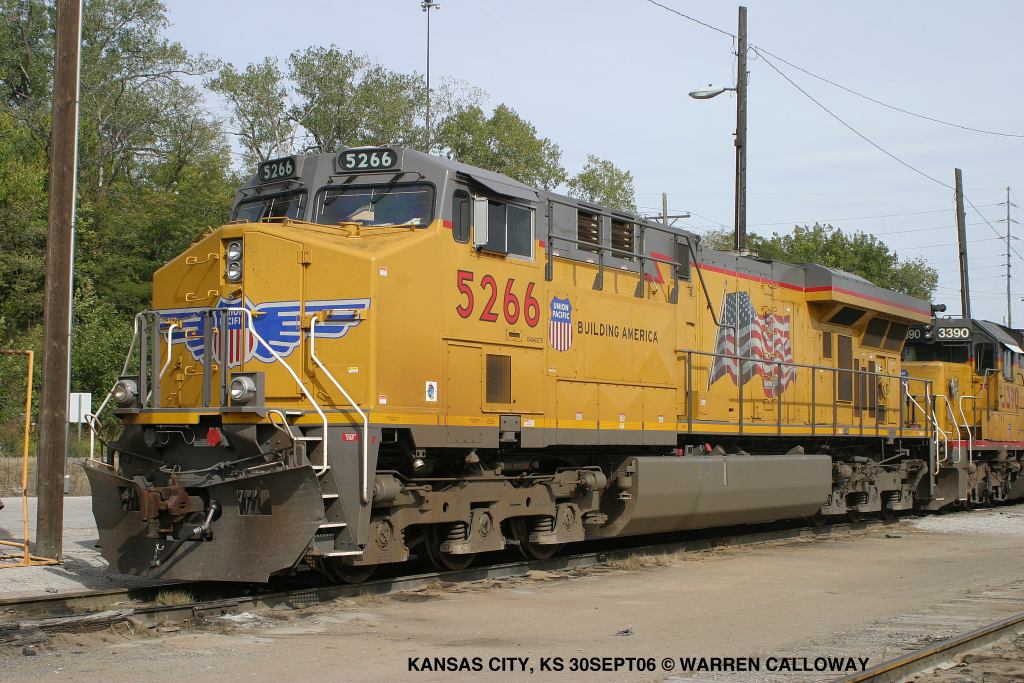
Union Pacific is the dominant western U.S. freight railroad, with a network spanning key gateways to the Pacific Coast, Gulf Coast, and Midwest. Norfolk Southern is one of the two major eastern U.S. railroads, with core strength in the Southeast, Mid-Atlantic, and industrial Midwest.
In simple geographic terms, the companies argue this is a classic end-to-end combination: UP strong in the West, NS strong in the East. UP has publicly emphasized “virtually no overlap,” framing the deal as a way to link two complementary networks into a single through-route for freight.
The strategic “why now” rests on a few freight realities that both railroads—and much of the industry—have grappled with for years:
- Interchange friction: A shipper moving freight coast-to-coast often relies on at least two railroads (and sometimes more), with handoffs (interchanges) that can add dwell time, scheduling complexity, and service variability.
- Truck competition: Railroads have faced persistent competition from long-haul trucking, especially as trucking improves routing, reliability, and visibility. UP’s messaging has leaned heavily on rail becoming more competitive with trucks by reducing rail-to-rail handoffs.
- Network chokepoints: Chicago and other major gateways can be a source of congestion and delay, and the companies (and observers) discuss route rationalization and targeted infrastructure as ways to keep freight moving more fluidly.
Even beyond UP and NS, the proposed combination matters because the U.S. Class I landscape is already concentrated: a mega-merger reshapes the competitive geometry for shippers, ports, trucking, and the remaining big railroads.
Deal Structure
Public reporting has described the combination as an $85 billion transaction—one of the largest rail deals in decades—with consideration that includes a stock-and-cash component for Norfolk Southern shareholders.
A widely reported structure includes one Union Pacific share plus cash (reported as $88.82 per share) for each Norfolk Southern share—though the precise economics can fluctuate based on UP share price and any negotiated adjustments over time.
The companies’ broader narrative: a combined system would become the first U.S. freight railroad with a single corporate umbrella spanning major ports and inland markets from coast to coast, with the scale to compete more directly against trucking for long-haul freight.
Goals
1) True single-line service across the U.S.
The central promise is single-line transcontinental rail service: fewer handoffs, fewer operational seams, and a more unified schedule. UP has characterized the deal as adding “new competitive energy” and argued it would be a stronger competitor to long-haul trucking.
2) Reduced interchange delays and potentially better reliability
In theory, eliminating one of the biggest variables—railroad-to-railroad interchange—could cut dwell and reduce “who owns the problem” moments when something goes sideways. The merger pitch suggests that end-to-end control makes it easier to optimize across the full lane instead of optimizing for one carrier’s segment at the expense of the next.
3) Capacity projects and corridor upgrades
Rail watchers have focused on how a combined UP–NS might reroute flows to avoid chronic bottlenecks and invest in targeted corridors that become more valuable once the networks are tied together. Coverage and discussion around corridor upgrades has been part of the broader public conversation around the proposal. 4) Public-interest claims: truck diversion, supply chain benefits, jobs
The companies’ filings and public communications have emphasized public benefits: reducing truck traffic by making rail more attractive, improving supply chain resilience, and protecting union jobs (a claim that opponents contest).
The Numbers at a Glance (Network Size + Profit)
Route miles (system size)
- Union Pacific: 32,880 route miles (year-end 2024).
- Norfolk Southern: ~19,200 route miles (year-end 2024).
- Proposed combined system: “over 50,000 route miles” across 43 states (company claim).
(UP + NS, using their year-end figures, totals about 52,080 route miles—consistent with the companies’ “over 50,000” description, with rounding and definitional nuances.)
“Annual profit” (net income, latest full-year)
- Union Pacific (FY 2024): $6.747 billion net income.
- Norfolk Southern (FY 2024): $2.622 billion net income.
Transaction headline (as announced)
- Implied deal value: about $85 billion.
- Stated network vision: ~100 ports and “nearly every corner of North America” (company messaging).
Timeline
July 2025 — Announcement
- July 29, 2025: UP and NS publicly announce an agreement to create “America’s first transcontinental railroad,” emphasizing over 50,000 route miles across 43 states and connections to ~100 ports.
Late 2025 — Docket building and filings
- December 19, 2025: UP and NS announce they have filed their application with the STB seeking approval (NS newsroom statement).
January 2026 — First major regulatory speed bump
- January 16, 2026: The STB says the UP–NS application is incomplete, citing missing elements (including market-share projections and competition impact analysis), and returns it “without prejudice.”
- January 20–22, 2026: Follow-on coverage frames the decision as a material delay and a sign the deal could extend deep into 2027 before any final resolution.
Pushback
Big rail mergers don’t get judged only by corporate logic. They get judged by what happens to customers, workers, and the broader transportation system.
1) “End-to-end” doesn’t mean “no competitive impact”
Even if there’s limited route overlap, opponents argue competition can still be harmed when two large networks combine. Many shippers rely on competitive tension not just on a single lane, but through access to gateways, reciprocal switching potential, interchange options, and the ability to play carriers against one another during contract negotiations.
Rival railroads have incentives to challenge a deal like this, and the regulatory record often becomes a deep, technical debate: market definition, origin-destination pairs, access remedies, terminal competition, and what “competitive options” really mean in the modern rail economy.
2) Fewer Class I choices can increase shipper anxiety
For captive shippers—those with only one practical rail option—pricing and service risks are a constant worry. Even for non-captive shippers, consolidation can reduce leverage. Critics argue that in a market already concentrated, a mega-carrier may gain pricing power on some lanes and at some terminals, even without obvious parallel-route overlap.
3) Service disruption during integration
Rail mergers are not just paper transactions. They require integrating dispatching, operating plans, crew districts, locomotive and car management, IT systems, customer service platforms, and safety management systems. Even with the best planning, integration has historically carried risk.
4) Labor opposition and safety concerns
Rail unions and labor stakeholders have a long history of scrutinizing mergers for potential job cuts, changed work rules, and safety impacts—especially amid broader industry pressure to run leaner operations. Reporting in late 2025 highlighted union pushback, with warnings that the deal could affect workforce outcomes and safety.
The Regulatory Reality: STB’s Post-2001 Merger Rules
The STB is not the kind of regulator that “rubber stamps” major Class I rail consolidations. After earlier merger waves created significant service disruptions and heightened shipper concerns, the STB adopted tougher rules in 2001 that set a higher bar—particularly for large rail mergers.
A key point in the current debate: the rules require showing that a merger will enhance competition and provide public benefits, not simply preserve the status quo. The STB also expects extensive modeling: market share projections, competitive impacts, service assurance plans, and system impact analyses.
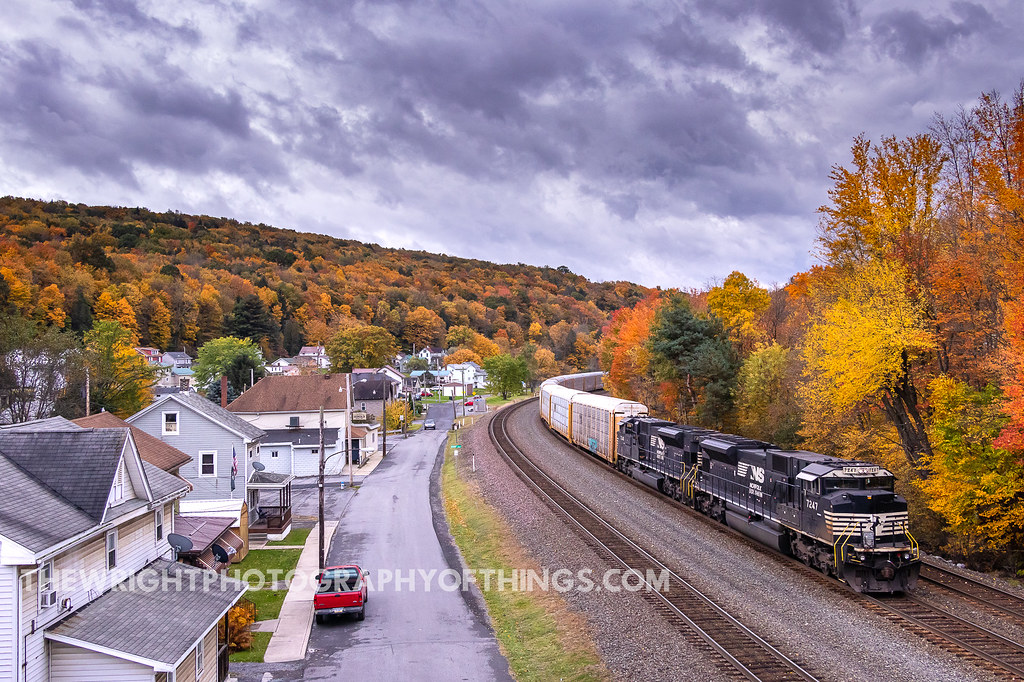 Norfolk Southern's westbound train, 11N, with helpers seen here, rounds a curve at Lilly, Pennsylvania on October 13, 2022. Jon Wright photo.
January 2026: The STB Returns the Filing as “Incomplete”
The single biggest recent milestone is procedural—but important.
In mid-January 2026, the STB said the UP–NS merger application was incomplete, citing missing elements such as detailed market share projections and competition-impact analysis, and returned it without prejudice (meaning the parties can correct and refile).
This matters for two reasons:
- It signals the STB is serious about the evidentiary bar. The agency is effectively saying: you don’t get into the full merits review until you provide the required competitive analysis and system impacts.
- It slows the clock. Even optimistic merger timelines can stretch; returning a filing for missing information can push key dates out and create uncertainty for customers and investors. Coverage has suggested expectations that final decisions could extend well into 2027.
Recent Articles


-
Alco "PA" Locomotives: Restoration, Specs, Engine, Rosters
Oct 27, 26 12:12 AM
 Alco's PA passenger cab, 297 locomotives built from 1946 to 1953. The 244 engine, the production roster, the Delaware & Hudson PA-4s, and Nickel Plate Road 190.
-
Milwaukee Road Diesel Roster: (All Time)
Oct 26, 26 01:44 PM
 All-time diesel roster of the Milwaukee Road. 1,208 locomotives, each frame once. Alco, Baldwin, Davenport, EMD, Fairbanks-Morse, General Electric, and Whitcomb, with builder numbers.
-
Milwaukee Road Steam Roster (All-Time): Post-1900
Oct 26, 26 01:38 PM
 Milwaukee Road steam locomotives built since 1900. Prairies, Mikados, the N-class articulateds, the S-class 4-8-4s, and the Hiawatha Atlantics and Hudsons. Quantity column 1,974. Unique frames 1,951.
-
Milwaukee Road: Map, Electrification, Logo, History
Oct 26, 26 01:20 PM
 The Milwaukee Road, from the Milwaukee & Mississippi of 1850 to the Pacific Coast Extension, the Hiawathas, and the Soo Line sale. Why Lines West should have stayed.
-
Lake Superior & Ishpeming Railroad: Map, Roster, History
Oct 25, 26 11:38 PM
 Lake Superior & Ishpeming Railroad, reporting mark LSI, from the Marquette Range to the Presque Isle ore dock. The 1954 steam list and the diesels the railroad owned.
-
Kansas City Southern Steam Roster (Built Since 1900)
Oct 25, 26 09:09 PM
 Steam locomotives of the Kansas City Southern built since 1900, with the Louisiana & Arkansas and the Texas company.
-
Kansas City Southern Diesel Roster (Built New)
Oct 25, 26 11:46 AM
All-time diesel roster of the Kansas City Southern. E units, F units, Geeps, SD40s through SD70ACes, Fairbanks-Morse, Baldwin, Alco, and General Electric, with serials and order numbers. -
Kansas City Southern Railway: Map, Photos, History
Oct 25, 26 12:24 AM
 The Kansas City Southern, from Arthur Stilwell's Gulf line to Canadian Pacific Kansas City on April 14, 2023. Steam and diesel rosters, the Southern Belle, and the Louisiana & Arkansas.
-
Indiana Harbor Belt Diesel Roster (All-Time)
Oct 25, 26 12:17 AM
 All-time diesel roster of the Indiana Harbor Belt. 202 locomotive frames, each counted once. NW2s, SW7s, SW1500s, road switchers, and gensets. Slugs and boosters are outside the count.
-
Indiana Harbor Belt Steam Roster (Built Since 1900)
Oct 25, 26 12:13 AM
 Steam locomotives of the Indiana Harbor Belt built since 1900. 182 engines, each counted once. 0-6-0s, 2-6-0s, 0-8-0s, and 2-8-2s. The three U-4a switchers are three-cylinder Brooks engines of 1927.
-
Indiana Harbor Belt Railroad: Map, Rosters, History
Oct 25, 26 12:00 AM
 Indiana Harbor Belt, the inner belt across the Calumet, from the East Chicago Belt of May 16, 1896. Renamed June 29, 1907. Still operating, headquarters Hammond. Steam roster is the companion, 182 loc…
-
NYC's "P Motor" Electric Locomotives
Oct 24, 26 11:43 PM
 New York Central P motors: 22 Alco-GE 2-C+C-2 electrics, Cleveland Union Terminal 1050–1071, class P-1a. 3,030 hp one-hour on 3,000-volt DC catenary, then 660-volt third rail as P-2a and P-2b.
-
Illinois Terminal Car Roster
Oct 24, 26 11:40 PM
 Illinois Terminal cars. Mainline motors, the 1948 streamliners, sleepers, Alton and Valley Division cars, express motors, and the line cars rebuilt from pull cars.
-
Illinois Terminal Diesel Roster
Oct 24, 26 09:31 PM
 All-time Illinois Terminal diesels, 62 frames. Alco S-2s and RS-1s, EMD switchers, GP7s, SD39s, GP38-2s, and the two GP20s. Serial numbers from the 1989 roster.
-
Illinois Terminal Electric Locomotives
Oct 24, 26 08:22 PM
 Illinois Terminal electric locomotives, 57 frames. Class A through Class D, the Decatur-built motors, and the battery locomotives. Class D is the same five Class C frames, rebuilt.
-
Illinois Terminal Steam Roster
Oct 24, 26 07:37 PM
 Illinois Terminal steam locomotives, 36 frames. Baldwin Moguls, three Class 30 Mikados, Florida East Coast 0-8-0s, and 2-6-0 No. 21, the last fire on June 30, 1950.
-
Illinois Terminal Railroad: Map, Roster, Photos, History
Oct 24, 26 07:32 PM
Illinois Terminal, McKinley's Illinois Traction System, from the Danville coal towns to St. Louis. The McKinley Bridge, the sleeping cars, the 1937 break with the power company, the 1948 streamliners… -
Southern Railway Diesel Roster (All-Time)
Oct 23, 26 11:00 PM
 All-time diesel roster of the Southern Railway. 2,505 locomotives in the system number series, from the 1939 demonstrator FT to GP50s and B30-7A1s. Serials included.
-
Illinois Central Diesel Roster (All-Time)
Oct 23, 26 04:06 PM
 Illinois Central and Illinois Central Gulf diesel locomotives, each frame once. The quantity column is 886. Serials and order numbers from Electro-Motive's builder lists. Paducah rebuilds and Gulf, Mo…
-
Illinois Central Gulf Diesel Roster
Oct 23, 26 04:02 PM
 Illinois Central Gulf operating numbers from August 10, 1972, to February 29, 1988. New frames stay on the Illinois Central diesel roster. Gulf, Mobile and Ohio frames stay on that roster. No Gulf fle…
-
Illinois Central Railroad: Map, Logo, History
Oct 23, 26 03:50 PM
Illinois Central, the Main Line of Mid-America, from the 1850 land grant to Canadian National control on July 1, 1999. Charter lines, Cairo bridge, Paducah, and the Illinois Central Gulf. Steam quanti… -
Grand Trunk Western Diesel Roster (All-Time)
Oct 23, 26 12:53 PM
 Grand Trunk Western diesel locomotives, each frame once. The quantity column is 377. Serials are filled for the Detroit, Toledo and Ironton and Detroit and Toledo Shore Line engines the railroad kept…
-
Grand Trunk Western Steam Roster
Oct 23, 26 12:14 PM
 Grand Trunk Western steam locomotives in service about 1937 to 1942, from Richard Leonard's class list. Drury has no chapter. The quantity column is the counted Grand Trunk Western rows. Two mixed Gra…
-
Grand Trunk Western Railroad: Map, Roster, History
Oct 23, 26 12:09 PM
 Grand Trunk Western, reporting mark GTW, Canadian National's railroad between Port Huron and Chicago. Trade name adopted in 1923. Steam class list quantity 232. Diesel quantity column 377. Identity in…
-
Green Bay and Western Railroad: Map, Rosters, History
Oct 22, 26 11:18 PM
 Green Bay & Western, the Green Bay Route, reporting mark GBW. From Kewaunee to Winona. Mailer's steam and diesel rosters, and the August 1993 sale to Fox Valley & Western.
-
Chicago & North Western Class E-4: Streamlined 4-6-4 Hudsons
Oct 22, 26 10:28 PM
 C&NW Class E-4, nine streamlined 4-6-4s, 4001–4009, Alco 1938. 84-inch drivers, 25-by-29 cylinders, 300 psi. Conventional Chicago–Omaha trains. Oil in 1947–48. Retired 1953–1956.
-
Gateway Western Railway: Map, Roster, History
Oct 22, 26 02:43 PM
 Gateway Western Railway, reporting mark GWWR. Class II from Kansas City to East St. Louis. Kansas City Southern control May 5, 1997. The 1992 diesel fleet, with serials and order numbers.