New York Central 4-6-4s 5426 & 5429: Empire State Express Hudsons
Published: September 18, 2026
By: Adam Burns
The New York Central dressed exactly two Hudsons to match the Budd Empire State Express. J-3a 4-6-4s 5426 and 5429 left Alco’s Schenectady works in October 1937 as ordinary Super Hudsons, two of the forty unstreamlined engines in 5405–5444. In 1941 the Edward G. Budd Company of Philadelphia put fluted stainless steel on the valances and tenders, and Chase H. Knowlton and George M. Davies drew a Dreyfuss-influenced bullet nose so the locomotives would look like the new day train. They were not the ten Henry Dreyfuss 20th Century Limited Hudsons, 5445–5454. They were the Empire pair.
The train was christened a streamliner on Sunday, December 7, 1941. 5426 had the inaugural consist. Pearl Harbor swallowed the publicity. The two engines held the assignment into 1946, then Niagaras and Electro-Motive E7s took the train. The shrouds were gone by about 1949–50. Neither locomotive was saved.
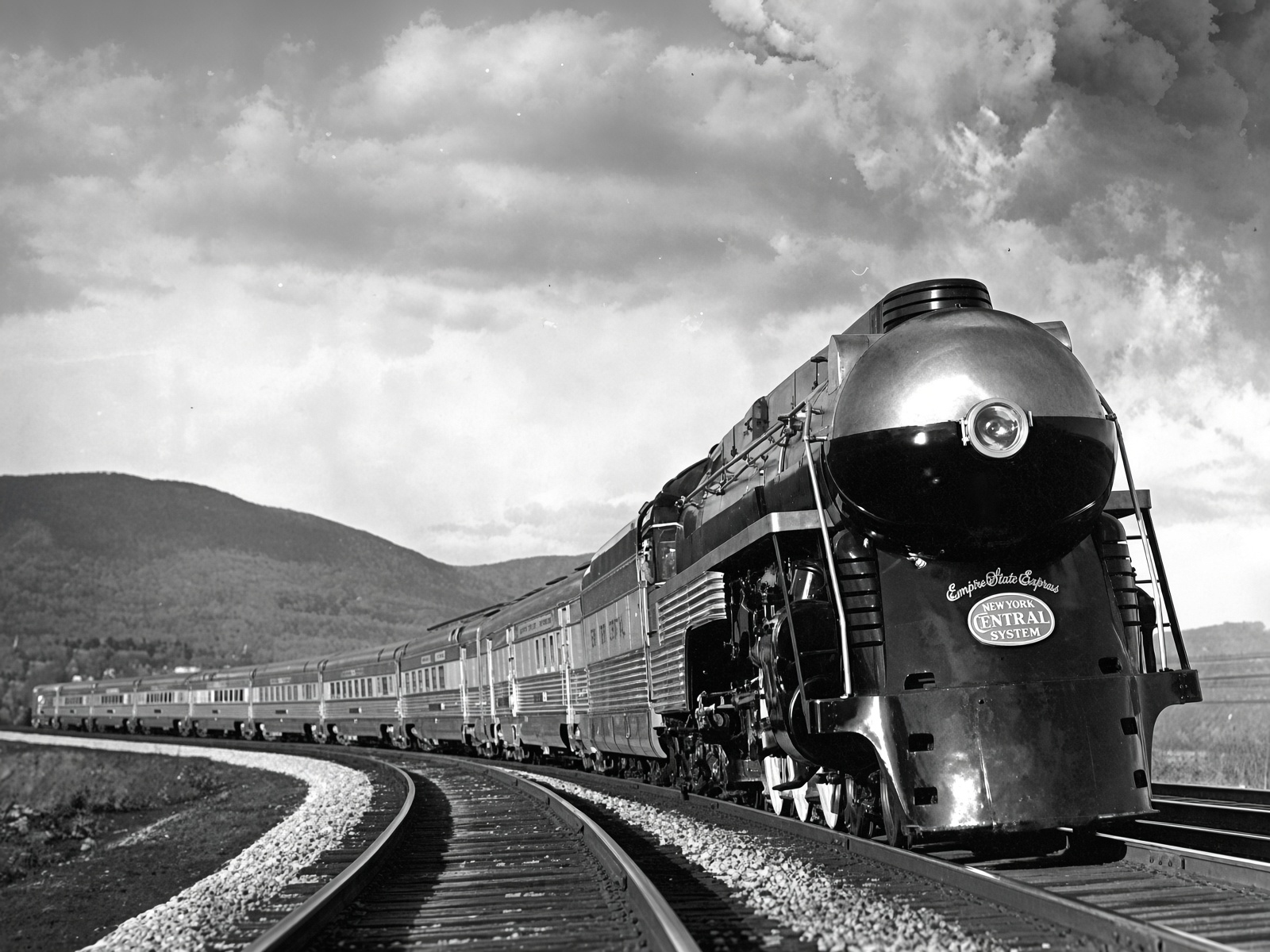
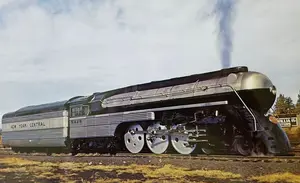
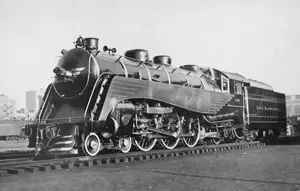
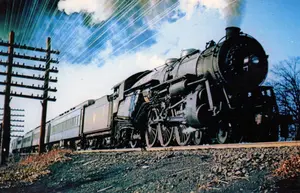
New York Central publicity photograph of the streamlined Empire State Express, December 1941, on a Hudson Division curve. The engine number is not readable in this three-quarter front view; 5426 and 5429 were the only two J-3as so shrouded. American-Rails.com collection.
On this page: At a glance · What they were—and were not · Alco J-3as, 1937 · Budd stainless, Knowlton and Davies · December 7, 1941 · Empire steam, then the Mercury · Specifications · Shrouds off, none saved
At a glance
| Item | Detail |
|---|---|
| What they are | The only two New York Central Hudsons streamlined for the 1941 Budd Empire State Express. J-3a 5426 and 5429 |
| What they are not | Not the ten Dreyfuss 20th Century Limited Hudsons (5445–5454). Not J-1e 5344 Commodore Vanderbilt. Not the train encyclopedia |
| Builder / class | Alco, Schenectady, October 1937. Class J-3a, the forty unstreamlined Super Hudsons 5405–5444. Serials 68860 (5426) and 68863 (5429) |
| Shroud | 1941. Chase H. Knowlton and George M. Davies, Dreyfuss-influenced bullet nose. Budd fluted stainless on rear-truck valances and tender to match the cars |
| Train | Day New York–Buffalo, later sections to Cleveland and Detroit. Numbers 51 west / 50 east. Electric to Harmon; steam from Harmon west |
| Inaugural | Sunday, December 7, 1941. 5426 on the published consist. Pearl Harbor the same morning |
| Assignment ends | Niagaras and EMD E7s on the Empire by 1946–47. 5426 photographed still two-tone on the Mercury, 1947 |
| Shrouds off | About 1949–50. Skirts often already gone. Both ran as plain J-3as afterward |
| Survivor | None. No New York Central Hudson was preserved |
Class dimensions follow Locobase (NYC 1944/1946 diagrams) and Alvin Staufer. Inaugural date and consist from the train record. Information compiled September 18, 2026.
What they were—and were not
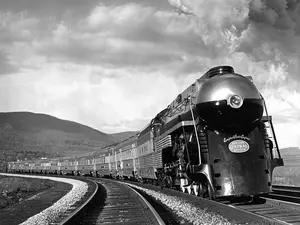
New York Central streamlined thirteen Hudsons, in three looks. J-1e 5344 got Carl Kantola’s bathtub casing in December 1934 and a Dreyfuss-like recasing in 1939. Ten J-3as, 5445–5454, were built in 1938 with Henry Dreyfuss’s finned bullet nose for the 20th Century Limited. 5426 and 5429 were a third style, applied in 1941 to two engines already four years old, so a stainless day train would have stainless steam. Count the fluting on the tender and the rear-truck valance: that is Budd, not the Century gray flannel.
The Hudson type, and the 275 engines the Central rostered, belong on the class page. The 1891 day train, 4-4-0 999, the 1941 Budd cars, and the name’s long afterlife belong on the Empire State Express page. This page stays with two road numbers.
Super Hudsons from Schenectady
Paul W. Kiefer’s J-3a was the last Hudson the Central bought: fifty engines, Alco 1937–38, 5405–5454. Forty came plain. Ten came Dreyfuss. 5426 and 5429 sat in the plain forty. Works numbers 68860 and 68863, October 1937, in the 68849–68869 block.
Against the J-1 they had less evaporative heating surface and more pressure. Staufer recorded that 275 psi bent main rods, so the setting came down 10 pounds to 265. Seventy-nine-inch drivers, 22½ × 29 cylinders, Baker gear, 14-inch piston valves, roller bearings on every engine and tender axle, trailing-truck booster. Engine weight 365,500 pounds. Starting effort about 41,860 pounds plus about 12,100 from the booster. Elesco feedwater heaters as built; a later Worthington shows up on destreamlined 5426 in Staufer. Scullin disc drivers when new; the Central mixed Boxpok and spoke centers later, as it did on the rest of the J-3as.
They were Water Level Route machines. From Grand Central the Empire ran under third rail to Harmon. Steam took the train from there: Hudson River, Albany, the Mohawk, Syracuse, Rochester, Buffalo. Kiefer rated the J-3as 1,130 tons at 59 mph. Between heavy shoppings they ran on the order of 185,000 to 200,000 miles.
A Century nose with Budd fluting
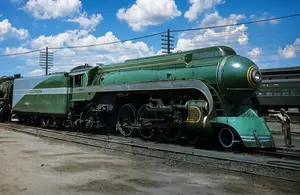
Budd built the 1941 cars in fluted stainless—coaches, parlors, diners, a tavern-observation named Theodore Roosevelt, thirty-two cars in the order. The locomotives had to match. Knowlton and Davies, working in Dreyfuss’s vocabulary, kept the drivers and rods in the open, the way the 1938 Century engines did. The nose was a smooth bullet with the oval number plate and “Empire State Express” on the pilot. The lower boiler and cowl were black; stainless fluting wrapped the rear-truck valances and the tender tank. At night the driving wheels could be lit, another Dreyfuss idea from the Century. It was not a bathtub. It was not Loewy covering a K4. It was a J-3a with a stainless suit cut for one train.
The Central was still unsure diesels would last. Steam on a stainless dayliner was cheaper than a pair of E units and kept Harmon’s Hudson terminal in the picture. That calculation did not outlive the war by many months.
Pearl Harbor morning
The railroad timed the new train for the Empire’s fiftieth year. Sunday, December 7, 1941. Westbound 51, Harmon change, 5426 on the published first consist: RPO Alonzo B. Cornell, lounge Grover Cleveland, parlors named for Hughes, Lehman, and Miller, diners George Clinton and DeWitt Clinton, coaches, observation Theodore Roosevelt. The Japanese attack on Pearl Harbor that morning emptied the lineside crowd the publicity department had wanted. The train ran anyway. It remained a successful dayliner. The locomotives’ fame is that date as much as the fluting.
Two engines, one train, then lesser work
5426 and 5429 were the assigned Empire steam. When one was in the shop a Dreyfuss Century Hudson sometimes substituted, which is why a bullet-nosed J-3a on the Empire in 1942–46 is not always one of these two. From Harmon west they were enough. After the war Kiefer’s 4-8-4 Niagaras and then EMD E7s took the name train. A circle of Nowak and shop dates puts the pair off the Empire assignment in the spring of 1946. E7s are on the train at Lyons in October 1947.
5426 did not go to the dead line. Staufer printed her in 1947 on the Mercury, still in two-tone, one set of drivers already swapped to spokes, Empire emblems off the pilot. John E. Pickett photographed her at Hudson, New York, in early 1946 with a centipede PT tender still on the Empire. 5429 turns up later in Chicago with a black PT tender and mixed Boxpok centers. Shop forces took the lower rear skirts off first. The rest of the stainless followed.
Specifications
Figures are the unstreamlined J-3a diagram (Locobase, NYC 1944/1946). Streamlining added weight; Staufer and the Dreyfuss ten are quoted at 365,500 pounds on the engine, the same number Locobase prints for the plain J-3a. Treat the table as the 1937 machine, not a separate Empire subclass.
| Item | J-3a 5426 / 5429 |
|---|---|
| Builder | Alco, Schenectady. October 1937 |
| Works nos. | 68860 (5426), 68863 (5429) |
| Whyte / class | 4-6-4, J-3a |
| Cylinders | 22½ × 29 in. Baker gear, 14-in piston valves |
| Drivers | 79 in. Scullin disc as built |
| Boiler pressure | 265 psi (275 as delivered; reduced after rod trouble) |
| Engine weight | 365,500 lb |
| Starting TE | About 41,860 lb plus about 12,100 lb booster |
| Feedwater | Elesco as built. 5426 later Worthington |
| Tender (as built) | About 13,600 U.S. gal, 28 tons coal. Later PT / centipede tanks on some assignments |
| Shroud | 1941–c. 1949/50. Knowlton & Davies / Budd stainless |
Plain J-3as, then scrap
By 1950 both engines were ordinary Hudsons again. The J-3a class ran into the mid-1950s; neighboring numbers went in 1954–56. New York Central saved no Hudson. The largest remaining piece of any NYC 4-6-4 is a tender at Steamtown, from J-1 5313, which is not this story. 5426 and 5429 exist as photographs, as Lionel and MTH models, and as two numbers on the Empire’s 1941 page.
Related reading on American-Rails.com
- Empire State Express · NYC Hudsons (Class J) · 4-6-4 Hudson type
- New York Central · 20th Century Limited · NYC Niagara 4-8-4s · Mercury
- The Great Steel Fleet · Streamliners
Sources
- Llanso, Steve. Locobase 186 (J-3a) and 15868 (J-3a Dreyfuss). NYC 1944 and 1946 locomotive diagrams via Allen Stanley. Works numbers 68839–68878; Budd shroud note on 5426 and 5429; J-3a dimensions and 265 psi
- Staufer, Alvin F. Steam Power of the New York Central System, 1961; and Thoroughbreds. J-3a rod trouble at 275 psi; 5426 on the Mercury, 1947, still two-tone
- Doughty, Geoffrey H. New York Central’s Great Steel Fleet, 1948–1967, revised edition. TLC Publishing, 1999. Postwar Empire power
- Schafer, Mike, and Joe Welsh. Streamliners: History of a Railroad Icon. MBI, 2003
- Solomon, Brian, and Mike Schafer. New York Central Railroad. Andover Junction / MBI, 2007
- SteamLocomotive.com, New York Central 4-6-4 notes. Thirteen streamlined Hudsons; 5426/5429 stainless cowling removed 1950
- American-Rails.com, Empire State Express. December 7, 1941 inaugural; 5426 and 5429; shrouds 1950
- American-Rails.com, NYC Class J Hudsons. J-3a 5426 and 5429 stainless cowling; Dreyfuss ten 5445–5454
- Rome Sentinel / Carl Trainer, December 12, 2025. Breakneck Ridge, north of Cold Spring, December 7, 1941 publicity still (the cliff companion, not the hero on this page)
Recent Articles


-
"Empire State Express" (1941 Train): Timetables, Route, Consist
Sep 18, 26 10:59 PM
 NYC Empire State Express—George Daniels 1891 day train, 999’s 112.5 mph claim, Budd stainless streamliner December 7 1941, Cleveland and Detroit sections, diesels, 1967 name drop. Timetables, consist…
 -
New York Central 4-6-4s 5426 & 5429: Empire State Express Hudsons
Sep 18, 26 10:32 PM
 NYC J-3a Hudsons 5426 and 5429—Alco 1937, Budd stainless shrouds 1941 for the Empire State Express. Pearl Harbor inaugural. Shrouds off by 1950. Neither preserved.
 -
"Stourbridge Lion" Locomotive: Facts, History, Photos
Sep 18, 26 10:27 PM
 Stourbridge Lion—Foster, Rastrick 0-4-0, first steam locomotive in the United States. Horatio Allen, Honesdale, August 8, 1829. Too heavy for D&H gravity track. Boiler in Baltimore; Colonie replic…
 -
Delaware & Hudson Steam Roster (Post 1900)
Sep 18, 26 10:01 PM
 Delaware & Hudson steam—Camelback 2-8-0s, Loree high-pressure compounds, Class K 4-8-4s, forty Challengers. Post-1900 class roster after Drury. Last steam July 21, 1953.
 -
Boston & Maine Steam Roster (Post 1900)
Sep 18, 26 02:57 PM
 Boston & Maine steam—B-15 Moguls, K-8 Consolidations, P-4 Lima Pacifics, T-1 Limas, R-1 Mountains. Post-1900 class roster after Drury. Last steam July 23, 1956.
 -
Boston & Maine Diesel Roster (All-Time)
Sep 18, 26 01:25 PM
 Boston & Maine diesel—boxcab 1100 1935, Flying Yankee 6000, FTs, E7s, BL2s, GP7/GP9, GP38-2s and GP40-2s. All-time roster. Last steam July 23, 1956.
 -
Mid-Continent Railway Museum Dining (2026)
Sep 18, 26 01:21 PM
 2026 Mid-Continent dining in North Freedom—select-date seated meals in luxury cars, reservations required. Pizza Limited June 28. Confirm on midcontinent.org.
 -
Bessemer & Lake Erie Steam Roster (Post 1900)
Sep 18, 26 12:11 PM
 Bessemer & Lake Erie steam—C3A 150–151, D1A/D2A Santa Fes, 47 H1 Texas types after Burlington. Post-1900 class roster after Drury. Last steam 2-8-0 156, May 14, 1953.
 -
Bessemer & Lake Erie Diesel Roster (All Time)
Sep 18, 26 12:09 PM
 Bessemer & Lake Erie diesel—Westinghouse 281 1936, Baldwin DRS-6-6-1500s, F7s 1950–53, SD7/SD9/SD18/SD38 family, RSD-15s. All-time roster. Last steam 2-8-0 156, May 14, 1953.
 -
Bangor & Aroostook Steam Roster (Post 1900)
Sep 18, 26 11:21 AM
 Bangor & Aroostook steam—Manchester Ten-Wheelers, Alco Mountains 100–109, G-2 Consolidations, Pacifics 250–254. Post-1900 class roster after Drury. Last steam Pacific 251, July 22, 1951.
 -
Bangor & Aroostook Diesel Roster (All Time)
Sep 18, 26 11:09 AM
 Bangor & Aroostook diesel—F3s 1947, eight BL2s, E7s, GP7s leased to the PRR, GP9s, GP38s. All-time roster. Last regular steam July 22, 1951.
 -
B&O Steam Locomotive Roster (Post 1900)
Sep 18, 26 10:33 AM
 Baltimore & Ohio steam—Old Maude, E-27 Consolidations, Q Mikados, Big Sixes, EM-1 Yellowstones, President Pacifics. Post-1900 class roster after Drury. Last public steam May 17, 1958.
 -
Baltimore & Ohio (B&O): Diesel Roster (All-Time)
Sep 18, 26 10:28 AM
 Baltimore & Ohio diesel—boxcab 1925, EMC 50 1935, EA 1937, FTs, F3s, F7s, FA-2s, sharks, GP7/GP9, GP30s after C&O 1963, SD50s 8576–8595 1984. All-time roster. Last steam 1958.
 -
Detroit & Toledo Shore Line Railroad: Map, Roster, History
Sep 18, 26 12:32 AM
 Detroit & Toledo Shore Line—Pleasant Bay 1898, named 1899, Detroit–Toledo freight bridge, GTW and Clover Leaf/NKP/N&W. Merged into Grand Trunk Western June 26, 1981.
 -
Lackawanna Steam Locomotives: History, Roster & Photos
Sep 18, 26 12:17 AM
 Delaware, Lackawanna & Western steam—Camelback 2-8-0s, Mikados, freight Pacifics, Poconos 4-8-4s, Hudsons. Post-1900 roster after Drury. Last steam July 13, 1953.
 -
Lackawanna (DL&W) Diesel Roster: All Time
Sep 18, 26 12:11 AM
Delaware, Lackawanna & Western diesel—boxcabs 1926, EMC SC 425–426 1935, FTs 1945, F3/F7/E8, GP7s, RS-3s, FM Train Masters. All-time roster. Last steam 1953. -
Lackawanna Railroad: Map, History, Viaducts, Rosters
Sep 18, 26 12:04 AM
 TDelaware, Lackawanna & Western—Liggett’s Gap 1832, named March 11 1853, Hoboken–Buffalo, anthracite, Phoebe Snow, Cutoff and Tunkhannock. It merged with the Erie to form Erie Lackawanna on Octobe…
 -
Rail News, The Latest
Sep 17, 26 11:56 PM
This page provides a portal to the latest in rail news, from preservation and restortation subjects to other notable topics. -
Union Pacific Big Boy 4014 Sets First Holiday Tour for Make-A-Wish
Sep 17, 26 11:54 PM
 Union Pacific Big Boy 4014’s first holiday tour: Cheyenne–Denver tickets, Nov. 21 Denver-area display, Make-A-Wish. Museum patrons Oct. 16; public Oct. 19.
 -
Conrail Diesel Roster (All Time)
Sep 17, 26 10:27 PM
 Conrail diesel—~5,000 inherited 1976, Big Blue, GP15-1s, SD40-2s, SD50s, Dash-8s, SD60/60M/60I, SD80MACs. All-time CR-number roster.
 -
Chessie System (Railroad): The C&O, B&O, And WM
Sep 17, 26 09:38 PM
 Chessie System, Inc.—C&O, B&O, and Western Maryland. Kitten-C paint 1972, holding company February 26 1973, CSX November 1 1980, C&O into CSXT August 31 1987.
 -
Chesapeake & Ohio (C&O) Diesel Roster: All-Time
Sep 17, 26 06:01 PM
 Chesapeake & Ohio diesel—late steam, no Fairbanks-Morse, E7s 1946, GP7/GP9 flood, F7s, GP40-2s, B30-7s, SD50s 1984–85. All-time roster. Steam ended 1956.
 -
Chesapeake & Ohio (C&O) Steam Roster: Post-1900
Sep 17, 26 03:18 PM
 Chesapeake & Ohio steam—H-8 Alleghenies, K-4 Kanawhas, T-1 Texas, Greenbriers, H-6 1949 Mallets. Post-1900 class roster including Pere Marquette and Hocking Valley. Last steam 1956.
 -
Chesapeake and Ohio Railway: Map, Logo, History
Sep 17, 26 02:36 PM
 Chesapeake & Ohio Railway—Louisa Railroad 1836, named August 31 1868, Ohio River 1873. Coal, Chessie the kitten, Pere Marquette 1947, B&O control 1963, into CSX August 31 1987. Complete corporate…
 -
TVRM Valentine Train Ride (2026)
Sep 17, 26 02:31 PM
 2026 TVRM Valentine Train Ride in Chattanooga—Feb. 6–15, plated dinner, Grand Junction Depot. Confirm on tvrail.com.
 -
River Fox Train Dining (2026)
Sep 17, 26 02:29 PM
 2026 River Fox Train in West Sacramento—Brunch Train and Murder Mystery dinner. 18095 County Road 117. Confirm on riverfoxtrain.com.
 -
Weehawken Terminal, Serving The West Shore Railroad
Sep 17, 26 01:38 PM
 Weehawken Terminal—West Shore / New York Central Hudson waterfront station, opened 1884. Five ferry slips, sixteen tracks, Weehawken Tunnel 4,014 feet. Last ferry March 25, 1959. Port Imperial and HBL…
 -
West Shore Railroad: Map, History, Timetables
Sep 17, 26 01:32 PM
 West Shore Railroad—New York, West Shore & Buffalo 1880–83, Weehawken to Buffalo. PRR-backed rival to the Central. Morgan settlement, 475-year NYC lease January 1 1886. CSX River Sub today.
 -
Jersey Central Diesel Locomotives: History, Roster & Photos
Sep 17, 26 01:20 PM
 Central Railroad of New Jersey diesel—boxcab 1000, Baldwin double-enders, F3s, Train Masters, SD35s, GP40Ps. All-time roster. Steam ended July 1, 1954.
 -
Jersey Central Steam Locomotives: History, Roster & Photos
Sep 17, 26 01:17 PM
 Central Railroad of New Jersey steam—Camelback Ten-Wheelers, USRA Mikados, G-class Pacifics, suburban tanks. Post-1900 class roster after Drury. Dieselized July 1, 1954.
 -
Jersey Central Railroad (CNJ): Map, Rosters, History
Sep 17, 26 01:14 PM
 Central Railroad of New Jersey—Elizabethtown & Somerville 1831, named April 23 1849. Communipaw, anthracite, Blue Comet, Reading/B&O control. Conrail April 1 1976. Complete corporate history.
 -
Central Vermont Diesel Locomotives: History, Roster & Photos
Sep 17, 26 11:35 AM
 Central Vermont diesel—Alco S-2s 1942, RS-3s, RS-11s from DW&P, EMD GP9s 1956–57, GP38ACs 1971. All-time roster. Last steam April 4, 1957.
 -
Central Vermont Steam Locomotives: History, Roster & Photos
Sep 17, 26 11:19 AM
 Central Vermont steam—ten Alco 2-10-4s of 1928, four U-1-a Mountains, Consolidations. Post-1900 class roster after Drury. Last steam April 4, 1957.
 -
Central Vermont Railway: Map, Logo, Rosters
Sep 17, 26 11:03 AM
 Central Vermont Railway—Vermont Central charter October 1843, Bethel–White River Junction June 26, 1848. Grand Trunk 1898, CN 1923, RailTex/NECR 1995. Complete corporate history.
 -
Fitchburg Railroad: Map, History, Timetables
Sep 17, 26 10:40 AM
 Fitchburg Railroad—chartered March 3, 1842, Boston–Fitchburg March 5, 1845. Alvah Crocker, Hoosac west door, Vermont & Massachusetts, Cheshire. B&M 99-year lease July 1, 1900. Complete corpora…
 -
Steam Railroading Institute Dining (2026)
Sep 17, 26 10:30 AM
 2026 SRI Owosso dining—vintage dining cars, select evenings. 2026 dinner calendar not posted; 2025 Up In Smoke is the recent example. Confirm on michigansteamtrain.com.
 -
Canadian Pacific Railway: Map, History, Logo, Photos
Sep 17, 26 12:06 AM
 Canadian Pacific Railway—incorporated February 16, 1881. Last spike Craigellachie November 7, 1885. Soo, Milwaukee, D&H, DM&E. CPKC April 14, 2023. Complete corporate history.
 -
Canadian Pacific Diesel Locomotives: History, Roster & Photos
Sep 17, 26 12:03 AM
 Canadian Pacific diesel—E8A 1800 in 1949, FP7/FP9, FA-2, C424, SD40-2, SD40-2F Red Barns, AC4400CW, ES44AC, SD30C-ECO, SD70ACu heritage. All-time roster. Last steam November 6, 1960.
 -
Canadian Pacific Steam Locomotives: History, Roster & Photos
Sep 16, 26 11:35 PM
 Canadian Pacific steam—3,257 engines 1881–1949. D10 Ten-Wheelers, G3 Pacifics, Royal Hudsons, Selkirk 2-10-4s. Post-1900 class roster after Drury. Last steam November 6, 1960.
 -
Woodstown Central Dining in Motion (2026)
Sep 16, 26 11:31 PM
 2026 Woodstown Central Dining in Motion—Salem County table car, 50–60 minutes, private table of four from $190. Confirm on woodstowncentral.com.
 -
NCTM Wine & Dine on the Rails (2026)
Sep 16, 26 11:28 PM
 2026 NCTM Wine & Dine on the Rails in Spencer—Feb. 13–15, three-course dinner, 21+, $145/$140. Sold out. Confirm next season on nctransportationmuseum.org.
 -
Southern Railway 4-6-2 1380: The Streamlined Ps-4
Sep 16, 26 10:34 PM
 Southern Railway Ps-4 4-6-2 1380—Alco 1923, serial 64857. Otto Kuhler streamlining at Spencer 1940–41 for the Tennessean. Only streamlined steam locomotive on the Southern. Scrapped Baltimore 1953.
 -
Texas Mexican Railway: Serving The Border Since The 1880s
Sep 16, 26 09:58 PM
 Texas Mexican Railway—Corpus Christi, San Diego & Rio Grande March 1875, 3-foot. Tex-Mex June 1881, Laredo Sept 1881, Rio Grande bridge 1883. Standard gauge July 17 1902. Mexican government 1900–1…
 -
Mount Hood Railroad Dining (2026): No Plated Dinner Train This Season
Sep 16, 26 09:53 PM
 2026 Mount Hood Railroad in Hood River is scenic Fruit Loop trains with snacks and sandwiches—not a plated dinner train. Confirm on mthoodrr.com.
 -
Peoria and Eastern Railway: Map, Timetables, History
Sep 16, 26 09:39 PM
 Peoria & Eastern—Danville, Urbana, Bloomington & Pekin 1866, IB&W 1869, OI&W 1887. Incorporated Feb 21 1890, Big Four next day. NYC 1930, Conrail 1976. GP7s 5612–5625. Complete corporate history.
 -
Boston and Maine Railroad: "Route Of The Minute Man"
Sep 16, 26 11:30 AM
 Boston & Maine—Andover & Wilmington 1833, NH charter June 27 1835. Eastern, Boston & Lowell, Fitchburg/Hoosac, Concord & Montreal. Section 77 March 12 1970. Guilford June 30 1983. CSX June 1 2…
 -
Smoky Valley Limited Dinner Train (2026)
Sep 16, 26 11:24 AM
 2026 Abilene & Smoky Valley Smoky Valley Limited—two-hour dinner from the 1887 Rock Island Depot. Kansas catering, ~$72–$110. Confirm on asvrr.org.
 -
Canadian National Diesel Locomotives: History, Roster & Photos
Sep 16, 26 11:14 AM
 Canadian National diesel—CLC boxcabs 1929, GMD FP9 and GP9, MLW FPA-4 and RS-18, GMD1, wide-cab SD40-2W, Dash-9s, ES44AC and ET44AC. All-time roster.
 -
Canadian National Steam Locomotives: History, Roster & Photos
Sep 16, 26 10:07 AM
Canadian National steam—CGR, Canadian Northern, Grand Trunk, GTP. 4-8-4 Confederations, U-1 Mountains, J and K Pacifics. Post-1900 class roster. Last scheduled steam April 25, 1960. -
Canadian National Railway: Map, Logo, History, Photos
Sep 16, 26 08:55 AM
 Canadian National—name Dec 20 1918, incorporated June 6 1919, Grand Trunk Jan 20 1923. Crown corporation, IPO Nov 17 1995. IC, Wisconsin Central, BC Rail, EJ&E. Class I, mark CN.