The “Snowball Express”: Park City’s Festive Ski Train
Published: April 9, 2026
By: Adam Burns
The “Snowball Express” was one of the more colorful late-era passenger excursions operated by the Union Pacific, a seasonal ski train that carried winter sports enthusiasts from Salt Lake City to the slopes of Park City, Utah. Though it ran only intermittently between 1965 and 1971, the train left an outsized legacy—blending transportation, tourism, and entertainment at a time when private passenger rail service in the United States was rapidly disappearing.
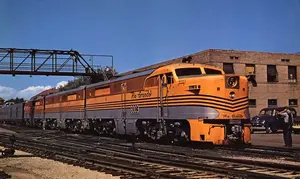
 Union Pacific E9A #910 has the "Snowball Express" at Wanship, Utah on February 28, 1970. These trains were run on a handful of dates between 1965-1971 to take skiers to the resorts at Park City, Utah. Rick Burn photo.
Roots of Rail Travel to Park City
To understand the Snowball Express, one must first look at Park City’s long association with railroads. Rail service reached the mining town in the late 19th century, linking it to the Union Pacific main line at Echo and enabling both freight and passenger operations. By the 1880s, regular passenger service connected Park City with Ogden and beyond, helping sustain the town’s economy.
As mining declined in the early 20th century, tourism—especially skiing—emerged as a new economic driver. Railroads across the United States experimented with “ski trains”, transporting urban residents to mountain resorts during winter weekends.
In Utah, the Denver & Rio Grande Western Railroad operated early ski trains to Park City as early as the 1930s, but these services ended by 1946. The Union Pacific continued occasional excursions into 1950, after which passenger service to Park City ceased entirely for more than a decade.
Revival: The Hootspa Special (1965)
The modern story of the Snowball Express began in December 1965, when Union Pacific revived ski train service with a special excursion known as the “Hootspa Special.” This train was organized as part of a broader effort to promote Utah as a candidate for the 1972 Winter Olympics, with backing from civic organizations and tourism promoters.
Departing Salt Lake City, the train made intermediate stops—often in Ogden and Echo—before climbing the Park City Branch into the Wasatch Mountains. The inaugural run carried approximately 500 passengers, a strong turnout that demonstrated pent-up demand for rail-based access to ski resorts. The success of this initial excursion set the stage for a series of similar trains over the next several winters.
 Union Pacific's "Snowball Express" is near the first crossing south of Coalville, Utah in February, 1970. Rick Burn photo. Rick stated he rode the train one way and drove back.
Birth of the “Snowball Express”
By 1969, the ski excursions had been rebranded as the “Snowball Express,” with sponsorship shifting to the Salt Lake Area Chamber of Commerce.
The new name reflected both the festive atmosphere of the trips and their role in promoting winter tourism events such as Park City’s Winter Carnival and ski competitions.
Unlike traditional scheduled passenger trains, the Snowball Express operated as a special excursion, typically running once per season. Known operating dates include:
- December 4, 1965 (as Hootspa Special)
- February 18, 1967
- February 24, 1968
- March 8, 1969 (first “Snowball Express”)
- February 28, 1970
- February 27, 1971 (final run)
Despite its limited frequency, the train quickly became a highlight of Utah’s winter season.
 Union Pacific E9A #910 with the "Snowball Express" at Morgan, Utah in March, 1970. Rick Burn photo.
Route and Operations
The Snowball Express followed a scenic route that combined mainline and branch operations:
- Departure from Salt Lake City, the primary origin point
- Stops in Ogden and Echo, adding passengers along the way
- Climb up the Park City Branch, a historic spur line built to serve mining operations
The journey offered passengers dramatic winter scenery, including snow-covered canyons and mountain vistas, making the trip itself part of the attraction.
Power for the train typically came from Union Pacific’s classic passenger locomotives, including EMD E-units (E8s and E9s) and occasionally newer models like the SDP35 (UP owned ten examples of this uncommon variant, numbered 1400-1409, which were acquired in 1965). Consists varied but generally included 10–12 passenger cars, with coaches, lounge cars, and entertainment spaces.
A “Party Train” Experience
What truly set the Snowball Express apart was its reputation as a rolling winter party.
Unlike earlier, more utilitarian ski trains, this excursion emphasized entertainment and socializing. Passengers enjoyed:
- Bar service (not subject to Utah’s strict liquor laws due to federal railroad jurisdiction)
- Live music and dancing, with entire cars dedicated to entertainment
- A festive, carnival-like atmosphere throughout the trip
The train became known as a place where skiers and young adults mingled freely, creating an experience as memorable as the skiing itself.
Upon arrival in Park City, passengers were greeted by local dignitaries, bands, and transportation services to nearby ski areas such as the then-new Treasure Mountain Resort (later Park City Mountain Resort).
Popularity and Cultural Impact
Over its brief lifespan, the Snowball Express grew steadily in popularity.
- Early runs carried around 300–500 passengers, often selling out
- The train became closely tied to Park City’s emerging identity as a ski destination
- It helped boost winter tourism during a critical transition from mining to recreation
Participants remembered not only the convenience of rail travel but also the unique camaraderie fostered by the journey.
In many ways, the Snowball Express represented a late-era attempt by a freight-dominated railroad to remain relevant in the passenger market by offering experience-based travel rather than routine transportation.
 A flagman guards a crossing south of Coaville, Utah as Union Pacific E9A #910 hustles past with the "Snowball Express" in February 1970. Rick Burn photo.
The Final Run and the End of an Era
The Snowball Express made its final run on February 27, 1971, marking the end of passenger rail service to Park City. Its demise was not due to lack of popularity but rather sweeping changes in the American railroad industry. In 1971, the federal government created Amtrak, consolidating most intercity passenger services. Participating railroads like Union Pacific were required to exit the passenger business, transferring operations to the new entity.
Because the Snowball Express was a public passenger excursion, it fell under these restrictions and could not continue under Union Pacific’s operation. The final trip was a celebratory event, complete with entertainment, large crowds, and a ceremonial reception in Park City—bringing closure to nearly a century of rail passenger service to the town.
Legacy
Though short-lived, the Snowball Express occupies an important place in both railroad and regional history.
1. A Bridge Between Eras
It represented one of the last examples of privately operated passenger excursions before Amtrak’s formation, closing the chapter on Union Pacific’s passenger services.
2. Tourism Catalyst
The train helped solidify Park City’s transformation from a declining mining town into a thriving ski destination—a shift that continues to define the area today.
3. Precursor to Modern Ski Trains
The concept of rail-based access to ski resorts did not disappear. Modern services—such as Colorado’s Winter Park Express—echo the same idea of combining convenience, scenery, and recreation.
4. Preservation of the Route
The former Park City Branch has since been repurposed as part of the Historic Union Pacific Rail Trail, allowing visitors to follow the path once traveled by the Snowball Express.
Conclusion
The train was far more than a simple ski train. It was a festive, experiential journey that captured the spirit of a changing era in American railroading. Operating at the twilight of private passenger service, it demonstrated how railroads could adapt—if only briefly—by focusing on leisure and tourism. Its lively atmosphere, scenic route, and role in promoting Park City’s ski industry ensured that, even decades after its final run in 1971, the Snowball Express remains a cherished chapter in both railroad and Utah history.
Recent Articles


-
Baldwin "Baby Face" Locomotives: Specs, Photos, Roster
Oct 30, 26 11:01 PM
 Baldwin's Babyface cab on the early road diesels: 50 short-cab units, 1946-1948, plus the related Centipede. Construction numbers, specs, and the sharknose that followed.
-
California High-Speed Rail Chief Resigns
Oct 30, 26 08:36 PM
 Ian Choudri resigned October 28, 2026 as chief executive of the California High-Speed Rail Authority. The board named Joe Stephenshaw interim chief executive.
-
The 1910 Portal Bridge Is Handed Over for Demolition
Oct 30, 26 04:03 PM
 Amtrak handed the 1910 Portal Bridge over for demolition on October 29, 2026, during the final cutover to Portal North. Regular NJ Transit and Amtrak schedules are expected November 15.
-
Union Pacific-Norfolk Southern Merger Review Runs to 2027
Oct 30, 26 03:59 PM
 Union Pacific says the Surface Transportation Board's review of the Norfolk Southern merger gathers information through May 28, 2027. A closing still depends on board approval.
-
Amtrak Board Will Hear Restructuring Comments on November 10
Oct 30, 26 03:41 PM
 Amtrak's board will hear public comments on its restructuring on November 10, 2026, from 2 to 3 p.m. Eastern. Written comments were due October 30. A proposal goes to the board in December.
-
Canadian Pacific Selkirk 5931 Restored in Calgary
Oct 30, 26 01:36 PM
 Heritage Park in Calgary unveiled a cosmetic restoration of Canadian Pacific 2-10-4 No. 5931 on October 27, 2026. One of two surviving Selkirks. It stays on display.
-
Gettysburg Railway to Host Steam for Lincoln
Oct 30, 26 01:18 PM
 Northern Central Railway of York No. 17 will recreate Lincoln's arrival at Gettysburg on November 18, 2026, with public steam trips November 19-21.
-
NC&StL No. 576 to Steam for the Public in Nashville
Oct 30, 26 01:00 PM
 Nashville Steam will fire NC&StL 4-8-4 No. 576 for the public on November 7, 2026, 9 a.m. to 3 p.m., at 220 Willow Street. Admission is free.
-
Pennsylvania Railroad E8s Join the T1 Trust
Oct 30, 26 12:38 PM
 The T1 Trust has acquired former Pennsylvania Railroad E8A diesels 5702A and 5761A from the Fort Wayne Railroad Historical Society. They are bound for Cumberland.
-
Ligonier Valley Railroad: History, Roster, Timetable
Oct 30, 26 12:03 PM
 The Ligonier Valley Railroad ran 10.5 miles from Latrobe to Ligonier, Pennsylvania. Opened December 1, 1877. Last day August 31, 1952.
-
Toledo, Peoria & Western Diesel Roster (All-Time)
Oct 30, 26 10:25 AM
 Toledo, Peoria & Western diesel locomotives, each frame once. Thirteen Alcos, three Lima-Hamilton switchers, and 26 Electro-Motive units.
-
Toledo, Peoria & Western Steam Roster
Oct 30, 26 09:14 AM
 Toledo, Peoria & Western steam locomotives from the Rogers Consolidations of 1895 through the 4-8-4s of 1937
-
Toledo, Peoria & Western Railway: Map, Roster, History
Oct 29, 26 11:12 PM
 History of the Toledo, Peoria & Western. The Peoria & Oquawka, George P. McNear, the Santa Fe and Pennsylvania years, and the railroad that came back in 1989.
-
Cotton Belt Diesel Roster (All-Time)
Oct 29, 26 07:58 PM
 St. Louis Southwestern diesel locomotives, each frame once. Baldwin switchers, F units, and new Cotton Belt-lettered power through the GP60s of May 1990.
-
Cotton Belt Steam Roster (Built Since 1900)
Oct 29, 26 06:52 PM
 St. Louis Southwestern steam locomotives built since 1900. Consolidations, Ten-Wheelers, and twenty class L-1 4-8-4s. The quantity column is 297.
-
Cotton Belt Railroad: Map, Logo, History, Rosters
Oct 29, 26 10:56 AM
 History of the St. Louis Southwestern, the Cotton Belt Route. The Tyler Tap, Paramore's silver spike, the Thebes Bridge, the Blue Streak, and Southern Pacific control. Steam and diesel rosters are sep…
-
Pere Marquette Steam Roster (Built Since 1900)
Oct 28, 26 11:54 PM
 Pere Marquette steam locomotives built since 1900. Consolidations, Mikados, Pacifics, and 39 Berkshires. The quantity column is 503.
-
Pere Marquette Diesel Roster (All-Time)
Oct 28, 26 11:48 PM
 Pere Marquette diesel locomotives, each frame once. Two SW1s, 14 NW2s, three GE 70-tonners, eight E7As, and six BL2s delivered lettered Chesapeake and Ohio. The quantity column is 33.
-
Pere Marquette Railway: Map, Logo, Rosters, History
Oct 28, 26 11:44 PM
 History of the Pere Marquette Railway. Timber roads, the Prince years, the Van Sweringens, the Ludington car ferries, and the Chesapeake and Ohio merger of June 6, 1947.
-
Nickel Plate Road (Railroad): Map, History, Rosters
Oct 28, 26 10:51 PM
 History of the Nickel Plate Road, the New York, Chicago and St. Louis. The Seney syndicate, the Van Sweringens, the Berkshires, and the Norfolk and Western absorption at 12:01 a.m. on October 16, 1964…
-
Nickel Plate Diesel Roster (All-Time)
Oct 28, 26 10:48 PM
 Nickel Plate diesel locomotives, each frame once. Alco switchers and PAs, GP7s and GP9s, and the GP30s. The quantity column is 440. The 1950 fleet was 117.
-
Nickel Plate Steam Roster (Built Since 1900)
Oct 28, 26 10:43 PM
 Nickel Plate steam locomotives built since 1900, including the Lake Erie and Western, the Clover Leaf, and the Wheeling engines that took Nickel Plate numbers. The quantity column is 786.
-
EMD "E9" Locomotives: Specs, Roster, History
Oct 28, 26 10:37 PM
 EMD E9 cab units and boosters, 2,400 horsepower, built April 1954 through January 1964. Gear ratios, specifications, and the production roster by owner, serial, and order.
-
NYC 4-6-4 #5344, "Commodore Vanderbilt"
Oct 28, 26 04:31 PM
 NYC J-1e Hudson 5344, the Commodore Vanderbilt. Alco, November 1931. Carl Kantola’s shroud, December 1934, then a Dreyfuss bullet nose in 1939. Scrapped at Collinwood in 1954.
-
New Jersey, Indiana & Illinois Railroad: A South Bend Shortline
Oct 28, 26 11:05 AM
 The New Jersey, Indiana & Illinois, the Jersey Line, ran from South Bend to Pine. Singer built it in 1905. Wabash stock control came in 1926. Two diesels, and the steam the record names.
-
Monon Diesel Roster (All-Time)
Oct 28, 26 10:13 AM
 Monon diesel locomotives, each frame once. F3s, nine BL2s, the C420s, and eight U23Bs. The quantity column is 96. The 1951 fleet was 57.
-
Monon Steam Roster (Built Since 1900)
Oct 28, 26 10:09 AM
 Monon steam locomotives built since 1900. Twelve-Wheelers, Mikados, light Pacifics, and thirteen six-wheel switchers. The quantity column is 148.
-
Monon Railroad: Map, Photos, History, Logo
Oct 28, 26 09:55 AM
 History of the Monon, the Hoosier Line. The New Albany & Salem, the X at Monon, Barriger's streamliners, and the Louisville & Nashville merger of July 31, 1971.
-
Missouri-Kansas-Texas Diesel Roster (All-Time)
Oct 28, 26 09:48 AM
 All-time diesel roster of the Missouri-Kansas-Texas. 406 locomotives, each frame once. Baldwin switchers, Alco cab units, F units, Geeps, and the SD40-2s.
-
Missouri-Kansas-Texas Steam Roster (Built Since 1900)
Oct 28, 26 09:43 AM
 Missouri-Kansas-Texas steam locomotives built since 1900. Moguls, Mikados, Pacifics, and the narrow-gauge shop tanks. The quantity column is 715.
-
Missouri-Kansas-Texas Railroad (Katy): Map, History, Rosters
Oct 27, 26 11:02 PM
 History of the Missouri-Kansas-Texas, the Katy. The race into Indian Territory, Gould, the 1923 railroad, the Texas Special, and the 1988 sale. Steam and diesel rosters are linked.
-
Soo Line Diesel Roster (All-Time)
Oct 27, 26 10:55 PM
 All-time diesel roster of the Soo Line and the Wisconsin Central. 786 locomotives, each frame once. Cab units, Geeps, the Milwaukee Road engines, and the SD60s. The South Shore's 24 stay on that page.
-
Soo Line Steam Roster (Built Since 1900)
Oct 27, 26 10:49 PM
 Soo Line and Wisconsin Central steam locomotives built since 1900. Consolidations, Mikados, Pacifics, 21 Mountains, and four Lima 4-8-4s.
-
Soo Line Railroad: Map, Logo, History, Rosters
Oct 27, 26 10:24 PM
 The Soo Line, from the flour millers' railroad around Chicago to the Sault, the Wisconsin Central, and the Milwaukee Road. Steam quantity 422. Diesels 786. Canadian Pacific took full control in 1990.
-
Minneapolis, Northfield and Southern Railway: Map, History, Rosters
Oct 27, 26 10:32 AM
 The Minneapolis, Northfield & Southern, the Dan Patch Line that became a Twin Cities belt. Steam, gas-electric mules, motor cars, and the 22 diesels, through the Soo Line.
-
Minneapolis & St. Louis Diesel Roster (All-Time)
Oct 27, 26 10:27 AM
 All-time diesel roster of the Minneapolis & St. Louis. 97 locomotives, each frame once. Switchers from 1938, 35 RS-1s, the FT and F-unit cabs, two SD7s, and 23 GP9s. Builder numbers included.
-
Minneapolis & St. Louis Steam Roster (Post 1900)
Oct 27, 26 10:25 AM
Minneapolis & St. Louis steam locomotives built since 1900. Moguls, Consolidations, 35 Mikados, and five Pacifics. -
Minneapolis and St Louis Railway: "The Peoria Gateway"
Oct 27, 26 09:52 AM
 The Minneapolis & St. Louis, the Tootin' Louie, from the 1870 charter to the Peoria Gateway and the Chicago & North Western sale on November 1, 1960.
-
Alco "PA" Locomotives: Restoration, Specs, Engine, Rosters
Oct 27, 26 12:12 AM
 Alco's PA passenger cab, 297 locomotives built from 1946 to 1953. The 244 engine, the production roster, the Delaware & Hudson PA-4s, and Nickel Plate Road 190.
-
Milwaukee Road Diesel Roster: (All Time)
Oct 26, 26 01:44 PM
 All-time diesel roster of the Milwaukee Road. 1,208 locomotives, each frame once. Alco, Baldwin, Davenport, EMD, Fairbanks-Morse, General Electric, and Whitcomb, with builder numbers.
-
Milwaukee Road Steam Roster (All-Time): Post-1900
Oct 26, 26 01:38 PM
 Milwaukee Road steam locomotives built since 1900. Prairies, Mikados, the N-class articulateds, the S-class 4-8-4s, and the Hiawatha Atlantics and Hudsons. Quantity column 1,974. Unique frames 1,951.
-
Milwaukee Road: Map, Electrification, Logo, History
Oct 26, 26 01:20 PM
 The Milwaukee Road, from the Milwaukee & Mississippi of 1850 to the Pacific Coast Extension, the Hiawathas, and the Soo Line sale. Why Lines West should have stayed.
-
Lake Superior & Ishpeming Railroad: Map, Roster, History
Oct 25, 26 11:38 PM
 Lake Superior & Ishpeming Railroad, reporting mark LSI, from the Marquette Range to the Presque Isle ore dock. The 1954 steam list and the diesels the railroad owned.
-
Kansas City Southern Steam Roster (Built Since 1900)
Oct 25, 26 09:09 PM
 Steam locomotives of the Kansas City Southern built since 1900, with the Louisiana & Arkansas and the Texas company.
-
Kansas City Southern Diesel Roster (Built New)
Oct 25, 26 11:46 AM
All-time diesel roster of the Kansas City Southern. E units, F units, Geeps, SD40s through SD70ACes, Fairbanks-Morse, Baldwin, Alco, and General Electric, with serials and order numbers. -
Kansas City Southern Railway: Map, Photos, History
Oct 25, 26 12:24 AM
The Kansas City Southern, from Arthur Stilwell's Gulf line to Canadian Pacific Kansas City on April 14, 2023. Steam and diesel rosters, the Southern Belle, and the Louisiana & Arkansas. -
Indiana Harbor Belt Diesel Roster (All-Time)
Oct 25, 26 12:17 AM
 All-time diesel roster of the Indiana Harbor Belt. 202 locomotive frames, each counted once. NW2s, SW7s, SW1500s, road switchers, and gensets. Slugs and boosters are outside the count.
-
Indiana Harbor Belt Steam Roster (Built Since 1900)
Oct 25, 26 12:13 AM
 Steam locomotives of the Indiana Harbor Belt built since 1900. 182 engines, each counted once. 0-6-0s, 2-6-0s, 0-8-0s, and 2-8-2s. The three U-4a switchers are three-cylinder Brooks engines of 1927.
-
Indiana Harbor Belt Railroad: Map, Rosters, History
Oct 25, 26 12:00 AM
 Indiana Harbor Belt, the inner belt across the Calumet, from the East Chicago Belt of May 16, 1896. Renamed June 29, 1907. Still operating, headquarters Hammond. Steam roster is the companion, 182 loc…
-
NYC's "P Motor" Electric Locomotives
Oct 24, 26 11:43 PM
 New York Central P motors: 22 Alco-GE 2-C+C-2 electrics, Cleveland Union Terminal 1050–1071, class P-1a. 3,030 hp one-hour on 3,000-volt DC catenary, then 660-volt third rail as P-2a and P-2b.