Northern Pacific Steam Roster (Built Since 1900)
Published: November 14, 2026
By: Adam Burns
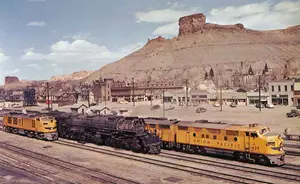
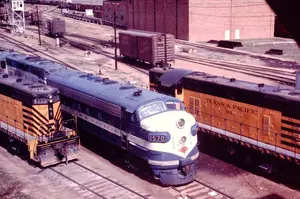
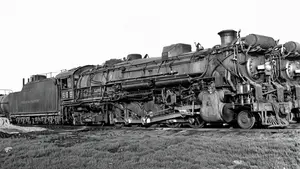
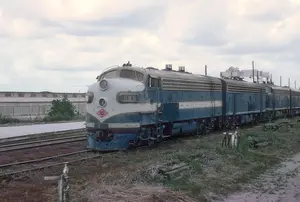
Featured here is Northern Pacific's steam fleet in the post-1900 era. Like most roads, the Northern Pacific generally relied on 2-8-2s in freight service with 4-6-2s pulling most passenger assignments. Modern power included 4-8-4s and some large arrangements including 2-8-8-4s and 4-6-6-4s. The P-1 Ten-Wheelers are in the table even though their construction dates begin in 1898. Locomotives older than that are outside this list. The three 1899 Atlantics inherited from the St. Paul & Duluth are among them.
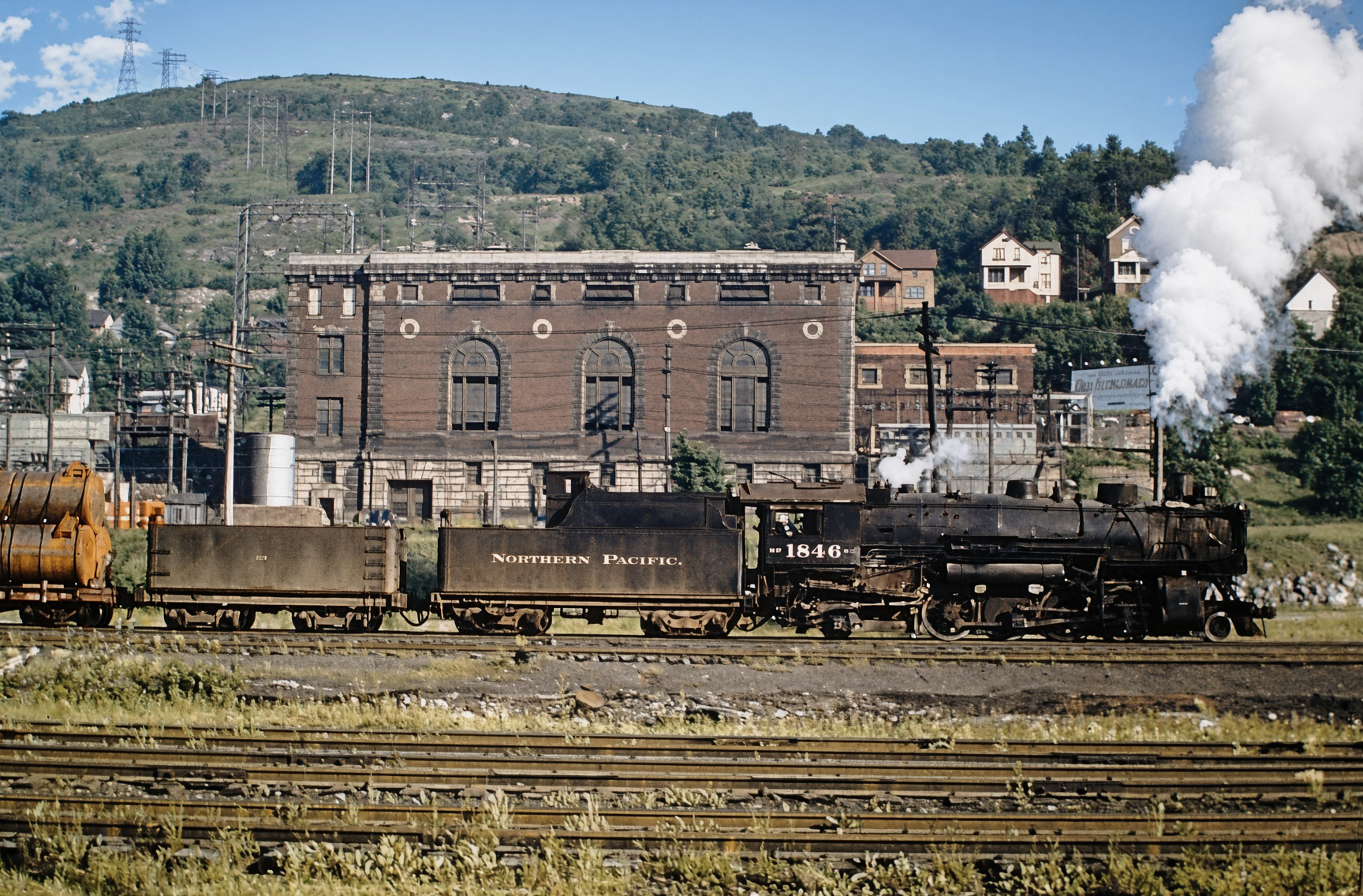
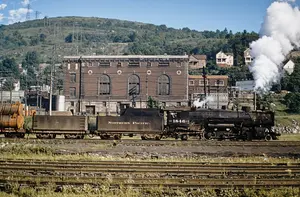
Mikado No. 1846 (W-5) at work in Duluth, Minnesota, on July 9, 1954. Photographer unknown.
On this page: At a glance · Switchers · Prairies and Consolidations · Mikados · Articulateds · Passenger power · Roster
At a glance
| Item | Detail |
|---|---|
| Railroad | Northern Pacific. Company Northern Pacific. Successor Burlington Northern, operations at 12:01 a.m. on March 2, 1970 |
| Scope | Built since 1900. Drury’s table, 51 rows. The P-1 row begins in 1898 |
| Quantity column | 1,295 |
| Frames, counted once | 1,289. Taken out: the 6 W-4s, rebuilt from class T. The 9 class G switchers, whose note does not name the 2-8-0s, and the 20 W-2s, which the chapter does not tie to the 1500–1659 series, stay in both counts |
| Last steam | January 17, 1958. W-3 Mikado 1713 brought a train into Duluth |
Switchers
The six-wheel switchers in the table are four classes. L-6 is twenty Schenectady engines of 1901, 900–919. L-7 is 1020–1035, Baldwin and Schenectady, 1902–1903, and the quantity cell says 15. The numbers 1020 through 1035 are sixteen locomotives. The cell is copied as printed. L-9 is the large class, 96 engines, 1040–1135, built from 1906 to 1910 by Manchester, Baldwin, Dickson, and Pittsburgh. L-10 is ten Schenectady engines of 1912, 1160–1169. Drury gives them 51-inch drivers, 20-by-26-inch cylinders, Stephenson valve gear, and outside piston valves.
The eight-wheel switchers are three rows. Class G, 1151–1159, is nine Richmond engines of 1905. The note says rebuilt from 2-8-0s and does not name them. The chapter describes a group of 0-8-0s rebuilt from Consolidations, all but one of them retired before 1934. Those nine stay in the quantity column, and they stay in the frame count. G-1 is four United States Railroad Administration 0-8-0s from Brooks in 1919, 1170–1173. G-2 is twenty Brooks copies of 1920, 1174–1193.
Prairies and Consolidations
The chapter calls the motive-power policy conservative. The railroad had few long straight stretches, so speed was not the main point of a design. Low-grade coal called for a large firebox, and on parts of the line the only water was bad. West from Fargo the main line crossed the drainage of North Dakota in a sawtooth of 1 percent grades, through Jamestown, Bismarck, and Dickinson, then climbed from Glendive toward Livingston. In the mountains the grades reached 2.2 percent. The company page has the railroad. The locomotives below were built for that profile.
Drury counts 81 Consolidations built after 1900, against 150 Prairies and 380 Mikados. The 81 are classes Y-1 through Y-5. Y-1, Y-2, and Y-3 were compounds, some cross-compound and some tandem, and were later simpled and sent to switching. The simple engines came in 1903: Y-4, 1280–1293, with 63-inch drivers, and Y-5, 1214–1223, with 55-inch drivers. Two more Consolidations sit in the table and are not inside that 81. They are F-5 Nos. 45 and 46, Schenectady, 1900, noted as former Seattle, Lake Shore & Eastern engines.
The Prairies are one row. Brooks built class T, 2300–2449, quantity 150. The table years are 1906–1907. Six of them were rebuilt into 2-8-2s in 1918 and 1919 and reclassed W-4, numbered 2500–2505. The table note says they were rebuilt from class T at Brainerd in 1909, and the built cell says 1918, 1919. Both are copied. Those six frames are the ones taken out of the second count. Later, the chapter says, 18 Prairies were modified, reclassed T-1, and renumbered. T-1 has no row.
Mikados
The Northern Pacific was not the first buyer of a 2-8-2. The chapter names a single engine for the Bismarck, Washburn & Great Falls in 1902, and 15 for the Santa Fe in 1902 and 1903. It was the first to order them in quantity. Brooks delivered 160 class W engines from 1904 through 1907, 1500–1659. Drury gives them 63-inch drivers, 24-by-30-inch cylinders, inside valves, Stephenson gear, inside-journal trailing trucks, and a weight of 263,500 pounds. Some were tandem compounds. Some carried diamond stacks, against the sparking of the railroad’s low-grade coal. No. 1545, photographed at Minneapolis in 1952, is one of them and remains on the company page.
The W-1s followed in 1910, forty Schenectady engines, 1660–1699, with 25-by-30-inch cylinders and Walschaerts valve gear, and otherwise like the W. Twenty tandem-compound 2-8-2s were converted to simple engines in 1912, reclassed W-2, and numbered 1900–1919. The chapter says it is uncertain whether they had been W-class engines in the 1500–1659 series. The table dates the row 1905, builder Brooks, note “Rebuilt from compounds.” The year in the table is the one in the roster. The twenty are not taken out of the frame count.
Brooks then delivered 135 W-3s, 1700–1834, from 1913 through 1920. They kept the 63-inch drivers and used 28-by-30-inch cylinders, outside-frame trailing trucks, and piston-rod extensions. Drury gives the weight as 335,800 pounds, about 16,000 more than a United States Railroad Administration heavy Mikado. No. 1713 is one of them. On January 17, 1958, it brought a train into Duluth. Drury calls that the last steam-powered run.
The W-5s of 1923 were heavier still, 25 Schenectady engines, 1835–1859, at 342,800 pounds, on the same basic dimensions. They had cast trailing trucks with boosters, air pumps on the smokebox front, and piston-rod extensions, and most had an Elesco or a Worthington feedwater heater. No. 1846, at Duluth on July 9, 1954, is the engine in the photograph above. In March 1926, W-5 No. 1844 took a freight from Seattle to Minneapolis without an engine change. The chapter’s figures for that 1,898-mile trip are 353 tons of coal, 442,000 gallons of water, and 38 tons of ash. The chapter’s 380 Mikados are the W, W-1, W-2, W-3, and W-5 classes. The six W-4s are the rebuild row on top of that 380.
Articulateds
The first articulateds were Baldwin 2-6-6-2s of 1907, class Z, 3000–3015, quantity 16. The chapter calls them identical to the first Mallets on the Great Northern steam roster and to the Burlington’s first Mallets, with 55-inch drivers and slide valves. The Z-1s of 1910, 3100–3105, six Baldwin engines, kept those drivers, used smaller cylinders, and weighed 305,150 pounds, about 50,000 less than the Z. The same year Baldwin sent five 2-8-8-2s west, class Z-2, 4000–4004, with 57-inch drivers, 26-by-30-inch and 40-by-30-inch cylinders, and a weight of 443,500 pounds. Schenectady and Brooks followed with the Z-3s, 4005–4025, quantity 21, from 1913 through 1920, the same size of drivers and cylinders and about 20 tons more. The last 2-8-8-2s were four Richmond copies of the Administration design, class Z-4, 4500–4503, in 1923.
The largest articulateds were not mountain engines. They were for the main line between Mandan, North Dakota, and Glendive, Montana, hill-and-dale country and Rosebud coal. East and west of that stretch a Mikado could handle a train of 3,000 to 4,000 tons. The 1 percent grades across western North Dakota held a Mikado to about 2,000 tons, so trains were doubleheaded or cut in half. Burning that coal meant a grate of 182 square feet, which the chapter calls the largest then used on a steam locomotive, and a four-wheel trailing truck under the back half of the firebox. The wheel arrangement was the 2-8-8-4, which the railroad named the Yellowstone. The Z-5s are two rows. Alco delivered No. 5000 in 1928. It weighed 717,000 pounds, with a trailing-truck booster and two Coffin feedwater heaters. The chapter calls it the largest steam locomotive in the world when new, and says Alco served dinner to 12 people seated in the firebox. Baldwin built the other eleven, 5001–5011, in 1930.
They steamed poorly. Drury says they produced less than 5,000 horsepower when the railroad had expected 6,000. After nearly a decade of tests, the grates were too large to keep the fire hot, and blocking off 2 feet at the front of the grate fixed it. In 1941 the class received one-piece cast front frames with the cylinders in the casting, and roller bearings on the drivers.
The next need was a fast freight engine for the mountains. The chapter says a 4-8-4 would not have been much more powerful than a W-5, a 2-10-4 would have had trouble on some curves, and an updated Yellowstone was not the engine they chose. Northern Pacific and Alco designed a 4-6-6-4 from Union Pacific’s first Challengers. The first twelve, Z-6s 5100–5111, had the 69-inch drivers of the Union Pacific engines, cylinders an inch larger at 23 by 32 inches, and about 40 percent more grate. Timken fitted roller bearings on 5104–5111. The friction bearings on 5100–5103 were a standing trouble until roller bearings replaced them. Nine more, 5112–5120, came in 1937, and with them six oil-burning duplicates for the Spokane, Portland & Seattle. Those six are that railroad’s engines. The table keeps the Northern Pacific engines as one row, 5100–5120, quantity 21, Schenectady, 1936–1937. The Challengers have their own page.
Six Z-7s, 5121–5126, arrived in 1941 for wartime traffic, with thicker tires, 70-inch drivers, vestibule cabs, and Centipede tenders. The twenty Z-8s of 1943 and 1944, 5130–5149, were virtually the same engine. They were the last steam locomotives the Northern Pacific bought. The numbers between 5126 and 5130 are not in the table.
Passenger power
The railroad inherited three 1899 Baldwin Atlantics, 78-inch drivers, when it took the St. Paul & Duluth in 1900. It numbered them 600–602 and classed them N. They are not in this table. Three more Atlantics, class N-1, 603–605, joined the roster in 1909. The chapter assigns 603 to Baldwin and 604 and 605 to Alco. The table prints Baldwin for all three, quantity 3. The table is the roster.
The P-class Ten-Wheelers were passenger engines on 69-inch or 73-inch drivers. The P-1 row, 207–218, 220, and 226–236, quantity 24, runs from 1898 into 1901, which is why it is here. The gaps in that number series are the gaps in the book. Some of the P-1s, and all of the P-2s, were built as cross-compounds and later simpled. The P-3s, 1400–1419, were built as compounds and were never simpled. Drury says only two remained on the roster in 1925.
The S-4s, 1350–1389, were Baldwin Vauclain compounds of 1902, simpled and superheated between 1918 and 1920, with 63-inch drivers. The chapter’s photograph caption says only one of the class had been retired by 1945. The S-10s, 320–329, were light Rogers engines of 1907, 153,000 pounds, on 57-inch drivers. The chapter says some sources have them built for Russia and never shipped, and that No. 328 stayed in excursion service through 2001 and then stood at the Minnesota Transportation Museum. The museum’s own note gives a different origin and a different last year of excursions. It says the ten were unfinished Chicago Southern engines, completed for the Northern Pacific in February 1907, restored to steam in 1981, and used on the Osceola & St. Croix Valley Railway from 1992 to 1999. The same note says 328 is on display at the Jackson Street Roundhouse in St. Paul. The table year remains 1907, and the builder cell remains Rogers.
Two Q-3 Pacifics from this table are at that roundhouse with it. No. 2153 came from East Grand Forks in 2000 and is there for a cosmetic restoration. No. 2156 has been partly taken down; the museum describes a cracked steam passage found after years outdoors. The museum also places Q-3 No. 2152 at Auburn, Washington, and No. 2164 at Camp Hancock in Bismarck. Its equipment note splits the Q-3s into Baldwin engines 2148–2157 and Alco engines 2158–2170. The table prints one row, 2148–2170, quantity 23, Baldwin, 1909.
The Pacifics begin with twenty Schenectady Q-class engines of 1903, 2080–2099. Drury gives them 69-inch drivers, 22-by-26-inch cylinders, a weight of 205,000 pounds, inboard trailing trucks, inside valves, and long, thin boilers. The Q-1s, 48 engines, 2100–2147, came from 1904 through 1907 with outside-frame trailing trucks and larger boilers, about 20,000 pounds more. A caption in the chapter says that by 1945 more than half of that class had been retired. In 1906, during the Q-1 deliveries, the railroad bought two Cole compound Pacifics, class Q-2, Nos. 2175 and 2176, four cylinders, two inside and two outside. They were simpled in 1909 with 22-by-26-inch cylinders.
Baldwin’s 23 Q-3s of 1909 used Walschaerts gear and outside valves, and the weight ran up to 237,000 pounds. The Q-4s are one table row, 2177–2224, quantity 48, Baldwin and Schenectady, 1909–1910. The chapter splits that row: 31 Baldwin engines, 2177–2207, with 23-by-26-inch cylinders, and 17 from Schenectady in 1910. In 1915 the railroad began buying steel passenger cars, about 10 tons heavier than the wooden cars. During the First World War the trains outgrew the Q-4s.
The Q-5s are twenty Brooks engines of 1920, 2226–2245. The chapter says the railroad had two Pacific designs drawn at 296,000 and 314,000 pounds and ordered 20 of the lighter one. The engines arrived with an axle load of 65,433 pounds, a weight of 323,700 pounds, and a price of $70,916 each. Variable-lead valve gear, in the hands of shopmen used to one lead, brought a 55-mile-an-hour limit. Drury says most of that trouble was later worked out. The Q-6s, 2246–2265, Schenectady, 1923, were nearly the same engine with cast trailing trucks.
Heavier passenger trains and Rosebud coal ended the Pacific as the railroad’s answer. A 4-8-2 with 73-inch drivers, the mechanical department calculated, would need 115 square feet of grate. The Administration light 4-8-2 had 70.3. A firebox of that size needed a four-wheel trailing truck. The new wheel arrangement was the 4-8-4, called the Northern Pacific type and then simply the Northern. The specifications in the chapter are a tractive effort of 42,000 pounds, 73-inch drivers, 26-by-28-inch cylinders, and a maximum axle load of 62,500 pounds. Both Administration 4-8-2s sat inside the axle-load limit. They had 69-inch drivers and more tractive effort than the railroad wanted, and a 4-8-2 cost more than a 4-6-2.
Schenectady delivered twelve class A Northerns, 2600–2611, in late 1926. The table year is 1926. They weighed 426,000 pounds. The axle load was 65,000 pounds, the railroad’s limit, and the bridges were already being rebuilt. At 225 pounds of boiler pressure the tractive effort was 61,600 pounds, and a booster on the trailing truck added 12,000 pounds for starting. Pressure was later raised to 240 pounds, a 4,000-pound increase in tractive effort. Where the A-2 comparison gives cylinder sizes, the chapter assigns the A class 28-by-30-inch cylinders, against the 26-by-28-inch specification above. Both sentences are the chapter’s. The engines had an outside-frame cradle at the rear, for a large ashpan. Road tests with a dynamometer car found a bit more horsepower when they were worked hard, and that they were slightly under-boilered. They replaced double-headed Pacifics between Jamestown, North Dakota, and Glendive, and they reduced the need for helpers between Livingston and Missoula. They could run farther without an engine change. Driver bearings broke some axles at the start. After that, the chapter says, they worked well. Most were converted to oil, and all had their boosters removed in the late 1940s.
Class A-1 is one locomotive, No. 2626, the former Timken demonstrator 1111. The table year is 1930, the year it was built, and the note is “Ex-Timken 1111.” It was the first steam locomotive with roller bearings on every axle. The Northern Pacific was not impressed on test. The engine was not set up to burn low-grade coal. Its owners had planned to use it for two years, and that term ran out while it was on the railroad. It also suffered crown-sheet damage there. Timken did not want an unserviceable locomotive back. The Northern Pacific bought it in 1933, found it durable, and kept it in service until 1955. A ceremonial last run followed in 1957, and then it was scrapped. Drury’s larger point is the one the bearings made: roller bearings would do the job.
In 1933 the railroad decided it needed more 4-8-4s and, from that Timken engine, specified 77-inch drivers and roller bearings on all axles. Baldwin delivered ten A-2s, 2650–2659, in late 1934 and early 1935. The table years are 1934–1935. They had the A class firebox and 28-by-31-inch cylinders, and they were the railroad’s first engines with semi-Vanderbilt tenders, a cylindrical lower tank and a rectangular upper tank. They began in passenger service and later worked freight. Three more Baldwin groups followed. The A-3s, 2660–2667, came in 1938. The A-4s, 2670–2677, came in 1941, with vestibule cabs, pedestal tenders, and solid pilots. The A-5s, 2680–2689, came in 1943. Wartime limits on passenger engines put the A-5s on freight. They had vestibule cabs and pedestal tenders.
In 1943 the Baldwin 4-8-4s and the Alco 4-6-6-4s began to leak at the boilers. The chapter names three causes: 260 pounds of pressure, riveted construction, and alloy steels that turned brittle. The railroad reboilered six 4-8-4s, then, with diesels already in sight, lowered the boiler pressure and used the engines as they were.
The diesel that changed the argument was tested in 1940. Electro-Motive FT demonstrator 103, with a 5,000-ton train, made 36 miles an hour at a place where a well-maintained Z-6 with the same train made 16. The FTs went to work first on Stampede Pass, where a tight tunnel restricted steam locomotives, and then on other divisions. Cheap coal, and a late fleet of 4-8-4s and 4-6-6-4s, kept steam on the property longer than on most railroads. The last of it, in Drury’s chapter, was Mikado 1713 at Duluth on January 17, 1958.
Roster
The quantity column is Drury’s, and it adds to 1,295. Where the shops rebuilt a locomotive and the table lists both numbers, both lines stay. Counted once, the frames are 1,289. The pair taken out is the six W-4s. Builder names are spelled out from the table’s abbreviations. Manchester, Baldwin, Dickson, and Pittsburgh are the four names behind the L-9 cell. Schenectady and Brooks are the two names behind the Z-3 cell. A blank note is blank in the book.
| Type | Class | Numbers | Qty | Builder | Built | Notes |
|---|---|---|---|---|---|---|
| 0-6-0 | L-6 | 900–919 | 20 | Schenectady | 1901 | |
| 0-6-0 | L-7 | 1020–1035 | 15 | Baldwin, Schenectady | 1902–1903 | |
| 0-6-0 | L-9 | 1040–1135 | 96 | Manchester, Baldwin, Dickson, Pittsburgh | 1906–1910 | |
| 0-6-0 | L-10 | 1160–1169 | 10 | Schenectady | 1912 | |
| 0-8-0 | G | 1151–1159 | 9 | Richmond | 1905 | Rebuilt from 2-8-0s |
| 0-8-0 | G-1 | 1170–1173 | 4 | Brooks | 1919 | USRA |
| 0-8-0 | G-2 | 1174–1193 | 20 | Brooks | 1920 | |
| 2-6-2 | T | 2300–2449 | 150 | Brooks | 1906–1907 | |
| 2-8-0 | F-5 | 45, 46 | 2 | Schenectady | 1900 | Ex-SLS&E |
| 2-8-0 | Y-1 | 17–29 | 13 | Schenectady | 1900 | |
| 2-8-0 | Y-2 | 1250–1279 | 30 | Schenectady | 1901–1902 | |
| 2-8-0 | Y-3 | 1200–1213 | 14 | Schenectady | 1901 | |
| 2-8-0 | Y-4 | 1280–1293 | 14 | Schenectady | 1903 | |
| 2-8-0 | Y-5 | 1214–1223 | 10 | Schenectady | 1903 | |
| 2-8-2 | W | 1500–1659 | 160 | Brooks | 1904–1907 | |
| 2-8-2 | W-1 | 1660–1699 | 40 | Schenectady | 1910 | |
| 2-8-2 | W-2 | 1900–1919 | 20 | Brooks | 1905 | Rebuilt from compounds |
| 2-8-2 | W-3 | 1700–1834 | 135 | Brooks | 1913–1920 | |
| 2-8-2 | W-4 | 2500–2505 | 6 | Brooks | 1918, 1919 | Rebuilt from class T at Brainerd in 1909 |
| 2-8-2 | W-5 | 1835–1859 | 25 | Schenectady | 1923 | |
| 2-6-6-2 | Z | 3000–3015 | 16 | Baldwin | 1907 | |
| 2-6-6-2 | Z-1 | 3100–3105 | 6 | Baldwin | 1910 | |
| 2-8-8-2 | Z-2 | 4000–4004 | 5 | Baldwin | 1910 | |
| 2-8-8-2 | Z-3 | 4005–4025 | 21 | Schenectady, Brooks | 1913–1920 | |
| 2-8-8-2 | Z-4 | 4500–4503 | 4 | Richmond | 1923 | |
| 2-8-8-4 | Z-5 | 5000 | 1 | Schenectady | 1928 | |
| 2-8-8-4 | Z-5 | 5001–5011 | 11 | Baldwin | 1930 | |
| 4-4-2 | N-1 | 603–605 | 3 | Baldwin | 1909 | |
| 4-6-0 | P-1 | 207–218, 220, 226–236 | 24 | Alco | 1898–1901 | |
| 4-6-0 | P-2 | 240–249 | 10 | Alco | 1900–1902 | |
| 4-6-0 | P-3 | 1400–1419 | 20 | Alco | 1901–1902 | |
| 4-6-0 | S-2 | 104–133 | 30 | Schenectady | 1900 | |
| 4-6-0 | S-3 | 1300–1323 | 24 | Alco | 1901–1902 | |
| 4-6-0 | S-4 | 1350–1389 | 40 | Baldwin | 1902 | |
| 4-6-0 | S-10 | 320–329 | 10 | Rogers | 1907 | |
| 4-6-2 | Q | 2080–2099 | 20 | Schenectady | 1903 | |
| 4-6-2 | Q-1 | 2100–2147 | 48 | Schenectady | 1904–1907 | |
| 4-6-2 | Q-2 | 2175, 2176 | 2 | Alco | 1906 | |
| 4-6-2 | Q-3 | 2148–2170 | 23 | Baldwin | 1909 | |
| 4-6-2 | Q-4 | 2177–2224 | 48 | Baldwin, Schenectady | 1909–1910 | |
| 4-6-2 | Q-5 | 2226–2245 | 20 | Brooks | 1920 | |
| 4-6-2 | Q-6 | 2246–2265 | 20 | Schenectady | 1923 | |
| 4-8-4 | A | 2600–2611 | 12 | Schenectady | 1926 | |
| 4-8-4 | A-1 | 2626 | 1 | Schenectady | 1930 | Ex-Timken 1111 |
| 4-8-4 | A-2 | 2650–2659 | 10 | Baldwin | 1934–1935 | |
| 4-8-4 | A-3 | 2660–2667 | 8 | Baldwin | 1938 | |
| 4-8-4 | A-4 | 2670–2677 | 8 | Baldwin | 1941 | |
| 4-8-4 | A-5 | 2680–2689 | 10 | Baldwin | 1943 | |
| 4-6-6-4 | Z-6 | 5100–5120 | 21 | Schenectady | 1936–1937 | |
| 4-6-6-4 | Z-7 | 5121–5126 | 6 | Schenectady | 1941 | |
| 4-6-6-4 | Z-8 | 5130–5149 | 20 | Schenectady | 1943–1944 |
SLS&E (Seattle, Lake Shore & Eastern).
Sources
- George H. Drury, Guide to North American Steam Locomotives, revised edition, Northern Pacific chapter, pages 262–266. The table, the class narrative, the January 17, 1958 last run, and the conflicts labeled above.
- Minnesota Transportation Museum, Jackson Street Roundhouse, St. Paul, equipment notes on Northern Pacific 328, 2153, and 2156. The Chicago Southern account of the S-10s, excursion service from 1992 to 1999, 328 on display, the two Q-3s at the roundhouse, 2152 at Auburn and 2164 at Camp Hancock, and the builder split the Q-3 cell does not print.
- Northern Pacific Railway Historical Association, “Research the NP: Equipment,” steam-locomotive section. The association describes a roster of steam locomotives that served after 1907, updated in February 2026 with Interstate Commerce Commission account cards where those cards exist. That spreadsheet was not opened. No figure on this page comes from it.
Recent Articles


-
Northern Pacific Diesel Roster (All-Time)
Nov 14, 26 07:47 PM
 Northern Pacific all-time diesel roster. Alco, Baldwin, Electro-Motive, and General Electric serials, orders, and build dates.
-
Northern Pacific Steam Roster (Built Since 1900)
Nov 14, 26 07:44 PM
 Northern Pacific steam locomotives built since 1900. Last steam run was January 17, 1958.
-
Northern Pacific Railway: Map, Logo, History, Rosters
Nov 14, 26 12:15 AM
 The Northern Pacific, chartered July 2, 1864, from Jay Cooke and the panic of 1873 to the last spike at Gold Creek in 1883, Stampede Tunnel in 1888, and Burlington Northern at 12:01 a.m. on March 2, 1…
-
The Pacific Extension (Milwaukee Road): Map, Abandonment, History
Nov 13, 26 11:52 PM
 The Milwaukee Road Pacific Extension, from Mobridge to Tacoma. A shorter northern transcontinental, the mountain electrification, and the decision to take the line up.
-
Colorado Railroad Museum Lists Polar Express Fares
Nov 13, 26 11:44 PM
 The Colorado Railroad Museum lists 2026 Polar Express train tickets through December 23. Standard seats are $80 and $100. First Class is sold by the table. Shows are at 5, 6:30, and 8 p.m.
-
Essex Steam Train Lists the North Pole Express
Nov 13, 26 11:24 PM
 The Essex Steam Train lists North Pole Express dates from November 20 through December 23, 2026. Coach is $60 or $70. The railroad says questions about this train are not taken by phone.
-
Tennessee Valley Lists the North Pole Limited
Nov 13, 26 11:17 PM
 The Tennessee Valley Railroad Museum lists the North Pole Limited on select dates from November 13 through December 23, 2026. Traditional tickets are $38 and $45. The page does not print a clock grid.
-
Great Northern Diesel Roster (All-Time)
Nov 13, 26 10:59 PM
 Great Northern all-time diesel roster. Alco, Baldwin, Electro-Motive, and General Electric serials, orders, and build dates. Cascade electrics stay on the company page.
-
Alco "DH-643" Locomotives: Specs, Roster, Data Sheet
Nov 13, 26 10:39 PM
 Alco DH-643: 4,300 hp diesel-hydraulic C-C road switcher. Three built for the Southern Pacific in September 1964. Specs, drive, and the production roster.
-
Virginia Scenic Lists the 2026 Santa Express
Nov 13, 26 10:26 PM
 Virginia Scenic Railway lists the Santa Express from November 28 through December 23, 2026. The ride is about 60 minutes. The page says it is not a scenic excursion. Coach is $50.
-
Goleta Depot Stays Open Behind Storm Fencing
Nov 13, 26 07:20 PM
The City of Goleta says fencing and sandbags protect the historic depot. The museum building is closed for the season. Rides continue, and the Candy Cane Train runs November 28 through December 27, 20… -
Brandywine Museum Opens Its Holiday Railroad
Nov 13, 26 07:02 PM
The Brandywine Museum of Art opens the holiday model railroad on November 14, 2026. It runs through January 10, 2027, with holiday admission. -
Great Northern Steam Roster (Built Since 1900)
Nov 13, 26 04:14 PM
 Great Northern steam locomotives built since 1900. Drury quantity column 1,376. Rebuilds counted once, 1,178 frames. Last steam run was in August 1957.
-
Illinois Railway Museum Adds Three Burlington Gallery Cars
Nov 13, 26 01:54 PM
 The Illinois Railway Museum says Burlington gallery coaches 702 and 709 and cab car 791 arrived on November 11, 2026.
-
Great Northern Railway: Map, Logo, Rosters, History
Nov 13, 26 01:41 PM
 James J. Hill and the Great Northern, from the St. Paul and Pacific to the last spike near Scenic on January 6, 1893, and into Burlington Northern at 12:01 a.m. on March 2, 1970. Steam and diesel rost…
-
West Chester Lists Its 2026 Holiday Trains
Nov 13, 26 01:25 PM
The West Chester Railroad lists a 2026 Christmas Tree Train at 8 a.m. and a separate Santa Express of 75 minutes. The event pages do not print a calendar. -
Burlington Northern Diesel Roster (All-Time)
Nov 13, 26 12:49 PM
 Burlington Northern diesel roster of locomotives bought new from 1970 through December 30, 1996. Electro-Motive and General Electric, with builder serials and order numbers. Predecessor fleets stay on…
-
Atherton Train Station Museum Opens in the Old Depot
Nov 13, 26 12:21 PM
The Almanac reports that the Atherton Train Station Museum opened October 18 with six dioramas in the old depot beside Town Center. -
Manheim and Lititz Study a Strasburg Excursion
Nov 13, 26 12:15 PM
 LancasterOnline reports that a working group and the Strasburg Rail Road are studying passenger trips between Manheim and Lititz if a line purchase goes through.
-
Berkshire Scenic Railway Works to Replace Burned RDC
Nov 13, 26 09:53 AM
A fire on October 24, 2026 damaged New Haven 41 at the Berkshire Scenic Railway Museum. Volunteers are trying to finish Boston and Maine 6126 for the Tinseliner. -
Conway Scenic Lists the Winter Mountaineer
Nov 13, 26 12:37 AM
 Conway Scenic Railroad lists Winter Mountaineer trips from North Conway on select dates from November 28, 2026, through March 2027.
-
Burlington Northern Railroad: Map, Logo, History
Nov 12, 26 05:29 PM
 Burlington Northern, formed at 12:01 a.m. on March 2, 1970 from the Hill Lines. Powder River coal, the Frisco merger of November 21, 1980, and the Santa Fe combination of 1995–96. The diesel ros…
-
Age of Steam Roundhouse Receives Chesapeake & Ohio 1308
Nov 12, 26 04:05 PM
Chesapeake & Ohio 2-6-6-2 No. 1308 has arrived at the Age of Steam Roundhouse Museum in Sugarcreek, Ohio, from Huntington, West Virginia. -
Hoosier Valley Santa Trains Begin November 21
Nov 12, 26 03:59 PM
 The Hoosier Valley Railroad Museum lists Santa trains on five Saturdays from November 21 through December 19, 2026, leaving North Judson, Indiana.
-
Strasburg Rail Road Closes for Track Replacement
Nov 12, 26 12:44 PM
 The Strasburg Rail Road homepage says the railroad is closed for track replacement until November 21, 2026.
-
Union Pacific Diesel Roster (All-Time)
Nov 12, 26 12:22 PM
 Union Pacific diesel roster with builder serials and order numbers. Alco, Baldwin, Fairbanks-Morse, Electro-Motive, and General Electric. Merger partners keep their own roster pages.
-
Escanaba & Lake Superior Weighs a Trail on the Wells Grade
Nov 12, 26 12:15 PM
 Michigan and the Escanaba & Lake Superior Railroad are discussing a sale of 60 miles of inactive grade between Wells and Channing for a trail, with the grade kept for possible rail use.
-
Oklahoma Railway Museum Repaints Santa Fe FP45 90
Nov 12, 26 11:58 AM
The Oklahoma Railway Museum is repainting Santa Fe FP45 90 in the blue-and-yellow Freight Bonnet it wore as 5990. The museum does not plan to operate the locomotive. -
Pullmans Move Toward a Chicago Home With a Norfolk Southern Switch
Nov 12, 26 11:49 AM
 Friends of the Pullman National Historical Park held a spike-setting on November 9, 2026. Norfolk Southern has installed a switch and committed $250,000 toward a future rail connection.
-
Sloss Furnaces Entrance Gets a Norfolk Southern Grant
Nov 12, 26 11:44 AM
 Norfolk Southern awarded a $146,460 Thriving Communities grant to the Sloss Furnaces Foundation for the 32nd Street entrance in Birmingham.
-
Union Pacific 2-10-2 5511 Passes Its First Steam Test
Nov 12, 26 12:12 AM
 Union Pacific 2-10-2 5511 passed a steam test at Silvis, Illinois. Railfan and Railroad reports a summer 2027 target. A November 6 Trains report had no immediate operating plan.
-
Union Pacific Steam Roster
Nov 12, 26 12:03 AM
 Union Pacific steam locomotives built since 1900. Oregon Short Line, Los Angeles and Salt Lake, and Oregon-Washington Railroad and Navigation Company numbers, with the 4-12-2s, Challengers, Big Boys…
-
Union Pacific Railroad: Map, History, Logo
Nov 11, 26 11:56 PM
 The Union Pacific, from the Pacific Railway Act of July 1, 1862, and Promontory Summit on May 10, 1869, through E. H. Harriman and the mergers that built the modern railroad. Steam and diesel rosters…
-
Texas and Pacific Railway: Map, History, Timetables
Nov 10, 26 10:33 PM
The Texas & Pacific Railway, the federally chartered southern transcontinental that stopped at Sierra Blanca and became the Missouri Pacific's Texas and Louisiana main line. Merged October 15, 1976. -
Texas and Pacific Steam Locomotives: Texas Types and Mountains
Nov 10, 26 10:30 PM
 Texas & Pacific steam: 70 Lima 2-10-4 Texas types, 600-669, classes I-1 through I-1d, and 10 Mountains, 900-909. No. 610 is at Palestine.
-
Texas and Pacific Diesel Roster (All-Time)
Nov 10, 26 10:29 PM
 All-time diesel roster of locomotives built for the Texas & Pacific. 246 units: E7s, E8s, 83 F7A and 35 F7B, NW2s, SW7s, SW8s, SW9s, GP7s, GP9s, GP18s, and GP35s. Serials and order numbers.
-
Santa Fe-Southern Pacific Railroad: Merger, History, Paint Scheme
Nov 10, 26 10:07 PM
 The proposed Santa Fe-Southern Pacific merger, from the 1980 attempt and the 1983 holding company through the ICC denial, the Kodachrome paint, and the sale of the Southern Pacific.
-
CSX Santa Train Will Feature Locomotives 250 and 2026
Nov 10, 26 01:51 PM
The CSX Santa Train will feature locomotives 250 and 2026 on November 21, 2026. The 84th running covers 110 miles from Shelbiana, Kentucky, to Kingsport, Tennessee. -
Denton County Asks to Extend Stadler Car Relief
Nov 10, 26 01:05 PM
Denton County Transit Authority has asked the FRA to extend a waiver for its Stadler diesel multiple-unit cars. Comments run to January 11, 2027. -
FreightCar America Reports Third-Quarter Results
Nov 10, 26 01:02 PM
 FreightCar America reported third-quarter revenue of $76.5 million and 662 railcar deliveries. Backlog stood at 2,660 cars valued at $284.5 million.
-
Amtrak Has Filed a Train Control Amendment
Nov 10, 26 12:53 PM
 Amtrak asked the FRA on October 26, 2026, to amend the safety plan for its Interoperable Electronic Train Management System. Comments are due November 30, 2026.
-
SunRail Signal Waiver Is Open for Comment
Nov 10, 26 12:25 PM
FRA has asked for comment on a petition to extend signal-testing relief on the Central Florida Rail Corridor. The notice names both the corridor and CSXT. Comments run to January 11, 2027. -
Cars and Units Rose With BNSF Third-Quarter Earnings
Nov 10, 26 12:18 PM
Berkshire Hathaway reports that after-tax BNSF earnings increased 19.3 percent in the third quarter of 2026, with car and unit volumes up 3.9 percent. -
Amtrak Chicago Platforms Are Moving Toward Level Boarding
Nov 10, 26 12:13 PM
 Amtrak says construction is underway soon on the first level boarding platforms at Chicago Union Station, a 112 million dollar, 30-month project.
-
Maryland Has New Penn Line Times on November 16
Nov 10, 26 12:07 PM
MARC Penn Line schedules change on November 16, 2026, after Amtrak trains return to regular schedules. Weekend southbound trains are unchanged. -
Building Contract for Metrolink Sidings Goes to Granite
Nov 10, 26 12:00 PM
Granite says Metrolink awarded a 51.5 million dollar SCORE contract for sidings near downtown Los Angeles and in Rancho Cucamonga. -
EMD "F2" Locomotives: Specs, Roster, History
Nov 10, 26 12:22 AM
 EMD F2, the 1,350-horsepower bridge between the FT and the F3. 104 locomotives, July through November 1946. Spotting features, specifications, and the production roster.
-
Southern Pacific Diesel Roster (All-Time)
Nov 10, 26 12:08 AM
 Southern Pacific diesel roster with builder serials, order numbers, Texas and New Orleans numbers, and the 1965 renumbering. Alco, Baldwin, Fairbanks-Morse, Electro-Motive, General Electric, Krauss-Ma…
-
Southern Pacific Steam Roster: Post 1900
Nov 09, 26 11:56 PM
 Southern Pacific steam locomotives built since 1900. Pacific Lines, Texas and Louisiana Lines, cab-forwards, the GS 4-8-4s, and five narrow-gauge Ten-Wheelers. The quantity column counts the rows as p…
-
Canal Street Yard Assessment Stays Open Through December 7
Nov 09, 26 01:07 PM
The FRA signed the Canal Street Yard environmental assessment on November 6, 2026. Public inspection runs through December 7, and meeting dates are not confirmed.