Northern Pacific's Class Z-5 2-8-8-4 "Yellowstones"
Published: July 8, 2026
By: Adam Burns
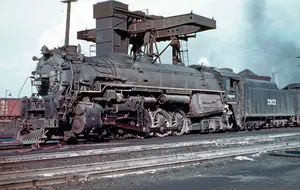
In the twilight of the steam era, the Northern Pacific Railway pushed the boundaries of locomotive engineering with its Class Z-5 2-8-8-4 "Yellowstone" type steam locomotives. These twelve massive articulated machines, led by the prototype No. 5000, were the largest and heaviest steam locomotives in the world when they entered service in 1929. Designed to conquer heavy freight traffic on the Yellowstone Division using local low-grade Rosebud coal, they represented both the ambition and the limitations of "superpower" steam. This detailed history examines their conception, construction, operational challenges and triumphs, modifications, and eventual retirement during the diesel transition.
The Strategic Need for Massive Power
By the mid-to-late 1920s, Northern Pacific faced increasing demands on its mainline freight operations. The railroad's transcontinental route crossed challenging terrain, particularly on the Yellowstone Division, which spanned eastern Montana and western North Dakota. Grades in this territory often required double-heading or helper service for heavy trains, increasing operating costs and complexity.
Compounding the challenge was the railroad's access to abundant but poor-quality local fuel: Rosebud sub-bituminous coal (sometimes described by firemen as "about as damned close as dirt"). This low-BTU fuel required an exceptionally large firebox and grate area to generate sufficient heat, but it also demanded careful engineering to maintain proper combustion temperatures across the entire grate.
Previous Northern Pacific articulated power, primarily the earlier Class Z 2-6-6-2 Mallet compounds built by Baldwin in 1907 for helper service, were no longer adequate for mainline tonnage. The railroad sought a new generation of superpower articulated locomotives capable of handling 4,000+ ton trains with a single unit on the head end, eliminating helpers where possible and burning the cheap local coal efficiently.
The 2-8-8-4 wheel arrangement — two sets of eight driving wheels under a single enormous boiler — offered the perfect combination of adhesion, power, and firebox capacity. Northern Pacific became the first railroad in the world to order this configuration.
Birth of the "Yellowstone": Alco Prototype No. 5000
In 1928, the American Locomotive Company (Alco) at its Schenectady Works received the order for a single prototype. Designated Class Z-5 and numbered 5000, it was completed in December 1928 and delivered to the Northern Pacific in early January 1929.
No. 5000 was immediately recognized as a landmark achievement. At over 125 feet long (including tender) and weighing more than 1.1 million pounds in working order, it was the largest and heaviest steam locomotive ever built up to that time — a title it would hold until the Union Pacific Big Boys of 1941. A celebratory dinner was even held inside its massive firebox for ALCO and NP officials.
The locomotive featured a radical design for its era: a simple-expansion articulated (not a compound Mallet, though NP crews often generically called all articulateds "Mallets"). It carried four high-pressure cylinders (26" × 32"), 63-inch drivers, and a boiler pressure of 250 psi. The firebox was the largest ever constructed on a steam locomotive — measuring approximately 266⅛ inches long by 114¼ inches wide inside — paired with a 182-square-foot grate specifically sized for Rosebud coal.
Other advanced features included a Dupont Simplex mechanical stoker, a Coffin feedwater heater mounted in the smokebox, and a booster engine on the trailing truck of the rear engine unit to improve starting tractive effort and low-speed adhesion. The massive all-welded tender rode on two six-wheel trucks and carried 27 tons of coal and over 21,200 gallons of water.
Initial paint scheme for No. 5000 featured a light grey boiler jacket with red cab roof, black running gear, and white trim — a striking appearance for publicity photos. The locomotive's first revenue freight run occurred on April 10, 1929, between Mandan, North Dakota, and Glendive, Montana, generating significant publicity as "the largest locomotive in the world."
While No. 5000 demonstrated excellent tractive effort and could handle heavy tonnage (reports indicated it could move over 4,000 tons up a 1.1% grade), early service revealed challenges. The enormous grate area made it difficult to maintain consistently high firebox temperatures across the entire surface when burning the low-grade Rosebud coal. This resulted in incomplete combustion, excessive smoke, and somewhat disappointing sustained horsepower output compared to the design target of over 5,000 hp (actual performance was often closer to 4,000 hp in sustained service).
The Fleet: Baldwin's 5001–5011
Despite the prototype's teething issues, Northern Pacific was sufficiently impressed with the basic concept to order eleven additional locomotives from the Baldwin Locomotive Works in 1930. Baldwin underbid ALCO on the production order.
Delivered between April and September 1930 and numbered 5001 through 5011, these locomotives were mechanically nearly identical to No. 5000. Minor differences included a slightly higher engine weight (approximately three tons more), taller straight stacks (reportedly the tallest of any steam locomotives in regular service at 17 feet 2 inches from railhead to stack top), and an initial all-black paint scheme with Tuscan red cab roofs and white running-board trim (No. 5000's grey boiler livery appears to have been short-lived or unique to the prototype).
Together, the twelve Z-5s formed the most modern fleet of articulated steam power in the United States during the early 1930s. They were assigned to heavy freight service, primarily on the Yellowstone Division and other mainline routes where their massive power could be utilized.
Important Terminology Note: Although Northern Pacific personnel and many historical accounts refer to the Z-5s (and later Z-6/Z-7/Z-8 Challengers) as "Mallets," they were in fact simple-expansion articulated locomotives with four high-pressure cylinders. True Mallets are compound machines in which steam expands first in high-pressure cylinders on the rear engine unit and then in larger low-pressure cylinders on the front unit. The Z-5s used simple expansion throughout.
Technical Specifications
The following table presents the complete class specifications for Northern Pacific's Z-5s, compiled from historical engineering data and contemporary records.
| Parameter | Specification | Notes |
|---|---|---|
| Wheel Arrangement | 2-8-8-4 | Simple articulated "Yellowstone" type (not compound Mallet) |
| Class | Z-5 | Northern Pacific designation |
| Numbers | 5000–5011 | 12 locomotives total |
| Builders | ALCO (No. 5000) Baldwin (Nos. 5001–5011) |
ALCO Schenectady prototype; Baldwin production |
| Build Years | 1928 (prototype) 1930 (production fleet) |
Delivered early 1929 and April–Sept 1930 |
| Driver Diameter | 63 inches | Two groups of eight drivers |
| Cylinders | Four: 26" × 32" | Simple expansion (all high-pressure cylinders) |
| Boiler Pressure | 250 psi (nominal) | Some units later operated at slightly higher pressure after upgrades |
| Tractive Effort | 145,930 lbs (without booster) + ~13,400 lbs with booster |
Starting tractive effort at 250 psi |
| Adhesive Weight | 254 short tons | Weight on driving wheels |
| Engine Weight (WO) | ~358.5 short tons (717,000 lbs) | Baldwin units ~3 tons heavier than prototype |
| Tender Weight (Loaded) | ~200.5 short tons (401,000 lbs) | Two 6-wheel trucks, all-welded construction |
| Total Weight | Over 1,118,000 lbs (~559 short tons) | Largest and heaviest steam locomotives in the world when built (1929) |
| Overall Length | ~125 feet (engine + tender) | Engine alone: 80 ft 7⅝ in |
| Grate Area | 182 sq ft (original) Effective ~162 sq ft after modification |
Reduced by blocking front ~2 ft of firebox to improve combustion |
| Evaporative Heating Surface | 7,670 sq ft | Extensive tube and flue surface |
| Superheater Surface | 3,220 sq ft | Schmidt-type with Coffin feedwater heater |
| Firebox Dimensions (Inside) | 266⅛ in long × 114¼ in wide | Largest firebox ever built on a steam locomotive at the time |
| Stoker | Dupont Simplex mechanical stoker | Required for the massive grate and low-grade Rosebud coal |
| Feedwater Heater | Coffin (smokebox mounted) | Later removed on some units during simplification |
| Booster Engine | Trailing truck booster | Added ~13,400 lbs starting tractive effort; later removed on some units |
| Maximum Horsepower | Design target: 5,000+ hp Actual sustained: ~4,000 hp (initially) |
Improved after grate modification |
Note on Specifications: Data compiled from Northern Pacific engineering records, SteamLocomotive.com Locobase entries, contemporary builder specifications, and detailed historical analyses. Minor variations existed between the Alco prototype and Baldwin production units. Post-1942 upgrades (roller bearings, frame improvements, leak sealing) slightly altered operating characteristics on all surviving units.
Operational History, Modifications, and Performance
The Z-5s entered revenue service during a period of economic uncertainty (the Great Depression began shortly after the Baldwin units arrived), yet they proved capable heavy-haul machines. Their primary assignment was drag freight service where raw tractive effort mattered more than speed. They excelled at moving massive tonnages over the rolling grades of the Yellowstone Division and other main lines.
However, the fundamental design challenge — burning low-grade Rosebud coal on an enormous grate — persisted. Firemen reported difficulty keeping the entire firebed at optimal temperature, leading to "dirty" firing, excessive cinders, and less-than-ideal steaming. Northern Pacific engineers addressed this by installing a brick barrier or "wall" across the front approximately two feet of the firebox/grate area. This modification reduced the effective grate area to roughly 162 square feet, concentrated the fire, raised combustion temperatures, and noticeably improved steaming and efficiency. The change became standard across the class.
During World War II, the Z-5s received important reliability upgrades. These included Timken roller bearings on the driving axles (replacing plain bearings for reduced maintenance and better performance), new or reinforced cast steel front frames, sealing of steam and water leaks, and illuminated/electrified number boards for better nighttime visibility. These modifications helped the big locomotives handle the surge in wartime traffic.
Postwar, as dieselization accelerated, some units had their boosters and feedwater heaters removed to simplify maintenance. The Z-5s increasingly worked as pushers or helpers in mountainous territory west of the Dakotas, where their enormous power remained useful even as newer 4-6-6-4 Challengers (NP Classes Z-6, Z-7, and Z-8, built 1936–1944) took over many mainline assignments. The Challengers generally offered a better balance of horsepower and speed for the available coal quality.
By the late 1940s and early 1950s, the economics of steam changed dramatically. Multiple diesel units (such as sets of EMD FT or F3 locomotives) could match or exceed the Z-5's output with far lower maintenance costs, greater availability, and reduced crew requirements. The Z-5s, while powerful, were expensive to maintain due to their size, complexity, and the wear on articulation joints, rods, and valves.
Complete Roster and Disposition
The following table provides the complete known roster information for Northern Pacific's twelve Class Z-5 locomotives. Individual retirement dates for the Baldwin-built units (beyond the general 1953–1957 range) are sparsely documented in publicly available sources; all were progressively retired as dieselization advanced and ultimately scrapped. None of the Z-5s were preserved.
| Number | Builder | Build Year / Serial | Delivery Notes | Retired | Disposition |
|---|---|---|---|---|---|
| 5000 | ALCO (Schenectady Works) | December 1928 Serial: 67578 |
Prototype; first 2-8-8-4 ever constructed. Delivered January 1929. Initial light grey boiler livery with red cab roof. Publicity run April 10, 1929 (Mandan–Glendive). | March 1952 | Scrapped March 18, 1952 at Brainerd, Minnesota shops. First Z-5 retired. |
| 5001–5011 | Baldwin Locomotive Works | 1930 (Serials approx. 61292–61495 range per historical summaries) |
Production order of 11 units. Delivered April–September 1930. Slightly heavier engines, taller stacks, initial all-black livery with Tuscan red cab roofs. | 1953–1957 (progressive) |
All scrapped. No examples preserved. Class extinct by 1957. |
Roster Notes:
- No. 5000 was the only ALCO-built 2-8-8-4 of this configuration; all subsequent Yellowstones on other railroads were built by Baldwin or Lima.
- Exact individual serial numbers and retirement dates for Nos. 5001–5011 are not comprehensively published in standard locomotive rosters. The serial range provided is approximate based on available historical compilations.
- All locomotives were eventually scrapped; none were set aside for preservation despite their historical significance as the first Yellowstones and among the largest steam locomotives ever built.
Decline, Retirement, and Legacy
The retirement of the Z-5 fleet began early with the prototype in March 1952 and was largely complete by 1957. Northern Pacific's broader steam fleet lasted somewhat longer on certain routes (into the early 1960s in some cases), but the massive articulateds were among the first casualties of dieselization due to their high maintenance demands and the ready availability of reliable diesel power.
The Z-5s occupy a unique place in American steam locomotive history. They were true pioneers — the first locomotives to carry the 2-8-8-4 "Yellowstone" wheel arrangement and name, a designation later applied to similar machines on the Duluth, Missabe & Iron Range (DM&IR), Southern Pacific, and Baltimore & Ohio. Their enormous size and innovative (for the time) design demonstrated both the extraordinary potential of late-era steam engineering and its practical limitations.
While they successfully proved the viability of the Yellowstone concept and provided valuable heavy-haul service during the Depression and World War II, their operational shortcomings with low-grade coal, combined with the rapid advance of diesel technology, meant they had relatively short careers compared to smaller, more versatile steam designs. Their story illustrates why the industry ultimately shifted away from ever-larger single steam units toward multiple diesel units or, in later years, high-horsepower six-axle diesels.
Today, the Northern Pacific Z-5s are remembered fondly by rail historians and enthusiasts as magnificent examples of American steam ambition. Although none survived into preservation, their influence can be seen in the later, more successful Yellowstone designs built for other railroads and in the broader evolution of NP's own articulated fleet toward the faster 4-6-6-4 Challengers. For model railroaders, high-quality brass imports (notably by PFM/Fujiyama in HO scale) keep the memory of these giants alive on layouts across the country.
Conclusion
The twelve Class Z-5s stand as monumental achievements in the history of steam locomotion. From the celebrated prototype No. 5000 in 1928–1929 through the production fleet of 1930, these machines embodied the railroad's determination to master its challenging territory with the most powerful steam technology available. Though ultimately superseded by dieselization and limited by the realities of their fuel and design, these Yellowstones remain enduring symbols of an era when railroads built locomotives on a truly heroic scale.
Their complete roster and specifications are preserved here for researchers, historians, and anyone fascinated by the final, magnificent chapter of American steam power.
Recent Articles


-
Bessemer & Lake Erie Railroad: "The Bessemer Road"
Sep 15, 26 05:20 PM
 Bessemer & Lake Erie—Bear Creek 1865, Carnegie 1897, U.S. Steel 1901. Ore south from Conneaut, coal north. 2-10-4s, Missabe sister road. CN May 10, 2004. Complete corporate history.
 -
Bangor and Aroostook Railroad: "Serving Northern Maine"
Sep 15, 26 05:05 PM
 Bangor & Aroostook—chartered February 13, 1891, first trains January 1, 1894. Potatoes, paper, Searsport, State of Maine reefers. MM&A 2003, Lac-Mégantic 2013, CP 2020, CPKC today. Complete co…
 -
Baltimore & Ohio Chicago Terminal Railroad: Map and History
Sep 15, 26 03:11 PM
 B&OCT—formed January 6, 1910 to buy Chicago Terminal Transfer. Grand Central, Barr Yard, 78 route-miles. Assigned B&O steam. Complete diesel roster. CSX paper subsidiary, mark BOCT.
 -
The "Alphabet Route" (Railroad): Photos and History
Sep 15, 26 02:53 PM
 Alphabet Route—eight railroads, not one company. P&WV to Connellsville February 11, 1931. Alpha Jets Chicago/St. Louis–New York/Boston. NKP, W&LE, P&WV, WM, Reading, CNJ, L&HR, New Hav…
 -
Milwaukee Road Livestock Operations: Cattle, Dakotas & Montana
Sep 15, 26 02:36 PM
 Milwaukee Road livestock traffic—Dakota and Montana cattle, Iowa hogs, Chicago markets, 28-hour law, head-end stock cars. By 1974 mostly Montana. Rick Burn’s Helena speech. Operations history, not the…
 -
Spirit of Jasper Ride & Dine (2026): Season Pause
Sep 15, 26 02:29 PM
 Spirit of Jasper Ride & Dine in Jasper, Indiana—seated meal on board. Operator: not running public trains for 2026. Depot remains open as a rental. Confirm on spiritofjaspertrain.com.
 -
South Carolina Canal & Rail Road Company: Map and History
Sep 15, 26 01:59 PM
 South Carolina Canal & Rail Road—chartered December 19, 1827. Best Friend of Charleston, 136 miles Charleston–Hamburg October 1833, Aiken inclined plane. South Carolina Railroad 1844, Southern 189…
 -
The Practice of Double-Heading: The Steam Era
Sep 15, 26 01:43 PM
 Doubleheading—two locomotives on the point, each with its own steam crew. Not a rear helper, not diesel MU. How it worked, PRR 1877, mountain grades, and what MU ended.
 -
Mohawk and Hudson Railroad: Map, Pictures, Locomotives
Sep 15, 26 01:20 PM
 Mohawk & Hudson Railroad—New York’s first railroad, chartered April 17, 1826. DeWitt Clinton, inclined planes, Albany & Schenectady 1847, first New York Central May 17, 1853. Complete corporat…
 -
Essex Clipper Dinner Train (2026): Dates, Tickets & What to Expect
Sep 15, 26 01:09 PM
 2026 Essex Clipper Dinner Train in Essex, CT—2.5 hours, four-course meal $129.99, 18+. Fall dates through Oct. 25. Confirm on essexsteamtrain.com.
 -
Camden & Amboy Railroad: Map, History, Photos
Sep 15, 26 12:53 PM
 Camden & Amboy Railroad—chartered February 4, 1830. Joint Companies monopoly with the Delaware & Raritan Canal, John Bull, T-rail. United New Jersey 1872, PRR 999-year lease 1871. Complete corpora…
 -
Cafe Lafayette Dinner Train (2026): Dates, Tickets & What to Expect
Sep 15, 26 12:47 PM
2026 Cafe Lafayette Dinner Train in North Woodstock, NH—2 hours, 20 miles, five-course meal from $125. May–October. Confirm on nhdinnertrain.com. -
Christmas Train Ride Locations (2026): A Complete Guide
Sep 15, 26 10:47 AM
 2026 Christmas train rides by state—Santa, North Pole Express, and holiday trains. Not Polar Express. State guides and product pages. Confirm dates on each railroad.
 -
Baltimore & Ohio Railroad: Linking 13 Great States With The Nation
Sep 15, 26 10:22 AM
 Baltimore & Ohio Railroad—first U.S. common carrier, chartered February 28, 1827. Wheeling 1853, Chicago 1874, C&O control 1963, Chessie 1973, into CSX April 30, 1987. Complete corporate history.
 -
Delaware & Hudson Railway: The Bridge Line
Sep 15, 26 09:59 AM
 Delaware & Hudson Railway—Wurts brothers canal 1823, gravity railroad 1829, Stourbridge Lion, Bridge Line to Montreal. Guilford 1984, CP 1991, NS south line 2015, CPKC north.
 -
Delaware & Hudson Diesel Roster (All-Time)
Sep 15, 26 12:17 AM
 All-time Delaware & Hudson diesel roster—Alco S-2s through C-628s and PA-4s, GE U-boats, Baldwin RF-16s, EMD SD45s and GP38-2/GP39-2s. Serials, dates, dispositions.
 -
Granite Railway, Our Country's First Railroad
Sep 14, 26 11:28 PM
 Granite Railway of Quincy, Massachusetts—chartered March 4, 1826, opened October 7, 1826. Gridley Bryant, 5-foot gauge, horses, Bunker Hill Monument stone. First commercial U.S. railroad.
 -
Milwaukee Road Skytop Lounges: History, Specs & Floor Plans
Sep 14, 26 11:09 PM
 Milwaukee Road Skytop observation cars—Brooks Stevens, 1948. Four Rapids parlor-lounges from Milwaukee Shops, six Creek sleeper-lounges from Pullman-Standard. Floor plans, roster, preservation.
 -
West Virginia Christmas Train Rides (2026): A Complete Guide
Sep 14, 26 11:02 PM
2026 West Virginia Christmas trains—Potomac Eagle North Pole Express in Romney and Christmas at Cass. Not Polar Express. Elkins Polar is not listed for 2026. -
Railroads Of Today: Class I Map, PSR & the 2026 Industry
Sep 14, 26 10:30 PM
 U.S. freight rail in 2026—six Class I railroads on a nearly 140,000-mile network. PSR as everyday practice, how the STB works, traffic mix, short lines and regionals.
 -
Railroad History (USA): Timeline, Facts & How the Network Was Built
Sep 14, 26 10:03 PM
 Full U.S. railroad history hub—origins and inventors, Golden Age peak mileage, Civil War and transcontinental, streamliners, ICC regulation, Penn Central and Conrail, Staggers Act, PSR, and today’s Cl…
 -
Railroads In The 2020s: CPKC, East Palestine & the UP–NS Case
Sep 14, 26 09:51 PM
 U.S. railroads 2020–2026—Class I mileage 91,773 in 2020. COVID traffic drop, CPKC April 14 2023, East Palestine Feb. 3 2023, UP–NS $85 billion case still before the STB.
 -
Railroads In The 2010s: PSR, Coal’s Decline & Positive Train Control
Sep 14, 26 03:51 PM
 U.S. railroads 2010–2020—Class I mileage 95,573 to 91,773. Buffett closed BNSF Feb. 12 2010, Harrison at CP June 29 2012 and CSX 2017, PTC deadline Dec. 31 2018.
 -
Virginia Christmas Train Rides (2026): A Complete Guide
Sep 14, 26 03:46 PM
 2026 Virginia Christmas trains—Virginia Scenic Railway Santa Express from Staunton, about 60 minutes. Confirm dates. Not Polar Express.
 -
MARC Train: Maryland Commuter Rail History, Lines & Roster
Sep 14, 26 01:16 PM
 MARC Train history—Maryland Rail Commuter 1984, B&O and PRR corridors, Penn/Camden/Brunswick lines, Silver Spring 1996, all-time locomotive roster.
 -
Railroads In The 2000s: Merger Freeze, Wisconsin Central & Buffett
Sep 13, 26 07:57 AM
 U.S. railroads 2000–2010—Class I mileage 99,250 to 95,573. STB merger freeze March 17 2000, CN–WC Oct. 9 2001, BNSF Railway Jan. 24 2005, Buffett Nov. 3 2009.
 -
Railroads In The 1990s: Mega-Mergers, Conrail’s Split & the STB
Sep 13, 26 12:13 AM
 U.S. railroads 1990–2000—Class I mileage 119,758 to 99,250. BNSF Sept. 22 1995, UP–SP Sept. 11 1996, Conrail split June 1 1999, ICC Termination Dec. 29 1995.
 -
Railroads In The 1980s: Staggers, Mega-Mergers & Conrail’s IPO
Sep 12, 26 11:12 PM
 U.S. railroads 1980–1990—Class I mileage 164,822 to 119,758. Staggers Oct. 14 1980, CSX and Norfolk Southern, UP–Missouri Pacific–Western Pacific, Conrail IPO March 26 1987.
 -
Wabash Class O-1 4-8-4s: History, Roster & Specifications
Sep 12, 26 11:01 PM
 Wabash Class O-1 4-8-4s—Baldwin 1930–31, twenty-five engines 2900–2924. Fast freight, complete roster, specifications. None preserved.
 -
Staggers Rail Act of 1980: Statute, Contract Rates & the ICC
Sep 10, 26 11:23 PM
 Staggers Rail Act, Pub. L. 96-448, signed October 14, 1980. Harley Staggers, S.1946, contract rates, 180% variable-cost test, abandonments, short lines.
 -
Rock Island E8A 652: Bicentennial Independence Paint & History
Sep 10, 26 10:42 PM
 Rock Island E8A 652—EMD March 1952, serial 15199. 20th Century Railroad Club Independence bicentennial scheme, Peoria and Quad Cities Rockets, Midland Railway, Manly Junction Museum.
 -
Vermont Christmas Train Rides (2026): A Complete Guide
Sep 10, 26 10:37 PM
2026 Vermont Christmas trains—Okemo Valley Holiday Express from Chester Depot Dec. 19–20. Polar is Burlington Dec. 5–6 only. -
Railroads In The 1970s: Penn Central, Amtrak & Conrail
Sep 10, 26 10:18 AM
 U.S. railroads 1970–1980—196,479 miles at the decade’s start. Penn Central bankruptcy June 21 1970, Amtrak May 1 1971, 3R/4R Acts, Conrail April 1 1976, Rock Island 1975, Milwaukee 1977.
 -
Railroads In The 1960s: Mergers, Passenger Collapse & Penn Central
Sep 10, 26 10:03 AM
 U.S. railroads 1960–1970—207,334 to 196,479 miles. Erie Lackawanna 1960, C&O–B&O 1963, N&W–Nickel Plate 1964, SCL 1967, Penn Central Feb. 1 1968.
 -
South Carolina Christmas Train Rides (2026): A Complete Guide
Sep 10, 26 08:36 AM
 2026 South Carolina Christmas trains—South Carolina Railroad Museum Santa Train in Winnsboro. Confirm December dates. Not Polar Express. Drop light-festival padding.
 -
Steam Locomotive Feedwater Heaters: Elesco, Coffin & Worthington
Sep 10, 26 08:29 AM
 Steam locomotive feedwater heaters—open Worthington vs closed Elesco and Coffin. How they work, how to identify them on a smokebox, and why not every engine had one.
 -
Oregon Christmas Train Rides (2026): A Complete Guide
Sep 10, 26 08:22 AM
2026 Oregon Christmas trains—Portland Holiday Express, Garibaldi Candy Cane Express, Sumpter Valley Christmas Trains Dec. 11–13. Polar is Mount Hood. -
Lake Shore & Michigan Southern: Map, History, Timetables
Sep 10, 26 08:12 AM
 Lake Shore & Michigan Southern Railway—Erie & Kalamazoo 1833, Michigan Southern to Chicago 1852, LS&MS April 6 1869, Vanderbilt, Ashtabula 1876, NYC merger Dec. 22 1914. 1910 map and Official Guide.
 -
Big Four Route (CCC&StL): Map, History
Sep 10, 26 12:19 AM
Cleveland, Cincinnati, Chicago & St. Louis Railway—Bee Line 1868, Ingalls’s first Big Four 1880, CCC&StL June 30, 1889, NYC lease Feb. 1, 1930. 1910 and 1930 maps, what still runs. -
Railroads In The 1950s: Diesel, the Interstate & Passenger Collapse
Sep 10, 26 12:15 AM
 U.S. railroads 1950–1960—223,779 to 211,459 miles. Interstate June 29, 1956, dieselization, passenger collapse, TOFC, 1957–58 recession, NYO&W 1957, N&W–Virginian 1959.
 -
New Jersey Christmas Train Rides (2026): A Complete Guide
Sep 10, 26 12:06 AM
 2026 New Jersey Christmas trains—Black River & Western Santa Express from Flemington and Pine Creek Christmas trains in Wall Township. Polar is Whippany and Phillipsburg.
 -
New Mexico Christmas Train Rides (2026): A Complete Guide
Sep 09, 26 11:57 PM
 2026 New Mexico Christmas trains—Cumbres & Toltec Santa’s Holiday Express from Chama Dec. 5–6 (and Antonito, Colo., Dec. 12–13). Coach $25/$15. Not Polar Express.
 -
Grand Trunk Railway: Map, History, Timetables
Sep 09, 26 11:47 PM
 Grand Trunk Railway of Canada—charter Nov. 10, 1852, Montreal–Toronto 1856, Portland, Sarnia, Victoria Bridge, St. Clair Tunnel 1891, Great Western 1882, GTPR, CN Jan. 20, 1923. 1893 map and Official…
 -
Troop Trains In World War II: Sleepers, Kitchen Cars & Movements
Sep 09, 26 11:42 PM
 WWII U.S. troop trains—almost 44 million armed-services passengers, Pullman troop sleepers, ACF kitchen cars, hospital trains, monthly movement tables 1942–45. Not the Military Railway Service. ODT an…
 -
Railroads In The 1940s: War Traffic, Last Steam & the Diesel Flood
Sep 09, 26 11:37 PM
 U.S. railroads 1940–1950—233,670 to 223,779 miles. World War II as the decade’s center, last new steam, diesel flood after V-J Day, 1945 car orders, California Zephyr 1949.
 -
Railroads In World War II: ODT, Record Traffic & Private Operation
Sep 09, 26 03:00 PM
 U.S. railroads in World War II—Lend-Lease freight, Pearl Harbor, Office of Defense Transportation, 1944 peak ~740 billion ton-miles, Dec. 1943–Jan. 1944 seizure. Private operation, not a USRA sequel.
 -
Montana Christmas Train Rides (2026): A Complete Guide
Sep 09, 26 02:54 PM
2026 Montana Christmas trains—Charlie Russell Chew Choo North Pole Adventure from Hanover/Lewistown, Nov. 27–Dec. 19, $71, about 1.5 hours. Not Polar Express. -
Railroads In The 1930s: Depression, Streamliners & the FT
Sep 09, 26 09:32 AM
 U.S. railroads 1930–1940—249,052 to 233,670 miles. Section 77, Eastman, Motor Carrier Act, M-10000 and Pioneer Zephyr 1934, EMC FT 1939. Decade frame, not the streamliner encyclopedia.
 -
Sugar Cane Train (Lahaina): LK&P History, Roster & 2026 End
Sep 09, 26 08:19 AM
 Lahaina, Kaanapali & Pacific Sugar Cane Train—3-foot tourist line 1970–2014. Anaka, Myrtle, 2023 and 2025 fires, September 2026 scrapping. Roster, Hahakea trestle, Pioneer Mill corridor.
 -
Massachusetts Christmas Train Rides (2026): A Complete Guide
Sep 09, 26 08:16 AM
 2026 Massachusetts Christmas trains—Shelburne Falls Moonlight Magic Friday Nov. 27; Edaville Festival of Lights in Carver. Polar is Cape Cod Central in Buzzards Bay.