Northern Pacific Railway's 4-6-6-4 "Challengers": The Z-6, Z-7, and Z-8 Classes
Published: July 9, 2026
By: Adam Burns
In the mid-1930s, the Northern Pacific Railway faced the same challenge confronting many Class I railroads: how to move heavier, faster freight trains over long distances and demanding mountain grades with greater efficiency. While the Union Pacific popularized the 4-6-6-4 "Challenger" type with its first order from Alco in 1936, the Northern Pacific quickly followed with its own version—tailored specifically to the NP's unique operating conditions.
Between 1936 and 1944, the railroad acquired 47 Challengers in three subclasses (Z-6, Z-7, and Z-8), making it the second-largest owner of the type after UP. These locomotives featured enormous fireboxes to burn the railroad's low-grade Rosebud lignite coal, delivered impressive tractive effort, and served as powerful workhorses across the NP's transcontinental main line until dieselization swept them away in the late 1950s. None were preserved, but they remain a fascinating chapter in the final era of Northern Pacific steam.
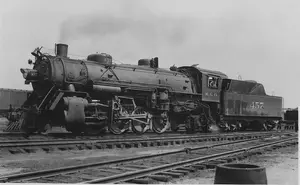
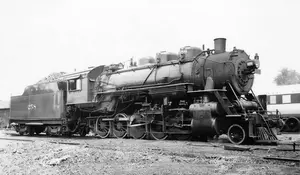
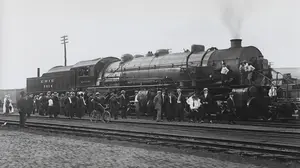
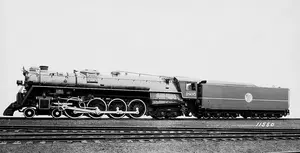
 This American Locomotive Company builder's photo features one of Northern Pacific’s sleek Class Z-6 4-6-6-4s, #5119, taken circa 1937. This was part of the railroad’s initial group of twenty-one examples (5100-5120); they were later followed by the Z-7s of 1941 and Z-8s of 1943-1944.
The Need for Powerful New Motive Power
The NP's main line stretched from the Twin Cities to the Pacific Northwest, crossing vast plains and multiple mountain ranges, including significant grades in Montana. The railroad had already pioneered large articulated power with its Z-5 class 2-8-8-4 "Yellowstones" in the late 1920s/early 1930s and operated earlier Mallet compounds (Z-1 through Z-4). It had also introduced the 4-8-4 "Northern" type (which took its name from the railroad).
By the mid-1930s, traffic demands and competition from rivals like the Milwaukee Road and Union Pacific required faster, more powerful simple articulated locomotives capable of handling long freight trains at higher speeds while burning the NP's abundant but low-BTU lignite coal from its Montana mines.
The 4-6-6-4 wheel arrangement offered an excellent balance: four-wheel leading truck for guidance, two sets of six drivers for adhesion and power, and a four-wheel trailing truck to support a massive firebox. Unlike compound Mallets, these were simple-expansion engines—easier to maintain and better suited for sustained high horsepower at speed.
Alco worked closely with NP mechanical engineers to adapt the basic Challenger concept. The result was a fleet with one of the largest grate areas of any 4-6-6-4: 152.3 square feet. This allowed efficient combustion of lignite that had only about two-thirds the heat value of good bituminous coal.
Acquisition and Class Development
Z-6 Class (1936–1937)
The NP ordered its first Challengers from Alco-Schenectady in 1936. Twenty-one locomotives were delivered in two batches and numbered 5100–5120:
- 5100–5111 (12 locomotives): Delivered 1936
- 5112–5120 (9 locomotives): Delivered 1937
These were the NP's first 4-6-6-4s and among the earliest Challengers built anywhere. They featured 69-inch drivers, 250 psi boiler pressure, and four 23" × 32" cylinders. The first four units initially had friction bearings on the drivers (adding weight), but most received Timken roller bearings. They carried large six-axle tenders with 22,000 gallons of water and capacity for 54,000 lbs of coal/lignite. Average cost was approximately $183,588 each.
Z-7 Class (1941)
Six additional locomotives arrived in 1941, numbered 5121–5126. These incorporated refinements: 70-inch drivers, boiler pressure raised to 260 psi, slightly revised boiler dimensions with more security circulators, and increased weight. Engine weight rose to about 643,000 lbs, and they received larger seven-axle tenders (25,000 gallons water). Tractive effort increased accordingly. These were built as the nation edged toward wartime production.
Z-8 Class (1943–1944)
The final 20 locomotives (5130–5149) were delivered in two groups of 10 during the height of World War II:
- 5130–5139: 1943
- 5140–5149: 1944
They were virtually identical to the Z-7s but used conventional steels in place of some high-strength alloys due to wartime shortages, adding roughly 1,000 lbs to the total weight. A few Z-8s (notably 5140 and 5148) were converted to oil firing. These proved to be the last steam locomotives purchased new by the Northern Pacific.
(Note: The numbering gap between 5126 and 5130 likely relates to assignments for the Spokane, Portland & Seattle Railway, a GN/NP joint subsidiary that received six oil-fired Z-6-type and two Z-8-type Challengers in its own 900/910 series.)
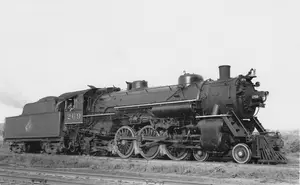
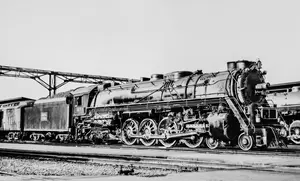
 Northern Pacific 4-6-6-4 #5107 is seen here at work late in its career at Laurel, Montana in September, 1955. Photographer unknown.
Complete Specifications
All NP Challengers shared core dimensions but evolved across classes. Here is a comparative summary:
Key Specifications by Class
| Attribute | Z-6 (5100–5120) |
Z-7 (5121–5126) |
Z-8 (5130–5149) |
|---|---|---|---|
| Quantity Built | 21 | 6 | 20 |
| Year(s) Built | 1936–1937 | 1941 | 1943–1944 |
| Wheel Arrangement | 4-6-6-4 | 4-6-6-4 | 4-6-6-4 |
| Cylinders (4) | 23" × 32" | 23" × 32" | 23" × 32" |
| Driver Diameter | 69 inches | 70 inches | 70 inches |
| Boiler Pressure | 250 psi | 260 psi | 260 psi |
| Tractive Effort | 104,267 lbs | 106,888 lbs | 106,888 lbs |
| Factor of Adhesion | 4.17 | 4.15 | 4.15 |
| Grate Area | 152.3 sq ft | 152.3 sq ft | 152 sq ft |
| Firebox Heating Surface | 839 sq ft | 756 sq ft | 756 sq ft |
| Evaporative Heating Surface | 5,858 sq ft | 5,749 sq ft | 5,749 sq ft |
| Superheater Surface | 2,114 sq ft | 2,105 sq ft | 2,105 sq ft |
| Total Heating Surface | 7,972 sq ft | 7,854 sq ft | 7,854 sq ft |
| Engine Weight | 626,540 lbs | 643,000 lbs | 644,000 lbs |
| Adhesive (Driver) Weight | 435,000 lbs | 444,000 lbs | 444,000 lbs |
| Tender Water Capacity | 22,000 gallons | 25,000 gallons | 25,000 gallons |
| Estimated Horsepower | ~6,500 hp | ~6,500 hp | ~6,500 hp |
Notes:
- All featured Walschaert valve gear with 12" piston valves, Worthington feedwater heaters, and Nicholson thermic syphons or security circulators.
- The massive firebox (grate roughly 16 feet long) was the defining feature, supported by the four-wheel trailing truck.
- Later in life, most (if not all) NP Challengers were converted from coal/lignite to oil firing for better efficiency and operational flexibility.
These were big locomotives—overall length with tender approached 110 feet, and total weight (engine + tender) exceeded 1 million pounds on the later classes.
Roster Summary
Z-6 (21 locomotives): 5100–5120
- 5100–5111 (1936)
- 5112–5120 (1937)
All scrapped 1954–1958.
Z-7 (6 locomotives): 5121–5126 (1941)
All scrapped early-to-mid 1950s.
Z-8 (20 locomotives): 5130–5149
5130–5139 (1943)
5140–5149 (1944)
All scrapped 1955–1959.
Operations and Performance
The NP Challengers were assigned primarily to heavy freight service on the main line, particularly the demanding Montana and North Dakota divisions. They excelled at moving long trains over grades such as those encountered on the Townsend–Bozeman line and other Montana mountain districts. Their size and power allowed the NP to run longer consists with fewer helper locomotives, improving overall efficiency.
In the late 1930s, some Z-6s even handled premium passenger assignments, including sections of the North Coast Limited between Missoula and Livingston, Montana. With 69–70" drivers and simple articulation, they were capable of respectable speeds for articulated steam power.
Fuel consumption was high due to the lignite— one documented figure noted roughly 831 pounds of coal per mile on a constant-grade Montana segment. This reality, combined with the post-war push for dieselization, ultimately sealed their fate. The railroad converted many to oil later in their careers, which helped but could not overcome the broader shift to internal combustion power.
Retirement and Legacy
Dieselization accelerated rapidly after World War II. The NP retired its Challengers between the mid-1950s and 1959; all were scrapped. They were the final new steam locomotives the railroad ever purchased.
Today, these Challengers are less famous than UP's 3985 or Big Boys, but they were every bit as impressive in their own right—larger and heavier in key areas than many UP examples because of the enormous firebox required for lignite. They represented the pinnacle of Northern Pacific articulated steam development and played a crucial role in keeping freight moving across the northern tier during the late steam era.
Railfans and modelers continue to celebrate them through historical photos, books, and excellent HO-scale models (such as those produced by Athearn Genesis). While no physical examples remain, their story endures as a testament to innovative steam engineering tailored to one railroad's specific challenges.
Recent Articles


-
Mobile & Ohio Steam Roster (Post 1900)
Oct 09, 26 12:26 PM
 Mobile & Ohio steam since 1900. Drury's class grid: 48 six-wheel switchers, 107 Ten-Wheelers, 15 Consolidations, 58 Mikados, and 14 Pacifics. Last revenue steam October 7, 1949.
 -
Mobile & Ohio Railroad: History, Map, Timetable
Oct 09, 26 11:31 AM
 Mobile & Ohio Railroad, chartered in 1848. Columbus on April 22, 1861, the Cairo & St. Louis, the March 1940 Official Guide, and the September 13, 1940 merger into the Gulf, Mobile & Ohio.
 -
Gulf, Mobile & Northern Steam Roster (Post 1900)
Oct 09, 26 10:42 AM
 Gulf, Mobile & Northern steam since 1900. Drury's class grid: Ten-Wheelers, Mikados, Russian Decapods, Pacifics 425 and 426, and three light 4-8-2s. Last revenue steam October 7, 1949.
 -
Gulf, Mobile & Ohio Diesel Roster (All-Time)
Oct 09, 26 10:41 AM
 Gulf, Mobile & Ohio diesel roster, all-time. The 1935 boxcab, DL-107s, 55 FA-1s, F3s and F7s, the Ingalls 4-S, GP30s through GP38-2s, and 21 SD40s. Serials and order numbers.
 -
Gulf, Mobile & Northern Railroad: History, Rebel Route
Oct 09, 26 10:36 AM
 Gulf, Mobile & Northern, from the 1890 Mobile, Jackson & Kansas City to the Rebel and the September 13, 1940 merger into the Gulf, Mobile & Ohio. Steam roster is the companion page.
 -
Gulf, Mobile & Ohio Railroad: Map, Photos, Trains, History
Oct 08, 26 11:48 PM
 Gulf, Mobile & Ohio, chartered in 1938 and merged September 13, 1940. The Mobile & Ohio, the Alton on May 31, 1947, the Rebel Route, and Illinois Central Gulf on August 10, 1972.
 -
New Jersey Railroad Museums (2026): A Complete Guide
Oct 08, 26 11:37 PM
 New Jersey railroad museums—Whippany, Maywood, Pine Creek, Mahwah’s Erie depot, Phillipsburg, and Boonton. Confirm hours on each site.
 -
New Hampshire Railroad Museums (2026): A Complete Guide
Oct 08, 26 11:34 PM
 New Hampshire railroad museums—North Conway, the Flying Yankee, Ashland, Gorham, Raymond, and Sandown. Confirm hours on each site.
 -
Missouri Railroad Museums (2026): A Complete Guide
Oct 08, 26 11:00 PM
 Missouri railroad museums—the National Museum of Transportation, Patee House, Frisco 4524, the Chicago & Alton depot, and Marceline. Confirm hours on each site.
 -
Milwaukee Road X3800: Deer Lodge’s Shop Goat
Oct 08, 26 04:28 PM
 Milwaukee Road X3800, the a home-built shop goat that served the Deer Lodge, MT yard. It was a 220-volt DC switcher, powered through an extension cord that moved electrics into a roundhouse where the…
 -
Key West Extension (Overseas Railroad): History, Construction, Decline
Oct 08, 26 03:59 PM
 Henry Flagler's Overseas Railroad, Miami to Key West, 1905–1935. The Seven Mile Bridge, the 1935 Labor Day Hurricane, and the road that became U.S. 1.
 -
Florida East Coast Steam Roster (Post 1900)
Oct 08, 26 02:34 PM
 Florida East Coast steam since 1897. Seventeen Ten-Wheelers, twenty Atlantics, eighty-seven Pacifics, ninety Mountains, fifteen Mikados, and the switchers.
 -
Florida East Coast Diesel Roster (All-Time)
Oct 08, 26 02:12 PM
 Florida East Coast diesel roster, all-time. E units from 1939, F3s, BL2s, GP7s and GP9s, the GP40-2 orders, 22 SD40-2s, and 24 ES44C4s. Serials and EMD order numbers.
 -
Florida East Coast Railway: Map, History, Rosters
Oct 08, 26 01:46 PM
 Florida East Coast Railway, Henry Flagler's line from Jacksonville to Miami and Key West. Receivership in 1931, the 1963 strike, Grupo México in 2017, and Brightline on the same track.
 -
Minnesota Railroad Museums (2026): A Complete Guide
Oct 08, 26 10:32 AM
Minnesota railroad museums—the Lake Superior Railroad Museum, Two Harbors, Jackson Street, Willmar’s Great Northern 2523, and Currie. Confirm hours on each site. -
Maine Railroad Museums (2026): A Complete Guide
Oct 08, 26 09:24 AM
 Maine railroad museums—Seashore Trolley, the two-foot lines at Portland, Alna, and Phillips, Boothbay, and the Bangor & Aroostook depots. Confirm hours on each site.
 -
Massachusetts Railroad Museums (2026): A Complete Guide
Oct 08, 26 12:08 AM
 Massachusetts railroad museums—Berkshire Scenic at Lenox, Shelburne Falls trolley No. 10, Edaville, Chatham’s 1887 depot, and Lowell. Confirm hours on each site.
 -
Clinchfield Steam Roster (Post 1900)
Oct 07, 26 12:09 PM
 Clinchfield steam since 1900. Fifteen H-4 Consolidations, K-1 Mikados, M-2 and M-3 Mallets, L-class 2-8-8-2s, eighteen Challengers. Class grid after Drury. Last steam April 16, 1954.
 -
Clinchfield Diesel Roster (All-Time)
Oct 07, 26 12:05 PM
 Clinchfield diesel roster, all-time. F3A 800, FP7 200, the F7s, GP7s, 25 SD40s, 18 SD45-2s, seven U36Cs, and the Family Lines hoods. Serials and EMD order numbers.
 -
Clinchfield Railroad: Map, Steam Locomotives, Roster, Logo
Oct 07, 26 12:02 PM
 Clinchfield Railroad, Elkhorn City to Spartanburg. George L. Carter, the Carolina, Clinchfield & Ohio, the 1924 lease, coal, the loops, and CSX. Steam and diesel rosters are companion pages.
 -
Kentucky Railroad Museums (2026): A Complete Guide
Oct 07, 26 11:39 AM
 Kentucky railroad museums—the Kentucky Railway Museum, Bowling Green’s L&N depot, Paducah, Versailles, and Covington. Confirm hours on each site.
 -
Kansas Railroad Museums (2026): A Complete Guide
Oct 07, 26 11:26 AM
 Kansas railroad museums—Santa Fe 3768 at Wichita, Santa Fe 132 in Topeka, the Great Overland Station, and Abilene. Confirm hours on each site.
 -
Cincinnati, New Orleans and Texas Pacific Diesel Roster (All-Time)
Oct 07, 26 10:38 AM
 All-time diesel roster of Southern locomotives lettered for the Cincinnati, New Orleans and Texas Pacific. Serials, order numbers, and builder dates.
 -
Cincinnati, New Orleans and Texas Pacific Railway
Oct 07, 26 10:31 AM
 Cincinnati, New Orleans and Texas Pacific Railway, incorporated September 8, 1881, to lease Cincinnati’s railroad to Chattanooga. Queen and Crescent route, Rathole, and the 2024 sale to Norfolk Southe…
 -
Indiana Railroad Museums (2026): A Complete Guide
Oct 07, 26 12:26 AM
 Indiana railroad museums—Nickel Plate 765, Elkhart’s New York Central collection, French Lick, Linden’s junction depot, and Haley Tower. Confirm hours on each site.
 -
"Triplex" Steam Locomotive: Specs, History, Photos
Oct 06, 26 11:52 PM
 Erie class P-1 Triplex 2-8-8-8-2s. Three Baldwin compounds, 2603–2605, later 5014–5016, built 1914 and 1916. Matt H. Shay, the 1930 class card, and Virginian XA 700.
 -
Illinois Railroad Museums (2026): A Complete Guide
Oct 06, 26 11:47 PM
 Illinois railroad museums—the Illinois Railway Museum, Monticello, the Pioneer Zephyr, Galesburg’s Burlington 3006, and the depots. Confirm hours on each site.
 -
Iowa Railroad Museums (2026): A Complete Guide
Oct 06, 26 11:41 PM
 Iowa railroad museums—the Union Pacific Railroad Museum, RailsWest, Sioux City, Boone, and the National Hobo Museum in Britt. Confirm hours on each site.
 -
Charleston and Western Carolina Diesel Roster (All-Time)
Oct 06, 26 11:29 PM
Charleston and Western Carolina diesel roster. Twenty-one GP7s, two SW7s, two SW9s, and six F7As, all built 1950–1952. Serials, order numbers, and ACL and SCL numbers. -
Charleston and Western Carolina Railway: Map, History, Timetables
Oct 06, 26 11:18 PM
 Charleston and Western Carolina Railway, incorporated September 16, 1896. Port Royal to Spartanburg, with branches to Anderson and Greenville. Merged into the Atlantic Coast Line on December 31, 1959.
 -
Central of Georgia Steam Roster (Post 1900)
Oct 06, 26 04:00 PM
 Central of Georgia steam since 1900. Cooke Consolidations, Harriman Mikados, 32 Mountains, and eight Lima 4-8-4s. Class grid after Drury. Last steam May 1953.
 -
Central of Georgia Diesel Roster (All-Time)
Oct 06, 26 03:44 PM
 Central of Georgia diesel roster. SW1 No. 1 in 1939, E7s and E8s, nine F3As, 39 RS3s, GP7s through SD35s. Serials and order numbers.
 -
Central of Georgia Railway: Map, Logo, History, Rosters
Oct 06, 26 03:42 PM
 Central of Georgia Railway, from the 1833 Savannah charter to Southern control on June 17, 1963. Map, logos, Nancy Hanks II, and links to the steam and diesel rosters.
 -
Georgia Railroad Museums (2026): A Complete Guide
Oct 06, 26 03:33 PM
Georgia railroad museums—Savannah’s Central shops, Duluth, the General at Kennesaw, the Texas in Atlanta, Tifton, Waycross, and Albany. Confirm hours on each site. -
Florida Railroad Museums (2026): A Complete Guide
Oct 06, 26 03:18 PM
 Florida railroad museums—Boca Raton, Winter Garden, Whitehall, the Gold Coast, Parrish, Fort Myers, Milton, and Plant City. Confirm hours on each site.
 -
Connecticut Railroad Museums (2026): A Complete Guide
Oct 06, 26 01:05 PM
 Connecticut railroad museums—the Shore Line Trolley, East Windsor, the Naugatuck Railroad, Danbury Union Station, Willimantic, and the SoNo tower. Confirm hours on each site.
 -
Colorado Railroad Museums (2026): A Complete Guide
Oct 06, 26 12:47 PM
 Colorado railroad museums—Golden, the Forney’s Big Boy 4005, Pueblo’s Santa Fe 2912, and the depots at Castle Rock, Limon, and Ridgway. Confirm hours on each site.
 -
Atlantic Coast Line Steam Roster (Post 1900)
Oct 06, 26 12:44 PM
 Atlantic Coast Line steam since 1900. Copper Head Ten-Wheelers, 235 P-5 Pacifics, Q-1 Santa Fes, twelve R-1 4-8-4s. Class grid after Drury. Last steam June 30, 1955.
 -
Atlantic Coast Line Diesel Roster (All-Time)
Oct 06, 26 11:57 AM
 Atlantic Coast Line diesel roster. HH660 1900 in 1939, E3s for the Champion, FTs and F2s, GP7s 100–279, GP30s, U25Cs, and the 1967 SCL numbers. Serials and orders.
 -
Atlantic Coast Line Railroad: "Standard Railroad of the South"
Oct 06, 26 11:53 AM
 Atlantic Coast Line, the Standard Railroad of the South. April 21, 1900 to July 1, 1967. Plant System, L&N, Clinchfield, the Champion, and the Seaboard Coast Line merger.
 -
California Railroad Museums (2026): A Complete Guide
Oct 06, 26 09:50 AM
California railroad museums—the California State Railroad Museum, Perris, Portola, Railtown 1897, and the depots that still stand. Confirm hours on each site. -
Arizona Railroad Museums (2026): A Complete Guide
Oct 06, 26 09:46 AM
Arizona railroad museums—the Arizona Railway Museum in Chandler, Southern Pacific 1673 at Tucson, and the McCormick-Stillman park in Scottsdale. -
Arkansas Railroad Museums (2026): A Complete Guide
Oct 06, 26 09:07 AM
 Arkansas railroad museums—Cotton Belt 819 at Pine Bluff, the Fort Smith trolley, the Mammoth Spring depot, and the Eureka Springs railway.
 -
Alabama Railroad Museums (2026): A Complete Guide
Oct 06, 26 09:03 AM
Alabama railroad museums—Heart of Dixie at Calera, the North Alabama museum at Chase, Huntsville’s 1860 depot, and Fort Payne. Confirm hours on each site. -
Pennsylvania Railroad Museums (2026): A Complete Guide
Oct 06, 26 12:09 AM
 Pennsylvania railroad museums—Strasburg, Steamtown, the Horseshoe Curve, the East Broad Top, and the depots and towers in between. Confirm hours on each site.
 -
Maryland Railroad Museums (2026): A Complete Guide
Oct 05, 26 11:53 PM
 Maryland railroad museums—the Baltimore roundhouse, Ellicott City station, Bowie, Gaithersburg’s Buffalo Creek & Gauley 14, and the Western Maryland collections.
 -
Ohio Railroad Museums (2026): A Complete Guide
Oct 05, 26 05:51 PM
 Ohio railroad museums—the Age of Steam Roundhouse, Bellevue, Worthington, Conneaut’s Nickel Plate 755, and the Dennison depot. Confirm hours on each site.
 -
Delaware Railroad Museums (2026): A Complete Guide
Oct 05, 26 02:43 PM
 Delaware railroad museums—Wilmington & Western at Greenbank, the Harrington tower and N5 caboose, Felton's 1868 depot, and the Selbyville station museum.
 -
C&O's M-1 Steam Turbine Locomotives: Specs, Roster, History
Oct 05, 26 12:13 PM
 Chesapeake & Ohio Class M-1 steam-turbine-electrics. Three Baldwin-Westinghouse locomotives, 500–502, built 1947–48 for The Chessie. Specs, the 2-C1+2-C1-B arrangement, and a roster. All scrapped…
 -
N&W 2-6-6-2 Locomotives (Class Z): Specs, Roster, History
Oct 05, 26 11:44 AM
 Norfolk & Western Class Z 2-6-6-2s. One hundred ninety compound Mallets, 1300–1489, from Richmond, Baldwin, and Schenectady, 1912–1918. Diagram specs, the Z-1b rebuilds, Z-2 1399, and a roster. No…