Henry H. Rogers: Net Worth, Railroads, Biography
Published: November 22, 2026
By: Adam Burns
Henry Huttleston Rogers was born on January 29, 1840, a Wednesday. The Dictionary of American Biography says the place was Mattapoisett, Massachusetts, and that he was brought up at Fairhaven, nearby. The National Railroad Hall of Fame says he was born in Fairhaven, to a modest New England family. His parents were Rowland Rogers and Mary Eldridge (Huttleston) Rogers. The middle name is often given as Huddleston. The dictionary says that was the earlier form in the family, and that his son, who bore the same name, returned to the older spelling.
As a boy in Fairhaven he carried newspapers and delivered groceries. The dictionary says he later served for a time as a railroad brakeman and baggageman. The hall of fame says that early in 1861 he was baggage-master and brakeman on the Fairhaven Branch Railroad, and that in September of that year, at twenty-one, he left Fairhaven for the oil fields of Pennsylvania. He went with Charles P. Ellis. Each man had about $600 in savings. They built a small refinery for $1,800 and borrowed the rest. In 1862, on a visit home, he married Abbie Palmer Gifford.
Charles Pratt brought him into a Brooklyn refinery in 1866. Before 1890 he was vice-president of the Standard Oil Company. The hall of fame says that by 1890 he was vice-president and a director, and that at the end of his career he was president of six of the Standard Oil Trust companies and vice-president of 13. In 1899 he formed the first $75,000,000 section of Amalgamated Copper. The dictionary, describing how that trust was built, names a $38,000,000 watering of the stock of the first corporation. He sat as a director of the Santa Fe, the St. Paul, the Lackawanna, and the Union Pacific. The hall of fame adds the Erie. In the mid-1890s he was part owner and president of the Ohio River Railroad. His last enterprise was the Virginian Railway. The dictionary says one man built a $40,000,000 railroad on his own resources and credit, partly during the panic of 1907. The hall of fame says he put nearly $40 million of his personal resources into a line of 600 miles, from the coal of southern West Virginia to tidewater near Norfolk, constructed from 1903 to 1909.
He was at his desk on May 18, 1909, a Tuesday. The next morning, in New York City, he died of an apoplectic stroke. The day was May 19, 1909, a Wednesday. He was sixty-nine. The hall of fame records a stroke on that day. The dictionary says the strain of the Virginian proved fatal.
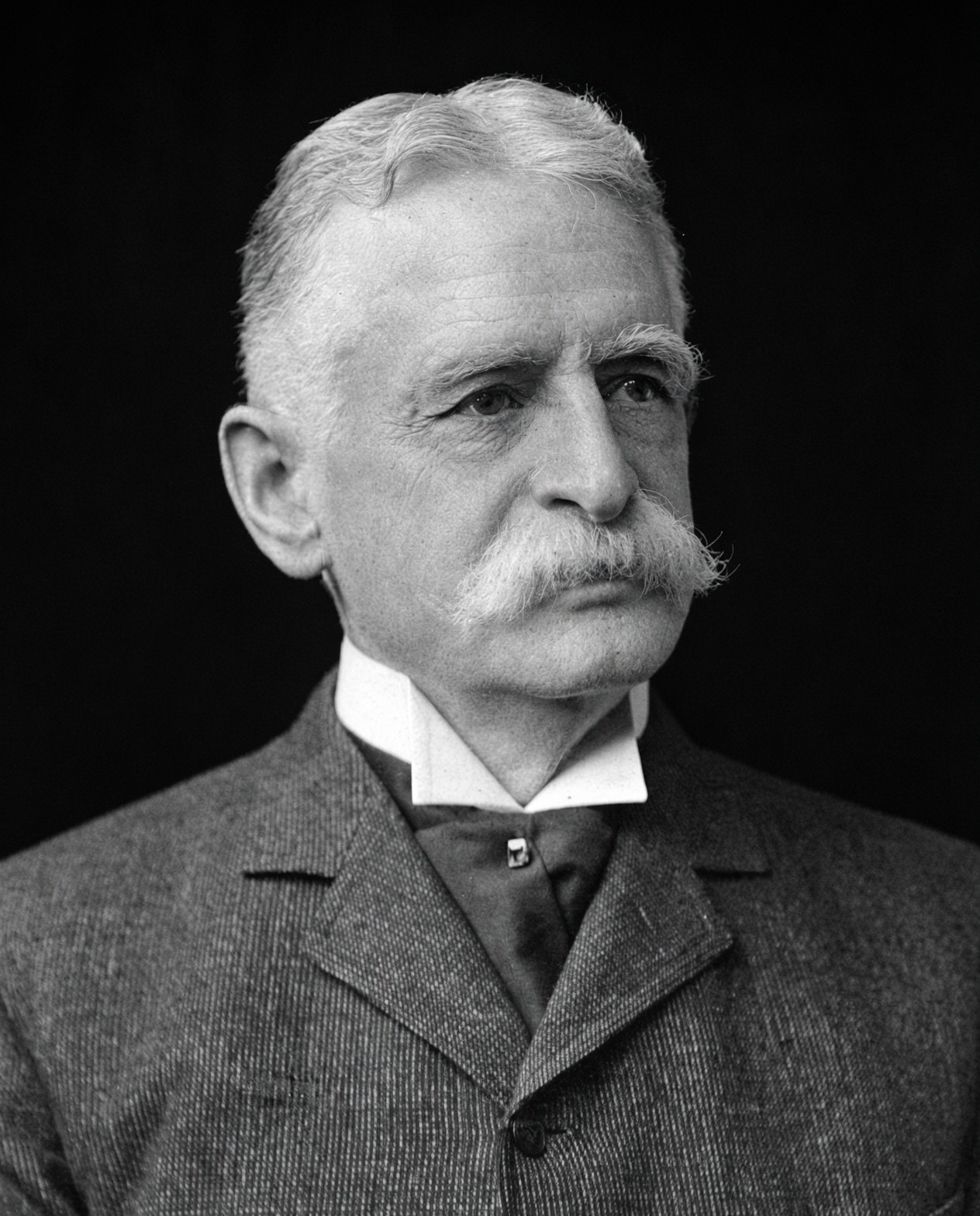
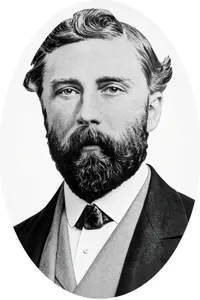
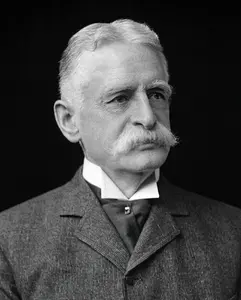
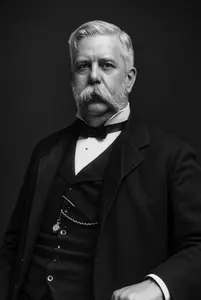
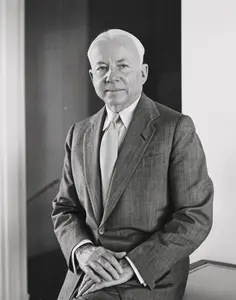
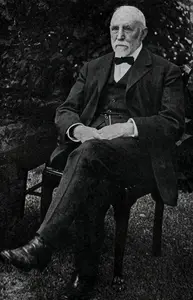
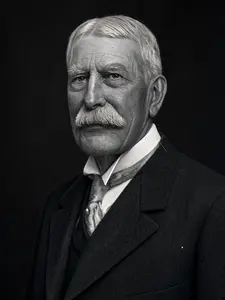
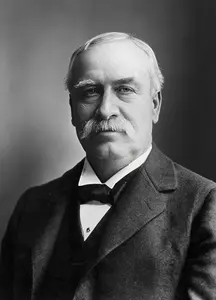
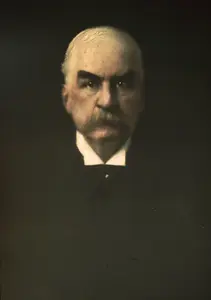
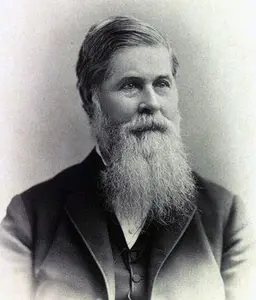
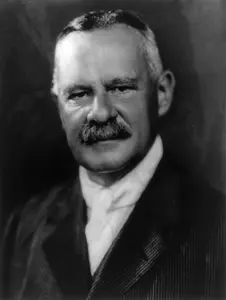
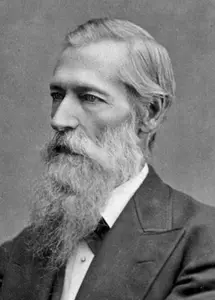
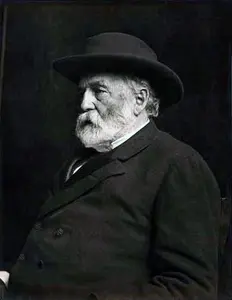
A portrait of Henry Huttleston Rogers later in life, circa 1900.
On this page: At a glance · Fairhaven · Oil · Gas and copper · The railroad boards · The town · The Virginian
At a glance
| Item | Detail |
|---|---|
| Born | January 29, 1840, a Wednesday. Mattapoisett in the dictionary. Fairhaven in the hall of fame. Rowland and Mary Eldridge (Huttleston) Rogers |
| Died | May 19, 1909, a Wednesday, New York City. An apoplectic stroke. At his desk on May 18, a Tuesday. Age 69 |
| Standard Oil | Chairman of the manufacturing committee, then a trustee. Vice-president before 1890. At the end, president of six trust companies and vice-president of 13 |
| Naphtha | Patent 120,539, October 31, 1871, a Tuesday. Assigned to the Charles Pratt Manufacturing Company |
| The money | About $600. A refinery at $1,800. Amalgamated, first section $75,000,000 in 1899. A watering of $38,000,000. The Virginian, $40,000,000, and nearly $40 million |
| Railroads | Director of the Santa Fe, the St. Paul, the Lackawanna, and the Union Pacific. The hall of fame adds the Erie. Ohio River Railroad in the mid-1890s. The Virginian, 1903 to 1909 |
| Family | Abbie Palmer Gifford, 1862. She died May 21, 1894, a Monday, leaving four children. Emelle (or Emelie) Augusta Randel. A son and three daughters survived with her |
Fairhaven
Both parents, the dictionary says, were of early New England ancestry. The boyhood was at Fairhaven. He carried newspapers. He delivered groceries. Then came the railroad. The dictionary says brakeman and baggageman. The hall of fame says baggage-master and brakeman, early in 1861, on the Fairhaven Branch Railroad.
In September 1861 he left. He was twenty-one, which is the age the dictionary gives for the move to the new Pennsylvania oil fields, and the age the hall of fame gives for the month. The friend who went with him was Charles P. Ellis. The dictionary puts them in the Oil City district, each with about $600 saved. The small refinery cost $1,800. They borrowed the rest.
In 1862 he went home for a visit and married Abbie Palmer Gifford. In the oil country he met men who would lead the industry. One of them was Charles Pratt.
Oil
In 1866 Pratt asked Rogers to join the refinery business in Brooklyn. There, the dictionary says, he devised the machinery by which naphtha was first successfully separated from crude oil. Citing Current Literature for July 1909, the dictionary calls the invention epochal for the industry. A patent followed. Number 120,539 was granted on October 31, 1871, a Tuesday. The letters patent name Henry H. Rogers of Brooklyn, New York, and assign the invention to the Charles Pratt Manufacturing Company of New York City. The claim is an apparatus for distilling naphtha and other hydrocarbon liquids.
The dictionary says that when the Rockefellers organized the Standard Oil Company in 1874, they took over the Pratt business, and Rogers with it. He was by then an oil man who could also organize. He became chairman of the manufacturing committee, a little later a trustee, and before 1890 vice-president. The hall of fame says that by 1890 he was vice-president and a director. It adds a later count: at the end of his career he was president of six of the Standard Oil Trust companies and vice-president of 13.
He conceived long pipe lines for moving oil, and he organized the National Transit Company. The dictionary calls it the first corporation formed for that object, and his favorite promotion. He remained its president after the technical management of the oil business had been handed to other men, so that he and William Rockefeller could give their time to the financial machine Wall Street knew as Standard Oil. Gas, copper, steel, banking, and railroads followed, on his own account or for the trust.
Gas and copper
In 1884, with associates, he formed the Consolidated Gas Company. For several years after that he worked to gain control of city gas plants. Boston was one of the fights. The dictionary's judgment is that almost the whole story of the gas was warfare, and that copper was the same.
During the 1890s, when he was virtually the directing head of Standard Oil, he took an interest in Anaconda and in other copper properties. In 1899 he formed the first $75,000,000 section of Amalgamated Copper. The dictionary calls the building of that trust some of the most ruthless strokes in modern business history, and it names them. There was the $38,000,000 watering of the stock of the first corporation, and the manipulation that followed. There was the seizure of the copper property of the Butte & Boston Consolidated Mining Company, and the use of that property against the Boston & Montana Consolidated Copper and Silver Mining Company. There was guerrilla warfare against certain private interests, and the wrecking of the Globe Bank of Boston.
An interest of Standard Oil in steel properties led to a seat on the board of the United States Steel Corporation when that company was organized in 1901.
The railroad boards
He was long the transportation man of Staten Island. The dictionary says he was the principal owner of its railroads, its traction lines, and its ferries. He was a director of the Santa Fe, the St. Paul, the Lackawanna, the Union Pacific, and several other railroads. The hall of fame prints the same roads and adds the Erie. In the mid-1890s, the hall of fame says, he was part owner and president of the Ohio River Railroad.
He was a close associate of E. H. Harriman in Harriman's railroad operations. When Harriman went into the insurance business, Rogers was drawn in with him. Rogers had long been a trustee of the Mutual Life. The year was 1905, a scandal and a governmental investigation. The dictionary says he emerged, as usual, almost unruffled.
The same year brought what the dictionary calls his worst tactical defeat. The State of Missouri filed an ouster suit. He was defiant at first. He was then forced to testify, and to admit that Standard secretly owned certain subsidiary oil companies. The dictionary points to 218 Missouri Reports 1, to 116 Southwestern Reporter 902, and to 224 United States 270.
The town
The dictionary describes a tall, handsome man of distinguished presence, and a curious duality. In business he was known as a man of cold steel. Away from business he was democratic, a faithful friend, a wit, and a raconteur. Even bitter enemies, the same account says, granted the charm of his presence when he chose to use it. Some of the humblest citizens of the boyhood town stayed his intimate friends and called him “Hen.” The summer home was there. Weekends in Fairhaven were the relaxation he liked best.
He paved the streets of Fairhaven. He gave the town a town hall, grammar and high school buildings, a handsome public library, a Masonic lodge building, and a costly Unitarian church and parsonage. There he founded the Atlas Tack Company, which the dictionary calls the largest concern of its kind in America.
A fondness for the writings of Mark Twain led to the acquaintance. The publishers had failed, and Twain was in difficulties. Rogers practically took charge of his affairs and remained his business manager and counselor until death.
Abbie Palmer Gifford died on May 21, 1894, a Monday. She left four children. He afterward married Emelle (or Emelie) Augusta Randel, the divorced wife of Lucius Hart.
The Virginian
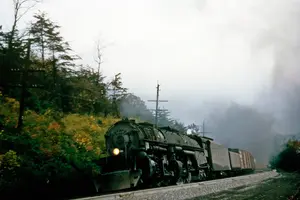
The last great individual enterprise, in the dictionary's words, was the building of the Virginian Railway from the West Virginia coal fields to Norfolk. The dictionary calls the line remarkable and low-grade, a gentle profile, and calls the achievement unique in business annals. One man built a $40,000,000 railroad on his own resources and credit, and part of the work fell in the panic of 1907. The same account says the strain of doing it proved fatal.
The hall of fame describes a railroad of 600 miles, carrying coal from southern West Virginia to tidewater near Norfolk, constructed from 1903 to 1909. Rogers, that sketch says, put nearly $40 million of his personal resources into the construction, through the panic of 1907. He planned the railroad to handle very large volumes of freight at the lowest possible cost.
The line began as the Deepwater Railway, a short line meant to gather coal from a district lying between the Chesapeake and Ohio and the Norfolk and Western. Westbound loads would have gone to the Chesapeake and Ohio at Deepwater. The heavier traffic, eastbound, would have gone to the Norfolk and Western at Matoaka. Neither neighbor would make the agreement. The men behind the short line built the Tidewater, through Princeton, Roanoke, and Victoria, and they built their own piers. The two companies were combined in 1907. The railroad reached Norfolk in 1909.
He was at his desk on May 18, 1909, a Tuesday. The next morning, in New York City, he died suddenly of an apoplectic stroke. The day was May 19, 1909, a Wednesday. He was sixty-nine. Emelle (or Emelie) Augusta Randel survived him, together with a son and three daughters.
Sources
- Dictionary of American Biography, 1935, Rogers, Henry Huttleston (January 29, 1840-May 19, 1909), capitalist. The entry as transcribed for the Millicent Library. Initials A. F. H. Son of Rowland and Mary Eldridge (Huttleston) Rogers. Huddleston as the earlier family spelling, restored by the son and namesake. Born at Mattapoisett, brought up at Fairhaven. Newspapers, groceries, then brakeman and baggageman. At twenty-one, the Pennsylvania oil fields, with Charles P. Ellis, about $600 each, and a refinery at $1,800. Married Abbie Palmer Gifford in 1862. Charles Pratt, Brooklyn, 1866. The naphtha machinery, cited to Current Literature, July 1909. Patent 120,539, October 31, 1871. Standard Oil in 1874, the Pratt business taken over with Rogers. Manufacturing committee, trustee, vice-president before 1890. National Transit Company, and the financial work with William Rockefeller. Consolidated Gas in 1884, including Boston. Anaconda in the 1890s. Amalgamated Copper in 1899, the first section $75,000,000, and the $38,000,000 watering, the Butte & Boston property, the Boston & Montana company, and the Globe Bank of Boston. A director of United States Steel in 1901. Staten Island. Director of the Santa Fe, the St. Paul, the Lackawanna, the Union Pacific, and several other railroads. E. H. Harriman, the Mutual Life, and the investigation of 1905. The Missouri ouster suit of 1905, with the dictionary's citations, 218 Missouri Reports 1, 116 Southwestern Reporter 902, and 224 United States 270. The Virginian, $40,000,000, on his own resources and credit, partly in the panic of 1907. At his desk May 18, 1909. Died the next morning in New York City, an apoplectic stroke. Abbie died May 21, 1894, leaving four children. Emelle (or Emelie) Augusta Randel, divorced wife of Lucius Hart, survived him with a son and three daughters. Fairhaven gifts, the Atlas Tack Company, and Mark Twain.
- National Railroad Hall of Fame, Henry Huttleston Rogers. Born in Fairhaven. Early in 1861, baggage-master and brakeman on the Fairhaven Branch Railroad. Left in September 1861, at 21, for the oil business. By 1890, vice-president and a director of Standard Oil. At the end of his career, president of six and vice-president of 13 of the Standard Oil Trust companies. Director of the Santa Fe, the St. Paul, Erie, Lackawanna, and the Union Pacific. Part owner and president of the Ohio River Railroad in the mid-1890s. The Virginian, 600 miles, southern West Virginia to tidewater near Norfolk, constructed 1903 to 1909, nearly $40 million of his personal resources, through the panic of 1907, planned for large freight volumes at the lowest possible cost. Died of a stroke on May 19, 1909.
- United States patent 120,539, Improvement in distilling naphtha and other hydrocarbon liquids, granted October 31, 1871. Henry H. Rogers, of Brooklyn, in Kings County, New York, assignor to the Charles Pratt Manufacturing Company, of New York City. The specification is an apparatus for separating the products of naphtha by repeated vaporization and condensation.
- The Virginian Railway account of its beginnings. The Deepwater Railway was a short line meant to gather coal from a district between the Chesapeake and Ohio and the Norfolk and Western. Westbound loads would have gone to the Chesapeake and Ohio at Deepwater. The heavier eastbound traffic would have gone to the Norfolk and Western at Matoaka. Neither neighbor would make the agreement. The men behind the short line built the Tidewater, through Princeton, Roanoke, and Victoria, and their own piers. The two companies were combined in 1907. The railroad reached Norfolk in 1909.
Recent Articles


-
Thomas C. Durant: Net Worth, Railroads, Biography
Nov 23, 26 12:00 AM
 Thomas Clark Durant was born February 6, 1820, in Lee, Massachusetts. Vice president of the Union Pacific, he organized the Credit Mobilier. He died in 1885.
-
Henry H. Rogers: Net Worth, Railroads, Biography
Nov 22, 26 11:54 PM
 Henry Huttleston Rogers, born January 29, 1840, was a Standard Oil vice-president who built the Virginian Railway. He died in New York on May 19, 1909.
-
Van Sweringen Brothers: Net Worth, Railroads, Biography
Nov 22, 26 11:38 PM
 Oris Paxton Van Sweringen, born April 24, 1879, near Wooster, Ohio, and Mantis James Van Sweringen, born July 8, 1881, developed Shaker Heights and a railroad system around the Nickel Plate. Oris died…
-
Alfred E. Perlman: President, Railroads, Biography
Nov 22, 26 12:33 AM
 Alfred Edward Perlman, born November 22, 1902, in St. Paul, was executive vice president of the Denver and Rio Grande Western, president of the New York Central, and president of the Western Pacific.
-
Patrick B. McGinnis: Net Worth, Railroads, Biography
Nov 22, 26 12:04 AM
 Patrick Benedict McGinnis, born May 23, 1904, in Palmyra, New York, chaired the Norfolk Southern and the Central of Georgia and presided over the New Haven and the Boston and Maine.
-
George Westinghouse: Net Worth, Air Brake, Biography
Nov 21, 26 11:35 PM
 George Westinghouse was born at Central Bridge on October 6, 1846. He died in New York on March 12, 1914. He built the air brake the railroads came to use.
-
NYC's "Xplorer" (Train): Concept, Consist, Photos
Nov 21, 26 11:31 PM
New York Central Xplorer, the Ohio Xplorer, Cleveland to Cincinnati in 1956. Pullman-Standard Train X cars, Baldwin-Lima-Hamilton locomotive 20, trains 423 and 424, timetable, consist, and photographs… -
Frisco Diesel Roster (All-Time)
Nov 21, 26 10:27 PM
 St. Louis-San Francisco diesel locomotives, each frame once. From VO-1000 No. 200 in 1941 through the GP40-2s and SD38-2s of 1979.
-
Frisco Steam Roster (Built Since 1900)
Nov 21, 26 10:18 PM
 St. Louis-San Francisco steam locomotives built since 1900. Mikados, Mountains, and twenty-five 4-8-4s.
-
Robert R. Young: Net Worth, Railroads, Biography
Nov 21, 26 09:47 PM
 Robert Ralph Young, born February 14, 1897, in Canadian, Texas, chaired the Chesapeake and Ohio and, in 1954, the New York Central. He died on January 25, 1958, in Palm Beach.
-
St. Louis-San Francisco Railway (Frisco): Map, Rosters, History
Nov 21, 26 06:37 PM
 History of the St. Louis-San Francisco Railway, the Frisco. The Pacific Railroad, the coonskin, Yoakum, Pensacola, and the Burlington Northern merger of November 21, 1980. Steam and diesel rosters are…
-
Kuhn, Loeb and Company: Net Worth, Railroads, History
Nov 21, 26 01:34 PM
 Kuhn, Loeb and Company was the New York banking house in E. H. Harriman's circle. Abraham Kuhn and Solomon Loeb opened the banking partnership in 1867. Jacob H. Schiff joined on January 1, 1875.
-
Otto Kahn: Net Worth, Railroads, Biography
Nov 21, 26 01:22 PM
 Otto Hermann Kahn was born in Mannheim on February 21, 1867. He died in New York on March 29, 1934. He was the Kuhn, Loeb partner in E. H. Harriman's railroad work.
-
George Pullman: Net Worth, Palace Cars, Biography
Nov 21, 26 11:01 AM
 George M. Pullman was born at Brocton on March 3, 1831. He died in Chicago on October 19, 1897. He built the palace-car company that owned the sleeping cars.
-
Arthur E. Stilwell: Net Worth, Railroads, Biography
Nov 21, 26 12:33 AM
Arthur E. Stilwell was born in Rochester on October 21, 1859. He died in New York on September 26, 1928. He built the road to Port Arthur and the Kansas City, Mexico and Orient. -
Frederick Weyerhaeuser: Net Worth, Railroads, Biography
Nov 21, 26 12:22 AM
 Frederick Weyerhaeuser was born at Niedersaulheim on November 21, 1834. He died at Pasadena on April 4, 1914. He was a lumberman and a railroad director.
-
John Murray Forbes: Net Worth, CB&Q, Biography
Nov 21, 26 12:13 AM
 John Murray Forbes was born at Bordeaux on February 23, 1813. He died at Milton on October 12, 1898. He was chairman of the Chicago, Burlington and Quincy.
-
Henry B. Plant: Net Worth, Plant System, Biography
Nov 20, 26 10:27 PM
 Henry Bradley Plant was born at Branford, Connecticut, on October 27, 1819. He died at his home on Fifth Avenue on June 23, 1899. He was president of the Plant system and of the Southern Express Compa…
-
Henry Flagler: Net Worth, Florida East Coast, Biography
Nov 20, 26 10:00 PM
Henry Flagler was born at Canandaigua, New York. He died at Whitehall on May 20, 1913, at 83, and was buried at Memorial Presbyterian Church in St. Augustine. -
William Rockefeller: Net Worth, Railroads, Biography
Nov 20, 26 11:50 AM
 William Rockefeller was born in Richford, New York, on May 31, 1841. The Associated Press dates his death June 24, 1922, at Rockwood Hall. Redmond dates it June 23, at Pocantico Hills.
-
William H. Vanderbilt: Net Worth, Railroads, Biography
Nov 20, 26 10:08 AM
 William H. Vanderbilt was born in New Brunswick, New Jersey, on May 8, 1821. He died in New York City on December 8, 1885. His will names two blocks of $40,000,000 and states no total.
-
J. Edgar Thomson: Net Worth, Pennsylvania Railroad, Biography
Nov 20, 26 12:25 AM
 J. Edgar Thomson was born in Springfield, Delaware County, Pennsylvania, on February 10, 1808. He died in Philadelphia on May 27, 1874. No opened inventory states a total.
-
Thomas A. Scott: Net Worth, Railroads, Biography
Nov 20, 26 12:06 AM
Thomas A. Scott was born at Loudon, Pennsylvania, on December 28. The year is 1823 in one biography and 1824 on the funeral plate. He died near Darby on May 21, 1881. No opened inventory states a tota… -
Henry Villard: Net Worth, Railroads, Biography
Nov 19, 26 11:41 PM
 Henry Villard was born Ferdinand Heinrich Gustav Hilgard at Speyer on April 10, 1835, and died early on November 12, 1900, at Thorwood Park, near Dobbs Ferry. He was 65. A court recital put the person…
-
J.P. Morgan: Net Worth, Railroads, Biography
Nov 19, 26 07:03 PM
 John Pierpont Morgan was born in Hartford on April 17, 1837, and died in Rome on March 31, 1913, at 12:05 p.m. Rome time. He was 75. A 1916 New York appraisal put the gross estate at $78,149,024, excl…
-
Daniel Willard: Net Worth, Baltimore and Ohio, Biography
Nov 19, 26 06:51 PM
 Daniel Willard was born on January 28, 1861, and died on July 6, 1942. He was 81. He was president of the Baltimore and Ohio from January 15, 1910 until 1941. No opened record states a fortune. Time p…
-
Cyrus K. Holliday: Net Worth, Santa Fe, Biography
Nov 19, 26 06:03 PM
 Cyrus Kurtz Holliday was born April 3, 1826, and died in Topeka on March 29, 1900. He was 73. He founded Topeka, wrote the Atchison and Topeka charter, and was the railroad's first president. He l…
-
N&W 2-6-6-4 Locomotives (Class A): Specs, Roster, History
Nov 19, 26 05:39 PM
 Norfolk & Western Class A. Forty-three simple 2-6-6-4s, 1200 to 1242, built at Roanoke from 1936 to 1950 for time freight and used on passenger trains when assigned. Diagram specs, the 114,000-pou…
-
Jay Cooke: Net Worth, Civil War, Biography
Nov 19, 26 05:05 PM
 Jay Cooke was born at Sandusky on August 10, 1821, and died the night of February 16, 1905, at Ogontz. He was 83. Jay Cooke and Company opened January 1, 1861, and suspended September 18, 1873. He sol…
-
Daniel Drew: Net Worth, Erie Railroad, Biography
Nov 19, 26 04:44 PM
 Daniel Drew was born at Carmel on July 29, 1797, and died the night of September 18, 1879, age 82. He was Erie treasurer, not president. The settlement of July 2, 1868, put him out of that office.
-
James Fisk Jr.: Net Worth, Robber Baron, Biography
Nov 19, 26 02:47 PM
 James Fisk Jr. was born on April 1, 1835, and died the morning of January 7, 1872, at the Grand Central Hotel. He was 36. Edward S. Stokes shot him the afternoon before. He was an Erie director from O…
-
Chehalis-Centralia Polar Express Seats Are Sold Out
Nov 19, 26 02:43 PM
Chehalis-Centralia marks its Polar Express departures sold out. Diesel No. 6 is pulling while steam No. 15 is repaired. The business-car page still prints $260, $390, and $520. -
Cumbres & Toltec Lists Santa's Holiday Express
Nov 19, 26 02:38 PM
 Cumbres & Toltec lists Santa's Holiday Express for December 5-6 in Chama and December 12-13 in Antonito. Coach is $25. The Chama trip will not run to Dalton.
-
Florida Railroad Museum Lists the North Pole Express
Nov 19, 26 02:28 PM
 The Florida Railroad Museum lists the North Pole Express from November 27 through December 22, 2026. The trip is 3.75 hours. The museum will be closed November 21 and 22.
-
George Jay Gould: Net Worth, Railroads, Biography
Nov 19, 26 02:18 PM
 George Jay Gould was born in New York on February 6, 1864, and died on May 16, 1923, at his villa in France. The company pages date his father's portfolio to 1896. The Panic of 1907 broke the tran…
-
Jay Gould: Net Worth, Railroads, Biography
Nov 19, 26 01:43 PM
 Jason Gould, called Jay, was born at Roxbury on May 27, 1836, and died the morning of December 2, 1892. Erie president from October 1868 until 1872. From 1879 the Missouri Pacific was the center of th…
-
Mark Hopkins Jr.: Net Worth, Railroads, Biography
Nov 19, 26 11:53 AM
 Mark Hopkins Jr., born at Henderson on September 1, 1813, died at Fort Yuma on the night of March 29, 1878. Treasurer of the Central Pacific from June 28, 1861, until he died in that office. The 1881…
-
Leland Stanford: Net Worth, Railroads, Biography
Nov 19, 26 12:36 AM
 Amasa Leland Stanford, Watervliet 1824 to the Palo Alto house in June 1893, president of the Central Pacific and, until February 28, 1890, of the Southern Pacific. The 1893 inventory was about 17 mill…
-
Charles Crocker (Railroads): Robber Baron, Net Worth, Biography
Nov 19, 26 12:23 AM
 Charles Crocker, Troy 1822 to August 14, 1888, built the Central Pacific and drove the Siskiyou spike. He did not die president of the Southern Pacific. The opened biographies state no estate total.
-
Edward H. Harriman (Railroad): Facts, Robber Baron, Biography
Nov 19, 26 12:18 AM
 Edward Henry Harriman, February 25, 1848, to September 9, 1909, president of the Union Pacific from 1904 until he died in that office. The Courier-Journal put the known estate on the public record at…
-
Collis P. Huntington: Net Worth, Railroads, Biography
Nov 18, 26 11:26 PM
 Collis Potter Huntington, 1821 to 1900, vice president of the Central Pacific and president of the Southern Pacific from February 28, 1890, until he died in that office. The will stated no total. The…
-
Detroit Terminal Railroad: History, Roster
Nov 18, 26 10:47 PM
 The Detroit Terminal Railroad was a Detroit and Highland Park belt line, incorporated December 8, 1905. The November 1944 Guide listing gives 17.994 miles of first main track.
-
James J. Hill: Net Worth, Railroads, Robber Baron, Facts
Nov 18, 26 09:19 PM
 James J. Hill, 1838 to 1916, built the Great Northern from the St. Paul and Pacific to Puget Sound and left the chair in 1912. The fortune was estimated at $63 million. He left no will.
-
Cornelius Vanderbilt: Biography, Facts, Net Worth
Nov 18, 26 05:21 PM
 Cornelius Vanderbilt, 1794 to 1877, assembled the New York Central and Hudson River from the Harlem, the Hudson River Railroad, and the original New York Central, and died in office. The estate was ab…
-
Pacific Great Eastern Railway: All-Time Diesel Roster
Nov 18, 26 12:24 PM
 All-time diesel roster of the Pacific Great Eastern, the British Columbia Railway, and BC Rail. Classes, road numbers, and builder data from Paul Crozier Smith, Canadian Rail no. 547 (2012).
-
Pacific Great Eastern Railway: Map, History, Roster
Nov 18, 26 10:22 AM
 The Pacific Great Eastern, incorporated February 27, 1912, became the British Columbia Railway Company on March 30, 1972. On the October 26, 1969 Official Guide, 861.9 miles were under operation. Cana…
-
Northern Alberta Railways: Map, History, Timetables
Nov 17, 26 11:52 PM
 Northern Alberta Railways, reporting mark NAR, was incorporated June 14, 1929, and owned jointly by Canadian National and Canadian Pacific. On the October 27, 1968 freight timetable, Dawson Creek is 4…
-
Yakima Valley Transportation: History, Timetable, Photos
Nov 17, 26 10:51 PM
 Yakima Valley Transportation opened Christmas Day, 1907. Union Pacific bought it June 9, 1909. Last city car February 1, 1947. Last freight November 18, 1985. Line car A and steeplecab 298 stayed in Y…
-
"20th Century Limited" (Train): Map, Consist, Schedule, Interior
Nov 17, 26 05:03 PM
 The 20th Century Limited was the flagship passenger train of the NYC, operating until 1967 (just prior to the Penn Central merger).
-
Western Pacific Diesel Roster (All-Time)
Nov 17, 26 04:52 PM
 Western Pacific all-time diesel roster. Why the switchers, covered wagons, road switchers, and General Electric units were bought, where they worked, and what Union Pacific inherited on December 22, 1…