George Westinghouse: Net Worth, Air Brake, Biography
Published: November 21, 2026
By: Adam Burns
George Westinghouse was born at Central Bridge, New York, on October 6, 1846. October 6 was a Tuesday. The railroad work of his life is the air brake. He founded the Westinghouse Air Brake Company, and he was still its president when the panic of 1907 left that company untouched.
He died in New York on March 12, 1914. March 12 was a Thursday. He was sixty-seven. The Morning Oregonian the next morning, under a New York dateline of the day he died, said the end came late that day, at his residence, of heart disease, and that he was in his sixty-eighth year. Henry G. Prout, whose life of him the American Society of Mechanical Engineers published in 1921, says an organic disease of the heart set in late in 1913.
Prout says he died with a moderate fortune. He had more than once put nearly all of his own money back into the companies. The Electric Company that went into receivership in 1907 had a debt of $43,000,000 and, with the stock counted in, liabilities of over $70,000,000. The Asheville Gazette-News that afternoon estimated his own wealth at more than $50,000,000. The Morning Oregonian put the capital of the companies he had founded at $200,000,000, and the people in the plants at 50,000. The shop book at Schenectady shows him, at thirteen, at 50 cents a day.
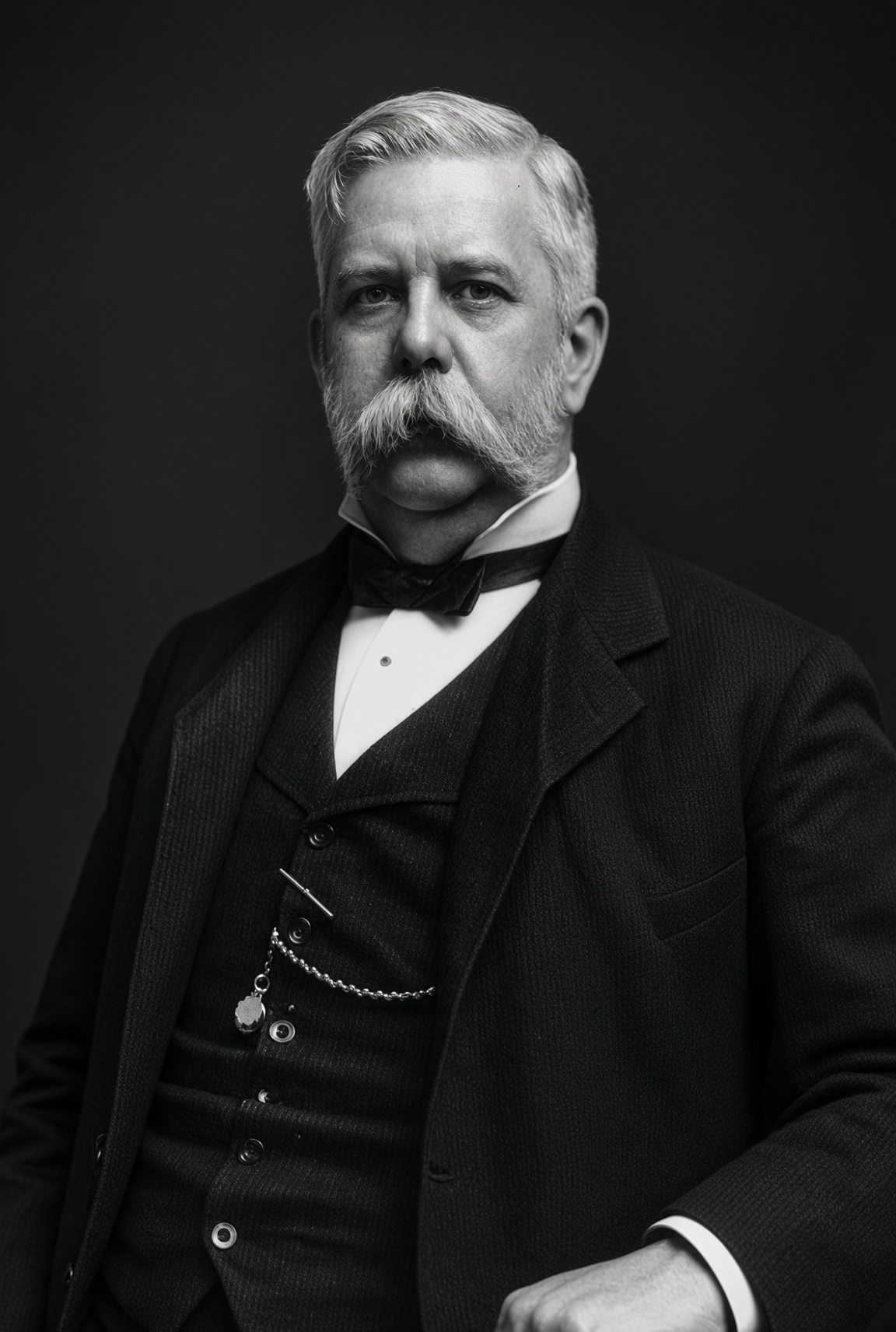
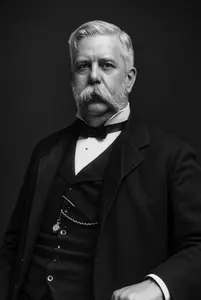
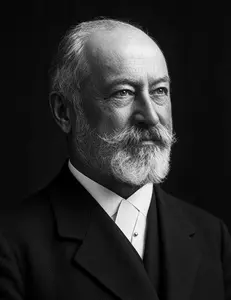
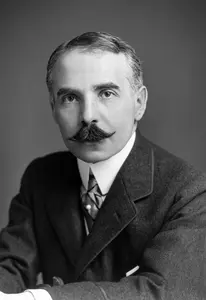
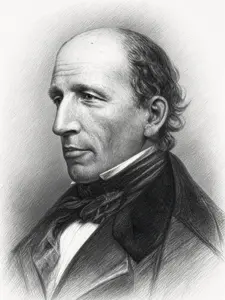
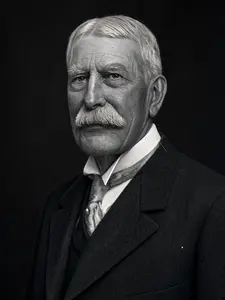
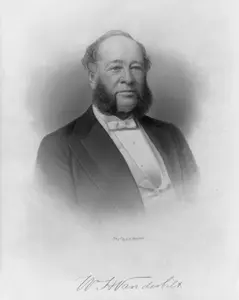
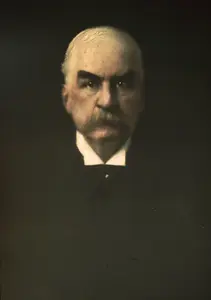
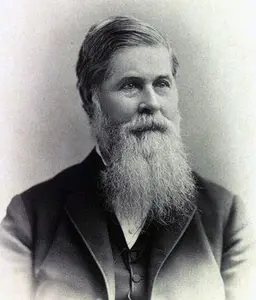
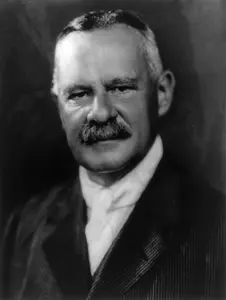
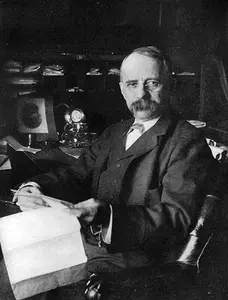
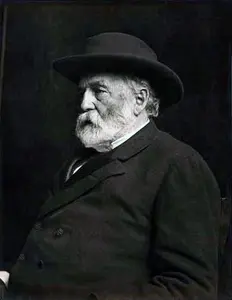
A portrait of George Westinghouse, circa 1906.
On this page: At a glance · Central Bridge · The brake · The companies · 1907 · New York
At a glance
| Item | Detail |
|---|---|
| Born | Central Bridge, New York. October 6, 1846, a Tuesday |
| Family | Marguerite Erskine Walker, August 8, 1867. One son, George Westinghouse, 3d |
| The brake | First patent April 13, 1869. Air Brake Company chartered September 28, 1869 |
| The companies | Electric Company chartered January 8, 1886. Niagara generators, October 1893 |
| 1907 | Receivers for the Electric, Machine, and Security Investment companies. The Air Brake Company had cash, and no debt |
| Died | March 12, 1914, a Thursday, in New York. Age 67. The next morning, the Portland paper says heart disease, late that day |
| The money | A shop day at 50 cents. A moderate fortune, in the 1921 life. One paper estimates more than $50,000,000 |
Central Bridge
George Westinghouse and Emaline Vedder were his parents. The father was born in 1809, the son of John Ferdinand Westinghouse of Pownal, Vermont, and he died in 1884. The mother was of Dutch and English stock, and kin to the painter Elihu Vedder. They had ten children. George was the eighth. In 1856 the father opened a shop at Schenectady for agricultural machinery, mill machinery, and small steam engines. The sign read G. Westinghouse & Co. The shop stood at the gate of the works that later belonged to the General Electric Company.
A shop book shows George at 50 cents a day in May 1860. He was thirteen and a half. By the spring of 1863 the rate was a dollar and twelve and a half cents. Prout reckons that after the boy turned thirteen he had about a year and a half of school and college. He spoke and wrote unusually good English. Three of the sons, John, Albert, and George, served in the Union army and navy and won commissions. Albert was captured at Gaines's Mill, held a short time in Libby Prison, exchanged, and commissioned a second lieutenant in the 2d New York Veteran Volunteer Cavalry. He was killed leading a charge late in December 1864. John served as an engineer officer in the navy, went back to the Schenectady shop after the war, and died when George was forty-four. The youngest brother, Henry Herman Westinghouse, later founded the Westinghouse Machine Company. George took that company over.
George was in the middle of his fifteenth year when the war began, and he ran away to enlist. His father brought him home. About two years later, when he was sixteen and a half, he was allowed to go. He served a little while in the infantry and the cavalry, and then as an engineer officer in the navy. He was mustered out in 1865, an officer, not yet nineteen. In September he entered Union College at Schenectady as a sophomore. Three months later he was back in the shop. His father could have sent him through college. He preferred the work. In an address a little more than two years before he died, he said that his early capital was the chance, when he was young, to work with all kinds of machinery, and then the discipline a soldier has to accept.
The first patent issued to him was dated October 31, 1865, for a rotary steam engine. October 31 was a Tuesday. Patents for a car replacer and a railroad frog followed in 1867, 1868, and 1869. The frog was made in Pittsburgh by Anderson & Cook. The little business, he thought, was enough to justify a marriage, and he was not yet twenty-one. On a railroad train he met Marguerite Erskine Walker. That evening he told his father and mother that he had met the woman he was going to marry. They were married on August 8, 1867. August 8 was a Thursday. They lived together nearly forty-seven years. Their only child was George Westinghouse, 3d. The first house was Solitude, in the Homewood district of Pittsburgh. A later house, at Lenox, Massachusetts, became the one his wife preferred.
The brake
The occurrence that led to the brake was a head-on collision in 1866 on the railroad between Schenectady and Troy. A buffer brake, and then a chain brake, came to nothing. A magazine article on the compressed-air drills at the Mont Cenis tunnel turned him to air as the way to carry the force from the locomotive to the cars. Ralph Baggaley of Pittsburgh agreed to pay for the first apparatus. On July 10, 1868, Westinghouse filed a caveat in the Patent Office. July 10 was a Friday. The affidavit with it had been sworn at Pittsburgh on June 24, before Alderman Nicholson. He described himself as George Westinghouse, Junior, of Schenectady.
The first air-brake patent is No. 88,929, issued April 13, 1869. April 13 was a Tuesday. He was twenty-two and a half, and still living at Schenectady. The patent was reissued on July 29, 1873, as No. 5504, and by then he lived in Pittsburgh. A suit against the Gardner and Ransom Air Brake Company was tried at Cleveland before Justice Swayne and Judge Walker. The decision, on June 16, 1875, a Wednesday, said he was not the first man to think of working railroad brakes by air. It said he was the first, so far as that record showed, to put an air brake into successful use.
The first train ran in September 1868. It was the Steubenville Accommodation of the Panhandle Railroad, fitted with apparatus he had designed and partly built with his own hands, and it left the Union Station in Pittsburgh. That brake came to be called the straight-air brake. In September 1869 a train of six cars on the Pennsylvania Railroad was placed at the disposal of the Association of Master Mechanics, then meeting in Pittsburgh. The train ran to Altoona, and the air brakes alone held the speed on the eastern slope of the Alleghenies. In November 1869 a train of ten cars was taken to Philadelphia for the directors of the Pennsylvania. Demonstrations at Chicago and at Indianapolis followed. Orders came from the Michigan Central, the Chicago & North Western, the Union Pacific, the Old Colony, and the Boston & Providence.
The Westinghouse Air Brake Company, a Pennsylvania corporation, was chartered on September 28, 1869. September 28 was a Tuesday. It began work early in 1870, in leased rooms at the corner of Liberty Avenue and 25th Street in Pittsburgh. By April 1, 1874, five and a half years after the first trial, the straight-air brake was on 2,281 locomotives and 7,254 cars. Those counts include 148 locomotives and 724 cars shipped abroad. In 1876 the United States had 15,569 locomotives and 14,055 passenger cars. The straight-air brake was on 2,645 of the locomotives and 8,508 of the passenger cars.
He went to Europe in July 1871 to introduce the brake, and he stayed until August 1872. Mr. Dredge, an editor of Engineering, set down two things a continuous brake had to do. If part of a train broke loose, the brakes had to come on by themselves, and a failure on one car must not stop the brakes on the rest. Patents 124,404 and 124,405, both filed on December 6, 1871, were issued on March 5, 1872. March 5 was a Tuesday. They are the first public account of that study. The plain automatic brake of 1874 followed. His own work on the brake, Prout says, ended with the quick-action brake of 1887. He was still president of the Air Brake Company when a later freight valve was developed, and he was not in the drafting room for that one.
On June 1, 1881, he announced the Saturday half-holiday in the Air Brake works. June 1 was a Wednesday. Prout calls him the pioneer of that half-holiday in the Pittsburgh district. In 1889 the works moved from Allegheny, now part of Pittsburgh, to a site about fourteen miles east, in the Turtle Creek valley, on the Pennsylvania Railroad. The town of Wilmerding was built around the shops.
The companies
In 1880 he took up signaling and interlocking, common on the British railways and almost unknown in the United States. The Union Switch and Signal Company is the company he organized for that work. He carried it on his own credit through twenty lean years. The first power interlocking put into service in America was installed at East St. Louis by that company in 1882, under patents of Guerber and Tilden that the company had bought. The Westinghouse Machine Company was organized in 1880. About 1895 the steam turbine became an absorbing interest, and it stayed one until he died. Building turbines became much the largest part of the work of the Machine Company. About 1909 he took up a reduction gear invented by Admiral George W. Melville and John H. MacAlpine.
The electric company began on paper on December 23, 1885. December 23 was a Wednesday. He and his brother H. H. Westinghouse, with John Caldwell, Frank L. Pope, John Dalzell, John R. McGinley, C. H. Jackson, and Robert Pitcairn, signed articles for the Westinghouse Electric Company. The capital was to be $1,000,000. The charter was granted on January 8, 1886, a Friday. The company was organized on March 8, 1886, a Monday, with Westinghouse as president. An experimental alternating-current plant at Great Barrington, Massachusetts, began running on March 16, 1886. March 16 was a Tuesday. Prout calls it the first operating alternating-current transformer installation in the United States. The first commercial plant went into service at Buffalo on November 30, 1886, also a Tuesday. In 1893 the company took the contract to light the Columbian Exposition at Chicago. In October 1893 it took the contract for the first electric generators at Niagara Falls. That contract, Prout writes, settled the question of distributing power by alternating current.
He had no active interest in natural gas until late in 1883. A contract to drill a well in the grounds of Solitude was made on December 29, 1883. December 29 was a Saturday. A small vein showed about the end of February. At 1,500 feet there was a better one. Deeper still, the gas blew the tools out. Once the gas was lit, the flame stood about a hundred feet high for weeks. The well was capped, and he went into the business. By midsummer of 1884 the Philadelphia Company was under way, on an old Pennsylvania charter of about 1870 that he and his officers had found and bought. He took out thirty-eight gas patents, twenty-eight of them applied for in 1884 and 1885. In 1898 the company sold 11,750,000,000 cubic feet of gas. It had 395 producing wells, 962 miles of pipe, and 114,471 acres of gas and oil land. In December 1899 he resigned as president and as a director.
Before he was thirty-five he had organized companies and opened shops in England, France, and Russia. The Westinghouse Brake Company, Limited, was chartered in England late in 1881. Prout counts, for the years from 1893 to 1907, about 50,000 people employed in production and distribution, in shops scattered from San Francisco to St. Petersburg.
1907
In June 1905 Thomas F. Ryan bought the controlling stock of the Equitable Life Assurance Society and put the votes into the hands of three trustees. The letter, dated June 9, 1905, a Friday, went to Grover Cleveland, to Morgan J. O'Brien, and to George Westinghouse. Ryan paid $2,500,000 for stock whose par value was a little over $50,000. Prout says Westinghouse had no personal tie to Ryan, and that he was chosen for his reputation.
The panic of 1907 called the loans. He had no group of bankers behind the paper. Three companies went into receivership: the Electric Company, the Machine Company, and the Security Investment Company. The Air Brake Company and the Union Switch and Signal Company stayed out. Those two had no debts, and they had ample cash. The Electric Company was much the largest of the three that failed. Its funded and floating debt was $43,000,000. With the outstanding stock, the liabilities were over $70,000,000. It took fourteen months to bring the Electric Company out. Other plans had failed. The plan that worked was called the Merchandise Creditors' plan. The merchandise creditors took stock for their claims. Arthur S. Dewing, as Prout quotes him, says the debt was cut from $43,000,000 to $29,000,000, the interest from $2,600,000 to $1,600,000, and the capital stock raised from $28,000,000 to $41,000,000.
One piece of the plan was a subscription of $6,000,000 in new stock, for working capital. Westinghouse subscribed $1,500,000. More than 5,000 employees subscribed $611,250. He remained president, with his powers limited, and more than half the new board represented the bank and merchandise creditors. In 1911 he gave up the effort to get the old control back. His official relations with the Electric Company ended. The name stayed. Prout remembers a night when the works at East Pittsburgh were lit, and the sign read Westinghouse Electric & Manufacturing Company. Westinghouse turned his face to the hills and did not speak. On another day, told that people said he never knew when he was beaten, he answered that he would know if he were beaten, and that he never was.
New York
Late in 1913 the organic disease of the heart set in. In that illness he still designed a wheel chair to be run by a small electric motor. On March 12, 1914, he died. The Morning Oregonian of March 13, a Friday, reported the death as late on the 12th, at his residence in New York, of heart disease, a few hours after the illness became public. From October 6, 1846, he was sixty-seven. The paper said he was in his sixty-eighth year. The Asheville Gazette-News the same day reported that his will continued his interests under a trusteeship, and that his death would not change the policy of the industries. His wife survived him three months and died in June 1914. They are buried in the National Cemetery at Arlington.
The 50 cents was a day in the Schenectady shop in May 1860. The $1,000,000 was the capital named for the Electric Company in 1885. The $43,000,000 and the sum over $70,000,000 were the debt and the liabilities of the Electric Company in the receivership. The $1,500,000 was his subscription to the new stock. The $200,000,000 and the 50,000 people were the account of the companies in the Morning Oregonian, printed the morning after he died. The estimate of more than $50,000,000 was the Asheville Gazette-News the same day, and the paper called it his own wealth. Prout, writing in 1921, says the enterprises Westinghouse founded were then using not far from a quarter of a billion dollars of capital, and that Westinghouse himself died with a moderate fortune. He never speculated. He made almost no investments except in the securities of his own companies.
Union College made him a Doctor of Philosophy. The Koenigliche Technische Hochschule at Berlin made him a Doctor of Engineering. He had the Legion of Honor, the Order of the Crown of Italy, and the Order of Leopold. He received the Grashof medal and the John Fritz medal, and the Edison medal of the American Institute of Electrical Engineers. He served a term as president of the American Society of Mechanical Engineers.
Sources
- Henry G. Prout, A Life of George Westinghouse, New York, The American Society of Mechanical Engineers, 1921. Born at Central Bridge, New York, October 6, 1846. Parents George Westinghouse, born 1809, died 1884, and Emaline Vedder. Ten children, the eighth. The Schenectady shop, 1856. Fifty cents a day in May 1860. Civil War service, and three months at Union College in the fall of 1865. First patent, October 31, 1865, a rotary steam engine. Marriage to Marguerite Erskine Walker, August 8, 1867. One son, George Westinghouse, 3d. Solitude, in the Homewood district of Pittsburgh. First air-brake patent, No. 88,929, April 13, 1869. The Steubenville Accommodation, September 1868. Air Brake Company chartered September 28, 1869. By April 1, 1874, 2,281 locomotives and 7,254 cars. Patents 124,404 and 124,405, March 5, 1872. Wilmerding, 1889. Electric Company, charter January 8, 1886, capital $1,000,000. Great Barrington, March 16, 1886. Buffalo, November 30, 1886. Niagara, October 1893. Philadelphia Company, resignation December 1899. Panic of 1907: Electric, Machine, and Security Investment companies. Debt $43,000,000. Liabilities over $70,000,000. His subscription $1,500,000. Official relations with the Electric Company ended in 1911. Died March 12, 1914, of an organic disease of the heart. A moderate fortune. Buried at Arlington. His wife died in June 1914.
- Morning Oregonian, Portland, March 13, 1914. Died late on March 12, at his residence in New York, of heart disease, in his sixty-eighth year. The plants employed some 50,000 persons. The companies had a capital aggregating $200,000,000. The reduction gear is credited to Admiral George W. Melville and John H. MacAlpine.
- Asheville Gazette-News, Asheville, North Carolina, March 13, 1914. Died in New York the day before, of heart disease. The will continued his interests under a trusteeship. No change of policy in the industries. Individual wealth estimated at more than $50,000,000. In his sixty-eighth year.
Recent Articles


-
Patrick B. McGinnis: Net Worth, Railroads, Biography
Nov 22, 26 12:04 AM
 Patrick Benedict McGinnis, born May 23, 1904, in Palmyra, New York, chaired the Norfolk Southern and the Central of Georgia and presided over the New Haven and the Boston and Maine.
-
George Westinghouse: Net Worth, Air Brake, Biography
Nov 21, 26 11:35 PM
 George Westinghouse was born at Central Bridge on October 6, 1846. He died in New York on March 12, 1914. He built the air brake the railroads came to use.
-
NYC's "Xplorer" (Train): Concept, Consist, Photos
Nov 21, 26 11:31 PM
 New York Central Xplorer, the Ohio Xplorer, Cleveland to Cincinnati in 1956. Pullman-Standard Train X cars, Baldwin-Lima-Hamilton locomotive 20, trains 423 and 424, timetable, consist, and photographs…
-
Frisco Diesel Roster (All-Time)
Nov 21, 26 10:27 PM
 St. Louis-San Francisco diesel locomotives, each frame once. From VO-1000 No. 200 in 1941 through the GP40-2s and SD38-2s of 1979.
-
Frisco Steam Roster (Built Since 1900)
Nov 21, 26 10:18 PM
 St. Louis-San Francisco steam locomotives built since 1900. Mikados, Mountains, and twenty-five 4-8-4s.
-
Robert R. Young: Net Worth, Railroads, Biography
Nov 21, 26 09:47 PM
 Robert Ralph Young, born February 14, 1897, in Canadian, Texas, chaired the Chesapeake and Ohio and, in 1954, the New York Central. He died on January 25, 1958, in Palm Beach.
-
St. Louis-San Francisco Railway (Frisco): Map, Rosters, History
Nov 21, 26 06:37 PM
 History of the St. Louis-San Francisco Railway, the Frisco. The Pacific Railroad, the coonskin, Yoakum, Pensacola, and the Burlington Northern merger of November 21, 1980. Steam and diesel rosters are…
-
Kuhn, Loeb and Company: Net Worth, Railroads, History
Nov 21, 26 01:34 PM
 Kuhn, Loeb and Company was the New York banking house in E. H. Harriman's circle. Abraham Kuhn and Solomon Loeb opened the banking partnership in 1867. Jacob H. Schiff joined on January 1, 1875.
-
Otto Kahn: Net Worth, Railroads, Biography
Nov 21, 26 01:22 PM
 Otto Hermann Kahn was born in Mannheim on February 21, 1867. He died in New York on March 29, 1934. He was the Kuhn, Loeb partner in E. H. Harriman's railroad work.
-
George Pullman: Net Worth, Palace Cars, Biography
Nov 21, 26 11:01 AM
 George M. Pullman was born at Brocton on March 3, 1831. He died in Chicago on October 19, 1897. He built the palace-car company that owned the sleeping cars.
-
Arthur E. Stilwell: Net Worth, Railroads, Biography
Nov 21, 26 12:33 AM
Arthur E. Stilwell was born in Rochester on October 21, 1859. He died in New York on September 26, 1928. He built the road to Port Arthur and the Kansas City, Mexico and Orient. -
Frederick Weyerhaeuser: Net Worth, Railroads, Biography
Nov 21, 26 12:22 AM
 Frederick Weyerhaeuser was born at Niedersaulheim on November 21, 1834. He died at Pasadena on April 4, 1914. He was a lumberman and a railroad director.
-
John Murray Forbes: Net Worth, CB&Q, Biography
Nov 21, 26 12:13 AM
 John Murray Forbes was born at Bordeaux on February 23, 1813. He died at Milton on October 12, 1898. He was chairman of the Chicago, Burlington and Quincy.
-
Henry B. Plant: Net Worth, Plant System, Biography
Nov 20, 26 10:27 PM
 Henry Bradley Plant was born at Branford, Connecticut, on October 27, 1819. He died at his home on Fifth Avenue on June 23, 1899. He was president of the Plant system and of the Southern Express Compa…
-
Henry Flagler: Net Worth, Florida East Coast, Biography
Nov 20, 26 10:00 PM
Henry Flagler was born at Canandaigua, New York. He died at Whitehall on May 20, 1913, at 83, and was buried at Memorial Presbyterian Church in St. Augustine. -
William Rockefeller: Net Worth, Railroads, Biography
Nov 20, 26 11:50 AM
 William Rockefeller was born in Richford, New York, on May 31, 1841. The Associated Press dates his death June 24, 1922, at Rockwood Hall. Redmond dates it June 23, at Pocantico Hills.
-
William H. Vanderbilt: Net Worth, Railroads, Biography
Nov 20, 26 10:08 AM
 William H. Vanderbilt was born in New Brunswick, New Jersey, on May 8, 1821. He died in New York City on December 8, 1885. His will names two blocks of $40,000,000 and states no total.
-
J. Edgar Thomson: Net Worth, Pennsylvania Railroad, Biography
Nov 20, 26 12:25 AM
 J. Edgar Thomson was born in Springfield, Delaware County, Pennsylvania, on February 10, 1808. He died in Philadelphia on May 27, 1874. No opened inventory states a total.
-
Thomas A. Scott: Net Worth, Railroads, Biography
Nov 20, 26 12:06 AM
Thomas A. Scott was born at Loudon, Pennsylvania, on December 28. The year is 1823 in one biography and 1824 on the funeral plate. He died near Darby on May 21, 1881. No opened inventory states a tota… -
Henry Villard: Net Worth, Railroads, Biography
Nov 19, 26 11:41 PM
 Henry Villard was born Ferdinand Heinrich Gustav Hilgard at Speyer on April 10, 1835, and died early on November 12, 1900, at Thorwood Park, near Dobbs Ferry. He was 65. A court recital put the person…
-
J.P. Morgan: Net Worth, Railroads, Biography
Nov 19, 26 07:03 PM
 John Pierpont Morgan was born in Hartford on April 17, 1837, and died in Rome on March 31, 1913, at 12:05 p.m. Rome time. He was 75. A 1916 New York appraisal put the gross estate at $78,149,024, excl…
-
Daniel Willard: Net Worth, Baltimore and Ohio, Biography
Nov 19, 26 06:51 PM
 Daniel Willard was born on January 28, 1861, and died on July 6, 1942. He was 81. He was president of the Baltimore and Ohio from January 15, 1910 until 1941. No opened record states a fortune. Time p…
-
Cyrus K. Holliday: Net Worth, Santa Fe, Biography
Nov 19, 26 06:03 PM
 Cyrus Kurtz Holliday was born April 3, 1826, and died in Topeka on March 29, 1900. He was 73. He founded Topeka, wrote the Atchison and Topeka charter, and was the railroad's first president. He l…
-
N&W 2-6-6-4 Locomotives (Class A): Specs, Roster, History
Nov 19, 26 05:39 PM
 Norfolk & Western Class A. Forty-three simple 2-6-6-4s, 1200 to 1242, built at Roanoke from 1936 to 1950 for time freight and used on passenger trains when assigned. Diagram specs, the 114,000-pou…
-
Jay Cooke: Net Worth, Civil War, Biography
Nov 19, 26 05:05 PM
 Jay Cooke was born at Sandusky on August 10, 1821, and died the night of February 16, 1905, at Ogontz. He was 83. Jay Cooke and Company opened January 1, 1861, and suspended September 18, 1873. He sol…
-
Daniel Drew: Net Worth, Erie Railroad, Biography
Nov 19, 26 04:44 PM
 Daniel Drew was born at Carmel on July 29, 1797, and died the night of September 18, 1879, age 82. He was Erie treasurer, not president. The settlement of July 2, 1868, put him out of that office.
-
James Fisk Jr.: Net Worth, Robber Baron, Biography
Nov 19, 26 02:47 PM
 James Fisk Jr. was born on April 1, 1835, and died the morning of January 7, 1872, at the Grand Central Hotel. He was 36. Edward S. Stokes shot him the afternoon before. He was an Erie director from O…
-
Chehalis-Centralia Polar Express Seats Are Sold Out
Nov 19, 26 02:43 PM
Chehalis-Centralia marks its Polar Express departures sold out. Diesel No. 6 is pulling while steam No. 15 is repaired. The business-car page still prints $260, $390, and $520. -
Cumbres & Toltec Lists Santa's Holiday Express
Nov 19, 26 02:38 PM
 Cumbres & Toltec lists Santa's Holiday Express for December 5-6 in Chama and December 12-13 in Antonito. Coach is $25. The Chama trip will not run to Dalton.
-
Florida Railroad Museum Lists the North Pole Express
Nov 19, 26 02:28 PM
 The Florida Railroad Museum lists the North Pole Express from November 27 through December 22, 2026. The trip is 3.75 hours. The museum will be closed November 21 and 22.
-
George Jay Gould: Net Worth, Railroads, Biography
Nov 19, 26 02:18 PM
 George Jay Gould was born in New York on February 6, 1864, and died on May 16, 1923, at his villa in France. The company pages date his father's portfolio to 1896. The Panic of 1907 broke the tran…
-
Jay Gould: Net Worth, Railroads, Biography
Nov 19, 26 01:43 PM
 Jason Gould, called Jay, was born at Roxbury on May 27, 1836, and died the morning of December 2, 1892. Erie president from October 1868 until 1872. From 1879 the Missouri Pacific was the center of th…
-
Mark Hopkins Jr.: Net Worth, Railroads, Biography
Nov 19, 26 11:53 AM
 Mark Hopkins Jr., born at Henderson on September 1, 1813, died at Fort Yuma on the night of March 29, 1878. Treasurer of the Central Pacific from June 28, 1861, until he died in that office. The 1881…
-
Leland Stanford: Net Worth, Railroads, Biography
Nov 19, 26 12:36 AM
 Amasa Leland Stanford, Watervliet 1824 to the Palo Alto house in June 1893, president of the Central Pacific and, until February 28, 1890, of the Southern Pacific. The 1893 inventory was about 17 mill…
-
Charles Crocker (Railroads): Robber Baron, Net Worth, Biography
Nov 19, 26 12:23 AM
 Charles Crocker, Troy 1822 to August 14, 1888, built the Central Pacific and drove the Siskiyou spike. He did not die president of the Southern Pacific. The opened biographies state no estate total.
-
Edward H. Harriman (Railroad): Facts, Robber Baron, Biography
Nov 19, 26 12:18 AM
 Edward Henry Harriman, February 25, 1848, to September 9, 1909, president of the Union Pacific from 1904 until he died in that office. The Courier-Journal put the known estate on the public record at…
-
Collis P. Huntington: Net Worth, Railroads, Biography
Nov 18, 26 11:26 PM
 Collis Potter Huntington, 1821 to 1900, vice president of the Central Pacific and president of the Southern Pacific from February 28, 1890, until he died in that office. The will stated no total. The…
-
Detroit Terminal Railroad: History, Roster
Nov 18, 26 10:47 PM
 The Detroit Terminal Railroad was a Detroit and Highland Park belt line, incorporated December 8, 1905. The November 1944 Guide listing gives 17.994 miles of first main track.
-
James J. Hill: Net Worth, Railroads, Robber Baron, Facts
Nov 18, 26 09:19 PM
 James J. Hill, 1838 to 1916, built the Great Northern from the St. Paul and Pacific to Puget Sound and left the chair in 1912. The fortune was estimated at $63 million. He left no will.
-
Cornelius Vanderbilt: Biography, Facts, Net Worth
Nov 18, 26 05:21 PM
 Cornelius Vanderbilt, 1794 to 1877, assembled the New York Central and Hudson River from the Harlem, the Hudson River Railroad, and the original New York Central, and died in office. The estate was ab…
-
Pacific Great Eastern Railway: All-Time Diesel Roster
Nov 18, 26 12:24 PM
 All-time diesel roster of the Pacific Great Eastern, the British Columbia Railway, and BC Rail. Classes, road numbers, and builder data from Paul Crozier Smith, Canadian Rail no. 547 (2012).
-
Pacific Great Eastern Railway: Map, History, Roster
Nov 18, 26 10:22 AM
 The Pacific Great Eastern, incorporated February 27, 1912, became the British Columbia Railway Company on March 30, 1972. On the October 26, 1969 Official Guide, 861.9 miles were under operation. Cana…
-
Northern Alberta Railways: Map, History, Timetables
Nov 17, 26 11:52 PM
 Northern Alberta Railways, reporting mark NAR, was incorporated June 14, 1929, and owned jointly by Canadian National and Canadian Pacific. On the October 27, 1968 freight timetable, Dawson Creek is 4…
-
Yakima Valley Transportation: History, Timetable, Photos
Nov 17, 26 10:51 PM
 Yakima Valley Transportation opened Christmas Day, 1907. Union Pacific bought it June 9, 1909. Last city car February 1, 1947. Last freight November 18, 1985. Line car A and steeplecab 298 stayed in Y…
-
"20th Century Limited" (Train): Map, Consist, Schedule, Interior
Nov 17, 26 05:03 PM
 The 20th Century Limited was the flagship passenger train of the NYC, operating until 1967 (just prior to the Penn Central merger).
-
Western Pacific Diesel Roster (All-Time)
Nov 17, 26 04:52 PM
 Western Pacific all-time diesel roster. Why the switchers, covered wagons, road switchers, and General Electric units were bought, where they worked, and what Union Pacific inherited on December 22, 1…
-
Western Pacific Steam Roster (Built Since 1900)
Nov 17, 26 04:49 PM
 Western Pacific steam locomotives built since 1900. Drury quantity column 201. Thirteen rows. Mikado 329 made the last regular steam run in June 1953.
-
Western Maryland Scenic Lists Polar Express Fares
Nov 17, 26 03:30 PM
 Western Maryland Scenic lists Polar Express tickets from November 21 through December 24, 2026. Coach is $40, plus a $5 heritage fee. Excursions are diesel while No. 1309 is inspected.
-
Western Pacific Railroad: Map, History, Logo, Rosters
Nov 17, 26 11:12 AM
 The Western Pacific, organized in San Francisco on March 3, 1903, the Feather River Route to Salt Lake City, and the Union Pacific acquisition completed on December 22, 1982.
-
Spokane, Portland & Seattle Diesel Roster (All-Time)
Nov 17, 26 10:53 AM
Spokane, Portland and Seattle all-time diesel roster. Why the Alcos, Baldwins, and Electro-Motive units were bought, where they worked, and which numbers Burlington Northern inherited.