Frederick Weyerhaeuser: Net Worth, Railroads, Biography
Published: November 21, 2026
By: Adam Burns
Frederick Weyerhaeuser was born at Niedersaulheim, in the valley of the Rhine near Mainz, on November 21, 1834. November 21 was a Friday. He made his life in lumber. A sketch published in 1906 lists him as a director of the Great Northern and of the Chicago Great Western. The timber company that carries his name was organized in 1900, and it bought land-grant timber of the Northern Pacific.
The Hardwood Record, in its issue of April 10, 1914, says he died of pneumonia at Pasadena, California, on April 4. April 4 was a Saturday. He was seventy-nine. The body was put on a train and sent to Rock Island, Illinois, his old home, for burial.
The same paper estimated his wealth at from $1,000,000,000 to $1,500,000,000, and said no careful appraisal had been made.
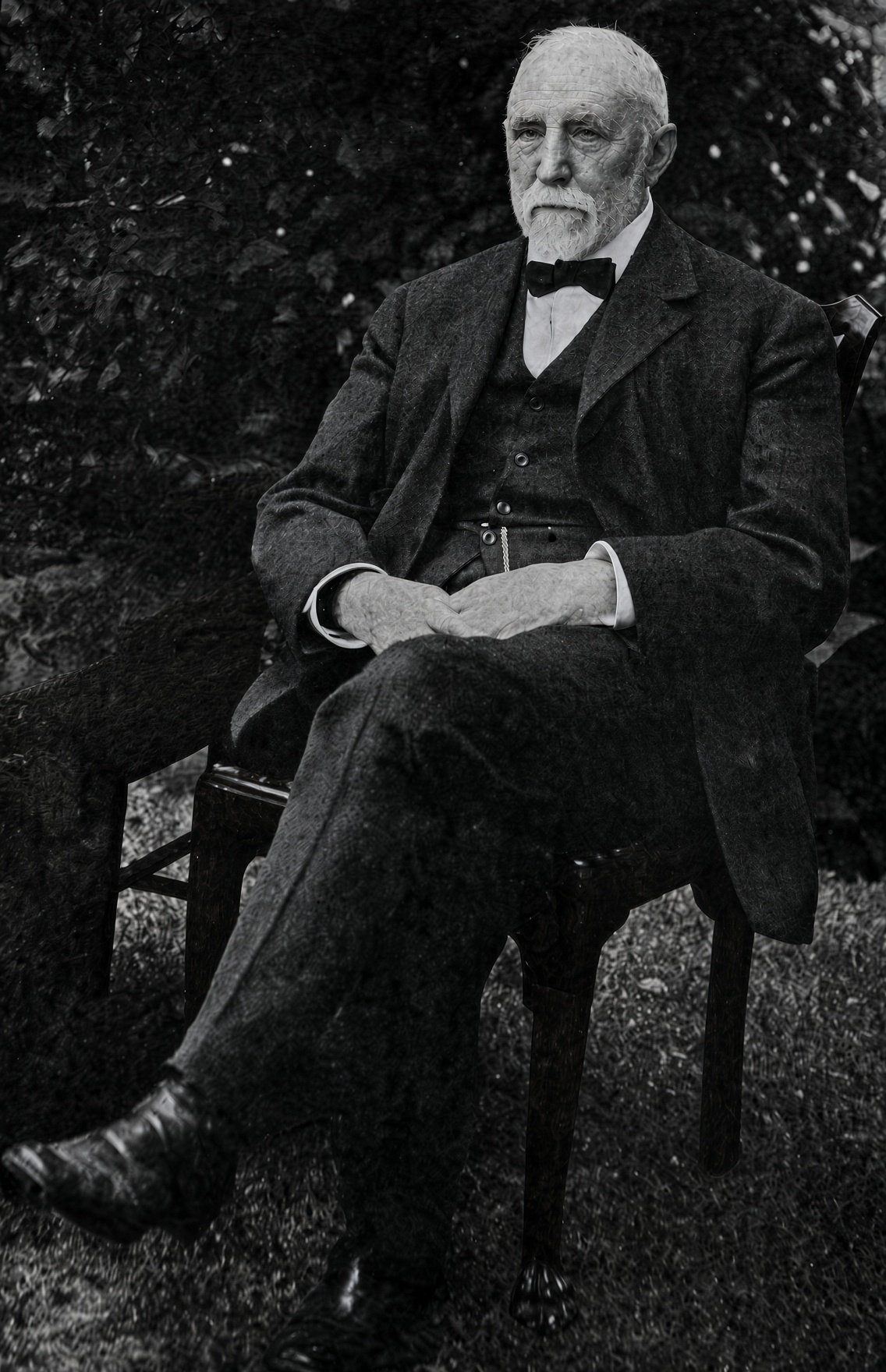
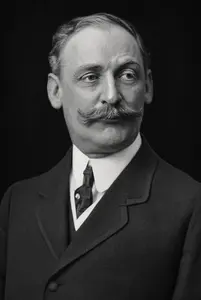
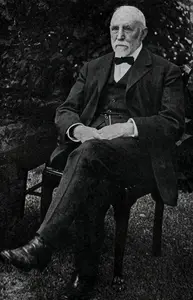
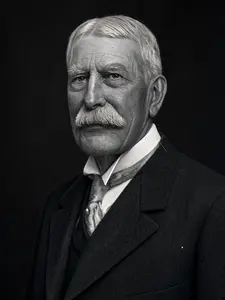
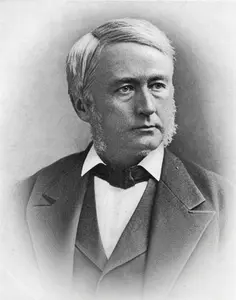
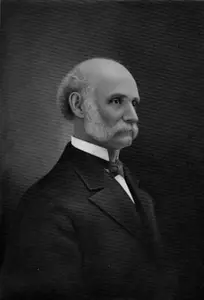
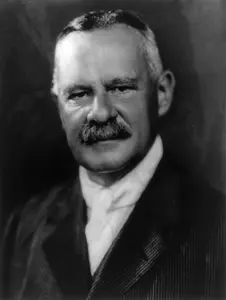
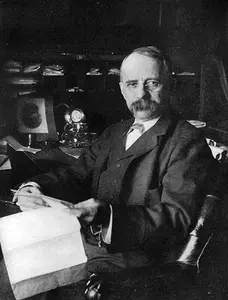
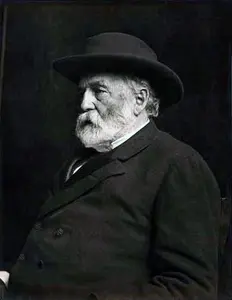
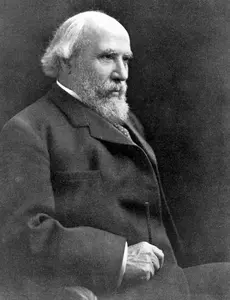
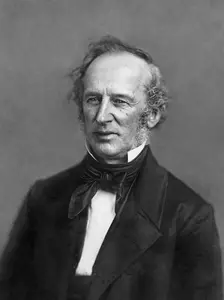
Frederick Weyerhaeuser portrait later in life.
On this page: At a glance · Niedersaulheim · The river · The Pacific · Pasadena
At a glance
| Item | Detail |
|---|---|
| Born | Niedersaulheim, near Mainz. November 21, 1834. Friday |
| Father | John Weyerhaeuser. Fifteen acres and a vineyard of three. Died October 6, 1846, aged fifty-two. Frederick was about twelve |
| To America | New York, July 1852. Northeast, near Erie. Rock Island, March 1856 |
| Family | Sarah Elizabeth Bloedel, October 11, 1857. Seven children |
| The river | President of the Mississippi River Logging Company from September 5, 1872. He still held that office in 1906 |
| The roads | Director, in the 1906 sketch, of the Great Northern and the Chicago Great Western. Northern Pacific land-grant timber for the company organized in 1900 |
| Died | April 4, 1914, a Saturday, at Pasadena. Pneumonia. Age 79. The body was sent to Rock Island for burial |
| The money | The April 10 paper gave a range in the billions, and said no appraisal had been made. Clapp said those figures were the partners, counted as one man |
Niedersaulheim
John Weyerhaeuser was one of the well-to-do men of the village. He owned fifteen acres of farm land and a vineyard of three acres, and he worked them with one assistant. He died on October 6, 1846, aged fifty-two. Frederick was about twelve. The boy was a child of his father's second marriage, one of eleven children. Four girls and he lived to grow up. At six he was sent to the Protestant school, and on Wednesday and Saturday afternoons the lesson was the Bible and the catechism. At eight he took his part on the farm. After his father died, the school stopped. In 1848 he was confirmed in the German Reformed Church.
A second sister and an aunt had gone to western Pennsylvania in 1849. Their letters brought the rest of the family in 1852. They landed in New York in July and went on to Northeast, about fifteen miles from Erie. Frederick tried brewing with a relative. He stayed two years, at $4 a month the first year and $9 the second, and he quit when he saw how many brewers became their own best customers. He farmed for about a year, at $13 a month.
When he came of age he had his share of the old farm, which had been sold. He reached Rock Island, Illinois, in March 1856. He found work with a construction company that was building the Rock Island & Peoria Railway, later the Chicago, Rock Island & Pacific. Soon after, he was night fireman at the sawmill of Mead, Smith & Marsh, in Rock Island. Two days later the night shift was dropped. They kept him on as tallyman, loading lumber onto trucks and keeping the count of what one rotary saw and one mulay saw cut in a day. His first sale was at noon. He was eating his lunch when farmers came in for lumber. He sold it, and took $60 in gold. Marsh, when he returned, approved the sale, and in time put the young man in charge of the yard.
Sarah Elizabeth Bloedel had been born in the same village. She came to the United States as a child and grew up at Erie. Early in 1857 she went to Rock Island to stay with her sister, Mrs. F. C. A. Denkmann. On October 11 they were married. October 11 was a Sunday. They lived in a small two-story frame house he had built. Seven children were born. By 1906 all seven were grown and married. John P. was the oldest. The others were Elise, Margaret, Apollonia, Charles A., Rudolph M., and Frederick E.
In December 1857 the firm opened a yard at Coal Valley, where the railroad had just arrived, and sent him there. The yard paid. The firm itself was then thrown into trouble by the man who had agreed to supply the mill with logs. At the end of 1858 Weyerhaeuser stopped being an employee. John K. James, a relative of Mead, told him to buy what he could of the firm's assets, and to let the price stand as a credit on the account James held against the firm. The country was in a panic. Money was scarce, and much of the trade was barter. He ran the idle mill at Rock Island, bought a raft of logs at Davenport, and laid the lumber down at Coal Valley for about $8 a thousand feet. He handled grain, and he put up buildings with lumber of his own. In the last nine months of 1859 he cleared $3,000. The next year his profit was $5,000.
When the old firm was wound up, the Rock Island mill was offered for sale. He took his brother-in-law, F. C. A. Denkmann, then keeping a grocery in Rock Island, as partner. They bought the mill for $3,000. $500 was paid in cash. The rest was notes at 10 percent, due in five years. The mill, as they took it in 1860, could cut 3,000,000 feet a year. In two years it was clear of the debt. A few years more and the cut was 10,000,000 feet a year. In September 1871 he put another man at Coal Valley and moved back to Rock Island. Denkmann ran the mills. Weyerhaeuser sold the lumber and went after the logs.
The river
For several years they bought logs from the men who drove the river. In 1868 Weyerhaeuser & Denkmann began to buy pine on the Chippewa and its tributaries, and they put the profits of the Rock Island mill into that timber. Other owners did the same. When the ice went out, the Chippewa carried the winter's cut of a hundred camps in one tangled drive. No owner could pick his own logs out of it. On December 28, 1870, the mill men met at the Briggs House in Chicago. They agreed to buy the Chippewa logs together, drive them into Beef Slough near the mouth of the river, sort them there, and raft each owner's share on down the Mississippi. Out of that meeting came the Mississippi River Logging Company. A few days later the first officers were chosen. L. Schricker was president, W. J. Young vice president, and W. H. Laird secretary and treasurer. The executive committee was W. G. Clark, F. Weyerhaeuser, and J. Fleming.
On September 5, 1872, Weyerhaeuser was elected president. September 5 was a Thursday. The company bought and sold pine land, logged, drove the Chippewa, and brailed logs at Beef Slough and at West Newton, Minnesota. Logs from its own land went to the members in proportion to the stock each held. In 1906 he still held the presidency. A friend had once objected to a price he was willing to pay for timber. He answered, “Whenever I buy timber I make a profit; whenever I do not buy I miss an opportunity.”
Clapp, who knew him from the early eighties, said he never kept a majority of the interest or of the vote in any of the companies. The associates came to say that whatever Weyerhaeuser said went, and from that saying grew the notion that he could force them. Clapp said the notion was wrong. No purchase and no change of method went through until the men in it had agreed. No association he belonged to, Clapp said, ever issued a dollar of watered stock.
In 1890 the Pine Tree Lumber Company was organized at Little Falls, Minnesota, and a large block of timber in that state was bought from the Northern Pacific. At Cloquet, the first foothold was the Cloquet Lumber Company in 1884. The mills there were tied to the Mesabe Southern and the Duluth & Northeastern. The Nebagamon Lumber Company, organized in June 1898, ran the Hawthorne, Nebagamon & Superior. In 1891 he moved to St. Paul. Clapp said that by then the business was already built, and that Weyerhaeuser was at the height of his power as an organizer of men.
The Pacific
In 1899, urged by prominent railroad men, he went to the Pacific Coast to look at the timber. He was impressed by what he saw. A large acreage of Northern Pacific land-grant timber was bought for the Weyerhaeuser Timber Company, which was organized in 1900. A report of the Bureau of Corporations put that 1900 block at 900,000 acres, at $6 an acre, and said the company took the best of the railway's timber land in western Washington.
The 1906 sketch, the same one that lists the Great Northern and Chicago Great Western directorships, says he never went into a purchase alone. If the timber was bought on reasonable terms, the associates had a share. In 1901 he was traveling in Europe. The southern pine, the sketch says, was begun that year by the younger men. It says the work of the last decade was not his alone. The four sons were already in the business with him.
Pasadena
The April 10 paper says he had taken a severe cold. The children were sent for, and he seemed to be recovering, and then he relapsed. He died of pneumonia at Pasadena on April 4, 1914. John, Frederick, Rudolph, and Charles, and Margaret Jewett, Mrs. W. B. Hill, and Mrs. S. S. Davis, had reached the bedside. The paper says his wife had died two years before. The body went to Rock Island for burial. Clapp's memorial, read on April 13, gives the birth as November 21, 1834, and the death as April 4, 1914.
Until an illness cut into his strength, Clapp said, the summers were spent going from mill to mill, and the winters in the camps. Weyerhaeuser used to say that the months in the woods, in the same quarters and at the same table as the men, were the part of the year he liked best, and that those months were his vacation. The $3,000 of 1859 was one year's profit at Coal Valley. The other $3,000 was the price of the Rock Island mill. The $6 an acre was the Bureau's price for the timber company's 1900 purchase. The April 10 estimate, a billion dollars to a billion and a half, was a guess the paper itself said had not been appraised. Clapp, three days later, said the printed sums were the partners' property, laid to one name.
Sources
- American Lumbermen, second series, Chicago, The American Lumberman, 1906. Born at Niedersaulheim. Father John Weyerhaeuser, died October 6, 1846, aged fifty-two. To Northeast in 1852. Rock Island, March 1856. The Rock Island & Peoria. Mead, Smith & Marsh, and the sale of $60. Marriage to Sarah Elizabeth Bloedel, October 11, 1857. The seven children. Coal Valley. The profits of 1859 and the next year. The mill of 1860, bought with F. C. A. Denkmann for $3,000. Chippewa timber from 1868. The Briggs House meeting, December 28, 1870. President of the Mississippi River Logging Company, September 5, 1872, and still in that office in 1906. The sentence on buying timber. Pine Tree Lumber Company, 1890, and a block of Minnesota timber from the Northern Pacific. Cloquet, the Mesabe Southern, and the Duluth & Northeastern. Nebagamon, June 1898, and the Hawthorne, Nebagamon & Superior. The 1899 trip to the Pacific Coast. Northern Pacific land-grant timber for the Weyerhaeuser Timber Company, organized in 1900. Director of the Chicago Great Western and the Great Northern. In Europe in 1901 while the younger men began the southern purchases.
- Hardwood Record, Chicago, April 10, 1914. Died of pneumonia at Pasadena on April 4, age seventy-nine. The body sent to Rock Island. His wife had died two years before. The sons and daughters at the bedside. An estimate of $1,000,000,000 to $1,500,000,000, with no appraisal yet made.
- Newel H. Clapp, memorial read April 13, 1914, in Collections of the Minnesota Historical Society, volume 15, St. Paul, May 1915. Born November 21, 1834. Died April 4, 1914. Resident of St. Paul from 1891. He never held a majority in the companies. No watered stock. The sums in the public prints were the property of his associates, counted as his. The months in the woods were the vacation he claimed.
- The Lumber Industry and Its Workers, third edition, Industrial Workers of the World, Chicago, quoting the Bureau of Corporations. The 1900 block was 900,000 acres at $6 an acre, the best of the Northern Pacific timber land in western Washington.
Recent Articles


-
Arthur E. Stilwell: Net Worth, Railroads, Biography
Nov 21, 26 12:33 AM
 Arthur E. Stilwell was born in Rochester on October 21, 1859. He died in New York on September 26, 1928. He built the road to Port Arthur and the Kansas City, Mexico and Orient.
-
Frederick Weyerhaeuser: Net Worth, Railroads, Biography
Nov 21, 26 12:22 AM
 Frederick Weyerhaeuser was born at Niedersaulheim on November 21, 1834. He died at Pasadena on April 4, 1914. He was a lumberman and a railroad director.
-
John Murray Forbes: Net Worth, CB&Q, Biography
Nov 21, 26 12:13 AM
 John Murray Forbes was born at Bordeaux on February 23, 1813. He died at Milton on October 12, 1898. He was chairman of the Chicago, Burlington and Quincy.
-
Henry B. Plant: Net Worth, Plant System, Biography
Nov 20, 26 10:27 PM
 Henry Bradley Plant was born at Branford, Connecticut, on October 27, 1819. He died at his home on Fifth Avenue on June 23, 1899. He was president of the Plant system and of the Southern Express Compa…
-
Henry Flagler: Net Worth, Florida East Coast, Biography
Nov 20, 26 10:00 PM
Henry Flagler was born at Canandaigua, New York. He died at Whitehall on May 20, 1913, at 83, and was buried at Memorial Presbyterian Church in St. Augustine. -
William Rockefeller: Net Worth, Railroads, Biography
Nov 20, 26 11:50 AM
 William Rockefeller was born in Richford, New York, on May 31, 1841. The Associated Press dates his death June 24, 1922, at Rockwood Hall. Redmond dates it June 23, at Pocantico Hills.
-
William H. Vanderbilt: Net Worth, Railroads, Biography
Nov 20, 26 10:08 AM
 William H. Vanderbilt was born in New Brunswick, New Jersey, on May 8, 1821. He died in New York City on December 8, 1885. His will names two blocks of $40,000,000 and states no total.
-
J. Edgar Thomson: Net Worth, Pennsylvania Railroad, Biography
Nov 20, 26 12:25 AM
 J. Edgar Thomson was born in Springfield, Delaware County, Pennsylvania, on February 10, 1808. He died in Philadelphia on May 27, 1874. No opened inventory states a total.
-
Thomas A. Scott: Net Worth, Railroads, Biography
Nov 20, 26 12:06 AM
 Thomas A. Scott was born at Loudon, Pennsylvania, on December 28. The year is 1823 in one biography and 1824 on the funeral plate. He died near Darby on May 21, 1881. No opened inventory states a tota…
-
Henry Villard: Net Worth, Railroads, Biography
Nov 19, 26 11:41 PM
 Henry Villard was born Ferdinand Heinrich Gustav Hilgard at Speyer on April 10, 1835, and died early on November 12, 1900, at Thorwood Park, near Dobbs Ferry. He was 65. A court recital put the person…
-
J.P. Morgan: Net Worth, Railroads, Biography
Nov 19, 26 07:03 PM
 John Pierpont Morgan was born in Hartford on April 17, 1837, and died in Rome on March 31, 1913, at 12:05 p.m. Rome time. He was 75. A 1916 New York appraisal put the gross estate at $78,149,024, excl…
-
Daniel Willard: Net Worth, Baltimore and Ohio, Biography
Nov 19, 26 06:51 PM
 Daniel Willard was born on January 28, 1861, and died on July 6, 1942. He was 81. He was president of the Baltimore and Ohio from January 15, 1910 until 1941. No opened record states a fortune. Time p…
-
Cyrus K. Holliday: Net Worth, Santa Fe, Biography
Nov 19, 26 06:03 PM
 Cyrus Kurtz Holliday was born April 3, 1826, and died in Topeka on March 29, 1900. He was 73. He founded Topeka, wrote the Atchison and Topeka charter, and was the railroad's first president. He l…
-
N&W 2-6-6-4 Locomotives (Class A): Specs, Roster, History
Nov 19, 26 05:39 PM
 Norfolk & Western Class A. Forty-three simple 2-6-6-4s, 1200 to 1242, built at Roanoke from 1936 to 1950 for time freight and used on passenger trains when assigned. Diagram specs, the 114,000-pou…
-
Jay Cooke: Net Worth, Civil War, Biography
Nov 19, 26 05:05 PM
 Jay Cooke was born at Sandusky on August 10, 1821, and died the night of February 16, 1905, at Ogontz. He was 83. Jay Cooke and Company opened January 1, 1861, and suspended September 18, 1873. He sol…
-
Daniel Drew: Net Worth, Erie Railroad, Biography
Nov 19, 26 04:44 PM
 Daniel Drew was born at Carmel on July 29, 1797, and died the night of September 18, 1879, age 82. He was Erie treasurer, not president. The settlement of July 2, 1868, put him out of that office.
-
James Fisk Jr.: Net Worth, Robber Baron, Biography
Nov 19, 26 02:47 PM
 James Fisk Jr. was born on April 1, 1835, and died the morning of January 7, 1872, at the Grand Central Hotel. He was 36. Edward S. Stokes shot him the afternoon before. He was an Erie director from O…
-
Chehalis-Centralia Polar Express Seats Are Sold Out
Nov 19, 26 02:43 PM
Chehalis-Centralia marks its Polar Express departures sold out. Diesel No. 6 is pulling while steam No. 15 is repaired. The business-car page still prints $260, $390, and $520. -
Cumbres & Toltec Lists Santa's Holiday Express
Nov 19, 26 02:38 PM
 Cumbres & Toltec lists Santa's Holiday Express for December 5-6 in Chama and December 12-13 in Antonito. Coach is $25. The Chama trip will not run to Dalton.
-
Florida Railroad Museum Lists the North Pole Express
Nov 19, 26 02:28 PM
 The Florida Railroad Museum lists the North Pole Express from November 27 through December 22, 2026. The trip is 3.75 hours. The museum will be closed November 21 and 22.
-
George Jay Gould: Net Worth, Railroads, Biography
Nov 19, 26 02:18 PM
 George Jay Gould was born in New York on February 6, 1864, and died on May 16, 1923, at his villa in France. The company pages date his father's portfolio to 1896. The Panic of 1907 broke the tran…
-
Jay Gould: Net Worth, Railroads, Biography
Nov 19, 26 01:43 PM
 Jason Gould, called Jay, was born at Roxbury on May 27, 1836, and died the morning of December 2, 1892. Erie president from October 1868 until 1872. From 1879 the Missouri Pacific was the center of th…
-
Mark Hopkins Jr.: Net Worth, Railroads, Biography
Nov 19, 26 11:53 AM
 Mark Hopkins Jr., born at Henderson on September 1, 1813, died at Fort Yuma on the night of March 29, 1878. Treasurer of the Central Pacific from June 28, 1861, until he died in that office. The 1881…
-
Leland Stanford: Net Worth, Railroads, Biography
Nov 19, 26 12:36 AM
 Amasa Leland Stanford, Watervliet 1824 to the Palo Alto house in June 1893, president of the Central Pacific and, until February 28, 1890, of the Southern Pacific. The 1893 inventory was about 17 mill…
-
Charles Crocker (Railroads): Robber Baron, Net Worth, Biography
Nov 19, 26 12:23 AM
 Charles Crocker, Troy 1822 to August 14, 1888, built the Central Pacific and drove the Siskiyou spike. He did not die president of the Southern Pacific. The opened biographies state no estate total.
-
Edward H. Harriman (Railroad): Facts, Robber Baron, Biography
Nov 19, 26 12:18 AM
 Edward Henry Harriman, February 25, 1848, to September 9, 1909, president of the Union Pacific from 1904 until he died in that office. The Courier-Journal put the known estate on the public record at…
-
Collis P. Huntington: Net Worth, Railroads, Biography
Nov 18, 26 11:26 PM
 Collis Potter Huntington, 1821 to 1900, vice president of the Central Pacific and president of the Southern Pacific from February 28, 1890, until he died in that office. The will stated no total. The…
-
Detroit Terminal Railroad: History, Roster
Nov 18, 26 10:47 PM
 The Detroit Terminal Railroad was a Detroit and Highland Park belt line, incorporated December 8, 1905. The November 1944 Guide listing gives 17.994 miles of first main track.
-
James J. Hill: Net Worth, Railroads, Robber Baron, Facts
Nov 18, 26 09:19 PM
 James J. Hill, 1838 to 1916, built the Great Northern from the St. Paul and Pacific to Puget Sound and left the chair in 1912. The fortune was estimated at $63 million. He left no will.
-
Cornelius Vanderbilt: Biography, Facts, Net Worth
Nov 18, 26 05:21 PM
 Cornelius Vanderbilt, 1794 to 1877, assembled the New York Central and Hudson River from the Harlem, the Hudson River Railroad, and the original New York Central, and died in office. The estate was ab…
-
Pacific Great Eastern Railway: All-Time Diesel Roster
Nov 18, 26 12:24 PM
 All-time diesel roster of the Pacific Great Eastern, the British Columbia Railway, and BC Rail. Classes, road numbers, and builder data from Paul Crozier Smith, Canadian Rail no. 547 (2012).
-
Pacific Great Eastern Railway: Map, History, Roster
Nov 18, 26 10:22 AM
 The Pacific Great Eastern, incorporated February 27, 1912, became the British Columbia Railway Company on March 30, 1972. On the October 26, 1969 Official Guide, 861.9 miles were under operation. Cana…
-
Northern Alberta Railways: Map, History, Timetables
Nov 17, 26 11:52 PM
 Northern Alberta Railways, reporting mark NAR, was incorporated June 14, 1929, and owned jointly by Canadian National and Canadian Pacific. On the October 27, 1968 freight timetable, Dawson Creek is 4…
-
Yakima Valley Transportation: History, Timetable, Photos
Nov 17, 26 10:51 PM
 Yakima Valley Transportation opened Christmas Day, 1907. Union Pacific bought it June 9, 1909. Last city car February 1, 1947. Last freight November 18, 1985. Line car A and steeplecab 298 stayed in Y…
-
"20th Century Limited" (Train): Map, Consist, Schedule, Interior
Nov 17, 26 05:03 PM
 The 20th Century Limited was the flagship passenger train of the NYC, operating until 1967 (just prior to the Penn Central merger).
-
Western Pacific Diesel Roster (All-Time)
Nov 17, 26 04:52 PM
 Western Pacific all-time diesel roster. Why the switchers, covered wagons, road switchers, and General Electric units were bought, where they worked, and what Union Pacific inherited on December 22, 1…
-
Western Pacific Steam Roster (Built Since 1900)
Nov 17, 26 04:49 PM
 Western Pacific steam locomotives built since 1900. Drury quantity column 201. Thirteen rows. Mikado 329 made the last regular steam run in June 1953.
-
Western Maryland Scenic Lists Polar Express Fares
Nov 17, 26 03:30 PM
 Western Maryland Scenic lists Polar Express tickets from November 21 through December 24, 2026. Coach is $40, plus a $5 heritage fee. Excursions are diesel while No. 1309 is inspected.
-
Western Pacific Railroad: Map, History, Logo, Rosters
Nov 17, 26 11:12 AM
 The Western Pacific, organized in San Francisco on March 3, 1903, the Feather River Route to Salt Lake City, and the Union Pacific acquisition completed on December 22, 1982.
-
Spokane, Portland & Seattle Diesel Roster (All-Time)
Nov 17, 26 10:53 AM
Spokane, Portland and Seattle all-time diesel roster. Why the Alcos, Baldwins, and Electro-Motive units were bought, where they worked, and which numbers Burlington Northern inherited. -
Spokane, Portland & Seattle Steam Roster (Built Since 1900)
Nov 17, 26 10:46 AM
 Spokane, Portland and Seattle steam locomotives built since 1900. Drury quantity column 121. Rebuilds counted once, 115 frames. Last steam run was June 23, 1956.
-
Spokane, Portland & Seattle Railway: Map, History, Photos
Nov 17, 26 10:10 AM
 The Spokane, Portland and Seattle, organized August 22, 1905 as the Portland and Seattle, the north-bank line to Portland, and the Burlington Northern merger at 12:01 a.m. on March 2, 1970.
-
Pacific Electric Railway: Car Roster
Nov 16, 26 12:15 AM
 Pacific Electric cars by order: the St. Louis 800s and 950s, Jewett Tens, Standard Steel 1100s, Pressed Steel and Pullman 1200s, and the city-car number catalog.
-
Pacific Electric Railway: Locomotive Roster
Nov 16, 26 12:02 AM
 Pacific Electric box motors, Baldwin-Westinghouse electrics, company-built locomotives, and the General Electric diesels numbered 1650-1654 in 1947.
-
Pacific Electric Railway: Map, Logo, History, Photos
Nov 15, 26 11:38 PM
 The Pacific Electric Red Cars of Los Angeles, Henry Huntington, the Great Merger of September 1, 1911, and the last Long Beach train on the morning of April 9, 1961.
-
Spokane International Railroad: Map, History, Photos
Nov 15, 26 06:54 AM
 The Spokane International, chartered January 1, 1905, from Spokane to Eastport, Idaho, its steam locomotives and Alco RS-1s, and Union Pacific control on October 6, 1958.
-
Northwestern Pacific Railroad: History, Map, Timetable
Nov 15, 26 12:38 AM
 The Northwestern Pacific, incorporated January 8, 1907, by the Southern Pacific and the Santa Fe, the Willits to Shively line, general traffic on July 1, 1915, and the later operators north of San Fra…
-
Northern Pacific Diesel Roster (All-Time)
Nov 14, 26 09:17 PM
 Northern Pacific all-time diesel roster. Alco, Baldwin, Electro-Motive, and General Electric serials, orders, and build dates.
-
Northern Pacific Steam Roster (Built Since 1900)
Nov 14, 26 07:44 PM
Northern Pacific steam locomotives built since 1900. Last steam run was January 17, 1958. -
Northern Pacific Railway: Map, Logo, History, Rosters
Nov 14, 26 12:15 AM
 The Northern Pacific, chartered July 2, 1864, from Jay Cooke and the panic of 1873 to the last spike at Gold Creek in 1883, Stampede Tunnel in 1888, and Burlington Northern at 12:01 a.m. on March 2, 1…