John Murray Forbes: Net Worth, Chicago, Burlington and Quincy, Biography
Published: November 21, 2026
By: Adam Burns
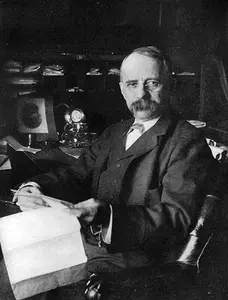
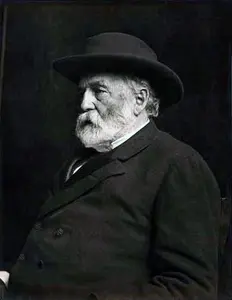
John Murray Forbes was born at Bordeaux, in France, on February 23, 1813. February 23 was a Tuesday. He was president of the Michigan Central, and later president, and then chairman, of the Chicago, Burlington and Quincy. He died chairman of that board.
His daughter, Sarah Forbes Hughes, writes that pneumonia set in on October 6, 1898, and that he died at eight o'clock on the morning of October 12, at his home in Milton, Massachusetts. October 12 was a Wednesday. He was eighty-five. The directors of the Chicago, Burlington and Quincy, meeting six days later, recorded the same day, the same house, and the same age.
A partner in his old China house said Forbes never seemed a man of acquisitiveness. His wealth, the partner said, was only an incident. A codicil of the will asks the heirs to use what they have for public and private gifts while they can still see the effect.
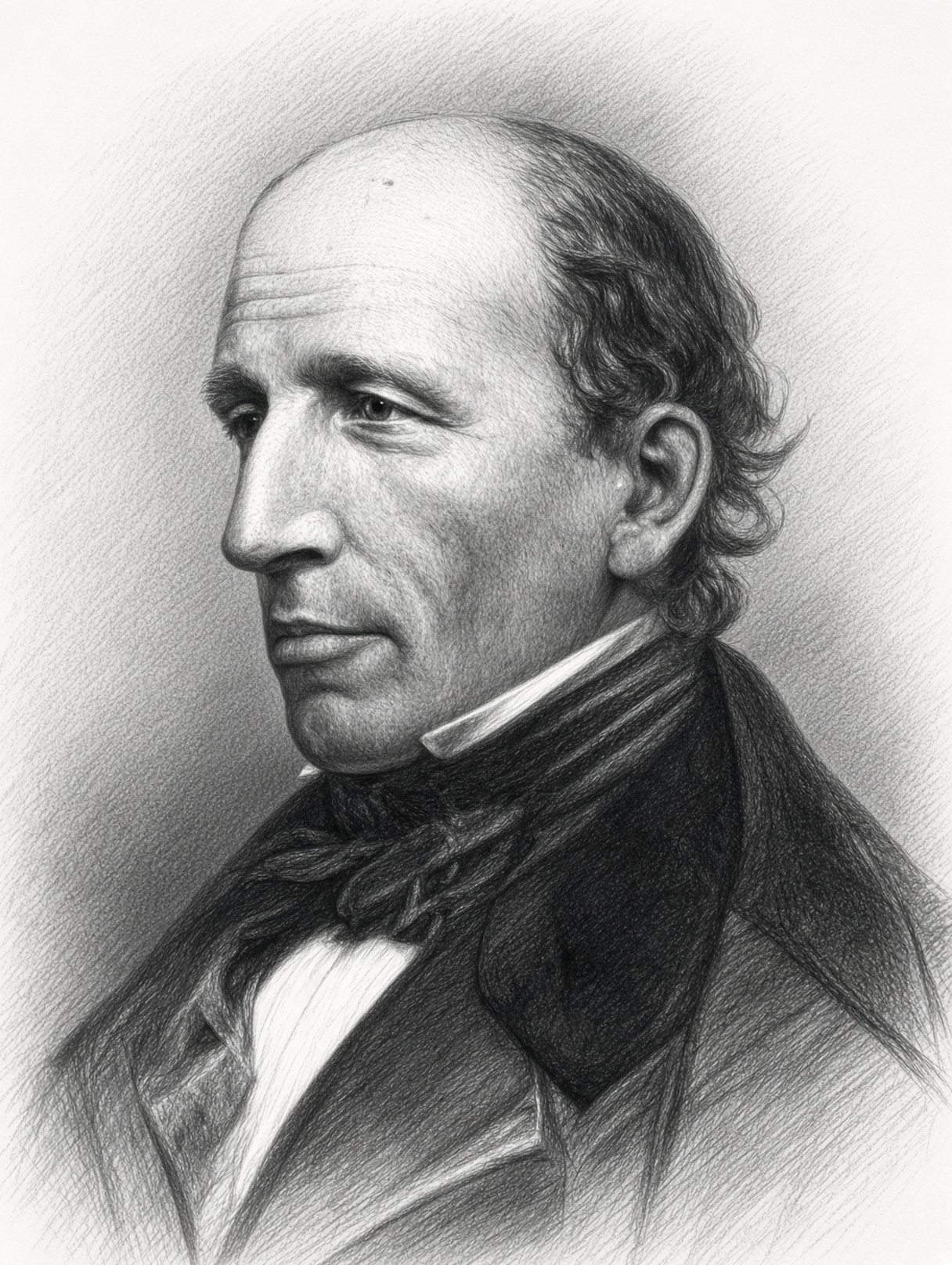
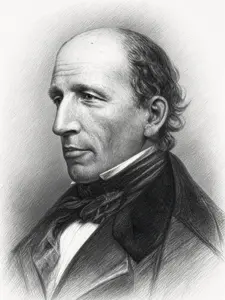
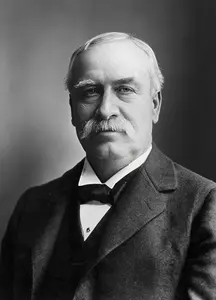
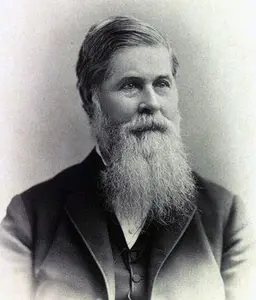
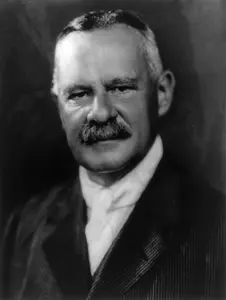
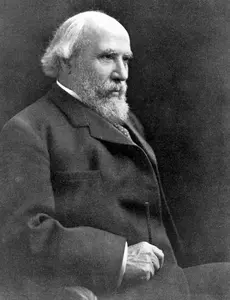
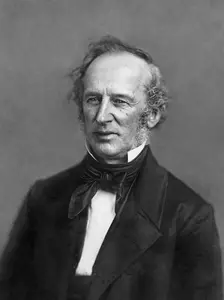
A crayon portrait of John Murray Forbes by Seth Wells Cheney, circa 1851.
On this page: At a glance · Bordeaux · Canton · The Central · The Burlington · The rams · Milton
At a glance
| Item | Detail |
|---|---|
| Born | Bordeaux, France. February 23, 1813. Tuesday. His notes, confirmed by a certificate of birth |
| Parents | Ralph Bennet Forbes and Margaret Perkins. The father died in October 1824, about fifty-one |
| China | Sailed on the Lintin, July 7, 1830. Youngest clerk of Russell & Co. Houqua's confidential agent before he was eighteen |
| Family | Sarah Hathaway, at her uncle William Swain's house in New Bedford. He was still a minor. He sailed again on March 7, 1834, before they had been a month married |
| Michigan Central | A share in the purchase, 1846, and the presidency. He had left that office by the opening of 1857, and remained a director |
| Burlington | Director from 1857 until he died. President, 1878 to 1881. Chairman of the board after that |
| Died | October 12, 1898, a Wednesday, at eight in the morning, at home in Milton. Pneumonia. Age 85 |
| The money | The 1899 letters name no sum. A China partner said the wealth was only an incident |
Bordeaux
Ralph Bennet Forbes was kept in France on business, and his wife, Margaret Perkins, joined him in 1811. Forbes wrote, years later, that they told him he was born at Bordeaux on February 23, 1813, and that a certificate of birth from an officer of Napoleon confirmed it. His parents were travelers there. He held himself an American. At three months he was on the schooner Orders in Council, bound home. Guernsey privateers attacked, and the ship beat them off. The family tradition is that the baby was laid in the forecastle with a dose of laudanum and with cotton stuffed in his ears.
The father had been broken by overwork, gout, and a partial paralysis. He died in October 1824, about fifty-one. Three Perkins uncles contributed 1,200 pounds a year toward the household. Forbes remembered his mother's patching, and the low house in Milton, between the cemetery and the Randolph turnpike, still called the Peggy Howe house. Later the family had the more comfortable place on Milton Hill, given or lent by his father's brother, the consul, who was also named John Murray Forbes.
At about eight and a half he was sent to the Franklin Academy in the north parish of Andover. In October 1823 he went to Round Hill, at Northampton, the school Cogswell and Bancroft had lately opened. The boys rode, skated, swam, and walked. On October 12, 1828 he wrote his brother Thomas that he had taken leave of Northampton for good. Cogswell thought him ready for an active life. He entered the Perkins counting-house in Boston. Thomas was drowned off Macao. The letter of October 12 can scarcely have reached him. He was dead seven weeks after its date.
Canton
The Lintin sailed on July 7, 1830. Forbes was seventeen. The editor of his letters says he began that commercial life with above $1,000 of his own, the accumulation of small adventures in tea and silk. Augustine Heard was a fellow passenger, engaged to take charge of Russell & Co. in Canton. They anchored at Lintin about the middle of November and went up the same night. J. P. Cushing put the boy into the office as the youngest clerk. Before Cushing left, he introduced him to Houqua, the chief of the Hong that then managed the foreign trade of China. Houqua gave him the confidence he had given Cushing and Thomas. Before Forbes was eighteen it was common for Houqua, when tea or silk would not sell at the price he wanted, to have the boy charter a ship and load it. The invoices went out in the boy's name.
He came home. Within eight months of landing he was quietly married to Sarah Hathaway at the house of her uncle, William Swain, in New Bedford. He was still a minor, and the banns had been missed. The Reverend Mr. Chowles found the slip at the last moment and married them anyway. Before they had been a month married, Bryant & Sturgis offered him the ship Logan as supercargo. His wife was a martyr to seasickness. He left her with his mother's family at Milton and sailed on March 7, 1834. He was back from that China voyage in 1837. At Milton, in November 1838, the twin daughters Alice and Ellen were born. William was born in 1840.
The Central
He wrote that he had been right to stay out of railroads in 1836, and that the way he got in, ten years later, was worth telling. In the early days of 1846 he took perhaps a tenth interest in buying from the State of Michigan its quarter-built road, at seventy cents on the dollar. The men with him included John E. Thayer of Boston, John C. Green and George Griswold of New York, Erastus Corning of Albany, and J. W. Brooks, a young engineer. He accepted the presidency. He had thought a railroad presidency was a figurehead office, of the sort insurance companies then gave an honest merchant while a secretary did the work. He wrote that he had little idea of the load.
On June 11, 1847 he was at Milwaukee with the other Michigan Central directors. They had decided to take the road around the lake to Chicago, rather than trust New Buffalo and a boat on the lake for the western outlet. W. B. Ogden drove them about the city and tried to sell them land. The wet prairie within a mile of the hotel was offered at $1.25 an acre. Forbes wrote that none of them bought a foot of Chicago land while the road was building. Looking back in 1884, he reckoned that his hotel bill of $125 would have bought a hundred acres then worth eight to twelve million dollars.
By the opening of 1857 he had left the Michigan Central presidency. He was still a director, and he called himself on the retired list. He spent that summer at Naushon and hardly attended to the railroad. The panic reached Boston about the middle of September. On September 28 he wrote that Michigan Central stock had run down from 95 to 45. Early in October he was called up from the island and asked to go to London for a loan of $2,000,000, which might keep the road from bankruptcy. The directors had let a heavy floating debt stand, expecting the high rates in the street to pass. He took his two eldest daughters on the next steamer. The Barings made the loan, on very onerous terms. Soon afterward the Michigan Central passed into New York hands. He sold his interest at only a moderate profit, which he called the pay for some ten years of hard and responsible work done without a salary. The experience, he said, was what he carried to the Chicago, Burlington and Quincy.
The Burlington
For the ten years before 1856 his shipping business had been tapering, and the management of it had gone to other men. His own interest had settled on the western railroads. The work was the Michigan Central, and the small roads already known by the name they kept, the Chicago, Burlington and Quincy, which had begun as a feeder of the older line. He was, in his own phrase, very busy with both, and with the trying enterprise of building the Hannibal and St. Joseph, to connect the Mississippi and the Missouri. On January 19, 1857, answering George Ashburner in Calcutta, he said the Burlington ran through the finest country in the state, on a direct line, with a local traffic that should hold even if the through business fell away. It had not been built cheaply. It had been run by honest men, for the stockholders. The danger he named was that, in that flat country, someone might build a cheaper road alongside it.
The directors, on October 18, 1898, put their record of him in a resolution. He had taken part from the first in the steps that formed the company. He was elected a director in 1857 and served until he died. He was last in the board room on August 17, 1898. He was president from 1878 to 1881, and from then on he was chairman of the board. C. E. Perkins, the president, signed the resolution.
The rams
In February 1861 he was in Washington with the Peace Congress. The Massachusetts men were there to gain time, not to write a compromise. W. H. Aspinwall took him aside after a dinner and told him what General Scott had said of Fort Sumter: the garrison was short of food and powder, and dependent on the Charleston market. The two men offered to find the money themselves, and to trust the government to repay them, if Scott would authorize the attempt and leave them the details. Secrecy was the condition. When the Navy Department claimed the movement, Forbes wrote that the scheme was worse than useless, and that it fell through.
On Saturday morning, March 14, 1863, a telegram from S. P. Chase reached him at Milton and called him that night to the Fifth Avenue Hotel. The next morning he met Chase, Mr. Welles, the Secretary of the Navy, and Aspinwall. They wanted him in England at once. Aspinwall was to follow with ten millions of the new five-twenty bonds, as soon as that amount could be countersigned. The instructions Forbes drew, dated March 16, gave the two men a credit of a million pounds, to be used at their discretion to buy vessels building for war. The first object was any ship the Confederacy was likely to get. The two ironclad rams nearly finished at the Laird yard in Liverpool were the danger in plain sight. If they got out and raised the blockade, his daughter writes, it meant war with England. He went. The trip kept him from the wedding of his daughter Mary, on May 6, to Henry Sturgis Russell. The rams remained under detention. On May 26, 1864, William Rathbone wrote from Liverpool that the English government had at last taken them.
Milton
Naushon, the island dividing Buzzard's Bay from Vineyard Sound, became the summer and autumn home after December 2, 1856, when his wife's uncle, William Swain, handed him the host's place and asked him to keep the life there simple. In July 1898 he came down to the island on the Wild Duck. He was ill through September. On Monday, September 26, his daughter and his physician came to take him home. He sat at the writing table, touched the inkstand and the pens, and was led out to the carriage. Looking up at the house, he said, “Never again, perhaps.” He reached Milton. On Thursday, October 6, pneumonia set in. He died at eight o'clock on Wednesday morning, October 12, 1898. From the start of that last illness he was seldom really conscious. He knew his wife, and knew the others dimly, from time to time. The tune that had moved him for years was Mrs. Howe's Battle Hymn of the Republic. It was the last he greeted, beating time with his hand. They sang it at the funeral.
His son William had died one year and one day before him. The $1,000 he carried to Canton was his own stake at seventeen. The $2,000,000 was the loan he got for the Michigan Central. The million pounds was the credit the Navy gave him in 1863. The partner in the China house said more money might have been made, but for the wish to build things up. The codicil leaves the heirs that same instruction, and no total.
Sources
- Sarah Forbes Hughes, ed., Letters and Recollections of John Murray Forbes, Houghton, Mifflin and Company, Boston and New York. Volume 1, 1899. His own notes of 1884 and 1889. Born at Bordeaux, February 23, 1813. Father Ralph Bennet Forbes, died October 1824. Mother Margaret Perkins. Franklin Academy and Round Hill. The Lintin, July 7, 1830. Russell & Co. and Houqua. Marriage to Sarah Hathaway. The Logan, March 7, 1834. Home from China in 1837. Alice and Ellen, November 1838. William, 1840. The Michigan Central purchase of 1846, the presidency, and the decision of June 11, 1847, to go around the lake to Chicago. The Chicago land he did not buy. Left the Michigan Central presidency by 1857. The panic letter of September 28, 1857. The Barings' loan of $2,000,000. Sale of his Michigan Central interest at a moderate profit. The Hannibal and St. Joseph. The letter of January 19, 1857, to George Ashburner. The Peace Congress of February 1861, and the Sumter scheme with W. H. Aspinwall. Naushon from December 2, 1856.
- The same work, volume 2. The mission of March 1863. Chase's telegram of March 14. The instructions of March 16, a credit of a million pounds, and ten millions of five-twenty bonds. Mary's wedding, May 6, 1863. William Rathbone, May 26, 1864, on the English government's purchase of the Laird rams. The last summer at Naushon. Death at Milton, October 12, 1898, at eight o'clock. The codicil on gifts during life, which names no sum. The China partner's remark that the wealth was only an incident is in volume 1.
- Resolution of the directors of the Chicago, Burlington and Quincy Railroad, October 18, 1898, printed with the letters. Director from 1857. Last meeting August 17, 1898. President, 1878 to 1881. Chairman of the board thereafter. Died at home in Milton on October 12, at the age of eighty-five. Signed by C. E. Perkins, President.
- The Michigan Central page and the Chicago, Burlington and Quincy page on this site. The sale and the building of those roads.
Recent Articles


-
Frederick Weyerhaeuser: Net Worth, Railroads, Biography
Nov 21, 26 12:22 AM
 Frederick Weyerhaeuser was born at Niedersaulheim on November 21, 1834. He died at Pasadena on April 4, 1914. He was a lumberman and a railroad director.
-
John Murray Forbes: Net Worth, CB&Q, Biography
Nov 21, 26 12:13 AM
 John Murray Forbes was born at Bordeaux on February 23, 1813. He died at Milton on October 12, 1898. He was chairman of the Chicago, Burlington and Quincy.
-
Henry B. Plant: Net Worth, Plant System, Biography
Nov 20, 26 10:27 PM
 Henry Bradley Plant was born at Branford, Connecticut, on October 27, 1819. He died at his home on Fifth Avenue on June 23, 1899. He was president of the Plant system and of the Southern Express Compa…
-
Henry Flagler: Net Worth, Florida East Coast, Biography
Nov 20, 26 10:00 PM
Henry Flagler was born at Canandaigua, New York. He died at Whitehall on May 20, 1913, at 83, and was buried at Memorial Presbyterian Church in St. Augustine. -
William Rockefeller: Net Worth, Railroads, Biography
Nov 20, 26 11:50 AM
 William Rockefeller was born in Richford, New York, on May 31, 1841. The Associated Press dates his death June 24, 1922, at Rockwood Hall. Redmond dates it June 23, at Pocantico Hills.
-
William H. Vanderbilt: Net Worth, Railroads, Biography
Nov 20, 26 10:08 AM
 William H. Vanderbilt was born in New Brunswick, New Jersey, on May 8, 1821. He died in New York City on December 8, 1885. His will names two blocks of $40,000,000 and states no total.
-
J. Edgar Thomson: Net Worth, Pennsylvania Railroad, Biography
Nov 20, 26 12:25 AM
 J. Edgar Thomson was born in Springfield, Delaware County, Pennsylvania, on February 10, 1808. He died in Philadelphia on May 27, 1874. No opened inventory states a total.
-
Thomas A. Scott: Net Worth, Railroads, Biography
Nov 20, 26 12:06 AM
 Thomas A. Scott was born at Loudon, Pennsylvania, on December 28. The year is 1823 in one biography and 1824 on the funeral plate. He died near Darby on May 21, 1881. No opened inventory states a tota…
-
Henry Villard: Net Worth, Railroads, Biography
Nov 19, 26 11:41 PM
 Henry Villard was born Ferdinand Heinrich Gustav Hilgard at Speyer on April 10, 1835, and died early on November 12, 1900, at Thorwood Park, near Dobbs Ferry. He was 65. A court recital put the person…
-
J.P. Morgan: Net Worth, Railroads, Biography
Nov 19, 26 07:03 PM
 John Pierpont Morgan was born in Hartford on April 17, 1837, and died in Rome on March 31, 1913, at 12:05 p.m. Rome time. He was 75. A 1916 New York appraisal put the gross estate at $78,149,024, excl…
-
Daniel Willard: Net Worth, Baltimore and Ohio, Biography
Nov 19, 26 06:51 PM
 Daniel Willard was born on January 28, 1861, and died on July 6, 1942. He was 81. He was president of the Baltimore and Ohio from January 15, 1910 until 1941. No opened record states a fortune. Time p…
-
Cyrus K. Holliday: Net Worth, Santa Fe, Biography
Nov 19, 26 06:03 PM
 Cyrus Kurtz Holliday was born April 3, 1826, and died in Topeka on March 29, 1900. He was 73. He founded Topeka, wrote the Atchison and Topeka charter, and was the railroad's first president. He l…
-
N&W 2-6-6-4 Locomotives (Class A): Specs, Roster, History
Nov 19, 26 05:39 PM
 Norfolk & Western Class A. Forty-three simple 2-6-6-4s, 1200 to 1242, built at Roanoke from 1936 to 1950 for time freight and used on passenger trains when assigned. Diagram specs, the 114,000-pou…
-
Jay Cooke: Net Worth, Civil War, Biography
Nov 19, 26 05:05 PM
 Jay Cooke was born at Sandusky on August 10, 1821, and died the night of February 16, 1905, at Ogontz. He was 83. Jay Cooke and Company opened January 1, 1861, and suspended September 18, 1873. He sol…
-
Daniel Drew: Net Worth, Erie Railroad, Biography
Nov 19, 26 04:44 PM
 Daniel Drew was born at Carmel on July 29, 1797, and died the night of September 18, 1879, age 82. He was Erie treasurer, not president. The settlement of July 2, 1868, put him out of that office.
-
James Fisk Jr.: Net Worth, Robber Baron, Biography
Nov 19, 26 02:47 PM
 James Fisk Jr. was born on April 1, 1835, and died the morning of January 7, 1872, at the Grand Central Hotel. He was 36. Edward S. Stokes shot him the afternoon before. He was an Erie director from O…
-
Chehalis-Centralia Polar Express Seats Are Sold Out
Nov 19, 26 02:43 PM
Chehalis-Centralia marks its Polar Express departures sold out. Diesel No. 6 is pulling while steam No. 15 is repaired. The business-car page still prints $260, $390, and $520. -
Cumbres & Toltec Lists Santa's Holiday Express
Nov 19, 26 02:38 PM
 Cumbres & Toltec lists Santa's Holiday Express for December 5-6 in Chama and December 12-13 in Antonito. Coach is $25. The Chama trip will not run to Dalton.
-
Florida Railroad Museum Lists the North Pole Express
Nov 19, 26 02:28 PM
 The Florida Railroad Museum lists the North Pole Express from November 27 through December 22, 2026. The trip is 3.75 hours. The museum will be closed November 21 and 22.
-
George Jay Gould: Net Worth, Railroads, Biography
Nov 19, 26 02:18 PM
 George Jay Gould was born in New York on February 6, 1864, and died on May 16, 1923, at his villa in France. The company pages date his father's portfolio to 1896. The Panic of 1907 broke the tran…
-
Jay Gould: Net Worth, Railroads, Biography
Nov 19, 26 01:43 PM
 Jason Gould, called Jay, was born at Roxbury on May 27, 1836, and died the morning of December 2, 1892. Erie president from October 1868 until 1872. From 1879 the Missouri Pacific was the center of th…
-
Mark Hopkins Jr.: Net Worth, Railroads, Biography
Nov 19, 26 11:53 AM
 Mark Hopkins Jr., born at Henderson on September 1, 1813, died at Fort Yuma on the night of March 29, 1878. Treasurer of the Central Pacific from June 28, 1861, until he died in that office. The 1881…
-
Leland Stanford: Net Worth, Railroads, Biography
Nov 19, 26 12:36 AM
 Amasa Leland Stanford, Watervliet 1824 to the Palo Alto house in June 1893, president of the Central Pacific and, until February 28, 1890, of the Southern Pacific. The 1893 inventory was about 17 mill…
-
Charles Crocker (Railroads): Robber Baron, Net Worth, Biography
Nov 19, 26 12:23 AM
 Charles Crocker, Troy 1822 to August 14, 1888, built the Central Pacific and drove the Siskiyou spike. He did not die president of the Southern Pacific. The opened biographies state no estate total.
-
Edward H. Harriman (Railroad): Facts, Robber Baron, Biography
Nov 19, 26 12:18 AM
 Edward Henry Harriman, February 25, 1848, to September 9, 1909, president of the Union Pacific from 1904 until he died in that office. The Courier-Journal put the known estate on the public record at…
-
Collis P. Huntington: Net Worth, Railroads, Biography
Nov 18, 26 11:26 PM
 Collis Potter Huntington, 1821 to 1900, vice president of the Central Pacific and president of the Southern Pacific from February 28, 1890, until he died in that office. The will stated no total. The…
-
Detroit Terminal Railroad: History, Roster
Nov 18, 26 10:47 PM
 The Detroit Terminal Railroad was a Detroit and Highland Park belt line, incorporated December 8, 1905. The November 1944 Guide listing gives 17.994 miles of first main track.
-
James J. Hill: Net Worth, Railroads, Robber Baron, Facts
Nov 18, 26 09:19 PM
 James J. Hill, 1838 to 1916, built the Great Northern from the St. Paul and Pacific to Puget Sound and left the chair in 1912. The fortune was estimated at $63 million. He left no will.
-
Cornelius Vanderbilt: Biography, Facts, Net Worth
Nov 18, 26 05:21 PM
 Cornelius Vanderbilt, 1794 to 1877, assembled the New York Central and Hudson River from the Harlem, the Hudson River Railroad, and the original New York Central, and died in office. The estate was ab…
-
Pacific Great Eastern Railway: All-Time Diesel Roster
Nov 18, 26 12:24 PM
 All-time diesel roster of the Pacific Great Eastern, the British Columbia Railway, and BC Rail. Classes, road numbers, and builder data from Paul Crozier Smith, Canadian Rail no. 547 (2012).
-
Pacific Great Eastern Railway: Map, History, Roster
Nov 18, 26 10:22 AM
 The Pacific Great Eastern, incorporated February 27, 1912, became the British Columbia Railway Company on March 30, 1972. On the October 26, 1969 Official Guide, 861.9 miles were under operation. Cana…
-
Northern Alberta Railways: Map, History, Timetables
Nov 17, 26 11:52 PM
 Northern Alberta Railways, reporting mark NAR, was incorporated June 14, 1929, and owned jointly by Canadian National and Canadian Pacific. On the October 27, 1968 freight timetable, Dawson Creek is 4…
-
Yakima Valley Transportation: History, Timetable, Photos
Nov 17, 26 10:51 PM
 Yakima Valley Transportation opened Christmas Day, 1907. Union Pacific bought it June 9, 1909. Last city car February 1, 1947. Last freight November 18, 1985. Line car A and steeplecab 298 stayed in Y…
-
"20th Century Limited" (Train): Map, Consist, Schedule, Interior
Nov 17, 26 05:03 PM
 The 20th Century Limited was the flagship passenger train of the NYC, operating until 1967 (just prior to the Penn Central merger).
-
Western Pacific Diesel Roster (All-Time)
Nov 17, 26 04:52 PM
 Western Pacific all-time diesel roster. Why the switchers, covered wagons, road switchers, and General Electric units were bought, where they worked, and what Union Pacific inherited on December 22, 1…
-
Western Pacific Steam Roster (Built Since 1900)
Nov 17, 26 04:49 PM
 Western Pacific steam locomotives built since 1900. Drury quantity column 201. Thirteen rows. Mikado 329 made the last regular steam run in June 1953.
-
Western Maryland Scenic Lists Polar Express Fares
Nov 17, 26 03:30 PM
 Western Maryland Scenic lists Polar Express tickets from November 21 through December 24, 2026. Coach is $40, plus a $5 heritage fee. Excursions are diesel while No. 1309 is inspected.
-
Western Pacific Railroad: Map, History, Logo, Rosters
Nov 17, 26 11:12 AM
 The Western Pacific, organized in San Francisco on March 3, 1903, the Feather River Route to Salt Lake City, and the Union Pacific acquisition completed on December 22, 1982.
-
Spokane, Portland & Seattle Diesel Roster (All-Time)
Nov 17, 26 10:53 AM
Spokane, Portland and Seattle all-time diesel roster. Why the Alcos, Baldwins, and Electro-Motive units were bought, where they worked, and which numbers Burlington Northern inherited. -
Spokane, Portland & Seattle Steam Roster (Built Since 1900)
Nov 17, 26 10:46 AM
 Spokane, Portland and Seattle steam locomotives built since 1900. Drury quantity column 121. Rebuilds counted once, 115 frames. Last steam run was June 23, 1956.
-
Spokane, Portland & Seattle Railway: Map, History, Photos
Nov 17, 26 10:10 AM
 The Spokane, Portland and Seattle, organized August 22, 1905 as the Portland and Seattle, the north-bank line to Portland, and the Burlington Northern merger at 12:01 a.m. on March 2, 1970.
-
Pacific Electric Railway: Car Roster
Nov 16, 26 12:15 AM
 Pacific Electric cars by order: the St. Louis 800s and 950s, Jewett Tens, Standard Steel 1100s, Pressed Steel and Pullman 1200s, and the city-car number catalog.
-
Pacific Electric Railway: Locomotive Roster
Nov 16, 26 12:02 AM
 Pacific Electric box motors, Baldwin-Westinghouse electrics, company-built locomotives, and the General Electric diesels numbered 1650-1654 in 1947.
-
Pacific Electric Railway: Map, Logo, History, Photos
Nov 15, 26 11:38 PM
 The Pacific Electric Red Cars of Los Angeles, Henry Huntington, the Great Merger of September 1, 1911, and the last Long Beach train on the morning of April 9, 1961.
-
Spokane International Railroad: Map, History, Photos
Nov 15, 26 06:54 AM
 The Spokane International, chartered January 1, 1905, from Spokane to Eastport, Idaho, its steam locomotives and Alco RS-1s, and Union Pacific control on October 6, 1958.
-
Northwestern Pacific Railroad: History, Map, Timetable
Nov 15, 26 12:38 AM
 The Northwestern Pacific, incorporated January 8, 1907, by the Southern Pacific and the Santa Fe, the Willits to Shively line, general traffic on July 1, 1915, and the later operators north of San Fra…
-
Northern Pacific Diesel Roster (All-Time)
Nov 14, 26 09:17 PM
 Northern Pacific all-time diesel roster. Alco, Baldwin, Electro-Motive, and General Electric serials, orders, and build dates.
-
Northern Pacific Steam Roster (Built Since 1900)
Nov 14, 26 07:44 PM
Northern Pacific steam locomotives built since 1900. Last steam run was January 17, 1958. -
Northern Pacific Railway: Map, Logo, History, Rosters
Nov 14, 26 12:15 AM
 The Northern Pacific, chartered July 2, 1864, from Jay Cooke and the panic of 1873 to the last spike at Gold Creek in 1883, Stampede Tunnel in 1888, and Burlington Northern at 12:01 a.m. on March 2, 1…
-
The Pacific Extension (Milwaukee Road): Map, Abandonment, History
Nov 13, 26 11:52 PM
 The Milwaukee Road Pacific Extension, from Mobridge to Tacoma. A shorter northern transcontinental, the mountain electrification, and the decision to take the line up.