- Home ›
- Tycoons ›
- J.P. Morgan
J.P. Morgan: Net Worth, Railroads, Biography
Published: November 19, 2026
By: Adam Burns
John Pierpont Morgan was born in Hartford, Connecticut, on April 17, 1837, and he died in Rome on March 31, 1913. He was 75. The offices of J. P. Morgan & Co. gave the hour as 12:05 p.m., Rome time, which was 6:05 a.m. in New York. Henry P. Davison, a partner, said a cable reported that Morgan had passed away shortly after noon. He was a banker. The railroads associated with his name were reorganizations and one famous settlement. Each of those companies keeps its own page.
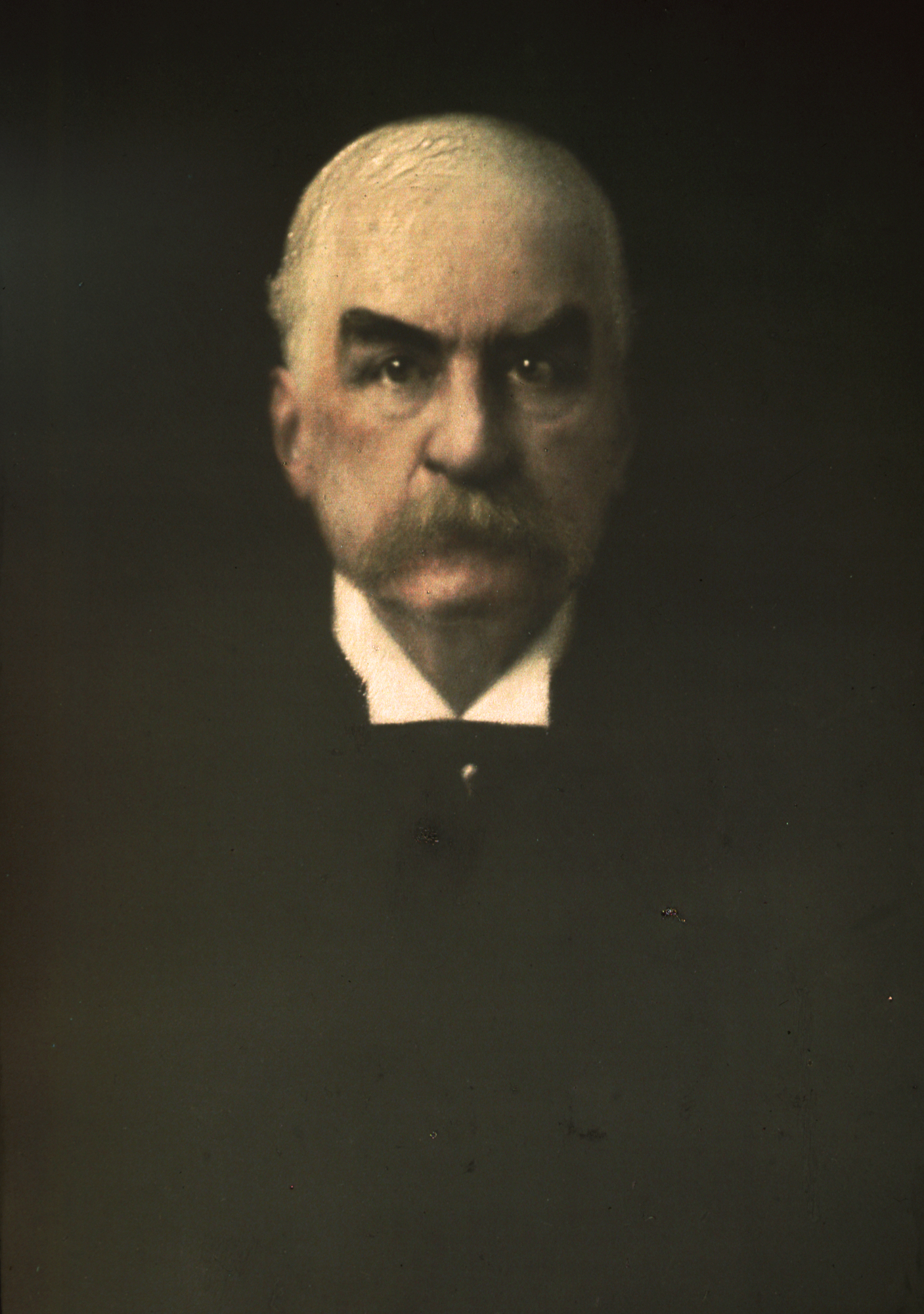
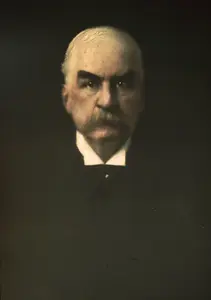
John Pierpont Morgan Sr. in a painted portrait by Carlos Baca-Flor, circa 1913.
A transfer-tax appraisal of the New York estate was filed on July 29, 1916. The Commercial and Financial Chronicle of August 5, 1916, puts the gross at $78,149,024, exclusive of property outside New York. The same issue gives two nets. The narrative places the net at $69,499,732. The tabular note places it at $68,884,680. The New York Times of July 29, 1916, headlined the same gross, put his interest in the two banking firms at $29,875,847, and said the total was $25,000,000 less than estimates made soon after the death. The appraisal is the figure this page uses. It is not a conversion into later dollars.
On this page: At a glance · Hartford · The firm · The railroads · Rome · The appraisal
At a glance
| Item | Detail |
|---|---|
| Born | April 17, 1837, Hartford, Connecticut. Parents Junius Spencer Morgan and Juliet Pierpont |
| Died | March 31, 1913, Rome, age 75. Firm bulletin: 12:05 p.m. Rome time, 6:05 a.m. New York time. Grand Hotel, in the Oregon Daily Journal |
| Schooling | Hartford schools, then the English High School in Boston. Carl Hovey: graduated 1853. American National Biography: 1854. The school association: Exhibition Day July 24, 1854. Then Vevey, and the University of Göttingen |
| The firm | Notice dated December 31, 1894. Drexel, Morgan & Co. expired that day. The New York name from that day was J. P. Morgan & Co. Philadelphia stayed Drexel & Co. |
| West Shore | Circular July 27, 1885. South Pennsylvania construction stopped September 12, 1885. Newburgh sale November 24, 1885. New company December 5, 1885. Lease from January 1, 1886. The West Shore |
| Southern | Formed July 1, 1894, on just over 2,000 miles. Samuel Spencer, first president. The Southern Railway |
| Northern Pacific | Second receivership August 15, 1893. Railway company August 31, 1896, under his management. The Northern Pacific |
| Reading | Foreclosure sale September 23, 1896. His voting trustees sat on the shares. The Reading |
| Chesapeake & Ohio | 1888. Majority control passed, without a foreclosure, to Morgan and Vanderbilt interests. Melville E. Ingalls took the presidency. The Chesapeake & Ohio |
| Northern Securities | Burlington control May 21, 1901. Holding company for Great Northern, Northern Pacific, and Burlington stock. Supreme Court dissolution, 1904 |
| Estate | Filed July 29, 1916. Gross $78,149,024, exclusive of property outside New York. Two nets in one Chronicle issue: $69,499,732 and $68,884,680 |
Hartford
Carl Hovey, in The Life Story of J. Pierpont Morgan (1911), says John Pierpont Morgan was born on April 17, 1837. The father was Junius Spencer Morgan. The mother was Juliet Pierpont, the clergyman's daughter. Hovey says the son spent the first fourteen years of his life in Hartford. The Oregon Daily Journal of March 31, 1913, in a life brief printed the day he died, gives the same birthday and the same city, and the same parents. The American National Biography calls Juliet Pierpont the daughter of a Unitarian minister. Both descriptions are in print. This page keeps both.
The schooling is three accounts, and the year of graduation is two of them. The Oregon brief says he was educated first in the public schools of Hartford, later graduated from a Boston high school, and finished his studies at the University of Göttingen. The American National Biography is more particular. It names the Hopkins Grammar School in Hartford, the Hartford Public High School, and the English High School in Boston, then the Institution Sillig at Vevey in Switzerland, and two years at Göttingen. Hovey says that after the family moved to Boston he attended the English High School until his graduation in 1853. The American National Biography says he graduated in 1854. The English High School Association, the alumni body of that school, places him in the class of 1854. It says he entered in September 1851, at 14, and that his Exhibition Day address was July 24, 1854. It also says he finished twelfth in a class of 26. The 1853 date and the 1854 date both stand. No source opened for this page states a university degree.
The American National Biography places the father next. In 1854 Junius Morgan moved to London and became a partner in George Peabody's merchant bank. In 1857 Junius arranged for Alexander Duncan, of Duncan, Sherman & Company in New York, to give his son a job. The Oregon life brief has a broken line on a house of Duncan, and then a line that he became United States agent for Peabody & Co. The year on that second line is not clean in the scan, so the year used here is the biography's 1857.
The firm
The name J. P. Morgan & Co. is a copartnership notice. The New York Times of January 3, 1895, printed a notice dated Philadelphia and New York, December 31, 1894. The copartnership of Drexel & Co. in Philadelphia and Drexel, Morgan & Co. in New York expired that day, because of the death of Anthony J. Drexel. The surviving partners formed a new copartnership the same day. The New York name was J. P. Morgan & Co. The Philadelphia name remained Drexel & Co. J. Pierpont Morgan signed at the head of the notice.
He had already said the same thing, in advance, in the Commercial and Financial Chronicle, volume 59 (1894). The old copartnership would expire at the end of the year, owing to Drexel's death. A new copartnership of the surviving partners would carry on in New York as J. P. Morgan & Company and in Philadelphia as Drexel & Company. Of that firm, he said, Robert Bacon, then of E. Rollins Morse & Brother of Boston, would also be a member. On the Paris house the two printings do not use the same day. The December 31 notice says the Paris firm would continue from that date as Morgan, Harjes & Co. His Chronicle statement says the Paris name after January would be Morgan, Harjes & Co. The London house of J. S. Morgan & Co., he said in that statement, was an independent firm. He was personally a partner in both, and the London firm had no financial connection with the firm in New York beyond that.
The Oregon brief gives two earlier memberships, as a list. It says he became a member of Dabney, Morgan & Co. in 1864 and of Drexel, Morgan & Co. in 1871, and that the latter firm became J. P. Morgan & Co. The brief does not date that last change. The notice of December 31, 1894, does. The West Shore circular of July 27, 1885, was still issued in the name Drexel, Morgan & Company, which fits a New York firm that had not yet taken the later name.
The railroads
The settlement of 1885 is the West Shore page. J. P. Morgan brokered the peace that year. That article calls it the conversation aboard his yacht Corsair. Under the agreement the Pennsylvania Railroad took the South Pennsylvania, the capital written down to $3.5 million, and the Beech Creek. The New York Central would lease the West Shore after foreclosure. Drexel, Morgan & Company issued a circular on July 27, 1885. It offered a $1,000 four-percent bond of a new West Shore Railroad, guaranteed by the Central, for every $2,000 of the old first-mortgage bonds, and another $25 million of the same paper. South Pennsylvania construction stopped on September 12, 1885. On November 24, 1885, Morgan, Chauncey Depew, and Ashbel Green bought the old company at the Newburgh foreclosure sale. On December 5, 1885, they organized the West Shore Railroad Company. The lease to the Central ran 475 years from January 1, 1886.
On July 1, 1894, he put the Richmond & Danville and the East Tennessee, Virginia & Georgia into one company, the Southern Railway. Samuel Spencer was the first president. The Southern page says the railroad was born that day on just over 2,000 miles: the Richmond & Danville, the Virginia Midland, the Piedmont Railroad, the leased North Carolina Railroad, and the Atlanta & Charlotte Air Line. In 1890 the Richmond Terminal network had been nearly 9,000 miles. He reorganized only part of it. The miles added after that summer belong on the company page.
The Northern Pacific chronology dates a second receivership on August 15, 1893. The same list places the reorganization in 1896. On April 27 a committee of bondholders effected it. On August 31, 1896, the reorganized firm was established as the Northern Pacific Railway Company, under the management of J. P. Morgan. That is the change from Railroad to Railway. The building of the line, finished under Henry Villard, stays on that page.
The Reading foreclosure sale was September 23, 1896. J. P. Morgan's voting trustees sat on the shares. The coal company, the operating railroad, and the holding company are that page.
In 1888 Collis P. Huntington lost majority control of the Chesapeake & Ohio, without a foreclosure, to J. P. Morgan and Vanderbilt interests. Melville E. Ingalls took the presidency. Mike Schafer, in More Classic American Railroads, is the citation that page uses. The rebuilding of the railroad is there.
The Chicago, Burlington & Quincy page dates control by James J. Hill at May 21, 1901. Great Northern and Northern Pacific each took nearly half the stock. Edward H. Harriman fought him the same month. The holding company in that fight was the Northern Securities Company. The 1900s page says Hill, Morgan, and Harriman placed Great Northern, Northern Pacific, and Burlington stock in a New Jersey holding company. The Supreme Court, in 1904, ordered the combination dissolved, in Northern Securities Co. v. United States. The Minnesota Historical Society, as the Great Northern page records it, says J. Pierpont Morgan coined the name Empire Builder. Hill's life is the Hill page.
Rome
The death is a set of same-day dispatches, and they agree on the clock. The Augusta Daily Herald of March 31, 1913, reported from New York that he died at 12:05, Rome time. The announcement came from the offices of J. P. Morgan & Co. Henry P. Davison made it. Davison said he had received a cable that the financier had passed away shortly after noon. The Rome dispatch in the same paper says five minutes past twelve o'clock noon, and it prints the New York equivalent, 6:05 a.m. The Lancaster News of April 1 and the Washington Evening Star of March 31 print the same pair of times. The Oregon Daily Journal of March 31 says he died at the Grand Hotel at 12:05. The Catholic Universe of April 4 says the body was conveyed that evening, April 2, from the Grand Hotel to the railway station, for a steamer from Havre. Its own phrase for the hour is a few minutes after noon.
He was 75. The birthday on the life brief and in Hovey is April 17, so March 31 fell seventeen days short of his seventy-sixth birthday. A Lancaster headline gave the age as 70. That figure does not match the birth date.
The physicians are named in those papers. The Augusta Rome dispatch says Prof. Bastianelli and Dr. Dixon, seeing the end approach, sent Mr. and Mrs. Herbert L. Satterlee, his son-in-law and daughter, and Miss Helen Hamilton out of the room. The Oregon Journal says Professor Bastianelli, Dr. Starr, and Dr. Dixon were at the bedside with the Satterlees when the end came, and that he had been unconscious since Wednesday. Both accounts are printed here. Dr. M. Allen Starr, in the Lancaster paper and in the Oregon Journal, attributed the breakdown to the strain of the Pujo committee investigation of the money trust. The Augusta paper and the Lancaster paper say that on this trip, for the first time, he had severed all connection with business and left the partners to carry it.
The body came home on the liner La France. The Daily Journal-Herald of Delaware, Ohio, on April 12, 1913, says the ship arrived at her pier on Friday evening. J. Pierpont Morgan, Jr., boarded at quarantine and met the Satterlees there, with Miss Dorothy Hamilton, whom the paper calls his niece. The casket went to the Morgan library, next to the residence. Mrs. Morgan and their daughter Anne looked on his face that night. The paper says the body would lie in the library until the funeral at St. George's church on Monday morning. A burial place is not stated in the papers opened for this page.
The appraisal
The fortune in this article is the transfer-tax appraisal, filed in the Surrogate's Court in New York on July 29, 1916. The Commercial and Financial Chronicle of August 5, 1916, had two bites at it, and they agree on the gross. After nearly three years of work, the narrative says, the assets of J. P. Morgan, who died in Rome on March 31, 1913, were appraised at $78,149,024, exclusive of property outside the State of New York. After debts, administration expenses, and the executors' commissions, that narrative places the net at $69,499,732. On the 2nd of that month a transfer tax of $2,587,675 was levied. Of that tax, $2,500,000 had already been paid, so the estate could take the reduction offered for prompt payment. The same issue, in a tabular note, shows a gross of $78,149,024 and a net of $68,884,680. The two nets stay two nets.
Both the Chronicle table and the New York Times headline of July 29, 1916, put the interest in J. P. Morgan & Co. of New York and Drexel & Co. of Philadelphia at $29,875,847. The Times headline says the appraised total was $25,000,000 less than estimates made soon after the banker's death. Those earlier estimates are not reprinted here. The Chronicle says the son, J. Pierpont Morgan, inherits $53,684,918. It also says the appraiser reported that Morgan, regarded as among the foremost financial powers, was less wealthy than many other men whose estates had come before the tax. That comparison is the Chronicle's. It is not a second appraisal.
Sources
- Carl Hovey, The Life Story of J. Pierpont Morgan (New York: Sturgis & Walton, 1911). Birth on April 17, 1837. Juliet Pierpont, the clergyman's daughter. The first fourteen years in Hartford. The English High School in Boston, and graduation in 1853.
- Stephen Salsbury, “Morgan, John Pierpont,” American National Biography. Birth in Hartford on April 17, 1837. Parents Junius Morgan and Juliet Pierpont. Hopkins Grammar School, the Hartford Public High School, the English High School in 1854, the Institution Sillig at Vevey, and two years at Göttingen. Junius Morgan to George Peabody's bank in London in 1854. Duncan, Sherman & Company in 1857.
- English High School Association. Class of 1854. Entrance in September 1851, at 14. Exhibition Day address on July 24, 1854. Twelfth in a class of 26.
- Oregon Daily Journal (Portland), March 31, 1913. Death at the Grand Hotel at 12:05. The life brief: Hartford, April 17, 1837, Junius Spencer Morgan and Juliet Pierpont, the Hartford public schools, a Boston high school, Göttingen, Dabney, Morgan & Co. in 1864, and Drexel, Morgan & Co. in 1871. Professor Bastianelli, Dr. Starr, and Dr. Dixon at the bedside with the Satterlees. Unconscious since Wednesday. Starr on the Pujo committee.
- Augusta Daily Herald, March 31, 1913. The office announcement of 12:05 Rome time. Henry P. Davison and the cable. The Rome dispatch: five minutes past noon, 6:05 a.m. in New York. Prof. Bastianelli and Dr. Dixon. Mr. and Mrs. Herbert L. Satterlee and Miss Helen Hamilton sent from the room.
- Lancaster News (South Carolina), April 1, 1913. The same clock, from the offices of J. P. Morgan & Co. Dr. M. Allen Starr and the Pujo investigation. The headline age of 70.
- Evening Star (Washington), March 31, 1913. Five minutes past noon in Rome, 6:05 a.m. in New York. Davison and the cable. The notice posted at the Broad and Wall Street office.
- Catholic Universe, April 4, 1913. The body conveyed on the evening of April 2 from the Grand Hotel to the railway station, toward Havre.
- Daily Journal-Herald (Delaware, Ohio), April 12, 1913. La France on Friday evening. The library. Mrs. Morgan and Anne. St. George's on Monday. J. Pierpont Morgan, Jr., at quarantine, with the Satterlees and Miss Dorothy Hamilton.
- New York Times, January 3, 1895, printing the copartnership notice dated December 31, 1894. Drexel, Morgan & Co. expired that day. J. P. Morgan & Co. in New York and Drexel & Co. in Philadelphia from that day. Morgan, Harjes & Co. in Paris from that date.
- Commercial and Financial Chronicle, volume 59 (1894). His statement that the copartnership would expire at the end of the year, the new names, Robert Bacon, the Paris name after January, and the independence of J. S. Morgan & Co. in London.
- Commercial and Financial Chronicle, August 5, 1916. Appraisal filed July 29, 1916. Gross $78,149,024, exclusive of property outside New York. Narrative net $69,499,732. Tabular net $68,884,680. The two-firm interest $29,875,847. Transfer tax $2,587,675, levied on the 2nd, of which $2,500,000 had been paid. The son inherits $53,684,918.
- New York Times, July 29, 1916. Headline: the appraisal at $78,149,024, the interest in the two banking firms at $29,875,847, and a total $25,000,000 less than estimates made soon after the death.
- The company pages, for the railroad dates already established there. West Shore: the Corsair settlement, the circular of July 27, 1885, September 12, November 24, December 5, and the lease from January 1, 1886. Southern Railway: July 1, 1894, Samuel Spencer, and just over 2,000 miles. Northern Pacific: August 15, 1893, and the Railway company of August 31, 1896. Reading: the sale of September 23, 1896, and the voting trustees. Chesapeake & Ohio: 1888, Morgan and Vanderbilt interests, Melville E. Ingalls, citing Mike Schafer, More Classic American Railroads. Chicago, Burlington & Quincy: May 21, 1901. The 1900s and the Great Northern: Northern Securities, the 1904 dissolution in Northern Securities Co. v. United States, and the Minnesota Historical Society on the name Empire Builder.
Recent Articles


-
J.P. Morgan: Net Worth, Railroads, Biography
Nov 19, 26 07:03 PM
 John Pierpont Morgan was born in Hartford on April 17, 1837, and died in Rome on March 31, 1913, at 12:05 p.m. Rome time. He was 75. A 1916 New York appraisal put the gross estate at $78,149,024, excl…
-
Daniel Willard: Net Worth, Baltimore and Ohio, Biography
Nov 19, 26 06:51 PM
 Daniel Willard was born on January 28, 1861, and died on July 6, 1942. He was 81. He was president of the Baltimore and Ohio from January 15, 1910 until 1941. No opened record states a fortune. Time p…
-
Cyrus K. Holliday: Net Worth, Santa Fe, Biography
Nov 19, 26 06:03 PM
 Cyrus Kurtz Holliday was born April 3, 1826, and died in Topeka on March 29, 1900. He was 73. He founded Topeka, wrote the Atchison and Topeka charter, and was the railroad's first president. He l…
-
N&W 2-6-6-4 Locomotives (Class A): Specs, Roster, History
Nov 19, 26 05:39 PM
 Norfolk & Western Class A. Forty-three simple 2-6-6-4s, 1200 to 1242, built at Roanoke from 1936 to 1950 for time freight and used on passenger trains when assigned. Diagram specs, the 114,000-pou…
-
Jay Cooke: Net Worth, Civil War, Biography
Nov 19, 26 05:05 PM
 Jay Cooke was born at Sandusky on August 10, 1821, and died the night of February 16, 1905, at Ogontz. He was 83. Jay Cooke and Company opened January 1, 1861, and suspended September 18, 1873. He sol…
-
Daniel Drew: Net Worth, Erie Railroad, Biography
Nov 19, 26 04:44 PM
 Daniel Drew was born at Carmel on July 29, 1797, and died the night of September 18, 1879, age 82. He was Erie treasurer, not president. The settlement of July 2, 1868, put him out of that office.
-
James Fisk Jr.: Net Worth, Robber Baron, Biography
Nov 19, 26 02:47 PM
 James Fisk Jr. was born on April 1, 1835, and died the morning of January 7, 1872, at the Grand Central Hotel. He was 36. Edward S. Stokes shot him the afternoon before. He was an Erie director from O…
-
Chehalis-Centralia Polar Express Seats Are Sold Out
Nov 19, 26 02:43 PM
Chehalis-Centralia marks its Polar Express departures sold out. Diesel No. 6 is pulling while steam No. 15 is repaired. The business-car page still prints $260, $390, and $520. -
Cumbres & Toltec Lists Santa's Holiday Express
Nov 19, 26 02:38 PM
 Cumbres & Toltec lists Santa's Holiday Express for December 5-6 in Chama and December 12-13 in Antonito. Coach is $25. The Chama trip will not run to Dalton.
-
Florida Railroad Museum Lists the North Pole Express
Nov 19, 26 02:28 PM
 The Florida Railroad Museum lists the North Pole Express from November 27 through December 22, 2026. The trip is 3.75 hours. The museum will be closed November 21 and 22.
-
George Jay Gould: Net Worth, Railroads, Biography
Nov 19, 26 02:18 PM
 George Jay Gould was born in New York on February 6, 1864, and died on May 16, 1923, at his villa in France. The company pages date his father's portfolio to 1896. The Panic of 1907 broke the tran…
-
Jay Gould: Net Worth, Railroads, Biography
Nov 19, 26 01:43 PM
 Jason Gould, called Jay, was born at Roxbury on May 27, 1836, and died the morning of December 2, 1892. Erie president from October 1868 until 1872. From 1879 the Missouri Pacific was the center of th…
-
Mark Hopkins Jr.: Net Worth, Railroads, Biography
Nov 19, 26 11:53 AM
 Mark Hopkins Jr., born at Henderson on September 1, 1813, died at Fort Yuma on the night of March 29, 1878. Treasurer of the Central Pacific from June 28, 1861, until he died in that office. The 1881…
-
Leland Stanford: Net Worth, Railroads, Biography
Nov 19, 26 12:36 AM
 Amasa Leland Stanford, Watervliet 1824 to the Palo Alto house in June 1893, president of the Central Pacific and, until February 28, 1890, of the Southern Pacific. The 1893 inventory was about 17 mill…
-
Charles Crocker (Railroads): Robber Baron, Net Worth, Biography
Nov 19, 26 12:23 AM
 Charles Crocker, Troy 1822 to August 14, 1888, built the Central Pacific and drove the Siskiyou spike. He did not die president of the Southern Pacific. The opened biographies state no estate total.
-
Edward H. Harriman (Railroad): Facts, Robber Baron, Biography
Nov 19, 26 12:18 AM
 Edward Henry Harriman, February 25, 1848, to September 9, 1909, president of the Union Pacific from 1904 until he died in that office. The Courier-Journal put the known estate on the public record at…
-
Collis P. Huntington: Net Worth, Railroads, Biography
Nov 18, 26 11:26 PM
 Collis Potter Huntington, 1821 to 1900, vice president of the Central Pacific and president of the Southern Pacific from February 28, 1890, until he died in that office. The will stated no total. The…
-
Detroit Terminal Railroad: History, Roster
Nov 18, 26 10:47 PM
 The Detroit Terminal Railroad was a Detroit and Highland Park belt line, incorporated December 8, 1905. The November 1944 Guide listing gives 17.994 miles of first main track.
-
James J. Hill: Net Worth, Railroads, Robber Baron, Facts
Nov 18, 26 09:19 PM
 James J. Hill, 1838 to 1916, built the Great Northern from the St. Paul and Pacific to Puget Sound and left the chair in 1912. The fortune was estimated at $63 million. He left no will.
-
Cornelius Vanderbilt: Biography, Facts, Net Worth
Nov 18, 26 05:21 PM
 Cornelius Vanderbilt, 1794 to 1877, assembled the New York Central and Hudson River from the Harlem, the Hudson River Railroad, and the original New York Central, and died in office. The estate was ab…
-
Pacific Great Eastern Railway: All-Time Diesel Roster
Nov 18, 26 12:24 PM
 All-time diesel roster of the Pacific Great Eastern, the British Columbia Railway, and BC Rail. Classes, road numbers, and builder data from Paul Crozier Smith, Canadian Rail no. 547 (2012).
-
Pacific Great Eastern Railway: Map, History, Roster
Nov 18, 26 10:22 AM
 The Pacific Great Eastern, incorporated February 27, 1912, became the British Columbia Railway Company on March 30, 1972. On the October 26, 1969 Official Guide, 861.9 miles were under operation. Cana…
-
Northern Alberta Railways: Map, History, Timetables
Nov 17, 26 11:52 PM
 Northern Alberta Railways, reporting mark NAR, was incorporated June 14, 1929, and owned jointly by Canadian National and Canadian Pacific. On the October 27, 1968 freight timetable, Dawson Creek is 4…
-
Yakima Valley Transportation: History, Timetable, Photos
Nov 17, 26 10:51 PM
 Yakima Valley Transportation opened Christmas Day, 1907. Union Pacific bought it June 9, 1909. Last city car February 1, 1947. Last freight November 18, 1985. Line car A and steeplecab 298 stayed in Y…
-
"20th Century Limited" (Train): Map, Consist, Schedule, Interior
Nov 17, 26 05:03 PM
 The 20th Century Limited was the flagship passenger train of the NYC, operating until 1967 (just prior to the Penn Central merger).
-
Western Pacific Diesel Roster (All-Time)
Nov 17, 26 04:52 PM
 Western Pacific all-time diesel roster. Why the switchers, covered wagons, road switchers, and General Electric units were bought, where they worked, and what Union Pacific inherited on December 22, 1…
-
Western Pacific Steam Roster (Built Since 1900)
Nov 17, 26 04:49 PM
 Western Pacific steam locomotives built since 1900. Drury quantity column 201. Thirteen rows. Mikado 329 made the last regular steam run in June 1953.
-
Western Maryland Scenic Lists Polar Express Fares
Nov 17, 26 03:30 PM
 Western Maryland Scenic lists Polar Express tickets from November 21 through December 24, 2026. Coach is $40, plus a $5 heritage fee. Excursions are diesel while No. 1309 is inspected.
-
Western Pacific Railroad: Map, History, Logo, Rosters
Nov 17, 26 11:12 AM
 The Western Pacific, organized in San Francisco on March 3, 1903, the Feather River Route to Salt Lake City, and the Union Pacific acquisition completed on December 22, 1982.
-
Spokane, Portland & Seattle Diesel Roster (All-Time)
Nov 17, 26 10:53 AM
Spokane, Portland and Seattle all-time diesel roster. Why the Alcos, Baldwins, and Electro-Motive units were bought, where they worked, and which numbers Burlington Northern inherited. -
Spokane, Portland & Seattle Steam Roster (Built Since 1900)
Nov 17, 26 10:46 AM
 Spokane, Portland and Seattle steam locomotives built since 1900. Drury quantity column 121. Rebuilds counted once, 115 frames. Last steam run was June 23, 1956.
-
Spokane, Portland & Seattle Railway: Map, History, Photos
Nov 17, 26 10:10 AM
 The Spokane, Portland and Seattle, organized August 22, 1905 as the Portland and Seattle, the north-bank line to Portland, and the Burlington Northern merger at 12:01 a.m. on March 2, 1970.
-
Pacific Electric Railway: Car Roster
Nov 16, 26 12:15 AM
 Pacific Electric cars by order: the St. Louis 800s and 950s, Jewett Tens, Standard Steel 1100s, Pressed Steel and Pullman 1200s, and the city-car number catalog.
-
Pacific Electric Railway: Locomotive Roster
Nov 16, 26 12:02 AM
 Pacific Electric box motors, Baldwin-Westinghouse electrics, company-built locomotives, and the General Electric diesels numbered 1650-1654 in 1947.
-
Pacific Electric Railway: Map, Logo, History, Photos
Nov 15, 26 11:38 PM
 The Pacific Electric Red Cars of Los Angeles, Henry Huntington, the Great Merger of September 1, 1911, and the last Long Beach train on the morning of April 9, 1961.
-
Spokane International Railroad: Map, History, Photos
Nov 15, 26 06:54 AM
 The Spokane International, chartered January 1, 1905, from Spokane to Eastport, Idaho, its steam locomotives and Alco RS-1s, and Union Pacific control on October 6, 1958.
-
Northwestern Pacific Railroad: History, Map, Timetable
Nov 15, 26 12:38 AM
 The Northwestern Pacific, incorporated January 8, 1907, by the Southern Pacific and the Santa Fe, the Willits to Shively line, general traffic on July 1, 1915, and the later operators north of San Fra…
-
Northern Pacific Diesel Roster (All-Time)
Nov 14, 26 09:17 PM
 Northern Pacific all-time diesel roster. Alco, Baldwin, Electro-Motive, and General Electric serials, orders, and build dates.
-
Northern Pacific Steam Roster (Built Since 1900)
Nov 14, 26 07:44 PM
Northern Pacific steam locomotives built since 1900. Last steam run was January 17, 1958. -
Northern Pacific Railway: Map, Logo, History, Rosters
Nov 14, 26 12:15 AM
 The Northern Pacific, chartered July 2, 1864, from Jay Cooke and the panic of 1873 to the last spike at Gold Creek in 1883, Stampede Tunnel in 1888, and Burlington Northern at 12:01 a.m. on March 2, 1…
-
The Pacific Extension (Milwaukee Road): Map, Abandonment, History
Nov 13, 26 11:52 PM
 The Milwaukee Road Pacific Extension, from Mobridge to Tacoma. A shorter northern transcontinental, the mountain electrification, and the decision to take the line up.
-
Colorado Railroad Museum Lists Polar Express Fares
Nov 13, 26 11:44 PM
The Colorado Railroad Museum lists 2026 Polar Express train tickets through December 23. Standard seats are $80 and $100. First Class is sold by the table. Shows are at 5, 6:30, and 8 p.m. -
Essex Steam Train Lists the North Pole Express
Nov 13, 26 11:24 PM
 The Essex Steam Train lists North Pole Express dates from November 20 through December 23, 2026. Coach is $60 or $70. The railroad says questions about this train are not taken by phone.
-
Tennessee Valley Lists the North Pole Limited
Nov 13, 26 11:17 PM
The Tennessee Valley Railroad Museum lists the North Pole Limited on select dates from November 13 through December 23, 2026. Traditional tickets are $38 and $45. The page does not print a clock grid. -
Great Northern Diesel Roster (All-Time)
Nov 13, 26 10:59 PM
 Great Northern all-time diesel roster. Alco, Baldwin, Electro-Motive, and General Electric serials, orders, and build dates. Cascade electrics stay on the company page.
-
Alco "DH-643" Locomotives: Specs, Roster, Data Sheet
Nov 13, 26 10:39 PM
 Alco DH-643: 4,300 hp diesel-hydraulic C-C road switcher. Three built for the Southern Pacific in September 1964. Specs, drive, and the production roster.
-
Virginia Scenic Lists the 2026 Santa Express
Nov 13, 26 10:26 PM
 Virginia Scenic Railway lists the Santa Express from November 28 through December 23, 2026. The ride is about 60 minutes. The page says it is not a scenic excursion. Coach is $50.
-
Goleta Depot Stays Open Behind Storm Fencing
Nov 13, 26 07:20 PM
The City of Goleta says fencing and sandbags protect the historic depot. The museum building is closed for the season. Rides continue, and the Candy Cane Train runs November 28 through December 27, 20… -
Brandywine Museum Opens Its Holiday Railroad
Nov 13, 26 07:02 PM
The Brandywine Museum of Art opens the holiday model railroad on November 14, 2026. It runs through January 10, 2027, with holiday admission. -
Great Northern Steam Roster (Built Since 1900)
Nov 13, 26 04:14 PM
 Great Northern steam locomotives built since 1900. Drury quantity column 1,376. Rebuilds counted once, 1,178 frames. Last steam run was in August 1957.