Arthur E. Stilwell: Net Worth, Railroads, Biography
Published: November 21, 2026
By: Adam Burns
Arthur E. Stilwell was born in Rochester, New York, on October 21, 1859. October 21 was a Friday. He built the Kansas City, Pittsburg & Gulf, the line south from Kansas City to a Gulf port he named for himself, and the road that came out of it is the Kansas City Southern. He then built the Kansas City, Mexico & Orient, aimed at a harbor on the Gulf of California.
He died in New York on September 26, 1928. September 26 was a Wednesday. He was sixty-eight.
In Cannibals of Finance, the book he published in 1912, he wrote that he had made $40,000 profit in all the years of work on the Gulf road. In the same book he says he started life at $1,200 a year, and that he would rather have ended there than take the money John W. Gates offered him for helping to break a railroad.
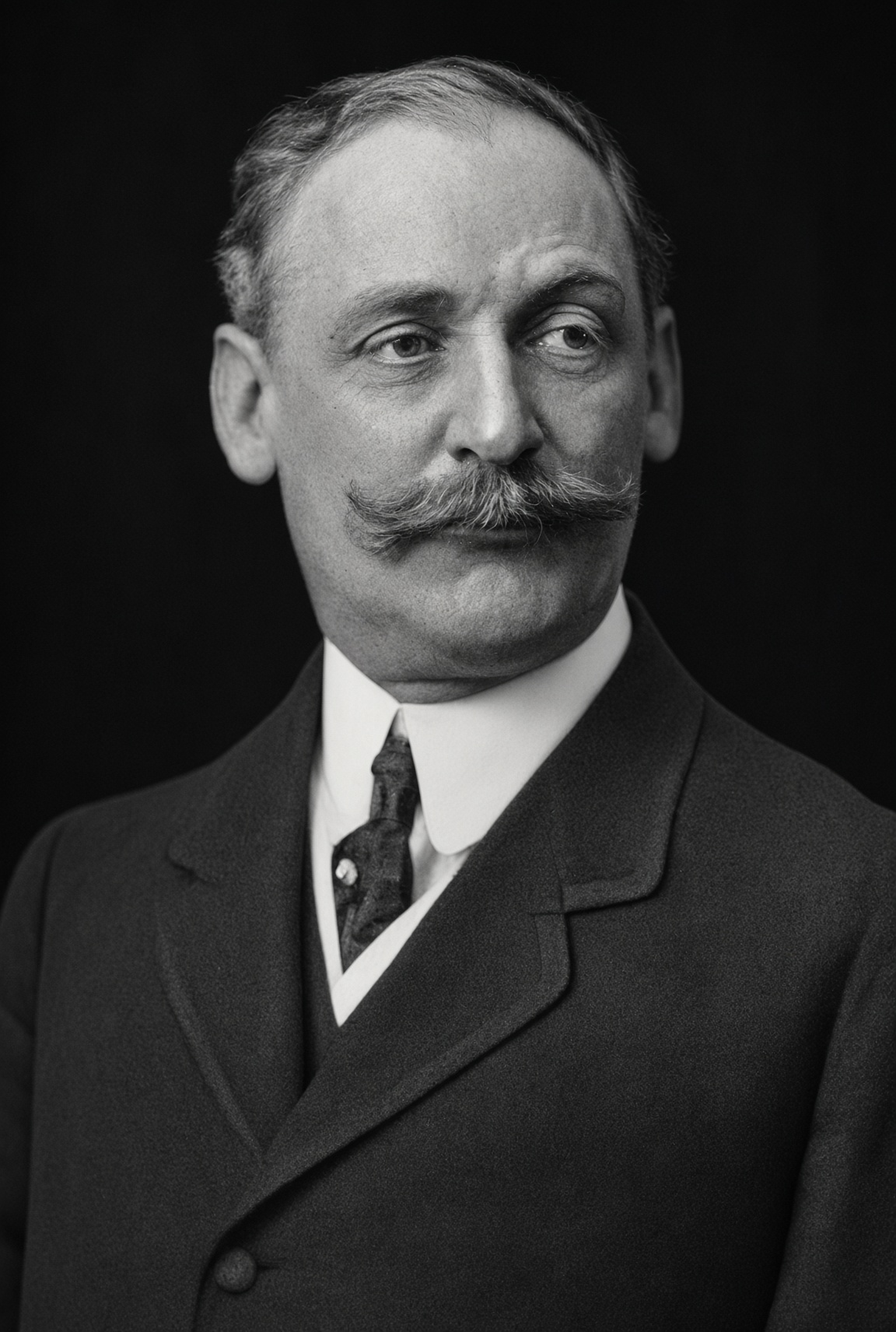
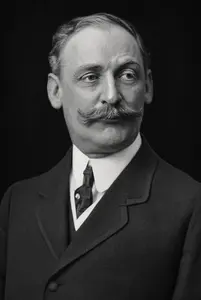
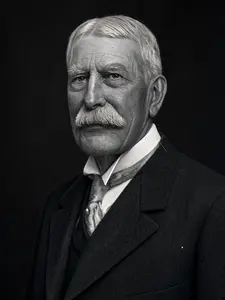
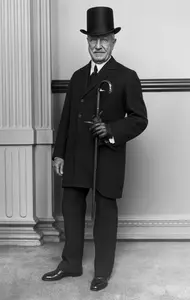
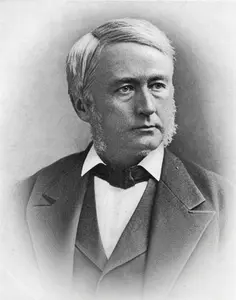
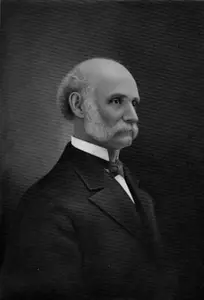
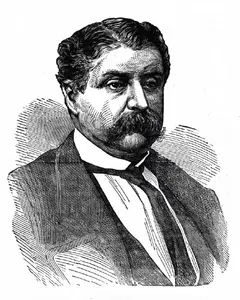
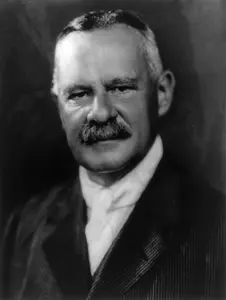
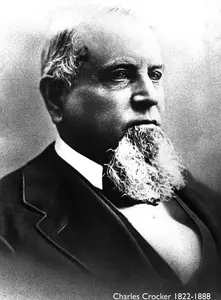
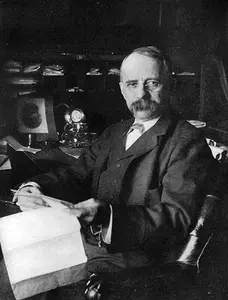
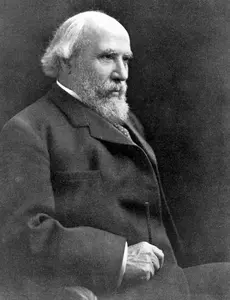
Arthur Edward Stilwell portrait.
On this page: At a glance · Rochester · The Gulf · Easter morning · The Orient · Later years
At a glance
| Item | Detail |
|---|---|
| Born | Rochester, New York. October 21, 1859. Friday |
| Family | Jennie A. Wood, June 10, 1879. No children |
| Grandfather | Hamlin Stilwell in the 1912 book. A history of the Kansas City Southern spells the name Hamblin. Erie Canal, and a start in business for George M. Pullman |
| The Gulf | Kansas City, Pittsburg & Gulf, to Port Arthur, in 1897. A receiver, Easter morning, 1899 |
| The Orient | Announced February 11, 1900. Kansas City, Mexico & Orient, toward Topolobampo. He was forced out in 1912 |
| Died | September 26, 1928, a Wednesday, in New York. Age 68 |
| The money | His own figure for the profit on the Gulf road is $40,000. He says he started at $1,200 a year |
Rochester
Charles Herbert Stilwell and Mary Augusta Pierson were his parents. The Handbook of Texas says the father's jewelry business in Rochester collapsed when the boy was fourteen or fifteen, and that he left home and became a clerk, a traveling salesman, and a man who worked out insurance policies. On June 10, 1879, he married Jennie A. Wood. June 10 was a Tuesday. They had no children. In 1886 he moved to Kansas City.
In the 1912 book he spells his grandfather Hamlin Stilwell. A history of the Kansas City Southern spells the name Hamblin. Hamlin Stilwell, the grandson wrote, was one of the leading forces in the building of the Erie Canal, and one of the men appointed by the governor of New York to mix the waters of Lake Erie with the Hudson at the opening. He was connected with the building of the New York Central. He had also started George M. Pullman in business, and Pullman, years later, told a room of directors that the friendship was why he would help the grandson.
The Gulf
In 1887 Stilwell was president of a trust company in Kansas City, the second trust company in Missouri, he wrote. One director was E. L. Martin. Martin held a franchise for a belt railroad with an entrance to the city on Second Street. After three years of looking for money he had given it up, and the franchise would expire in less than a week. They went over the line. That night both men left for Philadelphia. On the train Stilwell worked out an underwriting. For each $1,000 subscribed, a man was to receive $1,333 of six percent bonds and $2,000 of common stock. Out of that came the Kansas City Suburban Belt.
He wanted the next road to run due south to deep water. Galveston was the first idea, and he gave it up. He had read that the island had twice been covered by the Gulf, and at Sabine Pass he heard how the storms had three times destroyed the tracks. Fourteen miles back, on the north shore of Sabine Lake, no storm had reached. He bought a cow pasture there. The town site was 4,000 acres, at $12 an acre, $48,000 in all. He named the town Port Arthur. A canal had to be cut through the swamp to deep water. The owners fought it. The Texas legislature gave the railroad the right to condemn the strip. The Handbook of Texas dates the finished canal at 1899. In the 1912 book he says the canal still stood as he had finished it fourteen years before, and that the fight had left the railroad a floating debt of $500,000. A Dutch friend in Amsterdam, Jan de Goeijen, bought nearly all of that debt, and he was the man who had placed the bonds held in Europe.
The depression of 1893 did not stop the building. The Handbook says he drove the Kansas City, Pittsburg & Gulf south from Kansas City to Port Arthur in 1897, with capital from the East and from Holland. Mena, Arkansas, he wrote, grew to two thousand people in a few weeks, and in a good week the home-seekers paid $5,000 for tickets to a town site. Among the towns he names are Stilwell, Mena, DeQueen, and Port Arthur. When the road was finished, the mills, the orchards, the rice fields, and a line of steamers to Europe and to Mexico were in place. His profit on all of that work, he wrote, was $40,000.
Easter morning
The new road needed cars. George M. Pullman, his grandfather's friend, went over the line with his auditor and then met the directors at the Lawyers' Club in New York. Stilwell wrote that Pullman offered the company $2,000,000 for equipment, notes with no cash paid down and only interest for the first five years. The cars and locomotives were ordered. A few weeks later Pullman telegraphed him to come to Chicago and the contract would be taken up. He stood at the car door with the papers, and the newsboys were calling the death. A history of the Kansas City Southern dates that death at October 19, 1897. October 19 was a Tuesday. It says Pullman had lent $150,000, and had promised $3,000,000 for cars the railroad had already ordered, and that he died before the papers were signed.
On Easter morning, 1899, Stilwell opened the Kansas City Journal and found that a receiver had been named for the Kansas City, Pittsburg & Gulf, without his knowledge. Easter that year fell on April 2, a Sunday. He wrote that Ernest Thalmann had forced the receivership at midnight, on a small printing bill, after the men in the room had agreed that no receiver was needed. Jan de Goeijen was carrying the debts, and had offered to take enough of the new bonds to pay them. Thalmann, with the door shut, told Stilwell to show the stockholders a report Stilwell calls a falsehood, and said he would carry him on the books for $1,000,000 of stocks or bonds. Stilwell refused. The Handbook says the railway failed in 1899 and that he lost control. The company that came out of the failure is the Kansas City Southern.
John W. Gates had already asked for a different kind of help. In a Chicago office, one light turned on Stilwell's face, Gates told him to take the Alton special to St. Louis that night. At two o'clock a receiver would be appointed for four northern roads. Stilwell was to be the receiver, tell the bondholders there was no future in the property, and split the profit of the cheap purchase. He answered that he could not and would not do it. He had started at $1,200 a year, and he would rather end there. At two the next morning the receivership was granted. Gates, Thalmann, and E. H. Harriman, he wrote, then joined to keep him out of the presidency of the Southern.
The Orient
In January 1900 he resigned from the Guardian Trust Company and went with his wife to Old Point Comfort. The day before he came back to Kansas City he had drawn a new railroad, and he told only her and Dr. Woods. On February 11, 1900, friends gave him a dinner at the Midland Hotel and a silver loving cup. February 11 was a Sunday. He spoke after midnight. He had lost the road to the Gulf, he told them, and the road was still there. He had brought the Gulf of Mexico 114 miles nearer Kansas City. He would now build a line that brought the Pacific 400 miles nearer.
The next morning he laid a map of the United States and Mexico on a table at the Bank of Commerce. That meeting, he wrote, was the birth of the Kansas City, Mexico & Orient. Dr. Woods said the bank's circle would subscribe $500,000, and that he would take a good share himself. The next day Stilwell and his wife left for Chihuahua. Enrique C. Creel agreed to be a vice president. In Mexico City, Porfirio Diaz told him that opening the harbor of Topolobampo had been the great ambition of his life. The concession arrived the next day at eleven. The Handbook says Stilwell founded Port Stilwell near that harbor, on the Gulf of California, so that the Midwest could trade with east Asia without using the ports of California. From 1900 until 1912 the line was built from Wichita, Kansas, south through Oklahoma to San Angelo and on toward Alpine, Texas.
The first rail east of Chihuahua was laid on March 20, 1902. March 20 was a Thursday. The track was extended from Wichita to near Fort Stockton. Eighty-one miles were built east of Chihuahua, and eighty-one miles in from Topolobampo. He wrote that he had built nearly 1,000 miles of the Orient. When the road went into receivership, it was from sixty to seventy percent finished. A drought in 1910, three years of failed crops, and the first rising in Mexico stopped the trips on which the bonds were sold. A five-million-dollar underwriting in Paris was talked down from New York, he wrote, and the receivership followed.
On November 30, 1900, while that road was still new, a court put the Guardian Trust Company into receivership and named Judge Black the receiver. November 30 was a Friday. Stilwell had been put back in the president's chair, and the salary had been set again at $20,000 a year. He wrote that the decree found the company solvent, and put it in receivership anyway. The same morning he drew a prospectus for the United States & Mexican Trust Company and put his own name down for $10,000. In 1912, in the month he sent Cannibals of Finance to the printer, he was forced to resign the presidencies he still held. The Handbook says the Mexican Revolution and a lack of traffic brought the bankruptcy, and that he blamed the men he called the cannibals of Wall Street, Gates in particular. The history of the Kansas City Southern says the Orient later passed into the Santa Fe system.
Later years
The 1912 book is dedicated to his wife. She had gone with him, and he credits her with the nerve to keep going when the work turned hard. The Handbook of Texas says he was a Christian Scientist. After the railroads he published novels, poems, and stories in which, the Handbook says, the ideas for the railways and for Port Arthur had come to him from brownies. He also wrote on finance and on the peace of the world. The book of 1912 is the account of the fifteen years in which he lost the two roads.
He died in New York on September 26, 1928. The $40,000 was the profit he said he had made on the Gulf road. The $1,200 was the yearly pay at which he said he had started. The $20,000 was one year of salary as president of the Guardian Trust. The $48,000 was the price of the pasture at Port Arthur. The $500,000 was the floating debt that fight left on the railroad. The two million, the three million, and the million Thalmann offered were equipment, a promise of cars, and a share he refused.
Sources
- Arthur Edward Stilwell, Cannibals of Finance: Fifteen Years' Contest with the Money Trust, fourth edition, Chicago, The Farnum Publishing Company, 1912. The belt railroad of 1887, E. L. Martin, and the Philadelphia underwriting. Port Arthur, 4,000 acres at $12 an acre. The canal fight and the floating debt of $500,000. Jan de Goeijen. A profit of $40,000 on the Gulf road. Pullman's offer of $2,000,000, and the newsboys. The Kansas City Journal of Easter morning, 1899, and the receivership. The refusal of Thalmann and of Gates. The dinner of February 11, 1900, and the birth of the Kansas City, Mexico & Orient. Diaz and Topolobampo. The first rail east of Chihuahua, March 20, 1902. Nearly 1,000 miles, and a road sixty to seventy percent finished. The Guardian Trust, November 30, 1900, and the salary of $20,000. The resignation of 1912, in the month the book went to the printer. Hamlin Stilwell, the Erie Canal, and the New York Central.
- Keith L. Bryant, Jr., “Stilwell, Arthur Edward,” Handbook of Texas Online, Texas State Historical Association. Born in Rochester, October 21, 1859, son of Charles Herbert Stilwell and Mary Augusta Pierson. Left home at fourteen or fifteen. Married Jennie A. Wood, June 10, 1879. No children. Kansas City in 1886. The Pittsburg & Gulf driven to Port Arthur in 1897, and lost in 1899. The ship canal completed in 1899. The Kansas City, Mexico & Orient, 1900 to 1912, from Wichita through Oklahoma to San Angelo and Alpine. Port Stilwell, near Topolobampo. Forced out after the Mexican Revolution and a lack of traffic. He blamed Gates. Later stories in which the ideas came from brownies. A Christian Scientist. Died in New York, September 26, 1928.
- Charles Pitcher, “Saga of KCS Lines,” KCS Newsfolder, July 1950. The grandfather's name spelled Hamblin. Pullman's death on October 19, 1897, a loan of $150,000, and a promise of $3,000,000 for cars already ordered. The Orient later passed into the Santa Fe system.
Recent Articles


-
Arthur E. Stilwell: Net Worth, Railroads, Biography
Nov 21, 26 12:33 AM
 Arthur E. Stilwell was born in Rochester on October 21, 1859. He died in New York on September 26, 1928. He built the road to Port Arthur and the Kansas City, Mexico and Orient.
-
Frederick Weyerhaeuser: Net Worth, Railroads, Biography
Nov 21, 26 12:22 AM
 Frederick Weyerhaeuser was born at Niedersaulheim on November 21, 1834. He died at Pasadena on April 4, 1914. He was a lumberman and a railroad director.
-
John Murray Forbes: Net Worth, CB&Q, Biography
Nov 21, 26 12:13 AM
 John Murray Forbes was born at Bordeaux on February 23, 1813. He died at Milton on October 12, 1898. He was chairman of the Chicago, Burlington and Quincy.
-
Henry B. Plant: Net Worth, Plant System, Biography
Nov 20, 26 10:27 PM
 Henry Bradley Plant was born at Branford, Connecticut, on October 27, 1819. He died at his home on Fifth Avenue on June 23, 1899. He was president of the Plant system and of the Southern Express Compa…
-
Henry Flagler: Net Worth, Florida East Coast, Biography
Nov 20, 26 10:00 PM
Henry Flagler was born at Canandaigua, New York. He died at Whitehall on May 20, 1913, at 83, and was buried at Memorial Presbyterian Church in St. Augustine. -
William Rockefeller: Net Worth, Railroads, Biography
Nov 20, 26 11:50 AM
 William Rockefeller was born in Richford, New York, on May 31, 1841. The Associated Press dates his death June 24, 1922, at Rockwood Hall. Redmond dates it June 23, at Pocantico Hills.
-
William H. Vanderbilt: Net Worth, Railroads, Biography
Nov 20, 26 10:08 AM
 William H. Vanderbilt was born in New Brunswick, New Jersey, on May 8, 1821. He died in New York City on December 8, 1885. His will names two blocks of $40,000,000 and states no total.
-
J. Edgar Thomson: Net Worth, Pennsylvania Railroad, Biography
Nov 20, 26 12:25 AM
 J. Edgar Thomson was born in Springfield, Delaware County, Pennsylvania, on February 10, 1808. He died in Philadelphia on May 27, 1874. No opened inventory states a total.
-
Thomas A. Scott: Net Worth, Railroads, Biography
Nov 20, 26 12:06 AM
 Thomas A. Scott was born at Loudon, Pennsylvania, on December 28. The year is 1823 in one biography and 1824 on the funeral plate. He died near Darby on May 21, 1881. No opened inventory states a tota…
-
Henry Villard: Net Worth, Railroads, Biography
Nov 19, 26 11:41 PM
 Henry Villard was born Ferdinand Heinrich Gustav Hilgard at Speyer on April 10, 1835, and died early on November 12, 1900, at Thorwood Park, near Dobbs Ferry. He was 65. A court recital put the person…
-
J.P. Morgan: Net Worth, Railroads, Biography
Nov 19, 26 07:03 PM
 John Pierpont Morgan was born in Hartford on April 17, 1837, and died in Rome on March 31, 1913, at 12:05 p.m. Rome time. He was 75. A 1916 New York appraisal put the gross estate at $78,149,024, excl…
-
Daniel Willard: Net Worth, Baltimore and Ohio, Biography
Nov 19, 26 06:51 PM
 Daniel Willard was born on January 28, 1861, and died on July 6, 1942. He was 81. He was president of the Baltimore and Ohio from January 15, 1910 until 1941. No opened record states a fortune. Time p…
-
Cyrus K. Holliday: Net Worth, Santa Fe, Biography
Nov 19, 26 06:03 PM
 Cyrus Kurtz Holliday was born April 3, 1826, and died in Topeka on March 29, 1900. He was 73. He founded Topeka, wrote the Atchison and Topeka charter, and was the railroad's first president. He l…
-
N&W 2-6-6-4 Locomotives (Class A): Specs, Roster, History
Nov 19, 26 05:39 PM
 Norfolk & Western Class A. Forty-three simple 2-6-6-4s, 1200 to 1242, built at Roanoke from 1936 to 1950 for time freight and used on passenger trains when assigned. Diagram specs, the 114,000-pou…
-
Jay Cooke: Net Worth, Civil War, Biography
Nov 19, 26 05:05 PM
 Jay Cooke was born at Sandusky on August 10, 1821, and died the night of February 16, 1905, at Ogontz. He was 83. Jay Cooke and Company opened January 1, 1861, and suspended September 18, 1873. He sol…
-
Daniel Drew: Net Worth, Erie Railroad, Biography
Nov 19, 26 04:44 PM
 Daniel Drew was born at Carmel on July 29, 1797, and died the night of September 18, 1879, age 82. He was Erie treasurer, not president. The settlement of July 2, 1868, put him out of that office.
-
James Fisk Jr.: Net Worth, Robber Baron, Biography
Nov 19, 26 02:47 PM
 James Fisk Jr. was born on April 1, 1835, and died the morning of January 7, 1872, at the Grand Central Hotel. He was 36. Edward S. Stokes shot him the afternoon before. He was an Erie director from O…
-
Chehalis-Centralia Polar Express Seats Are Sold Out
Nov 19, 26 02:43 PM
Chehalis-Centralia marks its Polar Express departures sold out. Diesel No. 6 is pulling while steam No. 15 is repaired. The business-car page still prints $260, $390, and $520. -
Cumbres & Toltec Lists Santa's Holiday Express
Nov 19, 26 02:38 PM
 Cumbres & Toltec lists Santa's Holiday Express for December 5-6 in Chama and December 12-13 in Antonito. Coach is $25. The Chama trip will not run to Dalton.
-
Florida Railroad Museum Lists the North Pole Express
Nov 19, 26 02:28 PM
 The Florida Railroad Museum lists the North Pole Express from November 27 through December 22, 2026. The trip is 3.75 hours. The museum will be closed November 21 and 22.
-
George Jay Gould: Net Worth, Railroads, Biography
Nov 19, 26 02:18 PM
 George Jay Gould was born in New York on February 6, 1864, and died on May 16, 1923, at his villa in France. The company pages date his father's portfolio to 1896. The Panic of 1907 broke the tran…
-
Jay Gould: Net Worth, Railroads, Biography
Nov 19, 26 01:43 PM
 Jason Gould, called Jay, was born at Roxbury on May 27, 1836, and died the morning of December 2, 1892. Erie president from October 1868 until 1872. From 1879 the Missouri Pacific was the center of th…
-
Mark Hopkins Jr.: Net Worth, Railroads, Biography
Nov 19, 26 11:53 AM
 Mark Hopkins Jr., born at Henderson on September 1, 1813, died at Fort Yuma on the night of March 29, 1878. Treasurer of the Central Pacific from June 28, 1861, until he died in that office. The 1881…
-
Leland Stanford: Net Worth, Railroads, Biography
Nov 19, 26 12:36 AM
 Amasa Leland Stanford, Watervliet 1824 to the Palo Alto house in June 1893, president of the Central Pacific and, until February 28, 1890, of the Southern Pacific. The 1893 inventory was about 17 mill…
-
Charles Crocker (Railroads): Robber Baron, Net Worth, Biography
Nov 19, 26 12:23 AM
 Charles Crocker, Troy 1822 to August 14, 1888, built the Central Pacific and drove the Siskiyou spike. He did not die president of the Southern Pacific. The opened biographies state no estate total.
-
Edward H. Harriman (Railroad): Facts, Robber Baron, Biography
Nov 19, 26 12:18 AM
 Edward Henry Harriman, February 25, 1848, to September 9, 1909, president of the Union Pacific from 1904 until he died in that office. The Courier-Journal put the known estate on the public record at…
-
Collis P. Huntington: Net Worth, Railroads, Biography
Nov 18, 26 11:26 PM
 Collis Potter Huntington, 1821 to 1900, vice president of the Central Pacific and president of the Southern Pacific from February 28, 1890, until he died in that office. The will stated no total. The…
-
Detroit Terminal Railroad: History, Roster
Nov 18, 26 10:47 PM
 The Detroit Terminal Railroad was a Detroit and Highland Park belt line, incorporated December 8, 1905. The November 1944 Guide listing gives 17.994 miles of first main track.
-
James J. Hill: Net Worth, Railroads, Robber Baron, Facts
Nov 18, 26 09:19 PM
 James J. Hill, 1838 to 1916, built the Great Northern from the St. Paul and Pacific to Puget Sound and left the chair in 1912. The fortune was estimated at $63 million. He left no will.
-
Cornelius Vanderbilt: Biography, Facts, Net Worth
Nov 18, 26 05:21 PM
 Cornelius Vanderbilt, 1794 to 1877, assembled the New York Central and Hudson River from the Harlem, the Hudson River Railroad, and the original New York Central, and died in office. The estate was ab…
-
Pacific Great Eastern Railway: All-Time Diesel Roster
Nov 18, 26 12:24 PM
 All-time diesel roster of the Pacific Great Eastern, the British Columbia Railway, and BC Rail. Classes, road numbers, and builder data from Paul Crozier Smith, Canadian Rail no. 547 (2012).
-
Pacific Great Eastern Railway: Map, History, Roster
Nov 18, 26 10:22 AM
 The Pacific Great Eastern, incorporated February 27, 1912, became the British Columbia Railway Company on March 30, 1972. On the October 26, 1969 Official Guide, 861.9 miles were under operation. Cana…
-
Northern Alberta Railways: Map, History, Timetables
Nov 17, 26 11:52 PM
 Northern Alberta Railways, reporting mark NAR, was incorporated June 14, 1929, and owned jointly by Canadian National and Canadian Pacific. On the October 27, 1968 freight timetable, Dawson Creek is 4…
-
Yakima Valley Transportation: History, Timetable, Photos
Nov 17, 26 10:51 PM
 Yakima Valley Transportation opened Christmas Day, 1907. Union Pacific bought it June 9, 1909. Last city car February 1, 1947. Last freight November 18, 1985. Line car A and steeplecab 298 stayed in Y…
-
"20th Century Limited" (Train): Map, Consist, Schedule, Interior
Nov 17, 26 05:03 PM
 The 20th Century Limited was the flagship passenger train of the NYC, operating until 1967 (just prior to the Penn Central merger).
-
Western Pacific Diesel Roster (All-Time)
Nov 17, 26 04:52 PM
 Western Pacific all-time diesel roster. Why the switchers, covered wagons, road switchers, and General Electric units were bought, where they worked, and what Union Pacific inherited on December 22, 1…
-
Western Pacific Steam Roster (Built Since 1900)
Nov 17, 26 04:49 PM
 Western Pacific steam locomotives built since 1900. Drury quantity column 201. Thirteen rows. Mikado 329 made the last regular steam run in June 1953.
-
Western Maryland Scenic Lists Polar Express Fares
Nov 17, 26 03:30 PM
 Western Maryland Scenic lists Polar Express tickets from November 21 through December 24, 2026. Coach is $40, plus a $5 heritage fee. Excursions are diesel while No. 1309 is inspected.
-
Western Pacific Railroad: Map, History, Logo, Rosters
Nov 17, 26 11:12 AM
 The Western Pacific, organized in San Francisco on March 3, 1903, the Feather River Route to Salt Lake City, and the Union Pacific acquisition completed on December 22, 1982.
-
Spokane, Portland & Seattle Diesel Roster (All-Time)
Nov 17, 26 10:53 AM
Spokane, Portland and Seattle all-time diesel roster. Why the Alcos, Baldwins, and Electro-Motive units were bought, where they worked, and which numbers Burlington Northern inherited. -
Spokane, Portland & Seattle Steam Roster (Built Since 1900)
Nov 17, 26 10:46 AM
 Spokane, Portland and Seattle steam locomotives built since 1900. Drury quantity column 121. Rebuilds counted once, 115 frames. Last steam run was June 23, 1956.
-
Spokane, Portland & Seattle Railway: Map, History, Photos
Nov 17, 26 10:10 AM
 The Spokane, Portland and Seattle, organized August 22, 1905 as the Portland and Seattle, the north-bank line to Portland, and the Burlington Northern merger at 12:01 a.m. on March 2, 1970.
-
Pacific Electric Railway: Car Roster
Nov 16, 26 12:15 AM
 Pacific Electric cars by order: the St. Louis 800s and 950s, Jewett Tens, Standard Steel 1100s, Pressed Steel and Pullman 1200s, and the city-car number catalog.
-
Pacific Electric Railway: Locomotive Roster
Nov 16, 26 12:02 AM
 Pacific Electric box motors, Baldwin-Westinghouse electrics, company-built locomotives, and the General Electric diesels numbered 1650-1654 in 1947.
-
Pacific Electric Railway: Map, Logo, History, Photos
Nov 15, 26 11:38 PM
 The Pacific Electric Red Cars of Los Angeles, Henry Huntington, the Great Merger of September 1, 1911, and the last Long Beach train on the morning of April 9, 1961.
-
Spokane International Railroad: Map, History, Photos
Nov 15, 26 06:54 AM
 The Spokane International, chartered January 1, 1905, from Spokane to Eastport, Idaho, its steam locomotives and Alco RS-1s, and Union Pacific control on October 6, 1958.
-
Northwestern Pacific Railroad: History, Map, Timetable
Nov 15, 26 12:38 AM
 The Northwestern Pacific, incorporated January 8, 1907, by the Southern Pacific and the Santa Fe, the Willits to Shively line, general traffic on July 1, 1915, and the later operators north of San Fra…
-
Northern Pacific Diesel Roster (All-Time)
Nov 14, 26 09:17 PM
 Northern Pacific all-time diesel roster. Alco, Baldwin, Electro-Motive, and General Electric serials, orders, and build dates.
-
Northern Pacific Steam Roster (Built Since 1900)
Nov 14, 26 07:44 PM
Northern Pacific steam locomotives built since 1900. Last steam run was January 17, 1958. -
Northern Pacific Railway: Map, Logo, History, Rosters
Nov 14, 26 12:15 AM
 The Northern Pacific, chartered July 2, 1864, from Jay Cooke and the panic of 1873 to the last spike at Gold Creek in 1883, Stampede Tunnel in 1888, and Burlington Northern at 12:01 a.m. on March 2, 1…