Robert R. Young: Net Worth, Railroads, Biography
Last revised: November 21, 2026
By: Adam Burns
Robert Ralph Young was born on February 14, 1897, a Sunday, in Canadian, a town in the Texas Panhandle. He became chairman of the board of the Chesapeake and Ohio. Current Biography, in the living sketch of 1947, says he loosened some of the hold the Wall Street investment banks had on the railroads of the country. The financial world knew him as the Daring Young Man of Wall Street, the title of a Saturday Evening Post series. The Handbook of Texas calls him the Populist of Wall Street, and says the initials brought the further label Railroad Young.
The way to that chair ran through Culver Military Academy, a powder plant of E. I. du Pont de Nemours, General Motors, and a seat on the New York Stock Exchange. By 1942, Current Biography says, he had full control of Alleghany and could choose the president of the Chesapeake and Ohio, of the Nickel Plate, which that book names as the New York, St. Louis, and Chicago, and of the Pere Marquette. Alleghany held a controlling interest in all three. The Handbook of Texas spells the holding company Allegheny.
Current Biography puts $5,000 inherited from his mother into a food-dehydrating company in 1920. The Handbook of Texas calls the $5,000 an inheritance from his grandfather, used in a speculation in securities. The same living sketch gives a wage of $100 a week at General Motors, 20,000 shares of Alleghany in 1933, and, for the Midamerica Corporation, $4,000,000 in cash and almost $2,500,000 in a note. In 1938 the Chesapeake and Ohio issued $30,000,000 of bonds. By April 1947 Alleghany owned 400,000 shares of the New York Central, 6.2 percent. The Handbook says that after a break with John J. Raskob he netted a fortune selling stocks short. In 1954, after a long proxy struggle, with Clinton Williams Murchison, Sr., and Sid Williams Richardson, he gained control of the New York Central and became chairman of its board. On January 25, 1958, a Saturday, he died at his winter mansion in Palm Beach, Florida. He was sixty. The Handbook says he apparently committed suicide with a shotgun.
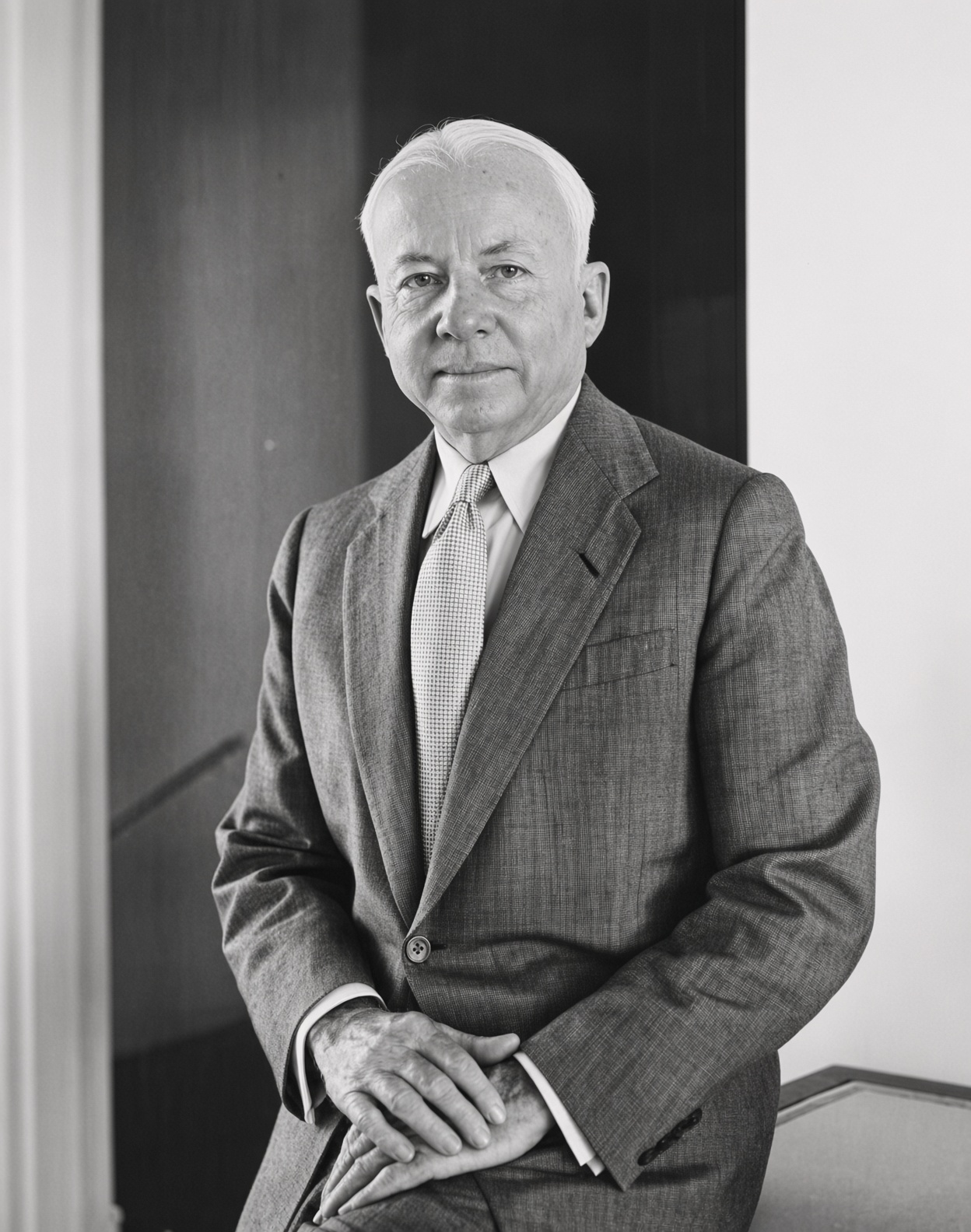
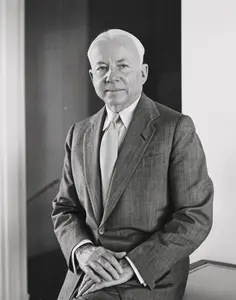
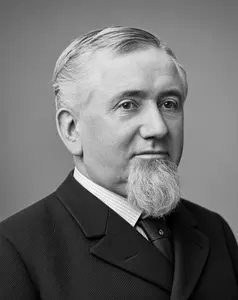
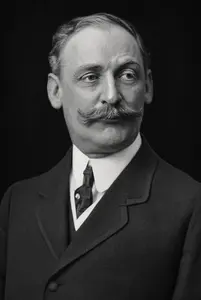
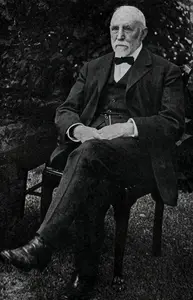
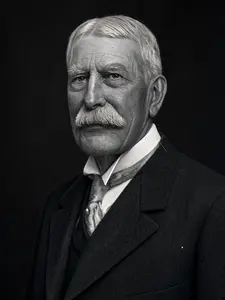
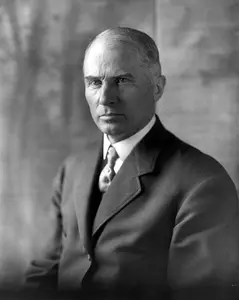
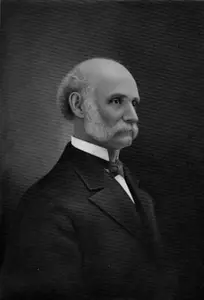
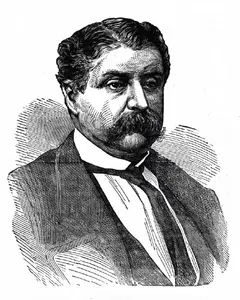
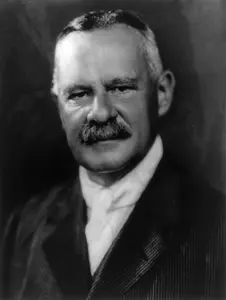
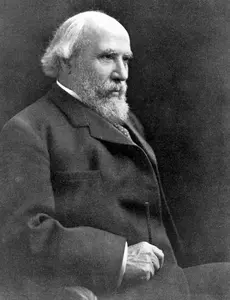
A portrait of Robert Young later in life.
On this page: At a glance · Canadian · Du Pont and General Motors · Alleghany · The Chesapeake and Ohio · Newport · The New York Central
At a glance
| Item | Detail |
|---|---|
| Born | February 14, 1897, a Sunday, Canadian, Texas. Youngest of four. David John Young and Mary Arabella (Moody) Young |
| Died | January 25, 1958, a Saturday, Palm Beach. Age 60. Buried in St. Mary's Cemetery, Newport |
| Chesapeake and Ohio | Chairman of the board. By 1942 he could choose the president. The 1947 address was Terminal Tower, Cleveland |
| Alleghany | 20,000 shares in 1933. Midamerica four years later, with Allan P. Kirby. The Handbook spells Allegheny, and a controlling interest by 1941 |
| New York Central | 400,000 shares by April 1947, 6.2 percent. Chairman in 1954. Alfred Perlman president that year |
| The money | $5,000, two accounts of the inheritance. $30,000,000 of bonds in 1938. Midamerica, $4,000,000 cash and almost $2,500,000 in a note |
Canadian
The Handbook of Texas says he was the youngest of four children of David John Young and Mary Arabella (Moody) Young. The house where he was born, and where he spent his boyhood, had been built and once owned by Temple Lea Houston. His mother, the daughter of Robert Moody, died when he was ten. The Handbook says the father was a strict man, and that neighborhood boys nicknamed the son Pumpkin for auburn hair. Current Biography says he bears the name of that maternal grandfather, a Scotch-English immigrant who had raised cattle and later founded the First National Bank of Canadian with his son-in-law, David John Young.
His school, in the 1947 sketch, was the Canadian Baptist Academy in his home town. He later attended the George Clayton School in Denver and a Los Angeles high school, and he finished the last two years at Culver Military Academy in Indiana. He was graduated in 1914, at the head of his class, with a scholarship to the University of Virginia. The sketch quotes Matthew Josephson, in the Saturday Evening Post biography, on the boy who was smaller and skinnier than the others and tried to lead them by wit, imagination, and skill. The same sketch says Culver marked him down for a bit of devilish conduct, and that he still wound up at the head of the class. At Virginia the devilish conduct was in evidence again. After he failed to take his sophomore final examinations, he left college in 1916. The Handbook says he became more interested in social life than in studies, and dropped out before the end of his second year.
On April 27, 1916, a Thursday, he married Anita Ten Eyck O'Keeffe, sister of the artist Georgia O'Keeffe. He was nineteen. Current Biography gives the day and the age. The Handbook places the wedding in Baltimore, soon after he had taken the powder-plant job, and says they had one daughter. The daughter was Eleanor Jane. She was killed in an airplane crash near Newport in 1940. The Handbook says she had risen prominently in high society.
His father died in 1927. Young inherited a controlling interest in the First National Bank of Canadian, and he sold it in 1939. The Handbook says he kept his membership in the Presbyterian church there, kept his ties with family and friends, and helped restore a local cemetery, which he named for Edith Ford, the aunt who helped rear him after his mother died.
Du Pont and General Motors
He declined a place at his father's bank. In 1916 he was hired to cut rifle powder at the E. I. du Pont de Nemours powder plant at Carney's Point, New Jersey. The Handbook calls the job a powder-cutter at the E. I. DuPont plant there. At the end of six months, Current Biography says, he was promoted to shift clerk. Within another year he was transferred to the mechanical department, as a sort of junior engineer. Before 1918 he was assigned to the main plant in Wilmington, in the treasury department. The Handbook says he worked his way up to the treasurer's office, learned finance and advertising, and had left by 1920.
Current Biography says that in 1920 he became treasurer of the Domestic Dehydrator Corporation, a food-dehydrating firm, investing $5,000 inherited from his mother. Six months later the company failed. He afterward lost the rest of the inheritance by selling short some stock in a Mexican oil company. For a year, 1921 to 1922, he worked for the Allied Chemical Corporation. The Handbook says that by 1920 he had left DuPont and, using a $5,000 inheritance from his grandfather, speculated in securities and lost everything, and that the loss turned his interest to Wall Street.
In 1922 he joined General Motors, at the New York offices. Current Biography says he went there as a statistician at $100 a week, and that by 1929 he was an assistant treasurer. The Handbook says he was made assistant treasurer in 1928. He became associated with John J. Raskob. The Handbook says Raskob was head of the corporation and chairman of the Democratic National Committee, and that Young left to handle Raskob's finances while Raskob managed Al Smith's presidential campaign. Early in 1929, the Handbook says, Raskob disagreed with Young's prediction of a stock-market crash, the two men parted, and Young then netted a fortune selling stocks short. Current Biography says he resigned in 1929 to assist Raskob in Raskob's personal enterprises, and that he was treasurer of Equishares Corporation from 1929 to 1931.
The Handbook says that in 1931 he formed a brokerage partnership with Frank Kolbe and bought a seat on the New York Stock Exchange. Current Biography says that in 1932 Young and Frank F. Kolbe, also a former General Motors assistant treasurer, bought a seat at a bargain-counter price and opened a brokerage firm. The living sketch says the partners made a habit of buying seemingly worthless securities and reorganizing the firms.
Alleghany
In 1933 they bought 20,000 shares of the Alleghany Corporation, which controlled what Current Biography calls the almost worthless railroad empire of the Van Sweringen brothers. Four years later that system of holdings, centralized in the Midamerica Corporation, was sold to Young and Kolbe by George Ball, a manufacturer of glass jars, who had bought the securities at auction. The silent partner was Allan P. Kirby. Current Biography calls him the son of a cofounder of the Woolworth chain. The Handbook calls him a retail merchant. Kirby contributed $3,000,000 toward the purchase and lent Young part of Young's share of an additional $1,000,000. The price of Midamerica, in the 1947 sketch, was $4,000,000 in cash and almost $2,500,000 in a note. The Handbook says that by 1941 Young and Kirby owned a controlling interest in the holding company, and it spells that company Allegheny. Current Biography spells it Alleghany.
Young thought the purchase of 90 percent of the Alleghany stock had given him the subsidiaries. He was mistaken. He tried to simplify the holding-company structure and to eliminate the Chesapeake Corporation, which controlled the Chesapeake and Ohio, then the only valuable asset in the former Van Sweringen holdings. About 71 percent of the Alleghany stock secured the corporation's debts. The largest trustee was the Guaranty Trust Company of New York. Under the terms of the debt, Guaranty Trust could vote the stock in certain circumstances. It had given its proxies to the Van Sweringens. Current Biography says that, according to Young, the bank now voted the stock because he had promised a Senate investigating committee that he would break the hold of the banks over the railroads. By the fall of 1939 he had an agreement under which Alleghany could retire the debt. Six months later the trustees assented to return the voting rights in the Chesapeake and Ohio to Alleghany.
By 1942 he had full control of Alleghany. Current Biography says he could then choose the president of the Chesapeake and Ohio, of the Nickel Plate, and of the Pere Marquette, and that Alleghany held a controlling interest in all three. The sketch calls him chairman of the board of the Chesapeake and Ohio Railway Company. The Handbook, writing of the same chair, says chairman of the board of the Chesapeake and Ohio Railroad. Part of the old Midamerica Corporation was Pathe Industries. Current Biography says Young and J. Arthur Rank formed Eagle Lion Films, under Pathe, to distribute Rank's films in the United States and American films in Great Britain.
The Chesapeake and Ohio
While he was gaining the Chesapeake and Ohio he kept a promise made to Senator Wheeler in 1940, to wrest control of the railroads from the investment banks. In 1938 the Chesapeake and Ohio issued $30,000,000 of bonds. Bids were solicited from underwriters, and the handling was awarded to an investment bank in Cleveland. Current Biography says Business Week treated that award as a break with the place the eastern houses had held in major railroad financing. He went on urging competitive bidding. In 1944 the Interstate Commerce Commission ruled that railroads must sell their bonds through sealed competitive bids.
He also fought the Stedman plan for the reorganization of the Missouri Pacific. That system had gone bankrupt in 1933 and was earning profits by 1942. Young was one of the junior bondholders. Current Biography says he had identified the cause of the small investors with his own cause, and could not separate the two. A compromise with the Stedman committee, which represented the senior creditors, would have left both the junior bondholders and the stockholders something from their holdings. The Interstate Commerce Commission rejected the plan. Young then asked the Missouri Pacific security holders to vote against a substitute reorganization the commission proposed. By 1943 the debt of Alleghany had been greatly reduced. In 1945, in establishing Alleghany's legal control over the Chesapeake and Ohio, the commission commended him for the fight for competitive bidding, for cutting the organizations in the holding company from 263 to 59, and for making Alleghany financially solvent.
The advertisement that made the argument public carried the line, “a hog can cross the country without changing trains-but you can't.” Current Biography prints it as the headline of a Chesapeake and Ohio campaign to modernize the railroads, aimed at the change of trains at Chicago or St. Louis required of a passenger crossing the continent. Through train service was established in the spring of 1946. In May he began advertisements on a black market in railroad tickets. In August the advertisements called obsolete sleeping cars rolling tenements, and promised new cars on the trains of the Chesapeake and Ohio. Early in January 1947 the railroad announced that a ticket could be reserved by telephone and paid for on the train, or charged to the purchaser. Another service carried a traveler's automobile on the same train. The railroad also charged, in full-page advertisements, that the freight lines of the country were slowing service. The 1947 sketch says it has been said that he wrote his own advertising copy. The Handbook says that, as chairman, he campaigned for the modernization of passenger service and was among the first to introduce lightweight, high-speed diesel passenger trains.
In the fall of 1946 he charged that the Association of American Railroads had lobbied for three years for legislation to exempt it from the antitrust laws, and he withdrew the Chesapeake and Ohio, the Pere Marquette, and the Nickel Plate from that association. In February 1947 he announced the Federation for Railway Progress and invited shippers, labor, investors, the public, and railroaders to join. The advisory council listed Edward R. Stettinius as chairman, Admiral William F. Halsey, Clare Boothe Luce, M. Lincoln Schuster, Charles Edison, Philip La Follette, and Albert S. Goss. By March the federation claimed 9,000 members. His own account of the federation ran in the American Mercury in December 1947.
Newport
The 1947 address was in care of the Chesapeake and Ohio, Terminal Tower, Cleveland, and the house was The Fairholme, in Newport, Rhode Island. Current Biography says the summer home was Fairholme, and the winter home The Towers, in Palm Beach, where he belonged to the Seminole Golf Club. The Handbook says he kept offices and an apartment in downtown New York and preferred to work in the den of the Newport mansion. Among his friends were the duke and duchess of Windsor. He was an amateur poet and a bibliophile. The 1947 sketch says he read Mark Twain and Alexandre Dumas, wrote poetry, and took long walks.
The same sketch quotes Time. He was quiet and soft-voiced. Anger showed in a slight tightening of the lips and a slight glint in pale blue eyes. He stood five feet six inches and weighed 135 pounds. The hair, once blond, was white, and he looked more than his age. The Handbook's auburn hair, and the boyhood name Pumpkin, are the earlier description.
In 1947 Forbes cited him as one of Today's Fifty Foremost Business Leaders. He received an honorary LL.D. from Bethany College in West Virginia. Accepting a Financial World award for his 1945 report on the Chesapeake and Ohio, he argued for a standard of honesty in politics to match the standard already laid on the custodians of money. In 1953 he gave the University of Texas at Austin a collection of documents on Texas history, including a microfilm of papers in the Archivo General de las Indias in Seville. The Texas Heritage Foundation later awarded him its Distinguished Service Medal for that work of building a library of Texas historical documents. The medal was posthumous.
The New York Central
At the end of 1946 Alleghany began to purchase shares of the New York Central. By April 1947 it owned 400,000 shares, 6.2 percent. The New York Herald Tribune, in the words Current Biography uses, considered the holding working control. The corporation had also gained proxies for one million of the six million shares of voting stock. In the spring of 1947 Young asked that the Central shares owned by the Chesapeake and Ohio be taken out of trust, and that the Nickel Plate holdings be placed in trusteeship instead. He had received permission from the Interstate Commerce Commission to dispose of the Chesapeake and Ohio ownership in the Nickel Plate. He and Robert J. Bowman, president of the Chesapeake and Ohio, asked the commission for leave to take directorships on the Central, in response to an invitation from that road. Three men already on the Central board were reported as his. If Young and Bowman joined them, the sketch says, they would hold one vote short of full control. He was believed to be planning, at some later date, to consolidate the Central and the Chesapeake and Ohio. He spoke of plans in a New Republic interview of September 8, 1947, a Monday. Fortune, in May 1947, published an analysis of the holdings.
The Handbook says that an attempt to obtain a central position at the Pullman Company, after the Second World War, failed, and that he turned to the New York Central. In 1954, after a long proxy struggle, and with the aid of Clinton Williams Murchison, Sr., and Sid Williams Richardson, he gained control and became chairman of the board. He selected Alfred Perlman as president of the Central that year. The Handbook says the two men dreamed of a true transcontinental line. Antitrust suits, and a lack of interest from the western lines in merging with the nearly bankrupt corporation, frustrated the dream.
Eleanor Jane had died in the airplane crash near Newport in 1940. The Handbook says he never fully recovered from that shock, and that he often experienced moods of depression. On January 25, 1958, a Saturday, he apparently committed suicide with a shotgun at his winter mansion in Palm Beach. He was sixty. He was buried in St. Mary's Cemetery in Newport. The electronic freight yard of the New York Central at Elkhart, Indiana, was named in his honor. The Handbook says his attempts toward merging the Pennsylvania and the New York Central came to fruition in 1968, when the Penn Central Transportation Company was formed.
Sources
- Current Biography Yearbook 1947, Robert Ralph Young, February 14, 1897, railway executive. A living sketch. Born in Canadian, Texas. The maternal grandfather founded the First National Bank of Canadian with David John Young. Mary Arabella (Moody) Young died when her son was ten. Canadian Baptist Academy, the George Clayton School in Denver, a Los Angeles high school, Culver in 1914 at the head of the class, and the University of Virginia, left in 1916. Rifle powder at Carney's Point, then Wilmington. The $5,000 from his mother, the Domestic Dehydrator Corporation in 1920, and the Mexican oil stock. Allied Chemical, 1921 to 1922. General Motors in 1922 at $100 a week, assistant treasurer by 1929. Equishares, 1929 to 1931. Frank F. Kolbe and a Stock Exchange seat in 1932. Twenty thousand Alleghany shares in 1933. Midamerica, four years later, George Ball, and Allan P. Kirby: $3,000,000, a further $1,000,000 of which Kirby lent Young a part, and a price of $4,000,000 in cash and almost $2,500,000 in a note. Guaranty Trust. Full control by 1942, and the presidents of the Chesapeake and Ohio, the Nickel Plate, and the Pere Marquette. The $30,000,000 bond issue of 1938. Competitive bidding, and the commission rule of 1944. The Missouri Pacific and the Stedman plan. The commission in 1945: organizations cut from 263 to 59. The hog advertisement, through trains in the spring of 1946, and the Federation for Railway Progress in February 1947. New York Central shares from the end of 1946: 400,000 shares, 6.2 percent, by April 1947, and proxies for one million of six million. Married April 27, 1916, Anita Ten Eyck O'Keeffe. Eleanor Jane killed in an airplane crash in 1940. Fairholme, Newport, and The Towers, Palm Beach. The sketch does not reach 1954 or 1958.
- Hugh Allen Anderson, Young, Robert Ralph, Handbook of Texas Online. Original publication 1976. Most recent revision April 6, 2019. Born February 14, 1897, at Canadian. Youngest of four. Temple Lea Houston's house. Robert Moody. Pumpkin. Culver, 1914, at the head of the class. The University of Virginia, left before the end of the second year. Powder-cutter at the E. I. DuPont plant, Carney's Point. Married April 27, 1916, in Baltimore, Anita Ten Eyck O'Keeffe. The $5,000 from his grandfather. General Motors in 1922, assistant treasurer in 1928. John J. Raskob, Al Smith, the break early in 1929, and a fortune selling stocks short. Frank Kolbe in 1931, and a seat on the exchange. The Canadian bank, inherited after 1927 and sold in 1939. Edith Ford. By 1941, with Allan P. Kirby, a controlling interest in the company the Handbook spells Allegheny. Chairman of the Chesapeake and Ohio, the passenger campaign, and lightweight diesel trains. The hog line. The Pullman attempt after the war. In 1954, with Clinton Williams Murchison, Sr., and Sid Williams Richardson, chairman of the New York Central. Alfred Perlman. The daughter killed near Newport in 1940. January 25, 1958, at the winter mansion in Palm Beach. The Handbook says he apparently committed suicide with a shotgun. St. Mary's Cemetery, Newport. The Elkhart yard. Penn Central in 1968.
Recent Articles


-
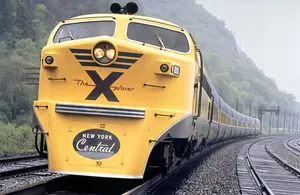
NYC's "Xplorer" (Train): Concept, Consist, Photos
Nov 21, 26 10:47 PM
 New York Central Xplorer, the Ohio Xplorer, Cleveland to Cincinnati in 1956. Pullman-Standard Train X cars, Baldwin-Lima-Hamilton locomotive 20, trains 423 and 424, timetable, consist, and photographs…
-
Frisco Diesel Roster (All-Time)
Nov 21, 26 10:27 PM
 St. Louis-San Francisco diesel locomotives, each frame once. From VO-1000 No. 200 in 1941 through the GP40-2s and SD38-2s of 1979.
-
Frisco Steam Roster (Built Since 1900)
Nov 21, 26 10:18 PM
 St. Louis-San Francisco steam locomotives built since 1900. Mikados, Mountains, and twenty-five 4-8-4s.
-
Robert R. Young: Net Worth, Railroads, Biography
Nov 21, 26 09:47 PM
 Robert Ralph Young, born February 14, 1897, in Canadian, Texas, chaired the Chesapeake and Ohio and, in 1954, the New York Central. He died on January 25, 1958, in Palm Beach.
-
St. Louis-San Francisco Railway (Frisco): Map, Rosters, History
Nov 21, 26 06:37 PM
 History of the St. Louis-San Francisco Railway, the Frisco. The Pacific Railroad, the coonskin, Yoakum, Pensacola, and the Burlington Northern merger of November 21, 1980. Steam and diesel rosters are…
-
Kuhn, Loeb and Company: Net Worth, Railroads, History
Nov 21, 26 01:34 PM
 Kuhn, Loeb and Company was the New York banking house in E. H. Harriman's circle. Abraham Kuhn and Solomon Loeb opened the banking partnership in 1867. Jacob H. Schiff joined on January 1, 1875.
-
Otto Kahn: Net Worth, Railroads, Biography
Nov 21, 26 01:22 PM
 Otto Hermann Kahn was born in Mannheim on February 21, 1867. He died in New York on March 29, 1934. He was the Kuhn, Loeb partner in E. H. Harriman's railroad work.
-
George Pullman: Net Worth, Palace Cars, Biography
Nov 21, 26 11:01 AM
 George M. Pullman was born at Brocton on March 3, 1831. He died in Chicago on October 19, 1897. He built the palace-car company that owned the sleeping cars.
-
Arthur E. Stilwell: Net Worth, Railroads, Biography
Nov 21, 26 12:33 AM
 Arthur E. Stilwell was born in Rochester on October 21, 1859. He died in New York on September 26, 1928. He built the road to Port Arthur and the Kansas City, Mexico and Orient.
-
Frederick Weyerhaeuser: Net Worth, Railroads, Biography
Nov 21, 26 12:22 AM
 Frederick Weyerhaeuser was born at Niedersaulheim on November 21, 1834. He died at Pasadena on April 4, 1914. He was a lumberman and a railroad director.
-
John Murray Forbes: Net Worth, CB&Q, Biography
Nov 21, 26 12:13 AM
 John Murray Forbes was born at Bordeaux on February 23, 1813. He died at Milton on October 12, 1898. He was chairman of the Chicago, Burlington and Quincy.
-
Henry B. Plant: Net Worth, Plant System, Biography
Nov 20, 26 10:27 PM
 Henry Bradley Plant was born at Branford, Connecticut, on October 27, 1819. He died at his home on Fifth Avenue on June 23, 1899. He was president of the Plant system and of the Southern Express Compa…
-
Henry Flagler: Net Worth, Florida East Coast, Biography
Nov 20, 26 10:00 PM
Henry Flagler was born at Canandaigua, New York. He died at Whitehall on May 20, 1913, at 83, and was buried at Memorial Presbyterian Church in St. Augustine. -
William Rockefeller: Net Worth, Railroads, Biography
Nov 20, 26 11:50 AM
 William Rockefeller was born in Richford, New York, on May 31, 1841. The Associated Press dates his death June 24, 1922, at Rockwood Hall. Redmond dates it June 23, at Pocantico Hills.
-
William H. Vanderbilt: Net Worth, Railroads, Biography
Nov 20, 26 10:08 AM
 William H. Vanderbilt was born in New Brunswick, New Jersey, on May 8, 1821. He died in New York City on December 8, 1885. His will names two blocks of $40,000,000 and states no total.
-
J. Edgar Thomson: Net Worth, Pennsylvania Railroad, Biography
Nov 20, 26 12:25 AM
 J. Edgar Thomson was born in Springfield, Delaware County, Pennsylvania, on February 10, 1808. He died in Philadelphia on May 27, 1874. No opened inventory states a total.
-
Thomas A. Scott: Net Worth, Railroads, Biography
Nov 20, 26 12:06 AM
Thomas A. Scott was born at Loudon, Pennsylvania, on December 28. The year is 1823 in one biography and 1824 on the funeral plate. He died near Darby on May 21, 1881. No opened inventory states a tota… -
Henry Villard: Net Worth, Railroads, Biography
Nov 19, 26 11:41 PM
 Henry Villard was born Ferdinand Heinrich Gustav Hilgard at Speyer on April 10, 1835, and died early on November 12, 1900, at Thorwood Park, near Dobbs Ferry. He was 65. A court recital put the person…
-
J.P. Morgan: Net Worth, Railroads, Biography
Nov 19, 26 07:03 PM
 John Pierpont Morgan was born in Hartford on April 17, 1837, and died in Rome on March 31, 1913, at 12:05 p.m. Rome time. He was 75. A 1916 New York appraisal put the gross estate at $78,149,024, excl…
-
Daniel Willard: Net Worth, Baltimore and Ohio, Biography
Nov 19, 26 06:51 PM
 Daniel Willard was born on January 28, 1861, and died on July 6, 1942. He was 81. He was president of the Baltimore and Ohio from January 15, 1910 until 1941. No opened record states a fortune. Time p…
-
Cyrus K. Holliday: Net Worth, Santa Fe, Biography
Nov 19, 26 06:03 PM
 Cyrus Kurtz Holliday was born April 3, 1826, and died in Topeka on March 29, 1900. He was 73. He founded Topeka, wrote the Atchison and Topeka charter, and was the railroad's first president. He l…
-
N&W 2-6-6-4 Locomotives (Class A): Specs, Roster, History
Nov 19, 26 05:39 PM
 Norfolk & Western Class A. Forty-three simple 2-6-6-4s, 1200 to 1242, built at Roanoke from 1936 to 1950 for time freight and used on passenger trains when assigned. Diagram specs, the 114,000-pou…
-
Jay Cooke: Net Worth, Civil War, Biography
Nov 19, 26 05:05 PM
 Jay Cooke was born at Sandusky on August 10, 1821, and died the night of February 16, 1905, at Ogontz. He was 83. Jay Cooke and Company opened January 1, 1861, and suspended September 18, 1873. He sol…
-
Daniel Drew: Net Worth, Erie Railroad, Biography
Nov 19, 26 04:44 PM
 Daniel Drew was born at Carmel on July 29, 1797, and died the night of September 18, 1879, age 82. He was Erie treasurer, not president. The settlement of July 2, 1868, put him out of that office.
-
James Fisk Jr.: Net Worth, Robber Baron, Biography
Nov 19, 26 02:47 PM
 James Fisk Jr. was born on April 1, 1835, and died the morning of January 7, 1872, at the Grand Central Hotel. He was 36. Edward S. Stokes shot him the afternoon before. He was an Erie director from O…
-
Chehalis-Centralia Polar Express Seats Are Sold Out
Nov 19, 26 02:43 PM
Chehalis-Centralia marks its Polar Express departures sold out. Diesel No. 6 is pulling while steam No. 15 is repaired. The business-car page still prints $260, $390, and $520. -
Cumbres & Toltec Lists Santa's Holiday Express
Nov 19, 26 02:38 PM
 Cumbres & Toltec lists Santa's Holiday Express for December 5-6 in Chama and December 12-13 in Antonito. Coach is $25. The Chama trip will not run to Dalton.
-
Florida Railroad Museum Lists the North Pole Express
Nov 19, 26 02:28 PM
 The Florida Railroad Museum lists the North Pole Express from November 27 through December 22, 2026. The trip is 3.75 hours. The museum will be closed November 21 and 22.
-
George Jay Gould: Net Worth, Railroads, Biography
Nov 19, 26 02:18 PM
 George Jay Gould was born in New York on February 6, 1864, and died on May 16, 1923, at his villa in France. The company pages date his father's portfolio to 1896. The Panic of 1907 broke the tran…
-
Jay Gould: Net Worth, Railroads, Biography
Nov 19, 26 01:43 PM
 Jason Gould, called Jay, was born at Roxbury on May 27, 1836, and died the morning of December 2, 1892. Erie president from October 1868 until 1872. From 1879 the Missouri Pacific was the center of th…
-
Mark Hopkins Jr.: Net Worth, Railroads, Biography
Nov 19, 26 11:53 AM
 Mark Hopkins Jr., born at Henderson on September 1, 1813, died at Fort Yuma on the night of March 29, 1878. Treasurer of the Central Pacific from June 28, 1861, until he died in that office. The 1881…
-
Leland Stanford: Net Worth, Railroads, Biography
Nov 19, 26 12:36 AM
 Amasa Leland Stanford, Watervliet 1824 to the Palo Alto house in June 1893, president of the Central Pacific and, until February 28, 1890, of the Southern Pacific. The 1893 inventory was about 17 mill…
-
Charles Crocker (Railroads): Robber Baron, Net Worth, Biography
Nov 19, 26 12:23 AM
 Charles Crocker, Troy 1822 to August 14, 1888, built the Central Pacific and drove the Siskiyou spike. He did not die president of the Southern Pacific. The opened biographies state no estate total.
-
Edward H. Harriman (Railroad): Facts, Robber Baron, Biography
Nov 19, 26 12:18 AM
 Edward Henry Harriman, February 25, 1848, to September 9, 1909, president of the Union Pacific from 1904 until he died in that office. The Courier-Journal put the known estate on the public record at…
-
Collis P. Huntington: Net Worth, Railroads, Biography
Nov 18, 26 11:26 PM
 Collis Potter Huntington, 1821 to 1900, vice president of the Central Pacific and president of the Southern Pacific from February 28, 1890, until he died in that office. The will stated no total. The…
-
Detroit Terminal Railroad: History, Roster
Nov 18, 26 10:47 PM
 The Detroit Terminal Railroad was a Detroit and Highland Park belt line, incorporated December 8, 1905. The November 1944 Guide listing gives 17.994 miles of first main track.
-
James J. Hill: Net Worth, Railroads, Robber Baron, Facts
Nov 18, 26 09:19 PM
 James J. Hill, 1838 to 1916, built the Great Northern from the St. Paul and Pacific to Puget Sound and left the chair in 1912. The fortune was estimated at $63 million. He left no will.
-
Cornelius Vanderbilt: Biography, Facts, Net Worth
Nov 18, 26 05:21 PM
 Cornelius Vanderbilt, 1794 to 1877, assembled the New York Central and Hudson River from the Harlem, the Hudson River Railroad, and the original New York Central, and died in office. The estate was ab…
-
Pacific Great Eastern Railway: All-Time Diesel Roster
Nov 18, 26 12:24 PM
 All-time diesel roster of the Pacific Great Eastern, the British Columbia Railway, and BC Rail. Classes, road numbers, and builder data from Paul Crozier Smith, Canadian Rail no. 547 (2012).
-
Pacific Great Eastern Railway: Map, History, Roster
Nov 18, 26 10:22 AM
 The Pacific Great Eastern, incorporated February 27, 1912, became the British Columbia Railway Company on March 30, 1972. On the October 26, 1969 Official Guide, 861.9 miles were under operation. Cana…
-
Northern Alberta Railways: Map, History, Timetables
Nov 17, 26 11:52 PM
 Northern Alberta Railways, reporting mark NAR, was incorporated June 14, 1929, and owned jointly by Canadian National and Canadian Pacific. On the October 27, 1968 freight timetable, Dawson Creek is 4…
-
Yakima Valley Transportation: History, Timetable, Photos
Nov 17, 26 10:51 PM
 Yakima Valley Transportation opened Christmas Day, 1907. Union Pacific bought it June 9, 1909. Last city car February 1, 1947. Last freight November 18, 1985. Line car A and steeplecab 298 stayed in Y…
-
"20th Century Limited" (Train): Map, Consist, Schedule, Interior
Nov 17, 26 05:03 PM
 The 20th Century Limited was the flagship passenger train of the NYC, operating until 1967 (just prior to the Penn Central merger).
-
Western Pacific Diesel Roster (All-Time)
Nov 17, 26 04:52 PM
 Western Pacific all-time diesel roster. Why the switchers, covered wagons, road switchers, and General Electric units were bought, where they worked, and what Union Pacific inherited on December 22, 1…
-
Western Pacific Steam Roster (Built Since 1900)
Nov 17, 26 04:49 PM
 Western Pacific steam locomotives built since 1900. Drury quantity column 201. Thirteen rows. Mikado 329 made the last regular steam run in June 1953.
-
Western Maryland Scenic Lists Polar Express Fares
Nov 17, 26 03:30 PM
 Western Maryland Scenic lists Polar Express tickets from November 21 through December 24, 2026. Coach is $40, plus a $5 heritage fee. Excursions are diesel while No. 1309 is inspected.
-
Western Pacific Railroad: Map, History, Logo, Rosters
Nov 17, 26 11:12 AM
 The Western Pacific, organized in San Francisco on March 3, 1903, the Feather River Route to Salt Lake City, and the Union Pacific acquisition completed on December 22, 1982.
-
Spokane, Portland & Seattle Diesel Roster (All-Time)
Nov 17, 26 10:53 AM
Spokane, Portland and Seattle all-time diesel roster. Why the Alcos, Baldwins, and Electro-Motive units were bought, where they worked, and which numbers Burlington Northern inherited. -
Spokane, Portland & Seattle Steam Roster (Built Since 1900)
Nov 17, 26 10:46 AM
 Spokane, Portland and Seattle steam locomotives built since 1900. Drury quantity column 121. Rebuilds counted once, 115 frames. Last steam run was June 23, 1956.
-
Spokane, Portland & Seattle Railway: Map, History, Photos
Nov 17, 26 10:10 AM
 The Spokane, Portland and Seattle, organized August 22, 1905 as the Portland and Seattle, the north-bank line to Portland, and the Burlington Northern merger at 12:01 a.m. on March 2, 1970.