George Pullman: Net Worth, Palace Cars, Biography
Published: November 21, 2026
By: Adam Burns
George M. Pullman was born at Brocton, in Chautauqua County, New York, on March 3, 1831. March 3 was a Thursday. He built the sleeping car the railroads came to call a palace car, and the company that owned the cars and hired the men who rode in them is the Pullman Palace Car Company. He was its president from the year it was organized until the morning he died.
He died in Chicago on October 19, 1897. October 19 was a Tuesday. He was sixty-six. The Beatrice Daily Express, the next morning, put the hour at six, at his house on Eighteenth Street and Prairie Avenue, and the cause at angina pectoris.
A sketch published in his lifetime puts the company's capital at $40,000,000. The United States Strike Commission, two years later, puts the paid-up capital at $30,000,000. He had started, the sketch says, as a clerk at $40 a year. He came to Chicago in 1859 with $6,000. The morning after he died, the Beatrice paper put the talk of his wealth between $12,000,000 and $80,000,000. An inventory filed in the Chicago probate court, and reported in January 1898, lists 23,919 shares of the Palace Car company.
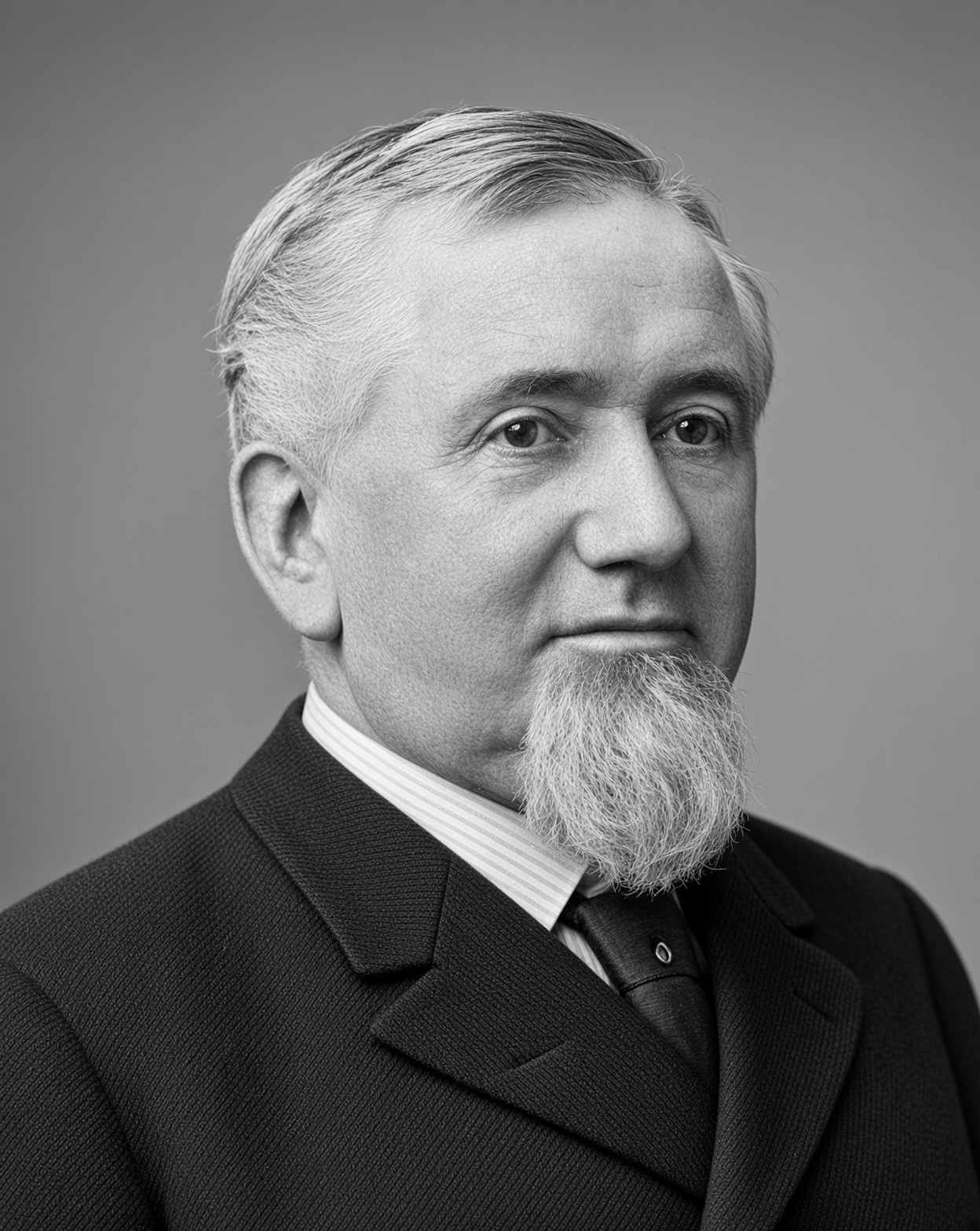
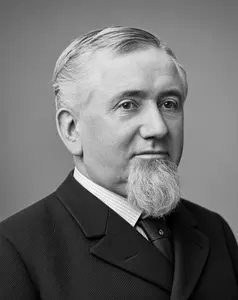
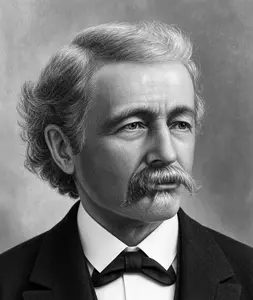
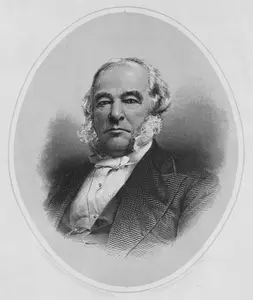
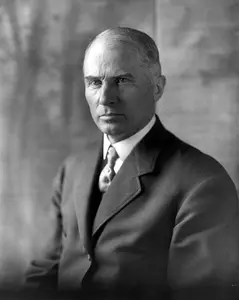
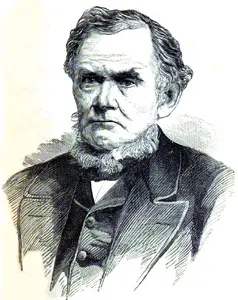
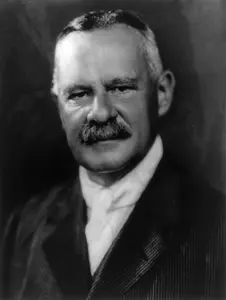
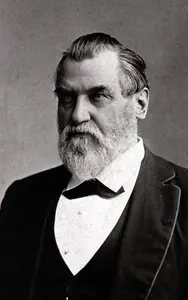
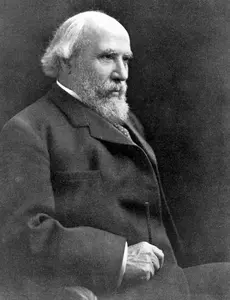
A portrait of George Pullman.
On this page: At a glance · Brocton · The cars · The town · The strike · Prairie Avenue
At a glance
| Item | Detail |
|---|---|
| Born | Brocton, Chautauqua County, New York. March 3, 1831, a Thursday. A newspaper sketch prints March 8 |
| Family | Hattie A. Sanger, March 1867. Florence, Harriet, and the twins George M. and Walter. One paper calls the twin Sanger |
| The cars | Two Chicago & Alton coaches, spring 1859. The Pioneer, 1865. Palace Car Company, February 22, 1867 |
| The town | Shops opened April 1881, south of Chicago. The 1892 sketch says 4,000 acres. The Strike Commission says 500 |
| The strike | Walkout May 11, 1894. The railroads stopped handling the cars on June 26 |
| Died | October 19, 1897, a Tuesday, in Chicago. Age 66. The next morning's paper says angina pectoris, at six |
| The money | A clerk's year at $40. $6,000 when he came to Chicago. The inventory lists 23,919 shares |
Brocton
James Lewis Pullman and Emily Caroline Minton were his parents. The father was a mechanic, born in Rhode Island. He died on November 1, 1853. November 1 was a Tuesday. The mother was a daughter of James Minton, of Auburn, New York. A sketch of 1892 names four brothers then living, Royal, Albert, James, and Charles, and two sisters, Helen and Emma. A brother, Frank, a lawyer, had died in 1879. The Beatrice Daily Express of October 20, 1897, in its sketch of the dead man, prints the birth as March 8, 1831, and does not name the village. The 1892 book prints Brocton, and March 3.
At fourteen he was a clerk in a store near home, at $40 a year. At the end of that year he went into his brother Royal's cabinet shop at Albion, New York, and learned the trade. While he was still in his teens he became his brother's partner. After the father died, the care of his mother and of the younger children fell largely to him. He had picked up enough of mechanics to bid on work, and New York was advertising for a contractor to widen the Erie Canal and raise the buildings along it. He got a contract. In 1859 he moved to Chicago with $6,000. The city was lifting the streets of the south division about six feet, and the brick and stone buildings on Lake Street and Water Street had to come up with them. He raised four-story and five-story blocks while the business inside went on. The 1892 sketch says he then spent three years in the Colorado mines and made a considerable sum, and that he was back in Chicago in 1863.
The cars
Before he went to Colorado he had already tried the idea. In the spring of 1859 he fitted two old day coaches of the Chicago & Alton as sleepers. He treated them as experiments. Joseph Husband, in The Story of the Pullman Car, says the plans for the first car he was willing to call his own were finished in 1864. It was built in Chicago, in a shed of the Chicago & Alton on the ground where Union Station later stood, and it took almost a year. The 1892 sketch says the work cost $18,000 and that he named the car the Pioneer. Husband gives $18,239.31 without the equipment, and $20,178.14 when the car was ready for service. He had the letter A added to the name, Husband writes, because he expected more cars, one for each letter of the alphabet. Up to then, $5,000 had been a high price for a coach. The Pioneer was a foot wider and two and a half feet higher than the cars then running, the extra height being what the hinged upper berth required. Station platforms and bridges would not let it pass.
The 1892 sketch says the Pioneer's first trip was on the train that carried Abraham Lincoln's body from Washington to Springfield. Husband says it was wanted for the run from Chicago to Springfield, in the spring of 1865, and that one railroad was altered so the car could go. A few years later the same car took Ulysses S. Grant from Detroit toward his home at Galena, and a second route was opened. The next car Pullman built cost $24,000. In 1866 five of the cars were running on the Chicago, Burlington & Quincy, named Atlantic, Pacific, Aurora, City of Chicago, and Omaha. Late in May an excursion of several hundred guests ran from Chicago to Aurora and back.
On February 22, 1867, the Pullman Palace Car Company was organized. February 22 was a Friday. Husband says that at the incorporation Pullman owned every sleeping car on the Michigan Central, the Great Western of Canada, and the New York Central, forty-eight cars in all, and that his brother A. B. Pullman was general superintendent. The Strike Commission says the capital at the start was $1,000,000. The same year the hotel car President went into service on the Great Western, a sleeper with a kitchen built into one end and the meals served at tables in the sections. The aim, Husband writes, was a car of one pattern that could run through from railroad to railroad, with the company's own employees aboard to look after the passengers. In March 1867 he married Hattie A. Sanger, daughter of James T. Sanger of Chicago. The 1892 sketch names the children Florence Sanger, Harriet Sanger, and the twins George M. and Walter Sanger. The Beatrice paper names the twins George and Sanger, and says Florence had married Frank O. Lowden two years before.
The town
In 1874 and 1875 he was president of the New York Loan and Improvement Company, organized in his own offices. With Jose F. DeNavarro and Commodore Garrison, each holding a third, the company built the Metropolitan Elevated on Second Avenue and Sixth Avenue. The street railways and a set of influential citizens fought it in court. When the higher court sustained the company, one hundred days of the charter's time remained. The road was running in ninety-six. He had also been interested in the Nicaragua canal from the start. The inventory filed after his death shows $200 of that company's stock and $10,000 of its bonds.
By 1880 the car works needed a new plant. The 1892 sketch says four thousand acres were bought along the west shore of Lake Calumet, about twelve miles south of the Chicago limits of that day, and five miles inland from Lake Michigan. The Strike Commission says the company bought five hundred acres in 1880 and built the plant and the town on three hundred of them. The shops opened in April 1881. The Corliss engine from the Centennial Exposition at Philadelphia furnished the power. The sketch puts the Arcade, with its theater, post office, bank, library, and stores, at $300,000. It counts nearly eighteen hundred houses, and says that by 1892 nearly $8,000,000 had gone into the place and that more than twelve thousand people lived there. The Beatrice paper, five years later, says eleven thousand. The commission says the rents ran from 20 to 25 percent above rents in Chicago or the nearby towns for similar rooms, that the employees could not buy land in the town and build their own houses, and that the company would not cut the rent when it cut the wage. Its position was that wages and rents were two different businesses.
The 1892 sketch calls the Palace Car company the largest railroad-car manufacturer in the world. It puts the capital at $40,000,000 and the assets above $45,000,000. It counts 2,239 cars and 13,885 employees, whose wages for the year came to $3,331,527.41, an average of $610.73. In 1891, it says, the cars carried about 5,500,000 passengers and ran about 187,000,000 miles. The Strike Commission, writing of the company in 1894, puts the paid-up capital at $30,000,000 and the surplus of undivided profits at nearly $25,000,000. For more than twenty years the dividend had been 2 percent a quarter. From 1867 to 1871, the commission says, the yearly dividends ran as high as 12 percent. For the year ending July 31, 1893, the dividends were $2,520,000 and the wages $7,223,719.51. For the year ending July 31, 1894, the dividends were $2,880,000 and the wages $4,471,701.39. The cars, it says, were running on about 125,000 miles of railroad, about three-fourths of the mileage in the country. The office building at Michigan Avenue and Adams Street, put up by the company in 1884, cost $1,000,000. He was at the office in that building the day before he died.
The strike
The depression of 1893 stopped the new-car work. After September of that year the company cut what it paid. The commission says the cut averaged about 25 percent, mostly by lowering the piece rates. The salaries of the officers, managers, and superintendents were not cut. Some witnesses swore that a paycheck for two weeks' work, once the rent was taken out, was sometimes 4 cents to $1. The company did not produce the checks. About $70,000 of rent had gone unpaid. The commission says that accumulation was a leniency, and that no one had been put out of a house. On May 7 and May 9, 1894, a committee of forty from the shops asked to have the wages of June 1893 restored, and asked that the rents come down. May 7 was a Monday. May 9 was a Wednesday. Thomas H. Wickes, the second vice president, told them the wages could not be raised a cent and the rents could not be lowered a penny. The next meeting was with Pullman. A woman on the committee told the commission what he said: he could not raise the wages or lower the rents.
The next day, May 10, three of the committee were laid off for an alleged lack of work. May 10 was a Thursday. That evening the local unions voted to strike at once. The strike began on May 11. May 11 was a Friday. The company laid off the six hundred employees who did not join, and kept the shops closed until August 2. August 2 was a Thursday. The Civic Federation of Chicago asked twice for a conciliation. The company answered that there was nothing to arbitrate. It gave the same answer to a committee of its own employees, to the common council of Chicago, and to Mayor Pingree of Detroit, who came with Mayor Hopkins and said he had telegrams from the mayors of more than fifty cities. On June 26 the American Railway Union stopped handling Pullman cars. June 26 was a Tuesday. The commission calls that railroad strike a sympathetic one. The grievance presented against the railroads was the handling of the cars. The commission also says that no violence or destruction by the strikers took place at Pullman, and that soldiers went to the town about July 4. Some 3,100 employees at Pullman lost, by the commission's estimate, at least $350,000 in wages. The railroads lost at least $685,308 in property destroyed, in the hire of deputy marshals, and in incidental expenses, and an estimated $4,672,916 in earnings.
Prairie Avenue
The Beatrice Daily Express of October 20, 1897, datelined Chicago that day, reported that he had died at six o'clock the morning before, at the house on Eighteenth Street and Prairie Avenue. He had been at the office in the Pullman Building on Monday, and had dined with friends at his club. Later he mentioned a slight pain in the back. He went to bed at his usual hour. At four o'clock the household was wakened by a noise in his room and found him standing in the center of it. The Rev. H. M. Eaton of New York, who was staying in the house, called Dr. Frank Billings. Restoratives did nothing. He died without speaking. His wife and the sons George and Sanger were in the East, and were wired. The paper's sketch of his life prints March 8, 1831. The book of 1892 prints March 3. From either day in March 1831 to that October morning, he was sixty-six. The same Beatrice paper reports Eugene V. Debs, speaking in New York when the news was shouted up to him: “Peace to his ashes.” Pullman, Debs said, would not arbitrate when he had nothing to arbitrate.
The Beatrice paper put the talk of his fortune, that morning, between $12,000,000 and $80,000,000, and said he owned about one-fifth of the Palace Car company, with other stock in Diamond Match and in New York Biscuit. The McCook Tribune of January 21, 1898, reported that an inventory had been filed in the probate court at Chicago by the executors, Norman B. Ream and Robert T. Lincoln. The paper says the inventory listed the real estate and the personal property, placed no valuation on the real estate, and gave the securities at par. He held 23,919 shares of Pullman Palace Car company stock. The Nicaragua canal holding was $200 in stock and $10,000 in bonds. Of the bonds, $15,000 were deemed desperate. The $40 was a clerk's year at Brocton. The $6,000 was what he brought to Chicago. The forty million and the thirty million were two accounts of the company's capital. The twelve million and the eighty million were the range the Beatrice paper printed the morning after he died. The shares were what the inventory listed. Husband writes that Robert T. Lincoln followed him in the presidency and held it until 1911.
Sources
- The Biographical Dictionary and Portrait Gallery of Representative Men of Chicago, the World's Columbian Exposition, Chicago and New York, American Biographical Publishing Company, 1892. Born at Brocton, March 3, 1831. James Lewis Pullman, died November 1, 1853, and Emily Caroline Minton. A clerk at fourteen, at $40 a year. Cabinet work at Albion with his brother Royal. Chicago in 1859, with $6,000. Three years in the Colorado mines, and back in 1863. Two Chicago & Alton coaches in the spring of 1859. The Pioneer, at $18,000, and its first trip with Lincoln's body. The Palace Car Company, February 22, 1867. Marriage to Hattie A. Sanger, March 1867. The town: 4,000 acres, shops in April 1881, the Arcade at $300,000, nearly $8,000,000 spent by 1892, more than 12,000 people. Capital $40,000,000. Assets above $45,000,000. 2,239 cars. 13,885 employees. Wages $3,331,527.41. The New York Loan and Improvement Company, 1874 and 1875, and the Metropolitan Elevated. The Pullman Building, 1884, at $1,000,000.
- Joseph Husband, The Story of the Pullman Car, Chicago, A. C. McClurg & Co., 1917. The Pioneer, $18,239.31 without equipment and $20,178.14 ready for service, built in a Chicago & Alton shed. A foot wider and two and a half feet higher. Wanted for the Chicago to Springfield run with Lincoln's body. Grant, from Detroit toward Galena. The next car, $24,000. Five cars on the Chicago, Burlington & Quincy in 1866. Incorporation in 1867, and forty-eight cars already owned. The hotel car President. He held the presidency from 1867 until his death in 1897. Robert T. Lincoln held it until 1911.
- United States Strike Commission, Report on the Chicago Strike of June-July, 1894, Washington, Government Printing Office, 1895. Carroll D. Wright, John D. Kernan, and Nicholas E. Worthington. Organized in 1867 with a capital of $1,000,000. Paid-up capital $30,000,000. Surplus nearly $25,000,000. Dividends of 2 percent a quarter. Year ending July 31, 1893: dividends $2,520,000, wages $7,223,719.51. Year ending July 31, 1894: dividends $2,880,000, wages $4,471,701.39. Five hundred acres in 1880, the town on three hundred. Rents 20 to 25 percent above Chicago, and not reduced. A wage cut of about 25 percent. The committee of forty, May 7 and May 9, 1894. The strike of May 11. Shops closed until August 2. Nothing to arbitrate. The boycott of June 26. No violence at Pullman. About 3,100 employees lost at least $350,000. The railroads lost at least $685,308, and an estimated $4,672,916 in earnings.
- Beatrice Daily Express, Beatrice, Nebraska, October 20, 1897. Died at six o'clock the morning before, Eighteenth Street and Prairie Avenue, angina pectoris. The birth printed as March 8, 1831. Married in 1867 to Hattie Sanger. Florence married to Frank O. Lowden two years before. Wealth talked of at from $12,000,000 to $80,000,000. About one-fifth of the Palace Car company. Debs: peace to his ashes.
- McCook Tribune, McCook, Nebraska, January 21, 1898. Inventory filed in the Chicago probate court by Norman B. Ream and Robert T. Lincoln. No valuation placed on the real estate. Securities at par. 23,919 shares of Pullman Palace Car company stock. Nicaragua Canal, $200 in stock and $10,000 in bonds. $15,000 of bonds deemed desperate.
Recent Articles


-
George Pullman: Net Worth, Palace Cars, Biography
Nov 21, 26 11:01 AM
 George M. Pullman was born at Brocton on March 3, 1831. He died in Chicago on October 19, 1897. He built the palace-car company that owned the sleeping cars.
-
Arthur E. Stilwell: Net Worth, Railroads, Biography
Nov 21, 26 12:33 AM
 Arthur E. Stilwell was born in Rochester on October 21, 1859. He died in New York on September 26, 1928. He built the road to Port Arthur and the Kansas City, Mexico and Orient.
-
Frederick Weyerhaeuser: Net Worth, Railroads, Biography
Nov 21, 26 12:22 AM
 Frederick Weyerhaeuser was born at Niedersaulheim on November 21, 1834. He died at Pasadena on April 4, 1914. He was a lumberman and a railroad director.
-
John Murray Forbes: Net Worth, CB&Q, Biography
Nov 21, 26 12:13 AM
 John Murray Forbes was born at Bordeaux on February 23, 1813. He died at Milton on October 12, 1898. He was chairman of the Chicago, Burlington and Quincy.
-
Henry B. Plant: Net Worth, Plant System, Biography
Nov 20, 26 10:27 PM
 Henry Bradley Plant was born at Branford, Connecticut, on October 27, 1819. He died at his home on Fifth Avenue on June 23, 1899. He was president of the Plant system and of the Southern Express Compa…
-
Henry Flagler: Net Worth, Florida East Coast, Biography
Nov 20, 26 10:00 PM
Henry Flagler was born at Canandaigua, New York. He died at Whitehall on May 20, 1913, at 83, and was buried at Memorial Presbyterian Church in St. Augustine. -
William Rockefeller: Net Worth, Railroads, Biography
Nov 20, 26 11:50 AM
 William Rockefeller was born in Richford, New York, on May 31, 1841. The Associated Press dates his death June 24, 1922, at Rockwood Hall. Redmond dates it June 23, at Pocantico Hills.
-
William H. Vanderbilt: Net Worth, Railroads, Biography
Nov 20, 26 10:08 AM
 William H. Vanderbilt was born in New Brunswick, New Jersey, on May 8, 1821. He died in New York City on December 8, 1885. His will names two blocks of $40,000,000 and states no total.
-
J. Edgar Thomson: Net Worth, Pennsylvania Railroad, Biography
Nov 20, 26 12:25 AM
 J. Edgar Thomson was born in Springfield, Delaware County, Pennsylvania, on February 10, 1808. He died in Philadelphia on May 27, 1874. No opened inventory states a total.
-
Thomas A. Scott: Net Worth, Railroads, Biography
Nov 20, 26 12:06 AM
 Thomas A. Scott was born at Loudon, Pennsylvania, on December 28. The year is 1823 in one biography and 1824 on the funeral plate. He died near Darby on May 21, 1881. No opened inventory states a tota…
-
Henry Villard: Net Worth, Railroads, Biography
Nov 19, 26 11:41 PM
 Henry Villard was born Ferdinand Heinrich Gustav Hilgard at Speyer on April 10, 1835, and died early on November 12, 1900, at Thorwood Park, near Dobbs Ferry. He was 65. A court recital put the person…
-
J.P. Morgan: Net Worth, Railroads, Biography
Nov 19, 26 07:03 PM
 John Pierpont Morgan was born in Hartford on April 17, 1837, and died in Rome on March 31, 1913, at 12:05 p.m. Rome time. He was 75. A 1916 New York appraisal put the gross estate at $78,149,024, excl…
-
Daniel Willard: Net Worth, Baltimore and Ohio, Biography
Nov 19, 26 06:51 PM
 Daniel Willard was born on January 28, 1861, and died on July 6, 1942. He was 81. He was president of the Baltimore and Ohio from January 15, 1910 until 1941. No opened record states a fortune. Time p…
-
Cyrus K. Holliday: Net Worth, Santa Fe, Biography
Nov 19, 26 06:03 PM
 Cyrus Kurtz Holliday was born April 3, 1826, and died in Topeka on March 29, 1900. He was 73. He founded Topeka, wrote the Atchison and Topeka charter, and was the railroad's first president. He l…
-
N&W 2-6-6-4 Locomotives (Class A): Specs, Roster, History
Nov 19, 26 05:39 PM
 Norfolk & Western Class A. Forty-three simple 2-6-6-4s, 1200 to 1242, built at Roanoke from 1936 to 1950 for time freight and used on passenger trains when assigned. Diagram specs, the 114,000-pou…
-
Jay Cooke: Net Worth, Civil War, Biography
Nov 19, 26 05:05 PM
 Jay Cooke was born at Sandusky on August 10, 1821, and died the night of February 16, 1905, at Ogontz. He was 83. Jay Cooke and Company opened January 1, 1861, and suspended September 18, 1873. He sol…
-
Daniel Drew: Net Worth, Erie Railroad, Biography
Nov 19, 26 04:44 PM
 Daniel Drew was born at Carmel on July 29, 1797, and died the night of September 18, 1879, age 82. He was Erie treasurer, not president. The settlement of July 2, 1868, put him out of that office.
-
James Fisk Jr.: Net Worth, Robber Baron, Biography
Nov 19, 26 02:47 PM
 James Fisk Jr. was born on April 1, 1835, and died the morning of January 7, 1872, at the Grand Central Hotel. He was 36. Edward S. Stokes shot him the afternoon before. He was an Erie director from O…
-
Chehalis-Centralia Polar Express Seats Are Sold Out
Nov 19, 26 02:43 PM
Chehalis-Centralia marks its Polar Express departures sold out. Diesel No. 6 is pulling while steam No. 15 is repaired. The business-car page still prints $260, $390, and $520. -
Cumbres & Toltec Lists Santa's Holiday Express
Nov 19, 26 02:38 PM
 Cumbres & Toltec lists Santa's Holiday Express for December 5-6 in Chama and December 12-13 in Antonito. Coach is $25. The Chama trip will not run to Dalton.
-
Florida Railroad Museum Lists the North Pole Express
Nov 19, 26 02:28 PM
 The Florida Railroad Museum lists the North Pole Express from November 27 through December 22, 2026. The trip is 3.75 hours. The museum will be closed November 21 and 22.
-
George Jay Gould: Net Worth, Railroads, Biography
Nov 19, 26 02:18 PM
 George Jay Gould was born in New York on February 6, 1864, and died on May 16, 1923, at his villa in France. The company pages date his father's portfolio to 1896. The Panic of 1907 broke the tran…
-
Jay Gould: Net Worth, Railroads, Biography
Nov 19, 26 01:43 PM
 Jason Gould, called Jay, was born at Roxbury on May 27, 1836, and died the morning of December 2, 1892. Erie president from October 1868 until 1872. From 1879 the Missouri Pacific was the center of th…
-
Mark Hopkins Jr.: Net Worth, Railroads, Biography
Nov 19, 26 11:53 AM
 Mark Hopkins Jr., born at Henderson on September 1, 1813, died at Fort Yuma on the night of March 29, 1878. Treasurer of the Central Pacific from June 28, 1861, until he died in that office. The 1881…
-
Leland Stanford: Net Worth, Railroads, Biography
Nov 19, 26 12:36 AM
 Amasa Leland Stanford, Watervliet 1824 to the Palo Alto house in June 1893, president of the Central Pacific and, until February 28, 1890, of the Southern Pacific. The 1893 inventory was about 17 mill…
-
Charles Crocker (Railroads): Robber Baron, Net Worth, Biography
Nov 19, 26 12:23 AM
 Charles Crocker, Troy 1822 to August 14, 1888, built the Central Pacific and drove the Siskiyou spike. He did not die president of the Southern Pacific. The opened biographies state no estate total.
-
Edward H. Harriman (Railroad): Facts, Robber Baron, Biography
Nov 19, 26 12:18 AM
 Edward Henry Harriman, February 25, 1848, to September 9, 1909, president of the Union Pacific from 1904 until he died in that office. The Courier-Journal put the known estate on the public record at…
-
Collis P. Huntington: Net Worth, Railroads, Biography
Nov 18, 26 11:26 PM
 Collis Potter Huntington, 1821 to 1900, vice president of the Central Pacific and president of the Southern Pacific from February 28, 1890, until he died in that office. The will stated no total. The…
-
Detroit Terminal Railroad: History, Roster
Nov 18, 26 10:47 PM
 The Detroit Terminal Railroad was a Detroit and Highland Park belt line, incorporated December 8, 1905. The November 1944 Guide listing gives 17.994 miles of first main track.
-
James J. Hill: Net Worth, Railroads, Robber Baron, Facts
Nov 18, 26 09:19 PM
 James J. Hill, 1838 to 1916, built the Great Northern from the St. Paul and Pacific to Puget Sound and left the chair in 1912. The fortune was estimated at $63 million. He left no will.
-
Cornelius Vanderbilt: Biography, Facts, Net Worth
Nov 18, 26 05:21 PM
 Cornelius Vanderbilt, 1794 to 1877, assembled the New York Central and Hudson River from the Harlem, the Hudson River Railroad, and the original New York Central, and died in office. The estate was ab…
-
Pacific Great Eastern Railway: All-Time Diesel Roster
Nov 18, 26 12:24 PM
 All-time diesel roster of the Pacific Great Eastern, the British Columbia Railway, and BC Rail. Classes, road numbers, and builder data from Paul Crozier Smith, Canadian Rail no. 547 (2012).
-
Pacific Great Eastern Railway: Map, History, Roster
Nov 18, 26 10:22 AM
 The Pacific Great Eastern, incorporated February 27, 1912, became the British Columbia Railway Company on March 30, 1972. On the October 26, 1969 Official Guide, 861.9 miles were under operation. Cana…
-
Northern Alberta Railways: Map, History, Timetables
Nov 17, 26 11:52 PM
 Northern Alberta Railways, reporting mark NAR, was incorporated June 14, 1929, and owned jointly by Canadian National and Canadian Pacific. On the October 27, 1968 freight timetable, Dawson Creek is 4…
-
Yakima Valley Transportation: History, Timetable, Photos
Nov 17, 26 10:51 PM
 Yakima Valley Transportation opened Christmas Day, 1907. Union Pacific bought it June 9, 1909. Last city car February 1, 1947. Last freight November 18, 1985. Line car A and steeplecab 298 stayed in Y…
-
"20th Century Limited" (Train): Map, Consist, Schedule, Interior
Nov 17, 26 05:03 PM
 The 20th Century Limited was the flagship passenger train of the NYC, operating until 1967 (just prior to the Penn Central merger).
-
Western Pacific Diesel Roster (All-Time)
Nov 17, 26 04:52 PM
 Western Pacific all-time diesel roster. Why the switchers, covered wagons, road switchers, and General Electric units were bought, where they worked, and what Union Pacific inherited on December 22, 1…
-
Western Pacific Steam Roster (Built Since 1900)
Nov 17, 26 04:49 PM
 Western Pacific steam locomotives built since 1900. Drury quantity column 201. Thirteen rows. Mikado 329 made the last regular steam run in June 1953.
-
Western Maryland Scenic Lists Polar Express Fares
Nov 17, 26 03:30 PM
 Western Maryland Scenic lists Polar Express tickets from November 21 through December 24, 2026. Coach is $40, plus a $5 heritage fee. Excursions are diesel while No. 1309 is inspected.
-
Western Pacific Railroad: Map, History, Logo, Rosters
Nov 17, 26 11:12 AM
 The Western Pacific, organized in San Francisco on March 3, 1903, the Feather River Route to Salt Lake City, and the Union Pacific acquisition completed on December 22, 1982.
-
Spokane, Portland & Seattle Diesel Roster (All-Time)
Nov 17, 26 10:53 AM
Spokane, Portland and Seattle all-time diesel roster. Why the Alcos, Baldwins, and Electro-Motive units were bought, where they worked, and which numbers Burlington Northern inherited. -
Spokane, Portland & Seattle Steam Roster (Built Since 1900)
Nov 17, 26 10:46 AM
 Spokane, Portland and Seattle steam locomotives built since 1900. Drury quantity column 121. Rebuilds counted once, 115 frames. Last steam run was June 23, 1956.
-
Spokane, Portland & Seattle Railway: Map, History, Photos
Nov 17, 26 10:10 AM
 The Spokane, Portland and Seattle, organized August 22, 1905 as the Portland and Seattle, the north-bank line to Portland, and the Burlington Northern merger at 12:01 a.m. on March 2, 1970.
-
Pacific Electric Railway: Car Roster
Nov 16, 26 12:15 AM
 Pacific Electric cars by order: the St. Louis 800s and 950s, Jewett Tens, Standard Steel 1100s, Pressed Steel and Pullman 1200s, and the city-car number catalog.
-
Pacific Electric Railway: Locomotive Roster
Nov 16, 26 12:02 AM
 Pacific Electric box motors, Baldwin-Westinghouse electrics, company-built locomotives, and the General Electric diesels numbered 1650-1654 in 1947.
-
Pacific Electric Railway: Map, Logo, History, Photos
Nov 15, 26 11:38 PM
 The Pacific Electric Red Cars of Los Angeles, Henry Huntington, the Great Merger of September 1, 1911, and the last Long Beach train on the morning of April 9, 1961.
-
Spokane International Railroad: Map, History, Photos
Nov 15, 26 06:54 AM
 The Spokane International, chartered January 1, 1905, from Spokane to Eastport, Idaho, its steam locomotives and Alco RS-1s, and Union Pacific control on October 6, 1958.
-
Northwestern Pacific Railroad: History, Map, Timetable
Nov 15, 26 12:38 AM
 The Northwestern Pacific, incorporated January 8, 1907, by the Southern Pacific and the Santa Fe, the Willits to Shively line, general traffic on July 1, 1915, and the later operators north of San Fra…
-
Northern Pacific Diesel Roster (All-Time)
Nov 14, 26 09:17 PM
 Northern Pacific all-time diesel roster. Alco, Baldwin, Electro-Motive, and General Electric serials, orders, and build dates.
-
Northern Pacific Steam Roster (Built Since 1900)
Nov 14, 26 07:44 PM
Northern Pacific steam locomotives built since 1900. Last steam run was January 17, 1958.