Patrick B. McGinnis: Net Worth, Railroads, Biography
Published: November 22, 2026
By: Adam Burns
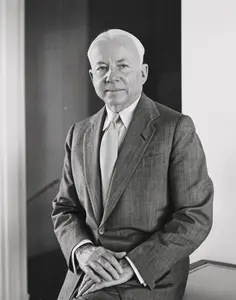
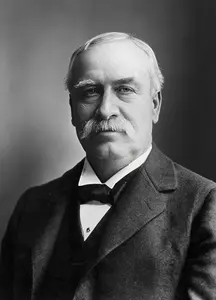
Patrick Benedict McGinnis was born on May 23, 1904, a Monday, in Palmyra, a town in Wayne County, New York. Current Biography, in the living sketch of 1955, says he was one of four children of Patrick and Ann (Mulgannon) McGinnis, and that his father was a floating gang foreman on the New York Central. He became chairman of the Norfolk Southern, chairman of the Central of Georgia, president of the New Haven, and president of the Boston and Maine. Time, on August 23, 1963, said he had made a million as a Wall Street railroad securities specialist before he went from rating railroads to running them.
The yearbook calls him an authority on railroad bonds from 1930, and on reorganization. Time, on April 26, 1954, says railroaders rated his book the best in the field, and calls it Guide to Railroad Reorganization. The yearbook's title is Guide to Railroad Reorganization Securities. In 1947 a group he led took a controlling interest in the Norfolk Southern, and he was elected chairman. On January 16, 1953, a Friday, he was elected chairman of the Central of Georgia and resigned the Norfolk Southern chair, because, the yearbook says, one man could not hold executive offices on two railroads without leave from the Interstate Commerce Commission. Forbes, as the yearbook cites it, says the Commission's report brought him a fine of $5,000 for extravagance in handling the Norfolk Southern's affairs. Time in 1963 tells that exit another way: a federal judge fined the line for selling securities without competitive bidding, and he was tossed out as chairman.
On April 14, 1954, a Wednesday, he elected eleven directors of the New Haven to Frederic C. Dumaine, Jr.'s ten. The yearbook says he was elected president, with John E. Slater as chairman. Time, reporting that meeting in the April 26 issue, says he planned to install himself as president. In the week before the January 30, 1956, issue he quit the $75,000-a-year New Haven job, less than five hours after he had called a report of his leaving absolute baloney, and five hours after the resignation he was president of the Boston and Maine. The Court of Appeals for the First Circuit, on May 25, 1966, a Wednesday, affirmed his conviction for misapplying assets of that railroad in the sale of ten stainless-steel passenger cars. The opinion states the payments he collected, $35,000.
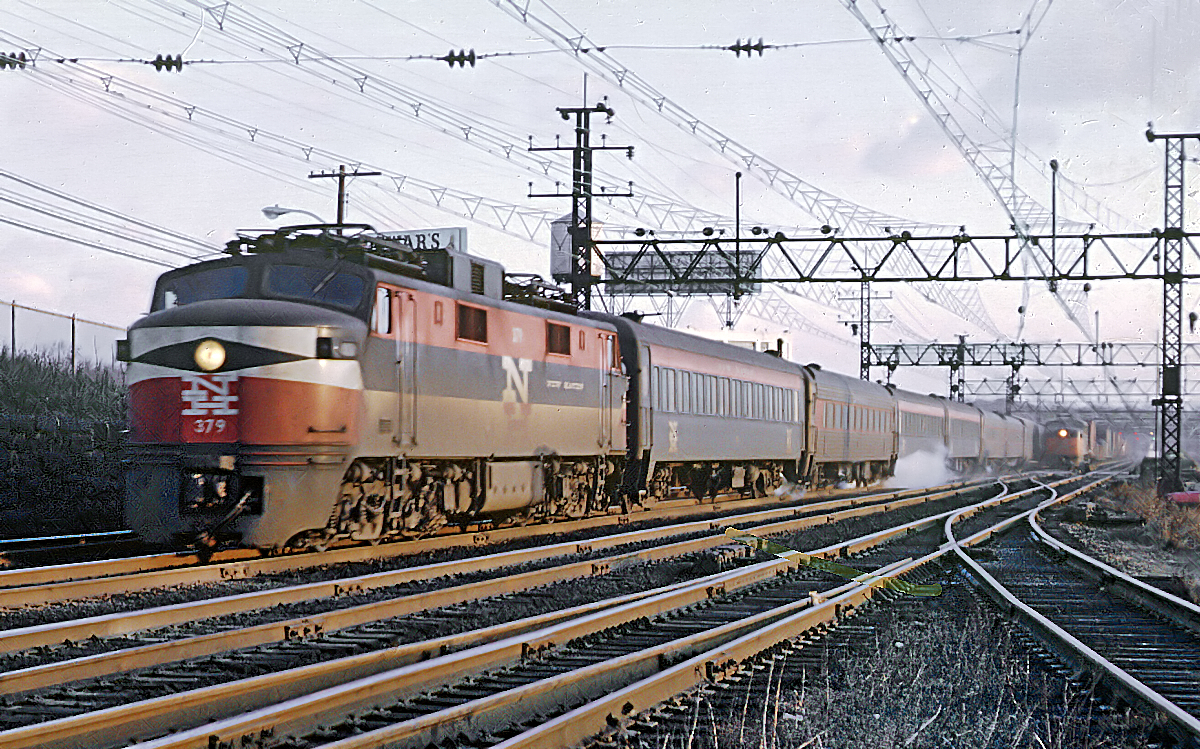
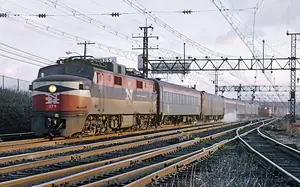
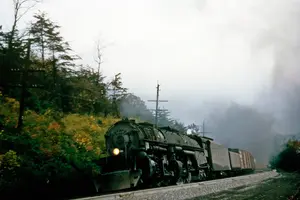
New Haven EP-5 #379 rolls through the New Rochelle, New York interlocking at Cedar Street with what is likely a New Haven-Grand Central Terminal commuter train on February 4, 1969. The electric is wearing the railroad's updated "McGinnis" livery that McGinnis began applying to equipment during his tenure. Marty Bernard.
On this page: At a glance · Palmyra · The bond desk · Norfolk Southern · Central of Georgia · The New Haven · Boston and Maine · The ten cars
At a glance
| Item | Detail |
|---|---|
| Born | May 23, 1904, a Monday, Palmyra, Wayne County, New York. One of four. Patrick and Ann (Mulgannon) McGinnis |
| Family | Lucile Whitney, August 4, 1930, a Monday. Son Patrick Benedict. Daughter Carol Iveagh |
| Norfolk Southern | Chairman and director from 1947. Resigned when he took the Central of Georgia chair, January 16, 1953 |
| Central of Georgia | Chairman from January 16, 1953, a Friday. Time says he withdrew after trouble with the stockholders |
| New Haven | Eleven directors on April 14, 1954, a Wednesday. The yearbook says he was elected president. The salary Time later prints is $75,000 |
| Boston and Maine | Board on April 13, 1955, a Wednesday, 273,237 to 197,142. President in the week before the January 30, 1956, issue, five hours after he left the New Haven |
| The money | Time, August 23, 1963: made a million. New Haven salary $75,000 a year. Yearbook, citing Forbes: a $5,000 fine. The court: $35,000 from the car sale |
Palmyra
The yearbook says that as a child he knew the rail yards in and around Palmyra, where his father worked. He attended Palmyra High School. At St. Lawrence University in Canton he met his expenses by managing a motion-picture theatre. He also managed the varsity football team and, the yearbook says, occasionally tried his hand at amateur theatricals. Forbes of April 1, 1955, as the yearbook quotes it, credits that work with an easy public-speaking delivery. He had meant to become a chemical engineer. He majored in chemistry, and in 1926 he received the bachelor of science with high honors.
On graduation he took a place with a New York brokerage firm, offered by a wealthy St. Lawrence alumnus, and he took postgraduate courses at New York University and at Columbia. On August 4, 1930, a Monday, he married Lucile Whitney. They had a son, Patrick Benedict, and a daughter, Carol Iveagh. The yearbook says his faith was Roman Catholic. He belonged to Alpha Tau Omega, the Princess Anne Country Club in Virginia, and the Seaview Country Club in New Jersey. The 1955 business address was 61 Broadway. The house was 30 Belair Road, Staten Island. Time, in the April 26, 1954, piece, describes a sprawling, century-old mansion on Staten Island, overlooking the harbor, and a ferry commute. Time of January 16, 1956, calls Lucile a decorator and an art connoisseur, and says that since he took the New Haven he had spent more than 350 nights aboard his business car, almost always with her.
The bond desk
In 1930 he became manager of the railroad-bond department of Lehman Brothers. In 1931, the yearbook says, the financial structures of the railroads began to fall apart, Lehman Brothers closed that department, and he was out of a job. For the next six years he was in and out of several investment firms. In 1937 he joined the New York Stock Exchange firm of Pflugfelder, Bampton and Rust, in charge of the rail-bond department. Courses at Brooklyn Law School let him serve as an expert witness in 25 of 36 major railroad reorganizations, including the New Haven, which went into receivership in 1935. He also lectured at the New York Institute of Finance.
In 1938 Pflugfelder, Bampton and Rust issued the first book of the facts he had collected on the 36 Class I railroads then in bankruptcy. During 1943 and 1944 he was a consultant to the Office of Defense Transportation. He became a partner of the firm in 1943. In 1946, after that firm was dissolved, he was senior partner in McGinnis, Bampton and Sellger, which is the yearbook's spelling. McGinnis and Company was organized in 1949. Forbes, in the words the yearbook uses, called him the most exciting railroading personality since Commodore Vanderbilt and old Dan'l Drew. Time says he knew the business from roundhouse to board room.
Norfolk Southern
A group of associates, with him, acquired a controlling interest in the Norfolk Southern. In 1947 he was elected chairman of the board and a director of the railway, and of the Norfolk Southern Bus Corporation. In 1948 he established the McGinnis Industrial Center, a Norfolk corporation. In 1949 he was elected chairman of the John L. Roper Lumber Company and of the Roper Realization Company, both of Norfolk. McGinnis, Bampton and Sellger were the agents for Frederic C. Dumaine, Sr., who in 1948 was elected chairman of the New Haven.
In 1952 the group claimed, in the words the yearbook takes from Time of February 22, 1954, that they had brought the railroad from the brink of bankruptcy to a point where stock dividends were resumed. In January 1952 the Interstate Commerce Commission, on its own motion, ordered an investigation into the management. The yearbook, citing Forbes, says that as a result of the Commission's report he was fined $5,000 for extravagance in handling the road's affairs. His reply, in the yearbook, was that you have to spend money to make money, and that he had put the road on its feet. Time of April 26, 1954, says the Commission had criticized his expense accounts while he was boss of that railroad, and that he argued the heavy expenses paid heavy dividends in new business. The same magazine, on August 23, 1963, says he was tossed out as chairman after a federal judge fined the line for selling securities without competitive bidding.
Central of Georgia
On January 16, 1953, a Friday, he was elected chairman of the Central of Georgia. He resigned the Norfolk Southern the same stretch of events. The yearbook gives the reason as the federal rule against one man in executive offices on two railroads without the Commission's approval. During the Central of Georgia chairmanship, Forbes, as the yearbook quotes it, says he pulled down operating and transportation rates and boosted freight revenues, and that he never did realize a dividend for the stockholders. Time of April 26, 1954, says he had so much trouble with those stockholders after he won control that he withdrew. Time of August 23, 1963, says he was eased out for highhanding the directors.
The New Haven
Frederic C. Dumaine, Sr., died on May 27, 1951, a Sunday. His son, Frederic C. Dumaine, Jr., succeeded him as president. The yearbook says that under the two Dumaines the railroad was dieselized and new passenger cars were bought. McGinnis had bought into the New Haven in 1948. He became dissatisfied with a modernization that had eaten into operating capital so far that dividends were being declared only on the preferred. In April 1953 he elected four directors of his way of thinking. Early in 1954 he charged, in the account the yearbook takes from Time of April 5, that although the railroad had declared a profit every year since 1949, the profit came from real estate, and that as a carrier it had lost over $4,000,000 under the Dumaines.
The New Haven used cumulative voting. Time of April 26, 1954, explains it: one share counted for 21 votes, and the votes could be spread across a slate of 21 directors or lumped. He concentrated on eleven. Dumaine split his votes among 15 and won ten. The meeting ran 41 and a half hours, with eight recesses, while tellers counted proxies for 96 percent of the stock. The count was 488,939 proxies and eleven directors for McGinnis, and 481,302 proxies and ten directors for Dumaine. Time says some thought the balance was the 23,200 shares of John A. Munro, a stockbroker in Morristown, New Jersey. The yearbook says the McGinnis group owned only about 30 percent of the stock, and that the election of the eleven directors, and his election as president, fell on April 14, 1954, a Wednesday. Time, in the issue of April 26, still has him planning to install himself as president, and Slater, president of American Export Lines, as chairman.
Time calls the railroad a $500 million line, and writes of his ideas for an 1,800-mile line. The yearbook says the main line, New York to Boston, was only about 200 miles, with no continuous freight trackage. He wanted, Time says, to pay the remaining $4 a share of back dividends on the preferred, and then to pay dividends on 525,789 shares of common. He was toying with a low-slung aluminum train something like Spain's Talgo, that might make New York to Boston in fewer than three hours. On June 3, 1954, a Thursday, he told the Greater Boston Chamber of Commerce that within a year and a half the time could be two and a half hours. Time of January 16, 1956, says he had by then ordered three such trains, and that he also proposed a moving conveyor between New York and Boston for less-than-carload freight. He would not take Dumaine's private car. Time quotes him: he would be afraid to, after what happened on the Norfolk. The same piece puts Dumaine's stake at more than $18 million.
On May 6, 1954, a Thursday, the yearbook says, the New Haven withdrew an application Dumaine had filed for commutation-fare increases of 24 to 30 percent. He maintained that the railroad had the density to make passenger service pay. Time of January 16, 1956, says 63 percent of the business came from passengers, and that he treated commuters as a liability. The same piece gives the crowds he inherited as contented a year before: 35,000 suburbanites on the New York end and 22,000 in Boston. By January 1956 the complaints were late trains, sloppy service, and cuts in maintenance. Time says that in 1955 maintenance was curtailed by some $3,000,000. Two weeks later the magazine says commuters protested a slash of $12 million in maintenance funds since 1953. He had the freight cars painted black, white, and Chinese vermilion. Time says Lucile concocted the colors.
The remarks Time prints are tart. Asked about promises after the proxy fight, he said he had given those politicians everything they asked for. Complaints about crowded Friday trains left him unmoved: if everybody wanted to travel on weekends, they would have to stand. Grand stations, he said, were a waste, and a commuter could be just as happy catching the 5:08 in a tent as in the marble of years gone by. A monthly parking charge of $5.50 a car, which he defended in a speech at Norwalk, brought the line about a lousy five bucks and people acting as though he had torn up the tracks. He said he was a businessman, not the Ford Foundation. On July 14, 1955, a Thursday, the yearbook says, the Boston-bound Federal Express left the rails on a sharp curve near Bridgeport. The first eight cars and the locomotive went down a 40-foot embankment. The engineer was killed, and about 24 passengers and crewmen were hurt. He said the accident was not faulty equipment, and that it pointed up the need for the low-center trains he had been advocating. The yearbook takes that sentence from the New York World-Telegram and Sun of that day.
In the week before the January 30, 1956, issue he was 51. Time says he had been in the job 21 months. He roared that a report of his leaving was absolute baloney. Less than five hours later he said he would quit, because a splinter group of directors did not like the way he was running the railroad. Morgan B. Brainard, Sr., of the Aetna Life Insurance Company, had resigned from the board twelve months earlier. The directors tried Werter S. Hackworth, president of the Nashville, Chattanooga and St. Louis. Hackworth's answer, in Time, was too many commuters and too many headaches. The board chose George Alpert, 57, a Boston lawyer, at $50,000 a year. Alpert had helped the 1954 fight. He said he would hire an operating boss, buy a large number of diesels, add $3,000,000 to maintenance in 1956, and run the trains on time. Until the public had proper service, he said, the investors were not entitled to a return.
McGinnis claimed a profit of $9,275,000 for eleven months of 1955, almost double the 1954 net. Two weeks earlier Time had printed an estimate of $10.5 million for 1955. Dumaine, Jr., said they must have lost $7,000,000 running the railroad 20 months, using cash reserves and income from subsidiaries such as The Connecticut Company. Time says long-term debt rose from $193,850,000 to $199,580,000. A footnote in that issue says he used New Haven cash to pay preferred dividends, of which he held little, so that he could pay the common, of which he and the directors held 128,500 shares. The common, Time says, skidded from a high of 39 to a low of 28 in 1955.
Boston and Maine
He wanted the Boston and Maine while he still had the New Haven. In December 1954, the yearbook says, three of his friends had acquired the largest single block of that stock. On March 7, 1955, a Monday, the Commission, alerted by New England senators including Leverett Saltonstall and John Kennedy, announced an inquiry into purchases by interests under the control of, or friendly to, the New Haven management. The yearbook cites the New York Times of the next day. At the annual meeting of April 13, 1955, a Wednesday, the slate favorable to him received 273,237 votes to 197,142. Time of April 25 says Edward S. French, the chairman, and Timothy G. Sughrue, the president, resigned before the proxies were counted, afraid that if they stayed and were fired they would lose their pensions. The yearbook spells the president Timothy J. Sughrue, and says the two men had resigned the day before the meeting.
The victory, Time says, gave him and his friends control of a road with 3,200 miles of track and a 1954 operating profit of $3,987,721, and, with the New Haven, 80 percent of the railroad business in New England. In the January 30, 1956, issue the same magazine calls the Boston and Maine a small 1,575-mile railroad that ran its trains on time. In his corner, Time says, were Burton M. Cross, a former governor of Maine, Francis P. Murphy, a onetime governor of New Hampshire, and Pierre Dumaine, called Spike, a brother of Frederic Dumaine, Jr. Spike was named a director.
He was not yet president of both roads. Time of April 25, 1955, says he expected the new board to name him president, and that no one at the Commission could remember the agency letting one man be chief executive of two major roads. A preliminary opinion, the magazine says, held that the group was already violating the act that forbids one railroad to take control of another without permission. The yearbook says the new board authorized counsel to seek that authority, set up an interim executive committee of six, and elected Lloyd J. Kiernan executive vice-president. At a Commission hearing on April 18, 1955, a Monday, it came out that he himself held no Boston and Maine stock, and that a sizeable block had been bought for his wife. The presidency Time dates is the week before January 30, 1956: five hours after he quit the New Haven, he became president of the Boston and Maine.
He left the chair of that railroad in 1962. Time of August 23, 1963, says he resigned as chairman the year before, and gave health as the reason. By the week of that issue the president was Daniel A. Benson. The magazine says a Boston federal grand jury had just indicted McGinnis, Benson, vice-president George F. Glacy, and a broker, Henry Mersey, over kickbacks in the sale of surplus cars. He denied the charges from a Manhattan office, where he was then vice-president of Highway Trailer Industries Inc.
The ten cars
The indictment Time reports, and the conviction the Court of Appeals affirmed, are the same sale, told at two dates. Time, in August 1963, gives the charge: in 1958 another broker offered $500,000 for ten passenger and baggage cars, McGinnis blocked that sale, the railroad sold the cars to Mersey for $250,000, Mersey resold them for $425,000, and the indictment said Mersey gave McGinnis $35,000, Benson $11,500, and Glacy $25,000. Mersey's office, the magazine says, was in the same building as the railroad's.
The opinion is Glacy v. United States, with McGinnis, Benson, and Mersey, 361 F.2d 31, decided May 25, 1966, a Wednesday, after argument on May 3. Chief Judge Aldrich wrote for the court. At the time of the sale, the opinion says, McGinnis was president, Glacy was vice-president for finance and accounting, and Benson was vice-president for operations. They were convicted of misapplying assets of the railroad, under 18 U.S.C. 660. Mersey and the International Railway Equipment Corporation, of which he was sole stockholder, were convicted of aiding and abetting. Count 1, a Clayton Act count, had gone to the Supreme Court as United States v. Boston and Maine Railroad, 380 U.S. 157 (1965), and was dismissed during the trial. The convictions the court affirmed were on Count 2.
The government's evidence, as the opinion recites it, was that the officers put before the directors a sale of ten stainless-steel passenger cars for $250,000, an unreasonably low price, and won approval by false statements of what similar cars were selling for. The cars went to Mersey. The railroad was paid only after Mersey had sold them to another road already committed to buy at $425,000. Mersey then paid the three officers $35,000, $25,000, and $11,500, a total of $71,500. On April 30, 1958, a Wednesday, a dealer named Bugbee asked Glacy for an option at $500,000. Glacy refused. The directors voted the sale on July 23, 1958, a Wednesday. It was consummated on August 14, a Thursday. The memorandum for the board did not name the buyer. It said the sale was recommended by management. The opinion says both omissions were contrary to practice.
McGinnis collected three checks from Mersey: two on October 10, each for $10,000, and one on December 3 for $15,000. On the stand he said the money was for work on a loan, called the Schiavone loan, that never went through. In January 1962 he had told an investigator for the Commission that he had never received any payments from Mersey or the company, and specifically that he had not received $35,000. The opinion says there were further inconsistencies in the explanations he gave in court. The court affirmed. The opinion does not state the months of a sentence, or a fine.
Sources
- Current Biography Yearbook 1955, Patrick B. McGinnis, May 23, 1904, railroad executive and investment broker. A living sketch. Edited by Marjorie Dent Candee. The H. W. Wilson Company. Born in Palmyra, Wayne County, one of four children of Patrick and Ann (Mulgannon) McGinnis. The father was a floating gang foreman on the New York Central. Palmyra High School. St. Lawrence University, bachelor of science in chemistry with high honors, 1926. A motion-picture theatre, the football team, and amateur theatricals. Postgraduate work at New York University and Columbia. Lehman Brothers, railroad-bond department, 1930, and out of that job in 1931. Pflugfelder, Bampton and Rust, 1937. Expert witness in 25 of 36 major reorganizations, including the New Haven receivership of 1935. The 1938 book of those facts. Office of Defense Transportation, 1943 and 1944. Partner in 1943. Senior partner in 1946 in the firm the yearbook spells McGinnis, Bampton and Sellger. McGinnis and Company, 1949. Guide to Railroad Reorganization Securities. Norfolk Southern chairman and director, and the bus corporation, 1947. McGinnis Industrial Center, 1948. Roper companies, 1949. Agents for Frederic C. Dumaine, Sr., New Haven chairman in 1948. The $5,000 fine, cited to Forbes, April 1, 1955. Central of Georgia chairman, January 16, 1953, and the resignation from the Norfolk Southern. Dumaine, Sr., died May 27, 1951. Eleven directors and the presidency, April 14, 1954, with John E. Slater as chairman. The main line about 200 miles. Fare application withdrawn May 6, 1954, the increase having been 24 to 30 percent. Boston Chamber, June 3, 1954, two and a half hours. Federal Express, July 14, 1955, near Bridgeport. Boston and Maine meeting, April 13, 1955, 273,237 to 197,142. Timothy J. Sughrue. Lloyd J. Kiernan. Married August 4, 1930, Lucile Whitney. Son Patrick Benedict. Daughter Carol Iveagh. Addresses, 61 Broadway and 30 Belair Road, Staten Island. The sketch reaches April 1955. It does not reach the resignation or the car case.
- Time, April 26, 1954, “Railroads: The New Haven Decides.” The annual meeting the week before the issue. Proxies for 96 percent of the stock. 41 and a half hours and eight recesses. McGinnis, 488,939 proxies and eleven directors. Dumaine, 481,302 proxies and ten. Cumulative voting, one share for 21 votes. John A. Munro, 23,200 shares, Morristown, New Jersey. The $500 million line. The 1,800-mile line. Remaining $4 a share on the preferred, then the 525,789 shares of common. A Talgo-like train, New York to Boston in fewer than three hours, as a plan. Slater to be chairman. The Staten Island mansion and the ferry. Guide to Railroad Reorganization. Expense accounts on the Norfolk Southern. Central of Georgia stockholders, and his withdrawal. Helped Dumaine, Sr., in 1948. Consultant after the 1935 bankruptcy. He would not take the private car. Dumaine's stake, more than $18 million. The issue says he planned to install himself as president.
- Time, April 25, 1955, “Business: Another for McGinnis.” Boston and Maine annual meeting the week before the issue. French and Timothy G. Sughrue resigned before the count, over their pensions. 273,237 to 197,142. 3,200 miles of track. Operating profit for 1954, $3,987,721. With the New Haven, 80 percent of the railroad business in New England. Burton M. Cross, Francis P. Murphy, and Pierre Dumaine. He expected to be named president. The Commission and the rule against one man as chief of two major roads. At the New Haven meeting the same week he added seven directors to the eleven. No Dumaine left on that board. Expected net income around $12 million.
- Time, January 16, 1956, “Transportation: All the Livelong Day.” Patrick Benedict McGinnis, 51. Son of a railroad gang foreman. President about 20 months after the proxy fight. Estimated 1955 profits, $10.5 million. More than 350 nights on the business car, with Lucile. Three Talgo trains ordered. A conveyor for less-than-carload freight. Black, white, and Chinese vermilion, her colors. Maintenance curtailed by some $3,000,000 in 1955. 35,000 suburbanites on the New York end, 22,000 in Boston. 63 percent of the business from passengers. The tent, the weekends, the politicians, and the $5.50 parking charge at Norwalk.
- Time, January 30, 1956, “Railroads: Finis McGinnis.” Last week. Absolute baloney, then the resignation in less than five hours. The $75,000 salary. A splinter group of directors. Age 51. Twenty-one months in office. Brainard resigned twelve months earlier. Hackworth refused. George Alpert, 57, at $50,000, and $3,000,000 more for maintenance in 1956. A $12 million slash in maintenance since 1953. Profit claimed, $9,275,000 for eleven months of 1955. Dumaine's $7,000,000 over 20 months, and The Connecticut Company. Long-term debt from $193,850,000 to $199,580,000. Five hours later, president of the Boston and Maine. The April proxy fight. The magazine calls that railroad a 1,575-mile line. Preferred dividends, and 128,500 shares of common held by him and the directors. The common from 39 to 28 in 1955. The issue does not give a calendar day for the resignation.
- Time, August 23, 1963, “Railroads: A Hotbox for Pat.” Made a million as a Wall Street railroad securities specialist. Tossed out as Norfolk Southern chairman after a federal judge fined the line for selling securities without competitive bidding. Eased out of the Central of Georgia for highhanding the directors. New Haven maintenance, and 26,000 daily commuters. Resigned as Boston and Maine chairman the year before, health the reason he gave. A Boston federal grand jury the week before the issue. Benson as president, Glacy as vice-president, Henry Mersey. The 1958 offer of $500,000, the sale at $250,000, the resale at $425,000, and the indictment's payments, $35,000, $11,500, and $25,000. He denied the charges as vice-president of Highway Trailer Industries Inc. These are charges, not the conviction.
- Glacy v. United States, 361 F.2d 31 (1st Cir. 1966). Heard May 3, 1966. Decided May 25, 1966. Aldrich, Chief Judge. McGinnis, Glacy, and Benson convicted of misapplying assets of the Boston and Maine. At the time of the sale: president, vice-president for finance and accounting, and vice-president for operations. Mersey and International Railway Equipment Corporation convicted of aiding and abetting. Ten stainless-steel passenger cars, $250,000, resold at $425,000. Payments $35,000, $25,000, and $11,500, total $71,500. Bugbee's option at $500,000 refused April 30, 1958. Sale voted July 23, 1958, consummated August 14, 1958. His three checks, October 10 and December 3. The Schiavone loan. The January 1962 statement to a Commission investigator. Count 1 dismissed during trial after United States v. Boston and Maine Railroad, 380 U.S. 157 (1965). The opinion affirms the convictions. It does not state a sentence.
Recent Articles


-
Patrick B. McGinnis: Net Worth, Railroads, Biography
Nov 22, 26 12:04 AM
 Patrick Benedict McGinnis, born May 23, 1904, in Palmyra, New York, chaired the Norfolk Southern and the Central of Georgia and presided over the New Haven and the Boston and Maine.
-
George Westinghouse: Net Worth, Air Brake, Biography
Nov 21, 26 11:35 PM
 George Westinghouse was born at Central Bridge on October 6, 1846. He died in New York on March 12, 1914. He built the air brake the railroads came to use.
-
NYC's "Xplorer" (Train): Concept, Consist, Photos
Nov 21, 26 11:31 PM
 New York Central Xplorer, the Ohio Xplorer, Cleveland to Cincinnati in 1956. Pullman-Standard Train X cars, Baldwin-Lima-Hamilton locomotive 20, trains 423 and 424, timetable, consist, and photographs…
-
Frisco Diesel Roster (All-Time)
Nov 21, 26 10:27 PM
 St. Louis-San Francisco diesel locomotives, each frame once. From VO-1000 No. 200 in 1941 through the GP40-2s and SD38-2s of 1979.
-
Frisco Steam Roster (Built Since 1900)
Nov 21, 26 10:18 PM
 St. Louis-San Francisco steam locomotives built since 1900. Mikados, Mountains, and twenty-five 4-8-4s.
-
Robert R. Young: Net Worth, Railroads, Biography
Nov 21, 26 09:47 PM
 Robert Ralph Young, born February 14, 1897, in Canadian, Texas, chaired the Chesapeake and Ohio and, in 1954, the New York Central. He died on January 25, 1958, in Palm Beach.
-
St. Louis-San Francisco Railway (Frisco): Map, Rosters, History
Nov 21, 26 06:37 PM
 History of the St. Louis-San Francisco Railway, the Frisco. The Pacific Railroad, the coonskin, Yoakum, Pensacola, and the Burlington Northern merger of November 21, 1980. Steam and diesel rosters are…
-
Kuhn, Loeb and Company: Net Worth, Railroads, History
Nov 21, 26 01:34 PM
 Kuhn, Loeb and Company was the New York banking house in E. H. Harriman's circle. Abraham Kuhn and Solomon Loeb opened the banking partnership in 1867. Jacob H. Schiff joined on January 1, 1875.
-
Otto Kahn: Net Worth, Railroads, Biography
Nov 21, 26 01:22 PM
 Otto Hermann Kahn was born in Mannheim on February 21, 1867. He died in New York on March 29, 1934. He was the Kuhn, Loeb partner in E. H. Harriman's railroad work.
-
George Pullman: Net Worth, Palace Cars, Biography
Nov 21, 26 11:01 AM
 George M. Pullman was born at Brocton on March 3, 1831. He died in Chicago on October 19, 1897. He built the palace-car company that owned the sleeping cars.
-
Arthur E. Stilwell: Net Worth, Railroads, Biography
Nov 21, 26 12:33 AM
Arthur E. Stilwell was born in Rochester on October 21, 1859. He died in New York on September 26, 1928. He built the road to Port Arthur and the Kansas City, Mexico and Orient. -
Frederick Weyerhaeuser: Net Worth, Railroads, Biography
Nov 21, 26 12:22 AM
 Frederick Weyerhaeuser was born at Niedersaulheim on November 21, 1834. He died at Pasadena on April 4, 1914. He was a lumberman and a railroad director.
-
John Murray Forbes: Net Worth, CB&Q, Biography
Nov 21, 26 12:13 AM
 John Murray Forbes was born at Bordeaux on February 23, 1813. He died at Milton on October 12, 1898. He was chairman of the Chicago, Burlington and Quincy.
-
Henry B. Plant: Net Worth, Plant System, Biography
Nov 20, 26 10:27 PM
 Henry Bradley Plant was born at Branford, Connecticut, on October 27, 1819. He died at his home on Fifth Avenue on June 23, 1899. He was president of the Plant system and of the Southern Express Compa…
-
Henry Flagler: Net Worth, Florida East Coast, Biography
Nov 20, 26 10:00 PM
Henry Flagler was born at Canandaigua, New York. He died at Whitehall on May 20, 1913, at 83, and was buried at Memorial Presbyterian Church in St. Augustine. -
William Rockefeller: Net Worth, Railroads, Biography
Nov 20, 26 11:50 AM
 William Rockefeller was born in Richford, New York, on May 31, 1841. The Associated Press dates his death June 24, 1922, at Rockwood Hall. Redmond dates it June 23, at Pocantico Hills.
-
William H. Vanderbilt: Net Worth, Railroads, Biography
Nov 20, 26 10:08 AM
 William H. Vanderbilt was born in New Brunswick, New Jersey, on May 8, 1821. He died in New York City on December 8, 1885. His will names two blocks of $40,000,000 and states no total.
-
J. Edgar Thomson: Net Worth, Pennsylvania Railroad, Biography
Nov 20, 26 12:25 AM
 J. Edgar Thomson was born in Springfield, Delaware County, Pennsylvania, on February 10, 1808. He died in Philadelphia on May 27, 1874. No opened inventory states a total.
-
Thomas A. Scott: Net Worth, Railroads, Biography
Nov 20, 26 12:06 AM
Thomas A. Scott was born at Loudon, Pennsylvania, on December 28. The year is 1823 in one biography and 1824 on the funeral plate. He died near Darby on May 21, 1881. No opened inventory states a tota… -
Henry Villard: Net Worth, Railroads, Biography
Nov 19, 26 11:41 PM
 Henry Villard was born Ferdinand Heinrich Gustav Hilgard at Speyer on April 10, 1835, and died early on November 12, 1900, at Thorwood Park, near Dobbs Ferry. He was 65. A court recital put the person…
-
J.P. Morgan: Net Worth, Railroads, Biography
Nov 19, 26 07:03 PM
 John Pierpont Morgan was born in Hartford on April 17, 1837, and died in Rome on March 31, 1913, at 12:05 p.m. Rome time. He was 75. A 1916 New York appraisal put the gross estate at $78,149,024, excl…
-
Daniel Willard: Net Worth, Baltimore and Ohio, Biography
Nov 19, 26 06:51 PM
 Daniel Willard was born on January 28, 1861, and died on July 6, 1942. He was 81. He was president of the Baltimore and Ohio from January 15, 1910 until 1941. No opened record states a fortune. Time p…
-
Cyrus K. Holliday: Net Worth, Santa Fe, Biography
Nov 19, 26 06:03 PM
 Cyrus Kurtz Holliday was born April 3, 1826, and died in Topeka on March 29, 1900. He was 73. He founded Topeka, wrote the Atchison and Topeka charter, and was the railroad's first president. He l…
-
N&W 2-6-6-4 Locomotives (Class A): Specs, Roster, History
Nov 19, 26 05:39 PM
 Norfolk & Western Class A. Forty-three simple 2-6-6-4s, 1200 to 1242, built at Roanoke from 1936 to 1950 for time freight and used on passenger trains when assigned. Diagram specs, the 114,000-pou…
-
Jay Cooke: Net Worth, Civil War, Biography
Nov 19, 26 05:05 PM
 Jay Cooke was born at Sandusky on August 10, 1821, and died the night of February 16, 1905, at Ogontz. He was 83. Jay Cooke and Company opened January 1, 1861, and suspended September 18, 1873. He sol…
-
Daniel Drew: Net Worth, Erie Railroad, Biography
Nov 19, 26 04:44 PM
 Daniel Drew was born at Carmel on July 29, 1797, and died the night of September 18, 1879, age 82. He was Erie treasurer, not president. The settlement of July 2, 1868, put him out of that office.
-
James Fisk Jr.: Net Worth, Robber Baron, Biography
Nov 19, 26 02:47 PM
 James Fisk Jr. was born on April 1, 1835, and died the morning of January 7, 1872, at the Grand Central Hotel. He was 36. Edward S. Stokes shot him the afternoon before. He was an Erie director from O…
-
Chehalis-Centralia Polar Express Seats Are Sold Out
Nov 19, 26 02:43 PM
Chehalis-Centralia marks its Polar Express departures sold out. Diesel No. 6 is pulling while steam No. 15 is repaired. The business-car page still prints $260, $390, and $520. -
Cumbres & Toltec Lists Santa's Holiday Express
Nov 19, 26 02:38 PM
 Cumbres & Toltec lists Santa's Holiday Express for December 5-6 in Chama and December 12-13 in Antonito. Coach is $25. The Chama trip will not run to Dalton.
-
Florida Railroad Museum Lists the North Pole Express
Nov 19, 26 02:28 PM
 The Florida Railroad Museum lists the North Pole Express from November 27 through December 22, 2026. The trip is 3.75 hours. The museum will be closed November 21 and 22.
-
George Jay Gould: Net Worth, Railroads, Biography
Nov 19, 26 02:18 PM
 George Jay Gould was born in New York on February 6, 1864, and died on May 16, 1923, at his villa in France. The company pages date his father's portfolio to 1896. The Panic of 1907 broke the tran…
-
Jay Gould: Net Worth, Railroads, Biography
Nov 19, 26 01:43 PM
 Jason Gould, called Jay, was born at Roxbury on May 27, 1836, and died the morning of December 2, 1892. Erie president from October 1868 until 1872. From 1879 the Missouri Pacific was the center of th…
-
Mark Hopkins Jr.: Net Worth, Railroads, Biography
Nov 19, 26 11:53 AM
 Mark Hopkins Jr., born at Henderson on September 1, 1813, died at Fort Yuma on the night of March 29, 1878. Treasurer of the Central Pacific from June 28, 1861, until he died in that office. The 1881…
-
Leland Stanford: Net Worth, Railroads, Biography
Nov 19, 26 12:36 AM
 Amasa Leland Stanford, Watervliet 1824 to the Palo Alto house in June 1893, president of the Central Pacific and, until February 28, 1890, of the Southern Pacific. The 1893 inventory was about 17 mill…
-
Charles Crocker (Railroads): Robber Baron, Net Worth, Biography
Nov 19, 26 12:23 AM
 Charles Crocker, Troy 1822 to August 14, 1888, built the Central Pacific and drove the Siskiyou spike. He did not die president of the Southern Pacific. The opened biographies state no estate total.
-
Edward H. Harriman (Railroad): Facts, Robber Baron, Biography
Nov 19, 26 12:18 AM
 Edward Henry Harriman, February 25, 1848, to September 9, 1909, president of the Union Pacific from 1904 until he died in that office. The Courier-Journal put the known estate on the public record at…
-
Collis P. Huntington: Net Worth, Railroads, Biography
Nov 18, 26 11:26 PM
 Collis Potter Huntington, 1821 to 1900, vice president of the Central Pacific and president of the Southern Pacific from February 28, 1890, until he died in that office. The will stated no total. The…
-
Detroit Terminal Railroad: History, Roster
Nov 18, 26 10:47 PM
 The Detroit Terminal Railroad was a Detroit and Highland Park belt line, incorporated December 8, 1905. The November 1944 Guide listing gives 17.994 miles of first main track.
-
James J. Hill: Net Worth, Railroads, Robber Baron, Facts
Nov 18, 26 09:19 PM
 James J. Hill, 1838 to 1916, built the Great Northern from the St. Paul and Pacific to Puget Sound and left the chair in 1912. The fortune was estimated at $63 million. He left no will.
-
Cornelius Vanderbilt: Biography, Facts, Net Worth
Nov 18, 26 05:21 PM
 Cornelius Vanderbilt, 1794 to 1877, assembled the New York Central and Hudson River from the Harlem, the Hudson River Railroad, and the original New York Central, and died in office. The estate was ab…
-
Pacific Great Eastern Railway: All-Time Diesel Roster
Nov 18, 26 12:24 PM
 All-time diesel roster of the Pacific Great Eastern, the British Columbia Railway, and BC Rail. Classes, road numbers, and builder data from Paul Crozier Smith, Canadian Rail no. 547 (2012).
-
Pacific Great Eastern Railway: Map, History, Roster
Nov 18, 26 10:22 AM
 The Pacific Great Eastern, incorporated February 27, 1912, became the British Columbia Railway Company on March 30, 1972. On the October 26, 1969 Official Guide, 861.9 miles were under operation. Cana…
-
Northern Alberta Railways: Map, History, Timetables
Nov 17, 26 11:52 PM
 Northern Alberta Railways, reporting mark NAR, was incorporated June 14, 1929, and owned jointly by Canadian National and Canadian Pacific. On the October 27, 1968 freight timetable, Dawson Creek is 4…
-
Yakima Valley Transportation: History, Timetable, Photos
Nov 17, 26 10:51 PM
 Yakima Valley Transportation opened Christmas Day, 1907. Union Pacific bought it June 9, 1909. Last city car February 1, 1947. Last freight November 18, 1985. Line car A and steeplecab 298 stayed in Y…
-
"20th Century Limited" (Train): Map, Consist, Schedule, Interior
Nov 17, 26 05:03 PM
 The 20th Century Limited was the flagship passenger train of the NYC, operating until 1967 (just prior to the Penn Central merger).
-
Western Pacific Diesel Roster (All-Time)
Nov 17, 26 04:52 PM
 Western Pacific all-time diesel roster. Why the switchers, covered wagons, road switchers, and General Electric units were bought, where they worked, and what Union Pacific inherited on December 22, 1…
-
Western Pacific Steam Roster (Built Since 1900)
Nov 17, 26 04:49 PM
 Western Pacific steam locomotives built since 1900. Drury quantity column 201. Thirteen rows. Mikado 329 made the last regular steam run in June 1953.
-
Western Maryland Scenic Lists Polar Express Fares
Nov 17, 26 03:30 PM
 Western Maryland Scenic lists Polar Express tickets from November 21 through December 24, 2026. Coach is $40, plus a $5 heritage fee. Excursions are diesel while No. 1309 is inspected.
-
Western Pacific Railroad: Map, History, Logo, Rosters
Nov 17, 26 11:12 AM
 The Western Pacific, organized in San Francisco on March 3, 1903, the Feather River Route to Salt Lake City, and the Union Pacific acquisition completed on December 22, 1982.
-
Spokane, Portland & Seattle Diesel Roster (All-Time)
Nov 17, 26 10:53 AM
Spokane, Portland and Seattle all-time diesel roster. Why the Alcos, Baldwins, and Electro-Motive units were bought, where they worked, and which numbers Burlington Northern inherited.