Van Sweringen Brothers: Net Worth, Railroads, Biography
Published: November 22, 2026
By: Adam Burns
Oris Paxton Van Sweringen was born on April 24, 1879, a Thursday, and Mantis James Van Sweringen on July 8, 1881, a Friday. The Encyclopedia of Cleveland History says they were born near Wooster, Ohio, to Jas. T. and Jennie Curtis Van Sweringen, and that the family moved to Cleveland about 1890. Louis B. Seltzer, in The Years Were Good, says the same of a farm near Wooster. Britannica says Wooster. Frederick Lewis Allen, in The Lords of Creation, says O. P. was two years older than M. J. The brothers lived together, worked together, and planned together. Allen and Seltzer call them bachelors. Allen says they were twins by choice, and that they slept in twin beds.
The railroad that made them railroad men was the Nickel Plate, the New York, Chicago and St. Louis. They wanted a way from a suburb east of Cleveland into the city. The Nickel Plate account says they put up every bit of collateral they had, scraped together $2 million as a down payment, and on July 5, 1916, a Wednesday, gained control. Allen says the price of the controlling shares was eight and a half million dollars, and that the brothers and their immediate associates could raise a million. Seltzer calls the price a figure supposed to be near $9,000,000.
By 1929, Allen writes, they were masters of a system from Chicago to the Atlantic, with assets in the neighborhood of two billion dollars and over a hundred thousand employees. The encyclopedia says that by 1929 they owned a $3 billion, 30,000-mile railroad empire. Britannica says that by 1932 the system comprised 21,000 miles. Seltzer, on the peak in 1930, counts upwards of 150 corporations and twenty-three railroads. Mantis died on December 12, 1935, a Thursday, in Cleveland. He was 54. Oris died the next year on a Nickel Plate Pullman as the train neared Hoboken, New Jersey. Seltzer dates that death to November 23, 1936, a Monday, and says he died in his sleep, at fifty-seven. Britannica gives the same day, and Hoboken. The encyclopedia gives November 22, 1936, a Sunday. A year later, Seltzer writes, the Probate Court in Cleveland had the statement of claims. The indebtedness was $80,733,566.45. The estate was appraised at $534,994.
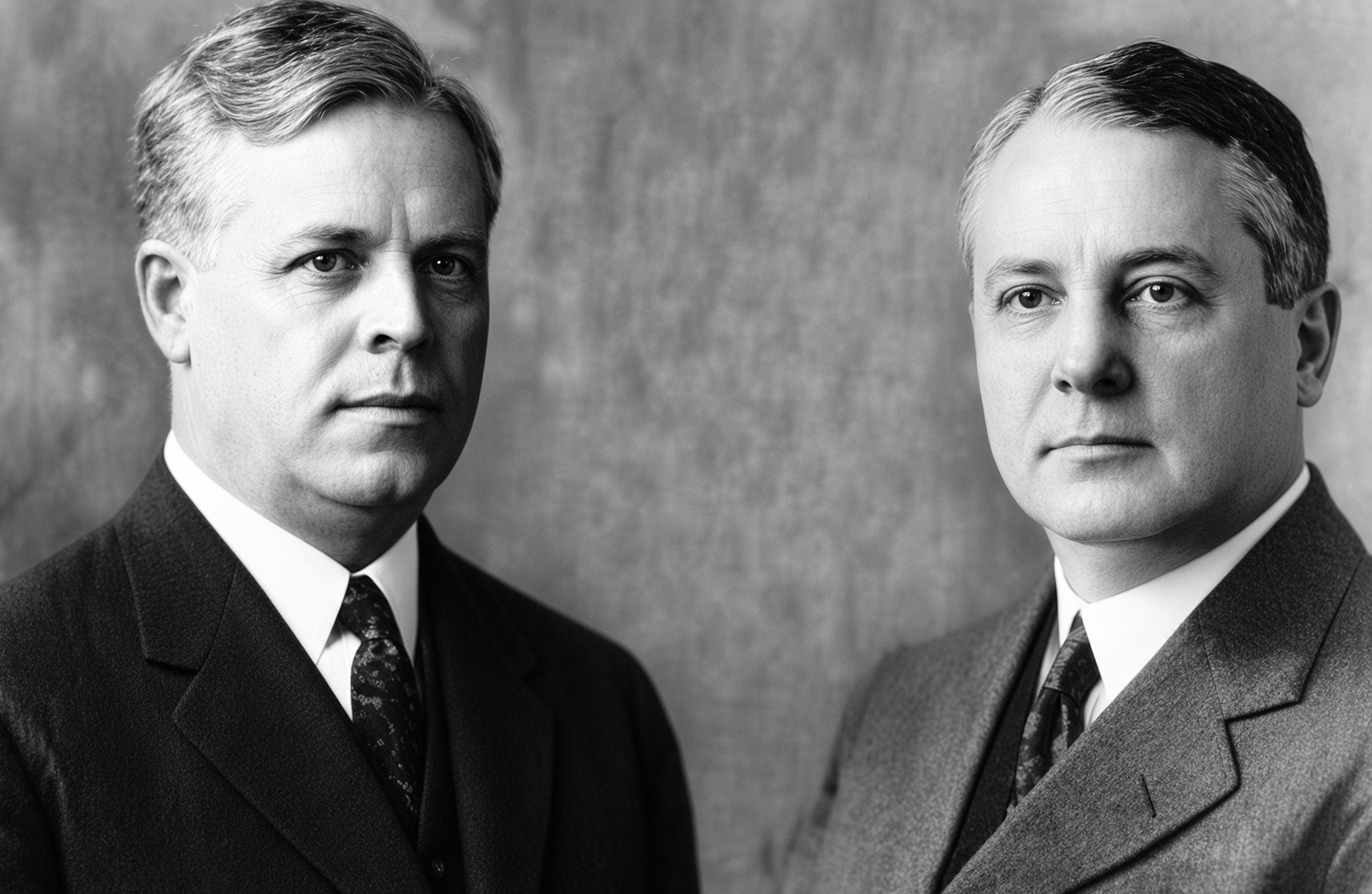
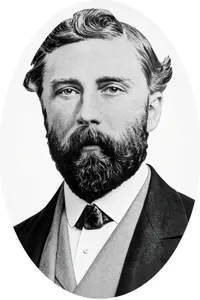
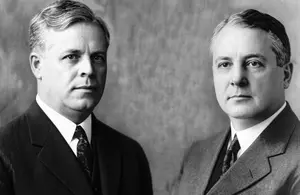
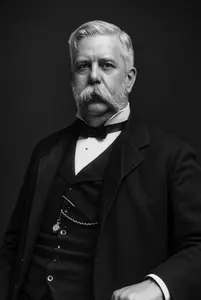
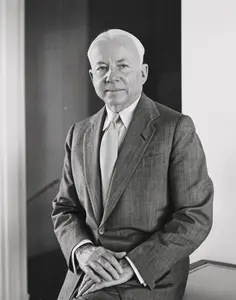
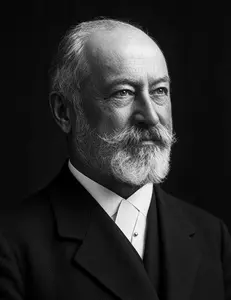
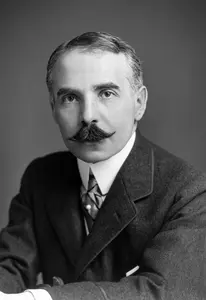
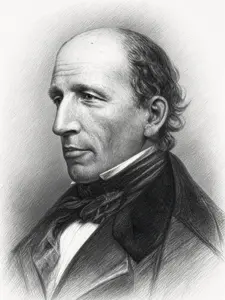
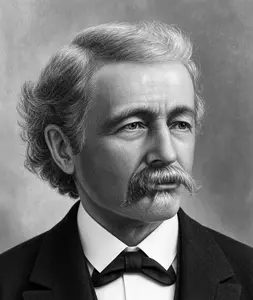
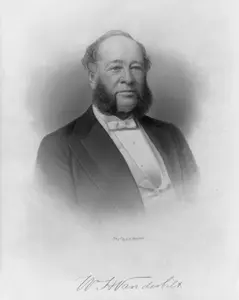
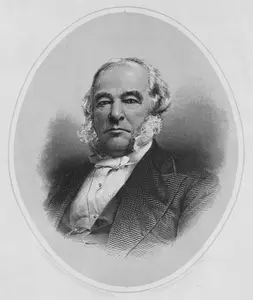
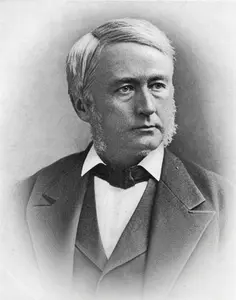
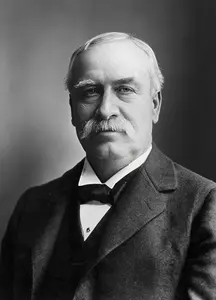
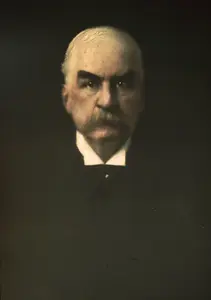
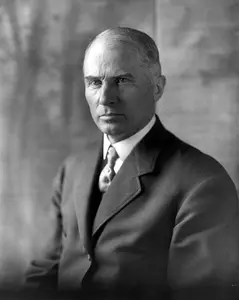
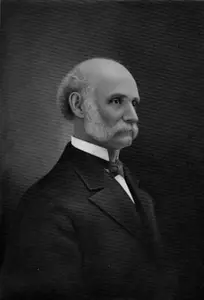
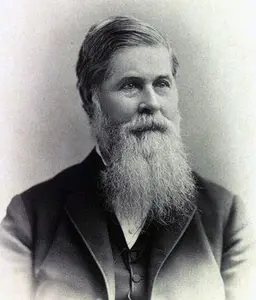
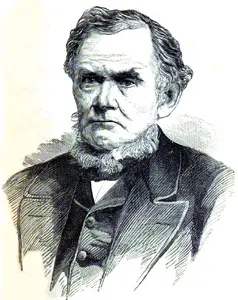
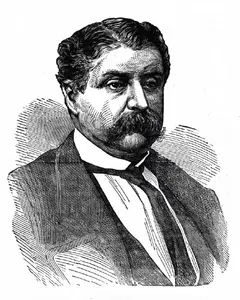
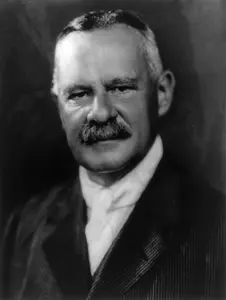
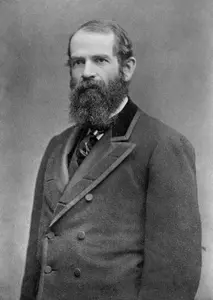
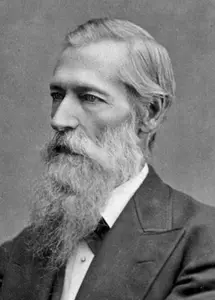
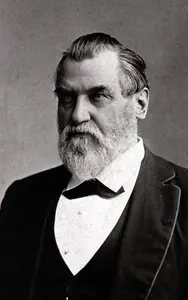
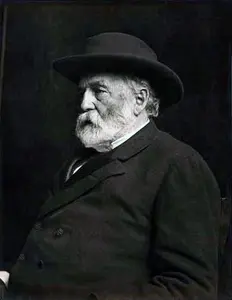
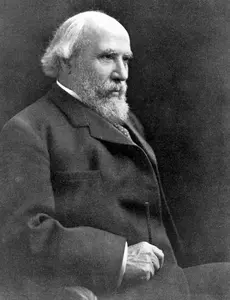
A portrait of the Van Sweringen brothers; Mantis at left and Oris at right.
On this page: At a glance · Wooster · Shaker Heights · The Nickel Plate · Holding companies · Terminal Tower · The loans
At a glance
| Item | Detail |
|---|---|
| Born | Oris Paxton, April 24, 1879, a Thursday. Mantis James, July 8, 1881, a Friday. Near Wooster in the encyclopedia and in Seltzer. Wooster in Britannica. Jas. T. and Jennie Curtis Van Sweringen |
| Died | Mantis, December 12, 1935, a Thursday, Cleveland. Age 54. Oris, November 23, 1936, a Monday, near Hoboken, in Seltzer and Britannica. Age 57. The encyclopedia gives November 22, a Sunday |
| Nickel Plate | July 5, 1916, a Wednesday. Down payment $2 million. Controlling shares, eight and a half million, and a million they could raise, in Allen. A price supposed to be near $9,000,000, in Seltzer |
| The railroads | Chesapeake and Ohio, Erie, Pere Marquette, Missouri Pacific, and the smaller roads named with them. The years differ by the account |
| The money | Neighborhood of two billion in assets, in Allen, and nearly forty million borrowed from J. P. Morgan & Company by 1930. $3 billion and 30,000 miles, in the encyclopedia. A default of $48 million on May 1, 1935. Probate indebtedness $80,733,566.45, appraisal $534,994 |
| Cleveland | Shaker Rapid in 1920. Terminal Tower opened June 28, 1930, a Saturday. Daisy Hill, an estimated $2 million, 1920 to 1927. The Chamber of Commerce medal in 1926 |
Wooster
Allen says they began in simple circumstances. Neither went beyond the eighth grade. Oris started as an office boy, then as a clerk, and the brothers studied in the evenings. By the time Oris was twenty-one and Mantis was nineteen, they were in the real-estate business. The encyclopedia gives the Cleveland work that can be dated. By 1897 both were working for the Bradley Fertilizer Company. A venture in Lakewood failed. By 1905 they were buying the old Shaker property, the North Union community, and developing Shaker Heights. Seltzer says they came to Cleveland, sold papers, took odd jobs, and then, walking a plateau east of the city, saw the suburb.
Seltzer spent years around them and called them the Vans. He remembered offices that moved from the Society for Savings Building to the Marshall Building. Allen, writing of the brothers in their early forties, describes sturdy, low-voiced men who kept to themselves, did not smoke or drink, took no vacations, and seldom took a day off. The work went on in adjoining offices, in a suite at the Cleveland Hotel, or at the suburban farm they called Daisy Hill.
Shaker Heights
The encyclopedia names them as the developers of Shaker Heights, Shaker Square, the Shaker Rapid, and the Terminal Tower complex. Seltzer says the suburb took its name from the Shakers who had owned the land, and he gives the tract as 2,000 acres. They restricted a large piece of it, bought lots on credit, and sold at a profit. Allen says that while the brothers were still in their early thirties the development was becoming a thriving suburb. The methods, he writes, anticipated the move of American cities outward.
The streetcars were the obstacle. Seltzer says they tried to persuade the Cleveland Railway Company to extend its tracks, and the company refused. What they needed was a mile of right-of-way. Allen says they decided to build a high-speed electric line, and that a terminal in the city ran into the freight-terminal plans of the Nickel Plate. The encyclopedia says that in 1909 they began acquiring property along Kingsbury Run for a line of their own, and that the Nickel Plate owned lands they needed. In 1920, the encyclopedia says, they began operating the Shaker Rapid.
The Nickel Plate
The Nickel Plate was owned by the New York Central. Allen writes that the Interstate Commerce Commission wanted the Central to sell it, and that the brothers decided to buy the railroad and use its Cleveland property and its right of way both for the transit line and for the railroad. The price of the controlling shares was eight and a half million dollars. The most they and their immediate associates could raise was a million. They formed a holding company and sold enough preferred stock to cover the first payment. Control of the Nickel Plate came with that payment. Control of the Cleveland terminal properties stayed with them. Allen says they still had a great deal left to pay, and that everything depended on earnings.
They chose J. J. Bernet as president. Allen gives the return on the common stock that followed: a little over six percent in 1916, over ten percent in 1920, and over twenty-five percent in 1921. Those earnings, he writes, made it possible to issue more preferred stock of the Nickel Plate Securities Corporation, to pay off most of the debt still owed to the New York Central, and to begin buying three more small railroads on the installment plan. Thirteen years after the first purchase, he says, the million was what they had put into control of the Nickel Plate. The Nickel Plate account gives the day as July 5, 1916, and the down payment as $2 million. Seltzer, who knew the brothers, calls the figure a price supposed to be near $9,000,000, paid for control to the Vanderbilt interests.
The Nickel Plate account names two railroads taken in 1922. In March they secured the Toledo, St. Louis and Western, the Clover Leaf. On April 26, 1922, a Wednesday, they took the Lake Erie and Western. On April 11, 1923, a Wednesday, those two roads and the Nickel Plate were consolidated into the New York, Chicago and St. Louis. The nickname did not change. Britannica places the Toledo, St. Louis and Western, the Lake Erie and Western, and the Chesapeake and Ohio together in 1922.
Holding companies
Allen says the ambition that followed was a major system built about the Nickel Plate, then a railroad from Buffalo to Chicago, assembled by laying one holding company on another. In the East, he writes, large systems were expected to form around the New York Central, the Pennsylvania, and the Baltimore and Ohio. In the early years of the conferences that followed federal operation of the railroads, nobody seemed to be planning that kind of system around the Nickel Plate. The brothers were.
In 1925, Allen writes, they bought the Huntington interest in the Chesapeake and Ohio. It was a fifteen percent interest, large enough to name the directors if the other owners acquiesced. The purchase took more than seven million dollars, raised by selling new bonds of the Nickel Plate and by borrowing. The Morgan partners, he says, had been watching, and they raised no barrier. During the next two years the brothers bought the Pere Marquette and a large interest in the Erie, borrowing again for the Erie. George F. Baker was the largest stockholder of the Erie. Allen tells it that Baker asked whether they worked hard and whether they slept well, and then let them buy the stock that carried the direction of the road.
The Chesapeake and Ohio account places the purchase of control in January 1923, as part of an empire centered on the Nickel Plate that also took in the Erie, and places the Pere Marquette in 1924. It says the Interstate Commerce Commission denied a Greater Nickel Plate System in 1926, and that the Chesapeake and Ohio kept the Pere Marquette stock. Britannica places the Chesapeake and Ohio in 1922, and the Erie and the Pere Marquette in 1923. The Nickel Plate account says a minority of Chesapeake and Ohio stockholders found the Vaness Company behind the arrangement, and that the Greater Nickel Plate collapsed. It also says that just before the Depression a later combination was approved: the Nickel Plate, the Chesapeake and Ohio east of Cincinnati, the Lackawanna, the Pere Marquette, and a handful of short lines. The crash of October 1929 ended that plan. The weak economy ended a last four-system proposal in 1932.
By 1929 the scale, in Allen, was a system with thousands of miles of track, over a hundred thousand employees, and assets in the neighborhood of two billion dollars. Until that year, he writes, it had not spread beyond the Mississippi. The Alleghany Corporation, their largest holding company, was buying stock in the Missouri Pacific, and Allen says the purchase was extending their reach to the Mexican border. Bernet, he writes, had followed the work from the Nickel Plate to the Erie and then to the Chesapeake and Ohio. Seltzer, counting the peak in 1930, says they controlled upwards of 150 corporations: twenty-three railroads, seven holding companies, one large coal company, four traction companies and one traction holding company, and ten real estate companies. The railroads he names are the Missouri Pacific, the Erie, the Nickel Plate, the Chesapeake and Ohio, the Pere Marquette, and smaller roads, among them the Beaumont, Sour Lake & Western and the Hocking Valley. The encyclopedia adds holdings in Midland Steel, Goodyear Tire & Rubber, and White Motor, and it is the source of the $3 billion and the 30,000 miles. The Chesapeake and Ohio account dates control of the Hocking Valley to 1910 and the merger to 1930.
Allen draws the pyramid as it stood around that time. At the top were O. P. and M. J. Below them was the Vaness Company, then the General Securities Corporation, then the Alleghany Corporation, which General Securities controlled. Alleghany controlled the Chesapeake Corporation and the Nickel Plate, and was acquiring the Missouri Pacific. On the next step the Nickel Plate controlled the Wheeling and Lake Erie, and the Chesapeake Corporation controlled the Chesapeake and Ohio. The Chesapeake and Ohio controlled the Hocking Valley and, with Alleghany, the Pere Marquette and the Erie. The Nickel Plate account dates stock control of the Wheeling and Lake Erie to 1946 and 1947.
The percentages Allen takes from Berle and Means are as of April 30, 1930, a Wednesday. The financial interest of the brothers themselves was 51.8 percent of the General Securities Corporation, 8.6 percent of Alleghany, 4.1 percent of the Chesapeake Corporation, less than one percent of the Chesapeake and Ohio, and one-quarter of one percent of the Hocking Valley. With that stake, Allen writes, the men at Daisy Hill were the arbiters of the Hocking Valley. Each new holding company issued bonds or preferred shares that depended on common-stock earnings further down. The railroads had to earn those dividends, or the debt built on the hope of the dividends would come down in bankruptcy.
Time, in the issue of May 26, 1930, reported the annual meeting of the Missouri Pacific in St. Louis. John P. Murphy, secretary of the Alleghany Corporation, came with 996,287 shares, 66.4 percent of the voting stock, and voted out eight of the seventeen old directors. Oris Paxton Van Sweringen was elected a director, with six other men from Cleveland and one from Buffalo. Meetings of the board might afterward be held in Cleveland or St. Louis. Among the directors removed was Finley Johnson Shepard, husband of Helen Miller Gould. Time calls his retirement the end of the transcontinental system George Gould had pictured around the Missouri Pacific. William Henry Williams, the chairman, was removed as well. Time says his campaign to build a fifth trunk line around the Wabash, of which he was also chairman, was distasteful to the brothers. When the brothers took the Pere Marquette, Time says, they left Matthew Chauncey Brush off that board. He was among the eight.
Three days after that meeting, Time wrote, President Lewis Warrington Baldwin, who remained, said he was personally of the opinion that the Missouri Pacific should acquire control of the Denver and Rio Grande Western and the Western Pacific. Time says the Denver and Rio Grande Western was then jointly controlled by the Missouri Pacific and the Western Pacific, and that the western end of the Missouri Pacific, for that march, was Pueblo, Colorado. Arthur Curtiss James, chairman of the Western Pacific, told newsmen he had no intention of selling. Time says the march was halted.
Terminal Tower
The Cleveland work went on beside the railroads. Allen says subsidiary corporations put hundreds of millions of dollars into railroad terminals, office buildings, a hotel, and a seven-hundred-foot tower. On some of the transactions, he writes, the profits mounted into the tens of millions. The encyclopedia says they won government and voter approval for a development near Public Square, that construction began in 1923, and that the Terminal Tower officially opened on June 28, 1930, a Saturday. In 1926 the Cleveland Chamber of Commerce gave them its Medal for Public Service.
Seltzer was city editor of the Cleveland Press. The formal day included a luncheon in the concourse. The brothers were absent. Seltzer called O. P. at home and asked whether he was coming down. O. P. said the weather was nice, and that he was going to take a walk in the woods. Allen says they stayed away from the dinner, refused a New York office, and had their papers carried from the private car to a hotel when they did come to New York. A few days after the opening, Seltzer walked up Euclid Avenue at noon with both brothers. A friend who saw the three asked him afterward who the other two men were.
Daisy Hill was the place they kept for the work. The Encyclopedia of Cleveland History describes it as a country estate in Hunting Valley, east of Cleveland, developed between 1920 and 1927 at an estimated cost of $2 million. They occasionally entertained there. They often held business meetings there. Allen adds the private telephone operator who took the long-distance calls. Seltzer calls the place a domain like a castle.
The loans
Allen dates the break to October and November 1929, then to the further decline in the fall of 1930, and to 1931 and 1932. Britannica says economic difficulties arose in 1932, the year it gives for the 21,000 miles, and that five years afterward, following the deaths, the empire was broken up. The encyclopedia says the finances depended on stock values, and that after the crash they could not cover the debts. The brothers and their companies, Allen writes, were always borrowing. By 1930 they had borrowed nearly forty million dollars from J. P. Morgan & Company. The Morgans required sound collateral.
One of the Cleveland banks in that borrowing was the Union Trust. Allen says an unsecured loan to one of the companies was refused at the main office, and that the president of the bank gave oral approval so the loan could be made. By 1930 the brothers were so far into the Cleveland banks that new money, in any quantity, had to come from New York. Allen quotes the Senate Banking and Currency Committee on what happened to the collateral. “Substantially all of the collateral having any market value which was pledged with the Union Trust Company was released from the Cleveland loans and turned over to the Van Sweringens to hypothecate against the loans from J. P. Morgan & Company.” They came before that committee in June 1933. Allen describes the photograph from the hearing: solid, gray-haired men, with old eyes. Seltzer says the Senate inquired.
The Missouri Pacific, which they then controlled, was under the same pressure. Allen writes that it reported as income the dividends it received from a subsidiary to which it was lending money at the time, and that it took profits on transactions in its own stock between an improvement company and a motor-bus company. Setting down 1935, he says the Missouri Pacific had gone into a trusteeship under the bankruptcy legislation of 1933. The Alleghany Corporation, unable to pay the interest on one issue of bonds, was negotiating a capital readjustment. The brothers, in that account, were still in command of the railroads, and the stock was pledged against the loans. The credit they still had was held by the Morgans and the banks allied with them. The two biggest banks in Cleveland had crashed.
The encyclopedia dates a default to May 1, 1935, a Wednesday, on $48 million in loans from J. P. Morgan & Co., and says the collateral was ordered sold at auction in September. The Nickel Plate account says that in 1935 they lost control of the Nickel Plate and of much of the rest of the empire. Mantis James Van Sweringen died on December 12, 1935, a Thursday, in Cleveland. The encyclopedia and Britannica give the day. He was 54.
Oris Paxton Van Sweringen died the next year. Seltzer says he died in his sleep on November 23, 1936, a Monday, aboard a Pullman on the Nickel Plate as the train neared Hoboken. He was fifty-seven. Britannica gives November 23, 1936, at Hoboken. The encyclopedia gives November 22, 1936, a Sunday. A year after the death, the Probate Court in Cleveland received the statement Seltzer prints. The indebtedness was $80,733,566.45. The estate was appraised at $534,994.
George Ball, a manufacturer of glass jars, bought the securities at auction. Robert R. Young later came into the Alleghany holdings. The encyclopedia says the personal property at Daisy Hill was sold at auction in 1938, and that in 1946 Gordon Stouffer bought the mansion and renamed it Stowood.
Sources
- Frederick Lewis Allen, The Lords of Creation (1935). The chapter on Oris Paxton and Mantis James Van Sweringen. O. P. two years older. Bachelors, twin beds, a life in common. Neither beyond the eighth grade. Oris an office boy, then a clerk. Real estate by the time Oris was twenty-one and Mantis was nineteen. Shaker Heights while they were in their early thirties. A high-speed electric line, the freight-terminal plans of the New York, Chicago and St. Louis, and an Interstate Commerce Commission that wanted the New York Central to sell. Eight and a half million dollars for the controlling shares. A million that they and their associates could raise. A holding company, preferred stock for the first payment, and the Nickel Plate Securities Corporation. J. J. Bernet. A little over six percent in 1916, over ten percent in 1920, over twenty-five percent in 1921. Three more small railroads on the installment plan. The million put into the purchase, set against the position in 1929: Chicago to the Atlantic, thousands of miles, over a hundred thousand employees, assets in the neighborhood of two billion dollars. The Huntington interest in the Chesapeake and Ohio in 1925, fifteen percent, more than seven million dollars. The Pere Marquette and a large interest in the Erie in the next two years. George F. Baker. The Alleghany Corporation and the Missouri Pacific. The pyramid: Vaness, General Securities, Alleghany, the Chesapeake Corporation, the Nickel Plate, the Wheeling and Lake Erie, the Chesapeake and Ohio, the Hocking Valley, the Pere Marquette, and the Erie. Berle and Means as of April 30, 1930: 51.8 percent, 8.6 percent, 4.1 percent, less than one percent, and one-quarter of one percent. Nearly forty million dollars from J. P. Morgan & Company by 1930. The Union Trust. The Senate Banking and Currency Committee in June 1933. A Missouri Pacific trusteeship under the bankruptcy legislation of 1933. Alleghany negotiating a capital readjustment. In that account they were still in command, and the stock was pledged. A seven-hundred-foot tower, and hundreds of millions of dollars in the Cleveland project. Profits on some transactions in the tens of millions. They stayed away from the terminal dinner. The book is 1935. It ends with the pledged stock and the Morgan loans.
- Louis B. Seltzer, The Years Were Good, chapter 15. A memoir of the city editor of the Cleveland Press. A farm near Wooster. Papers and odd jobs. Shaker Heights, named for the Shakers, and a development of 2,000 acres. The Cleveland Railway Company refused an extension. A mile of right-of-way. Control of the Nickel Plate from the Vanderbilt interests, for a price supposed to be near $9,000,000. Bachelor brothers. Offices in the Society for Savings Building, then the Marshall Building. The Terminal Tower formally opened on June 28, 1930. A luncheon in the concourse. The brothers absent. O. P. went for a walk in the woods. At the peak in 1930, upwards of 150 corporations: twenty-three railroads, seven holding companies, one large coal company, four traction companies and one traction holding company, ten real estate companies. The Missouri Pacific, the Erie, the Nickel Plate, the Chesapeake and Ohio, the Pere Marquette, the Beaumont, Sour Lake & Western, and the Hocking Valley. Daisy Hill. The Senate inquired. He died in his sleep on November 23, 1936, aboard a Pullman on the Nickel Plate as the train neared Hoboken. Age fifty-seven. A year later the Probate Court in Cleveland: indebtedness $80,733,566.45, estate appraised at $534,994.
- Encyclopedia of Cleveland History, Van Sweringen, Oris Paxton and Mantis James, and the Daisy Hill entry. Oris, April 24, 1879, to November 22, 1936. Mantis, July 8, 1881, to December 12, 1935. Born near Wooster to Jas. T. and Jennie Curtis Van Sweringen. The family moved to Cleveland about 1890. Bradley Fertilizer Company by 1897. A Lakewood venture failed. By 1905, the old Shaker property at North Union, and Shaker Heights. Kingsbury Run in 1909. The Nickel Plate bought in 1916 because it owned lands they needed. By 1929, a $3 billion, 30,000-mile railroad empire, and holdings in Midland Steel, Goodyear Tire & Rubber, and White Motor. Shaker Rapid in operation in 1920. Shaker Heights, Shaker Square, the Shaker Rapid, and the Terminal Tower complex. Construction at Public Square began in 1923. The Terminal Tower officially opened on June 28, 1930. The Cleveland Chamber of Commerce Medal for Public Service in 1926. Finances depended on stock values. After the crash they could not cover the debts. On May 1, 1935, a default on $48 million in loans from J. P. Morgan & Co. The collateral was ordered sold at auction in September. Daisy Hill, in Hunting Valley, developed between 1920 and 1927 at an estimated cost of $2 million. Business meetings there. Personal property sold at auction in 1938. Gordon Stouffer bought the mansion in 1946 and renamed it Stowood.
- Britannica, Oris Paxton Van Sweringen and Mantis James Van Sweringen. Oris born April 24, 1879, at Wooster, died November 23, 1936, at Hoboken. Mantis born July 8, 1881, at Wooster, died December 12, 1935, at Cleveland. Shaker Heights from 1905, on land a Shaker community had held. An electric transit system of their own. In 1916, the New York, Chicago, and St. Louis. In 1922, the Toledo, St. Louis and Western, the Lake Erie and Western, and the Chesapeake and Ohio. In 1923, the Erie and the Pere Marquette. In 1930, the Missouri Pacific. A reputation for restoring run-down lines. By 1932, 21,000 miles. Economic difficulties that year. Five years afterward, following the deaths, the empire was broken up.
- Time, May 26, 1930, “Business: March to the Sea.” The Missouri Pacific annual meeting in St. Louis. John P. Murphy, secretary of the Alleghany Corporation, with 996,287 shares, 66.4 percent. Eight of seventeen directors voted out, among them Finley Johnson Shepard, Matthew Chauncey Brush, and William Henry Williams. Oris Paxton Van Sweringen elected a director, with six other Clevelanders and one man from Buffalo. Board meetings might be held in Cleveland or St. Louis. George Gould's transcontinental picture, as Time describes the Shepard retirement. The Wabash campaign of Williams. Lewis Warrington Baldwin, three days later, on the Denver and Rio Grande Western and the Western Pacific. Joint control of the Denver and Rio Grande Western by the Missouri Pacific and the Western Pacific. Pueblo as the western end for that march. Arthur Curtiss James had no intention of selling. The march was halted.
- The Nickel Plate Road. Control on July 5, 1916, with a down payment of $2 million, the collateral they had. The Toledo, St. Louis and Western in March 1922. The Lake Erie and Western on April 26, 1922. Consolidation with the Nickel Plate on April 11, 1923. The Vaness Company, found by a minority of Chesapeake and Ohio stockholders, and the collapse of that Greater Nickel Plate. A later combination, including the Lackawanna, approved and then ended by the crash of October 1929. A four-system plan in 1932. Loss of control of the Nickel Plate, and of much of the rest, in 1935. Stock control of the Wheeling and Lake Erie in 1946 and 1947.
- The Chesapeake and Ohio. Control bought in January 1923, in an empire centered on the Nickel Plate that also took in the Erie. The Pere Marquette in 1924. The Interstate Commerce Commission denied a Greater Nickel Plate System in 1926. The Chesapeake and Ohio kept the Pere Marquette stock. Control of the Hocking Valley in 1910. The merger in 1930.
- The account of Robert R. Young. George Ball, a manufacturer of glass jars, bought the securities at auction. Young later came into the Alleghany holdings.
Recent Articles


-
Thomas C. Durant: Net Worth, Railroads, Biography
Nov 23, 26 12:00 AM
 Thomas Clark Durant was born February 6, 1820, in Lee, Massachusetts. Vice president of the Union Pacific, he organized the Credit Mobilier. He died in 1885.
-
Henry H. Rogers: Net Worth, Railroads, Biography
Nov 22, 26 11:54 PM
 Henry Huttleston Rogers, born January 29, 1840, was a Standard Oil vice-president who built the Virginian Railway. He died in New York on May 19, 1909.
-
Van Sweringen Brothers: Net Worth, Railroads, Biography
Nov 22, 26 11:38 PM
 Oris Paxton Van Sweringen, born April 24, 1879, near Wooster, Ohio, and Mantis James Van Sweringen, born July 8, 1881, developed Shaker Heights and a railroad system around the Nickel Plate. Oris died…
-
Alfred E. Perlman: President, Railroads, Biography
Nov 22, 26 12:33 AM
 Alfred Edward Perlman, born November 22, 1902, in St. Paul, was executive vice president of the Denver and Rio Grande Western, president of the New York Central, and president of the Western Pacific.
-
Patrick B. McGinnis: Net Worth, Railroads, Biography
Nov 22, 26 12:04 AM
 Patrick Benedict McGinnis, born May 23, 1904, in Palmyra, New York, chaired the Norfolk Southern and the Central of Georgia and presided over the New Haven and the Boston and Maine.
-
George Westinghouse: Net Worth, Air Brake, Biography
Nov 21, 26 11:35 PM
 George Westinghouse was born at Central Bridge on October 6, 1846. He died in New York on March 12, 1914. He built the air brake the railroads came to use.
-
NYC's "Xplorer" (Train): Concept, Consist, Photos
Nov 21, 26 11:31 PM
New York Central Xplorer, the Ohio Xplorer, Cleveland to Cincinnati in 1956. Pullman-Standard Train X cars, Baldwin-Lima-Hamilton locomotive 20, trains 423 and 424, timetable, consist, and photographs… -
Frisco Diesel Roster (All-Time)
Nov 21, 26 10:27 PM
 St. Louis-San Francisco diesel locomotives, each frame once. From VO-1000 No. 200 in 1941 through the GP40-2s and SD38-2s of 1979.
-
Frisco Steam Roster (Built Since 1900)
Nov 21, 26 10:18 PM
 St. Louis-San Francisco steam locomotives built since 1900. Mikados, Mountains, and twenty-five 4-8-4s.
-
Robert R. Young: Net Worth, Railroads, Biography
Nov 21, 26 09:47 PM
 Robert Ralph Young, born February 14, 1897, in Canadian, Texas, chaired the Chesapeake and Ohio and, in 1954, the New York Central. He died on January 25, 1958, in Palm Beach.
-
St. Louis-San Francisco Railway (Frisco): Map, Rosters, History
Nov 21, 26 06:37 PM
 History of the St. Louis-San Francisco Railway, the Frisco. The Pacific Railroad, the coonskin, Yoakum, Pensacola, and the Burlington Northern merger of November 21, 1980. Steam and diesel rosters are…
-
Kuhn, Loeb and Company: Net Worth, Railroads, History
Nov 21, 26 01:34 PM
 Kuhn, Loeb and Company was the New York banking house in E. H. Harriman's circle. Abraham Kuhn and Solomon Loeb opened the banking partnership in 1867. Jacob H. Schiff joined on January 1, 1875.
-
Otto Kahn: Net Worth, Railroads, Biography
Nov 21, 26 01:22 PM
 Otto Hermann Kahn was born in Mannheim on February 21, 1867. He died in New York on March 29, 1934. He was the Kuhn, Loeb partner in E. H. Harriman's railroad work.
-
George Pullman: Net Worth, Palace Cars, Biography
Nov 21, 26 11:01 AM
 George M. Pullman was born at Brocton on March 3, 1831. He died in Chicago on October 19, 1897. He built the palace-car company that owned the sleeping cars.
-
Arthur E. Stilwell: Net Worth, Railroads, Biography
Nov 21, 26 12:33 AM
Arthur E. Stilwell was born in Rochester on October 21, 1859. He died in New York on September 26, 1928. He built the road to Port Arthur and the Kansas City, Mexico and Orient. -
Frederick Weyerhaeuser: Net Worth, Railroads, Biography
Nov 21, 26 12:22 AM
 Frederick Weyerhaeuser was born at Niedersaulheim on November 21, 1834. He died at Pasadena on April 4, 1914. He was a lumberman and a railroad director.
-
John Murray Forbes: Net Worth, CB&Q, Biography
Nov 21, 26 12:13 AM
 John Murray Forbes was born at Bordeaux on February 23, 1813. He died at Milton on October 12, 1898. He was chairman of the Chicago, Burlington and Quincy.
-
Henry B. Plant: Net Worth, Plant System, Biography
Nov 20, 26 10:27 PM
 Henry Bradley Plant was born at Branford, Connecticut, on October 27, 1819. He died at his home on Fifth Avenue on June 23, 1899. He was president of the Plant system and of the Southern Express Compa…
-
Henry Flagler: Net Worth, Florida East Coast, Biography
Nov 20, 26 10:00 PM
Henry Flagler was born at Canandaigua, New York. He died at Whitehall on May 20, 1913, at 83, and was buried at Memorial Presbyterian Church in St. Augustine. -
William Rockefeller: Net Worth, Railroads, Biography
Nov 20, 26 11:50 AM
 William Rockefeller was born in Richford, New York, on May 31, 1841. The Associated Press dates his death June 24, 1922, at Rockwood Hall. Redmond dates it June 23, at Pocantico Hills.
-
William H. Vanderbilt: Net Worth, Railroads, Biography
Nov 20, 26 10:08 AM
 William H. Vanderbilt was born in New Brunswick, New Jersey, on May 8, 1821. He died in New York City on December 8, 1885. His will names two blocks of $40,000,000 and states no total.
-
J. Edgar Thomson: Net Worth, Pennsylvania Railroad, Biography
Nov 20, 26 12:25 AM
 J. Edgar Thomson was born in Springfield, Delaware County, Pennsylvania, on February 10, 1808. He died in Philadelphia on May 27, 1874. No opened inventory states a total.
-
Thomas A. Scott: Net Worth, Railroads, Biography
Nov 20, 26 12:06 AM
Thomas A. Scott was born at Loudon, Pennsylvania, on December 28. The year is 1823 in one biography and 1824 on the funeral plate. He died near Darby on May 21, 1881. No opened inventory states a tota… -
Henry Villard: Net Worth, Railroads, Biography
Nov 19, 26 11:41 PM
 Henry Villard was born Ferdinand Heinrich Gustav Hilgard at Speyer on April 10, 1835, and died early on November 12, 1900, at Thorwood Park, near Dobbs Ferry. He was 65. A court recital put the person…
-
J.P. Morgan: Net Worth, Railroads, Biography
Nov 19, 26 07:03 PM
 John Pierpont Morgan was born in Hartford on April 17, 1837, and died in Rome on March 31, 1913, at 12:05 p.m. Rome time. He was 75. A 1916 New York appraisal put the gross estate at $78,149,024, excl…
-
Daniel Willard: Net Worth, Baltimore and Ohio, Biography
Nov 19, 26 06:51 PM
 Daniel Willard was born on January 28, 1861, and died on July 6, 1942. He was 81. He was president of the Baltimore and Ohio from January 15, 1910 until 1941. No opened record states a fortune. Time p…
-
Cyrus K. Holliday: Net Worth, Santa Fe, Biography
Nov 19, 26 06:03 PM
 Cyrus Kurtz Holliday was born April 3, 1826, and died in Topeka on March 29, 1900. He was 73. He founded Topeka, wrote the Atchison and Topeka charter, and was the railroad's first president. He l…
-
N&W 2-6-6-4 Locomotives (Class A): Specs, Roster, History
Nov 19, 26 05:39 PM
 Norfolk & Western Class A. Forty-three simple 2-6-6-4s, 1200 to 1242, built at Roanoke from 1936 to 1950 for time freight and used on passenger trains when assigned. Diagram specs, the 114,000-pou…
-
Jay Cooke: Net Worth, Civil War, Biography
Nov 19, 26 05:05 PM
 Jay Cooke was born at Sandusky on August 10, 1821, and died the night of February 16, 1905, at Ogontz. He was 83. Jay Cooke and Company opened January 1, 1861, and suspended September 18, 1873. He sol…
-
Daniel Drew: Net Worth, Erie Railroad, Biography
Nov 19, 26 04:44 PM
 Daniel Drew was born at Carmel on July 29, 1797, and died the night of September 18, 1879, age 82. He was Erie treasurer, not president. The settlement of July 2, 1868, put him out of that office.
-
James Fisk Jr.: Net Worth, Robber Baron, Biography
Nov 19, 26 02:47 PM
 James Fisk Jr. was born on April 1, 1835, and died the morning of January 7, 1872, at the Grand Central Hotel. He was 36. Edward S. Stokes shot him the afternoon before. He was an Erie director from O…
-
Chehalis-Centralia Polar Express Seats Are Sold Out
Nov 19, 26 02:43 PM
Chehalis-Centralia marks its Polar Express departures sold out. Diesel No. 6 is pulling while steam No. 15 is repaired. The business-car page still prints $260, $390, and $520. -
Cumbres & Toltec Lists Santa's Holiday Express
Nov 19, 26 02:38 PM
 Cumbres & Toltec lists Santa's Holiday Express for December 5-6 in Chama and December 12-13 in Antonito. Coach is $25. The Chama trip will not run to Dalton.
-
Florida Railroad Museum Lists the North Pole Express
Nov 19, 26 02:28 PM
 The Florida Railroad Museum lists the North Pole Express from November 27 through December 22, 2026. The trip is 3.75 hours. The museum will be closed November 21 and 22.
-
George Jay Gould: Net Worth, Railroads, Biography
Nov 19, 26 02:18 PM
 George Jay Gould was born in New York on February 6, 1864, and died on May 16, 1923, at his villa in France. The company pages date his father's portfolio to 1896. The Panic of 1907 broke the tran…
-
Jay Gould: Net Worth, Railroads, Biography
Nov 19, 26 01:43 PM
 Jason Gould, called Jay, was born at Roxbury on May 27, 1836, and died the morning of December 2, 1892. Erie president from October 1868 until 1872. From 1879 the Missouri Pacific was the center of th…
-
Mark Hopkins Jr.: Net Worth, Railroads, Biography
Nov 19, 26 11:53 AM
 Mark Hopkins Jr., born at Henderson on September 1, 1813, died at Fort Yuma on the night of March 29, 1878. Treasurer of the Central Pacific from June 28, 1861, until he died in that office. The 1881…
-
Leland Stanford: Net Worth, Railroads, Biography
Nov 19, 26 12:36 AM
 Amasa Leland Stanford, Watervliet 1824 to the Palo Alto house in June 1893, president of the Central Pacific and, until February 28, 1890, of the Southern Pacific. The 1893 inventory was about 17 mill…
-
Charles Crocker (Railroads): Robber Baron, Net Worth, Biography
Nov 19, 26 12:23 AM
 Charles Crocker, Troy 1822 to August 14, 1888, built the Central Pacific and drove the Siskiyou spike. He did not die president of the Southern Pacific. The opened biographies state no estate total.
-
Edward H. Harriman (Railroad): Facts, Robber Baron, Biography
Nov 19, 26 12:18 AM
 Edward Henry Harriman, February 25, 1848, to September 9, 1909, president of the Union Pacific from 1904 until he died in that office. The Courier-Journal put the known estate on the public record at…
-
Collis P. Huntington: Net Worth, Railroads, Biography
Nov 18, 26 11:26 PM
 Collis Potter Huntington, 1821 to 1900, vice president of the Central Pacific and president of the Southern Pacific from February 28, 1890, until he died in that office. The will stated no total. The…
-
Detroit Terminal Railroad: History, Roster
Nov 18, 26 10:47 PM
 The Detroit Terminal Railroad was a Detroit and Highland Park belt line, incorporated December 8, 1905. The November 1944 Guide listing gives 17.994 miles of first main track.
-
James J. Hill: Net Worth, Railroads, Robber Baron, Facts
Nov 18, 26 09:19 PM
 James J. Hill, 1838 to 1916, built the Great Northern from the St. Paul and Pacific to Puget Sound and left the chair in 1912. The fortune was estimated at $63 million. He left no will.
-
Cornelius Vanderbilt: Biography, Facts, Net Worth
Nov 18, 26 05:21 PM
 Cornelius Vanderbilt, 1794 to 1877, assembled the New York Central and Hudson River from the Harlem, the Hudson River Railroad, and the original New York Central, and died in office. The estate was ab…
-
Pacific Great Eastern Railway: All-Time Diesel Roster
Nov 18, 26 12:24 PM
 All-time diesel roster of the Pacific Great Eastern, the British Columbia Railway, and BC Rail. Classes, road numbers, and builder data from Paul Crozier Smith, Canadian Rail no. 547 (2012).
-
Pacific Great Eastern Railway: Map, History, Roster
Nov 18, 26 10:22 AM
 The Pacific Great Eastern, incorporated February 27, 1912, became the British Columbia Railway Company on March 30, 1972. On the October 26, 1969 Official Guide, 861.9 miles were under operation. Cana…
-
Northern Alberta Railways: Map, History, Timetables
Nov 17, 26 11:52 PM
 Northern Alberta Railways, reporting mark NAR, was incorporated June 14, 1929, and owned jointly by Canadian National and Canadian Pacific. On the October 27, 1968 freight timetable, Dawson Creek is 4…
-
Yakima Valley Transportation: History, Timetable, Photos
Nov 17, 26 10:51 PM
 Yakima Valley Transportation opened Christmas Day, 1907. Union Pacific bought it June 9, 1909. Last city car February 1, 1947. Last freight November 18, 1985. Line car A and steeplecab 298 stayed in Y…
-
"20th Century Limited" (Train): Map, Consist, Schedule, Interior
Nov 17, 26 05:03 PM
 The 20th Century Limited was the flagship passenger train of the NYC, operating until 1967 (just prior to the Penn Central merger).
-
Western Pacific Diesel Roster (All-Time)
Nov 17, 26 04:52 PM
 Western Pacific all-time diesel roster. Why the switchers, covered wagons, road switchers, and General Electric units were bought, where they worked, and what Union Pacific inherited on December 22, 1…