Thomas C. Durant: Net Worth, Railroads, Biography
Published: November 22, 2026
By: Adam Burns
Thomas Clark Durant was born on February 6, 1820, a Sunday, in Lee, Massachusetts. The Encyclopedia of World Biography calls his parents well-to-do. The Gale Encyclopedia of U.S. Economic History calls the family wealthy and distinguished. He graduated from Albany Medical College in 1840. The Encyclopedia of the Great Plains says he briefly served there as a professor of medicine, and then turned to business. Gale says he never practiced.
He went to work for an uncle who exported flour and grain. World Biography says he opened a New York office of that business and made a name in stocks. In the 1850s he joined the engineer Henry Farnam. The Union Pacific sketch and World Biography spell the name Farnam. Gale spells it Farnum. The roads they built were the Michigan Southern, the Chicago, Rock Island and Pacific, and the Mississippi and Missouri, the last of them across Iowa.
The railroad of his fame was the Union Pacific. He came to it as vice president and general manager. The railroad’s own account says he did so to extend interests of his own that the construction would benefit, and it calls him president of the Credit Mobilier, the company that took the construction contracts. The chronological history says that he and other officers reaped $23 million in dividends from that company. Gale says he accumulated some $23 million by the same scheme. The Great Plains account says much of his fortune was lost in the panic of 1873. Gale says the fortune dwindled to virtually nothing.
The Union Pacific sketch says he died at home, at the age of 65. Gale dates the death October 5, 1885, a Monday, in upstate New York. The Great Plains account dates it October 15, 1885, a Thursday, at North Creek, New York.
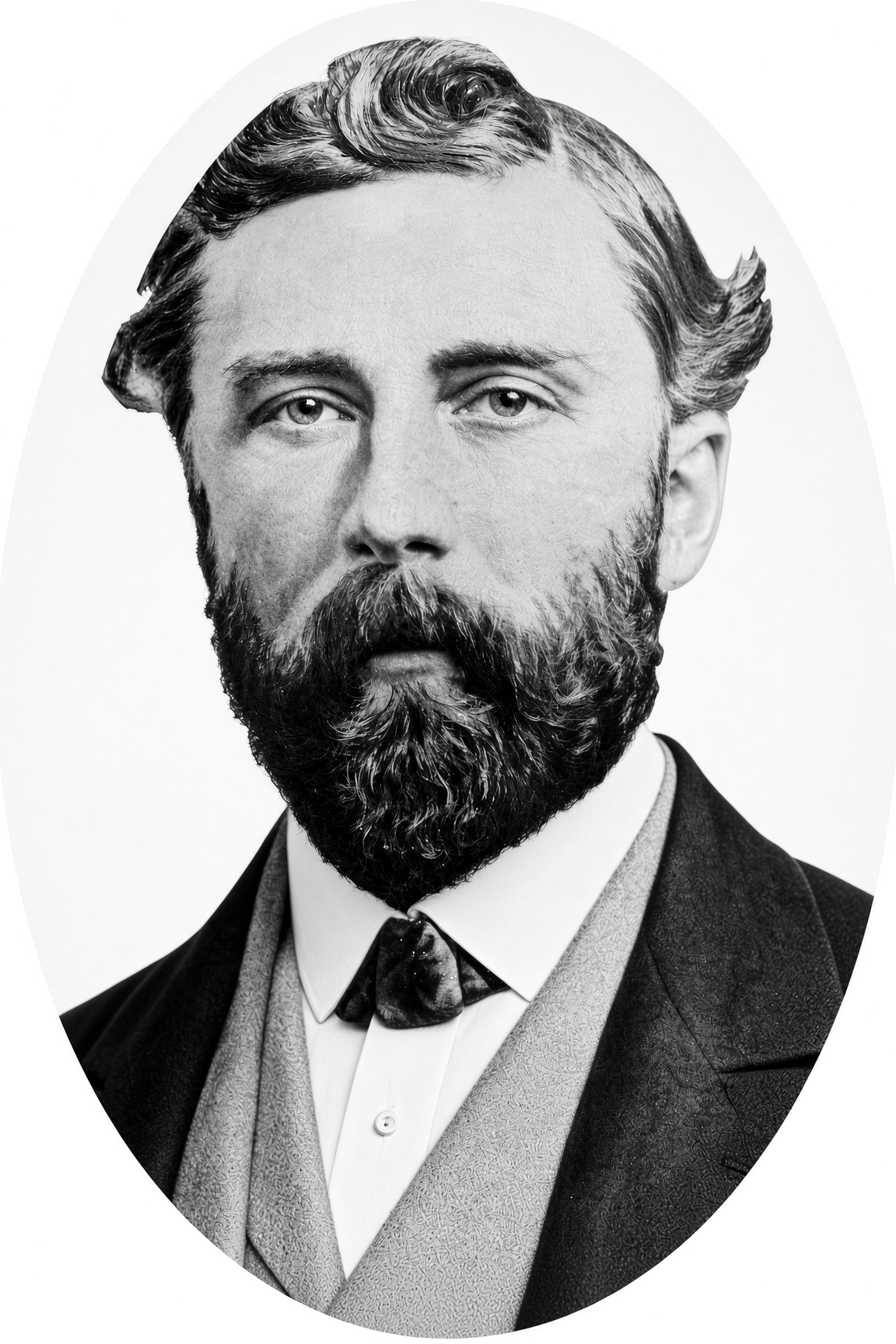
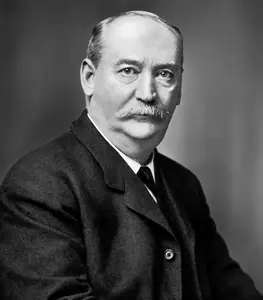
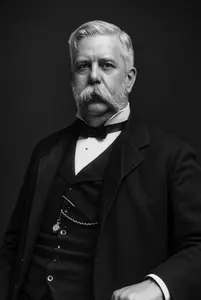
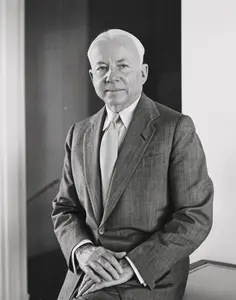
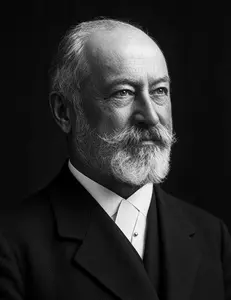
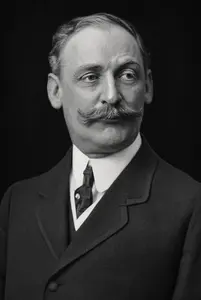
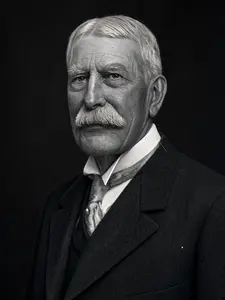
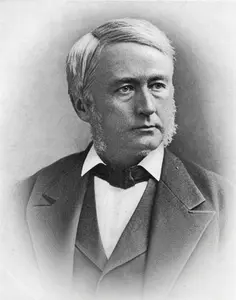
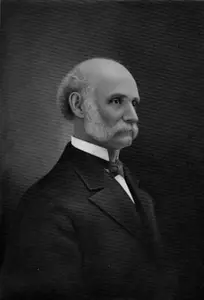
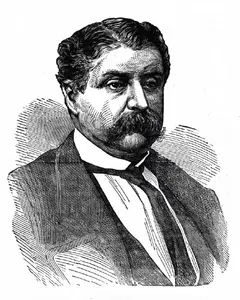
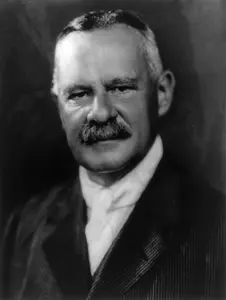
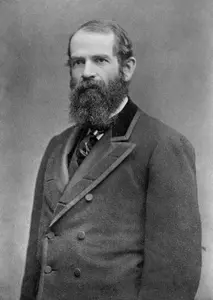
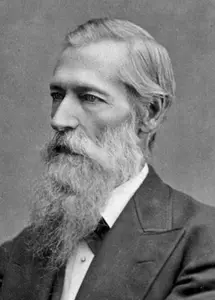
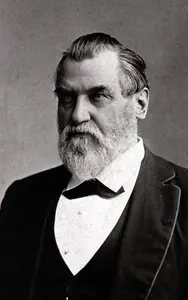
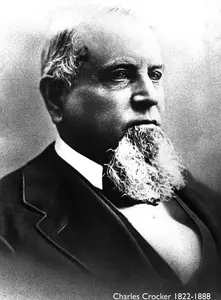
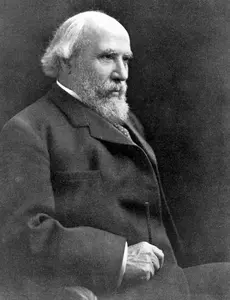
A portrait of Thomas C. Durant.
On this page: At a glance · Lee · Farnam · The Union Pacific · Credit Mobilier · Promontory
At a glance
| Item | Detail |
|---|---|
| Born | February 6, 1820, a Sunday, Lee, Massachusetts. Albany Medical College, 1840 |
| Died | At home, age 65. October 5, 1885, a Monday, in Gale. October 15, 1885, a Thursday, at North Creek, in the Great Plains account |
| Union Pacific | Vice president and general manager. President of the Credit Mobilier, in the railroad’s account. Forced out of the construction company in 1867. Off the railroad board in May 1869 |
| The money | $23 million in dividends, with other officers, in the chronology. Some $23 million accumulated, in Gale. Much of the fortune lost in 1873. Gale says virtually nothing remained |
| The earlier roads | With Henry Farnam, or Farnum in Gale. Michigan Southern. Chicago, Rock Island and Pacific. Mississippi and Missouri |
| Family | Heloise Hannah Timbrel, 1847. Two children. World Biography says a son and a daughter |
Lee
Lee is in western Massachusetts, and both encyclopedias place the birth there on February 6, 1820. Gale says he took the medical degree because his parents wished it. The college was Albany Medical College, and the year was 1840. The Great Plains account says he served briefly as a professor of medicine at that school. Gale says he never practiced medicine, and that he gave his career to business.
The business was his uncle’s export trade in flour and grain. World Biography says he left medicine for that firm, then moved to New York City to open a branch, and became widely known in financial circles for his work in stocks. In 1847 he married Heloise Hannah Timbrel. The Great Plains account gives the year and the name, and says they had two children. World Biography says he was the father of a son and a daughter.
Farnam
Railroads were the investment of the 1850s. Durant put his resources into building them. The partner was Henry Farnam, an engineer. Gale spells the name Farnum. World Biography names three lines they built together: the Michigan Southern, the Chicago, Rock Island and Pacific, and the Mississippi and Missouri. The Union Pacific sketch singles out the Mississippi and Missouri, the road across Iowa, as the association that mattered later.
That Iowa work is where he met the engineers he would hire again. The Union Pacific sketch of Peter A. Dey says Dey had been chief engineer of the Mississippi and Missouri, and that a young assistant on the first survey across Iowa was Grenville M. Dodge. The sketch of Samuel Reed says Durant hired Reed in 1864 as locating engineer of the Union Pacific.
The Union Pacific
In 1862 Congress named the Union Pacific and the Central Pacific to build the first transcontinental railroad. The Great Plains account, citing Robert W. Fogel, calls that project a premature enterprise, and says Congress set incentives and standards in 1862, 1864, and 1866. Gale says the act of 1862 promised 10 square miles of land for every mile of track. World Biography says Durant, as vice president, persuaded Congress to double the land grant and to let the railroad issue bonds equal to the bonds the government issued. Gale dates that doubling to 1864.
World Biography says Durant claimed he had influenced President Abraham Lincoln to choose Omaha as the eastern end of the line, and that most authorities give the credit to Grenville M. Dodge. The chronological history says ground was broken at Omaha in 1863, and that construction waited on money. The first rail was laid there in 1865. By the end of that year, the railroad’s account of the building says, more than $500,000 had been spent and only 40 miles of track were down.
He then offered the chief engineer’s job to Dodge, who had already built railroads with him in Iowa. The route, once the work was moving, was Durant’s choice. The Great Plains account says the contractors, through him, picked a line that maximized the profit of construction and gave little weight to later traffic or to the cost of operating the finished railroad. In the race with the Central Pacific for subsidized miles, the Union Pacific left Denver off the line. A railroad pushed through the mountains west of that city would have been slow and expensive. On the plains the chosen route followed the Platte River to Lodgepole Creek and the Gangplank over the Laramie Range. The same account says the road strengthened Council Bluffs and Omaha, as Congress had intended, and that Durant’s direction founded the new towns west from there to Cheyenne and beyond.
The engineers who worked for him said what the choices cost. Dey, chief engineer from 1863 to 1865, resigned over disagreements with Durant about propriety. His letter said he resigned the best position his profession in this country had ever offered any man. Reed, whom Durant moved in 1866 from surveys to construction, later wrote that the policies were ill-advised and extravagant, and that immense amounts of money were squandered. Sidney Dillon, president of the Union Pacific in the 1870s and the 1880s, called Durant a fast man, and said that when he undertook to help build a railroad he did not stop at trifles. An associate, in the same sketch, called him the most extravagant man he had ever known.
Credit Mobilier
The charter required the Union Pacific to sell its securities at par. World Biography says the road could not do it, and that Durant devised the way around the rule. A group of the company’s own executives formed a construction company, the Credit Mobilier of America. That firm took the construction contracts and took the securities as payment. The contracts were set high enough to cover selling the securities below par. Gale calls the arrangement a scheme in which a small group contracted with itself, charged exorbitant prices, and pocketed the profit on work that was often faulty. Gale says the original estimates had put the cost at about $30,000 a mile, and that the Credit Mobilier doubled the figure.
In 1865 the money ran thin. Oakes and Oliver Ames, Massachusetts manufacturers, came in. Gale and the Union Pacific sketch of the brothers say they put in more than a million dollars of their own and raised an additional $1.5 million on the credit of their business. World Biography calls the factions that followed the Boston Crowd and the New York Crowd, and says they fought for two years over the construction company and over the railroad itself. In 1867 Durant was forced out of the Credit Mobilier. Efforts to force him off the railroad failed. An agreement between the two groups then covered some 667 miles of track. World Biography says the agreement paid the Credit Mobilier and left the Union Pacific with a shoddily built line and a heavy overcapitalization.
The scandal reached Congress later. Gale says Oakes Ames, a member of the House from Massachusetts, distributed shares of Credit Mobilier stock as political favors, and that he and a colleague were censured. Vice President Schuyler Colfax, Speaker James G. Blaine, and James A. Garfield were implicated, Gale says, and were later absolved. The chronological history dates the public emergence of the scandal to 1872, and says Durant and other Union Pacific officials reaped $23 million in dividends from the construction company, passing its stock to influential members of Congress. Gale’s figure for what Durant himself accumulated by the scheme is some $23 million.
Promontory
He was still on the railroad when the tracks met. World Biography says he held on long enough to help Leland Stanford drive the golden spike on May 10, 1869, a Monday. The Union Pacific account of that morning says Durant was ill, that Grenville Dodge spoke in his place, that Stanford struck the tie, and that Durant missed.
The Great Plains account says that after charges of defrauding the Union Pacific he was dropped from the directorate in May 1869. World Biography gives the day, May 25, 1869, a Tuesday. In 1870, the Great Plains account says, he sold almost all of his Union Pacific stock. Much of the fortune went in the panic of 1873. Gale says that what remained was virtually nothing. His health failed. He retired to the Adirondacks. World Biography says the last years there passed quietly.
The Union Pacific sketch says he died at home at 65, having outlived many of his enemies. Gale says the day was October 5, 1885, a Monday, in upstate New York. The Great Plains account says October 15, 1885, a Thursday, at North Creek.
Sources
- Alan H. Grey, “Durant, Thomas (1820-1885),” Encyclopedia of the Great Plains. Born in Lee, Massachusetts, February 6, 1820. Albany Medical College, 1840. Married Heloise Hannah Timbrel in 1847. Two children. Briefly a professor of medicine, then business. Vice president of the Union Pacific, controlling route and construction. The construction companies were paid in money and in Union Pacific stock. The line maximized construction profit. Denver was left off the route. The Platte, Lodgepole Creek, and the Gangplank over the Laramie Range. New towns west to Cheyenne. Dropped from the directorate in May 1869 after charges of defrauding the company. Sold almost all of his Union Pacific stock in 1870. Much of the fortune lost in the panic of 1873. Retired to the Adirondacks. Died at North Creek, New York, on October 15, 1885. The entry cites Robert W. Fogel for the phrase premature enterprise, and the acts of 1862, 1864, and 1866.
- Gale Encyclopedia of U.S. Economic History, Durant, Thomas Clark. A wealthy western Massachusetts family. Albany Medical College in 1840. Gale says he never practiced. His uncle’s flour and grain export business, then New York and the stock market. Henry Farnum, and the Mississippi and Missouri across Iowa. Vice president and general manager of the Union Pacific, to protect his own interests. The Credit Mobilier, contracts with the insiders, and faulty construction. Ten square miles of land for each mile of track in 1862, and a doubled grant in 1864. About $30,000 a mile, doubled by the construction company. The Ames brothers in 1865, more than a million dollars of their own and $1.5 million more on their credit. Oakes Ames censured, with a colleague. Colfax, Blaine, and Garfield implicated and later absolved. Some $23 million accumulated. The fortune virtually nothing after the panic of 1873. Died October 5, 1885, in upstate New York. The encyclopedia spells the construction company with an accent on the first e.
- Encyclopedia of World Biography, Thomas Clark Durant. Born in Lee, Massachusetts, February 6, 1820, the son of well-to-do parents. Left medicine for his uncle’s flour and grain firm, then a New York office and stocks. Henry Farnam. The Michigan Southern, the Chicago, Rock Island and Pacific, and the Mississippi and Missouri. Durant claimed he influenced Lincoln to choose Omaha. Most authorities, this sketch says, credit Grenville M. Dodge. Vice president. The land grant doubled, and bonds equal to the government bonds. Securities had to be sold at par. The Credit Mobilier took the contracts and the securities. The Boston Crowd and the New York Crowd. Forced out of the construction company in 1867. An agreement for some 667 miles. A shoddy line and heavy overcapitalization. Helped Leland Stanford drive the golden spike on May 10, 1869. Dropped from the board on May 25. A son and a daughter. The sketch ends with the last years in the Adirondacks.
- Union Pacific, “Significant Individuals,” Dr. Thomas C. Durant, 1820-1885, and the sketches of Samuel Reed, Peter A. Dey, Sidney Dillon, and Oakes and Oliver Ames. The Mississippi and Missouri with Henry Farnam. Vice president and general manager. The quotations on extravagance, on trifles, on squandered money, and on the position Dey resigned. Died at home at the age of 65. Union Pacific, “Chronological History.” The Pacific Railroad Act of 1862. Ground broken at Omaha in 1863. First rail in 1865. The golden spike at Promontory Summit in 1869. In 1872 the Credit Mobilier scandal emerged, and Durant and other officials reaped $23 million in dividends. The railroad’s account of the building supplies the figure of more than $500,000 spent by the end of 1865, and 40 miles of track, and the account of May 10, 1869: Durant ill, Dodge speaking, Stanford striking the tie, Durant missing.
Recent Articles


-
David H. Moffat: Net Worth, Railroads, Biography
Nov 23, 26 12:24 AM
 David H. Moffat was born July 23, 1839, in Washingtonville, New York. He led the First National Bank of Denver and built the Moffat Road toward Salt Lake City. He died March 18, 1911.
-
William Jackson Palmer: Net Worth, Railroads, Biography
Nov 23, 26 12:15 AM
 William Jackson Palmer was born September 17, 1836, in Leipsic, Delaware. He built the Denver & Rio Grande and founded Colorado Springs. He died March 13, 1909.
-
Thomas C. Durant: Net Worth, Railroads, Biography
Nov 23, 26 12:00 AM
 Thomas Clark Durant was born February 6, 1820, in Lee, Massachusetts. Vice president of the Union Pacific, he organized the Credit Mobilier. He died in 1885.
-
Henry H. Rogers: Net Worth, Railroads, Biography
Nov 22, 26 11:54 PM
 Henry Huttleston Rogers, born January 29, 1840, was a Standard Oil vice-president who built the Virginian Railway. He died in New York on May 19, 1909.
-
Van Sweringen Brothers: Net Worth, Railroads, Biography
Nov 22, 26 11:38 PM
 Oris Paxton Van Sweringen, born April 24, 1879, near Wooster, Ohio, and Mantis James Van Sweringen, born July 8, 1881, developed Shaker Heights and a railroad system around the Nickel Plate. Oris died…
-
Alfred E. Perlman: President, Railroads, Biography
Nov 22, 26 12:33 AM
 Alfred Edward Perlman, born November 22, 1902, in St. Paul, was executive vice president of the Denver and Rio Grande Western, president of the New York Central, and president of the Western Pacific.
-
Patrick B. McGinnis: Net Worth, Railroads, Biography
Nov 22, 26 12:04 AM
 Patrick Benedict McGinnis, born May 23, 1904, in Palmyra, New York, chaired the Norfolk Southern and the Central of Georgia and presided over the New Haven and the Boston and Maine.
-
George Westinghouse: Net Worth, Air Brake, Biography
Nov 21, 26 11:35 PM
 George Westinghouse was born at Central Bridge on October 6, 1846. He died in New York on March 12, 1914. He built the air brake the railroads came to use.
-
NYC's "Xplorer" (Train): Concept, Consist, Photos
Nov 21, 26 11:31 PM
New York Central Xplorer, the Ohio Xplorer, Cleveland to Cincinnati in 1956. Pullman-Standard Train X cars, Baldwin-Lima-Hamilton locomotive 20, trains 423 and 424, timetable, consist, and photographs… -
Frisco Diesel Roster (All-Time)
Nov 21, 26 10:27 PM
 St. Louis-San Francisco diesel locomotives, each frame once. From VO-1000 No. 200 in 1941 through the GP40-2s and SD38-2s of 1979.
-
Frisco Steam Roster (Built Since 1900)
Nov 21, 26 10:18 PM
 St. Louis-San Francisco steam locomotives built since 1900. Mikados, Mountains, and twenty-five 4-8-4s.
-
Robert R. Young: Net Worth, Railroads, Biography
Nov 21, 26 09:47 PM
 Robert Ralph Young, born February 14, 1897, in Canadian, Texas, chaired the Chesapeake and Ohio and, in 1954, the New York Central. He died on January 25, 1958, in Palm Beach.
-
St. Louis-San Francisco Railway (Frisco): Map, Rosters, History
Nov 21, 26 06:37 PM
 History of the St. Louis-San Francisco Railway, the Frisco. The Pacific Railroad, the coonskin, Yoakum, Pensacola, and the Burlington Northern merger of November 21, 1980. Steam and diesel rosters are…
-
Kuhn, Loeb and Company: Net Worth, Railroads, History
Nov 21, 26 01:34 PM
 Kuhn, Loeb and Company was the New York banking house in E. H. Harriman's circle. Abraham Kuhn and Solomon Loeb opened the banking partnership in 1867. Jacob H. Schiff joined on January 1, 1875.
-
Otto Kahn: Net Worth, Railroads, Biography
Nov 21, 26 01:22 PM
Otto Hermann Kahn was born in Mannheim on February 21, 1867. He died in New York on March 29, 1934. He was the Kuhn, Loeb partner in E. H. Harriman's railroad work. -
George Pullman: Net Worth, Palace Cars, Biography
Nov 21, 26 11:01 AM
 George M. Pullman was born at Brocton on March 3, 1831. He died in Chicago on October 19, 1897. He built the palace-car company that owned the sleeping cars.
-
Arthur E. Stilwell: Net Worth, Railroads, Biography
Nov 21, 26 12:33 AM
Arthur E. Stilwell was born in Rochester on October 21, 1859. He died in New York on September 26, 1928. He built the road to Port Arthur and the Kansas City, Mexico and Orient. -
Frederick Weyerhaeuser: Net Worth, Railroads, Biography
Nov 21, 26 12:22 AM
 Frederick Weyerhaeuser was born at Niedersaulheim on November 21, 1834. He died at Pasadena on April 4, 1914. He was a lumberman and a railroad director.
-
John Murray Forbes: Net Worth, CB&Q, Biography
Nov 21, 26 12:13 AM
 John Murray Forbes was born at Bordeaux on February 23, 1813. He died at Milton on October 12, 1898. He was chairman of the Chicago, Burlington and Quincy.
-
Henry B. Plant: Net Worth, Plant System, Biography
Nov 20, 26 10:27 PM
 Henry Bradley Plant was born at Branford, Connecticut, on October 27, 1819. He died at his home on Fifth Avenue on June 23, 1899. He was president of the Plant system and of the Southern Express Compa…
-
Henry Flagler: Net Worth, Florida East Coast, Biography
Nov 20, 26 10:00 PM
Henry Flagler was born at Canandaigua, New York. He died at Whitehall on May 20, 1913, at 83, and was buried at Memorial Presbyterian Church in St. Augustine. -
William Rockefeller: Net Worth, Railroads, Biography
Nov 20, 26 11:50 AM
 William Rockefeller was born in Richford, New York, on May 31, 1841. The Associated Press dates his death June 24, 1922, at Rockwood Hall. Redmond dates it June 23, at Pocantico Hills.
-
William H. Vanderbilt: Net Worth, Railroads, Biography
Nov 20, 26 10:08 AM
 William H. Vanderbilt was born in New Brunswick, New Jersey, on May 8, 1821. He died in New York City on December 8, 1885. His will names two blocks of $40,000,000 and states no total.
-
J. Edgar Thomson: Net Worth, Pennsylvania Railroad, Biography
Nov 20, 26 12:25 AM
 J. Edgar Thomson was born in Springfield, Delaware County, Pennsylvania, on February 10, 1808. He died in Philadelphia on May 27, 1874. No opened inventory states a total.
-
Thomas A. Scott: Net Worth, Railroads, Biography
Nov 20, 26 12:06 AM
Thomas A. Scott was born at Loudon, Pennsylvania, on December 28. The year is 1823 in one biography and 1824 on the funeral plate. He died near Darby on May 21, 1881. No opened inventory states a tota… -
Henry Villard: Net Worth, Railroads, Biography
Nov 19, 26 11:41 PM
 Henry Villard was born Ferdinand Heinrich Gustav Hilgard at Speyer on April 10, 1835, and died early on November 12, 1900, at Thorwood Park, near Dobbs Ferry. He was 65. A court recital put the person…
-
J.P. Morgan: Net Worth, Railroads, Biography
Nov 19, 26 07:03 PM
 John Pierpont Morgan was born in Hartford on April 17, 1837, and died in Rome on March 31, 1913, at 12:05 p.m. Rome time. He was 75. A 1916 New York appraisal put the gross estate at $78,149,024, excl…
-
Daniel Willard: Net Worth, Baltimore and Ohio, Biography
Nov 19, 26 06:51 PM
 Daniel Willard was born on January 28, 1861, and died on July 6, 1942. He was 81. He was president of the Baltimore and Ohio from January 15, 1910 until 1941. No opened record states a fortune. Time p…
-
Cyrus K. Holliday: Net Worth, Santa Fe, Biography
Nov 19, 26 06:03 PM
 Cyrus Kurtz Holliday was born April 3, 1826, and died in Topeka on March 29, 1900. He was 73. He founded Topeka, wrote the Atchison and Topeka charter, and was the railroad's first president. He l…
-
N&W 2-6-6-4 Locomotives (Class A): Specs, Roster, History
Nov 19, 26 05:39 PM
 Norfolk & Western Class A. Forty-three simple 2-6-6-4s, 1200 to 1242, built at Roanoke from 1936 to 1950 for time freight and used on passenger trains when assigned. Diagram specs, the 114,000-pou…
-
Jay Cooke: Net Worth, Civil War, Biography
Nov 19, 26 05:05 PM
 Jay Cooke was born at Sandusky on August 10, 1821, and died the night of February 16, 1905, at Ogontz. He was 83. Jay Cooke and Company opened January 1, 1861, and suspended September 18, 1873. He sol…
-
Daniel Drew: Net Worth, Erie Railroad, Biography
Nov 19, 26 04:44 PM
 Daniel Drew was born at Carmel on July 29, 1797, and died the night of September 18, 1879, age 82. He was Erie treasurer, not president. The settlement of July 2, 1868, put him out of that office.
-
James Fisk Jr.: Net Worth, Robber Baron, Biography
Nov 19, 26 02:47 PM
 James Fisk Jr. was born on April 1, 1835, and died the morning of January 7, 1872, at the Grand Central Hotel. He was 36. Edward S. Stokes shot him the afternoon before. He was an Erie director from O…
-
Chehalis-Centralia Polar Express Seats Are Sold Out
Nov 19, 26 02:43 PM
Chehalis-Centralia marks its Polar Express departures sold out. Diesel No. 6 is pulling while steam No. 15 is repaired. The business-car page still prints $260, $390, and $520. -
Cumbres & Toltec Lists Santa's Holiday Express
Nov 19, 26 02:38 PM
 Cumbres & Toltec lists Santa's Holiday Express for December 5-6 in Chama and December 12-13 in Antonito. Coach is $25. The Chama trip will not run to Dalton.
-
Florida Railroad Museum Lists the North Pole Express
Nov 19, 26 02:28 PM
 The Florida Railroad Museum lists the North Pole Express from November 27 through December 22, 2026. The trip is 3.75 hours. The museum will be closed November 21 and 22.
-
George Jay Gould: Net Worth, Railroads, Biography
Nov 19, 26 02:18 PM
 George Jay Gould was born in New York on February 6, 1864, and died on May 16, 1923, at his villa in France. The company pages date his father's portfolio to 1896. The Panic of 1907 broke the tran…
-
Jay Gould: Net Worth, Railroads, Biography
Nov 19, 26 01:43 PM
 Jason Gould, called Jay, was born at Roxbury on May 27, 1836, and died the morning of December 2, 1892. Erie president from October 1868 until 1872. From 1879 the Missouri Pacific was the center of th…
-
Mark Hopkins Jr.: Net Worth, Railroads, Biography
Nov 19, 26 11:53 AM
 Mark Hopkins Jr., born at Henderson on September 1, 1813, died at Fort Yuma on the night of March 29, 1878. Treasurer of the Central Pacific from June 28, 1861, until he died in that office. The 1881…
-
Leland Stanford: Net Worth, Railroads, Biography
Nov 19, 26 12:36 AM
 Amasa Leland Stanford, Watervliet 1824 to the Palo Alto house in June 1893, president of the Central Pacific and, until February 28, 1890, of the Southern Pacific. The 1893 inventory was about 17 mill…
-
Charles Crocker (Railroads): Robber Baron, Net Worth, Biography
Nov 19, 26 12:23 AM
 Charles Crocker, Troy 1822 to August 14, 1888, built the Central Pacific and drove the Siskiyou spike. He did not die president of the Southern Pacific. The opened biographies state no estate total.
-
Edward H. Harriman (Railroad): Facts, Robber Baron, Biography
Nov 19, 26 12:18 AM
 Edward Henry Harriman, February 25, 1848, to September 9, 1909, president of the Union Pacific from 1904 until he died in that office. The Courier-Journal put the known estate on the public record at…
-
Collis P. Huntington: Net Worth, Railroads, Biography
Nov 18, 26 11:26 PM
 Collis Potter Huntington, 1821 to 1900, vice president of the Central Pacific and president of the Southern Pacific from February 28, 1890, until he died in that office. The will stated no total. The…
-
Detroit Terminal Railroad: History, Roster
Nov 18, 26 10:47 PM
 The Detroit Terminal Railroad was a Detroit and Highland Park belt line, incorporated December 8, 1905. The November 1944 Guide listing gives 17.994 miles of first main track.
-
James J. Hill: Net Worth, Railroads, Robber Baron, Facts
Nov 18, 26 09:19 PM
 James J. Hill, 1838 to 1916, built the Great Northern from the St. Paul and Pacific to Puget Sound and left the chair in 1912. The fortune was estimated at $63 million. He left no will.
-
Cornelius Vanderbilt: Biography, Facts, Net Worth
Nov 18, 26 05:21 PM
 Cornelius Vanderbilt, 1794 to 1877, assembled the New York Central and Hudson River from the Harlem, the Hudson River Railroad, and the original New York Central, and died in office. The estate was ab…
-
Pacific Great Eastern Railway: All-Time Diesel Roster
Nov 18, 26 12:24 PM
 All-time diesel roster of the Pacific Great Eastern, the British Columbia Railway, and BC Rail. Classes, road numbers, and builder data from Paul Crozier Smith, Canadian Rail no. 547 (2012).
-
Pacific Great Eastern Railway: Map, History, Roster
Nov 18, 26 10:22 AM
 The Pacific Great Eastern, incorporated February 27, 1912, became the British Columbia Railway Company on March 30, 1972. On the October 26, 1969 Official Guide, 861.9 miles were under operation. Cana…
-
Northern Alberta Railways: Map, History, Timetables
Nov 17, 26 11:52 PM
 Northern Alberta Railways, reporting mark NAR, was incorporated June 14, 1929, and owned jointly by Canadian National and Canadian Pacific. On the October 27, 1968 freight timetable, Dawson Creek is 4…
-
Yakima Valley Transportation: History, Timetable, Photos
Nov 17, 26 10:51 PM
 Yakima Valley Transportation opened Christmas Day, 1907. Union Pacific bought it June 9, 1909. Last city car February 1, 1947. Last freight November 18, 1985. Line car A and steeplecab 298 stayed in Y…