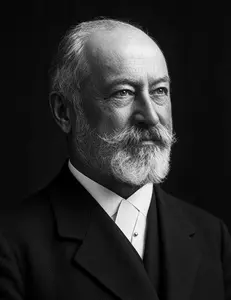
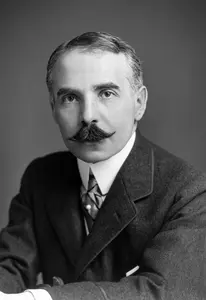
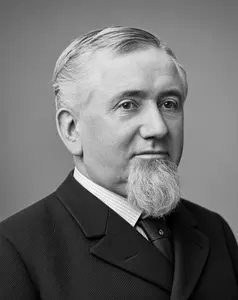
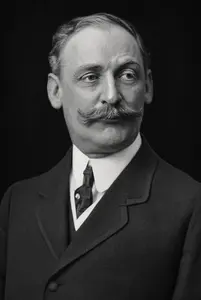
Alfred E. Perlman: President, Railroads, Biography
Last revised: November 22, 2026
By: Adam Burns
Alfred Edward Perlman was born on November 22, 1902, a Saturday, in St. Paul, Minnesota. The National Railroad Hall of Fame says he was the son of a civil engineer, and that from the age of eight he claimed he never wanted to be anything but a railroader. He rose to executive vice president of the Denver and Rio Grande Western. He was not that road's president. In the spring of 1954 Robert R. Young brought him to the New York Central. Time, in the issue of June 21, 1954, says the two men had met for the first time 20 days before, and that the board elected Young chairman at a dollar a year and named Perlman, then 51, president and chief executive. The hall of fame says Young, as chairman, asked him to serve as president, and in the same account calls Young the president who invited him.
He fought a merger with the Pennsylvania, then came back to it. Time of January 19, 1962, with him at 59, said he seemed slated for a vice chairmanship of the combined company, and that Allen Greenough, then president of the Pennsylvania, seemed slated for the presidency. Time of May 6, 1966, with him at 63, said he would be president and chief operating officer, and Stuart Saunders chairman and chief executive. The hall of fame dates the birth of the Penn Central to 1968 and says Perlman was president, a director, and chief administrative officer, then vice chairman. In the week of that May 6 issue, Time said the Interstate Commerce Commission had approved the coupling and that the Pennsylvania New York Central Transportation Company would go into business on June 1.
The hall of fame dates his dismissal to June 8, 1970, a Monday. Time, in the issue of June 22, 1970, says the directors relieved him the week before, while he was vice chairman, and that he would remain a director until his employment contract expired in November. On December 1, 1970, a Tuesday, he became president of the Western Pacific. He served through December 31, 1972, a Sunday, and remained chairman until he retired on June 24, 1976, a Thursday. He died on April 30, 1983, a Saturday, in San Francisco, after a short illness. He was 80. Time of April 18, 1960, says Young hired him at $100,000 a year, with an option on 32,000 shares at 19 7/8, and would not give him a contract. In the week before that issue the directors signed one: $100,000 a year for the next seven years, until he was 65, though he was then being paid $125,000, and $50,000 a year for the seven years after that as a consultant. He had bought 12,000 shares under the option and sold 9,000.
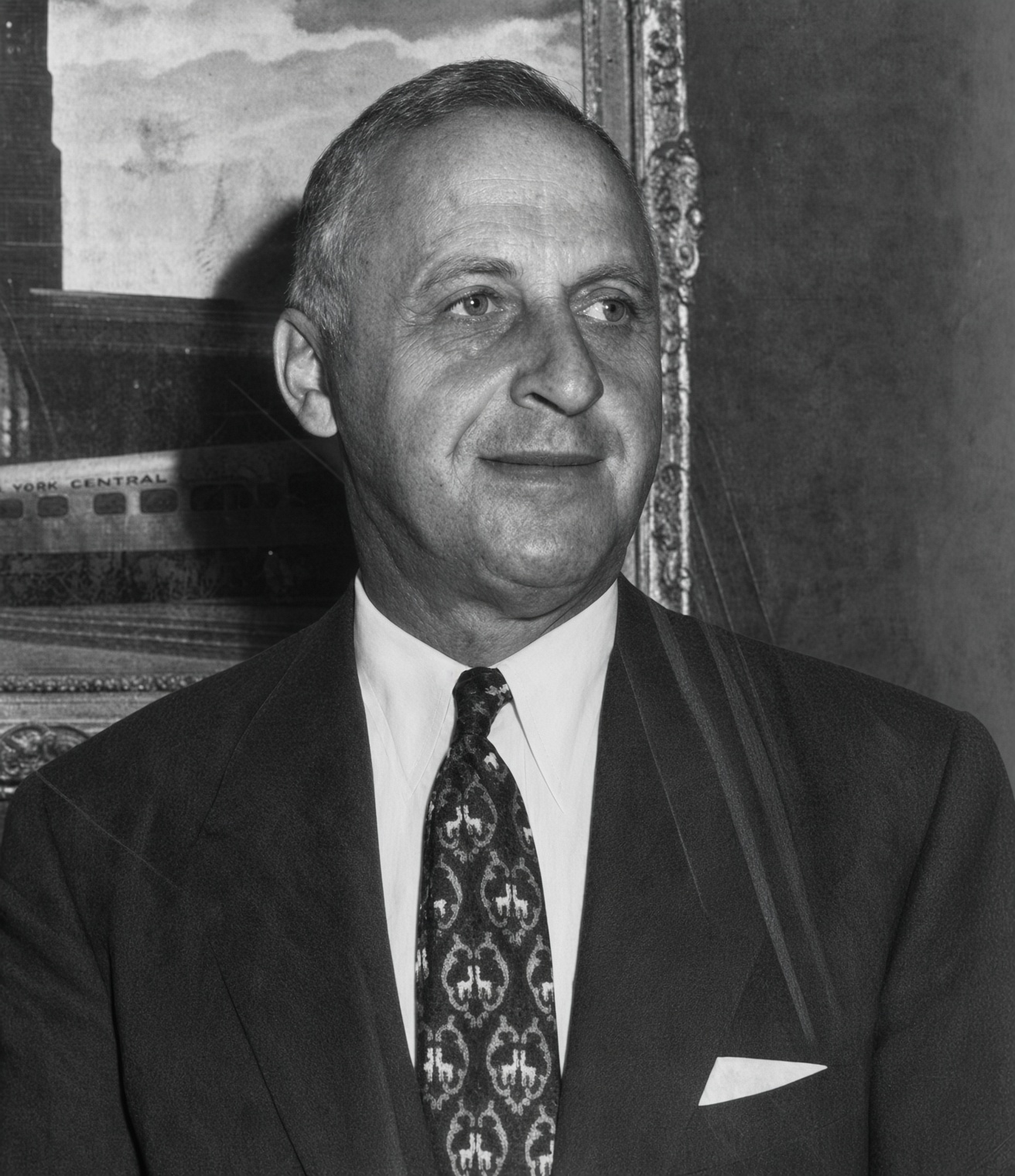
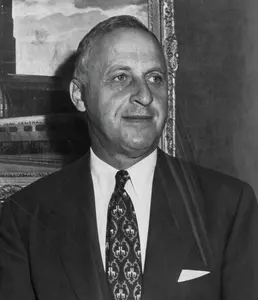
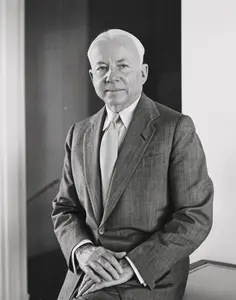
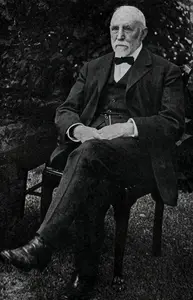
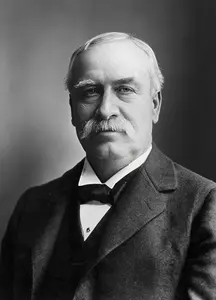
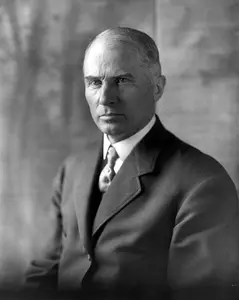
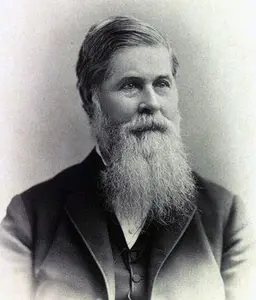
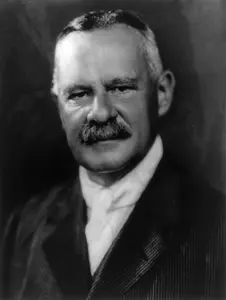
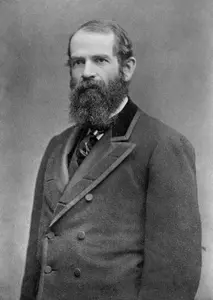
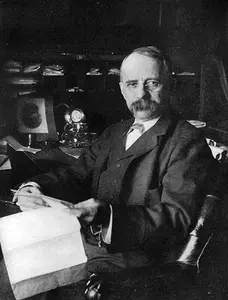
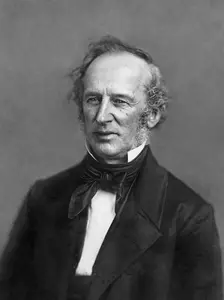
A portrait of Alfred Perlman.
On this page: At a glance · St. Paul · The Rio Grande · The Central · The merger · Western Pacific
At a glance
| Item | Detail |
|---|---|
| Born | November 22, 1902, a Saturday, St. Paul, Minnesota. Son of a civil engineer |
| Family | Adele Sylvia Perlman, married 1936. Sons Michael and Lee. Daughter Constance Spahn |
| Rio Grande | Maintenance of way, 1936. Chief engineer, 1941. General manager, 1948. Executive vice president, 1952 to 1954. Not the president |
| New York Central | President and chief executive from the week of the June 21, 1954 issue. Young was elected chairman at a dollar a year in that account. The hall of fame also calls Young the president who invited him |
| Penn Central | Time, January 19, 1962: a vice chairmanship. Time, May 6, 1966: president and chief operating officer, with the company to go into business on June 1. The hall: president, director, and chief administrative officer from 1968, then vice chairman. Dismissed June 8, 1970, a Monday |
| Western Pacific | President December 1, 1970, a Tuesday, through December 31, 1972, a Sunday. Chairman until June 24, 1976, a Thursday. The hall says the road was profitable within three months |
| The pay | Hired at $100,000. Later $125,000. Contract of April 1960: $100,000 until age 65, then $50,000 as consultant. Option on 32,000 shares at 19 7/8. Bought 12,000. Sold 9,000 |
| Died | April 30, 1983, a Saturday, San Francisco, after a short illness, age 80 |
St. Paul
The hall of fame says the early summers on the railroad convinced him that “the way to get to the top was to start at the bottom.” His first job was engine wiper and car cleaner in the Northern Pacific yards at St. Paul. He was 16. He kept the work in the summers to pay for college. He graduated from the Massachusetts Institute of Technology in 1923 with a degree in civil engineering, and he stayed with the Northern Pacific, in one capacity and then another, until 1930.
He began as a track laborer, then worked as a draftsman. In 1925 he was promoted to inspector of icing facilities at St. Paul. A year later he was assistant superintendent for bridges and buildings, with headquarters on the Yellowstone Division at Glendive, Montana. His next promotion was roadmaster at Staples, Minnesota. In 1930 the Northern Pacific sent him to the Harvard Graduate School of Business Administration to study railroad management. He earned the M.B.A. in 1931 and returned as assistant to the vice president of operations.
In 1934, the hall of fame says, the Reconstruction Finance Corporation borrowed him as a consultant to railroads in trouble. One of the lines he analyzed was the Denver and Rio Grande Western. Time, telling the same stretch of his life in the June 21, 1954, piece, places a stint in the railroad division of the Finance Corporation and then a stint at the Burlington before he joined the bankrupt Rio Grande in 1936. In the hall of fame account he goes from the Finance Corporation to the Rio Grande.
In 1936 he married Adele Sylvia Perlman. A notice published on SFGate on March 5, 1998, says she was a native of Kansas City, Missouri, held a master's degree in social work from the University of Denver, and had worked with poor families in Chicago before the marriage. The notice names their sons, Michael and Lee, and a daughter, Constance Spahn.
The Rio Grande
He signed on in 1936 as engineer in charge of maintenance of way. The hall of fame says he became chief engineer in 1941, general manager in 1948, and executive vice president from 1952 to 1954. Time calls him second in command under Judge Wilson McCarthy, on a road of 2,300 miles in Utah, Colorado, and New Mexico. The presidency was not his office.
Time says he saved the road $1,000,000 a year by a check on fuels and oil. He stopped changing the oil in the diesels after he found that the changes increased engine wear. Another $750,000 came from mechanizing track maintenance, a step he had taken as far back as 1936. The cost controls were tight enough that the road knew the cost of running each train. He also set up what Time calls a junior board, of younger employees, to watch the operation and to report to top management.
Time says the road came out of bankruptcy in 1946, and that after 76 years in which not a nickel was paid in dividends it made its first payments in 1947. In the year before the June 1954 issue it paid $6 plus a stock dividend of 50 percent, on earnings of $14.79 a share. The hall of fame tells the dividend another way: the reorganization plan he helped craft in 1947 let the railroad pay dividends for the first time in 76 years. The hall of fame also says he was a key figure on the team that pulled the road out of bankruptcy, and that he pushed it from steam to diesel. The reforms included off-track maintenance machines, later called hi-rail equipment, and a research laboratory for what was then called “test-tube” railroading.
During the Second World War, the hall of fame says, he was an engineering consultant for the Defense Plant Corporation in Las Vegas. He consulted on plans for Korean railroads in 1949 and for Israeli railroads in 1950.
The Central
Time says Thomas J. Deegan, vice president of Alleghany, had scouted him well before he and Young met. Central president William White held his last stockholders' meeting at the Albany station. Within the hour, in the account Time published on June 21, 1954, the new board elected Young chairman at a dollar a year and named Perlman president and chief executive. Perlman said he would first spend six months getting acquainted with the personnel and the problems, and that changes would come slowly. He was not bringing his own secretary. Among the Central's 100,000 employees he wanted a team that could, in his words, build a good foundation for the railroad. He expected a free hand. Time quotes him: he would follow the advice of the board in matters like refinancing, and he would want to handle the actual running of the railroad and all its departments. He was promised the next vacancy on the board. Time says that among people who knew Young best, there was little doubt Young would be the real boss. The magazine describes Perlman as quiet, modest, and diffident as a church usher.
The road he was walking into was thin. Earnings for the first four months of 1954 were $29,894, against $10,269,710 a year earlier. Long-term debt was more than $800 million, and well over $100 million of it would fall due within ten years. Time put the operating ratio for the year before at 82.8 percent of operating revenues, against an average of 76 percent for all major railroads. The passenger deficit, the same issue says, was $55 million the year before, even after operating economies. He was not worried about that deficit. The passenger business, he said, was like the show window at Saks Fifth Avenue.
On December 20, 1954, Time reported a press meeting in the board room in Manhattan. Young told the reporters that Perlman had performed a miracle, and that it would go down as one of the great executive accomplishments in history. When Young took over, the road was some $6,000,000 in the red. The November profit was $5,400,000. For the year, Young said, the Central would net up to $5,000,000. He planned to recommend the first regular quarterly dividend since 1931, and he hoped it would be 50 cents a share, at the January meeting of the directors. The stock had risen from 19 1/4 to 28, and the announcement put it up another 1 1/2 points. For the next year Young estimated earnings of about $36 million. Perlman, Time says, was not as confident, and estimated $30 million.
Young said the road had been put in the black by economies, not by more business. Perlman took some 15,000 employees off the payroll, a cut Time says was meant to save $100 million a year, and left a work force of 75,000, the lowest since 1930. He canceled orders for 62 diesels, priced at $8,300,000, and found 97 diesels already in service that could do 50 percent more work. Diesels went to the shops once a month instead of twice. He walked into a shop in Cleveland, unannounced, at 9:30 in the evening, and found not a man working. They were in the locker room, though they did not go off work until 11. He shut the shop. With better use of the diesels, he found he could retire 381 steam locomotives, leaving 150.
Among the plans Time listed that December was a low-slung, lightweight passenger train, to be ordered if a committee of Eastern presidents did not come in with a mass order for one. The same piece says the Central had changed its mind about new terminals and cars for carrying truck trailers on flatcars, and would try to win the business with fast freight. One new schedule, New York to Chicago, cut the time for perishable freight by ten hours. In the April 18, 1960, issue the magazine says that under Perlman the Central had introduced a coordinated service of trailers and flatcars.
The hall of fame says that in January 1958 Young suspended the dividend, and that he died later that month, leaving Perlman in charge. Perlman remained president. The hall of fame quotes a sentence it dates to the New York Times of July 3, 1958: “After you've done a thing the same way for two years, look it over carefully. After five years, look at it with suspicion. And after ten years, throw it away and start all over.”
Time of April 18, 1960, adds up the six years. Since he had taken the Central, Time says, long-term debt was down by $96 million, to $729 million. The passenger deficit had gone from $42 million in 1953 to $24.8 million the year before that issue. The June 1954 issue had put the deficit at $55 million for the year before the June piece. Earnings were $1.29 a share in 1959, double the year before. In the week of the April 18 issue the directors declared a dividend of 25 cents, the second that year, and they signed the contract. He was setting up electronic control on the major routes of the 10,450 miles. Three electronic yards were built, and two more were planned for that year. Time says the yards cut switching time in half and could speed a shipment by as much as a day. He hoped, in the words Time quotes, to build the Central into a transportation company rather than a railroad, and he said that would take an act of Congress. As a step, the Central agreed to buy $5,000,000 of notes of the Flying Tiger Line.
The merger
Time dates the first talks with the Pennsylvania to 1957. The hall of fame says talk of a merger surfaced as early as that year. Two years later, just as the roads were about to settle, he called it off. Time of November 17, 1961, quotes him: “Before we marry the girl, we want to make sure no other heiress is around that might fall into our lap.” Time of January 19, 1962, says he broke the talks off in 1959, and that he declared the merger was not in the public interest. The same issue calls the break an attempt to push the Pennsylvania toward better terms.
The other roads did not take him up. Stockholders of the Baltimore and Ohio rejected the Central in favor of talks with the Chesapeake and Ohio. The Central was also turned away when it tried to enter the merger planned for the Norfolk and Western and the New York, Chicago and St. Louis, the Nickel Plate. As late as September 20, 1961, Time wrote that November, he was still refusing offers to share a roadbed. John and Clint Murchison had taken Alleghany, which controlled the Central. Time in January says control of Alleghany passed from Allan P. Kirby to the Murchison brothers, and that the new bosses wanted a merger. Between the losses and that persuasion, the November issue says, he came back to the Pennsylvania.
In the first nine months of 1961 the Central lost $25 million and the Pennsylvania lost $13 million. The two roads estimated they could save $100 million a year by cutting out duplicate equipment and facilities. On January 19, 1962, after the New York Stock Exchange had closed, the boards announced the Pennsylvania New York Central Transportation Company. A Central share, 20 7/8 at the end of that week, would become 1.3 shares of the new company. A Pennsylvania share, 18 1/8, would become one. Pennsylvania holders would have 60.8 percent. The Pennsylvania would name the chairman and chief executive, and one vice chairman. Time says the choice was likely to be James M. Symes, 64. The Central would name the president and chief administrative officer, and a second vice chairman. As a gesture, the Central directors seemed ready to tap Allen Greenough, 56, then president of the Pennsylvania, for the presidency. Perlman, 59, seemed slated for a vice chairmanship. Time calls him a tough operating man, less effective in administration, and not too highly regarded on the Pennsylvania.
The results Time set beside that announcement were these. The Pennsylvania had netted $41 million in 1955 and run a deficit of $2.7 million in the first eleven months of 1961. The Central had netted $52 million in 1955 and lost $15.9 million in those same eleven months. The roads hoped to save as much as $150 million a year. The November issue had estimated the saving at $100 million. Stockholders were expected to vote at the annual meetings in May. The bankers Time names are Morgan, Stanley and Company, the First Boston Corporation, and Glore, Forgan and Company. The brotherhoods denounced the agreement as “the most catastrophic proposal . . . ever placed before the public” and asked up to three years' pay for anyone laid off.
On May 6, 1966, Time reported that the Commission had approved the coupling, unanimously, the week before. The merged company, the magazine said, would go into business on June 1, under the name Pennsylvania New York Central Transportation Company. The hall of fame dates the birth of the Penn Central to 1968. Pennsylvania holders would have 61 percent of the stock and 14 of 25 directors. Chairman and chief executive would be Stuart Saunders, 56. President and chief operating officer would be Perlman, 63, whom Time describes as noted more for operating know-how than for administration. The magazine says the negotiations had run nine years, back to conversations among Young, Perlman, and James Symes. Agreements with 24 rail unions provided that none of the 106,000 workers would be laid off, and that attrition would cut the force by 8,000 in eight years. Time says the lines would save up to $100 million a year by 1974.
Time of June 22, 1970, calls the merger 28 months old. Executives of what the magazine calls the red team and the green team, after the colors of the boxcars, were still fighting over methods and promotions. The computers of the two roads could not transmit information to each other. Thousands of freight cars were lost in the yards or along the tracks. Middle managers from the Central quit as Pennsylvania men took most of the key jobs. Saunders, 60, and Perlman, 67, held each other in low esteem. Perlman had been named chief operating officer because of his reputation as a wizard at running trains. The merger Saunders had engineered, Time says, was one Perlman had long opposed. He had favored another grouping of the Eastern roads. The hall of fame says he had quietly opposed the merger and had also helped to bring it about. In December 1969 the board moved him up to vice chairman.
Despite revenues of $1.8 billion, the railroad lost $56.3 million in 1969. The first quarter of 1970 brought an operating loss of $62.7 million. The road still ran 1,280 passenger trains a day. At the board meeting the week before the June 22 issue, Saunders and David Bevan, the chairman of the finance committee, were asked to resign, and they did. Perlman was relieved of his duties. Time says he would remain a director until the employment contract expired in November. The hall of fame dates the dismissal June 8, 1970. The board promoted Paul A. Gorman, 62, to chairman and chief executive. Gorman had come in the previous December, brought by Saunders, as the Pennsylvania president at $250,000 a year. The next day the Defense Department agreed to guarantee up to $200 million in short-term bank loans.
Perlman told Time correspondent Roger Beardwood, that same week: “The Penn Central is required to run those trains. There is no chance of their ever making money. We cannot charge an economic fare, because the ICC won't let us, and the commuter wouldn't pay it if we did. He would take to the highways.” He said the crisis would become “a blessing in disguise,” if the Government absorbed the passenger losses and lent money for equipment.
Western Pacific
In that June 22 issue, Time says federal officials reckoned that a severe cash bind threatened the Western Pacific, among other roads. The hall of fame says he was hired to revitalize the Western Pacific and turned it profitable within three months. He was president from December 1, 1970, a Tuesday, to December 31, 1972, a Sunday, and chairman from 1970 until he retired on June 24, 1976, a Thursday. The 1998 notice says the couple moved to Hillsborough after he became president. The headquarters were in San Francisco.
He died on April 30, 1983, a Saturday, in San Francisco, after a short illness. He was 80. The hall of fame describes a soft-spoken, thoughtful, reserved man who worked Saturdays, Sundays, and holidays, and who kept boots and denims in the business car. He had an automobile equipped to run on the rails as well as on the highway. For some years he lived in Mamaroneck, New York, and swam in Long Island Sound.
Sources
- National Railroad Hall of Fame, Alfred E. Perlman. Born in St. Paul, November 22, 1902, son of a civil engineer. From the age of eight he claimed he never wanted to be anything but a railroader. Engine wiper and car cleaner, Northern Pacific yards at St. Paul, age 16, and in the summers through college. Massachusetts Institute of Technology, 1923, civil engineering. Northern Pacific until 1930: track laborer, draftsman, inspector of icing facilities at St. Paul in 1925, assistant superintendent for bridges and buildings on the Yellowstone Division at Glendive a year later, roadmaster at Staples. Harvard Graduate School of Business Administration, 1930. M.B.A., 1931. Assistant to the vice president of operations. Reconstruction Finance Corporation, 1934, and the Rio Grande among the lines he analyzed. Engineer in charge of maintenance of way, 1936. Chief engineer, 1941. General manager, 1948. Executive vice president, 1952 to 1954. The 1947 reorganization plan and the first dividends in 76 years. Diesel, off-track machines, and a research laboratory. Defense Plant Corporation at Las Vegas. Korean railroads, 1949. Israeli railroads, 1950. The invitation from Young, called president in that sentence and chairman in the next, and the request that Perlman serve as president. Dividend suspended in January 1958. Young died later that month. Penn Central born in 1968. Perlman president, director, and chief administrative officer, then vice chairman. Dismissed June 8, 1970. Western Pacific president, December 1, 1970, to December 31, 1972. Chairman from 1970 until retirement on June 24, 1976. Profitable within three months. The sentence dated to the New York Times of July 3, 1958. Mamaroneck, Long Island Sound, boots and denims, and an automobile equipped for the rails. Died April 30, 1983, in San Francisco, after a short illness, age 80.
- Time, June 21, 1954, “Railroads: Young Takes Over.” William White and the last meeting at the Albany station. Young elected chairman at a dollar a year. Alfred E. Perlman, 51, executive vice president of the Denver and Rio Grande Western, named president and chief executive. They had met 20 days before. Thomas J. Deegan. Second in command under Judge Wilson McCarthy. 2,300 miles in Utah, Colorado, and New Mexico. Six months getting acquainted. Changes will come slowly. He was not bringing his secretary. 100,000 employees. A free hand on operations, and the board on refinancing. The next vacancy on the board. Massachusetts Institute of Technology, engine wiper, the Reconstruction Finance Corporation, the Burlington, and the bankrupt Rio Grande in 1936. One million dollars a year on fuels and oil. Changing the diesel oil increased wear. Another 750,000 dollars from mechanized track work as far back as 1936. The cost of each train. A junior board. Out of bankruptcy in 1946. First dividend payments in 1947, after 76 years. Six dollars plus a stock dividend of 50 percent, on earnings of 14.79 dollars a share, in the year before the issue. Earnings for the first four months of 1954, 29,894 dollars against 10,269,710 dollars. Long-term debt of more than 800 million dollars, with well over 100 million dollars due in ten years. Operating ratio 82.8 percent against an average of 76 percent. Passenger deficit of 55 million dollars the year before. The show window at Saks Fifth Avenue.
- Time, December 20, 1954, “Railroads: Al's Miracle.” Young on the miracle. Some 6,000,000 dollars in the red when he took over. November profit, 5,400,000 dollars. A net of up to 5,000,000 dollars for the year. The first regular quarterly dividend since 1931, hoped at 50 cents a share, to be recommended in January. The stock from 19 1/4 to 28, then another 1 1/2 points. Young at about 36 million dollars for the next year. Perlman at 30 million dollars. Some 15,000 employees off the payroll, a work force of 75,000, the lowest since 1930, and 100 million dollars a year. Orders for 62 diesels, 8,300,000 dollars, canceled. Ninety-seven diesels already in service, able to do 50 percent more work. Shops once a month instead of twice. The Cleveland shop at 9:30 in the evening. He found he could retire 381 steam locomotives, leaving 150. A low-slung lightweight passenger train, if the Eastern presidents did not order one together. The change of mind on trailer terminals, and a New York to Chicago perishable schedule cut by ten hours.
- Time, April 18, 1960, “Railroads: How to Run One.” Hired in 1954 by Robert R. Young at 100,000 dollars a year and an option on 32,000 shares at 19 7/8. No contract. In the week before the issue, a contract: 100,000 dollars a year for seven years, until age 65, though he was then paid 125,000 dollars, and 50,000 dollars a year for the next seven years as a consultant. Options exercised on 12,000 shares. Sold, 9,000. Long-term debt reduced by 96 million dollars, to 729 million dollars. Passenger deficit from 42 million dollars in 1953 to 24.8 million dollars the year before. Earnings of 1.29 dollars a share in 1959, double the year before. A dividend of 25 cents, the second that year. Electronic control on the major routes of 10,450 miles. Three electronic yards, and two more planned. Switching time cut in half. Shipments faster by as much as a day. Trailers and flatcars. A transportation company rather than a railroad. Five million dollars of Flying Tiger Line notes.
- Time, November 17, 1961, “Railroads: Return Engagement.” The Pennsylvania and the Central would ask the Commission for permission to merge. Talks began in 1957. Two years later he called them off, with the sentence about the girl and the other heiress. Baltimore and Ohio stockholders rejected the Central for the Chesapeake and Ohio. The Central was turned away from the Norfolk and Western and Nickel Plate merger. As late as September 20 he was still refusing to share a roadbed. John and Clint Murchison had taken Alleghany. The Central lost 25 million dollars in the first nine months, and the Pennsylvania 13 million dollars. An estimate of 100 million dollars a year saved.
- Time, January 19, 1962, “Railroads: Birth of the Penn Central.” The announcement after the Exchange closed. The Pennsylvania New York Central Transportation Company. A Central share at 20 7/8 would become 1.3 shares. A Pennsylvania share at 18 1/8 would become one. Pennsylvania holders, 60.8 percent. James M. Symes, 64, the likely chairman and chief executive. The Central would name the president and chief administrative officer. Allen Greenough, 56, seemed ready for the presidency. Perlman, 59, seemed slated for a vice chairmanship. Pennsylvania net of 41 million dollars in 1955, and a deficit of 2.7 million dollars in the first eleven months of 1961. Central net of 52 million dollars in 1955, and a loss of 15.9 million dollars in those eleven months. A hope of saving as much as 150 million dollars a year. The 1959 break, and the declaration that the merger was not in the public interest. Alleghany from Allan P. Kirby to Clint and John Murchison. Morgan, Stanley and Company, the First Boston Corporation, and Glore, Forgan and Company. A stockholder vote expected in May. The brotherhoods, and up to three years of pay.
- Time, May 6, 1966, “Railroads: Go East, Stop West.” The Commission approved the Pennsylvania and Central coupling, unanimously, the week before the issue. The magazine said the Pennsylvania New York Central Transportation Company would go into business on June 1. Pennsylvania holders, 61 percent, and 14 of 25 directors. Stuart Saunders, 56, chairman and chief executive. Perlman, 63, president and chief operating officer. Nine years of talks, back to Young, Perlman, and James Symes. No layoff of 106,000 workers. Attrition of 8,000 in eight years, under agreements with 24 unions. Savings of up to 100 million dollars a year by 1974.
- Time, June 22, 1970, “Business: Uncle, Can You Spare Some Millions?” The directors dismissed Stuart T. Saunders, Alfred Perlman, and David Bevan the week before the issue. Perlman was vice chairman. He would remain a director until the employment contract expired in November. Saunders and Bevan were asked to resign. Paul A. Gorman, 62, was promoted to chairman and chief executive. He had come in the previous December as Pennsylvania president at 250,000 dollars a year. The next day the Defense Department agreed to guarantee up to 200 million dollars in short-term bank loans. The merger was 28 months old. The red team and the green team. Computers that could not talk to each other. Freight cars lost. Saunders, 60, and Perlman, 67. Chief operating officer, then moved upstairs in December 1969. A loss of 56.3 million dollars in 1969 on revenues of 1.8 billion dollars. A first-quarter operating loss of 62.7 million dollars. Still 1,280 passenger trains a day. The Beardwood interview, the fare, and the blessing in disguise. Federal officials reckoned that a cash bind threatened the Western Pacific, among other roads.
- SFGate, March 5, 1998, a notice of Adele Sylvia Perlman. A native of Kansas City, Missouri. A master's degree in social work from the University of Denver. Work with poor families in Chicago before the marriage of 1936. Alfred Perlman later became president of the New York Central and of the Western Pacific. The couple moved to Hillsborough after he became president of the Western Pacific. The headquarters were in San Francisco. He died in 1983. Sons Michael and Lee. Daughter Constance Spahn.
Recent Articles


-
Alfred E. Perlman: President, Railroads, Biography
Nov 22, 26 12:33 AM
 Alfred Edward Perlman, born November 22, 1902, in St. Paul, was executive vice president of the Denver and Rio Grande Western, president of the New York Central, and president of the Western Pacific.
-
Patrick B. McGinnis: Net Worth, Railroads, Biography
Nov 22, 26 12:04 AM
 Patrick Benedict McGinnis, born May 23, 1904, in Palmyra, New York, chaired the Norfolk Southern and the Central of Georgia and presided over the New Haven and the Boston and Maine.
-
George Westinghouse: Net Worth, Air Brake, Biography
Nov 21, 26 11:35 PM
 George Westinghouse was born at Central Bridge on October 6, 1846. He died in New York on March 12, 1914. He built the air brake the railroads came to use.
-
NYC's "Xplorer" (Train): Concept, Consist, Photos
Nov 21, 26 11:31 PM
 New York Central Xplorer, the Ohio Xplorer, Cleveland to Cincinnati in 1956. Pullman-Standard Train X cars, Baldwin-Lima-Hamilton locomotive 20, trains 423 and 424, timetable, consist, and photographs…
-
Frisco Diesel Roster (All-Time)
Nov 21, 26 10:27 PM
 St. Louis-San Francisco diesel locomotives, each frame once. From VO-1000 No. 200 in 1941 through the GP40-2s and SD38-2s of 1979.
-
Frisco Steam Roster (Built Since 1900)
Nov 21, 26 10:18 PM
 St. Louis-San Francisco steam locomotives built since 1900. Mikados, Mountains, and twenty-five 4-8-4s.
-
Robert R. Young: Net Worth, Railroads, Biography
Nov 21, 26 09:47 PM
 Robert Ralph Young, born February 14, 1897, in Canadian, Texas, chaired the Chesapeake and Ohio and, in 1954, the New York Central. He died on January 25, 1958, in Palm Beach.
-
St. Louis-San Francisco Railway (Frisco): Map, Rosters, History
Nov 21, 26 06:37 PM
 History of the St. Louis-San Francisco Railway, the Frisco. The Pacific Railroad, the coonskin, Yoakum, Pensacola, and the Burlington Northern merger of November 21, 1980. Steam and diesel rosters are…
-
Kuhn, Loeb and Company: Net Worth, Railroads, History
Nov 21, 26 01:34 PM
 Kuhn, Loeb and Company was the New York banking house in E. H. Harriman's circle. Abraham Kuhn and Solomon Loeb opened the banking partnership in 1867. Jacob H. Schiff joined on January 1, 1875.
-
Otto Kahn: Net Worth, Railroads, Biography
Nov 21, 26 01:22 PM
 Otto Hermann Kahn was born in Mannheim on February 21, 1867. He died in New York on March 29, 1934. He was the Kuhn, Loeb partner in E. H. Harriman's railroad work.
-
George Pullman: Net Worth, Palace Cars, Biography
Nov 21, 26 11:01 AM
 George M. Pullman was born at Brocton on March 3, 1831. He died in Chicago on October 19, 1897. He built the palace-car company that owned the sleeping cars.
-
Arthur E. Stilwell: Net Worth, Railroads, Biography
Nov 21, 26 12:33 AM
Arthur E. Stilwell was born in Rochester on October 21, 1859. He died in New York on September 26, 1928. He built the road to Port Arthur and the Kansas City, Mexico and Orient. -
Frederick Weyerhaeuser: Net Worth, Railroads, Biography
Nov 21, 26 12:22 AM
 Frederick Weyerhaeuser was born at Niedersaulheim on November 21, 1834. He died at Pasadena on April 4, 1914. He was a lumberman and a railroad director.
-
John Murray Forbes: Net Worth, CB&Q, Biography
Nov 21, 26 12:13 AM
 John Murray Forbes was born at Bordeaux on February 23, 1813. He died at Milton on October 12, 1898. He was chairman of the Chicago, Burlington and Quincy.
-
Henry B. Plant: Net Worth, Plant System, Biography
Nov 20, 26 10:27 PM
 Henry Bradley Plant was born at Branford, Connecticut, on October 27, 1819. He died at his home on Fifth Avenue on June 23, 1899. He was president of the Plant system and of the Southern Express Compa…
-
Henry Flagler: Net Worth, Florida East Coast, Biography
Nov 20, 26 10:00 PM
Henry Flagler was born at Canandaigua, New York. He died at Whitehall on May 20, 1913, at 83, and was buried at Memorial Presbyterian Church in St. Augustine. -
William Rockefeller: Net Worth, Railroads, Biography
Nov 20, 26 11:50 AM
 William Rockefeller was born in Richford, New York, on May 31, 1841. The Associated Press dates his death June 24, 1922, at Rockwood Hall. Redmond dates it June 23, at Pocantico Hills.
-
William H. Vanderbilt: Net Worth, Railroads, Biography
Nov 20, 26 10:08 AM
 William H. Vanderbilt was born in New Brunswick, New Jersey, on May 8, 1821. He died in New York City on December 8, 1885. His will names two blocks of $40,000,000 and states no total.
-
J. Edgar Thomson: Net Worth, Pennsylvania Railroad, Biography
Nov 20, 26 12:25 AM
 J. Edgar Thomson was born in Springfield, Delaware County, Pennsylvania, on February 10, 1808. He died in Philadelphia on May 27, 1874. No opened inventory states a total.
-
Thomas A. Scott: Net Worth, Railroads, Biography
Nov 20, 26 12:06 AM
Thomas A. Scott was born at Loudon, Pennsylvania, on December 28. The year is 1823 in one biography and 1824 on the funeral plate. He died near Darby on May 21, 1881. No opened inventory states a tota… -
Henry Villard: Net Worth, Railroads, Biography
Nov 19, 26 11:41 PM
 Henry Villard was born Ferdinand Heinrich Gustav Hilgard at Speyer on April 10, 1835, and died early on November 12, 1900, at Thorwood Park, near Dobbs Ferry. He was 65. A court recital put the person…
-
J.P. Morgan: Net Worth, Railroads, Biography
Nov 19, 26 07:03 PM
 John Pierpont Morgan was born in Hartford on April 17, 1837, and died in Rome on March 31, 1913, at 12:05 p.m. Rome time. He was 75. A 1916 New York appraisal put the gross estate at $78,149,024, excl…
-
Daniel Willard: Net Worth, Baltimore and Ohio, Biography
Nov 19, 26 06:51 PM
 Daniel Willard was born on January 28, 1861, and died on July 6, 1942. He was 81. He was president of the Baltimore and Ohio from January 15, 1910 until 1941. No opened record states a fortune. Time p…
-
Cyrus K. Holliday: Net Worth, Santa Fe, Biography
Nov 19, 26 06:03 PM
 Cyrus Kurtz Holliday was born April 3, 1826, and died in Topeka on March 29, 1900. He was 73. He founded Topeka, wrote the Atchison and Topeka charter, and was the railroad's first president. He l…
-
N&W 2-6-6-4 Locomotives (Class A): Specs, Roster, History
Nov 19, 26 05:39 PM
 Norfolk & Western Class A. Forty-three simple 2-6-6-4s, 1200 to 1242, built at Roanoke from 1936 to 1950 for time freight and used on passenger trains when assigned. Diagram specs, the 114,000-pou…
-
Jay Cooke: Net Worth, Civil War, Biography
Nov 19, 26 05:05 PM
 Jay Cooke was born at Sandusky on August 10, 1821, and died the night of February 16, 1905, at Ogontz. He was 83. Jay Cooke and Company opened January 1, 1861, and suspended September 18, 1873. He sol…
-
Daniel Drew: Net Worth, Erie Railroad, Biography
Nov 19, 26 04:44 PM
 Daniel Drew was born at Carmel on July 29, 1797, and died the night of September 18, 1879, age 82. He was Erie treasurer, not president. The settlement of July 2, 1868, put him out of that office.
-
James Fisk Jr.: Net Worth, Robber Baron, Biography
Nov 19, 26 02:47 PM
 James Fisk Jr. was born on April 1, 1835, and died the morning of January 7, 1872, at the Grand Central Hotel. He was 36. Edward S. Stokes shot him the afternoon before. He was an Erie director from O…
-
Chehalis-Centralia Polar Express Seats Are Sold Out
Nov 19, 26 02:43 PM
Chehalis-Centralia marks its Polar Express departures sold out. Diesel No. 6 is pulling while steam No. 15 is repaired. The business-car page still prints $260, $390, and $520. -
Cumbres & Toltec Lists Santa's Holiday Express
Nov 19, 26 02:38 PM
 Cumbres & Toltec lists Santa's Holiday Express for December 5-6 in Chama and December 12-13 in Antonito. Coach is $25. The Chama trip will not run to Dalton.
-
Florida Railroad Museum Lists the North Pole Express
Nov 19, 26 02:28 PM
 The Florida Railroad Museum lists the North Pole Express from November 27 through December 22, 2026. The trip is 3.75 hours. The museum will be closed November 21 and 22.
-
George Jay Gould: Net Worth, Railroads, Biography
Nov 19, 26 02:18 PM
 George Jay Gould was born in New York on February 6, 1864, and died on May 16, 1923, at his villa in France. The company pages date his father's portfolio to 1896. The Panic of 1907 broke the tran…
-
Jay Gould: Net Worth, Railroads, Biography
Nov 19, 26 01:43 PM
 Jason Gould, called Jay, was born at Roxbury on May 27, 1836, and died the morning of December 2, 1892. Erie president from October 1868 until 1872. From 1879 the Missouri Pacific was the center of th…
-
Mark Hopkins Jr.: Net Worth, Railroads, Biography
Nov 19, 26 11:53 AM
 Mark Hopkins Jr., born at Henderson on September 1, 1813, died at Fort Yuma on the night of March 29, 1878. Treasurer of the Central Pacific from June 28, 1861, until he died in that office. The 1881…
-
Leland Stanford: Net Worth, Railroads, Biography
Nov 19, 26 12:36 AM
 Amasa Leland Stanford, Watervliet 1824 to the Palo Alto house in June 1893, president of the Central Pacific and, until February 28, 1890, of the Southern Pacific. The 1893 inventory was about 17 mill…
-
Charles Crocker (Railroads): Robber Baron, Net Worth, Biography
Nov 19, 26 12:23 AM
 Charles Crocker, Troy 1822 to August 14, 1888, built the Central Pacific and drove the Siskiyou spike. He did not die president of the Southern Pacific. The opened biographies state no estate total.
-
Edward H. Harriman (Railroad): Facts, Robber Baron, Biography
Nov 19, 26 12:18 AM
 Edward Henry Harriman, February 25, 1848, to September 9, 1909, president of the Union Pacific from 1904 until he died in that office. The Courier-Journal put the known estate on the public record at…
-
Collis P. Huntington: Net Worth, Railroads, Biography
Nov 18, 26 11:26 PM
 Collis Potter Huntington, 1821 to 1900, vice president of the Central Pacific and president of the Southern Pacific from February 28, 1890, until he died in that office. The will stated no total. The…
-
Detroit Terminal Railroad: History, Roster
Nov 18, 26 10:47 PM
 The Detroit Terminal Railroad was a Detroit and Highland Park belt line, incorporated December 8, 1905. The November 1944 Guide listing gives 17.994 miles of first main track.
-
James J. Hill: Net Worth, Railroads, Robber Baron, Facts
Nov 18, 26 09:19 PM
 James J. Hill, 1838 to 1916, built the Great Northern from the St. Paul and Pacific to Puget Sound and left the chair in 1912. The fortune was estimated at $63 million. He left no will.
-
Cornelius Vanderbilt: Biography, Facts, Net Worth
Nov 18, 26 05:21 PM
 Cornelius Vanderbilt, 1794 to 1877, assembled the New York Central and Hudson River from the Harlem, the Hudson River Railroad, and the original New York Central, and died in office. The estate was ab…
-
Pacific Great Eastern Railway: All-Time Diesel Roster
Nov 18, 26 12:24 PM
 All-time diesel roster of the Pacific Great Eastern, the British Columbia Railway, and BC Rail. Classes, road numbers, and builder data from Paul Crozier Smith, Canadian Rail no. 547 (2012).
-
Pacific Great Eastern Railway: Map, History, Roster
Nov 18, 26 10:22 AM
 The Pacific Great Eastern, incorporated February 27, 1912, became the British Columbia Railway Company on March 30, 1972. On the October 26, 1969 Official Guide, 861.9 miles were under operation. Cana…
-
Northern Alberta Railways: Map, History, Timetables
Nov 17, 26 11:52 PM
 Northern Alberta Railways, reporting mark NAR, was incorporated June 14, 1929, and owned jointly by Canadian National and Canadian Pacific. On the October 27, 1968 freight timetable, Dawson Creek is 4…
-
Yakima Valley Transportation: History, Timetable, Photos
Nov 17, 26 10:51 PM
 Yakima Valley Transportation opened Christmas Day, 1907. Union Pacific bought it June 9, 1909. Last city car February 1, 1947. Last freight November 18, 1985. Line car A and steeplecab 298 stayed in Y…
-
"20th Century Limited" (Train): Map, Consist, Schedule, Interior
Nov 17, 26 05:03 PM
 The 20th Century Limited was the flagship passenger train of the NYC, operating until 1967 (just prior to the Penn Central merger).
-
Western Pacific Diesel Roster (All-Time)
Nov 17, 26 04:52 PM
 Western Pacific all-time diesel roster. Why the switchers, covered wagons, road switchers, and General Electric units were bought, where they worked, and what Union Pacific inherited on December 22, 1…
-
Western Pacific Steam Roster (Built Since 1900)
Nov 17, 26 04:49 PM
 Western Pacific steam locomotives built since 1900. Drury quantity column 201. Thirteen rows. Mikado 329 made the last regular steam run in June 1953.
-
Western Maryland Scenic Lists Polar Express Fares
Nov 17, 26 03:30 PM
 Western Maryland Scenic lists Polar Express tickets from November 21 through December 24, 2026. Coach is $40, plus a $5 heritage fee. Excursions are diesel while No. 1309 is inspected.
-
Western Pacific Railroad: Map, History, Logo, Rosters
Nov 17, 26 11:12 AM
 The Western Pacific, organized in San Francisco on March 3, 1903, the Feather River Route to Salt Lake City, and the Union Pacific acquisition completed on December 22, 1982.