Maine Christmas Train Rides On The WW&F!
Published: November 27, 2025
By: Adam Burns
Tucked into the rolling hills and spruce forests of midcoast Maine, the Wiscasset, Waterville & Farmington Railway Museum offers a rare, immersive journey into America’s narrow-gauge past.
Located in Alna, just inland from the tidal village of Wiscasset, the museum operates on the historic right-of-way of the original Wiscasset, Waterville & Farmington Railway, a two-foot gauge line that once threaded deep into rural communities with nimble trains tailored to thinly settled country.
Today, the WW&F is a living museum run almost entirely by volunteers, where steam whistles echo across the Sheepscot Valley, the scent of coal smoke mingles with balsam, and craftsmanship keeps history in motion.
 Wiscasset, Waterville & Farmington 0-4-0 #10 takes on water at Sheepscot Station on July 14, 2012. Marty Bernard photo.
About The Wiscasset, Waterville & Farmington Railway
The story begins in the late 19th century, when Maine became a haven for “two-footers” — railways built to a narrower, 24-inch gauge that reduced costs while still delivering essential freight and passenger service.
The original WW&F evolved from ambitious plans to connect Wiscasset’s waterfront to interior towns, eventually operating a patchwork of track that served farms, mills, and villages.
It began as the Wiscasset & Quebec Railroad, connecting Wiscasset with Weeks Mills by February 20, 1895. Like most of Maine's legendary narrow-gauge railroads, it fell victim to the Great Depression and the rise of trucks; operations ceased on June 15, 1933, following a locomotive derailment.
Decades later, a group of dedicated enthusiasts embarked on an audacious mission: to rebuild part of the line, restore suitable equipment, and invite the public to experience what narrow gauge felt like — not in a static exhibit, but in motion, with all senses engaged.
Excursions
That mission has grown mile by mile. The museum’s Sheepscot campus in Alna is both railroad yard and restoration hub, with a visitor center, shops, and historic structures. From here, trains head north through woods and wetlands to quiet flag stops and pastoral clearings, pausing at places like Alna Center and continuing toward the current end of track near Trout Brook.
The ride is unhurried and vivid. Steam-powered trains, when in service, pull varnished coaches and open windows let in cool forest air; oil lamps and polished brass hint at another era. Even diesel-powered trips retain the museum’s hallmark authenticity, thanks to meticulous car restoration and a deep commitment to period details.
Victorian Christmas Train
While regular operations run seasonally from spring through late fall, the museum’s most beloved and sought-after event arrives with the first deep chill of December: the Victorian Christmas Train.
Held on select days close to the holidays, this annual celebration transforms the railway into a postcard of 19th-century cheer.
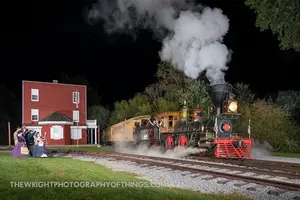
Volunteers don period clothing, stations glow warm with lamplight and greenery, and the coaches are adorned with traditional touches — garlands, ribbons, and often the gentle flicker of lanterns that give evening trips a magical cast. Snow, if it comes, heightens the enchantment, muffling the woods until all you hear is the soft chuff of the engine and the chorus of carols.
The Victorian Christmas Train is more than a ride; it’s an immersive village festival stretched along the rails. Typically, trains depart from the museum’s Sheepscot campus and stop at Alna Center for holiday merriment.
Depending on the year and conditions, you might find bonfires crackling, carolers singing, a simple country church or pavilion welcoming visitors for music, and volunteers offering hot cocoa and cookies. Children search the crowd for Santa, who often appears with a hearty laugh and time for a photo.
When snow cooperates, horse-drawn sleigh or wagon rides sometimes add a delightful throwback, connecting the station area with nearby activities. The effect is an experience that feels both intimate and timeless, deeply rooted in community spirit.
Booking Your Trip
Because the Victorian Christmas Train is as popular as it is picturesque, planning ahead is essential. The museum typically requires advance reservations for timed departures, and the event tends to sell out quickly.
The goal is to keep crowds manageable so families can savor the atmosphere rather than rush through it. For the latest details and booking information, check the museum’s website and social channels well ahead of December; dates are usually announced in the fall.
Practical Tips
A few practical tips will help you make the most of the day. Dress warmly and in layers; inland Maine can be brisk, especially after sunset, and the magic of this event often unfolds outdoors.
Footwear with good traction is wise on packed snow or frozen ground. Arrive early for parking and to stroll the Sheepscot campus before your departure; the yard and buildings often sport their own touches of holiday charm, and the gift shop is a good place to find locally made souvenirs for train lovers. If you plan an evening ride, a small flashlight can be handy between station areas, and a thermos of your favorite warm drink never hurts (though cocoa is usually available).
If someone in your party has mobility needs, contact the museum ahead of time; as a historic railway with vintage equipment, accommodations can be limited, but the team will do their best to assist.
Behind The Train's Magic
Part of the Victorian Christmas Train’s magic lies in its authenticity. The WW&F emphasizes research-based restoration and period-appropriate operations, from the rolling stock to the way stations are presented.
Yet the event also feels contemporary in the best sense: inclusive, welcoming, and community-driven. Many volunteers return year after year, treating the day as a gift to the region.
That spirit radiates through the crowd. Strangers share a bench and swap stories. Children stare wide-eyed at the engine’s glow. Photographers pause to let others have their moment. It’s not a theme park; it’s a living tradition.
Be Sure To Visit Outside Of The Holidays
Visiting outside the holidays is equally rewarding. Regular-season trips showcase different aspects of the railway and its surroundings — spring’s bright greens, summer’s dappled shade, and fall’s fiery foliage.
The museum hosts special operating days, hands-on demonstrations, and “work weekends” when volunteers tackle big projects, sometimes laying track, building structures, or advancing the restoration of locomotives and cars.
Even if you can’t wield a wrench, you can support the railway by riding, becoming a member, or making a donation. Every ticket and contribution helps fuel the museum’s long-term goal: rebuilding more of the historic line and deepening the story it can share.
The WW&F’s broader significance reaches beyond nostalgia. Maine’s two-footers were feats of ingenuity, adapting sophisticated railroad technology to rural realities through careful economies of scale.
By interpreting that history, the museum shines a light on how transportation shapes communities — and how communities, in turn, sustain the heritage they value.
The railway also strengthens the local economy by drawing visitors who linger in neighboring towns for dining, lodging, and shopping, especially during the holiday season when coastal villages glow with their own lights and decorations.
Final Thoughts
In an age when most things move faster and feel more disposable, the Wiscasset, Waterville & Farmington Railway Museum stands out by moving deliberately, beautifully, and with purpose.
Its Victorian Christmas Train distills that ethos into a single, luminous tradition: a winter’s journey where the past feels present, the community gathers, and the simple pleasures of steam, song, and shared warmth carry you home.
Recent Articles


-
Baldwin "Baby Face" Locomotives: Specs, Photos, Roster
Oct 30, 26 11:01 PM
 Baldwin's Babyface cab on the early road diesels: 50 short-cab units, 1946-1948, plus the related Centipede. Construction numbers, specs, and the sharknose that followed.
-
California High-Speed Rail Chief Resigns
Oct 30, 26 08:36 PM
 Ian Choudri resigned October 28, 2026 as chief executive of the California High-Speed Rail Authority. The board named Joe Stephenshaw interim chief executive.
-
The 1910 Portal Bridge Is Handed Over for Demolition
Oct 30, 26 04:03 PM
 Amtrak handed the 1910 Portal Bridge over for demolition on October 29, 2026, during the final cutover to Portal North. Regular NJ Transit and Amtrak schedules are expected November 15.
-
Union Pacific-Norfolk Southern Merger Review Runs to 2027
Oct 30, 26 03:59 PM
 Union Pacific says the Surface Transportation Board's review of the Norfolk Southern merger gathers information through May 28, 2027. A closing still depends on board approval.
-
Amtrak Board Will Hear Restructuring Comments on November 10
Oct 30, 26 03:41 PM
 Amtrak's board will hear public comments on its restructuring on November 10, 2026, from 2 to 3 p.m. Eastern. Written comments were due October 30. A proposal goes to the board in December.
-
Canadian Pacific Selkirk 5931 Restored in Calgary
Oct 30, 26 01:36 PM
 Heritage Park in Calgary unveiled a cosmetic restoration of Canadian Pacific 2-10-4 No. 5931 on October 27, 2026. One of two surviving Selkirks. It stays on display.
-
Gettysburg Railway to Host Steam for Lincoln
Oct 30, 26 01:18 PM
 Northern Central Railway of York No. 17 will recreate Lincoln's arrival at Gettysburg on November 18, 2026, with public steam trips November 19-21.
-
NC&StL No. 576 to Steam for the Public in Nashville
Oct 30, 26 01:00 PM
 Nashville Steam will fire NC&StL 4-8-4 No. 576 for the public on November 7, 2026, 9 a.m. to 3 p.m., at 220 Willow Street. Admission is free.
-
Pennsylvania Railroad E8s Join the T1 Trust
Oct 30, 26 12:38 PM
 The T1 Trust has acquired former Pennsylvania Railroad E8A diesels 5702A and 5761A from the Fort Wayne Railroad Historical Society. They are bound for Cumberland.
-
Ligonier Valley Railroad: History, Roster, Timetable
Oct 30, 26 12:03 PM
 The Ligonier Valley Railroad ran 10.5 miles from Latrobe to Ligonier, Pennsylvania. Opened December 1, 1877. Last day August 31, 1952.
-
Toledo, Peoria & Western Diesel Roster (All-Time)
Oct 30, 26 10:25 AM
 Toledo, Peoria & Western diesel locomotives, each frame once. Thirteen Alcos, three Lima-Hamilton switchers, and 26 Electro-Motive units.
-
Toledo, Peoria & Western Steam Roster
Oct 30, 26 09:14 AM
 Toledo, Peoria & Western steam locomotives from the Rogers Consolidations of 1895 through the 4-8-4s of 1937
-
Toledo, Peoria & Western Railway: Map, Roster, History
Oct 29, 26 11:12 PM
 History of the Toledo, Peoria & Western. The Peoria & Oquawka, George P. McNear, the Santa Fe and Pennsylvania years, and the railroad that came back in 1989.
-
Cotton Belt Diesel Roster (All-Time)
Oct 29, 26 07:58 PM
 St. Louis Southwestern diesel locomotives, each frame once. Baldwin switchers, F units, and new Cotton Belt-lettered power through the GP60s of May 1990.
-
Cotton Belt Steam Roster (Built Since 1900)
Oct 29, 26 06:52 PM
 St. Louis Southwestern steam locomotives built since 1900. Consolidations, Ten-Wheelers, and twenty class L-1 4-8-4s. The quantity column is 297.
-
Cotton Belt Railroad: Map, Logo, History, Rosters
Oct 29, 26 10:56 AM
 History of the St. Louis Southwestern, the Cotton Belt Route. The Tyler Tap, Paramore's silver spike, the Thebes Bridge, the Blue Streak, and Southern Pacific control. Steam and diesel rosters are sep…
-
Pere Marquette Steam Roster (Built Since 1900)
Oct 28, 26 11:54 PM
 Pere Marquette steam locomotives built since 1900. Consolidations, Mikados, Pacifics, and 39 Berkshires. The quantity column is 503.
-
Pere Marquette Diesel Roster (All-Time)
Oct 28, 26 11:48 PM
 Pere Marquette diesel locomotives, each frame once. Two SW1s, 14 NW2s, three GE 70-tonners, eight E7As, and six BL2s delivered lettered Chesapeake and Ohio. The quantity column is 33.
-
Pere Marquette Railway: Map, Logo, Rosters, History
Oct 28, 26 11:44 PM
 History of the Pere Marquette Railway. Timber roads, the Prince years, the Van Sweringens, the Ludington car ferries, and the Chesapeake and Ohio merger of June 6, 1947.
-
Nickel Plate Road (Railroad): Map, History, Rosters
Oct 28, 26 10:51 PM
 History of the Nickel Plate Road, the New York, Chicago and St. Louis. The Seney syndicate, the Van Sweringens, the Berkshires, and the Norfolk and Western absorption at 12:01 a.m. on October 16, 1964…
-
Nickel Plate Diesel Roster (All-Time)
Oct 28, 26 10:48 PM
 Nickel Plate diesel locomotives, each frame once. Alco switchers and PAs, GP7s and GP9s, and the GP30s. The quantity column is 440. The 1950 fleet was 117.
-
Nickel Plate Steam Roster (Built Since 1900)
Oct 28, 26 10:43 PM
 Nickel Plate steam locomotives built since 1900, including the Lake Erie and Western, the Clover Leaf, and the Wheeling engines that took Nickel Plate numbers. The quantity column is 786.
-
EMD "E9" Locomotives: Specs, Roster, History
Oct 28, 26 10:37 PM
 EMD E9 cab units and boosters, 2,400 horsepower, built April 1954 through January 1964. Gear ratios, specifications, and the production roster by owner, serial, and order.
-
NYC 4-6-4 #5344, "Commodore Vanderbilt"
Oct 28, 26 04:31 PM
 NYC J-1e Hudson 5344, the Commodore Vanderbilt. Alco, November 1931. Carl Kantola’s shroud, December 1934, then a Dreyfuss bullet nose in 1939. Scrapped at Collinwood in 1954.
-
New Jersey, Indiana & Illinois Railroad: A South Bend Shortline
Oct 28, 26 11:05 AM
 The New Jersey, Indiana & Illinois, the Jersey Line, ran from South Bend to Pine. Singer built it in 1905. Wabash stock control came in 1926. Two diesels, and the steam the record names.
-
Monon Diesel Roster (All-Time)
Oct 28, 26 10:13 AM
 Monon diesel locomotives, each frame once. F3s, nine BL2s, the C420s, and eight U23Bs. The quantity column is 96. The 1951 fleet was 57.
-
Monon Steam Roster (Built Since 1900)
Oct 28, 26 10:09 AM
 Monon steam locomotives built since 1900. Twelve-Wheelers, Mikados, light Pacifics, and thirteen six-wheel switchers. The quantity column is 148.
-
Monon Railroad: Map, Photos, History, Logo
Oct 28, 26 09:55 AM
 History of the Monon, the Hoosier Line. The New Albany & Salem, the X at Monon, Barriger's streamliners, and the Louisville & Nashville merger of July 31, 1971.
-
Missouri-Kansas-Texas Diesel Roster (All-Time)
Oct 28, 26 09:48 AM
 All-time diesel roster of the Missouri-Kansas-Texas. 406 locomotives, each frame once. Baldwin switchers, Alco cab units, F units, Geeps, and the SD40-2s.
-
Missouri-Kansas-Texas Steam Roster (Built Since 1900)
Oct 28, 26 09:43 AM
 Missouri-Kansas-Texas steam locomotives built since 1900. Moguls, Mikados, Pacifics, and the narrow-gauge shop tanks. The quantity column is 715.
-
Missouri-Kansas-Texas Railroad (Katy): Map, History, Rosters
Oct 27, 26 11:02 PM
 History of the Missouri-Kansas-Texas, the Katy. The race into Indian Territory, Gould, the 1923 railroad, the Texas Special, and the 1988 sale. Steam and diesel rosters are linked.
-
Soo Line Diesel Roster (All-Time)
Oct 27, 26 10:55 PM
 All-time diesel roster of the Soo Line and the Wisconsin Central. 786 locomotives, each frame once. Cab units, Geeps, the Milwaukee Road engines, and the SD60s. The South Shore's 24 stay on that page.
-
Soo Line Steam Roster (Built Since 1900)
Oct 27, 26 10:49 PM
 Soo Line and Wisconsin Central steam locomotives built since 1900. Consolidations, Mikados, Pacifics, 21 Mountains, and four Lima 4-8-4s.
-
Soo Line Railroad: Map, Logo, History, Rosters
Oct 27, 26 10:24 PM
 The Soo Line, from the flour millers' railroad around Chicago to the Sault, the Wisconsin Central, and the Milwaukee Road. Steam quantity 422. Diesels 786. Canadian Pacific took full control in 1990.
-
Minneapolis, Northfield and Southern Railway: Map, History, Rosters
Oct 27, 26 10:32 AM
 The Minneapolis, Northfield & Southern, the Dan Patch Line that became a Twin Cities belt. Steam, gas-electric mules, motor cars, and the 22 diesels, through the Soo Line.
-
Minneapolis & St. Louis Diesel Roster (All-Time)
Oct 27, 26 10:27 AM
 All-time diesel roster of the Minneapolis & St. Louis. 97 locomotives, each frame once. Switchers from 1938, 35 RS-1s, the FT and F-unit cabs, two SD7s, and 23 GP9s. Builder numbers included.
-
Minneapolis & St. Louis Steam Roster (Post 1900)
Oct 27, 26 10:25 AM
Minneapolis & St. Louis steam locomotives built since 1900. Moguls, Consolidations, 35 Mikados, and five Pacifics. -
Minneapolis and St Louis Railway: "The Peoria Gateway"
Oct 27, 26 09:52 AM
 The Minneapolis & St. Louis, the Tootin' Louie, from the 1870 charter to the Peoria Gateway and the Chicago & North Western sale on November 1, 1960.
-
Alco "PA" Locomotives: Restoration, Specs, Engine, Rosters
Oct 27, 26 12:12 AM
 Alco's PA passenger cab, 297 locomotives built from 1946 to 1953. The 244 engine, the production roster, the Delaware & Hudson PA-4s, and Nickel Plate Road 190.
-
Milwaukee Road Diesel Roster: (All Time)
Oct 26, 26 01:44 PM
 All-time diesel roster of the Milwaukee Road. 1,208 locomotives, each frame once. Alco, Baldwin, Davenport, EMD, Fairbanks-Morse, General Electric, and Whitcomb, with builder numbers.
-
Milwaukee Road Steam Roster (All-Time): Post-1900
Oct 26, 26 01:38 PM
 Milwaukee Road steam locomotives built since 1900. Prairies, Mikados, the N-class articulateds, the S-class 4-8-4s, and the Hiawatha Atlantics and Hudsons. Quantity column 1,974. Unique frames 1,951.
-
Milwaukee Road: Map, Electrification, Logo, History
Oct 26, 26 01:20 PM
 The Milwaukee Road, from the Milwaukee & Mississippi of 1850 to the Pacific Coast Extension, the Hiawathas, and the Soo Line sale. Why Lines West should have stayed.
-
Lake Superior & Ishpeming Railroad: Map, Roster, History
Oct 25, 26 11:38 PM
 Lake Superior & Ishpeming Railroad, reporting mark LSI, from the Marquette Range to the Presque Isle ore dock. The 1954 steam list and the diesels the railroad owned.
-
Kansas City Southern Steam Roster (Built Since 1900)
Oct 25, 26 09:09 PM
 Steam locomotives of the Kansas City Southern built since 1900, with the Louisiana & Arkansas and the Texas company.
-
Kansas City Southern Diesel Roster (Built New)
Oct 25, 26 11:46 AM
All-time diesel roster of the Kansas City Southern. E units, F units, Geeps, SD40s through SD70ACes, Fairbanks-Morse, Baldwin, Alco, and General Electric, with serials and order numbers. -
Kansas City Southern Railway: Map, Photos, History
Oct 25, 26 12:24 AM
The Kansas City Southern, from Arthur Stilwell's Gulf line to Canadian Pacific Kansas City on April 14, 2023. Steam and diesel rosters, the Southern Belle, and the Louisiana & Arkansas. -
Indiana Harbor Belt Diesel Roster (All-Time)
Oct 25, 26 12:17 AM
 All-time diesel roster of the Indiana Harbor Belt. 202 locomotive frames, each counted once. NW2s, SW7s, SW1500s, road switchers, and gensets. Slugs and boosters are outside the count.
-
Indiana Harbor Belt Steam Roster (Built Since 1900)
Oct 25, 26 12:13 AM
 Steam locomotives of the Indiana Harbor Belt built since 1900. 182 engines, each counted once. 0-6-0s, 2-6-0s, 0-8-0s, and 2-8-2s. The three U-4a switchers are three-cylinder Brooks engines of 1927.
-
Indiana Harbor Belt Railroad: Map, Rosters, History
Oct 25, 26 12:00 AM
 Indiana Harbor Belt, the inner belt across the Calumet, from the East Chicago Belt of May 16, 1896. Renamed June 29, 1907. Still operating, headquarters Hammond. Steam roster is the companion, 182 loc…
-
NYC's "P Motor" Electric Locomotives
Oct 24, 26 11:43 PM
 New York Central P motors: 22 Alco-GE 2-C+C-2 electrics, Cleveland Union Terminal 1050–1071, class P-1a. 3,030 hp one-hour on 3,000-volt DC catenary, then 660-volt third rail as P-2a and P-2b.