The “Coast Daylight”: The Most Beautiful Train in the World
Published: April 9, 2026
By: Adam Burns
Few passenger trains in American history achieved the fame, visual identity, and sustained popularity of the Coast Daylight, Southern Pacific’s premier streamliner linking San Francisco and Los Angeles. Renowned for its striking orange-and-red livery, luxurious accommodations, and breathtaking coastal scenery, it became a symbol of West Coast rail travel at its peak. It was advertised as "The Most Beautiful Train In The World" and maintained a very high level of service until SP began losing interest in passenger service beginning in the late 1950s. From its early 1920s origins to its decline in the jet age and eventual absorption into Amtrak, the Coast Daylight tells the broader story of American passenger rail—innovation, prosperity, and eventual retreat.
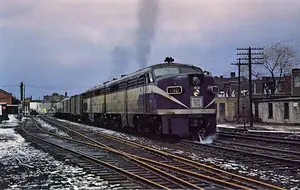
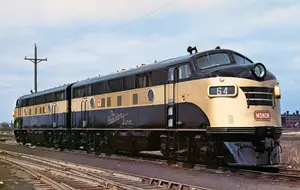
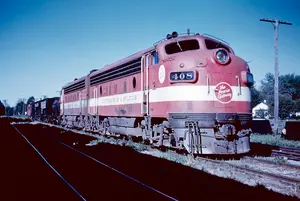
 Southern Pacific F7A #6203 is stopped at San Jose, California with train 98, the "Coast Daylight," in January, 1968. Rick Burn photo.
Early Origins: The Daylight Limited (1922–1936)
The story of the Coast Daylight begins not in the streamlined era, but during the early 20th century when the Southern Pacific sought to improve its competitive position along California's vital "Coast Line." On April 28, 1922, Southern Pacific introduced the Daylight Limited, a fast, premium train operating between San Francisco and Los Angeles. Initially, it ran seasonally and only a few days per week, but its success quickly led to expanded service. By 1923, it was operating daily, and by 1924 the railroad had reduced travel time to approximately 12 hours—impressive for the era.
This early train emphasized speed and daylight travel, allowing passengers to enjoy California’s scenic coastline. By the late 1920s, the “Limited” designation was dropped as more stops were added, and the train simply became known as the Daylight.
Despite growing competition from automobiles and highways in the 1920s, Southern Pacific’s long-distance passenger services remained strong. The train in particular gained a reputation for reliability and comfort, laying the groundwork for what would become one of the most iconic streamliners in the United States.
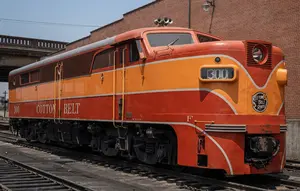
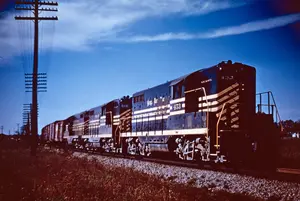
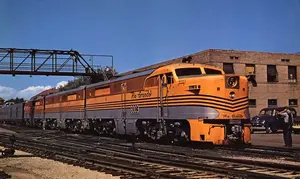
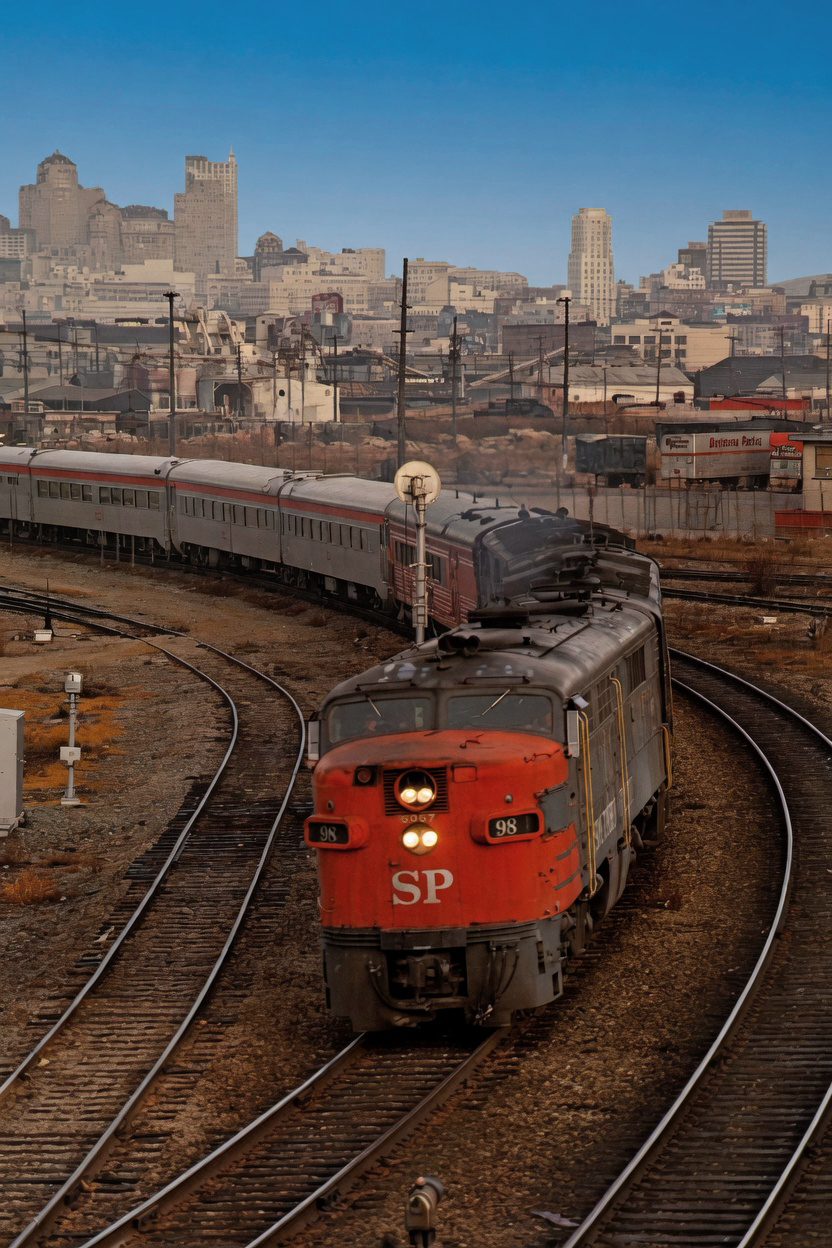 Southern Pacific PA-1 #6067 (ex-Cotton Belt #300) leads train #98, the southbound "Coast Daylight," out of San Francisco, circa 1960. Photo from the Southern Pacific.
The Streamlined Revolution (1937)
The Coast Daylight truly came into its own on March 21, 1937, when Southern Pacific introduced an all-new streamlined version of the train. This was part of a broader industry trend toward faster, more modern passenger trains designed to compete with automobiles and emerging air travel.
The new train was powered by striking GS-class 4-8-4 steam locomotives, built by Lima Locomotive Works and clad in sleek streamlining. These locomotives, along with the train’s cars, were painted in a bold two-tone orange, red, and black “Daylight” scheme, designed by Southern Pacific artist Charles Eggleston.
Southern Pacific marketed the train as “The Most Beautiful Train in the World,” a claim that was difficult to dispute. The streamlined Daylight was not just visually impressive—it was also technologically advanced. The consist included:
- Air-conditioned cars (a rarity in the 1930s)
- Reclining coach seating
- Parlor cars for first-class passengers
- An innovative articulated diner–tavern–lounge with open walk-through design
These features created a level of comfort and style unmatched by most contemporaries. Equally important was the route. Running along the Pacific coastline for much of its journey, the train offered views of beaches, farmland, and mountains—turning the trip itself into a destination.
Timetable and Consist (1952)

Expansion and Peak Years (Late 1930s–1940s)
The streamlined Daylight was an immediate success. Within a short time, it became one of the most popular passenger trains in the United States, achieving some of the highest ridership figures in the country. Demand grew so rapidly that Southern Pacific expanded service. In 1940, a second train—the Noon Daylight—was introduced, complementing what became known as the Morning Daylight (later formally the Coast Daylight).
By the early 1940s, the service had become the backbone of a broader family of trains, including:
- San Joaquin Daylight
- Sacramento Daylight
- Shasta Daylight
These trains extended the “Daylight” concept across California and beyond, reinforcing Southern Pacific’s reputation for premium passenger service. For instance, in Texas the railroad introduced the streamlined Sunbeam which closely mimicked its west coast counterpart.
World War II temporarily disrupted this expansion. The Noon Daylight was suspended in 1942 to allow equipment to be used elsewhere in the war effort, though ridership on the remaining services surged due to wartime travel demands. By the late 1930s, the train had already proven its financial success, with high occupancy rates and strong revenue performance.
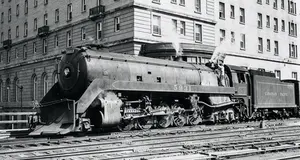
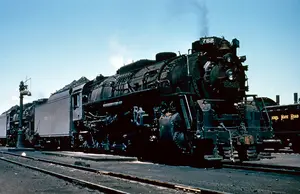
 Southern Pacific 4-8-4 #4459 (GS-5) has westbound train #99, the "Coast Daylight," departing Los Angeles (Los Angeles - San Francisco) on April 12, 1953. Donald Duke photo.
Equipment and Operations
The Coast Daylight’s success was not only due to marketing—it was also rooted in operational excellence and carefully designed equipment.
Locomotives
Initially hauled by GS-2 and GS-3 locomotives, the train later became synonymous with the GS-4 class, including the famous Southern Pacific No. 4449. These locomotives combined speed, power, and visual appeal, making them icons of American steam.
Consist and Amenities
By the late 1930s, the train was fully re-equipped with lightweight cars from Pullman-Standard. Features included:
- Chair cars with advanced ventilation and comfort
- Dining cars offering full-service meals
- Lounge cars with panoramic views
- Observation and parlor cars for premium passengers
The articulated lounge design eliminated barriers between cars, creating a spacious and modern feel.
Schedule and Speed
According to late-1930s timetables, the train could complete the journey in under 10 hours, maintaining an average speed of roughly 50 mph. This combination of speed, comfort, and scenery made the Coast Daylight one of the most desirable ways to travel in California.
 Southern Pacific E7A #6004 is ahead of train #98, the "Coast Daylight," at the Cahill Street Station in San Jose, California during June of 1964. Drew Jacksich photo.
Postwar Changes and Dieselization (1945–1950s)
Following World War II, the Coast Daylight remained immensely popular. The Noon Daylight returned to service in 1946, restoring multiple daily departures between San Francisco and Los Angeles.
However, the postwar period also marked the beginning of significant changes. Railroads across the country began transitioning from steam to diesel power, and the Coast Daylight followed suit.
On January 7, 1955, the train was fully dieselized, ending its long association with steam locomotives.
During this era, Southern Pacific also reorganized its passenger services:
- In 1949, the Noon Daylight was replaced by the overnight Starlight
- The Morning Daylight reverted to the Coast Daylight name
- Equipment and services were modernized, though still maintaining high standards
Despite these changes, the train retained its prestige and continued to attract strong ridership into the 1950s.
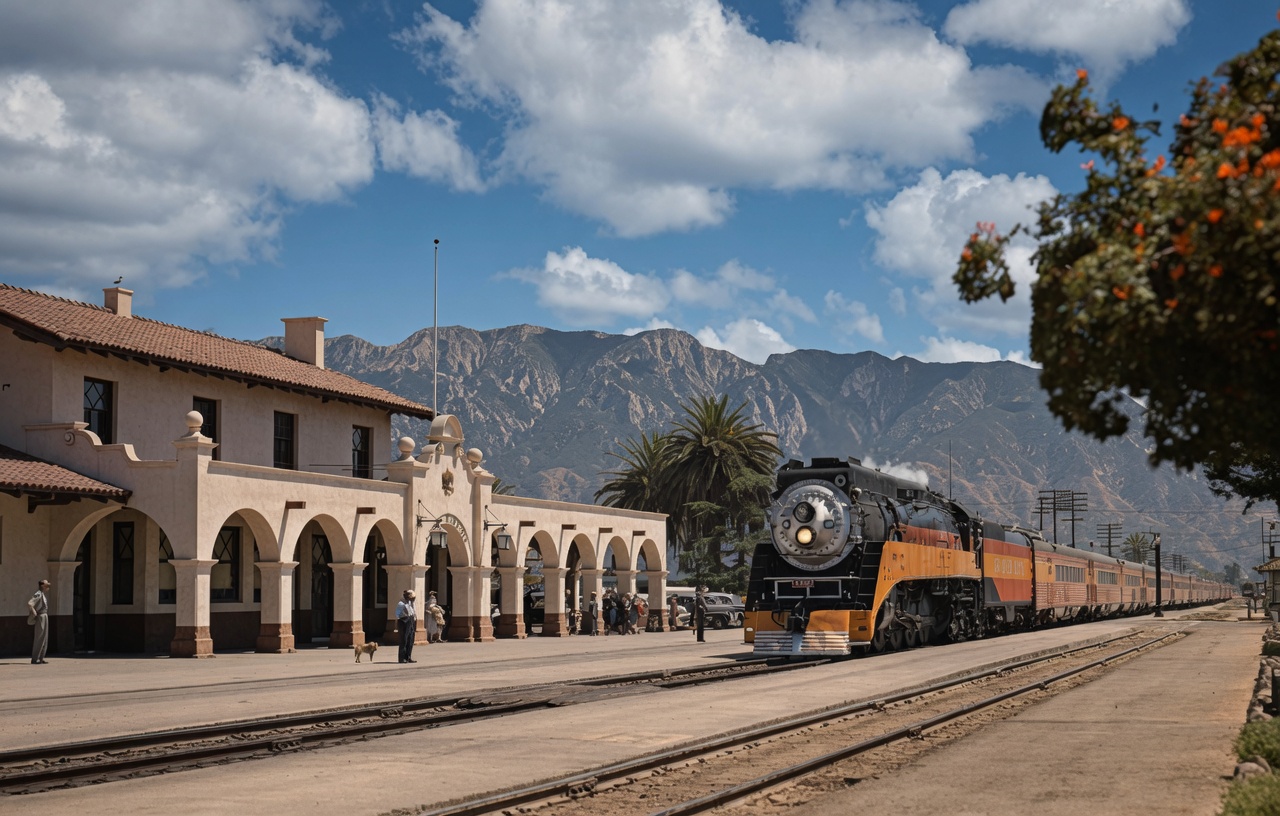 A Southern Pacific publicity photo featuring 4-8-4 #4458 (GS-5) ahead of train #99, the "Coast Daylight" (Los Angeles - San Jose - San Francisco) boarding at Santa Barbara, California during the 1950s. The fully air-conditioned train offered chair cars (coaches), coffee shop car, tavern car, parlor (with drawing room), and parlor-observation.
Decline in the Jet Age (1960s)
Like nearly all American passenger trains, the service faced increasing challenges in the 1960s.
The rapid expansion of:
- Automobile ownership
- Interstate highways
- Commercial air travel
began to erode the railroad’s passenger base. Even a train as popular as the Coast Daylight could not escape these broader trends.
A 1966 study revealed that Southern Pacific was losing money on the service, with per-passenger costs significantly higher than competing modes of transportation. As a result, Southern Pacific gradually reduced amenities and investment in its passenger operations. While the Coast Daylight remained in service, its former glory began to fade. By the late 1960s, the railroad—like many others—was increasingly eager to exit the passenger business altogether.
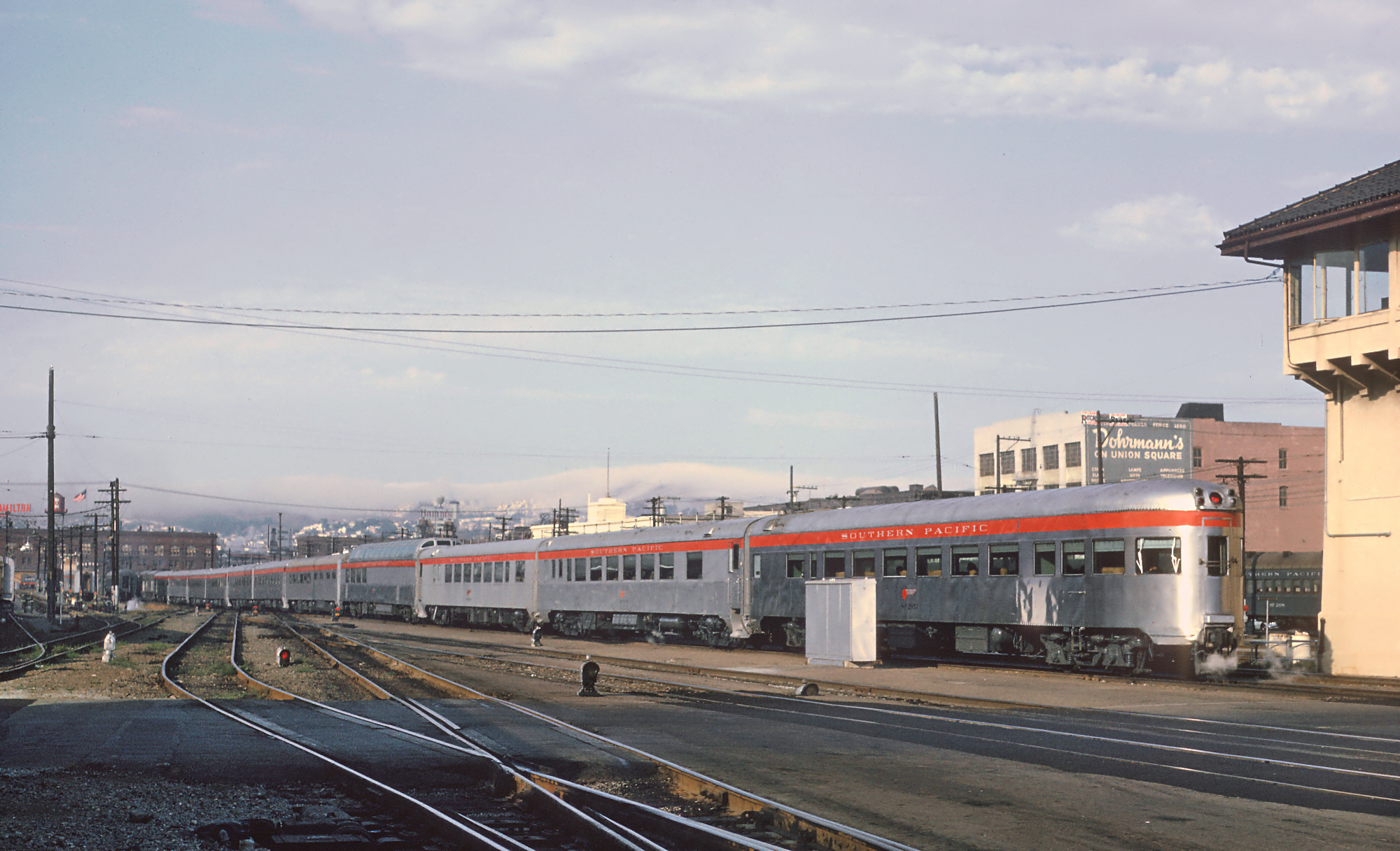 Southern Pacific's train #98, pulls past the 4th Street Tower with the departing "Coast Daylight" at San Francisco on August 25, 1967. Roger Puta photo.
Final Years and Amtrak Transition (1971–1974)
The turning point came on May 1, 1971, with the creation of Amtrak, which assumed responsibility for most intercity passenger rail service in the United States.
The train was initially retained under Amtrak, though in a modified form:
- Its northern terminus was shifted to Oakland
- It was occasionally combined with other services
- The name was briefly revived for a San Diego–Seattle route
However, the standalone Coast Daylight did not last long. By May 19, 1974, the name was officially discontinued, replaced by the now-famous Coast Starlight, which continues to operate along much of the same route today.
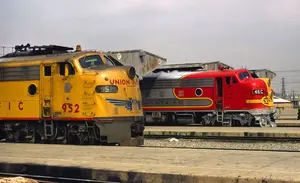
 This sweeping photo of Southern Pacific's train #98, the "Coast Daylight," features the consist awaiting a northbound departure from San Jose, California in January, 1968. Up front is F7A #6202 and FP7 #6457. Rick Burn photo.
Legacy
Although the train disappeared in 1974, its legacy endures in multiple ways.
Cultural and Historical Impact
The train remains one of the most celebrated streamliners in American history, often cited alongside trains like the Super Chief and 20th Century Limited. Its striking livery and innovative design set a new standard for passenger rail aesthetics.
Preservation
Several pieces of equipment have survived, most notably Southern Pacific 4-8-4 No. 4449, which remains operational and frequently appears in excursion service.
Modern Successor
Amtrak’s Coast Starlight continues to follow much of the original route, preserving the tradition of scenic coastal rail travel between California and the Pacific Northwest.
Recent Articles


-
Baldwin "Baby Face" Locomotives: Specs, Photos, Roster
Oct 30, 26 11:01 PM
 Baldwin's Babyface cab on the early road diesels: 50 short-cab units, 1946-1948, plus the related Centipede. Construction numbers, specs, and the sharknose that followed.
-
California High-Speed Rail Chief Resigns
Oct 30, 26 08:36 PM
 Ian Choudri resigned October 28, 2026 as chief executive of the California High-Speed Rail Authority. The board named Joe Stephenshaw interim chief executive.
-
The 1910 Portal Bridge Is Handed Over for Demolition
Oct 30, 26 04:03 PM
 Amtrak handed the 1910 Portal Bridge over for demolition on October 29, 2026, during the final cutover to Portal North. Regular NJ Transit and Amtrak schedules are expected November 15.
-
Union Pacific-Norfolk Southern Merger Review Runs to 2027
Oct 30, 26 03:59 PM
 Union Pacific says the Surface Transportation Board's review of the Norfolk Southern merger gathers information through May 28, 2027. A closing still depends on board approval.
-
Amtrak Board Will Hear Restructuring Comments on November 10
Oct 30, 26 03:41 PM
 Amtrak's board will hear public comments on its restructuring on November 10, 2026, from 2 to 3 p.m. Eastern. Written comments were due October 30. A proposal goes to the board in December.
-
Canadian Pacific Selkirk 5931 Restored in Calgary
Oct 30, 26 01:36 PM
 Heritage Park in Calgary unveiled a cosmetic restoration of Canadian Pacific 2-10-4 No. 5931 on October 27, 2026. One of two surviving Selkirks. It stays on display.
-
Gettysburg Railway to Host Steam for Lincoln
Oct 30, 26 01:18 PM
 Northern Central Railway of York No. 17 will recreate Lincoln's arrival at Gettysburg on November 18, 2026, with public steam trips November 19-21.
-
NC&StL No. 576 to Steam for the Public in Nashville
Oct 30, 26 01:00 PM
 Nashville Steam will fire NC&StL 4-8-4 No. 576 for the public on November 7, 2026, 9 a.m. to 3 p.m., at 220 Willow Street. Admission is free.
-
Pennsylvania Railroad E8s Join the T1 Trust
Oct 30, 26 12:38 PM
 The T1 Trust has acquired former Pennsylvania Railroad E8A diesels 5702A and 5761A from the Fort Wayne Railroad Historical Society. They are bound for Cumberland.
-
Ligonier Valley Railroad: History, Roster, Timetable
Oct 30, 26 12:03 PM
 The Ligonier Valley Railroad ran 10.5 miles from Latrobe to Ligonier, Pennsylvania. Opened December 1, 1877. Last day August 31, 1952.
-
Toledo, Peoria & Western Diesel Roster (All-Time)
Oct 30, 26 10:25 AM
 Toledo, Peoria & Western diesel locomotives, each frame once. Thirteen Alcos, three Lima-Hamilton switchers, and 26 Electro-Motive units.
-
Toledo, Peoria & Western Steam Roster
Oct 30, 26 09:14 AM
 Toledo, Peoria & Western steam locomotives from the Rogers Consolidations of 1895 through the 4-8-4s of 1937
-
Toledo, Peoria & Western Railway: Map, Roster, History
Oct 29, 26 11:12 PM
 History of the Toledo, Peoria & Western. The Peoria & Oquawka, George P. McNear, the Santa Fe and Pennsylvania years, and the railroad that came back in 1989.
-
Cotton Belt Diesel Roster (All-Time)
Oct 29, 26 07:58 PM
 St. Louis Southwestern diesel locomotives, each frame once. Baldwin switchers, F units, and new Cotton Belt-lettered power through the GP60s of May 1990.
-
Cotton Belt Steam Roster (Built Since 1900)
Oct 29, 26 06:52 PM
 St. Louis Southwestern steam locomotives built since 1900. Consolidations, Ten-Wheelers, and twenty class L-1 4-8-4s. The quantity column is 297.
-
Cotton Belt Railroad: Map, Logo, History, Rosters
Oct 29, 26 10:56 AM
 History of the St. Louis Southwestern, the Cotton Belt Route. The Tyler Tap, Paramore's silver spike, the Thebes Bridge, the Blue Streak, and Southern Pacific control. Steam and diesel rosters are sep…
-
Pere Marquette Steam Roster (Built Since 1900)
Oct 28, 26 11:54 PM
 Pere Marquette steam locomotives built since 1900. Consolidations, Mikados, Pacifics, and 39 Berkshires. The quantity column is 503.
-
Pere Marquette Diesel Roster (All-Time)
Oct 28, 26 11:48 PM
 Pere Marquette diesel locomotives, each frame once. Two SW1s, 14 NW2s, three GE 70-tonners, eight E7As, and six BL2s delivered lettered Chesapeake and Ohio. The quantity column is 33.
-
Pere Marquette Railway: Map, Logo, Rosters, History
Oct 28, 26 11:44 PM
 History of the Pere Marquette Railway. Timber roads, the Prince years, the Van Sweringens, the Ludington car ferries, and the Chesapeake and Ohio merger of June 6, 1947.
-
Nickel Plate Road (Railroad): Map, History, Rosters
Oct 28, 26 10:51 PM
 History of the Nickel Plate Road, the New York, Chicago and St. Louis. The Seney syndicate, the Van Sweringens, the Berkshires, and the Norfolk and Western absorption at 12:01 a.m. on October 16, 1964…
-
Nickel Plate Diesel Roster (All-Time)
Oct 28, 26 10:48 PM
 Nickel Plate diesel locomotives, each frame once. Alco switchers and PAs, GP7s and GP9s, and the GP30s. The quantity column is 440. The 1950 fleet was 117.
-
Nickel Plate Steam Roster (Built Since 1900)
Oct 28, 26 10:43 PM
 Nickel Plate steam locomotives built since 1900, including the Lake Erie and Western, the Clover Leaf, and the Wheeling engines that took Nickel Plate numbers. The quantity column is 786.
-
EMD "E9" Locomotives: Specs, Roster, History
Oct 28, 26 10:37 PM
 EMD E9 cab units and boosters, 2,400 horsepower, built April 1954 through January 1964. Gear ratios, specifications, and the production roster by owner, serial, and order.
-
NYC 4-6-4 #5344, "Commodore Vanderbilt"
Oct 28, 26 04:31 PM
 NYC J-1e Hudson 5344, the Commodore Vanderbilt. Alco, November 1931. Carl Kantola’s shroud, December 1934, then a Dreyfuss bullet nose in 1939. Scrapped at Collinwood in 1954.
-
New Jersey, Indiana & Illinois Railroad: A South Bend Shortline
Oct 28, 26 11:05 AM
 The New Jersey, Indiana & Illinois, the Jersey Line, ran from South Bend to Pine. Singer built it in 1905. Wabash stock control came in 1926. Two diesels, and the steam the record names.
-
Monon Diesel Roster (All-Time)
Oct 28, 26 10:13 AM
 Monon diesel locomotives, each frame once. F3s, nine BL2s, the C420s, and eight U23Bs. The quantity column is 96. The 1951 fleet was 57.
-
Monon Steam Roster (Built Since 1900)
Oct 28, 26 10:09 AM
 Monon steam locomotives built since 1900. Twelve-Wheelers, Mikados, light Pacifics, and thirteen six-wheel switchers. The quantity column is 148.
-
Monon Railroad: Map, Photos, History, Logo
Oct 28, 26 09:55 AM
 History of the Monon, the Hoosier Line. The New Albany & Salem, the X at Monon, Barriger's streamliners, and the Louisville & Nashville merger of July 31, 1971.
-
Missouri-Kansas-Texas Diesel Roster (All-Time)
Oct 28, 26 09:48 AM
 All-time diesel roster of the Missouri-Kansas-Texas. 406 locomotives, each frame once. Baldwin switchers, Alco cab units, F units, Geeps, and the SD40-2s.
-
Missouri-Kansas-Texas Steam Roster (Built Since 1900)
Oct 28, 26 09:43 AM
 Missouri-Kansas-Texas steam locomotives built since 1900. Moguls, Mikados, Pacifics, and the narrow-gauge shop tanks. The quantity column is 715.
-
Missouri-Kansas-Texas Railroad (Katy): Map, History, Rosters
Oct 27, 26 11:02 PM
 History of the Missouri-Kansas-Texas, the Katy. The race into Indian Territory, Gould, the 1923 railroad, the Texas Special, and the 1988 sale. Steam and diesel rosters are linked.
-
Soo Line Diesel Roster (All-Time)
Oct 27, 26 10:55 PM
 All-time diesel roster of the Soo Line and the Wisconsin Central. 786 locomotives, each frame once. Cab units, Geeps, the Milwaukee Road engines, and the SD60s. The South Shore's 24 stay on that page.
-
Soo Line Steam Roster (Built Since 1900)
Oct 27, 26 10:49 PM
 Soo Line and Wisconsin Central steam locomotives built since 1900. Consolidations, Mikados, Pacifics, 21 Mountains, and four Lima 4-8-4s.
-
Soo Line Railroad: Map, Logo, History, Rosters
Oct 27, 26 10:24 PM
 The Soo Line, from the flour millers' railroad around Chicago to the Sault, the Wisconsin Central, and the Milwaukee Road. Steam quantity 422. Diesels 786. Canadian Pacific took full control in 1990.
-
Minneapolis, Northfield and Southern Railway: Map, History, Rosters
Oct 27, 26 10:32 AM
 The Minneapolis, Northfield & Southern, the Dan Patch Line that became a Twin Cities belt. Steam, gas-electric mules, motor cars, and the 22 diesels, through the Soo Line.
-
Minneapolis & St. Louis Diesel Roster (All-Time)
Oct 27, 26 10:27 AM
 All-time diesel roster of the Minneapolis & St. Louis. 97 locomotives, each frame once. Switchers from 1938, 35 RS-1s, the FT and F-unit cabs, two SD7s, and 23 GP9s. Builder numbers included.
-
Minneapolis & St. Louis Steam Roster (Post 1900)
Oct 27, 26 10:25 AM
Minneapolis & St. Louis steam locomotives built since 1900. Moguls, Consolidations, 35 Mikados, and five Pacifics. -
Minneapolis and St Louis Railway: "The Peoria Gateway"
Oct 27, 26 09:52 AM
 The Minneapolis & St. Louis, the Tootin' Louie, from the 1870 charter to the Peoria Gateway and the Chicago & North Western sale on November 1, 1960.
-
Alco "PA" Locomotives: Restoration, Specs, Engine, Rosters
Oct 27, 26 12:12 AM
 Alco's PA passenger cab, 297 locomotives built from 1946 to 1953. The 244 engine, the production roster, the Delaware & Hudson PA-4s, and Nickel Plate Road 190.
-
Milwaukee Road Diesel Roster: (All Time)
Oct 26, 26 01:44 PM
 All-time diesel roster of the Milwaukee Road. 1,208 locomotives, each frame once. Alco, Baldwin, Davenport, EMD, Fairbanks-Morse, General Electric, and Whitcomb, with builder numbers.
-
Milwaukee Road Steam Roster (All-Time): Post-1900
Oct 26, 26 01:38 PM
 Milwaukee Road steam locomotives built since 1900. Prairies, Mikados, the N-class articulateds, the S-class 4-8-4s, and the Hiawatha Atlantics and Hudsons. Quantity column 1,974. Unique frames 1,951.
-
Milwaukee Road: Map, Electrification, Logo, History
Oct 26, 26 01:20 PM
 The Milwaukee Road, from the Milwaukee & Mississippi of 1850 to the Pacific Coast Extension, the Hiawathas, and the Soo Line sale. Why Lines West should have stayed.
-
Lake Superior & Ishpeming Railroad: Map, Roster, History
Oct 25, 26 11:38 PM
 Lake Superior & Ishpeming Railroad, reporting mark LSI, from the Marquette Range to the Presque Isle ore dock. The 1954 steam list and the diesels the railroad owned.
-
Kansas City Southern Steam Roster (Built Since 1900)
Oct 25, 26 09:09 PM
 Steam locomotives of the Kansas City Southern built since 1900, with the Louisiana & Arkansas and the Texas company.
-
Kansas City Southern Diesel Roster (Built New)
Oct 25, 26 11:46 AM
All-time diesel roster of the Kansas City Southern. E units, F units, Geeps, SD40s through SD70ACes, Fairbanks-Morse, Baldwin, Alco, and General Electric, with serials and order numbers. -
Kansas City Southern Railway: Map, Photos, History
Oct 25, 26 12:24 AM
The Kansas City Southern, from Arthur Stilwell's Gulf line to Canadian Pacific Kansas City on April 14, 2023. Steam and diesel rosters, the Southern Belle, and the Louisiana & Arkansas. -
Indiana Harbor Belt Diesel Roster (All-Time)
Oct 25, 26 12:17 AM
 All-time diesel roster of the Indiana Harbor Belt. 202 locomotive frames, each counted once. NW2s, SW7s, SW1500s, road switchers, and gensets. Slugs and boosters are outside the count.
-
Indiana Harbor Belt Steam Roster (Built Since 1900)
Oct 25, 26 12:13 AM
 Steam locomotives of the Indiana Harbor Belt built since 1900. 182 engines, each counted once. 0-6-0s, 2-6-0s, 0-8-0s, and 2-8-2s. The three U-4a switchers are three-cylinder Brooks engines of 1927.
-
Indiana Harbor Belt Railroad: Map, Rosters, History
Oct 25, 26 12:00 AM
 Indiana Harbor Belt, the inner belt across the Calumet, from the East Chicago Belt of May 16, 1896. Renamed June 29, 1907. Still operating, headquarters Hammond. Steam roster is the companion, 182 loc…
-
NYC's "P Motor" Electric Locomotives
Oct 24, 26 11:43 PM
 New York Central P motors: 22 Alco-GE 2-C+C-2 electrics, Cleveland Union Terminal 1050–1071, class P-1a. 3,030 hp one-hour on 3,000-volt DC catenary, then 660-volt third rail as P-2a and P-2b.