Monongahela Railway Steam Locomotives: History & Roster
Published: September 22, 2026
By: Adam Burns
Monongahela steam was a coal railroad’s fleet: low-drivered Consolidations for the branches, ten USRA light Mikados for the road freights, six Baldwin Mikados in 1927, and then secondhand Pittsburgh & Lake Erie 2-8-2s when the first generation wore out. Passenger power was a handful of Americans and three Pennsylvania Atlantics. George Drury’s Guide to North American Steam Locomotives has no chapter on this railroad. The class list below is David Gratz and Terry Arbogast’s all-time roster, with builder’s numbers filled in where the Alco and Baldwin records are public.
The last steam locomotive ran on May 26, 1954. The first Baldwin S-12 had gone to work on November 25, 1952, and twenty-seven of them finished the job.
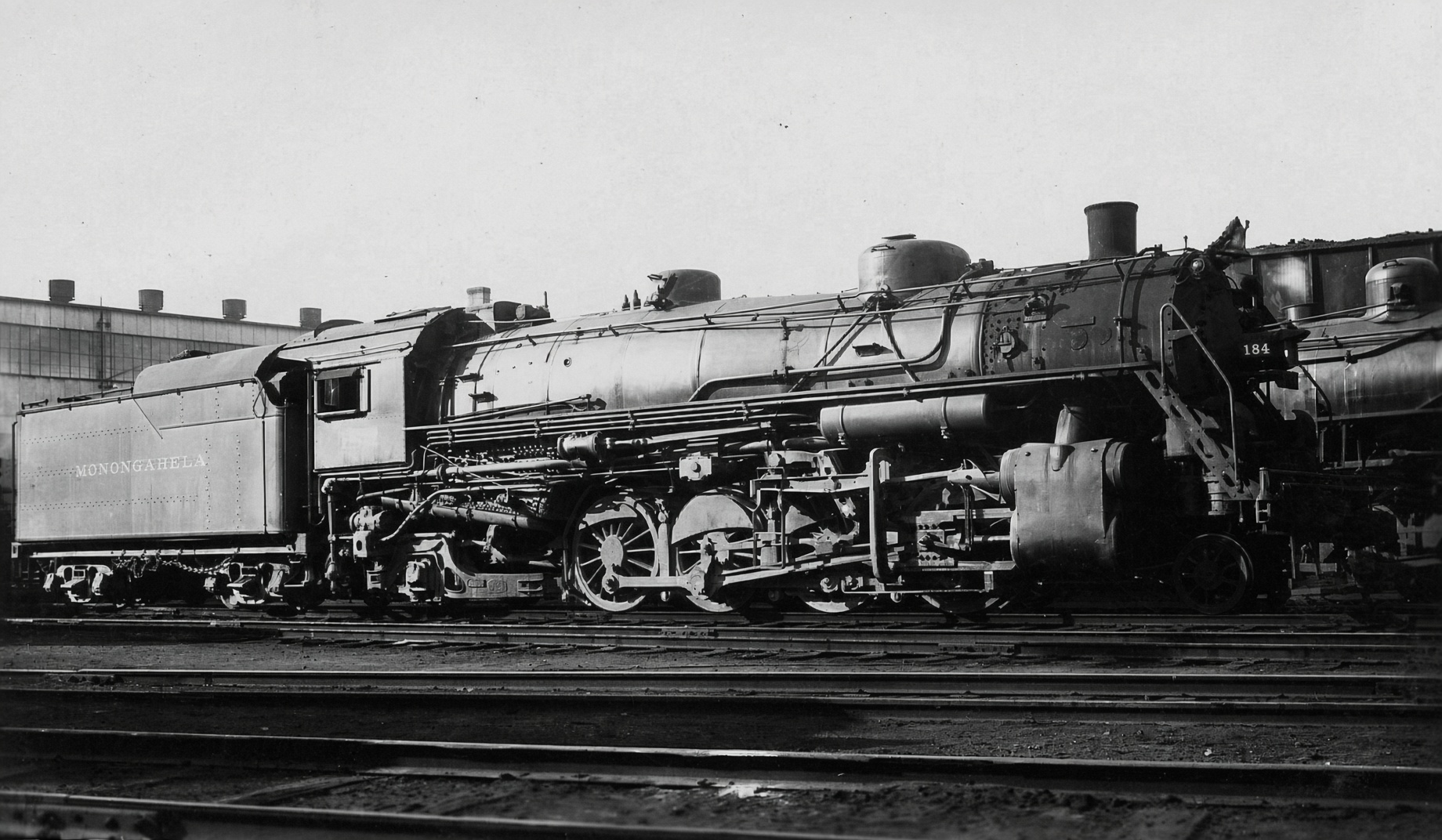
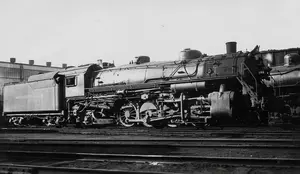
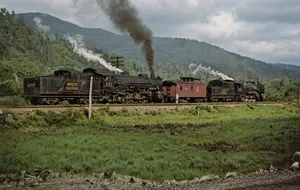
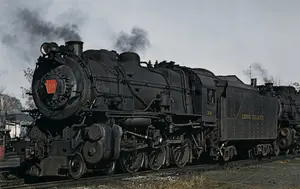
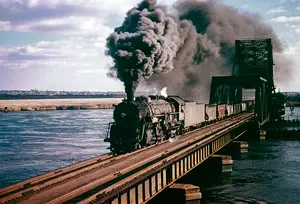
Monongahela Railway 2-8-2 #184 lays over at the shops in Brownsville, Pennsylvania, circa 1950. Photographer unknown.
On this page: At a glance · Consolidations · Mikados · Passenger engines · All-time roster
At a glance
| Item | Detail |
|---|---|
| Railroad | Monongahela Railway. Mark MGA |
| This page | All-time steam classes. No Drury chapter |
| Shops | South Brownsville roundhouse, ten stalls, 1910 |
| New road power | H-5 and H-5sa Consolidations. USRA light Mikados 170–179. Baldwin L-2s 180–185 |
| Secondhand | Pittsburgh & Lake Erie Consolidations, Ten-Wheelers, and L-3 Mikados. Pennsylvania H-3a Consolidations and E-class Atlantics |
| Last steam | May 26, 1954 |
| Diesel roster | All-time diesel roster |
Consolidations
The opening fleet was inherited. Class H-1, 103–114, were Alco-Pittsburgh 2-8-0s built for the Pittsburgh & Lake Erie and taken over in 1903–1906. Class H-3a, 201–206, were Pennsylvania Consolidations, Juniata and Baldwin, acquired in 1903. Class H-4, 207–212, were new Pennsylvania-built engines of 1907.
The railroad’s own design was the H-5. Alco’s Pittsburgh works built 115–140 between 1909 and 1913, twenty-six saturated Consolidations with Baker valve gear, the low-drivered mineral engine of the western Pennsylvania coal roads. Works numbers were 46769–46774 and 47028–47029 in November 1909, 47983–47988 in July 1910, 51591–51596 in July 1912, and 54292–54297 in December 1913. Number 125 went to Birmingham Rail & Locomotive in 1936 and then to the Oneida & Western as 26. Numbers 116 and 131, and a third H-5, went to the Morristown & Erie in 1944–1945 as that road’s 10–12.
Class H-5sa, 141–152, followed in 1915–1917, the same engine with a superheater. Number 142 was sold in 1944 to the Pittsburgh, Chartiers & Youghiogheny as 16. Number 153, also classed H-5sa, was a single H. K. Porter Consolidation of 1923.
Mikados
The United States Railroad Administration assigned the Monongahela ten light Mikados. They were class L-1, numbers 170–179, Alco-Schenectady, February 1919, works numbers 60923–60932. The railroad’s own diagram calls them the standard USRA light 2-8-2. By the late 1940s the boilers had been changed: thermic syphons were in, and the combustion chamber was out. A published USRA allocation list has the class scrapped between 1941 and 1949, which fits a railroad that then relied on newer and secondhand Mikados for the last years of steam.
Those newer engines were the L-2s. Baldwin built 180–185 in 1927, works numbers 60087–60089 in June and 60094–60096 in July, with piston valves and an exhaust-steam injector. They were the last new steam locomotives the Monongahela ordered.
Everything after that was Pittsburgh & Lake Erie. Class L-3, 186–188, came in 1940, Alco-Schenectady Mikados. Class L-3a was five more: 189 and 190 from Schenectady, 191–193 from Alco’s Dunkirk works, all built in 1916 and bought between 1941 and 1944. Class L-3b, 194–200, were Brooks engines of the same P&LE family, bought between 1947 and 1949. The live roster table once printed 186–188 as doodlebugs. They are 2-8-2s. The only railcar in the story is M-70, below.
Passenger engines
Passenger trains never justified a Pacific. Two Pittsburgh & Lake Erie Ten-Wheelers, 101 and 102, class G-1, came with the 1903 fleet. In 1926 the railroad bought two wrecked Scotts Run Ten-Wheelers, that road’s 34 and 35, and rebuilt one of them as Monongahela 99.
Americans covered the early varnish: Pennsylvania 4-4-0s 301 (first) and 302 in 1904–1905, the first 301 never assembled and used as parts for 302; Pittsburgh & Lake Erie Americans 300 and 301 (second) in 1909; and more P&LE Americans, 303–307, in 1911 and 1915–1916. Three Pennsylvania Atlantics, 308–310, class E-2a, arrived in 1917–1918. One more, 311, class E-3sd, came from the Pennsylvania in 1937, late for an Atlantic and late for this passenger business. The Fairmont–Brownsville train ended on October 21, 1950.
In 1940 the railroad also bought Pittsburgh & Lake Erie gasoline railcar M-70, a Pullman product classed MD-MB-PA. It ran a few years and was sold. It is not in the steam table.
All-time roster
Every steam locomotive in the Gratz and Arbogast list. “Built” is the builder’s date. Secondhand engines show the year the Monongahela acquired them in the notes. The gas-electric is omitted.
| Type | Class | Numbers | Qty | Builder | Built | Notes |
|---|---|---|---|---|---|---|
| 4-6-0 | G-1 | 99 | 1 | Alco, Richmond | 1926 | Rebuilt from two wrecked Scotts Run engines, 34 and 35. One locomotive resulted |
| 4-6-0 | G-1 | 101–102 | 2 | Alco, Pittsburgh | 1903 | Ex-Pittsburgh & Lake Erie, acquired 1903 |
| 2-8-0 | H-1 | 103–114 | 12 | Alco, Pittsburgh | 1903–1906 | Ex-Pittsburgh & Lake Erie |
| 2-8-0 | H-5 | 115–140 | 26 | Alco, Pittsburgh | 1909–1913 | New. Saturated. Baker valve gear. 125 to Oneida & Western 26 in 1936. 116, 131, and a third engine to Morristown & Erie 10–12 in 1944–1945 |
| 2-8-0 | H-5sa | 141–152 | 12 | Alco, Pittsburgh | 1915–1917 | New. Superheated. 142 to Pittsburgh, Chartiers & Youghiogheny 16 in 1944 |
| 2-8-0 | H-5sa | 153 | 1 | H. K. Porter | 1923 | New. Superheated. A one-engine follow-up to 141–152 |
| 2-8-0 | H-3a | 201–206 | 6 | Juniata, Baldwin | 1903 | Ex-Pennsylvania, acquired 1903 |
| 2-8-0 | H-4 | 207–212 | 6 | Pennsylvania | 1907 | New, built by the Pennsylvania |
| 2-8-2 | L-1 | 170–179 | 10 | Alco, Schenectady | 2/1919 | USRA light Mikado. Works 60923–60932. Later given thermic syphons |
| 2-8-2 | L-2 | 180–185 | 6 | Baldwin | 6/1927–7/1927 | Last new steam. Works 60087–60089 and 60094–60096 |
| 2-8-2 | L-3 | 186–188 | 3 | Alco, Schenectady | — | Ex-Pittsburgh & Lake Erie, acquired 1940. Original builder year not in the class list |
| 2-8-2 | L-3a | 189–190 | 2 | Alco, Schenectady | 1916 | Ex-Pittsburgh & Lake Erie, acquired 1941–1944. 1916 is the builder year printed with this class |
| 2-8-2 | L-3a | 191–193 | 3 | Alco, Dunkirk | 1916 | Ex-Pittsburgh & Lake Erie, acquired 1941–1944 |
| 2-8-2 | L-3b | 194–200 | 7 | Alco, Brooks | — | Ex-Pittsburgh & Lake Erie, acquired 1947–1949 |
| 4-4-0 | D-3 | 301 (1st), 302 | 2 | Pennsylvania | 1904–1905 | First 301 was never assembled. Used as parts for 302 |
| 4-4-0 | D-1 | 300 | 1 | Pittsburgh & Lake Erie | 1909 | Acquired 1909 |
| 4-4-0 | D-2 | 301 (2nd) | 1 | Pittsburgh & Lake Erie | 1909 | Acquired 1909. Number freed after the first 301 was stripped |
| 4-4-0 | D-4 | 303–304 | 2 | Alco, Pittsburgh | 1911 | Ex-Pittsburgh & Lake Erie |
| 4-4-0 | D-4a | 305–307 | 3 | Alco, Pittsburgh | 1915–1916 | Ex-Pittsburgh & Lake Erie |
| 4-4-2 | E-2a | 308–310 | 3 | Pennsylvania | 1917–1918 | Ex-Pennsylvania |
| 4-4-2 | E-3sd | 311 | 1 | Pennsylvania | 1937 | Ex-Pennsylvania. Last passenger steam added to the roster |
Related reading
- Monongahela Railway · Monongahela diesel roster
- Pennsylvania Railroad · New York Central · Baltimore & Ohio
- Consolidation type · Mikado type · USRA locomotives
Sources
- David E. Gratz and Terry E. Arbogast, The Monongahela Railway: Its History and Operation, 1903–1993, all-time steam classes and acquisition years. The live page prints this list; 186–188 are restored here to 2-8-2s.
- Steve Llanso, Locobase, from Monongahela locomotive diagrams supplied by Allen Stanley: H-5 works numbers, and L-1 works 60923–60932, February 1919.
- Locomotive Cyclopedia (1930) and the Baldwin order record for L-2 works numbers 60087–60089 and 60094–60096.
- USRA light-Mikado allocation: Monongahela 170–179, class L-1, Alco-Schenectady, 1919.
- Last steam May 26, 1954, and first S-12 November 25, 1952, from the company chronology.
Recent Articles


-
Monongahela Railway Steam Locomotives: History & Roster
Sep 22, 26 01:34 PM
 Monongahela steam—H-5 Consolidations, USRA light Mikados 170–179, Baldwin L-2s, ex-P&LE L-3s. All-time roster. Last steam May 26, 1954.
 -
Monongahela Railway Diesel Roster: All-Time
Sep 22, 26 01:16 PM
 Monongahela diesel—27 Baldwin S-12s, NYC RF-16 sharks, P&LE GP7s, GP38s 2000–2004, Super 7s 2300–2310. Serials and orders. Last steam May 26, 1954.
 -
Monongahela Railway: Map, Rosters, History
Sep 22, 26 01:14 PM
 Monongahela Railway—incorporated December 31 1900, Railway July 1 1915. Brownsville–Fairmont coal road. Last steam May 26 1954. Conrail May 1 1993.
 -
Virginia Scenic Railway Dining (2026)
Sep 22, 26 01:09 PM
 2026 Virginia Scenic Railway—Blue Ridge Flyer Dining Class from Staunton, about 3 hours, plated meal. Sunday Brunch from Louisa, about $132. Confirm on virginiascenicrailway.com.
 -
Virginia Dinner Train Rides (2026): A Complete Guide
Sep 22, 26 01:03 PM
 2026 Virginia Scenic Railway—Blue Ridge Flyer Dining Class from Staunton, Alleghany Special Dining Class, Sunday Brunch from Louisa. Confirm on virginiascenicrailway.com.
 -
Oregon Dinner Train Rides (2026): A Complete Guide
Sep 22, 26 12:51 PM
 2026 Oregon has no plated dinner train on the calendar. Mount Hood is scenic with snacks. Oregon Coast Scenic’s evening ride is the 21+ Moonlight with sandwiches.
 -
Maine Central Steam Locomotives: History & Roster
Sep 22, 26 12:33 PM
 Maine Central steam—Ten-Wheelers, W-class Consolidations, S-class Mikados, C-class Pacifics, Hudsons 701 and 702. Post-1900 roster after Drury. Last steam June 13, 1954.
 -
Maine Central Diesel Roster: All-Time
Sep 22, 26 12:04 PM
 Maine Central diesel—railcar 901, HH660s, GP7s, E7s, F3s, GP38s, U18Bs, ex-Rock Island U25Bs. All-time roster with serials and orders. Last steam June 13, 1954.
 -
Maine Central Railroad: Map, Logo, Rosters, History
Sep 22, 26 11:36 AM
 Maine Central—Androscoggin & Kennebec and Penobscot & Kennebec, October 28 1862. Pine Tree Route. Mountain Division, Portland–Bangor–Vanceboro. Last steam June 13 1954. Guilford June 1981.
 -
Maryland and Pennsylvania Railroad: Map, Roster, Logo
Sep 22, 26 12:14 AM
 Ma & Pa—Peach Bottom 1868, Maryland & Pennsylvania February 12 1901, Baltimore to York. Last steam November 29 1956. York Railway December 1 1999.
 -
New York Dinner Train Rides (2026): A Complete Guide
Sep 21, 26 11:59 PM
 2026 New York dinner train—Adirondack Dinner Train from Utica, 6 p.m., about 3 hours, First Class from $139. Arcade & Attica mystery dinner is served at Curriers. Confirm on the railroad.
 -
California Dinner Train Rides (2026): A Complete Guide
Sep 21, 26 11:49 PM
 2026 California dinner trains—Napa Valley Wine Train plated meals, River Fox brunch and mystery dinner, Roaring Camp barbecue at camp. Confirm on each railroad.
 -
Roaring Camp Starlight Dinner Party (2026)
Sep 21, 26 11:33 PM
 2026 Roaring Camp Starlight Dinner Party—Beach Train from the Santa Cruz Boardwalk, barbecue at Felton, ride back after dark. Confirm on roaringcamp.com.
 -
Long Island Rail Road Steam Locomotives: History, Roster & Photos
Sep 21, 26 11:29 PM
 Long Island steam—G5s 20–50, H10s 101–119, last steam at Hicksville October 8, 1955. Post-1898 class roster.
 -
Long Island Rail Road Diesel Roster: All-Time
Sep 21, 26 11:24 PM
 Long Island diesel—boxcab 401 in 1925, FM C-Liners, RS-3s, C-420s, GP38-2s, DE30AC and DM30AC. All-time roster with serials and orders.
 -
Long Island Rail Road: Map, History, Pictures, Logo
Sep 21, 26 08:27 PM
 Long Island Rail Road—Brooklyn & Jamaica 1836, Greenport 1844, Pennsylvania control 1900, Penn Station 1910. MTA since 1968. Steam and diesel rosters.
 -
Oregon Coast Scenic Railroad (2026): Sunset Dinner and Moonlight
Sep 21, 26 02:40 PM
 2026 Oregon Coast Scenic does not post the old four-course Sunset Dinner. The evening ride is the 21+ Moonlight Excursion from Garibaldi, with pre-ordered sandwiches. Confirm on oregoncoastscenic.org.
 -
Adirondack Dinner Train (2026): Dates, Tickets & What to Expect
Sep 21, 26 01:38 PM
 2026 Adirondack Dinner Train—Utica Union Station, 6 p.m., about 3 hours to Remsen. First Class from $139. Chef Patrick O’Connor. Confirm on adirondackrr.com.
 -
Lehigh Valley Steam Locomotives: History, Roster & Photos
Sep 21, 26 01:31 PM
 Lehigh Valley steam—Camelback Consolidations, 2-10-2s, K-class Pacifics, six Mountains, Wyoming 4-8-4s. Post-1900 roster after Drury. Last steam September 14, 1951.
 -
Lehigh Valley Diesel Roster: All-Time
Sep 21, 26 01:23 PM
 Lehigh Valley diesel—boxcabs 1926, FTs 1945, F3/F7, FA/PA, C628 Snowbirds, GP38-2s, U23Bs. All-time roster with serials and orders. Last steam September 14, 1951.
 -
Lehigh Valley Railroad: Map, Roster, Logo, History
Sep 21, 26 01:09 PM
 Lehigh Valley—DLS&S 1847, named January 7 1853, Mauch Chunk–Easton September 12 1855. Route of the Black Diamond. Jersey City–Buffalo. Conrail April 1 1976.
 -
Wisconsin Great Northern Dinner Train (2026)
Sep 21, 26 12:47 PM
2026 Wisconsin Great Northern dinner train—Trego, $105, Namekagon River. January 8–31 and May 5–December 17. Confirm on spoonertrainride.com. -
Lehigh and New England Railroad: Map, Rosters, History
Sep 21, 26 12:33 AM
 Lehigh & New England—South Mountain & Boston 1873, named April 2 1895. Anthracite, cement, Maybrook. Last Camelbacks, Alco FAs. Voluntary shutdown October 31 1961.
 -
TVRM Chattanooga Dinner Train (2026): Dates, Tickets & What to Expect
Sep 21, 26 12:20 AM
 2026 TVRM Chattanooga Dinner Train Experience—Grand Junction, select Fri/Sat March 6–October 24, three-course, 2–3 hours, from $110. Confirm on tvrail.com.
 -
Lehigh and Hudson River Railroad: Map, Rosters, History
Sep 20, 26 11:55 PM
 Lehigh & Hudson River—Warwick Valley 1860, Railway April 1 1882. Easton–Maybrook bridge road, Alphabet Route, Alco RS-3s and C420s. Conrail April 1 1976.
 -
Royal Gorge First Class Dinner Train (2026)
Sep 20, 26 11:47 PM
 2026 Royal Gorge Route First Class Lunch & Dinner—Cañon City, about 2 hours, from $199+, 12+. Confirm on royalgorgeroute.com.
 -
GE "44-Tonner" Locomotives: Roster, Specs, History
Sep 20, 26 11:09 PM
 GE 44-ton switcher—90,000-pound rule, Caterpillar D17000 center-cab, Sept 4 1940 CB&Q 9103 through Oct 1956 Dansville & Mount Morris 1. Phases, serial roster, PRR 46.
 -
Strasburg Rail Road Dining (2026): Dinner on the Rails & Elegant Expre
Sep 20, 26 11:00 PM
2026 Strasburg Rail Road seated meals—Dinner on the Rails, Elegant Express, Valentine dinner. Lee E. Brenner diner. Confirm on strasburgrailroad.com. -
International-Great Northern Railroad: Map, History, Timetables
Sep 20, 26 10:43 PM
 International–Great Northern—Houston & Great Northern 1866, International Railroad 1870, merged Sept 30 1873. Palestine, Longview–Laredo, Gould, Missouri Pacific March 1 1956.
 -
Nevada Northern Taste of Italy Dinner Train (2026)
Sep 20, 26 03:25 PM
2026 Nevada Northern Taste of Italy—adults-only multi-course Italian dinner, steam when healthy, East Ely. Sep. 19 gala listed. Confirm on nnry.com. -
Cape Cod Dinner Train (2026): Dates, Tickets & What to Expect
Sep 20, 26 02:53 PM
 Cape Cod Central Dinner Train—Hyannis, Buzzards Bay, and Falmouth. Four-course, 3–3½ hours, from $99.99. Confirm on capetrain.com.
 -
Erie Steam Locomotives: History, Roster & Photos
Sep 20, 26 11:55 AM
 Erie Railroad steam—Camelback 2-8-0s, 155 N-1 Mikados, 105 Berkshires, K-class Pacifics, Triplexes. Post-1900 roster after Drury. Last steam March 17, 1954.
 -
Erie Railroad Diesel Roster: All-Time
Sep 20, 26 11:47 AM
 Erie Railroad diesel—boxcabs 1926, FTs 1944, F3/F7, FA/PA, GP7/GP9, Baldwins, Limas. All-time roster with serials, orders, classes. Last steam March 17 1954. EL October 17 1960.
 -
Erie Railroad: Map, Passenger Trains, Logo, History
Sep 20, 26 11:44 AM
 Erie Railroad—New York & Erie 1832, Piermont–Dunkirk May 14 1851, six-foot then standard June 1880, Chicago 1883. High-and-wide fourth way. Erie Lackawanna October 17 1960.
 -
Colebrookdale Railroad Dining (2026): Secret Valley Dinner Train
Sep 20, 26 11:36 AM
 2026 Colebrookdale Railroad dinner in Boyertown—Secret Valley Dining Class, about 2 hours. Saturday evenings. Confirm on colebrookdalerailroad.com.
 -
Boone & Scenic Valley Wolf Dinner Train (2026)
Sep 19, 26 08:15 PM
 2026 Boone & Scenic Valley Wolf Dinner Train—Des Moines River valley, Bass Point Creek High Bridge, Union Pacific dining cars. Confirm on bsvrr.com.
 -
C&NW 4-6-2s 1617 & 1620: Minnesota 400 Yellow Jackets
Sep 19, 26 11:28 AM
 C&NW Class E Pacifics 1617 and 1620—Alco Schenectady 1917, yellow-and-green E-4-style shrouds 1941 for the Minnesota 400. Crews called them Yellow Jackets. Renumbered 617/620. Scrapped 1956.
 -
Erie Lackawanna Diesel Roster: All-Time
Sep 19, 26 10:13 AM
 Erie Lackawanna diesel—Erie and DL&W inheritance, GP35s, U25Bs, SD45/SDP45/SD45-2, U34CH. All-time roster with serials and orders. Conrail April 1 1976.
 -
Erie Lackawanna Railway: Map, History, Logo
Sep 19, 26 10:06 AM
 Erie Lackawanna Railway—Erie and DL&W, October 17 1960–March 31 1976. Von Willer, White revival, Dereco, Agnes, Conrail. High-and-wide Chicago main. Map, logo, what remains.
 -
"Empire State Express" (1941 Train): Timetables, Route, Consist
Sep 18, 26 10:59 PM
 NYC Empire State Express—George Daniels 1891 day train, 999’s 112.5 mph claim, Budd stainless streamliner December 7 1941, Cleveland and Detroit sections, diesels, 1967 name drop. Timetables, consist…
 -
New York Central 4-6-4s 5426 & 5429: Empire State Express Hudsons
Sep 18, 26 10:32 PM
NYC J-3a Hudsons 5426 and 5429—Alco 1937, Budd stainless shrouds 1941 for the Empire State Express. Pearl Harbor inaugural. Shrouds off by 1950. Neither preserved. -
"Stourbridge Lion" Locomotive: Facts, History, Photos
Sep 18, 26 10:27 PM
 Stourbridge Lion—Foster, Rastrick 0-4-0, first steam locomotive in the United States. Horatio Allen, Honesdale, August 8, 1829. Too heavy for D&H gravity track. Boiler in Baltimore; Colonie replic…
 -
Delaware & Hudson Steam Roster (Post 1900)
Sep 18, 26 10:01 PM
 Delaware & Hudson steam—Camelback 2-8-0s, Loree high-pressure compounds, Class K 4-8-4s, forty Challengers. Post-1900 class roster after Drury. Last steam July 21, 1953.
 -
Boston & Maine Steam Roster (Post 1900)
Sep 18, 26 02:57 PM
 Boston & Maine steam—B-15 Moguls, K-8 Consolidations, P-4 Lima Pacifics, T-1 Limas, R-1 Mountains. Post-1900 class roster after Drury. Last steam July 23, 1956.
 -
Boston & Maine Diesel Roster (All-Time)
Sep 18, 26 01:25 PM
 Boston & Maine diesel—boxcab 1100 1935, Flying Yankee 6000, FTs, E7s, BL2s, GP7/GP9, GP38-2s and GP40-2s. All-time roster. Last steam July 23, 1956.
 -
Mid-Continent Railway Museum Dining (2026)
Sep 18, 26 01:21 PM
 2026 Mid-Continent dining in North Freedom—select-date seated meals in luxury cars, reservations required. Pizza Limited June 28. Confirm on midcontinent.org.