
Pennsylvania Railroad: Map, Logo, History, Rosters
Last revised: March 3, 2025
By: Adam Burns
The illustrious Pennsylvania Railroad was an institutional icon for more than a century. Its many years of success achieved it an impeccable credit rating and vaunted status on Wall Street, which aided the future Penn Central's ability to continue securing loans in the face of a doomed destiny.
The history of the PRR could fill libraries ranging from its corporate heritage to its different business sectors. In short, the company's scope is far too broad to cover in detail here. The Pennsy was born through a need by the state of Pennsylvania to maintain a competitive edge.
It was clear by the 1840s railroads were the future of transportation and the PRR was created as a result. It constructed a well-engineered route from Harrisburg to Pittsburgh and then expanded largely through acquisition.
At its peak the PRR operated thousands of miles, served millions of travelers, and is widely regarded as the greatest of all American railroads.
Sadly, history will remember it as also creating the ill-fated Penn Central Transportation Company. Today, many of the PRR's key routes carry on under Amtrak and Norfolk Southern.
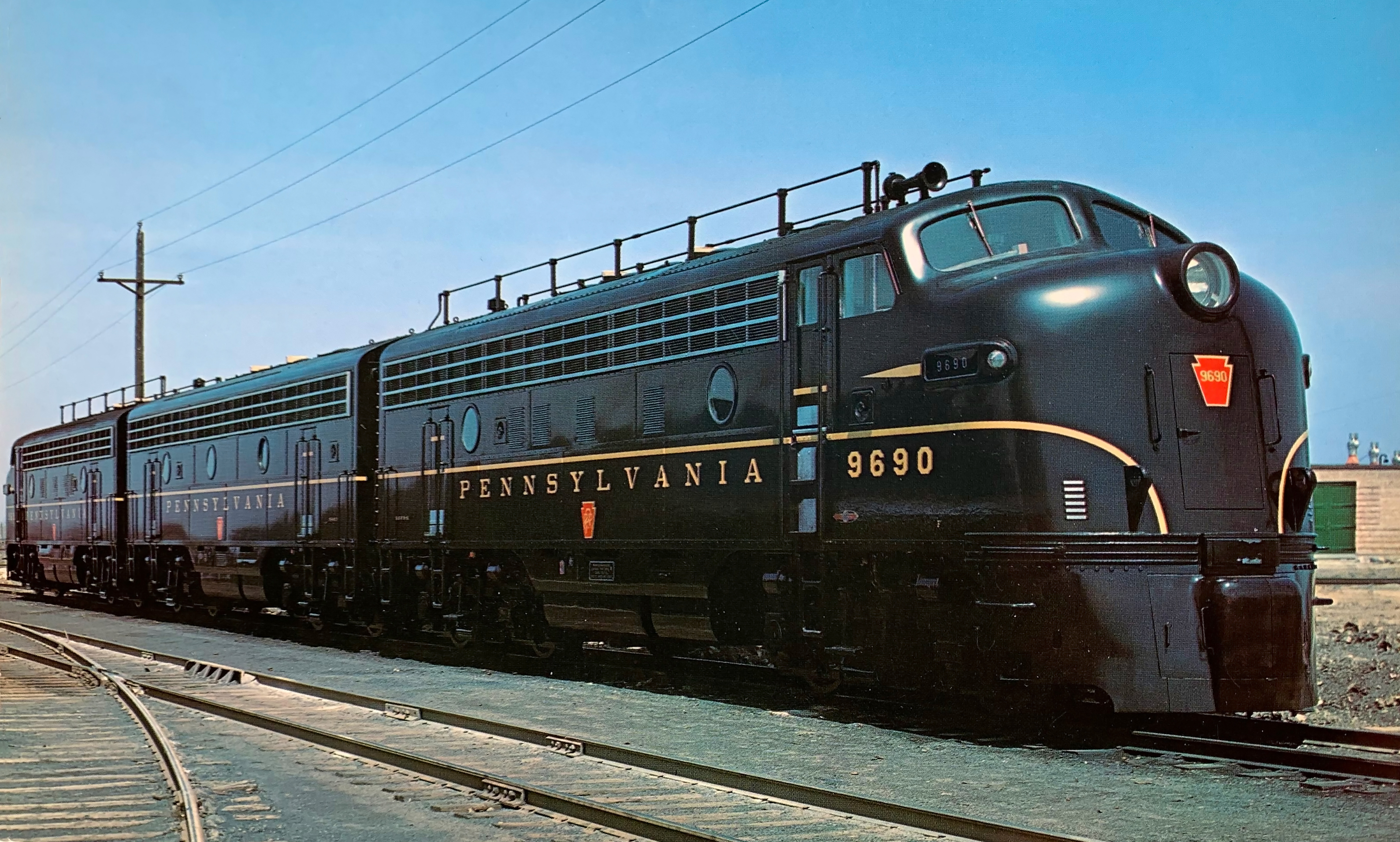 In this striking Electro-Motive photo, recently completed Pennsylvania F7's, led by #9690-A, bask in sun during April of 1949. The structure running the roof line on the A units is Pennsy's trademark, "Trainphone" system, an early type of radio. Author's collection.
History
Unlike the other major eastern trunk lines the Pennsylvania Railroad got off to a relatively late start. The Baltimore & Ohio, Erie, and New York Central could all trace their corporate heritage back to the 1820s and early 1830s.
The PRR was not formed until a decade later. According to Mike Schafer and Brian Solomon's book, "Pennsylvania Railroad," on March 19, 1846 the Pennsylvania state House passed a bill to organize the Pennsylvania Railroad while their counterparts in the Senate did so on March 26th.
Finally, on April 13th Governor Francis R. Shunk signed into law the charter for the Pennsylvania Railroad, authorizing the new company to construct a rail line from the state capital at Harrisburg to Pittsburgh.
The state's delay in organizing its own railroad began years earlier when many believed canals were the future in transportation.
On October 26, 1825 New York's heralded Erie Canal had opened for service, Virginia's Chesapeake & Ohio Canal followed a few years later, and numerous other similar projects were either under construction or in the planning process.
At A Glance
10,000 (1950) 9,756 (1962) |
|
Diesels: 2,402 Electric: 254 |
|
Freight Cars: 139,356 Passenger Cars: 3,546 |
|
The fledgling United States in 1830 comprise only a few dozen states while the original thirteen contained the largest commercial and port centers such as Charleston, Wilmington, Baltimore, Philadelphia, New York, and Boston.
These cities fiercely competed with one another in an attempt to establish themselves as the preeminent eastern port. Naturally, maintaining an efficient inland transportation system was also important in opening trade to the North American interior.
As canal fever caught hold many of these major cities, and their home states, studied the possibility of constructing their own waterway.
This included Pennsylvania and the legislature authorized construction of a canal (officially known as the Pennsylvania Canal) on February 25, 1826 linking Harrisburg with Pittsburgh, running nearly the entire length of the state. A few years later plans extended its eastern connection to Philadelphia.
 Pennsylvania GG-1's lined up and ready for service at Sunnyside Yard in New York (Queens) circa 1954.
In an interesting design, engineers came up with a system that utilized both waterways and early, interlinking railroads which were collectively known as the Main Line of Public Works.
It was a somewhat profitable venture although by the time it got underway railroads, faster with an ability to operate in all types of weather, were already under construction.
The Delaware & Hudson Canal Company opened an early gravity railroad as part of its canal system to move anthracite coal in 1829 while the Baltimore & Ohio operated its first train in 1830 and was pushing west towards the Ohio River.
In addition, the Mohawk & Hudson inaugurated 16 miles between Albany and Schenectady on August 9, 1831 and the New York & Erie (predecessor to the Erie) officially began construction in 1836, completing about 40 miles from Piermont to Goshen, New York in September of 1841.
The B&O was most worrying as state and business leaders feared it could propel Baltimore past Philadelphia as the region's top port. The legislature hurriedly chartered the Pennsylvania Railroad on April 13, 1846 and work began quickly to construct an all-rail corridor across the state.
The company's first engineer was John E. Thomson who conceived an excellent route maintaining moderately gentle grades following the Susquehanna and Juniata Rivers before reaching what later became Altoona, a major maintenance and terminal facility.
The railroad then struck out for Pittsburgh, connecting such towns as Gallitzin and Johnstown, while its fabled Horseshoe Curve was built just west of Altoona. Officially, construction of the PRR commenced in 1847 at Harrisburg and by 1849 had reached Lewistown. A year later it opened to Duncansville, near Altoona.
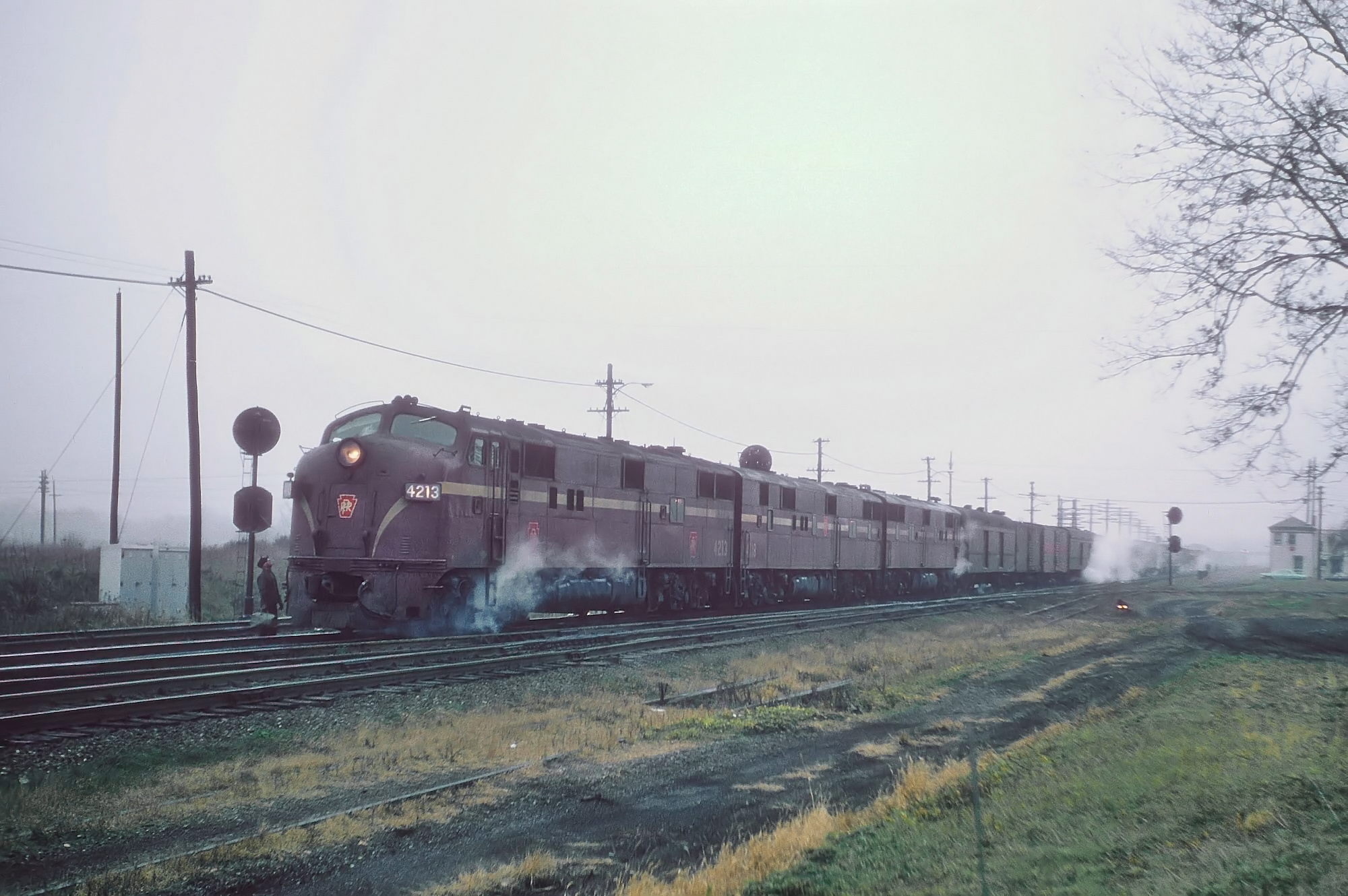 A classic, A-B-A set of Pennsylvania Raiload E7s, led by #4213, has train #70 at Logansport, Indiana in November, 1966. This mostly mail/express service connected Chicago and Cincinnati with connections to Norfolk available via the N&W. Rick Burn photo.
At the same time work was commencing east of Pittsburgh and finished to Cresson in late 1852, completing the original charter. The first train running from the Steel City to Philadelphia did so on December 10, 1852.
The ability to reach the latter city came via the PRR's acquisition of the Harrisburg, Portsmouth, Mount Joy & Lancaster Railroad (1848) while utilizing the Maine Line of Public Works' Philadelphia & Columbia to Columbia. From there the HPMtJ&L continued westward to the PRR's eastern terminus at Harrisburg.
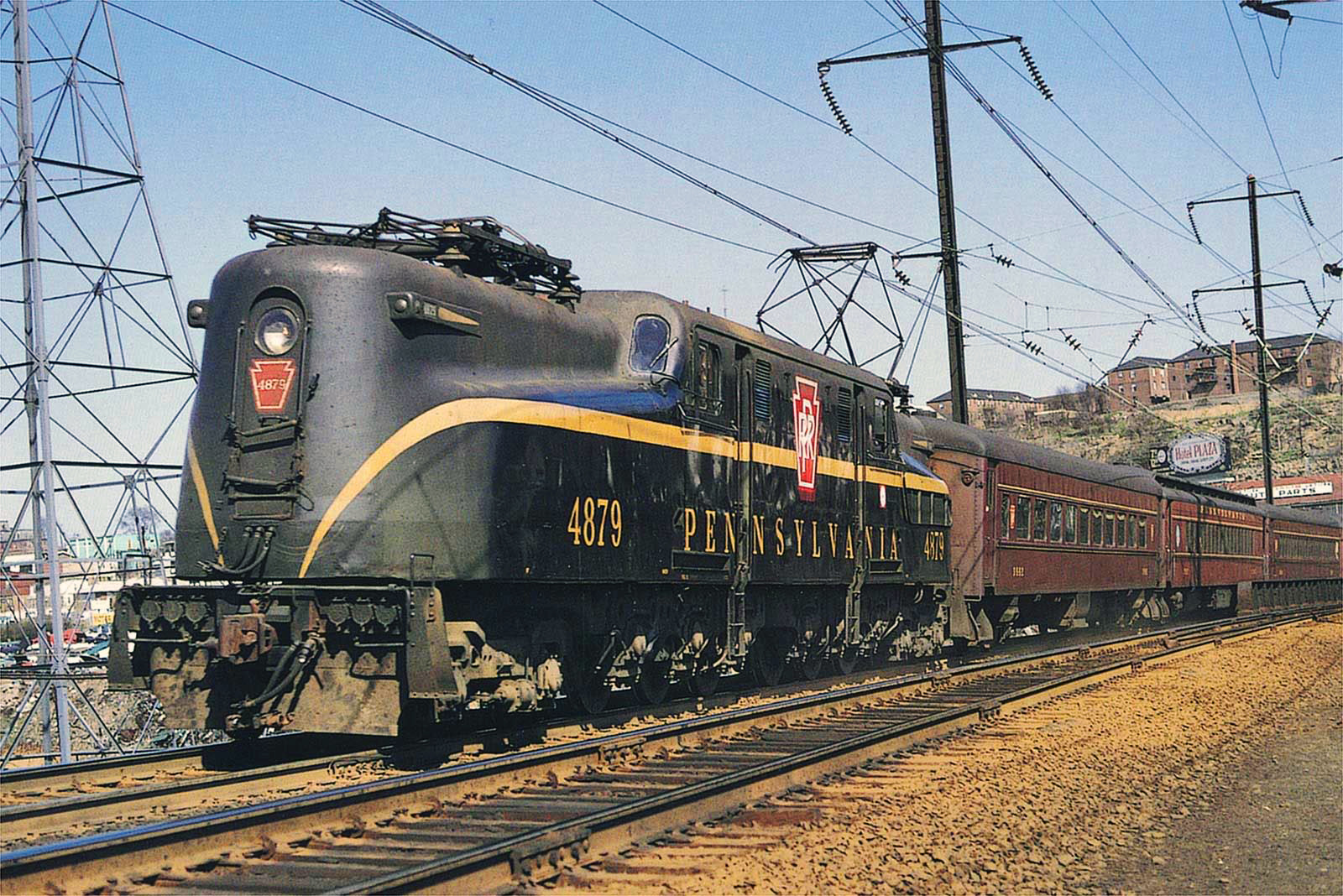 A 1960s postcard featuring one of the Pennsylvania's famous GG-1 electrics. Normally used on passenger assignments they were also powerful enough to handle freight duties. Author's collection.
Direct rail service across the state was now established although much work remained to make the PRR a superior railroad. In 1851 it began construction of a new and improved crossing of the Allegheny summit via the appropriately-named Mountain Division.
The most notable engineering achievement along this roughly 40-mile stretch was Horseshoe Curve, another noteworthy accomplishment of Mr. Thomson. With its completion and opening on February 15, 1854 the PRR flourished.
The state came to realize that, much like New York's Erie Canal, its Main Line of Public Works could not compete against the iron horse. As a result it sold the project to the private PRR in 1857, which used the eastern segments to offer a wholly-owned route across its home state.
At around the same time the PRR was already looking beyond Pittsburgh with an eye towards Chicago and St. Louis. In a similar case of Vanderbilt's New York Central multiple leases, acquisitions, and new construction were all happening almost simultaneously as the Pennsy blossomed during the latter 19th century.
System Map (1930)
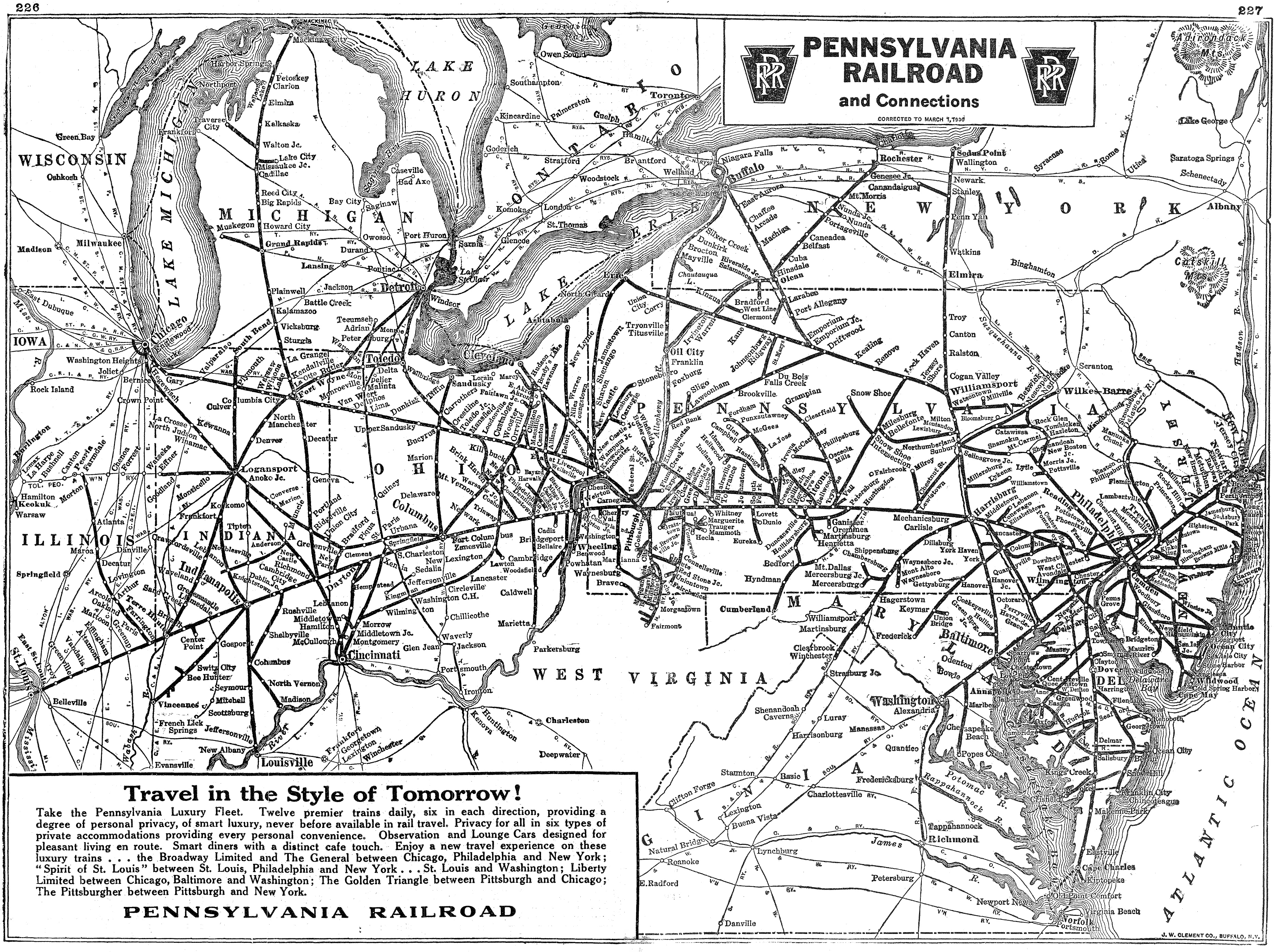
Expansion
Its two most important Midwestern acquisitions included the Pittsburgh, Fort Wayne & Chicago Rail Road (PFtW&C) and Pittsburgh, Cincinnati & St. Louis Railway (PC&StL).
The former carried a history tracing back to three small roads that were having little success in fulfilling their charters:
- Ohio & Pennsylvania was created in 1848 to link Pittsburgh and Crestline, Ohio
- Ohio & Indiana Railroad was chartered between 1850-1851 to continue westward from Crestline to Fort Wayne, Indiana
- Finally, the Fort Wayne & Chicago was formed in 1852 to complete the link to Chicago
After a few years of sputtering construction the financially troubled trio joined to form the PFtW&C in 1856. By this time, Thomson was president of the PRR and held sway in the newly merged company. He helped oversee its completion into the Windy City, which occurred on January 1, 1859.
The growing success of the PRR was becoming quite evident as it was the first major trunk line to reach Chicago; the B&O did not arrive until 1874, the New York Central in 1877 via stock control of the Lake Shore & Michigan Southern, and the Erie in 1883.
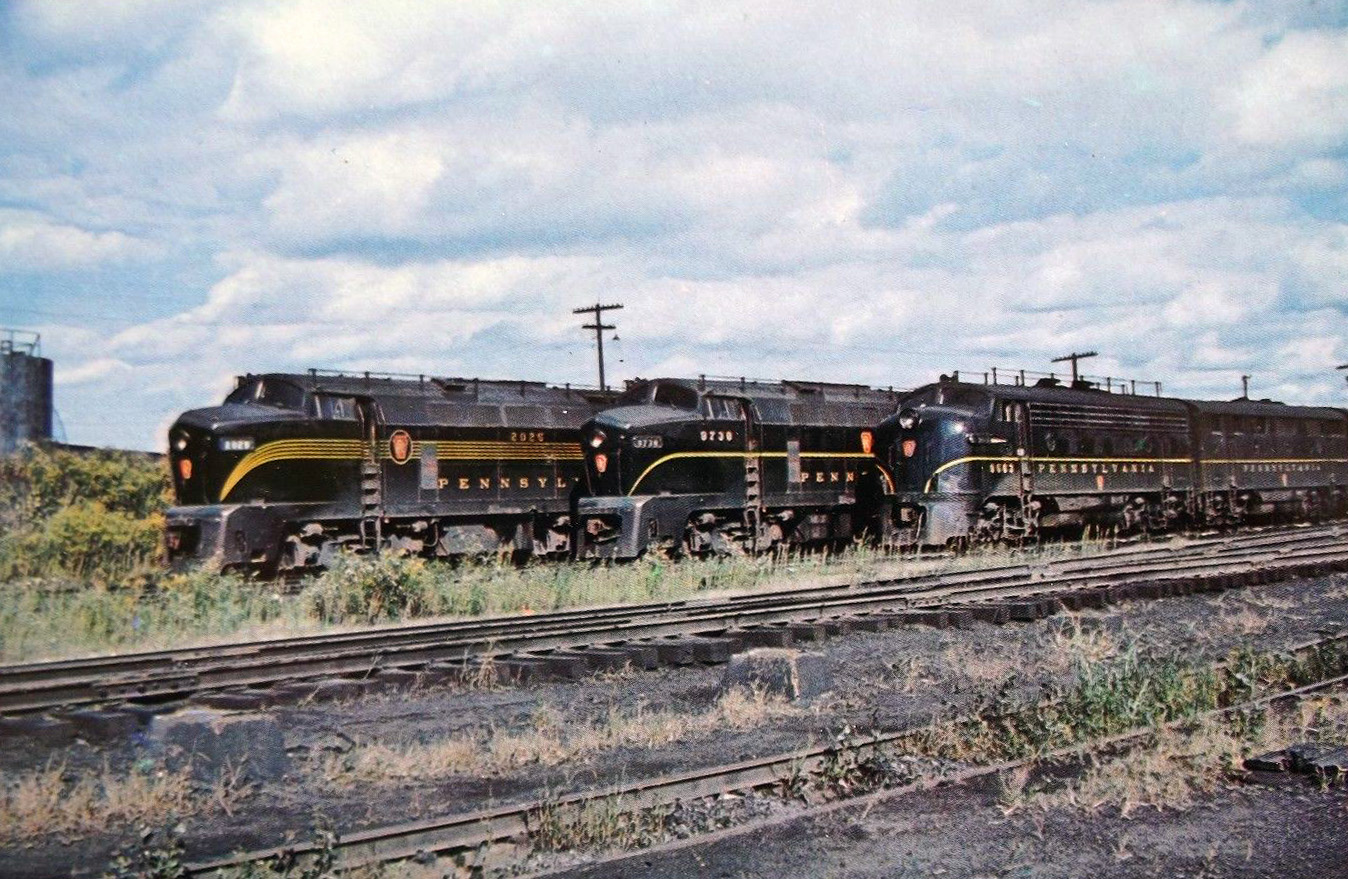 Pennsylvania Railroad RF16 "Sharks" and an F7A-F3B set are seen here lined up for service at Erie, Pennsylvania during October of 1958. William Volkmer photo.
After Chicago the PRR sought another western gateway, St. Louis. The PC&StL was created by the Pennsy during the spring of 1868 to merge three different properties; the Pittsburgh & Steubenville, Steubenville & Indiana, and the Hollidays Cove Railroad (HCRR).
They carried financial difficulties similar to the PFtW&C's predecessors, requiring the PRR's deeper pockets to see the project completed. The S&I had been chartered on February 24, 1848 to connect Steubenville, Ohio along the Ohio River with the Indiana state line.
It was the first PRR acquisition of the three, acquiring stock in the road during the mid-1850s. The P&S was chartered on March 24, 1849 and planned a line from Pittsburgh running across the northern Panhandle of Virginia (West Virginia after June 20, 1863), terminating at Steubenville.
The Hollidays Cove was a Congressional requirement mandating that Virginia allow access to the P&S across its northern panhandle. The state had been fighting its construction since it would compete against the already established Baltimore & Ohio, which served nearby Wheeling.
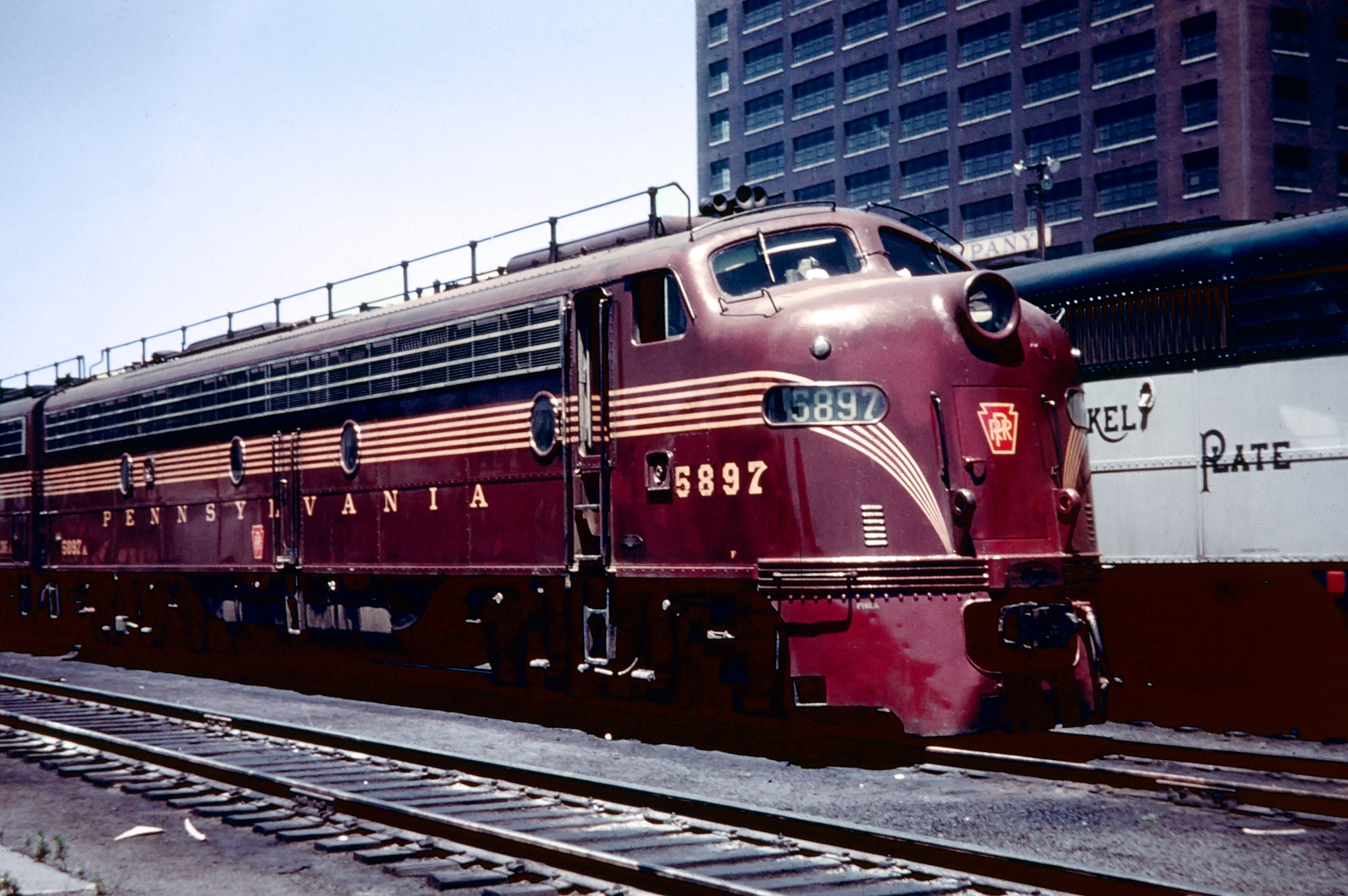 A handsome Pennsylvania E8A, #5897-A, at St. Louis Union Station, circa 1955. Fred Byerly photo. American-Rails.com collection.
The HCRR's charter stipulated it build across the panhandle although it was ultimately only used to construct the bridge spanning the Ohio River. Following this political hurdle and PRR's financial backing, service opened from Pittsburgh to Columbus in 1865.
While the Pennsy had a stake in the new line it did not directly control the properties, which continued to struggle even after their completion.
During January of 1868 the Panhandle Railway was formed to operate the route, which subsequently fell under PRR's ownership later that May when the PC&StL was formed.
Extensions westward to Indianapolis, Cincinnati, St. Louis, and other Midwestern cities was a long list of additional subsidiaries and small systems.
The most notable included the Little Miami Railroad (incorporated on March 11, 1836) connecting Cincinnati with Columbus and the Columbus, Chicago & Indiana Central (created in 1868 through predecessors), which opened service to Indianapolis and another link to Chicago via Logansport, Indiana.
The final push into St. Louis came by way of two additional roads, the Terre Haute & Indianapolis (TH&I) and St. Louis, Vandalia & Terre Haute (StLV&TH). The TH&I was originally chartered as the Terre Haute & Richmond, which opened between Terre Haute and Indianapolis in 1851.
It later changed its name during March of 1865 to better reflect the territories it served. Through various business dealings the PRR undertook a lease of the TH&I using its StLV&TH subsidiary as early as 1868 and directly purchased it on August 18, 1893 according to the Indiana Historical Society.
The Vanadalia Line was a wholly-owned arm of the PRR, created by the company to complete its own extension into St. Louis.
The line ran via Terre Haute, Vandalia, and Highland to East St. Louis/St. Louis, opening for service in 1870. The Pennsy's expansion across the Midwest was thanks largely, again, to Thomson who was arguably the company's most influential president.
Thomson wanted the PRR to own, not lease, its properties which gave it more control and power. Interestingly, despite the many systems comprising its St. Louis corridor the line was always known as the "Panhandle." It remained a vital, busy route until the Conrail era.
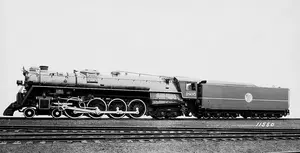
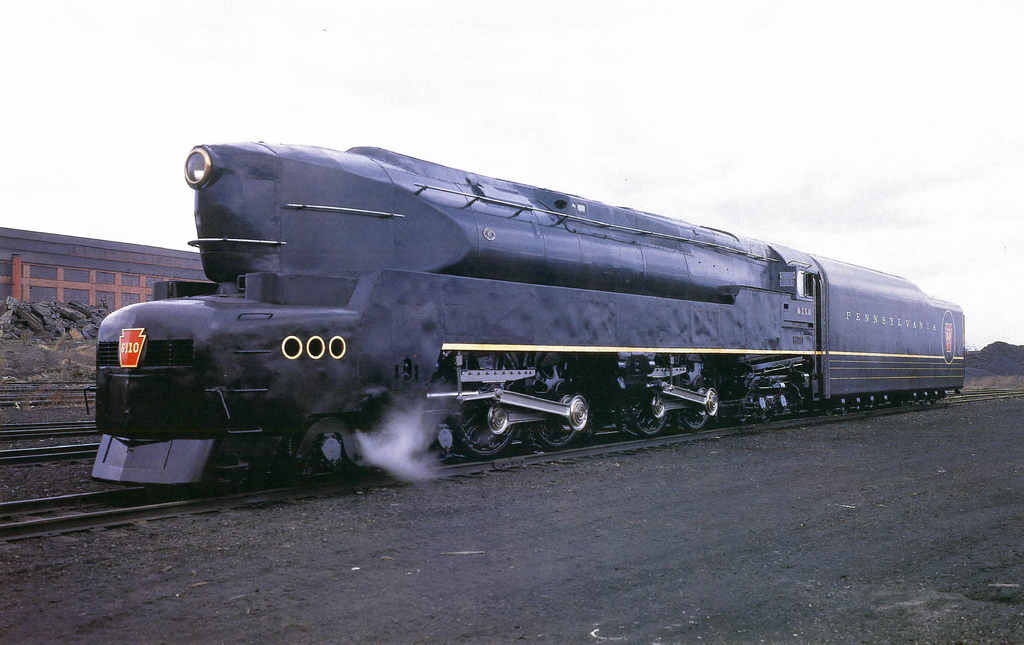 A rare color photograph, taken by the Baldwin Locomotive Works, featuring a new 4-4-4-4 "Duplex Drive" (T-1), #6110, at the manufacturer's plant in Eddystone, Pennsylvania (Philadelphia) during 1942. Author's collection.
Its last great extension in the Midwest was the Grand Rapids & Indiana Railroad, chartered during 1854 and 1855 to construct a line from Fort Wayne, Indiana to the northern tip of Michigan's Lower Peninsula at Mackinaw City via Grand Rapids.
The original promoters hoped the GR&I would tap the state's rich natural resources (notably timber) while car ferry service could be provided across the Straits of Mackinac. The railroad was not having a great deal of success and slipped into bankruptcy in 1869.
That same year the PRR became involved and through the Continental Improvement Company completed the line to Traverse City in 1870. During 1873 the PFtW&C acquired most of the GR&I stock, pushing rails to Petoskey in late 1873. Finally, the final link to Mackinaw City opened on July 3, 1882.
The GR&I was the PRR's only notable presence in Michigan aside from its extension to Detroit, which did not come until 1922 through its Pennsylvania-Detroit Railroad.
The P-DRR, created in 1917, extended north from the PRR at Toledo (an important port town it had reached in 1879 by leasing the Northwestern Ohio Railway).
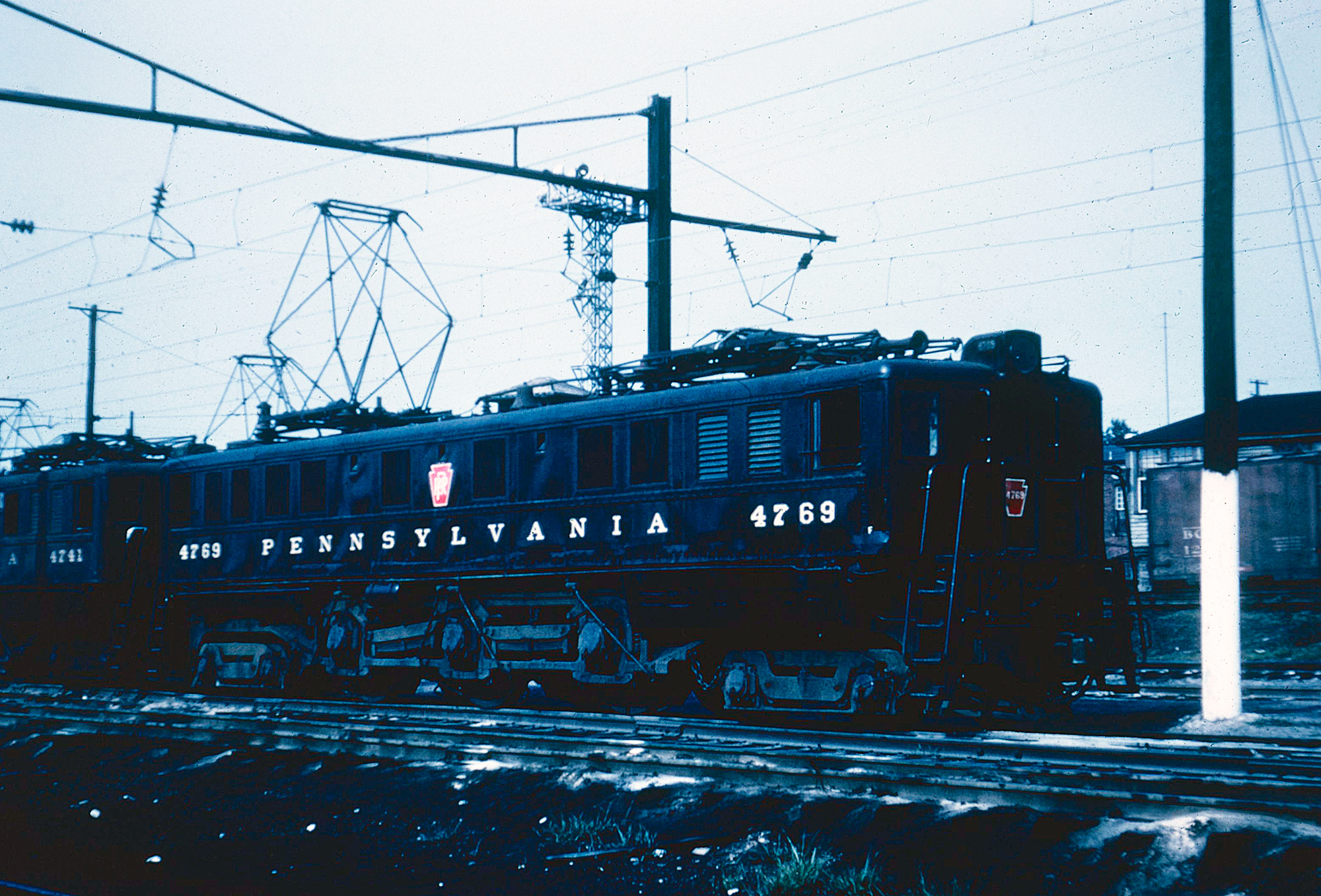 Pennsylvania 2-C-2 #4769 (P-5a) at Enola, Pennsylvania; August 22, 1962. Bill Volkmer photo. American-Rails.com collection.
Eastern Growth
Throughout the years Michigan eluded the Pennsy as a stronghold and even its Motor City presence lagged behind the New York Central and Baltimore & Ohio.
The road, however, dominated its home state like no other and while its Midwestern extensions were taking shape it built up its presence throughout the east.
Once again, there were numerous predecessors comprising its eventual network here but four are noteworthy; its route to Buffalo, lines into the Delmarva Peninsula, service to New York, and an extension to Baltimore/Washington, D.C.
The first effort to reach our nation's capital and the B&O's home city came by way of the Northern Central Railroad, created in 1854 through the reorganization of the Buffalo & Susquehanna. The B&S carried a long history, dating back to 1828, and eventually opened to Harrisburg in 1851.
Following the NCRR's creation it was completed to Sunbury in 1858 and continued to expand throughout central Pennsylvania into the early 20th century. The PRR's earliest influence took root in 1875 and it gained full control by leasing the property in 1910.
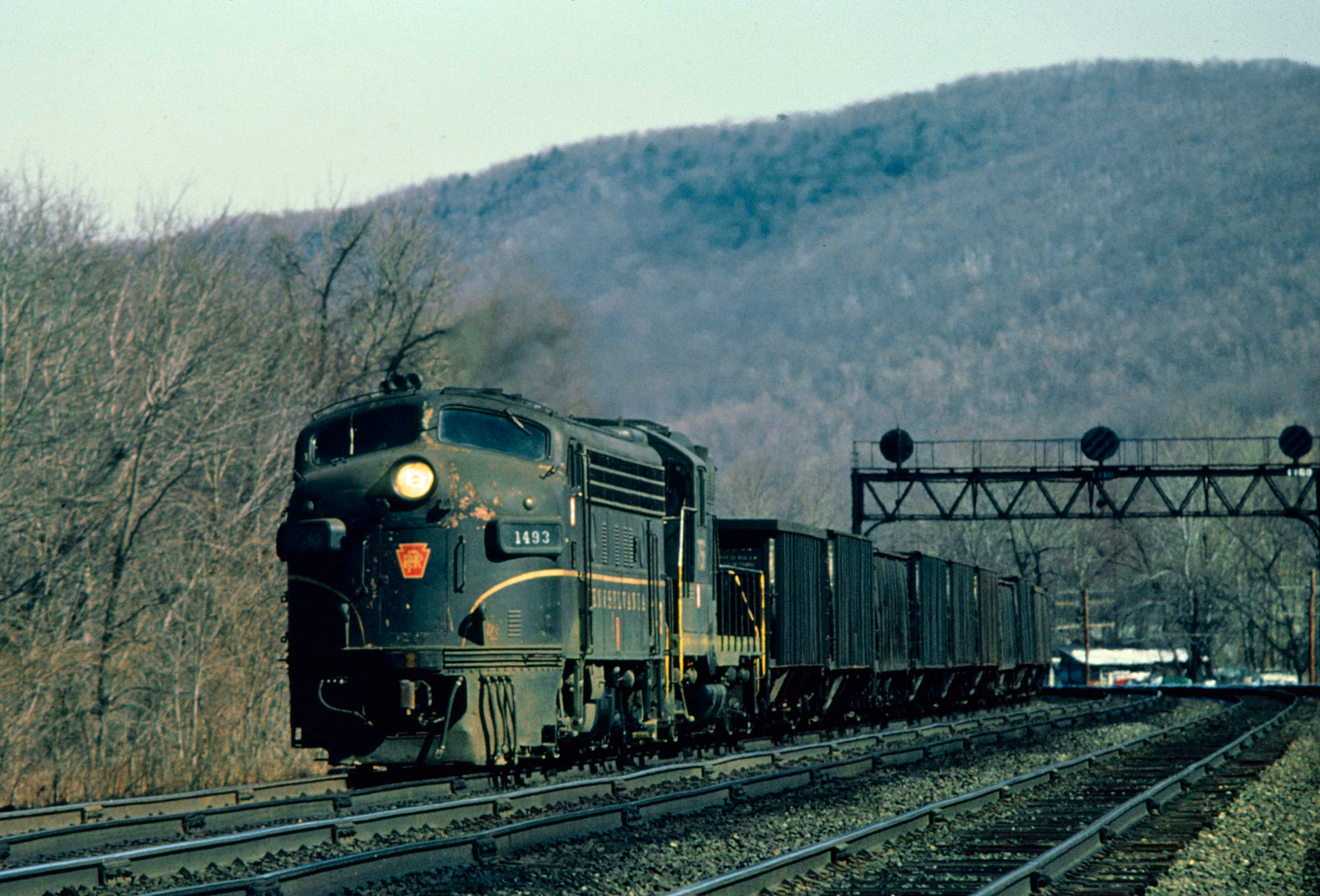 Pennsylvania F7A #1493 leads empties westbound at Cove, Pennsylvania, circa 1960s. American-Rails.com collection.
The Pennsy's next move was to establish its own route to the Port of New York, fast becoming the largest on the east coast. Not surprisingly, Thomson was once more directly involved in this endeavor.
The PRR pushed eastward beyond Philadelphia during the Civil War by acquiring the Philadelphia & Trenton and United Canal & Railroad Companies through lease in 1871.
The UC&RC comprised several smaller systems (Camden & Amboy, New Jersey Railroad, Belvidere-Delaware Rail Road, West Jersey Railroad, Cape May & Millville, and Delaware & Raritan Canal Company) which offered through service as far as Jersey City, New Jersey.
Along the waterfront the PRR opened the massive Exchange Place Terminal with ferry service provided across the Hudson into downtown Manhattan. It was one of several facilities that sprang up along the waterfront between Edgewater and Jersey City.
Collectively, the above-mentioned lines became the northern end of PRR's Northeast Corridor (NEC), a route that blossomed into a four-track high-speed thoroughfare handling dozens of freight and passenger trains every day.
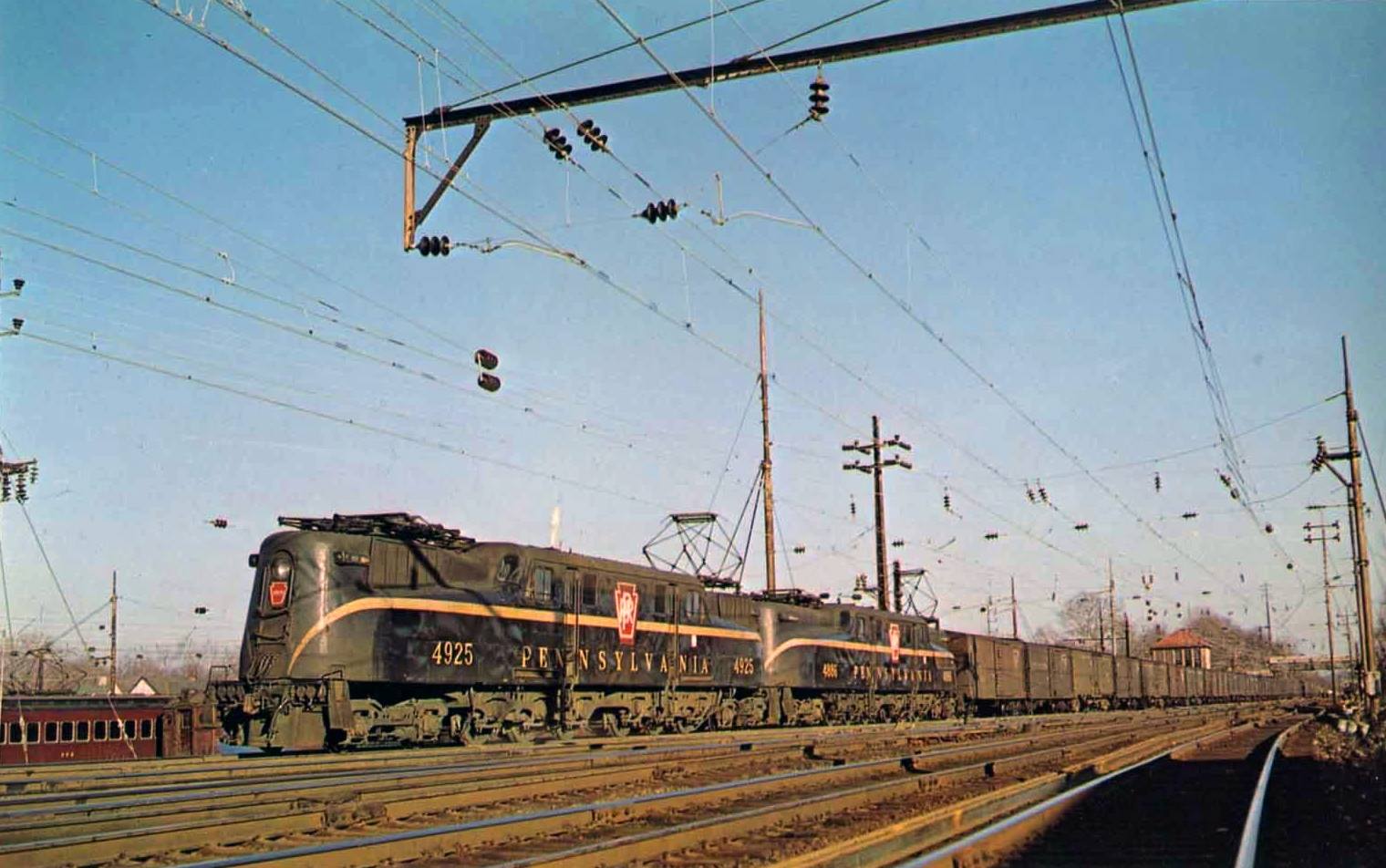 Pennsylvania GG-1's #4925 and #4886 hustle westbound through Paoli, Pennsylvania on their way to Harrisburg with what appears to be a long mail/express train just after the Penn Central merger in February of 1968. Don Sims photo.
The southern end of the NEC was constructed by the Philadelphia, Wilmington & Baltimore Railroad. The PW&B was chartered on April 2, 1831 as the Philadelphia and Delaware County Rail-Road Company. It later changed its name as the Philadelphia, Wilmington & Baltimore during March of 1836.
The road's construction commenced quickly, it opened from Baltimore to Wilmington in 1837 and was largely completed to Philadelphia by 1838. Control for this important artery broke out with the B&O, a fight eventually won by the PRR in 1880.
Next, its sights veered southward and a connection with the Richmond, Fredericksburg & Potomac. To do this it acquired stakes in the Baltimore & Potomac Railroad during 1867, a system chartered in 1853 with intentions of connecting Baltimore with Washington, D.C at the confluence of the Potomac and Anacostia Rivers.
The project got underway in 1859 and was completed to Washington on July 2, 1872 while the spur to Popes Creek, Maryland opened on January 1, 1873. The latter town was actually stipulated as the B&P's original terminus although fine engineering enabled planners to extend a branch to the capital.
The charter had required that any branch could not exceed 20 miles from the main line; engineers got around this by locating the connection at Bowie, Maryland.
System Map (1950)
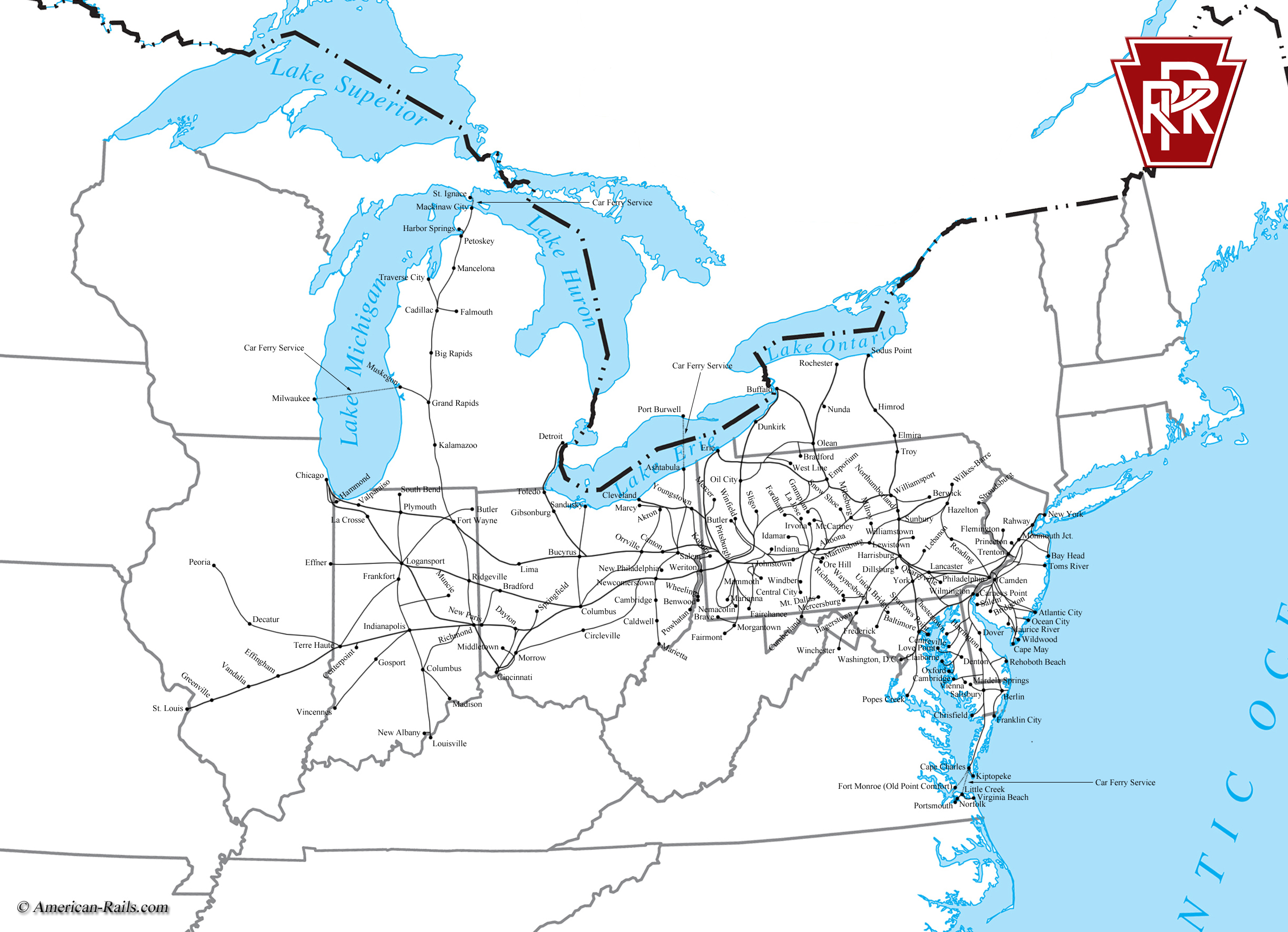
Beyond the Northeast Corridor were the PRR's lines to the Delmarva Peninsula and across New Jersey. The Delmarva Lines extended southward through Wilmington, down the heart of Delaware, and through Maryland's southeastern tip to Cape Charles.
They were predominantly constructed by the New York, Philadelphia & Norfolk Railroad, which opened for service in 1884.
The region was populated with farms, general agricultural, and seafood companies while car-ferry service from Cape Charles across the lower Chesapeake Bay provided access to the Virginian/Chesapeake & Ohio/Norfolk & Western at Norfolk/Newport News/Portsmouth.
The New Jersey lines were a collection of properties located in the northern and southern regions of the state serving coastal communities and vacationing beaches.
In the north was the New York & Long Branch, opened in 1875 by the Central Railroad of New Jersey to connect Perth Amboy, Long Branch, Sea Girt, and Bay Head.
In early 1882 the CNJ agreed to allow PRR use of the NY&LB, which was later split in a joint-ownership partnership in 1930. The PRR had further service in this region through subsidiary New Jersey Southern with other extensions built through the United Canal & Railroad Companies.
The southern territories were a series of branches and through routes constructed by several small roads during the mid-19th century, such as the the Camden & Atlantic and West Jersey Railroad.
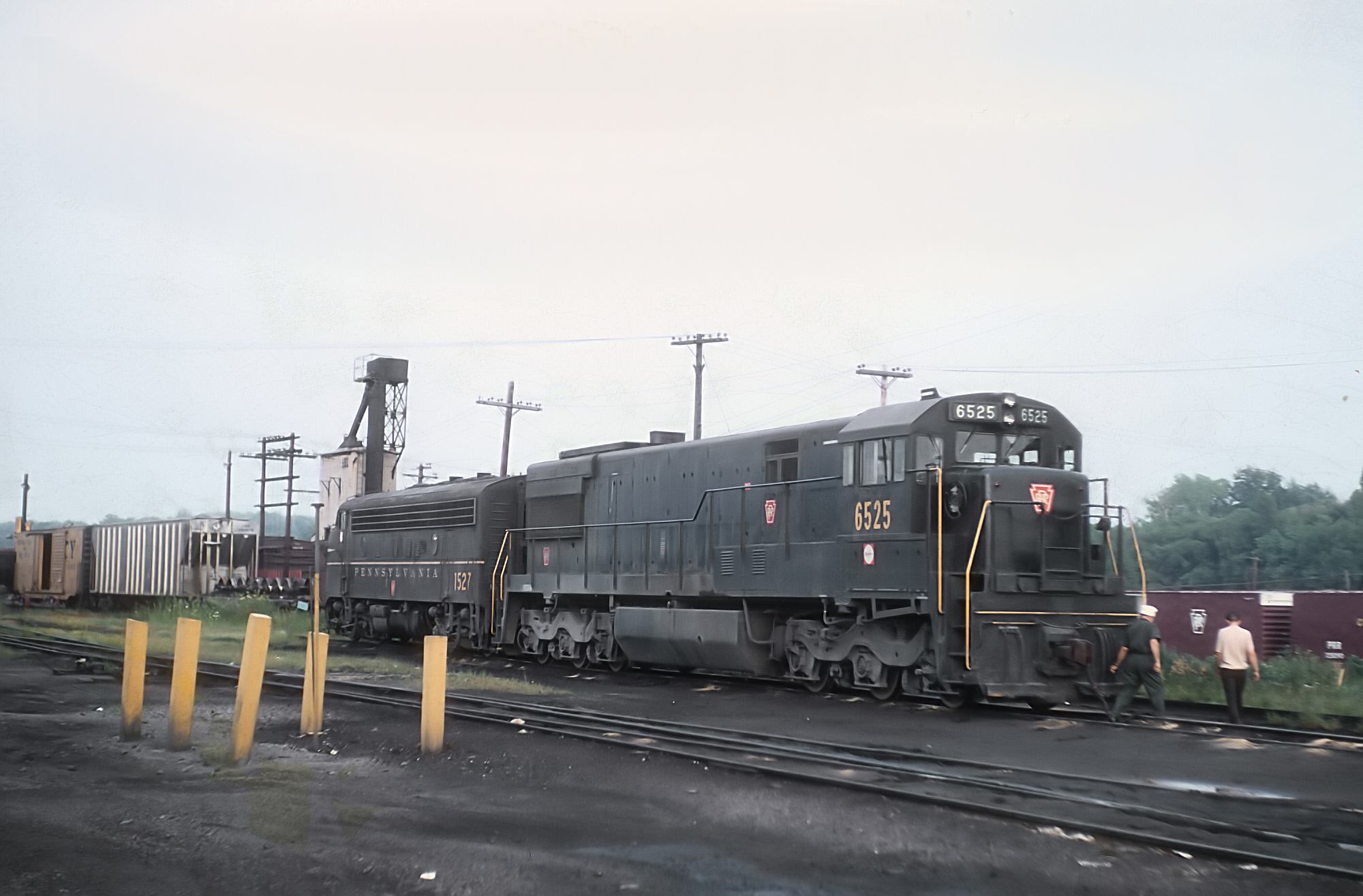 Pennsylvania U28C #6525 and F7A #1527 at Richmond, Indiana in August, 1967. Rick Burn photo.
As a group, the lines connected Philadelphia and Camden, New Jersey with the resort town of Atlantic City as well as the beaches of Ocean City, Cape May, and Wildwood. In addition, other spurs reached Bridgeton, Maurice River, and Salem.
In 1896, all properties involved became the West Jersey & Seashore Railroad, formally leased by the PRR in 1930. In 1933 the Pennsy signed an agreement with the Reading to create the Pennsylvania-Reading Seashore Lines, a jointly-owned system which operated all of their properties here.
The PRR's last notable expansions occurred around its home state of Pennsylvania and included the Cumberland Valley Railroad (CVRR), Philadelphia & Erie (P&E), and the Western New York & Pennsylvania (WNY&P).
The CVRR, chartered in 1831, was acquired by the PRR just prior to the Civil War. It had completed a route from Harrisburg to Hagerstown, Maryland in 1841 and then was later extended to Winchester, Virginia.
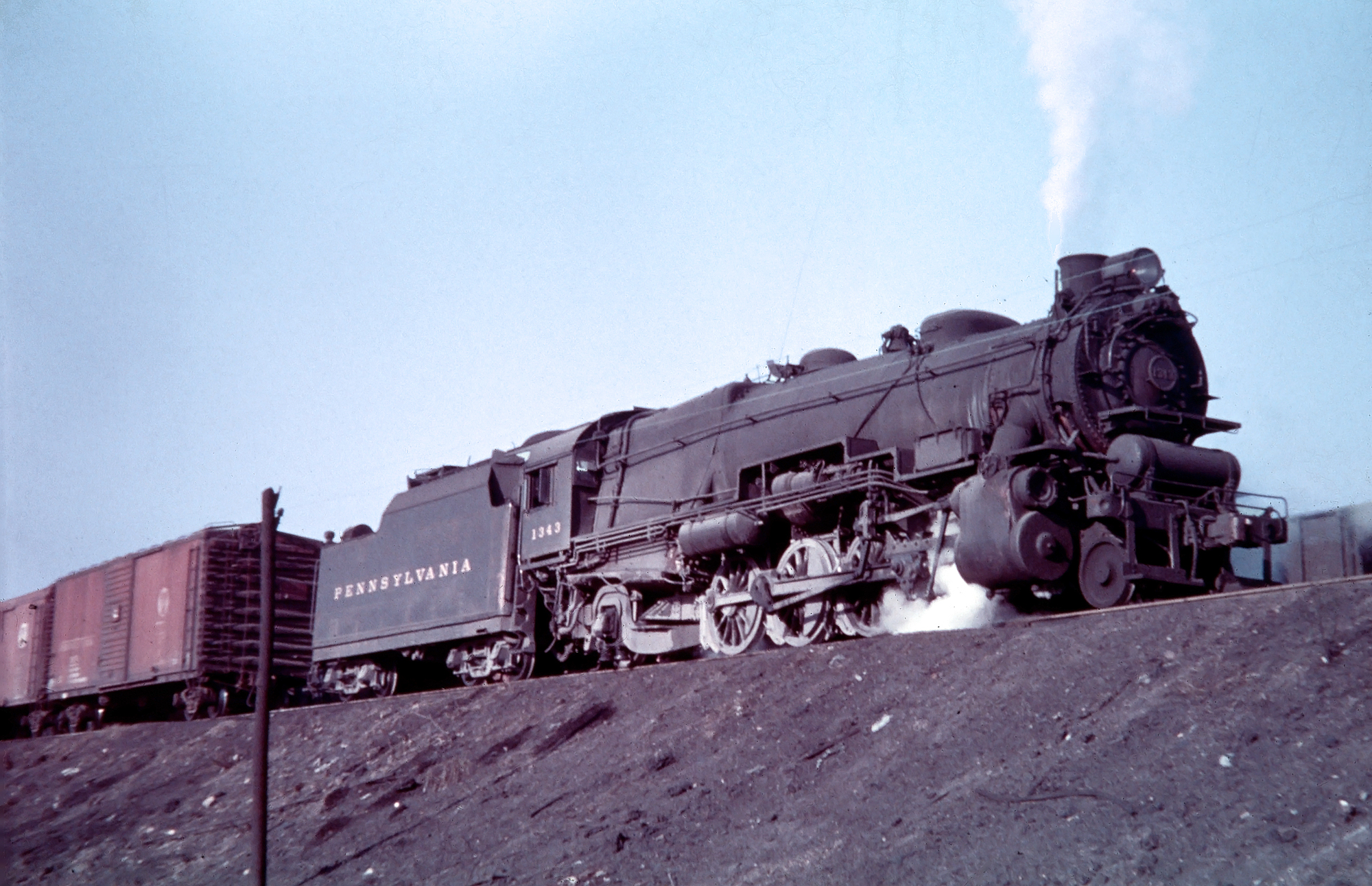 Pennsylvania 2-8-2 #1343 (L1) in service at Enola, Pennsylvania, circa 1952. Many of these units were built at PRR's Juniata Shops (344) with others manufactured by Baldwin (205); another 25 were produced by Lima. Fred Byerly photo. American-Rails.com collection.
The P&E was PRR's extension to Erie, Pennsylvania, first leased in 1862. The system dated back to the Sunbury & Erie, chartered by the state in 1837 to link Sunbury (north of Harrisburg) with Erie.
There were sections from the east and west opened through the 1850s although a large, 100+ mile central gap remained unfinished. During 1861 the road was renamed as the Philadelphia & Erie and completed during the fall of 1864.
Due to stiff competition from the New York Central the PRR never garnered significant traffic from the port of Erie but did handle coal, ore, and other freight.
Finally, the WNY&P provided access to the important gateway of Buffalo where several eastern roads met including the Central.
The system's heritage traced back to its incorporation in 1887 as a reorganization of the Buffalo, New York, and Philadelphia. In total, the WNY&P operated more than 500 miles linking Emporium, Pennsylvania with Buffalo and Rochester, splitting at Olean, New York.
It was never strong, financially, and acquired by the PRR in 1900. Interestingly, the Pennsy never made any inroads into New England like the NYC. Instead, its influence stopped at New York and it worked with the New Haven to serve the region.
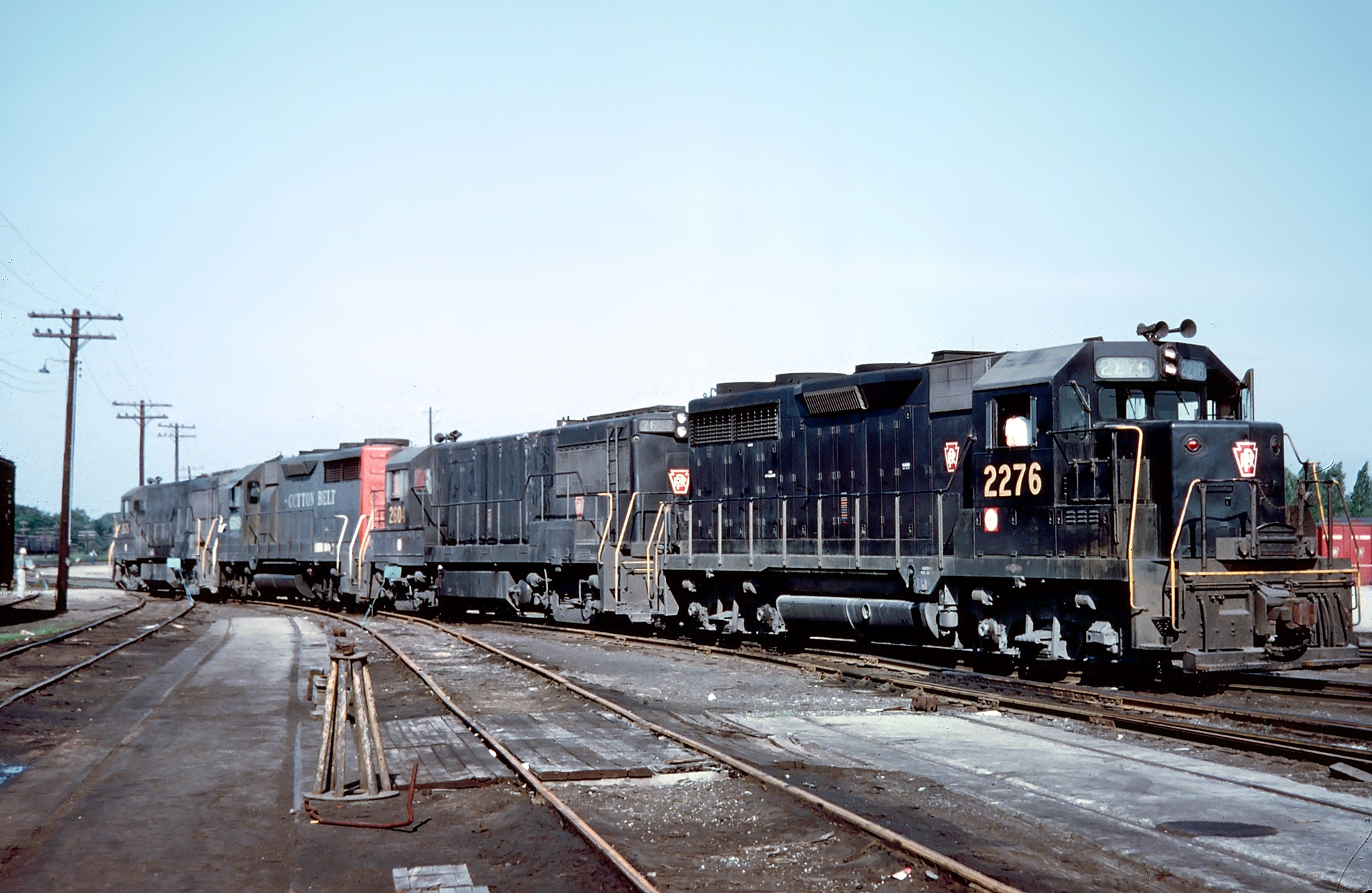 Pennsylvania GP35 #2276, U25B #2604, Cotton Belt GP35 #6509, and another Pennsy U25B at East St. Louis, Illinois, circa 1967. American-Rails.com collection.
20th Century
At the turn of the 20th century the PRR was a powerful American corporation. The above-mentioned predecessors are only a selection of those which helped form the modern-day PRR. It continued to modernize and upgrade its system through World War II.
At its peak the railroad operated more than 10,000 route miles with total track miles at a staggering 28,000. It was described by Fortune magazine as "...a nation into itself."
In 1899, Alexander Cassatt finally achieved the presidency and set about correcting the road's last glaring weakness, entry into downtown Manhattan. The PRR is remembered for many things and two of its most lasting achievements was iconic Pennsylvania Station and the regal, Broadway Limited.
In 1900 it acquired the Long Island Rail Road for $6 million, part of Cassatt's long range plan to provide efficient commuter service throughout New York. The terminal project launched in 1901. While it would provide direct service into downtown New York it was also designed to handle extensive commuter traffic.
The LIRR was incorporated into the station's master plan via four tunnels constructed beneath the East River to connect Long Island (two others were built under the Hudson to link Pennsy's main line at Newark, New Jersey).
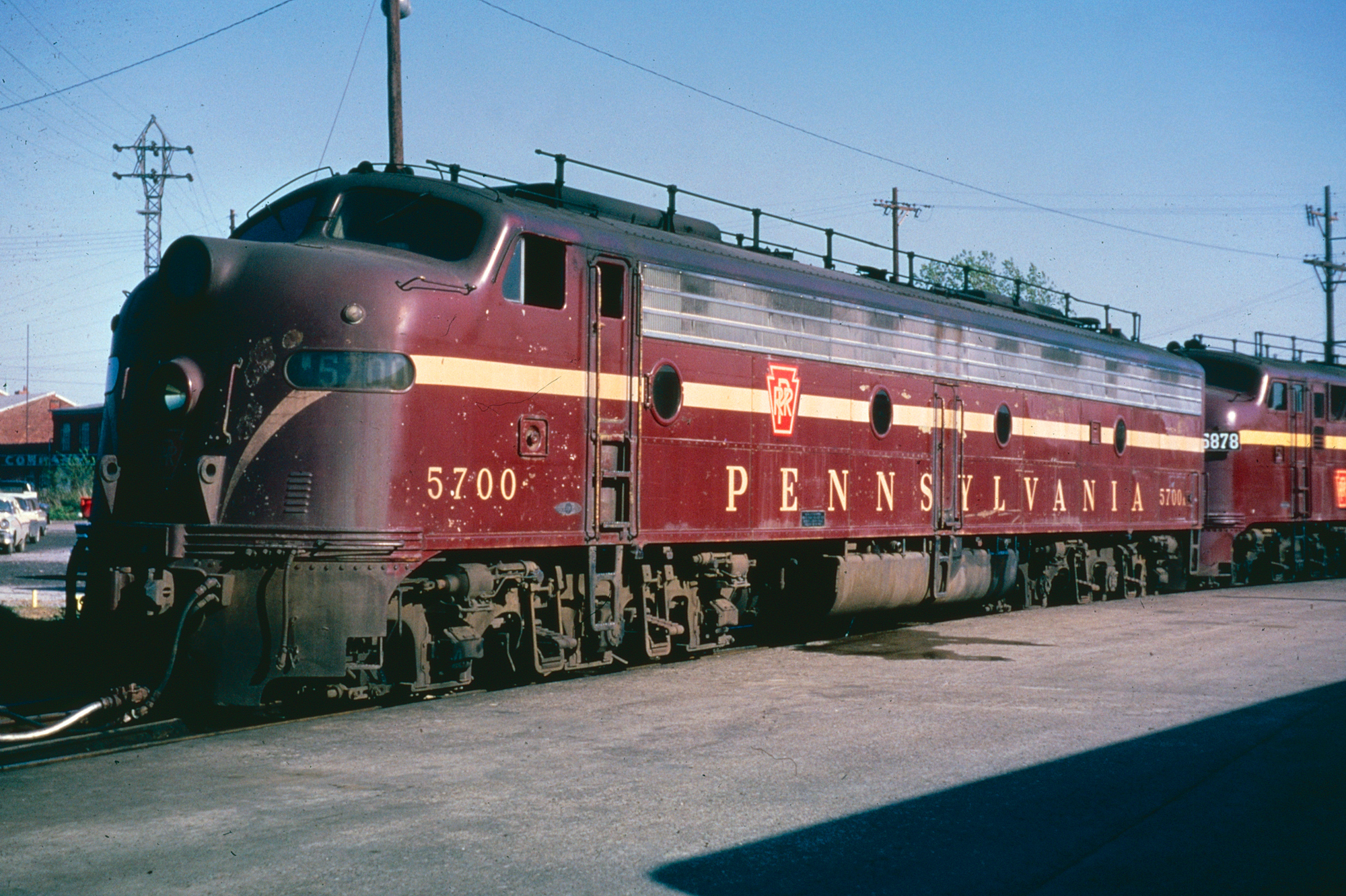 Pennsylvania Railroad E8A #5700 and E7A #5878 between assignments in Louisville, Kentucky on May 1, 1965. Note the cosmetic condition of these locomotives. By this date, the once mighty PRR was in a declining financial state. Author's collection.
The grand Pennsylvania Station opened to the public during two stages in 1910; the LIRR commenced service on September 8th while the terminal officially opened for all rail traffic on November 27th.
The flagship Broadway Limited served the hotly contested New York-Chicago corridor on a schedule of right around 16 hours. The train differed from NYC’s 20th Century Limited, which was bedecked in a more business-like atmosphere (cool grays, blacks, and whites were featured inside and out).
Instead, the Broadway carried soft and relaxing tones. The Pennsylvania also had the most extensive electrified operations of any large railroad in the country at that time; most of these lines are still used today by Amtrak and regional commuter systems. Beginning in 1915 it electrified portions of its eastern network, containing the greatest concentration of travelers.
By the late 1930s the PRR's electrification had reached as far south as Washington, D.C., westward to Harrisburg, and terminated at New York City. In all, most of its system east of Harrisburg was energized. It was during this time, 1935, that the Pennsylvania Railroad unveiled an all time classic, the legendary GG1 electric.
 Pennsylvania Railroad Class FF-2 motor #5, carrying a 1-C+C-1 wheel arrangement, is seen here in Thorndale, Pennsylvania circa 1960. This locomotive began its career on the Great Northern as a product of Alco/General Electric. It was classed as Y-1 and used as part of the Cascade Tunnel electrification until the Northern shutdown the system in 1956. The PRR went on to pick up most of the Y-1's, designating them as FF-2 before all were scrapped during the 1960s.
Able to operate bi-directionally, cruise along effortlessly at over 100 mph, the locomotive's sleek design was the work of Raymond Loewy's firm (his company also conceived the famous “cat whisker” pinstripes, which adorned Pennsy locomotives through the 1950s).
The "G's" owned the rails through their territory and were a common sight for nearly a half-century. Incredibly, the motors outlived the Pennsy herself, surviving into the early Conrail era. Despite the PRR’s enormous success, following World War II and the traffic downturn of the 1950s, its future delved into uncertainty.
In 1946 it lost money for the first time and as the situation worsened management's attitude was one of little concern. Nothing could happen to the mighty PRR, or so they thought...
This narcissistic belief eventually did cause the railroad's ruin. The Pennsy had always maintained a strict, militaristic corporate structure. It was one of adherence and knowing one's place in the chain of command; new ideas were shunned and orders came down from higher ups.
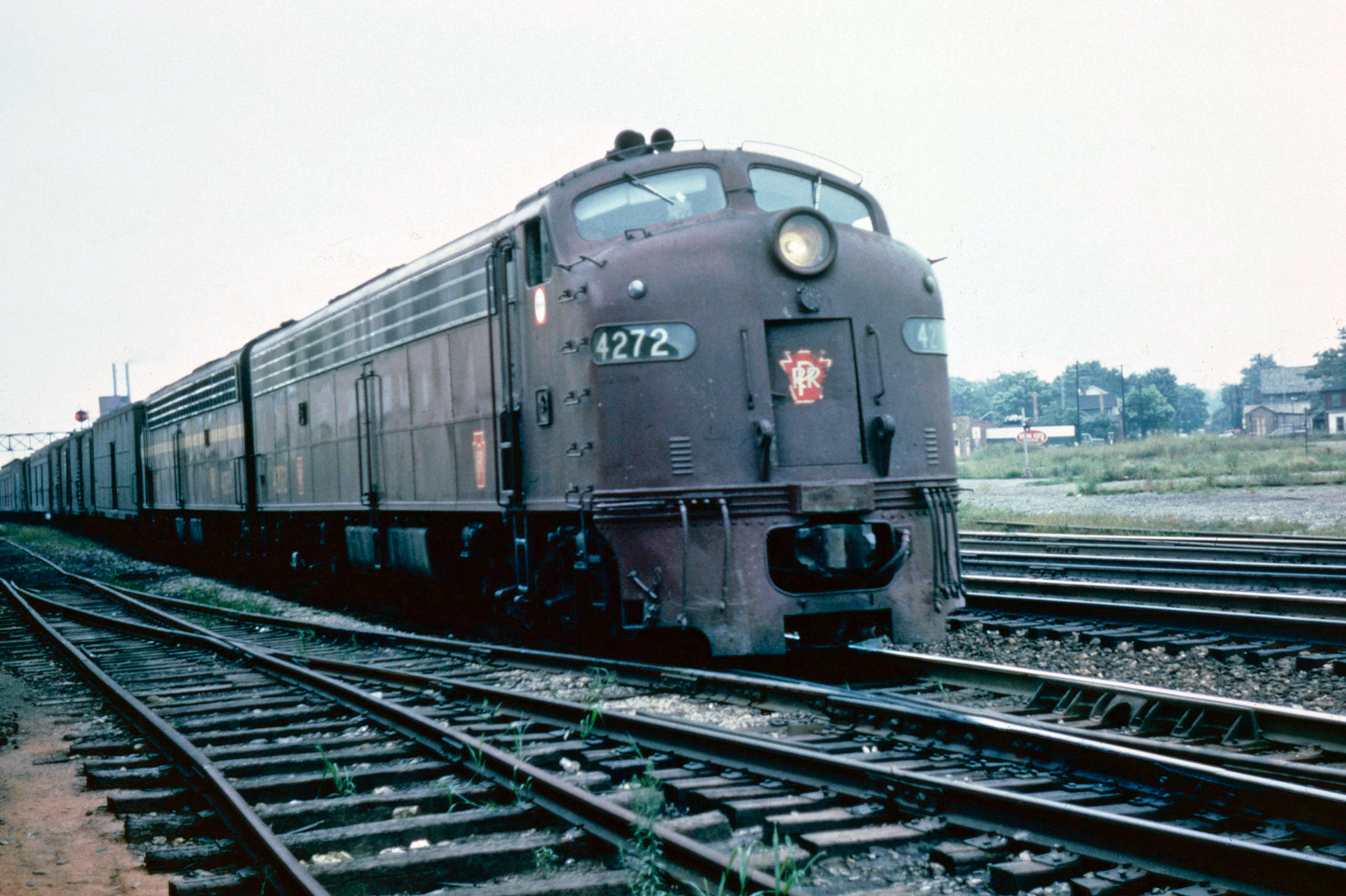 The final years of the Pennsylvania Railroad leading up to the Penn Central merger were quite sad as illustrated here with E8A #4272 leading this eastbound mail/express train at Canton, Ohio on August 24, 1967. Author's collection.
Postwar Decline
According to Rush Loving, Jr.'s book, "The Men Who Loved Trains," the PRR was not warmly received throughout the industry.
He states: "The Pennsylvania and its managers were disliked almost universally among railroads. It was so large that the Pennsy dominated rate-making policies in the East at the expense of other carriers.
Its officers were unbearably arrogant, viewing their property as inherently superior to all other railroads."
This rate-making policy did have its drawbacks. As Loving states elsewhere the railroad, in an effort to gain new business, sometimes set freight rates so low it lost money on movements! This problem would plague the later Penn Central. By the 1950s things were getting desperate.
To alleviate the crisis, PRR began exploring the idea of a union with longtime rival New York Central in 1957. By then, the merger movement was stirring as systems attempted to cut costs in the face of declining traffic and strict government regulations.
The Norfolk & Western (a long-time PRR subsidiary) had acquired rival Virginian in 1959 (and purchased the Wabash and Nickel Plate a few years later); the Erie/Delaware, Lackawanna & Western merged in 1960 to form Erie Lackawanna; and Chesapeake & Ohio was eyeing the Baltimore & Ohio.
The NYC looked long and hard for another partner but failed to woo the C&O/B&O regarding some type of union. In the end, despite NYC's long search it eventually decided a merger with the Pennsylvania Railroad was the only option.
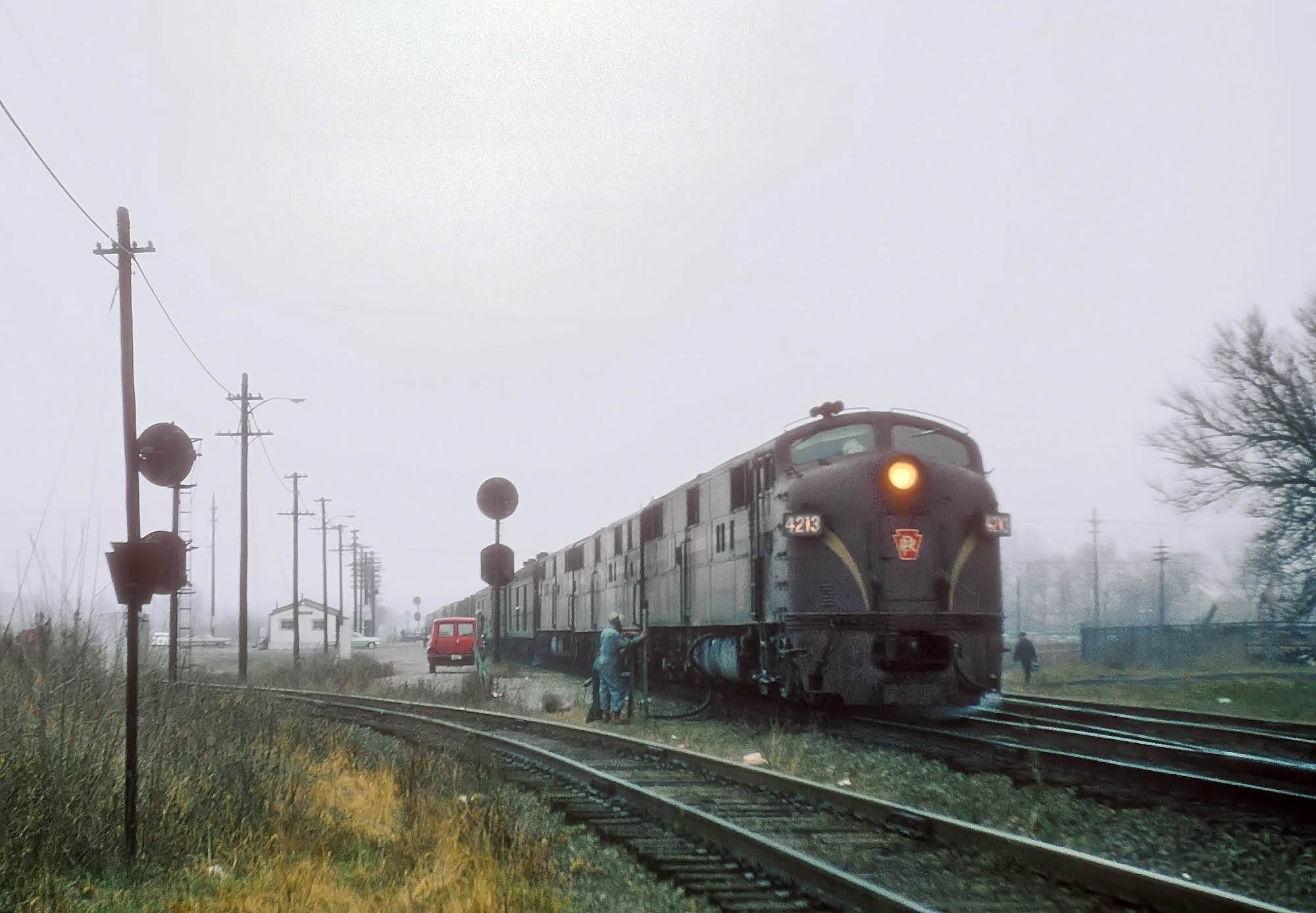 Pennsylvania's train 70 (then a coach-only, Chicago - Cincinnati service) at Logansport, Indiana in November, 1966. Rick Burn photo.
Diesel Roster
The PRR was not immediately sold on diesels, continuing to stick with the proven steam locomotive well into the 1940s. The railroad was always slow to change and this stubbornness to change or adapt ultimately doomed the company when it merged with the New York Central
In their book, "Pennsylvania Railroad," authors Mike Schafer and Brian Solomon note the company's very first diesel was an Electro-Motive model SW switcher, #3908, which it acquired in June, 1937.
This 600 horsepower engine obviously didn't sell the railroad on diesel technology, and it even avoided purchasing EMD's first main line model, the FT. However, by the 1940s, specifically by 1947, the diesel's economies could not be ignored and the PRR began purchasing large batches from all of the major builders.
Perhaps the railroad had a change of heart or simply wanted to try everything the market had to offer. Whatever the case, the PRR bought so many diesels it had an interesting, eclectic roster by the mid-1950s.
In some cases the railroad simply prchased models from builders with which it had had a longstanding relationship, such as Baldwin, although the Eddystone manufacturer's products are not generally considered on par with EMD's designs.
Interestingly, when General Electric later entered the market in 1960, PRR purchased its early U-boats and Penn Central continued buying GE products into the 1970s. The information presented here covers all of the PRR's known diesels, including original and later road numbers.
Class K-4s (4-6-2)
Perhaps the best-known 4-6-2's of all time was Pennsylvania Railroad's K-4s class. These steamers carried a simple beauty to it, which also lent to much of its success.
However, beneath its good looks these 4-6-2s could also perform quite exceptionally.. Another reason for the K-4s' popularity, at least among railfans and historians, was that fact that most were built the Pennsylvania's own Juanita shops, which built well over 300 in total with the remaining manufactured by Baldwin.
It is important to point out, however, that the K-4s was not the only Pacific class the Pennsy owned; the railroad actually rostered over a half-dozen different types built over a 20-year span and virtually all (save for one) were listed as Class K.
The K-4s is widely recognized today for its ruggedness and reliability; sporting PRR's noteworthy Belpaire fireboxes they could be found anywhere and everywhere on the railroad's massive system.
The Pennsy was also one of the few roads to operate the wheel arrangement in freight service. Generally, the Pacific type was a passenger locomotive but some roads did choose to expand its range. Today, two of the PRR's legendary 4-6-2s are preserved.
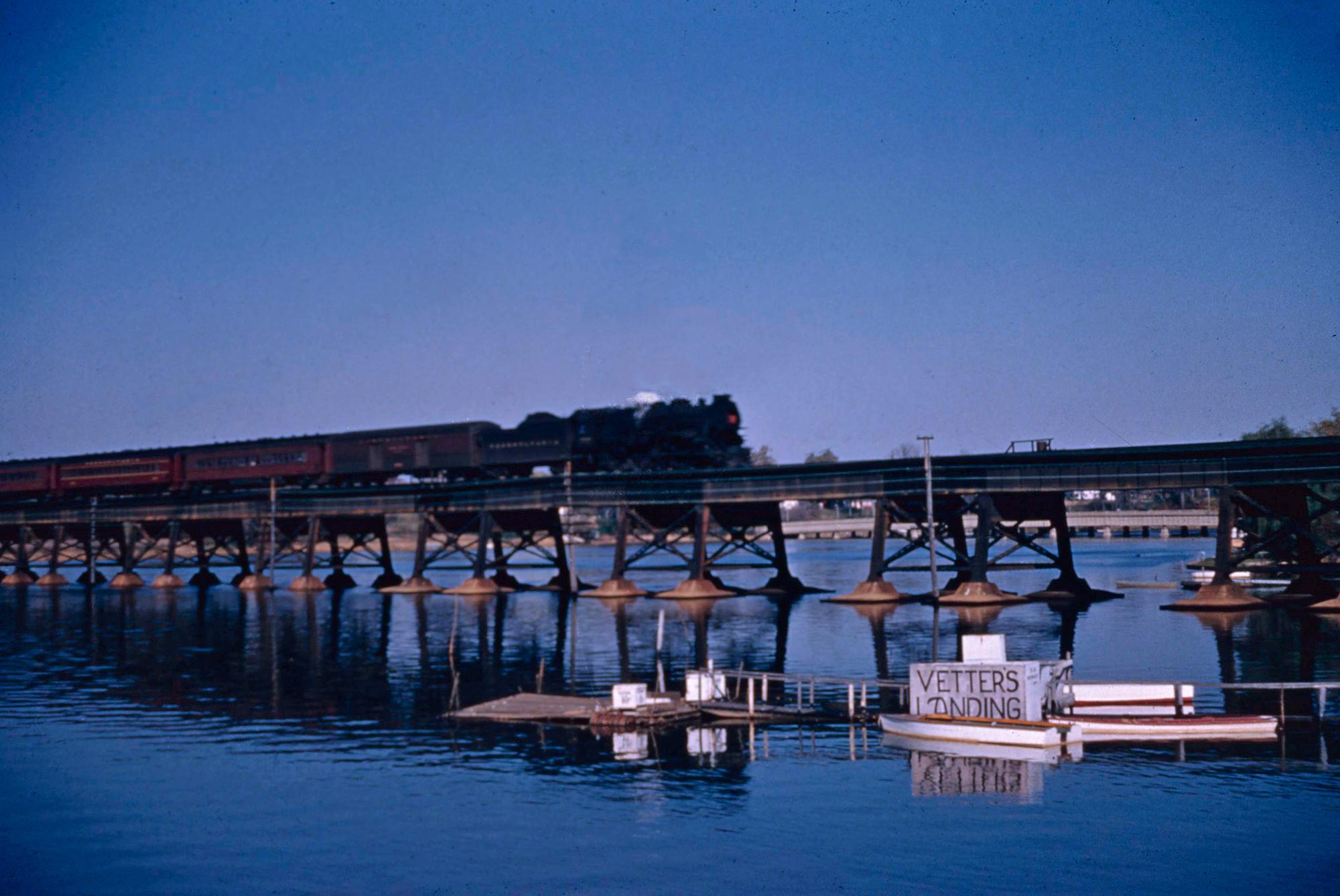 Pennsylvania Railroad 4-6-2 #3755 (K-4s) steams south over the Navesink River at Red Bank, New Jersey on subsidiary New York & Long Branch on November 10, 1950. Author's collection.
By the turn of the 20th century many of the larger railroads realized that they were running into a problem; passenger trains were becoming larger and heavier as demand steadily increased which was resulting in multiple units needed to keep these expedited consists on a strict schedule.
In 1902 the Chesapeake & Ohio was the first to put the 4-6-2 design into regular service for the very reasons mentioned above. Somewhat surprisingly, it was not until 1906 that the Pennsylvania Railroad began looking at the possibility of utilizing such a locomotive for passenger operations.
In 1907 the PRR collaborated with the American Locomotive Company's (Alco) Pittsburgh Works to build an experimental Pacific. Interestingly, even here the railroad was still quite slow, deliberate, and calculated in its approach with the new locomotive.
This first 4-6-2 was given road number 7067 and listed as Class K-28; it featured 80-inch drivers, a tractive effort of nearly 33,000 pounds, and weighed more than 208 tons (including tender).
For an early Pacific design it was quite heavy in comparison to the C&O's examples (by more than 53 tons) with a tractive effort slightly better. This would be the only 4-6-2 of this class and it was later super-heated and designated as Class K-28s before being scrapped in 1933.
In any event, the PRR was quite pleased with its trials and decided on the Pacific as its primary power for passenger service.
The K-4s was actually the fifth of six different classes of 4-6-2's the railroad owned following (by date) the K-28, K-2sa, K-21s/VK-1, K-29, and K3s.
What would eventually become the PRR Class K-4s Pacifics resulted from an earlier Class E-6 Atlantic design, incorporating the 4-4-2 wheel arrangement, and the American Locomotive Company’s K-29 Pacific design.
Mechanically the most famous features of the K-4s' would be their Belpaire fireboxes, 80-inch drivers, and Walschaerts valve gear, which blended just the right amount of power and speed to haul virtually anything the PRR asked of them.
The PRR's designation for its K-4s was as follows: the "K" denoted the railroad's fleet of Pacifics while the "4" was simply the class number of the wheel arrangement; lastly, the "s" referred to the class being superheated.
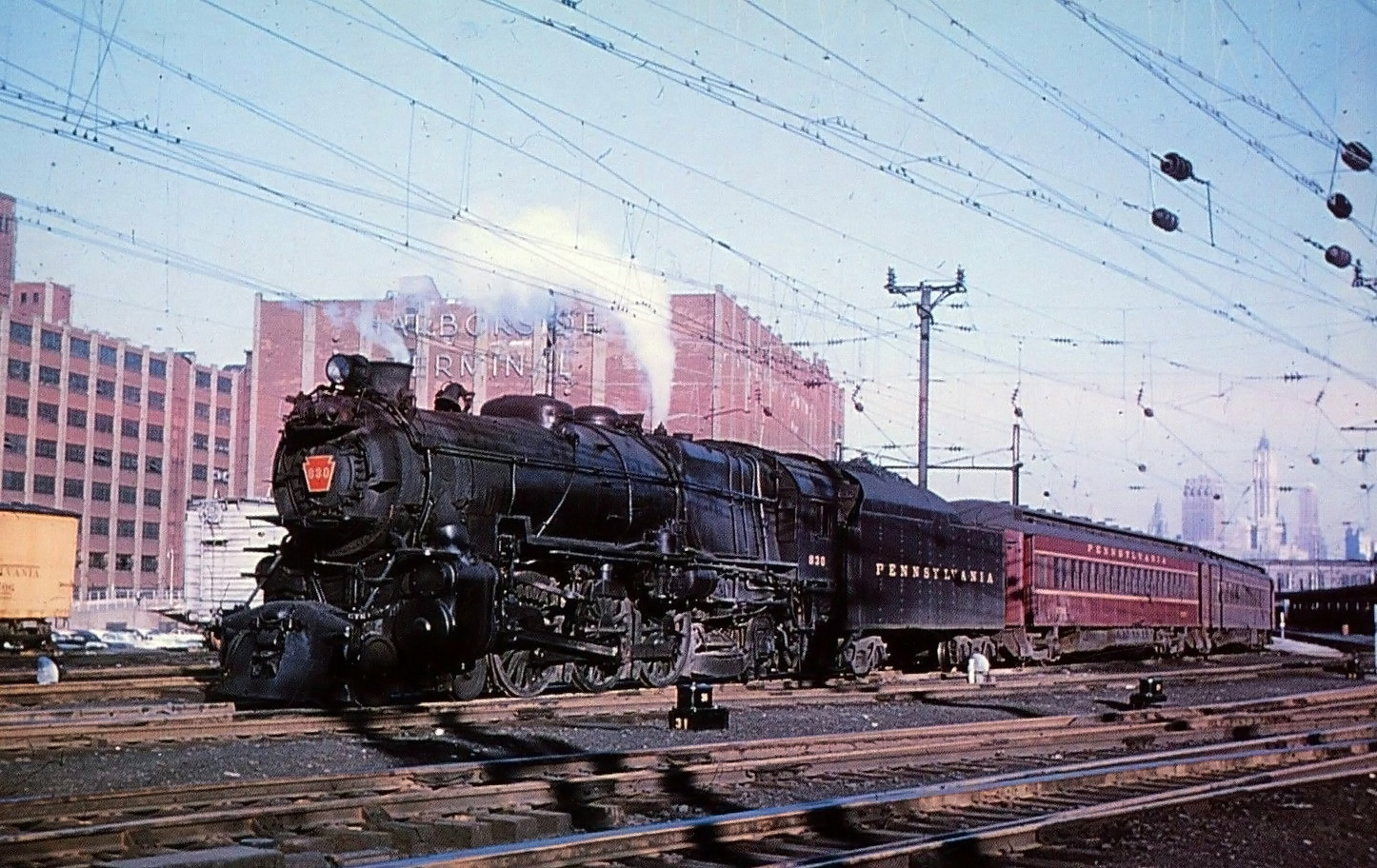 Pennsylvania 4-6-2 #830 (K-4s) is seen here working suburban service at Exchange Place Terminal in Jersey City, New Jersey during the 1950's. This was PRR's original station serving New York City, prior to the opening of Pennsylvania Station in downtown Manhattan (the skyline can be seen in the background, the tallest structure appears to be the Woolworth Building). This scene has changed drastically today; part of the facility is currently used by PATH's subway services but all signs of above-ground infrastructure are gone. Mac Owen collection.
The K-4s locomotives were first constructed between 1910 and 1911 and they proved so successful that while most of the railroad's 4-6-2s were retired by the 1930s they would soldier on until all steam was retired from the property in the late 1950s.
Most of the 450 K-4s units were built directly by the railroad's own Juniata, Pennsylvania shop forces (375) while Baldwin also chipped in with 75 examples.
Interestingly, while versatile and able to pull serious tonnage the K-4s was not Pennsy's most powerful Pacific, which was the K-5 built in 1929 that by far had the highest tractive effort, boiler pressure, and overall weight of any 4-6-2 the railroad operated. Despite their power, however, the K-5 was not considered successful on the PRR.
Incredibly, while hundreds of 4-6-2s were put into service just two survived the scrappers torch; #1361 currently at the Railroaders Memorial Museum in Altoona and #3750 at the Railroad Museum of Pennsylvania.
#1361
First Restoration (1986-1987)
For years, #1361 sat as a moment at the railroad's fabled Horseshoe Curve in Pennsylvania after being retired by the railroad in 1957. In 1986 the locomotive was removed from its static display and restored to operational status to pull excursions.
She pulled excursions from April, 1987 until 1989 when the locomotive was again sidelined after suffering a main bearing and drive axle failure.
The locomotive was slated for a quick rebuild and return to service. However, a lack of leadership and direction on the project saw its completion continually pushed back.
This drove up costs and after more than a decade of work the restoration had cost $1.7 million with no timeline on completion. In 1996 she had been disassembled and moved to the Steamtown National Historic Site in Scranton, Pennsylvania.
Here she sat as Altoona, Steamtown, and the University of Scranton teamed up on the project. Finally, with no end in sight, Altoona stopped funding in 2007 and the locomotive was returned to the museum.
Afterwards, the Pacific returned to public display; here she sat for more than 20 years. It is a funny thing how things come full circle.
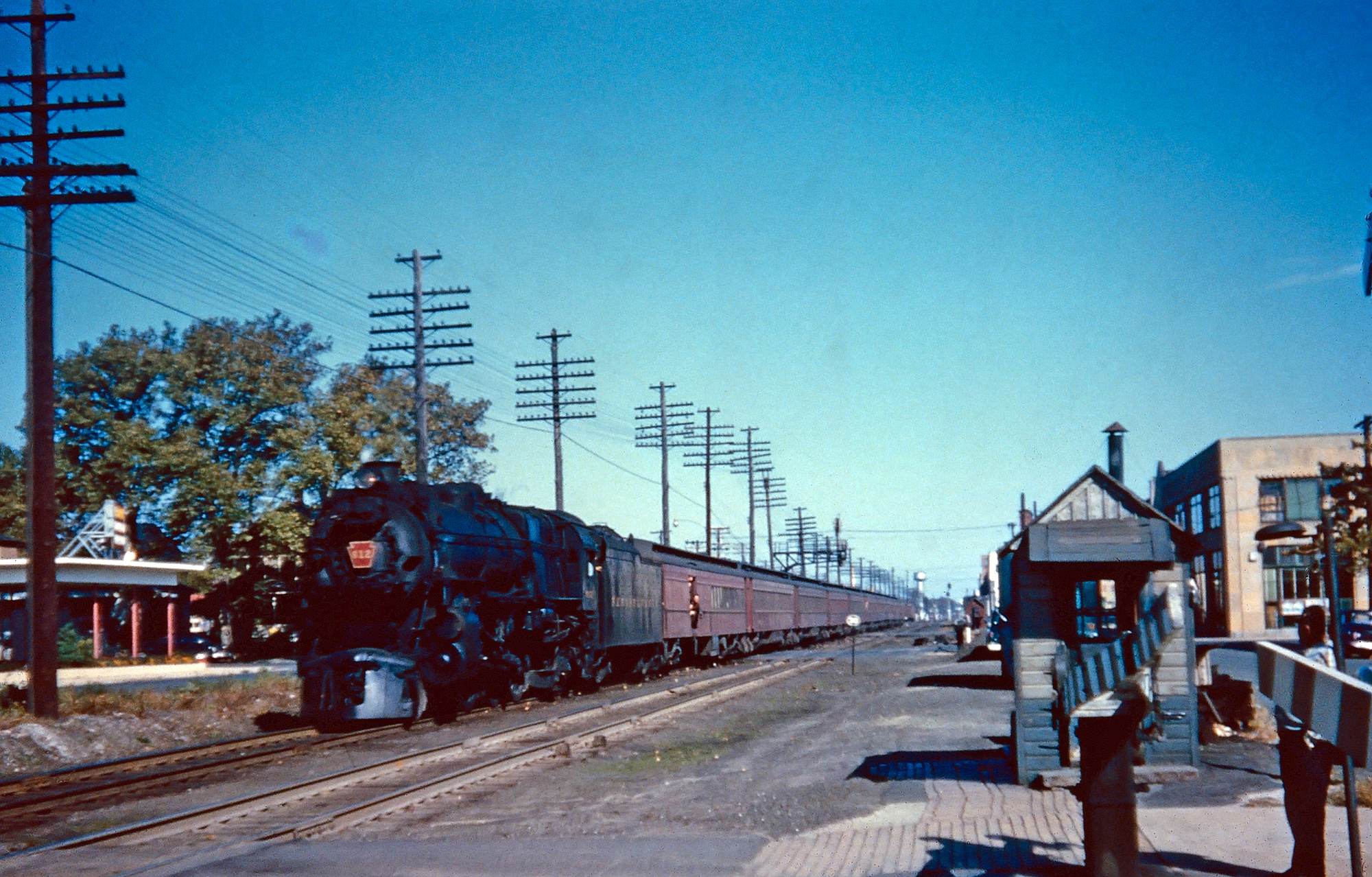 Pennsylvania 4-6-2 #612 (K-4sa) leads a farewell-to-steam fan trip between Sea Girt and Jamestown, New Jersey on October 20, 1957. American-Rails.com collection.
Current Restoration and Status
Beginning in the late 2000's and continuing through the 2010's, a great resurgence in steam locomotives began.
During this time multiple restorations were launched; some have been completed while others are still underway. Notables here include:
- Norfolk & Western 4-8-4 #611
- Reading 4-8-4 #2100
- Nashville, Chattanooga & St. Louis 4-8-4 #576
- Reading 4-8-4 #2102
- Chesapeake & Ohio 2-8-4 #2716
- Union Pacific 4-8-8-4 "Big Boy" #4014
It appears many of these restorations are spurred both by the public's appetite to see these machines in action and train enthusiasts' interest in bringing a piece of history back to life.
The restoration of K-4 #1361, announced on June 24, 2021, is thanks to a new vision at the Railroaders Memorial Museum, led by renowned preservationist and former Norfolk Southern chariman/CEO C. Wick Moorman
He is currently the museum's Chairman of the Board and is also helping oversee the restoration of the nearby East Broad Top Railroad.
His vision and leadership at Altoona spurred the current restoration of #1361 which now has a group of dedicated professionals working on the project.
The locomotive's restoration is expected to cost $2.7 million although a final completion date has yet to be announced.
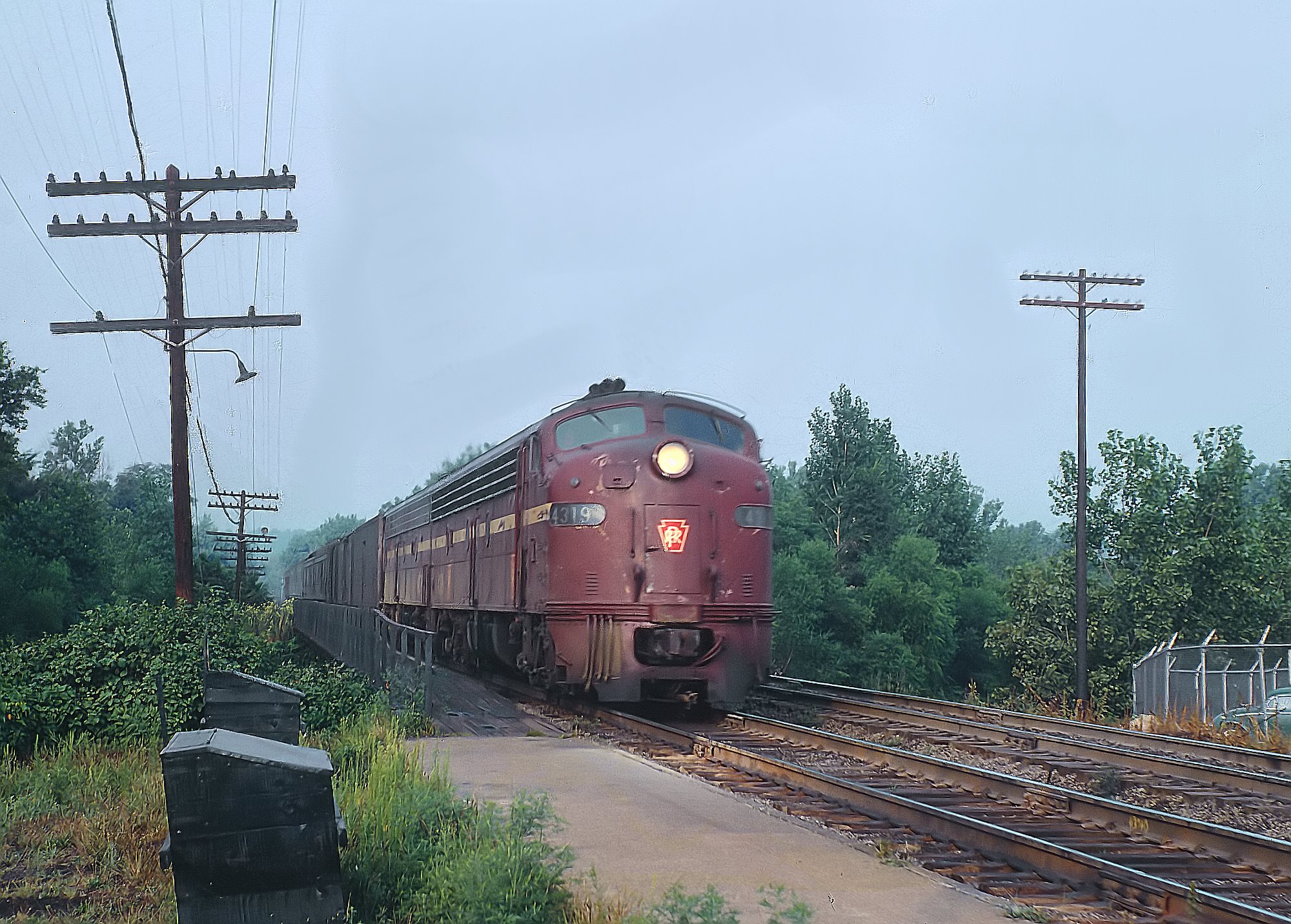 Pennsylvania's Train #71, its then-unnamed service linking Chicago and Cincinnati, via Logansport, is seen here at Winton Place Station in Cincinnati during August, 1967. Rick Burn photo.
Penn Central
Surprisingly the ICC approved the marriage, which virtually allowed a monopoly in the Northeast; the ill-fated Penn Central Transportation Company was born on February 1, 1968.
From the start chaos ensued as operations ground to halt; trains became lost and incoming management teams struggled to work together.
The situation worsened a year later when the bankrupt New Haven was forced upon the foundering conglomerate. By then, PC was burning through nearly $1 million a day and the situation was untenable. After only two years the destitute Penn Central officially declared bankruptcy on June 21, 1970.
The result was a ripple effect throughout the entire Northeast as other railroads, which depended on the PC, struggled to keep their freight moving.
It became so bad the region was facing total shutdown if government assistance did not arrive. Realizing the severity of the situation the feds stepped in and setup the Consolidated Rail Corporation, Conrail, which comprised the skeletons of several bankrupt carriers. It began operations on April 1, 1976.
With federal backing Conrail slowly turned things around, thanks in part to deregulation legislation passed in 1980. A year later the railroad turned its first profit and became so successful CSX Transportation and Norfolk Southern jointly split the company in 1999; CSX picked up many former NYC lines while NS got a good chunk of the Pennsy.
Today, many parts of the legendary PRR continue to serve an important role handling freight and passengers between Chicago, the east coast, and along the Northeast Corridor.
More Reading
Photo Gallery
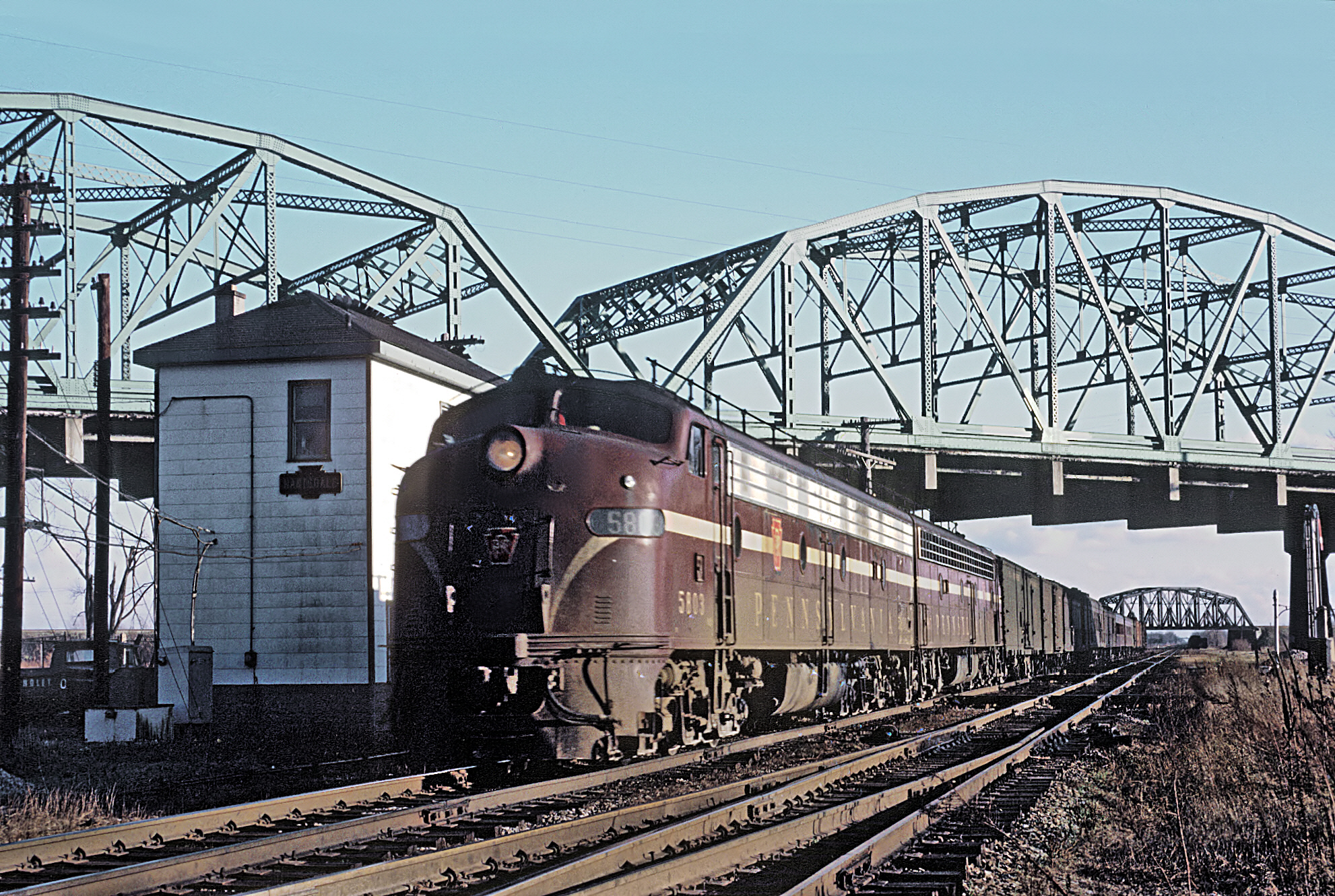 Pennsylvania Railroad E8As, led by #5803, are ahead of train #72, the eastbound/southbound "Red Bird" (Chicago - Cincinnati), as the train rolls past the tower at Hartsdale, Indiana and crosses the New York Central/Elgin, Joliet & Eastern on November 26, 1965. Today, this PRR corridor is abandoned. Roger Puta photo.
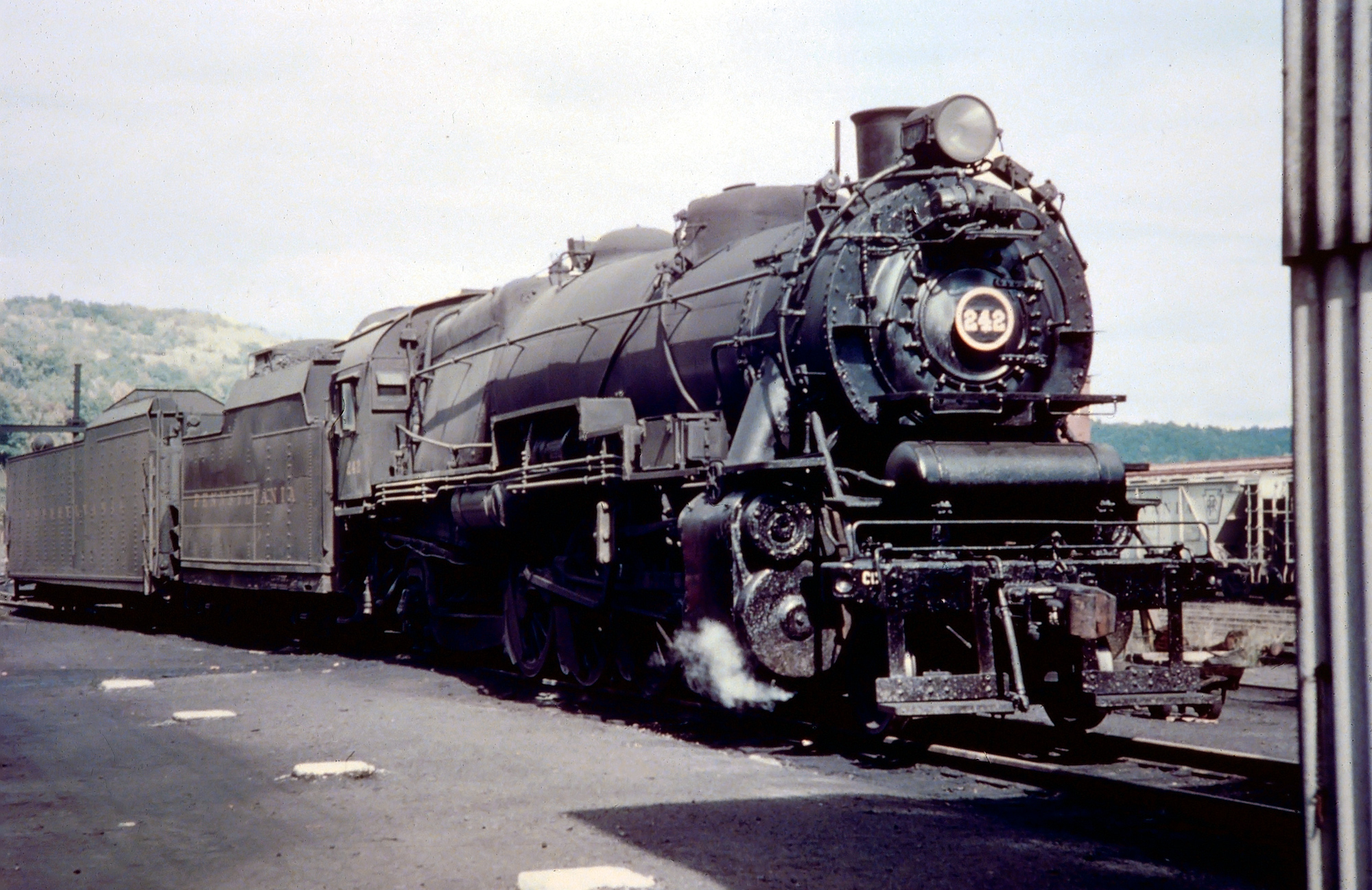 Pennsylvania 2-8-2 #242 was photographed here by Homer Newlon, Jr. between assignments at the small engine terminal in Phillipston, Pennsylvania on September 24, 1955. Today, this facility and nearby rail line are abandoned. American-Rails.com collection.
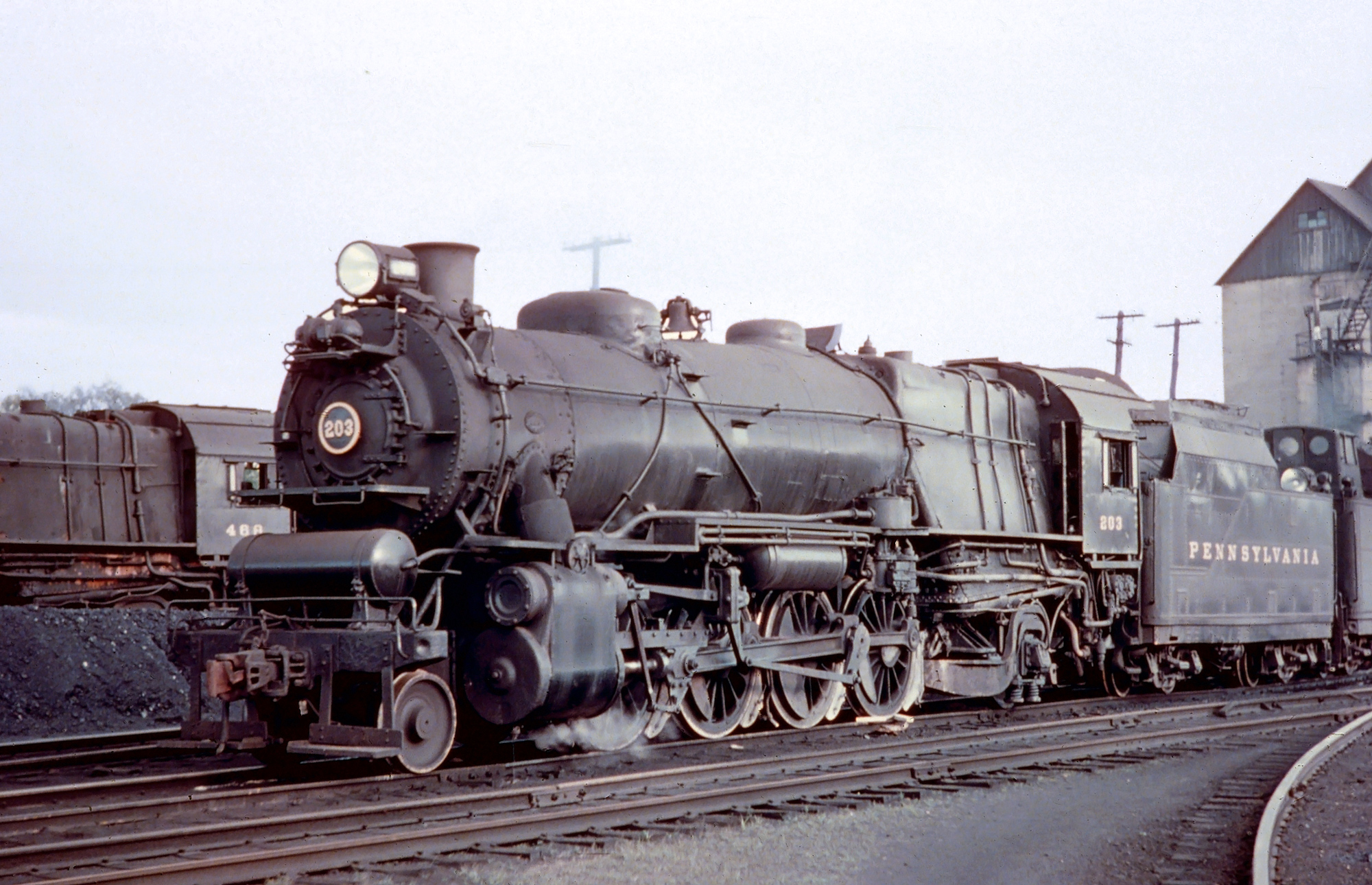 Pennsylvania 2-8-2 #203 was photographed here by Homer Newlon, Jr. between assignments at the engine terminal at Blairsville, Pennsylvania on September 24, 1955. American-Rails.com collection.
Recent Articles


-
Delaware & Hudson Steam Roster (Post 1900)
Jun 03, 26 11:55 AM
 The Delaware & Hudson Railway (D&H), one of America’s oldest railroads, traced its roots to 1823 as a canal and gravity railroad operation hauling anthracite coal from northeastern Pennsylvania. Steam…
 -
Florida 'Whiskey Tasting' Train Rides
Jun 02, 26 12:39 PM
 If you’re dreaming of a whiskey-forward journey by rail in the Sunshine State, here’s what’s available now, what to watch for next, and how to craft a memorable experience of your own.
 -
Kentucky 'Whiskey Tasting' Train Rides
Jun 02, 26 12:29 PM
 Whether you’re a curious sipper planning your first bourbon getaway or a seasoned enthusiast seeking a fresh angle on the Kentucky Bourbon Trail, a train excursion offers a slow, scenic, and flavor-fo…
 -
Chessie System Diesel Roster (All Time)
Jun 02, 26 11:35 AM
 Though Chessie itself owned no equipment—locomotives remained on the books of its subsidiaries with C&O, B&O, or WM reporting marks—the system unified operations across 11,700 route miles, hauling vas…
 -
New York 'Whiskey Tasting' Train Rides
Jun 02, 26 11:09 AM
 For those keen on embarking on such an adventure, the Arcade & Attica offers a unique whiskey tasting train at the end of each summer!
 -
Connecticut 'Wine Tasting' Train Rides
Jun 02, 26 11:04 AM
 If you’re looking for a signature “special occasion” experience, the Essex Steam Train's Wine & Chocolate Dinner Train stands out as a decadent, social, and distinctly memorable take on dinner on…
 -
Massachusetts 'Wine Tasting' Train Rides
Jun 02, 26 10:24 AM
 This article dives into some of the alluring aspects of wine by rail in Massachusetts, currently offered by the Cape Cod Central Railroad.
 -
Buffalo, Rochester & Pittsburgh Steam Roster (Post 1900)
Jun 02, 26 12:32 AM
 The BR&P's steam locomotive roster evolved from modest 19th-century power to some of the heaviest articulated engines in the Northeast, reflecting the railroad’s growing tonnage demands and challengin…
 -
Virginia 'Dinner Train' Rides At Staunton
Jun 01, 26 12:11 PM
 If you’ve ever wished you could pair a classic scenic train ride with a genuinely satisfying meal—served at your table while the countryside rolls by—the Virginia Scenic Railway was built for you.
 -
Oregon 'Dinner Train' Rides At Hood River
Jun 01, 26 12:06 PM
 The Mt. Hood Railroad is the moving part of that postcard—a century-old short line that began as a working railroad.
 -
Maryland 'Wine Tasting' Train Rides
Jun 01, 26 11:58 AM
 This article delves into the enchanting world of wine tasting train experiences in Maryland, providing a detailed exploration of their offerings, history, and allure.
 -
Indiana 'Whiskey Tasting' Train Rides
Jun 01, 26 11:50 AM
 Among IRE’s most talked-about offerings is the Wine & Whiskey Train—an adults-only, evening-style trip that leans into the best parts of classic rail travel: atmosphere, comfort, and a little…
 -
Maryland 'Dinner Train' Rides At Cumberland
Jun 01, 26 11:44 AM
The Western Maryland Scenic Railroad (WMSR) has become one of the Mid-Atlantic’s signature heritage operations—equal parts mountain railroad, living museum, and “special-occasion” night out. -
Massachusetts 'Dinner Train' Rides At Cape Cod
Jun 01, 26 11:43 AM
 The Cape Cod Central Railroad (CCCR) has carved out a special niche by pairing classic New England scenery with old-school hospitality, including some of the best-known dining train experiences in the…
 -
Rhode Island 'Dinner Train' Rides In Portsmouth
Jun 01, 26 11:41 AM
 Despite its small size, Rhode Island is home to one popular dinner train experience where guests can enjoy the breathtaking views of Aquidneck Island.
 -
Maine 'Dinner Train' Rides At Portland
Jun 01, 26 11:38 AM
 While this isn’t generally a “dinner train” railroad in the traditional sense—no multi-course meal served en route—Maine Narrow Gauge does offer several popular ride experiences where food and drink a…
 -
Atlantic Coast Line Diesel Roster (All-Time)
May 31, 26 11:47 AM
 The Atlantic Coast Line was an early pioneer in dieselization, acquiring its first diesel locomotives in 1939 and completing the transition from steam by the mid-1950s.
 -
New Hampshire - Murder Mystery - Dinner Train Rides
May 31, 26 11:27 AM
 The state's murder mystery trains stand out as a captivating blend of theatrical drama, exquisite dining, and scenic rail travel.
 -
New York - Murder Mystery - Dinner Train Rides
May 31, 26 11:25 AM
 New York State, renowned for its vibrant cities and verdant countryside, offers a plethora of activities for locals and tourists alike, including murder mystery train rides!
 -
Pennsylvania 'Murder Mystery' Dinner Train Rides
May 31, 26 11:23 AM
Pennsylvania, steeped in history and industrial heritage, offers a prime setting for a unique blend of dining and drama: the murder mystery dinner train ride. -
New Jersey 'Murder Mystery' Dinner Train Rides
May 31, 26 11:18 AM
There are currently no murder mystery dinner trains available in New Jersey although until 2023 the Cape May Seashore Lines offered this event. Perhaps they will again soon! -
Colorado 'Wine Tasting' Train Rides
May 31, 26 11:14 AM
 To truly savor these local flavors while soaking in the scenic beauty of Colorado, the concept of wine tasting trains has emerged, offering both locals and tourists a luxurious and immersive indulgenc…
 -
Georgia 'Wine Tasting' Train Rides In Cordele
May 31, 26 11:03 AM
 While the railroad offers a range of themed trips throughout the year, one of its most crowd-pleasing special events is the Wine & Cheese Train—a short, scenic round trip designed to feel like a tasti…
 -
Iowa 'Wine Tasting' Train Rides
May 31, 26 10:55 AM
 The state not only boasts a burgeoning wine industry but also offers unique experiences such as wine by rail aboard the Boone & Scenic Valley Railroad.
 -
Arizona 'Wine Tasting' Train Rides
May 31, 26 10:47 AM
 For those who want to experience the charm of Arizona's wine scene while embracing the romance of rail travel, wine tasting train rides offer a memorable journey through the state's picturesque landsc…
 -
Atlantic Coast Line Steam Roster (Post 1900)
May 31, 26 10:43 AM
 The Atlantic Coast Line Railroad (ACL), operating primarily over the relatively flat terrain of the Southeast from Virginia to Florida and Alabama, built a steam roster emphasizing versatile, efficien…
 -
Norfolk & Western 611 Debuts In "America250" Livery
May 30, 26 11:19 PM
 The Virginia Museum of Transportation has announced that Class J No. 611 will receive a temporary special red, white, and blue livery in celebration of America’s 250th Anniversary.
 -
Boston & Maine Diesel Roster (All-Time)
May 30, 26 03:08 PM
 The Boston & Maine Railroad pioneered dieselization in the Northeast, beginning in the 1930s and completing the transition by the mid-1950s.
 -
Boston & Maine Steam Roster (Post 1900)
May 30, 26 02:52 PM
The Boston & Maine Railroad (B&M) operated one of New England’s most varied steam locomotive rosters from the late 19th century until the mid-1950s. -
Ohio 'Whiskey Tasting' Train Rides
May 30, 26 11:57 AM
 LM&M's Bourbon Train stands out as one of the most distinctive ways to enjoy a relaxing evening out in southwest Ohio: a scenic heritage train ride paired with curated bourbon samples and onboard refr…
 -
Washington 'Whiskey Tasting' Train Rides
May 30, 26 11:56 AM
 Climb aboard the Mt. Rainier Scenic Railroad for a whiskey tasting adventure by train!"
 -
Texas 'Murder Mystery' Dinner Train Rides
May 30, 26 11:54 AM
 Here’s a comprehensive look into the world of murder mystery dinner trains in Texas.
 -
Arkansas 'Wine Tasting' Train Rides
May 30, 26 11:51 AM
 This article takes you through the experience of wine tasting train rides in Arkansas, highlighting their offerings, routes, and the delightful blend of history, scenery, and flavor that makes them so…
 -
California 'Wine Tasting' Train Rides
May 30, 26 11:48 AM
 This article explores the charm, routes, and offerings of these unique wine tasting trains that traverse California’s picturesque landscapes.
 -
Wisconsin 'Wine Tasting' Train Rides
May 30, 26 11:44 AM
 Wisconsin might not be the first state that comes to mind when one thinks of wine, but this scenic region is increasingly gaining recognition for its unique offerings in viticulture.
 -
Bessemer & Lake Erie Diesel Roster (All Time)
May 30, 26 11:40 AM
 The Bessemer & Lake Erie Railroad (B&LE) transitioned to diesel power efficiently, completing full dieselization in 1953 thanks to its focused heavy-haul profile.
 -
Bessemer & Lake Erie Steam Roster (Post 1900)
May 30, 26 11:30 AM
 The Bessemer & Lake Erie Railroad (B&LE), the vital iron ore and coal hauler linking Lake Erie docks at Conneaut, Ohio, to Pittsburgh-area steel mills, operated one of the most specialized steam fleet…
 -
Bangor & Aroostook Steam Roster (Post 1900)
May 29, 26 11:48 PM
 The Bangor & Aroostook Railroad (BAR), Maine’s legendary potato and paper hauler stretching deep into the Aroostook County wilderness, relied on a compact yet hardworking steam fleet for much of its i…
 -
Bangor & Aroostook Diesel Roster (All Time)
May 29, 26 11:33 PM
 BAR prioritized Electro-Motive Division (EMD) products for their reliability in harsh northern Maine winters and on light branch lines, resulting in a roster heavy on versatile road switchers.
 -
Western Pacific Timetables (August, 1952)
May 29, 26 10:09 PM
 These timetables capture the Western Pacific in the final golden years of its passenger operations—offering travelers one last chance to enjoy the dramatic scenery of the Feather River Route in comfor…
 -
Maine 'Dinner Train' Rides At Portland
May 29, 26 12:04 PM
While this isn’t generally a “dinner train” railroad in the traditional sense—no multi-course meal served en route—Maine Narrow Gauge does offer several popular ride experiences where food and drink a…






%20circa%201954.)


%2C%20%236110%2C%20at%20the%20manufacturer's%20plant%20in%20Eddystone%2C%20Pennsylvania%20(Philadelphia)%20during%201942.%20Author's%20collection.)
%20at%20Enola%2C%20Pennsylvania%3B%20August%2022%2C%201962.%20Bill%20Volkmer%20photo.%20%20American-Rails.com%20collection.)


%20in%20service%20at%20Enola%2C%20Pennsylvania%2C%20circa%201952.%20%20Many%20of%20these%20units%20were%20built%20at%20PRR's%20Juniata%20Shops%20(344)%20with%20others%20manufactured%20by%20Baldwin%20(205)%3B%20another%2025%20were%20produced%20by%20Lima.%20%20Fred%20Byerly%20photo.%20%20American-Rails.com%20collection.)


%20steams%20south%20over%20the%20Navesink%20River%20at%20Red%20Bank%2C%20New%20Jersey%20on%20subsidiary%20New%20York%20%26%20Long%20Branch%20on%20November%2010%2C%201950.%20Author's%20collection.)
%20is%20seen%20here%20working%20suburban%20service%20at%20Exchange%20Place%20Terminal%20in%20Jersey%20City%2C%20New%20Jersey%20during%20the%201950's.%20Mac%20Owen%20collection.)
%20leads%20a%20farewell-to-steam%20fan%20trip%20between%20Sea%20Girt%20and%20Jamestown%2C%20New%20Jersey%20on%20October%2020%2C%201957.%20American-Rails.com%20collection.)

