B&O 2-8-8-4 (EM-1) Locomotives

Last revised: December 7, 2023
By: Adam Burns
While the EM-1s were not the most powerful late era engines they were nevertheless exceptionally built machines and well-liked by train crews.
A symbol of colossal power and impressive engineering the 2-8-8-4s were not only capable of tackling steep grades but were also one of the most aesthetically beautiful large articulated designs.
Ironically, the Baltimore & Ohio had wanted new diesels at the time but was forbade by the War Production Board. As a result, requiring more power to meet wartime traffic demands, the B&O tapped Baldwin for the new locomotives.
Post-World War II, the emergence of diesel engines rendered the steam behemoths like the EM-1 obsolete. Like most late-era designs, the 2-8-8-4's saw less than 20 years of service.
However, this did not erase their influence or importance. Across the B&O network, the EM-1 remained in heavy freight service, hauling coal until the late 1950s, a testament to their reliability and effectiveness.
Sadly, none were preserved. Nevertheless, their legacy continues to articulate the potent capability of an era where steam and steel ruled the railways.
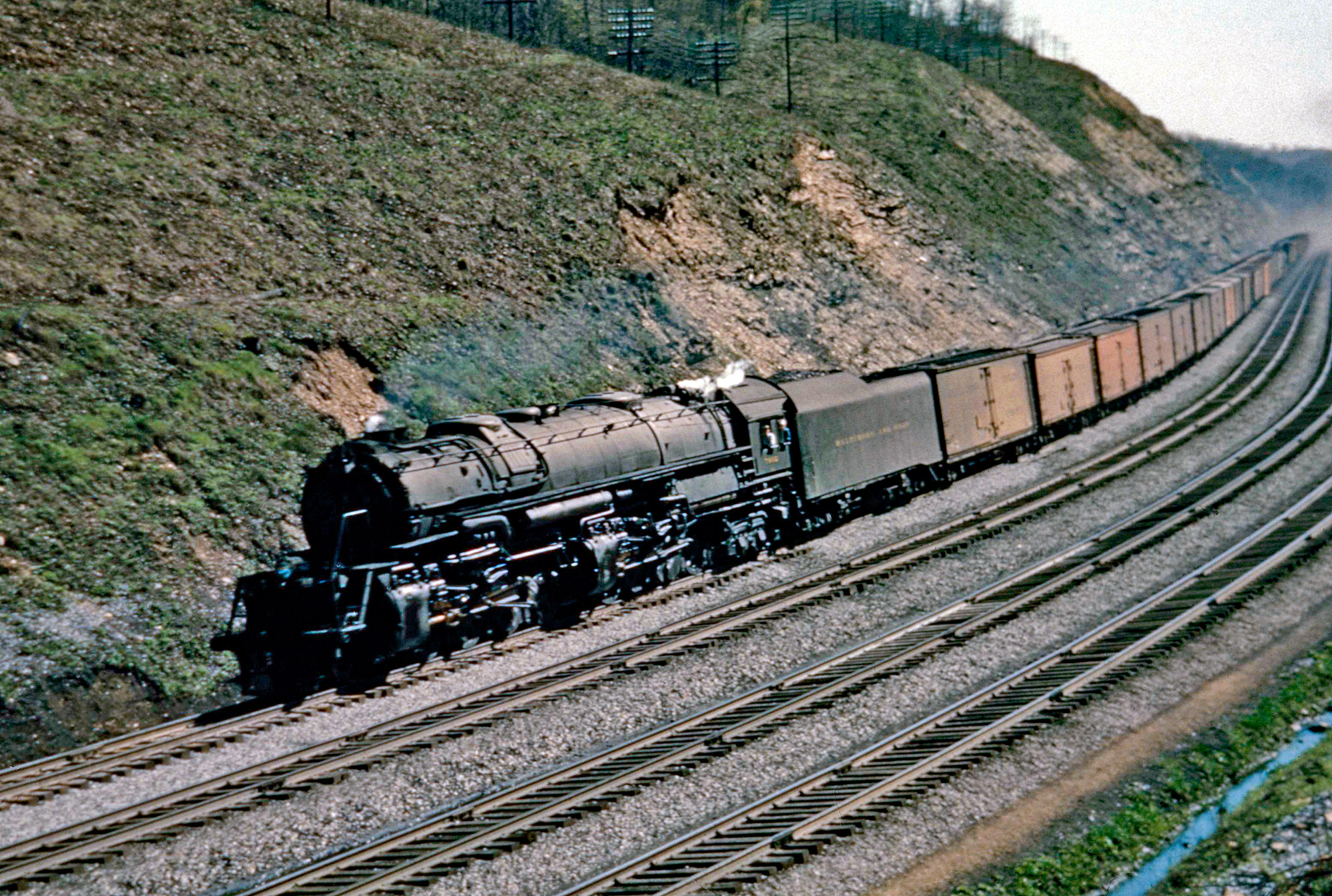 A Baltimore & Ohio EM-1 rolls west downgrade at Doe Gully, West Virginia along the Magnolia Cutoff during the early 1950s. Photographer unknown. American-Rails.com collection.
History
The EM-1 was a variant of the Yellowstone design, originally placed into service on the Northern Pacific in 1928. The NP wanted a powerful locomotive, which could move heavy freights through the Dakotas relatively quickly. Ultimately, only four lines purchased Yellowstones; the B&O, NP, Southern Pacific, and Duluth, Missabe & Iron Range.
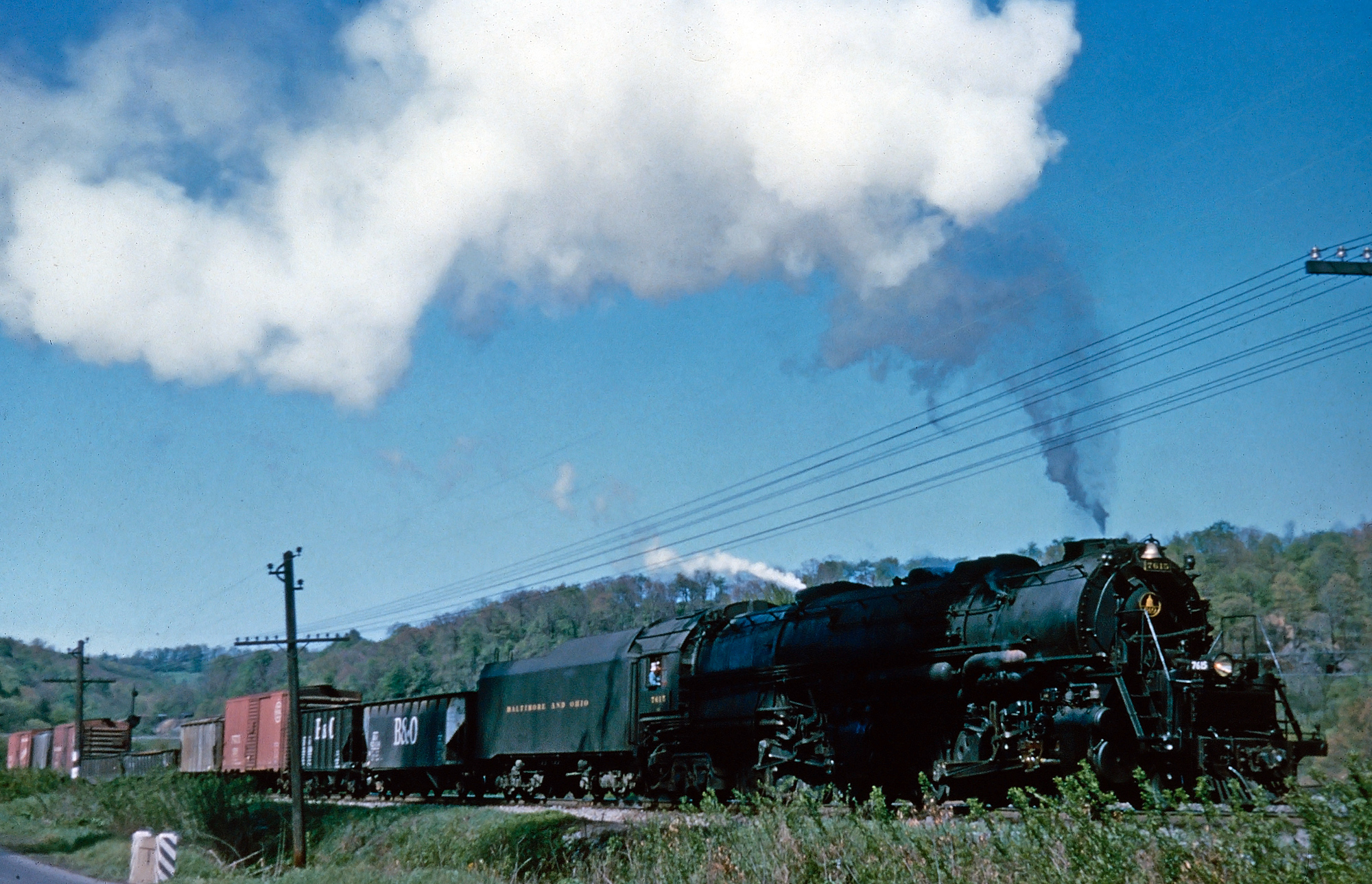 Baltimore & Ohio 2-8-8-4 #7615 (EM-1) leads a general manifest along the East End/Cumberland Division near Hancock, West Virginia, circa 1955. Photographer unknown. American-Rails.com collection.
%20leads%20a%20general%20manifest%20along%20the%20East%20End%2FCumberland%20Division%20near%20Hancock%2C%20West%20Virginia%2C%20circa%201955.%20Photographer%20unknown.%20American-Rails.com%20collection.)
Development
The EM-1 was developed during the late steam era and, accordingly, would carry the most advanced technology available. Thirty of these locomotives were built for the B&O, all products of the Baldwin Locomotive Works.
The big engines were delivered in two batches, #7600-7619 arrived in 1944 while #7620-7629 were delivered between May and August, 1945.
The eastern trunk line was one of the first to embrace diesel technology purchasing a boxcab switcher from Alco and Ingersoll-Rand in 1924. It was also quick to test Electro-Motive's streamlined EA in 1935 and ultimately went back to EMD for many of its diesel locomotives.
The railroad desperately wished to continue purchasing diesels (then EMC's FT model) to keep up with wartime traffic. However, with WPB restrictions in place the B&O was forced to settle for more steam.
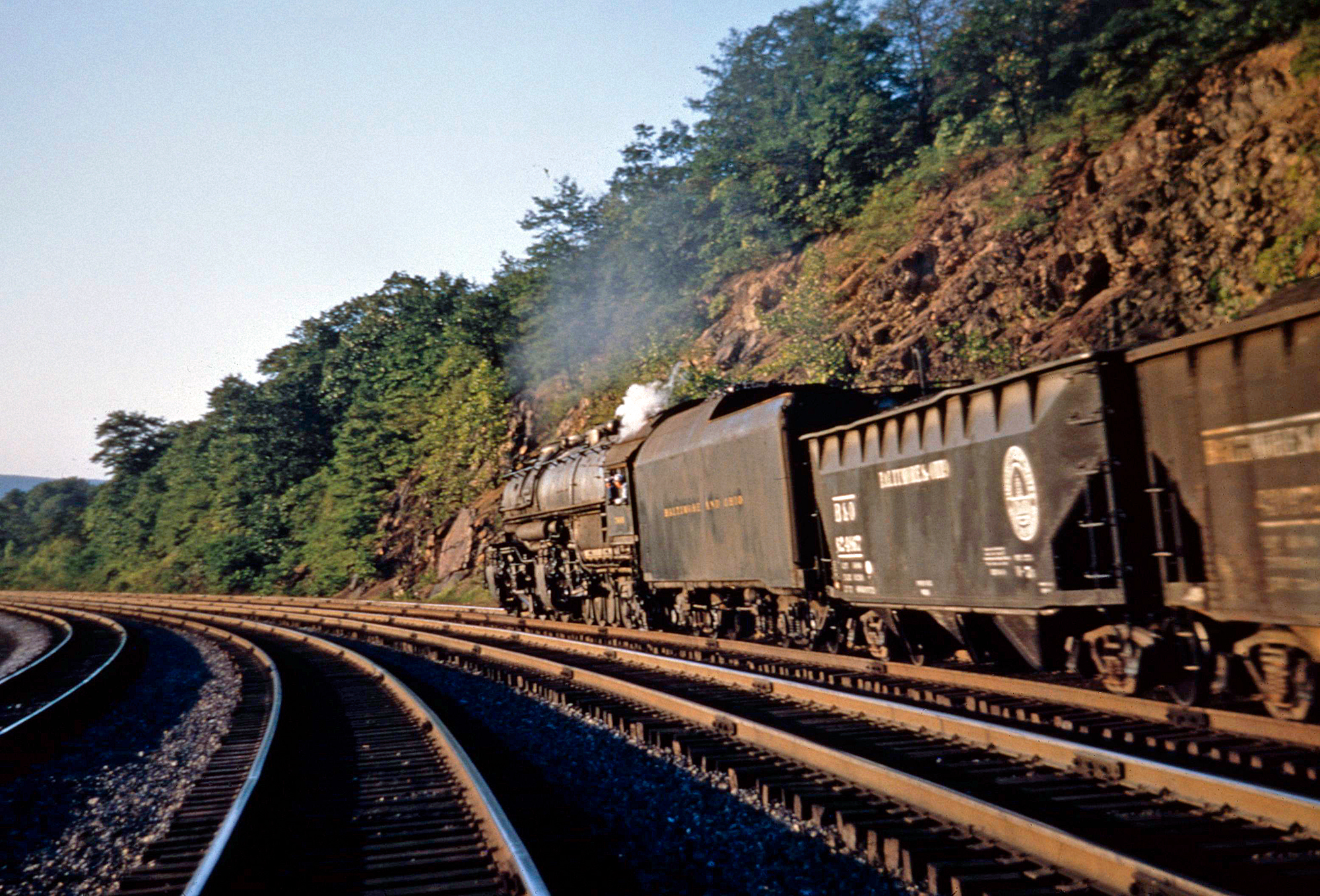 A Baltimore & Ohio EM-1 (2-8-8-4) leads eastbound loads of coal over Magnolia Cutoff at Orleans Road, West Virginia during the early 1950s. Bill Price photo. American-Rails.com collection.
%20leads%20eastbound%20loads%20of%20coal%20over%20Magnolia%20Cutoff%20at%20Orleans%20Road%2C%20West%20Virginia%20during%20the%20early%201950s.%20%20Bill%20Price%20photo.%20%20American-Rails.com%20collection.)
In time, however, the railroad became rather fond of its 2-8-8-4s. The EM-1s had a rather low boiler pressure, comparative to other models in its class, which offered a high factor of adhesion (4.22). This high ratio allowed the locomotive to start rather efficiently and it was generally not susceptible to wheel slippage.
This particular characterstic was an added benefit when handling merchandise or coal drags over the steep grades of Cranberry Grade, Seventeen Mile Grade, or Sand Patch in Pennsylvania.
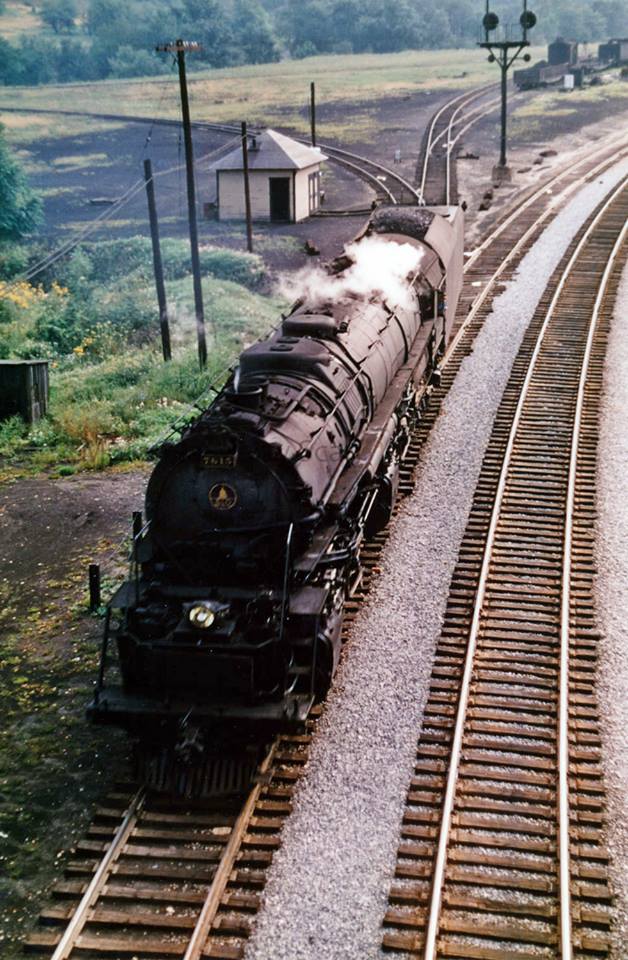 Baltimore & Ohio 2-8-8-4 #7615 (EM-1) is seen here in a rare scene on Sand Patch on August 26, 1954. These behemoths were normally not assigned to this territory. Just a few years later the big steamers were renumbered into the 600 series to make way for newly arriving diesels. Bill Price photo.
%20is%20seen%20here%20in%20a%20rare%20scene%20on%20Sand%20Patch%20on%20August%2026%2C%201954.%20These%20behemoths%20were%20normally%20not%20assigned%20to%20this%20territory.%20%20Just%20a%20few%20years%20later%20the%20big%20steamers%20were%20renumbered%20into%20the%20600%20series%20to%20make%20way%20for%20newly%20arriving%20diesels.%20Bill%20Price%20photo.)
Reception
The EM-1 was a true sight to behold if one was lucky enough to witness it trackside. A classic example is the locomotive working upgrade over Sand Patch. The engine exemplified what made the steam locomotive such an admired and respected machine.
The pure power and deafening sound of the EM-1’s is perhaps something words, pictures and maybe even video can never truly replicate without the fortune of being there in person to witness these phenomenal locomotives in service.
While the locomotive's size is enough in itself, seeing it in person illustrates this point so much more. The below specifications of the locomotive are courtesy of John Patton.
Specifications
According to John Patton:
"...the EM-1s were said to be easy steamers to operate and crews liked them. With minor stay bolt trouble they were perfect for the B&O in every way possible.
As said upon delivery by head of machinery, they had everything, all wheels had roller bearings and were top of the line for steam on the B&O...these B&O articulateds were 1,010,700 pounds, laden; carried 22,000 gallons of water and 25 tons of coal."
Roster
7600-7629 (1944-1956) 650-679 (Post-1956) |
|
1944 (7600-7619) 5/1945 - 8/1945 (7620-7629) |
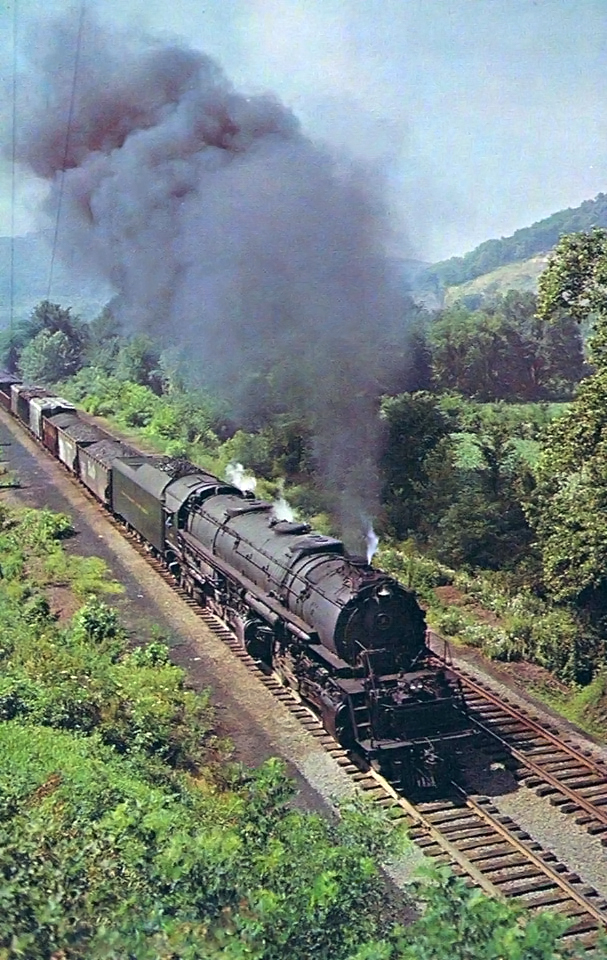 Baltimore & Ohio 2-8-8-4 #657 heads north along the once-busy Wheeling Division near Holloway, Ohio (now abandoned) with a mixed freight (dispatched from Benwood/Wheeling) bound for Lorain in July of 1957. The big EM-1's had recently been renumbered to make room for incoming diesels and they would soon be retired after barely a decade of service... Don Wood photo.
%20with%20a%20mixed%20freight%20(dispatched%20from%20Benwood%2FWheeling)%20bound%20for%20Lorain%20in%20July%20of%201957.%20The%20big%20EM-1's%20had%20recently%20been%20renumbered%20to%20make%20room%20for%20incoming%20diesels%20and%20they%20would%20soon%20be%20retired%20after%20barely%20a%20decade%20of%20service...%20Don%20Wood%20photo.)
Final Years
The EM-1's reign would be short-lived, however. By 1956 the locomotives had been renumbered to a three-digit series, 650-679, tomake room for newly arriving diesels.
As increasingly more examples were delivered for general road service, the EM-1s were shifted further west, from the eastern mountain regions to the Ohio River and Pittsburgh Division.
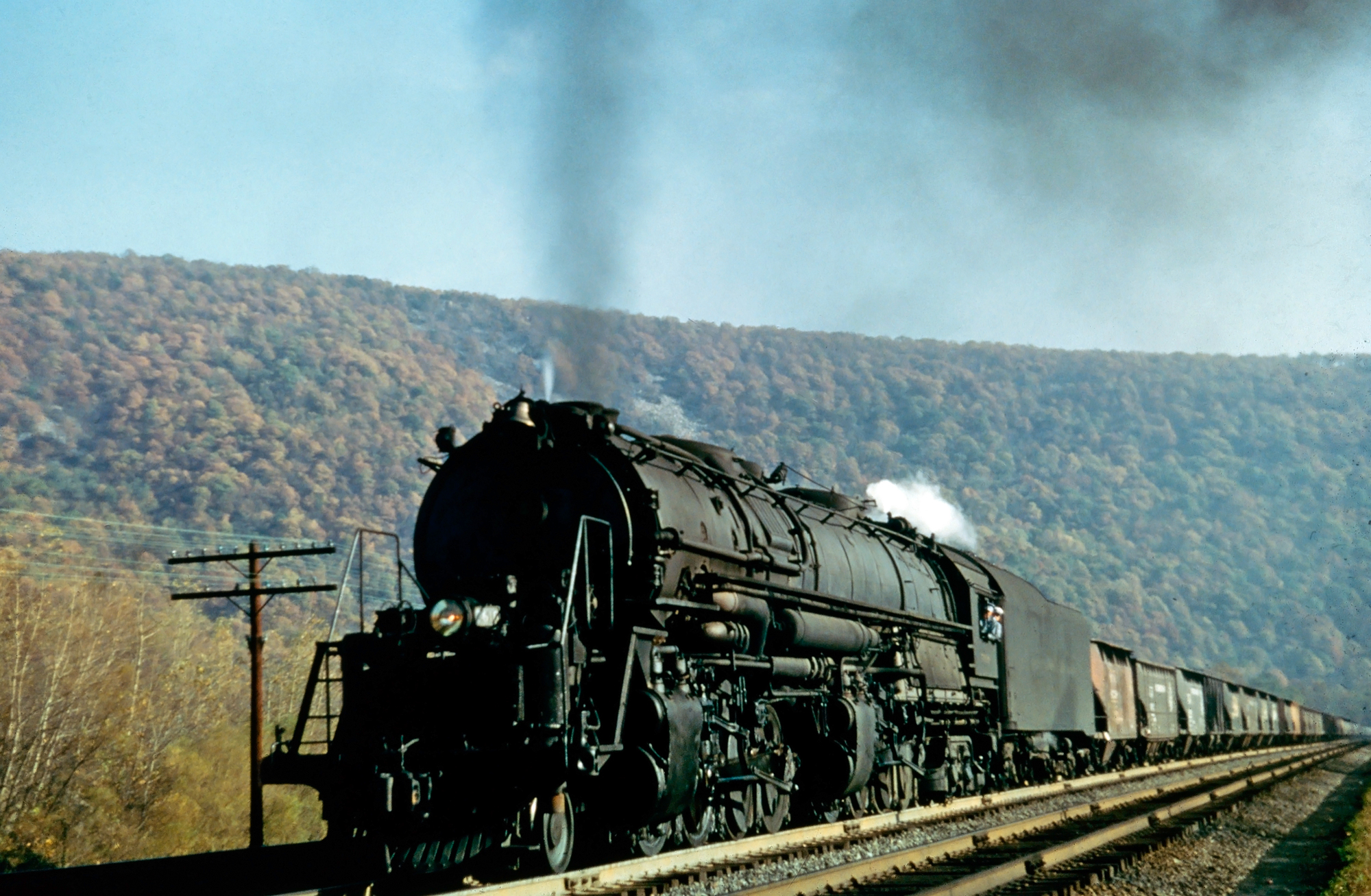 A big Baltimore & Ohio EM-1, #7615, appears to have empties heading west through the Narrows west of Cumberland, Maryland, circa 1955. Photographer unknown. American-Rails.com collection.
In his authoratitive book, "Steam Locomotives Of The Baltimore & Ohio: An All-Time Roster," author William Edson notes the entire fleet was retired between 1957 and 1960.
However, according to Mr. Patton, "the last one off the roster was to be saved for the B&O Museum in Baltimore, but it never happened due to lack of funding and the museum not being open to try and reserve funding for such." Unfortunately for both railfan and historian alike, not one EM-1 is preserved for future generations to tour and see.
To see the EM-1 in all its glory was, undoubtedly, a spectacle to behold, a symbol of the transformative growth, and tenacity of American railroading.
From hauling coal in times of peace to powering the War effort, the EM-1 exemplified the steely resolve and relentless progress that embodies the spirit of American locomotion history.
Photo Gallery
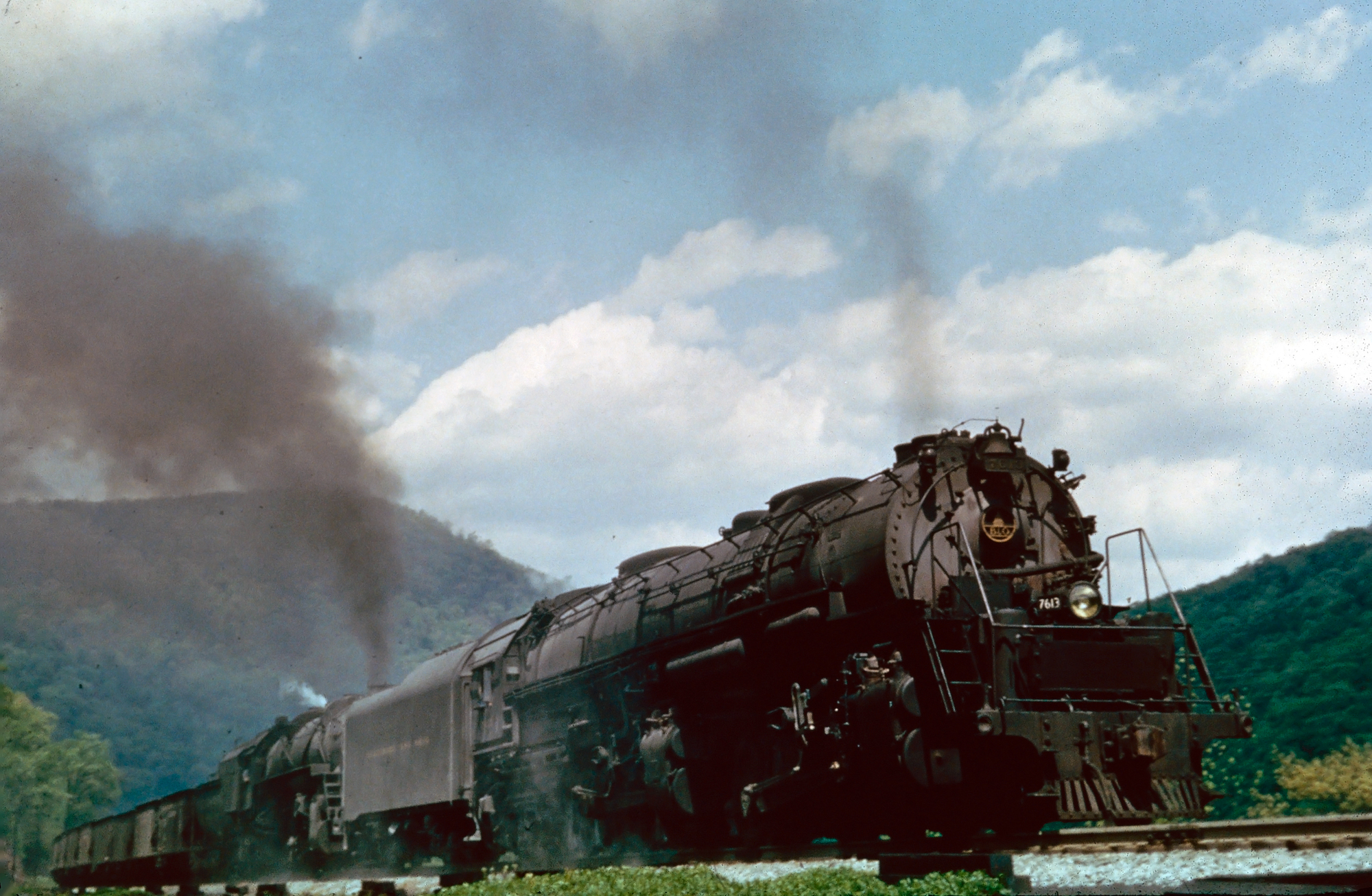 No information was provided on this slide of 2-8-8-4 EM-1 #7613 and what appears to be a "Big Six" in service with a string of coal hoppers, circa 1955. Photographer unknown. American-Rails.com collection.
Sources
- Edson, William D. Steam Locomotives Of The Baltimore & Ohio: An All-Time Roster. Potomac: William D. Edson, 1992.
- Mainey, David. Baltimore & Ohio Steam In Color. Scotch Plains: Morning Sun Books, 2001.
- Reynolds, Kirk and Oroszi, David. Baltimore & Ohio Railroad. Osceola: MBI Publishing, 2000.
- Withers, Bob. Baltimore & Ohio Railroad In West Virginia, The. Charleston: Arcadia Publishing, 2007.
SteamLocomotive.com
Wes Barris's SteamLocomotive.com is simply the best web resource on the study of steam locomotives.
It is difficult to truly articulate just how much material can be found at this website.
It is quite staggering and a must visit!