The Rise and Fall of the Baltimore & Ohio’s Passenger Service: 141 Years of Innovation, Elegance, and Inevitable Decline
Published: April 16, 2026
By: Adam Burns
When the Baltimore & Ohio Railroad completed its first mile and a half of track in January 1830, it sold one-way tickets for nine cents to the end of the line. That modest beginning launched 141 years of continuous B&O passenger service—the longest unbroken record of any American railroad.
From primitive horse-drawn cars on strap-iron rails to streamlined diesel-powered streamliners, the B&O pioneered scheduled passenger operations, introduced the first all-steel cars, operated the first dome cars on an Eastern railroad, and maintained a reputation for courtesy and fine dining that rivaled any carrier in the nation.
Yet by the spring of 1971, the once-proud passenger network had been reduced to a handful of routes, and on April 30 of that year the B&O handed its remaining intercity trains to the newly formed Amtrak. This is the story of how America’s first railroad built a legendary passenger empire—and why it ultimately could not survive the automobile, the airplane, and the changing economics of the postwar era.
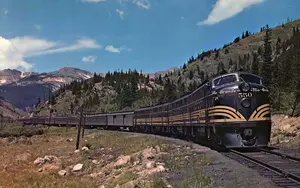
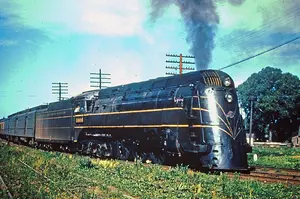
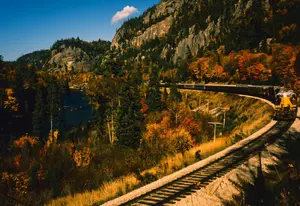
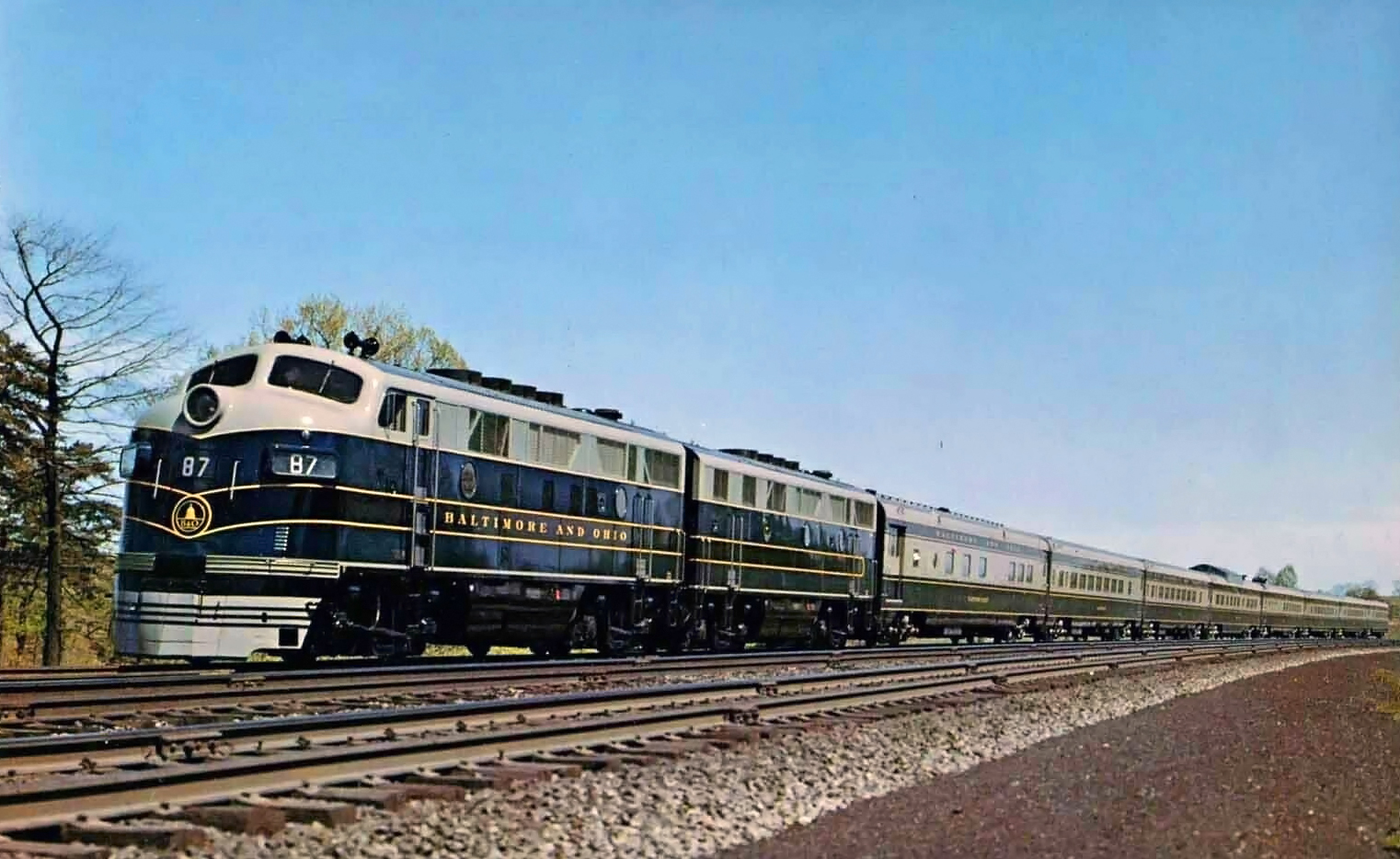 One of the many publicity photos the Baltimore & Ohio captured of its new, all-coach service, the "Columbian," in the spring of 1949. Note the Strata-Dome (built by Pullman-Standard) mid-train. This scene depicts the train posed westbound east of Cumberland, Maryland.
The Dawn of Rail Passenger Service
The B&O’s earliest passenger cars were little more than stagecoaches mounted on flanged wheels. Top track speed was about 15 mph. By the mid-1830s the steam locomotive had transformed operations; speeds rose, cars grew larger, and the railroad reached Washington, D.C., via a branch from Baltimore.
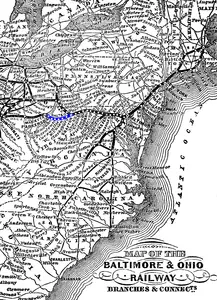
Camden Station opened in 1857 as both passenger terminal and corporate headquarters. As the line pushed westward, passengers at Wheeling, Virginia, could transfer to riverboats or continue by rail on the Central Ohio Railroad. Bridges across the Ohio River at Parkersburg (1871) finally gave the B&O an all-rail route to St. Louis.
By 1886 the railroad reached Chicago via a roundabout path through Wheeling and Newark, Ohio.The most ambitious project of the 19th century was the Royal Blue Line, opened in 1886. It created a high-speed through route from New York to Washington.
Because the B&O had no direct physical connection to New York City, passengers were ferried across the Hudson from Jersey City. The line’s dark-blue paint scheme gave the service its name, and track pans allowed steam locomotives to scoop water at speed—an innovation unique to the B&O. Competition with the Pennsylvania Railroad (PRR) was fierce; the B&O countered with personalized service and generous meals while the PRR emphasized frequency.
The 20th Century: The Capitol Route and the Battle for New York
The opening of the Baltimore Belt Line in the early 1890s finally eliminated the last ferry ride for Baltimore–Washington–New York passengers. Mount Royal Station in Baltimore and the new Washington Union Station (1907) improved facilities dramatically. Daniel Willard became president in 1910 and immediately began modernizing. Full-width vestibules and the first all-steel passenger cars arrived in 1911. When World War I erupted, the federal government took control of the railroads in December 1917.
Ironically, B&O riders benefited: the PRR’s New York–Washington corridor became so overcrowded that many travelers switched to the less-crowded Royal Blue Line. Government control ended on March 1, 1920. Willard negotiated a five-year agreement with the PRR allowing B&O trains to use Pennsylvania Station in New York. The 1920s became the B&O’s golden decade of passenger service. The flagship Capitol Limited (inaugurated May 12, 1923) and the equally prestigious National Limited (April 26, 1925) operated between New York (Jersey City) and Chicago and St. Louis via Cincinnati.
Both were all-Pullman trains offering every accommodation from economy coaches to luxury sleeping cars. The Metropolitan Special served as the workhorse of the New York–Washington–St. Louis route, carrying heavy mail and express traffic.B&O dining cars were legendary. By the 1870s they had become standard, evolving into rolling restaurants that served fresh Chesapeake Bay seafood, Great Lakes fish, and Southern specialties on distinctive “Centenary” blue china after 1927. Stewards, cooks, and waiters—often numbering 45 stewards, 194 cooks, and 332 waiters across the fleet—maintained impeccable service. During peak periods, “swing” crews supplemented regular staff. The railroad even installed spotlights on dome-car roofs at night so passengers would not miss the scenery.
Depression, Streamliners, and Wartime Surge
The stock-market crash of 1929 devastated passenger revenues. The B&O, already heavily indebted, fought to avoid ruin by introducing new trains and services while pruning unprofitable local runs. In 1930 it became the first Eastern railroad to air-condition a dining car (Martha Washington). Two years later it joined the streamliner revolution with two experimental lightweight trains—one aluminum, one Cor-Ten steel—built by American Car & Foundry. Named the Abraham Lincoln and Royal Blue, they tested diesel power against steam. The B&O ultimately chose to rebuild its existing heavyweight fleet rather than buy large numbers of new lightweight cars, a decision rooted in financial prudence and President Willard’s preference for durable, comfortable equipment.
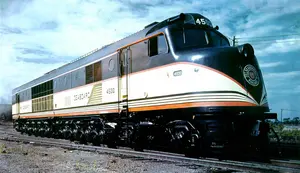
Industrial designer Otto Kuhler created the “Improved Royal Blue,” and Mount Clare Shops rebuilt selected cars in a striking blue, gray, and gold livery. The Capitol Limited and National Limited received the treatment. In 1937 the railroad introduced its first streamlined diesel locomotives (EMC EA/EB models) on these premier trains. By 1940 it operated 15 more passenger diesels and added sheet-metal shrouding to Pacific steam locomotives for Royal Blue service.
World War II brought record traffic. Troop movements and civilian travel overwhelmed the system, yet the B&O maintained high standards of courtesy. President Franklin Roosevelt preferred the B&O for trips to Hyde Park, traveling in a special train routed via the Reading and Jersey Central. The surge pushed passenger services to capacity, but the physical plant—already strained from the Depression—emerged battered.
Postwar Optimism Meets Reality
At war’s end in 1945, the B&O faced a fleet worn by overuse. It ordered new lightweight cars from Pullman-Standard and more passenger diesels from Electro-Motive. Dome cars appeared—the first on an Eastern railroad—though low clearances restricted their use in the Washington area. The rebuilt Cincinnatian (1947) used steam power initially, then switched to diesel. The all-coach Columbian received the first dome cars in 1949.
Despite these investments, the automobile boom and the coming Interstate Highway System doomed long-distance rail travel. The introduction of jet airliners in 1958 delivered another blow. Passenger deficits mounted. The B&O responded with marketing innovations: off-peak fare cuts, food-bar coaches offering meals for less than a dollar, and movies on selected trains. Self-propelled Rail Diesel Cars (RDCs, or “Speedliners”) cut costs on commuter routes out of Baltimore/Washington and Pittsburgh.
By the mid-1960s only three mainline passenger routes remained: Washington–Chicago (with a Detroit section off the Capitol Limited), Washington–St. Louis, and Cincinnati–Detroit. The "Royal Blue Line" passenger service east of Baltimore ended in 1958. The proud Capitol Limited, National Limited, Columbian, and Ambassador names gradually disappeared as the Chesapeake & Ohio gained control of the B&O in 1963 and began trimming duplicate services.
The Final Chapter: Amtrak and the End of an Era
In 1967 the U.S. Post Office canceled most lucrative railroad mail contracts, removing a critical revenue source. All U.S. railroads were losing money on passengers. Congress created the National Railroad Passenger Corporation (Amtrak) in 1970 to assume intercity service. When Amtrak began operations on May 1, 1971, no B&O routes were included in the initial national system. The B&O discontinued its remaining intercity passenger trains that day. Commuter runs out of Baltimore/Washington and Pittsburgh continued briefly, but the last B&O-operated passenger trains vanished after 141 years.
The Capitol Limited’s tradition of safety, courtesy, and fine dining—hallmarks that had defined the B&O for generations—came to an end. The railroad that had introduced America to scheduled rail passenger service, built the Royal Blue Line, pioneered streamliners and domes on the East Coast, and maintained one of the finest dining-car operations in the country had finally yielded to the automobile, the jet, and economic reality.
Yet the legacy endures. Camden Station still stands as a historic landmark. The names Royal Blue, Capitol Limited, and National Limited live on in railroad lore and in Amtrak’s modern successors. The B&O’s passenger story is one of remarkable firsts, unflagging innovation, and a commitment to service that outlasted profitability. For 141 years it carried millions of travelers in comfort and style, proving that even in the face of relentless competition, a railroad could still make the journey itself part of the destination.
Well Known Passenger Trains
Recent Articles


-
Dakota, Minnesota & Eastern Railroad: Roster, Map, History
Oct 21, 26 12:26 AM
 Dakota, Minnesota & Eastern Railroad, reporting mark DME. The July 2, 1986 Chicago & North Western sale, 826 miles and 139 miles of trackage rights. Canadian Pacific control October 30, 2008…
 -
Detroit and Mackinac Railway: Map, Roster, History
Oct 20, 26 11:58 PM
 Detroit & Mackinac Railway, the Turtle Line. Bay City to Cheboygan along Lake Huron. Incorporated December 29, 1894. Lake State Railway leased the operation in 1992 and bought the lines in 1997. E…
 -
Davenport, Rock Island and Northwestern Railroad
Oct 20, 26 11:22 PM
 Davenport, Rock Island and North Western Railway, the DRI Line. Clinton to East Moline across the Crescent Bridge. Burlington and Milwaukee. Merged into the Soo Line on June 29, 1995. Eighteen diesels…
 -
Chicago Great Western Steam Roster (Post 1900)
Oct 20, 26 11:17 PM
 Chicago Great Western steam locomotives built or rebuilt since 1900. Drury's class grid. 320 frames, each once. The quantity column prints 376 because a rebuild is listed again. Last steam in the reti…
 -
Chicago Great Western Diesel Roster (All-Time)
Oct 20, 26 10:47 PM
 All-time diesel roster of the Chicago Great Western. 157 frames, each counted once. Serials and builder order numbers included. Steam was gone by 1950. The 1963 glance figure of 141 is one year's flee…
 -
Chicago Great Western Railway: Map, Photos, History, Rosters
Oct 20, 26 10:43 PM
 The Chicago Great Western, the Corn Belt Route, linked Chicago, the Twin Cities, Omaha, and Kansas City from September 27, 1885, until the Chicago & North Western merger at 12:01 a.m. on July 1, 1968…
 -
Chicago, South Shore & South Bend Railroad: "The South Shore Line"
Oct 20, 26 05:48 PM
 Chicago South Shore & South Bend, the South Shore Line, from the 1901 Air Line through Samuel Insull's 1925 rebuild, the orange cars, the 800s, and the railroad NICTD and Anacostia still run.
 -
Northwestern Virginia Railroad: Map, History, Timetable
Oct 20, 26 04:18 PM
 Northwestern Virginia Railroad, chartered February 14, 1851, Grafton to Parkersburg, 104 miles. Opened May 1, 1857. Foreclosure sale February 15, 1865, as the Parkersburg Branch. Twenty-three tunnels…
 -
"Exposition Flyer" (Train): Consist, Timetable, History
Oct 20, 26 03:29 PM
 Exposition Flyer, Chicago to Oakland, June 10, 1939 to March 20, 1949. Burlington, Rio Grande, and Western Pacific. Heavyweight cars, then diesels and a vista-dome. Replaced by the California Zephyr.
 -
Chicago, St. Paul, Minneapolis & Omaha Railway, "The Omaha Road"
Oct 20, 26 02:13 PM
 The Omaha Road, reporting mark CMO. Formed May 26, 1880. North Western management on December 16, 1882. Leased January 1, 1957. Class K-1 No. 183 and the sublettered diesels.
 -
Chicago and Western Indiana Railroad: Map, Rosters, History
Oct 20, 26 01:17 PM
 Chicago and Western Indiana, chartered June 5, 1879. Five equal owners, Dearborn Station, and two main lines. Dolton suburban mile 16.6. Fifteen diesels. Railroad service ended in 1994. The Illinois c…
 -
Railroad Tell-Tales: Protecting The Brakeman
Oct 20, 26 12:58 PM
 Railroad tell-tales: hanging ropes that warned a man on a freight-car roof of a low bridge or tunnel. The 1897 bridge-warning report, the 1905 Wisconsin statute, retainers, and why the roof walk outla…
 -
Chicago & North Western Steam Roster (Post 1900)
Oct 20, 26 12:54 PM
 Chicago & North Western steam locomotives built since 1900, and the Omaha Road list beside it. Drury's parent quantity column sums to 1,445, with four rows left blank. The Omaha Road column sums to 24…
 -
Chicago & North Western Diesel Roster (All-Time)
Oct 20, 26 12:49 PM
 All-time diesel roster of the Chicago & North Western. 2,494 frames, each counted once, including Chicago Great Western, Minneapolis & St. Louis, and Omaha Road units that received North Western numbe…
 -
Chicago and North Western Railroad: Map, History, Logo
Oct 20, 26 12:37 PM
 The Chicago & North Western, chartered as the Galena & Chicago Union in 1836 and formed in June 1859. Granger railroad of the 400s, the Cowboy Line, and Powder River coal. Union Pacific common control…
 -
Chicago & Illinois Midland Steam Roster (Post 1900)
Oct 20, 26 12:30 AM
 Chicago & Illinois Midland steam locomotives built since 1900. Drury's class grid, 57 engines. Twenty-six 2-10-2s, including nine from the Wabash and nine from the Atlantic Coast Line. Last road steam…
 -
Chicago & Illinois Midland Diesel Roster (All-Time)
Oct 20, 26 12:20 AM
 All-time diesel roster of the Chicago & Illinois Midland. 28 frames, each counted once. Six SW1200s, five SD9s, the only two RS1325s, two SD18s, six SD38-2s, and four SD20s. Serials included.
 -
Chicago and Illinois Midland Railroad: Map, Rosters, History
Oct 20, 26 12:17 AM
 The Chicago & Illinois Midland moved Illinois coal for Commonwealth Edison, Taylorville and Springfield to Pekin, with Peoria over the Peoria & Pekin Union. The 1906 railway began operating February 1…
 -
Chicago & Eastern Illinois Diesel Roster (All-Time)
Oct 19, 26 04:23 PM
 All-time diesel roster of the Chicago & Eastern Illinois. 143 frames, each counted once. Switchers, F3s, FP7s, E7s, the BL1, and the GP7s through GP35s. Serials included.
 -
Chicago & Eastern Illinois Steam Roster (Post 1900)
Oct 19, 26 04:19 PM
Chicago & Eastern Illinois steam locomotives built or rebuilt since 1900. 146 Consolidations, 60 Mikados, and 24 Pacifics. Drury's class grid. Last steam was Mikado 1944 at Vincennes on May 5, 1950. -
Chicago and Eastern Illinois Railroad: Map, Rosters, History
Oct 19, 26 03:57 PM
 The Chicago & Eastern Illinois ran from Chicago to Evansville, St. Louis, and Thebes. First company of the name, August 28, 1877. The remainder merged into the Missouri Pacific on October 15, 1976. St…
 -
Rock Island Diesel Roser: All-Time
Oct 19, 26 11:05 AM
 Chicago, Rock Island and Pacific diesel locomotives, 1,029 frames counted once. Switchers, cab units, road-switchers, two acquired slugs, five RDCs, and bi-power 10000. Serial and order are separate c…
 -
Rock Island Steam Roster: Post 1900
Oct 19, 26 11:01 AM
Chicago, Rock Island and Pacific steam locomotives built or rebuilt since 1900. Drury's class grid, 1,482 frames counted once, including 85 4-8-4s. Last revenue steam was July 1953. -
Rock Island Railroad: Map, Pictures, Logo, History
Oct 19, 26 10:51 AM
 The Chicago, Rock Island and Pacific ran from Chicago to the Twin Cities, Denver, Tucumcari, and the Gulf. First train October 10, 1852. Directed service ended March 23, 1980. Steam and diesel rosters…
 -
EMD "F7" Locomotives: Cab, Top Speed, Specs, Rosters
Oct 19, 26 12:27 AM
 EMD F7 cab units and boosters, 1,500 horsepower, built February 1949 through December 1953. Gear ratios, specifications, and the production roster by owner, serial, and order.
 -
Harlem Transfer Company: An NYC Terminal System
Oct 19, 26 12:01 AM
 Harlem Transfer Company, the Lackawanna's offline freight terminal on the Bronx side of the Harlem River at East 135th Street. Carfloats to Hoboken, boxcab No. 2, and GE 44-tonner 53.
 -
Belpre Industrial Parkersburg Railroad: Roster, History, Photos
Oct 18, 26 11:44 PM
 Belpre Industrial Parkersburg Railroad, a Class III short line leasing about 46.9 miles of CSX track at Parkersburg since 2020. The Ohio River bridge, the Marietta Subdivision, and five GP38-3s.
 -
Chicago, Peoria & St. Louis Railroad: Map, Timetables, History
Oct 18, 26 10:57 PM
 Chicago, Peoria & St. Louis Railroad, an Illinois line from Pekin and Peoria through Springfield to Madison. Chartered in 1853. Sold in parcels on November 20, 1924. The Pekin line is today the Illino…
 -
Chicago, Burlington & Quincy Diesel Roster (All-Time)
Oct 18, 26 10:54 PM
 All-time diesel roster of the Chicago, Burlington & Quincy. 951 parent frames, 72 Colorado & Southern, and 36 Fort Worth & Denver, each counted once. Serials included.
 -
Burlington Railroad (CB&Q): Map, History, Rosters, Photos
Oct 18, 26 10:49 PM
 The Chicago, Burlington & Quincy, the Burlington Route, ran from Chicago to Denver, the Twin Cities, and the Gulf. Steam built since 1900 and the diesel fleets are companion rosters. Burlington Northe…
 -
Chicago, Burlington & Quincy Steam Roster (Post 1900)
Oct 18, 26 10:33 PM
 Chicago, Burlington & Quincy steam locomotives built or rebuilt since 1900. 429 Prairies, 383 Mikados, the Hudsons, and the O-5 4-8-4s. Drury's class grid.
 -
Virginian Railway's 2-6-6-6 Locomotives (Class AG)
Oct 18, 26 01:38 PM
 Virginian Railway class AG. Eight Lima 2-6-6-6s, Nos. 900-907, built in 1945 for the east end. Billed at 753,000 pounds. Scrapped in 1960.
 -
Pennsylvania (PRR) Steam Roster: Post 1906
Oct 18, 26 01:05 PM
ennsylvania steam after 1906—H8, H9, and H10 Consolidations, 574 L1s Mikados, 598 I1s Decapods, 425 K4s Pacifics, 301 M1 Mountains. Drury’s grid. Last steam November 30, 1957. -
Chicago, Aurora and Elgin Railroad: The "Roarin' Elgin"
Oct 18, 26 10:54 AM
The Chicago, Aurora & Elgin, the Roarin' Elgin, ran 600-volt third-rail trains from Chicago to Aurora, Batavia, and Elgin. Passenger service ended at noon on July 3, 1957. Freight ended June 11, 1959. -
Algoma Central Railway: Map, Logo, Rosters
Oct 17, 26 10:49 PM
 Algoma Central Railway, Sault Ste. Marie to Hearst. Wisconsin Central on February 1, 1995. Fifty-nine steam locomotives and forty-two diesels.
 -
Akron, Canton and Youngstown Railroad: Map, History, Rosters
Oct 17, 26 05:49 PM
 Akron, Canton and Youngstown Railroad, Mogadore to Delphos. The rails never reached Canton or Youngstown. Norfolk & Western control on October 16, 1964. Twenty-six diesels and the historical society's…
 -
Georgia Railroad: Map, History, Logo, Rosters
Oct 17, 26 12:59 PM
 Georgia Railroad, the Georgia Railroad and Banking Company, Augusta to Atlanta, with the Athens branch and the Macon Road. Mark GA. The railroad properties were sold on November 4, 1982.
 -
West Point Route (Railroad): Map, History, Logo
Oct 16, 26 11:26 PM
 The West Point Route was a trademarked name comprising the Atlanta & West Point and Western Railway of Alabama, which were controlled by the Georgia Railroad.
 -
Virginian Railway Diesel Roster (All-Time)
Oct 16, 26 11:11 PM
 All-time diesel roster of the Virginian Railway. 40 Fairbanks-Morse H16-44s, 25 H24-66 Train Masters, and one GE 44-tonner. Serials included.
 -
Virginian Railway Steam Roster (Post 1900)
Oct 16, 26 10:55 PM
 Virginian Railway steam locomotives built since 1900. Mikados, 2-8-8-2s, the Triplex, class AE 2-10-10-2s, and the 1945 2-6-6-6s.
 -
Virginian Railway: Map, Rosters, History, Electrification
Oct 16, 26 10:51 PM
 Virginian Railway, Deepwater to Norfolk. Combined in 1907 and completed in 1909. Electrified from Roanoke to Elmore. Absorbed by the Norfolk & Western on December 1, 1959.
 -
Baldwin "Centipede" Locomotives: Specs, Roster, Photos
Oct 16, 26 03:58 PM
 Baldwin DR-12-8-1500/2 Centipede—2-D+D-2, two 608SC engines, 3,000 hp. SAL 4500 from the 1943 test bed. 54 on the serial list, 52 sold. PRR BP60 then BH50. None preserved.
 -
Louisville & Nashville Class M-1 2-8-4s: The Big Emmas
Oct 16, 26 03:52 PM
Louisville & Nashville class M-1, 42 Big Emma 2-8-4s. Baldwin in 1942 and 1944, Lima in 1949. Coal trains from Neon to DeCoursey. No locomotive survives. -
Tennessee, Alabama and Georgia Railway: Map, History, Rosters
Oct 16, 26 03:21 PM
 Tennessee, Alabama and Georgia Railway, Chattanooga to Gadsden. The May 1929 card is 91.7 miles. Southern stock control closed on a January 1, 1971 schedule. Five diesels and Prince's steam list.
 -
Railroad Museums In The USA (2026): State Guides & Collections
Oct 16, 26 02:29 PM
 U.S. railroad museums—what they are vs tourist railroads, preservation history (R&LHS, NRHS, IRM, Steamtown), state guides, and destination collections. Confirm hours on each museum’s site.
 -
Wyoming Railroad Museums (2026): A Complete Guide
Oct 16, 26 02:26 PM
 Wyoming railroad museums—the Cheyenne Depot, Burlington 5633 at Douglas, Big Boy 4004, and the Laramie depot. Confirm hours and which locomotive is on the property.
 -
West Virginia Railroad Museums (2026): A Complete Guide
Oct 16, 26 12:52 PM
 West Virginia railroad museums—Cass Scenic’s geared steam, the Hinton C&O collection, and the Martinsburg B&O roundhouse. Confirm hours and which locomotive is assigned.
 -
Washington Railroad Museums (2026): A Complete Guide
Oct 16, 26 12:46 PM
 Washington railroad museums—Snoqualmie, Elbe, Chehalis, Reardan, and the Northern Pacific depot at Toppenish. Confirm hours and which locomotive is assigned.
 -
Vermont Railroad Museums (2026): A Complete Guide
Oct 16, 26 12:42 PM
 Vermont railroad museums—the Shelburne Museum’s 1890 station, Central Vermont No. 220, and the private car Grand Isle. Confirm hours on the site.
 -
Tennessee Central Railway: Map, Logo, Rosters, History
Oct 16, 26 11:32 AM
 Tennessee Central Railway, Harriman to Hopkinsville. Reorganized January 26, 1922. Last day August 31, 1968. Thirty-one diesels and the railroad's steam roster.