B&O Steam Locomotive Roster (Post 1900)
Last revised: September 18, 2026
By: Adam Burns
The Baltimore & Ohio was never a wealthy road. It climbed where the Pennsylvania and the New York Central did not, left New York from Jersey City, and still put passenger trains on the timetable as if the dining car mattered. George H. Drury, in Guide to North American Steam Locomotives, puts the twentieth-century fleet in that light: 414 E-27 Consolidations with the firebox over the rear drivers, Q-class Mikados that included the first USRA locomotive built, 2-10-2 “Big Sixes” that were fast for the type, and thirty Baldwin 2-8-8-4 EM-1s the railroad would rather have skipped for diesels. The company that ran them is the Baltimore & Ohio. Diesels are the diesel roster. This page is the steam after 1900.
Mount Clare Shops in Baltimore bought, built, and rebuilt long after most Class Is had stopped ordering steam. Last public steam was Q-4b Mikado 421 (ex-4434) on a farewell between Cleveland and Holloway, Ohio, May 17, 1958. A few engines were still on the books at the start of 1960. The tables below follow Drury’s post-1900 class grid, including Buffalo, Rochester & Pittsburgh, Buffalo & Susquehanna, Coal & Coke, Cincinnati, Hamilton & Dayton, Cincinnati, Indianapolis & Western, and Morgantown & Kingwood power that took B&O numbers.
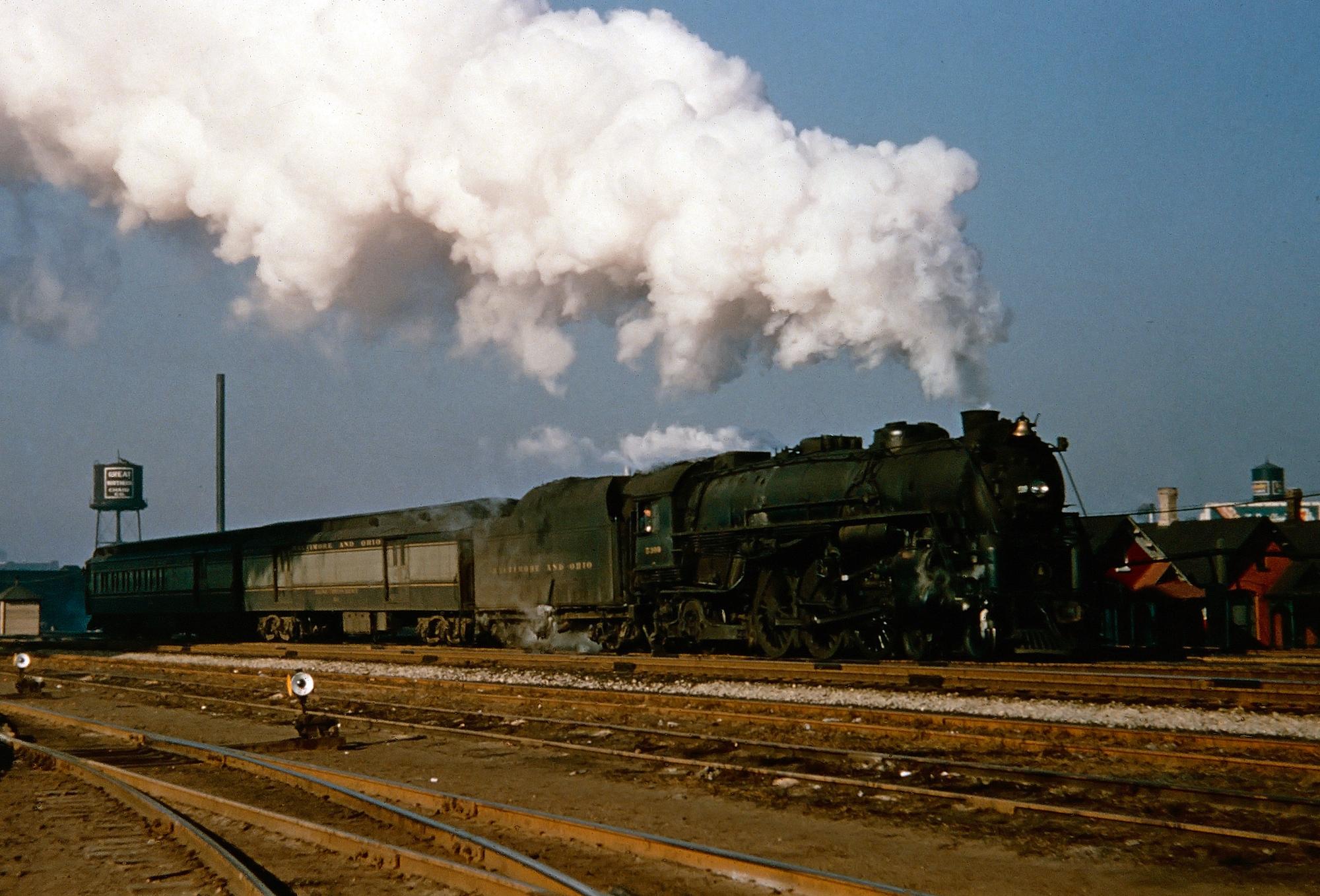
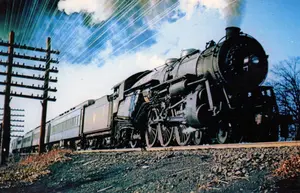
Baltimore & Ohio 4-6-2 #5309 has a short train at North Ogden Avenue in Chicago on January 9, 1956. The Great Northern Chair Company is in the background. American-Rails.com collection. Class P-7, Baldwin, 1927—one of the President Pacifics, two years from the end of steam.
On this page: At a glance · A mountain road · Consolidations, Mikados, Big Sixes · Old Maude to the EM-1s · Pacifics, Presidents, experiments · May 17, 1958 · Roster: switchers · Roster: freight · Roster: articulateds · Roster: passenger
At a glance
| Item | Detail |
|---|---|
| Railroad | Baltimore & Ohio. Mark BO. Company Baltimore & Ohio |
| This roster | Classes built since 1900, after Drury, pages 73–77, including absorbed BR&P, B&S, CH&D, CI&W, Coal & Coke, and M&K power |
| Shops | Mount Clare, Baltimore. Also Cumberland, Grafton, Willard |
| Freight backbone | 197 E-24 Consolidations (Pennsy H6 copies, 1902–04); 414 E-27s, 1905–10; Q-class Mikados from 1911, including USRA Q-3 4500 |
| Big Sixes | 31 class S 2-10-2s, 1914; 125 S-1s, Baldwin and Lima, 1923–26, 64-inch drivers |
| Articulateds | First U.S. Mallet: 0-6-6-0 Old Maude, Alco 1904. Then 0-8-8-0s, 2-8-8-0s, BR&P 2-6-6-2s, SAL 2-6-6-4s, thirty EM-1 2-8-8-4s |
| Passenger | P-class Pacifics, twenty P-7 Presidents of 1927, USRA light P-5s. Hudsons and the 4-4-4-4 Emerson were experiments |
| Last public steam | May 17, 1958. Q-4b 421, Cleveland–Holloway. Remnants on the roster into 1960 |
| Survivors (notable) | Q-3 4500 and P-7 5300 President Washington at the B&O Railroad Museum. No EM-1. No Big Six |
Roster follows Drury, Guide to North American Steam Locomotives (revised edition), pages 73–77, with Q-1c 4220–4329 added from the Mikado class page. Brooks, Schenectady, Pittsburgh, Richmond, Rhode Island, and Cooke in the builder column are Alco works. Information compiled September 18, 2026.
A mountain road that still ordered steam
By 1900 the main ran from Philadelphia through Baltimore and Washington to Cumberland. There it split: one route to Chicago via Pittsburgh and Akron, the other to St. Louis via Cincinnati. The original line, Grafton to the St. Louis main through Wheeling and Newark, Ohio, met the Chicago line at Chicago Junction, later Willard. Leonor F. Loree took control in 1901 and spent money on double track and easier grades. Pennsylvania control ended in 1906. Daniel Willard became president in 1910. In the next two decades the map filled out: Coal & Coke, Elkins to Charleston; pieces of the Cincinnati, Hamilton & Dayton and the Cincinnati, Indianapolis & Western; the Chicago & Alton; the Buffalo, Rochester & Pittsburgh and the Buffalo & Susquehanna on January 1, 1932.
Coal was the largest commodity. It was never the coal volume of the Chesapeake & Ohio or the Norfolk & Western. Helpers were standard over Sand Patch between Cumberland and Connellsville, and over the grades west of Cumberland toward Grafton and Parkersburg. Mount Clare could take a Mikado or a Pacific boiler and make a Mountain. That culture, and a fuel that came off B&O sidings, kept steam in the shops after the FTs of 1942–43. The recession of the late 1950s did what policy had not: traffic fell, and the diesels could move what was left.
E-24s, 414 E-27s, then Mikados and Big Sixes
Freight outgrew the Mogul before 1900. Two late batches of ten 2-6-0s each, 1911 and 1917, were Chicago switchers that looked like close-coupled 0-6-0s with a lead truck. First Consolidations had come in 1873; the last new ones in 1910. Compounds were in vogue at the turn of the century: 39 E-18s and 111 Camelback E-19s from Baldwin. Under Pennsylvania influence, 1902–04, came 197 class E-24s, duplicates of Pennsy H6s. Then the fleet: 414 class E-27s, Schenectady and Richmond, 1905–10. Number 2500 was the first. The firebox sat over the rear pair of drivers. Many later became L-class 0-8-0s at Mount Clare. The class survey is B&O 2-8-0s.
Baldwin turned two E-27s into 2-8-2s in 1911–12, Q-odd 4160 and 4161, in service until 1949. At the same time it built 220 Mikes from scratch, Q-1 and subclasses, 24×32 cylinders, 205 pounds. Class Q-1c, 4220–4329 of 1913, is on the Mikado page and missing from some printed grids; those engines were gone by 1941. Q-2 was assigned to eight Lima Mikes from the CI&W. Next were 100 USRA light Mikados, Q-3 4500–4599. Number 4500 was the first USRA locomotive built. It survives at the B&O Railroad Museum. Baldwin then built 135 Q-4s, 1920–23, 26×32 cylinders, 220 pounds, about 327,000 pounds on the engine. All three large classes had 64-inch drivers. In 1941–42 Mount Clare rebuilt four Q-4s with 70-inch drivers as Q-4d 4635–4637. Rather than build more of those, the railroad built Mountains. The Mikados are class Q.
Heavy grades asked for more than a 2-8-2. Class S 2-10-2s, 6000–6030, Baldwin 1914, had 58-inch drivers and worked drag. Then 125 S-1s, 6100–6224, Baldwin and Lima, 1923–26: same 30×32 cylinders, 220 pounds instead of 205, and 64-inch drivers. Most 2-10-2s were slow. The S-1s were not. Crews called them Big Sixes after the 6000 number series. They lasted into 1959 on the Toledo, Akron, and Chicago divisions after diesels took Sand Patch. None were saved. The class is Big Six.
During the war the railroad needed Pittsburgh–Chicago freight faster than the Mikes could do it. The four Q-4ds were a test. Mount Clare then built forty T-3 4-8-2s, 5555–5594, 1943–48, 70-inch drivers, cast-steel beds, boilers lengthened from old Mikados and Pacifics. Some had Vanderbilt tenders, some rectangular. In 1947 thirteen Boston & Maine Mountains became T-4 5650–5662, 73-inch drivers. The Mountains are class T.
Old Maude, 2-8-8-0s, and thirty Yellowstones
In 1904 John E. Muhlfeld, superintendent of motive power, had Alco Schenectady build America’s first Mallet, an 0-6-6-0 numbered 2400, later 7000, class DD-1. Two engines under one boiler: 20×32 high-pressure cylinders at the rear, 32×32 low-pressure at the front, 71,500 pounds tractive effort—almost twice an E-27. It went to the St. Louis World’s Fair, then to Sand Patch as a pusher, then to the hump at Willard. Long before the torch in 1938 it was Old Maude. The 0-8-8-0s that followed are class LL-1.
Baldwin in 1911 added a front engine to an E-24 and made a 2-6-8-0. It lasted six years and went back to a Consolidation. That experiment is the 2-6-8-0 page. Schenectady then built thirty 0-8-8-0s, LL-1 7020–7049, 1911–13: 26- and 41-inch cylinders, 56-inch drivers, 105,000 pounds tractive effort. Slow and complicated. Baldwin 2-8-8-0s followed, EL-1 and EL-2 in 1916, EL-3 in 1917, EL-5 in 1919–20. Between 1927 and 1944 the railroad converted 64 of 86 2-8-8-0s to simple articulateds. Eleven LL-1s were rebuilt as 2-8-8-0s, class EL-4. Sixteen Seaboard 2-8-8-2s became EL-6 2-8-8-0s with 63-inch drivers.
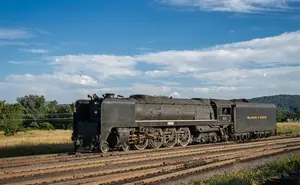
BR&P brought fifty-five 2-6-6-2s that became KK-4 7500–7554, and nine 2-8-8-2s that became EE-2 7316–7324. In 1947 ten Seaboard 2-6-6-4s, 69-inch drivers, became KB-1 7700–7709. Crews liked them. The last new articulateds were thirty simple 2-8-8-4 EM-1s, Baldwin, 1944–45, 7600–7629, later 650–679 in the 1950s renumber. Drury’s verdict is the one the photographs remember: they were modern, and they were not what the B&O wanted. The War Production Board was still rationing diesels. None survive. The class is EM-1; the type is Yellowstone.
Pacifics, twenty Presidents, and the experiments
Last new Ten-Wheelers were 1901: nine B-17 and thirty-five B-19 Vauclain compounds from Baldwin, thirty-five B-18 cross-compounds from Rhode Island. All three classes were simplified within a few years. Atlantics replaced Americans on the easier grades. Six A-class Vauclain compounds of 1900 became simple A-1s in 1904. Twenty A-2s from Schenectady in 1903 copied Pennsylvania E3as. Twenty-five A-3s came from Baldwin in 1910. Three Buffalo & Susquehanna Atlantics lasted; two of them ran until 1948 on a piece of line the 1942 floods had cut off from the rest of the railroad.
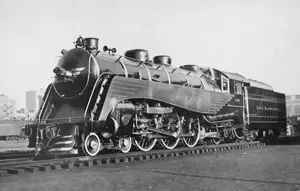
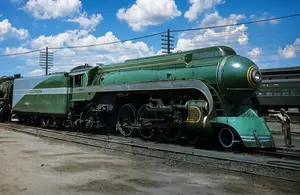
The Pacific was the B&O passenger engine. Hudsons and the first Mountains were experiments; later Mountains were fast freight. First Pacifics, class P, thirty-five from Schenectady in 1906, 74-inch drivers, inboard piston valves, Stephenson gear, numbered 2100–2134, then 5000–5034, then some into the 5150s. Baldwin P-1s of 1911 were the mainstay; classification through P-1a, P-1aa, and P-1ba, and conversions from Mikados, is a tangle best left on the class page. CH&D Pacifics became P-2. Then the Teens batches: thirty P-3s, ten P-4s with Vanderbilt tenders, thirty USRA light P-5s, fifteen P-6s. In 1927 Baldwin delivered twenty P-7s, 5300–5319, for Washington–New York after Reading power had handled the trains east of Philadelphia. Olive green, red and gold, named for the first twenty-one presidents (one engine stood for both Adamses). They were USRA heavy Pacifics in all but the lettering. 5300 President Washington is at the museum. Four later wore Otto Kuhler streamlining for the Cincinnatian. The Pacifics are class P.
Mount Clare’s experimental streak is the rest of the passenger column. J-1 4-4-4 Lady Baltimore, 1934, and V-2 4-6-4 Lord Baltimore, 1935, were lightweight steam for the restyled Royal Blue. They lost to Electro-Motive boxcab 50. V-1, V-3, and V-4 were one-off Hudsons. T 5500–5501 of 1925–26 were the first Mountains, 5500 carrying the Lord Baltimore name until the Hudson took it. T-1 5510 (watertube firebox) and T-2 5550 (conventional) were Baldwin 1930 tests for George Emerson. In 1937 Mount Clare built 4-4-4-4 N-1 5600, the George H. Emerson, first duplex in the country. Cylinders under the firebox overheated. Scrapped 1950. The type is duplex drive.
May 17, 1958
One of the first Alco-GE-Ingersoll-Rand boxcab switchers went to work in 1925. EMC 50 arrived in 1935. Ten two-unit passenger diesels followed in 1937–40. Six four-unit FTs came in 1942–43. Steam still came out of Mount Clare: T-3s through 1948, EM-1s the railroad had not asked for. GP7s and F7s then ate the West End, the Big Sixes, the Presidents. The 1950s renumbering shoved remaining steam into low numbers to free the 4000s and 5000s for diesels. Q-4b 4434 became 421 and pulled the last public steam train, Cleveland to Holloway, May 17, 1958. Drury notes engines still on the roster at the beginning of 1960. That is a paper date. Fire had gone out in 1958. The diesels that replaced this fleet—EA 51 on the Capitol Limited, FTs, F3s, F7s, Geeps, and the second-generation GP30s after C&O control—are the diesel roster.
Switchers
L-1 and L-2 0-8-0s were Mount Clare rebuilds from E-24 and E-27 Consolidations. D-44 390–394 are five ex-BR&P F3 0-6-0s; one of that BR&P class is displayed at Bellevue, Ohio. USRA 0-6-0s, D-30, lasted into 1956.
| Type | Class | Numbers | Qty | Builder | Built | Retired | Notes |
|---|---|---|---|---|---|---|---|
| 0-4-0 | C-13 | 76, 77 | 2 | Baldwin | 1902 | 1948 | |
| 0-4-0T | C-16 | 96–99 | 4 | Baldwin | 1912 | 1944–1951 | |
| 0-6-0 | D-29 | 91–94 | 4 | Pittsburgh | 1900–01 | 1930 | Ex-CH&D |
| 0-6-0 | D-35 | 330–332 | 3 | Cooke | 1902 | 1928 | Ex-CI&W |
| 0-6-0 | D-36 | 333–335 | 3 | Brooks | 1905 | 1934 | Ex-CI&W |
| 0-6-0 | D-37 | 336–338 | 3 | Brooks | 1901 | 1934 | Ex-CI&W |
| 0-6-0 | D-38 | 339–343 | 5 | Lima | 1916 | 1934 | Ex-CI&W |
| 0-6-0 | D-30 | 350–369 | 20 | Baldwin | 1919 | 1956 | USRA |
| 0-6-0 | D-30 | 370–389 | 20 | Alco | 1919 | 1956 | USRA |
| 0-6-0 | D-44 | 390–394 | 5 | Brooks | 1904 | 1954 | Ex-BR&P F3 152–156 |
| 0-8-0 | L-2 through L-2c | 600–714 | 115 | B&O | 1924–1941 | 1959 | Rebuilt from E-27 2-8-0s |
| 0-8-0 | L-4, L-4a | 772–789 | 18 | Brooks | 1918, 1923 | 1956–1958 | Ex-BR&P F4 520–537 |
| 0-10-0 | U | 950, 951 | 2 | B&O | 1926–27 | 1953 | |
| 0-8-0 | L-1, L-1a | 1000–1085 | 86 | B&O | 1923–1929 | 1959 | Rebuilt from E-24 2-8-0s |
| 0-6-0 | D-7 | 1137–1176 | 40 | Richmond, Baldwin | 1901, 1903 | 1948 | |
| 0-6-0 | D-23 | 1180–1184 | 5 | Baldwin | 1906 | 1947 | Camelback |
| 0-6-0 | D-12 | 1197 | 1 | Richmond | 1925 | 1953 |
Freight (rigid)
Number blocks were reused after the 1932 BR&P and B&S takeovers. A 3100 in 1904 is not a 3100 after those Consolidations left. Q-1c 4220–4329 is from the Mikado encyclopedia; Drury’s printed grid jumps from Q-1b to Q-3.
| Type | Class | Numbers | Qty | Builder | Built | Retired | Notes |
|---|---|---|---|---|---|---|---|
| 2-8-0 | E-37 | 413 | 1 | Baldwin | 1906 | 1936 | Ex-M&K |
| 2-8-0 | E-38 | 414 | 1 | Baldwin | 1918 | 1939 | Ex-M&K |
| 2-8-0 | E-39 | 415, 416 | 2 | Baldwin | 1903 | 1947 | Ex-M&K |
| 2-8-0 | E-40 | 417–422 | 6 | Baldwin | 1907, 1909 | 1938 | Ex-M&K |
| 2-8-0 | E-41 | 425–434 | 10 | Baldwin | 1916 | 1950 | Ex-CI&W |
| 2-8-0 | E-43 | 436 | 1 | Baldwin | 1900 | 1929 | Ex-CI&W |
| 2-8-0 | E-44 | 437, 438 | 2 | Alco | 1901 | 1929 | Ex-CI&W |
| 2-8-0 | E-45 | 439 | 1 | Alco | 1905 | 1934 | Ex-CI&W |
| 2-6-0 | K-16 | 901–910 | 10 | Baldwin | 1911 | 1949 | Chicago transfer |
| 2-8-0 | E-29 | 1706–1721 | 16 | Brooks | 1905 | 1937 | Ex-CH&D |
| 2-8-0 | E-30 | 1722–1736 | 15 | Baldwin | 1905 | 1954 | Ex-CH&D |
| 2-8-0 | E-32 | 1737–1740 | 4 | Baldwin | 1904–05 | 1929 | Ex-Coal & Coke |
| 2-8-0 | E-19 | 1771–1779, 1800–1899 | 109 | Baldwin | 1900–01 | 1935 | Camelback compound |
| 2-8-0 | E-18 | 1900–1938 | 39 | Baldwin | 1900 | 1936 | Compound |
| 2-8-0 | E-19 | 1939, 1940 | 2 | Baldwin | 1900 | 1935 | Compound |
| 2-8-0 | E-23 | 1955–1958 | 4 | Schenectady | 1902 | 1925 | |
| 2-8-0 | E-19aa | 1959–1965 | 7 | Baldwin | 1903 | 1935 | Simple |
| 2-8-0 | E-24 | 2200–2397 | 197 | Richmond, Pittsburgh, Rogers | 1902–04 | 1956 | Pennsy H6 copies |
| 2-6-0 | K-17 | 2441–2450 | 10 | Lima | 1917 | 1954 | Chicago transfer |
| 2-8-0 | E-27 | 2500–2913 | 414 | Schenectady, Richmond | 1905–10 | 1959 | Many rebuilt to L-2 0-8-0s |
| 2-8-0 | E-31 | 2914–2933 | 20 | Brooks | 1910 | 1957 | Ex-CH&D |
| 2-8-0 | E-33 | 2934–2945 | 12 | Baldwin | 1903–06 | 1950 | Ex-Coal & Coke |
| 2-8-0 | E-34 | 2946–2949 | 4 | Baldwin | 1912–13 | 1950 | Ex-Coal & Coke |
| 2-8-0 | E-35 | 2950, 2951 | 2 | Baldwin | 1914 | 1950 | Ex-Coal & Coke |
| 2-8-0 | E-36 | 2952, 2953 | 2 | Baldwin | 1916 | 1950 | Ex-Coal & Coke |
| 2-8-0 | E-52 through E-58 | 3010–3096 | 83 | Baldwin, Brooks | 1901–09 | 1950 | Ex-BR&P |
| 2-8-0 | E-60, E-60a | 3100–3142 | 42 | Brooks, Pittsburgh | 1904–12 | 1957 | Ex-B&S |
| 2-8-2 | Q-1 | 4000–4159 | 160 | Baldwin | 1911 | 1956 | |
| 2-8-2 | Q-odd | 4160, 4161 | 2 | Baldwin | 1911–12 | 1949 | Rebuilt from 2-8-0s |
| 2-8-2 | Q-2 | 4162–4169 | 8 | Lima | 1916 | 1950 | Ex-CI&W |
| 2-8-2 | Q-1b | 4170–4219 | 50 | Baldwin | 1912 | 1956 | |
| 2-8-2 | Q-1c | 4220–4329 | 110 | Baldwin | 1913 | 1941 | From the Mikado class page; omitted on some printed grids |
| 2-8-2 | Q-4, Q-4a, Q-4b | 4400–4499, 4600–4634 | 135 | Baldwin | 1920–23 | 1959 | Last public steam was Q-4b 421, ex-4434 |
| 2-8-2 | Q-3 | 4500–4599 | 100 | Baldwin | 1918 | 1959 | USRA light. 4500 first USRA locomotive; preserved |
| 2-8-2 | Q-4d | 4635–4637 | 3 | B&O | 1941–42 | 1955 | 70-inch drivers, rebuilt from Q-4s |
| 2-8-2 | Q-10 | 4700–4747 | 48 | Brooks | 1912–17 | 1959 | Ex-BR&P Z 400–447 |
| 2-10-2 | S | 6000–6030 | 31 | Baldwin | 1914 | 1953 | 58-inch drivers |
| 2-10-2 | S-1 | 6100–6224 | 125 | Baldwin, Lima | 1923–26 | 1959 | Big Sixes. 64-inch drivers |
| 2-10-0 | Y | 6500–6507 | 8 | Brooks | 1907, 1909 | 1951 | Ex-BR&P |
Articulateds
Old Maude was 2400 at the 1904 fair and at the Fair of the Iron Horse in 1927; the later system number is 7000. EL-4s were LL-1 0-8-8-0s given a lead truck. KK-2 7450 is a Baldwin 1930 one-off kept from the live table; Drury’s printed grid lists KK-1 and KK-4 only.
| Type | Class | Numbers | Qty | Builder | Built | Retired | Notes |
|---|---|---|---|---|---|---|---|
| 0-6-6-0 | DD-1 | 2400 / 7000 | 1 | Schenectady | 1904 | 1938 | Old Maude. First U.S. Mallet |
| 0-8-8-0 | LL-1 | 7020–7049 | 30 | Schenectady | 1911–13 | 1950 | |
| 2-8-8-0 | EL-4 | 7020–7049 | 11 | B&O | 1919–23 | 1950 | Rebuilt from LL-1 |
| 2-8-8-0 | EL-1 | 7100–7114 | 15 | Baldwin | 1916 | 1954 | |
| 2-8-8-0 | EL-3 | 7115–7144 | 30 | Baldwin | 1917 | 1952 | |
| 2-8-8-0 | EL-5 | 7145–7170 | 26 | Baldwin | 1919–20 | 1954 | |
| 2-8-8-0 | EL-2 | 7200–7214 | 15 | Baldwin | 1916 | 1952 | |
| 2-8-8-0 | EL-6 | 7300–7315 | 16 | Richmond | 1917–21 | 1954 | Ex-SAL 2-8-8-2s; simplified 1922 |
| 2-8-8-2 | EE-2, EE-2a | 7316–7324 | 9 | Brooks | 1918, 1923 | 1950–51 | Ex-BR&P XX 800–808 |
| 2-6-6-2 | KK-1 | 7400 | 1 | Baldwin | 1930 | 1953 | Watertube firebox |
| 2-6-6-2 | KK-2 | 7450 | 1 | Baldwin | 1930 | 1953 | |
| 2-6-6-2 | KK-4 | 7500–7554 | 55 | Schenectady, Brooks | 1914–23 | 1951–53 | Ex-BR&P LL 700–754 |
| 2-8-8-4 | EM-1 | 7600–7629 | 30 | Baldwin | 1944–45 | 1960 | Later 650–679. None preserved |
| 2-6-6-4 | KB-1 | 7700–7709 | 10 | Baldwin | 1935, 1937 | 1953 | Ex-SAL |
Passenger
P-7 5320, class P-9, was President Cleveland with Caprotti gear and a watertube boiler, rebuilt in 1945 to a standard P-7. V-2 2 / 5340 took the Lord Baltimore name from Mountain 5500 in 1935.
| Type | Class | Numbers | Qty | Builder | Built | Retired | Notes |
|---|---|---|---|---|---|---|---|
| 4-4-4 | J-1 | 1 / 5330 | 1 | B&O | 1934 | 1949 | Lady Baltimore |
| 4-6-4 | V-2 | 2 / 5340 | 1 | B&O | 1935 | 1949 | Lord Baltimore |
| 4-6-0 | B-55 | 163 | 1 | Baldwin | 1906 | 1947 | Ex-M&K |
| 4-6-0 | B-56 | 164 | 1 | Baldwin | 1909 | 1946 | Ex-M&K |
| 4-6-0 | B-57 | 165–170 | 6 | Schenectady | 1916 | 1938 | Ex-CI&W |
| 4-6-0 | B-58 | 171–180 | 10 | Baldwin | 1916 | 1953 | Ex-CI&W |
| 4-4-0 | G-18 | 630 | 1 | Baldwin | 1903 | 1936 | Ex-M&K |
| 4-4-0 | H-12 | 717, 718 | 2 | Baldwin | 1905 | 1929 | Ex-Coal & Coke |
| 4-4-0 | M-3 | 862, 863 | 2 | Baldwin | 1906 | 1936 | Ex-Coal & Coke |
| 4-4-0 | M-4 | 864 | 1 | Baldwin | 1912 | 1924 | Ex-Coal & Coke |
| 4-4-0 | M-5 | 865–867 | 3 | Brooks | 1904 | 1930 | Ex-CI&W |
| 4-4-0 | M-6, M-6a | 868, 869 | 2 | Alco | 1904, 1906 | 1929–30 | Ex-CI&W |
| 4-6-0 | B-17 | 1328–1336 | 9 | Baldwin | 1901 | 1935 | Vauclain compound |
| 4-4-2 | A-3 | 1424–1449 | 25 | Baldwin | 1910 | 1944 | |
| 4-4-2 | A, A-1 | 1450–1455 | 6 | Baldwin | 1900–01 | 1929 | Vauclain compound; simplified as A-1 |
| 4-4-2 | A-2 | 1456–1475 | 20 | Schenectady | 1903 | 1923, 1947 | Pennsy E3a copies |
| 4-4-2 | A-9 | 1484, 1485 | 2 | Schenectady | 1904 | 1948 | Ex-B&S. Isolated after 1942 floods |
| 4-4-2 | A-10 | 1486 | 1 | Brooks | 1906 | 1936 | Ex-B&S |
| 4-4-2 | A-6 | 1487, 1488 | 2 | Brooks | 1901 | 1937 | Ex-BR&P |
| 4-4-2 | A-7 | 1489–1491 | 3 | Brooks | 1901 | 1936 | Ex-BR&P |
| 4-4-2 | A-8, A-8a | 1492–1496 | 5 | Brooks | 1906, 1909 | 1937 | Ex-BR&P |
| 4-6-0 | B-18 | 2000–2034 | 35 | Rhode Island | 1901 | 1950s | Cross-compound, later simple |
| 4-6-0 | B-19 | 2035–2069 | 35 | Baldwin | 1901 | 1934 | Vauclain compound |
| 4-6-2 | P | 5000–5034 | 35 | Schenectady | 1906 | 1950 | First B&O Pacifics |
| 4-6-4 | V-1 | 5047 | 1 | B&O | 1933 | 1950 | |
| 4-6-2 | P-2 | 5095–5099 | 5 | Schenectady | 1910 | 1948 | Ex-CH&D |
| 4-6-2 | P-3 | 5100–5129 | 30 | Baldwin | 1913 | 1950 | |
| 4-6-2 | P-4 | 5130–5139 | 10 | Baldwin | 1917 | 1952 | Vanderbilt tenders |
| 4-6-2 | P-17 | 5140–5148 | 9 | Brooks | 1912–13 | 1953 | Ex-BR&P |
| 4-6-2 | P-18 | 5185–5192 | 8 | Brooks | 1918 | 1953 | Ex-BR&P |
| 4-6-2 | P-8 | 5196–5199 | 4 | Alco | 1924 | 1952 | Ex-CI&W |
| 4-6-2 | P-5 | 5200–5219 | 20 | Baldwin | 1919 | 1953 | USRA light |
| 4-6-2 | P-5 | 5220–5229 | 10 | Schenectady | 1919 | 1956 | USRA light |
| 4-6-2 | P-6 | 5230–5244 | 15 | Baldwin | 1922 | 1949 | Vanderbilt tenders |
| 4-6-2 | P-19 | 5260–5264 | 5 | Brooks | 1923 | 1953 | Ex-BR&P WW-2 |
| 4-6-2 | P-7 | 5300–5319 | 20 | Baldwin | 1927 | 1958 | Presidents. 5300 preserved |
| 4-6-2 | P-9 | 5320 | 1 | B&O | 1928 | 1956 | President Cleveland. Caprotti, watertube; rebuilt 1945 to P-7 |
| 4-6-4 | V-3 | 5350 | 1 | B&O | 1935 | 1950 | |
| 4-6-4 | V-4 | 5360 | 1 | B&O | 1936 | 1950 | |
| 4-8-2 | T | 5500, 5501 | 2 | B&O | 1925, 1926 | 1953 | 5500 first named Lord Baltimore |
| 4-8-2 | T-1 | 5510 | 1 | Baldwin | 1930 | 1951 | Watertube firebox |
| 4-8-2 | T-2 | 5550 | 1 | Baldwin | 1930 | 1952 | |
| 4-8-2 | T-3 | 5555–5594 | 40 | B&O | 1943–48 | 1960 | Boilers from old Mikes and Pacifics |
| 4-4-4-4 | N-1 | 5600 | 1 | B&O | 1937 | 1950 | George H. Emerson. First duplex |
| 4-8-2 | T-4 | 5650–5662 | 13 | Baldwin | 1935–40 | 1958 | Ex-Boston & Maine |
Related reading on American-Rails.com
- Baltimore & Ohio · B&O diesel roster · B&O passenger trains
- Class E 2-8-0 · Class Q 2-8-2 · Class P 4-6-2 · Class T 4-8-2
- Big Six 2-10-2 · EM-1 2-8-8-4 · LL-1 0-8-8-0 / Old Maude · N-1 Emerson
- Buffalo, Rochester & Pittsburgh · BR&P steam · Buffalo & Susquehanna · B&OCT
- Royal Blue · Capitol Limited · Cincinnatian · B&O Railroad Museum
Sources
- Drury, George H. Guide to North American Steam Locomotives, revised edition. Waukesha: Kalmbach Books, 2015. Pages 73–77, B&O post-1900 class grid and narrative
- Edson, William D. Steam Locomotives of the Baltimore & Ohio: An All-Time Roster. Potomac: William D. Edson, 1992
- Mainey, David. Baltimore & Ohio Steam in Color. Scotch Plains: Morning Sun Books, 2001
- Reynolds, Kirk, and David Oroszi. Baltimore & Ohio Railroad. Osceola: MBI Publishing, 2000
- Staufer, Alvin F., and Lawrence W. Sagle. Baltimore & Ohio Steam and Electric Locomotives
- American-Rails class pages: Q Mikados (Q-1c 4220–4329; Q-10 into 1959; 4500 preserved); P Pacifics (5300); Big Sixes; EM-1; LL-1 / Old Maude; Emerson; T Mountains; E Consolidations
- Leonard, Richard. B&O Q-4 4434 / 421, last steam passenger May 17, 1958, Cleveland–Holloway
- Live American-Rails post-1900 B&O steam tables (March 13, 2025), retained as the starting grid and corrected as listed above
Recent Articles


-
"Empire State Express" (1941 Train): Timetables, Route, Consist
Sep 18, 26 10:59 PM
 NYC Empire State Express—George Daniels 1891 day train, 999’s 112.5 mph claim, Budd stainless streamliner December 7 1941, Cleveland and Detroit sections, diesels, 1967 name drop. Timetables, consist…
 -
New York Central 4-6-4s 5426 & 5429: Empire State Express Hudsons
Sep 18, 26 10:32 PM
 NYC J-3a Hudsons 5426 and 5429—Alco 1937, Budd stainless shrouds 1941 for the Empire State Express. Pearl Harbor inaugural. Shrouds off by 1950. Neither preserved.
 -
"Stourbridge Lion" Locomotive: Facts, History, Photos
Sep 18, 26 10:27 PM
 Stourbridge Lion—Foster, Rastrick 0-4-0, first steam locomotive in the United States. Horatio Allen, Honesdale, August 8, 1829. Too heavy for D&H gravity track. Boiler in Baltimore; Colonie replic…
 -
Delaware & Hudson Steam Roster (Post 1900)
Sep 18, 26 10:01 PM
 Delaware & Hudson steam—Camelback 2-8-0s, Loree high-pressure compounds, Class K 4-8-4s, forty Challengers. Post-1900 class roster after Drury. Last steam July 21, 1953.
 -
Boston & Maine Steam Roster (Post 1900)
Sep 18, 26 02:57 PM
 Boston & Maine steam—B-15 Moguls, K-8 Consolidations, P-4 Lima Pacifics, T-1 Limas, R-1 Mountains. Post-1900 class roster after Drury. Last steam July 23, 1956.
 -
Boston & Maine Diesel Roster (All-Time)
Sep 18, 26 01:25 PM
 Boston & Maine diesel—boxcab 1100 1935, Flying Yankee 6000, FTs, E7s, BL2s, GP7/GP9, GP38-2s and GP40-2s. All-time roster. Last steam July 23, 1956.
 -
Mid-Continent Railway Museum Dining (2026)
Sep 18, 26 01:21 PM
 2026 Mid-Continent dining in North Freedom—select-date seated meals in luxury cars, reservations required. Pizza Limited June 28. Confirm on midcontinent.org.
 -
Bessemer & Lake Erie Steam Roster (Post 1900)
Sep 18, 26 12:11 PM
 Bessemer & Lake Erie steam—C3A 150–151, D1A/D2A Santa Fes, 47 H1 Texas types after Burlington. Post-1900 class roster after Drury. Last steam 2-8-0 156, May 14, 1953.
 -
Bessemer & Lake Erie Diesel Roster (All Time)
Sep 18, 26 12:09 PM
 Bessemer & Lake Erie diesel—Westinghouse 281 1936, Baldwin DRS-6-6-1500s, F7s 1950–53, SD7/SD9/SD18/SD38 family, RSD-15s. All-time roster. Last steam 2-8-0 156, May 14, 1953.
 -
Bangor & Aroostook Steam Roster (Post 1900)
Sep 18, 26 11:21 AM
 Bangor & Aroostook steam—Manchester Ten-Wheelers, Alco Mountains 100–109, G-2 Consolidations, Pacifics 250–254. Post-1900 class roster after Drury. Last steam Pacific 251, July 22, 1951.
 -
Bangor & Aroostook Diesel Roster (All Time)
Sep 18, 26 11:09 AM
 Bangor & Aroostook diesel—F3s 1947, eight BL2s, E7s, GP7s leased to the PRR, GP9s, GP38s. All-time roster. Last regular steam July 22, 1951.
 -
B&O Steam Locomotive Roster (Post 1900)
Sep 18, 26 10:33 AM
 Baltimore & Ohio steam—Old Maude, E-27 Consolidations, Q Mikados, Big Sixes, EM-1 Yellowstones, President Pacifics. Post-1900 class roster after Drury. Last public steam May 17, 1958.
 -
Baltimore & Ohio (B&O): Diesel Roster (All-Time)
Sep 18, 26 10:28 AM
 Baltimore & Ohio diesel—boxcab 1925, EMC 50 1935, EA 1937, FTs, F3s, F7s, FA-2s, sharks, GP7/GP9, GP30s after C&O 1963, SD50s 8576–8595 1984. All-time roster. Last steam 1958.
 -
Detroit & Toledo Shore Line Railroad: Map, Roster, History
Sep 18, 26 12:32 AM
 Detroit & Toledo Shore Line—Pleasant Bay 1898, named 1899, Detroit–Toledo freight bridge, GTW and Clover Leaf/NKP/N&W. Merged into Grand Trunk Western June 26, 1981.
 -
Lackawanna Steam Locomotives: History, Roster & Photos
Sep 18, 26 12:17 AM
 Delaware, Lackawanna & Western steam—Camelback 2-8-0s, Mikados, freight Pacifics, Poconos 4-8-4s, Hudsons. Post-1900 roster after Drury. Last steam July 13, 1953.
 -
Lackawanna (DL&W) Diesel Roster: All Time
Sep 18, 26 12:11 AM
Delaware, Lackawanna & Western diesel—boxcabs 1926, EMC SC 425–426 1935, FTs 1945, F3/F7/E8, GP7s, RS-3s, FM Train Masters. All-time roster. Last steam 1953. -
Lackawanna Railroad: Map, History, Viaducts, Rosters
Sep 18, 26 12:04 AM
 TDelaware, Lackawanna & Western—Liggett’s Gap 1832, named March 11 1853, Hoboken–Buffalo, anthracite, Phoebe Snow, Cutoff and Tunkhannock. It merged with the Erie to form Erie Lackawanna on Octobe…
 -
Rail News, The Latest
Sep 17, 26 11:56 PM
This page provides a portal to the latest in rail news, from preservation and restortation subjects to other notable topics. -
Union Pacific Big Boy 4014 Sets First Holiday Tour for Make-A-Wish
Sep 17, 26 11:54 PM
 Union Pacific Big Boy 4014’s first holiday tour: Cheyenne–Denver tickets, Nov. 21 Denver-area display, Make-A-Wish. Museum patrons Oct. 16; public Oct. 19.
 -
Conrail Diesel Roster (All Time)
Sep 17, 26 10:27 PM
 Conrail diesel—~5,000 inherited 1976, Big Blue, GP15-1s, SD40-2s, SD50s, Dash-8s, SD60/60M/60I, SD80MACs. All-time CR-number roster.
 -
Chessie System (Railroad): The C&O, B&O, And WM
Sep 17, 26 09:38 PM
 Chessie System, Inc.—C&O, B&O, and Western Maryland. Kitten-C paint 1972, holding company February 26 1973, CSX November 1 1980, C&O into CSXT August 31 1987.
 -
Chesapeake & Ohio (C&O) Diesel Roster: All-Time
Sep 17, 26 06:01 PM
 Chesapeake & Ohio diesel—late steam, no Fairbanks-Morse, E7s 1946, GP7/GP9 flood, F7s, GP40-2s, B30-7s, SD50s 1984–85. All-time roster. Steam ended 1956.
 -
Chesapeake & Ohio (C&O) Steam Roster: Post-1900
Sep 17, 26 03:18 PM
 Chesapeake & Ohio steam—H-8 Alleghenies, K-4 Kanawhas, T-1 Texas, Greenbriers, H-6 1949 Mallets. Post-1900 class roster including Pere Marquette and Hocking Valley. Last steam 1956.
 -
Chesapeake and Ohio Railway: Map, Logo, History
Sep 17, 26 02:36 PM
 Chesapeake & Ohio Railway—Louisa Railroad 1836, named August 31 1868, Ohio River 1873. Coal, Chessie the kitten, Pere Marquette 1947, B&O control 1963, into CSX August 31 1987. Complete corporate…
 -
TVRM Valentine Train Ride (2026)
Sep 17, 26 02:31 PM
 2026 TVRM Valentine Train Ride in Chattanooga—Feb. 6–15, plated dinner, Grand Junction Depot. Confirm on tvrail.com.
 -
River Fox Train Dining (2026)
Sep 17, 26 02:29 PM
 2026 River Fox Train in West Sacramento—Brunch Train and Murder Mystery dinner. 18095 County Road 117. Confirm on riverfoxtrain.com.
 -
Weehawken Terminal, Serving The West Shore Railroad
Sep 17, 26 01:38 PM
 Weehawken Terminal—West Shore / New York Central Hudson waterfront station, opened 1884. Five ferry slips, sixteen tracks, Weehawken Tunnel 4,014 feet. Last ferry March 25, 1959. Port Imperial and HBL…
 -
West Shore Railroad: Map, History, Timetables
Sep 17, 26 01:32 PM
 West Shore Railroad—New York, West Shore & Buffalo 1880–83, Weehawken to Buffalo. PRR-backed rival to the Central. Morgan settlement, 475-year NYC lease January 1 1886. CSX River Sub today.
 -
Jersey Central Diesel Locomotives: History, Roster & Photos
Sep 17, 26 01:20 PM
 Central Railroad of New Jersey diesel—boxcab 1000, Baldwin double-enders, F3s, Train Masters, SD35s, GP40Ps. All-time roster. Steam ended July 1, 1954.
 -
Jersey Central Steam Locomotives: History, Roster & Photos
Sep 17, 26 01:17 PM
 Central Railroad of New Jersey steam—Camelback Ten-Wheelers, USRA Mikados, G-class Pacifics, suburban tanks. Post-1900 class roster after Drury. Dieselized July 1, 1954.
 -
Jersey Central Railroad (CNJ): Map, Rosters, History
Sep 17, 26 01:14 PM
 Central Railroad of New Jersey—Elizabethtown & Somerville 1831, named April 23 1849. Communipaw, anthracite, Blue Comet, Reading/B&O control. Conrail April 1 1976. Complete corporate history.
 -
Central Vermont Diesel Locomotives: History, Roster & Photos
Sep 17, 26 11:35 AM
 Central Vermont diesel—Alco S-2s 1942, RS-3s, RS-11s from DW&P, EMD GP9s 1956–57, GP38ACs 1971. All-time roster. Last steam April 4, 1957.
 -
Central Vermont Steam Locomotives: History, Roster & Photos
Sep 17, 26 11:19 AM
 Central Vermont steam—ten Alco 2-10-4s of 1928, four U-1-a Mountains, Consolidations. Post-1900 class roster after Drury. Last steam April 4, 1957.
 -
Central Vermont Railway: Map, Logo, Rosters
Sep 17, 26 11:03 AM
 Central Vermont Railway—Vermont Central charter October 1843, Bethel–White River Junction June 26, 1848. Grand Trunk 1898, CN 1923, RailTex/NECR 1995. Complete corporate history.
 -
Fitchburg Railroad: Map, History, Timetables
Sep 17, 26 10:40 AM
 Fitchburg Railroad—chartered March 3, 1842, Boston–Fitchburg March 5, 1845. Alvah Crocker, Hoosac west door, Vermont & Massachusetts, Cheshire. B&M 99-year lease July 1, 1900. Complete corpora…
 -
Steam Railroading Institute Dining (2026)
Sep 17, 26 10:30 AM
 2026 SRI Owosso dining—vintage dining cars, select evenings. 2026 dinner calendar not posted; 2025 Up In Smoke is the recent example. Confirm on michigansteamtrain.com.
 -
Canadian Pacific Railway: Map, History, Logo, Photos
Sep 17, 26 12:06 AM
 Canadian Pacific Railway—incorporated February 16, 1881. Last spike Craigellachie November 7, 1885. Soo, Milwaukee, D&H, DM&E. CPKC April 14, 2023. Complete corporate history.
 -
Canadian Pacific Diesel Locomotives: History, Roster & Photos
Sep 17, 26 12:03 AM
 Canadian Pacific diesel—E8A 1800 in 1949, FP7/FP9, FA-2, C424, SD40-2, SD40-2F Red Barns, AC4400CW, ES44AC, SD30C-ECO, SD70ACu heritage. All-time roster. Last steam November 6, 1960.
 -
Canadian Pacific Steam Locomotives: History, Roster & Photos
Sep 16, 26 11:35 PM
 Canadian Pacific steam—3,257 engines 1881–1949. D10 Ten-Wheelers, G3 Pacifics, Royal Hudsons, Selkirk 2-10-4s. Post-1900 class roster after Drury. Last steam November 6, 1960.
 -
Woodstown Central Dining in Motion (2026)
Sep 16, 26 11:31 PM
 2026 Woodstown Central Dining in Motion—Salem County table car, 50–60 minutes, private table of four from $190. Confirm on woodstowncentral.com.
 -
NCTM Wine & Dine on the Rails (2026)
Sep 16, 26 11:28 PM
 2026 NCTM Wine & Dine on the Rails in Spencer—Feb. 13–15, three-course dinner, 21+, $145/$140. Sold out. Confirm next season on nctransportationmuseum.org.
 -
Southern Railway 4-6-2 1380: The Streamlined Ps-4
Sep 16, 26 10:34 PM
 Southern Railway Ps-4 4-6-2 1380—Alco 1923, serial 64857. Otto Kuhler streamlining at Spencer 1940–41 for the Tennessean. Only streamlined steam locomotive on the Southern. Scrapped Baltimore 1953.
 -
Texas Mexican Railway: Serving The Border Since The 1880s
Sep 16, 26 09:58 PM
 Texas Mexican Railway—Corpus Christi, San Diego & Rio Grande March 1875, 3-foot. Tex-Mex June 1881, Laredo Sept 1881, Rio Grande bridge 1883. Standard gauge July 17 1902. Mexican government 1900–1…
 -
Mount Hood Railroad Dining (2026): No Plated Dinner Train This Season
Sep 16, 26 09:53 PM
 2026 Mount Hood Railroad in Hood River is scenic Fruit Loop trains with snacks and sandwiches—not a plated dinner train. Confirm on mthoodrr.com.
 -
Peoria and Eastern Railway: Map, Timetables, History
Sep 16, 26 09:39 PM
 Peoria & Eastern—Danville, Urbana, Bloomington & Pekin 1866, IB&W 1869, OI&W 1887. Incorporated Feb 21 1890, Big Four next day. NYC 1930, Conrail 1976. GP7s 5612–5625. Complete corporate history.
 -
Boston and Maine Railroad: "Route Of The Minute Man"
Sep 16, 26 11:30 AM
 Boston & Maine—Andover & Wilmington 1833, NH charter June 27 1835. Eastern, Boston & Lowell, Fitchburg/Hoosac, Concord & Montreal. Section 77 March 12 1970. Guilford June 30 1983. CSX June 1 2…
 -
Smoky Valley Limited Dinner Train (2026)
Sep 16, 26 11:24 AM
 2026 Abilene & Smoky Valley Smoky Valley Limited—two-hour dinner from the 1887 Rock Island Depot. Kansas catering, ~$72–$110. Confirm on asvrr.org.
 -
Canadian National Diesel Locomotives: History, Roster & Photos
Sep 16, 26 11:14 AM
 Canadian National diesel—CLC boxcabs 1929, GMD FP9 and GP9, MLW FPA-4 and RS-18, GMD1, wide-cab SD40-2W, Dash-9s, ES44AC and ET44AC. All-time roster.
 -
Canadian National Steam Locomotives: History, Roster & Photos
Sep 16, 26 10:07 AM
Canadian National steam—CGR, Canadian Northern, Grand Trunk, GTP. 4-8-4 Confederations, U-1 Mountains, J and K Pacifics. Post-1900 class roster. Last scheduled steam April 25, 1960. -
Canadian National Railway: Map, Logo, History, Photos
Sep 16, 26 08:55 AM
 Canadian National—name Dec 20 1918, incorporated June 6 1919, Grand Trunk Jan 20 1923. Crown corporation, IPO Nov 17 1995. IC, Wisconsin Central, BC Rail, EJ&E. Class I, mark CN.