Jersey Central Steam Locomotives: History, Roster & Photos
Last revised: September 17, 2026
By: Adam Burns
No locomotive more typified the Central Railroad of New Jersey than the Camelback Ten-Wheeler. George H. Drury, in Guide to North American Steam Locomotives, counted 111 of them built in the twentieth century, essentially the same engine for eighteen years, and they were still doing leftover jobs in the mid-1950s. The company that ran them is the Central Railroad of New Jersey. Diesels are the diesel roster. This page is the steam.
Anthracite culm was cheap fuel, which meant Wootten fireboxes and Camelbacks. The first modern non-Camelback power arrived in 1918: Pacifics, Mikados, and six-wheel switchers. By April 1953 all but a few commuter last-runs were dieselized. Ten-Wheeler 774 made a ceremonial last run. On July 1, 1954, CNJ announced it was totally dieselized. The table below is Drury’s post-1900 class grid. Pre-1900 Camelback 0-6-0s and 0-8-0s, and the USRA 0-6-0s of 1918, sit in the narrative, not in a second builder list.
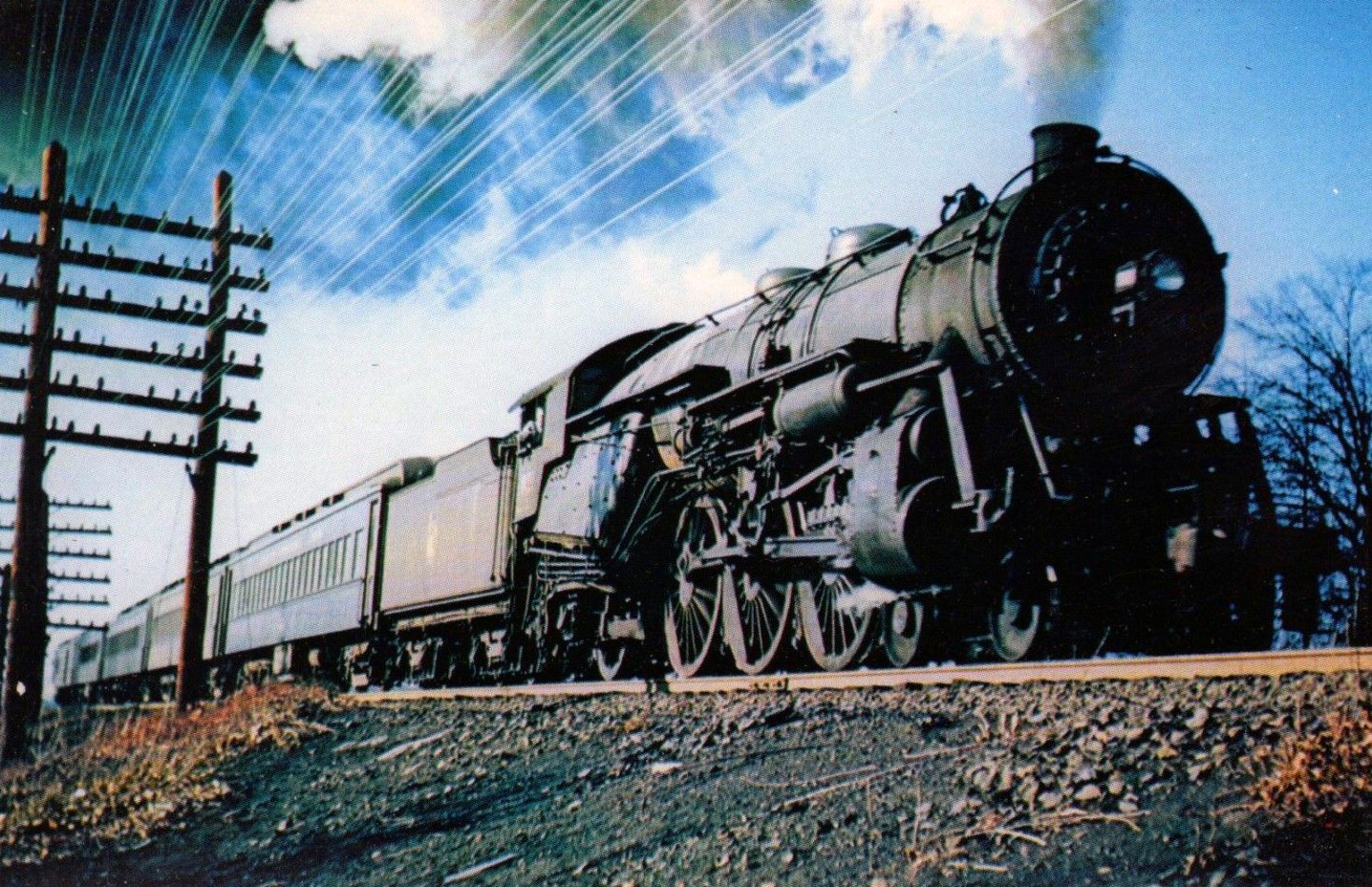
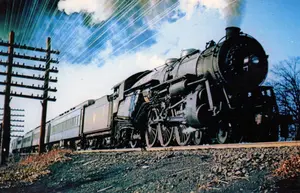
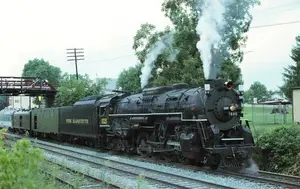
Jersey Central 4-6-2 #821 gets up to speed with a commuter run after departing eastbound from Netherwood Station in Plainfield, New Jersey, on December 29, 1952. Joe Stark photo. Class G-1s, Baldwin, 1918—the first CNJ Pacifics.
On this page: At a glance · Culm and Camelbacks · Twelve-Wheelers, Consolidations, Mikados · Americans, Atlantics, Ten-Wheelers, Pacifics · Suburban tanks · Switchers · July 1, 1954 · All-time roster (built since 1900)
At a glance
| Item | Detail |
|---|---|
| Railroad | Central Railroad of New Jersey / Jersey Central Lines. Mark CNJ. Reading control from 1901 |
| This roster | Classes built since 1900, after Drury, pages 100–102. Pre-1900 and the 0-6-0s in the narrative |
| Fuel | Anthracite culm. Wootten fireboxes. Camelbacks until 1918 |
| Ten-Wheelers | 111 twentieth-century 4-6-0s, 1900–1918. 69-inch drivers. Last Camelbacks on the railroad |
| Freight after 1918 | Ten USRA light Mikados, then 76 more 2-8-2s through 1925. 86 Mikes in all |
| Pacifics | Twenty-one 4-6-2s, G-1s through G-4s, 1918–1930. Three G-3s painted for the Blue Comet. Photo: G-1s #821 Plainfield |
| Suburban tanks | Twenty Baldwin 2-6-2T, 1902–03; five ex-Long Island, 1912; five 4-6-4T, 1923 |
| Last steam announced | July 1, 1954. 4-6-0 774 ceremonial last run; later fan trips, then scrapped |
| Survivors | B-7 0-6-0 113, Alco Schenectady 1923, operational at Minersville, Pa. Camelback 4-4-2 592 at the B&O Railroad Museum, Baltimore |
| Shops | Elizabethport, New Jersey. Roundhouses at Communipaw |
Class table follows Drury, Guide to North American Steam Locomotives (revised edition), pages 100–102. Information compiled September 17, 2026.
Culm, Wootten fireboxes, and a railroad that planned to electrify
Drury’s chapter opens on the map. One line ran west from Jersey City through Bound Brook and High Bridge to Easton and Allentown, then north through the anthracite country to Wilkes-Barre and Scranton. The Reading continued the Allentown route west to Harrisburg. East of Bound Brook that same iron was the New York end of the Reading and Baltimore & Ohio’s Philadelphia–Washington service. The other CNJ line ran southwest through the empty middle of southern New Jersey, tied to the rest of the railroad by the New York & Long Branch, which CNJ and the Pennsylvania owned jointly. In 1901 the Reading took control of the CNJ and the B&O took control of the Reading.
CNJ was an anthracite carrier, and anthracite culm was readily available for fuel. That meant Camelbacks. The first non-Camelback locomotives of the modern era arrived in 1918: Pacifics, Mikados, and six-wheel switchers. Pacifics, Mikes, and six- and eight-wheel switchers kept arriving until 1930. No new steam was purchased for commuter service after the 1923 tank engines, because the company planned to electrify. It never did.
Twelve-Wheelers, two classes of Consolidation, then 86 Mikados
Until 1918 the most modern freight engines were fifteen class I-5 2-8-0s of 1903 and 1905 and ten class I-4s of 1906, and their immediate predecessors, a large group of 4-8-0s built by Brooks between 1899 and 1901. Fifty-one of those Twelve-Wheelers, class K-1 430–480, sit in the table even though the first of them predate 1900. The I-5s and the Twelve-Wheelers had 55-inch drivers. The newer I-4 Consolidations had 61-inch drivers. Fast freight used 69-inch drivers on the Ten-Wheelers.
The USRA assigned ten light Mikados in 1918, class M-1s 850–859, Brooks, and that assignment set the pattern for every CNJ 2-8-2 that followed. Between 1920 and 1923 the railroad bought 56 more Mikes of the same dimensions but with wider fireboxes: eleven M-2s, twenty-five M-2as, twenty M-3s from Schenectady. Baldwin delivered twenty more in 1925, also classed M-3s, 916–935. Later batches had Delta trailing trucks and Elesco feedwater heaters. A few carried enormous 50-foot tenders. Drury notes that paired single-stage air pumps aft of the Elesco pump, as on 1922 Brooks 875, were uncommon; most roads used one or two cross-compound pumps. Eighty-six Mikados in all. The last of them came off the roster in 1955.
Four Americans, Camelback Atlantics, 111 Ten-Wheelers, twenty-one Pacifics
CNJ had four 4-4-0s built in the twentieth century. Three of them, Brooks products classed D-9s 557–559, were the heaviest Americans constructed, 173,600 pounds—110 pounds more than Reading 400–419, not statistically significant, Drury says. The fourth was an inspection engine, Baldwin 1903, numbered 900 and renumbered 999 in 1923. The cab at the rear was extended forward along the boiler, creating a passenger-car-like body. Chairs sat on either side of the hump that housed the boiler. Superintendents and presidents rode up front. The engineer looked over their heads or leaned out the window. It also hauled one or two business cars.
Like its parent the Reading, CNJ tried high-drivered Vauclain compound Atlantics. Six arrived from Brooks in 1901, class P-6s 590–595, 191,000 pounds, 85-inch drivers. In 1902 it bought three light Atlantics, class P-1a 572–574, 152,100 pounds, for Atlantic City trains; the heavier 4-4-2s were restricted by bridges on that route. Both groups were Camelbacks. Rebuilding around 1910 added weight and cut the drivers to 79 inches. Six more Atlantics, P-7s and P-8s 800–805, came from the Reading shops in 1912: Camelbacks, 79-inch drivers, 220,000 pounds. They looked old-fashioned next to the Pennsylvania’s first E6 of 1910. P-6s 592 is the Atlantic preserved at the B&O Museum in Baltimore.
The 111 twentieth-century Ten-Wheelers were built over eighteen years and were essentially the same locomotive, allowing for minor evolution: 69-inch drivers, 200- to 220-pound boiler pressure, cylinders from 19 × 26 to 23 × 28 inches, weight from 175,000 to 225,000 pounds. Classes L-5 through L-8s, numbers in the 150s, 600s, and 750–789. The Atlantics took the fast trains. The Consolidations and Twelve-Wheelers dragged the coal. The Ten-Wheelers did everything left over. Baldwin 780–789 of 1918, class L-8s, were among the last Camelbacks built. 782 and 788 had “triple-balanced” wheels: two counterweights 120 degrees from the crankpin instead of one. 774, class L-7as, was the ceremonial last steam engine; a Don Wood photograph on the Camelbacks page shows her shined up at Communipaw on March 2, 1956, eight days before the torch.
The first Pacifics were six G-1s, 820–825, Baldwin, 1918. They had 79-inch drivers and looked like Reading’s early Pacifics with bigger boilers. They were intended for Jersey City–Philadelphia trains with the Reading and the B&O. In 1918 the USRA let B&O passenger trains use the Pennsylvania’s New York station, an arrangement that lasted until 1926; after that, B&O trains ran through between Washington and Jersey City again. #821 at Netherwood in 1952 is that first class, still on commuter work four years from dieselization.
Baldwin delivered five more Pacifics in 1923, G-2s 826–830, almost the same except for Delta trailing trucks. Five G-3s, 831–835, arrived in 1928: still 79-inch drivers, but narrow fireboxes for bituminous coal, stokers, and Elesco heaters. Three were painted Packard blue for the Blue Comet of 1929. The five G-4s of 1930, 810–814, were similar except for 74-inch drivers and welded tenders. They were intended for the Pennsylvania lines, which had more grades and curves than the New Jersey mains.
Suburban tanks: 2-6-2T, then 4-6-4T
Short-distance passenger trains originated and terminated at points that lacked turntables. CNJ had run 4-4-0s in both directions, adding a pilot and a headlight to the tender, but the rear-driver flanges wore quickly when the engine ran in reverse. In 1902 and 1903 Baldwin built twenty 2-6-2 tank engines, class J-1 200–219. Sixty-three-inch drivers, two-wheel trucks fore and aft, coal in a bunker behind the cab, water in rectangular tanks along the boiler. In 1912 the railroad bought five similar tanks from the Long Island, 220–224.
Steel coaches needed more engine. Baldwin built five 63-inch-drivered 4-6-4Ts in 1923, class H-1s 225–230, wide fireboxes for anthracite, Elesco heaters, fuel behind the cab, water in a tank that wrapped around the bunker and under the cab. The double-end Baldwin diesels of 1946–48 were a reminder of those tanks: same problem, no turntable at Communipaw.
Camelback 0-6-0s, USRA 0-6-0s, then thirty 0-8-0s
Between 1901 and 1915 CNJ bought or built 101 0-6-0s and 25 0-8-0s, all Camelbacks. Those classes are not in Drury’s post-1900 table. World War I traffic into New York added sixteen 0-6-0s: ten USRA engines from Cooke and six stock Baldwins of the type the builder kept on hand for industries and contractors. The 1920s modernization added five large 0-6-0s and thirty 0-8-0s. The five 0-6-0s were class B-7 111–115, Alco Schenectady, 1923. 113 is the one that survives: sold about 1953 to the Philadelphia & Reading Coal & Iron Company, last steamed at Locust Summit in January 1960—the last CNJ engine under fire—and restored at Minersville, Pennsylvania, by Railway Restoration Project 113. She is the only operating CNJ steam locomotive.
The thirty 0-8-0s are in the table: ten E-2s from Schenectady in 1923, ten E-3s from Baldwin in 1927, five E-4s in 1929, five E-4as in 1930. The 1945 class system numbered them 8S53, 8S61, and 8S64—eight-coupled switchers, driver diameter in inches. They lasted into 1955.
July 1, 1954
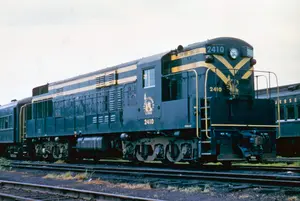
By April 1953 all but a few commuter last-runs were dieselized. 774 made a ceremonial last run. On July 1, 1954, CNJ announced total dieselization. Fan trips with 774 continued; one often-cited excursion is September 25, 1955, Jersey City to Jim Thorpe. She was photographed at Communipaw on March 2, 1956, and cut up shortly after. 113, already sold, steamed for the coal company until 1960. The diesels that replaced this fleet—boxcab 1000, the double-enders, F3s and Baldwin baby-faces, Train Masters, GP7s, SD35s—are the diesel roster.
All-time roster (built since 1900)
Drury’s grid is classes built from 1900 on. Quantities are his. Retirement years are the span he prints. The 1945 class column is CNJ’s later scheme (wheel arrangement plus driver diameter, or type plus tractive effort). Builder “Schenectady” and “Brooks” are Alco works. Pre-1900 Camelback 0-6-0s and 0-8-0s, and the 1918 USRA 0-6-0s, are in the switcher paragraphs, not here. K-1 430–480 includes engines ordered in 1899.
| Type | Class (1919) | Class (1945) | Numbers | Qty | Builder | Built | Retired | Notes |
|---|---|---|---|---|---|---|---|---|
| 0-8-0 | E2s | 8S53 | 295–304 | 10 | Schenectady | 1923 | 1951–1955 | |
| 0-8-0 | E3s | 8S61 | 305–314 | 10 | Baldwin | 1927 | 1952–1955 | |
| 0-8-0 | E4s | 8S64 | 315–319 | 5 | Baldwin | 1929 | 1955 | |
| 0-8-0 | E4as | 8S64 | 320–324 | 5 | Baldwin | 1930 | 1955 | |
| 2-6-2T | J1 | SU23 | 200–219 | 20 | Baldwin | 1902–1903 | 1935–1945 | Suburban tanks |
| 2-6-2T | J1 | SU23 | 220–224 | 5 | Baldwin | 1904 | 1945 | Ex-Long Island, 1912 |
| 4-6-4T | H1s | SU31 | 225–230 | 5 | Baldwin | 1923 | 1947–1950 | Suburban tanks; Elesco heaters |
| 2-8-0 | I5 | C44 | 650–665 | 16 | Brooks | 1903, 1905 | 1934–1940 | Camelback. 55-inch drivers |
| 2-8-0 | I4 | — | 675–684 | 10 | Brooks | 1906 | 1948–1953 | Camelback. 61-inch drivers |
| 2-8-2 | M1s | M63 | 850–859 | 10 | Brooks | 1918 | 1947 | USRA light Mikado |
| 2-8-2 | M2s | M63 | 860–870 | 11 | Brooks | 1920 | 1947–1952 | Wider firebox |
| 2-8-2 | M2as | M63 | 871–895 | 25 | Brooks | 1922 | 1947–1952 | Elesco; some 50-foot tenders |
| 2-8-2 | M3s | M63 | 896–915 | 20 | Schenectady | 1923 | 1947–1952 | Delta trailing trucks |
| 2-8-2 | M3s | M63 | 916–935 | 20 | Baldwin | 1925 | 1951–1955 | |
| 4-4-0 | D9s | — | 557–559 | 3 | Brooks | 1905 | 1937 | Heaviest Americans built, 173,600 lb |
| 4-4-0 | INSP | — | 900 | 1 | Baldwin | 1903 | 1937 | Inspection engine. Renumbered 999, 1923 |
| 4-4-2 | P1a | — | 572–574 | 3 | Brooks | 1901–1902 | 1928–1930 | Camelback. Light Atlantics for Atlantic City |
| 4-4-2 | P6s | A28 | 590–595 | 6 | Brooks | 1901–1902 | 1946–1947 | Camelback. Vauclain compounds, 85-inch drivers as built. 592 preserved, B&O Museum |
| 4-4-2 | P7s | — | 803–805 | 3 | Reading | 1912 | 1935–1937 | Camelback |
| 4-4-2 | P8 | — | 800–802 | 3 | Reading | 1912 | 1938–1940 | Camelback |
| 4-6-0 | L3 | T26 | 600–630 | 31 | Brooks | 1902 | 1934–1950 | Camelback |
| 4-6-0 | L3s | T34 | 631–635 | 5 | Baldwin | 1902 | 1946–1950 | Camelback |
| 4-6-0 | L5 | T28 | 150–166 | 17 | Brooks | 1900–1901 | 1934–1952 | Camelback |
| 4-6-0 | L5a | — | 167–168 | 2 | Brooks | 1902 | 1936 | Camelback |
| 4-6-0 | L5b | T32 | 169–174 | 6 | Brooks | 1903 | 1936–1953 | Camelback |
| 4-6-0 | L5c | T32 | 175–184 | 10 | Brooks | 1906 | 1934–1953 | Camelback |
| 4-6-0 | L6as | — | 750–759 | 10 | Baldwin | 1910 | 1953–1954 | Camelback |
| 4-6-0 | L7s | T38 | 760–769 | 10 | Baldwin | 1912 | 1948–1954 | Camelback |
| 4-6-0 | L7as | T38 | 770–779 | 10 | Baldwin | 1913–1914 | 1950–1956 | Camelback. 774 ceremonial last steam |
| 4-6-0 | L8s | T40 | 780–789 | 10 | Baldwin | 1918 | 1950–1954 | Camelback. Among the last Camelbacks built |
| 4-6-2 | G1s | P43 | 820–825 | 6 | Baldwin | 1918 | 1948–1954 | First CNJ Pacifics. Photo: #821 Netherwood |
| 4-6-2 | G2s | P43 | 826–830 | 5 | Baldwin | 1923 | 1953–1955 | Delta trailing trucks |
| 4-6-2 | G3s | P47 | 831–835 | 5 | Baldwin | 1928 | 1950–1955 | Three painted for the Blue Comet |
| 4-6-2 | G4s | P52 | 810–814 | 5 | Baldwin | 1930 | 1954–1955 | 74-inch drivers; Pennsylvania lines |
| 4-8-0 | K1 | TW40 | 430–480 | 51 | Brooks | 1899–1901 | 1934–1948 | Camelback. 55-inch drivers |
Live-page corrections against Drury: 1945 0-8-0 classes are 8S53 / 8S61 / 8S64, not 8553; E4as, not E4sas; P1a is Brooks 1901–02, not Baldwin 1902; D9s 557–559 and INSP 900 were omitted; 916–935 are M3s, not M3as; M2as retirement is 1947–1952.
Related reading on American-Rails.com
- Central Railroad of New Jersey · CNJ diesel roster
- Camelbacks · Blue Comet · Pacific type · Feedwater heaters
- Reading · Baltimore & Ohio · Communipaw Terminal
Sources
- Drury, George H. Guide to North American Steam Locomotives, revised edition, pp. 100–102. All class rows, Camelback narrative, 111 Ten-Wheelers, 86 Mikados, suburban tanks, July 1, 1954 dieselization. Table photographed from the same edition
- Crater, Warren B. Locomotives of the Jersey Central. Railroadiana of America, 1978. Drury’s recommended reading
- Published rosters cited by Drury: Railroad magazine, June 1935, p. 135; August 1951, p. 109; January 1968, p. 52 (1930 roster)
- Railway Restoration Project 113. B-7 113, Alco 64384, June 1923; last fire January 1960; 774 fan trip September 25, 1955
- American-Rails.com: CNJ company; Camelbacks (592 Bound Brook, 774 Communipaw); Blue Comet
Recent Articles


-
Chesapeake and Ohio Railway: Map, Logo, History
Sep 17, 26 02:36 PM
 Chesapeake & Ohio Railway—Louisa Railroad 1836, named August 31 1868, Ohio River 1873. Coal, Chessie the kitten, Pere Marquette 1947, B&O control 1963, into CSX August 31 1987. Complete corporate…
 -
TVRM Valentine Train Ride (2026)
Sep 17, 26 02:31 PM
 2026 TVRM Valentine Train Ride in Chattanooga—Feb. 6–15, plated dinner, Grand Junction Depot. Confirm on tvrail.com.
 -
River Fox Train Dining (2026)
Sep 17, 26 02:29 PM
 2026 River Fox Train in West Sacramento—Brunch Train and Murder Mystery dinner. 18095 County Road 117. Confirm on riverfoxtrain.com.
 -
Weehawken Terminal, Serving The West Shore Railroad
Sep 17, 26 01:38 PM
 Weehawken Terminal—West Shore / New York Central Hudson waterfront station, opened 1884. Five ferry slips, sixteen tracks, Weehawken Tunnel 4,014 feet. Last ferry March 25, 1959. Port Imperial and HBL…
 -
West Shore Railroad: Map, History, Timetables
Sep 17, 26 01:32 PM
 West Shore Railroad—New York, West Shore & Buffalo 1880–83, Weehawken to Buffalo. PRR-backed rival to the Central. Morgan settlement, 475-year NYC lease January 1 1886. CSX River Sub today.
 -
Jersey Central Diesel Locomotives: History, Roster & Photos
Sep 17, 26 01:20 PM
 Central Railroad of New Jersey diesel—boxcab 1000, Baldwin double-enders, F3s, Train Masters, SD35s, GP40Ps. All-time roster. Steam ended July 1, 1954.
 -
Jersey Central Steam Locomotives: History, Roster & Photos
Sep 17, 26 01:17 PM
 Central Railroad of New Jersey steam—Camelback Ten-Wheelers, USRA Mikados, G-class Pacifics, suburban tanks. Post-1900 class roster after Drury. Dieselized July 1, 1954.
 -
Jersey Central Railroad (CNJ): Map, Rosters, History
Sep 17, 26 01:14 PM
 Central Railroad of New Jersey—Elizabethtown & Somerville 1831, named April 23 1849. Communipaw, anthracite, Blue Comet, Reading/B&O control. Conrail April 1 1976. Complete corporate history.
 -
Central Vermont Diesel Locomotives: History, Roster & Photos
Sep 17, 26 11:35 AM
 Central Vermont diesel—Alco S-2s 1942, RS-3s, RS-11s from DW&P, EMD GP9s 1956–57, GP38ACs 1971. All-time roster. Last steam April 4, 1957.
 -
Central Vermont Steam Locomotives: History, Roster & Photos
Sep 17, 26 11:19 AM
 Central Vermont steam—ten Alco 2-10-4s of 1928, four U-1-a Mountains, Consolidations. Post-1900 class roster after Drury. Last steam April 4, 1957.
 -
Central Vermont Railway: Map, Logo, Rosters
Sep 17, 26 11:03 AM
 Central Vermont Railway—Vermont Central charter October 1843, Bethel–White River Junction June 26, 1848. Grand Trunk 1898, CN 1923, RailTex/NECR 1995. Complete corporate history.
 -
Fitchburg Railroad: Map, History, Timetables
Sep 17, 26 10:40 AM
 Fitchburg Railroad—chartered March 3, 1842, Boston–Fitchburg March 5, 1845. Alvah Crocker, Hoosac west door, Vermont & Massachusetts, Cheshire. B&M 99-year lease July 1, 1900. Complete corpora…
 -
Steam Railroading Institute Dining (2026)
Sep 17, 26 10:30 AM
 2026 SRI Owosso dining—vintage dining cars, select evenings. 2026 dinner calendar not posted; 2025 Up In Smoke is the recent example. Confirm on michigansteamtrain.com.
 -
Canadian Pacific Railway: Map, History, Logo, Photos
Sep 17, 26 12:06 AM
 Canadian Pacific Railway—incorporated February 16, 1881. Last spike Craigellachie November 7, 1885. Soo, Milwaukee, D&H, DM&E. CPKC April 14, 2023. Complete corporate history.
 -
Canadian Pacific Diesel Locomotives: History, Roster & Photos
Sep 17, 26 12:03 AM
 Canadian Pacific diesel—E8A 1800 in 1949, FP7/FP9, FA-2, C424, SD40-2, SD40-2F Red Barns, AC4400CW, ES44AC, SD30C-ECO, SD70ACu heritage. All-time roster. Last steam November 6, 1960.
 -
Canadian Pacific Steam Locomotives: History, Roster & Photos
Sep 16, 26 11:35 PM
 Canadian Pacific steam—3,257 engines 1881–1949. D10 Ten-Wheelers, G3 Pacifics, Royal Hudsons, Selkirk 2-10-4s. Post-1900 class roster after Drury. Last steam November 6, 1960.
 -
Woodstown Central Dining in Motion (2026)
Sep 16, 26 11:31 PM
 2026 Woodstown Central Dining in Motion—Salem County table car, 50–60 minutes, private table of four from $190. Confirm on woodstowncentral.com.
 -
NCTM Wine & Dine on the Rails (2026)
Sep 16, 26 11:28 PM
 2026 NCTM Wine & Dine on the Rails in Spencer—Feb. 13–15, three-course dinner, 21+, $145/$140. Sold out. Confirm next season on nctransportationmuseum.org.
 -
Southern Railway 4-6-2 1380: The Streamlined Ps-4
Sep 16, 26 10:34 PM
 Southern Railway Ps-4 4-6-2 1380—Alco 1923, serial 64857. Otto Kuhler streamlining at Spencer 1940–41 for the Tennessean. Only streamlined steam locomotive on the Southern. Scrapped Baltimore 1953.
 -
Texas Mexican Railway: Serving The Border Since The 1880s
Sep 16, 26 09:58 PM
 Texas Mexican Railway—Corpus Christi, San Diego & Rio Grande March 1875, 3-foot. Tex-Mex June 1881, Laredo Sept 1881, Rio Grande bridge 1883. Standard gauge July 17 1902. Mexican government 1900–1…
 -
Mount Hood Railroad Dining (2026): No Plated Dinner Train This Season
Sep 16, 26 09:53 PM
 2026 Mount Hood Railroad in Hood River is scenic Fruit Loop trains with snacks and sandwiches—not a plated dinner train. Confirm on mthoodrr.com.
 -
Peoria and Eastern Railway: Map, Timetables, History
Sep 16, 26 09:39 PM
 Peoria & Eastern—Danville, Urbana, Bloomington & Pekin 1866, IB&W 1869, OI&W 1887. Incorporated Feb 21 1890, Big Four next day. NYC 1930, Conrail 1976. GP7s 5612–5625. Complete corporate history.
 -
Boston and Maine Railroad: "Route Of The Minute Man"
Sep 16, 26 11:30 AM
 Boston & Maine—Andover & Wilmington 1833, NH charter June 27 1835. Eastern, Boston & Lowell, Fitchburg/Hoosac, Concord & Montreal. Section 77 March 12 1970. Guilford June 30 1983. CSX June 1 2…
 -
Smoky Valley Limited Dinner Train (2026)
Sep 16, 26 11:24 AM
 2026 Abilene & Smoky Valley Smoky Valley Limited—two-hour dinner from the 1887 Rock Island Depot. Kansas catering, ~$72–$110. Confirm on asvrr.org.
 -
Canadian National Diesel Locomotives: History, Roster & Photos
Sep 16, 26 11:14 AM
 Canadian National diesel—CLC boxcabs 1929, GMD FP9 and GP9, MLW FPA-4 and RS-18, GMD1, wide-cab SD40-2W, Dash-9s, ES44AC and ET44AC. All-time roster.
 -
Canadian National Steam Locomotives: History, Roster & Photos
Sep 16, 26 10:07 AM
 Canadian National steam—CGR, Canadian Northern, Grand Trunk, GTP. 4-8-4 Confederations, U-1 Mountains, J and K Pacifics. Post-1900 class roster. Last scheduled steam April 25, 1960.
 -
Canadian National Railway: Map, Logo, History, Photos
Sep 16, 26 08:55 AM
 Canadian National—name Dec 20 1918, incorporated June 6 1919, Grand Trunk Jan 20 1923. Crown corporation, IPO Nov 17 1995. IC, Wisconsin Central, BC Rail, EJ&E. Class I, mark CN.
 -
Buffalo, Rochester and Pittsburgh Railway: "Safety and Service"
Sep 16, 26 12:12 AM
 Buffalo, Rochester & Pittsburgh—Rochester & State Line 1869, BR&P March 12 1887. Pennsylvania coal to Buffalo and Rochester. B&O January 1 1932. All-time steam roster, LL 2-6-6-2s, XX…
 -
Buffalo Creek & Gauley Railroad: Map, Roster, Logo, Photos
Sep 15, 26 11:55 PM
 Buffalo Creek & Gauley—Elk River Coal & Lumber, April 1 1904, Dundon–Widen. Last all-steam WV coal road, February 27 1965. All-time steam roster, #4 Baldwin 59472, Majestic and Elk River diesels…
 -
Buffalo and Susquehanna Railroad: Map & History
Sep 15, 26 11:42 PM
 Buffalo & Susquehanna—Goodyear hemlock railroad, Sinnemahoning Valley December 14 1885, 1893 merger, coal to Sagamore, Buffalo extension, bankruptcy May 6 1910, B&O 1932, WAG 1956.
 -
WMSR Allegheny Mountain Dinner Train (2026): Dates & Tickets
Sep 15, 26 11:36 PM
 2026 Western Maryland Scenic Allegheny Mountain Dinner Train—Cumberland, 3 hours, 21+, Saturday 7 p.m. Confirm on wmsr.com.
 -
Boston and Albany Railroad: Map & History
Sep 15, 26 11:28 PM
 Boston & Albany Railroad—Boston & Worcester June 23 1831, Western Railroad across the Berkshires, merger 1867–70. NYC 99-year lease July 1 1900. Berkshires, New England States, CSX and MBTA today.
 -
Grand Bellevue Dinner Train (2026): Portsmouth, Rhode Island
Sep 15, 26 11:14 PM
 2026 Grand Bellevue Rail Dining in Portsmouth, RI—2.5-hour seated dinner on Narragansett Bay. Fall/winter TBA after Aug. 29. Confirm on thegrandbell.com.
 -
The "John Bull": The C&A's First Locomotive (1831)
Sep 15, 26 11:01 PM
 John Bull locomotive—Stephenson Planet-type 0-4-0, 1831. Dripps assembly, 4-2-0 rebuild, cowcatcher. Specs, Camden & Amboy career, Smithsonian 1884, 1981 steam-up, 1939 replica.
 -
Napa Valley Wine Train Dining (2026): Lunch, Dinner & Vista Dome
Sep 15, 26 10:56 PM
 2026 Napa Valley Wine Train dining—downtown Napa, 36-mile round trip, gourmet lunch and dinner, Vista Dome. Confirm packages on winetrain.com.
 -
My Old Kentucky Dinner Train (2026): Dates, Tickets & What to Expect
Sep 15, 26 10:50 PM
 2026 My Old Kentucky Dinner Train in Bardstown—2.5 hours, 35-mile round trip, four-course dinner from $116. Confirm on kydinnertrain.com.
 -
LaSalle Street Station: One Of Chicago's Great Terminals
Sep 15, 26 10:42 PM
 LaSalle Street Station—Rock Island October 10, 1852. Frost & Granger July 1, 1903. 20th Century Limited, Rockets, Golden State. Headhouse razed 1981. Metra Rock Island District today.
 -
Charlie Russell Chew Choo (2026): Montana Dinner Train from Lewistown
Sep 15, 26 10:39 PM
 2026 Charlie Russell Chew Choo dinner train—Hanover/Lewistown, 4.5 hours, 56-mile round trip, prime rib. Adult $151. Remaining listed dates sold out. Confirm on montanadinnertrain.com.
 -
Central Pacific Railroad: Map, History, Facts, Logo
Sep 15, 26 10:30 PM
 Central Pacific—Judah, Big Four, June 28 1861. Sierra, Chinese labor, Donner Summit Tunnel. Ten-mile day April 28 1869. Promontory May 10. Southern Pacific lease April 1 1885. Dissolved June 30 1959…
 -
Bessemer & Lake Erie Railroad: "The Bessemer Road"
Sep 15, 26 05:20 PM
 Bessemer & Lake Erie—Bear Creek 1865, Carnegie 1897, U.S. Steel 1901. Ore south from Conneaut, coal north. 2-10-4s, Missabe sister road. CN May 10, 2004. Complete corporate history.
 -
Bangor and Aroostook Railroad: "Serving Northern Maine"
Sep 15, 26 05:05 PM
 Bangor & Aroostook—chartered February 13, 1891, first trains January 1, 1894. Potatoes, paper, Searsport, State of Maine reefers. MM&A 2003, Lac-Mégantic 2013, CP 2020, CPKC today. Complete co…
 -
Baltimore & Ohio Chicago Terminal Railroad: Map and History
Sep 15, 26 03:11 PM
 B&OCT—formed January 6, 1910 to buy Chicago Terminal Transfer. Grand Central, Barr Yard, 78 route-miles. Assigned B&O steam. Complete diesel roster. CSX paper subsidiary, mark BOCT.
 -
The "Alphabet Route" (Railroad): Photos and History
Sep 15, 26 02:53 PM
 Alphabet Route—eight railroads, not one company. P&WV to Connellsville February 11, 1931. Alpha Jets Chicago/St. Louis–New York/Boston. NKP, W&LE, P&WV, WM, Reading, CNJ, L&HR, New Hav…
 -
Milwaukee Road Livestock Operations: Cattle, Dakotas & Montana
Sep 15, 26 02:36 PM
 Milwaukee Road livestock traffic—Dakota and Montana cattle, Iowa hogs, Chicago markets, 28-hour law, head-end stock cars. By 1974 mostly Montana. Rick Burn’s Helena speech. Operations history, not the…
 -
Spirit of Jasper Ride & Dine (2026): Season Pause
Sep 15, 26 02:29 PM
 Spirit of Jasper Ride & Dine in Jasper, Indiana—seated meal on board. Operator: not running public trains for 2026. Depot remains open as a rental. Confirm on spiritofjaspertrain.com.
 -
South Carolina Canal & Rail Road Company: Map and History
Sep 15, 26 01:59 PM
 South Carolina Canal & Rail Road—chartered December 19, 1827. Best Friend of Charleston, 136 miles Charleston–Hamburg October 1833, Aiken inclined plane. South Carolina Railroad 1844, Southern 189…
 -
The Practice of Double-Heading: The Steam Era
Sep 15, 26 01:43 PM
 Doubleheading—two locomotives on the point, each with its own steam crew. Not a rear helper, not diesel MU. How it worked, PRR 1877, mountain grades, and what MU ended.
 -
Mohawk and Hudson Railroad: Map, Pictures, Locomotives
Sep 15, 26 01:20 PM
 Mohawk & Hudson Railroad—New York’s first railroad, chartered April 17, 1826. DeWitt Clinton, inclined planes, Albany & Schenectady 1847, first New York Central May 17, 1853. Complete corporat…
 -
Essex Clipper Dinner Train (2026): Dates, Tickets & What to Expect
Sep 15, 26 01:09 PM
 2026 Essex Clipper Dinner Train in Essex, CT—2.5 hours, four-course meal $129.99, 18+. Fall dates through Oct. 25. Confirm on essexsteamtrain.com.
 -
Camden & Amboy Railroad: Map, History, Photos
Sep 15, 26 12:53 PM
 Camden & Amboy Railroad—chartered February 4, 1830. Joint Companies monopoly with the Delaware & Raritan Canal, John Bull, T-rail. United New Jersey 1872, PRR 999-year lease 1871. Complete corpora…