- Home ›
- Tycoons ›
- John I. Blair
John I. Blair: Net Worth, Railroads, Biography
Published: November 23, 2026
By: Adam Burns
John Insley Blair was born on Sunday, August 22, 1802, on a farm in Warren County, New Jersey. The Biographical Dictionary of Iowa says the family was of Scottish extraction, descended from a John Blair who had emigrated from Scotland in 1720. Schooling was sparse, a local school in the winter months. The New International Encyclopaedia says that from 1811 to 1819 he worked in a small store in Hope, New Jersey. The dictionary says that at 11 he became a helper in a relative’s store there. In the early 1820s he opened a country store in Blairstown, first with a family partner and then on his own. In 1828 he married Ann Locke. The dictionary names a son, DeWitt Clinton Blair.
Iron carried him into railroads. In 1846, the encyclopaedia says, he joined the Scranton brothers in an early attempt to make iron with anthracite coal, and he and his associates built the road that became the Delaware, Lackawanna and Western. The dictionary calls that road his most significant railroad venture and says he owned a sizable portion of it. In the summer of 1860, after the Republican convention in Chicago, he went to eastern Iowa and took an interest in the Cedar Rapids and Missouri River line, a future core of the Chicago and North Western. In 1863 he took part in the survey of that line through much of central and western Iowa. He died on Saturday, December 2, 1899. The dictionary estimates the estate at between $50 million and $70 million.
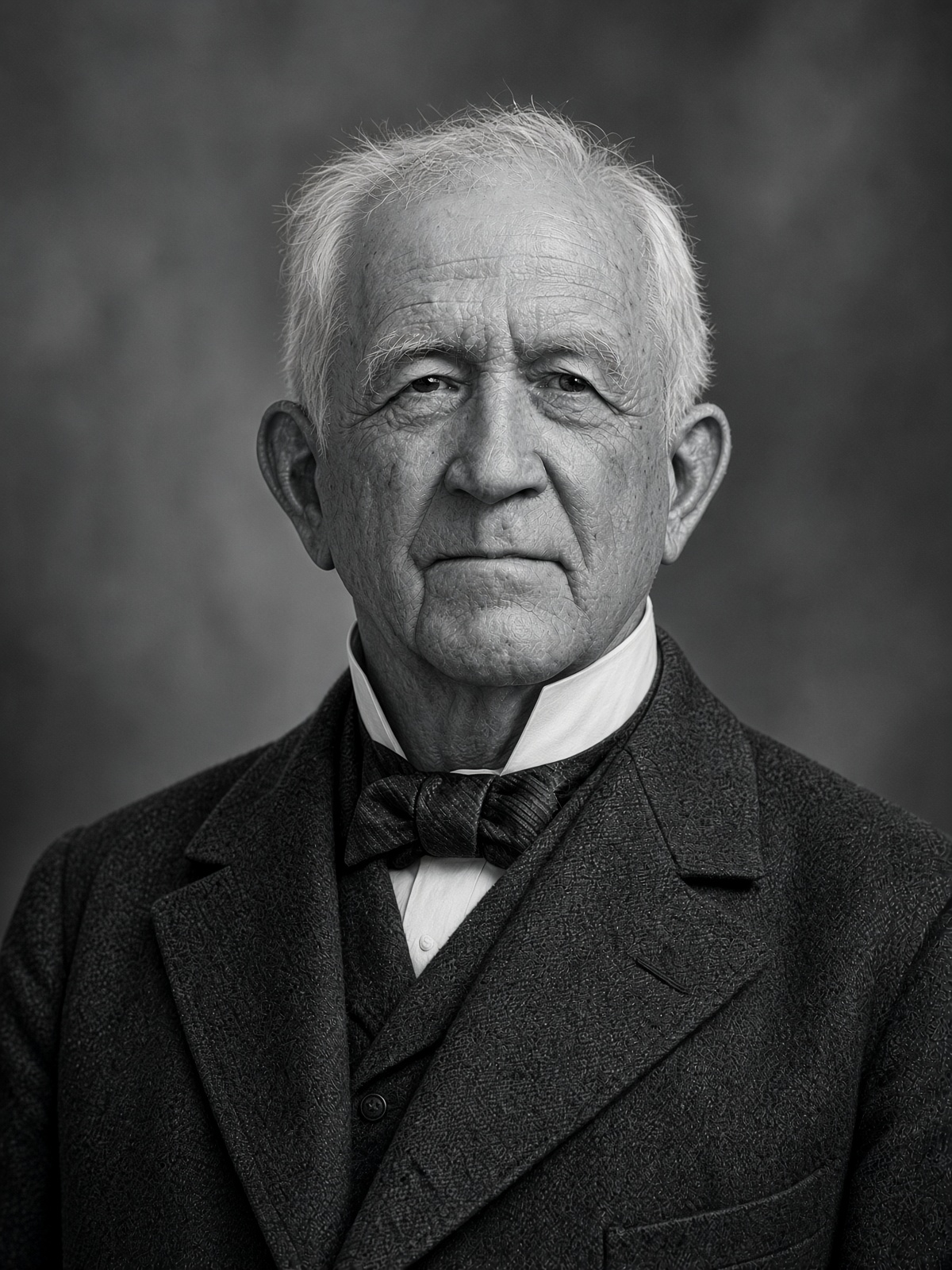
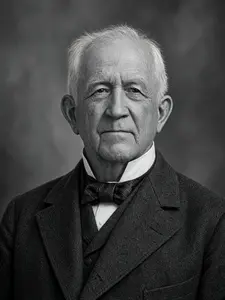
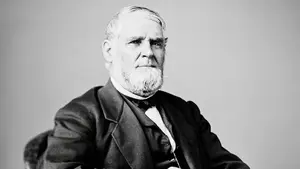
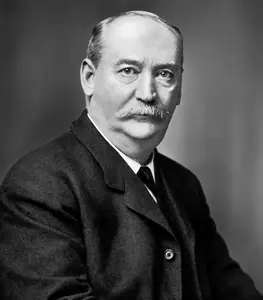
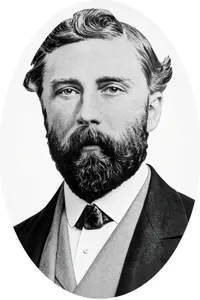
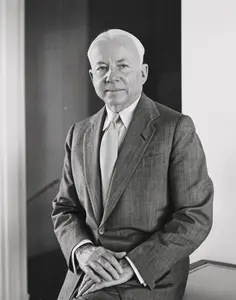
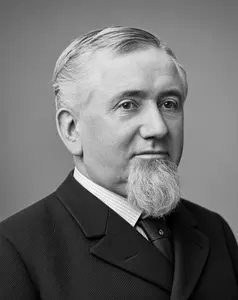
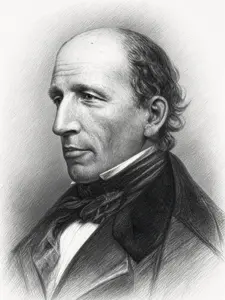
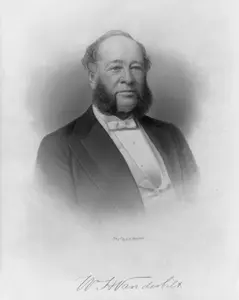
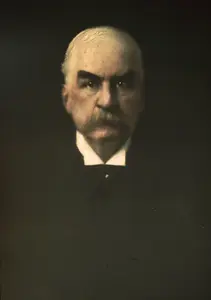
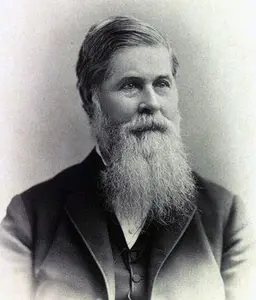
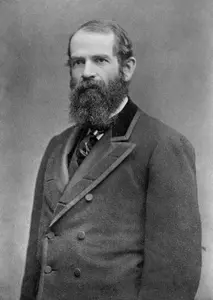
A portrait of John Blair later in life.
On this page: At a glance · Warren County · The Lackawanna · Iowa · The gifts
At a glance
| Item | Detail |
|---|---|
| Born | Sunday, August 22, 1802, on a farm in Warren County, New Jersey. John Insley Blair. Scottish family. A John Blair had emigrated from Scotland in 1720 |
| Hope | Encyclopaedia: a small store, 1811-1819. Dictionary: a helper in a relative’s store at 11 |
| Blairstown | Country store, early 1820s. Married Ann Locke, 1828. Son DeWitt Clinton Blair. Blair Presbyterian Academy, 1848 |
| Lackawanna | Oxford Iron Furnace. Scranton brothers, 1846. The road that became the Delaware, Lackawanna and Western. A sizable share. Real estate in Scranton |
| Iowa | Summer 1860, after the Chicago convention. Cedar Rapids and Missouri River line. Survey, 1863. Sioux City & Pacific. Fremont, Elkhorn and Missouri Valley |
| The money | Dictionary: an estate between $50 million and $70 million. Encyclopaedia: Blair Hall and about $70,000 to Princeton. Nearly $90,000 to Lafayette. About $600,000 to the academy at Blairstown |
| Died | Saturday, December 2, 1899. The dictionary says that into his 90s he rose early for another business day |
Warren County
The dictionary says he attended a local school only in the winter, and that he expected to get rich. It gives a line he allegedly told his mother: “I have seven brothers and three sisters. That’s enough in the family to be educated. I am going to get rich.” At 11 he went to work in a relative’s store at Hope. The encyclopaedia places that store work in the years 1811 to 1819.
In the early 1820s he formed a brief partnership with another family member and opened a country general store in Blairstown. He kept the business after the partnership ended. Profits from further stores, in neighboring towns in New Jersey, New York, and Pennsylvania, went into cotton manufacturing and flour milling. He commonly put a family member in charge of a store. In 1828 he married Ann Locke. The dictionary names their son, DeWitt Clinton Blair.
The Lackawanna
In the 1830s the dictionary says he became fascinated with iron. He acquired major positions in Pennsylvania concerns. The centerpiece was the Lackawanna Coal & Iron Company. The encyclopaedia says he became interested in the Oxford Iron Furnace in Warren County, and that in 1846 he was associated with the Scranton brothers in the first attempt to manufacture iron with anthracite coal. To move that output, he and his associates built the road that afterward was known as the Delaware, Lackawanna and Western.
The dictionary calls the formation of that road his most significant railroad venture. He owned a sizable portion of the expanding line. He also speculated in real estate, especially in Scranton, where the railroad established its maintenance and operational headquarters. The encyclopaedia says that in later life he was connected, as builder or director, with twenty railroads, and that at one time he was said to own more miles of railroad than any other man in the world.
Iowa
In the summer of 1860, after he had taken part in the Republican presidential convention in Chicago, he visited eastern Iowa. The dictionary quotes one historian: “Blair seems to have no sooner touched Iowa soil,” whereupon he perceived “the boundless opportunities for opening up the West and the great possibilities of a trans-continental railroad.” He acquired an interest in the Cedar Rapids and Missouri River line. The dictionary calls that line a future core of the Chicago and North Western. In 1863 he took part in the survey through much of central and western Iowa.
He had charge of two affiliates, the Iowa Railroad Construction Company and the Iowa Railroad Land Company. He worked for local financial support and for townsites, including a Blairstown in Benton County. The same success took him into other roads west of Chicago, most notably the Sioux City & Pacific and the Fremont, Elkhorn and Missouri Valley. The dictionary describes the method. He liked to develop a frontier line, promote the towns, dispose of the land, and then sell or lease the railroad.
The gifts
The dictionary says his favorite school was Blair Presbyterian Academy, a coeducational secondary school in Blairstown, New Jersey, which he helped to found in 1848 and kept funding. The encyclopaedia gives about $600,000 to the Presbyterian Academy at Blairstown. It also says he gave Blair Hall and about $70,000 to Princeton College, where he established a professorship, gave nearly $90,000 to Lafayette College, and helped to rebuild Grinnell College in Iowa. The dictionary says he contributed funds to Princeton, Grinnell, and Lafayette. The encyclopaedia says he contributed toward more than one hundred churches in the towns laid out along his railroads.
The mining, the manufacturing, the real estate, and the railroads made the fortune. The dictionary estimates the estate at his death at between $50 million and $70 million. It says he did not live in splendor. In his mid-80s he still traveled widely. Into his 90s he rose early for another business day. He died on Saturday, December 2, 1899.
Sources
- H. Roger Grant, “Blair, John Insley,” The Biographical Dictionary of Iowa. Born August 22, 1802, on a farm in Warren County, New Jersey, died December 2, 1899. Scottish family, descended from John Blair, who emigrated from Scotland in 1720. Sparse winter schooling. At 11, a helper in a relative’s store at Hope. The alleged remark to his mother: seven brothers and three sisters were enough to educate, and he was going to get rich. Early 1820s, a short partnership and a country store in Blairstown, then the business on his own. Further stores in New Jersey, New York, and Pennsylvania, with a family member in charge. Cotton manufacturing and flour milling. In the 1830s, iron. The centerpiece was the Lackawanna Coal & Iron Company. Mining led him into railroading. The most significant venture was the formation of the Delaware, Lackawanna & Western. He owned a sizable portion. Real estate, especially in Scranton, where the railroad had its maintenance and operational headquarters. Summer of 1860, after the Republican presidential convention in Chicago, a visit to eastern Iowa. An interest in the Cedar Rapids & Missouri River line, a future core of the Chicago and North Western. In 1863, survey work through much of central and western Iowa. The Iowa Railroad Construction Company and the Iowa Railroad Land Company. Townsites, including Blairstown in Benton County. The Sioux City & Pacific and the Fremont, Elkhorn and Missouri Valley. He developed a frontier line, promoted townsites, disposed of land, and then sold or leased the railroad. Estate at death estimated between $50 million and $70 million. Funds to Princeton, Grinnell, and Lafayette. Blair Presbyterian Academy, founded with his help in 1848 and funded through his life. A modest household. Married Ann Locke in 1828. A son, DeWitt Clinton Blair. In his mid-80s he traveled extensively. Into his 90s he rose early for another business day.
- The New International Encyclopaedia, edition of 1905, “Blair, John Insley.” Born in Warren County, New Jersey, 1802-99. From 1811 to 1819, a small store in Hope. Later he removed to Blairstown. Oxford Iron Furnace. In 1846, associated with the Scranton brothers in the first attempt to manufacture iron with anthracite coal. He and his associates constructed the road afterward known as the Delaware, Lackawanna and Western. In later life, builder or director of twenty railroads, and at one time said to own more miles of railroad than any other man in the world. Blair Hall and about $70,000 to Princeton College, where he established a professorship. Helped to rebuild Grinnell College. Nearly $90,000 to Lafayette College. About $600,000 to the Presbyterian Academy at Blairstown. More than one hundred churches in the towns laid out along his railroads.
Recent Articles


-
John I. Blair: Net Worth, Railroads, Biography
Nov 23, 26 10:41 PM
 John Insley Blair was born August 22, 1802, in Warren County, New Jersey. He helped build the road that became the Delaware, Lackawanna and Western, and he took an interest in the Cedar Rapids and Mis…
-
Russell Sage: Net Worth, Railroads, Biography
Nov 23, 26 10:33 PM
 Russell Sage was born August 4, 1816. The Congressional biography says Shenandoah, Oneida County, New York. Britannica says Verona. He died July 22, 1906. Britannica estimates the fortune at $70 milli…
-
Henry E. Huntington: Net Worth, Railroads, Biography
Nov 23, 26 09:04 PM
 Henry Edwards Huntington was born February 27, 1850, in Oneonta, New York. He developed the Pacific Electric in Los Angeles and founded the Huntington Library. He died May 23, 1927. The estate tax ret…
-
William A. Clark: Net Worth, Railroads, Biography
Nov 23, 26 04:31 PM
 William Andrews Clark was born January 8, 1839, near Connellsville, Pennsylvania. He was a senator from Montana and a builder of the San Pedro, Los Angeles and Salt Lake Railroad. He died March 2, 192…
-
"Train Of Tomorrow" (General Motors): A 1947 Concept
Nov 23, 26 04:08 PM
 General Motors Train of Tomorrow, 1947. E7A 765 and four Pullman-Standard Astra Dome cars, the 1947-1949 tour, the 1950 Union Pacific purchase, Portland-Seattle trains 457 and 458, and Moon Glow.
-
William B. Ogden: Net Worth, Railroads, Biography
Nov 23, 26 03:09 PM
 William Butler Ogden was born June 15, 1805, in Walton, New York. He was the first mayor of Chicago and a president of the Chicago and North Western and the Union Pacific. He died August 3, 1877.
-
CPKC Holiday Train Stops at Kansas City Union Station
Nov 23, 26 02:54 PM
 The CPKC Holiday Train is scheduled at Kansas City Union Station on November 27, 2026, from 6 to 6:45 p.m. Blue Springs is a first-time stop.
-
Hartford Line Adds Trains for Thanksgiving Week
Nov 23, 26 02:02 PM
 CTDOT is adding Hartford Line trains on November 24, 25, and 29, 2026. Thanksgiving Day is a Saturday schedule in the department release.
-
Asa Packer: Net Worth, Lehigh Valley Railroad, Biography
Nov 23, 26 01:51 PM
 Asa Packer was born December 29, 1805, in Mystic, Connecticut. He built the Lehigh Valley Railroad, served in Congress, and founded Lehigh University. He died May 17, 1879, in Philadelphia.
-
Steamtown Lists Moscow Holiday Express Trips
Nov 23, 26 01:41 PM
 Steamtown lists Holiday Express trips to Moscow on November 27, 28, and 29, 2026. The plan page says 11 a.m. to 2 p.m. Recreation.gov says 11 a.m. to 2:30 p.m.
-
Indiana Rail Experience Lists the Reindeer Run
Nov 23, 26 01:27 PM
 The Reindeer Run is a new one-hour Christmas train on November 27, 28, and 29, 2026, from Edon, Hudson, and South Milford. Coach starts at $17 and $30.
-
Sunset Limited Derails in Louisiana After Hitting a Truck
Nov 23, 26 08:59 AM
The eastbound Sunset Limited struck a truck hauling a bulldozer at a Broussard crossing on Sunday evening, November 22, 2026. Amtrak said 95 customers were aboard and that the passenger cars stayed up… -
David H. Moffat: Net Worth, Railroads, Biography
Nov 23, 26 12:24 AM
 David H. Moffat was born July 23, 1839, in Washingtonville, New York. He led the First National Bank of Denver and built the Moffat Road toward Salt Lake City. He died March 18, 1911.
-
William Jackson Palmer: Net Worth, Railroads, Biography
Nov 23, 26 12:15 AM
 William Jackson Palmer was born September 17, 1836, in Leipsic, Delaware. He built the Denver & Rio Grande and founded Colorado Springs. He died March 13, 1909.
-
Thomas C. Durant: Net Worth, Railroads, Biography
Nov 23, 26 12:00 AM
Thomas Clark Durant was born February 6, 1820, in Lee, Massachusetts. Vice president of the Union Pacific, he organized the Credit Mobilier. He died in 1885. -
Henry H. Rogers: Net Worth, Railroads, Biography
Nov 22, 26 11:54 PM
 Henry Huttleston Rogers, born January 29, 1840, was a Standard Oil vice-president who built the Virginian Railway. He died in New York on May 19, 1909.
-
Van Sweringen Brothers: Net Worth, Railroads, Biography
Nov 22, 26 11:38 PM
 Oris Paxton Van Sweringen, born April 24, 1879, near Wooster, Ohio, and Mantis James Van Sweringen, born July 8, 1881, developed Shaker Heights and a railroad system around the Nickel Plate. Oris died…
-
Alfred E. Perlman: President, Railroads, Biography
Nov 22, 26 12:33 AM
 Alfred Edward Perlman, born November 22, 1902, in St. Paul, was executive vice president of the Denver and Rio Grande Western, president of the New York Central, and president of the Western Pacific.
-
Patrick B. McGinnis: Net Worth, Railroads, Biography
Nov 22, 26 12:04 AM
 Patrick Benedict McGinnis, born May 23, 1904, in Palmyra, New York, chaired the Norfolk Southern and the Central of Georgia and presided over the New Haven and the Boston and Maine.
-
George Westinghouse: Net Worth, Air Brake, Biography
Nov 21, 26 11:35 PM
George Westinghouse was born at Central Bridge on October 6, 1846. He died in New York on March 12, 1914. He built the air brake the railroads came to use. -
NYC's "Xplorer" (Train): Concept, Consist, Photos
Nov 21, 26 11:31 PM
New York Central Xplorer, the Ohio Xplorer, Cleveland to Cincinnati in 1956. Pullman-Standard Train X cars, Baldwin-Lima-Hamilton locomotive 20, trains 423 and 424, timetable, consist, and photographs… -
Frisco Diesel Roster (All-Time)
Nov 21, 26 10:27 PM
 St. Louis-San Francisco diesel locomotives, each frame once. From VO-1000 No. 200 in 1941 through the GP40-2s and SD38-2s of 1979.
-
Frisco Steam Roster (Built Since 1900)
Nov 21, 26 10:18 PM
 St. Louis-San Francisco steam locomotives built since 1900. Mikados, Mountains, and twenty-five 4-8-4s.
-
Robert R. Young: Net Worth, Railroads, Biography
Nov 21, 26 09:47 PM
 Robert Ralph Young, born February 14, 1897, in Canadian, Texas, chaired the Chesapeake and Ohio and, in 1954, the New York Central. He died on January 25, 1958, in Palm Beach.
-
St. Louis-San Francisco Railway (Frisco): Map, Rosters, History
Nov 21, 26 06:37 PM
 History of the St. Louis-San Francisco Railway, the Frisco. The Pacific Railroad, the coonskin, Yoakum, Pensacola, and the Burlington Northern merger of November 21, 1980. Steam and diesel rosters are…
-
Kuhn, Loeb and Company: Net Worth, Railroads, History
Nov 21, 26 01:34 PM
 Kuhn, Loeb and Company was the New York banking house in E. H. Harriman's circle. Abraham Kuhn and Solomon Loeb opened the banking partnership in 1867. Jacob H. Schiff joined on January 1, 1875.
-
Otto Kahn: Net Worth, Railroads, Biography
Nov 21, 26 01:22 PM
Otto Hermann Kahn was born in Mannheim on February 21, 1867. He died in New York on March 29, 1934. He was the Kuhn, Loeb partner in E. H. Harriman's railroad work. -
George Pullman: Net Worth, Palace Cars, Biography
Nov 21, 26 11:01 AM
 George M. Pullman was born at Brocton on March 3, 1831. He died in Chicago on October 19, 1897. He built the palace-car company that owned the sleeping cars.
-
Arthur E. Stilwell: Net Worth, Railroads, Biography
Nov 21, 26 12:33 AM
Arthur E. Stilwell was born in Rochester on October 21, 1859. He died in New York on September 26, 1928. He built the road to Port Arthur and the Kansas City, Mexico and Orient. -
Frederick Weyerhaeuser: Net Worth, Railroads, Biography
Nov 21, 26 12:22 AM
 Frederick Weyerhaeuser was born at Niedersaulheim on November 21, 1834. He died at Pasadena on April 4, 1914. He was a lumberman and a railroad director.
-
John Murray Forbes: Net Worth, CB&Q, Biography
Nov 21, 26 12:13 AM
 John Murray Forbes was born at Bordeaux on February 23, 1813. He died at Milton on October 12, 1898. He was chairman of the Chicago, Burlington and Quincy.
-
Henry B. Plant: Net Worth, Plant System, Biography
Nov 20, 26 10:27 PM
 Henry Bradley Plant was born at Branford, Connecticut, on October 27, 1819. He died at his home on Fifth Avenue on June 23, 1899. He was president of the Plant system and of the Southern Express Compa…
-
Henry Flagler: Net Worth, Florida East Coast, Biography
Nov 20, 26 10:00 PM
Henry Flagler was born at Canandaigua, New York. He died at Whitehall on May 20, 1913, at 83, and was buried at Memorial Presbyterian Church in St. Augustine. -
William Rockefeller: Net Worth, Railroads, Biography
Nov 20, 26 11:50 AM
 William Rockefeller was born in Richford, New York, on May 31, 1841. The Associated Press dates his death June 24, 1922, at Rockwood Hall. Redmond dates it June 23, at Pocantico Hills.
-
William H. Vanderbilt: Net Worth, Railroads, Biography
Nov 20, 26 10:08 AM
 William H. Vanderbilt was born in New Brunswick, New Jersey, on May 8, 1821. He died in New York City on December 8, 1885. His will names two blocks of $40,000,000 and states no total.
-
J. Edgar Thomson: Net Worth, Pennsylvania Railroad, Biography
Nov 20, 26 12:25 AM
 J. Edgar Thomson was born in Springfield, Delaware County, Pennsylvania, on February 10, 1808. He died in Philadelphia on May 27, 1874. No opened inventory states a total.
-
Thomas A. Scott: Net Worth, Railroads, Biography
Nov 20, 26 12:06 AM
Thomas A. Scott was born at Loudon, Pennsylvania, on December 28. The year is 1823 in one biography and 1824 on the funeral plate. He died near Darby on May 21, 1881. No opened inventory states a tota… -
Henry Villard: Net Worth, Railroads, Biography
Nov 19, 26 11:41 PM
 Henry Villard was born Ferdinand Heinrich Gustav Hilgard at Speyer on April 10, 1835, and died early on November 12, 1900, at Thorwood Park, near Dobbs Ferry. He was 65. A court recital put the person…
-
J.P. Morgan: Net Worth, Railroads, Biography
Nov 19, 26 07:03 PM
 John Pierpont Morgan was born in Hartford on April 17, 1837, and died in Rome on March 31, 1913, at 12:05 p.m. Rome time. He was 75. A 1916 New York appraisal put the gross estate at $78,149,024, excl…
-
Daniel Willard: Net Worth, Baltimore and Ohio, Biography
Nov 19, 26 06:51 PM
 Daniel Willard was born on January 28, 1861, and died on July 6, 1942. He was 81. He was president of the Baltimore and Ohio from January 15, 1910 until 1941. No opened record states a fortune. Time p…
-
Cyrus K. Holliday: Net Worth, Santa Fe, Biography
Nov 19, 26 06:03 PM
 Cyrus Kurtz Holliday was born April 3, 1826, and died in Topeka on March 29, 1900. He was 73. He founded Topeka, wrote the Atchison and Topeka charter, and was the railroad's first president. He l…
-
N&W 2-6-6-4 Locomotives (Class A): Specs, Roster, History
Nov 19, 26 05:39 PM
 Norfolk & Western Class A. Forty-three simple 2-6-6-4s, 1200 to 1242, built at Roanoke from 1936 to 1950 for time freight and used on passenger trains when assigned. Diagram specs, the 114,000-pou…
-
Jay Cooke: Net Worth, Civil War, Biography
Nov 19, 26 05:05 PM
 Jay Cooke was born at Sandusky on August 10, 1821, and died the night of February 16, 1905, at Ogontz. He was 83. Jay Cooke and Company opened January 1, 1861, and suspended September 18, 1873. He sol…
-
Daniel Drew: Net Worth, Erie Railroad, Biography
Nov 19, 26 04:44 PM
 Daniel Drew was born at Carmel on July 29, 1797, and died the night of September 18, 1879, age 82. He was Erie treasurer, not president. The settlement of July 2, 1868, put him out of that office.
-
James Fisk Jr.: Net Worth, Robber Baron, Biography
Nov 19, 26 02:47 PM
 James Fisk Jr. was born on April 1, 1835, and died the morning of January 7, 1872, at the Grand Central Hotel. He was 36. Edward S. Stokes shot him the afternoon before. He was an Erie director from O…
-
Chehalis-Centralia Polar Express Seats Are Sold Out
Nov 19, 26 02:43 PM
Chehalis-Centralia marks its Polar Express departures sold out. Diesel No. 6 is pulling while steam No. 15 is repaired. The business-car page still prints $260, $390, and $520. -
Cumbres & Toltec Lists Santa's Holiday Express
Nov 19, 26 02:38 PM
 Cumbres & Toltec lists Santa's Holiday Express for December 5-6 in Chama and December 12-13 in Antonito. Coach is $25. The Chama trip will not run to Dalton.
-
Florida Railroad Museum Lists the North Pole Express
Nov 19, 26 02:28 PM
 The Florida Railroad Museum lists the North Pole Express from November 27 through December 22, 2026. The trip is 3.75 hours. The museum will be closed November 21 and 22.
-
George Jay Gould: Net Worth, Railroads, Biography
Nov 19, 26 02:18 PM
 George Jay Gould was born in New York on February 6, 1864, and died on May 16, 1923, at his villa in France. The company pages date his father's portfolio to 1896. The Panic of 1907 broke the tran…
-
Jay Gould: Net Worth, Railroads, Biography
Nov 19, 26 01:43 PM
 Jason Gould, called Jay, was born at Roxbury on May 27, 1836, and died the morning of December 2, 1892. Erie president from October 1868 until 1872. From 1879 the Missouri Pacific was the center of th…