The 400s and Beyond: C&NW's Passenger Train Legacy
Published: June 28, 2026
By: Adam Burns
The Chicago & North Western Railway (C&NW) played a central role in Midwestern passenger railroading for more than 125 years. While its freight operations defined much of its identity as a granger railroad, passenger service remained a vital and visible part of its operations from the mid-19th century until the creation of Amtrak in 1971. Today, many people associate the C&NW with a three-digit number: 400. In January 1935 the railroad inaugurated the 400s in the highly competitive Chicago–Twin Cities market. They were named because they covered the approximately 400 miles between Chicago and St. Paul in close to 400 minutes. Over the following years those trains spawned an entire network of 400-branded services across several key corridors in the Upper Midwest.
As important as the 400s were, they represented only part of the story. The roots of C&NW passenger service reached back to 1849, when the Galena & Chicago Union (a predecessor) introduced its first passenger cars. By the time the first 400s rolled out of Chicago and Minneapolis in 1935, the C&NW was already a well-established passenger operator serving a wide variety of markets throughout its territory. Over more than a century those trains carried immigrants to the prairies, families visiting relatives, students attending colleges in Chicago, Madison, Milwaukee, and the Twin Cities, vacationers bound for northern Wisconsin and Michigan resorts, long-distance travelers en route to California and the national parks of the West, and daily commuters in the Chicago area.
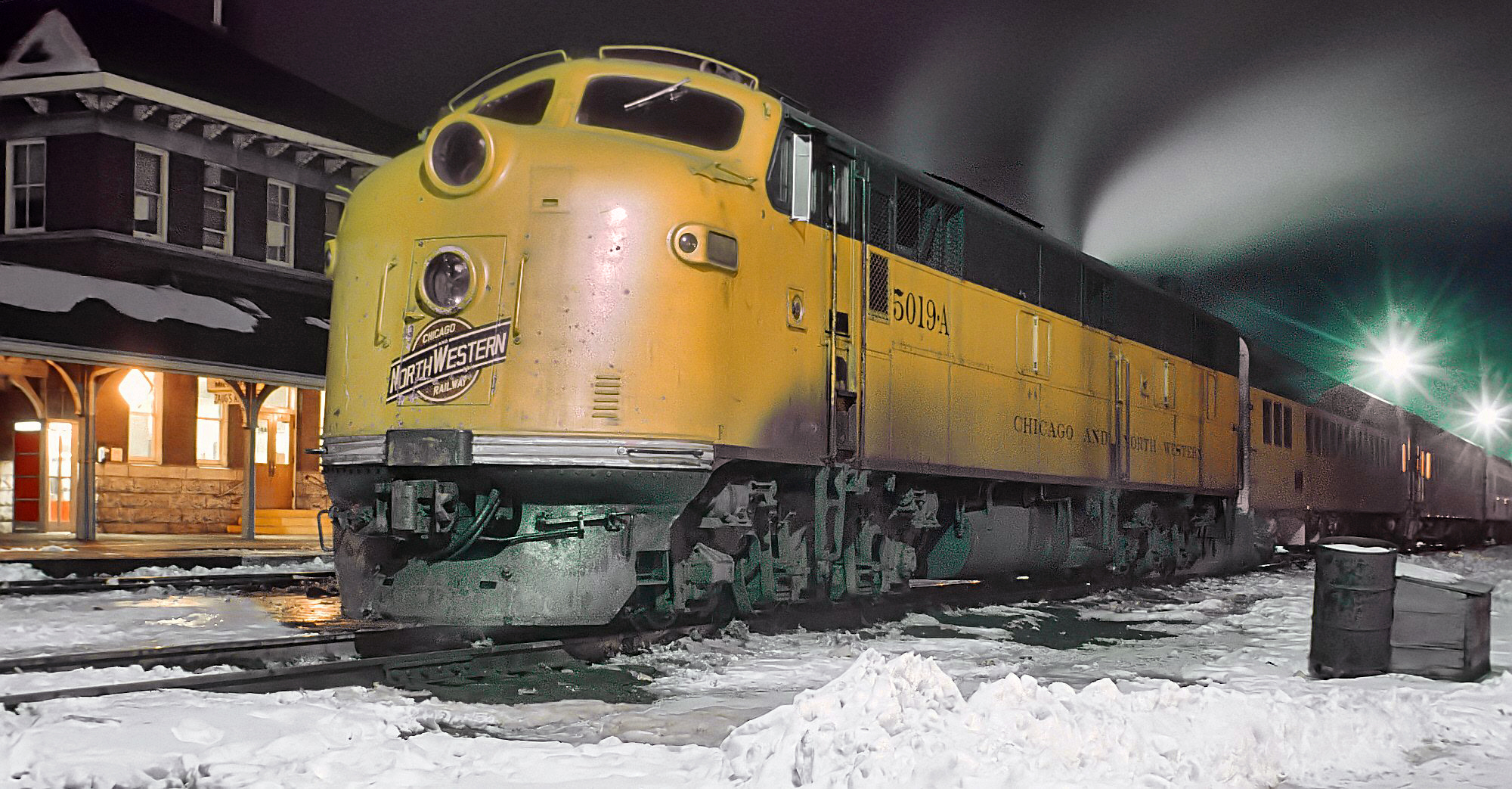 In this dramatic night photo, Chicago & North Western E7A #5019-A is ahead of train 206, the "Green Bay '400'," at Green Bay, Wisconsin in January, 1966. Rick Burn photo.
Pre-Streamliner Passenger Service
In the summer of 1929, before the Great Depression forced severe cutbacks, the C&NW operated an extensive passenger network. Many trains carried evocative names tied to the railroad’s home territory. Among them were the Arrowhead Limited, North Western Limited, North Western Mail, and Viking between Chicago and the Twin Cities; the Ashland Limited to Ashland, Wisconsin; the Badger State Express; the Corn King Limited (with a section to Sioux City); the Duluth-Superior Limited; the Iron & Copper Country Express and Iron Range Express serving Michigan’s Upper Peninsula; the Minnesota & Black Hills Express; the North American; and the Rochester-Minnesota Special. Additional trains included the Twilight Limited and Wisconsin Lakes Special.
Long-distance service was equally ambitious. The C&NW operated through trains on its Chicago–Omaha main line in conjunction with the Union Pacific, including the Colorado Express, Columbine, Denver Special, Continental Limited, and Gold Coast Limited. On the Overland Route the railroad handled the Los Angeles Limited, Overland Limited, Portland Limited, and San Francisco Limited, often with through cars to various western destinations.
The Overland Route partnership with the Union Pacific dated back decades. Regular through service between Chicago and the West Coast began with the Overland Flyer on November 13, 1887. In 1889 the two railroads formalized their already close ties, establishing through passenger service that lasted more than 60 years. Early schedules were lengthy by modern standards—an 1893 timetable showed an 86½-hour journey from Chicago to San Francisco. By the early 20th century the Overland Limited had become one of the most prestigious trains in the West, carrying celebrities, presidents, and business leaders in luxurious accommodations.
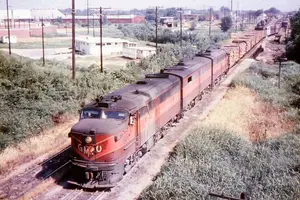
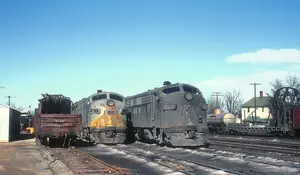
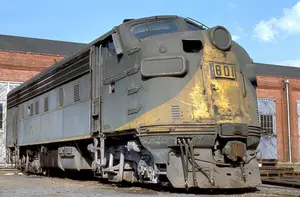
 Chicago & North Western E7A #5015B is ahead of train 510 at Madison, Wisconsin in December, 1963. Rick Burn photo.
The Birth of the 400s
By the mid-1930s the automobile and improving highways had already begun draining passengers from the railroads. The Great Depression further damaged the business. In response, several railroads experimented with diesel-powered, articulated train-sets that offered genuine improvements in speed and the perception of modernity. Streamlining became both a marketing tool and a practical solution.
The C&NW’s only direct experience with new diesel train-sets came through its partnership with the Union Pacific. In 1935 UP introduced the City of Portland (M-10001), a six-car diesel-powered articulated train that covered the 2,272-mile Chicago–Portland route in under 40 hours—slashing 18 hours from the previous fastest schedule. Additional City streamliners followed in 1936 and 1937–38.
For its own Chicago–Twin Cities service, however, the C&NW took a different approach. It could not afford brand-new equipment on its own, but it could modernize what it already had. In late 1934 the railroad upgraded four of its E-2 Pacific steam locomotives with larger drivers and other improvements for higher speeds. It also improved track on the Adams Cutoff northwest of Milwaukee to permit 90 mph running. New and refurbished cars received air conditioning and better seating and lighting.
On January 2, 1935, the 400 made its debut on a 420-minute schedule for the 408.6 miles between Chicago and St. Paul via Milwaukee. The train departed Chicago at 3:30 p.m. (with the eastbound counterpart leaving St. Paul at the same time) and met at Adams, Wisconsin. Initial equipment consisted of conventional heavyweight coaches, a dining car, a club-lounge car, sleepers in multiple configurations, and a solarium observation-parlor car with six bedrooms. The strategy was deliberately low-cost: the railroad spent only about $50,000 refurbishing locomotives and equipment to enter the market quickly.
The timing was critical. Just weeks earlier, in December 1934, the Chicago, Burlington & Quincy had announced it would cut its Chicago–Twin Cities schedule from 10½ hours to 6½ hours with its new lightweight stainless-steel Zephyr. The Milwaukee Road was preparing its own streamlined (though still steam-powered) Hiawatha, which debuted in May 1935. The C&NW’s 400 was therefore born into intense competition.
Early Success and Expansion
The original 400 proved popular enough that the C&NW soon expanded the concept. In late 1938 the railroad sought court approval (as part of its reorganization) to spend more than $2 million on new locomotives and cars specifically for the 400. In 1939 it received new Electro-Motive E3 diesels and lightweight Pullman-Standard cars in the distinctive yellow-and-green livery that would become iconic for C&NW passenger equipment for decades.
By January 1942 the railroad had enough new streamlined cars to launch several additional 400 services:
- The Peninsula 400 between Chicago and Ishpeming, Michigan
- The Shoreland 400 and Valley 400 serving Green Bay (on separate routes north of Milwaukee)
- The Capitol 400 between Chicago and Madison
- The short-haul Commuter 400 and City of Milwaukee 400 between Chicago and Milwaukee
All received streamlined equipment. The original 400 was renamed the Twin Cities 400 to distinguish it as the flagship.
In 1950 the network grew further with the Dakota 400 (Chicago to Huron, South Dakota, via Madison and Rochester) and the Flambeau 400 (Chicago to Ashland, Wisconsin). The Kate Shelley 400 was added in 1955 between Chicago and Boone, Iowa, honoring the Iowa railroad heroine.
Equipment, Operations, and the Overland Route
Throughout the streamliner era the C&NW maintained a distinctive approach. While many railroads embraced full dieselization and new lightweight trains, the North Western often blended modernization with practicality. The Twin Cities 400 eventually received E-unit diesels and lightweight cars, but overnight trains such as the North Western Limited (trains 405/406) retained heavyweight equipment longer. Sleepers were temporarily removed from shorter runs during World War II and restored afterward; lightweight Pullmans arrived on the North Western Limited only in 1948.
The C&NW’s partnership with the Union Pacific on the Overland Route continued into the streamliner age. In 1935 the two roads introduced the Challenger, a coach and tourist-sleeper train for budget-minded travelers. The all-Pullman Forty-Niner followed in 1937. Postwar, the City of Los Angeles and City of San Francisco received new Electro-Motive locomotives and Pullman-Standard cars, jointly equipped by C&NW, UP, and SP. These trains offered the height of travel comfort until World War II and changing travel patterns ended the glory days of luxury long-distance service.
Effective October 30, 1955, the UP shifted its Chicago streamliners to the Milwaukee Road, ending the long-standing C&NW partnership on those trains due to track conditions on the North Western.
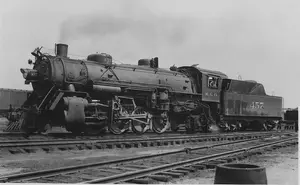
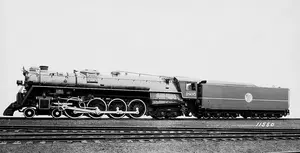
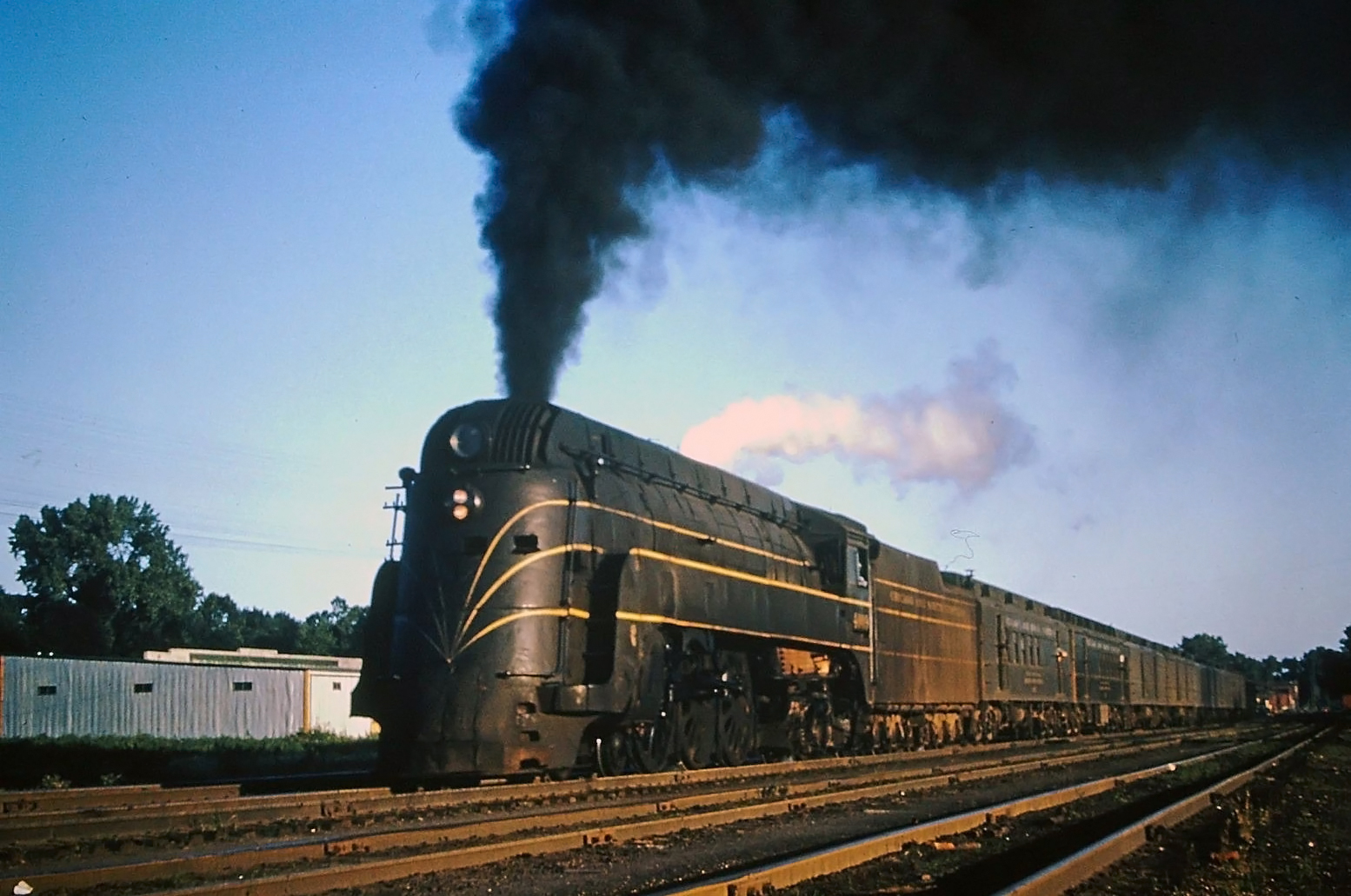 Chicago & North Western 4-6-4 #4009 (E-4) appears to have a mail train at Council Bluffs, Iowa on June 23, 1953. This locomotive was one of nine acquired from Alco in 1938 (#4001-4009) to handle the railroad's new streamliners. Externally, the beautiful steamers were almost identical to Milwaukee Road's famous F-7's. Originally built to burn coal they were converted to oil in 1946-47. Soon after this photo was taken the group was retired and scrapped.
Decline and the End of an Era
The late 1950s brought severe cutbacks. Passenger traffic continued to migrate to automobiles and airplanes. By the time Amtrak began operations on May 1, 1971, the C&NW had already discontinued most of its intercity services. The Peninsula 400 ended north of Green Bay in mid-1969; the railroad quietly dropped the “400” name on its remaining trains, referring to them simply as streamliners. Amtrak did not continue the C&NW’s two remaining non-commuter routes (Chicago–Green Bay and Chicago–Clinton, Iowa).
The Twin Cities 400 itself had ended on July 23, 1963. Overnight trains like the North Western Limited were discontinued in June 1959 as passengers shifted away from rail.
Legacy
What began on January 2, 1935, as a brilliant burst of optimism had grown into a fine example of modern passenger rail operation. The C&NW made its mark by providing high standards of service that benefited thousands of Midwesterners for decades. The 400 fleet demonstrated that a resourceful railroad could compete effectively with better-funded rivals by cleverly upgrading existing assets and focusing on speed and reliability in key markets.
Although the intercity passenger trains are long gone, the C&NW’s commuter operations in the Chicago area continued under public auspices and eventually became part of the Metra system. The yellow-and-green color scheme and the memory of the fast 400s remain vivid in railroad history. As historian Jim Scribbins noted in his comprehensive book The 400 Story, the trains that started with such promise in 1935 ultimately represented one of the most creative and successful responses by any railroad to the challenges of the streamliner era.
The C&NW may no longer exist as an independent company (it was acquired by the Union Pacific in 1995), but its passenger legacy—particularly the innovative and enduring 400 network—continues to fascinate rail enthusiasts and historians alike. Those trains proved that even in an era of declining ridership, smart management, targeted investment, and a focus on what passengers valued most—speed, comfort, and reliability—could still deliver memorable service across the Upper Midwest.
Recent Articles


-
Mobile & Ohio Steam Roster (Post 1900)
Oct 09, 26 12:26 PM
 Mobile & Ohio steam since 1900. Drury's class grid: 48 six-wheel switchers, 107 Ten-Wheelers, 15 Consolidations, 58 Mikados, and 14 Pacifics. Last revenue steam October 7, 1949.
 -
Mobile & Ohio Railroad: History, Map, Timetable
Oct 09, 26 11:31 AM
 Mobile & Ohio Railroad, chartered in 1848. Columbus on April 22, 1861, the Cairo & St. Louis, the March 1940 Official Guide, and the September 13, 1940 merger into the Gulf, Mobile & Ohio.
 -
Gulf, Mobile & Northern Steam Roster (Post 1900)
Oct 09, 26 10:42 AM
 Gulf, Mobile & Northern steam since 1900. Drury's class grid: Ten-Wheelers, Mikados, Russian Decapods, Pacifics 425 and 426, and three light 4-8-2s. Last revenue steam October 7, 1949.
 -
Gulf, Mobile & Ohio Diesel Roster (All-Time)
Oct 09, 26 10:41 AM
 Gulf, Mobile & Ohio diesel roster, all-time. The 1935 boxcab, DL-107s, 55 FA-1s, F3s and F7s, the Ingalls 4-S, GP30s through GP38-2s, and 21 SD40s. Serials and order numbers.
 -
Gulf, Mobile & Northern Railroad: History, Rebel Route
Oct 09, 26 10:36 AM
 Gulf, Mobile & Northern, from the 1890 Mobile, Jackson & Kansas City to the Rebel and the September 13, 1940 merger into the Gulf, Mobile & Ohio. Steam roster is the companion page.
 -
Gulf, Mobile & Ohio Railroad: Map, Photos, Trains, History
Oct 08, 26 11:48 PM
 Gulf, Mobile & Ohio, chartered in 1938 and merged September 13, 1940. The Mobile & Ohio, the Alton on May 31, 1947, the Rebel Route, and Illinois Central Gulf on August 10, 1972.
 -
New Jersey Railroad Museums (2026): A Complete Guide
Oct 08, 26 11:37 PM
 New Jersey railroad museums—Whippany, Maywood, Pine Creek, Mahwah’s Erie depot, Phillipsburg, and Boonton. Confirm hours on each site.
 -
New Hampshire Railroad Museums (2026): A Complete Guide
Oct 08, 26 11:34 PM
 New Hampshire railroad museums—North Conway, the Flying Yankee, Ashland, Gorham, Raymond, and Sandown. Confirm hours on each site.
 -
Missouri Railroad Museums (2026): A Complete Guide
Oct 08, 26 11:00 PM
 Missouri railroad museums—the National Museum of Transportation, Patee House, Frisco 4524, the Chicago & Alton depot, and Marceline. Confirm hours on each site.
 -
Milwaukee Road X3800: Deer Lodge’s Shop Goat
Oct 08, 26 04:28 PM
 Milwaukee Road X3800, the a home-built shop goat that served the Deer Lodge, MT yard. It was a 220-volt DC switcher, powered through an extension cord that moved electrics into a roundhouse where the…
 -
Key West Extension (Overseas Railroad): History, Construction, Decline
Oct 08, 26 03:59 PM
 Henry Flagler's Overseas Railroad, Miami to Key West, 1905–1935. The Seven Mile Bridge, the 1935 Labor Day Hurricane, and the road that became U.S. 1.
 -
Florida East Coast Steam Roster (Post 1900)
Oct 08, 26 02:34 PM
 Florida East Coast steam since 1897. Seventeen Ten-Wheelers, twenty Atlantics, eighty-seven Pacifics, ninety Mountains, fifteen Mikados, and the switchers.
 -
Florida East Coast Diesel Roster (All-Time)
Oct 08, 26 02:12 PM
 Florida East Coast diesel roster, all-time. E units from 1939, F3s, BL2s, GP7s and GP9s, the GP40-2 orders, 22 SD40-2s, and 24 ES44C4s. Serials and EMD order numbers.
 -
Florida East Coast Railway: Map, History, Rosters
Oct 08, 26 01:46 PM
 Florida East Coast Railway, Henry Flagler's line from Jacksonville to Miami and Key West. Receivership in 1931, the 1963 strike, Grupo México in 2017, and Brightline on the same track.
 -
Minnesota Railroad Museums (2026): A Complete Guide
Oct 08, 26 10:32 AM
Minnesota railroad museums—the Lake Superior Railroad Museum, Two Harbors, Jackson Street, Willmar’s Great Northern 2523, and Currie. Confirm hours on each site. -
Maine Railroad Museums (2026): A Complete Guide
Oct 08, 26 09:24 AM
 Maine railroad museums—Seashore Trolley, the two-foot lines at Portland, Alna, and Phillips, Boothbay, and the Bangor & Aroostook depots. Confirm hours on each site.
 -
Massachusetts Railroad Museums (2026): A Complete Guide
Oct 08, 26 12:08 AM
 Massachusetts railroad museums—Berkshire Scenic at Lenox, Shelburne Falls trolley No. 10, Edaville, Chatham’s 1887 depot, and Lowell. Confirm hours on each site.
 -
Clinchfield Steam Roster (Post 1900)
Oct 07, 26 12:09 PM
 Clinchfield steam since 1900. Fifteen H-4 Consolidations, K-1 Mikados, M-2 and M-3 Mallets, L-class 2-8-8-2s, eighteen Challengers. Class grid after Drury. Last steam April 16, 1954.
 -
Clinchfield Diesel Roster (All-Time)
Oct 07, 26 12:05 PM
 Clinchfield diesel roster, all-time. F3A 800, FP7 200, the F7s, GP7s, 25 SD40s, 18 SD45-2s, seven U36Cs, and the Family Lines hoods. Serials and EMD order numbers.
 -
Clinchfield Railroad: Map, Steam Locomotives, Roster, Logo
Oct 07, 26 12:02 PM
 Clinchfield Railroad, Elkhorn City to Spartanburg. George L. Carter, the Carolina, Clinchfield & Ohio, the 1924 lease, coal, the loops, and CSX. Steam and diesel rosters are companion pages.
 -
Kentucky Railroad Museums (2026): A Complete Guide
Oct 07, 26 11:39 AM
 Kentucky railroad museums—the Kentucky Railway Museum, Bowling Green’s L&N depot, Paducah, Versailles, and Covington. Confirm hours on each site.
 -
Kansas Railroad Museums (2026): A Complete Guide
Oct 07, 26 11:26 AM
 Kansas railroad museums—Santa Fe 3768 at Wichita, Santa Fe 132 in Topeka, the Great Overland Station, and Abilene. Confirm hours on each site.
 -
Cincinnati, New Orleans and Texas Pacific Diesel Roster (All-Time)
Oct 07, 26 10:38 AM
 All-time diesel roster of Southern locomotives lettered for the Cincinnati, New Orleans and Texas Pacific. Serials, order numbers, and builder dates.
 -
Cincinnati, New Orleans and Texas Pacific Railway
Oct 07, 26 10:31 AM
 Cincinnati, New Orleans and Texas Pacific Railway, incorporated September 8, 1881, to lease Cincinnati’s railroad to Chattanooga. Queen and Crescent route, Rathole, and the 2024 sale to Norfolk Southe…
 -
Indiana Railroad Museums (2026): A Complete Guide
Oct 07, 26 12:26 AM
 Indiana railroad museums—Nickel Plate 765, Elkhart’s New York Central collection, French Lick, Linden’s junction depot, and Haley Tower. Confirm hours on each site.
 -
"Triplex" Steam Locomotive: Specs, History, Photos
Oct 06, 26 11:52 PM
 Erie class P-1 Triplex 2-8-8-8-2s. Three Baldwin compounds, 2603–2605, later 5014–5016, built 1914 and 1916. Matt H. Shay, the 1930 class card, and Virginian XA 700.
 -
Illinois Railroad Museums (2026): A Complete Guide
Oct 06, 26 11:47 PM
 Illinois railroad museums—the Illinois Railway Museum, Monticello, the Pioneer Zephyr, Galesburg’s Burlington 3006, and the depots. Confirm hours on each site.
 -
Iowa Railroad Museums (2026): A Complete Guide
Oct 06, 26 11:41 PM
 Iowa railroad museums—the Union Pacific Railroad Museum, RailsWest, Sioux City, Boone, and the National Hobo Museum in Britt. Confirm hours on each site.
 -
Charleston and Western Carolina Diesel Roster (All-Time)
Oct 06, 26 11:29 PM
Charleston and Western Carolina diesel roster. Twenty-one GP7s, two SW7s, two SW9s, and six F7As, all built 1950–1952. Serials, order numbers, and ACL and SCL numbers. -
Charleston and Western Carolina Railway: Map, History, Timetables
Oct 06, 26 11:18 PM
 Charleston and Western Carolina Railway, incorporated September 16, 1896. Port Royal to Spartanburg, with branches to Anderson and Greenville. Merged into the Atlantic Coast Line on December 31, 1959.
 -
Central of Georgia Steam Roster (Post 1900)
Oct 06, 26 04:00 PM
 Central of Georgia steam since 1900. Cooke Consolidations, Harriman Mikados, 32 Mountains, and eight Lima 4-8-4s. Class grid after Drury. Last steam May 1953.
 -
Central of Georgia Diesel Roster (All-Time)
Oct 06, 26 03:44 PM
 Central of Georgia diesel roster. SW1 No. 1 in 1939, E7s and E8s, nine F3As, 39 RS3s, GP7s through SD35s. Serials and order numbers.
 -
Central of Georgia Railway: Map, Logo, History, Rosters
Oct 06, 26 03:42 PM
 Central of Georgia Railway, from the 1833 Savannah charter to Southern control on June 17, 1963. Map, logos, Nancy Hanks II, and links to the steam and diesel rosters.
 -
Georgia Railroad Museums (2026): A Complete Guide
Oct 06, 26 03:33 PM
Georgia railroad museums—Savannah’s Central shops, Duluth, the General at Kennesaw, the Texas in Atlanta, Tifton, Waycross, and Albany. Confirm hours on each site. -
Florida Railroad Museums (2026): A Complete Guide
Oct 06, 26 03:18 PM
 Florida railroad museums—Boca Raton, Winter Garden, Whitehall, the Gold Coast, Parrish, Fort Myers, Milton, and Plant City. Confirm hours on each site.
 -
Connecticut Railroad Museums (2026): A Complete Guide
Oct 06, 26 01:05 PM
 Connecticut railroad museums—the Shore Line Trolley, East Windsor, the Naugatuck Railroad, Danbury Union Station, Willimantic, and the SoNo tower. Confirm hours on each site.
 -
Colorado Railroad Museums (2026): A Complete Guide
Oct 06, 26 12:47 PM
 Colorado railroad museums—Golden, the Forney’s Big Boy 4005, Pueblo’s Santa Fe 2912, and the depots at Castle Rock, Limon, and Ridgway. Confirm hours on each site.
 -
Atlantic Coast Line Steam Roster (Post 1900)
Oct 06, 26 12:44 PM
 Atlantic Coast Line steam since 1900. Copper Head Ten-Wheelers, 235 P-5 Pacifics, Q-1 Santa Fes, twelve R-1 4-8-4s. Class grid after Drury. Last steam June 30, 1955.
 -
Atlantic Coast Line Diesel Roster (All-Time)
Oct 06, 26 11:57 AM
 Atlantic Coast Line diesel roster. HH660 1900 in 1939, E3s for the Champion, FTs and F2s, GP7s 100–279, GP30s, U25Cs, and the 1967 SCL numbers. Serials and orders.
 -
Atlantic Coast Line Railroad: "Standard Railroad of the South"
Oct 06, 26 11:53 AM
 Atlantic Coast Line, the Standard Railroad of the South. April 21, 1900 to July 1, 1967. Plant System, L&N, Clinchfield, the Champion, and the Seaboard Coast Line merger.
 -
California Railroad Museums (2026): A Complete Guide
Oct 06, 26 09:50 AM
California railroad museums—the California State Railroad Museum, Perris, Portola, Railtown 1897, and the depots that still stand. Confirm hours on each site. -
Arizona Railroad Museums (2026): A Complete Guide
Oct 06, 26 09:46 AM
Arizona railroad museums—the Arizona Railway Museum in Chandler, Southern Pacific 1673 at Tucson, and the McCormick-Stillman park in Scottsdale. -
Arkansas Railroad Museums (2026): A Complete Guide
Oct 06, 26 09:07 AM
 Arkansas railroad museums—Cotton Belt 819 at Pine Bluff, the Fort Smith trolley, the Mammoth Spring depot, and the Eureka Springs railway.
 -
Alabama Railroad Museums (2026): A Complete Guide
Oct 06, 26 09:03 AM
Alabama railroad museums—Heart of Dixie at Calera, the North Alabama museum at Chase, Huntsville’s 1860 depot, and Fort Payne. Confirm hours on each site. -
Pennsylvania Railroad Museums (2026): A Complete Guide
Oct 06, 26 12:09 AM
 Pennsylvania railroad museums—Strasburg, Steamtown, the Horseshoe Curve, the East Broad Top, and the depots and towers in between. Confirm hours on each site.
 -
Maryland Railroad Museums (2026): A Complete Guide
Oct 05, 26 11:53 PM
 Maryland railroad museums—the Baltimore roundhouse, Ellicott City station, Bowie, Gaithersburg’s Buffalo Creek & Gauley 14, and the Western Maryland collections.
 -
Ohio Railroad Museums (2026): A Complete Guide
Oct 05, 26 05:51 PM
 Ohio railroad museums—the Age of Steam Roundhouse, Bellevue, Worthington, Conneaut’s Nickel Plate 755, and the Dennison depot. Confirm hours on each site.
 -
Delaware Railroad Museums (2026): A Complete Guide
Oct 05, 26 02:43 PM
 Delaware railroad museums—Wilmington & Western at Greenbank, the Harrington tower and N5 caboose, Felton's 1868 depot, and the Selbyville station museum.
 -
C&O's M-1 Steam Turbine Locomotives: Specs, Roster, History
Oct 05, 26 12:13 PM
 Chesapeake & Ohio Class M-1 steam-turbine-electrics. Three Baldwin-Westinghouse locomotives, 500–502, built 1947–48 for The Chessie. Specs, the 2-C1+2-C1-B arrangement, and a roster. All scrapped…
 -
N&W 2-6-6-2 Locomotives (Class Z): Specs, Roster, History
Oct 05, 26 11:44 AM
 Norfolk & Western Class Z 2-6-6-2s. One hundred ninety compound Mallets, 1300–1489, from Richmond, Baldwin, and Schenectady, 1912–1918. Diagram specs, the Z-1b rebuilds, Z-2 1399, and a roster. No…