The Oriental Limited: Great Northern’s Gateway to the Orient
Published: June 15, 2026
By: Adam Burns
The Oriental Limited was one of the most evocative named passenger trains in American railroad history. Operated by the Great Northern Railway (GN) between St. Paul and Seattle (and extended to Chicago), it ran under that name from December 1905 until March 1931, then again from 1947 until 1951. Its name deliberately evoked the trans-Pacific trade that had helped inspire James J. Hill’s empire-building railroad. While never the absolute longest-lived GN train, the Oriental Limited symbolized luxury transcontinental travel during the golden age of rail and bridged the heavyweight and early streamliner eras.
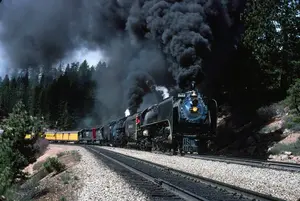
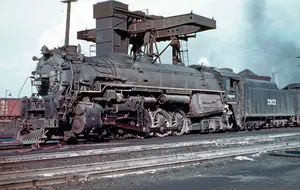
 Great Northern 4-8-2 #2511, one of twelve such Mountains acquired by Baldwin in 1923 (2500-2511), is seen here with the westbound "Oriental Limited," at Whitefish, Montana in June, 1948. Morton Elliott photo.
Origins: Hill’s Vision and the 1905 Launch
James J. Hill built the Great Northern as the northernmost and shortest transcontinental route from the Twin Cities to Puget Sound. Completed in 1893, the GN quickly sought to capitalize on growing trade with Asia. Seattle’s improved port facilities and agreements with Japanese steamship lines (notably Nippon Yusen Kaisha) positioned the railroad as a key link in the “Orient trade.” In 1905, GN’s own steamships Minnesota and Dakota began regular service from Seattle to the Far East, carrying American exports (wheat, cotton, steel) westward and returning with silk, tea, and other luxury goods.
On December 5, 1905, the GN replaced its Great Northern Flyer with the new Oriental Limited between St. Paul and Seattle. The name was chosen to highlight this rail-water connection. The initial train offered new or upgraded equipment throughout: large day coaches, tourist sleepers, palace sleeping cars, dining cars, and innovative compartment-observation cars—the first of their kind in transcontinental service. These observation cars featured a rear platform with easy chairs, writing desks, wide plate-glass windows, a stocked buffet, and a “Booklovers’ Library” of periodicals.
The train was painted deep olive green with darker roofs and trucks; gold-leaf lettering graced the letterboards. Interiors shifted toward mission-style decor with rich mahogany, opalescent glass, and harmonized plush upholstery. A typical consist included an RPO car, baggage-express, smoking car, day coach, tourist sleeper, diner, standard sleeper, and compartment-observation car. Motive power on the western divisions featured new Pacific-type locomotives.
The December 1905 schedule covered the 1,829 miles from St. Paul to Seattle in about 58 hours and 20 minutes—roughly four-and-a-half hours faster than the rival Northern Pacific . Eastbound service was slightly slower. The route followed the GN’s main line through Minnesota, North Dakota, Montana (including the dramatic Marias Pass), Idaho, and Washington’s Cascade Mountains. In 1909 the train was extended east of St. Paul to Chicago over the Chicago, Burlington & Quincy Railroad, creating a true Chicago–Seattle service.
The 1924 “New Oriental Limited”: An Aristocrat of the Rails
The train underwent several upgrades in its first two decades, including re-equipment for the 1909 Alaska-Yukon-Pacific Exposition and the introduction of more Pullman sleepers around 1922. Its most dramatic transformation came in 1924. On June 1, 1924, the GN placed an entirely new, nearly all-steel Oriental Limited into service—eight complete equipment sets built largely by Pullman.
This “New Oriental Limited” was promoted as the finest train of its era. The consist typically included an RPO/baggage car, second- and first-class coaches, a tourist sleeper, multiple 12-1 Pullman sleepers, a 10-1-2 sleeper (with compartments and drawing room), a dining car, and a luxurious observation car. GN refurbished its own head-end cars at the St. Paul shops to match.
Passengers enjoyed amenities rare for the time and included in the base fare: shower baths, a women’s lounge with maid, manicure, hairdressing, and massage services, a men’s smoking/club room with barbershop and valet, four-o’clock tea service, a well-stocked library, telegraphic news, stock reports, and individual ventilation. Observation cars offered radio, writing tables, card and Mah Jongg sets, and an open rear platform (one of the last major trains to feature one). Interiors used a harmonious light-green color scheme with black, gold, and vermillion accents—no simulated wood grain. Dining cars served regional specialties (Wenatchee apples, Puget Sound salmon, Montana beef) on fine china and linens.
Motive power included new P-2 class 4-8-2 Mountain locomotives on key divisions, supplemented by Pacifics, Northerns, and electric locomotives through the original Cascade Tunnel. The Chicago–Seattle schedule was approximately 70 hours. The train was displayed publicly in major cities and drew large crowds. It solidified the Oriental Limited’s reputation as GN’s crack transcontinental until a new premier train arrived.
More About The Train And Its Late Era Steam Power
The following information is from Robert Le Massena:
"Those who knew Great Northern’s motive power were aware that almost all of its steam locomotives had boilers with Belpaire fireboxes, and they knew also that the railroad’s 4-8-4’s had been delivered in two groups, one with the Belpaire firebox, the other with the conventional radial-stay firebox. Few realized that the GN did indeed have another kind of 4-8-2, numbered 2500–2511, all built by the Baldwin Locomotive Works in 1923 with radial-stay fireboxes.
While pondering these oddities, few realized that the GN did indeed have another kind of 4-8-2, numbered 1760–1764, that had been assembled by the Lima Locomotive Works in 1923. They hauled the GN’s first passenger trains over the Continental Divide between Havre and Whitefish for a decade, and were then retired to freight service between Whitefish and Troy in the extreme northwestern corner of Montana where the grades were less steep. The reason for their displacement was that the GN’s premier train, the ORIENTAL LIMITED, was completely re-equipped with new luxurious cars in mid-1924. The Lima 4-8-2’s did not have the speed capability to haul the heavier consists. Less than a decade later they had vanished from the GN’s roster of equipment.
Their replacements were monstrous machines, though not so large as those erected by American Locomotive at the same time for the Denver & Rio Grande Western railroad. When they first arrived, President Ralph Budd sent a letter to every engineer and fireman who would operate the new locomotives, asking for their opinions on them. Everyone who had liked the 4-8-2’s liked the new 4-8-4’s (class S-2) even better. They were not modified greatly during nearly 35 years of service. Apparently, there was no attempt to make all of them alike, however. About half of them were given roller bearings on all engine and tender axles, and several were equipped with Worthington feedwater heaters. Others were provided with tenders having additional water and fuel capacity.
A few were given an extra air pump, both then having been relocated on the pilot deck. The No. 2511 differed only by the addition of an air reservoir beneath the front of the smokebox, and illuminated number-panels on either side of the stack. Steam pressures were increased to 210 psi, producing a tractive effort of 58,000 pounds. Nickel-steel cylinder heads and green-hued cylinder and pump sheathing presented a touch of elegance as the engines rolled into an intermediate station.
Until the EMPIRE BUILDER commenced running in 1929 the ORIENTAL LIMITED had been the GN’s foremost passenger train, reflecting the railroad’s original interest in commerce with far-eastern nations. Remaining for only two more years, the ORIENTAL was discontinued during the business recession of the early 1930s. But it returned in 1947 when the new streamlined EMPIRE BUILDER was put into service. Four years later it was replaced by the WESTERN STAR, which inherited the new EMPIRE BUILDER consists. This latter-day ORIENTAL LIMITED departed Chicago at 11:15 p.m. and was handled by the Chicago, Burlington & Quincy railroad as far as Saint Paul, Minnesota. It left there at 9:10 a.m., stopped at Whitefish at 2:55 p.m. the following day, and arrived in Seattle at 7:30 a.m. the next morning."
The Empire Builder Arrives and the First Era Ends
In June 1929, following completion of the new Cascade crossing, the GN introduced the Empire Builder—named in honor of James J. Hill—as its flagship daily Chicago–Seattle/Portland train. The Oriental Limited continued as a secondary service for two more years.
The Great Depression forced economies. On March 29, 1931, the Oriental Limited name was discontinued (“honorably discharged,” in GNRHS phrasing). For the next 15+ years, GN operated only a single daily through passenger train between Chicago and the Pacific Northwest—the Empire Builder. That train received air conditioning in 1935 and other improvements, but the second train slot remained vacant until after World War II.
During the war years the Empire Builder often ran in multiple sections to handle surging passenger and troop movements. GN’s lines were vital to the war effort, setting freight records while passenger service strained under demand.

Postwar Revival: 1947–1951
After World War II, American railroads raced to modernize. On February 23, 1947, GN introduced an entirely new fleet of lightweight, streamlined Empire Builder trains—diesel-powered, faster (45-hour Chicago–Seattle schedule), and brightly colored in GN’s signature orange and green. These were among the first completely new postwar transcontinental streamliners.
The old heavyweight Empire Builder equipment was reassigned to a revived secondary daily train. The Oriental Limited name returned around 1946–1947 for this service. It operated on a schedule similar to the prewar secondary trains, providing an economical alternative while the new streamlined Empire Builder took the premium traffic and faster timings.
In 1951 GN received yet another new fleet of Empire Builder equipment. On June 3, 1951, the Oriental Limited name was retired once more. Its equipment and schedule were transferred to a new companion train called the Western Star. The Western Star operated alongside the Empire Builder, with one train making additional summer stops at Glacier National Park. The Oriental Limited designation has not been used since.
Consist (April, 1948)

Timetable (April, 1948)


Legacy
The Oriental Limited spanned the transition from ornate heavyweight trains to the streamlined era. It carried thousands of passengers across some of North America’s most spectacular scenery, promoted tourism to Glacier National Park and the Pacific Northwest, and embodied Hill’s dream of linking the American heartland to Asian markets. Its luxurious 1924 version represented the pinnacle of pre-Depression rail service, while its brief postwar revival illustrated the industry’s struggle to adapt to changing travel patterns.
Although the name disappeared in 1951, the underlying Chicago–Seattle service continued under the Western Star and later the Empire Builder until Amtrak assumed operations in 1971. Today, the Empire Builder still follows much of the historic GN route, a living reminder of the Oriental Limited’s storied past.
The train’s story is preserved in the archives of the Great Northern Railway Historical Society, contemporary photographs, timetables, and the detailed equipment studies published by rail historians. It remains a favorite subject for modelers and enthusiasts who appreciate the elegance of heavyweight varnish and the romance of named trains that once connected continents by rail and sea.
Recent Articles


-
Bessemer & Lake Erie Railroad: "The Bessemer Road"
Sep 15, 26 05:20 PM
 Bessemer & Lake Erie—Bear Creek 1865, Carnegie 1897, U.S. Steel 1901. Ore south from Conneaut, coal north. 2-10-4s, Missabe sister road. CN May 10, 2004. Complete corporate history.
 -
Bangor and Aroostook Railroad: "Serving Northern Maine"
Sep 15, 26 05:05 PM
 Bangor & Aroostook—chartered February 13, 1891, first trains January 1, 1894. Potatoes, paper, Searsport, State of Maine reefers. MM&A 2003, Lac-Mégantic 2013, CP 2020, CPKC today. Complete co…
 -
Baltimore & Ohio Chicago Terminal Railroad: Map and History
Sep 15, 26 03:11 PM
 B&OCT—formed January 6, 1910 to buy Chicago Terminal Transfer. Grand Central, Barr Yard, 78 route-miles. Assigned B&O steam. Complete diesel roster. CSX paper subsidiary, mark BOCT.
 -
The "Alphabet Route" (Railroad): Photos and History
Sep 15, 26 02:53 PM
 Alphabet Route—eight railroads, not one company. P&WV to Connellsville February 11, 1931. Alpha Jets Chicago/St. Louis–New York/Boston. NKP, W&LE, P&WV, WM, Reading, CNJ, L&HR, New Hav…
 -
Milwaukee Road Livestock Operations: Cattle, Dakotas & Montana
Sep 15, 26 02:36 PM
 Milwaukee Road livestock traffic—Dakota and Montana cattle, Iowa hogs, Chicago markets, 28-hour law, head-end stock cars. By 1974 mostly Montana. Rick Burn’s Helena speech. Operations history, not the…
 -
Spirit of Jasper Ride & Dine (2026): Season Pause
Sep 15, 26 02:29 PM
 Spirit of Jasper Ride & Dine in Jasper, Indiana—seated meal on board. Operator: not running public trains for 2026. Depot remains open as a rental. Confirm on spiritofjaspertrain.com.
 -
South Carolina Canal & Rail Road Company: Map and History
Sep 15, 26 01:59 PM
 South Carolina Canal & Rail Road—chartered December 19, 1827. Best Friend of Charleston, 136 miles Charleston–Hamburg October 1833, Aiken inclined plane. South Carolina Railroad 1844, Southern 189…
 -
The Practice of Double-Heading: The Steam Era
Sep 15, 26 01:43 PM
 Doubleheading—two locomotives on the point, each with its own steam crew. Not a rear helper, not diesel MU. How it worked, PRR 1877, mountain grades, and what MU ended.
 -
Mohawk and Hudson Railroad: Map, Pictures, Locomotives
Sep 15, 26 01:20 PM
 Mohawk & Hudson Railroad—New York’s first railroad, chartered April 17, 1826. DeWitt Clinton, inclined planes, Albany & Schenectady 1847, first New York Central May 17, 1853. Complete corporat…
 -
Essex Clipper Dinner Train (2026): Dates, Tickets & What to Expect
Sep 15, 26 01:09 PM
 2026 Essex Clipper Dinner Train in Essex, CT—2.5 hours, four-course meal $129.99, 18+. Fall dates through Oct. 25. Confirm on essexsteamtrain.com.
 -
Camden & Amboy Railroad: Map, History, Photos
Sep 15, 26 12:53 PM
 Camden & Amboy Railroad—chartered February 4, 1830. Joint Companies monopoly with the Delaware & Raritan Canal, John Bull, T-rail. United New Jersey 1872, PRR 999-year lease 1871. Complete corpora…
 -
Cafe Lafayette Dinner Train (2026): Dates, Tickets & What to Expect
Sep 15, 26 12:47 PM
2026 Cafe Lafayette Dinner Train in North Woodstock, NH—2 hours, 20 miles, five-course meal from $125. May–October. Confirm on nhdinnertrain.com. -
Christmas Train Ride Locations (2026): A Complete Guide
Sep 15, 26 10:47 AM
 2026 Christmas train rides by state—Santa, North Pole Express, and holiday trains. Not Polar Express. State guides and product pages. Confirm dates on each railroad.
 -
Baltimore & Ohio Railroad: Linking 13 Great States With The Nation
Sep 15, 26 10:22 AM
 Baltimore & Ohio Railroad—first U.S. common carrier, chartered February 28, 1827. Wheeling 1853, Chicago 1874, C&O control 1963, Chessie 1973, into CSX April 30, 1987. Complete corporate history.
 -
Delaware & Hudson Railway: The Bridge Line
Sep 15, 26 09:59 AM
 Delaware & Hudson Railway—Wurts brothers canal 1823, gravity railroad 1829, Stourbridge Lion, Bridge Line to Montreal. Guilford 1984, CP 1991, NS south line 2015, CPKC north.
 -
Delaware & Hudson Diesel Roster (All-Time)
Sep 15, 26 12:17 AM
 All-time Delaware & Hudson diesel roster—Alco S-2s through C-628s and PA-4s, GE U-boats, Baldwin RF-16s, EMD SD45s and GP38-2/GP39-2s. Serials, dates, dispositions.
 -
Granite Railway, Our Country's First Railroad
Sep 14, 26 11:28 PM
 Granite Railway of Quincy, Massachusetts—chartered March 4, 1826, opened October 7, 1826. Gridley Bryant, 5-foot gauge, horses, Bunker Hill Monument stone. First commercial U.S. railroad.
 -
Milwaukee Road Skytop Lounges: History, Specs & Floor Plans
Sep 14, 26 11:09 PM
 Milwaukee Road Skytop observation cars—Brooks Stevens, 1948. Four Rapids parlor-lounges from Milwaukee Shops, six Creek sleeper-lounges from Pullman-Standard. Floor plans, roster, preservation.
 -
West Virginia Christmas Train Rides (2026): A Complete Guide
Sep 14, 26 11:02 PM
2026 West Virginia Christmas trains—Potomac Eagle North Pole Express in Romney and Christmas at Cass. Not Polar Express. Elkins Polar is not listed for 2026. -
Railroads Of Today: Class I Map, PSR & the 2026 Industry
Sep 14, 26 10:30 PM
 U.S. freight rail in 2026—six Class I railroads on a nearly 140,000-mile network. PSR as everyday practice, how the STB works, traffic mix, short lines and regionals.
 -
Railroad History (USA): Timeline, Facts & How the Network Was Built
Sep 14, 26 10:03 PM
 Full U.S. railroad history hub—origins and inventors, Golden Age peak mileage, Civil War and transcontinental, streamliners, ICC regulation, Penn Central and Conrail, Staggers Act, PSR, and today’s Cl…
 -
Railroads In The 2020s: CPKC, East Palestine & the UP–NS Case
Sep 14, 26 09:51 PM
 U.S. railroads 2020–2026—Class I mileage 91,773 in 2020. COVID traffic drop, CPKC April 14 2023, East Palestine Feb. 3 2023, UP–NS $85 billion case still before the STB.
 -
Railroads In The 2010s: PSR, Coal’s Decline & Positive Train Control
Sep 14, 26 03:51 PM
 U.S. railroads 2010–2020—Class I mileage 95,573 to 91,773. Buffett closed BNSF Feb. 12 2010, Harrison at CP June 29 2012 and CSX 2017, PTC deadline Dec. 31 2018.
 -
Virginia Christmas Train Rides (2026): A Complete Guide
Sep 14, 26 03:46 PM
 2026 Virginia Christmas trains—Virginia Scenic Railway Santa Express from Staunton, about 60 minutes. Confirm dates. Not Polar Express.
 -
MARC Train: Maryland Commuter Rail History, Lines & Roster
Sep 14, 26 01:16 PM
 MARC Train history—Maryland Rail Commuter 1984, B&O and PRR corridors, Penn/Camden/Brunswick lines, Silver Spring 1996, all-time locomotive roster.
 -
Railroads In The 2000s: Merger Freeze, Wisconsin Central & Buffett
Sep 13, 26 07:57 AM
 U.S. railroads 2000–2010—Class I mileage 99,250 to 95,573. STB merger freeze March 17 2000, CN–WC Oct. 9 2001, BNSF Railway Jan. 24 2005, Buffett Nov. 3 2009.
 -
Railroads In The 1990s: Mega-Mergers, Conrail’s Split & the STB
Sep 13, 26 12:13 AM
 U.S. railroads 1990–2000—Class I mileage 119,758 to 99,250. BNSF Sept. 22 1995, UP–SP Sept. 11 1996, Conrail split June 1 1999, ICC Termination Dec. 29 1995.
 -
Railroads In The 1980s: Staggers, Mega-Mergers & Conrail’s IPO
Sep 12, 26 11:12 PM
 U.S. railroads 1980–1990—Class I mileage 164,822 to 119,758. Staggers Oct. 14 1980, CSX and Norfolk Southern, UP–Missouri Pacific–Western Pacific, Conrail IPO March 26 1987.
 -
Wabash Class O-1 4-8-4s: History, Roster & Specifications
Sep 12, 26 11:01 PM
 Wabash Class O-1 4-8-4s—Baldwin 1930–31, twenty-five engines 2900–2924. Fast freight, complete roster, specifications. None preserved.
 -
Staggers Rail Act of 1980: Statute, Contract Rates & the ICC
Sep 10, 26 11:23 PM
 Staggers Rail Act, Pub. L. 96-448, signed October 14, 1980. Harley Staggers, S.1946, contract rates, 180% variable-cost test, abandonments, short lines.
 -
Rock Island E8A 652: Bicentennial Independence Paint & History
Sep 10, 26 10:42 PM
 Rock Island E8A 652—EMD March 1952, serial 15199. 20th Century Railroad Club Independence bicentennial scheme, Peoria and Quad Cities Rockets, Midland Railway, Manly Junction Museum.
 -
Vermont Christmas Train Rides (2026): A Complete Guide
Sep 10, 26 10:37 PM
2026 Vermont Christmas trains—Okemo Valley Holiday Express from Chester Depot Dec. 19–20. Polar is Burlington Dec. 5–6 only. -
Railroads In The 1970s: Penn Central, Amtrak & Conrail
Sep 10, 26 10:18 AM
 U.S. railroads 1970–1980—196,479 miles at the decade’s start. Penn Central bankruptcy June 21 1970, Amtrak May 1 1971, 3R/4R Acts, Conrail April 1 1976, Rock Island 1975, Milwaukee 1977.
 -
Railroads In The 1960s: Mergers, Passenger Collapse & Penn Central
Sep 10, 26 10:03 AM
 U.S. railroads 1960–1970—207,334 to 196,479 miles. Erie Lackawanna 1960, C&O–B&O 1963, N&W–Nickel Plate 1964, SCL 1967, Penn Central Feb. 1 1968.
 -
South Carolina Christmas Train Rides (2026): A Complete Guide
Sep 10, 26 08:36 AM
 2026 South Carolina Christmas trains—South Carolina Railroad Museum Santa Train in Winnsboro. Confirm December dates. Not Polar Express. Drop light-festival padding.
 -
Steam Locomotive Feedwater Heaters: Elesco, Coffin & Worthington
Sep 10, 26 08:29 AM
 Steam locomotive feedwater heaters—open Worthington vs closed Elesco and Coffin. How they work, how to identify them on a smokebox, and why not every engine had one.
 -
Oregon Christmas Train Rides (2026): A Complete Guide
Sep 10, 26 08:22 AM
2026 Oregon Christmas trains—Portland Holiday Express, Garibaldi Candy Cane Express, Sumpter Valley Christmas Trains Dec. 11–13. Polar is Mount Hood. -
Lake Shore & Michigan Southern: Map, History, Timetables
Sep 10, 26 08:12 AM
 Lake Shore & Michigan Southern Railway—Erie & Kalamazoo 1833, Michigan Southern to Chicago 1852, LS&MS April 6 1869, Vanderbilt, Ashtabula 1876, NYC merger Dec. 22 1914. 1910 map and Official Guide.
 -
Big Four Route (CCC&StL): Map, History
Sep 10, 26 12:19 AM
Cleveland, Cincinnati, Chicago & St. Louis Railway—Bee Line 1868, Ingalls’s first Big Four 1880, CCC&StL June 30, 1889, NYC lease Feb. 1, 1930. 1910 and 1930 maps, what still runs. -
Railroads In The 1950s: Diesel, the Interstate & Passenger Collapse
Sep 10, 26 12:15 AM
 U.S. railroads 1950–1960—223,779 to 211,459 miles. Interstate June 29, 1956, dieselization, passenger collapse, TOFC, 1957–58 recession, NYO&W 1957, N&W–Virginian 1959.
 -
New Jersey Christmas Train Rides (2026): A Complete Guide
Sep 10, 26 12:06 AM
 2026 New Jersey Christmas trains—Black River & Western Santa Express from Flemington and Pine Creek Christmas trains in Wall Township. Polar is Whippany and Phillipsburg.
 -
New Mexico Christmas Train Rides (2026): A Complete Guide
Sep 09, 26 11:57 PM
 2026 New Mexico Christmas trains—Cumbres & Toltec Santa’s Holiday Express from Chama Dec. 5–6 (and Antonito, Colo., Dec. 12–13). Coach $25/$15. Not Polar Express.
 -
Grand Trunk Railway: Map, History, Timetables
Sep 09, 26 11:47 PM
 Grand Trunk Railway of Canada—charter Nov. 10, 1852, Montreal–Toronto 1856, Portland, Sarnia, Victoria Bridge, St. Clair Tunnel 1891, Great Western 1882, GTPR, CN Jan. 20, 1923. 1893 map and Official…
 -
Troop Trains In World War II: Sleepers, Kitchen Cars & Movements
Sep 09, 26 11:42 PM
 WWII U.S. troop trains—almost 44 million armed-services passengers, Pullman troop sleepers, ACF kitchen cars, hospital trains, monthly movement tables 1942–45. Not the Military Railway Service. ODT an…
 -
Railroads In The 1940s: War Traffic, Last Steam & the Diesel Flood
Sep 09, 26 11:37 PM
 U.S. railroads 1940–1950—233,670 to 223,779 miles. World War II as the decade’s center, last new steam, diesel flood after V-J Day, 1945 car orders, California Zephyr 1949.
 -
Railroads In World War II: ODT, Record Traffic & Private Operation
Sep 09, 26 03:00 PM
 U.S. railroads in World War II—Lend-Lease freight, Pearl Harbor, Office of Defense Transportation, 1944 peak ~740 billion ton-miles, Dec. 1943–Jan. 1944 seizure. Private operation, not a USRA sequel.
 -
Montana Christmas Train Rides (2026): A Complete Guide
Sep 09, 26 02:54 PM
2026 Montana Christmas trains—Charlie Russell Chew Choo North Pole Adventure from Hanover/Lewistown, Nov. 27–Dec. 19, $71, about 1.5 hours. Not Polar Express. -
Railroads In The 1930s: Depression, Streamliners & the FT
Sep 09, 26 09:32 AM
 U.S. railroads 1930–1940—249,052 to 233,670 miles. Section 77, Eastman, Motor Carrier Act, M-10000 and Pioneer Zephyr 1934, EMC FT 1939. Decade frame, not the streamliner encyclopedia.
 -
Sugar Cane Train (Lahaina): LK&P History, Roster & 2026 End
Sep 09, 26 08:19 AM
 Lahaina, Kaanapali & Pacific Sugar Cane Train—3-foot tourist line 1970–2014. Anaka, Myrtle, 2023 and 2025 fires, September 2026 scrapping. Roster, Hahakea trestle, Pioneer Mill corridor.
 -
Massachusetts Christmas Train Rides (2026): A Complete Guide
Sep 09, 26 08:16 AM
 2026 Massachusetts Christmas trains—Shelburne Falls Moonlight Magic Friday Nov. 27; Edaville Festival of Lights in Carver. Polar is Cape Cod Central in Buzzards Bay.