Railroad History (USA): Timeline, Facts & How the Network Was Built
Last revised: September 5, 2026
By: Adam Burns
Railroad history in the United States is nearly as old as the country’s industrial ambitions. From mid-1820s experiments through the steam boom, the continental network, the passenger streamliner age, the crisis of the 1970s, and today’s freight revival, the iron horse shaped how Americans settled, fought, farmed, and traveled. This hub is a full overview of that arc—facts, timeline, inventors, mileage, regulation, and operating philosophy—with paths into deeper American-Rails.com sections on fallen flags, locomotives, streamliners, and individual railroads.
The “Golden Age” ran roughly from the 1880s into the 1920s, when railroads dominated intercity transport. Automobiles and airplanes, plus stifling federal rate regulation, later eroded that monopoly. By the 1970s carriers such as Penn Central, Rock Island, Milwaukee Road, Reading, and Jersey Central were in freefall. Deregulation after 1980 helped freight rail recover into the modern Class I map.
On this page: At a glance · Timeline · Who invented the railroad? · Early U.S. railroads · Civil War & transcontinental · National mileage · Golden Age · Streamliners & decline · Regulation to Staggers · Operating philosophy / PSR · Unfinished transcontinental · By decade · Early railroads · Notable figures · Related reading
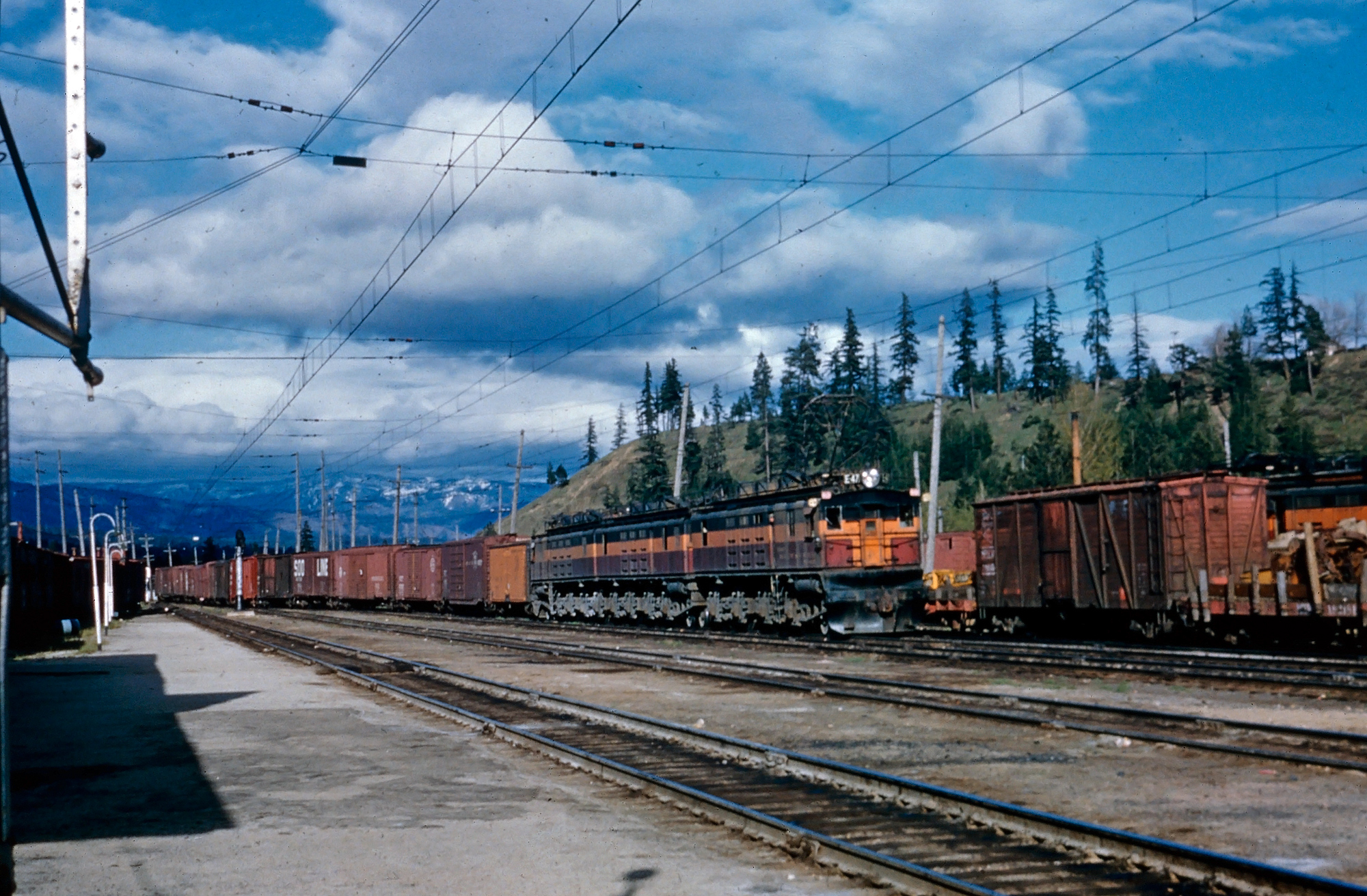
From the depot platform, Milwaukee Road boxcab set E47 arrives at Cle Elum, Washington, with a westbound freight, circa 1958. The depot and substation still stand, preserved by the Cascade Rail Foundation. American-Rails.com collection.
At a Glance
| Fact | Figure / note |
|---|---|
| Peak U.S. route-mileage | 254,037 (1916) |
| Approximate mileage today | On the order of 138,000–140,000 route-miles (freight network; sources vary by year) |
| Interurban peak | About 15,580 miles (1916-era tallies) |
| Railroad passengers (selected years) | ~1 billion (1916); ~450 million (1940) |
| Passenger-miles vs. auto (1929) | Rail ~34 billion; auto ~175 billion |
| Class I count (1939) | 132 (under period definitions) |
| Class I revenue threshold (selected) | $1M until 1956; then stepped up repeatedly; post-2021 base $900M (2019 dollars), inflation-adjusted yearly by STB |
| Employment (1950) | About 1.22 million |
| Operating revenues (selected) | $3.35B (1916); $9.47B (1950); $26.6B (1987); ~$66B (2020, industry tallies) |
Sources for table: John F. Stover, The Routledge Historical Atlas of the American Railroads (1999); Association of American Railroads; FRA capital-needs reporting for later mileage snapshots. Thresholds for Class I status: see also Class I railroads.
Selected average annual railroad wages from the same research base: about $1,003 (1917); $1,820 (1920); $1,445 (1933); $2,720 (1945); $3,763 (1950); $7,490 (1965); $37,716 (1987). These are period averages for context, not modern craft scales (for careers today see railroad jobs).
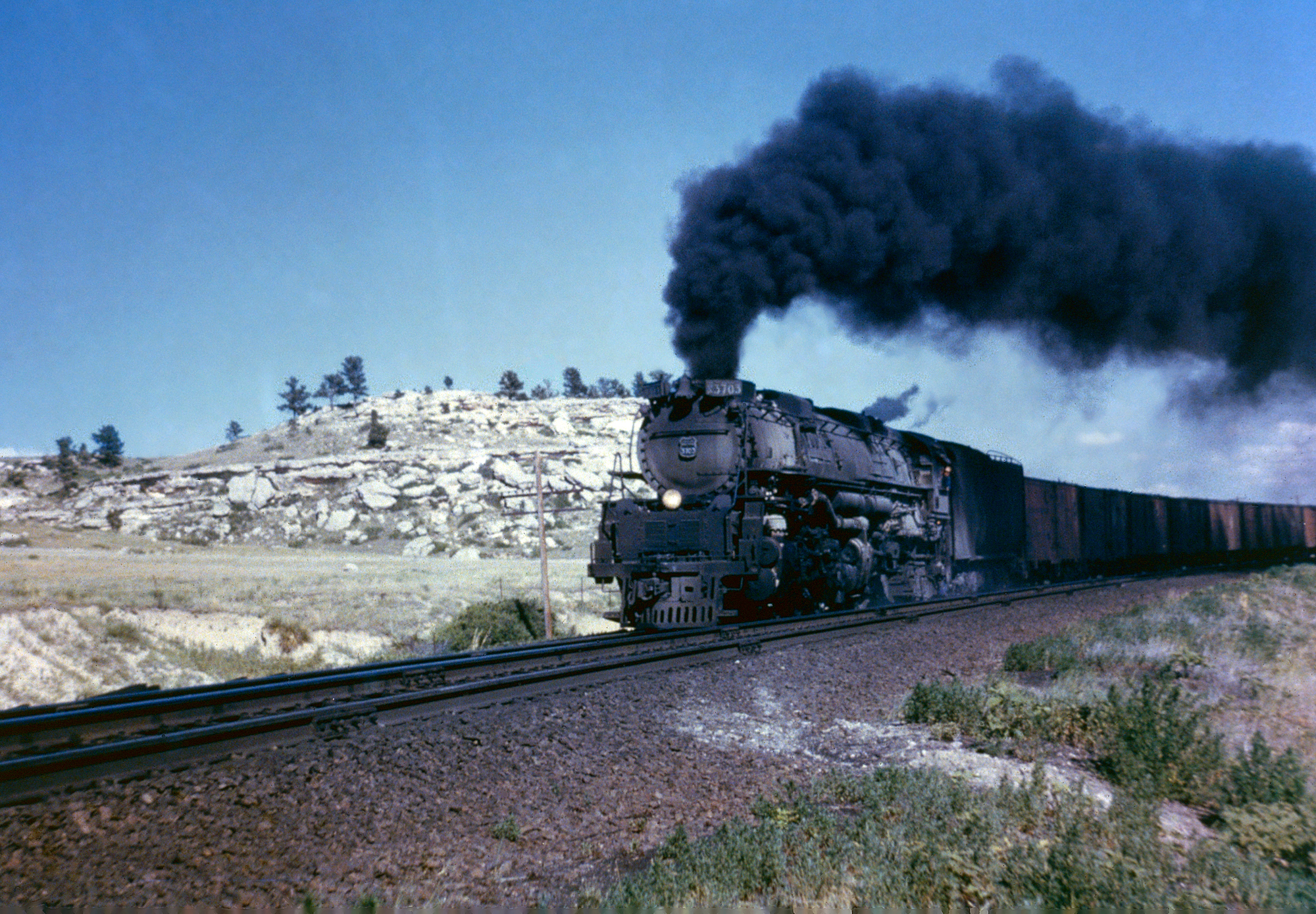
Union Pacific 4-6-6-4 #3703 hustles west just east of Potter, Nebraska, July 10, 1959. Richard Wallin photo. American-Rails.com collection.
Timeline (Selected Milestones)
| Year | Event |
|---|---|
| 1815 | Colonel John Stevens receives first North American railroad charter (New Jersey Railroad Company; not built until later as part of the PRR family story) |
| 1826 | Stevens demonstrates “Steam Waggon” on a circular track in Hoboken; Granite Railway (Massachusetts) opens as an early working line |
| 1827 | Baltimore & Ohio chartered—often cited as America’s first true common carrier |
| 1829 | Horatio Allen tests the English Stourbridge Lion on Delaware & Hudson trackage in Pennsylvania (too heavy for the rails for regular service) |
| 1830 | B&O trials of Peter Cooper’s Tom Thumb; South Carolina Canal & Rail Road tests American-built Best Friend of Charleston; first U.S. steam revenue service (Christmas Day) |
| 1840 / 1850 | East of Mississippi: ~2,800 miles (1840); more than 9,000 by 1850 |
| 1862 / 1869 | Pacific Railway Act; golden spike at Promontory Summit, Utah (May 10, 1869) |
| 1880s | Standard gauge widespread; automatic coupler and air brake era transforms safety and efficiency |
| 1916 | Peak mileage (~254,037); railroads still move nearly all intercity freight and passengers in many measures |
| 1930s | Streamliner era attempts to win back riders with speed and style |
| 1970–1976 | Penn Central bankruptcy (1970); Amtrak (1971); Conrail (1976) |
| 1980 | Staggers Rail Act deregulates much of rate-making and line rationalization |
| 1990s–2020s | Mega-mergers form today’s Class I map; debates over PSR-style operating philosophy; pending UP–NS merger case before the STB (as of 2026) |
Who Invented the Railroad?
No single person “invented” the railroad the way one invents a patent gadget. Railroading accumulated over centuries. Mike Del Vecchio notes in Railroads Across America that a railroad-like coal operation on wooden rails opened in England as early as 1630. Iron rails appeared at Whitehaven, Cumberland, in 1740; William Jessop is credited with an important flanged-wheel advance in 1789.
Steam power traces to Thomas Newcomen’s engine (patent 1705), improved by James Watt (1769). French engineer Nicolas-Joseph Cugnot built a steam road vehicle in 1769 that still survives at the Musée des Arts et Métiers in Paris—ancestor of both automobiles and locomotives in spirit, though not a rail vehicle. Richard Trevithick and Andrew Vivian patented a steam locomotive design in 1802; a Trevithick machine worked iron-ore tramway service in South Wales in 1804.
George Stephenson is widely credited with the modern railroad when the Stockton & Darlington Railway opened on September 27, 1825. He surveyed the route, set a gauge of 4 feet 8 inches (only a half-inch from what became standard gauge worldwide), and supplied power including the little 0-4-0 later famous as Locomotion No. 1. Stephenson’s designs influenced early American roads until domestic builders matured.
In the United States, the first chartered railroad company was Stevens’s New Jersey project of 1815; the first put into service is commonly identified as the Granite Railway of 1826. Public reaction mixed awe with fear: John Stover records an Ohio school board calling trains a “device of the devil,” Massachusetts turnpike interests branding them “cruel turnpike killers,” and claims that rail travel would cause “concussion of the brain.” Efficiency and speed still won.
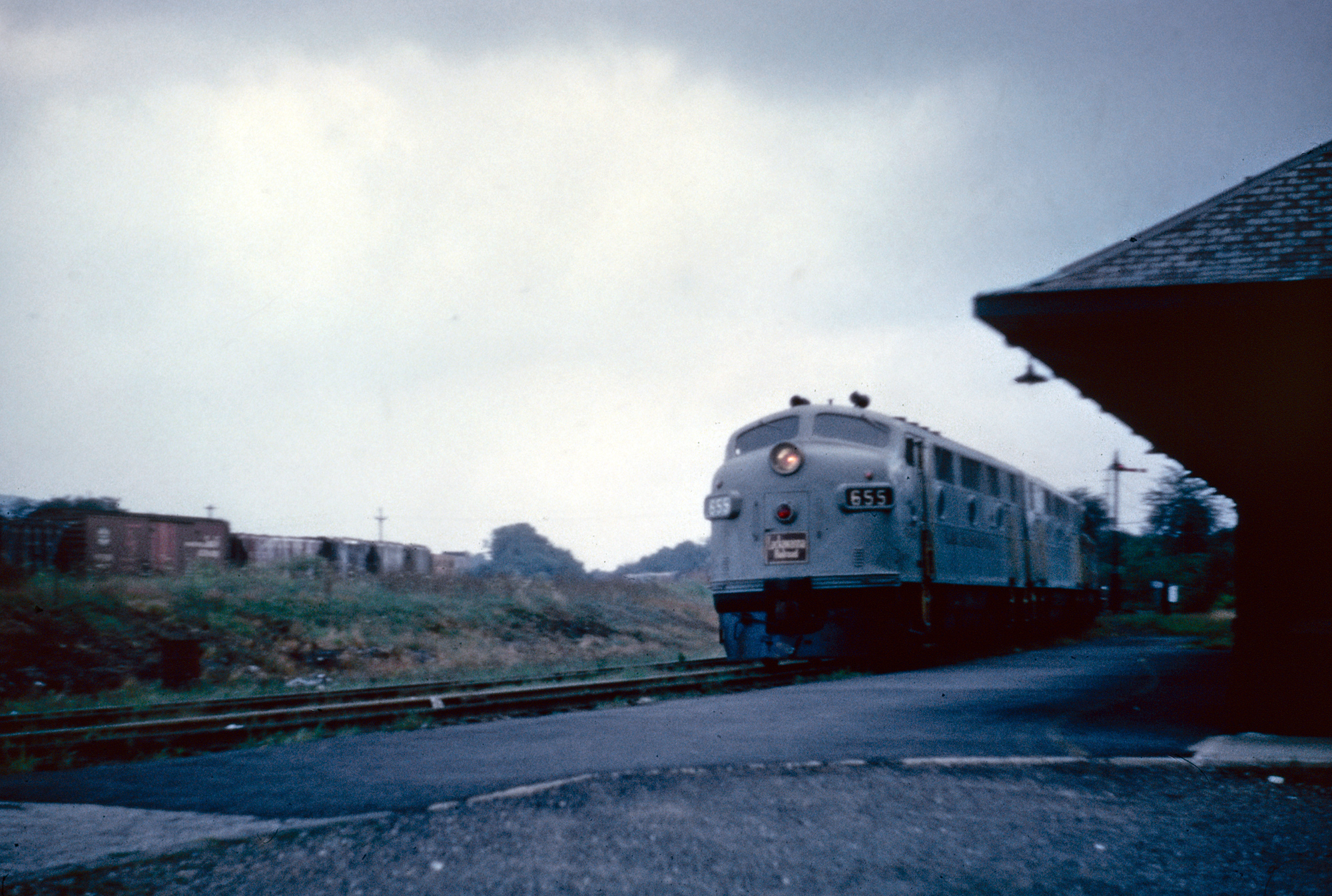
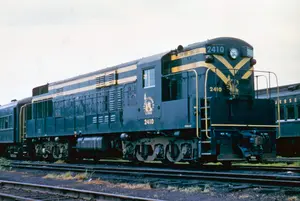
An interesting A-B set of Delaware, Lackawanna & Western F3s in grey-dip livery westbound at Washington, New Jersey (likely late 1940s/early 1950s). American-Rails.com collection.
Early U.S. Railroads
After the Best Friend of Charleston proved American steam in revenue service (December 25, 1830) and the B&O established the common-carrier model, railroad mania spread. By 1840, states east of the Mississippi already claimed more than 2,800 miles; a decade later that figure had more than tripled past 9,000. Much of the early network was disconnected and concentrated in the Northeast. Gauges varied from 4 feet 8½ inches to six feet. Safety lagged demand—strap-iron rail remained in use long after modern T-rail appeared, with deadly results when “snake heads” tore through car floors.
Related: Granite Railway · Delaware & Hudson · Baltimore & Ohio · Camden & Amboy · Mohawk & Hudson · South Carolina Canal & Rail Road · 1820s/1830s · Fallen flags · Steam locomotives · state history.
Civil War, the Pacific Railroad & Western Expansion
During the Civil War, railroads moved men and material at speeds no previous war had known. John P. Hankey, writing in Trains Magazine (March 2011), has argued that the North’s ability to harness the iron road was a major reason it won—an operational advantage as much as an industrial one.
Even before hostilities ended, Congress aimed at a continental link. The Pacific Railway Act, signed by President Abraham Lincoln on July 1, 1862, authorized the Union Pacific west from the Missouri River at Omaha and the Central Pacific east from Sacramento, with large land grants to underwrite construction. After years of brutal Sierra and plains work, the companies met at Promontory Summit, Utah, on May 10, 1869. Without that link, western settlement and national markets would have unfolded very differently.
After Promontory, construction exploded. By the 1890s more than 163,000 miles were in operation. Direct Midwest–Pacific routes eventually included Great Northern, Northern Pacific, Santa Fe, and the Milwaukee Road’s Pacific Extension, while other systems connected the coasts through partnerships. The late nineteenth century also brought standard gauge adoption in the 1880s and the spread of the automatic coupler and air brake—revolutions in safety and carload efficiency that Jim Boyd and other historians place at the center of the modern freight train.
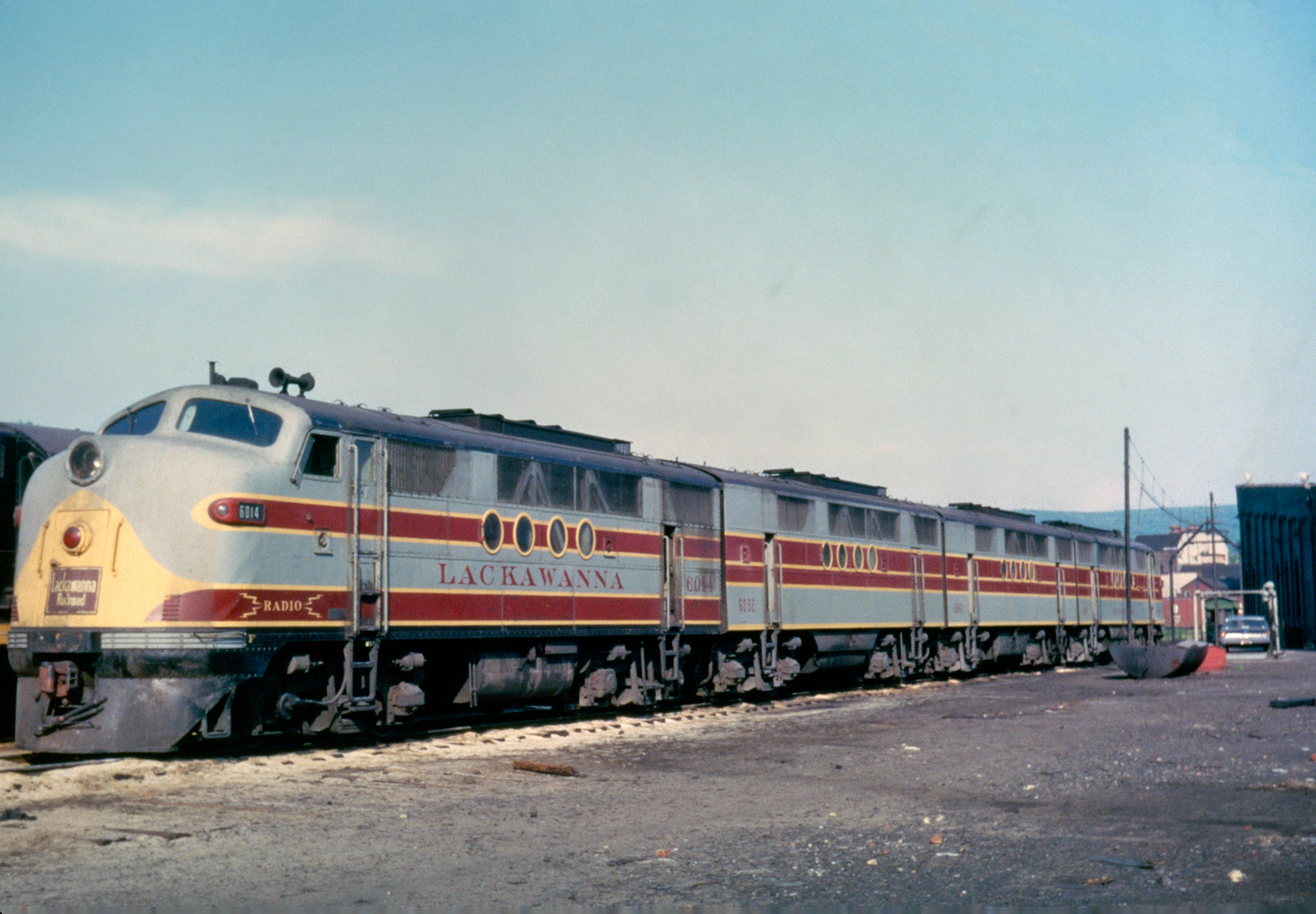
Early Erie Lackawanna era: a handsome A-B-B-A set of former DL&W FTs lays over in Binghamton, New York, circa 1961. American-Rails.com collection.
National Mileage Timeline
Approximate U.S. railroad route-mileage (standard historical tallies; definitions vary slightly by source):
| Year | Approx. route-miles |
|---|---|
| 1840 | 2,808 |
| 1850 | 9,021 |
| 1860 | 30,000+ |
| 1870 | 52,922 |
| 1880 | 93,267 |
| 1890 | 163,597 |
| 1900 | 193,346 |
| 1916 (peak) | 254,037 |
| 1945 | 226,696 |
| 1963 | 214,387 |
| 1995 | 170,000+ |
| Recent decades | ~138,000–140,000 (order of magnitude; FRA/AAR snapshots) |
Sources: Stover (1999); FRA Summary of Class II and Class III Railroad Capital Needs and Funding Sources (October 2014) for later network context; AAR current fact sheets for modern freight network framing.
That curve is the skeleton of U.S. railroad history: private capital and public land policy filling a continent in two generations, then a long pruning as highways, abandonments, and mergers reshaped the map.
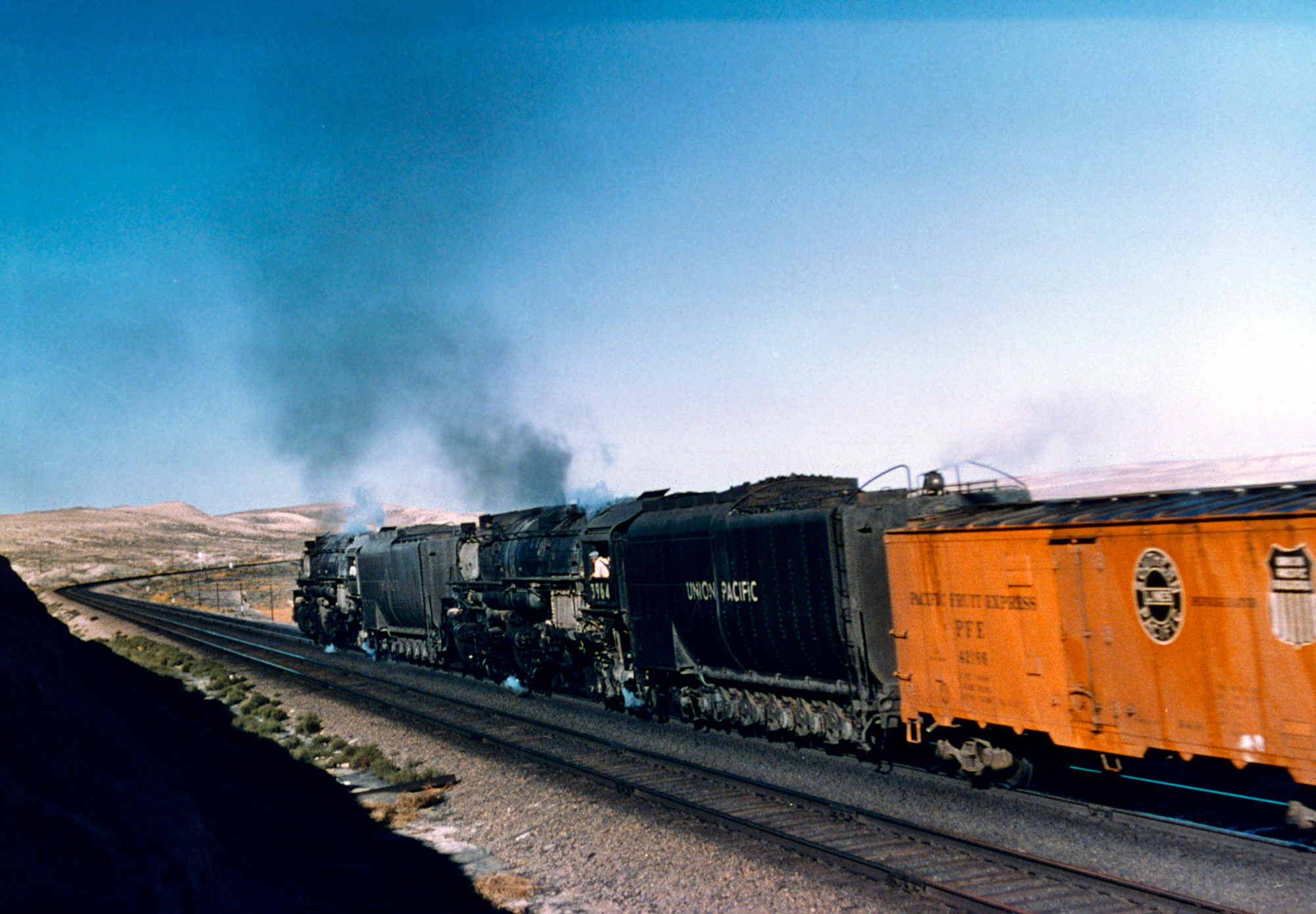
Union Pacific 4-6-6-4s #3944 and #3964 with a time freight near Red Desert, Wyoming, September 3, 1955. J.E. Shaw photo. American-Rails.com collection.
The Golden Age
From the late nineteenth century through the 1920s, railroads enjoyed their greatest dominance and profitability. In particular, 1916 saw mileage peak above 254,000 while railroads still carried virtually all interstate freight and passenger traffic in many contemporary measures. Four-track mains, monumental stations, and heavy freights defined modern American transport. Regional systems—the Pennsylvania, New York Central, Santa Fe, Southern Pacific, and dozens more—became identities as much as companies. Explore them via Fallen Flags and Tycoons & Barons.
Streamliners, Postwar Decline & the 1970s Crisis
In the 1930s the streamliner era hit the nation—an attempt to win patrons back with speed, color, and modernity never before seen on a mass scale. Full coverage lives at Streamliners.
Transportation dominance ended after World War II. A long decline followed. The mega-merger movement of the 1950s tried to cut costs through consolidation, with only partial success. By the 1970s tracks were weed-choked and equipment dilapidated on the worst properties. For carriers such as Rock Island and Penn Central, dirty and barely operational power was not uncommon.
Causes were many, but expanded ICC power after the Elkins Act (1903) and especially the Hepburn Act (1906) and Mann-Elkins Act (1910) is central. Those laws gave the Commission authority to set freight rates and force railroads to justify changes in a lengthy process that rarely favored flexible pricing. The intent was to curb arrogance toward the public; the effect, by the postwar years when railroads no longer held a monopoly, was an industry trapped between truck competition and frozen rules.
The decade produced famous fallen flags and the collapse of Northeastern service after Penn Central’s 1970 bankruptcy. Neighboring roads followed into reorganization. Out of the wreckage came the Consolidated Rail Corporation (Conrail) on April 1, 1976, a federally sponsored freight system for the Northeast. A few years earlier, on May 1, 1971, the National Railroad Passenger Corporation (Amtrak) had relieved many freights of money-losing intercity passenger trains.
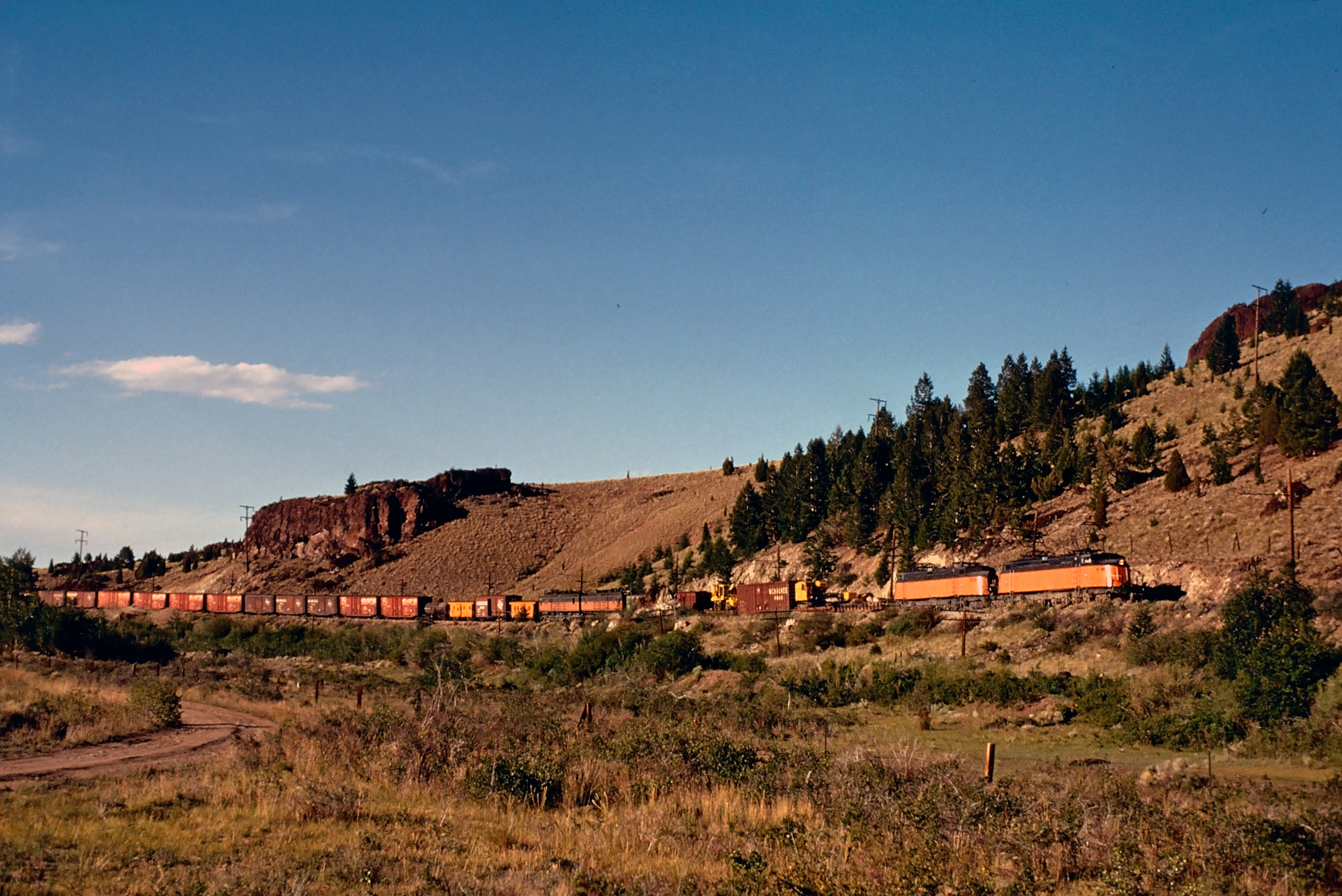
A pair of Milwaukee Road “Little Joes,” led by E-20, eastbound at Finlen, Montana—just west of Butte—on July 2, 1973. Boxcabs dead-in-tow ride within the freight. Photographer unknown. American-Rails.com collection.
Gregory L. Schneider’s Rock Island Requiem captures how frozen the system had become. Federal Railroad Administrator John Ingram, during the PC era, told a story of hunting a supposedly vital Delmarva branch the railroad wanted to abandon: he could not find a railroad at all—only pavement covering the rails, a junkyard atop the right-of-way, and a tree growing between the rails—while parties still argued before the ICC that the line was essential to the national economy. That image is the regulatory trap in one anecdote.
Regulation, Deregulation & the Struggle for Viability
Twentieth-century American railroading cannot be understood without the long shadow of federal economic regulation. The arc from Progressive controls through near-collapse to deregulation remains one of the central dramas of U.S. business history.
Interstate Commerce Act (1887) created the ICC in response to rate discrimination and public anger at railroad power, but early authority was limited. Hepburn (1906) and Mann-Elkins (1910) made the Commission a real rate power. The Transportation Act of 1920, after federal control during World War I, sought a fair return while reinforcing oversight and discouraging wasteful competition.
For a time the model seemed workable: railroads still dominated intercity transport, so regulated rates could support the network. After the 1920s the environment changed. Hard-surfaced highways, trucks, automobiles, and later aircraft took high-value freight and passengers. The regulatory framework stayed largely frozen. Roads could not easily raise rates, abandon light density lines, or drop money-losing passenger trains without hostile proceedings.
By the 1950s–60s deferred maintenance and passenger losses were severe, especially in the Northeast and Midwest. Penn Central’s failure proved the model broken. Congress answered first with partial fixes: the Regional Rail Reorganization Act (1973) and the Railroad Revitalization and Regulatory Reform Act (4R Act, 1976), which helped create Conrail and loosen some constraints.
The decisive break was the Staggers Rail Act of 1980, associated with Representative Harley Staggers of West Virginia and signed by President Jimmy Carter. It restored most rate freedom, allowed confidential shipper contracts, and streamlined abandonments—treating railroads again as competitive businesses rather than comprehensive public utilities. Within a decade finances improved, productivity rose, excess capacity was shed, and capital returned. Consolidation into fewer large systems also accelerated, and thousands of light-density miles were abandoned or sold to short lines.
Regulation did not vanish. The Surface Transportation Board, successor to the ICC, still oversees mergers and certain rate disputes. Debates continue over Class I market power, captive shippers, and service quality under efficiency-driven operating models. The fundamental Staggers bargain—more market freedom, leaner network—remains the frame of modern freight rail.
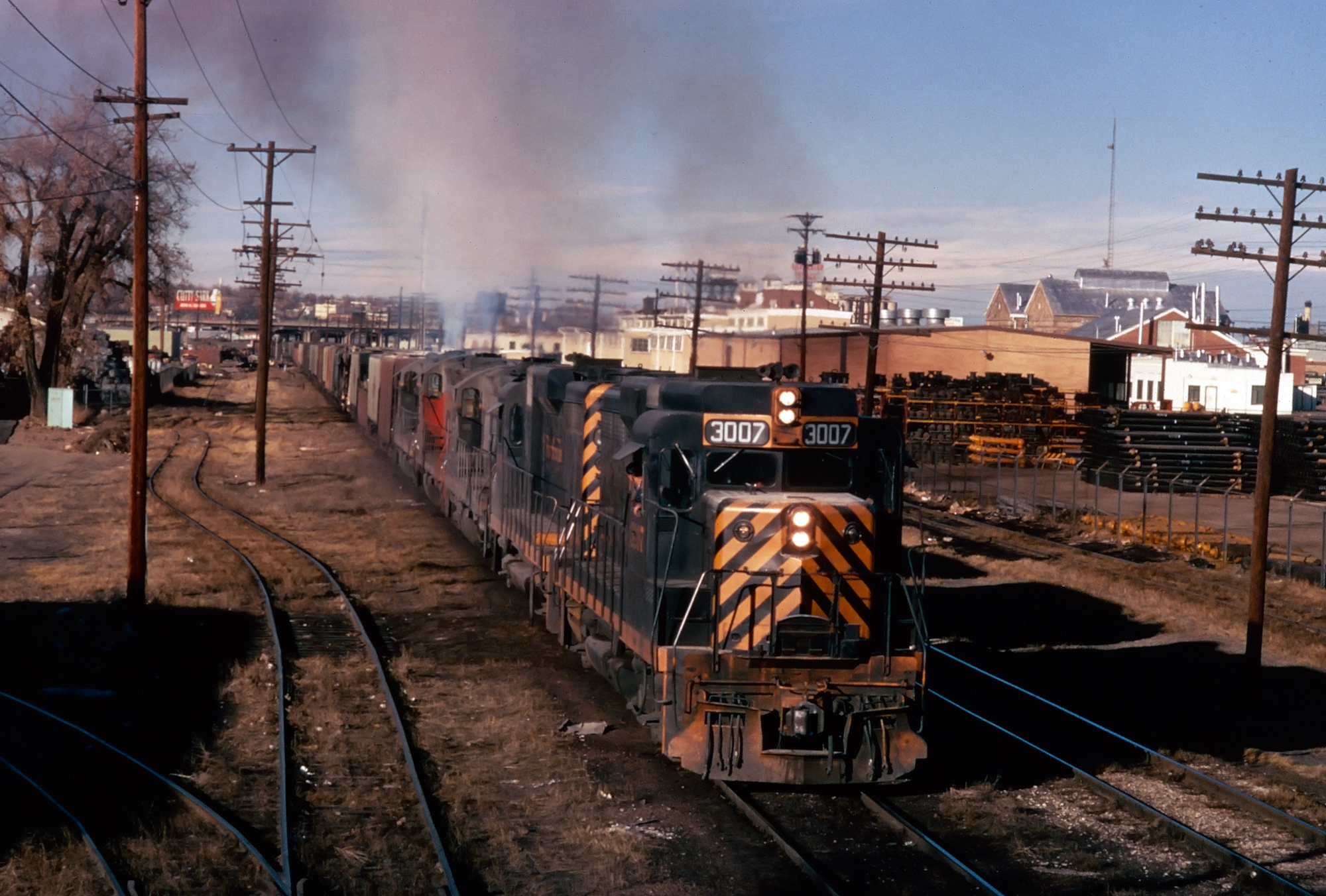
Rio Grande GP30s on loan to Burlington/Colorado & Southern with a trio of C&S SD9s at South Park Junction, Denver, January 1970. Tom Klinger photo. American-Rails.com collection.
Without Staggers, nationalization was a real conversation in the late crisis years—a prospect executives and many in government wanted to avoid. Recovery in the 1980s included Conrail’s return to profit (first profits often dated to late 1981) and the mega-mergers that produced modern Norfolk Southern and CSX. In the 1990s Burlington Northern and Santa Fe formed BNSF (1995); Union Pacific absorbed the Chicago & North Western; NS and CSX divided Conrail (1999). Freight growth and a partial passenger/tourist renaissance continued into the twenty-first century.
From Golden Age to Precision Era: Operating Philosophy
The physical plant of American railroading still occupies many nineteenth- and early-twentieth-century corridors. What changed most is the philosophy of how the railroad is run—assumptions about speed, asset use, labor, and the purpose of the enterprise.
In the Golden Age, expansion and maximum service ruled: frequent trains, fast schedules, elaborate passenger amenities, plentiful crews, and a system sized for peaks. Prestige passenger timetables often overshadowed freight in public image even when freights paid the bills. After Progressive regulation and especially after World War I, much of that culture froze; the ICC made it hard to shed trains or rationalize routes even when finances no longer supported them.
The 1960s–70s crisis forced a reckoning. Staggers created room for a new model. From the 1990s onward, ideas popularized as Precision Scheduled Railroading (PSR) and related doctrines emphasized fewer, longer trains; higher asset utilization; scheduled rather than purely tonnage-driven operations; and relentless focus on the operating ratio. Manifest freights that once ran modest tonnage on frequent schedules gave way to longer, heavier trains; intermediate yards closed; local service was redesigned around efficiency.
Critics argue that PSR-style metrics sometimes trade resilience and customer service for short-term ratios. Supporters answer that the old service-heavy model was financially unsustainable and that only the new approach restored investment-grade freight rail. Both views hold partial truth. What is undeniable is that operating philosophy in 2026 bears little resemblance to 1926 or even 1976. Understanding that change is essential to understanding the modern American railroad.
The Unfinished Transcontinental: Consolidation & a National System
When the last spike was driven at Promontory in 1869, the United States had a continuous rail line from the Missouri River to the Pacific—but it was still two companies, Union Pacific and Central Pacific, joined in the desert. A true single-company coast-to-coast railroad remained unfinished business.
Promoters chased that prize for generations. Jay Gould briefly linked large properties without seamless national reach. The Pennsylvania and New York Central built enormous eastern systems without a Pacific main line of their own. Santa Fe, Southern Pacific, and Great Northern became western powers without fully owning the East. Twentieth-century waves of consolidation reduced the cast: Burlington Northern (1970); UP’s absorption of Missouri Pacific, Western Pacific, C&NW, and Southern Pacific; Conrail’s creation and 1999 split between NS and CSX; BNSF (1995). Each step cut interchanges and concentrated capital; none fully closed the East–West gap under one flag.
By the early twenty-first century the structure settled into two western Class Is (UP, BNSF), two eastern Class Is (CSX, NS), and two Canadian systems with major U.S. reach (CN and, after 2023, CPKC). Coast-to-coast freight still meant interline handoffs.
In July 2025 that arrangement faced its strongest challenge in generations when Union Pacific agreed to acquire Norfolk Southern in a transaction valued around $85 billion. If approved, the combination would create the first true single-company U.S. transcontinental under one management—tens of thousands of route-miles linking Atlantic, Pacific, and Gulf ports. As of August 2026 the case remains before the Surface Transportation Board (revised filings and customer commitments have been part of the process; target closing dates have been discussed around mid-2027, subject to regulators). Whether or not it is approved, the proposal itself continues the long arc of consolidation that created today’s fallen flags and Class I map. See Class I railroads and CPKC for the current structure.
The golden spike closed one chapter. The modern merger wave may close—or postpone—another.
Explore by Decade & Topic
Period and topic articles on American-Rails.com. This hub remains the national encyclopedia; the leaves below carry the decade-by-decade and episode detail.
- Railroads In The 1820s/1830s
- Railroads In The 1840s
- Railroads In The 1850s
- Railroads And The Civil War
- Great Locomotive Chase Of 1862 (Civil War)
- The “Erie War”
- Transcontinental Railroad
- Railroads In The 1870s
- The Great Railroad Strike Of 1877
- First Aid Kit, An Overview
- Railroads In The 1880s
- Railroads In The 1890s
- Railroads In 1900–1910
- Railroads During 1910–1920
- Railroads During World War I
- United States Railroad Administration
- Railroads In The 1920s
- Streamliners And The 1930s
- Railroads In The 1940s
- Railroads In World War II
- Troop Trains, A History
- The Industry In Decline, The 1950s
- Railroads In The 1960s
- Mergers And Bankruptcies, The 1970s
- The Staggers Act
- Railroads Of The 1980s, Resurgence
- Railroads Of The 1990s, More Mega Mergers
- Into The 2000s
- The Modern Age, The 2010s
- Contemporary Railroading In The 2020s
- The Current Railroad Industry
- Official Guide Of The Railways (PDF’s)
Also useful: Streamliners hub.
Early Railroads
Company leaves for the first American roads. The overview sits in Early U.S. Railroads above; these pages carry the individual charters and first-run stories.
- Granite Railway, Our Country’s First Railroad
- Delaware & Hudson
- Baltimore & Ohio, First Common-Carrier
- Camden & Amboy, New Jersey’s First Chartered Railroad
- Mohawk & Hudson Railroad
- South Carolina Canal & Rail Road Company
Notable Figures (Beyond the Tycoons)
The Gilded Age barons have their own hub: Railroad Tycoons & Barons. Railroad history also includes artists and documentarians who shaped how the public sees the industry:
- O. Winston Link — steam-era night photography, especially Norfolk & Western
- Grif Teller — Pennsylvania Railroad calendar art
Their work preserves the look of the high steam and early diesel years as much as any timetable. Legislators such as Harley Staggers belong in the economic story as surely as any president of a Class I: without the 1980 act that bears his name, the industry’s late-century recovery is hard to imagine. See The Staggers Act.
Related Reading on American-Rails.com
- Fallen Flags — corporate histories of railroads that vanished by merger or failure
- Tycoons & Barons — Vanderbilt, Gould, Hill, Harriman, Big Four, and directory
- Class I Railroads · Regionals · Short Lines
- Steam · Diesel · Streamliners
- Landmarks · Stations · Interurbans
- Amtrak · Tourist trains · State history
- Railroad jobs · Home
Sources
- Stover, John F. The Routledge Historical Atlas of the American Railroads. New York: Routledge, 1999.
- Del Vecchio, Mike. Railroads Across America.
- Boyd, Jim. The American Freight Train.
- Schneider, Gregory L.C. Rock Island Requiem.
- Hankey, John P. “The Railroad War: How the Iron Road Changed the American Civil War.” Trains Magazine, March 2011.
- Association of American Railroads (employment, network, and Class I context).
- Federal Railroad Administration reporting on network and Class II/III capital needs (2014 summary and successors).
- Surface Transportation Board materials on Class I revenue thresholds and major merger dockets (including UP–NS review as of 2026).
- Period statutes: Interstate Commerce Act (1887); Elkins (1903); Hepburn (1906); Mann-Elkins (1910); Transportation Act (1920); 3R/4R Acts (1970s); Staggers Rail Act (1980); Amtrak (1971); Conrail (1976).
- American-Rails.com photo collection captions and related pillar pages.
Full history hub revised September 2026. Encyclopedia body retained; the old copy’s live decade, early-railroad, and notable-figure directories restored as linked lists. Core research, statistics, anecdotes, and interpretive sections of the original American-Rails.com article remain—including inventor history, mileage series, streamliner/crisis narrative, Ingram branch-line story, regulation arc, operating-philosophy essay, and unfinished-transcontinental / modern merger framing.
Recent Articles


-
Chesapeake and Ohio Railway: Map, Logo, History
Sep 17, 26 02:36 PM
 Chesapeake & Ohio Railway—Louisa Railroad 1836, named August 31 1868, Ohio River 1873. Coal, Chessie the kitten, Pere Marquette 1947, B&O control 1963, into CSX August 31 1987. Complete corporate…
 -
TVRM Valentine Train Ride (2026)
Sep 17, 26 02:31 PM
 2026 TVRM Valentine Train Ride in Chattanooga—Feb. 6–15, plated dinner, Grand Junction Depot. Confirm on tvrail.com.
 -
River Fox Train Dining (2026)
Sep 17, 26 02:29 PM
 2026 River Fox Train in West Sacramento—Brunch Train and Murder Mystery dinner. 18095 County Road 117. Confirm on riverfoxtrain.com.
 -
Weehawken Terminal, Serving The West Shore Railroad
Sep 17, 26 01:38 PM
 Weehawken Terminal—West Shore / New York Central Hudson waterfront station, opened 1884. Five ferry slips, sixteen tracks, Weehawken Tunnel 4,014 feet. Last ferry March 25, 1959. Port Imperial and HBL…
 -
West Shore Railroad: Map, History, Timetables
Sep 17, 26 01:32 PM
 West Shore Railroad—New York, West Shore & Buffalo 1880–83, Weehawken to Buffalo. PRR-backed rival to the Central. Morgan settlement, 475-year NYC lease January 1 1886. CSX River Sub today.
 -
Jersey Central Diesel Locomotives: History, Roster & Photos
Sep 17, 26 01:20 PM
 Central Railroad of New Jersey diesel—boxcab 1000, Baldwin double-enders, F3s, Train Masters, SD35s, GP40Ps. All-time roster. Steam ended July 1, 1954.
 -
Jersey Central Steam Locomotives: History, Roster & Photos
Sep 17, 26 01:17 PM
 Central Railroad of New Jersey steam—Camelback Ten-Wheelers, USRA Mikados, G-class Pacifics, suburban tanks. Post-1900 class roster after Drury. Dieselized July 1, 1954.
 -
Jersey Central Railroad (CNJ): Map, Rosters, History
Sep 17, 26 01:14 PM
 Central Railroad of New Jersey—Elizabethtown & Somerville 1831, named April 23 1849. Communipaw, anthracite, Blue Comet, Reading/B&O control. Conrail April 1 1976. Complete corporate history.
 -
Central Vermont Diesel Locomotives: History, Roster & Photos
Sep 17, 26 11:35 AM
 Central Vermont diesel—Alco S-2s 1942, RS-3s, RS-11s from DW&P, EMD GP9s 1956–57, GP38ACs 1971. All-time roster. Last steam April 4, 1957.
 -
Central Vermont Steam Locomotives: History, Roster & Photos
Sep 17, 26 11:19 AM
 Central Vermont steam—ten Alco 2-10-4s of 1928, four U-1-a Mountains, Consolidations. Post-1900 class roster after Drury. Last steam April 4, 1957.
 -
Central Vermont Railway: Map, Logo, Rosters
Sep 17, 26 11:03 AM
 Central Vermont Railway—Vermont Central charter October 1843, Bethel–White River Junction June 26, 1848. Grand Trunk 1898, CN 1923, RailTex/NECR 1995. Complete corporate history.
 -
Fitchburg Railroad: Map, History, Timetables
Sep 17, 26 10:40 AM
 Fitchburg Railroad—chartered March 3, 1842, Boston–Fitchburg March 5, 1845. Alvah Crocker, Hoosac west door, Vermont & Massachusetts, Cheshire. B&M 99-year lease July 1, 1900. Complete corpora…
 -
Steam Railroading Institute Dining (2026)
Sep 17, 26 10:30 AM
 2026 SRI Owosso dining—vintage dining cars, select evenings. 2026 dinner calendar not posted; 2025 Up In Smoke is the recent example. Confirm on michigansteamtrain.com.
 -
Canadian Pacific Railway: Map, History, Logo, Photos
Sep 17, 26 12:06 AM
 Canadian Pacific Railway—incorporated February 16, 1881. Last spike Craigellachie November 7, 1885. Soo, Milwaukee, D&H, DM&E. CPKC April 14, 2023. Complete corporate history.
 -
Canadian Pacific Diesel Locomotives: History, Roster & Photos
Sep 17, 26 12:03 AM
 Canadian Pacific diesel—E8A 1800 in 1949, FP7/FP9, FA-2, C424, SD40-2, SD40-2F Red Barns, AC4400CW, ES44AC, SD30C-ECO, SD70ACu heritage. All-time roster. Last steam November 6, 1960.
 -
Canadian Pacific Steam Locomotives: History, Roster & Photos
Sep 16, 26 11:35 PM
 Canadian Pacific steam—3,257 engines 1881–1949. D10 Ten-Wheelers, G3 Pacifics, Royal Hudsons, Selkirk 2-10-4s. Post-1900 class roster after Drury. Last steam November 6, 1960.
 -
Woodstown Central Dining in Motion (2026)
Sep 16, 26 11:31 PM
 2026 Woodstown Central Dining in Motion—Salem County table car, 50–60 minutes, private table of four from $190. Confirm on woodstowncentral.com.
 -
NCTM Wine & Dine on the Rails (2026)
Sep 16, 26 11:28 PM
 2026 NCTM Wine & Dine on the Rails in Spencer—Feb. 13–15, three-course dinner, 21+, $145/$140. Sold out. Confirm next season on nctransportationmuseum.org.
 -
Southern Railway 4-6-2 1380: The Streamlined Ps-4
Sep 16, 26 10:34 PM
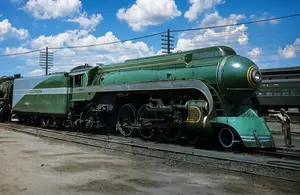
 Southern Railway Ps-4 4-6-2 1380—Alco 1923, serial 64857. Otto Kuhler streamlining at Spencer 1940–41 for the Tennessean. Only streamlined steam locomotive on the Southern. Scrapped Baltimore 1953.
 -
Texas Mexican Railway: Serving The Border Since The 1880s
Sep 16, 26 09:58 PM
 Texas Mexican Railway—Corpus Christi, San Diego & Rio Grande March 1875, 3-foot. Tex-Mex June 1881, Laredo Sept 1881, Rio Grande bridge 1883. Standard gauge July 17 1902. Mexican government 1900–1…
 -
Mount Hood Railroad Dining (2026): No Plated Dinner Train This Season
Sep 16, 26 09:53 PM
 2026 Mount Hood Railroad in Hood River is scenic Fruit Loop trains with snacks and sandwiches—not a plated dinner train. Confirm on mthoodrr.com.
 -
Peoria and Eastern Railway: Map, Timetables, History
Sep 16, 26 09:39 PM
 Peoria & Eastern—Danville, Urbana, Bloomington & Pekin 1866, IB&W 1869, OI&W 1887. Incorporated Feb 21 1890, Big Four next day. NYC 1930, Conrail 1976. GP7s 5612–5625. Complete corporate history.
 -
Boston and Maine Railroad: "Route Of The Minute Man"
Sep 16, 26 11:30 AM
 Boston & Maine—Andover & Wilmington 1833, NH charter June 27 1835. Eastern, Boston & Lowell, Fitchburg/Hoosac, Concord & Montreal. Section 77 March 12 1970. Guilford June 30 1983. CSX June 1 2…
 -
Smoky Valley Limited Dinner Train (2026)
Sep 16, 26 11:24 AM
 2026 Abilene & Smoky Valley Smoky Valley Limited—two-hour dinner from the 1887 Rock Island Depot. Kansas catering, ~$72–$110. Confirm on asvrr.org.
 -
Canadian National Diesel Locomotives: History, Roster & Photos
Sep 16, 26 11:14 AM
 Canadian National diesel—CLC boxcabs 1929, GMD FP9 and GP9, MLW FPA-4 and RS-18, GMD1, wide-cab SD40-2W, Dash-9s, ES44AC and ET44AC. All-time roster.
 -
Canadian National Steam Locomotives: History, Roster & Photos
Sep 16, 26 10:07 AM
 Canadian National steam—CGR, Canadian Northern, Grand Trunk, GTP. 4-8-4 Confederations, U-1 Mountains, J and K Pacifics. Post-1900 class roster. Last scheduled steam April 25, 1960.
 -
Canadian National Railway: Map, Logo, History, Photos
Sep 16, 26 08:55 AM
 Canadian National—name Dec 20 1918, incorporated June 6 1919, Grand Trunk Jan 20 1923. Crown corporation, IPO Nov 17 1995. IC, Wisconsin Central, BC Rail, EJ&E. Class I, mark CN.
 -
Buffalo, Rochester and Pittsburgh Railway: "Safety and Service"
Sep 16, 26 12:12 AM
 Buffalo, Rochester & Pittsburgh—Rochester & State Line 1869, BR&P March 12 1887. Pennsylvania coal to Buffalo and Rochester. B&O January 1 1932. All-time steam roster, LL 2-6-6-2s, XX…
 -
Buffalo Creek & Gauley Railroad: Map, Roster, Logo, Photos
Sep 15, 26 11:55 PM
 Buffalo Creek & Gauley—Elk River Coal & Lumber, April 1 1904, Dundon–Widen. Last all-steam WV coal road, February 27 1965. All-time steam roster, #4 Baldwin 59472, Majestic and Elk River diesels…
 -
Buffalo and Susquehanna Railroad: Map & History
Sep 15, 26 11:42 PM
 Buffalo & Susquehanna—Goodyear hemlock railroad, Sinnemahoning Valley December 14 1885, 1893 merger, coal to Sagamore, Buffalo extension, bankruptcy May 6 1910, B&O 1932, WAG 1956.
 -
WMSR Allegheny Mountain Dinner Train (2026): Dates & Tickets
Sep 15, 26 11:36 PM
 2026 Western Maryland Scenic Allegheny Mountain Dinner Train—Cumberland, 3 hours, 21+, Saturday 7 p.m. Confirm on wmsr.com.
 -
Boston and Albany Railroad: Map & History
Sep 15, 26 11:28 PM
 Boston & Albany Railroad—Boston & Worcester June 23 1831, Western Railroad across the Berkshires, merger 1867–70. NYC 99-year lease July 1 1900. Berkshires, New England States, CSX and MBTA today.
 -
Grand Bellevue Dinner Train (2026): Portsmouth, Rhode Island
Sep 15, 26 11:14 PM
 2026 Grand Bellevue Rail Dining in Portsmouth, RI—2.5-hour seated dinner on Narragansett Bay. Fall/winter TBA after Aug. 29. Confirm on thegrandbell.com.
 -
The "John Bull": The C&A's First Locomotive (1831)
Sep 15, 26 11:01 PM
 John Bull locomotive—Stephenson Planet-type 0-4-0, 1831. Dripps assembly, 4-2-0 rebuild, cowcatcher. Specs, Camden & Amboy career, Smithsonian 1884, 1981 steam-up, 1939 replica.
 -
Napa Valley Wine Train Dining (2026): Lunch, Dinner & Vista Dome
Sep 15, 26 10:56 PM
 2026 Napa Valley Wine Train dining—downtown Napa, 36-mile round trip, gourmet lunch and dinner, Vista Dome. Confirm packages on winetrain.com.
 -
My Old Kentucky Dinner Train (2026): Dates, Tickets & What to Expect
Sep 15, 26 10:50 PM
 2026 My Old Kentucky Dinner Train in Bardstown—2.5 hours, 35-mile round trip, four-course dinner from $116. Confirm on kydinnertrain.com.
 -
LaSalle Street Station: One Of Chicago's Great Terminals
Sep 15, 26 10:42 PM
 LaSalle Street Station—Rock Island October 10, 1852. Frost & Granger July 1, 1903. 20th Century Limited, Rockets, Golden State. Headhouse razed 1981. Metra Rock Island District today.
 -
Charlie Russell Chew Choo (2026): Montana Dinner Train from Lewistown
Sep 15, 26 10:39 PM
 2026 Charlie Russell Chew Choo dinner train—Hanover/Lewistown, 4.5 hours, 56-mile round trip, prime rib. Adult $151. Remaining listed dates sold out. Confirm on montanadinnertrain.com.
 -
Central Pacific Railroad: Map, History, Facts, Logo
Sep 15, 26 10:30 PM
 Central Pacific—Judah, Big Four, June 28 1861. Sierra, Chinese labor, Donner Summit Tunnel. Ten-mile day April 28 1869. Promontory May 10. Southern Pacific lease April 1 1885. Dissolved June 30 1959…
 -
Bessemer & Lake Erie Railroad: "The Bessemer Road"
Sep 15, 26 05:20 PM
 Bessemer & Lake Erie—Bear Creek 1865, Carnegie 1897, U.S. Steel 1901. Ore south from Conneaut, coal north. 2-10-4s, Missabe sister road. CN May 10, 2004. Complete corporate history.
 -
Bangor and Aroostook Railroad: "Serving Northern Maine"
Sep 15, 26 05:05 PM
 Bangor & Aroostook—chartered February 13, 1891, first trains January 1, 1894. Potatoes, paper, Searsport, State of Maine reefers. MM&A 2003, Lac-Mégantic 2013, CP 2020, CPKC today. Complete co…
 -
Baltimore & Ohio Chicago Terminal Railroad: Map and History
Sep 15, 26 03:11 PM
 B&OCT—formed January 6, 1910 to buy Chicago Terminal Transfer. Grand Central, Barr Yard, 78 route-miles. Assigned B&O steam. Complete diesel roster. CSX paper subsidiary, mark BOCT.
 -
The "Alphabet Route" (Railroad): Photos and History
Sep 15, 26 02:53 PM
 Alphabet Route—eight railroads, not one company. P&WV to Connellsville February 11, 1931. Alpha Jets Chicago/St. Louis–New York/Boston. NKP, W&LE, P&WV, WM, Reading, CNJ, L&HR, New Hav…
 -
Milwaukee Road Livestock Operations: Cattle, Dakotas & Montana
Sep 15, 26 02:36 PM
 Milwaukee Road livestock traffic—Dakota and Montana cattle, Iowa hogs, Chicago markets, 28-hour law, head-end stock cars. By 1974 mostly Montana. Rick Burn’s Helena speech. Operations history, not the…
 -
Spirit of Jasper Ride & Dine (2026): Season Pause
Sep 15, 26 02:29 PM
 Spirit of Jasper Ride & Dine in Jasper, Indiana—seated meal on board. Operator: not running public trains for 2026. Depot remains open as a rental. Confirm on spiritofjaspertrain.com.
 -
South Carolina Canal & Rail Road Company: Map and History
Sep 15, 26 01:59 PM
 South Carolina Canal & Rail Road—chartered December 19, 1827. Best Friend of Charleston, 136 miles Charleston–Hamburg October 1833, Aiken inclined plane. South Carolina Railroad 1844, Southern 189…
 -
The Practice of Double-Heading: The Steam Era
Sep 15, 26 01:43 PM
 Doubleheading—two locomotives on the point, each with its own steam crew. Not a rear helper, not diesel MU. How it worked, PRR 1877, mountain grades, and what MU ended.
 -
Mohawk and Hudson Railroad: Map, Pictures, Locomotives
Sep 15, 26 01:20 PM
 Mohawk & Hudson Railroad—New York’s first railroad, chartered April 17, 1826. DeWitt Clinton, inclined planes, Albany & Schenectady 1847, first New York Central May 17, 1853. Complete corporat…
 -
Essex Clipper Dinner Train (2026): Dates, Tickets & What to Expect
Sep 15, 26 01:09 PM
 2026 Essex Clipper Dinner Train in Essex, CT—2.5 hours, four-course meal $129.99, 18+. Fall dates through Oct. 25. Confirm on essexsteamtrain.com.
 -
Camden & Amboy Railroad: Map, History, Photos
Sep 15, 26 12:53 PM
 Camden & Amboy Railroad—chartered February 4, 1830. Joint Companies monopoly with the Delaware & Raritan Canal, John Bull, T-rail. United New Jersey 1872, PRR 999-year lease 1871. Complete corpora…